(No, this web site is not wishing to shorten the lives of any persons. We want Driscoll's, the nationwide distributors of poisoned berries, to have a painful corporate death. Land pronounced worthless and auctioned off for a dime an acre. Former employees selling umbrellas on street corners for food--or maybe trucked around the country to lecture on how much harm chemical "pesticides" do especially to a brand's image or a person's reputation, as they're refused tables at restaurants and their children aren't admitted to schools. Driscoll's are bitter clingers. Make examples of them!)
This e-mail came from one of the nonprofit MAHA-associated groups that are currently suing Driscoll's, GMO Free USA. It's a 501(c)(3) group; you can send it, rather than the federal government, some of your tax money if you file the full-length 1040.
"
PRESS RELEASE Nonprofits Sue Driscoll’s For Deceptive Environmental and Sustainability Marketing Claims of Blueberries and Strawberries |
|---|
WASHINGTON D.C., August 24, 2026 — Nonprofits Toxin Free USA (TFUSA), Organic Consumers Association (OCA), and Beyond Pesticides (BP) filed a consumer protection lawsuit against Driscoll’s Inc. alleging deceptive marketing of its berries.
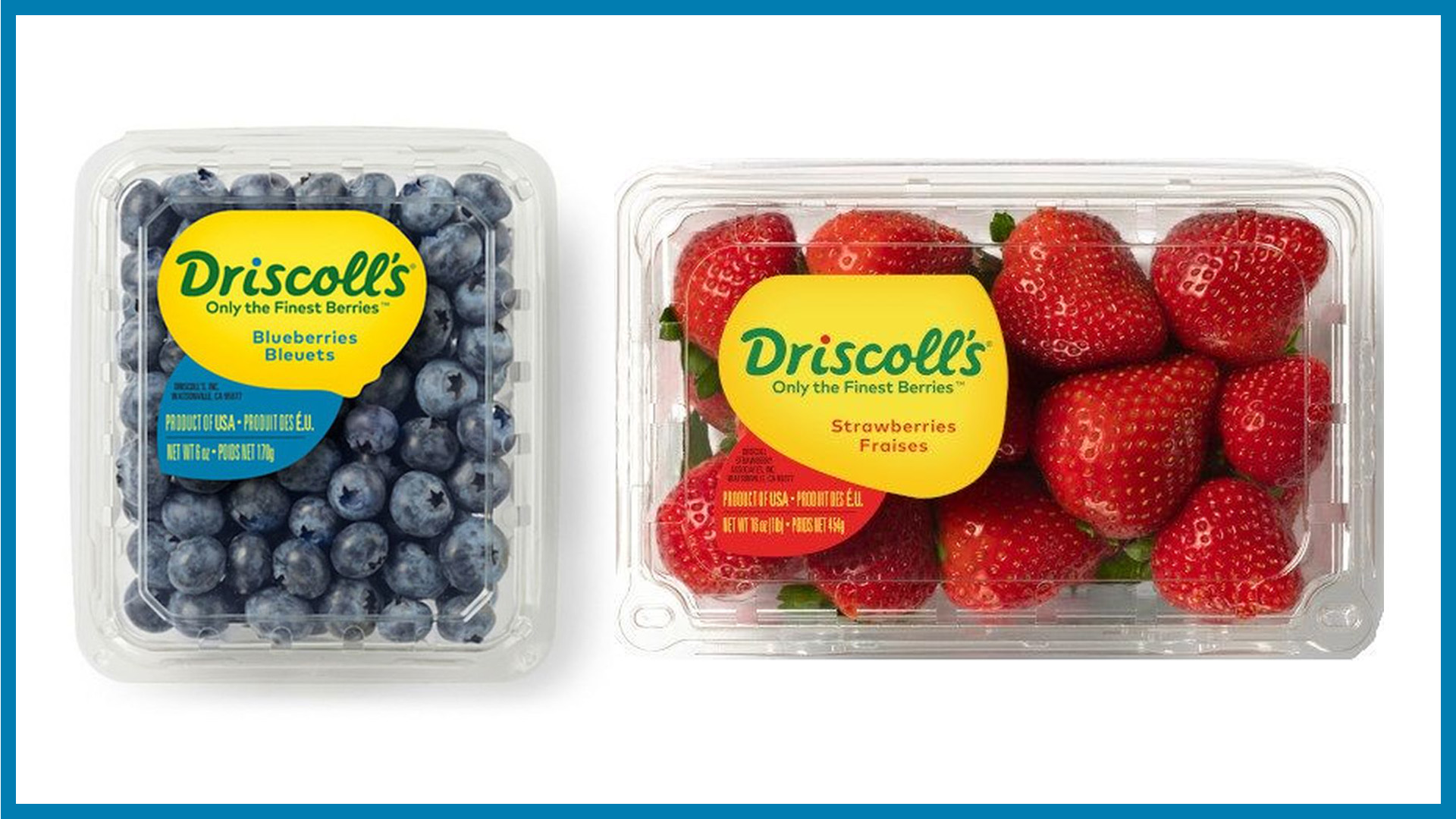
Driscoll’s is the world’s largest producer and marketer of blueberries, blackberries, raspberries, and strawberries and claims its growing practices are “in harmony with the environment.” The company also advertises that its berries “aren’t produced in a factory; they’re grown outside in a dynamic biological environment” and are “good for you and the planet.”
Driscoll’s is headquartered in Watsonville, California, where it has operations throughout the city. The majority of its production fields are sited adjacent and extremely close to elementary and middle schools. State records show at least 12 different carcinogenic pesticides are used at Driscoll’s operations, including malathion and the fumigant 1,3-dichloropropene (1,3-D), banned in 34 countries including those in the EU. A state air monitor inside one school detected 1,3-D air concentration levels far above the state's official Prop 65 cancer risk threshold. |
|---|
Watsonville's childhood cancer rates are 36% higher than the California average. Pajaro Valley residents have long complained and protested the company’s use of pesticides near schools and residential neighborhoods, even launching a hunger strike in 2025, but the company has responded with indifference.
“Driscoll’s is not ‘in harmony with the communities’ where its farms operate. A company cannot claim to respect its neighbors while applying carcinogenic pesticides beside schools and defending the practice simply because it is legal. Legal does not mean right. Exposing children to toxic pesticides may be permitted by law, but it is profoundly wrong—and morally indefensible,” said Diana Reeves, TFUSA Executive Director.
"Driscoll's can easily do the right thing," insisted Alexis Baden-Mayer, Research Director of the Organic Consumers Association. "They're already selling organic berries at a premium to customers who buy them with the expectation that this benefits human health and the environment."
Despite the advertising imagery of lush, green farms, many of Driscoll’s operations grow berries in plastic containers within facilities entirely covered in plastic. To prepare the land for this type of growing system, soil is compacted and plastic is laid down on the newly leveled ground. Rows of plastic pots are laid on top of the plastic-lined ground, and the plants grow in a coconut husk substrate. Plastic hood infrastructure is built over the crops to shield them from extreme weather conditions. Even in its more traditional outdoor growing fields, Driscoll’s berry plants are encased in plastic. Further, some of the company's operations are, in fact, factories where plants are grown without soil or sunlight.
As a result of its use of plastics in growing and packaging, plaintiffs allege that Driscoll’s berries contain harmful microplastics. Lab tests commissioned by plaintiffs revealed Driscoll’s blueberries are contaminated with polyethylene and polycarbonate particles. Microplastics are not “good for you.”
According to the complaint, contrary to Driscoll’s representations that its berries are grown “in harmony with the environment” and “good for the planet,” its agricultural practices pollute the environment with toxic synthetic pesticides and microplastics. The U.S. EPA has classified the waterways surrounding Driscoll’s operations as impaired, “largely because of the presence of bacteria and toxic chemicals.” Farmworkers and their families bear the brunt of this pollution.
Plaintiffs allege that instead of reducing its plastic use, Driscoll’s has chosen to greenwash. The company announced the goal of achieving “100% recycling of field plastics with a viable recycling market in all major producing regions by 2021.” It failed and then moved the goal post to 2025. It failed again and moved the goal post to 2030. Goals like these are so disconnected from what is realistic and technically achievable that stating them is inherently misleading, intended only to generate goodwill towards the company.
"Consumers are seeking to abate current existential threats to health, biodiversity, and climate with their purchasing decisions and do not want to be misled by Driscoll's false claims that its practices, which use polluting plastics and pesticides, are sustainable," said Jay Feldman, Executive Director of Beyond Pesticides. "Washington, DC's consumer law offers protection from the company's deceptive misrepresentations," Mr. Feldman continued.
The public interest nonprofits are seeking no monetary damages—only an end to the deceptive marketing and advertising of Driscoll’s berries.
The lawsuit was filed under the D.C. Consumer Protection Procedures Act. Plaintiffs are represented by Richman Law & Policy.
Read the full Complaint HERE. |
|---|
GMO/Toxin Free USA is a 501(c)(3) nonprofit advocating for a clean, healthy food system and environment, non-toxic consumer products, and educating consumers about the hazards of GMOs, pesticides and other toxins. toxinfreeusa.org
Organic Consumers Association is a 501(c)(3) nonprofit addressing crucial issues around food safety, industrial agriculture, genetic engineering, children’s health, corporate accountability, Fair Trade and environmental sustainability. www.organicconsumers.org
Beyond Pesticides is a national grassroots nonprofit organization that works with allies in protecting public health and the environment, through the identification of the hazards of toxicants in land, air, water, food, and consumer products and the advancement of meaningful solutions to the current existential health, biodiversity, and climate crises. www.beyondpesticides.org
Press inquiries contact:
Luan Van Le, Toxin Free USA
Phone: 347.921.1466
Email: info@gmofreeusa.org
Alexis Baden-Mayer, Organic Consumers Association
Phone: 202-744-0853
Email: Alexis@organicconsumers.org
Jay Feldman, Beyond Pesticides
Phone: 202.255.4296
Email: JFeldman@beyondpesticides.org |
|---|
"
You can send a link to this post, or paste the whole press release into a letter or e-mail and send that, to the stores where you've seen these poisoned berries for sale. Even if the berries you've seen were marked "organic"...federal standards for "organic" are too lax to mean that the food won't cause immediate chemical reactions, at best, and does anybody trust a corporation as evil as Driscoll's to use "organic" practices once they've claimed the badge? *
No comments:
Post a Comment