Friday, August 25, 2017

Book Review: Yes or No

Title: Yes or No


Author: Spencer Johnson

Date: 1992

Publisher: Harper Collins

ISBN: 0-06-016857-9

Length: 103 pages

Quote: “When I pursue only the real need, I am more decisive and I make better decisions sooner.”

This short book is a long teaching story about a fictional young man who learns all about making decisions from his fellow tourists on a group tour where they climb a mountain. Well, the author was in Hawaii at the time.

Here’s what you’ll like, if you do: The young man gets a  simple guide to decision making that fits onto a card, which is attached to a page at the back of the book.

Here’s what you may not like so much: Not all of us suffer from the deficiency of conscience that causes some people (read: extroverts) to need to be prodded to think about how a given decision will make them feel about themselves. For us, Ben Carson’s Take the Risk, which presupposes a healthy conscience, is a simpler and more efficient explanation of how to make decisions.

I don’t think the “story” motif does a lot for the book, either. Johnson’s story is not in the same class with, e.g., Susan Trott’s Holy Man.

And I’m turned off by the title, which I hear as a nag intended to push someone into a hasty, bad decision. Feeling indecisive is often mistaken for a sign of weakness when it is, in fact, a sign that we may be missing a key piece of information we need to make a good decision. If someone is up in your face, staring at you and pestering, “Yes or no? What’s it going to be? Yes or no?”, that key piece of information is likely to have something to do with why this pushy pest is trying to manipulate you into choosing between unsatisfactory options, and why the right answer is likely to be “neither yes nor no, but set up a different question.”

“Are you going to help me get rich quick in a sleazy ‘business’ venture? Yes or no?” The correct question is probably: “Am I going to ignore your illegal and/or immoral ‘business’ venture, or report it?”

“Do you want to sleep with me? Yes or no? Now or never?” Even if you might previously have thought you did want to sleep with this guy, eventually, the correct question is “Is it enough just never to see or speak to you again, or do I need to report your harassment to the police?”

“Do you want to take advantage of this red-hot bargain price? Yes or no?” The correct question is likely to be “If the product is something I’d be willing to test if the company paid me, why is the company paying this pest to do this hard sell routine? No company would want to be associated with a pushy sales pest, let alone pay one, if they weren’t afraid of losing money...might this red-hot deal on Product X be an indication that the company or its competitor is about to launch a much better Product Y as soon as they can push all the Product X off the store shelves?”

After being in a few “yes or no?” conversations we learn that the correct reply to “Yes or no?” usually begins with “No,” and if we’re still interested in the subject of the conversation, we’re interested in pursuing it with someone other than the person who nags “Yes or no?”  This does not set us up for any positive appreciation of a book with Yes or No as its title.

But somebody out there will enjoy the story and need to be reminded to stimulate any possible growth in their  conscience through “feelings about myself,” so Yes or No is for that person.

To buy it here, send the usual $5 per book, $5 per package, and $1 per online payment. At least eight books of this size will fit into a package; feel free to mix in books of different sizes, and books by different authors.

Thursday, August 24, 2017

Official Statement on Charlottesville Incident

Much as it might have liked to, this web site has not been able to remain unaware of the violent incident in Charlottesville, in which a visitor from Ohio rammed people with a car. Neither was it able to ignore the violent incident in Alexandria, earlier this summer, in which a visitor from Illinois shot at members of the U.S. Congress and severely injured Congressman Scalise of Louisiana. This web site will now present an official statement, thusly:

Fellow Virginians, when our scenic and historic tourist towns are invaded by homicidal maniacs, we need to ignore their babble and focus on sending them back where they came from.

Whether homicidal maniacs' babble appears to be coming from the Left, from the legendary "alt-right," or directly from Uranus, they don't need to be doing it here.

And although it certainly is instructive to note how the Left squeals for an end to "divisive" talk about politics when a left-winger goes berserk, then blames the Right when an (alleged) right-winger does the same...it would be more useful to ignore these maniacs' babbling, test their blood, and identify the real source of their violent insanity.

Book Review: Isla

A Fair Trade Book--Later


(That's the English edition, which is what I have, but obviously this book had to have a Spanish edition, and this web site recommends getting both so kids can read them together.)


Title: Isla

Author: Arthur Dorros

Author's web page: http://www.arthurdorros.com/

Date: 1995

Publisher: Penguin/Puffin

ISBN: 0-14-956565-1

Length: 37 pages of text and pictures

Illustrations: color paintings by Elisa Kleven

Quote: “Today she’s telling me about la isla, the island where she grew up.”

Little Rosalba sits on her grandmother’s knee and imagines the Caribbean island where the grandmother grew up. This is the same Rosalba, and the same grandmother, some readers had met in an earlier picture book about New York City:


As stories, these books offer little, but as picture books both are treasure chests of shining jewels. If you like bright colors and lively patterns, you’ll want to keep Isla around for inspiration. Even the cat is a splendidly detailed “tortie.” Lizards, wild parrots, tropical owls, angelfish, bananaquits...there’s so much to see on la isla.

These books have been out long enough that used editions are widely available. However, they can still be bought new from the publisher, which is more useful to Arthur Dorros right now, and is recommended. When the publisher lets Isla and Abuela go out of print, then they'll be available as Fair Trade Books at our usual rate of $5 per book, $5 per package, and $1 per online payment. (All three books shown, plus a few more of the same size, would fit into one $5 package.)

You can commission a doll dressed like Rosalba, from this web site, for $10 plus $5 for shipping and $1 per online payment. (Hand-knitted doll outfits don't offer room for all the details in the printed fabrics Rosalba and her grandmother wear, though.) You can also commission a hand-knitted blanket in colors that match a picture of your choice from either of these books, for $100 plus $5 for shipping and $2 per online payment. You could even commission a sweater in colors that match one of these pictures, although the fad for sweaters knitted in forty different colors has passed...the style of sweaters Rosalba and her grandmother wear in Abuela would be much easier to wear in real life, and much quicker and cheaper to knit.

Wednesday, August 23, 2017

Belated Tortie Tuesday Post: Heather Loves Her Everpet Flea Comb

(Status update: Since I last posted, $55 worth of small knitted items were sold to keep the lights on at the Cat Sanctuary, and $53 worth of bottled drinks (on two Fridays) provided food. Weather has not permitted me even to display books for sale in real life. You still need to support this web site:

https://www.patreon.com/user?u=4923804

Instead of pledging a monthly subscription via Patreon, you can, of course, hire me for writing-type jobs via Guru or Fiverr:

https://www.fiverr.com/priscillaking

https://www.guru.com/freelancers/priscilla-king

Or Freelancer, though I'm not sure I trust that site...

https://www.freelancer.com/u/PriscillaKing

Or you can send payments directly to this web site, using the address at the very bottom of the screen.)

Now the post: For first-time readers, this is Heather, whose mottled or "heatherspun" coat color can also be described as tortoiseshell, or "tortie." (In Virginia, where we live, human children who share Heather's date of birth started school this week; she's almost five years older than she was when this picture was taken.) She's mostly American Shorthair with some Siamese ancestors, from whom she inherited her body shape; she's also a polydactyl--a mutant gene that appears in several breeds.)


I'm totally slacking on Internet time, because it's August, people are still doing summer things instead of hiring me to write stuff (even though a few people are still trying to find me at Hirewriters, where I no longer exist)...and Heather says I have obligations at home. That look of mild disapproval is all Heather's ever really done to enforce her royal will. It works, because she's even cuter when she's pleased...

Early this spring, regular readers remember, she gave birth to five kittens and just refused to try to bring them up at all. I brought her generous supplies of food and water; she ignored them, and deliberately consumed just barely enough food and water to keep herself alive, to terminate lactation, because she refused to nurse those kittens. She always used to rear kittens as a team with Irene and Ivy, she nonverbally said. With both of them gone, what was she supposed to do with kittens?

Midsummer, Heather's long, lean body started to bulge again. I thought there was some chance that if Suzie Q, the "Torbie" from the broken-up cat sanctuary nearby, had kittens about the same time Heather did, Suzie might be willing to share parenting duties. No such luck. Suzie wasn't even willing to put up with my preposterous human ideas about cats staying indoors and not destroying the nests of House Wrens...scroll down for that story.

Heather gave birth to three kittens whose eyes and ears are just starting to open. Maybe she'd learned something from Suzie, at least. She chose a well-hidden nest site, allowed me to see where it was but not to see the babies, and started spending most of her time in her den. During the first week of August she gave birth to three kittens. On Saturday, the twelfth of August, she sneaked the kittens into a corner of my home office and nonverbally made it clear that she was enlisting me as parenting partner. If I'd watch the kittens half the time, she'd contribute her usual share of her time to getting them through infancy.

By agreeing to this nonverbal contract I was, of course, agreeing to spend the rest of August doing...oh, you know, normal-human summer things, not spending every day online. The computer's daily page view count is still in four figures, but U.S. page views have been below 500 per day. Well, in the U.S. it's summer; people are supposed to be outside doing summer things, not staring at supplementary room heaters all day. (Have you ever used a thermometer to measure how efficient your computer is as a supplementary room heater?) Anyway, that many readers I should be able to satisfy in two or three half-days online each week.

(Unfortunately, for those hoping for a polydactyl social kitten...once again some worthless lazy scumbucket sprayed poison on harmless weeds a real human being could simply have cut back, and one morning Heather showed no enthusiasm for her breakfast, and although charcoal restored Heather's energy and appetite, two kittens died. At least they didn't seem to suffer as much as foster kitten Boots did. The surviving kitten took a dose of charcoal, herself, and seems subdued, but may live...at this point it still seems chancy. Young kittens are so vulnerable, especially if they're born as a second litter in one year, that I've felt superstitious about even mentioning that Heather was pregnant again.)

I still have very mixed feelings about cats being indoors in August. Heather is good at keeping herself flea-free. I still have some of the herbs-and-borax flea powder that helped me bond with Heather's great-grandmother ten years ago; the herbs don't smell as strong, but borax never loses its power to kill small nuisance animals on contact. On the other hand, even herbs-and-borax is not recommended for use around tiny nursing kittens. And this has been the worst year for fleas I can remember; it's one of those summers when anyone walking past a house where a dog or cat lives is likely to pick up a flea.

Well, I'm Highly Sensory-Perceptive; what that means is that I'm over fifty years old, I've never worn glasses, and I still see dog and cat fleas, although I now have to spend a few seconds looking at them to see their little heads and legs. It's taken me some time to understand how it's possible for "normal" humans not to be able to see them. I had one roommate who didn't believe her dogs were infested with fleas; I picked them up and showed them to her; she didn't see anything. Cat and dog fleas are about the size of the lower-case letter "i" as it's showing up on the computer I'm using--at the default "zoom" setting. Devices differ but, if you routinely "zoom in" to 125% or larger letters, probably you either don't see your pet's fleas at all or don't see them as different from other specks of "dirt." In that case, if you're in southwestern Virginia, I recommend accepting the fact: Your pet has fleas. Since cat and dog fleas can't actually live on human blood, your pet's fleas are probably less of a nuisance to you than the mosquito population, which is also booming this year. However, cat and dog fleas are not born knowing that they can't live on human blood, and they're likely to attack humans too, especially when they're able to "multiply like fleas" and drain enough blood from their natural hosts that the cats and dogs start to become anemic.

Vigilant and efficient though Heather is, how could anybody keep indoor kittens from being eaten up by fleas, which would then attack the humans, in a year like this one? I wondered.


Sydney the "Australian Shepherd" dog...has lost some of the surplus weight since this picture was taken, but has not really recovered her girlish figure. 

Sydney, the big (formerly "problem") dog with whom I bonded at the Dog Sanctuary, came to our rescue. A sixty-pound shaggy dog is guaranteed to be carrying a load of fleas wherever she goes. That, plus her dominant personality, caused Sydney to be evicted from her first home, then reclaimed from another adopter who kept her constantly on a short chain, before she finally found a permanent home with a relative of the humans at the Dog Sanctuary.

She's as quiet and clever as a cat and I'd sit with her again in a New York minute--I've even signed up for a list of emergency adopters, if she ever needs to be adopted--but nobody would want to quarrel with Sydney. Especially not if she's feeling miserable and grumpy because of all those fleas. But this lucky dog found a human who's willing to sit on the porch for a half-hour or so, almost daily, with a cup of soapsuds, removing fleas, dirt, and matted undercoat hairs from her coat, with a fine-toothed comb. This and other acts of love keep Sydney positively sweet-tempered and her home a place some humans like to visit.

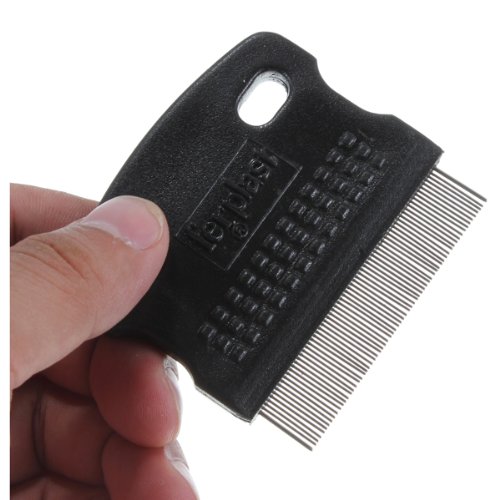
So a friend of the Cat Sanctuary sent Heather and the kittens a fine-toothed comb. Amazon offers quite a selection of these devices. The one shown below looks similar to the Everpet (Dollar Store brand) model for which our sponsor paid $2 plus sales tax, in the store. Most of the flea combs on Amazon seem to cost a little more than $2.

MagiDeal Pet Dog Hair Flea Comb Stainless Pin Dog Cat Grooming Brush Comb Clean Tool

Here's a cheap model:


Deluxe models, like this double-toothed comb, can run up to $15 online.

Flea Comb with Double Row of Teeth By Hertzko – Double Row of Closely Spaced Metal Pins Removes Fleas, Flea Eggs, and Debris from Your Pet’s Coat - Suitable For Dogs And Cats

Anyway, Heather nonverbally raves over her flea comb.

This surprised me, because, most of the time, she does not actually have fleas. She attracts them, as all cats do. Fleas can hop all the way up to penthouse apartments where pampered pets spend their lives indoors; they smell the blood of their host species, and follow the scent. But they spend most of their time on the ground, or the floor, or the bed, where the host animal has been, in between meals, making baby fleas (which are too small for even HSP eyes to see, and apparently live on dust for the first weeks of their lives, before they mature enough to start hopping about and biting bigger animals). Fleas can torment kittens at their leisure, but when they bite a cat like Heather, with short hair, healthy reflexes, and experience, the cat bites back. Heather has probably been the last cat hundreds of fleas ever attacked. My working definition of a bad flea season is one in which I see an adult cat scratching, or spot a flea scuttling from the vulnerable skin on a cat's head into the denser fur on the cat's back (where I can't catch it)...at all. But fleas can torture cats, just as mosquitoes can do for humans, without riding around on their victims all the time.

Cats purr on different notes, and the flea comb elicited the special purr that my current cat family usually reserve for bonding-through-grooming between litter mates or mothers-and-kittens. And once in a while I really do wear things that expose skin on my back, in my own home, in hot weather--and after one flea-combing session Heather ran around and washed the bare skin on my back.

This nonverbal rave seems to translate as something like, "I love it, I love it, I love it! Oh, Mama! It feels like being a kitten and having my mother take care of fleas for me, all over again! I love you! What can I do for you? Would you like me to wash your back? Ugh, ick, you taste human, but I don't mind washing you anyway because you're such a good friend..."

Fine though the hair on a cat's head is, the flea comb does pick up a few fine, soft hairs and particles of dirt, if not an actual flea, from an adult cat's head. From the body, it removes those fluffy little hairs that cats shed in great mats in spring, but continue to shed in smaller quantities all through the year. Evidently these effects make our furry pets feel cooler and cleaner, as well as scratching itches and removing biting fleas.

This August we've finally seen temperatures above ninety degrees Fahrenheit, briefly. (Most years, in August, in Virginia, the temperatures stay near ninety degrees all day long, and the human brain goes into a sort of sub-estivation state...it's not that I'm ungrateful, but this milder weather also seems to encourage fleas.) On ninety-degree days it's possible to "teach" cats to bathe or swim along with their humans. Cats who do this will usually spend some time standing on or walking around the edge of a tub or pool, nonverbally saying "You look as if you're actually getting wet on purpose? Humans are strange," before they take the plunge, discover the pleasure of cooling down and forcing fleas to desert their coats, and then form a habit that may become hard for their humans to break.

Some humans, like Cleveland Amory, claim not to mind sharing their baths with their cats after allowing the cats to form this habit. (On purpose? Yankees are strange...my preference is to clean key parts of myself with the shower hose before I collect water in which to soak in the tub, and I wouldn't feel clean after sharing a bath with a cat.)
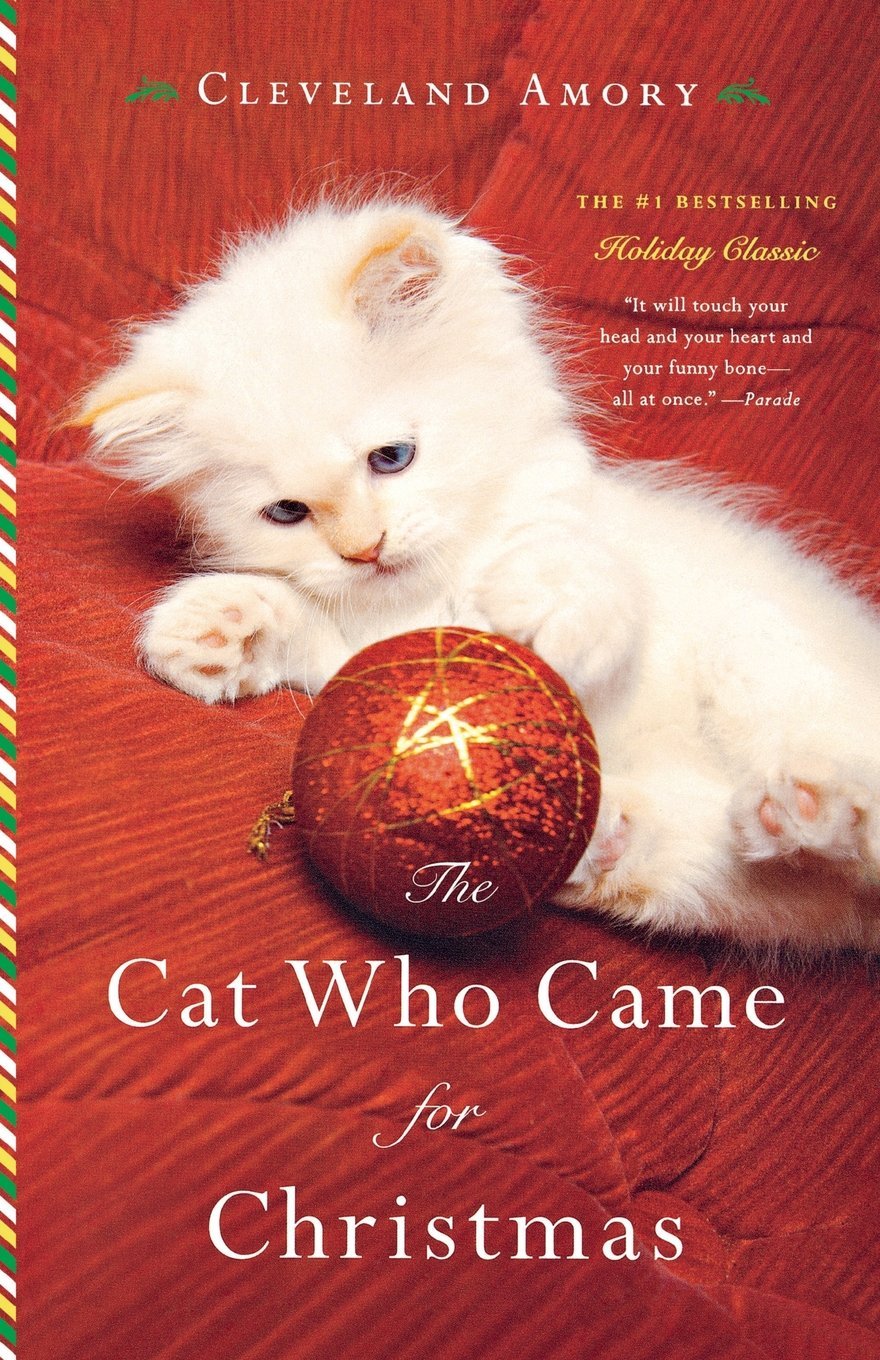


This is cute, if not sanitary. I used to know a minister from Jamaica who invested the time in training indoor kittens to bathe near their humans in a smaller basin the cats learned to regard as their very own private bathtubs, having the basin near the human's tub or shower and shampooing the cat with its own special soap, and if I were going to live in a tropical country like Jamaica (or even Florida) I'd try that, too.
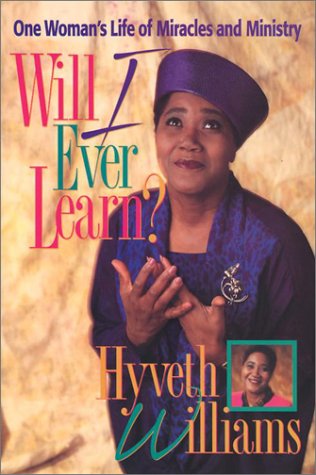


(Disclaimer: I don't own a copy and don't know whether she describes training kittens to take baths in the book. She lived with a cat who had been so trained while interning at a church I used to attend.)

But it's a lot easier to train a cat or dog to appreciate being groomed with a fine-toothed comb. Like cutting back and digging up weeds, this takes a little more effort than merely dumping poisons into the world...but then again, it's better for the environment. Herbs and borax are natural when used in moderation, but not around fragile baby kittens. Flea combs can be used as often as they're needed--and although baby kittens thrive on a minimum of handling and exposure to light during the first weeks of their lives, once they venture out of the nest they can enjoy being combed just like their mothers.

Book Review: The Singing Tree

Title: The Singing Tree


(What I have is the first edition acquired and discarded by the same library from which I got my copy of The Good Master. Amazon doesn't even show a page for the first edition of this one.)

Author: Kate Seredy

Date: 1939

Publisher: Viking

ISBN: none

Length: 247 pages

Quote: “But this is 1914, brother. Two generations have grown up in peace...What would anybody start a war for?”

Any nice story about Europe, such as The Good Master was, has its reverse side: Official unity as “Christendom,” as a “Holy Roman Empire,” or as a “European Union” has never kept Europeans out of their tribal wars for very long. The world now remembers 1914 as the year the biggest, deadliest war in Europe’s history broke out. Ironically, though Europe had already had some massive wars and the 1914 war was their worst up to that time, 1939...

There were reasons why this story wasn’t as popular as The Good Master. Those reasons do not include any lack of the ethnic charm Seredy portrayed so well, of the children’s pranks and scrapes and Kate’s triumphs over boys who thought girls couldn’t do things. Those things are in this volume too, but in The Singing Tree Kate and Jancsi are no longer typical, only more fortunate than most, children in an idyllic turn-of-the-century Hungarian village. Jancsi is fifteen, and though at first he’s thrilled to be called “the Young Master” and given official permission to act in his father’s place, he soon realizes that he’s been promoted because the Good Master has joined the army.

Additionally, Seredy chose to portray the kind of Europeans Americans were most likely not to like in 1939. To the lovable Hungarian Nagy family this story adds a chorus of six amusing Russian prisoners of war, selected for clownishness and love of children as much as height and muscle, six pitiful German orphans, six cats (one stray and her five kittens), and a terribly nice Jewish family for good measure. In 1939 Americans (of other than Irish descent) were willing to like English people, or French, Swedish, or maybe Swiss people, but other Europeans...not so much.

Well...as this memory-based cozy novel reminds us, there are Europeans and Europeans. I find it hard to believe that six identically lovable clowns, not related to each other, could be picked out of one load of prisoners. On the other hand, I find it easy to believe that a writer could choose to blur the stories of six prisoners and of six orphans in such a way as to make them seem like chorus lines. Kate and her aunt are too busy running the farm to get to know them as individuals.

And then...although Kate is a teenager in this book, and she even goes to a neighbor’s wedding, war knocks all the Teen Romance right out of her head. Rather than wasting her adolescent energy on clothes, “popularity,” and infatuations, she uses it to do the work of a grown woman and occasionally a grown man. Some actual teenagers, who get bored by editors’ assumption that all stories about teenagers need to feature Teen Romance, will appreciate a romance-free story about a teenager just working with her aunt and cousin on a farm. In the 1950s that was not the kind of story teenagers were supposed to like.

And also, as with Tom Sawyer and Huckleberry Finn, with Little House on the Prairie and Little Town onthe Prairie, more recently with Harry Potter...in a series of stories about children that have any realistic quality at all, the sequel to a story about children is likely to be a story about young adults. The Good Master was an idyllic story in which a grieving little girl found her “happy place.” In The Singing Tree, grief reappears even in that happy place.
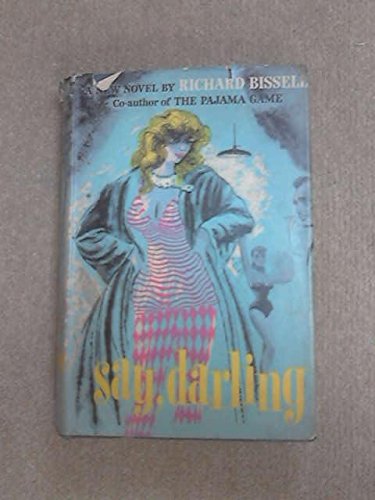
So some people who liked The Good Master didn’t care for The Singing Tree. Now that you know why they didn’t, perhaps you might actually prefer The Singing Tree.

Reprints are available in abundance and will cost $5 per book, $5 per package, plus $1 per online payment; add $10 if you want to throw in a doll dressed like Kate. Amazon isn't even giving me any indication what to charge for first editions if they become available. I'm tempted to say that, as the reprints seem to be paperbacks, eight books of this size would fit into a package, but only six books of the size I physically own will ship for $5.

Tuesday, August 22, 2017

Book Review: Say Darling

Title: Say Darling


Author: Richard Bissell

Date: 1957

Publisher: Atlantic Little Brown

ISBN: none

Length: 308 pages

Quote: “As anyone on Broadway can tell you, none of the fictional characters in this novel resembles anybody living or dead...they are all too lovable.”

As an introduction to a story where the wholesome middle-aged protagonist drinks, smokes, and commits adultery, that’s a nice ironic summary of the way the family-friendly comedy movies and musicals of the 1950s were put together.

Say Darling is the story of a fictitious musical play. The content of the play isn’t discussed at length; it’s a typical 1950s musical drama—there isn’t any content, really, but the clichés of a light romantic comedy stretched out with a few jokes and lots of songs and dances. The writer goes to New York City. The first change the producer demands in his story is muting the tone of the female characters’ lines because he doesn’t like women. Most of the people involved in the production are of course men who don’t like women, actually, as people, although they seem to find plenty of them as bedmates, because this was the 1950s.

The pop culture of the 1950s tends to turn my stomach because, although some good people were producing good stories and songs and movies, the commercial market demanded a constant, obsessive focus on “love.” That wouldn’t have been so bad if the focus had been on dedication and self-sacrifice, but most of the time it was anything but real love. This was the height of the Advertising Age and “love” was the codeword for a hormone rush that could be exploited to sell products. “Fall in love” could mean either “flop into bed” or “fantasize about flopping into bed, obsessively and tediously, until the hormone rush passes.”

(In real life, women who naturally have that top-heavy look that 1950s fashions demanded do have some sexual feelings. It’s just that those feelings are present only for about one-quarter of our time and may be monogamous even then. If you are not married to a top-heavy woman, try not to be boring about sex. The fact that it’s extremely difficult for most men to pull off makes it even more of a thrill for us to have a chance to wonder whether a friend or co-worker is immune to our physical charms. If you want respect, don’t stare at the bosom. Don’t stare at the face. Have something to do when you’re around us, and look at what you’re doing. Even for that estimated ten percent of womankind who do rely on their eyes to communicate, the fact that you’re not staring will be a novelty and will make you seem much more interesting than all those boring slobs who could leave the world so much a better place if they were all launched out on one-way space probes.)

So in Say Darling the protagonist “falls in love” with one of the actresses, who comes closer than any of his male co-workers comes to being a friend and making a positive contribution to his musical, but he doesn’t appreciate her doing that. By “love” he means a hormone surge that allows him to flop into bed whenever this woman, for the sake of her job and her career, puts up with him. He never seriously considers marrying her (he is after all a husband and father of four) and she seems glad to brush him off, literally, once the script is finished and the success of the musical depends on her. For the woman I can at least feel some empathy.

Because this story is set in New York, where even characters like these couldn’t overlook the presence of Minority Groups, there are some references to members of Minority Groups in the book. Every single one of them is the kind of thing well-meaning people said, in the 1950s, that triggered wailing among liberals and hostility among radicals in the 1960s. Being a child of the 1960s I wince at each reference to passing “colored girls” (young Black women! Duh!) and the father reacting to his child’s primary school romance, “With a name like Kaplan...” There’s also a recognized male homosexual character, who gets a speaking part and some respect, although co-workers challenge his judgment with some “gay-baiting” taunts in one scene. I remind myself that, for writers like Bissell, mentioning the “colored girls” in a crowd scene was in fact a gesture of good will—if this novel had become a play or movie, at least cameo appearances for Black actresses would have been written in. And again I’m glad that I wasn’t even alive in 1957.

Other than the primary pair of “lovable” adulterers, everyone else in the story, including the children, is pretty unpleasant. The plot is based on what successful musical comedy actors and producers said really happened. The comedy consists mostly of snarky lines, though most of them appear in the narrative than in conversation. The characters don’t unrealistically do their jobs by sniping at each other, and the children’s bickering is not unrealistically sophisticated comedy—it’s so real you’ll be glad the children are offstage almost all the time. No, this is a first-person story, and while the protagonist is saying polite things to his fellow characters in the story he’s sharing with readers his mordant comments on people and places and news items and life in general.

In short, if you want a novel that will reliably and consistently tickle your funnybone (without making you laugh out loud in a hospital), that shows an “adult” awareness of sex and violence without dragging you through the gross details, that will stir up any nostalgia you feel for the 1950s and simultaneously make you glad they’re over, this is one. But I think Bissell would have been funnier if he’d skipped the adultery, not bothered trying to turn stock figures into individual fictional characters, and just written a nonfiction book about the writing process. That’s what you’ll be smiling about, anyway.

Collectors' editions are being sold on Amazon, but so are ordinary used copies (the one I have doesn't even have the sexploitation dust jacket, which someone probably burned long ago), so this book is still available on this web site's usual terms: $5 per book, $5 per package, $1 per online payment, and four books of this size will fit into one $5 package.

Monday, August 21, 2017

Book Review and Knitting Pattern: Karen's Doll

A Fair Trade Book


Title: Karen’s Doll (Baby-Sitters Little Sister #23)

Author: Ann M. Martin

Author's web page: http://www.scholastic.com/annmartin/

Date: 1991

Publisher: Scholastic

ISBN: 0-590-44832-3

Length: 95 pages

Illustrations: drawings by Susan Tang

Quote: “I carefully untied the ribbon. My new baby doll might want to wear it later.”

Two of Karen’s grandparents went to England, and what they brought Karen was a special, expensive, one-of-a-kind souvenir doll. One of Karen’s two best friends went to the hospital, and, since children under age twelve aren’t allowed to visit even child patients at the local hospital, Karen let her stepsister Kristy deliver the new doll to her friend. Kristy is a very responsible teenager, the founder of the Baby-Sitters Club...but she’s not perfect. The casual speech she makes when she presents the doll to Karen’s friend Nancy leads Nancy to believe that the doll is a present to keep. Karen’s parents blame Karen for “losing” the doll. Karen blames Nancy for wanting to keep the doll.

Of course, this is all taking place in the Lost World of Nice where the Baby-Sitters Club live, so you know there’ll be a happy ending. This book is recommended to all BSC collectors and to anyone who had not yet read the Baby-Sitters Club stories.

Here’s how I did the doll that goes with this book:

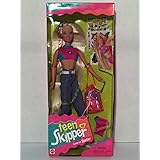
1. In the world of Barbie, the doll that most resembles Karen on the cover of the book was a Skipper doll (Barbie’s little sister). Although Skipper is shorter and thinner than Barbie, they’re close enough to the same size that the knitted version of that roomy sweatshirt and jeans Karen wears in the cover painting will fit either Skipper or Barbie...but I found a Skipper with thick blonde hair, an irregular part, side curls and a ponytail.

Product Details

(I'm not sure that that's exactly the same version of Skipper I used, since the dolls I recycle to match children's books are always secondhand and seldom reach me with any clothes at all, but it's close.)

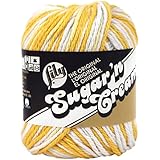
2. For the shirt, use less than an ounce of any yellow craft-type yarn. I used Sugar’n’Cream yellow and white ombre because I had some in the scrap bin. The last time I looked, some Wal-Mart stores still had this yarn on their shelves. Use the needles with which your gauge comes closest to 4 stitches per inch.

Product Details

3. Cast on 10 stitches. Knit two rows (one garter stitch ridge).

4. Increase at each end of the next row, to 12 stitches, and purl back on these 12 stitches (2 rows stock stitch, or st st).

5. Work another 8 rows in st st.

6. Cast on 10 at each end of the next row. This makes ordinary long sleeves for Barbie, or too-long sleeves that need to be rolled back, as shown on the book cover, for Skipper. The first and last two stitches at each end of these rows form the cuff. You now have 32 stitches. On these 32 stitches, onright-side rows knit every stitch, and on wrong-side rows knit 2, purl 28, knit 2, for 4 rows.

7. Next row, knit 15, skip 2 with yarn in back, knit 15. Next row, knit 2, purl 12, skip 4 with yarn in front, purl 12, knit 2.

8. Next row, knit 13, bind off 6, knit 13. Next row, knit 2, purl 11, cast on 6, purl 11, knit 2.

9. Work the next 6 rows as in step 6.

10. Fold the piece up so that the cast-on edge of the sleeve is parallel with the row you are knitting. Work each of the 10 sleeve stitches by placing your right-hand needle through one of these cast-on stitches, then knitting the first stitch on the left-hand needle, then passing the loop from the cast-on edge over this stitch, repeating the process so that there are two stitches on the right-hand needle, and passing the stitch you knitted first over the stitch you knitted afterward, thus binding off the top and bottom of the sleeve together. Knit the remaining 22 stitches. Turn, and bind off the top and bottom of the other sleeve together. Purl the remaining 12 stitches.

11. Work 9 rows stock st on these 12 stitches, but when knitting the first and last stitch of each right-side row, work them together with the corresponding stitch from the front of the sweater. Decrease 1 at each end of the tenth row of stock st.

12. Work 1 garter stitch ridge on these 10 stitches, working the first and last st together with the first and last stitches in the g st ridge on the front of the sweater.

13. Loosely bind off, working the first and last st together with the first and last sts int he cast-on row.

14. For the collar, cast on 8 stitches. G st 2 rows (1 ridge). Inc each end of the third row, stock st 2 rows. Inc each end of the fifth row, g st 2 rows. Bind off loosely. Sew the first 2 cast-on stitches into 3 cast-off stitches on side front neck edge, the next 4 into 6 cast-on stitches on back neck edge, and the last 2 into 3 cast-off stitches on the other side front neck edge. Collar will stand up and roll slightly. Tack down each end of collar with a French knot.

15. For the jeans, I used Red Heart light blue acrylic yarn, again because I had some in the scrap bin. Most stores that sell craft yarn have Red Heart light blue acrylic, and it’s usually the cheapest of the tolerable craft yarns they have, but feel free to substitute any light blue yarn that knits up to 4 stitches per inch. Dolls’ knitwear doesn’t need to be washable or breathable, as humans’ does. If you find rayon yarn of an appropriate color and weight at your favorite charity store or bazaar, not that I’m recommending that manufacturers experiment with rayon yarn, but dolls can wear it.

Red Heart  Super Saver Economy Yarn, Light Blue

16. Cast on 10 stitches. Knit two rows.

17. Increase in each of these 10 stitches, then purl back across 20 stitches.

18. Work 10 rows stock st on 20 stitches.

19. Knit 10 stitches, turn, purl back, and work another 18 rows stock st. Measure as you go. The way I knit, 20 rows is always the standard length for Barbie’s or Ken’s jeans and long enough for turned-up cuffs on Skipper’s after step 20 is complete. Your row gauge may vary.

20. Work 2 more g st ridges. Bind off.

21. Work the remaining 10 stitches to match the first 10 stitches.

22. Sew up inseams and front fly, and knot the ends of your sewing yarn together with the cast-on end at the waistband.

23. Some finishing touches for perfectionists: (1) Use either yarn or scraps of woven material, in white (as shown) or any color that resembles a human skin tone, to make a baby doll about 2” long. If you choose white, you can use scraps from an old handkerchief, bed sheet, or T-shirt, and add pink or tan highlights with paint or Magic Marker to create a difference between the doll’s skin and its white smock. Use pure white yarn or scrap fabric to make a sleeveless smock, gathering it to fit under the arms.Make French knots in blue or brown for the eyes. Satin stitch or work simple fringe for short black hair.

(2) Wrap a bright pink rubber band or scrap of yarn around Karen’s ponytail.

(3) If you’re making the doll for an adult’s or older child’s collection, shape fine wire to resemble Karen’s glasses. If you’re making it for a young child, let the child decide whether or not you draw on glasses. Since the doll I used has slightly oversized eyes, to me she looks as if she’s wearing big round corrective glasses already.


Sunday, August 20, 2017

Book Review: Lutheran Makers of America

Title: Lutheran Makers of America


Author: Ira Oliver Nothstein

Date: 1930

Publisher: United Lutheran Publication House

ISBN: none

Length: 223 pages plus index and illustrations

Illustrations: many sepia-tone plates on glossy paper

Quote: “It has been an inspiration and a delight to the writer to gather...[Brief Sketches of 68 Notable Early Americans]...and these sketches are sent forth in the hope that they may bring equal inspiration and delight to many others.”

Although the copy I received owes its good condition to having been one of those “dry old reference books” that spend long tranquil lives in church libraries, as a fifty-year-old history buff I did find it a source of inspiration and delight. (It's not about Lutheran beliefs; it's about early immigrants to the United States who happened to belong to Lutheran churches, some of whom are remembered mainly as churchmen, some of whom are not.)

It's meant to be accurate rather than exciting, inclusive rather than detailed. In many cases, what's known about even the most “notable” immigrants into a prehistoric country is raw data. In some cases, even the raw data is confusing. All a biographer can do is gather the data into one place and write, in plain prose, what can be learned from lots of crumbling lists of names and dates and an occasional letter from a mission church back to its parent denomination overseas.

Nevertheless, Nothstein's material is about as inspiring as data can be. Sixty-eight church members went to certain places, did jobs with reasonable success, and became leaders of their communities because others failed not only to do similar jobs but to survive. They got along with their neighbors (in the absence of common languages, or even languages closely related enough to allow accurate translation). They farmed (using hand tools, many of which were hand-made) or practiced medicine (ditto). They taught elementary school or Sunday School classes (with or without even one actual book for the class to share). They were pioneers.

In the mid-twentieth century when I was born, a vigorous marketing campaign was underway to help the U.K. recover from the war and, at the same time, help every child in the U.S. identify with (and buy things imported from) “Mother England.” We spoke English. Many of us had English-sounding names. We read books by British authors, listened to records of British musicians, had boots and overcoats and bicycles and sewing kits made in England if able to afford them; I know Americans for whom the fashion for all things British never passed, who still drive British cars. Because all this was meant to help rebuild bombed-out London, it was, in fairness, much less deplorable than it came to seem to those who had no English ancestors and felt left out.

But even if we had English ancestors...I did. I had more Irish ones, and even if Scotland and England can fairly be lumped together as one United Kingdom, I had other kinds of American and Western European ancestors too. My real-world family name is one of those that have been used by several unrelated families in different European countries; one of the English families that used it was rather affluent, and some of the cousins were disappointed when the actual line of descent was traced back to Germany not England. Later on a relative went to Germany and located our distant cousins there; some of them, also, have black hair and tan easily. (Those basic-human-color genes that Hitler so resented are found all over the world because they tend to be healthy genes; our ancestors had apparently been practicing intertribal marriage, while continuing to breed to type, for several hundred years.) Although one of them was Dad's direct male-line ancestor, there were only three Germans in his pedigree, along with three Cherokees, two Frenchmen, a Scot, and several Irish people; since both of my grandmothers had Irish names the majority of my known ancestors were Irish. So, I grew up amidst celebrations of everything British, lived through periods when it was fashionable to be Irish or Cherokee, and by way of relatives I've been able to participate in celebrations of several other types of ancestry...but Americans tend to associate the word “German” with either the word “Nazi” or the word “beer.” Many people, including many of those who try, cannot celebrate beer.

And yet...thousands of North Americans had German ancestors. Recent waves of interest in the Amish may be an effort to reconnect with this submerged German-ness. In Benjamin Franklin's Pennsylvania, Germans were a majority. There was serious debate whether, if the American Colonies became a nation, that nation's official language would be English or German.

So what Nothstein offers in this little book is a group portrait of the “mainstream,” non-Amish, non-Mennonite Germans. Nothstein also explains why many of them, as the Amish say, went englisch even to the extent of “translating” their family names. If the Lutheran pioneer families' names were still spelled the German, Swedish, Dutch, or Danish way in 1776, changing to English spelling in 1776 kept the men who used those names from being mistaken for Hessian mercenary deserters and shot. Names like Nichols and Martin needed no change, and names like Schmidt and Braun were likely to have been changed already; names like Smith, Brown, Miller, and Johnson are common in the U.K. but much more common in the U.S. because, in the U.S., they may also be of German origin.

Most of the “noteworthy” individuals are men, although the data suggest that some of the women in their families must have been equally noteworthy. In the one chapter devoted to the courage of two children who preserved their German language and songs after years of “being Indians” (they, too, must have had dark complexions), Nothstein admits some question whether the parents belonged to a Lutheran church. Only one adult woman (Sarah Austin) gets a chapter to herself. (Austin or her sewing club may have been the first to complete a newly designed U.S. flag; Nothstein discusses the difficulty of determining whether Austin beat Betsy Ross's time.) Other women's achievements were documented, and are discussed, as notes on the records of their husbands and fathers.

But they were tough as nails, anyway, and their achievements can be celebrated without beer. Johan Campanius Holm (usually called Campanius) not only learned a Native American language but translated a book into it; a Lutheran Catechism is a book of respectable size. Peter Zenger upheld the ideal of freedom of the press. Jonas Bronck lent his family name to “The Bronx,” and the Muhlenburg family left their names to several places in Virginia, Kentucky, and Ohio. The pleasure of reading about Christopher Ludwig or Ludwick, whom George Washington claimed as a friend, was new to me and I won't spoil it for other readers.

After one reading Lutheran Makers of America will be shelved or donated to a church as a reference work; it's a fine candidate for Project Gutenberg, but do give it that one reading. If you have any German ancestors, you'll feel their DNA inside you going “Ja, ja! Danke schoen!”. Modest though cultural influences made the Lutheran pioneers, they did give North America a traditional celebration (of flowers) for which beer is optional.

Lutheran Makers of America is still relatively affordable, as vintage books go. To buy it here, send $5 per book, $5 per package, $1 per online payment, to the appropriate address (directly to P.O. Box 322, or to the Paypal address you get by e-mailing salolianigodagewi @ yahoo. At least four books of this size will fit comfortably into one package and you can probably squeeze in a few thin paperbacks for the same $5 shipping charge.

Friday, August 18, 2017

Book Review: The Good Master

Title: The Good Master


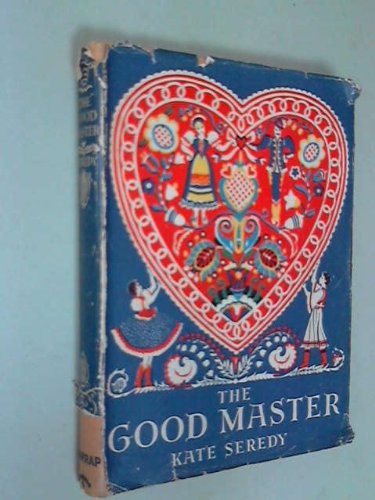
(The 1945 reprint shown above has an especially pretty cover. What I have is the 1935 first edition, though unfortunately a library discard. What you'll get, if you don't ask for a collectible early edition, will be a more recent reprint.)

Author: Kate Seredy

Date: 1935

Publisher: Viking

ISBN: none

Length: 210 pages

Illustrations: many black-and-white drawings, two-page color drawing as frontispiece

Quote: “My dear daughter Kate...is more than delicate. She is the most impossible, incredible, disobedient, headstrong little imp. And she needs more than fresh air—she needs a strong hand!”

When authors share their own given names with their fictional characters, the stories are likely to be autobiographical. Although this book doesn’t explain the precise points of resemblance, Seredy dedicated it (emphasis original) to “the wise, kind, and tolerant good master DR. WILLIAM MANNINGER...to say: Thank you.” Whether that means Dr. Manninger was her uncle, that Seredy’s own father sent her to live with her uncle (and aunt and cousin) after her mother died and Seredy did so well on their farm that her father was willing to move back to the farm for her sake, she doesn’t say (in the book).

The story is, in any case, about a child’s happiest memories of a year on a small farm in Hungary around the turn of the twentieth century, when she’s allowed to wear something like culottes at home but is told, for special occasions, that “all nice girls wear” skirts—plural—every skirt in their closet, all at once. “Only eighteen...I have thirty-six, but I am a married woman,” her uncle’s wife complacently explains, filling the doorway with the thirty-six skirts she’s managed to stretch over each other at one time. (As a matter of historical record, some Hungarian women who lived in town, at this period, expected themselves to show off how many skirts they owned every day, and admitted that they gave themselves backaches.)

Hungary was a Catholic country at this period, but (as the Pagan writer known as Zsuzsanna Budapest later discussed at length) some old Pagan customs survived, including the family-filtered Pagan ritual in which the fictional Kate meets her uncle’s neighbors: Per village custom, on Easter all the male villagers throw water on all the young women, who are expected to reward them with a decorated Easter egg apiece as well as a snack. During the following week the girls get to slosh water on the boys in revenge, but there’s no mention of their collecting any reward. Why would there be? In real life, as the older women undoubtedly explained to ten-year-old girls like Kate when they asked questions, only women produce “eggs”...

Why Kate’s name looks English (though in some parts of Europe the name “Kate” appears to spell the name English-speakers recognize as “Katya”), but her cousin’s name doesn’t, also remains unexplained. Mainly because the token Slav in my family was christened Johnny (in his case “John” was the short “pet” form ), if I’d been the editor of this book, Kate’s cousin and new best buddy would have been called Johnny. When English-speaking children see “Jancsi” on a page, we read “Janx-ie,” not “Yahn-chie.” One of my memories of being an early-reading Child Prodigy involves reading the story of the roundup in which Kate and “Janxie” let their horses take control of the stampeding wild herd.

It’s a good story, though, even if your memory of reading it is clouded by knowing that you read it all wrong, and even if a favorite term of endearment by which adults call Kate comes out in English as...a word that, in 1935, the editor really should have realized was no longer interchangeable with “kitten.” It did originally mean a female cat, and Kate obviously understands it that way, but in the U.S. other little girls who were encouraged to read this book, as children, would grow up to have a character explain “common” as “the worst word I knew, worse even than ‘pussy’.” (That’s in Katie Letcher Lyle’s more young-adult novel, I Will GoBarefoot All Summer For You, 1973.) Presumably Seredy got away with explaining her own use of that word as a literal translation, like the rather awkward scene in which Kate is bribed to drink fresh warm milk for breakfast with the title to a white horse whose name is translated as “Milky.”

Arguably Kate’s other adventures include more cautionary tales of her scrapes than happy scenes of her triumphs. She dives off the ferryboat and nearly drowns in the current, but Jancsi happens to be already riding a horse that can wade in to the rescue. She follows a band of cheerful thieving Gypsies with the intention of helping recover the things they’ve stolen from her uncle, but panics and flees when she smells the fumes of herbs thrown into the fire, perhaps to “enchant” her into sleeping and losing the way home, and has to be rescued by her uncle instead. On the other hand, she learns to ride horses, milk cows, cultivate flowers, spin, sew, and...teach! Not only do Kate and Jancsi live too far out in the country to go to school regularly, but Jancsi hadn’t even learned how to read and write until Kate started teaching him and the laborers what she knew.

For a community to need a ten-year-old “teacher” is obviously a disaster, and Seredy moves quickly past that scene...Does it count as a spoiler if every adult reader saw the happy ending coming, probably earlier than page 112? This is not a novel of suspense; it’s a teaching story, commemorating the nicest things the Slavic immigrants at the turn of the twentieth century hoped to bring to North America.

Read as lightly fictionalized nonfiction, it’s quite a pleasant child-sized “story.” It won a Newbery Award and therefore, like other Newbery winners, has been kept in print. Reprints cost $5 per book, $5 per package (you could probably fit six books this size into a package, and Seredy wrote several), + $1 per online payment. To order a doll dressed like the cover drawing on your copy, add $10. For the European Folk Art style binding shown in the picture above, send $20 per book. Amazon isn't even showing collectors' prices for first editions that were not used and discarded by libraries.