Sunday, April 23, 2023

Book Review: The Dream Giver

Title: The Dream Giver

Author: Bruce Wilkinson

Publisher: Multnomah

Date: 2003

ISBN: 1-59052-201-X

Length: 158 pages

Quote: “Do you believe every person on earth was born with a dream for his or her life?”

Wilkinson does. This follow-up, not part of the series that began with The Prayer of Jabez, is for and about Christians who dream about bigger and better ways to serve God, and it winds up to an appeal on behalf of Wilkinson’s own Dream of using the money he made from The Prayer of Jabez and related material to fund a medical missionary “Global Vision.” While that name leaves me cold I’m pleased to read that this record-selling writer wanted to invest his wealth in humanitarian mission work.

Along the way he shares general advice about how, in both intuitive and objective senses, people can say that God guides their pursuit of their dreams. He belabors a “parable” or prototype story where the source of big dreams is merely “the Dream Giver,” not even “God,” probably to avoid getting into debates and schisms about the extent to which Christians should take the idea of personal guidance from God literally. He discusses the ways his dreams have come true, leading through hard work, apparent failure, and some sudden, apparently undeserved successes.

Even in the Christian community, the publishing phenomenon that was The Prayer of Jabez caused a certain amount of unholy (and unhealthy) griping. What made Jabez so special? (My guess: his short prayer could be discussed in a short book whose small, user-friendly size and type were meant to lure readers into buying the rest of a series that presented Bible studies that expound on the same ideas summarized in The Dream Giver. Some people who are intimidated by one big book are willing to buy a series of small ones, so publishers like to do them every few years, and the rest is history.) What made the book about him so special? Wilkinson is a sound Bible student and a competent writer, but so are a lot of other Christians who never have had, and never will have, their perfectly good books become runaway bestsellers like The Prayer of Jabez. From some of the griping arose an odor (easily confused with parmesan cheese) of “Why the b…h… was it him instead of ME-e-e?”

For a mere blogger it’s easy, but for some lifelong teachers and authors it seems to be more difficult, to accept that in the normal course of events books do not sell like The Prayer of Jabez. In the normal course of events, if a Bible study book climbs high enough on booksellers’ “midlists” to get into secular bookstores, it’s doing well, and if it sells well in big-chain secular bookstores, that’s probably because the author is a movie star or former President of the United States or at least a bestselling novelist. So we can’t rule out the possibility that what happened with The Prayer of Jabez was a miracle, a special blessing poured out on Wilkinson for the benefit of his mission dream.

His "Teach the World Ministry" is still alive. He's eighty-three. His blog's a rehash of sections from his books, but he's still active, even in cyberspace.

So, will The Dream Giver seem like a review to those who read the whole Jabez series? Not exactly. Though full of Bible references, it’s more of a personal guide to identifying what your own big dream is and where you are on the road to making it come true. Wilkinson encourages readers but he’s honest: some people who deserved to see their dreams come true die before that happens. Sometimes their dreams have to be picked up and carried on by others. Christians do not necessarily attract to ourselves all the success we can vividly imagine ourselves having, no. Indeed, for some of us (like Grandma Bonnie Peters), too much attention to a vision of ultimate, ideal, spectacular success can lead us into decisions that undo the progress we’ve actually already made. Still, on the whole, most people do make some progress toward their dreams in their own lifetime; certainly those who have dreams and pursue them are happier than those who don’t, and more interesting to know. Therefore, those who are open to a Christian approach can benefit from a book that encourages Christians to pursue their dreams.

At…this age?” some may yelp, incredulously. Hey. There’s a reason why this book has the sharply focussed, full-color picture of Bruce Wilkinson, white hair and all; it’s on the inside flap, meaning publishers did not expect it to help sell the book because he’s all that handsome (those do look like his original teeth, at least). It is there to communicate that seniors, too, can apply whatever successes or at least experiences we’ve already gained toward the pursuit of our current Big Dreams. At the very least seniors with Big Dreams are livelier and more pleasant to look at than seniors who think their lives are over. A resolve to make good use of ten, twenty, fifty or however many years one has left won’t make one a movie star but it will keep one interesting.

So by all means, let this book encourage you to dream of the best, be prepared for the worst, and begin (or carry on with) your own quest to realize your Big Dream. Specific attention is given to working through fear, coping with unexpected opposition, walking through “Waste Land” periods without noticeable progress, laying all on the altar, challenging “giant” obstacles, and seeing your dream grow when it begins to come true.

Secular encouragement often recommends that “laying all on the altar” means sacrificing everything else in pursuit of your dream. Wilkinson provides a valuable corrective, which I wish GBP had read. Christians are serving God, not our own dreams. Therefore what may have to be sacrificed is, for the time being, our dreams themselves. To a lot of people this chapter may not make much sense and may seem like an unnecessary “downer.” I want to expound on it because I’ve seen a situation where it made perfect sense. Perhaps it will make sense to readers, too, if they understand the kind of thing that a few—not all—Christians encounter in the pursuit of our dreams.

This is undoubtedly why the Bible includes that awful story about the sacrifice of Isaac. Isaac was a good thing; killing him would have been a very bad thing. God did not, in fact, want that to happen. God did want Abraham and all the people to be absolutely clear about Abraham’s commitment to God ahead of Isaac.

With hindsight it became clear to those involved with GBP’s Allergy-Ease Foods that the business prospered as long as adherence to God’s biblical guidelines for business practice were followed; when GBP wanted to move ahead too fast, selling land and attempting to take out loans, she lost everything. It is not always the case, of course, that our conscious dreams for our lives “fly forgotten as a dream dies at the opening day” when, and because, we make a decision that might be morally or ethically debatable. GBP was quite right in pleading, “But lots of other people build fortunes from debts!” They do but, perhaps because she had preached and practiced “Owe no man any thing” for so long, she did not. And there seems little doubt that if she had sacrificed the dream of placing her products in big-chain stores across the continent (when she didn’t even have a way to produce that many of them), if she had been content to keep placing a carton of frozen food in an independent store here and a batch of soup in a restaurant there, she would have had a thriving business to hand down to the little girl in the drawing on the box. (That girl, who has a disability and a talent for cooking, had become the primary reason for wanting to keep the business growing and hand it down to her. She seemed to need to be the core of a family business. She still does. She grew up to be a “disabled” ward of the State.)

We are not meant to abandon our dreams lightly, we are certainly not meant literally to barbecue our children, but some of us are meant to make the decision to follow God’s guidelines even at the expense of “having something bigger and/or better to leave to the children.” I belabor this point here because I know a lot of people won’t understand the idea of being called to sacrifice our dreams. It does not make a lot of sense until you’ve seen it happen. I have, and I say it will make sense to those who need to understand it in their own way and time.

Not all readers will necessarily need to understand it. I believe the debunking of the 1980s’ “prosperity gospel” prepared me to understand how it might have been relevant to me. I don’t spend a lot of time bragging about an increasingly distant past, but yes, Gentle Readers, this penniless old widow whose confessions of poverty probably alienated some readers forevermore, this writer known as Priscilla King, was once a model of success and prosperity. For almost twenty years, I felt that I was directly guided in such a way that almost everything I did prospered.

While unemployable, really disabled by mononucleosis, and desperate I advertised typing and odd jobs; that became the odd jobs service that mopped up all the typing jobs and beat some big greedy agencies, which deserved it, out of town.

Also out of desperation, I agreed to be a backup foster parent; that decision never made much logical sense to me, but it worked well.

On what was frankly a vindictive whim, believing that massage didn’t do anyone any real good but I could certainly do it in a way that was less of a rip-off than my worst client’s business, I added massage to our list of odd jobs; clients convinced me that massage can provide real benefits so I took the exam, took courses, and made that a profitable business as the market for typing services dried up.

My chronic, deniable poor health started to turn into an undeniable, life-threatening illness; I found a cure for that illness and for the less acute, more chronic illness of several family members.

Mainly in return for a good business space, I hired a profoundly discouraged older man, who had been pushed out of his job in the belief that he had cancer, though he didn’t have the kind for which he’d been treated. He turned out to have impressive talents and, after a few years as best friends and teammates, we warily entered a marriage that made Carville and Matalin look like a well-matched couple. Until a different, unsuspected kind of cancer came back and killed him, we lived happily ever after.

Born dyspeptic, dyslexic, and never “the pretty one” in any gathering of three or more relatives, I was guided, partly through prayer and Bible study, yes, to grow into the kind of person who frequently hears “But everybody caaaan’t be as strong/smart/pretty as you are, you successful business owner, professional writer, diplomat’s trophy wife.” Not only was I seen as a blessed person; I myself felt almost more blessed than I could stand to be. That was in my late thirties. Then I hit forty. Ouch.

So what happened? I’ve often wondered, too. People always want to believe that any loss or lack in an adult’s life is the person’s own fault, somehow. People want to believe that about ourselves; if we were the ones who made a wrong decision, maybe we can change it, somehow, and get our lives back on track! But I’ve never been able to find a big mistake in my own life story, though people who didn’t know all of the story have often thought they’d found one. There were things I might have done differently, and better. There were things I blithely assumed to be true that I now know were not true. None of those things would have changed the outcome of the story, so far as I’ve ever been able to see. There were things that some people wanted to suggest were big mistakes--like affirming "introvert" as my primary identity label rather than trying to change or hide it, like celebrating my business's ethnic diversity and my own; I’ve considered whether those things were big mistakes and concluded, every time, that there’s no reason to believe they were mistakes at all. Apart from the first unwelcome development, my husband’s having multiple myeloma, all the other unwelcome developments in the story of my pre-midlife crisis were things other people did wrong. Some individuals know very well who they are and what they did, but what I feel that God revealed to me was that too many people have swallowed the socialists’ lie that all we need to do to “help” our friends is flap our mouths at them. I don’t often receive visual impressions in prayer but there are reasons, which some local lurkers should recognize, why more than once I prayed in desperation, “Lord, why didn’t this and that work? Why isn’t anything working? Why don’t You help?” and kept seeing the image of a very sick patient trying, and failing, to move his hands. We are the Body of Christ and some people’s belief that their babble, even if it refers to the Bible, is any kind of help to anybody (which St. James specifically debunked in the apostolic era) simply amounts to a paralysis of Christ’s hands. That’s the only explanation that’s ever made sense to me.

Sometimes, because a few people covet my land, someone sweetly hints, "Maybe God was leading you to be in a different place?" The impression I received was consistently that my marriage, and my time in Washington, were "by permission not by commandment," that I was meant to be where I am. It has seemed to me that my early success in Washington was all my own, that it was vulnerable for that reason, and that my next success, if I had one, was meant to be secured by other people's investments along with mine.

So, relative to The Dream Giver, I was sailing along and a tidal wave suddenly dumped my boat right in the middle of the Waste Land. And there, in some ways, I’ve been ever since; though one thing some people didn’t realize is that, throughout those years of prosperity in Washington, my dream actually involved being able to live at home. (I lived in Washington and various suburbs for a long time, with a sincere love and gratitude for the city—but the time I spent there was a means to an end that involved not having to spend any great amount of time in any city.) And although I might not have agreed with this part of Wilkinson’s vision in 2003, I’ve come to think it’s true. There are “dreamers” who end up spending all of the latter part of their lives in the Waste Land. Maybe there’s some purpose for that, or at least maybe they invent one. Maybe they help others pass through the Waste Land; maybe they leave their dreams behind for someone else to pick up and take right out of the Waste Land after they’ve died and been buried there. God knows. I don’t. Whatever beneficial purpose these things serve is not consistently visible to the human eye. God’s Creation is wasteful. Whenever any progress is made, it still always seems that an awful lot of people had to suffer and die before rabies vaccine could be invented, or water filtering technology could reach more than a ceremonial kind of usefulness, or the world could reach a consensus that hating whole ethnic groups is evil.

What the mind can conceive, and there may be every reason to believe, not everyone will necessarily achieve. And of course our social Comfort Zones tend to be lavishly supplied with Border Bullies who just love telling everyone that our big mistake was pursuing our silly dreams in the first place.

They can think of uglier lies than that, and they do. One I’ve heard is “God wants this source of distress, whatever it is, to be in your life because you need it! You need to give thanks for your pain/disability/poverty/failure/bereavement, because God sent it to you, because you needed it in order to grow spiritually!” The best answer to that is of course “Show me the Bible verse that teaches that God is less intelligent than any competent teenaged baby-sitter who knows that children learn best from rewards, or less charitable than any decent human being who knows that people who seem ‘sweet’ rather than ‘bitter’ when things go wrong are people who seemed ‘sweet’ rather than ‘bitter’ in the beginning. Your ‘God’ is what the Bible calls Satan, and I neither thank nor praise nor worship that. Get thee behind me Satan!

Perhaps we’re better off with Wilkinson’s acceptance of the facts: we don’t know why some people achieve their dreams and others spend years in Waste Lands, though God’s gift of Consequence to human beings, which allows us to influence the outcome of others’ actions in what God may well find reward-worthy or blame-worthy ways, probably has something to do with it. Perhaps it’s literally true that in the resurrection our minds, which will be the trees of which our mortal minds are merely seeds, will be able to understand this. In our present form we’re not.

I expect, though, that people who read The Dream Giver will find themselves able to agree on one thing: it’s better to follow a dream that seems to lead into a Waste Land experience than it is to give up your dreams altogether. If I was never meant to be a great writer, which the generations after mine will be able to judge better than we are, I certainly was never built to do what’s most often recommended as the alternative—stay home and have babies; and I have indisputably had a vivid, varied, mostly enjoyable, and highly educational life as a writer, however minor or mediocre. If other people have forfeited their dreams by putting their dreams ahead of God (Saul in the Bible comes to mind) or simply died in Waste Lands (Jeremiah in the Bible comes to mind), well, at least they had dreams.

Saturday, April 22, 2023

The Beast Withdraws the Better to Spring (Kitten Post)

Here is the Petfinder post for Friday, with reader comments taken into account, and time taken up by tedious Google updates, and so on...

I seriously think that in a well regulated society, there'd be no professional social workers. Making society work would be everybody's responsibility and nobody's full-time profession. 

I'll grant that otherwise nice people become social workers, just as otherwise decent and even intelligent people become coal miners, just because that's a job they're able to do in a place where they want to live. Almost anything people do in order to provide for their families is better than failing to provide for their families. When the fad for psychotherapy-for-everybody broke, even Wayne Dyer became a motivational speaker, I became a massage therapist, a school friend became an accountant, and some people found it easy and convenient to become social workers. 

But it does raise red flags, for me, that anyone--worst of all a social worker--would be more concerned about whether an article "downs" social workers, i.e. makes them feel bad about themselves, than about whether it's about a problem they can help to solve. "Me-me-me-and-my-widdle-fee-wings" come ahead of the good of society? ????? At this web site adults get to feel good about themselves when they detach from their immediate feelings and make choices for the good of society. If you want to feel good about having developed the ability to mess up someone else's floor, you really need to be a kitten. 

Those who JUST want to see the kittens are invited to stop reading here and scroll down till you see kitten pictures. You can share the links and help picture the kittens homes without steering people to this web site. 

During the week I read some of the details of the 2021 news story about Oakley Carlson, the little girl who disappeared under incredibly incriminating circumstances. 

Just months after being born to two known methamphetamine users, the baby Oakley was placed in foster care, apparently identified as a candidate for adoption. She was a remarkably photogenic child; apparently no published picture of her was taken for commercial modelling purposes, but any of them could have been. I've seen no claims that she was intelligent, but she was happy and healthy and, when told that she had a slightly older sister with disabilities, she wanted to meet her sister. 

Why was the sister not in foster care, some asked. It's a valid question. Andrew Carlson and his girlfriend Jordan Bowers were not people with whom you or I would leave a goldfish. They had three other children besides Oakley. A suspicion arises that the others, at least one of whom was officially considered to have "disabilities," might just have seemed less adorable and adoptable because they were less pretty than Oakley--most children are. Evidence does not suggest that they were better treated than Oakley. On the contrary. Bowers had other babies with other men, one of whom has petitioned for a "permanent no-contact order" to keep her away from their offspring. Hair samples from the three children living with Carlson and Bowers showed, when tested, that the children had been ingesting "substantial amounts" of methamphetamine. Photos of Carlson and Bowers consistently show that both have a drug look, typical of meth users--and worse than that, when little Oakley visited her grandmother after spending just a few weeks in their home, her grandmother told police that Oakley's pretty face was developing that look. Bowers was an accomplished and well known thief. Carlson had been arrested for beating Bowers, though when Oakley visited her natural parents at home she reported that Bowers hit him, too. Carlson was supposed to be in a "treatment" program for domestic violence when Oakley was returned to her natural parents' home, but had been "discharged" for not reporting to the program as ordered. 

Oakley, as the world now knows, was last verifiably seen alive on the day after her former foster mother requested the sheriff check on her. Carlson and Bowers weren't pleased with Mrs. Carlson's concerns about her, either; they'd had no further contact with Carlson's parents since. Outside interest in Oakley's health made the child disappear.  

This was in Washington. Generally it's been considered a very "blue" State, pro-government, not pro-privacy. But Andrew Carlson was a "little guy" if ever one was. He was a laborer if he worked at all. He may have had relatives (or drug customers) in local government, but nobody seems to have pinpointed any connections. It seems to have been policy to turn a blind eye to the fact that he all but literally walked around carrying a sign to tell people "I am an abuser...of a drug well known to promote abuse of people." Why were government officials as protective of him as they were? 

* When Oakley's foster mother, who wanted to adopt Oakley, thought it was awfully early in the domestic violence "treatment" program for Oakley to go back to Carlson and Bowers, the state office's reaction was to move the date for "family reunification" even closer.

* When the foster mother reported what Oakley had told her about Bowers and Carlson fighting, a  male social worker "spoke very sternly" to the foster mother, saying that "since she did not witness any incidents firsthand, he presumed that her information was inaccurate." (Presumed, indeed. There's that failure of society to teach men that, if they have any questions about a woman's word, they need to be very careful about delaying obedience with a humble "I'm sorry, I don't understand," lest their fitness to do any job that involves interaction with anything but garbage cans be called into permanent doubt.) 

* When Oakley's grandmother expressed concerns about the child's developing a drug look in just a few weeks with her druggy parents, social workers ignored her, too.

* When the foster parents expressed concern about Carlson and Bowers having been fired from jobs for drug abuse, they were told that "Being poor isn't a reason for someone to not have their children." 

* Even when legislators proposed closer regulation of "family reunification" in cases where parents' unfitness was caused by drug addiction, social workers led the opposition to a bill nicknamed the Oakley Carlson Act, saying it "would result in a high level of intrusive surveillance." When questioned by the well-intentioned citizens who wanted more surveillance for drug-abusing parents, not for all parents but for those known to be incompetent as a result of their criminal behavior, government employees admitted that their real complaint was that supervising these unincarcerated criminals would not pay for the "treatment facility and ongoing services necessary." 

Have we seen a pattern like this before? We have. La bete recule pour mieux sauter...the beast withdraws, the better to spring.

When state governments have been encouraged to know their place and not over-regulate citizens' behavior, they have strategically under-regulated things enough to create levels of anarchy that would cause citizens to demand some regulations. There were in the past, for example, states where it was considered unnecessary to collect property taxes; when only landowners who paid property taxes had a vote, people assumed that most men would want to be seen paying their taxes like good fellows. In fact, while some men did, states like Kentucky had significant numbers of small farmers who would rather save ten dollars than vote, any day. These slackers exploited the benefits of citizenship while paying no taxes until citizens demanded that a government office be authorized to keep track of all property owners and collect taxes from every one.

More recently Washington, D.C., didn't set up regulations to make marriages a source of revenue, but upheld common-law marriage in situations where the probability was that people had not been living together as couples, even in situations where it was easy for foreigners who wanted to work in the United States to exploit blatantly false claims of marriage to citizens. Any summer student could, in theory, rent a room from a single adult, present any mail they'd received as proof that they'd been living in the person's house, and, whether the home owner was also living in the house or not, claim that they were now married to the home owner. And people did exploit this lack of regulations until D.C. joined the growing list of places where churches had to register for state regulation in order for even church weddings to be upheld by government.

Government employees are unlikely to be honestly suffering from any excess of scruples about intruding on citizens' rights with laws like the Oakley Carlson Act. If they hesitate to over-regulate, we can be sure that what they want is support, financial even more than moral, for intrusive surveillance and over-regulation. Some social workers would love to be authorized to supervise the parenting behavior of every parent who's formed a habit of drinking beer while watching the Sunday afternoon football game. They just want to make sure they're paid for it. So they adopt strategic policies of pushing under-regulation to absurdity.

Any system of regulation of human behavior will sooner or later be corrupted. There are, however, counter-strategies for controlling the "beast" of control freaks in government. Instead of giving in to the "We need more funding to regulate this" with the expected reflex response, "We just want keep meth heads from killing their babies! We'll raise the money somehow...by overregulating some legitimate activity to death, demanding heavy license fees from small businesses, e.g., or from couples who had assumed that any church wedding would be upheld by government"...citizens and lawmakers could cut the complaints about funding short. "We'll revise the budget to free up funding for this by cutting out funding for something that seems less important. Why not reassign to the supervision of unincarcerated criminals all the staff and funding that were formerly directed to enforcing attendance at pre-choice public schools." 

Beasts must be controlled.

For those who have earned or are earning their children's school fees by working inside a beastly system--like yeasts in the intestines of the beast--some emotional consolation may be gained from the company of a friendly, lovable, literal beast.

Kittens are tiny, fluffy, adorable, predatory beasts. They spend a lot of time demonstrating how to withdraw the better to spring. 

It's been said that kittens are naturally housebroken. This is true--sort of. Kittens are born at a rather early stage of development. They can't see, they can't hear, they can't eat solid food, and they can't even get rid of milk after they've digested what nourishment they get from milk. Kitten digest consists of odorless little curds of cat's-milk cheese and, while cleaning her kittens, the mother cat eats these. During the second month of their lives, as their eyes and ears open and their muscles build strength, kittens get control of their excretory processes. This coincides with their developing appetites for solid food and the mother cat's ceasing to clean their bottoms. 

From a kitten's point of view the ability to toddle out of its little den and make a mess on the floor is a milestone in life, something to share with loved ones. Usually that means the mother and perhaps siblings. If a kitten calls your attention, fouls your floor, and beams pride, joy, and innocence up at you, probably it really expects you to share the thrill.

It needs, of course, to learn what the litter box or the sand pit is for...but even while saying "No!", placing the kitten where you want it to go to do that sort of thing, and cleaning up the mess, you need to understand that a kitten who does this disgusting little trick once or twice is telling you it's going to be your pet. It shared this moment with you because it likes you.

There are other moments in life with kittens when their demonstrations of affection will continue to make us wonder about the whole relationship. Cats can bite hard enough to hurt humans; it's not easy for them to break our necks, as they instinctively do to their prey, and most wild cats just don't seem to care for the taste of humans anyway, but they have the ability to eat our flesh. Kittens almost never bite hard enough to do any damage, but they just love to roll over and invite us to touch their underside so they can stick all their little teeth and claws into our hands. But...hands, and sometimes ankles or feet, are what they "attack." They don't go for our eyes or throats. Growing kittens inflict surface wounds on their humans but we must remember, as we push back until the kitten disengages, walk away, and disinfect the wounds, that they're acting on instincts that tell them how to scratch their siblings, who are covered in fur. Some kittens can learn to "be gentle" when playing with humans, but since they need to practice being predators it's generally recommended that at least two kittens be adopted at once and that you keep a few "toys" handy for playing with them. 

What is a cat toy? Anything the cat can safely practice hunting and killing. If you have a fast-growing hedge you can use hedge trimmings, as I usually do. Some cats like to chase rolling balls, and may even figure out that bringing the ball back to you will make you throw it again. Some cats like to play with belts or socks. More elaborate, expensive toys designed just to amuse cats tend to make more impression on humans than on cats, but cats will play with them as long as humans do. 

Indoor cats, of course, often like to play with things they see humans playing with, such as yarn and thread, pens and pencils, expensive dust catchers humans think look decorative, chessboards. sometimes electronics. Some indoor kittens are fascinated by the way human feet move under sheets, too, and some like to capture the socks of people who take their shoes off and walk around in their socks indoors.

Kittens naturally want meals a little before sunrise and a little before sunset. They are naturally most active at the same time their prey species are. Indoor kittens often show an instinctive tendency to wake their humans at six o'clock every morning, often by pouncing on those tempting toes if they are allowed in bedrooms.

Nevertheless, all right-minded people agree that, on the whole, kittens are fun. Their behavior has reasons. They might not be able to explain those reasons in logical terms if they could speak, but if you pay attention, you can. You can figure out why the kitten is doing things you don't like and how to get it to do something different that you like better. This is a real achievement and should make you feel good about yourself. Even if you don't succeed, a purring kitten magically makes you feel good about life in general, anyway.

Here are some of America's most telegenic adoptable kittens--picks from participating animal shelters' photos displayed at Petfinder.com, from New York, Washington, and Atlanta. Obviously I can only judge the photos. If you visit the shelters, animals who didn't photograph so well may be even more adorable, in real life, than the ones who did.

Zipcode 10101: Blue's Babes from New York City 


All that's known about their purrsonalities so far is that two are male and two are female, and the shelter insists that at least two be adopted together.

Zipcode 20202: Florence from D.C. 


This was not the cutest cat picture on the page.. Not even close. The cutest cat picture, by far, turned out to belong to a kitten someone had already claimed. Well, my opinion, for what it's worth, is that it's hard to go wrong with a dark Tortie, though this one is classified as long-haired, expected to be even fluffier and need daily grooming assistance as she grows up. There's another kitten the same age the shelter recommends adopting with her, unless you're already living with a cat.

Zipcode 30303: Saturn from Atlanta 


Actually she looks too little to be adopted. The shelter staff don't say a word. She and other very young kittens the same shelter calls Venus and Mars may be orphans. Sometimes a spayed female cat likes to adopt very young kittens, and may induce lactation and thus fill in whatever nutrient deficiencies may have been produced by abrupt weaning. If you live with a cat like that, consider adopting orphan kittens.

The Petfinder kittens page for Atlanta was a mess this week. Pages have been created for several kittens who either don't have photos, or have photos that don't make clear that they are kittens. If you go to the shelters you may be pleasantly surprised. 

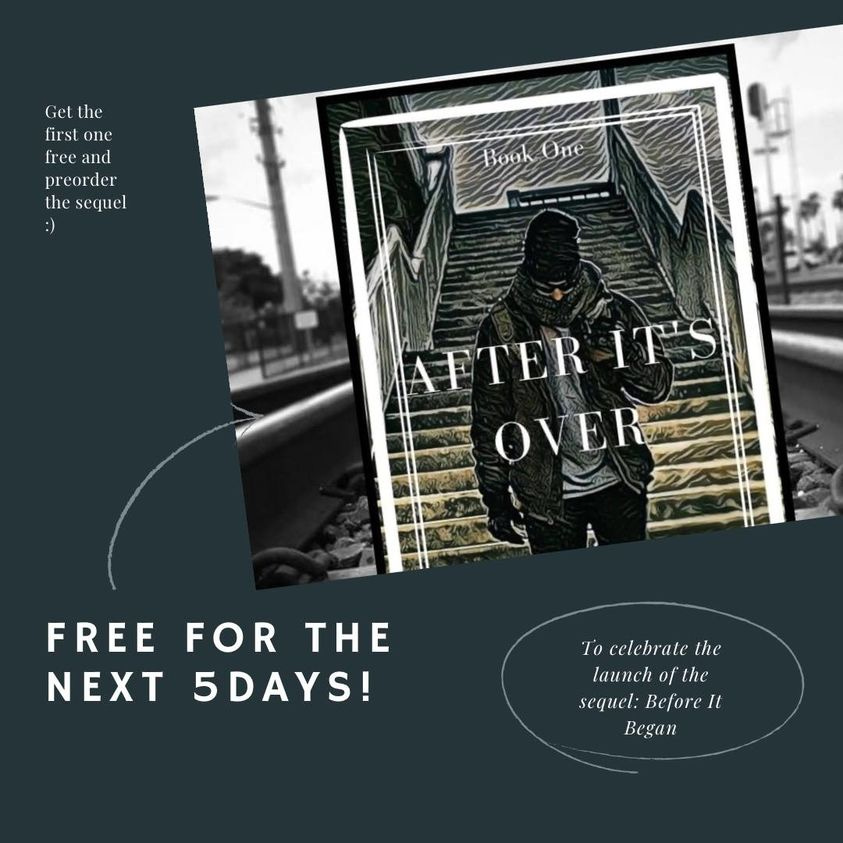
Book Review: After It's Over (Updated for the Temporary Giveaway)

Title: After It's Over 

Author: Hunter S. Chadwick

Date: 2022

Publisher: Clarity 4 Truth

ISBN: 9798848118582

Quote: "It didn't have to be this way...This thought came frequently to Reece."

These are the opening lines of a near-future science fiction novel with a twist. Reece isn't going to save the world in the course of this book; he's going to be prepared to be the man of the hour who will, along with a sort of commanding officer, make the effort. What they'll make the effort to do is what readers find out by reading the book. How it will go remains to be disclosed in a sequel. 

What readers will love: If they're a most often male type of reader who's not interested in the linguistics or the creative visualization or the philosophy that go into a story, but just want to know what happened, they'll like After It's Over. It's a lean, clean, action-driven story. I don't know whether that type of reader ever reads book blogs, but maybe you know readers like that. They will like this book.

It's been said that when the events in a story are going to be fantastic, the characters need to be as generic as possible; these characters are. Reece is the classic unlikely hero who would have been an ordinary quiet working man if civilization weren't so close to collapse. Al is the older, tougher mentor who takes command as Reece's peaceful neighborhood is forced to become a sort of militia. There's a classic false lover--Shelly Tran, probably named less to suggest Vietnamese ancestry than to suggest that she's a transient acquaintance who never came out of her shell enough to love Reece--and, toward the end of this book, a woman who may be a Real Heroine, and Reece notices a few of his buddies' female relatives enough to know their names, but mostly this is a male-bonding story: While circumstances are as bad as they are, Reece admits, he doesn't want a wife and children. As a result, about all we see of Reece's character is that he doesn't think of himself as heroic and would not voluntarily get into situations that call for heroism, but if he's trapped in that kind of situation, he's not going to let his friends down if he can help it. 

There are shoot-out scenes. There is a friend Reece tries to save, but the friend's wound is fatal. There's a good deal of less violent action, working to replace what's been lost, taking road trips in a world with fast-shrinking gas reserves. 

There is some religious content. Not much. No character talks about being a Christian. Reece is one, and apparently most of his friends are Christians too. 

There is "conservative" political content. No critical race theory; Shelly may be Vietnamese, Juanita is definitely Mexican, and I found myself picturing Big Al being played by Mr. T, but we're not told much about how people look. No concern about classes; in this novel rich people's bad decisions clearly led to the economic depression that is "this way," but well-off people (scientists) may be able to lead everyone back to a better "way," and ordinary people preferred the "way" things were before 2020. Women seem to be smart and tough, and one of them may have solved the central problem of her fictional world, but men still do the shooting. Globalism and the exploitation of the coronavirus panic are the problems the Unlikely Band of Heroes are out to solve. 

What some readers will hate: The story doesn't feel self-contained. At the end we don't know whether the couple will be reunited, we don't know whether the possible Real Heroine will be Reece's true love or whether Shelly will improve, and worst of all, we can't be sure that Reece's mission will succeed. We just have to read the sequel. 

To celebrate the launch of the said sequel, here's a temporary link you can use to read After It's Over FREE for a short time:

After It’s Over is Free!

To celebrate the release of Before It Began, I’m making the Kindle version of the first book After It’s Over free through release day, April 24th. I want everyone to own a copy and if you’re willing would you share the image below and a link to the book on your own social media? Here’s the link: https://www.amazon.com/dp/B0BF6T5HNZ?&&&&language=en_US&ref_=as_li_ss_tl

May be a graphic of 1 person and text that says 'Get the first one free and preorder the sequel Book One AFTER IT'S OVER FREE FOR THE NEXT 5DAYS! Το celebrate Toche the launch of the sequel: Before It Began'

Friday, April 21, 2023

Status Update: Where Are Today's Posts?

Believe it or not, I wrote a post for today. It was going to be a Petfinder post. It was going to lead from current (human) events to cats, with pictures of unbearably cute kittens.

I wrote it, and then I thought, "This is heavy going for people who aren't political, don't think of bad news as problems to solve, and just want to look at cute fluffy kittycats."

While giving this matter further deliberation I got involved in a hack writing job, went into town to do errands, and forgot to pick the photogenic fluffballs.

Petfinder is automated, so the kittycats will appear tomorrow evening when I come back online. 

Meanwhile, Gentle Readers, please feel free to weigh in...The topic was what it means, politically, when social workers literally let people get away with murder while adhering to the letter of the law. The news stories cited were about murders. Do youall think that that's too heavy a topic to introduce into an article that's meant to lead up to kitten pictures? 

Offline for 24 hours...see y'all tomorrow evening...

Thursday, April 20, 2023

Book Review: Where I'm Coming From

Title: Where I'm Coming From 

Author: Barbara Brandon-Croft

Date: 2023

Publisher: Drawn & Quarterly (Farrar Straus)

ISBN: 978-1-77046-568-8

Length: 186 e-pages

Quote: "You should know better than to listen to me; I certainly don't."

So few women cartoonists have been syndicated that it was still possible for Barbara Brandon-Croft to be the first Black American woman who had a syndicated cartoon strip. 

She drew the strip only weekly; it wasn't widely syndicated, probably not, for example, appearing in your daily newspaper. I'd seen reprints of some of these cartoons but hadn't seen them printed regularly as a series.

One thing that made the cartoons meaningful was the simplicity of the drawings. Brandon-Croft always showed her characters facing the reader. At first she drew only the faces; then, to make the facial expressions clearer, she started adding hands, sometimes holding something (usually a phone), often detached from the faces as if the characters' shirts faded into the background. 

There were a few extra characters beside the nine regulars and the daughter who accompanied one of them. Two of the extras appear in this book. Men were part of the storyline but were never drawn in the cartoons; women were either talking to them on the phone or talking about them. All nine primary characters were single, although one of them had a daughter. All could be described as baby-boomers; they weren't all the same age, but apparently all grew up in the same neighborhood and had been friends for a long time. 

All were Black left-wingers, though Monica, whose isolation is emphasized by her never appearing in a conversation with the others in this book, usually appeared talking about the fact that she looked White. If there was any more to Monica's story than that, it's not been selected for reprinting in this book. I feel that Monica has been tokenized and discriminated against. She reads, in this book, like a character thrown in because people asked for her, created entirely from reader suggestions, not based on anyone Brandon-Croft really knew. The others seem to have to be based on people Brandon-Croft knew.

The others are Alisha, the sweet spiritual type; Cheryl, the loud, snarky, bossy woman (who is exploited by a boyfriend); Jackie, the emotional one; Judy, the supportive listening friend; Lekesia, the political nut who hardly seems to have time left over for a personal life other than work and activism; Lydia, the mother, usually drawn with daughter in tow; Nicole, the one who knows she's cute and dreads getting older; and Sonya, whom the author described as a "true stand-by-your-man kind of woman" who can stay loyal to her boyfriend because she "don't take no mess" from him, but in this book we don't see her relationship and recognize her as the older one with the wardrobe of hats. 

Many of their expressions of support for each other, their disagreements, their quarrels (as distinct from disagreements), and their demonstrations of enduring and endearing friendship, also happen to be funny. Still, the point of a cartoon series called Where I'm Coming From was to make political statements that represent the group "Black women." They're meant to resonate with readers who are either Black or women, but perhaps even more they're meant to explain things to readers who are neither.

One of the extras, we're told, is a lesbian. In the one cartoon that shows her face, in this book, before Cheryl introduces her Cousin Dee to Alisha, she warns Dee that it's not necessary "to tell the entire world what your sexual preference is," though Dee is feeling infatuated with the liberation of having told her family. On being introduced Alisha says, "Hi. How are you?" and Dee blurts, "I'm gay. How are you?" Well...that minority-within-a-minority was represented. Now, I asked as I looked at that cartoon, what about the conservatives?

But I have to be fair. Brandon-Croft, daughter of cartoonist Brumsic Brandon, grew up in Washington, D.C. In a city where trimming the federal budget instantly brings to mind the un-neighborly idea of taking away the jobs that brought your neighbors to your neighborhood, you don't hear a lot from the conservatives. They're there, but they tend to be more discreet than Cousin Dee. Staying balanced is most easily done on those regular road trips back to the home state. For a minority of Washingtonians the District is their home state...or something. That's a political issue this book does not raise.

Allowing for its political bias, I liked this book and expect most readers will, too, if they let themselves. The characters' expressions are a delight, and their overall solidarity, even when they're quarrelling, is an inspiration.


Inappropriate Levity

Another contest entry that didn't win...

The window pops like a distant gunshot. Shan ducks behind the salad bar, grazing the legs of the guy who’s been replacing the melon cubes. Fortunately the tray in his hands was empty and stays on top of the salad bar. Standing upright, she sees the front end of a dented white 2015 Prius inside the front window, splintered wood and smashed glass covering the red-black-and-gold pattern on the carpet, bench seats and tables for four shoved into each other. A woman in a black blouse is inspecting the face of a child who squirms away, protesting, “I’m fine.” Another woman, less lucky, clutches her arm above a surface wound near the elbow, pressing to stop the trickle of blood. A man, looking sheepish, emerges from under a broken table, straightens his tie and retucks his shirt. The young man picks Shan’s clean salad plate off the floor. Her seat at one of the tables near the side wall is undisturbed. Jon is watching her, anxiety showing on his face. The restaurant staff huddle around the counter while someone in an apron steps forward to confront the driver. Everyone else seems to be chattering at once. Shan can’t hear what the manager, or acting manager, and the trembling old man who opens the door have to say.

The restaurant is obviously not going to be a quiet place to eat and chat. She waves her hand, beckoning Jon, and walks to the counter. “Could I have a takeout box, please.”

“On the house!” a woman giggles, moving behind the cash register. “The cash register went down!”

What a lot of buffet food will go to waste. Shan loads the box with enough food for two meals.

While she’s loading Jon joins her, loading a box too. Great minds think alike. The young man, who has removed the dropped plate and tray from the salad bar area, wipes a dribble of congealing sauce from between trays on the buffet bar and tells them that the driver was “just overmedicated,” but “They’re taking him back to the hospital. He had just come from a clinic, had some tests done. An ambulance is on the way. If you don’t mind, could you exit through the back door. When you’re ready, I mean.”

They take their boxes to a picnic table near the river. “Should have done this in the first place,” Jon says. “It’s turning into a beautiful afternoon.”

“Perfect,” Shan agrees.

“Did you see the look on that man’s face when he rolled in,” Jon says, dipping a piece of fish in sauce. “Like he’d been asleep behind the wheel. Well, he woke up!”

“I wonder what he was being tested for,” Shan says. “I know, for some of those tests, people get sedated.”

“I wanna be sedated!” Jon sings. “Let me have a colon-oscopy,” he improvises. “After that a, a...an ocul-oscopy. After that I might need an autopsy...”

“I hope not,” Shan chortles. “That’s what they do with dead bodies, y’know.”

“Then I want a tonsillectomy,” Jon continues, “and after that an appendectomy. Oh, I just wanna be sedated...”

Shan is thinking that hospitals really ought to provide taxi service, not allow people to drive themselves home when they’ve been sedated. There’s nothing funny about it. Both of them had trouble with wisdom teeth. Did Jon not fall asleep in the back of the car, on the way home from the dental surgery? Is that possible? What if the frail old man had been driving in traffic?

“And then give me a lobotomy!” Jon shifts into a higher key, clutching at the edge of her attention. “Maybe an episiotomy...”

Shan does giggle at that. “Sounds painful. I didn’t know you were all that much into pain.”

Maybe he is, though, she thinks. Maybe that will help if he ever gets one of those yucky diseases the advertisers always nag older men about.

Maybe he’s on to the right idea. Maybe inappropriate levity does help. You can’t do much about some things you’d like to change, but you might as well laugh as cry.

Wednesday, April 19, 2023

Morgan Griffith's Progress Report

From U.S. Representative Morgan Griffith (R-VA-9), with one editorial comment here: This web site wants to see H.R. 1 pass...amended to require that utility companies will first invest in their communities, offering to install solar collectors above roofs and paved areas on clients' property, and paying clients the fair market value of all energy collected, before they spend any money exploring other sources of energy. And then they should update existing plants before they propose to build new ones. 

And additionally I'd like to see something in there about the grid of electric power lines requiring regular maintenance by local employees, with NO use of poisons, minimal digging and burning, and prompt cutting and pruning before branches fall into power lines. We need fewer power lines. We need to be phasing out "grids." But if the companies are allowed to maintain power lines, they need to maintain them in ways that are safe for the people they serve...specifically limiting any "spraying" to pure H2O, although they should be allowed to spray that on either plant or insect nuisances at the temperature they find useful, i.e. boiling hot. Boiling water is an infallible pesticide and, when used in moderation, it's actually good for non-nuisances.

"

A Successful First Quarter

I want to take a chance to reflect on what I have been working on thus far and what we have accomplished in the House of Representatives.

I started this year securing significant changes to the House rules. The Holman rule was reinstituted. It can be used to help control federal spending. I also fought to tighten the House’s interpretation of germaneness, hopefully leading to smaller bills. The House also instituted my single purpose rule, which has never existed before in the U.S. House of Representatives.

Committee Work

Since January, the Energy and Commerce (E&C) Committee, on which I sit, has wasted to no time delving into the most pressing issues facing our nation. In these first three months, we’ve held over 20 hearings, including four Oversight and Investigations Subcommittee hearings which I have chaired.

The Committee has held roundtables, hearings, and I chaired a bipartisan joint field hearing in McAllen, Texas, to examine our country’s fentanyl crisis and issues related to unaccompanied minors.

I introduced legislation to permanently schedule fentanyl analogues, which have been scheduled on a temporary basis. The HALT Fentanyl Act passed the full Committee on March 24 and now heads to the House floor for a vote.

The Committee spent considerable time examining the origins of the COVID-19 pandemic. For almost three years, questions on how the pandemic started have been unanswered. The E&C Committee has brought in the heads of the National Institute of Health, the U.S. Food and Drug Administration, and the U.S. Centers for Disease Control and Protection, as well as a Government Accountability Office official and multiple academic experts.

I want to bring in Dr. Fauci, but the timing has to be worked out through the byzantine labyrinth of competition between various committees.

E&C is also focused on improving this country’s energy approach, exploring ways to make energy more affordable, increase production, and removing bureaucratic red tape (see below H.R. 1).

The House Administration Committee, which I joined in January, has held a series of hearings examining both the successes and failures of the 2022 midterm elections, given its jurisdiction over federal elections.

Recently the Committee held a hearing on Luzerne County, Pennsylvania. The county proved to be wholly unprepared on election day. We heard testimony they ran out of paper ballots as early as 9 a.m. on election day. This is unacceptable and we must do better in the 2024 elections than we have done in the past.

Those directly responsible for elections in Luzerne County have yet to agree to come before the Committee to explain.

I believe it is time for the Committee to issue subpoenas.

Stonewalling by county officials should not be tolerated.

House Administration’s Oversight Subcommittee has also launched an investigation into the January 6th Committee, created by House Democrats last Congress. In the initial stages of combing through the January 6th Committee’s documents, the Subcommittee has found that some of their work appeared to push a pre-determined narrative despite having evidence to the contrary.

Legislation Passed

Republicans know that after two years of flawed energy policies by the Biden Administration, we must unleash American energy. After many hearings in several committees (see E&C above), House Republicans recently passed H.R. 1, the Lower Energy Costs Act. H.R. 1 has five objectives: reversing anti-energy policies advanced by the Biden Administration; increasing domestic energy production; reforming the permitting process for all industries; streamlining energy infrastructure and exports; and boosting the mining and processing of critical minerals. Though the President has threatened to veto the legislation, I hope that the Senate will work with us pass a package that will lower energy costs for all Americans.

In a rare act of unity, the House passed S. 619, COVID-19 Origin Act, by a vote of 419-0. Having previously passed the Senate by unanimous consent, the legislation was signed into law by President Biden on March 20th. The COVID-19 Origin Act requires the Director of National Intelligence to declassify information relating to the origin of COVID-19.

House Republicans have also addressed the alarming trend of parents being forcibly shut out of their children’s education by certain school districts. House Republicans passed H.R. 5, the Parents Bill of Rights Act, aiming to restore parents’ rights by guaranteeing them the right to know what’s being taught in schools and to see reading material; the right to be heard; the right to see school budget and spending; the right to protect their child’s privacy; and the right to be updated on any violent activity at school.

If you have questions, concerns, or comments, feel free to contact my office. You can call my Abingdon office at 276-525-1405 or my Christiansburg office at 540-381-5671. To reach my office via email, please visit my website at www.morgangriffith.house.gov.
"

Advice I'll Always Remember

It was in the "relationship advice" category: A poll of couples who agreed that they'd been happily married for a long time asked the couples for their "secrets," and the wives' advice to women was "Always hold something back."

That didn't mean not giving in to the joys of marriage, they assured single baby-boomers. The joy of cooking, the joy of sex, the joy of running marathons together, and much more, were shared freely. But it's always a good idea, they said, in any relationship, to leave the other person wanting something more. 

The hint of further intimacy that's raised when people show a fresh side of themselves to their loved ones, a hidden talent, a life outside the family.

The absurd extravagance, with time if not with money, that never quite fits in to the schedule or budget. 

The "other story" that's not told in the story you tell.

The additional information that will be included in your next report, article, book.

The piece or touch you sell separately from the main product or job.

Some writer presenting this information to young ladies asked us what we were holding back in our primary relationships. I was holding back something with the boyfriend, of course. Nice girls my age took that as read and did not spell it out. I zoom-focussed on someone's claim that she never let her boyfriend know for sure whether she really liked him or not, and it seemed to have the desired effect of making him act "crazy about her." I thought "dizzy" was enough for my boyfriend to be, and although I liked his dizzy infatuated grin, very much, I scorned tricks like fake breakups and "lovers' quarrels," not calling back, and flirting with other men to aggravate the infatuation. 

Keeping courtships friendly and low-drama was recommended by my elders. I'd heard a few stories of what had happened when people let the excitement of courtship get out of hand.  A large bland slow-moving eighty-something had played another young man against the one she married--just a little--when they were in their twenties, and when the engagement was announced he'd committed suicide. A little soon-to-be-grandmother had pulled an Insane Admirer up short as he was explaining the detailed plans for the elopement, "But, Freddy, I never said I was going to marry you," and he'd gone home muttering that if he couldn't marry her no one else would, and been found, the next day, lurking in her closet with a knife. 

Anyway what I liked about my boyfriend, when I was twenty-nine, was the sweetness and light of hanging out together, being friends. Concerns about money, the illness and death of elders, and the possibility that either a minister or a bridegroom existed who'd seriously consider marrying our sisters, added quite enough drama to my life. It was just very pleasant to know a nice, stable, employed engineer who always had ideas about things to do for fun, often involving our parents, young children, and animals. 

As long as we were just hanging out and having fun, he and I got along very well. When we thought about our future careers, well, we were taking different roads in life. Compatible values; different priorities. I wanted to live in the country and write, and maybe adopt children if a partner who could afford to feed them came along. He wanted to live in the small city where he'd grown up, and add more wealth to what he'd started with, and adopt children if a partner who liked them came along. 

We even had a child in mind. His parents were professional foster parents; one of his foster sisters had grown up and had a baby she was always leaving at their house. Both of us liked that baby--toddler, actually. Her mother taught her to call us "aunt" and "uncle." His mother, who was the managing type, was prone to visions or visualizations of other people's futures. In her visualization, upon marriage he and I were going to adopt the baby. Of course that produced instant problems. The mother of the baby screeched "Nobody's taking MY baby away from ME! Youall are not that much 'better' than I am!" I thought we were making better life choices than she was, anyway, but I wasn't interested in fighting for custody of a child, and said so. 

"You don't realize how unfit that girl is to be that baby's mother!"

I realized she was nineteen years old. When I was nineteen years old, I thought, I'd been a child, and a wretched mess of one at that, in different ways than the baby's mother. When I was twenty-one, I was not ready to be anyone's primary parent, but being a secondary foster parent ("There's no way I'm old enough to be your Mom. If you want to adopt me, call me Sis!") to my adoptive sister had worked out well and helped me grow up. "It's a gruesome age to be. Our sisters that age are mixed-up kids, too, though at least they don't seem to be taking drugs or having babies. We survived being nineteen. So will they. By staying on good terms with the baby's mother, we can try to be a good aunt and uncle to the baby anyway." 

So things went for about a year. Then my twenty-ninth birthday party was ruined when the baby's mother and one of her boyfriends got into some sort of disagreement. While preparing to bring the baby to the party, apparently, they started yelling at each other and each gave an angry tug on the baby. The baby screamed and kept on screaming. Apparently they'd tugged hard enough to damage a leg. X rays showed a "spiral fracture." 

"They all but literally pulled that child apart! Now do you think they should have custody?"

The hospital social worker had apparently told the teen mother that she couldn't take the baby home, herself. "So, do you want to send her home with your foster mother, brother, sister...?"

"None of them," the teen mother apparently screamed in one of those emotional storms that happen to nineteen-year-olds when they get themselves into stressful situations. "Send her to some other foster family! Anybody but them!"

"That poor baby," I said. "If that's the way the mother feels, that's the way she feels." I thought my potential mother-in-law ("I'm not saying the mothers of the fellows I've dated were witches, but two of them were called Wanda and Glenda," and that one was Glenda) had probably contributed a lot to the situation. Not that she was consciously class-ist. I thought the way she took it as read that all of her foster children were capable of going to college and having careers was classy, actually, on the whole, but it wasn't working for all of them as well as it was for some. The corporate glass ceiling was an issue at the time, but a separate "women's issue" was that many women have zero interest in climbing corporate ladders. I had none. Glenda had none. So why should Glenda push foster daughters toward corporate jobs they didn't want, either, when she didn't even want one for herself? I thought the baby's mother might have trusted her foster brother and his fiancee if she hadn't always seen us as dutiful guests in Glenda's house, but the situation was what it was.

So then the toddler we loved was sent home with some other people at the far end of the county, and Glenda decided I was just too laid-back for her son. She thought he needed an ambition-driven managing type, someone like her, to push him up the corporate ladder. I thought human beings make enough mistakes for ourselves that we ought to know better than to try to make choices for others. So Glenda made it her goal to come between her son and me. 

"The Bible says 'A man shall leave his father and his mother, and shall cleave unto his wife.' Of course that's not a reasonable thing for him to do. His whole life, his job, his position in his community, are all wrapped up in his extended family in Tennessee. If he did want to give up all that and live on a poor little hill farm, and always be 'the one from,' and drive fifteen miles to and from his job, he'd be 'crazy about me' enough that I'd have to marry him. If he's not, well, I'm certainly not making any commitments to try to live among, or please, people who find fault with me." 

"But he's such a prize..."

"He is a prize and a prince, but if he continues to listen to that Glenda, after the way she's spoken to me, then as far as I'm concerned he just turned into a toad." 

Maybe I should have played games, let the boyfriend wonder whether I still liked or respected him at all, that winter. I didn't want to play games. I didn't want a marriage that would depend on driving a man "crazy." I assured him that I still loved him, but I thought his mother might do well to wake up and realize how much harm she was doing with her demands that everybody fit into her mold. I was not going to spend time around people who did not respect and appreciate me, just as I was. He just had to choose between his family and me.

Of course a lifelong family man was not prepared to cut himself off from his family, not even for a strategic year or two. I didn't blame him, then or now. We had taken different roads.


How much should women hold back, before marriage, to avoid smothering the man's need to pursue and "win" a mate? I thought withholding the act of marriage was enough, and hadn't planned to withhold anything else, in particular, beyond that. What stuck in my mind was that, within a month of saying that I thought saying "I love you" before marriage was appropriate, I was saying it in a different way...


Later that year I started flat-sitting, in exchange for the use of my future brother-in-law's address as my business address in Washington. Later I met my husband. All I have to regret is that he really had had cancer, though he'd come to believe he didn't have it, when we met, and the cancer came back and killed him ten years later. 

I came home. I met the man I would have married first if I'd met him first. There were six good years of working together, waiting for his foster son to be "full grown and on his own" because I didn't think teenaged boys needed to have to live with stepmothers. The lad was just about to join the Army when my Significant Other went down with Lyme Disease, and since it was easier for the 6'2" lad to lift his 6'4" foster father than it would have been for anyone else, the lad ended up staying around, providing family care, for what was mostly a phone friendship for the next eleven-plus years. 

"No woman should stay engaged to a man for more than two years! If he wants to marry her, he'll do it. It's a disgrace for a woman to let herself be used for years of engagement that don't become a marriage..."

Hello? I wasn't being used. I was not "ghosting away" from a friend who developed a long boring illness--that really is a disgrace. I said Lyme Disease didn't I? The relationship was postsexual. I've not been altogether postsexual, all the years I've been blogging, but I might as well have been. I met men my age who were still single. When a fifty-year-old man is neither homosexual nor postsexual and is single, the reasons why he's single are usually obvious on first sight. At best they've been divorcees who seemed as if there might have been some hope that their wives and children would take them back. I can live without the drama of a bigamous marriage.

So, now my Significant Other's gone too. His foster son, born a more distant relative but blessed with much of the same peculiar DNA, is the sort of young man the older generation have to respect. 

I think the idea of holding something back is basically good, though how it works in marriage is hard to explain. Some of the wives in that survey said that what they thought they were holding back was a level of emotional intimacy somewhere beyond having and rearing children together, which might or might not even exist in this world. 

Do all husbands fantasize about that? I don't know. They wouldn't say it if they did, would they? Mine used to fantasize about spending a whole day in bed. That was not the way either of us was brought up, nor was it something we really wanted to do, until he had cancer. Then it seemed to be time to act out that fantasy, so during his last months we did. 

What is held back is not, of course, something the person can reasonably expect not to be held back. The story is complete; there's another, basically separate, story that's not told in the same book. The marriage is consummated; the mysterious "ultimate intimacy" may actually be dying in the arms of the one with whom one has lived, when the time comes. I don't imagine any of the happy couples did the sort of teasing some people dump boyfriends or girlfriends for doing. 

What needs to be held back in friendship and courtship is the kind of eager haste that, even when it charms the other person, also alarms because it sounds either desperate or, at best, infantile--as if the person doesn't understand what person appears to be saying. 

When I was in college someone stuck for a topic of conversation would say "Do you have any brothers or sisters?" I'd say that I had a sister and we'd lost a brother, and more than one eager puppy of a boy said at once, "Oh I could be your brother!" and I felt like saying, "Child. I doubt you could have kept up with my brother in any sport, on any job, much less in conversation." 

I had a distant, so distant we couldn't even work out how distant, cousin to whom I gave the screen name Oogesti. He had some disadvantages in life. For one thing he was as biracial as the rest of the clan but it didn't show; he had a nicer personality, but still, quite a strong resemblance to Donald Trump. For another thing he suffered from extroversion, had some talent--he sold paintings regularly, in "retirement," and had sung with a band that sold albums--and even did pretty well in elementary school, but he said that in high school all he wanted to think about was girls. Eventually he married one, lived happily, had children, and then when they were about eighty years old his wife died. When he started going out and talking to people again, he mostly talked to women, and even if they were married, even if they were relatives, they were "girl friends." My Significant Other was very nice about it ("He's eighty-five years old--humor him!") but some older people lacked that sense of cheerful detachment.

"Be careful! That nice old church lady might actually like you, if you don't scare her off acting desperate." 

"I don't like her!"

"Then why talk as if you did?"

"What else am I going to say to her?"

Maybe if a person's goal is not to have to go out on any actual dates, openly rating people as potential dates before the person has demonstrated crucial abilities like making conversation and keeping appointments would be a good strategy to cut off conversations the person feels unable to make. All I can say is, if a man actually wants a date with me, he needs to demonstrate competence and reliability first, as a client or co-worker, then a friend. He may look good, but I don't want a relationship that's all about "looks," so the better he looks, the more he needs to show that looks haven't spoiled his character. 

Men, too, need to hold some things back...not to tease or score points, but to show respect for themselves and others.

Book Review: Child of Another Kind

Title: Child of Another Kind 

Author: Steven Decker

Date: 2023

Publisher: Tier

ISBN: 

Length: 316 pages

Quote:  "Maddie...can extract information from people's minds, and she can plant information as well."

Maddie is a space alien. Part of the plot in this book is finding our what kind of alien she is. Maddie and her adoptive mother are each other's closest friends. When Maddie's alien nature is recognized, she and her mother are kidnapped by different organizations. Another part of the plot is finding out whether, how, and where they'll ever be able to live together again. 

A big part of the plot is that Maddie's mother is a Christian, although Maddie isn't and although the reality of the story seems to support an alternative religious view of life. Decker doesn't reach, or allow his characters to reach, a final conclusion on questions like whether humans were created by God or manufactured by superintelligent aliens. 

This makes the novel appear to be saying "There's hard evidence that Christianity is not true and no hard evidence that it is true, so the interesting thing about Christianity is how and why people manage to take it seriously." There's some truth in this statement, though I don't believe there's nearly as much truth in it, in the real world, as there appears to be in the novel. It is an objective fact that Jesus of Nazareth has not been walking around, annoying people, blurting out inconvenient truths in memorably snarky stories, bashing Jewish traditions as only a known descendant of King David could do, making religious authority figures look silly, hanging out with well-known sinners, really acting daffier than Michael Jackson, Kanye West, and Madonna Ceccone together only with good reasons for every wacky move, for almost two thousand years now. If He lives in our world, and I say He does, He lives in the hearts of those who love Him. It behooves Christians to persist, as Maddie's mother does in the novel, in showing that whatever "evidence" to the contrary may exist, Christianity is still real in a way false claims generally are not real. 

But I don't like this novel's fictional overstatement of this truth. Nothing requires me to like it, and I don't. There's a song that makes the same point more efficiently (https://www.youtube.com/watch?v=XAUSNEuW690&t=50s); I like the song.

You may like Decker's speculative-not-science fiction premise, so there's no reason for you to be put off by the fact that I don't. It's possible that different literary techniques would have made the novel more appealing to me; it's possible that they wouldn't have helped me, too, and that the techniques Decker uses may work for you. 

I don't want to be another "literary" critic quibbling about techniques when the bottom line is that I don't care for the content. So I'll stop quibbling. But I will, because this novel seems to spend more time bashing religious faith than upholding it, classify it as a non-religious book and post the review on a Wednesday rather than a Sunday.

Tuesday, April 18, 2023

Book Review: Do It for You

Title: Do It for You 

Author: Vanessa Ooms

Date: 2022

Publisher: Vanooms Media

ISBN: 978-1-7387471-1-5

Length: 188 pages

Quote:  "I knew in my heart of hearts that this moment was the culmination of choices I’d made that were not in my best interest; in which I had ignored my intuition and red flags, and done what I thought others would view as “right.”

If you missed the insights North America received, almost en masse, from the bestsellers Co-Dependent No More and Your Erroneous Zones, this book is for you. "How to Stop Being a People-Pleaser" is still the advice some people need. 

If you remember what was helpful, and not helpful, in Melody Beattie's and Wayne Dyer's mega-sellers, and their many follow-up books and many imitators, this book may disappoint you. It's not that Ooms doesn't go beyond what Beattie and Dyer had to teach us. She does...but not necessarily in the direction you most wanted to see. She's updated the list of resources available to recovering people-pleasers but she's not come to any useful insights on when to stop fretting about being a people-pleaser and just be a helpful friend, or what to do if you've realized that your family actually have a pretty good sense of balances and boundaries, that it's government institutions (e.g. your school, your children's school, the Social Security Administration) that you're experiencing as oppressors and abusers. 

One thing Do It for You has that Co-Dependent No More and Your Erroneous Zones didn't have is workbook pages. People-pleasers sometimes feel overwhelmed by the idea of making decisions about what they want to do. They may have a general idea ("drop out of the accounting course, hitchhike to California, get discovered, and become a movie star") but they've never dared to think about exactly how they might make it work. Thinking about this sort of thing can help. Some people actually realize that there might be some benefit in completing the accounting course while Daddy's union fund is paying for it--they can always hitchhike to California as certified public accountants--and thus feel at peace with themselves about doing the sensible thing. 

One thing no guidebook for people-pleasers had, so far as I know, is any useful information about life beyond recovery from pathological people-pleasing. People who have already grown backbones quite often report that the things they want, for themselves, include happy families, satisfied customers, successful students, healthy patients, even a spiritual "discipleship group" where people encourage one another to build better habits of life. And relationships like that don't always make our lives perfect, either. Sometimes what we choose to do in relationships we've chosen to maintain is disgusting. Nobody likes disinfecting bedpans. On the other hand nobody likes being a person who abandons a sick relative. Choosing to disinfect bedpans is not being a people-pleaser. Quitting a dead-end corporate job in order to homeschool a deaf child is just about the opposite of being a people-pleaser. On a happier note, completely abandoning yourself to your spouse's pleasure in bed is the height of self-indulgence. The therapists who help people-pleasers probably would be prepared to discuss this in real life, but it would probably be too confusing to put into the books. At least Melody Beattie did spell out, in later editions of Co-Dependent No More, that most people can feel the difference between being helpful and generous or being exploited. 

All self-help books have some built-in limitations but they can help some people. If you are in a classic people-pleaser situation, like having spent your whole adult life pursuing success in a corporation that has gone bankrupt or a husband who has eloped with a younger man, this book may help you.