Tuesday, September 27, 2016

Mat Staver's SMUG Update

This web site is not sharing other sites' fundraising appeals as liberally as it once did. However, because the whole idea of the SMUG lawsuit (see "SMUG Indeed," earlier this month) is so idiotic, we just have to make sure you know who's (senile?) enough to fund the most idiotic lawsuit we've ever heard tell of. Suing that McDonalds outlet because the coffee was hot? Not even. Turns out that lawsuit was at least based on a reasonable claim that the coffee dispenser was overheating and keeping the coffee boiling--and my thanks to Making Light for sharing the details, years ago. That's not in the same class with SMUG's...meta-folly, below.

If it were to turn out that SMUG's lawsuit is based on a reasonable claim that this pastor was barging into bars or cafes and grabbing people by the collars, instead of preaching his interpretation of the Bible as Christian pastors are expected nay required to do, this web site will retract the term "meta-folly"--but I trust Mat Staver's judgment.

"
As I write, Liberty Counsel's litigation team is defending a pastor who is being charged for "crimes against humanity" in violation of "international law" — akin to genocide and war crimes — simply because he traveled to Uganda and shared his biblical views on homosexuality.

A homosexual rights group from Uganda is suing in U.S. court against our client, Massachusetts Pastor Scott Lively.

And guess who is working in the shadows to attack this pastor: George Soros!

The Soros-funded Center for Constitutional Rights is behind this outrageous lawsuit that seeks to charge Pastor Lively with "crimes against humanity." As I told FOXNews:
This lawsuit is a gross attempt to use a vague international law to silence, and eventually criminalize, speech by U.S. citizens on homosexuality and moral issues.

This month, Liberty Counsel filed our second brief (150 pages) calling for the dismissal of this lawsuit against Pastor Lively. My litigation team is deeply engaged in this fight and we are bracing for even more attacks in the coming weeks.

Please understand what we are up against....
This Soros-backed attack against Pastor Lively has already encompassed four years, hundreds of hours of depositions, and some 40,000 pages of legal documents. Their goal is clear — to criminalize Christianity!

That's why I'm asking for your help.

I urgently need an additional $20,000 from our online team for our litigation fund before the end of this month so we can fight for Pastor Lively and many others against deep-pocketed groups funded by George Soros and other radicals.


Donate now

We know these groups are spending tens upon hundreds of thousands of dollars to strip people of faith of our rights. At times, the battle can feel overwhelming, but we have the TRUTH on our side, along with faithful friends like you who are standing with us.

Will you help?

Please prayerfully consider making a tax-deductible contribution today.

Again, we know that these anti-faith groups have a clear goal -- to criminalize Christianity! This attack on Pastor Lively seeks to make our biblical views a "crime against humanity."
"

Morgan Griffith on the Latest Problems with Obamacare

From U.S. Representative Morgan Griffith (R-VA-9):

"
Big Insurance Bailout
During a recent Energy and Commerce hearing, I questioned Andy Slavitt, Acting Administrator of the Center for Medicare and Medicaid Services (CMS), about CMS’ memo regarding Risk Corridors. The Risk Corridors in Obamacare were protections for insurance companies who lost money in the exchanges. Insurance companies who participated in the exchanges paid certain fees. The theory was those insurance companies who lost money would be reimbursed out of those fees. Projections by the Obama Administration indicated those fees should have been sufficient to pay for any and all losses.

Based on information from the CMS website, in 2014, $362,000,000 was paid in by insurers. However, insurance companies have requested $2,870,000,000 in payments. Therefore, CMS estimates insurers will be paid 12.6% of requested funds, with a shortfall of $2,508,000,000.

Now some big insurance companies are suing to be made whole.

But Congress has required these payments be budget neutral, meaning CMS could only pay out what it took in from the fees.

CMS’ memo was essentially an invitation to insurers to sue and settle with the federal government for 2015 Risk Corridor payments. But where is the money coming from?

In my questioning, I asked Acting Administrator Slavitt if CMS takes the position that insurance plans are entitled to be made whole on Risk Corridor payments even though there is no appropriation – congressional approved money – to do so. After stumbling, Slavitt said, “Yes. It’s an obligation of the federal government.”

Mmm? Congress dictates how much government can spend, and both Republicans and Democrats said CMS can only spend as much as was put in. Thus, it is clear the Administration is once again attempting to thwart congressional intent.

In this case, to bailout big insurance companies.

Further, I asked if CMS intended to use the Judgement Fund to make Risk Corridor payments to these insurance plans. According to and managed by the U.S. Treasury, the Judgment Fund is a “permanent, indefinite appropriation…available to pay compromise settlements entered into by the U.S. Department of Justice related to actual or imminent litigation…”

Slavitt would not confirm, but did say that CMS is working with Justice.

I, along with several of my colleagues from the Energy and Commerce Committee, wrote to Health and Human Services Secretary Sylvia Burwell asking for specifics on how they plan to pay for settlements and relay some of our concerns. In the letter, we stated, “It appears that any such settlements would come from the permanent appropriations for judgments (‘Judgment Fund’)…Further, the Administration’s explicit offer to settle these lawsuits appears to be a direct circumvention of the clear Congressional intent to prohibit the expenditure of federal dollars on this program…”

If Justice uses the Judgment Fund – the same fund the Administration used to pay Iran ransom payments – to settle these lawsuits, they would be ignoring congressional intent.

The Risk Corridors program has failed.

The Administration may bailout big insurance.

What part of Obamacare unravels next?

80 Percent Not Helped
I have consistently acknowledged that Obamacare has helped some, but many have been saddled with higher out-of-pocket costs and less choice. Amongst the many negatively impacted, one woman I recently spoke with at the New River Valley Fair told me that Obamacare is killing her family. In order to afford any insurance after Obamacare, she had to agree to pay high co-pays and deductibles. These high co-pays and deductibles caused her and her husband to have to sell assets. If the medical conditions continue, she fears being forced to sell her home.

This is not the bright new future Obama promised when promoting his health care plan.

According to a Washington Post Opinion piece titled, If Trump Wins, Blame Obamacare, “Only 18 percent of Americans believe the Affordable Care Act has helped their families; 80 percent say it has hurt or had no effect.”

Not only was the launch of the website a disaster, but only 17 state-based exchanges were established and four of those have already failed. Additionally, many of the 23 original nonprofit co-ops have crumbled.

The promises of Obamacare – you can keep your doctor and your premiums will be lower – have proven false for many Americans.

And now more bad news. Insurance providers are dropping like flies due to substantial losses under Obamacare, resulting in slim pickings of insurance plans for many Americans, particularly rural Americans.

What part of Obamacare will unravel next?

If you have questions, concerns, or comments, feel free to contact my office. You can call my Abingdon office at 276-525-1405 or my Christiansburg office at 540-381-5671. To reach my office via email, please visit my website at www.morgangriffith.house.gov. Also on my website is the latest material from my office, including information on votes recently taken on the floor of the House of Representatives.
"

Rare Book Review: Modern Manna

This book, which I'm currently offering for sale in real life, is so rare that I can't find anything even close to it in cyberspace. Hence, today's Amazon link is actually a different book than the one reviewed here:

Title: Modern Manna

Newer book on the same theme:


Author: anonymous

Date: unclear, circulated in the 1980s

Publisher: anonymous

ISBN: none

Length: 85 pages

Quote: “Vitamin B-12…found in human saliva and garden leafy green vegetables.”

Modern Manna is a real piece of American folk culture. Books like Modern Manna weren’t really published so much as they were circulated. Someone who might or might not have used her or his full name hand-wrote a lot of recipes, typed up a summary of nutritional information, had them photocopied and spiral-bound, and used them in Seventh-Day Adventist “cooking schools.” They were handed out free to new members of the church as a “ministry.”

This book explained how to prepare all those wonderful, traditional, quite palatable Adventist “health foods.” They were traditionally prepared in private homes (Ellen White had written, “There is more religion in a good loaf of bread than many think”), and there was some controversy about the idea of commercially canning them, since some nutritional value was destroyed and a potential excess of salt was added in the cooking and canning process. They weren’t highly seasoned, and their taste appeal depended on the actual nutrient value gained from using fresh, high-quality ingredients.

Different collections were used as different “Health & Temperance Ministers” prepared them for their flocks. The “Health & Temperance Ministers” were often older women, not seen as “breadwinners” and thus encouraged to work full-time for no wages; some of them printed these books at their own expense “as an offering” to the church. So although each author worked within the denominational guidelines, as laid down by Ellen White (who wasn’t an M.D.) and Jethro Kloss (who was) after the experimental period…

Ellen White’s early writings and personal “Testimonies” often referred to her healing visions, which were controversial, themselves. As a self-educated genius Ellen White’s only possible peer might have been George Washington Carver. Too ill ever to finish the fourth grade, she became famous when she began going into trances during which her lungs seemed to collapse spontaneously, often in Bible study meetings in her parents’ home. In her ordinary state of consciousness young Ellen could barely speak; during her visions she was heard to “shout ‘Glory!’” and describe what she saw in a voice that could allegedly be heard from the road outside the house. The words and images she described can be traced to books the sickly, impressionable child had read while sick in bed, a few years earlier; apparently she had one of those “photographic memories” that stored whole pages of books on which she had never taken notes. Ellen was a devout, even fervent, Methodist (until her study group grew into a separate denomination) and proclaimed only Christian visions to an audience that exploded into one of the most active of all Protestant denominations in only a few years. When her audience asked her for insight into various problems—what to feed patients who hoped to be able to recover from tuberculosis as fully as Ellen had been, how much emphasis to put on different Bible texts in preaching, whether the Civil War was worth fighting—the record shows that Ellen was awesomely intelligent, but fallible. She made mistakes, and quietly corrected them later. Thus there has always been some question whether she was a “True Prophet of God” or a “False Prophet of Confusion.”

However, the longer books Mrs. White authored as an adult reflect extensive research and consultation with other people, as well as the general spiritual guidance she received from prayer, Bible study, and those melodramatic visions of her youth. In fact they’ve been charged with a different kind of plagiarism. Not only did Mrs. White, as a mature celebrity author, employ secretaries whom she instructed to pad her manuscripts by copying in whole pages from the books she had studied, sometimes with the courtesy of quotation marks and sometimes without; readers who never read those other long-forgotten books can often spot the quotes by their superior writing style. And yet, nothing in her historical or theological books has really been disproved, and it took medical science more than a hundred years to get as far as intuition and preliminary experiments took Mrs. White in The Ministry of Healing. If her visions and the career she based on them were, as has been claimed, part of her disease process, then it was a disease the world has never seen before, and should only pray for an opportunity to see again.

As a celebrity patient, famous for making a full recovery after reaching a stage of tubercular “consumption” beyond which few people survived, Ellen White was consulted by the doctors who operated the most successful “sanitarium” retreats for t.b. patients in the nineteenth century. A simple, digestible, plant-based diet was a central part of the treatment they offered. It should be noted that, despite the doctors’ training and Mrs. White’s insights and visions, they made mistakes; at the Battle Creek “San,” where Mrs. White consulted with the Kellogg brothers, the early records include some epic fails, which were later discussed in a book called Nuts Among the Berries. What emerged in The Ministry of Healing and grew into the Adventist cooking and healing tradition was what Mrs. White, the Kelloggs, and doctors Post and Kloss learned from experience—from their many notable successes.

All this background needed to be filled in so that I can pronounce Modern Manna to be one of the purest representatives of this cooking-as-healing-or-nursing tradition. I have seen people adopt Adventist foodways and other aspects of the healing tradition, recover from all sorts of other conditions (including chronic infectious diseases that have not responded to antibiotics, as tuberculosis does), and sincerely believe that eating the kind of food discussed in Modern Manna has wrought “miracle cures” for them.

I’ve also seen a few more epic fails. Healing is often about restoring balance where an imbalance has come to exist. If you have any type of health problem associated with eating too much animal fat, then you are likely to experience healing as you learn to cook and eat Modern Manna. If, on the other hand, you have health problems associated with hereditary gluten intolerance, then this way of eating is likely to make you sicker, faster, than nature intended. 

Regular readers already know that I myself was the skinny, sallow, sickly child (with a fat, florid, sickly sister) of a fat, pale, sluggish, sickly mother, who couldn’t even tell how far she was from being as healthy as anyone else wanted to be, when she told anyone who would listen how much less sick she felt as a result of eating what was known as “health food” in the 1970s—a diet based on bread and cheese. We knew I never could keep cheese down; only as I approached age thirty and developed a rare gross-out symptom known as celiac sprue did we realize that all that wholesome whole-wheat bread was what had made me so unhealthy, all my life. Now past fifty, I credit my firm, top-heavy body, and ability to work young people into the ground before breakfast, to having moved away from the 1970s granola version of “a healthy diet.”

I do, of course, eat and encourage others to eat healthy food, mostly plants, as much of it fresh and organically grown as possible, not too much fat, and pay attention to which specific foods and combinations work for your body, because all bodies are not exactly alike. One person’s food is another’s poison. The kind of “meal” I’m likely to eat away from home—Fritos, Mountain Dew, and maybe M&Ms—is “road food,” not what I eat every day, or recommend that anyone eat every day…but a “meal” of Fritos, Mountain Dew, and M&Ms is less harmful to me than most of the healthy grain-based dishes in Modern Manna. In fact a greasy hamburger tainted with both salmonella and listeria, eaten in the company of a Norwalk Flu carrier, might be less harmful to me than some of these “health foods.”

Your results may vary. The fact that I can’t use most of these recipes in their original form in no way implies that you shouldn’t use them. A majority of humankind can digest wheat gluten, and can stay healthy for a long time by eating wheat as a primary protein and animal-derived foods as an occasional treat. For those who can digest wheat but can’t digest milk, especially, Modern Manna is a wonderful source of recipes for homemade, zero-artificial-additives “Soy Cheese” and “Almond Milk” and “Pecan Loaf” and other traditional Adventist vegan protein dishes. There are more people who can actually benefit from eating this kind of food than there are people to whom it’s poison.

I happen to be willing to part with my mother’s treasured, well worn and annotated, copy of Modern Manna—although it’s a family souvenir—because my immediate family happen to be some of the people for whom most of these recipes are poison.

A few of the recipes, which I’ve copied and saved, are still good even for us. Here’s a naturally gluten-free recipe for vegan-protein waffles: “3 c. regular rolled Oats. 2-1/2 c. water or enough to cover Oats to top of Blender. ½ c. Sunflower Seeds. ¼ c ground Sesame Seeds. 3 or 4 Dates. ½ t. salt. Put all ingredients in Blender and blend until smooth. Bake in med-hot Waffle Iron 8-10 min. Do Not open Waffle Iron before time is up.” The ground seeds release enough oil that you can get the fully cooked waffle out of the waffle iron, and it’s a delicious base for whatever fruit or syrup you like to eat on a waffle. If you need suggestions… “1/2 c. unsweetened pineapple juice. 2 large unpeeled, cored golden delicious apples. 5 Dates, pitted. 1/8 t. salt. Place juice and Salt in blender. Gradually ADD Apples and Dates. Garnish with a few chopped Nutmeats.”

(I think quirky capitalization is part of the fun in hand-written books.)

You can also add body and flavor to water by making “nut milk.” The recipes given here are serviceable. Either “1 c. cashews. 1 qt. water. ½ t. salt. 3 Dates. 1 t. vanilla,” or “1 c. almonds. 1 qt. water. ¼ t. Salt. 3 Dates. 1 t. orange rind to taste,” can be used. “Whiz ingredients in Blender until smooth, Adding The water, a little at a time, about 3 min. Strain if Desired.” These nut milks can be further embellished with carob powder (and more dates and vanilla) or “a sprinkling of coconut in each glass.” That’s for drinking with your vegan-protein waffles. Alternatively, use ½ cup nuts, 1 cup water, 3 dates and a pinch of salt to make “Nut Cream,” which can be spread on the waffles.

Of course, further along we come to things like: “Corn Bread. ½ cup warm water. 3 T. yeast. Let Set 5-10 min. 1-1/2 c boiling water. ½ cups walnuts. 3 c. cornmeal. ½ c. Honey. 4 t. Salt. 3 c. w w flour. Mix the other ingre. (except flour) together, and ADD The Yeast mixture. Stir in flour and mix well. Press into bread pan. Let rise 1-1/2 hrs. Bake 1 hr. At 375°.” This is a nut bread, and a palatable one if you have nice, fresh walnuts (which contain all the oil you need) and fresh cornmeal and whole wheat flour, and a nutritious one if you can digest all of those things. 

Just don’t, please, call it Corn Bread, which, as all right-minded people know, consists of enough oil to lubricate a heavy baking pan such as an iron skillet, liberally, heated to 400°, or 425° if possible, while cornmeal is being mixed with either baking powder or baking soda, a dash of salt, either water or milk or buttermilk (depending on whether you used baking powder or soda), and an egg if you have one to use up; this batter is dropped into the sizzling-hot pan and shoved back into the hot oven as fast as possible, then baked 15 to 25 minutes. Real cornbread can be topped with sweet things, although it goes better with bean soup or cooked greens, but it does not, itself, contain any sweetening. Corn is just sweet enough, all by itself…if it’s good corn. Real cornbread is not a dessert.

In considering the balance between grain and grain-free recipes in this book, it may be helpful to remember that part of what was taught in the “cooking school” class would have been that the bulk of the diet should be fruits and vegetables, to which you shouldn’t have to do much beyond cleaning, cutting up, and maybe baking potatoes, simmering dry beans, or steaming green beans. Like most cookbook writers prior to the 1980s, the author(s) of Modern Manna expect you to know how to fill serving dishes with yummy fresh foods in season. So there’s no recipe for the kind of basic bean soup with which real cornbread is traditionally served. If you didn’t know how to make that, the instructions on a bag of beans in the supermarket would explain it. The short soup section discusses fancier soups, including both fresh pea soup (unusual) and split pea soup (fairly traditional) and vegan chowder (innovative) and a nice, plain rice-and-lentil “pottage.” Likewise, the salad section expects you to know how to toss greens with chunks of fresh vegetables in season, so all that need to be spelled out are “Tebula,” four-bean salad, coleslaw, and a quirky granola-style recipe for “Potatoe Salad or Macaroni Salad.” 

The selections of desserts, salad dressings, and vegan protein loaves or croquettes are more extensive. Nothing calls for refined sugar, although some recipes do call for honey, which this web site considers a cop-out. (Honey is a super-concentrated, to me sickeningly sweet, form of sucrose, chemically similar to sugar, only messier and more likely to contain heavy pesticide residues; it’s a “health food” only if, as it quite effectively did in our home, it’s used to discourage anyone from eating dessert.)

Nothing calls for vinegar, either. Ellen White disapproved of this wine by-product because she disapproved of all alcoholic beverages and didn’t want to support the wine industry. I approve of vinegar-free salad dressing because I don’t enjoy eating anything in a place where I smell vinegar. The salad dressings in Modern Manna are, if anything, sourer than commercial dressings, because they get their sour tang from fresh lemon juice and it's diluted with relatively less oil. To me they taste and smell good…though I maintain that the best salads are dressed, as the name literally means, with salt. For a good salad salt is enough.

If these recipes appeal to you, if you’re quite sure that everyone you plan to feed can digest wheat, and especially if some people you plan to feed are lactose-intolerant and/or have trouble digesting fats, then Modern Manna may be for you. 

But...I can't offer it for sale online, although I can offer it to local lurkers as a rarity. Instead, what I'll offer online is The Guilt-Free Gourmet, which is a slick, commercially published collection of more recipes from the same culinary tradition. To buy that one here, you'd send $10 per copy + $5 per package + $1 per online payment to the appropriate address at the very bottom of the screen--a U.S. postal money order for $15 to the P.O. Box, or $16 via Paypal to the address you'd get via e-mail from salolianigodagewi. Vicki Griffin is still alive, so we'd send $1.50 per copy to her or the charity of her choice. If you want two copies, you'd send us $25 and we'd send Griffin or her charity $3.

Monday, September 26, 2016

Book Review: Jessi's Baby-Sitter

A Fair Trade Book


Title: Jessi’s Baby-Sitter (Baby-Sitters Club #36)

Author: Ann M. Martin


Date: 1990

Publisher: Apple Scholastic

ISBN: 0-590-43565-5

Length: 137 pages

Quote:  “I am far too old and responsible to need a baby-sitter. After all, I’m a sitter myself. But Aunt Cecelia does not trust me.”

In real life, “having two (or more) Mommies” usually means that one (or more) additional relatives have moved in to help Mommy care for her children, or to try to pay for the security Mommy can offer them by helping her with the children. When Jessica faces this prospect, her friends Kristy and Claudia try to reassure her that they’ve loved living with their grandmothers in their homes. Jessi knows that this kind of thing depends on the individuals involved. Kristy’s Nannie and Claudia’s Mimi are wonderful, but Aunt Cecelia is different.

Jessi’s Baby-Sitter is one of the funnier BSC books. While the kids are playing the sort of harmless-but-annoying pranks kids play to prove that they’re cleverer than someone else, which are usually somewhat funny, readers can enjoy the even funnier plot twist that forces Jessi to recognize in herself the same hyper-responsible, bossy, meddling tendencies she resents so much in Aunt Cecelia. Even while she’s short-sheeting “Aunt Dictator’s” bed, Jessi is taking over the science project and spoiling all the fun for the younger child she’s baby-sitting.

It’s all about negotiation, of course.This is the story of how Jessi and her younger sister and brother negotiate their personal boundaries with Aunt Cecelia. During the course of the story, anger and resentment will be expressed (in very nice ways) and the kids will even, from some adults’ point of view, behave badly (in very nice ways). By the end of the book, the children and their aunt will respect each other and be on good terms, and everything will be nice enough to belong on the Fabulous Planet of Nice where the members of the Baby-Sitters Club spent more than ten Earth years being thirteen (but in the nicest of all possible ways).

While it’s easy to laugh at the improbable storyline that  gave the BSC such a long early adolescence, there’s a lot to be said for the Baby-Sitters Club. The girls always provided good role models for early teenagers. They’re consistently intelligent (even though Claudia can’t spell and Stacey actually likes New York City). They earn and spend money responsibly. All of them like boys, and the two who are most wholesome and sensible and sisterly about it even have steady boy friends, but none of them  is ever boy-crazy. Each of them has nice clothes that suit her style, and none of them tries to dress like the others or nags at the others to dress like her. Each of them has talents and interests of her own, other than baby-sitting. And they always learn something middle school readers can use—for baby-sitting, or living with younger siblings—in the course of each of their adventures.  The BSC saga was really quite a contribution to the field of children’s literature.

To buy this or other BSC books here, send $5 per book + $5 per package (+ $1 per online payment, + $20 if you want one of the unique hand-dressed dolls I've been peddling locally along with these books) to the appropriate address at the very bottom of the screen. That's a U.S. postal money order for $10, or Paypal payment of $11, for Jessi's Baby-Sitter, from which we'll send $1 to Ann Martin or a charity of her choice; if you want seven more books in the series the total would be $45 or $46, from which Martin or her charity would receive $8.

Sunday, September 25, 2016

Book Review: Her Name Is Woman

Tepid Book Review: Her Name Is Woman


Title: Her Name Is Woman

Author: Gien Karssen

Date: 1975

Publisher: Nav Press

ISBN: 08910-94202

Length: 199 pages

Quote: “[Sarah] was Abraham’s half sister. but that wasn’t unusual since opportunities to marry in those days were so limited, one often had to look for a partner within the innermost family circle.”

Archaeologists tell us that the reason why “opportunities to marry were limited” in Sarah’s and Abraham’s time was not a lack of people; it was a widespread belief that property should be kept within the family. That was the usual reason why middle-class parents tried to contract marriages between cousins, but the Egyptian royal family routinely married full brothers to full sisters whenever possible. (Some believe that these ceremonial marriages were routinely ignored by the nominally married siblings, that any children they had must have come through unofficial extramarital relationships…which may explain Sarah’s bright idea of ordering her servant Hagar to “give birth on [Sarah’s] knees” to a child Sarah intended, until her own child came along, to adopt as her own.) If you’ve read this historical detail before, Gien Karssen’s exposition on the Bible story of Sarah seems inadequate.

And if it seems inadequate, it’s not the first time this book has seemed inadequate to you, nor will it be the last. I personally…I’m not saying that the story of Adam and Eve is not, or might not be, literally true, but I personally have yet to read an exposition on this story in which the writer tries to identify, or get readers to identify, with Adam and Eve as literal individuals like Sarah and Abraham, that didn’t seem to me to lack something. I’m not sure that it’s possible for ordinary people, who are not and have never been either the first humans or even the first humans in a certain area, to identify with Adam and Eve. It seems unfair to blame Karssen for the shortcomings of her first “Eve” chapter, but the second one, too…

On and on it goes. “Potiphar’s wife…was married to a man to whom work meant everything…Perhaps her feelings were hurt because her husband did not give her the attention she desired…She didn’t know that the sensation she craved would only produce passion, an emotional excitement that would consume her if the act was not grounded in love and the security of marriage.” Say whaaat? How many of us have experienced carnal passion long before we knew anything about “love and the security of marriage,” and how many of us have been “consumed” by it? What, exactly, is Karssen using “consume” to mean? 

Never mind the question of whether Potiphar’s wife had been subjected to “pharaonic circumcision,” which would have greatly limited her capacity for sexual “sensation,” or whether Potiphar had been neutered (as many palace officials were, especially those who came into contact with ancient kings’ wives and children), or whether they were a brother and sister who expected their children to come from other biological parents; we’re not told whether it was sensation, babies, or both, that Potiphar’s wife demanded. The story is about how, in the humiliation of rejection (even if Joseph were simply too young to respond to Potiphar’s wife’s demands), Potiphar’s wife gave way to the Evil Principle with her vicious lie about Joseph, and how God used Joseph’s good character to overcome that evil act with good. Karssen seems to miss the whole point because she’s so eager to repeat (to college students) what she may have been told, and may even have believed, herself, but what few if any college students in 1975 could take seriously, about sex.

(Karssen also tells us, unblushingly, on page 59, that Potiphar’s wife was Joseph’s “superior.” This, at least, I can understand as a simple language error. Joseph is described as the superior character in every way. Potiphar’s wife was his superordinate. Some languages have only one word for both concepts.)

“Miriam, an unmarried woman…had the privilege of being the first female prophet.” The Bible doesn’t tell us whether Miriam was married or not; since the Exodus occurred late in her life she might easily have outlived a husband, or husbands. If Moses’ life really divided into three periods of forty literal years, at the time of the Exodus Miriam must have been about ninety, and she led the women in the wilderness for a good long time after that. The Bible does, however, tell us that Sarah, Hagar, and Rebekah also received messages from God.

“[Job’s] wife turned against him. The woman God had intended to support Job for better or worse…[said] ‘Curse God and die!’…She missed the encouragement of the written Word of God and she had no circle of Christian friends to support her.” Interestingly, we are not told what God had to say, by word or by situation, about Job’s wife. We are not told that she, herself, cursed God—although it seems unlikely that any mother who had lost ten children in one day could think of anything to say that could possibly shock God. Much less are we told whether her example of raging against God, and not dying, encouraged Job during his long philosophical debate with his friends, or whether her greater determination to end her own suffering was yet another addition to Job’s miseries—would the text necessarily have mentioned it if she had died? We’re not told how either she or Job had learned whatever they knew about God; we’re not told how many fellow believers either of them called friends. We’re told that Job later had ten more children, but we’re not told whether one woman had to go through twenty births (or, for that matter, whether the wife mentioned had given birth to the first ten children) or whether Job was blessed with another wife. We’re not told whether the wife who said “Curse God and die” was, in fact, Job’s helpmeet for better or worse through all their lives, or was the one of half a dozen wives least likely to be missed. And we’re not told whether God took any account whatsoever of her reaction—though college students are old enough to know that, on the day when any parent hears of the death of any child, nothing that parent says needs to be taken very seriously. The trouble with Job’s wife, in my opinion, is that she has no story. All that’s left of her is one scream.

“Without [Mary] mentioning a word about her own pregnancy Elizabeth had welcomedher as blessed among women…Mary…could not have known that even after many centuries people would still be moved and stimulated by her love for God.” “Stimulated” is not the word English-speaking people normally use for the effect on us of reading the Magnificat, but I’ll let that pass as another simple translation error. On to the main issue raised here. Why did either Mary or Elizabeth use the phrase “blessed among women”? In the Old Testament the phrase referred to terrorist-slaying Jael the Wife of Heber the Kenite. Later it had come to refer to the mother of the Messiah—although “Messiah” was not actually understood to be a unique title, at this period; it means “the Lord’s anointed” and had referred to all the priests and kings of ancient Israel, and even to some foreign kings. (Cyrus of Persia was called mashiach too.) 

Mary knew that “all generations shall call me blessed” because God’s messenger, Gabriel, had told her so. Mary would also have known that doubting neighbors were likely to call her other things. Some historians think there may have been something of a custom of young men going on journeys to prepare for their marriages; there was no such custom for women. Instead people in Mary’s home town might have been encouraged to focus on Elizabeth’s great age and need for care and comfort as Mary was packed off to visit her relative, while Mary was encouraged to stay out of town. Instead of going home, she apparently met Joseph on the way to that special, punitive census and tax ordeal; she gave birth in the manger because there was no room in the inn, and, as soon as she was fit to travel, she and Joseph were led to spend some time in Egypt, out of range of King Herod (one of a dynasty of bad kings who shared that name). When they came home, people would have lost track of exactly how old Jesus was.

But Mary knew her calling, and Elizabeth welcomed her with an affirmation of faith that the most unlikely story a young lady ever had to tell her family was, in this one particular case, true…very likely because Elizabeth had read all about it in a letter. Mary and Joseph went to Bethlehem, after all, because they were of royal blood. They were young, dispossessed of any hereditary privileges and obliged to earn their living, but they were hardly illiterate paupers. Carpenters, even if not of royal blood or special religious devotion, had to be able to read and write and draw and calculate. The question was asked how Jesus “knows letters, having never learned” in an official rabbinical school; the answer would have been that His parents had been able to teach Him, such that, when He did meet the rabbis, even at age twelve, His understanding of the Bible astonished them. 

Those are just the first half-dozen points on which Gien Karssen’s discussions of women in the Bible seem weaker to me than, e.g., Edith Deen’s, Eugenia Price’s, or Liz Curtis Higgs’. A determined reader could find more. Part of the problem is of course that Her Name Is Woman was translated by a committee. Karssen wrote in Dutch. Another part is that Price's books about women in the Bible were equally new, and Higgs wasn't yet writing. But a larger part of the problem seems to be that, for whatever reasons, Karssen just hadn’t read a lot of material that North American college students are likely to have read—about the history of ancient Israel, about translating the Bible into English or any other modern language, or even about sexuality, and if college students had read anything they would have read what was currently available about sexuality. To American students if not to European students, I think this book must always have come across as a work very inferior to Deen’s All of the Women in the Bible (and even that contained one oversight of a point that occurs to any first-year student of New Testament Greek). I suspect Karssen's books have been kept alive (excerpts are still up at some Christian web sites) by people who knew her personally.
Her Name Is Woman was meant for devotional study in small groups. It will do for that purpose because, in spite of what look like glaring deficiencies in scholarship, it does refer readers back to the Bible as the work they really need to study. Karssen’s contribution only really needs to be to steer readers to some of the additional Bible texts, outside of a story, that shed additional light on what can be learned from the story. If that was enough for a group, perhaps a small, underfunded or unfunded group of Christians or even curious non-Christians at a secular school, then there were reasons to choose Karssen’s Her Name Is Woman over Price’s God Speaks to Women Today; Karssen does skim briefly over more stories and steer students to more Bible texts. Deen’s book, though more authoritative, was less, well, devotional.

In my opinion Liz Curtis Higgs’ series, which began with Bad Girls of the Bible, leaves Her Name Is Woman obsolete. More Scripture references, more scholarship, better English…and more stories! And Higgs is a living writer who can still use a dollar! So, to begin a study of women in the Bible, get these books…


Does that leave any room on the shelf for Her Name Is Woman? Very few books are completely useless. Gien Karssen was a leader in The Navigators’ outreach to Europe; her books (she’d written others) shed some light the history of Christian studies on European campuses. So, I can recommend Her Name Is Woman to people who are already Bible students and/or church historians. I can’t recommend it as a first book on its topic but, as the twentieth or fiftieth book to add to your library, it’s worth having.

To buy it here, send $5 per copy + $5 per package + $1 per online payment to the appropriate address at the very bottom of the screen.  

Friday, September 23, 2016

September 23 Link Log

Categories: Agenda 21, Animals, Books, Charlotte, Food, Writing. Zazzle? No...there's not time for Zazzle again today. I spent too much time actually writing, e-mailing, and checking out a writing site where I hope to make more money. Botheration.

Agenda 21 

Many, if not most, of this web site's correspondents will recognize Ysabetwordsmith's vision...as something we don't want to see...mandated. "Mandated" is the key word. Jim Babka's and Perry Willis's "voluntaryism" is another key concept here.

I personally like the look of my home town--no planning, no zoning, not much of a "downtown" at all, but a splendid historic mix of big and small houses, old and newer, fancier and shabbier as the original builders chose, and yes there are quite a few trailer houses, on either side of a short narrow strip of businesses. (Yes, some of the owners always planned to have livable apartments above some of the businesses--an old idea that's recently come back into fashion.) Because it's small and sparsely populated, the whole town looks green, with big yards and a view of the tree-covered mountains from everywhere. And people who are disabled, or poor-spirited, or who feel a need to show off that they have a car, really do still drive around one single corner--but those of us who aren't afraid to stretch our legs can walk from one end of Gate City to the other in an hour, so the whole town is actually "walkable." Best of all, the majority of people who work, trade, and/or get mail in Gate City don't even live "in town." I live on the edge of town and can walk, within an hour, from the post office (at the other end of town) to my actual home, which is tucked back into the mountains with a lovely view that does not include another house, which is just the way I like it. My townsfolk don't keep cows "in town" but many of them could easily lead their cows through town. In some ways my home town might look a bit like Terramagne; in some ways it does look a bit like my favorite corner of the world of most of my conceptual fiction, also.

So what's the difference between that and some of the nasty "planned," meaning "forced or pushed," slummage being slapped up in too many other towns today? One difference between an authentic all-American voluntarily walkable neighborhood, and the slums "Agenda 21" was designed to thrust upon America, is that the former is voluntary. Nobody plans it; it just happens, as people see the benefits of being close to a town but not in the town, most of the time. Another big difference is that the former is sparsely populated--no efforts to attract big-chain stores by pushing toward "density."

http://ysabetwordsmith.livejournal.com/4120444.html

A third concept that's vital to this chain of thought is community, as discussed (best and most often) by Wendell Berry. In his kind of community, although and because the benefits of living in the community (town, suburbs, surrounding farmland) are immense, people aren't too worried about their property's resale value. They're not selling. They inherit their homes, hand them down, marry into them. This kind of community doesn't want to "grow"; it recognizes the right size when it reaches it. New people may have to rent apartments for a long time, perhaps a lifetime, before they get a chance to own a house--and this keeps down the number of new people, and prevents the population from exceeding its optimal density. So the community never reaches the kind of density big-chain store owners look for, and, because of that, its "Police Blotter" page in its little weekly newspaper can run for years without a single violent crime. (No, I don't want you to move to my town, if you don't already own property here. I want you to work toward making your town more like mine.)


For example, even though the demographics look nice on paper--lots of Black refugees routed to a town where the majority of residents are also classified as Black--here's how not to build a community. Too many new people at one time. Too many poor people. Not enough jobs...and what this town happens to be known for is tourism, with a main attraction that, whomever it does appeal to (not me), is not likely to appeal to most Black people...American, African, or otherwise. If you think about more than the statistics about "race" on paper, you see why this was a bad idea. Norb Leahy could've told'em...

http://ntlconsulting.blogspot.com/2016/09/refugee-glut-in-stone-mtn-ga.html

Animals 

The Cat Sanctuary has a new "rescued-off-the-street" cat, but so far the resident cats aren't letting me get close. There's always some danger that a street cat was dumped because it might have been exposed to a disease. This one could be mistaken for an undersized, perhaps young, purebred Himalayan from the back, but her face is definitely calico, with a peculiar combination of orange and gray patches that make her face resemble a barn owl's. I call her "Barnie," think she's cute, would like to pet her and vet her and all. My cats say she stinks, and any time I get close enough to see her they set up a chorus of evil-cat howls that sends her off into the woods to hide. I don't know whether she strayed away from a loving home, was dumped because she's obviously not a purebred Himalayan, or is a real feral mongrel who found her way here without human help. I also don't know whether she's a sickly, runty adult cat or a good-sized spring kitten. And, needless to say, I've had no chance to snap any pictures. Please, even though my cats have accepted Inky as the relative she probably is...if you want to send a feral cat or lifelong outdoor pet cat to the Cat Sanctuary, ask. If Barnie is ill, in her current situation there's no way anybody can help her; if she could happily become someone else's pet, there's no way I can help connect her with that person.

http://www.mochasmysteriesmeows.com/2016/09/be-voice-for-voiceless.html

Books 

For those who may be looking for a novel about teenagers who aren't obsessed with sex or "romance," i.e. with a happy ending in which the boy and the girl aren't hugging or holding hands or simpering at each other:

http://acesareroyaltytoo.tumblr.com/post/150777690811/do-you-have-a-list-of-ya-books-that-dont-feature

Charlotte Updates 

..."A Study in Charlotte" was the title of one of those novels. It also happens to fit a fair bit of today's and yesterday's breaking news. Here's a story I'm inclined to believe true, because I've been in Charlotte and it seemed like a civilized place to me.

https://pjmedia.com/blog/charlotte-had-racial-harmony-then-blm-and-nation-of-islam-thugs-came/?singlepage=true

Food (Yum) 

+Beth Ann Chiles had a Grandma Bonnie, too. Obviously this is not Grandma Bonnie Peters; if you click on the link to BAC's Grandma Bonnie's recipe you'll see something that GBP would probably eat, at least if it were served at a party, in my comment below. (As of today I'm not able to confirm whether she ever does put broccoli and corn together, except if they're together in a stir-fry mix, or not.)

http://itsjustlife.me/recipe/grandma-bonnies-broccoli-corn-bake/

Writing 

I plan to spend this weekend writing a piece of fiction that mashes up a true story about Christians and a Greek myth for Neo-Pagans. I got this idea, and some other ideas that have at least been great fun (posted here if I thought about it in time), from

http://chopeclark.com/

All writers who have time to consider new ideas/markets should look forward to her Friday afternoon newsletters...I know I do! Oh, wottha...I don't really plan on winning the fiction contest, and I'd just as soon lose to one of you, Gentle Readers, as to anyone else.

http://so cialindc.com/the-pygmalion-contes t-win-300-for-your-sho rt-story/

Yahoo's Booboo

Yahoo has finally admitted this...but the admission was only the tip of the iceberg.

http://www.theblaze.com/stories/2016/09/22/yahoo-hackers-stole-personal-information-from-500-million-user-accounts/

So here's what happened. Our group e-mail, which has never noticeably been hacked, has had the same password for years. I went in and changed it. Our inactive e-friend Ronia Regal has also been known to receive e-mail forwarded from Salolianigodagewi, occasionally even from this computer, so I know her password, so I got in and changed that to the same temporary password to which I temporarily changed Saloli's. While I was there, I noticed that the account displayed a phone number. That's very, very bad, especially since the number looks like one the local phone company assigns to cell phones that use prepaid minutes. So I tried deleting the phone number, and the system hiccupped and, apparently, changed the password to something other than either the original password or the temporary one I'd set up.

Yahoo supposedly offers an automatic fix. Just click on a button, enter a different e-mail address (Saloli's), and receive a "recovery key," or one-time temporary password. I did that twice. Yahoo did not, however, actually accept the temporary password. Instead it tried to run everything through the phone number Yahoo should never, never, never have been allowed to have.

Attention, Yahoo. Attention, Verizon. People use the Internet because, and as long as, it costs them nothing. Try linking it to phones that cost money, and we'll have to give up using the Internet. You need to redesign the system. E-mail sites should not allow anything that looks like a phone number to be displayed on any part of the system other than the text of an actual message that can be permanently deleted with one click.

Forget about using phones to "verify" anything online. The best way to avoid being robbed of someone else's property, such as the number for a cell phone that uses prepaid minutes, is not to have it. You need to work at excluding phone numbers from web sites, even though people do think "Well, the phone number I used twenty years ago would be easy to remember" when setting up passwords.

Nine digits? Could be a Social Security number. Ten digits? Could be a phone number. Neither of those things belongs in "the cloud." E-mail passwords should allow either eight or fewer, or eleven or more, numeric characters to appear in a row.

Monet Blanket and How to Knit Something Like It (Photo Essay)

I'm chuffed to have finally finished a summer-long project, a full bed/couch-size blanket knitted in scraps that echo the colors in two batches of hand-dyed yarn a flea market buddy gave me ten or fifteen years ago...and lots of knitting memories. I didn't buy a single skein of yarn to make this blanket.

Here's the blanket itself, spread out across three chairs...unfortunately close to a patch of sunshine, which allows the colors to show but also spoils the picture a cheap cell phone can take...


Even the cheap cell phone can do better than that, and it will, with photos of individual portions of the blanket.

The borders were durable Red Heart acrylic...

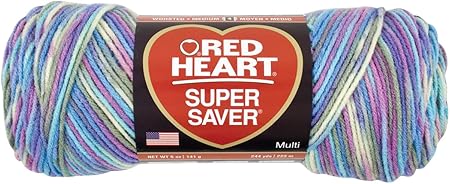
Red Heart  Super Saver Economy Yarn, Monet Print

(It's been sold, but here's what I'd knitted with the batch of "Monet" multicolor-fleck Red Heart when it first came on the market.)

Kates Sweaters 385.JPG

And here it is in the border of the blanket, above a band of Red Heart solid blue.


I made and sold the blue jacket before I had a digital camera; here's the yarn:

Red Heart Yarn Super Saver 0381 Light Blue 7 oz
Here's the first pattern band, in the sequence in which they were knitted, above the border. (In order to get the borders to match I knitted both borders first, then continued knitting from what was actually the border band knitted second until it was long enough to join to the band knitted first.) Here I used up small scraps of solid colors as contrasts to the first scrap of hand-painted wool.


The multicolor yarns that coordinated so well with each other, and with Red Heart's "Monet" fleck, were Cherry Tree Hill handpainted wool and mohair. The company still offers unusual hand-dyed yarns but now they focus on lighter-weight "Broad Band" yarns that form stripes--nothing like the blanket-weight fleck yarns that formed dots, when knitted, for which the company was known in the 1990s. Check out...

http://www.cherryyarn.com/wordpress/

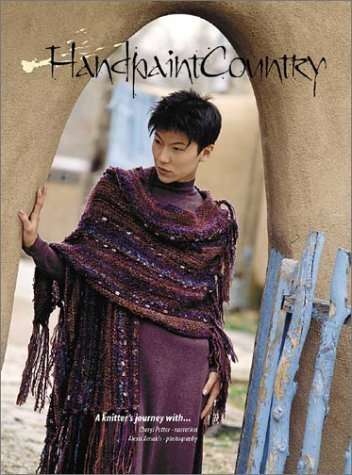
And here's a nice Amazon link...the founder of Cherry Tree Hill yarns wrote a book featuring patterns designed to highlight lots of other fancy handpainted yarns, as well as her own. Few of the yarns shown are still available, but you'll get lots of ideas about how to use ombre, fleck, and broad-band multicolor yarns that are available now.


The coordinating multicolored yarns became this jacket:

photo (5).JPG

From the scrap bin I pulled out balls of solid colors and a couple of other multicolor yarns that blended naturally with the Monet and Cherry Tree Hill yarns. The patterns alternated garter stitch with texture and color patterns found in Rae Compton's Complete Book of Traditional Knitting; my copy still has the decorative paper cover, but here's the book's Amazon link:


You can find the patterns I used in the first third of the book, but why even bother? If you use blanket-weight yarns that knit up to (on average) 4 stitches per inch, 200 stitches will cover one person, couch, or "twin size" bed or cot, very nicely. Allow 10 stitches at each end of each row for garter stitch borders. This leaves approximately 180 stitches for your "canvas." All the patterns in the book can be repeated a few times within 180 stitches. Plug in your own pattern choices in between garter stitch bands and borders to get a unique blanket of your very own.

Here's the next section of knitting, in which you see the Cherry Tree Hill mohair, at the bottom of the picture in the band of garter stitch. This was followed by more of the light blue, contrasting with the gray cotton I used to knit the Paper Bag Cap (photo below); more of the Monet appears in the blackberry stitch band.


At this point, in order to show the colors, I stepped in front of the patch of sunlight and photographed the blanket from the side. Here's the next part of the knitting, in which Red Heart light blue and Cherry Tree Hill mohair are knitted together in the fairisle pattern.


That shades-of-green yarn was used in a jacket I still have for sale...a photo (and description and buying information) should appear here soon.

Here's the final section of patterns I knitted before joining to the top border you see above.


These yarns, and more of the "Monet" yarn, also appeared in the Faded Ribbons Jacket. 


Some of the other yarns in all of these multi-yarn projects were also Red Heart acrylic, and some were other acrylics (I've forgotten). One unusual yarn that appears in the blanket and the Faded Ribbons Jacket, I remember, was a single skein, bought at an end-of-season sale, of Chelsea Silk (blended) pale blue fleck yarn from Tahki Yarns. 

The blanket can be purchased online for $100 (plus $2 per online payment). It's approximately 50x75" (it will stretch slightly in use and shrink slightly when washed); big enough to cover a couch or twin bed. Wool and mohair sections may feel prickly, but these are top-quality wool and mohair yarns, handmade, with minimal chemicals, so a lot of people who think they're allergic to wool won't react to them. (I've knitted with these materials draped down over my bare legs, so I know for sure they don't contain enough acid residues to trigger that nasty hyper-acidic reaction with human skin even in summer.) The parts that will cuddle around your face as you sleep are acrylic anyway. This blanket should turn snow for several hours, and supply warmth for patients taking blood pressure medication. 

How Iframes Hurt All of Us in Cyberspace

Here's a version of the e-mail I just sent to someone at the help desk of a writing site, apparently otherwise a nice writing site, for which I wanted very much--and still want--to be able to write...but I can't:

The "i-frames" were in the writing system. I'd start writing an article on the page where the system directs writers to type in their manuscripts. After a few minutes the system would start to run extremely slowly so that I couldn't type in what I was saying. I'd then open Microsoft Word, finish the job, and paste in the number of words specified by the job order. Then I'd run whatever youall called it to recheck spelling and remove Microsoft code, and during that process I'd see that your system was using "i-frames."

HTML works for customers of Mountainet; Javascript works for customers of Mountainet; Microsoft Word works beautifully for customers of Mountainet and every other network I've ever used; "i-frames" do not work for customers of Mountainet--and in my part of the world the only server I've ever known anyone to be able to get to work happens to be Mountainet. (We are in fact surrounded by mountains, covered in trees.)

So when the process finished what I saw would usually look good, or at worst a few lines at the end would be cut off and have to be re-entered...but somehow the word count would always be lower than it was in Word...and so I wasn't getting the level of customer satisfaction to which I'd become accustomed at other sites. I knew this was at least partly because what the customers were receiving was different from what I was sending them.

I knew because Paypal uses "i-frames," and some Amazon widgets use "i-frames," and when I've tried to use those I've seen that a few minutes after "i-frame" code is pasted onto a site Mountainet scrambles it.

Most readers see a blank space or notice that a button won't work. I, inside my own site, see a lot of scrambled and shortened code. Strangely, there are a few readers for whom the button or widget does appear on the screen and does work--but I don't, nor do the majority of readers.

For example, +Coral Levang seems to be the only reader who was ever able to use a "Support This Blog" button at the top of this page, in all the years the button was there. If you scroll back into the archives of this blog, you may still find book reviews that have Paypal or Amazon "buy it here" buttons down at the bottom of a book review; for the minutes directly after I posted those reviews, I was seeing the buttons, and a few of you, probably including Coral Levang, may be seeing the buttons still--but I never saw them after the first day, and apparently most of you readers never saw them at all.

I've inquired about this and been told something about "proxy servers." Apparently a lot of people's Internet access relies on "proxy servers" and, therefore, "i-frames" interfere with a lot of their online activity. For example, although it's easy for anyone anywhere to log into Paypal, it seems that a majority of people aren't able to use Paypal's "buy it now" buttons!

I suspect the purpose of "i-frames" is to limit profitable financial transactions to people who are paying more for Internet service...but the actual effect is to undermine trust in all online activity. I've been able to use some sites for fun and profit, sometimes. Neighbors who've not been able to use the sites that purportedly would have served their purposes, e.g. Godaddy, don't want to believe that I have ever earned an honest and decent living online. (At one time, while earning a livable income from Associated Content, I used a bank debit card to process AC's payments through Paypal. People wanted to believe it was a welfare card...and I was insulted, slandered, and even banned from a store as a welfare cheat, while earning a living as one of AC's top writers.) I think any online business that wants to have any credibility whatsoever should make sure it's not using "i-frames" anywhere on its site.

Hirewriters was a dishonest site that refused to process IRS documents in an ethical way, but Hirewriters did have a system that looked similar to your site, used Copyscape, did not use "i-frames," and transmitted what I'd written to customers. On both sites I know there were some customers who wanted more than they were paying for; I suspect there were some who wanted to offer the same job to different writers, pick the article they liked best, and reject the others; I encountered one customer at each site who was able to make it clear that s/he really wanted the article to say something I couldn't say. That happens.

Still, at Hirewriters I'd written more than 100 articles, several of which customers wanted revised but only three of which they rejected, and sustained a customer rating above 4.5 out of 5. At your site I've written just a few articles, but almost half were rejected and my customer rating dropped to (as I recall) 4.2 out of 5. I know I'm not Shakespeare, especially not when doing research within a time limit on a laptop computer, but this disparity has to have something to do with the "i-frames."

Can this Amazon Affiliate site find an Amazon book link to fit this article? Of course! (Amazon.com was designed to help us find books that sort of fit everywhere, whether we've read them or not. Opening an Amazon Affiliate home page is like casting a net into the river: it'll always catch something.) People have found lots of ways to earn money online...but "i-frames" are a trap that may be hurting all of us, even the ones who are currently earning a livable income online.