Showing posts with label sugar-free. Show all posts

Wednesday, July 15, 2026

Book Review: The Master Your Metabolism Cookbook

Title: The Master Your Metabolism Cookbook

Author: Jillian Michaels

Author’s web page: www.jillianmichaels.com

Date: 2010

Publisher: Crown / Random House

ISBN: 978-0-307-71822-8

Length: 276 pages

Illustrations: one-color drawings, not credited; black-and-white photo page at the back

Quote: “While [medication] may be an effective short-term aid to bring things under control, it fails to address the need to reverse and eliminate the most frequent under­lying cause of chronically high insulin: poor diet.”

First, for the guys: More photos of the body underneath that too-big T-shirt in the back of the book, along with information about how to buy full-color videos showing the body in action.

Now let’s dispel any illusions: The thing to remember about all those cookbooks and exercise programs featuring sleek, beautiful young people is that, if you’re not between the ages of 18 and 25, you’re not going to look like that. If you want your mature body to look like Jane Fonda’s or Jack LaLanne’s, or even like your own body before you settled down in a desk job, however, this new book just might help you.

Maybe. The trouble with all discussions of "healthy food" today is that people keep on repeating what they learned about the nutrients found in food, and ignore the fact that those nutrients are altogether irrelevant if the food contains glyphosate, since the body will reject the food violently in any case. If it looks like it just came from Old MacDonald's farm, bursting with natural wholesome goodness, and it's found in a supermarket and it doesn't have a hard shell you throw away, it is probably a glyphosate bomb and you'd probably be healthier not even walking through the "produce" section and breathing the fumes off it. Unless you know for sure that they were not exposed to "pesticide" vapor drift, don't even touch blueberries, raspberries, green leafy vegetables, apples, carrots, grapes, tomatoes, or any of your old childhood favorites. Also avoid anything that is sold or used in a hard, dry, seedlike condition--nuts, wheat or other grains, seeds, flour--unless you know for sure. Rice and wild rice are usually safe, but not guaranteed. The allium family (onions, garlic, etc.) are usually safe.

To test foods like hard-shelled tree nuts sold in their shells, oranges, melons, beans, coconuts, etc., eat one teaspoonful and wait for the early symptoms of your typical glyphosate and/or other "pesticide" reactions. If they appear, take a charcoal capsule and throw away the rest of the food. 

The Master Your Metabolism Cookbook is loaded with fun facts about recent discoveries about the effects different foods typically have on our metabolism, plus trendy recipes that...well...some of them are on the granola side, but most of them will disappear fast if you take them to a potluck dinner. A short summary of what Michaels learned about foods that affect metabolism appears on pages 3-41, with key facts repeated as sidebars next to recipes that use the recommended foods. Most of them are not on the safe list. Briefly, metabolism-boosting foods include fish, Brazil nuts, whole grains, pumpkin seed, sesame seed, almonds, spinach and other greens, whole grains, olive oil, hazelnuts, barley, beans, oats, brown rice, onions, apples, pomegranates, cooked broccoli, carrots, molasses, apples, raspberries, blueberries, grapes, rosemary, cooked tomatoes,  sweet potatoes, oranges, turkey, walnuts, and yogurt. Meats can have mixed effects on metabolism and are used sparingly in this cookbook. 

People on restricted diets can use this book if and when we get the bans we need; plenty of recipes are “free” from whatever natural food you’re trying to avoid, and when farmers stop spraying poison on food you may find that you can enjoy that natural food again anyway. If you’re serving these dishes to people outside the family, it’s a good idea to list the ingredients, since many of them do contain stealth allergy triggers like coconut oil and orange juice in unexpected places. There’s a good-sized section of vegan entrees. Several sauces are thickened with fruit or vegetable purees rather than simple starches. A majority of recipes are lactose-free, gluten-free, and/or casein-free, or can be made whichever of those things you require. When Michaels does use a dairy product, it’s usually yogurt, usually offered as a topping.

Vintage granola-period recipes substituted honey for sugar. In the 1980s efforts were made to debunk the myth that honey had any special nutritional benefits over sugar; both are basically sucrose, only honey has more calories, is much messier, and usually costs more. “Loaded with vitamins, minerals, amino acids, and antioxidants”? Not exactly; it contains traces of nutrients—enough to make a difference to an insect, but probably not to a human. Bees store honey made from different kinds of flowers separately and even humans can see and taste differences. Unfortunately, today nearly all honey is loaded with glyphosate and should not even be handled. 

The Master Your Metabolism Cookbook suggests agave syrup as an alternative to honey or maple syrup. Agave syrup is fairly new even to the health food market; I personally don’t live where it’s made, so I’ve never tasted it. 

More can be said for real maple syrup. It does not have to be made in Vermont. Sugar maples will grow in most of the United States (and in Canada); you just tap them at a different time of year. Maple trees that are native to areas other than Vermont  also produce syrup. “Invasive” Norway maples are excellent sources of syrup—we used to construct a little “syrup camp” and boil down sap from the Norway maple in the yard, and other maples in the woodlot, right in the shade of the tree, and it would become sweet and maple-y enough that a spoonful turned pancakes into dessert before it even became syrupy. As Noel PERRIN observed, federal standards for grading maple syrup were created at a time when the blandest, sweetest, most sugar-like syrup was considered the finest. If you’re after the more distinctive flavor and trace nutrients that help preserve male reproductive health—oh, what the heck, let’s stuff in a few keywords, real maple syrup may help prevent prostate enlargement and thus extend men’s sex lives and fertility—local maple syrup may actually be better than Vermont’s Finest. So if you like and can afford to pour maple syrup over your organic corn or buckwheat pancakes, enjoy it. (Women can safely enjoy real maple syrup too—if living with men under the influence of Jillian Michaels we may need it.) If you’re cooking or baking, however, read on.

If you’re trying to reduce the amount of sugar children eat, however, forget about the “honey is better because you use less of it in cooking” argument. What grainy, bready desserts partly sweetened with honey do for children is to activate sugar cravings without satisfying them. Mothers who cook with honey raise sugar junkies who beg, borrow, smuggle, and steal candy and sugar-saturated junkfood. I was one of the lucky little sugar junkies who found that, as an adult, exercising my legal right to eat sugary junk in front of Mother brought my sugar craving under control. I’ve known other sugar junkies who managed to ingest enough of Mom’s “healthy treats” and smuggle enough sugar to be hypoglycemic, diabetic, and/or depressed before age twenty-five.

What I’d recommend for kids is letting them fill up on plenty of raw organic vegetables before exposing them to sugar—natural or unnatural. Kids hate vegetables the way adults in our culture are typically taught to serve them—cooked limp and/or smothered in oil and vinegar. Kids love vegetables fresh from the garden and will happily snack on raw carrots, asparagus, peas, celery, cucumbers, tomatoes, spinach, and almost anything else in the organic garden. The natural sugars in raw veg satisfy children’s sugar cravings, provide plenty of fibre, and are easier for children to digest than some adults would have believed. I would let a child snack on anything I tolerated in the garden, and insist on cooking a vegetable only if the child became flatulent or complained of tummy-aches after eating it raw. If this plan didn’t keep the child from gobbling up candy and commercial desserts when those were available, I’d calm myself with the knowledge that the child was well exercised and supplied with fibre anyway.

Personally, I think vinegar works best as a cleaning product because it motivates me to keep rinsing and scrubbing away all traces of that disgusting odor, so I think there’s far too much vinegar in these recipes, but the idea of serving fruit with lemon juice instead of sugar or honey, as a salad dressing, is definitely an improvement over serving mayonnaise with added sugar.

I’d heard about the mixed benefits of raw broccoli for people with thyroid problems, and about the mixed benefits of eating phytoestrogen-rich soy products, but that millet, peaches, strawberries, pine nuts, bamboo, and peanuts “have been shown to create thyroid problems” was news to me. How does that work? Well, one thing those foods have in common is that in 2010 all of them were likely to have been "ripened" with glyphosate, which does seem to cause thyroid problems, up to and including thyroid cancer. If you have a serious thyroid or ovarian disorder, you’ll want to read the recent findings Michaels reports in this book, but bear in mind that the research was done by a process of wilfully ignoring the elephant in the room. Foods that have not caused diseases for thousands of years have started to cause diseases only when and as they've been sprayed with chemicals that have been intentionally not tested, despise evidence that their use is correlated with those diseases.

Thursday, March 19, 2026

Grandma Bonnie Peters' Gluten-Free Recipe: Garbanzo Salad, Soup, or Spread

Garbanzos are most often planted, in the United States, as cover crops in between wheat growing seasons. Because wheat is the hardest of all crops to weed, the one that gave people the idea of trying just to poison the field so weeds couldn't grow, garbanzos tend to be loaded with pesticide residues. 

Before glyphosate many people formed a prejudice against garbanzos, thinking they were allergic to these "chick peas" themselves. Since 2010 a different set of people may have thought we were allergic to garbanzos and to so many other things. The good new is that the majority of those people aren't even allergic to wheat. They have been reacting to glyphosate. 

When garbanzos have not had chemicals sprayed on them, and not grown in chemical-poisoned soil, they've always been a good healthy food, full of nutrients, to which very few people are allergic. They do need to be fully cooked, which takes a few hours, and used in a diet that includes plenty of water. Like all legumes they react with the acid in our bodies to form gas bubbles that are harmless, but annoying, if we're not well hydrated.

Grandma Bonnie Peters started cooking gluten-free vegan food before 2010, and never adjusted to the horrible new reality that the diet that had restored her health had become toxic in its own way, with glyphosate. All the vegetables in this recipe tend, even today, to be full of glyphosate. 

We still need a ban on this poison. Chemical companies are still fighting tooth and nail to prevent our getting one. We need to fight back. Identify farms that use glyphosate. Publicize where those farms are located, so that everyone can refuse to buy anything from those farms. In the local area, everyone should also avoid speaking to, or touching, or working with, or trading with, or meeting in any social group, the farmers who are still bitterly clinging to glyphosate. If people agree to do this consistently there will be no need for violence or for additional government regulations. 

The Bitter Clingers to Glyphosate are not decent human beings. We stop treating them like human beings. They have become things--walking vats of toxic waste. They have no place in human society. Make them know it, and within a year they should be begging people to accept payment for holding their "farms" for the seven to ten years the land will need to recover from the Vicious Pesticide Cycle, while the Bitter Clingers move to basement apartments in cities and do menial work that feels penitential to them, and pray daily that people will show more empathy toward them than they have shown toward other people. 

If and when this strategy works, then this recipe will stop being a sad memory and become an actual recipe we can use, as it used to be.

Gluten-Free Vegan Garbanzo Salad, Soup, or Spread all begin with the same ingredients:

2 heaping cups cooked garbanzos (2 15-16-oz cans)

1 bell pepper

2 carrots

2 celery sticks

2 T chopped parsley, or more

½ cup chopped English walnuts

Optional seasonings: salt, pepper, lemon juice, onion, garlic, etc., as you like, but taste the dish before seasoning. It’s flavorful all by itself.

Method for Gluten-Free Garbanzo Salad

Clean and chop the raw vegetables. Toss with nuts and garbanzos. Serve on plates lined with lettuce. Garnish with radishes when they’re in season. Pass salt, pepper, lemon juice, and/or mayonnaise. 

Alternatively, break up green leaf lettuce, romaine, or other salad greens; toss them with the salad, and serve in bowls.

Method for Gluten-Free Garbanzo Soup

Heat the garbanzos in a generous amount of water and/or broth, adding the chopped peppers, carrots, and celery while bringing the liquid to boil. Simmer until the vegetables are soft. Sprinkle in parsley and nuts.

Method for Gluten-Free Garbanzo Spread

Cook the garbanzos, but leave the other vegetables raw. Grind everything, including the parsley and nuts, with a few spoonfuls of broth in a blender or food processor. Season as you like. Lay a piece of rice bread or corn bread, or lettuce, on a plate. Carefully spread the vegetable mixture thickly over the bread, and eat with a fork.

Truly gluten-free bread, by definition, doesn’t make the kind of sandwiches you can hold in one hand and eat while doing something else. Some gluten-intolerant people can use bread thickened with potato and tapioca starch; some breads of this type can be used for sandwiches. Gluten-tolerant people can, of course, spread the mixture on wheat bread. 
 
GBP advertised vegan meals, and she herself was one of the people who thrived on the no-added-fats school of vegan cuisine. She would never have added even a teaspoon of oil to any of these dishes. I don't think they need oil either, but some people might  want to add a teaspoon of flaxseed oil for essential fatty acids or sesame oil for flavor. Some gluten-free people might even spread this vegetable spread on a piece of boned and flattened chicken.

Wednesday, May 30, 2018

Book Review: Amy Vanderbilt's Complete Cookbook

Title: Amy Vanderbilt’s Complete Cookbook


Author: Amy Vanderbilt

Date: 1961

Publisher: Doubleday

ISBN: none

Length: 765 pages plus 42-page index

Illustrations: drawings by “Andrew Warhol”

Quote: “Many people have said, since the publication of Amy Vanderbilt’s Complete Book of Etiquette in 1952, that it should be followed by a complete cookbook. For, of course, I can cook.”

Modest wasn’t she? Dutch-American, super-rich, European-educated, and the sort of stickler for usage who insisted that it was Miss Vanderbilt although she was also Mrs. Knopf, Amy Vanderbilt was probably more fun to know than her reputation would suggest.

It would be hard to collect this many recipes and not include something that will appeal to everyone. Vanderbilt wasn’t aware of special diets but she was brought up with that obsession with “balanced meals” that, when followed, guaranteed everyone that almost every meal would include something they could eat. None of the menu plans is vegan but each includes enough vegetarian dishes to leave a vegan guest feeling well fed.

Vanderbilt and her friends had also lived through The War, when shortages created demands for sugar-free, egg-free, wheat-free, meat-free, and similar kinds of recipes. Some people hated the ersatz or “war” recipes. “War Cakes,” which tended to be heavy, egg-free, and sweetened mainly by preserved fruits, gave some Americans a guilt-soothing sense that at least they were suffering along with bombed-out London and the boys in the trenches. Yet War Cakes could be palatable, if they were done right, and became some families’ favorites. My mother taught her children to recognize and bake War Cakes; Vanderbilt’s collection of fancy baked deserts includes a few. The idea of rationing eggs so farmers could kill one another disgusts me, but it did generate recipes suitable for people who are allergic to eggs.

But of course in 1961 the war was over and the Waste Age’s economic bubble was near its fragile height. The appeal of cookbooks like this one was that not only the super-rich, but almost everyone who had a kitchen, could revel in waffles mixed in a blender and baked in an electric waffle iron, in things that had to be refrigerated or frozen to reach the right consistency, in all kinds of dishes that called for special pudding molds and rice cookers and seafood steamers. It was not considered a disgrace for young women who’d quit work to stay home with young children to figure out that rice can be cooked in an ordinary saucepan and cake batter can be whipped up in one bowl with one spoon, but if she didn’t imagine that the mixers and blenders and whisks would make cooking better, and more fun, she might be coming down with beatnik tendencies. And it seemed so, oh, American that Vanderbilt enjoyed canned soup and packaged baking mixes as well as long-simmered stocks and hand-rolled pastries.

So her cookbook is a period piece. Exhaustive though it was, it does not include recipes for several things we cook now. Vanderbilt mentioned arugula at the very end, as “rugola,” in a short list of garden herbs that (surprise!) were edible. She’d heard of pizza, and observed that my generation (then “the teenagers”) liked it, but she made it on a base of baking-powder biscuit dough. Yes. On the other hand, you might agree that her black walnut bread, gingerbread men, turtle candies, eclairs, and ribbon sandwiches deserve to survive.

The copy I physically owned sold in its third hour on display, but you can still buy copies online for $5 per book, $5 per package, $1 per online payment. This is a thick book; only one more of the same size would fit into one package, or two standard-size books would.

Monday, October 16, 2017

Book Review: Bodyworks Healthy Recipes

Title: Bodyworks Healthy Recipes


Author: U.S. Department of Health and Human Services Office on Women's Health

Date: not shown

Publisher: not shown

ISBN: none

Length: 130 pages

Illustrations: color photos of food

Quote: “Welcome to Bodyworks Healthy Recipes, where you'll find simple, low-cost recipes to make delicious breakfasts, lunches, dinners, snacks, and even desserts.”

Funny thing...I went into the little store across the street where I usually buy lunch in town. Usually I buy nuts or sunflower seeds. So this time there was a big sale on little cans of overpriced "Heart Healthy Mix" nuts. I usually only look at peanuts, cashews, and sunflower seeds because they're the only ones that are good bargains at this store. (There used to be another store where I only bought almonds.) But it occurred to me that I'd never bothered even finding out which nuts were in the overpriced "Heart Healthy Mix," because I'm not inclined to trust anyone who's not my doctor to tell me what's healthy for my heart. And after looking at the overpriced cans, I proceeded to the checkout counter with a packet of peanuts. I do not believe they're less healthy for my heart than any of those mixes of pricier, but equally oily, nuts are.

So...Bodyworks Healthy Recipes is one of those little government “booklets” that used to be mailed out free upon request if you sent the appropriate office the stamp, but it's...grown. It's metastasized. At the taxpayers' expense, instead of just compiling a few popular recipes, this government office has (1) spent hours surfing the Internet for popular recipes, (2) printed them on slick expensive paper with only one recipe to a page and lots of white space, and (3) bulked up the book with lots of full-page, full-color pictures.

Recipes have been ganked from U.S. sources, but some of them are written with distinctly foreign accents—a “Grape Pasta Saute” (well,recipe titles are often meant to sound exotic) calls for “gnocchi or large shelled pasta,” a recipe for “Homestyle Biscuits” calls for 2 cups of flour and ¼ teaspoon of salt and 2 tablespoons of sugar...in the U.K. “biscuits” may be sweet, but in the U.S. they're not.

And I'd accept “low-fat,” or “high-fiber,” or “plant-based” as ways to describe these recipes—and for most people that is relatively healthy—but what's “healthy” for anyone to eat is a very subjective thing. The first actual recipe in this book, on page 12, begins with “wheat and barley cereal.” If you inherited the minority gene for wheat gluten intolerance, that's so far from healthy as to qualify as “poison,” and so is the second recipe (for French Toast). These are followed by two recipes for fruit-and-dairy confections. If you inherited the majority gene for gradually declining lactose tolerance, the one that calls for vanilla yogurt might or might not be acceptable, but the one that calls for actual milk—pretentiously described, not as “skim milk,” but as “fat free milk”--would be certain to ruin your day. Then come three more wheat-based recipes, an egg-and-cheese recipe (egg allergies can be as melodramatic as peanut allergies), those biscuits...biscuits are junkfood even when they're made U.S.-style without a grain of added sugar. (American biscuits do have a sweet undertone, always traditionally produced by the interaction of baking soda and buttermilk, but they're supposed to be a salty contrast to the fruit preserves many people like to spread on them.) Need I go on? Home-cooking to meet the family's dietary requirements is, almost by definition, healthier than eating whatever overpriced, overprocessed commercial garbage the big chain stores try to sell us, but for many readers many of these recipes are, as written, very unhealthy.

Most people will find some recipes for things they can eat in this cookbook. Even those of us on special diets will find recipes we can at least tweak. Recipes tend to get tweaked in any case; you make a few strawberry shortcakes and then all the fresh strawberries are gone, so you try a blackberry shortcake. But if you have to tweak recipes to get results that won't actually put you in the hospital, are we talking about “healthy” recipes?!

From privately produced, corporate-sponsored books we might reasonably expect attempts to market products with overgeneralized, inaccurate, feel-good phrases like “healthy recipes.” From the federal government we should, I think, be able reasonably to expect objectivity. “Reduced-fat recipes for popular North American foods” does describe this book, but it should have been left between patients and their doctors to decide which of these recipes are “healthy”...and which are poisonous.

I am more likely to notice the appealing qualities of recipes in books when I've not been annoyed by claims that something that I know would damage my body is “healthy.” Most of the recipes in this book are anything but healthy for celiacs, as written, but there are some we can use. There is, on page 42, a relatively simple, naturally gluten-free gazpacho where the cook chops only the tomatoes, cucumber, peppers, onions, lemon, and garlic, and relies on V-8 for the murky mix of veggy undertones that make gazpacho great. The corn tortilla soup on page 46 is naturally gluten-free and healthy for celiacs if we can trust our sources of corn and chicken, which these days many of us can't. A grease-glazed barbecue chicken, as photographed, looks like saturated fat on the prowl, looking for arteries to clog, but it wouldn't immediately make celiacs sick. A “Crispy Oven-Fried Chicken,” “Chicken Oriental,” “Jamaican Jerk Chicken,” “Spanish Style Ricewith Chicken,” and “Baked Pork Chops” sound similar. An “Asian Salad” made with chicken, cabbage, carrots, mushrooms, cilantro, cucumber, scallions, and a tangerine,sounds more just plain weird than Asian to me but I could pick at it if someone made it for me and remembered to hold the dressing (I'm a salad nudist). There's a beef and rice casserole, and a beef gumbo with rice, that sound quite a lot like things I've done while experimenting, usually with ground turkey rather than beef. I'm not sure what's Mexican about the “steak and fruit skewers,” not having known or heard of any Mexicans who were into skewering steak, but anyone who likes the combination of super-sweet dried fruit and savory meat would like it. Stir-fried beef served on potatoes is another North American fusion fad thing that might actually taste good, depending on how well your taste matches your potatoes...Note, though, that I'm noticing only this handful of recipes out of forty pages of the book.


One thing we can learn from this book is that private authors and publishers produce better cookbooks than government offices. I wouldn't rate Bodyworks Healthy Recipes either especially high or especially low if it had been a normal collection of recipes some person or persons used, and had put together, investing their own money, for sale. As a use for my tax dollars, thrown out there to compete with so many other cookbooks, of which so many are better...I have to give it a D minus. The federal government does not need to be in the cookbook business.

On Amazon it's actually going "collectible." Well...you can order it here for $10 per book plus $5 per package (4 books of this size will fit into a package) plus $1 per online payment, but first you should try ordering it from the U.S. Government Printing Office for the cost of postage.

Friday, June 9, 2017

Happy Post: I.G.A. Roasted & Salted Pumpkin Seeds

This web site has not featured a happy product review, books apart, for a long time. Well, here is one.

Yesterday I went to the Independent Grocers Association store, all the way down the state line, because that was the closest store running a good sale on small bottles of Coca-Cola products. I wanted to sell cold drinks in the Friday Market this morning.

As local lurkers may have noticed, the owner of the cooler didn't show up again. She's not old, but has been ill. Pray for her. So once again what I had for sale were warm drinks. Last week I found a sale on Pepsi products, stayed with them until they actually started to feel warm, and took them home and drank them before they could deteriorate from the heat. Today I found a sale on Coke products, and people snapped them up before the chilly fog even lifted.

Anyway, while in the I.G.A. store, I dillydallied about waiting for a relative to load up a cart, in hopes of getting a lift home--which I did--and I found a whole rack of off-brand snacks, including ridiculously overpriced nuts, standard-priced candies, and a really good price on roasted and salted pepitas.

I've not seen roasted and salted pepitas in a U.S. supermarket before. They've not really achieved mainstream snack status in the Eastern States. I've seen Badia brand raw, green, unsalted pepitas--which are scrumptious, having a flavor of their own that's different from nuts or sunflower seeds, and good all by itself without any salt or other additives--and David brand pumpkin seeds in the big white outer shells, which I've never risked trying. I don't like peanuts "salted in the shells" and don't imagine I'd care for pumpkin seeds prepared that way either.

Recently, GBP having finally run out of pumpkinseed meal for my cats, I'd shared a pack of pepitas with them. They did figure out how to chew them properly, but the litter box showed that they swallowed an awful lot of those expensive, tasty snacks whole. I don't own a blender or grinder, or want one, and was not exactly looking forward to grinding my own pumpkinseed meal for the cats.

Much as the cats have learned to like pumpkinseed meal on their canned cat treats. Much as all outdoor cats need occasional pumpkinseed meal treats. Cats can benefit from the same proteins and minerals humans get from pumpkin seeds, but a lot of the internal parasites cats pick up from rodents don't tolerate pumpkin seeds.

Anyway, I bought a package of roasted and salted pepitas. Well, I'm human, with teeth designed for grinding, and I'm used to eating pepitas raw. But what I noticed right away was that being roasted in oil had softened the seeds even further. It gave them a gratifying crunch, but it made them easier to chew.

I said, "Heather! Kitty-kitty-kitty! Have I ever found a treat for you!" I ran a handful of pepitas under water to get the salt level down where a cat could stand it.

Heather agreed that they were a treat. Cats' teeth aren't designed for grinding things that are naturally thin and flat, like pepitas, but the softer, oilier shells of the roasted kind crunched just right for a cat.

I'm not going to post a picture, or even a description, of the contents of the litter box this morning. Let's just say they were gratifying.

For myself...the price is about the same, Badia being a name brand and the I.G.A. special being unadvertised, and I'd probably pick the raw pepitas next time.

Since I'll probably continue buying pepitas to share with the cats, any time I'm in (or passing by) the I.G.A. store, I'll probably pick the roasted, salted pepitas every time I have a chance.

I'll probably have to give the cats their treat first in order to get the package inside and eat any pepitas for myself, and since the cats don't enjoy taking worm medicine and do enjoy eating pumpkin seeds, that's a clear gain. (They'll still get worm medicine occasionally, but less often.)

This post was mainly about I.G.A. Can it have an Amazon book link? Well, if we count Kindle "books" as books, here's one some readers may enjoy:

Texas Jack's Famous Pumpkin & Pumpkin Seed Recipes: (36 Recipes For Delectable Pumpkin & Pumpkin Seed Treats) by [Waller, Dennis]

Thursday, January 12, 2017

Gluten-Free Recipe: Cornmeal Pancakes

Since I just tweeted that this breakfast/snack is hard to beat, I suppose there ought to be a link for it...How to Make Cornmeal Pancakes That Are Hard to Beat. Classic cornmeal pancakes are gluten-free, dairy-free, sugar-free, and vegan, but many traditional variations add meat and/or dairy products and/or sugar; you can take this recipe wherever you want to go with it.

First start your fire. This is a very oldfashioned camp-style recipe that works well with an open fire. Even if you use an electric stove, it's essential that cornmeal pancakes be dropped into a sizzling-hot skillet. It also works well with a wood, gas, or electric stove, or hot plate, or even a Coleman stove. It's not for microwaving.

Ingredients for Cornmeal Pancakes

1. Cornmeal: As much as the people who will be eating these cakes are going to need. Figure 1/2 to 1 cup of meal per person over about age 10, 1/4 to 1/2 cup per small child. This is a flexible recipe based on proportions rather than exact amounts. The important thing is to get GMO-free, glyphosate-free, natural cornmeal, which can be difficult. +Bob's Red Mill has a good reputation for that sort of thing. The fresher the meal is, the closer you are to the time and place where the corn (maize) was picked and ground, the better the cakes will taste.

2. Leavening: If you have buttermilk, use baking soda. If not, use baking powder. Figure 1 teaspoon per cup of meal; beyond 1 cup of meal and 1 teaspoon of baking powder, ignore extra fractions-of-cups.

3. Salt is optional, but traditional. (These are like fluffy tortillas, not tea cakes. No sugar!) If somebody is on a low-sodium diet, sprinkle a saltshaker over other people's cakes while they're cooking. The traditional method was to stir in 1/2 to 1 teaspoon of salt for each cup of meal.

4. Cornmeal pancakes are supposed to be crumbly, but you can make them a little easier to handle, and more nutritious, by adding a little flaxseed meal to the dry ingredients. If you don't have flaxseed meal, a traditional alternative is to beat an egg or two into the batter. Either flaxseed or egg will add some nutrients and an extra layer of flavor to the pancakes. Either is optional.

5. Liquid: You need enough liquid to make a thin batter that will spread out flat when the cakes are dropped into the hot skillet. If you use water, you can heat it to just below the boiling point for faster, fluffier pancakes. If you use milk or buttermilk, you'll get some extra flavor and calcium, and since you'll need to use cold liquid you'll have time to add eggs if you want to add eggs. (If you use broth, stock, fruit or vegetable juice, you're creating a variant recipe, not classic cornmeal pancakes.) The precise proportion of liquid to dry ingredients is generally almost, not quite, one-to-one. Since the weather and the freshness of the meal affect this, it's better to calculate by the actual consistency of batter than rely on predetermined measurements.

6. Oil, butter, margarine, meat dripping if you've been cooking meat: Cornmeal contains its own oil, but you do need a thin film of hot oil to coat the skillet. The hotter the oil, the less fat you add to the cakes, which is generally a good thing. A teaspoon of canola oil to start the first batch, and another teaspoon if the skillet starts to dry out between batches, is plenty for me. However, some people rave over the flavors bacon dripping, chicken schmaltz, or fresh country butter add to their cornmeal pancakes.

Method for Cornmeal Pancakes: 

(Start heating the skillet first of all. In a camp situation this will give you plenty of time to do other things; if you're using an efficient electric stove, you'll have just about as much time as it takes to mix the batter.)

1. If using hot water, heat it. If using milk and eggs, beat them together.

2. Combine dry ingredients. Film hot skillet with oil.

3. Combine dry and liquid ingredients. Do not overmix.

4. Drop a few drops of water into your hot, oily skillet. They should sizzle and skitter across the pan.

5. Drop generous tablespoons or extra-large-mixing-spoons of batter into the skillet. They should spread out flat and puff up almost simultaneously. When the bottom of each cake has cooked and dried out, the top will show bubbles, and it will be possible to slide a spatula under the bottom, turn the cake, and cook the top side light brown.

Serve hot or cold with any accompaniment you like.

Traditional Accompaniments for Cornmeal Pancakes: 

* Bacon

* Other thin portions of meat that cook quickly and leave a film of rendered fat in the skillet

* Fried or scrambled eggs, or omelets

* Cold milk or buttermilk. (Kids traditionally crumble their cakes into the milk and eat with a spoon, as in panada. Many adults like to do this too. Yogurt would also work.)

* Applesauce or apple butter

* Sorghum molasses

* Extra butter, for those who like butter

* Fruit

* Ripe tomatoes. (For my father's favorite version of cornmeal pancakes, you need home-grown, vine-ripened organic tomatoes, which are much softer and juicier than the supermarket kind, and need to be "sliced" into a rimmed plate or bowl. This is another way to eat pancakes with a spoon.)

* Cooked green vegetables

* Cooked dry beans

Less Traditional Accompaniments for Cornmeal Pancakes: 

* Immediately after pouring them into the pan, top cakes with precooked sausages--links, patties, soybean sausages, hot dogs, Vienna Bites, whatever.

* Or bacon bits

* Or dried fruit

* Or blueberries

* Or chocolate chips

* Or chives

* Or a thin slice of Vidalia onion. (Onions won't cook as fast as the cornmeal batter, so if they're not Vidalia onions they'll taste awfully pungent. Vidalia onions will taste crisp and sweet.)

* Use a can of fish as part of the liquid. (Canned fish is flaky enough to melt into the batter.)

* Or a can of tomatoes

* Or one or two mashed bananas

* Or applesauce

* Or other fruit puree, if you want sweet and fruity cakes

* You can even add sugar (or honey, molasses, syrup, etc.) directly to the batter. The cakes will be a little trickier to cook without scorching and will not be traditional, but they will be good.

* You can also mix in any kind of "flour" or "meal" you want, including ground nuts, wheat flour, rye flour, oatmeal, etc. Wheat flour will definitely make the cakes easier to handle and, of course, not gluten-free. Ground dried beans or peas were added to cornmeal cakes by Confederate soldiers, at least one of whom famously described the result as "miserable." (However, you can use fully cooked, mashed beans or peas for the liquid; this is known as Bean Bread, and it's heavy but not bad.)

* You can use cooked or canned vegetables for the liquid if you want to. I happen to like cornmeal pancakes made with a can of greens as the primary liquid. A can of carrots would also work.

* You can use cooked grits as the batter base. Grits are made by eliminating niacin-blocking corn bran from corn, which can offer a real benefit to anyone on a low-protein diet.

Pre-Seasoned Cast-Iron Skillet, 10.25 inch - Utopia Kitchen
You can buy the skillet on Amazon.

Monday, December 5, 2016

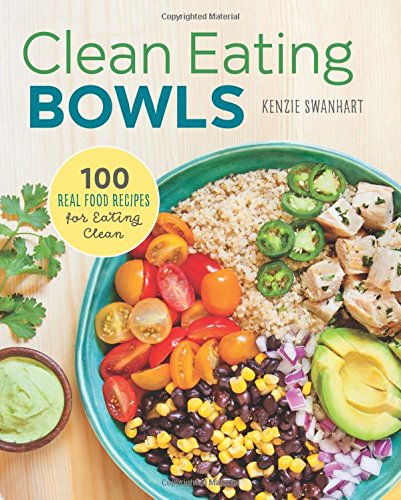
New Book Review: Clean Eating Bowls

Fair disclosure: this is the third of those three books of which I received review copies, which I read and reviewed in the order in which they came out of the package. Because I'm rushing these reviews online in order to generate as much good publicity as possible, I've not actually tested the recipes at home yet. On the other hand, I'm getting free review copies of new cookbooks because I've used and reviewed a lot of the old ones; I can visualize (taste-ize? gustatorize?) how recipes are likely to taste. This is the quirkiest of the three California-cuisine cookbooks, and maybe you have to be familiar with California health-food-store food...I am. I found it appetizing, and I give Clean Eating Bowls maximum points for presenting the best recipe for a simple, not-necessarily-too-sweet, gluten-free, virtually-guaranteeable version of granola.


Title: Clean Eating Bowls

Author: Kenzie Swanhart

Date: 2016

Publisher: Rockridge

ISBN: 978-1-62315-786-9

Length: 154 pages plus 5-page index

Illustrations: color photos

Quote: “Diving into a clean eating lifestyle can seem daunting—cutting out sugars and processed foods in favor of cooking fresh fruits, vegetables, and lean meats—but bowls make it simple…to focus on all the goodness you can eat, rather than thinking of it as a restriction.”

Inspired by the “paleo diet” or idea of eating things as close to their natural state as possible, Kenzie Swanhart has progressed to exploring recipes for one-bowl meals. They’re organized into “Smoothie Bowls” (blender-processed fruit and veg), “Breakfast Bowls” (fruits, cereals, and/or eggs), “Grain Bowls” (rice, quinoa, farro wheat, barley, or oats), “Salad Bowls,” “Soup Bowls,” “Noodle Bowls,” a few “Dessert Bowls,” and finally ten “Bowl Necessities”—sauces, almond milk, and granola. 

Each chapter outlines how to “build a bowl.” Swanhart is neither vegan nor vegetarian, but each type of Bowl has many vegan options, and vegetarian recipes outnumber meat recipes.

For a Smoothie Bowl, Swanhart blends together a cup of flavorful fruit, a “base” of banana, avocado, or mango, a liquid, “some superfoods (optional)," sweetening (also optional), “sneak in some leafy greens" (half cup, optional), and when these are smoothed out in the blender some unground “toppings” of  fruit, nuts, or granola.

Breakfast Bowls can be sweet, assembled by stacking up a base of yogurt or cereal, a cup of fruit, “superfoods,” sweetening, and toppings similar to the Smoothie Bowls, or savory, with a base of grain, “a protein” (1/2 cup of meat, beans, or egg), a cup of vegetables, 2 tablespoons of dressing, and a sprinkle of nuts or seeds. One savory Breakfast Bowl that may surprise readers is “Baked Eggs and Ramps,” a “decadent Sunday brunch”  featuring wild onions wilted into a sauce, simmered with tomato, and used to poach one egg per serving.

The basic outline for Grain Bowls is one cup of grain, one cup of vegetables, one cup of “a protein,” 2 tablespoons of sauce, and the optional sprinkling of nuts, sprouts, or avocado.

Salad Bowls consist of one or two cups of greens, ½ cup of “a protein,” one cup of other fruits and veg, ½ cup of nuts or grains, and “ginger, lemon, oil, vinegar, salsa, vinaigrette. (to taste). The protein in some of these Bowls is cheese.

Soup Bowls begin with 1-2 tablespoons of oil or butter, then four cups of liquid, one cup of protein, two cups of vegetables, spices of choice, and toppings that may include more spices, nuts or  seeds…or bacon.

Noodle Bowls begin with a cup of noodles, topped with 1-2 cups of hot broth, ½ cup of “protein,” a cup of vegetables, and a topping of nuts or seeds. One recipe title that was new to me was "Poke Noodle Bowl." In the Appalachian Mountains, where the pungent wild onions known as ramps are native, another native food some people like is called "poke salad"--traditionally made by cooking the early, tender, low-toxicity first shoots of pokeweed. Was that the featured ingredient in the Poke Noodle Bowl? No; apparently the Hawaiian word poke, rhyming with "okay," has made it into Pacific Coast English as a new name for a specific tuna dish, so the Poke Noodle Bowl is a fish dish. It sounds a little more flavorful than the canned tuna Easterners usually eat.

Dessert Bowls are likely to be the strangest. Suggested bases are “avocado mousse, banana ice cream, chia seed pudding, coconut cream, or Greek yogurt,” topped with a half cup of fruit, sweetening and/or nut butter if necessary, and toppings of nuts, seeds, goji berries, or cacao powder. This is a short chapter and I have to admit that reading the recipes did not inspire me. However, there’s a valid reason why natural food enthusiasts concoct such weird desserts. If you’re seriously eating a “paleo” or natural-locavore diet, you don’t actually need dessert recipes. Most of the time, sun-ripened fruit provides all the sweetness an adult could want. (In winter, the “paleo” diet features dried fruits, which tend to be sweeter than I personally like. I can handle a spoonful of plain sugar, even a few dates or banana or pineapple slices chopped into cereal, but raisins…! Ouch!)

If you can use coconut oil (or substitute some other kind!), Swanhart’s granola recipe may be the simplest and tastiest I’ve ever come across. Most granola recipes call for ten or twenty different ingredients, at least one of which some member of your family probably hates, and if they feature raisins and honey they'll either be too sweet or have to be toned down with something that starts out bitter and gets bitterer in storage, and so on. Swanhart's recipe consists of oats and nuts, tossed with honey, cinnamon, and vanilla, and baked. If you can eat nuts, that granola is likely to taste good...for a good long time, too. If you have a trustworthy source of oats, it's gluten-free. If you slowly toast good fresh oats, almonds, cashews, and cinnamon to the right point, even if you lubricated the pan with a non-sweet oil, you can forget about the honey and have a naturally sweet sugar-free granola. 

The usual caution about honey applies: bees know they’re swallowing and regurgitating different concentrations of sweet goop, which they store in separate combs, but when humans mix it all together we never know how concentrated the sucrose is going to be or what other flavor notes are going to dominate the finished product, so if you do cook with honey you need to use caution and taste as you go...and even then, honeys made from different flowers react differently to heat! No recipe that calls for honey is reliable; most desserts made with honey tasted either unsweetened or disgustingly over-sweetened to me, with very few striking the balance we’ve all learned to expect from things sweetened with sugar. (The honey-sweetened desserts I've liked featured fresh fruit that was probably even better without the honey.)

Swanhart's “Bowls” are definitely novel cooking ideas (Salad Bowls are probably the easiest to explain to guests who haven’t read the book). If you’re blessed with access to good, organically grown, GMO-free fruit, veg, and grain, that means hundreds, maybe thousands of delicious novelties. (Given an outline for each type of Bowl, you can use these recipes to generate endless seasonal and local variations; the specific recipes merely offer cooking and seasoning suggestions, which your garden will expand...)

Most of these recipes are naturally “free” from sugar, chemical additives, and other things special diets help individuals avoid. Not all are gluten-free, vegan, dairy-free, and for diabetics’ purposes honey is basically super-concentrated sugar, but for most restricted diets I suspect the majority of the Bowls are acceptable. Because “building a bowl” is so simple, it’s not hard to tweak any recipe you can’t use as written, either. Can’t eat barley? Substitute rice. Can’t eat rice? Substitute farro…and so on.

(Some people can't eat rice! Although this web site exists by and for Irish-Americans with wheat gluten intolerance, we have to mention that there's also a gene, noticed mostly by a minority of Asian people, for rice gluten intolerance. Natural rice, our staff of life, is those people's poison. Some real Chinese food is wheat-based, and some Chinese people actually need it to be. Ah, biodiversity...) 

I have to mention that the phrase “clean eating” sounds more than a tiny bit judgmental, and my personal definition of clean eating would definitely exclude bacon, hemp seed, and honey! Well, of course you don’t have to become a food nanny to use recipes that are part of some people's "healthy eating" or "clean eating" plans. Actually, several of the Soup, Grain, and Salad Bowls have flavors that would work quite nicely with a cheap greasy hamburger from the local fast-food shack, if you want to eat one of those. Maybe you do have to be a bit of a foodie to want to construct a Bowl of oatmeal, apple slices, pumpkinseeds, dried cranberries, chia seeds, and chopped ginger, but you don’t have to be a fanatic…if you slice in enough sweet, juicy apple and candy-like crystallized ginger, even oatmeal haters will enjoy that Bowl. 

I will admit some personal insight into the thought process that drives some people, if they’ve eaten a bowl of beet, carrot, Brussels sprout slices, kale, garbanzos, pomegranate, avocado, and miso, to go out and look for a cheeseburger. (That's what Swanhart describes as "probably the healthiest" Bowl of health-food-store favorites, but unwrinkle your little noses, kids...those flavors do work together, mellow each other out, and make quite a palatable "crazy salad.") Even if the cook has said not one word about how “healthy” the Salad Bowl was supposed to be, chasing it with a bag of greasy, salty chips can feel a bit like reclaiming a piece of the individual soul. Nevertheless, if you have good fresh fruit and veg, and you resist the urge to preach about them, even junk food junkies would eat most of these Bowls…and like them.

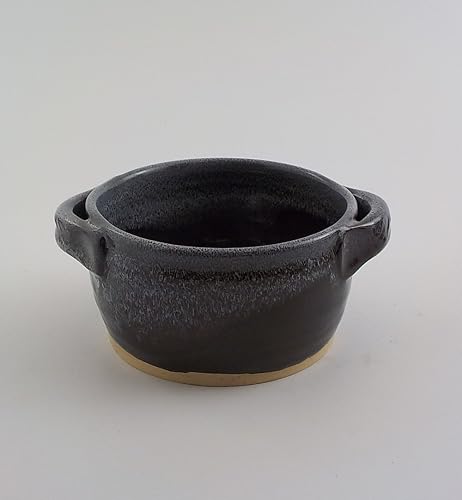
So…even within the California genre of cuisine, this is a strange cookbook, but in a nice way. Buy it if you can afford to buy excellent food and want to attract attention by doing something delightfully different with that excellent food. Especially buy it to tuck into a gift package along with a set of good-sized, handmade, beautifully quirky bowls.

2 Quart Stoneware Serving and Mixing Bowl by Arousing Appetites - Cream White Round Ceramic Serveware for Salad, Pasta and Soup with Decorative Design

Hmm...that's a nice mixing bowl. Maybe your family would prefer single-serving bowls?

Handmade Stoneware Soup or Chili Crock, Ceramic Bake and Serve Bowl

Wednesday, November 23, 2016

Book Review: Gourmet Health Recipes

Title: Gourmet Health Recipes

Product Details

Author: Paul and Patricia Bragg

Authors' web site: http://www.bragg.com/

Patricia Bragg on social media: Google +patriciabragg ; Twitter @patriciabragg; Facebook http://www.facebook.com/pages/Patricia-Bragg/137030466324912

Date: 1992 (eighteenth edition; Amazon has a picture of an earlier edition with a similar cover)

Publisher: Health Science

ISBN: 0-87790-031-0

Length: 402 pages plus 30-page index

Quote: “It is not what we eat that feeds the body; it is what we digest.”

This historic document contains recipes for all the classics of the “California Health Food Store” or “Granola” culinary tradition, from the family that founded that tradition.

If the Braggs open their book with a bit of, well, bragging, they’re entitled to it. It’s not an undisputed fact that Paul Bragg was the “Father of the Health Movement in America.” He was born a little too late for that; his life spanned most of the twentieth century, but Sylvester Graham, the Kellogg brothers, Jethro Kloss, Krishnamurti, and George Washington Carver had all “fathered” their parts of the health food movement in the nineteenth century. The autobiography he shared with customers has also been challenged on important facts, and at least one of his earlier books has been suppressed as containing dangerously misleading advice. 


Paul Bragg was, however, the pioneer of the California style (as distinct from Seventh-Day Adventist style) Health Food Stores, marketer of pineapple and tomato juice, seven-grain cereals, herbal tea bags, wheat germ, papaya extracts as a digestive aid, and Bragg’s Liquid Aminos (a naturally gluten-free form of soy sauce). He gained publicity by being related to an early Olympic gold medalist, Don Bragg. (He also tried to compete with previous celebrity health lecturers Ellen White and Charlotte Selver , two "mothers" of the health food movement, as having survived tuberculosis; there is some doubt whether he ever really had that disease.) As a celebrity nutritionist Bragg was consulted by Gloria Swanson, J.C. Penney, Jack LaLanne, and others. With Patricia, the daughter-in-law he presented as an “angel of health” and “symbol of perpetual youth,” he went on to advise various Olympic athletes, U.S. presidents (in 1980 Ronald Reagan claimed that California “health food” was keeping him fit to be President), and members of the British royal family. At 87, Patricia Bragg is splendidly preserved and still actively involved in maintaining the Bragg business.

Scientific research suggests that Patricia Bragg and Jack LaLanne had chosen their ancestors more wisely than President Reagan--or, according to skeptical researchers, than Paul Bragg had done. Aging slowly, being active and healthy for about 100 years rather than the standard 70 or 80 years, seems to be genetic. Some “long-livers” eat “health food”; some don’t. Whether people are destined to enjoy average or extra-long life spans, most people feel their best when they eat a reasonably balanced diet. The diet that worked so splendidly for the Braggs works well for many people, but not for everyone. If it does work for you, you might enjoy “Vital, Healthy Living to 120!” as blared on the cover of my copy, or you might enjoy vital, healthy living to the age predetermined by your own genes, like 80. (My family includes some "long-livers" and some people who age normally; I'll take whichever I can get.)

Do I really need to write any more about what a sickly child I was, as a direct result of my loving (and sick) mother’s adherence to the same diet and exercise guidelines that served Jack LaLanne so well? It’s familiar to regular readers, and not my favorite topic.

Instead I’ll say this. Lots of health food gurus preached that, in order to be healthy, everyone needed to stop eating certain things (the list differed from guru to guru) and, usually, substitute certain other things. “Eat honey, not sugar, but if you must eat sugar make sure it’s ‘raw’ or ‘brown’” was one rule. It actually worked for some people—specifically, people who were allergic to beets. “Go vegetarian, eat milk and eggs but never meat” was another rule that actually helped some people but not others; most people go vegetarian for spiritual reasons, but some people don’t digest meat and there’s certainly a high risk of contamination in meat. In the 1970s a “macrobiotic” diet, with elaborate rules that included “Eat unprocessed brown rice, never pre-ground flour or meal,” was popular, and it actually helped some people; if my mother had been willing to consider that whole wheat might not be such a health food for her or for me, the macrobiotic diet might have done wonders for us, since our primary health problem was wheat gluten intolerance. 

It now appears from broad-spectrum studies that any mindful approach to eating is better than mindlessly ingesting whatever is cheap or easy to get, that most of the various "health food diets" have helped some people to some extent, that nearly all of them have worked miracle cures for a few people with the specific nutritional needs each diet regimen targets, and that most of them have been epic fails for a few people who happened to have nutritional needs not addressed by the diet regimen they tried. 

I learned to cook according to various “health diet” plans: Pritikin, and Atkins, neither of which I like for myself; McDougall, and Sinatra, both of which I like for myself. The Braggs don’t offer a formal “health diet” plan in this book, only recipes, with some suggestions as to which recipes fit different doctor-recommended diet needs.

Now that I know which of their rules do and don’t work for me I can use and enjoy their recipes, and can say honestly that this is an excellent cookbook. If the Braggs were in error when they gave this style of cooking all the credit for their own good health and long lives, nevertheless they had a long time to perfect and select the best recipes from the nutritional regime that served them so well. You may or may not actually be either a “long-liver” or a super-rich and legendary entrepreneur, but you can eat like one. If you know which foods do and don’t serve your body well, then you can use this book to “eat healthy.”

There is some outright preaching in this book. The Braggs were evangelical Christians as well as evangelical “health food store” magnates. Their marketing campaign featured “crusades” like Billy Graham’s. Their cookbook contains Bible references and prayers along with solemn exhortations:

“Simply eliminate these ‘killer’ foods from your diet…Refined sugar…Salted foods…Catsup & mustard…White rice & pearled barley. Fried & greasy foods. Commercial, highly processed dry cereals…Saturated fats & hydrogenated oils…palm & cottonseed oil…Oleo & margarines…Peanut butter that contains hydrogenated, hardened oils. Coffee, decaffeinated coffee, China black tea & all alcoholic beverages. Fresh pork & pork products. Fried, fatty & greasy meats. Smoked meats…Luncheon meats…Dried fruits containing sulphur dioxide…Canned soups…any additives, drugs or preservatives. White flour products…Day-old, cooked vegetables…”

“Nothing can be more unpleasant or confusing to the taste than the improper or unwise use of herbs and spices…It is not always wise to follow exactly recipes calling for herbs. So much depends upon the strength of herbs.”

“Take time to Work—it is the price of success. Take time to Think—it is the source of power. Take time to Play—it is the secret of youth…”

A tasty raw vegetable salad, which (as regular readers expect me to note) needs no “dressing” if the veg are California-fresh, is called “Skin Beautiful Salad.” A fruit and nut dish is “Rhythm Salad.” (California schools used to use a series of Health Science books that tastefully discussed the concept of regular bowel movement under the heading of “Rhythm & Regularity.”)

There are informal menu suggestions for either “Gaining” or “Reducing” weight. (This is one of the little touches that identify Gourmet Health Recipes, despite frequent updating, as originally from the early twentieth century.)

When cookbook writers preach, to my mind, they need to be debunked. When they simply present recipes…my perception is that most of the savory recipes in this book are likely to give satisfaction if made with good fresh ingredients.

My perception is that most of the sweet recipes, which feature honey, are yucky. Honey is a tricky ingredient to use in a recipe because, even if one could assume that all readers are willing to swallow insect vomit, which one cannot, the flavor of honey varies wildly depending on what the bees were eating. As a result, it may be possible (occasionally) for experienced cooks to guess how much from a particular jar of honey they can add to get a pleasantly sweet dessert, but it’s not possible to write recipes that reliably predict pleasant results. Almost half the honey-sweetened foods I’ve eaten in my life weren’t sweet; almost half were sickeningly sweet. The minority of honey-sweetened desserts I’ve enjoyed were made from fresh berries, cherries, summer apples, pawpaws, or persimmons, all of which were so delicious that it hardly mattered what a cook did with them, although generally they would have tasted better if they hadn't been cooked with honey. This should not necessarily discourage beekeepers and their friends from using honey, if they can be reasonably sure that the bees’ “pastures” have not been sprayed with poison, but it should warn everyone who does choose to use honey to use it with caution. (See the Braggs' comment on "herbs" above.)

One thing that put a lot of people off all “health food stores” and the whole Granola School of cooking was yucky honey-sweetened desserts. There were two others: nutritional yeast, which doesn’t have to taste as bitter as most of it used to taste in the 1960s and 1970s, and blackstrap molasses, which so far as I know is just plain vile whatever you do. I know middle-aged people who still lose their appetites when they remember those yeast-flavored “veggie burgers” (I suspect Green Giant was the brand to blame) or blackstrap-flavored milkshakes they sampled in 1972. I’m glad to report that, although the Braggs deserve some of the blame for the original marketing of these abominations, the Eighteenth Edition of Gourmet Health Recipes contains no recipes for either. Some Granola gourmets sprinkled nutritional yeast on veg as a seasoning; the Braggs’ recipes for corn on the cob and a few other things mention this tradition, but it’s optional.

So what are you getting, aside from the preaching? This is the Braggs’ “big” cookbook; it contains nutrient charts and explanations of techniques and so on. You get lots of reminders to focus your diet plan on fresh veg, raw or simply cooked, and fruit. You get a wide selection of recipes for fancier things—mixed salads, salads with meat or egg, soups, baked beans, stuffed veg, creamed veg, veg with rice, veg with cheese, meat dishes, vegan protein dishes, egg things, yeast breads, breakfast breads, pancakes, desserts, ethnic specialties, even canapés.

You get a lot of recipes—literally hundreds. You could test these recipes on your family daily for more than a year. If you’re looking for dairy-free, egg-free, gluten-free, vegan, or other special-interest recipes, Gourmet Health Recipes contains several in each category.

Most recipes feature traditional food items found in supermarkets everywhere. Some are written to work with “duck or game” or “mixed greens, including wild greens” specifically for hunters and gatherers in California. Seafood recipes include one for abalone; fruit salads feature mangoes and papaya; desserts that don’t rely on honey for sweetening rely on dates, figs, prunes, and/or raisins. As Euell Gibbons was demonstrating on the other side of the continent, it is generally possible to substitute edible things found “in the wild” for more common food items with similar textures. Yucca roots aren’t potatoes, pawpaws aren’t bananas, piñon nuts aren’t almonds, and so on; substituting them in recipes is like substituting strawberry ice cream for chocolate ice cream.  This book does not discuss wild foods that need special processing, like acorns. It does feature foods whose image has progressed from “exotic” to “health food store specialties” to mainstream, like fruit and vegetable juice, pineapple, papaya, maple syrup, carob, wheat germ, tofu, sprouts, and avocado.

Some of the savory recipes suggest (usually a small amount of) Bragg’s Liquid Aminos and/or spices. None specifically mentions salt. Many “health food diets” restrict sodium, so leaving salt decisions up to the individual was a Granola Thing. For real authenticity, instead of seasoning your Baked Soybeans or Parsnip Patties with salt, sprinkle them with dried powdered kelp; its salty-but-still-herby flavor will be a nostalgia trip for anyone who’s ever shopped at a California-style health food store.

What “California” means to diners in the rest of the world is, primarily, salads. A climate where more plants reach, or can be coaxed into, their edible phase in midwinter than in summer, seems to inspire a wonderful variety of salads year-round. The Braggs give relatively few recipes for salads because you don’t need a recipe for salad. To make a great salad you go out, to the garden or the forest or the grocery store, and select an appropriate volume of veg that you recognize as being fresh and ripe; wash them, cut them in bite-sized pieces, mix them up, and offer seasonings and dressings at the table, although really good vegetables exude their own tangy, oily, savory “dressing” of mixed juices all over the bowl and hardly even need salt. Salads containing really good tomatoes, especially, should be served in individual bowls, with spoons.

This principle of cooking may be associated with California in the commercial media but it’s common to all places where food plants grow well, actually. In the Southern States it’s sometimes announced as “what poor folks eat”—nothing expensive or hard to find, but goodness gracious, it is good.Unfortunately, although the Braggs talk about it, neither a book nor a store can really enable you to feast on “what poor folks eat.” You can get most of the vegetables from a big-chain supermarket, and the salad will be acceptable, but mundane and probably in need of fancy dressings. To make it fabulous you have to cultivate either the vegetables, or the friendship of farmers.

One Bragg recipe for “Grand Slam Salad” calls for an industrial-size salad bowl in which “The purpose…is to see how many varieties of vegetable you can put into one salad.” The Gold Rush State has never been known for frugality, so if you want to feed enough people to appreciate all of it you can indeed put seventeen different kinds of greens, carrots, eggplant, peapods, raw baby peas, broccoli, stringbeans, asparagus, turnips, parsnips, lima beans, tomato, cucumber, radishes, chives, cabbage, celery, artichoke hearts, beets, celeriac, cauliflower, peppers, avocado, and okra (1/2 cup or more of each except perhaps the chives) into one salad. In California it’s sometimes possible to get all of these things in good enough condition, at the same time of year, that this salad will taste delicious. If it’s not possible, the Braggs advise, no worries. 

If you live in the country, Gourmet Health Recipes lives up to its own hype; it contains more delicious, nutritious recipes than other cookbooks. If you don’t, it’s less of an essential cookbook, still good for “something different” or perhaps nostalgic, but noticeably self-overrated.

While Patricia Bragg would obviously prefer to sell you her new, up-to-the-minute "e-books" directly from the web site linked above, Gourmet Health Recipes qualifies as a Fair Trade Book. To buy it here, send $5 per book + $5 per package (four copies would fit into one package, if you wanted them, for a total of $25) + $1 per online payment, to either of the addresses at the very bottom of the screen. If you use Paypal, I have to collect a surcharge to pay them. If you send a postal money order, the post office will collect its own surcharge, so I don't need to. You can mix up as many different books as can be squeezed into one package for one $5 shipping charge. For each Fair Trade Book, this web site will then send 10% of the total of book and shipping costs (typically $1, as in the case of Gourmet Health Recipes) to the author or a charity of his or her choice.