Showing posts with label local produce. Show all posts

Friday, August 30, 2019

Glyphosate Awareness Newsletter 6

The Glyphosate Awareness Newsletter is published weekly by Priscilla King, c/o Boxholders, P.O. Box 322, Gate City, Virginia, 24251-0322. It’s available free, in plain text as an e-mail or attachment. Printed or audiocassette versions are available for the cost of production. (Audiofiles are free to anyone who can convince me that s/he is blind and can’t read a document aloud using widely available software.) Reprinting, recirculating, and sharing this information at the reader’s own expense is encouraged, provided that all sources of material are credited.

1. WHY THE IMPOSSIBLE BURGER WILL BE IMPOSSIBLE TO DIGEST

Vegan meat analogs are nothing new. George Washington Carver and Jethro Kloss worked on some of the earliest ways to mix grain and legume proteins into a “nutritionally complete” vegan protein loaf. In the early twentieth century, researchers from Loma Linda University, at Loma Linda Foods, and the Kettering College of Medical Arts, at Worthington Foods, marketed some commercially successful, highly palatable, wheat-soy versions of “Numete,” “Protose,” “Proteena,” “Veja-Links,” “Bolo-No,” “Wham,” “Skallops,” “Big Franks,” “Little Links,” “Chicketts,” “Turketts,” and others. In the 1980s Morningstar Farms (a division of Worthington) brought out Breakfast Links, Breakfast Patties, Grillers, and Scramblers, followed by other “Textured Vegetable Protein” products that sold well enough to be stocked by big-chain supermarkets.

Since most of these products were wheat-based, most contained monosodium glutamate, and some also contained milk or egg, they were unacceptable to many vegans. Specialty “veggie burgers” became quite a fad at the turn of the century. Grandma Bonnie’s Allergy-Ease Veggie Burgers were made of rice, beans, potatoes, squash, sometimes tomatoes, herbs, and salt for a nutritious, low-fat, hypoallergenic vegetable protein patty. Boca Burgers contained a little more salt and fat but were also totally gluten-free, vegan, and hypoallergenic. Other “veggie burgers” that contained either wheat or soy were also marketed. While none of these products tasted much like the ground and grilled beef patties known as hamburgers, they were intended to be equally fast and tidy to prepare.

Now, a company calling itself Impossible Foods proudly presents the Impossible Burger, a bioengineered soy product that they claim has been made so “meaty” it even “bleeds juices” onto the grill. They’ve even invested enough in this thing to get national fast food chains to offer the Impossible Burger; other Veggie Burgers have been available only in locally owned restaurants. Their promotional drivel even presumes to call the Impossible Burger “clean food.”

We really need a federal law about this. If “organic” food might be allowed to contain 1 discernible part per billion of any chemical “pesticide residue,” which had better be borax, tobacco, or chrysanthemum, then “clean” food should have to be proved to contain ZERO “pesticide residue.” One part per billion of glyphosate in something advertised as “clean food” should be grounds for a million-dollar lawsuit.

And no point for guessing: the Impossible Burger started with “Roundup-Ready” soybeans, so it oozes glyphosate.

Don’t eat it. Don’t touch it. Don’t use utensils that could have touched it. The Impossible Burger is not only not “clean food”; it’s poison.


2. BUT OTHER FOODS HAVE BECOME POISON, TOO

Basically, if you want to eat truly “clean” food in any part of North America, you need to have (or be very, very nice to someone who has) a genuinely organic, “pesticide”-free farm. In the supermarkets? Deep-sea fish, eggs, chicken, and turkey are likely, but not guaranteed, to be fit to eat. Beef and milk are likely to contain glyphosate. In the produce department, garlic and onions typically need less “protection” than other food and are likely, but not guaranteed, to contain very little glyphosate. Grains, beans, seeds, greens, and fruit are likely, though not guaranteed, to contain enough glyphosate to cause people who show celiac or pseudo-celiac reactions to gush blood.

While a lot of people are going to say “Well, I have to eat something; if it kills me it kills me,” those of us who can get clean plant food—even if it’s unconventional plants like dandelions—can potentially help other people survive by just saying no to all commercial produce that’s not certified “3-G-Free.” Supermarkets typically make it easy to ignore the fruit and vegetables sections. Do that. Here I stand to testify that many of us will feel better if we eat raw wild vegetables picked out of our never-sprayed gardens rather than glyphosate-tainted lettuce, tomatoes, potatoes, apples and carrots. And the farmers need to know that spraying poison on food is just not an option they can use to increase yields, ever any more; that sprayed veg are going to lie somewhere and rot while people risk short-term nutrient deficiencies to eat clean, glyphosate-free diets.

3. QUANTIFYING THE OBVIOUS: GLYPHOSATE AND COLORECTAL CANCER IN THE YOUNG

And in the older, no doubt...Robert Kennedy traces the links between exposure to glyphosate, which is known to cause colorectal tissue damage in a minority of all living creatures studied, and colorectal cancer. Yes, the more times you tear strips off any part of the body, the better chance cancer has to grow in the damaged area.


4. THEY CAN’T GO BACK...

Monsanto/Bayer want to keep us in the box of thinking that the alternative to one “herbicide” spray is another “herbicide” spray. They’ve been warning for a long time that if we get glyphosate banned, farmers will “have to” use dicamba (the active ingredient in “Spectracide”), “which is even worse.”

“Worse” may vary—if your body forms bleeding ulcers every time it’s exposed to glyphosate, as mine does, you don’t think the nose and throat irritation dicamba causes to everybody, impartially, is worse. You think “What fun to be suffering only as much as the people who sprayed the poison are suffering,” and actually you suffer less, coughing for a few hours, than you would from the bleeding ulcers. However, all spray-on poisons harm other living things, including other humans, typically without their knowledge or consent. All spraying of poison on plants or soil should be recognized by our legal system as a violent crime.

In my neighborhood some people tried switching from “Roundup” to “Spectracide.” The whole neighborhood coughed, sneezed, and rasped alike. The people who were less aware of their reactions to glyphosate, who almost want to believe that dizziness and fainting and vomiting are normal parts of the aging process rather than that they need to move their lazy bones to weed their gardens, rushed back to “Roundup.” Here’s a study that may show why the resulting reactions, this summer, have been even worse...Why I didn’t just see blood in the toilet bowl as usual, but saw nothing but blood in the toilet bowl for nine days, after eating one little can of spinach (which used to be something I ate while recovering from celiac reactions. Why John Doe didn’t just feel queasy after drinking one little V8, but had to bolt out and lean over the porch railing. Mixing these two poisons apparently aggravates the effects of both.


5. IF YOU KNOW ANYONE IN ST. LOUIS, SEND THEM THESE NEWSLETTERS


It’s no longer news: Bayer’s persuaded the judicial system to stage the next big Roundup cancer trial in Monsanto’s old home town, St. Louis, Missouri, where they hope juries will think of Bayer as a big part of the local economy rather than a foreign corporation that, if it cares whether Americans live or die, probably prefers Americans dead. We have about another month to show the “Show Me State” that we actually want Bayer to be kept alive, and profitable—under new management that will steer Bayer back to forms of “weed control” that are ethically acceptable, such as building hand-held and highway- and railroad-adapted devices that spray steam on target plants. 

Friday, August 9, 2019

Glyphosate Awareness Newsletter 4: Separate Web Site?

The Glyphosate Awareness Newsletter is published weekly by Priscilla King, c/o Boxholders, P.O. Box 322, Gate City, Virginia, 24251-0322. It’s available free, in plain text as an e-mail or attachment. Printed or audiocassette versions are available for the cost of production. (Audiofiles are free to anyone who can convince me that s/he is blind and can’t read a document aloud using widely available software.) Reprinting, recirculating, and sharing this information at the reader’s own expense is encouraged, provided that all sources of material are credited.

1. GLYPHOSATE AWARENESS NEEDS A WEBSITE

Wouldn’t it be great if people could ask “Which studies mention glyphosate reactions that include vomiting?” or “Which study mentioned ‘diarrhea, nasal discharge, and death’ as the most common glyphosate reactions in rabbits?” and all of us could, at any time, say “That’d be page 3 of Study A and page 157 of Study B...” instead of thinking slowly and grumpily, as even I now do, “Meh, I think that was an older study someone shared in October or was it November?” Computer systems like Microsoft Word, Blogger, Weebly, and arguably even Wordpress could be doing those searches now. My Blogspot does it, in a clunky way—it’s a blog, it pulls up the comments rather than the actual studies. Twitter was doing a fine job of documenting everything we’ve ever shared with the #GlyphosateAwareness hashtag, for the first six months or so...but that’s a lot of tweets, and by now scrolling back through them is likely to crash people’s browsers.

We need one place where people can find links to all the scientific documents we’ve been collecting and sharing over the past year. Ideally people could go to a web site, type in search terms, and pull up the studies that include those terms right away. Just one or two clicks would empower anybody to print out the information most useful to them. At the bottom of the page we could even index song lyrics, video presentations, cartoons, and other fun stuff for those whose computers are set up to process it. Would anyone like to offer their expertise to build such a site?

2. BRAZIL SELF-SABOTAGES

Brazil’s President Bolsonaro promises greedheads he’ll roll back what restrictions on the use of poison sprays, the destruction of the rain forest, and the encroachment on indigenous people’s territories, Brazil has had so far. Does the world need more tribal homelands turned into favelas...to produce more alleged food that’s unfit for consumption by humans or even by domestic animals? https://www.rt.com/news/465348-brazil-pesticides-regulation-banned/

3. “ORGANICALLY GROWN” GMO?

The U.S. Department of Agriculture’s current Undersecretary of Agriculture, Greg Ibach, thinks the words “organically grown” and “genetically modified” can be used to describe the same things. He needs education. https://www.organicconsumers.org/news/should-gmos-be-allowed-organic-food-usda-sparks-debate

4. HOW GLYPHOSATE AND/OR CHLORPYRIFOS HARM FISH

Two scientists in Argentina have e-published a study documenting how exposure to these “pesticides,” separately or together, harmed one species of wild fish. This study is still breaking news; it’s not been printed yet and you may have to pay or subscribe to see the whole document for a few more weeks. The short version is already online at https://www.sciencedirect.com/science/article/pii/S004565351931522X?via%3Dihub and at https://www.ncbi.nlm.nih.gov/pubmed/31310974 .

5. CHILDREN’S BODIES CONTAIN MORE GLYPHOSATE THAN ADULTS’

A disturbing study in California finds that, for families that consciously avoid glyphosate exposure, children’s bodies contained more glyphosate than their parents’, possibly due to exposure to sprayed schoolyards and glyphosate-tainted school food. https://sacramento.cbslocal.com/2019/07/24/weed-killer-roundup-kids-epa-higher-levels-parents/

6. CONTINUING NEED TO FOCUS ON ST. LOUIS

Although Bayer’s lawsuit in St. Louis is being delayed, giving us a little more time to spread Glyphosate Awareness there, a deleted tweet suggests we may need more attention to security than I would have thought. Here’s what’s been made “unavailable” at Twitter:
https://pbs.twimg.com/profile_images/993422500620062720/SNcNpZ1B_normal.jpg


Replying to
Yep, buy some #glyphosate and your house will never burn down.
3:21 AM · Aug 6, 2019

The context of this tweet was a careless effort to burn weeds near a house that caused a fire in Europe, but Bayer certainly has not demonstrated any noticeable sense of ethics in fighting to lower people’s awareness of how harmful Bayer products are.

Please reach out to anyone you know in St. Louis, reminding them that Bayer’s value as an employer will depend on Bayer’s ability to switch to non-poisonous technologies that can replace that foolish old idea of spraying poison on the soil. Safe weed-steaming or weed-boiling technology does not need to be limited to those who can afford robots, although what I’ve been nagging the tech companies about, all this time, is tiny skinny robots that can nip in between closely-packed stalks of wheat and similar-looking “tare” weeds. Gardeners could be using hand-held attachments with heating elements that allow water flowing through the garden hose to be hot enough to wilt a targeted weed. Bayer could be paying scientists to engineer safe, durable versions of this technological development, which was at least marketed as safe for installment in U.S. home water lines in 1983.

Until Bayer shifts its focus to developing safer physical, rather than chemical, ways to control nuisance species, we’ll all need to keep using this link to make sure we’re not buying any of these products: https://www.bayer.com/en/products-from-a-to-z.aspx .

7. LAKE ERIE REACTS TO GLYPHOSATE POLLUTION

Several Ohio scientists have been studying the effects of glyphosate, among other pollutants, on Lake Erie and the Maumee River; they think glyphosate is to blame for “toxic algae bloom” effects. https://www.ecowatch.com/glyphosate-sprayed-on-gmo-crops-linked-to-lake-eries-toxic-algae-bloom-1906543478.html

8. THERE SHE GOES, FORMING HYPOTHESES AGAIN: GLYPHOSATE AND KIDNEY DISEASE

Three U.S. researchers, including Stephanie Seneff, report on the evidence that supports their hypothesis that glyphosate is causing outbursts of chronic kidney disease among highly exposed populations. I’ve not even printed and read this long impressive-looking study myself, yet. I’m putting it off for the weekend. Glyphosate Awareness can’t afford a cash reward, but we’ll certainly tweet congratulations to anyone who can spot a mistake in this document: https://www.mdpi.com/1660-4601/16/15/2734/htm .

9. LET’S SHARE THE GOOD NEWS

Glyphosate Awareness has been wary of advertising food products that we’ve found safe to eat. Main reason: as long as brands aren’t held to standards that require all food sold under a brand to be verifiably 3-G-Free, food safety depends on the unreported, untraceable fate of specific individual fruits, nuts, greens and grains. Things labelled “organic” and “gluten-free” can and often do contain enough glyphosate to cause adverse reactions. Often this contamination is the result of drifting vapors, and the farmer who has worked hard to raise a field of peanuts that contain no gluten, glyphosate, or GMO is profoundly discouraged to learn that, because some idiot half a mile away felt a need to poison a daisy, his peanuts are still unfit for human consumption.

Large corporations that trade with several farmers can try to deliver 3-G-Free food. I’d like to call out Lundberg Farms (my mother says “We used to know those Lundbergs”) , and Riviana Foods (the parent corporation of Zatarain’s, Mahatma, Success, and other branded rice products) for really working to keep 3-G-Free rice in American supermarkets. I’d like to commend Ben & Jerry’s, too...but I can’t because, although Ben and Jerry and their pals in Vermont have done what they could, B&J ice cream is in fact poisoned. Ben and Jerry have no way to control this. I’ve been in contact with Planters and M&Ms, the makers of my favorite road foods; they have made a real effort to keep Planters Cocktail Peanuts and M&M chocolate candies 3-G-Free; this summer, they’ve failed. I can’t feel really confident about how long I’ll be able to enjoy Riviana rice either.

However, a Canadian correspondent (who didn’t mention being celiac) wanted to call out the Karma Cooperative in Toronto for at least trying, and, so far as he can tell, succeeding in delivering 3-G-Free beans. Cheers! I like his idea, at least. Let’s continue to commend those who at least try to keep edible foods in the food supply. This will allow those of us who find ourselves in the vicinity of Toronto to look for the Karma Coop, those of us whose supermarkets stock Riviana rice products to try all of those, and so on.


...and let there be more of these links in subsequent Newsletters and on the Glyphosate Awareness page.

Many American farmers are going to have a difficult transition ahead. There’s no use blaming politicians but it has been observed that the current administration has made some policy decisions that aren’t likely to help.The real problem is that the more we poison nuisance species, the more we lose natural predators and breed “super” resistant nuisances, so when a farmer stops spraying poison, the local ecological reaction will be a nightmare. Let’s do what we can to help farmers go through the first nightmare year, sell what few edible crops they can produce, and get back on track for succeeding years, by all means. Though I will maintain that they should’ve paid more attention to my father when he was saying this in 1971.

10. GOING GREEN IS GOOD FOR BIRDWATCHING

“Really? That’s news?” Here’s a formal study that quantifies the obvious: When we stop poisoning nuisance species, one of the first things we notice after the plague of nuisance species is the richness of cute little songbirds around us. https://non-gmoreport.com/articles/studies-find-organic-farms-benefit-birds-and-bees/

11. OATS, PEAS, BEANS, AND BARLEY? NO!

Grains and legumes are ripening across North America and Europe, and once again farmers are spraying glyphosate on them as a “desiccant” to force apparent ripening of whole fields at once, allowing maximum yield from only one picking...and, of course, making these foods toxic. Most people should be able to eat oats, peas, beans, and barley. Even celiacs should be able to eat oats, peas, and beans. Well, news flash: This year, once again, we probably won’t be able to eat these things without becoming sick, or sicker, as the case may be. This link documents how a site hypocritically called “Keeping It Clean” instructs farmers to poison canola crops; similar instructions have been circulated for many other crops including all the “dry” ones like grains, nuts, and beans. https://keepingitclean.ca/uneven-maturity


There’s no link for this tidbit, but...in warm climates, some of us may still have a chance at growing a few legumes, at least sprouting them, in our own homes, if we can get unpoisoned seeds to work with. 

Thursday, July 18, 2019

Glyphosate Awareness Newsletter: WYSIWYG

E-mail Salolianigodagewi to receive newsletters like this one every Thursday (or maybe Friday) directly in your e-mail. This one's just a write-up of what we chatted about on Twitter last Tuesday. It's being offered as a newsletter because, as all Real Twits have noticed by now, we can't depend on Twitter. The printed edition, with the size type you see below, would cost $1 plus printing costs for any linked articles you'd asked to receive; full text of linked documents would be mailed out with the reader's next newsletter. Note that the Newsletter will be plain text--no graphics, no affiliate links.

The Glyphosate Awareness Newsletter is published weekly by Priscilla King, c/o Boxholders, P.O. Box 322, Gate City, Virginia, 24251-0322. It’s available free, in plain text as an e-mail or attachment. Printed or audiocassette versions are available for the cost of production. (Audiofiles are free to anyone who can convince me that s/he is blind and can’t read a document aloud using widely available software.) Reprinting, recirculating, and sharing this information at the reader’s own expense is encouraged, provided that all sources of material are credited.

After last week’s Yellist flop, here is the first mailable Glyphosate Awareness Newsletter. Currently you sign up for this Newsletter by e-mailing salolianigodagewi@yahoo.com, which is a group e-mail address. A specific e-mail address for this Newsletter should go live next week.

WHAT WE LEARNED ON TUESDAY: 1. BAYER APPEALS

Playing the traditional courtroom game, Bayer appealed to reduce the amounts of damages the company was ordered to pay to cancer survivors. Reducing the amounts may have improved the chance of the cancer survivors actually receiving any of the damages due to them while they are alive.

In the Hardeman case, Judge Vincent Chhabria upheld the $5 million “compensatory” payment to Mr. Hardeman but reduce the $75 million “punitive” payment to $20 million. Judge Chhabria, who has been accused of being biased by loyalty to Monsanto, stated that “The evidence easily supported a conclusion that Monsanto was more concerned with tamping down safety inquiries and manipulating public opinion than it was with ensuring its product is safe.” More at https://www.thejournal.ie/roundup-weedkiller-cancer-4726164-Jul2019/ .

Bayer wants to appeal again—to continue stalling while Mr. Hardeman, Mr. Johnson, the Pilliods, and the thousands of other cancer survivors who have filed suits against this despicable corporation suffer financial stress, aggravating what may already be fatal and painful diseases, over their horrific medical expenses. They whine, just as the cigarette companies used to whine, that it’s hard to prove that their product is a primary carcinogen.

Cancer is a complex disease that appears to involve balances among all kinds of factors. One of these factors is the patient’s overall  health and immunity. Glyphosate is a weird chemical that affects individuals, in every tested group of every species, differently depending on individual heredity, health condition, and exposure, but the confirmed effects it has on significant minorities of every test group, across species, most definitely include damage to the individual’s overall health and immunity. Therefore, Bayer should have no realistic grounds for hope that an unbiased jury will ever rule that glyphosate has not contributed to an individual’s cancer...whether or not it turns out to be a primary carcinogen.

Earlier this spring, we saw that some studies even supported a claim that glyphosate might reduce the incidence of some slow-growing types of cancer that appear to require a human lifespan to develop...quite possibly because heavy exposure to glyphosate causes people to die in other ways first. However, glyphosate-exposed people appear to be developing slow-growing cancers at accelerated rates. Twelve-year-old Jake Bellah has already not only been diagnosed, but survived chemotherapy for, non-Hodgkins lymphoma—a rare and usually slow-growing cancer. Another child in California, a girl, is also suing with a similar claim. https://usrtk.org/monsanto-roundup-trial-tacker/sick-children-among-cancer-victims-suing-monsanto-over-roundup/

2. BAYER BOYCOTT

Private individuals are already boycotting all Bayer products. There is, to date, one official Bayer Boycott Song. There should be more. This is mine. It can be sung (and danced) to the tune of “Everybody Rejoice” from The Wiz. It is subject to the folk process; add, omit, or substitute verses as you like. This is the original version from my web site:

Well, Bayer's on the run! Do they remember 1945?
The day of profit's come and gone! They are just trying to get out alive!
Their glyphosate makes people sick a dozen different ways,
Yet they debate, to wear out cancer patients' dying days!

Join the Bayer Boycott now!

Headache trying to begin? Drink some water, take a good hot bath.
Throw out the aspirin! Make Bayer feel the loss and do the math!
Lose Dr. Scholl's--just buy some shoes that really fit your feet!
Bayer controls less of our lives than they thought, ain't that sweet?

Dog or cat has fleas? Then boil their blankets and flea-comb their coats.
No need to make them wheeze, no need to burn their noses and their throats.
Pets' allergies are mostly chemical reactions, just like ours.
Ban things like these, relief lasts more than twenty-four short hours!

Tampering with genes will feed more population growth, or so they claim?
Bosh! All that means is profit for themselves, their only aim!
No vitamin pill undoes the damage Bayer's poisons do!
They've made us ill! That's why the boycott's good for me and you!

On the serious side, here are the brands to stop buying, return and demand a refund, etc., to join the Bayer Boycott now:

Advantage
Advantix
Aleve
Alka-Seltzer
(Bayer) Aspirin, Bayerin, Bufferin
Cipro (which may cause muscle cramps severe enough to break bones! Do you need THAT much antibiotic power?)
Claritin
Coppertone
Dr. Scholl’s
Drought-Gard
Levitra
Miralax
RoundUp (obviously!)
Seresto
Xarelto (there were some major issues with this one too!)

That’s only a short list of popular products sold directly to the general public in the Eastern States; the full printable list is at https://www.bayer.com/en/products-from-a-to-z.aspx .

3. BAYER BEHAVES EQUALLY DESPICABLY IN EUROPE

Glyphosate Awareness recognizes the brave and helpful support of German (and German-expatriate) readers who realize that glyphosate harms them too. (While the celiac genetic type is Irish, pseudo-celiac reactions to glyphosate residues in wheat and other food are found across Europe, as far east as India and as far south as South Africa. Germany, too.)

Nevertheless, German-based Bayer resumes the role of the German characters in The Sound of Music as Glyphosate Awareness achieves a nationwide ban in Austria. Worldwide petition can be signed here: https://actions.sumofus.org/a/austria-glyphosate-ban .

4. “NATURAL,” “ORGANIC,” “HEALTHY” PRODUCTS: CONTAMINATION CONTINUES

A US-based consumer group recently sued Twinings Tea of London for “misleading advertising” that fails to acknowledge high levels of glyphosate residues found in their products: https://www.organicconsumers.org/press/organic-consumers-association-sues-twinings-tea-false-and-misleading-advertising .

But what else is new? Last year, you no doubt remember, General Mills tried to lure gluten-sensitive (mostly glyphosate-sensitive) shoppers back to their products by advertising cereals and granola bars as oat-based and rigorously gluten-free. Many celiacs had long avoided oat products because this naturally gluten-free grain, which should not trigger celiac symptoms, was triggering ours. “Cross-contamination, careless handling, wheat flour sifting down onto oat products in storage,” was the usual explanation. The truth came out as GM’s gluten-free cereals and granola bars continued to make celiacs sick and, no surprise to me, were shown to contain high levels of glyphosate. This week’s news was that GM has succeeded in producing relatively low-contaminated batches of Honey Nut Cheerios...even though their Honey Nut Cheerios Medley Crunch, which contain more different ingredients, tested outrageously high for glyphosate contamination. It is just remotely possible that some celiacs, in some parts of the US, may currently be able to eat small amounts of Honey Nut Cheerios without visible loss of blood affecting our ability to work in the next 48 hours. https://www.ewg.org/childrenshealth/monsanto-weedkiller-still-contaminates-foods-marketed-to-children/

True celiacs, of course (at least the ones of us who want to live), don’t wait for studies like these to tell us when food products contain enough glyphosate to make us sick. We know. We’ve learned that eating any part of any plant grown commercially in North America is currently a gamble with the odds against us...even if it’s completely gluten-free. Epa.gov displays a complete, though outdated, list of the most contaminated US produce (search the site to find where that list is currently “archived,” and please drop a comment on the current glyphosate docket page while you’re there). Basically all grain has to be considered poison, as are most nuts and beans. All parts of plants absorb glyphosate but generally, if we’re going to risk eating any commercial fruit or vegetable, the best chance of our bodies tolerating it is likely to involve fruits with thick outer peels; if we avoid swallowing any rinds or seeds, many celiacs can still digest citrus fruits and melons. Apples? Peaches? Tomatoes? Don’t even look at’em.

“Organically grown” sometimes means a few fruit and vegetables are safe for us to eat. Other times, it means that farmers have tried, but failed, to raise crops free from contamination by glyphosate-polluted air or water. Occasionally it means that some dishonest farmer has paid a lot of money to a certifying board, then sprayed poison on crops anyway. There’s no real guarantee.

5. SWEET KILLER

Have you ever heard of the University of Tübingen? There may be a reason why not.There is such a school, and what it has for a science department has breathlessly announced the discovery of a new form of sugar that also disrupts the shikimate pathway in plants, just as glyphosate does, and so is likely to seem harmless to humans, pets, and wildlife—except when it kills them—for years, until mass outrage arises. The Failing to Learn from History Award goes to https://www.marketsgermany.com/new-sugar-molecule/ .

There are other “natural” things you can spray on unwanted plants—concentrated forms of biochemicals found in living plants that inhibit the growth of competing plants—like this geranium-extract formula: https://www.mandycanudigit.com/2019/07/16/neudorff-weedfree-plus-weedkiller-review/ . The “natural” herbicide Glyphosate Awareness likes best is boiling water. Or you can carefully apply a mix of salt and vinegar to “weeds”—basically fat-free salad dressing—and watch them wilt like a dressed salad.

6. SWEET VICTORY

For a long time, neighborhoods have tried to go pesticide-free, and chemical companies have paid people to move in and squeal for the “right” to endanger everyone else’s health by poisoning their lawn. Two neighborhoods particularly dear to my heart, which have been battlefields for this kind of thing, are Takoma Park and Bethesda, Maryland. (Bethesda can be considered a city in its own right, and it ranks among Maryland’s biggest, but culturally it’s a sprawly suburban neighborhood outside Washington.) I was particularly glad to see that Maryland has recognized these neighborhoods’ right to enforce stricter pesticide regulations than the state as a whole has adopted. https://www.prnewswire.com/news-releases/beyond-pesticides-montgomery-county-legal-victory-a-win-for-public-health-and-the-environment-loss-for-pesticide-industry-bullying-300884330.html

7. BEYOND BAYER

No other company has ever made more money off glyphosate than Monsanto had, before it merged into Bayer. However, one reason why glyphosate use exploded in 2009, and why so many of us feel so much more than ten years “older” than we were in 2009, is that in 2009 other companies started manufacturing—and competitively marketing—their own glyphosate products. Swiss reporters confront Swiss-based Syngenta, the second worst offender lined up for lawsuits after shameless Bayer collapses, about that multinational company’s transition away from glyphosate: https://www.swissinfo.ch/eng/politics/health-and-environment_un-expert-urges-phase-out-of-hazardous-pesticides/45040316#.XS4lClwkjsU.twitter

8. BUT WHAT CAN THE POOR FARMERS DO, WOE, WOE

Laura Rance of Winnipeg reports how crop product councils are recommending that farmers reduce their dependence on glyphosate. These short-term strategies won’t protect farmers’ health, and really if they’re still spraying glyphosate they deserve to suffer. They won’t protect farmers’ innocent children, either. Nor will they protect family farms from becoming places where people feel unaccountably sick and tired after a few hours’ work, inclined to go in and watch TV and let the monster “farmers” machine-raise the toxic “crops” that are making us all so much sicker than we need to be. But they will reduce the level of glyphosate in produce—e.g. canola oil—such that people may not associate the smidgen of canola oil in their gluten-free cereal with the glyphosate reaction that makes them sick after eating the cereal. Who knows, some may not even notice the reaction. This is a short-term, rather cowardly strategy. We need a total ban on all use or production of glyphosate. But it may buy some more time for Bayer and the “farmers” colluding with Bayer to continue selling “foods” that will make a smaller number of people sick. https://www.winnipegfreepress.com/business/farmers-taking-the-hint-on-glyphosate-512673971.html

We need a zero tolerance policy for whines about numbers. If you or I got tired of waiting for an inheritance from a hateful old rich relative, so we minced an oleander blossom into his salad, then even though we only ever harmed or intended to harm one fellow human, and even if he spat out the poison and lived, we could look forward to a long hard time in prison. The same principle should be applied to chemical companies. Reducing the numbers of affected people allows them to argue, basically, “These people we’ve poisoned are only statistical freaks. Ignore them. They mattered less than other humans do.” This is the kind of argument with which Bayer’s first generation comforted themselves when they were making Zyklon B. The rule needs to be: Any fatalities is too many. If your product harms one person, you grovel, you pay that person a pension for life, and you stop making or selling that product...and if you even dispute this rule, the American public will boycott your company to death. No exceptions. No excuses.

What Glyphosate Awareness recommends farmers do is stop poisoning their land now. Sue the chemical companies for starting the Vicious Spray Cycles that produced the unnatural pest population explosions you’ll see right away. (All at once is the most efficient way.) Make them pay for the five or ten years it’ll take you to recover a natural balance and start raising real food crops again. When we’re all pesticide-free, nature thins pest populations and doing the work by hand feels like much less of an unthinkable burden—in fact, like a pleasant way to do your morning exercise. The year the pest populations rebound will be gruesome...but every year after it will be better. https://priscillaking.blogspot.com/2013/06/advance-phenology-bean-beetles.html

9. OVER TO YOU, GENTLE READERS


If Twitter was working properly, you saw most of this information on Twitter on Tuesday, or you would have seen it if you’d visited Twitter. (Glyphosate Awareness does not want anybody to give up any beach, garden, sports, family, or other quality time to join us on Twitter.) Next question: What did we not see on Twitter? What can you tell the Glyphosate Awareness community first, before we see it on Twitter? Please share your questions, links, and stories! 

Tuesday, November 27, 2018

Season of Delays

It's called winter...I went out this morning and saw snow clouds. It was too cold for a really heavy snow to fall. The occasional little dry flake I watched fall wouldn't cover the ground in town or even at the Cat Sanctuary's elevation, but they'd been falling all night and had whitened the highest parts of the mountains.

This makes me feel a little better about today's status update. A payment for last week's writing was delayed. Therefore this week's writing was delayed. What should have been finished and mailed out yesterday ought to be started this morning, except...you know what day it is. Tuesday is Glyphosate Awareness Chat day. I have to read a lot of dreary stuff about the slow progress of glyphosate awareness. So my writing is delayed, and so, moreover, I have to warn people to expect delays all winter. Those correspondents who mail out postcards every week already know, but some people don't know...in the mountains not only Internet service, but all electrical service of any kind, can be shut down for days or weeks any time it snows. And people don't drive. And businesses don't open.

Meanwhile, people continue to scream back and forth about whether glyphosate causes cancer.

I suspect, if the matter were independently studied over the decades it would take, glyphosate may turn out not to be a primary mutagen or teratogen. So far as we know, that role in the development of cancer is nearly always played by a natural virus. The various toxins, bacteria, even other kinds of virus, to which we are exposed play their own parts in allowing the cancer to develop rather being zapped by antioxidants. From the fact that animals exposed to glyphosate consistently show only a slightly higher incidence of several different types of cancer, while showing a tremendous range of other nasty reactions (some of which kill the animals before cancer does), my guess would be that, instead of glyphosate being a primary cause of cancer, individuals' different reactions make glyphosate a facilitating agent for cancer and for several other diseases to which individuals are predisposed. So, for all practical purposes, what non-specialists mean by saying "Glyphosate causes cancer" is true, but so is what the glyphosate apologists mean by saying that in a more precise and technical sense glyphosate doesn't cause cancer--that is, it's not the sole and whole cause.

I say this distracting quibble should be dismissed from the whole discussion. If someone has cervical cancer, which we all believe we "know" is caused by one specific virus for which a (still experimental and hazardous) vaccine is on the market, and if it's possible to prove that she picked up that virus by sleeping around in 1979, and if her body has been holding the virus in check for all these years but the virus wins the battle and the cancer starts causing symptoms when she's exposed to glyphosate, then for all practical purposes, yes, glyphosate did "cause" her cancer. Even if what it actually "caused" was the kidney malfunction that merely made her feel tired and "old," and doze off at her desk, while the cancer started to grow and metastasize during the days her kidneys weren't doing their job...

By analogy, if a Bayer plant caught fire because someone dropped a cigarette, and people who now have reason to hate Bayer ran out and threw kerosene all around the plant, I expect Werner Baumann would agree that those people were arsonists? (Well, I would.)

Meanwhile, the majority of people who don't have cancer continue to suffer other unpleasant reactions to glyphosate...

Over the weekend, while waiting for the payment for the writing job, I had some knitting orders to fill and some quality time to spend checking the new hard drive on my home computer for losses and duplications from the data transfer process. I happened to check my records of the year when I was closest to that distant cousin of Dad's who died from glyphosate-induced narcolepsy last summer. He was an active farmer that year; his wife was ill. I spent several nights on a reclining chair at the foot of her bed that year. I don't want to go into all the disgusting, embarrassing details...let's just say that these people's grown-up children and school-aged grandchildren visited them regularly, and every one showed unpleasant reactions during each spray poisoning episode. The relative used "Roundup" on his garden, lived near the railroad where glyphosate was sprayed on the tracks at night, and also used "Raid" whenever he saw an insect. He and I and his wife each had a different reaction to each kind of poison; I didn't notice every family member reacting after he'd sprayed poison in his house or garden, but they all lived near the railroad and they all reacted when it was sprayed. So far none of them has had cancer. Not one. But each and every one has been ill, in a different way. The son who has the pseudo-celiac reactions is now "disabled" by them.

The patriarch of this family, who died last summer, was in most ways an admirable man. He shared Dad's interest in science and engineering, and even invented a machine they used but never mass-produced. He was older and smaller than the rest of Dad's cousins in that generational group; possibly that was why, at least on one occasion, he was the bravest and toughest of them all. But he wanted to believe that chemical "pesticides" could be safe. He wanted to believe that he felt sick and tired after exposure to glyphosate because he was "getting old," and sometimes he did doze all day when he personally had not been spraying "Roundup." He wanted to believe that he felt grumpy and had hypertensive headaches after using "Raid" for the same reason, and he did generally take care of his cardiovascular health.

So last summer, while feeling "old" after a double dose of glyphosate poisoning, he dozed off and never woke up. And meanwhile one of his sons, whose hair turned grey early but who is not old, is "disabled" by something that looks just like my celiac reactions, although he's not a celiac, was not a sickly child, and has no reaction to unpoisoned wheat. And the other children and grandchildren are "tired," or "nervous," or they have "allergies," or arthritis-like pain, or cardiac-like symptoms, or are grumpy or brainfogged, all at the same time, after being exposed to glyphosate.

I know what's wrong with them; some of them are beginning to suspect that I'm right. Can we do anything with this information, this year, like get the glyphosate sprayers out of the neighborhood? Because Big Business, Big Government, Big Money are involved, individuals suffering from the eight different kinds of painful non-cancer reactions that glyphosate is known to cause in humans can...expect delays.

(The list of glyphosate reactions, with gross-out photos and horrific emergency room reports, is still showing at epa.gov ; please find it and comment on it there, searching for "glyphosate," and noting that after commenting you'll be redirected to your comment rather than the page other people need to use to post their comments--so if you want to steer others to that precise link, copy the URL somewhere before commenting.)

Meanwhile, an increasingly feeble chorus of "But the (corporate-funded, highly questionable) 'science' shows glyphosate doesn't (all by itself, in a vacuum) cause cancer" is being displaced by a more credible chorus of "But what will we farmers do-o-o without glyphosate?"

Well, we're all better off without grain in our diet than with toxic grain, so I recommend that farmers who've become dependent on glyphosate just write off a year or two. Take jobs in town. Take time to think about what some people have been saying longer than this web site, or any of the humans behind it, have even been alive: That whole "Farmers should get big, or get out" idea always was stupid, immoral, and unsustainable. Grandma Bonnie Peters cast her first vote for President Eisenhower, and still feels glad and proud that her man won...but Eisenhower was no farmer and he gave a fatal nod to a disastrous model of "scientific" farming that is proving to be neither good science nor good farming.

George Peters' fans, if any of them are "reading" this web site through voice software (this group of people had major visual impairment twenty years ago), will remember that he always said that farmers should get small, or get out. Farming is best done by hand, without waste, without poisoning the land, without even fouling the land with any machinery heavier than a mule. The only sane way to control weeds and vermin is to be a predator rather than a poisoner. Pull up weeds and burn them or eat them. Pick insects into a bottle of water or alcohol. Don't kill the creatures that naturally work with you to eliminate these pests from your field. This fairly well limits the size of farms to about fifty acres per active farmer, which is enough to feed a couple and a reasonable number of their children and produce a modest cash crop...once the land has had time to recover from the Vicious Spray Cycle, in which pest species lack natural predators, so they proliferate out of control and you pick more insects than crops.

Yes, on this model of farming it takes many years of hard work for farmers to become rich. Yes, some factory-farm operators are going to lose some money. When we consider that these factory-farm operators have been poisoning humans and torturing animals for years, it's hard to feel very bad about their loss of money.

Anyway. When land begins to recover from being poisoned, you can expect to see huge aggressive weeds and swarms of insects. My parents did plant vegetables in fields that had been sprayed (for insects only) the year before. Learn from their experience: They lost a lot of time and money and barely harvested enough vegetables for our meals, all...summer...long. The field of tomatoes, meant to be the cash crop, had just started producing a few organically grown tomatoes before all the vines withered up and died, from a fungus that had thrived on the chemical fertilizers previously used to boost corn yields in that field. All income came from non-farming part-time jobs, and that was a bad year. Two bad years, actually. Then for the next two summers, and the winter between, Dad took a full-time job that moved us all the way across the country, and the land had two more years to rest. So actually it was the fifth summer when my parents actually had a harvest, and it was a poor one. The corn, especially, was riddled with earworms, which are a rare species in parts of North America where a Vicious Spray Cycle hasn't started, and a major pest wherever it has. The first year my parents planted crops in two of the three patches of arable land they used was 1971. The first year that land showed a small profit was 1981. Between 1976 and 1981 we ate well, even delivered crops to our short list of customers for cash, but recovered barely enough cash to break even.

There are things farmers do, other than switching to a different poison or set of poisons, to speed up this process of recovery. My parents knew about crop rotation--switching from corn to tomatoes, e.g. They did not know about the soil conservation benefits of mulch. (They'd read about them but, since their problem was insects not weeds, they didn't want to risk money on a heavy mulch, so they didn't find out how much good it can do for people with weed problems.) Just a light mulch, as in laying worn-out clothes and old newspapers between your vegetables and weighting them down with pebbles, will shade out weeds in a well tilled field. What if you have a flat, dry, wheat-friendly field where the soil dries out and blows or drains away if it's well tilled? A heavier mulch of organic material such as wood chips, several inches deep, will conserve topsoil and even build topsoil over time.

Something I've been wanting to do for a long time is to put bales of straw on the steeply sloping ground in he orchard, let them weather all winter, apply a lot of "plant food" in spring, and plant vegetables in them. Some people whose land is really too steep to plow are creating sustainable, relatively easy-care terraces and raising unsprayed vegetables this way.

Then for farmers who are willing to give up wasteful cultivating and harvesting machinery, there's the benefit of mixed planting. Each kind of plant has different biochemical properties and requirements, so some plants are natural "companions" for each other and some are the opposite. I was struck by this when I visited a newly organic farm whose owners had failed to hand-pick their Mexican Bean Beetles daily when trying to raise a cash crop of beans. Most of the bean plants had been skeletonized. Only the rows of beans near the tomatoes these people had planted for their own use still looked like bean plants. Tomato plants have a strong odor. Mexican Bean Beetles don't like that odor. A row of tomatoes between each row of beans would not have kept the beetles away, but it would have helped, especially during the years while the beetles' natural predators were recovering from the Vicious Spray Cycle.

Bottom line: Farming is work. You have to bend over. You have to get your hands dirty. You get wet, you perspire, and even though you learn to handle insects without touching them, you still come into contact with several insects--and some of the ones that sting or bite when touched are friendly species you want to encourage, too. However, when you limit yourself to reasonable quantities of non-native crop plants (no monocropping! don't even think about it!) and don't poison the air with those (counterproductive) "pesticides," it's pleasant work.

In the long term, it pays off. Not only you but your heirs reap rewards. Real farmers have to think in the long term. (At the Cat Sanctuary, my family revelled in apples, including Arkansas Black Twig apples, from trees planted by a long-gone relative who never picked an apple while he lived there. Yesterday morning, I picked up one of the last persimmons of the season, fully ripe and absolutely delicious, from a tree planted by my mother, who gave up hope of ever seeing the persimmon seeds she'd planted grow into fruit-bearing trees.) Eventually (if you keep at it) you start harvesting truckloads of "artisanal," organically grown produce for which you can charge obscene prices (if you can get it past your friends and neighbors to sell it in the city). But, to get there, you have to...expect delays.

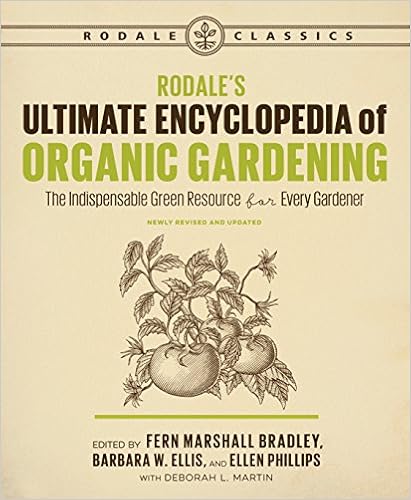
Amazon book link? Here's an updated and expanded edition of a book my parents found helpful...


Postscript. The Internet is not the most logical place to look for links to True Green farming material because, as Wendell Berry observed long ago, the Internet is not a True Green phenomenon. Your best sources of material probably don't have electrical wiring in their homes, let alone Internet connections. There are, however, a few True Greens in cyberspace. Youall are cordially invited to post links to your most informative content in the comment section.

Tuesday, July 31, 2018

Toxic Tomatoes, or Was It the Peppers...?

Not to be callous about those for whom this summer's heat wave has got completely out of hand (for those who missed it, http://www.latimes.com/local/lanow/la-me-fires-heat-20180731-story.html )...but here in the Blue Ridge Mountains, we've been basking in the coolest, most delightful July weather anybody can remember. Sultry afternoon temperatures have generally remained in the eighties (Fahrenheit, of course), with a few brief surges just above the 90-degree mark. Refreshing overnight lows have been in the sixties, or even the fifties, every night. Summer weather does not get nicer than this. If you have paid vacation time you must use right away, you might want to consider the Blue Ridge Mountains. I've heard some talk about local folks doing the AirBNB thing right in Gate City, a town so unspoiled that (some of us, the gentry at least) still positively enjoy tourists.

On the other hand, this year California's glyphosate ban has given me a feeling I've never had before, a sense of some emotional connection or at least respect for the place where I was, more or less by accident, born. (I'm the proud heir of an old Virginia family and an old North Carolina family, who happened to be born while my parents were in Los Angeles.)

The effects of glyphosate pollution on celiacs are really hard to believe, unless and until you've seen them, because they vary according to amount of exposure (yes, they build up over time) and also according to the form of a specific minority gene real celiacs have. But they're horrific.

I say, "I was sick over the weekend...food poisoning," and you picture me sprinting to the bathroom, which I did, but you probably don't want to know what I saw there that made this kind of food poisoning so special. It wasn't even the blood-flecked froth that defines celiac sprue, or it wasn't only that. It was that, during one bolt to an oldfashioned water-flush toilet, I saw a two-or-three-inch-long strip swirling slowly around. Strip of what? It looked like honeycomb tripe. No, I had not inadvertently swallowed a strip of blanched undercooked meat as long as my finger. I've never eaten honeycomb tripe. We are talking about my own body tissues here.

If somebody had come up and torn that amount of skin off my arm, would there be any question about that person needing to serve time in prison? I hope not.

Somebody came up and tore it off my colon, where the damage was much worse, and because they tore the strip off my body in an indirect way that person probably thinks he or she was being nice. Instead of expecting jail time for tearing a strip off me, the person expects me to return a favor, and has no idea what kind of favor I actually owe him or her.

I say "he or she" because multiple suspects may have contributed to this poisoning.

People in the point of Virginia are going around asking each other, "How are your cucumbers doing this summer? What about your zucchini? Bell peppers? Tomatoes?"--and if the answer is anything but "I've never had such a crop! From only three or four plants, more produce than I have any idea what to do with!" then the speaker's next line is probably going to be, "Can you use a few extra? I just happen to have a bag or two to get rid of...can you eat them, can them, sell them...?"

This weekend I sent someone a text message to the effect that I was too sick to haul the laptop to the nearest McDonalds, myself, and wanted to join a car pool. An hour or two later I saw the vehicle I expected to be told to run out and meet, not waiting beside the main road, but chugging up past my door.

"I'm glad you got the message! When you didn't answer, I thought the text message might have been lost in the humidity! Hang on while I pack up the laptop..."

"Message? Laptop? I just came up to see if you could use some cucumbers."

Most years, people at least try to sell their surplus vegetables. This year, they thrust them upon the unwary, leave them on people's porches overnight and run...

Anyway I've enjoyed many good salads this month, free of charge, and I'm pretty sure the cucumbers weren't what made me sick. The zucchini and squash weren't, because nobody has eaten any of them yet; summer squash tend not to be eaten when vine-ripened cucumbers, tomatoes, and bell peppers are on the table. Tomatoes have thin peels, although I do peel them. Bell peppers, which are practically impossible to peel until they're what I call overcooked, are the prime suspects.

I received one red bell pepper, one green one, and one at the halfway point between green and red. I enjoy the crunch of a bell pepper in a salad with cucumbers and tomatoes so I decided to eat the ripest one, the red one, first. Who wants to cook a fresh bell pepper? Rinse it off, slice it up, and enjoy it! I enjoyed it on Thursday afternoon.

So then on Friday morning I started to feel droopy and grumpy in the market, on Friday afternoon I started running in and out of the bathroom all day, Saturday was more of the same, and by Sunday I was completely enervated and afraid to risk walking three miles. By Monday I felt better, but not well. When celiac sprue reaches the point where large unmistakable bits of tissue start peeling away from the bleeding ulcers, patients are advised to expect it to be a year or so before they can be considered well.

I didn't eat anything that contained any wheat gluten, or corn, or soy. Last week I ate mostly garden-fresh vegetables...some of which somebody had obviously "protected" with Monsanto's Roundup, which some poor fools still want to believe is nontoxic to humans. Hah. The names chemists give chemicals do have some meaning. Glyphosate begins with GL because it's chemically related to gluten, which is what causes celiac sprue; glyphosate affects celiacs the same way gluten does only much moreso.

It has other effects on other people. The family from whom the bell peppers came consider themselves more English than Irish, although one of their children has some form of gluten sensitivity too, and five'll get you ten that, if the truth were known, that this family have been systematically poisoning their own child without knowing it.

Sick days? Meh. Whether or not I'd call a day a sick day depends on what else I might need to do with it. If I had to work with food, or children, or medically fragile patients, a summer cold would be a valid reason for taking a sick day even though I'd still be fit to do physical labor. Since I don't...Sunday was not a sick day. I sat up and wrote, stood up and walked around, picked the hibiscus caterpillars off Mother's Rose of Sharon (Hibiscus syriacus). I was fit to work, and I did work; I just wasn't fit to be more than, say, five hundred yards from a toilet.

What it's like, emotionally...the best word is "weird." In real life people do not go around just flushing chunks of their bodies down the toilet for very long. That experience definitely gives a person reasons to think about the end of their present lifetime, and when and how to arrange a quick end rather than a lingering one...but it has nothing to do with "depressive" emotions. The absence of a "depressed" mood, plus the short duration of the acute sprue, are evidence that (so far) it's just a celiac reaction, not cancer. I actually think that, if I don't have long to enjoy being alive, it'd be stupid not to enjoy being alive as much and as long as possible.

I came online and read a post by a rich White male celebrity this morning...the world is his oyster, but he feels depressed, boohoohoo. Boohoo bloomin' hoo! I have very little sympathy for depressive people--except that their moods, too, may be associated with sensitivities to toxic chemicals.

"All this world has turned against me! Nothing but trouble do I see!
There will be no more pleasure in this whole wide world for me!"

East Virginia Blues (When The Sun Goes Down Series)

If you catch yourself actually relating to the mood of songs like that, you might want to try thinking beyond the end of your nose, right? Think about people who have reality problems. Join us. You might want to consider working toward a nationwide, preferably worldwide, ban on glyphosate.

Consider working toward a ban on poisons, generally. Also this morning I read that Alan Alda now has Parkinson's Disease. Studies have shown that that, too, has a pretty solid correlation with exposure to "pesticides"--specific chemicals weren't studied separately in the studies I saw. If you like, or admire, or have fond memories of Alan Alda (and who doesn't?), consider working against the whole idiotic idea of poisoning the whole environment because there's some animal or plant you don't like.

Monday, September 4, 2017

Book Review: Southern Living Annual Recipes 2004

Trigger warning: This post contains photo links to several Southern specialty foods, most of which are fattening. If you're on a weight loss diet, read something else. In this post I'm celebrating Amazon as a specialty food supplier, but most U.S. readers already know cheaper local sources for these Southern foods.

Title: Southern Living 2004 Annual Recipes


Author: Southern Living magazine staff

Date: 2004

Publisher: Oxmoor House

ISBN: 0-8487-2826-2

Length: 334 pages plus 33 pages indices

Illustrations: photos reprinted from the glossy magazine

Quote: “I think you’ll notice more light and healthy selections in this book....But don’t worry—we aren’t budging an inch when it comes to flavor.”

For those who don’t know, Southern Living is the magazine that documents—Southern partying, actually. Recipes often include variations on cornbread and beans, turnip greens, sweet-potato pie, and redeye gravy, but always and only the trendy and chi-chi kind. You can probably afford (in terms of budget and calories and cholesterol) to play with these recipes now and then; they’re not for everyday use. Most of the sections are organized around the kind of social event at which these foods would be served, and some recipes are written to serve sixteen. Annual recipe collections contain enough recipes, mostly reprinted from the monthly issues with an extra section furnished by sponsors, that you could cook at least one every day. Although special diets aren’t a theme in the magazine, the selection of recipes is wide enough that readers can always find something that’s naturally dairy-free,gluten-free, sugar-free, vegetarian, or whatever else they need.

Pungo Creek Mills Indian Cornmeal-Native American Heirloom Virginia Grown Gluten Free Corn Flour (2 Pack - 22 oz each)

There is, of course, a tendency to revel in foods that grow in the Southern States (any or all of them, occasionally including western Texas, New Mexico, and Arizona). Recipes work in other places; a few are even credited to readers outside the Southern States, but it’s more likely that you’ll have a lot of pecans, lemon verbena, yellow tomatoes, Vidalia onions, or fresh peaches to use up if you’re in the South.

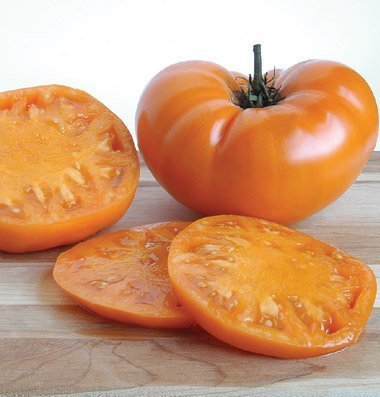
Legend Online Garden Seeds Tomato Beefsteak Yellow Brandywine D714A (Orange) 25 Organic Heirloom Seeds

(The yellow tomatoes grown in my corner of Virginia are not Yellow Beefsteaks, as shown, but Yellow Pink Centers; they're known for their odd shapes and gorgeous lemon-yellow, light red, and pale green color mix. They are eaten fresh, usually with a spoon, often with salty cornbread to soak up their sweet juice.)

In fact, reading through these recipes, I find myself visualizing an editor saying, “Everything’s better with chopped toasted pecans on it.” Not all the recipes mention pecans—on pages 230-231, for example, both a grape sauce and a chili sauce are pecan-free—but, also on pages 230-231, recipes for corn pone, turkey, macaroni, and lemon-butter sauce do recommend pecans. Pecans also find their way into apple pie, rugalach, green beans, pesto, and tuna salad. Southern Living also delivers recipes for using up juicy citrus fruits, vine-ripened tomatoes, tomatillos, fresh strawberries, new potatoes, watermelon, wild morel mushrooms, sorghum molasses, cornmeal and grits, beans at all stages of ripeness, chestnuts, and prickly pears.

SUNBEST Fancy Georgia Raw Shelled Pecans, Pecan Halves, JUMBO, Unsalted, No Shell in Resealable Bag … (1 Lb)

“Traditional” recipes for vegetables boiled just short of dissolution and seasoned with fat pork, pound cake made with a pound of each ingredient (butter, sugar, egg, flour, sometimes fruits and nuts), collard greens and blackeyed peas, are regularly featured, though usually with “lighter, updated” instructions. One-quarter of the amount of saturated fat a typical Southern cook used, a hundred years ago, still leaves results some people find oily. I like a light, flaky, mealy potato and can’t imagine where anybody got the idea that the first thing to do with a potato is to mash a lot of milk and butter into it, especially it’s one of the denser, oilier varieties of potato in the first place.

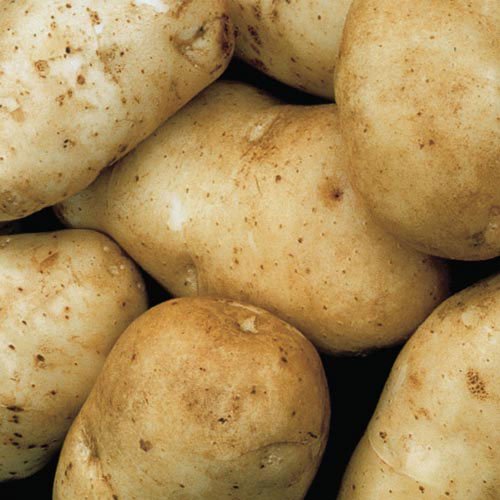
Kennebec Potatoes - 4 lbs

(These are the potatoes people used to raise in my corner of Virginia, supplied to Amazon by the company from which we usually bought them.)

Really traditional Southern cuisine was labor-intensive. “Beaten biscuits,” actually more like saltines, were leavened by pounding air into the dough until “blisters” formed on the surface; beating otherwise unleavened dough for a half-hour or more was probably a great vent for underpaid cooks’ emotions, and certainly helped burn off the calories from slathering the biscuits with full-fat country butter. Hickory-nut cake had to be made from shagbark hickory nuts (smaller, much harder-shelled relatives of pecans); in my experience, finding the nuts was one day’s work (in a good year), shelling them was another, and I never knew anybody who wanted to wait yet another day to bake a cake, so there was a saying that hickory-nut cake was only ever baked for very special friends--as in, when a girl baked one, the male guest of honor had jollywell better propose. Traditional recipes were usually simple, despite anomalies like fruitcake and molé, because the cook’s ingenuity was diverted into maintaining a wood fire at the right temperature.

Southern Living tends, as many Southerners now tend, to throw that tradition out the window. Lots of recipes rely on convenience food. For pasta sauce, they start with a jar of the pre-mixed kind and sprinkle in a little more basil. Dessert? Open a box of ice cream, a jar of caramel sauce, and throw in some more pecans. Secret ingredients in several recipes include Velveeta (“processed cheese food”), soda pop, and beer.

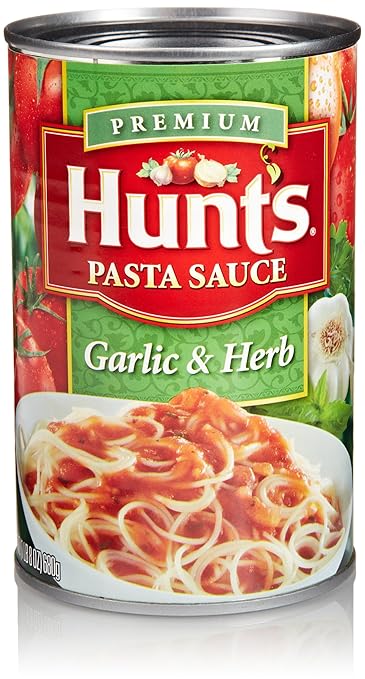
Hunt's Garlic & Herb Pasta Sauce, 24 Oz.

(Choose the Garlic & Herb flavor if you buy Hunt's pasta sauce...it's sweetened with carrot pulp and juice rather than nasty GMO corn syrup. There's a Twitter campaign to push Hunt's to find GMO-free corn syrup and/or corn-syrup-free recipes, but we realize that it will take time.)

Then there are the sponsors’ recipes, featuring things like catfish, Rotel, and Veg-All. Catfish are an icky bottom-feeding species, foreign readers, and Veg-All is a canned mixture of boiled white potatoes, carrots, corn, peas, and green beans. Rotel, you really might want to know about. Small cans of tomatoes with chopped peppers mixed in, with relatively little sugar, salt, or other preservatives, are flavorful enough to be a staple in the McDougall test kitchens. There are generic and store-brand versions but Rotel is, like Jello and Coca-Cola, one of those brands that are so popular they become the generic name for the product; while Southern Living says “10-1/2 ounce can tomatoes with green chili peppers,” real people are likely to say “Rotel, or the store-brand version of Rotel.”

RO*TEL Diced Tomatoes & Green Chilies-8/10oz

One really easy thing to do with Rotel has been promoted in a series of television commercials that steal the Spanish word for cheese (any kind of cheese, alone or in a recipe) to mean Velveeta melted in warmed Rotel. People who eat Velveeta have known about this easy form of cheese sauce for a long time, but a few may have been introduced to it by Southern Living in 2004. Queso means any kind or combination of cheese; salsa de queso (Velveeta) con tomate (Rotel) would be the proper phrase, and it’s liked wherever its two ingredients are sold. Cheap and easy though it is, the recipe was, at least for a while, recognized as trendy enough to be printed alongside recipes for chipotle chiles and fish tacos.

Velveeta ORIGINAL Pasteurized Cheese Loaf 32oz

People collect Southern Living annual collections and shelve them in sequence. By now an extensive collection of these books is quite a display. I have to admit that the copy of this volume I physically own was pulled off a shelf and sold cheap, apparently, after falling into a kettle. This sort of thing is why local lurkers get the books I physically own for typically $1, less if they buy several at one time. Online readers get books in better physical condition, thanks to Amazon.

Books published by magazines aren't Fair Trade Books; our profits on reselling them help support the Fair Trade Books, which aren't always very profitable. Amazon shows lower prices, but to support this web site you send us $5 per book, $5 per package, and $1 per online payment. Southern Living cookbooks are thick books, printed on heavy, durable, high-quality paper for a lifetime of good service; you could fit several combinations of other books into a package along with one but I'm not sure one $5 package will hold two Southern Living cookbooks, although, if you order two, I'll try.