Local government needs to safeguard Americans' right to earn quick cash without taking out loans--or committing crimes!--to finance legitimate micro-enterprises like bake sales, flower stands, produce stands, craft sales, and yard sales.
Tuesday, April 15, 2025
Where Are the Roadside Vendors?
Friday, November 29, 2024
Morgan Griffith Goes to Azerbaijan
As we approach the end of the year, multiple foreign summits gather and deliberate.
The Asia-Pacific Economic Cooperation (APEC) Summit took place in Peru, where President Biden and China’s President Xi Jinping were in attendance. APEC is a partnership focused on economic growth in the Pacific and regional integration of the member country’s economies.
President Biden then visited Brazil for the G20 Leaders’ Summit, along with the leaders of the 19 member countries, the African Union and the European Union. These forums serve as opportunities to discuss economic issues related to trade and international development finance.
Biden held no press conferences at the summits, and he was left out of a photo with G20 world leaders due to “logistical issues.”
Outside of Latin America, a different summit was also taking place.
The small Caucasian country of Azerbaijan, situated on the Caspian Sea and tucked north of Iran and south of Russia, served as host to COP29, the United Nations (UN) climate change conference.
I participated in a Congressional delegation to COP29 to advocate for strengthened American energy leadership and inform the world of leading technologies we have here at home in America that can be models for other countries to use as the world will continue to rely on fossil fuels well into this century.
Of the seven of us who attended representing the United States House, I came as the only representative from a district with heavy ties to coal.
In a featured press conference, the delegation stressed emissions reduction solutions that do not sacrifice American innovation, economic development, or national security.
Following the press conference, a radical activist approached me at the dais and accused me of being a traveling salesman for American fossil fuels!
If she had added American innovation for making it possible to use those fuels more effectively and cleanly, she would have been right.
Many environmentalists are unsatisfied with the world’s climate progress and accuse the United States of being a principal agent of greenhouse gas emissions.
I agree that we should mitigate carbon. But in the United States, we are embracing technologies that reduce our emissions.
U.S. carbon dioxide emissions from the energy sector have declined by 14.5 percent since 2007.
Meanwhile, China continues its track record of being the world’s worst polluter. Their energy-related emissions increased by almost 80 percent between 2005 and 2019, according to data from the International Energy Agency, an intergovernmental organization that follows the global energy sector.
What’s worse is countries like China and India are treated as developing countries thanks to outdated UN classifications. Accordingly, they are not obligated or expected to contribute to climate finance aid like the U.S. and European powers do.
Further, under the Paris Accords, reached when COP met in Paris, China was allowed to continue increasing its carbon dioxide emissions until 2030.
America leads in emissions reduction technologies, and the Ninth District is the home of innovative companies dedicated to capturing and mitigating carbon.
For example, Pulaski’s MOVA Technologies cultivates an accomplished team to produce innovative technologies related to advanced air emissions filtration for numerous substances.
MOVA received a grant from the U.S. Department of Agriculture to advance a project capturing ammonia at poultry operations.
CNX Resources of Tazewell County is removing methane directly from working coal mines, instead of flushing the methane directly into the atmosphere.
Virginia Tech’s Project CARDINAL is also exploring the feasibility of carbon dioxide storage in the region.
Later, as a part of COP29, I was a panelist on a bipartisan nuclear energy panel.
Nuclear energy, when done right, enables prosperity and helps counter climate risks a community may be facing.
This Congress, I supported the bipartisan ADVANCE Act and voted to favorably report it out of the Energy and Commerce Committee. The bill has now become law and will modernize America’s nuclear energy licensing policy with sweeping updates.
Such updates include establishing more efficient permitting for many types of traditional nuclear technologies and allowing for new nuclear technologies like Kairos Power’s Hermes 2 Generation IV reactor in Oak Ridge, TN.
Appalachian Power Company recently announced plans to locate a small modular reactor in neighboring Campbell County.
Small modular reactors could be key nuclear pathways to provide more reliable, affordable and secure energy for major industrial development.
These solutions can help lower global emissions. I want to be sure that the United States pushes meaningful solutions, where we can lower our energy costs at home while cultivating appropriate stewardship of the environment.
Tuesday, August 27, 2024
Book Review: Balance and Beyond
Tuesday, April 4, 2023
Mark Warner on the Lower Energy Costs Act
Dear Ms. King,
Thank you for contacting me regarding H.R. 1, the Lower Energy Cost Act. I appreciate the benefit of your views on this important issue.
On March 30, 2023, the House of Representatives passed the bill by a vote of 225 - 204. The bill must pass the Senate and be signed by the President before becoming law.
You may be assured that I will keep your views in mind as this issue is considered. If you need additional information or if there’s another issue that’s important to you, please visit my website at: http://www.warner.senate.gov where you may send a message to me or sign-up for email updates to get the latest on my work in the Senate. You may also follow me at: http://www.facebook.com/MarkRWarner/ and https://twitter.com/MarkWarner.
Sincerely,
MARK R. WARNER
United States Senator
Friday, October 21, 2022
Mark Warner on Public Service Loan Forgiveness
From U.S. Senator Mark Warner (D-VA):
"
Hey folks,
I wanted to reach out to provide an important and exciting update for joint consolidation student loan holders and a reminder for anyone eligible for Public Service Loan Forgiveness! Earlier this month, President Biden officially signed into law my bill allowing borrowers trapped in joint student loans with a former partner or spouse to sever their consolidated debt.
Between 1993 and 2006, married couples could combine their individual student loan debt into a single joint Direct Consolidation Loan or joint Federal Consolidation Loan. But when this practice ended in 2006, there was no way for borrowers to sever the debt for any reason, including divorce, separation or abuse.
But this process did not only impact separated couples. For years, borrowers who would individually qualify for student loan relief programs, such as the Public Service Loan Forgiveness (PSLF) Program – which is available to those who have worked in public service, including teachers, state workers, and veterans – were ineligible due to the specific conditions of joint consolidation loans.
My legislation provided a fix for this problem, allowing borrowers to not only sever their debt, but also take advantage of debt relief programs like PSLF.
Now, it will take some time for the Department of Education (ED) to fully implement changes for borrowers to request separation of their joint consolidation loans, but with the limited PSLF waiver deadline approaching, the Education Department released a set of guidelines for those looking to apply for PSLF waivers.
By Oct. 31, 2022, public servants who currently hold consolidated loans will need to:
- Use the PSLF Help Tool to determine if your employer qualifies for this program.
- Print and sign a PSLF form, and then have your employer(s) sign it.
- Submit a Reconsideration Request by uploading a PDF of your PSLF form as an attachment to the reconsideration request submission with the description: “I am a borrower impacted by the Joint Consolidation Loan Separation Act."
Ultimately, I think public servants – especially those that have been trapped in consolidated loans – should have more time to apply, and that’s why I’m also publicly pushing to extend the waiver through next summer. For now, though, it is still looking like the expanded waiver will expire on Oct. 31, so I encourage all to look through this resource and learn more about your eligibility and options. You can get started on this process here.
If you ever want to share your thoughts about an issue that’s important to you, you can send me an email any time using the form on my Senate website. You can also follow me on Facebook, Instagram, and Twitter. I look forward to hearing from you.
Sincerely,
" [that signature graphic Google doesn't like: Mark Warner]
Virginia has had varying amounts of funding to allow varying amounts of help with student loans, for people who serve the Commonwealth, for a long time. Typically loan forgiveness/reduction for teachers has, for example, been offered to people who teach math at very rough urban high schools or very poor rural ones, but not usually for most teachers. This letter reflects some expansion of a traditional program; it is not, as readers outside Virginia may assume, a new unprecedented thing. President Biden may be encouraging over-expansion but, historically, Virginia has been able to afford a little investment in people who take the jobs other qualified people don't want.
The amount of time I have for online reading varies from day to day. Congressman Boucher's newsletter is in the e-mail; it will show up here on Sunday or Monday.
Thursday, October 20, 2022
Book Review: Homelessness and Housing Advocacy
Title: Homelessness and Housing Advocacy
Friday, November 8, 2019
Tim Kaine Says Bipartisan and Unfortunately He's Right
"
Right. He's not talking about funding for accredited colleges and universities, generally, which most taxpayers would probably say is already sufficient. He's talking about special funding for these five universities that happen to be historically Black or majority-Black. And I am in favor of these schools keeping their special history and traditions. I'm even in favor of their keeping their majority-Black atmosphere, so when some 18-year-old slacker who's never had to learn how to study in high school goes to university and is nonplussed by having to prepare for classes, this kid can't say "They're making it hard for me because I'm Black." Learning how to study is hard for teen slackers of any ethnic flavor but, when the teachers are Black too, teen slackers who happen to be Black are more likely just to learn how to study, already, without the "because I'm Black" sprezz. There is no color difference among brains. There are differences among high schools that put some ethnic-minority and low-income students at a substantial disadvantage; historically, Virginia high schools have tended to be among those that put students from all backgrounds at an advantage relative to students from neighboring states, but even Virginia high school graduates still have to adjust from having everything spoon-fed to them in the classroom to being expected to learn some things from their own reading before they walk into the classroom.
When I used to attend Seventh-Day Adventist churches they used to have special fundraising drives in aid of Oakwood College, which is also historically Black, though not in Virginia. I used to give money to those drives. I used to see people from every nation on Earth giving money to those drives. So, if the Senator's bill to collect special money for our Historically Black Uni's were not bipartisan and did not bag a few million tax dollars, I'm pretty confident that fundraising tours by these schools' bands, drama groups, sports teams, etc., would raise money for these schools too.
Either way, the schools are going to get money, and preserve their traditions; and there's nothing unfortunate about that. I think it's a fine thing.
What's not so fine is just how bipartisan the movement to take this money out of federal tax funds has become. The Republican Party's reason for existing is to question the Democratic Party's historic tendency to imagine that the only solution to any problem is to throw federal tax money at it. R's are supposed to hold out for schools to raise more of their own funding through alumni donations and student activity. But the printed piece of R junkmail was urging me to vote for a local R because he's "helped secure more federal funding for schools in our district..."
Er um, which district's that, again? Junkmail originated in Richmond!
R's are supposed to remind D's that even though education is a good thing and we want it to be available to every child who is willing to take it, making schools raise their own funds is good for the schools, forcing them to do a decent job of teaching students to do something for which somebody is willing to pay as a result of observing what the students have learned.
I was lucky; Virginia's White-washing of biracial families out here in the Point was philosophically disgusting, but it did give us access to a choice of colleges that was not always available to Black people. So, my parents wanted me to go to a church college, and since I skipped through high school at the age of sixteen I had little choice about that. My church college received limited federal funding. (Many thought it ought to have received even less.) As a result, tuition was much higher than it was at the state universities that offered equally good or better academic education. My parents thought single-sex dorms with curfews, and the right to pray out loud and quote the Bible in the classroom, were worth the extra fees. Not that we could afford it, but what people were telling 16-year-olds with what were called "equivalency diplomas," back then, was "If people waited till they could afford it nobody'd ever go to college. Go now, then get a job that'll pay enough that you can afford it."
So I went. My parents managed to pay back the loan before the interest got out of hand; I managed to pay them back in floor-mopping, errand-running, and letter-writing after Dad went blind. And I was lucky again--as most students are: I had a marketable talent. I wasn't a star-quality singer, but I was good enough to sing for my supper. I travelled with the school choir and drama group and sang in fundraisers in aid of the school. I travelled with the student ministers and sang in churches in aid of their and my tuition. Eventually I had a few fans, raised a little money, and released an album of my own.
It is hard to imagine an historically Black university that wasn't known for its student musical performances. Hampton, especially. Offhand, the only thing I remember having read about Hampton was how their choral performances used to impress the whole East Coast. Granted, universities don't raise money by music alone, but...why have I not read about a Hampton choir performance more recently?
Then from the church college I went to its affiliated university, where I continued to sing. I was also put to work in the school wood shop, which supplied a big mail-order company with furniture at that time. The wood shop had been advised to hire a few girls, so I was the one they put in the finishing section. University social life revolved around clubs and, although some of the clubs seemed to be social groups that didn't do much beyond hanging out together, those clubs were dismissed as being for sad apples. Anyone with anything to offer was invited to join one of the clubs that did something for the school so, while under consideration for the Scholars, which was the top group and which I never got into, I travelled with a lesser group who organized Christian sing-alongs and devotions in hospitals, nursing homes, the jail, the soup kitchen, and other places where people didn't get to church services. The club had a tiny fund of our own for needy members, and raised some funds for the church and the university.
Later I went to Berea College, which was a bigger school, more demanding. Berea didn't put me back on the road as a singer; they had teenagers for that. Berea used older students to write research papers, help with experiments, do lectures...I actually compiled a supplementary textbook. In addition to the obligatory hours of more menial student labor, mopping floors, showing people how to use computers, and guarding the science museum on weekends. (One of Berea's traditions was that even the faculty and administration had to do that sort of thing for a couple of days every term. You moved on to more prestigious tasks, but you never moved beyond menial labor.)
I think it's not that adults shouldn't hand out money to schools, but hello, what are the schools doing besides racking up the price of tuition every year and whining for more federal tax funding? I think more schools should be more like the church schools and Berea. If not 100% self-funding they should be positively competing to get closer to that goal. Hello, young people, college is not just where you go to sneak out and do things your parents told you not to do; it ought to be where you start giving something back to the larger society that have thrust elementary and high school education upon you. College is where you may not be ready to write your bestselling book or do your groundbreaking research, yet, but you can sort mail, or baby-sit, or sing.
I'm proud of my local man's successes but I have to wonder to what extent he and his Republican sponsors have gone off track. From D's, begging for more federal funding may be all that's expected. From R's, I would have hoped for boasts about making schools and students more self-funding.
There are those who don't like what Booker T. Washington, of Tuskegee University, wrote about "service learning." They accuse him of having suggested that the purpose of educating Black youth was to make them higher-class domestic help for White people. I don't remember where in his book he said that; I remember more about the idea of students self-funding by doing student-labor-type work for anyone who might be able to hire them. Well, it's been a few years since I read his book, anyway...twenty-some years. But why should this web site promote a Tuskegee writer ahead of a Berea writer? When the Amazon links return to this site, which they will, the link here will be to a book by Carter G. Woodson, who argued that the first step for any disadvantaged group of people--students, ethnic groups, whomever--was to recognize how much they already had to offer, how much they could do for themselves and for one another.
And I want to be clear about this. The e-mail was about majority-Black schools. Majority-White schools need money too. White students need money too. And they deserve help, too. And they, too, need to be thinking about ways to rely less on federal tax funding and more on self-funding...both the schools, as schools, and the students, as students.
Friday, March 22, 2019
Tim Kaine on Paid Sick Leave
"
Too often, American workers are forced to choose between taking time off to care for their health and receiving a paycheck.
So I joined my colleague Senator Patty Murray on the Senate Health, Education, Labor, and Pensions Committee to introduce the Healthy Families Act to allow workers to earn paid sick leave. This is about making sure that people can take time off when they are ill, need to care for a sick family member, obtain preventive care, or address the impacts of domestic violence, stalking, or sexual assault.
The legislation would allow workers at businesses with at least 15 employees to earn up to 56 hours, or seven days, of paid sick leave each year. Businesses that already provide paid sick leave would not have to change their current policies, as long as they meet the minimum standards of the bill.
Studies show that paid sick leave can reduce the spread of contagious diseases like the flu and that a national paid sick days policy would reduce emergency room visits by 1.3 million annually, saving $1.1 billion a year.
I hope my colleagues in the Senate and House will join us and help make sure this legislation becomes law.

Editorial comment: Meh. In my lifetime I've done very few jobs that came with paid sick leave. Mostly I've avoided flu by avoiding jobs where people are crowded together...for instance, when office workers don't have separate offices, they all breathe on each other all day, and fast-mutating viruses like Norwalk Flu just keep going around and around and around. Paid sick leave is fun, and quarantine is a very pleasant and public-spirited thing if only extroverts had enough sense to take it, but my observation was that, in offices that gave paid sick leave, flu circulated anyway. The sicker extroverts get, the more they want to rush up and grab other people and breathe on them.
Friday, March 15, 2019
Makers & Takers: Should People from Washington Visit Gate City?
That big bad winter storm is heading our way, at the time of writing, but we've had some lovely springlike days, and the blossoming of Prunus trees (fruit-bearing and ornamental) and forsythia and dandelions and other beautiful things reminds me of a Washington tradition I used to enjoy when I lived in or near the city.
That tradition is usually called a Weekend Getaway, but after sharing it with me my husband prodded, "The purpose is to pump a little money back into the local economy." Sometimes I miss the subtleties of these things. Although I was and still am a frugal fanatic, after it had been spelled out in so many words I remembered the purpose of the Weekend Getaway and packed a hundred dollars or so to spend on our monthly road trips.
But in a way he paid a price for explaining the purpose of the Weekend Getaway to me. Before that time, I used to enjoy visiting other people's favorite places, Morgantown, Pittsburgh, Chincoteague, Luray, Roanoke, Charlottesville, Asheville, Ocracoke, and of course everybody likes the Eastern Shore of Maryland. Afterward, my husband would receive monthly coupons for one night free and one night half price in a participating hotel. He'd say, "Where would you like to go?" and I'd scan for participating towns and say, "We can go to Bristol or Wytheville...I have things to do in Gate City."
The other day I talked to a village idiot type who said, in a confrontational way, "Do you buy things you don't need, just to support someone's business?"
When I read the words by themselves, printed on paper, a funny thing happens. A different answer comes to mind. Nonverbal elements of communication, as the late blogger known as Ozarque often said, change the meaning of the question.
My answer to "Did you use to buy things you didn't need, just to support someone's business?" would have been, "People include different ranges of meaning in the word 'need.' It's a good word not to use if you want to know what sort of things I bought. I did not buy the kind of gift items that are most likely to be re-gifted, the bric-a-brac made in China and so on. If a business deserves support, it sells things for which we can find a use. Prices for things people use regularly, groceries and toiletries, tend to run high in the cities; often we spent our spending money on gas and groceries, and felt that we'd found good bargains relative to what we paid for those things in Washington. More optional purchases, like the yarn stash that still takes up about a quarter of a room in my home...some of those yarn packs were bought as souvenirs of a trip, and yes, I remember the towns, the shops, and the occasions. And if a man wants to make a good impression on me in the city, yes, he should definitely buy flowers from one of the students and immigrants who stand out in the weather and sell flowers. Yes, when possible I do buy new books and records in order to encourage living writers and musicians. I never pay retail prices for ready-made clothes but I do pay for hand-made clothes or clothes resold for a good cause."
My answer, if the village idiot had asked, "Do you ever buy things you don't actually need, just to support someone's business?" in a pleading, despondent manner, would have been, "Yes. Although my handknitted blankets will last for years, although many of them could literally be buried in mud for a month, be dug up and machine-laundered, and look almost as good as new--while your cut-and-hemmed polyester 'fleece' blankets will shrink every time they're laundered--I would buy a few of your blankets, and resell them beside mine, because there is a market for cheap junk and because I recognize the natural limitations on your talent, or lack of one. Fleece blankets are good for pets." Well, "yes" is all I would have said out loud, but...yes. That.
My answer to what the village idiot actually said was "Yes." With nonverbal communication to fill in, "You've both heard and read what I have to say on this subject. I know you've been planning an insulting comment for some time, so bring it on...and pay for it." So idiot spewed, and paid, and if idiot is now telling people I've lost none of my edge at the verbal abuse game, idiot very deliberately asked for it. There's no sin in winning a game. I'm not convinced that there's a sin even in enjoying the misery of sore losers whose verbal abuse game requires them to pretend they're red-faced and teary-eyed about something other than having lost the game. But that's beside the point.
When we want to help people...disasters and emergencies happen, and we should all prepare to handle those and help others handle them, as best we can. Beyond that I think we all need to support one another's business, whenever it's feasible, as opposed to buying things from big-chain stores or giving money to those who just sit around going "needy-needy-needy."
(Which unfortunately does include some otherwise good church, community, and humanitarian causes. I don't mind buying things from their store or bazaar, or even putting money in the plate if I go to a concert or movie or lecture. My father used to say that churches should ban the custom of passing plates for money during regular services, and I used to say, "If people go to an ordinary lecture they chip in a little to pay for the cost of the hall, don't they?" and he used to say, "But a minister ought to be an example of doing without and giving to others," and we agreed to disagree. Dad never acknowledged that extroverts get some benefit from reading and discussing the Bible in groups; I concede that they do, but I notice no benefit to me in doing that, or anything else, along with a group of extroverts. But I'm not willing to pay people for advertising or fundraising. I'll forgive them for doing a little of that if other things they do are worthwhile, but if most of people's e-mails ask me for money, I will stop opening them. If you want to increase sales of a product that's been in the stores for more than one year, show me a low price in the store, not a TV commercial. I'm not rich, but if I were George Soros's last living heir I still wouldn't have any money to donate to the full-time fundraisers.)
We need to support makers, not takers.
We need to support people whose work we respect, not people who we believe are so pathetic that we can congratulate ourselves for being better off than they are.
We need to support people who will, with a little support, be as well off as we are...if only because, by and large, those people tend to be younger than we are, and like it or not we will eventually have to depend on people their age to drive our cars and clean our floors, and anyone over about age 25 should start cultivating a few carefully selected younger friends. I see a lot of baby-boomers in denial about the fact that friends who visit our homes can do a lot more to make our old age enjoyable than wage slaves who work in retirement projects. I see older people who take their children for granted...sometimes their own children are all these people hoped they would become, sometimes not.
Washington is unique because it was meant to be only our nation's capital, the place where our federal government worked as many days as was absolutely necessary before going back home, but it has become a real city in its own right too. Most Washingtonians are, by any reasonable measure relative to any reasonable portion of the rest of the world, rich. The ones who travel overseas know that. They have two "communities" to support: the people who are doing good work in Washington, and the people who are doing good work in the home or host towns where they go on weekends. They can afford to show respect to both.
I read and hear rumors about vague attempts to cut the federal welfare budget. Gate City has a small group of educated people--I refer to them generally as social workers, although some of them have moved up to legitimate jobs, or retired--and a large group of old-age and disability pensioners, both of whom can be counted on to kick and scream about any suggestion that their handouts might be reduced. The rest of us can hardly help thinking thoughts like "My parent/s, grandparent/s, etc., did work and pay into a Social Security handout fund, even if they knew all along that it was an unsustainable scam that was designed to fall apart before they started claiming their money...or X does have a major disability...but actually they like to have something worthwhile to do besides sit around and gossip! They want to work! And those other people who prefer to sit around and gossip? If they did starve, I'm not trying to be cruel, but seriously, they'd never be missed."
I like the idea of cutting the welfare budget. Yesterday this web site passed up an opportunity to commend a specific proposed cut. There are better ways and worse ways to cut the welfare budget and, as long as all I've seen of a proposed cut is someone's name on it, my guess would be that that person wouldn't recognize the better ways if they walked up and bit him. (For example, since social worker types get "high" on believing that "all they ask for is gratitude," by all means cap their salaries at ten percent of the minimum hourly wage.) But cuts do need to be made. People who gossip, people who push welfare, people who fail to support those who set up micro-micro-enterprises to keep themselves off welfare, need to be spending their days on a day labor site, advertising their capacity for unskilled labor. They may not need to starve to death but most of them could only benefit from the experience of hunger, and even more than that, from the experiences of walking to work and doing physical labor. Forcing some people to do physical work, like removing weeds from roadsides with a hand trowel, might actually relieve their physical disabilities.
People in Washington can benefit from meeting the people in towns like Gate City. The makers, not the takers--especially the social workers who claim to speak for the takers, who actually, in many cases, are speaking against the best interests of the takers.
The makers do not, in fact, want visitors to come out and spend their whole $100 in our stores, or roadside stands or flea market booths, just because that would make our days. Well, it would, of course. Days go by when we do not see a hundred-dollar bill. Oh this is sad. We love the sight of Benjamin Franklin's benevolent, un-handsome, greenish face. But actually we want you to buy, e.g., a doll dressed to match a children's book because you know a little girl who likes dolls and whom you'd like to interest in books, or a hand-sewn wallet because you want something to stop money sliding out of your pockets into seats, or a chunk of homemade fudge because you like fudge, and so on. Naturally the more you buy, the better we are pleased, but I don't know anyone in Gate City who is actually selling junk. (The village idiot who's flooding the market with "fleece" blankets is donating them, to the full-time professional "needers.")
Actually we like being a small town in a rural setting. The main reasons why you'd want to visit Gate City would be outside the city limits. People who don't come here to maintain their own homes and visit their own relatives, come here to camp in the woods, paddle on a clean, fresh river, and pick their own fruit on a farm. And you don't actually need to spend a lot of money to do that. Visitors can and should pay to ride the chair lift, swim in the nice safe pool, buy snacks, or rent boats on the Clinch River. If they prefer to bring their own boats and snacks, keep their faces out of the water, and walk on the trails, they can do that free of charge. Some pretty nice trails with lots of bird, flower, and leaf peeping potential are even wheelchair-accessible, too--free of charge. For people who are new to Washington and have not learned how to minimize spending on boring everyday things there, my town does offer a full weekend's worth of pure change-of-scene that won't cost anything beyond the rent of a vehicle you can "camp" in. At the Natural Tunnel Park, cabins with hot showers rent for $30 or $35 a night, plus $5 if you bring a dog.
However, here is a Top Ten List of things to shop for when you visit Gate City:
1. Handmade wooden furniture: Look for this in the Friday Market, but don't be surprised if you don't see any. The couple who make those "Amish-style" chairs, trunks, etc., bring out a truckload when the weather seems right.
2. Garden produce: Pick your own in season, buy from a roadside stand, or look in Friday Market, but be aware that the really fresh local produce is rarely sold to visitors (except zucchini, in some years, and occasionally tomatoes). Farmers who grow organic produce usually sell to short lists of close friends and relatives, then long lists of townsfolk, and only then in public places. For strawberries and blueberries, the long lists can be very long indeed. If people are willing to commit to hand-cultivating these crops, perhaps in time they'll be available to visitors. Much of what you buy even from farmers' stands is retailed from out of state and not organically grown. If the sign says "Mann Farms," it is local and fresh, though not 100% organic, and the quality is probably good. And if we can get a local ban on glyphosate spraying into effect, it will be REALLY good.
3. Homemade food: Well, duh, I am typing this in a cafe, what d'you expect? Mostly sweet baked goods, plus eggy things for breakfast, hot soups and sandwiches in winter, cold salads and sandwiches in summer, can be pre-ordered at the Family Bakery Cafe. Spicy Mexican meals and icy Mexican drinks are available at Molcajetes. Pies, fudge, and other homemade snacks are often sold in the Friday Market as well.
4. Hand-knitted blankets and winterwear: While selling those in the Internet Portal store last winter, I sold a few that were then displayed for resale in other stores. I don't display them in summer, but store them in town and can bring them out on request.
5. Hand-knitted or crocheted washcloths, towels, table covers, etc.: These used to be the specialty of a retired teacher (yes, one of mine), during her lifetime. A few of hers may or may not still be available at the Ivy Cottage, which was her store--if so, they may not be used but they're hardly "new." Others are now making them for sale at Roberts & Jones. I've made a few in each category.
6. Window treatments: If you want to reduce heating expenses in a hastily built Washington or suburban flat, consider a Window Blanket. (These were actually Grandma Bonnie Peters' idea, although if they're knitted they're almost certainly mine.) They're made to be hung over large, odd-shaped windows on cold nights, and can be stuffed with insulation. I also knit lacy curtains to hang in front of windows just for looks.
7. Dolls: I usually dress adult-or-older-child-shaped dolls made at a scale of 2 inches to 1 foot; can dress other kinds of dolls to order. Knitted doll outfits, made with scraps of craft yarn in shapes and colors that generally match a picture, cost $5. Sewn doll outfits, which can involve embroidery and tiny beads and so on, cost more.
8. Chickens or turkeys: If you want to inspect the bird before having it killed and cleaned...I've been pleased to see that the live birds sold in the Friday Market had a healthy, contented look, strolling around in roomy cages, sipping water, "talking and singing" to each other, until they were sold. I'm not so pleased to think about the fact that people who bought them didn't plan to make pets of them, because most of them would have made good pets. Chickens, anyway. Domestic turkeys have been selectively bred not to have enough brain to be made pets, as have some breeds of chickens; my point here is that the chickens I've seen were not those breeds. They were the kind that would have answered to names and followed people around the yard. Anyway, whatever your intentions, Gate City is a good place to buy live chickens and sometimes turkeys. People grew up thinking of these as companion animals and are likely to have led them out to graze in real grass, at least some of their days.
9. Eggs: Hens who have been reared as companions and led out to graze in real grass lay "country" eggs, with a firmer, darker-colored, more nutrient-rich yolk than supermarket eggs have. (I once heard someone say he preferred wimpy, pale-colored supermarket eggs. Pooh! Not only do those eggs contain more cholesterol and less beta-carotene, they also came out of sickly, unhappy hens, and they're likely to contain salmonella.) Buy directly from hen fanciers to be sure of getting fresh eggs.
10. Wallets and cell phone covers: I mention these because they're what I've seen for sale in Roberts & Jones. People who sew them could probably sew other things. Anyway, they're locally made by church ladies who want to be makers not takers, so that alone makes them nicer than the kind sold at Wal-Mart.
This is only a Top Ten List. I'm sitting at the cafe, and just as I got to ten locally produced things I've seen visitors buy, the part-time worker came in. She knows not to interrupt writers, so it's only the sight of her that reminds me that she's the daughter of a fairly well known painter. He's still alive, although retired, and would probably be chuffed if you arranged to look at some of his unsold paintings.
Then there's the knife maker, the T-shirt artist, and others who didn't feel able to commit to keeping the Internet Portal open, but they still live here and would bring out their products to show visitors who wanted to buy them. Sometimes they come to the Friday Market, sometimes not. Some of them tour a more upscale craft show circuit, some don't. Some of them have web sites, some don't. You just have to come out and shop.
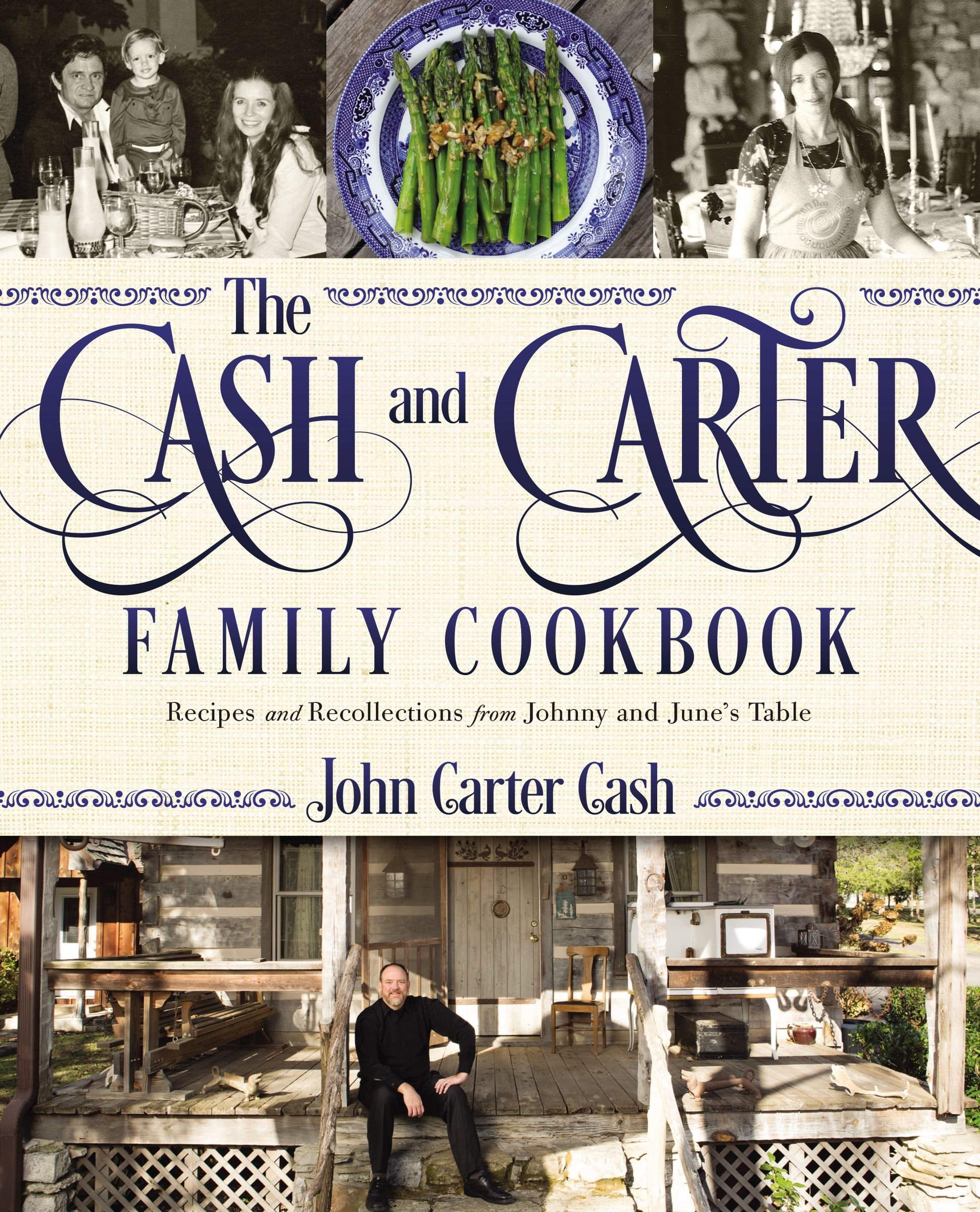
(Currently featured on sale in Roberts & Jones. Johnny Cash and June Carter are gone, and the Carter Family Fold is...easier to get into than it used to be. But how could I mention visiting Gate City and not mention live, oldtime country music as performed by the Carters, Holston River Boys, Dwain Reed, Jim & Jesse, Mac Wiseman, Ralph Stanley, and other twentieth century legends? Most of our celebrity musicians are at best very old, but their former students are still here. If you're not in town in time to spend an evening at the Fold, which is technically in Hiltons, you're probably in time to visit Leonard's Pickin' Parlor, which is technically in Weber City...depending on the time and day you can buy acoustic instruments, have them repaired, sing along, or listen to the professional quality band that's formed in the store.)
If our elected officials and other government employees make a personal commitment to support the individual makers who don't want or need handouts, we could really cut the federal welfare system. More Americans would have taxable incomes, and feel better about having them. Only people who are genuinely disabled would need handouts--and the handout system could probably be trimmed down to the point that people would receive their disability pensions while they were in fact disabled. Oh wouldn't it be love-r-ly!