Showing posts with label music. Show all posts

Monday, November 23, 2026

Music Moves Me: Beaver Moon

This is the Beaver Moon so today's prompt calls for songs about beavers and/or moons. Hmm. I'm guessing Google will find a lot more songs about the moon. I can actually think of some without asking Google.

I'd never heard of it, but there is a Beaver Song:


And somebody has compiled a whole playlist of songs about beavers. Warning: "Beaver" is one of those words that can be very rude and some of these songs use the word that way. (I always thought the woman singing with Merle Haggard was calling herself The Fever from Missouri.) Then again, some others are instrumental tunes...


The first song about the moon I learned was a variant version of "God Bless the Moon" as sung by Jean Ritchie. It does not seem to have been digitized, although it was on one of her later records. This young man is teaching it, not performing it. 


Then there was a whole album Jim Reeves recorded--songs about moonlight, songs about roses, and this one, about both:


Romantics may want to listen to the whole album, plus an extra song spliced in from another record.


Why didn't they splice in this one?


My parents had a large record collection. The albums they bought in multiple copies (because they wore out) were all by Jim Reeves, and at some point they sold all but a couple of copies of each Jim Reeves album. Dad had lost a good bit of his hearing to tinnitus--he said it started with rifle practice in the Army, but it runs in the family--and liked a simple melody sung by someone with clear diction: either Reeves or Patsy Cline. I enjoyed harmony and liked a short-lived band, The Browns, whose albums the'rents used to collect. 


Bill Monroe was still alive and still selling records up till I was in high school. Back then none of us liked his songs much. Now they're sort of nostalgic, for me. I knew all the words to this song as a kid but nobody encouraged me to sing them. There used to be a dividing line between our kind of country music and BM's "bluegrass," like the line between Virginia and Kentucky. Few people remember that these were two distinct genres, now.


Lots of people had recorded this one. Carly Simon might have learned it as a child.


Bing Crosby says Jimmy Dorsey recorded this one first. The lyrics are by Dorothy Parker.


Liking Elvis Presley used to be a bit of an embarrassment, because his serious fans were so silly about him. (I picked this screen name out of the way AOL scrambled letters in the e-mail address, without reference to his widow, but still get "Eww, why would you choose 'Priscilla King' if not to commemorate them? Nobody liked Priscilla!" I didn't dislike her; I did not overthink the choice of a screen name. "King" refers to the cyberspace entity's origin in Kingsport, Tennessee. I tend to associate names with their historical origins more than with actors.) 


After the Beatles' "Here Comes the Sun," George Harrison recorded...


I was not a Doors fan, and the roommate who was didn't have this record. This is a new one for me.


Jefferson Starship. (A roommate was a huge fan of them, or more specifically of Grace Slick.)


An e-friend likes this one by REM. 


Hmmm. Is fifteen links enough? Probably. Not even up to Michael Jackson's "moonwalk," but the Beaver Moon is setting behind the clouds now.

Monday, November 16, 2026

Music Moves Me: Whatever

This week's Music Moves Me prompt has no theme, so here's what came in...Not so much rap or "heavy metal" from e-friends I must say. I used to haaate anything with a heavy drumbeat, so I can relate. Now I can take it or leave it, and I'm out on a screen porch where nobody else hears much, so I'm exploring all the musical fields I avoided when I was younger. But youall are, of course, free to skip anything you don't want to hear. That's the wonderful thing about links. You have to tell the computer to make any sound at all and, if you do click through a link and think "I don't mind listening to their other songs but I can't stand that song," you can turn it right off! I love the Internet. I'll miss it when it goes...

So far there's been no significance in the placement of music links when I include a lot of them in a daily web log, like this one. I go through the blog roll and the e-mail and listen to what comes in. Some days are music-heavy; some days are not. Sometimes I chortle when a loud piece comes right after a soft one, but I've never tried arranging them in any kind of order beyond grouping different songs by the same band together (they don't necessarily come in together).

Brooks Benton.


Flatt & Scruggs.


Robert Gromotka.


Vi Wickham. And the selection was suggested by...Mark Twain! This tune was popular in his day. Apparently there was a circus man called Rickett who danced a Sailor's Hornpipe on the back of a moving horse. This tune is not the kind that traditionally accompanies a Sailor's Hornpiipe, but that was the dance Rickett knew and apparently he managed. Wickham plays a little more slowly than many people play this tune. 

 
Bert Jansch.

 
BrunuhVille.


Electric Light Orchestra.


The Beatles, separately or together.


Ludovico Einaudi.


Iron Maiden. 


Matthew Halsall.


Leo Rojas. This is neither of the versions of this tune you probably know. Scenery is recommended.


Roberto Cacciapaglia.


Beach House.


Jim Hall.


The Tornados.


Seba Campos.


Matthew West. (Christian content.)


Ian & Sylvia Tyson.


"Gladiator."


Family of the Year.


Phil Vassar.


Country Joe & the Fish.


Henry Mancini.


Anne Clark.(Warning: she's a poet not a singer, and I think she arranges her musical accompaniment to keep people from dozing in the back row.)

Monday, November 9, 2026

Music Moves Me: Shopping

November is winter shopping season; this week's Monday Music Moves Me prompt is songs about shopping. Well, there's "My Favorite Things," but it's not really about shopping.


And there's "The Bargain Store," but it's not really about shopping, either. (Actually, when it was new, there was some controversy about exactly what it was about. Google indicates that the video's been pulled down a few times.)


So I turned to Google. Lots of new songs are about shopping. How many can I listen to before it's time for this post to go live? Squeezing them in between what comes up on my own to-listen-to list? Any music links I listen to on Sunday that don't relate to shopping will be in the regular midday link log. Here's Macklemore. (Warning: foul language.)


Usher. (More foul language. Actually, before adding this to the link-up, I think I'll delete this link.)

Fergie. 


50 Cent.


Ariana Grande. 


Fabolous.


Shania Twain.


De La Soul.


Madonna.


Patti LaBelle.


Bruce Springsteen.


Nicki Minaj.


Patti Page. (Her style doesn't appeal to me as much as it did when I was three years old, but at least this song contains no bad language.)


Wiz Khalifa. (Some nasty words here.)

Friday, November 6, 2026

Wednesday's Book Review: Picture Book of Musical Instruments

Title: Picture Book of Musical Instruments

Author: Marion Lacey

Date: 1942

Publisher: Lothrop Lee & Shepard

ISBN: none

Length: 55 pages including index

Illustrations: drawings by Leonard Weisgard; more drawings than text

Quote: "Originally all the wood winds were made of wood. Now, however, metal is often used."

This thin little book was written for adult symphony-goers. The drawings are recognizable and clever, but don't really show children what the instruments look like as clearly as photos would. There's not much text, and lines like "The English horn is half again as large as the oboe, and is pitched a fifth lower" are obviously addressed to people who know how big an oboe is and what a fifth sounds like.

This book was discarded from my local library because it wasn't circulating. I can see why. It was mis-shelved with the picture books written for kindergarten and first grade readers. It had no business in their corner of the library.

Marion Lacey didn't even consider the musical instruments that get most use today. One might understand the claim that the bang and twang of much popular music wasn't what she would have called music, but where are the wood blocks, triangles, tambourines, autoharps, and recorders that first grade students actually play? What about the organ or piano they might hear at church? What about the guitars, harmonicas, keyboards, and miscellaneous "folk" instruments their parents might play for fun? The Picture Book of Musical Instruments is written from the viewpoint of a Music Snob who admits only symphonies as "music." This attitude has probably done more than any other single factor to reduce Americans' interest in symphonies.

So, as a first book for music-loving children, this is a bad choice. As a souvenir for symphony lovers, however...it's not as good as From These Comes Music, but it might be treasured as a souvenir of an occasion or a person.

Monday, November 2, 2026

Monday Music Open Links

This web site affirms, once again, that


Still, this web site does like seeing our page view count surge, so why not link up to Monday's Music Moves Me again. This is an open link day. Some music links at my blog relate to things I'm saying. Most are provided by other people whose blogs or e-mail I read. Some leftover Halloween songs, some memories of someone's punker years, some classic symphonies, some classic rock, blues, jazz, country, some links shared because they're quirky or exotic, and the more different genres the merrier.

Do I "like"...any of it? The music I loved, when I was younger and had more emotional reactions, was pre-digital. Sometimes I look for a song I remember on YouTube and sometimes even find it, but when it comes to digital music I'm a total newbie, still exploring what's out there, without opinions about what I "like" better than what else. For most of my adult life tinnitus came between me and music. In youth I was too Highly Sensory-Perceptive and too sheltered to enjoy a lot of what was playing at the time. I'm happily splashing about like a toddler in a wading pool. No favorites, just fun fun fun, catching up on about 65 years' worth of music I missed before! In another five years I may have some new "favorites."

So, here's Aukai. 


Somebody with a Dakota-type flute.


Emancipator.


Pachelbel.


Neil Young, mourning a bandmate lost to drug addiction.


Joss Stone. 


The Black Angels, mourning in a louder tone.


Justine Griffin.


Matthew Halsall.


Billy Strings.


John Coltrane.


Buffy Sainte-Marie.


Ludovico Einaudi.


Bobby Pickett.


"Meowzart"--someone playing a medley of classical  piano tunes for a terribly cute cat.


Toy Dolls.


Elijah Bossenbroek.


Matthew West. (Christian content.)


The Incredible String Band.


Steph Macleod. (Christian content. This one's a bit different. It's on one of the blogs that are already in the linkup, so I'd like to link to it there.) 


Benny Goodman.


Gordon Lightfoot. It's November. The challenge is to replay and sing along with this song in memory of the bereaved families, and not just to have an excuse to belt out "Lake Ontario!"


https://www.youtube.com/watch?v=phcDgM2Mazk ...because Lightfoot deserves to be remembered for the songs that put him in the position to sing the official song of international mourning, too. He had had a career of writing and singing songs people enjoyed.

Tom Petty.


Sanctus Real. (Another one that links right back to CuriousAsACathy.)


Avishai Cohen. (I don't understand enough Hebrew to know whether the song has religious content or not. Some of his songs do; more don't even have words.)

Monday, October 26, 2026

Music Moves Me Monday

The Music Moves Me Monday linkup has, heretofore, linked blogs that actually embed music videos. This web site does not embed videos; we only link to them. Nevertheless, this web site accepts with pleasure Curious as a Cathy's invitation to join the linkup.


What I post become playlists, but I don't plug them into a device for continuous sound. I use music links, when I come to them in my (almost) daily link hunting, as a prompt to move--if only my feet while continuing to type. 

This week's prompt invited songs that promote "positive emotion and energy, order and harmony." Given that that's what music inherently does, that even when songs express sadness and confusion singing them or moving to the beat creates some pleasant emotional energy and order in our brains, that could be just about anything...

I'm never sure how anything is likely to make anyone else feel. I know we all react differently. Part of the difference has to do with how aware we, the technorati, are of our privilege and empowerment. People in the blogosphere don't have the best paid jobs on Earth and are disproportionately likely to be living with disabilities. Sometimes some of us feel that we can't do anything about situations but lie around and feel bad. I say we can at least build awareness of those situations and work for the changes we want to see. Feeling bad is for duh normies. We are (or should be) keyboard warriors.

Some people seem to have an emotional filter. They want to know what's going on only if it's going to make them feel a certain way. I've tried, but I can't even imagine how that works for them. Regardless of how I'm going to feel about things, I want to know. 

But I get about half of the music links here from the Meow


which is the writing and beta reading blog for the author known as Priscilla Ann Bird. (If she and I have any common ancestors, it would have been over 200 years ago. We've not met in real life.) Her music selections are very eclectic, but incline toward a cheerful hippie philosophy as expressed in the classic works of Tom Petty, Neil Young, the Beatles, Jefferson Airplane, and the Kinks. Her stories do have an emotional filter. They are speculative fiction of a special,grandmotherly kind. Most of them, by volume, are about the cryptid creatures of a mythical Baker National Forest, and their human friends, and how they solve problems. The first revision of each scene or story goes on the blog, and people comment on that and linger to share their news, read each other's news, share links and chat about what-all they're finding on the Internet. It's a very gentle, friendly site. Some of the music is loud and discordant but the overall tone of the site is pleasant, orderly, and harmonious. It's recommended to people who like order and harmony. 

I imagine that, with that set of links, each day's music link log will have an overall tendency toward order and harmony...even if one orderly and harmonious poet whose blog I follow shares memories of listening to and playing punk rock, and last week another orderly and harmonious poet shared videos of the songs from a college musical about a young man dying from cancer, and lots of people want to post "Halloween party songs." Some music is meant to reach some people where they are, emotionally. Music, generally, is likely to lead those people to a better emotional place. And this collection is being assembled on a Sunday, so some people are going to share Christian songs.

Enough preamble. Today's music links, more or less in the order I come to them:

Tom Petty. 

https://www.youtube.com/watch?v=jJRyOoVz5WM  (Ringo Starr was in this one, too.)


Phil Wickham. (Christian content. For first-time visitors, the rule here is that religious thoughts and reviews of religious books are posted on Sundays, but religious songs may pop up anywhere. Also, although I personally am a Christian, religious content here is not exclusively Christian. This web site respects all religious beliefs, even if it's wary of large religious organizations with a history of seeking political power.)


The Beatles. 

https://www.youtube.com/watch?v=L-OEnyBwHrE (Arguably religious content, though then again, knowing them, it might have been about a hangover as easily as about belief in a resurrection...)


Rick Gerdes. (Religious content.)


JJ Cale.


Casting Crowns. (Christian content.)


Robert Gromotka.


Benjamin Britten. (This was a cathedral choir commissioned to perform a non-Christian work.)


Chris Isaak.


Maranatha. (Christian content.)


Roberto Cacciapaglia.


Husker Du. (I think there's an increasing level of confusion and exhaustion toward the end of this album, but we'll get back to harmony.)


America. (Song about drugs or about meditation? One of the best, or one of the worst? Your call.)


Wasted Youth.


Traffic.


Tony Bennett.


Ernest Ranglin.


Joe Bonamassa.


Avishai Cohen.


Five for Fighting.


Uncredited background music in a video of what would normally be early October scenery, though in this El Nino year we're not that far into autumn color yet. Anyway, if you're not having a perfectly beautiful October morning, somebody had one to share. 


Eddie Rabbitt.


Johannes Bornlof.


Duke Ellington.


Aaron Gold.


Ella Langley.


Emancipator.


Jo Boxers.


Chequerboard.


Batch. (Rastafarian content.)


Ludovico Einaudi.


Steve Winwood.


Gerry Rafferty.

Monday, August 24, 2026

Book Review: The Clarinet and Saxophone Book

Title: The Clarinet and Saxophone Book

Author: Melvin Berger

Date: 1975

Publisher: Lothrop Lee & Shepard

ISBN: 0-688-51708-0

Length: 126 pages

Illustrations: black and white photos


(Photo: Syos, on Google)  

Quote: "The clarino was the high-pitched trumpet of that time. [Johann Christoph Denner] chose the name [clarinet] because the new instrument sounded so much like the trumpet."

This is a first book about the single-reed musical instrument family, written for middle school readers. There's a chapter about the history of the clarinet and saxophone, and subsequent chapters about how they're built, how they make sounds, how reeds are grown and shaped, the music that's been written for these instruments, people who were playing them professionally in the 1970s, public school bands that featured these instruments in the 1970s, and what other people were doing with these instruments in the 1970s.

Obviously the section about "The Clarinet, the Saxophone, and You" is as out of date as the little girl's band uniform in the cover picture. Otherwise, this is still a good book of information about instruments that were developed for use in symphony orchestras only after much of the great orchestra music had been written, and have yet to find their place in folk and popular music. Clarinets were definitely part of the "German Band" fad, saxophones were part of early swing and jazz, and both instruments adapt well to modern performances of traditional tunes...but no current musical genre really features the clarinet or saxophone in the way orchestras feature violins, marching bands feature trumpets, or rock bands feature guitars.

It might be argued that both classical and popular music would be better off without the single-reed instruments, since playing these instruments regularly tends to push the upper teeth out at the same time that it erodes the enamel on the lower front teeth. Perhaps the challenge for musicians in the twenty-first century will be to design new woodwind instruments that preserve those nice mellow woody tones while vibrating the reed against something other than the player's teeth. And I say the sooner the better.

The Clarinet and Saxophone Book is recommended to anyone interested in learning to play the clarinet and saxophone as they are, or in designing ecologically sound, human-breath-powered improvements on these instruments.

Thursday, July 30, 2026

Meet the Blog Roll: Cantos y Oraciones

Did I just forget about the "Meet the Blog Roll" series? I did not! I did, however, come to a blog that I've followed for a long time, that was going through one of several transitions. 

CantosYOraciones.blogspot.com is published in Spanish. Google will translate it if you give it a chance.

So far as we know I have no Spanish ancestry. My parents used to like Southern California, though; they wished they spoke Spanish and wanted their children to learn Spanish. Allowing children to grow up bilingual was the cutting-edge trend of the moment. None of us really became bilingual, but we had friends and relatives who were. My brother, natural sister, and adoptive brother could tell someone who spoke only Spanish that my adoptive sister and I speak Spanish better than they do. Though we speak it slowly, with accents. 

I think trying to have multiple official languages is a mess and the US government shouldn't go there, but I also think all good North Americans should at least be able to read all three of our European-origin languages, and should at least try to learn one indigenous language. If you have no indigenous ancestors, learn what people who were indigenous to your part of the continent spoke. 

Is learning foreign languages in school a mere bourgeois affectation? By no means. You never know whom you may be able to help by knowing even one isolated word of someone else's language. Three languages seems to be the number people can remember how to speak fluently at one time--if they start using a fourth language, they start to forget one of the first three. You might think that French and Spanish are similar enough to English that the brain could lump them together and have room left over for Chinese or Xhosa, but no. Still, any language learning we can manage to do is good.

Languages that people don't use, they tend to lose. I try to take every opportunity to read anything in Spanish. 

Cantos y Oraciones has gone through many changes over the years. It has never been a personal blog; it seems to have been maintained by different people, each of whom posted a different collection of Christian songs, prayers, Bible passages, and devotional messages. Gaps between each blogger's term of service have sometimes gone on for months. Nevertheless, this Blogspot has consistently delivered a Christian message in Spanish for more than fifteen years.

It has qualified for Google Ads, which has been a contributing factor in my not trying to get Google Ads on this site. I think Google is too lenient in allowing ads to become intrusive. Google Ads are guaranteed not to do permanent harm to computers, but they can be annoying and leave cookies behind them. 

Nevertheless, I've appreciated this blog's modesty and focus on its Christian message for more than a decade now. 

This post has been a favorite with readers since it first appeared...


I don't think my posting a snarky song that fits the same tune helped promote the blog very much, but I was one of the first bloggers who linked to this post...

Well. The proper words that you might sing in church begin:

Bienaventurados son los de limpio corazon,
que no aman el tesoro de aqui;
de tranquilidad y paz gozan cada dia mas,
y del cielo el gozo tienen ya en si.
Oh, cantemos aleluya!
Si, de todo corazon;
por amor al Salvador, a su nombre dad loor,
y por siempre cantaremos de su amor.

The rest of the words are at the post linked above.

The snarky words are about a corrupt preacher:

"Bienaventurados son los de limpio corazon,
que no aman el tesoro de aqui."
Con ternura y con amor, dando gracias al Senor,
traen lo que tienen y me dan a mi.
Con amor y alegria
me dan todo que han de bien,
y por compartir la fe con los que conocen, me
traen lo que sus amigos han tambien!

Some once popular posts have gone missing from this blog, but some more favorite cantos that are still available include


The current posts at this blog seem to be some person's spiritual thoughts, not illuminated by Bible texts, but this is only one of Cantos y Oraciones' many phases. Taken as a whole this web site is a rich source of material for Christian reflection. 

Wednesday, June 24, 2026

Book Review: Best Friends

Title: Best Friends 

Author: Cheryl DaVeiga

Date: May 2026 (I lost track of some review copies in the transition from Kindle to NetGalley Reader software; sorry!)

Publisher: Waterhole

ISBN: 978-1-958050-26-2

Quote: "For weeks, these messages pop up out of nowhere, always from different phone numbers I don't recognize. Always signed J." 

Orion is going through the shy stage of adolescence. She doesn't even want to be a Munchkin in the school's production of The Wizard of Oz because her worst friend might make fun of her. Orion likes music and likes an older boy called Jesse who sings in a band. Could he be the one sending her the mysterious messages, which are always encouraging?

Shyness helps Orion play it cool and be friendly, rather than making a fool of herself, when she actually gets a chance to jam with Jesse and they become friends. They write a song together called "Best Friends." "I would never do anything so stalker-ish," Jesse declares when he hears about the messages. It's up to Orion and Izzy, her best friend, to find out who sent the messages. 

This is a happy story with a sound track. Teenagers who like pop music should enjoy it. I could wish that Orion had learned something beyond the "just dare to be loud, be a fake extrovert who embarrasses everyone around you" message she seems to have heard somewhere. What works for her is daring to be her nice, quiet self, listening to and encouraging Jesse. She could try that with other people, too; even with parents and teachers. But kids like Orion don't always have to spell everything out. At her age, two best friends are probably enough.

Wednesday, June 3, 2026

Top Ten Unique Videos I've Seen Recently

This week's Long & Short Reviews prompt asks for "unique" videos reviewers have seen recently.

Unique? Err umm...I imagine that means no popular songs of bygone years, nothing in the "Stupid Pet Tricks" genre, no tales of the unexplained, no collections of moments in sports, no tours of small towns where the vlogger's in-laws happen to have real estate for sale, no people reading their own poetry, no political rants, no high school marching bands, no hidden cameras spying on wildlife, no demonstrations of cooking or knitting or battery-changing, no Stern Du Tube collections, no "relaxing" videos of raindrops sliding down windowpanes or animals scampering in gardens. Those can be fun but each one has become a genre. By now YouTube is so densely populated that by "unique" I suspect it's only possible to mean "bizarre."

I think the most unusual thing I shared recently might be a video of church academy students rehearsing for a church performance on the shore of their favorite lake, with the lead tenors actually paddling in canoes as they sang. Has that become a genre yet? It could easily have done! *lemmecheck*

Actually, it has sort of done. Google's plagiarism bot actually offers comparative ratings of different church school bands and choirs. Well, this one's new to me. What makes this video special is that, American though they sound, the college is in Fiji. Most, though not all, of the students are Fijians who have never visited the United States. 


Now this church school group may still be unique. It's a tough act to follow. In the mid-twentieth century some people at Andrews University thought it would be fun to combine orchestra, pop band, choir, AND gymnastics performances in one show, thus reducing the amount of study time students would lose to travelling with more than one group. Andrews is a good-sized school and has other musical groups besides the Gymnics, but the Gymnics became famous because, most years, they've been unique. Their performances can be long. This video link is for a full concert: two and a half hours. Well, that's what the "pause" button is for.


I have mixed feelings about these church school groups. I belonged to some of them, shortly after the cooling of the earth's crust. Andrews University was where I got chronic mononucleosis from the unnecessary measles vaccination.

And this is the school that tried to double-bill Grandma Bonnie Peters. But they always did have a solid classical music program, and, I'm glad to learn, still have, even now that it's changed its name and become even more pretentious than it was in the Awesome Eighties.


Enough. Have I found anything really unusual that's not in the church school concert genre? Of course I have. One of the Substacks I've followed longest belongs to Wu Fei, an expert in classical Chinese music, specifically the zitherlike instrument called the guzheng. She's been sent on tours of other countries to build a repertoire of non-Chinese music and compose new, foreign-influenced music for the guzheng. In the summer of 2023 she published this video of improvising a Duet for Guzheng and Freight Train.


I posted that link to Glen Campbell's playing the "William Tell Overture" on a guitar, playing a few bars with the guitar on top of his head, just last week. That's too recently to post it again, isn't it? I'll mention it, but it's not on this list. Scroll down.

The thought of "unique videos" made me think of a TV show of bygone years called "You Asked for It," where a TV personality, formerly best known for imitations of other people's voices, travelled around filming things most US audiences hadn't seen and did not necessarily believe existed. One winter when we were in Florida occupying one of my aunt's properties, my brother and I watched at least a half-dozen half-hours of "You Asked for It." I think both of our favorite sequence was a brass band who "marched" on bicycles. At the time the presenter said that such a band was unique to Belgium. Now, Google says, Belgium doesn't have an active bicycle-mounted band any more but the Netherlands has a few highly rated ones.


"You Asked for It" tended to focus on odd local customs, the kind of thing travellers would describe when they came home and their families would say "I'd have to see that to believe it." 

Did fishermen really train cormorants to catch fish for them? Yes. It's not so much a matter of training as it is of restraining. The birds naturally want to catch fish. They need no training, just a little practice, to catch fish for themselves. Each tame bird has a little leash around its neck so that it can easily swallow small fish, but has to bring bigger fish to its human. The birds aren't hurt; arguably their family lives are disrupted by living with humans, but, also arguably, as with many wild animals, the individuals in captivity enjoy more protection from predators and live longer. The tradition is preserved for tradition's sake, although it's no longer considered a viable way to earn a living--not competitive with more modern fishing techniques. It's more a matter of knowing how to do what one's ancestors did. It is hard to imagine anyone wanting a cormorant as a pet but the birds do seem to recognize and go to their men (cormorant fishing was traditionally done by fathers and sons). And if you want to see how it's done, click here:


Nobody actually wanted to watch how "head hunters" traditionally shrank severed human heads, which I think might have been on a different show. We did watch a minute or two of Los Penitentes, a Spanish-Portuguese-American brotherhood of men who try to atone for their sins by beating themselves bloody with whips and carrying wooden crosses about. Apparently this induces a sort of stress "high," like a Sun Dance, which is felt like spiritual joy. A group of "The Penitents" let the TV man videotape their procession, no doubt in exchange for a generous donation to their (Catholic) church. Google has enough videos of these processions that they're not unique. I'm glad. I can't say that they're not on a valid spiritual path but, if they are, I don't think it'd be respectful to watch their self-flagellation on video.

As I recall, "You Asked for It" featured many nice, uncontroversial documentation of traditional arts and crafts techniques. People would feed the producers questions like "Do Shetland knitters really cut knitted fabric?" or "Do glass artists really blow air into hollow beads of molten glass through pipes like giant drinking straws?" The answer to both questions is yes, but if you want to try cutting knitted fabric I must emphasize the importance of knitting with Shetland wool, which sticks to itself enough that the fabric won't unravel when cut, as cotton or acrylic would do. 

"Are there towns in England that still really pay a Town Crier to shout the news out loud?" As I recall, the "You Asked for It" show gave the impression that the producers had interviewed the last living Town Crier, but reportedly towns still employ these people and there are trainings and competitions for them:


And fans used to throw the host, Rich Little, softballs like "I want to see your imitation of..." some other TV person. So much for that show. Some other memorable spectacles that I don't think have become genres, yet...

Well...Berea College had a special traditional relationship with Tibet, and once hosted a group who performed the Lhamo Folk Opera. Obviously a different group, by now much older, than this group:


Whereas Andrews University once hosted the Wiener Sangerknaeben, Vienna Boys' Choir. That would have been different boys than the ones in this recording, too.


And I remember, on a road trip, being summoned to watch a Chinese performance on a grainy black-and-white motel TV screen. I don't remember whether it was Shen Yun but it was their sort of thing, and Shen Yun is/are another tough act to follow and has/have not become a genre.


If onlyYouTube and TikTok videos count, here's a YouTube alternate. Their goal is to add at least one video from each country on the continent.


And that makes ten!

Thursday, February 12, 2026

Meet the Blogroll: Books Music Films TV (Paul Rance)

BooksMusicFilmsTV.com is a British literary criticism site operated by Andrew Bruce and Paul Rance, the latter of whom I e-met at Associated Content. The site sells these products of creative talent and posts biographies, bibliographies, discographies, etc. 

Because it's been set up more as a commercial web site than as a blog, new posts often fail to show up properly in my blog feed.

Paul Rance is the author of several books published in the UK: Made in Luton, Being St Francis, From Ecocide to Eden and more. These books are of course featured at the site, along with a lively mix of obscure new books and classics--Richard Adams, Jane Austen, Lewis Carroll, Graham Greene, Edward Lear, C.S. Lewis, Wilfred Owen, Anna Sewell...Not all books featured at the site are by British authors but all are available in the UK. 

As a booksellers' site BooksMusicFilmsTV shows a more cautious approach than this web site's "Oh well I bought or inherited this book so let's post something about it and see who, if anyone, wants it." Books seem to have been selected for their enduring popularity. This makes a book site more profitable, and it's nice to observe that BooksMusicFilmsTV has enough traffic to attract nice arts-related ads rather than random, obnoxious Google, Wordpress, Taboola or similar selections of ads.

(This web site, too, could have nice tasteful links to pages that opened into big-picture ads for new books and records, if authors and musicians were paying for them. Just saying.) 

Music has also been carefully selected for popularity, though here the classics include the Beatles, David Bowie, Kate Bush, Coldplay, The Doors, Green Day, Pink Floyd, Queen, and 10cc. You can play an opening selection from Paul Rance's rock music quiz book. 

Featured film stars include Julie Andrews, Richard Attenborough, Brigitte Bardot, Halle Berry, Richard Burton, and on through Peter Ustinov and Reese Witherspoon. You might not like all of their favorites (I'm surprised that anyone still has the fortitude to claim Woody Allen as a favorite, though he was certainly funny) and might miss some of your own favorites, but there's sure to be some overlap. Or you could browse by film titles, which incline toward the family-friendly but range from Babe and Bambi to The Matrix and Moulin Rouge.

TV is probably the category in which US and UK lists diverge most but, if you enjoy television, this is a good site for brushing up knowledge of TV in the country where you don't live. 

In a brief review of "Frasier" Paul Rance writes that "Americans struggle to grasp...that there are more accents in England than posh and Cockney!" Most of us, I think, haven't listened attentively enough to notice that e.g. the Beatles' Liverpool accent was different from Cockney, while C.S. Lewis's accent, as recorded, was quite different from standard BBC (which I imagine must be what he's calling "posh") and surely more upscale (Lewis was a real English teacher, while the BBC is a commercial company). Then again I don't imagine that most British people have a clue how different the various "Southern" US accents sound from one another, to me...

Friday, July 25, 2025

Ode to John McCutcheon on the Occasion of His 45th Record Album

This week's Poets & Storytellers United prompt calls for odes, in a classical metric pattern if we can manage it, to things and people that deserve celebration.  


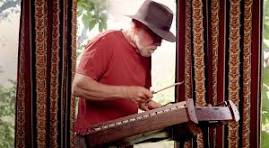
Fair use of a photo McCutcheon posted on YouTube.

As a young Northern singer drifting southward,
You helped record the songs of our very eldest,
First in Kentucky, then here in Virginia.
Nobody knew your name.

Then Malcolm Dalglish showed his handmade dulcimers
(Forty-eight years ago?) at a summer festival.
You said they seemed the most logical instrument;
So your career began.

When Jimmy Smith aired a Dalglish recording
On AM radio in the nineteen-seventies,
Old people said, "What pretty, funny music!
We've never heard before."

The awkward wooden trapezoid, crisscrossing
Strings over bridges to give different notes to each,
Some say, yields sounds as raucous as a circus
And clear as angel's harp.

Smith aired the first tune from "Wind that Shakes the Barley"
In between Christmas and Inauguration
Day, 1980. It was not familiar;
It sounded fresh and new.

Where the artesian well below Clinch Mountain
Pours down its little babbling, gurgling branch-creeks,
Fiddle and dulcimer find inspiration,
Echoing natural sound.

Soon you were called "King of the Hammer Dulcimer."
Soon you gave yearly concerts in the Capital.
Proudly I told my dates for each year's concert,
"He lives in my home town."

You gave free concerts at the children's story hour,
Children and parents, at the public library.
Asked why, you told a TV interviewer,
"Some day I'll be a Star!"

Years came and went, and fashion passed us by,
Us fusion folkies of the 1980s.
People remember only synthesizers
And banging back-beats, now,

Of years when we did guitar variations
Of Bach cantatas, classical fugues on themes
From ballads, ragtime, even Broadway show tunes--
Music both cheap and fun.

Yet you still sing, and people pay to hear you,
Not only your own generation, either.
What never sold well never has been sold out.
Your music's still your own.

--------

You can't hear a lot of McCutcheon's music free of charge on YouTube, and for some reason the recordings don't sound the same there. This song from the "Wind that Shakes the Barley" album sounds as if it was recorded from a 33rpm LP played at, maybe not 45, but 40rpm. On the record (and in real life) his voice might have been classified as tenor, not treble. On the other hand you get a sepia-toned photo of the back yard of the house where he used to live, a mile or two up the road from my house, between forty and fifty years ago.


To hear this canny Scotch-American's music as it really sounds, you have to pay for a recording, even the digital kind. They are worth paying for. He had to wait a few years to get the rights to the Internet address "folkmusic.com"...anyway, that's the current place to buy his records.


And if he's been a slow steady seller rather than the rock star he joked about becoming, he is well off enough to be inviting fans to join him on a riverboat cruise up the Danube next summer.

The part that always makes me chortle is when people who never lived here talk about the hammer dulcimer being part of some old Appalachian Mountain tradition. The instrument is ancient all right; similar instruments are portrayed in old Asian and European art, and one of them may well have been in the band described in the book of Daniel in the Bible. Here and there a dulcimer was even brought to the United States, or built here, before 1890. However, it's a large clunky thing that takes skill to build, string, and tune, and it didn't become popular until it was mass-produced, along with autoharps and zithers, and sold by Sears Roebuck. 

Most people would not consider this a logical way to build an instrument...


So it did not exactly sweep through the Appalachian Mountains--before the radio craze in the 1920s, mountain towns were isolated, each one its own subculture, so any generalization based on what was observed in one town was never accurate for the next town down the road in any case. In many parts of the mountains churches seemed to be competing to have the strictest rules, and many churches had rules against spending money on such frivolity as musical instruments. The dulcimer was not greatly admired in the early twentieth century. It was derided as a "lumberjack's piano." Nobody in my town had bought one. People who played instruments played guitar or mandolin, violin or cello, organ or piano, or some sort of wind instrument in a school or military marching band. Then the accordion was brought back from Germany as an early twentieth century fad. The only thing dulcimers reminded anyone in my town of, back in the Carter Administration, was the trickling of a mountain stream. The dulcimer was not one of our old traditional instruments when McCutcheon recorded "The Wind that Shakes the Barley." But it is, by now.


Fair use of a more current photo from PBS.

Friday, June 13, 2025

Bad Poetry with Links: Songs to Warm the Heart


to those who scorn them now.
"If now and then a fool like me
is found, I don't see how

You hope to find another in
this lifetime. You've gone through
more feeling than I had to give,

Have I been only 'making believe'
you'd ever settle down?
Will fears come true? Am I losing you?
Must I leave this old town,

will pity me, I know?
where I'll have to go.

Pity beyond what man can bear
I'll have to face all of my life
because I've lost my girl."

Out into the November rain
they stamp, hearts full of ire,
and moodily go in and throw

"I'm off to sea! I'll join a circus!
they rant. Behind their hands and fans
the old folks smile to see

a lovers' quarrel, so quick to end.
around a sweet love letter soon
restore hope, joy, and pride.

happy as you are today,"
even as he rages and she weeps,
the knowing parents say.

--Or so it was in the long-gone world
where, long before my time,
Jim Reeves, the sweet-voiced gentleman,
sang songs that scan and rhyme.

I knew that real life diverged
considerably from art
even at age three or four, and still
Jim Reeves' songs warm my heart.

Prompted by the Poets & Storytellers United. Click here to watch others fill in poems and stories:


I've blogged before about how "little Jimmy" Reeves, whom my grandmother from Texas used to baby-sit, grew up to be my parents' favorite popular singer. They liked his music before they discovered that he was a favorite of both. (Even Grandmother wasn't sure the grown-up singer was the toddler she remembered until the album "Yours Sincerely, Jim Reeves" was released, opening with the words "I was born in Panola County, Texas.") Then my parents and Mother's parents became a real fan club and collected multiple copies of all his LPs. They were still playing those LPs when their children came along; Dad recorded them on cassette tapes when those were invented, and my natural sister played those old tapes for her children when they were little. So we are four generations of Jim Reeves fans. The songs of teen romance might have been silly even in 1950, but the family bond is real.

(The title links to YouTube's version of the whole album by Jim Reeves. The titles of individual songs link to a more eclectic mix of single versions by different people.)

Thursday, March 13, 2025

Music Link Log for 3.12.25

E-mail was not behaving well, but I did find some music links...

It's March, so it's the right season for this song. 


Something special about the band. Gordon Bok, Ann Mayo Muir, and Ed Trickett were best known as soloists, first. Then they became friends, sent cassette tapes through the mail, and started writing their own arrangements of songs for three voices with strong, simple harmonies. I enjoy harmony so, in the 1980s, I had to have all of their records. Nobody would ever mistake my voice alone for Muir's but people have been known to mistake my harmonizing for hers. I learned a lot from her records. 

Muir is from Maryland, but not the part where I lived. Afaik I've never met her. But it's still "is"--she describes herself as an 87-year-old musician still learning to play the many instruments she has, keeping busy instead of growing old. If you visit her web site there's a repeating sound track of her new original songs you can play. It's worth playing, once, to hear how her voice has held up. 


Bok, the bass, is also still active in Maine:


Trickett contributed his TBM songs from West Virginia; he was originally from DC and lived in a few other places, and his retirement and death ended the three soloists' series of annual "trio" albums. (They didn't usually tour and perform together, though they did some live shows together.)

They remind me of another harmony trio I used to like, also broken up when the tenor died. In both groups I thought the tenor had the weakest voice, yet the group somehow depended on him...


Soprano Heather Wood lived longest, but died last summer, age 79.


Bass Royston Wood went on recording and composing for a while, too, though he's no longer alive and didn't have a web site. Fans have put some of his music on YouTube. The Woods released one album together, called "No Relation"  because that was what they constantly told fans they were. Both of them also performed and recorded as soloists, but somehow, after Pete Bellamy's lower-status taste and buzzy voice were gone, it just wasn't the same...anyway they had grown-up lives of their own by that time.

Tuesday, March 11, 2025

Strawberry Fields Forever

This is a short post because most of its content is at the linked pages. 

For those who don't know, after a serious illness the writer known as Priscilla Bird (not related to me; follow her blog for a whole different reading experience) had some memory loss, which she treated by listening to popular songs that brought back other memories from the years she temporarily lost. Her blog, howtomeowinyiddish.blogspot.com, has a long forum section where she and readers post all the old songs that come to mind, if the songs can be found on Youtube. Most readers are baby-boomers--early or late--and favored artists include 1960s and 1970s favorites like the Rolling Stones, The Who, Crosby-Stills-Nash-and-or-Young, Mark Knopfler, Tom Petty, and of course the Beatles. When discussions of news and politics suggest that somebody's blood pressure may be rising, a favorite cooling-down song is the Beatles' "Strawberry Fields Forever."

Words are available online: just type "beatles strawberry fields forever lyrics" into a search engine.

A couple of different video recordings are available online; this one currently plays moving pictures as well as sound on my computer, though my astigmatic eyes prefer not to watch the moving pictures.


It has that soothing, pre-AIDs, pass-the-joint sound, and it probably was played at pot parties, and when the Beatles got tired of variations on the theme of "A loves B, yeah yeah yeah" they did, in historical fact, search for fresh ideas via drug trips. "Strawberry fields" sounded like something someone visualized while smoking marijuana, but, for John Lennon, the phrase had a specific meaning. He didn't live on a farm that had an actual strawberry field but he did live, as a child, near a charitable institution that was (no doubt ironically) called the Strawberry Field. As a child the future singer, writer, and rock star even played in the Strawberry Field's children's park with all the little dead-end kids. 


So this is actually a song about a young man who has talents and a future, contemplating his contemporaries who have neither, remembering the approach to life that made much of the difference between him and them. During his short life Lennon may have tried to relax by thinking that "nothing is real," but on the whole his life was real and earnest; he put lots of energy into lots of projects. 

The Beatles went to India and tried to wrap their minds around Hindu philosophy...and what's the first duty of a young Hindu man, before he can renounce worldly goods and live in mystical contemplation? Artha is. Artha is what linguists call a cognate word to "Earth." It means doing your duty as a material being. Before he can spend his days meditating on non-being a Hindu must provide material wealth for his children, his parents, and traditionally a large domestic staff, because the duty of rich families was to hire help; it was a sin to cook their own food, change their own light bulbs, pick up their own wet towels after a bath, because it was a duty to pay people who needed jobs to do those things. (If not rich the young Hindu might never be able to lead a contemplative life. In Hindu philosophy that was all right because his desire for the contemplative life was likely to indicate that in another incarnation he'd be born into a richer family.) 

Before going to India the Beatles had already become rich and famous. They could afford to think the kind of thoughts expressed in "Strawberry Fields Forever." They did not get there, however, by thinking that kind of thoughts. It took work to make sing-along tunes and cheap instruments into a fresh sound that interested adults.

This history gives the song a moral many Beatles fans didn't recognize (and may not want to recognize now): If you want to be a dead-ender, lie back, "retire," and tell yourself that "nothing is real." If you have reasons to want to stay alive, keep working.