Showing posts with label traffic safety. Show all posts

Tuesday, June 11, 2019

Car Show, or There Must Be More to Life than Glyphosate, Politics, and Cats

On the way to work this morning I walked facing a parade of nostalgic old cars in all their glory, all on their way to Duffield for one of those Antique Car Shows the auto parts shop stores find such a festive way to attract business.


Although the cars may be up to a hundred years old, local tradition requires that the winners be roadworthy enough to be driven to the show. There is scorn for "garage princesses." The cars people admire most have been tagged and insured throughout most of the years they've existed.

This is possible because of the local custom of buying a second car as a showpiece.

The typical local motorist's first car is a clunker. He bought it secondhand, to have something to drive to a minimum-wage or student-labor job, and chose the most recent, most popular junk car possible because most of the working parts already needed replacement. Although he may later remember this car fondly, he is currently embarrassed by it, and may even buy one of those "My other car is a..." bumper stickers. The day when the auto parts store guys tell him "They're not making those any more," he'll be glad to sell the thing for scrap and buy another car, probably an economy model, probably also secondhand.

Meanwhile, when he can afford it, he buys the showpiece car. This may be a blatantly impractical model; it may already be a "classic," or it may just be a very, very expensive car. It will sit in the garage and nonverbally tell people "Somebody in this house has surplus income" for years during which it's driven only when the working car, or truck, is not working.

Actual road trips are taken in old Ford Escorts, Chevy Cavaliers, Toyota Corollas, and Honda Accords, or if a new car has to be bought, in Ford Fiestas, Chevy Sparks, Honda Civics, and new Toyota Corollas; or in pickup trucks or minivans.

Driveways hold Bel Airs, Chevelles, Mustangs, Corvettes, Camaros, Lincolns, Cadillacs, Beemers, Mercedes, Lexus, Volvos, and Miatas, which are tagged and insured and driven, if all goes well, fewer than fifty miles in a year. If the family fall on hard times their tags may be taken off. If the owner is desperate they may be sold, with an eye to their future value as antiques.

Some people do drive the more expensive of two or more motor vehicles the family own, if it's the one that gets better fuel mileage or the one that's still covered by a warranty. If people have a Prius, they drive it. However, Bel Airs seen on the road are usually on the way to or from a car show.

When these vehicles converge on a local town, road conditions become...well...nostalgic. Oh the roar of engines lacking mufflers! Oh the stench of exhaust systems lacking filters! Real antique cars have never had these innovations. Some of them never had seat belts, either, and some are so low-slung that oil pans, as well as any muffler or filter the car might have, seem likely to fall off if anything as big as an incompletely squashed rabbit happens to be in the road. In a part of the world where private roads often demand a minimum of 19" clearance, a car with less than 12" clearance still makes a statement.

From time to time it's good for middle-aged and older people to note some ways in which "the former days" were not better than these. Vintage car shows are jolly social occasions and generally bring business to the towns that host them, but automotive technology really has improved.

Amazon book link? But of course. For every vintage car fancier there's a book in this series...

Thursday, March 7, 2019

Formal Complaint: Police Should Not Be Used to Harass Pedestrians

I received a payment on a Friday. (Not last Friday. This complaint has been allowed to sit for a few weeks because it's a complaint about behavior that is not specific to one individual.) I wanted to pick up provisions for the weekend. Jane Doe, Joe Jones, and Jill Smith had already gone to the grocery store. John Roe wanted to go on Saturday. I did not particularly want to spend all day Saturday waiting on him. It was raining a little, but it wasn’t cold. So I started walking.

I had worn a pale beige London Fog overcoat. If it had been a human that overcoat would be old enough to vote by now. I had also worn a pair of pale beige fake leather shoes. If they had been humans those shoes would probably have been married with children by now. I thought the indestructible trench coat and the shoes that needed to be worn out and burned were a good choice to wear on a dark, wet night. The shoes gleamed almost white in the dark. I sometimes walk to the store in what I wore at work all day, which is often blue or black, but this evening for once I was at least wearing something nice and pale-colored for visibility.

As regular readers know, there’s not a great selection of grocery stores in Gate City, Virginia, since the young heir let the locally owned Thriftway store fail. (The young heir was in my class at school. Sometimes a town of active senior citizens is a weird place to be fifty.) There’s a Dollar Store. Some things Dollar Stores don’t sell are sold at Food Lion, but I’ve learned the hard way about the convenience of buying food at Food Lion. I don’t know what they spray in the store but even trusted brands in sealed packages have made me sick. So I buy some things in Weber City and some things in Kingsport. If anybody wants to revive the Thriftway store, count me in. Anyway I took the computer home for the weekend and parked it in the house, more than two miles, before heading back out to walk seven more miles.

So I walked out along Route 23.

Further along the route I had planned there is no alternative to walking on Route 23, but at that point there is a “business route” that runs parallel to the four-lane highway. “Don’t you find it safer than the highway?” people have asked me. For safe footing away from motor traffic, it has some good sections with real sidewalks and some bad ones with deep puddles and ditches, but on a Friday night, the main difference is that that “business route” leads past that drug treatment place where the drug crowd hang out. They are not local people. Gate City people are mostly related to me and their vices do not include beating up old ladies. About the druggies somebody got a grant to bring into one part of town, who knows? I definitely felt safer on the four-lane highway with only the wind behind me.

I was walking briskly along, thinking how nice it would be if Joan Brown were driving to Wal-Mart this evening, when a police car stopped.

It occurs to me that if the state trooper’s supervisor were listening to the conversation, the supervisor would have missed a very important part of the conversation. The trooper introduced himself by name, and my mind went off on one of those old-lady loops that form when people haven’t recognized an old childhood acquaintance on sight for a long time: "You do look just like one of my brother's classmates who had that family name. Is that who you are? But if that's who you are, why does your brother look more than eight or ten years older than you do? Are you an old acquaintance, or the son of one?" 

People who are fifty years old don’t say this kind of thing; I think the minimum age for saying it out loud is seventy-five.

It’s not, of course, the first time anyone’s ever called the police to report “a woman walking on the street who might be in some sort of distress, I was afraid to ask,” and it would be the first time if I hadn’t expressed my extreme disapproval of any police officer participating in this sort of thing.

If we want to reduce local warming and so on and so forth, the first thing we as a nation need to do is remind ourselves that walking is the default way humans move about. Some people feel afraid or ashamed when they’re questioned by the police about why they’re walking (down a public street at six o’clock in the evening), and some of them may have reasons. Certainly the idea that other people think walking is such odd behavior that they don’t even want to ask us why we’re doing it, or whether we want any kind of help, amounts to “peer pressure” applied to people who might feel inclined to save money or improve their health by walking instead of driving across town. I can deal with that because my family are about as solid a feature of the local landscape as the baby-faced trooper's family are. Someone less secure would have been humiliated...for doing something that is healthy and public-spirited.

People whose salaries are paid by the taxpayers need to be proactive about applying “peer pressure” in the opposite direction. They should be coming up with public campaigns to THANK PEDESTRIANS FOR NOT DRIVING. Instead of acting as if non-drivers were suspicious characters, they should be publicizing the statistics about how many resources we’re not wasting, how much we’re not contributing to local warming, how much our presence serves as a deterrent to street crime, and how many little children we’re not maiming or killing.

I've spoken much more severely to some other officers, who were also in my brother's class at school, than I did to baby-face; I wasn't sure whether he was an old acquaintance or not, and in any case he wasn't a relative like the one I positively scolded. The man with what I still saw as a younger-child face didn’t seem to know me and he did seem tense. He didn’t seem to understand why I was speaking severely to him at all.

I had time to wonder, while the trooper was bandying my real name about on the scanner, whether he was being set up. I wondered whether new state troopers get those “concern calls” to annoy me because their colleagues think it’s funny to get them scolded by a taxpayer.

I said, “I will be making a complaint about this harassment.”

He looked indignant—as if there were any question of his having behaved improperly toward a woman, which there wasn’t. I felt empathetic and elder-sisterly, or auntly, or whichever. Assuming sufficient reason for his believing it was appropriate for him to check whether I had a criminal record—which I don’t—he did that in a perfectly professional manner. He said, “Harassment?”

I said, “Yes, I don’t think you should participate in this kind of games. You have better things to do and so have I.”

He actually blathered about my not wearing any special reflective gear. Really. The only excuse for the existence of those dreadful pale-colored glossy fake-leather shoes, much less for anyone wearing pale-colored shoes in winter, was that they were reflective. I don’t normally wear white shoes, even in summer, but taxpayers have a right to walk down the street unmolested if they choose to wear solid black from head to toe.

Seriously, I don’t know whether there was a real “concerned citizen” call, or one was fabricated by another trooper as a sort of initiation prank. I do know this, though. In any town that’s big enough to have a drug treatment clinic, silly calls from “concerned citizens” are likely to be made when there is a special reason to want the friendly local policeman to keep away from a certain street. “Somebody’s walking down the street in the rain!” and “There’s a cat about fifteen feet up a tree!” are just the sort of distractions that make a caller sound stupid, but not so obviously suspicious as if the caller had reported an imaginary crime or fire.

I think it would be a good idea if all police departments were required by law to investigate these “concerned citizen” calls—not by checking the identity of the person walking down the street, but by checking the identity, and also the circle of association, of the callers. While baby-face was politely annoying me, it’s very likely that the druggies who hang around the clinic in the evening were waiting for a special delivery from Tennessee. The person they were waiting for would have crossed baby-face’s path about a mile past the point where he was checking my legal identity.

I think it would be a good idea if all police officers, and their families, were required by law to show respect for pedestrians’ rights by walking across town regularly, just to break up the perception that anyone is stereotyping pedestrians as suspicious characters.

I think it would be a good idea if all police departments proactively hired law-abiding pedestrians, especially women, just to break up the perception that we can ever afford to allow anyone to feel that our streets don’t belong to women—at all hours of the day and night. Or that employers can afford to discriminate against women who don’t drive because it’s acceptable for anyone to be able to imagine that women are more likely to be raped while walking to work than they are to be injured in car crashes while driving to work. (I’ve encountered overt discrimination for that reason, and I also think it would be a good thing if all employers were required by law to pay an extra road tax for any failure to prioritize hiring people who walk to work.) Public employees should be actively promoting the idea that “A woman’s place is out in the air and sunshine...a criminal’s place is behind bars.”


I think it might even be a good idea if all people who make “concerned citizen” calls were routinely told that, since they’re such “concerned citizens,” they need to show their good faith and public spirit by walking up and down the street. Every pedestrian on the street is a deterrent to crime; even the lookouts from drug gangs who make these “concerned citizen” calls would serve as deterrents to other types of street crime, and these “concerned” people might actually make themselves useful to some law-abiding person somewhere, as well as being made less available to criminal gangs. It’s even possible that, if required to walk fifteen miles a night for a few months, some sincerely concerned citizens might get lives.

BookFactory® Neighborhood Watch Log Book / Journal / Logbook - 120 Page, 8.5"x11", Black Hardbound (XLog-120-7CS-A-L-Black(Neighborhood Watch Log Book))

Thursday, January 10, 2019

Another Dog Blog Post

Is this one of the "good" sponsored posts I've promised to spread through the month of January? I'll let the sponsor decide. It's being typed straight into the blog as the words come to mind, but it is about dogs. The sponsor is a dog person, though not the same dog person who sponsored more "good" posts in February last night. Gentle Readers, if you want to see more "good" posts on other topics in addition to cats and glyphosate, you too may pay $5 for a standard-size blog post, more for a longer or more heavily researched post. No, Paypal isn't back on board yet. Payment may be mailed to P.O.Box 322, Gate City, Virginia, 24251-0322. I like cash but letters containing cash have been deliberately "lost" by mail sorters, so the safest option is a U.S. postal order, payable to Boxholder, P.O. Box 322.

Anyway last night, for the third or fourth time, people saw a large dog walking beside me as I walked home through the first cold wind of 2019. The dog is male, a mixed breed, bigger than most coon hounds and much bigger than a purebred bull terrier; he has a hound-shaped body and a bull-terrier-shaped face. His patchy coat is quite an interesting study in colors with black legs, white paws, and patches of black, white, brown, and brown-flecked white on his head and body, and a long white tail. He's not the kind of dog I find easiest to look at, but he's perky and polite and adventurous. And he's embarrassing me, because he runs out into the road in front of cars, and drivers are looking at me nonverbally saying "Why don't you keep your dog on a leash as required by both town and county laws." The answer is, of course, that he's not my dog. I wouldn't take him as a gift, but he's not been a gift. He is an obviously beloved, but overindulged, pet of someone else who is obviously going to feel terrible when somebody runs over this dog.

The first time this dog escorted me part of the way home, in December, it was late, and dark, and snowy, and I had no idea where he came from or where he went. Since it was bitterly cold I reported him to the police. The dogcatcher had gone home for the night. The regular police don't rescue stray dogs. Obviously nothing was done.

The second time, I saw him walking beside a man and assumed he was that man's dog. Then the man went into a convenience store, and the dog barely paused before it started walking beside me.

The third time, I'd stopped to talk on someone's porch--we've had weather that's favorable to porch-sitting from Christmas up to about midday yesterday--and we saw the dog walking with two other people, who also went into the convenience store. "Is that their dog?" I asked the owner of the porch. "No, he belongs to that boy in town. He runs loose all the time," the owner of the porch said. I went home, and the dog, which was loitering outside the convenience store, followed me as far as a house where some other dogs live in a properly fenced yard, where it turned aside to talk to them, probably about ways they might be able to roam around town unsupervised too.

This time, I was walking past a house barely outside the "downtown" section when I heard a loud, deep, cheerful bark as of a dog greeting a friend. It was that dog, and the person it was claiming as its friend, across the street at its busiest hour of the day, was...the writer of this blog post. "Hello!" it nonverbally boomed. "Wait a minute and I'll walk home with you!"

"Go home," I said.

"Just a minute!" the dog insisted, watching traffic.

"Go home!" I shouted, not looking at the dog in case looking at him might encourage him. "Go home! Stay home!" Looking straight ahead, I walked double-time past a string of commuters in cars.

When the traffic cleared up, the dog was not actually shoving its head under my arm, but it was close. "Go ahead, pat me! You know you want to," it was nonverbally saying, trotting at my heels.

"I am not your human," I said. "Go home. Your human will miss you."

"He'll be all right," the dog nonverbally said. "As you know by now, I am the sort of dog people call 'Rover.' This whole neighborhood is my neighborhood. All the humans on the west end of town are my humans. I will make sure no other dog, such as big old shaggy Sydney or that hysterically cute little Mop or that friendly little Cocoa, barks at you. I'm bigger than all the other dogs on this street, except for Sydney, together."

I happen to like Sydney and Cocoa and the Mop, I refused to say, in case speaking to the dog might encourage him. The dog darted off to investigate something on the other side of the railroad track. I moved briskly along. No train was coming, and ten yards down the road, there was that dog trotting beside me again.

I thought how convenient it might be to have that dog walking with me if I met any evildoers. This is Gate City, however; we don't really have evildoers, at least not the kind who beat up little old ladies. Meanwhile anyone relying on a dog for any kind of protection would have to feed the dog. I thought how much a dog of that size would eat, and how easily it could be tempted to kill a chicken, or even a cat or a possum, for a snack if its dinner was not served on time. I tried projecting thought waves at it: Go home, go home, go home, go home, go home...

The dog darted out to sniff at something in the middle of the road. I walked briskly forward. A minivan approached. The dog walked right into its bright headlights. The minivan slowed down but did not stop. The dog trotted back to my side. The driver glared at me. I walked briskly along. The dog trotted beside me. It took a detour past a house where another good-sized dog lives. The other dog was not out in the yard, however, and at the other end of the block the dog trotted back out to meet me at the cross street.

A police car passed, not in hot pursuit of anyone else. I wondered whether the cop was going to write me a ticket for being accompanied by a dog who had a collar but was not on a leash. Maybe the owner of the porch could tell the cop the name of "that boy in town." Maybe the policeman could even take the dog home...The police car didn't even slow down.

Two blocks later, we finally passed a house where another dog was out in a fenced yard. The dog whose name ought to be Rover went to visit that dog. I all but ran out of sight of that house.

I still don't know the name of "that boy in town." My guess would be that he's an adult, probably sixty or seventy years old, because that's the age range people like the porch owner call "boy" or "girl"; a younger adult they'd be likely to call a "kid," and a really young person (or one with major brain damage) would be "child" or "little boy/girl." Then again, occasionally that type of person uses a word the way the majority of the English-speaking world do. The person who needs to take better care of this dog may actually be a boy or a young man.

Anyway...although enforcing leash laws on cats or small dogs is silly, there are valid reasons for enforcing them on animals the size of this one. Big dogs have big appetites, and are likely to kill and eat other people's smaller pets. Friendly though this particular dog seems to be, big dogs can be aggressive and can injure or kill humans--or trigger humans who have phobias to kill them on sight. This dog has the dreaded "pit bull" face, only he's bigger than a real "pit bull," so he is a phobia trigger waiting to go off. Big dogs damage property--including the motor vehicles that often kill them. Big dogs have short lifespans at best, and when they are lovable pets, as this one appears to be, why shorten their life expectancy further than nature already does?

People who couldn't afford a fence high enough to confine a big dog, or whose landlords didn't want them to have one, used to keep dogs like this one tethered on chains all day. Props to "that boy in town" for at least not doing that; straining against a chain is demeaning and frustrating, even for a dog, and can turn a dog against humans and make it vicious. But this dog needs to be confined away from strangers and traffic when he's not with his rightful human companions, anyway.

Dogs, like social cats, like to take long walks just to check up on things. Merely feeding and neutering has not reduced this dog's interest in exploring the neighborhood, nor will it do. I offer two suggestions to "that boy in town":

1. Put some good solid limits around this dog's territory, and try to build up his evidently weak instinct to monitor his own territory.

2. Walk with him. This dog has become accustomed to being able to tell, at least by the "P-mail" other dogs leave in their yards, what every other dog in town is up to. In order to be content while being kept out of motor traffic, he's going to need for you to walk with him for at least a mile from home, regularly. That will do you as much good as it does him, and may save you a lot of money on the kind of "daily medications" that people who walk a mile or two every day don't need. If you're not able to walk with him yourself, hire someone who is.

Let's Go!: Enjoy Companionable Walks with your Brilliant Family Dog (Essential Skills for a Brilliant Family Dog Book 3) by [Courtney, Beverley]

(I've not read this book; it just has the right sort of picture on the cover.)

Wednesday, November 28, 2018

Should K.A.T.S. Buses Come to Gate City?

Regular readers may remember that once, long ago, I blogged about being able to ride a bus to a computer center where I could do this web site justice.

Then later...I don't remember whether or not I blogged about the computer center not being open on the same schedule the bus ran, and about getting free rides to and from the computer center on some days but not knowing which days those would be in time to arrange individual bus service a day ahead, and about scheduling a bus for one individual passenger not being a very Green alternative to car-pooling or walking, and about the Yuma (Virginia) computer center being only two hours' walk from home in any case, and about its being shut down for lack of patronage anyway...but all of those things happened.

Bottom line, as a good Granola Green I made a real effort to support what my home town has in the way of bus service, and I found it to be...more like a disservice.

Some days I walked to Yuma in the rain or snow. Many nights I walked back in the rain or snow, because there was no night bus and nighttime was when the computer center got what other patrons it got. The Yuma Road is a winding two-lane road with no berms, no sidewalks, large rocks and deep puddles right up to the paving, and a lot of incompetent night drivers who actually brighten their lights to make it harder for anyone to walk along the road after dark "because that was the only way I could see you."

The "public-private partnership" mess that may beg some of you for money in the name of "Mountain Empire Older Citizens" is not interested in expanding to provide a Green alternative for shoppers and commuters. They say they do that, but they don't. Staff are trained to think of themselves as overseers managing the "needs" of full-time professional welfare dependents, not employees working for customers. They do have a schedule, although it's not full, but they don't disclose that schedule. You practically have to pull their teeth to get information like "We have a bus going from point A to point B at ten o'clock on Thursday." They want to know all about you, first, who you are and where you're going and what kind of disability you have, and they're obviously not comfortable with the idea that you're an able-bodied, competent, cash-paying passenger. By way of restitution for having destroyed the locally owned independent taxicab service, they will--grudgingly--accept cash payment from someone who's not claiming a disability pension, but they can't seem to shake off that attitude that they're the responsible adult in charge of transporting brain-damaged patients to their occupational therapy sessions. They actually get more money in subsidies for hauling those brain-damaged patients, so their interest in transporting, e.g., working adults from Gate City to and from evening classes at Mountain Empire Community College, is subzero.

They run one bus between Gate City and Big Stone Gap. It arrives too late for any morning classes and leaves far ahead of any evening classes. It's pretty well filled up by brain-damaged patients, although the patients ride only as far as Duffield. It guarantees anyone from Gate City more time on the bus to and from than they'd actually be able to spend at the college. Not only are the drivers not trained to discourage the brain-damaged patients from harassing any paying passengers willing to ride with them, they're ordered to limit the number of competent people they haul and make sure they prioritize the "needs" of geriatric patients over any, y'know, workers or students or anything, who (according to greedhead-as-opposed-to-Green thinking) ought to own and drive their own cars anyway.

I don't know about M.E.O.C., which is actually part of an alleged charity that solicits money for "Poor Appalayshia" in New England. Whenever I've talked to anyone about them, any year since at least 1991, I always hear "They weren't of any use to me but they do good things for other people." Which other people would those be, exactly? I've never talked to anyone who knew any of them personally. I've talked to people who were promised visiting nurses who never visited, people whose sensitive personal information was blabbed to total strangers just because a bus driver thought it was an interesting story, people who were not rehired to visit patients who wanted them back after they'd taken leave or not given extra time to weekend "team-building" activities...the Older Citizens with whom I've worked, and the bus riders who were sane enough to be asked, always saw a lot of room for improvement. Nobody who had an alternative ever stayed with M.E.O.C. long, either as a visiting nurse or as a patient. I would warn you readers against giving money to M.E.O.C. or its parent organization, "Oxbow."

I would warn everybody against supporting any alleged community service that is oriented toward helping people depend on handouts rather than on becoming self-funding, or even profitable, by working with people who work, go to school, and pay their own way. The Southern Appalachian Mountain region is infested with more than one so-called charity whose actual goal seems to be keeping people trapped in welfare-cheating addiction rather than helping them get out of it.

Anyway, M.E.O.C. does run buses between Gate City and Kingsport, but...a few years ago, when I was commuting, we even considered that option. Could they arrange regular commuter bus service between, e.g., a convenience store in Gate City and a convenience store in Kingsport? "We don't just set people off on corners. We take you from your home to her home (or vice versa). We need your actual street addresses." We decided they did not need any old lady's street address, name, or day's itinerary, to broadcast over the radio and generally bandy about. When my visiting and working with and for one of my favorite living people in all the world became a problem, M.E.O.C. "service" was not an option we considered again.

Years ago, before "Agenda 21" had been officially denounced (but not really abandoned) by the United Nations, activists alerted me and I checked: Yes, there were people who saw themselves as "regional planners," with an actual unstated goal of interfering with anything managed by state governments, who really had made it a funding goal to recast Gate City, Virginia, as "a suburb of Kingsport, Tennessee" rather than a town in its own right. Their goal was to wipe Duffield off the map and to discourage any connection between Gate City and Big Stone Gap. They succeeded in getting federal financial aid rules rewritten to subsidize in-state tuition for Gate City students who wanted to go to East Tennessee State University. They did not subsidize transportation for those of us who might have wanted to take classes at E.T.S.U., which isn't really all that much further away than M.E.C.C., but only takes longer because of traffic, while working and living at home in Gate City.

I never found out what plans they had for Big Stone Gap or for Mountain Empire Community College, exactly, but those plans did not include allowing Gate City students to take junior-college classes in our own state school system, starting where our high school leaves off, and paying fees students can actually hope to afford. Obviously E.T.S.U. offers more advanced classes for more adults in search of continuing education credits, but, I've been credibly informed, for Gate City High School students in search of degrees, their junior college classes are mostly review and a dead bore. And even in-state tuition at E.T.S.U. is not kept down to a level a typical 18-year-old freshman could reasonably expect to afford. University is, by definition, for rich people's children and for people who are already earning a good living with the skills they learned in college. But that's a separate rant.

Well...Grandma Bonnie Peters, who has contributed nothing to this blog since telling me to stop doing it out of her home office, is still alive and alert and has a visiting nurse of whom there've been no complaints. (She's been the perfect visiting nurse for a lot of people, for a long time, and would, I would imagine, be the perfect patient. She likes doing everything she can possibly do for herself, before anyone helping her arrives, and using the person's working time to do things they can agree are fun.) However, at least two sponsors have cornered me, this year. "We want more GBP. It's not right to deprive readers of their role model of How a Healthy Celiac Grows Old in Style. GBP is a Treasure, like George Burns or Betty White or the Delany Sisters. Besides, admit it, you miss her. Besides, admit it, all able-bodied people who are even a tiny bit Cherokee have a sacred duty to spend time with their Elders, and although GBP is not even a tiny bit Cherokee, she is an Elder of yours."

My not spending time with GBP has been by her own request, and part of my responsibility to her. If someone wants to pay for land phone lines, which neither of us has any more, or cell phone minutes, which cost a lot, GBP would probably still be willing to talk to this web site on the phone. She wouldn't be typing or editing--how could she, I'm using her computer--but the last time I saw her, she was still walking and talking, having recovered completely from bronchitis. She has always hated being fretted or fussed over and always hinted that, in old age, she intended to become one of those eighty-or-ninety-year-old types who are more concerned with saying goodbye, making sure their friends are going to be able to say goodbye, than with holding together. Her silence is a message. "One of these days, it won't be too long, they will look for me and I'll be gone...on my way to Heaven." Rather than clutching on to our ideas of what might or might not make her more comfortable in this life, she is, to some extent, telling us to prepare to look for her in the next one.

Some Elders truly want to be visited only if and when younger people truly want to spend time with them (as long as that's not so often it makes them feel more tired). That thought deserves a paragraph to itself, to encourage people to consider to what extent it might be true for them or their Elders.

"Well, yes; but you do truly want to see her," one sponsor persisted, "and so do we."

This is true. I don't know how much energy GBP has left after riding around with her visiting nurse and talking on the phone to her grandchildren. I know her reactions to glyphosate-tainted foods were much more drastic than mine, three years ago. Mine have become more frequent and worse due to the increased use of glyphosate as a preservative. I've spent a few days at home when I would have yelled out the window, if anyone had come up to visit me, "Go away or I'll call the police!" because...I wasn't unfit to walk, talk, write, or even do yard work, but I might at any moment have become unfit to be around. Unpleasant as it is to clean up your own celiac sprue effluvia, the idea of anyone else seeing it is worse. If you're too sick to stand on your feet, you will crawl on your knees to clean up your own mess before you let other people see it. So I don't know when or how much GBP wants to be seen face to face. I'm fairly sure that that's not what she wants readers to remember about her, but it's part of the reality of growing older and slower with out-of-control celiac reactions.

Still, I've not heard that she's given up walking to Wal-Mart, or seen any evidence that she's less than delighted to meet friends at Wal-Mart. (Large public restrooms, as accessible as restrooms can be, not far from benches where people can sit and chat for an hour. Indoor and outdoor tables where they can eat while they chat. Free water from fountains built at different heights. Rows of emergency phones along walls. Bus stops about ten years from the door. Nobody can say the newest Wal-Mart outlet wasn't designed for an aging clientele in increasingly precarious health.) GBP hasn't been making dates to meet anybody, but by going to the right Wal-Mart at the right time I've been able to meet her every few months. So far, even when I'm having celiac reactions, I've been able to walk nine miles to Wal-Mart and nine miles back...but during the week that leaves no time for either the blog or the store, and on weekends GBP is usually out with friends from church. (She sings, when she's feeling fit to go to church, in two choirs.)

At this point one sponsor pounced. "The town planning committee is working on a plan to extend the Kingsport Area Transit System to include a Gate City route!"

One thing Washington, D.C., and Gate City have in common: You get used to thinking of state lines as just another landmark. You know there's no reason why interstate bus service should be a special problem; if safety standards differ, you hold the bus to whichever standard is higher.

In fact, although I've been thinking for years about ways the railroad that currently blights the heart of Gate City could at least be earning its keep, we used to have an interstate bus line. The company called itself "Bristol-Jenkins," Jenkins being the name of a town (at least back then), but what I grew up seeing in Gate City were commuter buses between Gate City and Kingsport. In 1976, when my family were the only passengers on the full-sized bus (perpendicular bench seats for 40 adults or 60 children) up from Kingsport, the driver told us "These buses won't be around for long." They weren't. If not the last passengers on that route, we were among the last hundred.

The median age was younger, then; relative to the national average, the median income was higher. More people were working rather than "retired." Everybody could afford to buy their own car, if only a clunker, and there was tremendous social pressure to let everyone see that you had your own car. I knew a lady who must have been only sixty or seventy years old at the time. She could still walk, and leap in and out of farm trucks, and sling bales of hay around, on her husband's farm. She did those things. But when she was at her house in town, she would never walk down the block to the convenience store for a loaf of bread, any more than she would bake her own bread. She had a big gas-guzzling car, and enough money to buy air-puffed chemical-preserved bread, and she hadn't worked long and hard on the farm to leave people in town in any doubt about either of those things. No bus, no car pool, for her! So help her, she had arrived! That kind of thinking is one thing about the 1970s that I don't miss at all; it belongs in the same sewer with "Married women shouldn't have jobs" and "All Black people have low I.Q. scores."

I've ridden K.A.T.S. buses at times. Not often, because they only run around Kingsport and I can still walk across Kingsport more easily than waste a dollar; but if I'm in a hurry or with someone who doesn't want to walk, in Kingsport I'll catch a bus. By comparison with D.C. Metrobuses, K.A.T.S. buses are smaller--vans, really--and, well, less satisfactory, with radios and video displays that never stop and silly rules about how many bags each passenger can carry; but they are real commuter buses. They run from point A to point B. The drivers watch the road and don't ask questions. There's a schedule that applies equally to everybody. If you want to ride, you wait at the bus stop until a bus stops. If a friend is driving the way you want to go, you hop into the car, with no worries, because the bus has not been specially arranged and (normally) nobody is looking for you. If you decide not to go, for any reason or none, you just stay home, or go somewhere else, or whatever; no questions are asked.

That's the kind of bus service that is a service, rather than a disservice, to a community of competent adults. "Anyone who meets the bus, and pays cash or shows a prepaid bus pass, can ride" and "No questions are asked" are key concepts. We are not talking about the demographic group "people who have been legally ruled incompetent ever to make decisions for themselves." In order to improve traffic conditions and reduce air pollution, riding the city bus needs to be as independent, as private, as driving is. Maybe more so; K.A.T.S. could take a tip from Metro about making buses soundless except for quiet private conversations between passengers, losing the video displays, selling the idea of a bus commute as a place to listen to your own headset and think your own thoughts. Greyhound has done well with images of people napping or reading on buses and the slogan "Leave the driving to us."

Kingsport's little commuter/shopper buses, with the cartoon "Kats" painted on them, are earning their keep in Kingsport and would probably earn their keep in Gate City, too. More young people are rethinking the idea of driving their own car everywhere, and, more to the point, more of the majority generation are no longer young. A few weeks ago I heard someone younger than I am admit, "My night vision is going; I really shouldn't be on the road at 5:00 in winter." As a bookseller I'm growing unpleasantly familiar with the refrains, "I don't read books any more," or "Let me see that one--no, not that one--what about that one, and that other one, and that one over there?" as it becomes obvious that a shopper who'd like to read anything in a certain genre is looking for the book printed in the largest type. As someone who wants to be a permanent paying passenger rather than a driver in any car pool, I'm also growing familiar with, "I didn't see that!?! Why don't you drive?"

As long as I can still read any book that appeals to me, and set the computers I use to display my "signature" 8-point font at 80%, I do not intend to sacrifice any visual acuity to the "adjustment" to special glasses that, I'm told, might or might not offset my astigmatism and allow me to drive without eyestrain. I enjoy reading. I do not enjoy driving. Nufsed. I'd rather ride a bus. I'd rather let the people who are no longer willing to do all, or any, or able to do all, or any, of the driving, in the ever-decreasing number of car pools, ride a bus.

More people are living on disability pensions now than in 1976. More people are in fact disabled than in 1976. So some of the talk we hear about "If I could get to (whichever town I don't live in) I'd like to shop at the stores A, B, and C..." is merely wishful thinking from people whose money is all spent for them, usually before they get it, by the medical industry. But some people do in fact want to be able to shop in both towns; some can even afford to shop in both towns. Especially if they don't have to pay for gas, insurance, and maintenance on a car they really need to hand down to a younger relative.

More shopping in Kingsport? Meh. "I don't know why you want to open a store on Jackson Street anyway," a shopper said last month. "When I shop I always drive to Kingsport." Hmph. Time for some reciprocity on that. I'll make Kingsport an offer. When five people from Kingsport have spent $50 or more, apiece, in my store I'll go shopping in Kingsport. In recent years the only store I can afford to visit there has been Wal-Mart, except once in a while when I get a giftcard for Michaels. I can't even afford to prowl through the bookstores any more. I would like to change this.

But shopping is not the only reason why people from Gate City go to Kingsport, and why the need to limit or give up driving seems like a hardship.

* Most people in both towns have close friends and relatives in the other town. Many personal relationships (e.g. my love life for the past three years) are currently being strained by the "I'd like to go (wherever) with you, but I (can't afford the gas, can't afford the repairs, don't have a car, don't believe I'm fit to drive, all of the above)" refrain. For a lot of people who really need to sell their cars now, giving up driving currently means giving up visiting parents or children.

* What do students do when they don't find the right books in one town's library? (The different selections of books in the Gate City and Kingsport libraries used to amaze me until I realized it was planned; one library tended to get the book the other one didn't.)

* What happens when typical 18-year-old students can get the trade school courses they want at the community college extension in Kingsport?

* Kingsport has a very extensive, self-supporting, "activities" club for people over age 55, with enough members who live in Gate City that they've worked out a special fee schedule just for us. What happens when club members are still fit to participate in their favorite weekly activities, but not to drive?

* I even know people who live in one town who've become active members of churches in the other town. I don't understand this. Driving fifteen miles to listen to a sermon? I'd ask someone to record it, thanks. But some people are intensely involved with their "church families" and/or loyal to their denominations; some people will drive thirty miles to get to their favorite church. Those people usually participate in church activities during the week. Car pooling to the regular service is seldom a problem, but they're the ones who can't bear to give up the business meetings and sewing circles and service projects that churches usually leave to housewives and "retirees" to do during business hours.

I think K.A.T.S. buses should come to Gate City, and the sooner the better. No special subsidies should be necessary. The extended bus service should pay for itself in increased shopping, patronage of "services" that are subsidized per user (parks, libraries, the community college), and traffic safety. Just make riding a bus as unobtrusive and comfortable as driving, and people will ride the bus.


A vote for more GBP at this web site is a vote for more of those little van-sized buses.

Friday, September 14, 2018

Bill Carrico on Public Transportation in Virginia

From State Senator Bill Carrico:

"
Public Input Sought On Prioritizing Transportation Projects
The Commonwealth Transportation Board (CTB) will hold nine meetings across the Commonwealth from October through November at which the public will have the opportunity to get the latest information, ask questions, and provide input on the prioritization of transportation projects.

The meetings will consist of an open house where attendees can view displays to learn about transportation planning, interact with subject matter experts, and review the proposed local and regional projects that have been submitted for scoring through SMART SCALE, an objective, data-driven prioritization process to score projects according to critical transportation needs. For this funding cycle, 468 applications for projects were submitted by 158 local and regional transportation planning organizations and partners across the state.

Following the open house, there will be an opportunity for the public to provide comments about transportation projects and priorities.

Projects that have been determined to meet a need identified in VTrans, Virginia’s statewide transportation policy plan, will be advanced for evaluation and scoring. Scoring results will be made available to the public in January 2019. Following public meetings in the spring, the CTB will use public feedback and the scoring data to select which projects to fund and be included in the next Six-Year Improvement Program by June of 2019.

A public hearing will be held for the Interstate 81 Corridor Improvement Plan in conjunction with the meetings in the Bristol districts.

For the latest on the I-81 Improvement Project, please click HERE.

Meeting Date/Time: October 22, 4 PM

Meeting Location: SWVA HigherEd Center (1 Partnership Circle, Abingdon, VA 24210)

If you are unable to attend a meeting, you may view the displays and provide your comments online.
You may also mail comments on highway projects to Infrastructure Investment Director, VDOT, 1401 E. Broad St., Richmond, Virginia 23219, or Six-YearProgram@VDOT.Virginia.gov.

Comments on rail, public transportation, and transportation demand management may be sent to Public Information Officer, DRPT, 600 E. Main St., Suite 2102, Richmond, Virginia 23219, or DRPTPR@drpt.Virginia.gov.

Comments will be accepted until Dec. 13, 2018.
"

Monday, January 23, 2017

Do You Trust People on the Road?

(This one outgrew the Link Log...I'd been thinking about part of it for about a week.)

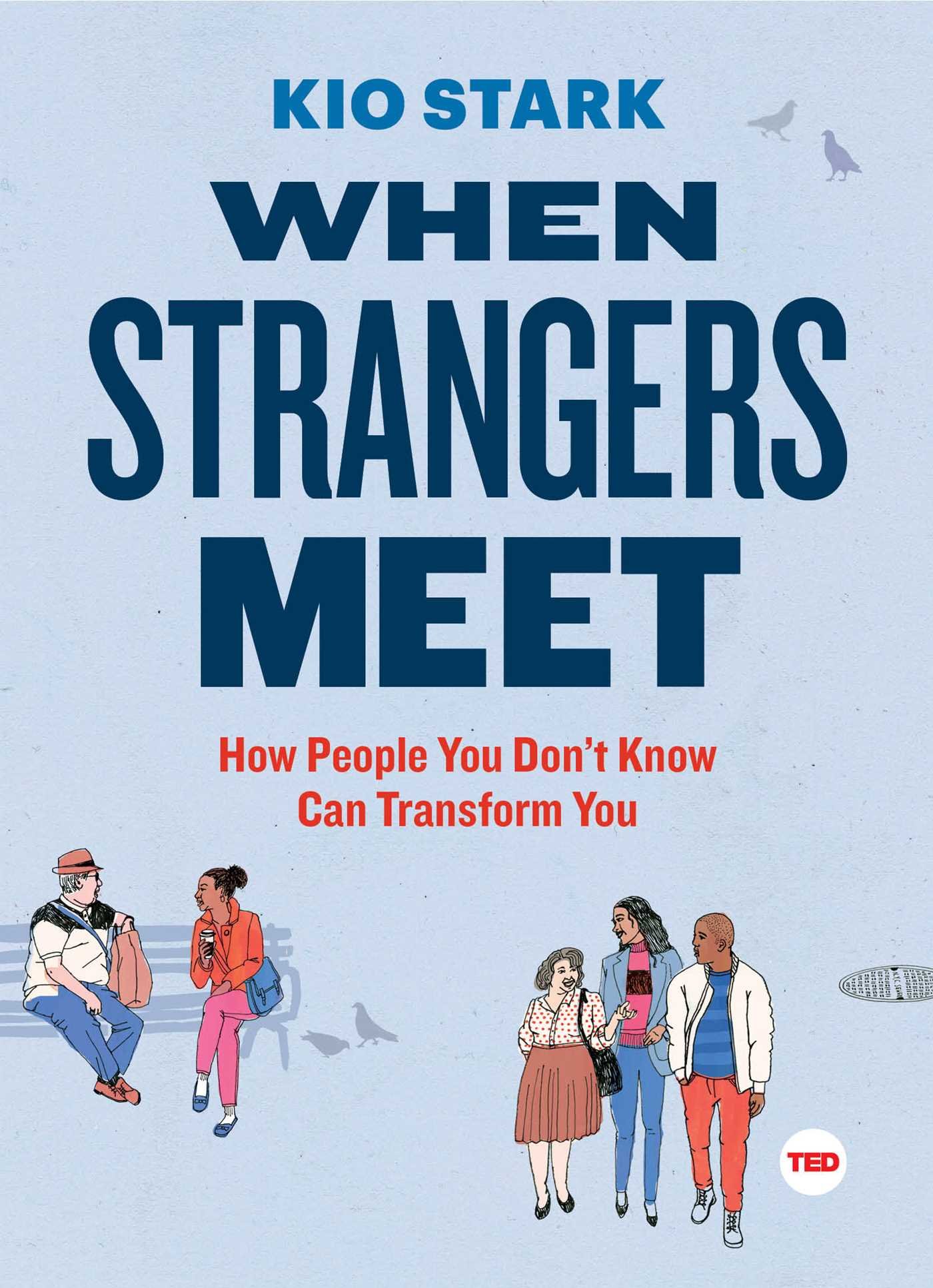
http://www.dailygood.org/story/1493/a-world-where-we-trust-strangers-ted-com/

"Never get into a car with someone you don't know"? I think there's a generational thing going on here. I think in the first quarter of the twentieth century there was a lot of snobbery about Nice People Not Speaking Until They Had Been Properly Introduced, and in the last quarter that attitude resurfaced (via insurance companies) under cover of Staying Safe by Not Sharing Anything You Have Insured Even with Your Own Immediate Family. (Ooohhh, ooohhh, insurance for a car pool would cost more than the gas you'd save, better get the policy that's invalidated if you and your spouse and children don't form a procession of four separate single-passenger vehicles when you go to church together.)

In the middle of the twentieth century when both my parents and I grew up, though, there was more of a sense that self-reliance means knowing when you can place a very limited amount of trust in almost anybody because you can trust yourself to deal with situations likely to come up in your dealings with that person. 

Many baby-boomers hitchhiked. Many advertised for housemates in newspapers, for car-pool buddies on bulletin boards, for baby-sitters at the laundromat. I met my adoptive brother from an ad tacked to a bulletin board at the supermarket, my adoptive sister from one on a bulletin board at a restaurant, my husband from a newspaper ad (in the "House Sitting" category). I grew up sitting beside total strangers on buses and trains. I don't think the average person in a car is more dangerous than the average person on a bus or train. 

Chances of being exposed to minor infections and/or boring conversation: high. (If you have AIDS or pathological hostility, by all means lock yourself in your own car, all alone.) 

Chances that a passenger wants to do any deliberate harm to the driver on whom the passenger is relying for transportation: extremely low. 

Chances that a driver wants to do any deliberate harm to the person to whom the driver offers transportation: still quite low, though kidnapping is less rare than "carjacking."

Chances that a "nice" person may be an incompetent driver, and may even offer you or me a lift in the hope that we'll be able to take over driving: relatively high. At least, as a woman who's walked alone and at least considered accepting lifts from total strangers, regularly, for thirty years, I've met only one Bad Person (a young woman) and maybe a dozen people who I believe were less competent drivers than I. 

But here's the thing: Even if the driver is an evildoer with evil intentions, s/he has to stop the car in order to do something evil to you. If it does come down to you against that person, the driver is vulnerable to a physical attack; the passenger is vulnerable to a suicidal driver (very rare) or an incompetent one (common), but otherwise the passenger is no more vulnerable in a car than in a one-to-one encounter on the street. I do not get into just anybody's car, nor do I recommend that you do, but I do recommend learning to see past the garbage spewed out by the car, gas, and insurance industries. It's no more dangerous to share a car with any given person than it is to share the sidewalk with that person.

There are plenty of reasons why you or I might not want to be within arm's length of a certain individual, on the sidewalk, on a train, in a car or anywhere else. Seeing a photo (which may be misleading) and references (which may be faked) on a web site don't even tell you whether those reasons apply to a prospective car-pool buddy. A phone conversation gives you an opportunity to find out more of what you really want to know--whether the person is a bore or a bigot, or is hostile to you for whatever reason, or currently has a sinus condition that may not be contagious but is still likely to gross you out, or will be travelling with a diabetic dog. Face-to-face, you really can usually see all the information you really need, once you've learned that you can trust yourself.

Smell smoke? Person is likely to light up again in a few minutes. If you don't want to smell like an ashtray, don't be within a few yards of this person.

Glassy eyes, or eyes that don't focus even after a minute or two of conversation? Person is not in "normal" condition (whatever that is, for this person). It may be safe to sit beside this person but it's probably not safe to let this person drive.

Hostility indicators? (Typically, in the Southern States, these include long hard stares, bared teeth, an affected "Placater Mode" speech pattern, lots of bogus endearments and/or extravagant compliments; a hostile adult will tell you anything but the truth, so will almost never look or sound like a hostile child or a hostile character in a movie.) Person is dangerous. If you're in a car, a house, a religious observance, with this person, get out fast. Hostile adults are much more likely to be planning some sort of social sabotage and/or repulsive sexual display than a physical attack. If they were planning a physical attack the fact that you have a weapon is likely to send them off in search of an easier victim...but be aware.

If avoiding bullies costs you a date, a job, or a social connection, be aware that this is good. You're better off without those people in your life, whatever they had to offer.

On the other hand, people who don't seem to have much to offer, but do seem to be presenting themselves to you with benign intentions, just may become unlikely but valuable friends.

I used to travel in and out of Washington, D.C., by bus and train. The bus and train stations are a few blocks apart. The neighborhood in which they are located is a non-residential neighborhood, populated mostly by travellers and those who make a profit off them--legally or illegally. Licensed D.C. cab drivers are, in my experience, hard-pressed, hard-working, decent guys who deserve tips, but I didn't necessarily want a cab just to get from the bus to the train or vice versa. Sometimes at night I'd see panhandlers approaching. I think this was where the whole idea of a zombie invasion came from. To avoid harassment I'd hail the healthiest-looking one (in D.C. it's wise to work from the assumption that everybody has AIDS) and offer that one a handful of change to walk with me, carrying one of my bags. My experience was that these panhandlers were always flattered and never tried to abscond with the laundry bag. Their lifestyle is no role model for the young but, no, they're not after your blood or brain.

I've found car pools via photo-free, small-print newspaper ads. Some groups shared one ride for one trip. One group became friends and shared rental cars for monthly trips for years. No photo or references were needed. If you become friends you do; if you don't you don't. 

If you learn to trust yourself to be able to cope with people, you don't have to look for dates via pathetic dating services; you become attractive, and attractive people ask you for dates. So, admittedly, do jerks who think anyone who speaks to them wants their body. Guess what? You can say no. 

I feel sorry for the children of this actuarial generation who are growing up without the benefit of neighborhood bulletin boards, classified ads in newspapers, and "Swap Shop" radio shows that regularly bring them into contact with total strangers who may bring whatever they're looking for--from a used math book to True Love--into their lives.

When I look at a total stranger at a bus stop, in a car that stops to offer me a lift, beside the road as I stop to offer him or her a lift...I don't think about what I myself would incline to call "trust." I'm not asking this person to handle cash for me or baby-sit for The Nephews. It's more like "How tiresome is this person likely to become in the next few minutes, and can I cope with him or her?" Usually, in the absence of obvious social-bully behavior, it's likely to be worth "trusting" the person to act like a normal human being.

I'm glad to read that services like Uber and Lyft offer people the option of identifying themselves and/or their vehicles by photos when connecting with strangers. I hope people aren't deluding themselves that the photo does more than make it easier to locate a connection. People who look "nice" on a computer screen can still be bigots, bores, sick, stoned, hostile, or, worst of all, they can be the kind of drivers who take a cell phone call while rolling at speed around sharp curves...

The proportion of that kind of people in my home town seems to be rising these days. It is ironically due to a problem that, when I was growing up, we thought we were planning never to have: drug addiction.

We had anti-drug "education" at school. We had anti-drug "rallies" for parents as well as films and lectures for students. We all learned the list of symptoms of addictions that few if any people had any more. Being a drug addict, feeling a need to distort your awareness of reality, was considered a very stupid thing to do. We called addicts "scags." It was a term of contempt, spat at people, not used in "nice" conversation.

Later on, when my father was blind, one of the drivers he hired was one of the parents who'd gone to the anti-drug rallies. "I feel so bad all the time these days, I went to a doctor, but the prescription he gave me didn't help. The doctor says, if I can't get down below 200 pounds, he's going to give me a prescription for methamphetamine. Wasn't that one of those dangerous habit-forming drugs?"

"Yes it was," I remembered. "It's a stimulant. At first it affects the body like coffee, only more so. Then people need more and more of it to stay out of withdrawal. That's when it gets dangerous. They can have heart failure or psychotic breakdowns. They can lose their judgment and become unfit to drive."

"So, if you want to keep this job," Dad summarized, "you will have to start walking for exercise and get your weight below 200 pounds."

He was a good person to work for, if people weren't too intimidated to take the job at all. I was glad that that driver continued to walk for exercise even after Dad died.

But meanwhile we have an ever-growing problem in my home town. People who still despise all "scags," who feel no need to be particularly polite about saying no if they're offered a glass or a joint, are using stimulants and painkillers to maintain the level of energy they have tried to establish on the job. They would never become, or even socialize with, "pot-heads." They may have been offered a prescription, and may think they're still within some sort of boundaries of Safe Use, as "meth-heads."

Where exactly are the boundaries of Safe Use of methamphetamine? Probably, like alcohol, it's dangerous for all users. Meth users never know when they're going to black out, have heart attacks, or be hospitalized after having snapped into a state of consciousness so psychotic that they don't remember what they did.

During the past week I've seen some driving that suggests that some people who live west of Gate City, who have nine-to-five jobs, are using meth to compete with co-workers for productivity and are crossing some sort of boundaries.

Picture a two-lane road, fairly busy, at sundown on a dark, rainy evening. The road has only one shoulder, a lot of cross streets, and a posted speed limit of 35 miles per hour. As your car revs up to 35 miles per hour, you are passed from behind by someone doing at least 55 miles per hour. The person crosses a double yellow line to move around you, passing within two or three yards of your back end. You brake to give the person more room to move back in front of you, while thanking God that the person didn't run head-on into another vehicle approaching in the other lane, which the person would not have seen--the double yellow line is there for a reason. Although the person seems oblivious to danger and the law, somehow the person does notice that you slowed down, and slows down too in order to move into your lane barely two yards ahead of you. Luckily this person is not targeting you personally, though, and as you continue to drive very slowly the person roars off ahead of you. If this driver's path within the lane were being tracked it would be wavy. When this person finally turns off, onto a smooth, well designed exit ramp, the person makes an unnecessarily wide turn and swerves into the opposite lane for no reason before moving out of sight...

Some evenings I've seen two or three of them. One evening when I was walking and warily watching all of them pass, it appeared that they were having some sort of road race. In traffic.

I don't expect to have to share the road with these people very long. They aren't going to keep their jobs or their drivers' licenses very long.

A photo, even a verified identification of these people with the photo, and references, might still make them seem like people you'd want to ride with. In fact, this time last year they probably were people you might have wanted to work or travel with, and if they survive the inevitable breakdown and rehabilitation from meth, this time next year they'll probably be that kind of people again.

Meanwhile, I want to avoid even being on the same road with them, even in someone else's car.

So, the point is: Nothing that can be written down and calculated and perceived as "safe," in actuarial terms, is as reliable as your firsthand observation of the actual situation at any given time. A burnt-out wasted wreck of a panhandler may be a good local guide to a neighborhood where you don't want to be all alone. Someone you've worked with for thirty years may be about to kill himself and a lot of other people during a reaction to a relatively legitimate drug, maybe one he got (or started using) from a legal prescription, but no less deadly. Nothing in an insurance company's filing cabinet, and nothing on a computer screen, can tell you which of these two people is dangerous to you. Only your own observation can tell you that.

"Systems" to guarantee "safety" are seldom worth the paper they're printed on. Direct observation is reliable almost every time.

I've not read this book myself, and hope it's not one of those pleas for more idle chatter rather than being a book about daring to talk in a worthwhile way with strangers, but according to Amazon the author's experience has been similar to mine:

Friday, November 25, 2016

Kylene Has Two Children

Because I promised to post it here (for copyright reasons), with an Amazon link to the founding father of its genre:


1

They did a great job with Dad’s Handscreen this time. With the latest upgrade you can actually feel the colors, or where the colors would be, when you zoom to certain degrees of focus: the images feel warmer if they’re closer to white in black-and-white view, or closer to red in red-to-violet. “Isn’t it a thing of beauty and a toy forever?” the guy at the shop wisecracked, showing it off, and it is. I could have spent an hour just looking around the shop with it.

But of course Dad wanted to hurry up and mount it on to his Wheels and go out for a spin. More excitement, I suppose. So we all got on our Wheels and followed him. It was a lovely day; we left all the walls up and enjoyed the cool air on our faces.

Even passing the energy plant, the air felt good. Nobody will ever say it smells good, though, no matter how many rows of pine trees and boxwood bushes and sweet-scented flowers they plant around it. That day the calendulas were positively shrieking their scent into the air but you still know, when you’re passing the energy plant, that they’re burning dung and carrion inside.

“They’re orange,” Mom said, “the calendulas! I can feel the orange! Can you feel it, Kyle?”

“I can’t even feel the calendulas,” Dad said. “It’s not the Handscreen. It’s my hands.”

He stopped walking and sat down. The Wheels kept rolling, of course, on the energy he’d generated. He kicked the brake so hard I could hear it, even behind Mother’s Wheels, even with our Wheels rolling.

“I’ve got a disability,” he said. “I’ve spent twenty years working to eradicate disabilities. I’ve got a disability.”

“You’ll have it eradicated in a week,” Sam told him.

Two weeks, tops, I thought. Dad’s good at that sort of thing.

He cheered up, though, back at the house, looking at Trevor’s latest picture on the Handscreen. He spent a long time looking at his grandson’s face, the way blind people look at things, with their hands.

2

When we got home I think Sam expected, just as I did, to find Trevor in a rotten mood. It really wasn’t fair that the day Mom and Dad picked up the Handscreen had to coincide with his day at school. We’d thought about asking whether he could trade school days with some other child, but that’s always a hassle and they say children need some practice coping with disappointment.

“When Mom and Dad were your age,” I’d told him, earlier that morning, “kids had to go to school half the days in the year.”

“Wotta waste,” he’d said. “What did they do there?”

“Some kind of theory, or experiment—they did all their lessons at school. The whole class. Together. Lockstep. Like they’d put all the six-year-olds in one room and tell them to learn to read, all at once, all the same way. Then the ones who didn’t learn to read that way were told they had disabilities,” Sam explained.

“Craaazy,” said Trevor, blinking up at Sam, who’s never seen such long, pale eyelashes on a kid. Trevor got Dad’s albinism but not his microphthalmia; he sees everything with either or both of his pale blue eyes, doesn’t even need glasses, any more than Sam did at his age. “How did they ever learn to read?”

“Some of them never did,” I said.

The Schoolwheels notification peeped and flashed across the TV screen. Trevor ran out to the porch, jumped on his Wheels, and ran out to hook on to the Schoolwheels with the other children. I wondered whether all twenty or thirty of them had thought of other things they’d rather do than go to school, that day, and whether any of them was not racing his or her own Wheels. They always pump enough energy into those things to coast their Wheels around the neighborhood for the rest of the week, little feet flying, bodies leaning over the sides, looking back and forth, shouting to each other. They always seem to have fun.

“What did you do at school?” I asked.

“Height, weight, finger stick,” he said with more than the usual disdain. “And I got stunned.”

Stoned?” Sam hollered.

“No, stunned,” Trevor explained. “’Cos Leelawadee O’Halloran said I was looking at her too long. So she Belted me.”

“Oh, dear love.” I went over and hugged him, which he tolerated.

He fingered his Belt. “Why do boys have to wear Belts anyway?” I looked at his father.

“Once upon a time,” said Sam, “boys and men didn’t have to wear Belts. For some of them, probably most of them, that worked just fine. Others, however, became violent. Some people said it wasn’t fair to girls to let boys go outside. It wouldn’t have been fair to boys to keep them inside all the time, either. So we men have agreed to wear Belts.”

“It hurts,” Trevor informed him, “being Belted. I couldn’t get up off the floor for fifteen minutes.”

“Not as much as it used to hurt in the bad old days if a guy looked at a girl too long, and her father hit him in the face and knocked his teeth out,” said Sam.

“What does it hurt to look at a person anyway?” said Trevor.

“It’s disrespectful,” I said. “It hurts the person’s feelings.”

“It’s because she had these new shoes that play Wossup Possum videos,” said Trevor. “If I did not want people looking at me I’d get shoes that didn’t play videos.”

I sat very still and waited for the thoughts of violent acts toward an eight-year-old child to leave my mind. When they left I said, “Leelawadee O’Halloran wasn’t showing the best judgment, was she?” I did not say, “What can you expect from a child whose mother named her after a type font?” I said, “Still, those were her shoes. She wore them just to look at them, herself, and not to share them with you. You should try not to look at her any more.”

“So what else did you do at school?” said Sam.

“Just the same sort of thing as last time,” said Trevor. “We ran. We sang songs. We did gymnastics. We looked at pictures of everybody’s projects. We ate corn on the cob and bean soup and the-last-watermelon-this-year, only it wasn’t very good.We started another batch of paper. I guess this is the paper we made last time,” he said, showing off a pad of the kind of coarse unbleached paper kids use at school. “And we did karate, and I flipped Albert Brenner over my shoulder.”

“Albert Brenner?” I said. Albert Brenner is thirteen.

“Sure,” said Trevor. “In karate size matters less than paying attention. That’s the point. I guess Brenner was sort of distracted because of this new pattern for shoes that he’d designed, that he wanted us to make, ’cos shop comes right after martial arts, and that was what we did in shop. We all did different versions of the pattern on the computer first, and then we voted which pattern to put on the shoes.”

The school Trevor attends was named for a wealthy donor, a Colonel Shoemaker, whose father spelled the name “Schumacher.” I’ve often wondered what the Colonel might have said if he’d ever imagined that students would actually make shoes.

Well, now that we have electronic communication systems for most of the things kids study at school and most of the jobs adults do, some people felt that students and teachers ought to see each other’s faces some times. Not too often, of course; turns out that most of the differences that made it hard for people to get along, in the past, were aggravated when people had to do everything in the same room, and smoothed right out when people were working on their own devices in their own homes. So we voted, and all the children at Shoemaker Elementary School go to school one day every two weeks. That’s enough for children like Trevor, or like his buddy, Marvin Kwok; I think any school is probably more than brats like Leelawadee O’Halloran deserve. Anyway, they go to school and do the things children actually did in groups in the olden days: sports, music, shop. The older ones, who’ve learned a bit about how not to waste food at home, cook the meals. It’s meant to be more like a social occasion, a party, even, rather than military service, or prison, or whatever school as we knew it was meant to be like.

3

After dinner Trevor read to us from one of his new books, after his fashion.

“‘Kyle McClintock, a Man Who Defied Disability.’ Like that’s Grandpa,” he said, as if we didn’t know. “Cool! ‘Kyle McClintock was born with only one eye. In those days, all the children the same age in a neighborhood had to go to school on the same day. The ones who failed to learn things as quickly as others did were considered disabled.’ Like you said, Dad. Now I’ll let the Tablet read itself, okay?” He touched a switch.

“Doctors warned Kyle that his one eye was likely to wear out fast,” the mechanical voice read. “In those days most children were taught to read only with their eyes and talk only with their mouths. Although some devices had been designed to help people read and talk with their hands, many of those people were still able to communicate easily only with one another. Computers had flat screens. Kyle bought a very expensive device that translated the letters on a flat screen into shapes that he could read with his hand. The shapes formed only letters in a strange, oldfashioned code. Because he could see the letters other people were reading with their eyes, as well as the images, Kyle McClintock knew how much information he would be unable to read with his hands unless he could invent a new kind of computer screen.”

It’s always a hoot to read what some writer has made out of something you remember. Yes, that was why Dad invented the first Handscreen. More or less. They left out the bits about my grandfather having grown up in an institution because my great-grandmother was blind, and about employers not even considering Dad for jobs, when he was younger, because his artificial eye looked so real that they thought its not actually focussing and seeing things made Dad’s face look strange or untrustworthy. They never do mention that Dad was forty years old before I was born.

By the time I came along, things were a bit different. It was always hard for me to imagine a time when people who had just a little sight, just a little hearing, could get into ordinary schools as long as they “passed as normal” but might be expelled if they admitted they had “disabilities.” In my world disabled students had power; they could demand all kinds of expensive adaptive devices. A real disability was still a real headache, though. Blind people had a way of reading with their hands, and deaf people had a way of talking with their hands—and those were two completely different languages.

Hence the Handscreens.

I remember the first few computer programs that made voice recognition a standard feature. “Epic fails” was a phrase people used. One of the better designed voice-based programs stored everything in the cloud, so even blind people didn’t trust it. Screens were still hard and flat; sound was either turned on or turned off, and most people who could see anything, at all, turned off the sound permanently.

Well, humanity had some evolving to do, that’s all I can say. I mean, I’m glad Trevor can’t remember what it was like. People had become accustomed to rolling around in massive gas-burning cars. Naturally no blind person could drive. So people actually wanted to go through the process of building self-driving cars—what a nightmare!—before they thought about building self-driving Wheels.

No device is perfect. Wheels have been known to fail to follow the courses their owners set for them. Most people don’t want every trip they take in a Wheel to be broadcast around the world in the cloud. However, Wheels are light enough and move slowly enough that, if they do crash, nobody’s likely to be killed. If children really want to see for themselves what it’s like ramming a Wheel into a brick wall, they may have a lot of extra chores to do to pay for repairs, but what it’s like is: your Wheel stops.

And a lot of people thought the only “right” way to make love was to make babies; Grandmother gave birth to five children. Now, of course, when you go to the hospital to have a baby, the Nip and the Tuck are part of the package. People have just had to learn that, if nine out of ten babies are going to live for seventy-five years or longer, there’s no need to keep on making babies just in case something happens to the first one. It’s not really an old saying, although the kids think it is: “If God wanted you to have two children, you would’ve given birth to twins.”

Trevor does know that he had what were called aunts and uncles. One of the aunts is still living. That detail wouldn’t be mentioned in a story written for children. It’s too personal; it’s nobody’s business that my grandparents, crowded though the world was becoming, produced five children.

I think our evolution, as a species, actually benefitted from the plague…

“Then Kyle’s friend and working partner, Rayvon Mathis, died from the plague,” the mechanical voice went on. “At first nobody understood why so many people were dying so suddenly. The human population was more than three times what it is now. Scientists working to solve the problem of how to feed so many humans had experimented with changing the genes of living creatures. When they modified the genes of hogs to make them grow bigger and faster, a virus, formerly harmless to humans, had mutated to adapt to the new population of hogs. The mutation made the virus fatal to humans who lived in crowded conditions. In cities like New York, Rio de Janeiro, and Hong Kong, fewer than one tenth of the population survived.”

Even cities like Baltimore, where we live, lost appalling numbers of people. I remember…

“Want me to skip, Mom?” Trevor asked. He touched the switch. “Now I’m reading to myself, okay?”

“It’s okay,” I assured him. “I can guess what it says, anyway. People who lived in less crowded conditions and kept more to themselves were the ones who survived the plague. After the plague had run its course, people voted to keep the human population nice and safe and sparse. Only one family lives on one hectare of land. A family might mean one person, or two people, or two people with a parent or a child.”

“That’s not what it says.” Trevor punched my arm. “There’s some more about how Grandpa paid for Aunt Bernice’s education, and then… ‘Although many people who had been considered disabled died during the plague, many who had been considered able-bodied were considered disabled as a result of the fever. Kyle himself was now considered blind. His project attracted other engineers who were now considered disabled, such as Charles Rolland and Wayne Gilmore, both deaf, Dave Stephens, a wheelchair user, and Zahavith Rubenstein, who had been diagnosed as autistic’…Now I want the Tablet to read…”

The Tablet went on with the story of the early Handscreens. It bogged down when it came to the contributions of Claudia—“Seidenspinner! Stupid computer,” Trevor said, taking over the narrative. Claudia’s voice is the sound the Tablet synthesizes; it pronounces some words with her accent. She’s a very shy person. I suspect she programmed the Tablet not to recognize her name.

“Handscreens display images of what they scan in a three-dimensional form, allowing users to see shapes with their hands.” The writer hadn’t even heard about the addition of color. “They can also read written words aloud, and translate hand-signed words into written words.”

4

“Look, Mom, a toothbrush!” Trevor tugged on my hand. “A green one, in the gutter.”

“Look with your eyes not your hands,” I said automatically.

We don’t often go to the library. In the olden days, I understand, librarians had to be in the library every day. Now that job, like most jobs, is basically done from home; live-chat screens blur the background while allowing people to see the body language, so I often talk to lonely patrons live from the field where Sam and I raise our vegetables. I can even talk to them live from the shower.

That particular day, I was walking at Trevor’s pace, not even using our Wheels, because it was such a lovely day and in order to create a delay. Someone had tried to remove a real book from the real library. When the Tattletape peeped, my Handscreen alerted me; I set it in live-chat mode, so my face popped up on the screen that swung out from the scannergate as it locked. I said, “Please re-scan the things you’re carrying,” and the person jumped over the scannergate and ran, not apparently aware that the Tattletape would continue peeping, louder and louder, from the book itself until it was properly checked out or properly reshelved. In this kind of situation it’s nice to give the police time to investigate the person’s background, to know what to brace for.

As we walked, the message from the police dispatcher popped up on the screen: Dianne Farbey, age 74, had a police record consisting of two inappropriate emergency calls, within the past three years, both resolved without charges, some minor traffic violations from the years before Wheels, and “trespassing” during a protest in the 1990s. Her official ID photo showed up, as did the snapshot where she was clutching two books and sputtering with indignation.

“Is that the bad person?” Trevor asked.

“Well, I don’t think she seems like such a bad person, on the whole,” I said, dictating the message to the arresting officer, “but I would like to talk to her family along with Ms. Farbey, if that can be arranged.”

It could, of course. Their Wheels reached the library just ahead of us, which was as I’d hoped. When Trevor and I walked in, a woman, obviously her daughter, was holding Ms. Farbey’s hand and trying to reprove a child, smaller than Trevor, who was trying to climb over the scannergate.

I couldn’t resist flicking on live-chat mode and saying sternly, “Please don’t climb on me!”

It worked; the child squeaked and scampered back to Mama.

After the introductions Dianne Farbey made things easy for everyone. “No one was there to check out the books, so I just took them with me, as I’m sure everyone else does! I am not a thief. I had my library card!”

“I’m so sorry,” said her daughter to me. “Mother,” she said to Dianne Farbey, “you run your card through the scanner, now, and then the books. Remember?”

“The what?” said Dianne Farbey. “I had my library card right on top of my book. I always do.”

“I’m very sorry,” I said, and I was. Now we’d spend another year or two debating whether we needed a holographic projection of a librarian standing behind the scanner. I showed her, as her daughter had obviously showed her several times, how the scanner works, and suggested that her daughter accompany her in the library, henceforward.

The officer wasn’t pleased to have come out and not been able to arrest anybody; they don’t have quotas any more, but he was obviously one of the old breed, more interested in some sort of video game he’d had going in his Wheel than in keeping the peace. I’m not too pleased that the Baltimore Police Department still finds jobs for that kind, myself.

“Did you ever see a real bad person?” Trevor piped up.

I blushed, but Officer Grouchy’s voice mellowed. “I sure did, buddy. Down Douglass Street, just Saturday night, we had a blood thief. You know what a blood thief is?”

Trevor knew. “A bad person who cuts somebody to get some blood to fake a finger stick.”  

“That’s right, that’s what they do. And when we find them, we Belt’em so hard they jump up in the air before they fall down!”

Some humans have more evolving to do than others. Anyway, if it helped Grouchy feel better about his interrupted game, it couldn’t be all bad.

“I’m not a bad person,” Dianne Farbey declared.

“Of course you’re not,” I said. “I look forward to serving youall again, the next time.” Dianne Farbey remembered the difference between “you” and “youall,” I’m sure, but she let it go.

On the way back Trevor showed me a dragonfly, a vermilion-red one, and a dogwood tree, a red-violet one, and a garden bordered with early asters, and a bird.

“A robin, a young one, I think a male. But something’s wrong with it; it’s trying to fly and it can’t. It’s old enough to know how to fly.”

“It looks as if it’s eaten a lot of pokeberries,” I said. Pokeberry pulp is messy and tasteless; it’s the seeds that damage the brain, even of a bird.

“Is that cat going to eat it?” my son asked next.

“Not while we’re on the street,” I promised. I could not, however, raise a signal from the cat’s collar.

“It hasn’t got a collar,” Trevor explained.

“What a pity.” The collars they make for cats these days are a treat to watch in action, putting out holographic displays to distract cats from doing things they shouldn’t do and lead them back to where they have some right to be. Still, some cats pull off their collars. Maybe fleas get under them.

“It hasn’t had a collar for a long time,” Trevor said. “See, the fur on its neck…”

“It must be lost,” I said. “Here, kitty, kitty.” I leaned over and wiggled my fingers to catch its attention. It was lost all right; it followed us home.

Before the plague people used to argue about things like whether animals had a right to roam outdoors. Nobody had wasted the city council’s time with that sort of silly argument for years. Nevertheless, two days after we published the news that we’d found the homeless tame cat, DaVernyn O’Halloran published a proposal to round up and sterilize homeless cats in the city. I couldn’t believe he was digging up the same old arguments from the olden days—in one paragraph the poor homeless cats couldn’t survive, in the next paragraph they were going to multiply like flies and wipe out entire bird species, as if there were birds in North America that hadn’t evolved the ability to coexist with cats for thousands of years. Really it was the kind of thing you’d expect from a man whose daughter is named after a type font, wears video-screen shoes to school, and Belts little boys for looking at her videos.

Let’s just say that that proposal never came up for discussion in the council.

5

Since there’s no penalty for having been the owners of a cat that decides to go feral on you, the way the majority of cats did during the plague years, our cat’s rightful heirs turned up later that week.

It was the usual story. Frisby was her mother’s cat, not theirs. He didn’t like their cat, also male, and therefore wanted nothing to do with them, so when the old lady died Frisby went missing. The collar was found, beeping wearily, its battery wearing down, early the next morning. Frisby was nowhere nearby. Cats are safer outdoors than they used to be, since Wheels stop short of any moving thing. Still, Frisby’s heirs had intended to continue feeding him, but they’d never seen him.

We hadn’t had a cat. We had had crickets. So there was no trouble about Frisby moving in with us, and of course the nights were quieter afterward, and I’m sure the rugs are safer.

“I am delighted,” Trevor said solemnly, “that someone in this family is smaller than I am.”

He was a mature cat, maybe all of ten years old, the vet said. He was a blotched tabby, not a mackerel tabby, Trevor said.

I’m not the one paying for a color-enhanced Handscreen. I inherited Dad’s microphthalmia, on both sides, as daughters of men who have it on one side usually do. My eyes, both fully artificial, have never seen colors. People don’t miss what they’ve never had. To me the screen that heats up to indicate white or a pale color felt confusing, disorienting. It would take me a long time to get used to that kind of Handscreen.

And I’ll admit I didn’t really look forward to getting used to having an animal about the house, either. Sighted people think of cats as creatures that purr and catch mice. Blind people think of cats as creatures that dart out under our feet, and if Frisby had tried that I was prepared to kick him so hard he’d fly up in the air before he fell down, whether he could land on his feet or not. But he never was that sort of cat.

“Do you think of yourself as blind?” Sam asked, one night after we were sure Trevor was asleep, when I’d mentioned the difference it makes in people’s attitude toward living with cats.

“Not often,” I said. “Dad would be disappointed…but sometimes I do. I am blind. Totally blind. What I was born with in the way of eyes never saw any difference between midnight and midday. I’ve only ever seen with my hands. It makes a difference when a quiet animal spends its life on a level my hands don’t feel. We never had a cat in the house.”

My parents wanted my childhood to be like Bernice Mathis’s childhood in every way. Dad wanted that so much that he seemed to deny the main differences between Bernice and me. I wouldn’t have wanted Bernice not to have had her eyes, any more than I would have wanted not to have had a father. If he’d thought about it I’m sure Dad would have understood that; he was, after all, the one who reminded me that Bernice had already had her turn to be the age I was, and one day it’d be my turn to be the age Bernice was. But he didn’t want things like beautiful strong eyes, or loving full-time fathers, to make more difference than age did. I think.

“People still tend to become more farsighted with age,” Sam said, later that night. “I wonder whether Frisby’s first human had trouble seeing him under her feet, too.”

Frisby said nothing.

I warned my parents that Frisby was living with us, when they came to visit. He stayed out of the room, though; apparently he was out in the garden with Trevor.

“DaVernyn O’Halloran,” Mom said. “Wasn’t he one of those children…they had Big Brothers and Big Sisters, and Bernice was a Big Sister?”

“The problem child,” Dad said. “The one who confessed that he’d made up those awful stories about Bernice because he was jealous that she was his sister’s Big Sister and not his.”

While dinner was in the oven we watched television. The television’s not hooked into the solar panels like the things we use every day. One person can generate enough energy to run it, but neither of my parents cared to sit around watching me pedal, nor did I care to watch them; I got out the backups, and we charged a few extra batteries while we watched the city council Preview. Anybody can go to the meetings—that’s encouraged here in Baltimore, almost as much by the council members themselves as by the after-business parties—but, in order to speak or vote, you have to have watched the Preview. Most times, after watching the Preview, you decide to let at least one of the council members speak for you. You can pre-vote for that.

This time looked like most times, at first. There was some discussion of changing the commuter train schedule between Washington and New York. None of us rides the train often, so we wouldn’t be voting on that. Someone had reported damaged pavement out toward Dundalk. Nobody expected fixing that to exceed the city’s street budget, so there wouldn’t be much discussion about that. It looked as if those who attended the meeting wouldn’t have long to wait for the party to begin.

Then our council member, Helen Hsiu, said: “I’m being challenged for my seat on this council by my constituent, DaVernyn O’Halloran. He’ll be presenting his campaign platform at the meeting. I find it rather off-putting…for one thing it’s very long.”

“We’ll be going to the meeting after all,” Dad reported, just as Trevor, Sam, and Frisby came in.

“Have you met our cat Frisby?” Trevor said. Frisby let Trevor pick him up and set him on the couch beside Mom. He sniffed at each of my parents’ hands.

“I used to like dogs myself,” Dad said, “when my eye still worked.”

“Oh Grandpa,” Trevor said, “can you see things on your Handscreen now?”

I hadn’t wanted to ask, and Dad hadn’t complained, but he said, “Much better, thanks. I think it was just a matter of getting accustomed to it but my doctor’s changed my supplements, temporarily, just to be sure. Trevor, do you think you can sit through a really long council meeting?”

“’Course I can,” Trevor said. “I can read.”

6

His eyes were still only six years old, of course. I checked to make sure his Tablet was set for large typefonts and loaded with fully illustrated books, just to be sure. I was tempted to check what kind of reading material Marvin had brought, when they sat down side by side, but restrained myself from being so rude to the Kwoks.

Anyway, they behaved themselves, and Helen wasn’t exaggerating when she’d said that O’Halloran’s “platform” was long. Twenty-five different things, the man wanted. The alarming thing was that he seemed to think other people would want any of them. He wanted all kinds of animals, not only cats, rounded up and kept off the streets—claimed it was too much trouble to run his Wheel through the cleaner before bringing it inside. He wanted a ban on hedges, because the Douglass Street blood thief had been hiding in a hedge. He wanted the city to put everyone back on a central electrical power grid, the way they were in the olden days, when if a storm knocked out one panel—well, the equivalent of one panel, whatever that would’ve been—it took out the whole neighborhood’s. He wanted one central instruction program for all the children in all the schools. I think, although my brain was reeling, he’d even said something about a central authority to approve of all publications, before he sat down.

“I’m speechless,” Dad muttered, but when the chair called for comments Dad stood up.

“Mr. O’Halloran may not have been fully aware of it at the time, but when he was born,” Dad said, “the city of Baltimore had many of these things that Mr. O’Halloran thinks he wants. I would never have expected that a younger person would want to go back to those times. My generation worked hard to move society past these bad ideas. But it’s not just the intergenerational insult that concerns me here. Neighbors, most of Mr. O’Halloran’s proposals have one thing in common. They are not grounded in respect for each individual’s freedom of choice. They are as rude, as disrespectful, as extending the traditional closing of meetings from ‘God save us all’ into a formal prayer; a prayer within one religious tradition, say, that petitions specifically for followers of other traditions to convert to the speaker’s own tradition.”

Helen Hsiu started shouting “Hear! Hear!” Of course we all joined in, afterward; even the non-voting section.

“Mr. O’Halloran,” said the chair, after several minutes of “Hear! Hear!”, “I think you’ve heard that?”

O’Halloran looked at the floor like a sulky child.

“Is there any other business?” There wasn’t. The chair rapped his gavel. “God save us all. The meeting is adjourned. Let the party begin.”

Weather not only permitted but encouraged the party to begin out in the street. (We still have wide, smooth streets from the days of huge, heavy vehicles.) As we walked out people started singing:

All Maryland is of one mind, oh Maryland, my Maryland:
Here peace and freedom all may find, in Maryland, my Maryland.
Toward true progress we’re inclined, and meddling will no longer bind
The liberty of humankind, in Maryland, my Maryland.

I suppose O’Halloran was born right around the time our state voted to add a verse people could actually sing, without feeling queasy, to the state song. Helen Hsiu walked up beside us. “It’s a disease, of course,” she said.

“Yes.” Mom knew what she meant. “Control mania.”

“The hard part is persuading people like that to get help in time,” she said. “It’s too bad that he has a child.”

I was scanning the crowd for Trevor; since he hadn’t led Marvin straight to us I guessed he must have followed Marvin to the Kwoks, which it turned out that he had. With them was a girl, bigger than they were, with a lot of very long thin braids.

“Mother, Dad, Grandma, Grandpa,” Trevor recited proudly, “this is Leelawadee O’Halloran from school. Lee, my parents are Mr. and Mrs. Aguilera, and my grandparents are Mr. and Mrs. McClintock.”

We all greeted her warmly, though I’ll admit that uncharitable thoughts came to my mind. I don’t call myself “Mrs. Aguilera,” and hardly recognize that name as meaning me—though it’s hardly likely to mean Sam’s mother, a casualty of the plague, and I do recognize “the Aguileras” as including me—but I didn’t feel like telling the O’Halloran child to call me “Kylene McClintock,” either. I noticed that Mom didn’t mention her name being Michi Hayazawa, either.

“Mr. and Mrs. Aguilera,” recited Leelawadee O’Halloran, “I’m sorry I Belted Trevor and Marvin at school that day, and I’d like to invite them to watch the whole Wossup Possum video on my Tablet. It was only fragments on those shoes, anyway.”

Needless to say we all watched the kids closely—the Kwoks, too—and what d’you think, they behaved perfectly. They watched the cartoon, they sang along when the adults sang, they danced when other people danced. Anybody would have thought Leelawadee O’Halloran was as nice a child as our two.

7

The funny thing, I mean the peculiar thing, was that she seemed to like our two.

“I wonder why?” I asked Trevor, after having seen Leelawadee O’Halloran five times in the next three weeks or so. “Don’t girls her own age play with her?”

“I don’t think there are any girls her age at school with us this year,” he said. “I’m not sure. There are some girls who come on the other Schoolwheels from other neighborhoods; I think they’re more like my age. Then there are three girls who are ten years old. They don’t like anyone who’s younger.”

I still thought it was peculiar for an eight-year-old child to want to play with other children as often as that one seemed to do. I wondered whether her father’s mental condition had anything to do with that.

Dad reported that he was getting better use from his colorized Handscreen by beginning with the unenhanced view, to which he was accustomed, and then checking for light-and-dark and then for color.

“Will there ever be a world without disabilities?” he said rhetorically. “As long as people get older, they’ll have to deal with increasing wear and tear on their faculties, year by year.”

“A world where people accept some disabilities, as they get older, is better than that other way some people wanted to build a world without disabilities,” Mom said.

It’s still mostly a Jewish tradition, but the library does observe a day of remembrance for that, every year; for one week the history material is on display, and some years people bring in pictures of the people who were murdered, some for having disabilities.

“And some things will always be hard to spot, at first,” I said, thinking of DaVernyn O’Halloran.

“Does that child…” Mom guessed what I was thinking.

“At least she seems to have a healthy taste for vegetables, as a snack,” I said as lightly as possible. “Once or twice a week she’s come out to buy some.”

“And lingered?”

“And lingered. At least there’ve been no more violent confrontations.”

“More than one child even living in a house used to be considered normal,” Mother said. “I don’t think it necessarily did all of them all that much harm. I think you and Bernice Mathis were actually good for each other.”

“I don’t think Marvin’s bad for Trevor at all,” I said, “but who knows about the O’Halloran child.”

What she’d told the boys was that her mother was ill.

“There’ll never be a world without colds,” Dad said. “There’ll never be a cure for colds, because the cold is the cure.”

8

I found out a good deal more about the O’Halloran child, not too long after that.

We were all, Sam and Trevor and I, and even Frisby, sailing down the bay to a farmers’ market to unload some vegetables. It was quiet, not much wind, and we weren’t talking or singing, and we heard something that must have sounded just a bit different from the usual seagull noise; different enough that we all concentrated on listening for it, and sure enough, it was a child. So we steered a little closer—and it was Leelawadee’s voice.

Then it stopped. None of us liked the sound of the silence after that child’s cry, “No, don’t,” had stopped.

Sam anchored the boat, quietly. We slipped over the side, quietly, carrying shoes and Handscreen around our necks, and waded onto the shore as quietly as possible. Trevor, as usual, held my hand. Sam didn’t; we lost sight of him. Frisby, having decided at the last moment to come ashore on Sam’s shoulder, bounded ahead of Trevor. I suppose, without meaning to, we let the cat guide us.

But we were the first to hear Leelawadee say, “Mrs. Aguilera’s out there on the bay. See her boat?” She sniffled.

“Wouldn’t matter if Mrs. Aguilera were right here,” O’Halloran said, as we tiptoed up on them. “Can’t you tell by looking at her? She’s blind.”

They were in some scrub bushes near the water. Sam, we found out later, had rushed further in to check a boathouse where he thought someone who was ashamed of what he intended to do might have gone.

“See the Aguileras’ cat,” said Leelawadee O’Halloran.

“See the Aguileras right here,” I said grimly, focussing the Handscreen on her.  “Hello, neighbor O’Halloran. Is everything all right?”

“Wossat on your face?” Trevor asked her. “It’s on your shirt, too. Have you got a cold?”

“I thought it sounded as if something were wrong,” I said, temporizing, thinking of something to say that wouldn’t sound too threatening. I meant to let him be dealt with properly by the authorities. I lied, “There’s a different kind of infection going around town. Not a cold. Treatable. Would you like to go in with us for a finger stick? You’d better come too, DaVernyn, since you’ve been exposed.”

“Is it a bad infection?” Trevor asked.

“It can get bad if it’s not treated,” I said. “If you see anything on her skin or clothes, don’t get close to her. Let the doctor…”

“Get out of here,” O’Halloran shouted at him.

He ran, and I was glad, because you can’t Belt one male and not another one standing within range. As a blind woman I have that switch on my Handscreen, too, as well as on my wrist watch.

“Don’t touch her,” I babbled, knowing exactly what he was trying to wipe off his daughter’s clothes and skin. Of course he ignored me. Of course I Belted him.

So did Leelawadee. Apparently his Belt registered both charges in just close enough succession that he really did jerk up into the air, a few inches, before he came down.

The switch that fires the electric current through the Belt also activates a siren. People are supposed to come to the rescue. Police come, if you’re close enough that they pick up the signal—but we don’t have as many of them as we once did, in Baltimore, and they don’t spend much time along the bay. In our case the person who came to the rescue was Sam.

“Can’t you shut those things off,” he screamed.

“They go for ten minutes,” Leelawadee howled back. “Even the police can’t shut them off.”

We put our fingers in our ears and waited, since it would be illegal as well as hateful to sail away before the police came. Nobody tried to find out where Frisby had gone, either; obviously as far from the horrible noise as he could get. I wondered whether the noise was meant to help incapacitate the victim.

When the sirens shut themselves off at last Sam asked Leelawadee O’Halloran, “Did someone else make that mess on your shirt?”

She nodded. “My father did. He’s the one who’s sick. Not me.”

“Has he done that before?” I asked.

She nodded again.

“Did he threaten to do something else if you Belted him?” Sam asked.

She nodded again. “He said he’d kill my dog. He’s hurt my dog, anyway. He’s probably,” she said, cold-blooded as children can be, “going to hurt Trevor.”

Trevor had sensibly gone back to the boat; but he wasn’t quite big enough to lift the anchor. O’Halloran was starting to pull himself together; he’d slithered several yards down toward the water, and seemed to be trying to get to the boat.

“He’s not going to hurt Trevor,” Sam said. “Why don’t you go and join Trevor in the boat now.”

“May I,” she said, sweet as children can be, “look for your cat first?”

“I don’t expect the cat will abandon Trevor for very long,” I said. “I think you’re safer in the boat.”

Both of us were still hoping to hear a police motorbike, being so far from a road on which a Wheel would roll. Neither of us heard one. I started, not running or dancing, exactly, but walking briskly around in circles, the Text Message Dance, trying to find a signal to send a message: Stunned pedophile on bay shore, help please.

Sam walked down toward O’Halloran. “You are not going to hurt Trevor. You are not going to have a chance. Don’t even think about it. Just sit down.”

O’Halloran turned around and told him, in the foulest terms I suppose he could think of, exactly how he was going to hurt Sam, and then me (“your blind very-rude-word”), and then Trevor, and Leelawadee, and her dog, and our cat, and if any police did show up…

So there was nothing else I could have done. “Sam! Leave him! Get clear!” I sidestepped so as not to point it in Trevor’s direction, either, and let O’Halloran have the charge from the watch. And then we all put our fingers in our ears and sat down again, except for O’Halloran, who was knee-deep in the Bay when he fell.

That time the police picked up the signal.

Sam asked Officer Brisk whether O’Halloran was still alive, not that it makes a great deal of difference to a convicted pedophile. Officer Brisk thought he might be alive; but he wasn’t. DaVernyn O’Halloran drowned in three feet of water.

9

They say it’s boys who never quite get over losing their fathers; girls, like Bernice Mathis, can survive without fathers if they have the other things they need. Lee’s mother, Olivia Brown, wasn’t good for much—her sickness turned out to be the kind that comes in bottles—but Lee wanted to stay with her, and we thought that would be the best way, having their own home while being part of our family; it had worked for Bernice.

I’ve become fond of Lee, over time. Of course you only ever have one child, unless you have some sort of multiple birth, and you never love another child the same way you love your own. Then again, don’t most adults love most children, if we get to know them? Anyway Lee has her own mother.

After we’d all searched and called for more than two hours, we found Frisby, and he let Trevor bring him back home.

I felt bad about O’Halloran, of course, but everyone agreed that I’d had no choice.


“I suppose,” Dad said, “there’s only one way to eradicate some kinds of disabilities.”