Tuesday, June 28, 2016

U.S.H.R. 4177: Tracking Online Donations to Election Campaigns

From the office of John Pudner:

"
Action Expected After Entire House Administration Committee Co-Sponsors
“Stop Foreign Donations Affecting our Elections Act of 2015”
Washington, DC – Amidst breaking Supreme Court decisions and partisan fighting over the House sit in, a rare point of unity emerged as every member of both political parties on the House Administration Committee agreed to co-sponsor the “Stop Foreign Donations Affecting Our Elections Act of 2015”(HR4177).
This measure amends the “Federal Election Campaign Act of 1971” to require credit verification value (CVV) and billing address for all online political contributions to federal candidates, thereby preventing foreign nationals from gaming the system.
Supporters hope the unanimous support of the first nine Members of Congress who will vote on the bill points to a vote in the near future. This support was rallied just six months after the December 9, 2015 announcement of the measure by Congressmen Paul Gosar (AZ-4), Louie Gohmert (TX-01), Walter Jones (NC-03) and John Pudner, Executive Director of Take Back Our Republic on Capitol Hill.
“A loophole exists in the current disclosure requirement for online donations that makes it relatively easy for bad actors to circumvent federal contribution levels,” Gosar said, adding that his new bill would “prohibit foreign nationals from cheating the system.”
Not only has the entire committee signed on in support of HR 4177, since last December the list of co-sponsors has dramatically grown to include U.S. Representatives from across the nation and across the aisle, including districts in 27 states.
“We know we have tremendous momentum and have every reason to believe that the U.S. House of Representatives will take action on this bill in short order,” said Pudner. “In Washington, DC, it is hard to get parties to agree that grass is green and the sky is blue. The fact that an entire committee is co-sponsoring a bill is proof that everyone can agree that we need to reform our campaign finance structure and make sure foreign money has no place in our system.”
Take Back Our Republic (www.takeback.org), or TBOR, is based near the campus of Auburn University and 90 minutes from the Atlanta airport. Its mission is to conduct research, analysis and public education on conservative ideas for improving the financing of campaigns for public office. One such idea is to incentivize small campaign donations from private citizens. TBOR believes that if more Americans have a voice, politicians will focus less on a handful of large check writers at corporations, unions or special interest groups who expect something in return for their contributions.
" 

From time to time this web site finds it necessary to remind our international readers, especially those in Turkey who apparently sent money to Senator Paul in our name a few years ago...we like you, and we appreciate your support, but we believe it's necessary to play by the rules to win. If you support policies that are conservative to ultra-conservative on government spending, and liberal to libertarian on people and social issues, we want you to direct your money and energy into supporting those policies in your countries. And let us know who's doing the best job of drafting and implementing them, if you'd be so kind. 

You can, of course, support this web site, simply as a web site, by buying books from us. You can post comments expressing respect and moral support for the writers you want to encourage, too. That's legal, and encouraged...partly because, while showing due respect to U.S. writers and politicians, it keeps the amount of money flowing across international borders down to a tiny, token trickle, and encourages you to devote your serious fundraising to the issues on which you have a legitimate vote.

Meanwhile, we in the U.S. are notoriously uninformed about other countries. Our national news tends to hog attention even in the world news media. Online readers can help balance things by letting U.S. readers know what's going on in your countries. Of course, all we can legitimately do is buy books, donate to charities such as the Red Cross/Crescent or Oxfam, and post sympathetic words...but most of us could be doing more of that, anyway. My generation, as a generation, received atrociously poor education in history and geography during the fad for "social studies" classes in the public schools. You can help.

Just use your money to do the right thing in your own neighborhoods, please.

Robert Hurt Wants to Address Effects of Overregulation

Especially for the young activist this web site just dismissed, as cavalierly as possible, earlier today...here's U.S. Representative Robert Hurt (R-VA-5):

"
Dear Friend,
At a time when economic uncertainty and federal over-regulation are hindering job creation, it is critical that we look for bipartisan solutions to create jobs in our local communities and get our economy back on track. As I travel through Virginia’s Fifth District, the negative effects of federal over-regulation and government mandates contained in the Dodd-Frank law can be clearly seen along our Main Streets and on our family farms. That is why I recently introduced the Investment Advisers Modernization Act of 2016, along with Congressman Juan Vargas (D-California), Congressman Steve Stivers (R-Ohio), and Congressman Bill Foster (D-Illinois). This bill would serve to rid the Investment Advisers Act (IAA) of outdated, duplicative, and burdensome regulations which impose an unnecessary hardship on our small business’ ability to access capital. I was pleased to see this initiative pass out of the House Financial Services Committee with strong bipartisan support and I look forward to the bill’s consideration before the House of Representatives and continued advancement through the legislative process.
A recent report by the American Investment Council cited Virginia as the 16th state in the country in terms of having the most companies receiving private equity investment, with 80 companies employing hundreds of Virginians in 2015. These figures underscore the importance of legislative improvements such as the Investment Advisers Modernization Act, which ensures that access to capital is not hindered by unnecessary government rules and regulations. One such Dodd-Frank mandate requires private investment funds to register with the SEC, including advisers to private equity funds, despite the fact that such firms pose no systemic risk to the financial system. This burdensome requirement has forced firms to dedicate substantial time and resources to comply, hindering their ability to invest in small businesses across the country. While this remains bad policy, our past efforts to repeal the registration regime have not come to fruition, and the Investment Advisers Modernization Act represents a new effort to minimize regulatory burdens that are stifling economic investment.
As we well know, small businesses are the backbone of our economy, and the ability for these entities to access private capital is imperative for their success and the success of our local and national economies. In order for our economy to grow and for our small business owners to be able to create the jobs that we need, we must remove unnecessary regulations that tie up private capital and create economic uncertainty, and put in place policies that encourage investment, innovation, and the entrepreneurial spirit that makes America the beacon of economic opportunity.
This bipartisan effort to rid the IAA of outdated, cumbersome regulatory schemes would not curtail the Securities and Exchange Commission’s ability to carry out its three-part mission, but rather, this measure is a much-needed legislative update to an antiquated law that does not reflect the current model of our nation’s small businesses and investors. Through updating and reducing the costly regulations being placed on those who are making critical investments in our economy, our small business owners will have the ability to gain access to capital more easily so that more jobs can be created and more jobs can be preserved. I remain committed to empowering our small businesses in Virginia’s Fifth District and beyond with the opportunity to succeed, and I look forward to this bill’s consideration in the House.
If you need any additional information or if we may be of assistance to you, please visit my website at hurt.house.gov or call my Washington office: (202) 225-4711, Charlottesville office: (434) 973-9631, Danville office: (434) 791-2596, or Farmville office: (434) 395-0120.
I met with our Fifth District Congressional Art Competition Winner, Lydia Wentzel of Bedford and her parents, Terry and Jim Wentzel. Lydia’s impressive piece, My Two Loves, is now on display in the Capitol, where it will be witnessed by the thousands of people who visit each year.
I met with Macon Maxey and Reid Brown of Danville, visiting Washington with the Colonial Dames Congressional Seminar. The National Society of The Colonial Dames of America promotes the historical importance behind everything involved in the formation and development of our country.
Sincerely,
"
[signature graphic: Robert Hurt]

Morgan Griffith on Reclaiming Constitutional Trade Authority

From U.S. Representative Morgan Griffith (R-VA-9):

"
Making Government More Responsive

Since being elected to Congress, a constant among my priorities has been improving the way the federal government operates. This includes protecting you from an overreaching government, making the budgeting process better, increasing transparency, reclaiming and defending the authority of the legislature, etc.

As part of my ongoing efforts to change Washington and improve the way it does the people’s business, I am involved in the House Republican initiative to curtail executive overreach, impose new limits on spending, and restore self-government and the separation of powers.

More specifically, Congress over the last century has ceded increasing authority to the Executive branch to, among other things, shape and determine U.S. policy regarding trade amongst the nations of the world.

In an effort to remedy this, next month I will be introducing legislation to establish a Joint Ad Hoc Congressional Committee on Trade Responsibilities which would be tasked with developing a plan to move to the legislative branch functions and responsibilities of the Office of the United States Trade Representative (USTR), which would be in accordance with Article I, Section 8 of our Constitution.

Backing up a bit…

Article 1, Section 8 establishes that Congress shall have power “To lay and collect Taxes, Duties, Imposts and Excises…” and “To regulate Commerce with foreign Nations…” Further, the courts have reaffirmed that “when the President exercises authority in regulating foreign commerce, he or she does so as Congress’ agent” (Canadian Lumber Trade Alliance vs. the United States) and that “imports from a foreign country are foreign commerce subject to regulation, so far as this country is concerned, by Congress alone (United States v. Guy W. Capps, Inc.).”

Accordingly, Members of Congress have historically had primary responsibility for compiling and proposing reductions/suspensions of import duties.

But Congress has ceded broad responsibilities for negotiating trade deals and import duties to the USTR, most recently through the renewal of Trade Promotion Authority (TPA).

Though I believe U.S. trade interests can be more effectively pursued with a return to greater Congressional participation in and oversight of trade negotiations (see below), I recognize that 435 members of the House of Representatives and 100 members of the Senate realistically cannot be engaged in day-to-day negotiations on trade agreements. USTR ought to continue in its role of negotiating trade agreements, but it ought to be done under the authority of the legislative branch.

Imagine, if you will, that USTR is a tree. My bill would simply establish a plan to dig up the USTR tree, roots and all, from out of the White House lawn, transport it a few blocks up the road, and replant it in the grounds of the United States Capitol, where the founding fathers intended commerce (trade) with foreign nations to be rooted.

Under my bill, this transfer would need to be done within four years after their final report or by July 1, 2021, whichever is later. Additionally, the Congressional Committee, which would consist of members of both the House and the Senate, would be advised in creating this plan by an Advisory Board appointed by Congress and the President. This advisory board will consist of individuals with expertise on the constitutional roles of the President and Congress regarding trade policy as well as individuals who represent labor, industry, agriculture, and other interests.

Earlier, I advised readers to “see below.” Well, in a famous incident recorded in Beth Macy’s book “Factory Man: How One Furniture Maker Battled Offshoring, Stayed Local — and Helped Save an American Town,” the notorious John Bassett III was speaking with a lawyer from the trade representative’s office.

“What country do you represent?” Bassett asked.

“Um, the United States,” the lawyer replied.

Bassett said, “We've been here forty-five minutes and you haven't mentioned our country once. Listen, you are not paid to look after these other countries, you're paid to look after us.”

As the story goes, the staffer objected and said, “No one's ever talked to me like this before.”

But Bassett cut him off, saying, “Well, somebody should have, sir. China has its own trade rep, and I'm quite sure that person is capable of looking after China. Yo' job is to look after us.”

I believe my bill will make the USTR more responsive to American people and businesses.

If you have questions, concerns, or comments, feel free to contact my office. You can call my Abingdon office at 276-525-1405 or my Christiansburg office at 540-381-5671. To reach my office via email, please visit my website at www.morgangriffith.house.gov. Also on my website is the latest material from my office, including information on votes recently taken on the floor of the House of Representatives.
"

Paid Family Leave: Why Not?

Wouldn't it be nice if every employee who had an illness, pregnancy, new adoption, divorce, or other family issue that tied up his/her attention, automatically qualified for a predetermined amount of "paid family leave"? Well, actually...no, it wouldn't, because many employers can't afford to pay for that extra leave. What we've already seen even for government employees, as the Obama administration has added mandatory "benefits" for full-time employees, is that people are being cut back to the maximum amount of part-time work and no benefits.

Wouldn't it be nice if more people could work in smaller, more flexible businesses where everything wasn't regulated to death, where everyone automatically got flexible work schedules and a share of the profits instead of having to punch a time clock and bicker over how to categorize every task done in the office?

Wouldn't it be nice if these unions moved into the countries where too much of the United States' work is actually being done, and left the United States free to recover from what greedheads in unions have already done for our economy?

Wouldn't it be nice if people could just pay their neighbors to do things their neighbors were willing and able to do for them, without having to worry about all the paperwork and regulations involved in possibly being considered to have "employed" an "employee"?

During the past year, which has included many days without even food, I've often thought about certain people I know who are literally choking to death on their own dirt because they're not paying me or some other person who might be willing to clean their homes. They're not especially dirty people; they're just older people who have developed respiratory diseases that limit their ability to remove dust and mold from their homes. You walk into their houses and see nice, tidy, decorator-approved arrangements of furniture...and then the air hits you...and then you realize that all they're able to do about the air, by now, if they're able to do that, is open a window and let in a little hot, damp, polluted air from outside, which soon makes the indoor atmosphere even harder to breathe. You can fix this situation. You have fixed situations like this before. These people know that, if they hired you, they might even be able to go back to work. Possibly that's why Miss Jane Doe hasn't hired me; she doesn't want to have to get off the disability pension and look for a boring nine-to-five job. Then again, Mrs. Joe Jones, who is still living with her husband doesn't need a nine-to-five job; she can afford to be Mr. Jones's full-time caretaker, and she'd like to be able to do that. What's keeping her from getting the help she really needs is fear of the kind of red tape that this young activist thinks she wants to increase. She wouldn't know how to "be an employer."

No, it wouldn't be nice if government forced people to do things that might sound nice for other people. It would be much nicer if government got out of the way and allowed people to do the things that actually are useful to other people....if, for example, instead of forcing the company to offer paid leave to a new mother or not, government got out of the way and allowed the company and the new mother to discuss options like flex time, working from home, and above all paying for what she actually did rather than for her "hours."

"
I am one of the millions of workers in the United States without paid family leave. Like so many others, I didn’t know this or the hard truth about access to paid leave in this country until my own family’s future depended on it. But unlike many others, I’m also an elected official – and I’m tired of lawmakers refusing to make paid family leave a priority.
Join me in sending the nation's biggest political party leaders a clear message: The American people want to know – in your party platform this year – how you’re going to fix our country’s paid family and medical leave problem.
My story starts a little more than a year ago when I became pregnant. I was 31 years old, working full time, and assumed I would be able to take paid time off – time I saw as critical to recovering from childbirth, ensuring my newborn’s good nutrition, keeping up with her pediatric visits, and forming the bonds proven to give her an early sense of security and self-esteem.
Instead, I discovered my employer had no paid family leave policy, though fortunately I could access disability leave as a birth mother. Meanwhile, my husband’s employer also provided no paid family leave. He was able to put together a week off using his vacation days.
Of course, our story is neither unique nor as dire as many others face – we were able to make things work, thanks to family. But it got me asking questions.
With the help of my union, CWA Local 4502, and policy experts at Innovation Ohio, we produced a report that explored the depth of the problem. We discovered that just 13 percent of workers in the United States have access to paid family leave, and among low-wage workers, it’s a paltry four percent. Only a few states have paid leave laws for private sector workers, and a fraction of states and cities have policies for public employees. There is no national paid family leave law. This means that when workers welcome a new child, have a seriously ill parent, or adopt a baby – which are just a few of the reasons people in this country need leave to meet family and medical needs – most are left having to choose between their families and their economic stability. Some even risk losing their jobs altogether.
Yet the benefits of paid family leave are irrefutable. Paid leave strengthens women and families by enabling women to preserve their incomes (especially important when we are paid, on average, only 79 cents for every dollar paid to men – and it’s markedly worse for women of color) and manage the critical caregiving that data show we still disproportionately provide. Paid leave also reduces economic disparities. Think about it: When taking leave without pay is the only option, low-wage workers have the fewest options. And paid leave yields a stronger workforce, stronger businesses, and a stronger economy too because it improves employee retention and productivity.
At eight months pregnant, I took a leap and ran for the Columbus City Council. I knew that if I won – and I did – I’d have the opportunity to tackle this issue head on. Now, I’m working on a paid leave proposal for city employees. It’s a start. And as I push for advances in my city, state lawmakers and advocates are working on a bill that would apply to many more workers and enable Ohio to join the four states paving the way toward a national paid leave law.
But why should access to paid leave depend on where you live or your employer? The current state of things is totally out of step with the realities of the workforce, especially when existing policies have shown how well paid leave works, and nearly four in five voters say they want a national paid leave standard. Political candidates are talking about the issue, and thankfully some are even running on it. The national conversation has almost reached a fever pitch. It’s time for more.
This summer, leaders of the Republican Party are coming to my home state to nominate a candidate for president at their convention, and soon after, the Democratic Party will do the same in Philadelphia. I want to hear how both parties plan to fix the fact that the United States is the only developed country in the world that doesn’t guarantee paid maternity leave for new mothers, and one of a handful that do not guarantee paid paternity leave for new fathers.
If you agree, let’s send a clear message to the leaders of both major political parties that, at their conventions this summer, we want to hear how they plan to fix America’s paid family and medical leave problem – and we want to see the issue addressed in their party platforms. Sign this petition today.
"

Book Review: Best Loved Good Night Tales

Title: Best Loved Good Night Tales

Author: “Parragon”

Date: 1999

Publisher: Parragon Press

Publisher's web site: http://www.parragon.com/

Publisher's more recent book of similar style, but different content: 


Length: 479 pages

Illustrations: many anonymous black-and-white drawings

Quote: “Molly was a sheep who loved to wander.”

In the first of these thirty-two bedtime stories, Molly the sheep is one of several sheep who have been acquired by people who wanted to take responsibility for only one sheep, not recognizing that sheep prefer to graze in flocks. In their wanderings these sheep find each other and form a flock.

The rest of the publisher-"authored" stories are similarly whimsical and family-friendly. Although this is a thickish book, it’s a paperback, printed on lightweight paper, suitable for children to read to themselves in bed. It’s also a nice collection for adults to read aloud to children who are just beginning to learn to read, or to give to a child to find out whether the child can really be said to be reading yet.

Whose best loved tales these are may never be known. They are original stories, not versions of traditional stories, yet they’re not claimed by an individual author or authors. The suggestion is that these are the tales children loved best from among those the author(s) made up and told children, but which children? Which author? This book has not sold very well in the U.S. and has been allowed to go out of print even in the U.K. Of course, since their merger, Parragon has acquired much flashier, new, competing books...Disney, Eric Carle...

If children think of these tales in competition with those of, say, Dr. Seuss, Beatrix Potter, Arthur Maxwell, Russell Hoban, Joan Aiken, the Disney movie tie-in collections, or even Thornton W. Burgess, it’s unlikely that these will be their best-loved tales. On the other hand, there is a stage, just before parents and teachers really do lose their minds from rereading the tots’ best-loved tales for the thousandth time, when children reach out for new stories they’ve not heard or read before. (Often this stage coincides with children’s beginning to read for themselves.) That is probably the ideal time for a child to receive this book.


If you miss that precise moment…I wouldn’t worry. Children’s preferences among the stories that are offered to them are individual. Many children are attracted to storybook features like colorful pictures, TV or movie tie-ins, rhyme and rhythm and repetition, and this book doesn’t really offer any of those features…but you never know when a child may become interested in sheep and decide a story about sheep is his or her favorite. Anyway, stories don’t have to be children’s very best loved tales in order to delight children; the mere fact that a real book is being read aloud by a real adult makes it special.

So, Best Loved Good Night Tales is out of print, it's hard to find on Amazon, and it's gone into collector prices...and I acquired a copy for a dime, and I will now offer it for sale for $65 per copy + $5 per package, and it's not even a Fair Trade Book. If you don't want to pay collector prices, scroll down, and/or check out the Amazon links two paragraphs up. If you do, send payment to either address at the very bottom of the screen.  

Monday, June 27, 2016

Book Review: Logan Bruno Boy Baby-Sitter

A Fair Trade Book


Title: Logan Bruno Boy Baby-Sitter (Baby-Sitters Club Special Edition)

Author: Ann M. Martin

Author's web page: http://www.scholastic.com/thebabysittersclub/ (Found from the home page that highlights Martin's new series, but yes, there's still a page for the Baby-Sitters.)

Date: 1993

Publisher: Apple / Scholastic

ISBN: 0-590-47118-X

Length: 133 pages

Quote: “Coach Leavitt had canceled our track team practice, so I had decided to attend the meeting. That afternoon, all nine members were present…eight Nicky Cash fans versus me.”

To the girls in the Baby-Sitters Club, Mary Anne’s official boyfriend Logan seems just about perfect. Readers might have wondered what is going on in the life of a boy who not only hangs out with wholesome baby-sitter types, but occasionally baby-sits. Does he play sports? Does he have male friends? Is he, y’know, masculine enough to be a good role model for little boys he might baby-sit?

I read this book with some insights, and some nostalgia, because my brother was a boy baby-sitter. I know what was going on in his case. The parents asked me; our parents wanted me to get some work experience but didn’t completely trust the children’s father, who had made a pass at an older girl baby-sitter a few years earlier, so they laid down the law to both of us: we had to baby-sit as a team—and we had to baby-sit our own little sister along with the three other tots of her approximate age. I was sure I was doomed to a lifetime of unemployment. Actually, having “three of us and three of them” worked out pretty well; my sister could play quietly with the quieter little girl, I could keep an eye on the mischievous one, and my brother was fast and tough enough to keep the boy on a tight leash. All six of us bonded. Later, that bond helped my sister cope with the sudden transition to being the Only Child Left at Home.

I know what living with a boy baby-sitter is like, too. It was fun. My brother never listed baby-sitting, day care, or elementary education among the jobs he wanted to be prepared to do as an adult. His short list included farming, construction, carpentry, biological research, and beekeeping; after a successful “Career Exploration” experience he added adult education; with some prodding from male relatives he allowed a few years for minimal military service, after we’d fought a fire he listed fire fighting as a side interest, and with some encouragement from Mother he added evangelical preaching to the list. 

Despite a natural talent and one track trophy, my brother never took sports seriously. He did like running; he complained more than I did as it became obvious that I wasn’t built to be a star athlete, and even spoke wistfully of wanting to run with the high school track and cross-country teams. My brother might have liked to have known more boys his own age who shared his own interests, but accepted the fact that very few of the boys even in my class, four grades ahead, had reached his mental age yet. So possibly, when he was eleven and twelve, hanging out with a four-year-old boy was no less satisfactory, maybe even less embarrassing than hanging out with guys who were supposed to be thinking on his level and just…weren’t. 

End of memoir; on to the book. The boy baby-sitter Ann Martin knew best obviously shared some part of my brother’s experience. Logan is a top student, called a genius by envious schoolmates; he’s on the track team, and thinks of the other boys on the team as friends, but they’re just not intelligent enough to be close friends. Girls like Mary Anne are a little closer to Logan’s mental level, but not quite there yet, either. So when T-Jam, the leader of an eighth grade “gang” who spend a lot of time smoking cigarettes and working on high school gangsters’ cars, asks Logan to be his friend and tutor, why should Logan expect Jam to be a less satisfactory friend than the slower-witted boys, the girls, and the little kids he already knows? Maybe ol’ Jam, who wants so much to be more sophisticated, will be closer to Logan’s mental age…

Jam, of course, is less satisfactory than the other sources of social frustration Logan knows. Logan is just too nice to imagine what lay ahead with a friend like T-Jam. For starters, he’s never really thought about the fact that the way criminals bond and establish “honor among thieves” is by “getting something on” one another, so being part of the gang means being part of the kind of stupid pranks that get eighth grade boys bumped from prep school into reform school.


But this is a Baby-Sitters Club story, in which lots of respectable adults know how deeply decent Logan is, so you know the ending will be very, very nice. I don’t need to spoil it by saying any more…except to note that there are times when boys who aren’t at the head of their classes, aren’t rich, aren’t handsome, don’t have girlfriends, don’t live in posh suburbs, and would never be hired as baby-sitters, get into messes just like Logan’s, for similar reasons. Too often those boys don’t have character witnesses, and a stupid kid prank in which they may not even have participated can launch them into lives of crime. The Baby-Sitters Club are far too young to be allowed to get to know problem students in inner-city schools, of course, and can’t be blamed for never having done that…but this novel made me want to growl at them, “After you’re thirty or forty years old you’d dang well better teach in inner-city schools. See for yourselves what might’ve happened to Logan if he’d been Black and/or Latino and/or fatherless and/or merely poor.” Oh, maybe not—it didn’t happen to Ben Carson—but there’s nothing remotely typical about Dr. Carson. Ordinary kids in situations like his need help from adults. 

Like the other Baby-Sitters Club books, this one is available as a Fair Trade Book, which means that when you send $5 per book + $5 per package to either address at the very bottom of the screen, I send $1 per book to Ann Martin or a charity of her choice. (If you want one, I'll even dress a doll like Logan on the cover of this book; packages including dolls cannot contain other books, and they cost $20.) At least eight BSC books will fit into one package for a total of $45 (to us), thus $8 (to Martin or her charity).

"Men's issues" as a Blogspot Label? I've not used it before, but why not? Guys do face issues; this book happens to be about one of them.

Sunday, June 26, 2016

Book Review: Savannah from Savannah

A Fair Trade Book


Title: Savannah from Savannah 

Author: Denise Hildreth

Author's "ministry" page: http://www.reclaiminghearts.com/

Date: 2004

Publisher: Westbow / Thomas Nelson

ISBN: 0-8499-4455-4

Length: 324 pages

Quote: "I'm here at the University of Georgia, and for the last six years, I've consumed every article Gloria Richardson has written...I know her death has left a tremendous void at the Chronicle. I also know that no one will ever totally fill the place that she has left, but I believe I am capable of carrying on her vision..."

So we know the heroine of this novel is fresh out of school, and yes, her mother has named her after her home town, and yes, she plans to live there. What's harder to believe is that this preposterous approach gets her the job of her dreams. Savannah herself doesn't believe she would have been hired to write a newspaper column if her socially ambitious mother hadn't pulled strings. I'm not sure I do, either, especially after reading Savannah's writing samples. Well, it's a young adult novel; Savannah has that combination of sophisticated manners and profound ignorance in common with the earlier-vintage protagonist of Eloise Jarvis McGraw's Greensleeves. (This web site called for a reprint, and what d'you know, a reprint is available!) Except that Savannah mentions being a Christian more or less daily.
For her journalistic debut, Savannah decides to write a human interest series about how a beauty pageant, which may have been rigged, ruined the life of a slightly older schoolmate who Savannah thought deserved to win. The story of how Savannah writes that story turns into a great big pep talk about how adversity ruins people's lives only if they let it, which is a comforting thought for some people, no doubt, but leads us off the topic of how Christians should deal with rigged beauty pageants, with frauds and scams in general, or even with beauty pageants in general.

Is it funny? Sort of...at least if you're old enough to relate to Savannah as a student/daughter figure rather than an alter ego figure. I have to admit I was laughing at Savannah more than with her. She, herself, doesn't have much sense of humor, but then again neither is she as humorless as some honest-but-naive narrators in novels where the narrator's humorlessness is part of what readers laugh at.

Family-friendly? It's so family-friendly that, if there'd been a picture of Savannah on the cover, I would probably have dressed a doll to match it. Six-year-olds may find a novel about work boring; very sophisticated ten- or twelve-year-olds might enjoy a novel about a twenty-something who's enjoying a grown-up life uncluttered by romance..

Well, the trilogy has been published. You can buy all three volumes together, or volumes one and two together, if you prefer. What I physically own, and have for sale, is volume one (as shown above). To buy it here costs $5 per book + $5 per package, for a total of $10, of which $1 will be sent to Hildreth or a charity of her choice (no points for guessing). Although at the time of writing I've not read volumes two and three myself, as an Amazon Affiliate I can certainly get them, and add them to your package for a total of $20, of which Hildreth will get $3.

Friday, June 24, 2016

June 24 Link Log, with Cell Phone Cases

Will I get this one online today? Who knows? What a glorious storm, or series of storms, we had last night. I was surprised that any place in town even had lights this morning. Anyway, I'm online for now, and I just designed the Official Fix Facts First Cell Phone Case. As a good Zazzler, I'm sharing two more cell phone case links as well. More links in the categories: Books, Legislation, News, Zazzle.

Books 

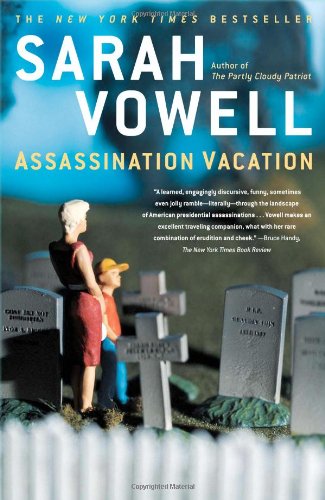
Upcoming at this site is a review of Sarah Vowell's Assassination Vacation, a book inspired by Stephen Sondheim's truly alcoholic-sounding idea of writing a musical about the presidential assassins (and would-be assassins). Dan Lewis just shared a tidbit that will whet the appetite of anyone interested in Vowell's book:

http://nowiknow.com/john-wilkes-booths-heroic-brother/


Legislation 

Tom DeWeese commends to everyone's attention U.S. House Resolution 1995. This web site likes it, and even ventures to guess that Congressman Griffith and Senator Warner will like it. (About Senator Kaine, this web site does not know.) Once again, this is not about whether people want to bring "blackandhispanic" neighbors into the neighborhood--my adoptive sister may qualify, and a few of my cousins definitely qualify, as both. This is about whether people want to let welfare agencies shuffle "blackandhispanic" welfare recipients into neighborhoods where those people will have even less hope of finding jobs, education, friends, or any other possible improvements in their lifestyles, than they have in the neighborhoods of their own free choice. Places like Gate City do not need truckloads of slum dwellers shipped in from D.C. or Norfolk; nor do the slum dwellers need to be in places like Gate City. HR1995 is designed to correct a federal power grab that is a very, very bad idea--DeWeese suspects it's bad by design, intended to harm American small towns.

https://www.congress.gov/114/bills/hr1995/BILLS-114hr1995ih.xml

News 

Won't be news long, but the Huffington Post shared it first:

http://www.huffingtonpost.com/entry/david-cameron-resigns_us_576ca4a9e4b017b379f583e5

Zazzle 

Zazzle prints "tough" customized phone covers, too. Here's a case for your Apple I-Phone, if that's what you have, with my favorite saying on it:


You can get prettier designs than that, if you want a pretty-picture cell phone case. Here's one that goes with what's rapidly becoming the majority license plate style in my home town:


Or would you prefer roses?


Pastel Floral iPhone 6 case
Pastel Floral iPhone 6 case by AmyBalesDesigns
View Flowers Casemate Cases online at zazzle


Zazzlers are waiting to create absolutely any kind of phone cover you can imagine. If you don't find your dream phone case at the site, let us know!

Book Review: Spoken from the Heart

A Fair Trade Book


Title: Spoken from the Heart

Author: Laura (Welch) Bush

Date: 2010

Publisher: Scribner / Simon & Schuster

ISBN: 978-1-4391-5520-2

Length: 441 pages plus 23-page index

Quote: “It is easy to criticize a sitting president when you are not the one…responsible for the decisions that must be made and for the whole of the nation.”

George W. Bush is no longer a sitting president, nor is the purpose of this review to criticize him. It’s to criticize Spoken from the Heart. So let’s get the unfavorable “criticism” out of the way first: A certain self-contradiction is inherent in this book. How can you “speak from the heart” in a memoir about being private people in a public position?

Who, in fact, is speaking? This is Laura Welch Bush’s memoir…but it’s not a very personal memoir. It has the consistent tone of the stories a private person might share with a professional writer, in order to meet the demand for a memoir by that private person without embarrassing that person’s children. If you guessed the hack writer was the Washington Post treasure who writes under the unforgettable name of Lyric Wallwork Winik, you were absolutely right. Most of the stories in this memoir were reported in the Post, and although some of them are personal memories Mrs. Bush obviously shared with Winik, they’re told the way Winik tells them.

So, even more than Karen Hughes’ memoir…this is not the kind of gossipy memoir that might supply “dirt” on a politician that you didn’t already know. There’s surprisingly little about W Bush in it, and nothing more intimate than the disclosure, familiar by 2010, that W habitually fell asleep and woke up early. The tone is consistently warmhearted, cordial, correct, and politely distant….the way you expected Mrs. Bush would sound when sharing memories with a professional writer. The way you probably imagine she’d be, in real life, as a neighbor or co-worker.

She was born in Midland, Texas, in 1946, and grew up there. Her family were well off, not extremely wealthy by Texas oil country standards, but not blessed with the healthiest genes; her siblings died in infancy, her father died young. Her dog once bit a man for kicking another dog. She was born extremely nearsighted, not quite to the extent of being “legally blind” like her coeval Hillary Rodham Clinton—little Laura Welch could look outside and see trees, without glasses—but nearsighted enough that, after acquiring glasses in grade two and seeing leaves on trees, she never looked back. (Those bright eyes are technologically enhanced, as are Mrs. Clinton's, today.) She and W “passed in the hallways” in junior high school, even had mutual friends, but didn’t become acquainted until the summer of 1977, when “I assumed that George would be very interested in politics, while I was not”…but they were married that November. Their wedding anniversary was “one day before the anniversary of the awful accident” in which teen driver Laura Welch was injured and one of her friends, in the other car, was killed.

The rest is literally history. You might have read reporters’ views of Mrs. Bush’s memories in the newspapers. In this book they’re all in one place, in chronological order, and you do get Mrs. Bush’s personal comments and insights, the “I gave my first speech…but it…wasn’t nearly as bad as I had anticipated. In fact, it wasn’t much different from reading a story to my students” sort of thing, but the feeling is consistently that you’re reading her comments on the newspaper files rather than reading her personal diary.

Actually, after I've read some gossipy celebrity memoirs, this cordial but reserved manner comes as a relief. It’s a quality Laura Bush’s admirers (of whom I suppose I’m one) liked about her. We didn’t want to know the precise details of every family quarrel or case of flu, and there’d certainly been enough criticism of W Bush in the news media. We’re glad to read that she enjoyed some of the perks of being First Lady (“George and I also grew pots of tomatoes on the parapet” in the White House) enough to offset the craziness of tightened war-presidency “security measures” (“I could walk each morning along the corridors from the residence to my offices in the East Wing…it was possible to spend several days without ever venturing outside”). We share her relief when she and “homebody” W Bush leave the White House, having accomplished a difficult feat for nice, quiet, private people: both of them and their family life survived.

A First Lady has an important job—creating and maintaining a pleasant atmosphere, such that people who dislike and distrust each other, are far from their homes, and are probably jet-lagged and hung-over, are able to feel good about the time they spend doing Official Negotiation together—so in Mrs. Bush’s case a short, almost whimsical anecdote acquires importance:

“At 9:15, the sky was still ablaze as we boarded a boat to cruise with the Putins along the Neva River…as the sun slipped toward the western horizon on one side and the moon rose in the east. George…said…“you are in Heaven.’ The translator immediately repeated it to the Putins, who gasped with pleasure.”

They were not in Heaven. They were in Russia, where any pleasure that could possibly be shared with their hosts was a small step toward lasting peace. So that paragraph was not only worth printing (on page 261); it’s worth quoting, here, for whatever pleasure it may give any Russian readers who may know exactly what sort of natural beauty the Bushes and the Putins were enjoying.

One thing for which the Bushes were sometimes criticized, by the ignorant, was not having rushed to the scenes of the major crises of W’s administration. Recalling those incidents from Mrs. Bush’s point of view, we appreciate the tact with which the Bushes arranged to meet with private people in public places to spare them the burdens of hosting a presidential visit. 

One thing I’ve mentioned at this web site, in Former Washingtonian Mode, is the inconvenience of having the First Family visit places not designed to accommodate presidential-level security as it has grown to be these days. It’s not like the obligatory visits state and local officials, or even members of Congress, make to disaster areas, where they are free to chat with survivors and even help clean up the mess. We really have found it necessary to keep all First Families, during my lifetime, like prisoners in Washington—their guards have valid complaints if the President and family insist on being allowed to walk on the street or go into a store like ordinary people, as have the ordinary people on the street or in the store. Such “escapes” usually have to be scheduled for the dead of the night, to minimize the harm they do to local business. Even as a nineteen-year-old student at a rally in Lafayette Park, where someone pointed to the White House and shouted “Where are those people?”, I already knew that the President and Mrs. Reagan would never have been allowed to mingle with that crowd, even if anyone had had the gall to invite them to the rally, even if they had wanted to come out across the street and meet us. 

People don’t always understand that a presidential motorcade is about a mile long, that members of the First Family have to be completely surrounded by armed guards at all times, and that, although the guards are heroic and usually likeable men and women, their function is to take up a lot of space. In situations for which the First Family are not really trained to be useful, e.g. Barbara Bush’s famous visit to New Orleans where some of the hurricane survivors assured her that they were just-fine-thank-you-ma’am-now-please-get-out-of-the-way, a presidential visit is likely to be more inconvenient than inspiring. Mrs. Bush wants us to know that she did visit certain places, though, after the crises were past and her visits weren’t unbearable burdens to the communities. And she arranged to meet with private people in public places so that her entourage wouldn't overflow out of their homes.

When what some readers may dislike about a book is what others will like about it, one can say that the author has achieved a most correct and proper book, which I suppose is the way I’d summarize Spoken from the Heart. There are a lot of stories Laura Bush might have blurted out, but we neither expected nor wanted her to. It is possible, even for readers who are aware of some of those stories, to close this book thinking, “God bless America. God bless Mrs. Bush.”

Since she's still alive, and she does support legitimate charities, this is a Fair Trade Book. Buy it here, for $5 per copy + $5 per package (this is a big showy hardcover book, so I wouldn't expect more than two copies to fit into a package), and Mrs. Bush or a charity of her choice gets $1 per book. Payment may be sent to either address at the very bottom of the screen, down below that longish and growing blog feed widget.

Thursday, June 23, 2016

Book Review: Patti's Luck

Title: Patti’s Luck (Sleepover Friends #1)


Author: Susan Saunders

Date: 1987

Publisher: Apple / Scholastic

ISBN: 0-590-40641-8

Length: 101 pages

Quote: “‘Fifth-graders,’ Kate said slowly, rolling the words around on her tongue. ‘Doesn’t that sound a lot more mature than fourth-graders?’”

That’s the level of “maturity” sustained throughout this whole series. Although a goodly number of middle school readers bought and read the Sleepover Friends books, they never were loved in the way other juvenile series, like the Baby-Sitters Club or Clifford the Big Red Dog, have been loved. They’re entertaining enough to keep kids quiet during long rides; they’re not great.

In this episode, during one of their sleepovers, Kate imitates a character in a movie rerun the girls are watching and puts a “bad-luck spell” on Patti. The Sleepover Friends laugh about the hex until Patti really does have a run of bad luck.Some of it spreads over other people as well. A water main breaks, so the girls can’t wash the purple gel out of their hair before bedtime. Lauren hastily sets down her schoolbooks to help Patti untangle her bicycle chain, not noticing that she’s set them down on the back of a stranger’s car; when the girls look up, the car is rolling away, the driver not having noticed the books either. During the class trip to the museum, the fifth-graders get trapped in a stuck elevator. “The bad luck is all in Patti’s mind,” Kate insists, but it persists until the girls convince Patti that she’s due for a run of good luck.

Possibly because this book didn’t qualify for any literary awards, it didn’t arouse the kind of censorious indignation that other novels about middle school characters dabbling in The Occult provoked. It gives more attention to witch lore, relative to ordinary middle school social and family concerns, than either Jennifer Hecate Macbeth William McKinley and Me Elizabeth (why did Amazon mess up the look of that link? I don't know) or The Headless Cupid. Pagans and Unitarian Universalists are likely to enjoy Patti’s Luck. Fundamentalist Christians definitely won’t.


Meh. I didn’t buy this one for myself, or for my niece. I bought it at a bag sale, with a lot of other children’s books I intended to dress dolls to match, and after reading the story I’ve decided not to bother about the doll. Who wants to be accused of encouraging middle school witchcraft? Still, in the end Patti’s Luck actually tends to discourage witchcraft and “evil speaking,” so I suppose it has enough redeeming moral value to be offered to kids who want it.

Should it be a Fair Trade Book? I don't know. The Susan Saunders who wrote this book may still be alive, but I'm finding no positive information to that effect on the Internet. Anyway, to buy it here, send $5 per copy + $5 per package to either address at the bottom of the screen, below the blog feed widget.

Wednesday, June 22, 2016

Book Review: Dawn and the Big Sleepover

A Fair Trade Book


Title: Dawn and the Big Sleepover (Baby-Sitters Club #44)

Author: Ann M. Martin

Author's web page: http://www.scholastic.com/annmartin/letters/2015-12.htm (This blog post or "letter" mentions one of the young people who inspired the Baby-Sitters' charges, in real life, having a child!)

Date: 1991

Publisher: Apple / Scholastic

ISBN: 0-590-43573-6

Length: 138 pages

Quote: “‘Was anybody hurt?’ Claudia asked. Mal shook her head. ‘Not seriously. But the school was destroyed.’”

Stoneybrook Middle School, home of the Baby-Sitters Club, has a “sister school” and pen pals program. (Volume 44 in a series of over 100 books is the first time it’s been mentioned and, I think, the last.) When their “sister school” is destroyed by a fire, the kids decide to throw a “gigantic sleepover party” at good old S.M.S. for a fundraising event.

Dawn is, as regular BSC readers know, the complete stereotypical California girl—somewhat out of place in Connecticut. Though content not to be president of the Baby-Sitters Club, and superficially a less dominant personality than Kristy, Dawn is every bit as much of an alpha female as Kristy. (In real life, does this kind of relationship work?) When she starts organizing a project, there’s no question that it is going to be organized. The question is whether Dawn can sustain her mellow manner and avoid running herself completely into the ground with her organizational skills. Dawn also has long blonde hair, divorced parents, and a genuine taste preference for “health food.”

Well, now you know how the plot goes; it’s the Baby-Sitters Club, so everything will work out in a very nice, positive-role-model sort of way. Some of the younger children will whimper as they “sleep over” at school. The Baby-Sitters will demonstrate and learn a few wholesome, cheerful ways to handle the anxieties of younger children. They’ll raise money and send it to their pen pals, from whom no more will be heard.


Dawn is not the most fashion-conscious Baby-Sitter but, with her long blonde hair, she’s probably the one who looks most like a Barbie doll. Too bad she’s shown wearing generic jeans and shirt on the cover of this book. It’s always fun to convert Barbie into Baby-Sitter Dawn. At the time of writing, it is still possible to order the Baby-Sitter Dawn doll, packaged together with the book I physically own, for $20 online. The Storybook Dolls packages tend to move fast in real life, where they're cheaper.

To buy the book as an ordinary Fair Trade Book, send $5 per copy + $5 per package to either address at the very bottom of the screen (below the blog feed widget). At least eight BSC books, more if you order the skinny "Little Sister" spin-offs, should fit into a package containing books only and shipped under book rates, and Martin or a charity of her choice will get $1 for each of her books you buy here.

Tuesday, June 21, 2016

June 21 Link Log

Will I actually have time to post even a short Link Log today? Possibly yes. Categories: News, Psychology, Virginia History.

News 

Well, first of all...did you hear? Going by my e-mail, it looks as if most respondents read this story last week. That doesn't tell me anything about other readers.

http://constitution.com/theres-reason-didnt-hear-chick-fil-orlando-mass-shooting/

Psychology 

Some of the key differences between a living brain and a computer.

http://www.dailygood.org/more.php?n=6790

And Dr. McDougall is hosting a "Webinar," of which part 1 took place last week and part 2 will be taking place on Thursday, with psychologist Doug Lisle. The topic is emotional eating; the audience will include people discussing the psychological aspects of going vegan and/or encouraging family members to try vegan meals. Insights into people like the patient's son who, when I cooked a big pot of vegan beans for the patient and family to try, felt a real need to plop a big slab of pork fatback into it.

http://us4.campaign-archive2.com/?u=5e58f59d97611f910916b6276&id=03944ff287&e=4d57a9fdfb

Virginia History 

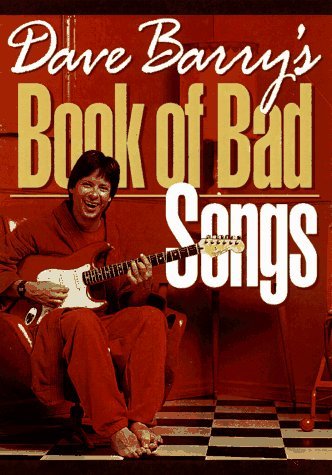
This web site endorses the writer's position. Gentle Readers, if you want to tour Fauquier County, please ask Martha Boneta to show you where Stonewall Jackson may have camped, and explain all about which Stonewall Jackson. (This web site never could believe anybody would have the gall to appear on the Grand Ole Opry under that name, especially with only the level of success and talent he had, but yes, he did. Possibly it was at least the legal name his parents gave him. Anyway, despite its mention in Dave Barry's Book of Bad Songs, from which "country" songs were supposed to be excluded, this web site liked "Me and You and a Dog Named Boo.")

http://fauquierfreecitizen.com/but-pec-which-stonewall-jackson-slept-there/

Book Review: Southern Fried Makeover

A Fair Trade Book


Title: Southern Fried Makeover

Author: Carla Jablonski


Date: 1999

Publisher: Archway / Simon & Schuster

ISBN: 0-671-03437-5

Length: 148 pages

Quote: “Maybe it was like those whistles only dogs can hear. Gigi operated on a boys-only frequency.”

Who’s Gigi? Not one of the familiar TV stars lined up on the front cover of this book—that’d be, from left to right, Amber, Sean, Cher, Murray, and Dionne (or De; played by Stacey Dash). Gigi Rabinowitz, played by a guest actress, claims Atlanta as home. But whatever happened to Southern charm? Charmless Gigi sets out on the wrong foot, during her short visit to Bronson Alcott High, with resolutions to upstage Cher in a musical video (No way!) and upstage De with Murray (As if!).

In the weird little world of Clueless De and Murray, who were after all based on the full-grown married friends of the young girls in Emma, are supposed to be not only the brightest Betty (girl) and Baldwin (boy) in the school, but also a solidly established couple. They keep their relationship age-appropriate by bantering, bickering, and staging lovers’ quarrels every week or two. Still, woe betide anyone who tries to come between them. Gigi is cruising for a serious ego bruising, here.

Neither Cher Horowitz nor Gigi Rabinowitz is noticeably religious so it might seem reasonable for them to let their nice-girl social personalities be overcome by evil, rather than overcoming evil with good. They struggle, in this story. For a Clueless sequel this one borders on having actual character development. The list of classic novels suitable for remakes as Clueless episodes was shrinking. The series was winding down to its end…

I didn’t laugh out loud as often as I did while reading the volumes in the Clueless saga that were written by H.B. Gilmour, the author who really created Cher Horowitz’s unique narrative voice. Gilmour was the genius; Jablonski is a substitute. Nevertheless, fewer laughs than Gilmour provided per volume still means lots of laughs. This is still a book that I, personally, would not try to read on a slow day at a bank, or even on a crowded train.

“If I was this on alert, I could imagine how De was feeling. Double sessions with our masseuses immediately hit my mental to-do list.”

“Hello, it’s a shoo-in that Cher and I would win. But if elected, how can I serve? My future is as a doctor.”

“She actually laughed in my face! I thought I was having an out-of-body experience.”

Hello, Cher? Try out-of-Beverly-Hills, where everybody's laughed at you ever since Gilmour and Reisfeld invented you? Whatever. Everybody with a sense of humor loves Cher’s grotesque mix of Valspeak, S.A.T. vocabulary words, and upscale-store ad lingo,  anyway.

Although H.B. Gilmour no longer has any use for a dollar, or for publicity, Carla Jablonski is still actively writing, according to her web site. It looks as if more attention to her comedy writing skills wouldn't hurt anything either. So Southern Fried Makeover is a Fair Trade Book. Buy it here, by sending $5 per book + $5 per package to either address at the very bottom of the screen (down below the blog feed), and Jablonski or a charity of her choice receives $1 per book. By "$5 per package" I mean that you can browse around and add a few other books to the package for the same $5 shipping charge. Any and all Clueless books could be added to the package; so could other vintage books, for adults or children, that you may or may not have seen on this web site. (Btw, when you buy a book from this web site, you earn the perk of posting a guest review of any new or used book you want to add.)


What's Stacey Dash doing now? Her new book is so new that, although Amazon pays a commission when you click on book links and Regnery hasn't arranged for that yet, I'm steering you directly to her publisher. Some readers will want to buy this book new to show respect.