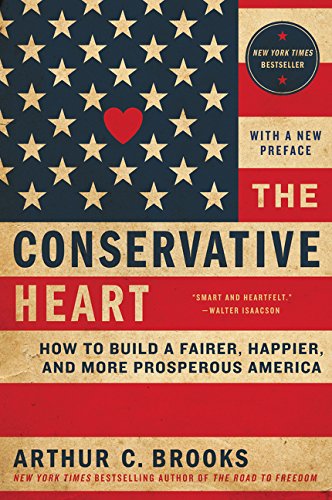
Title: Feminist Fantasies


Author: Phyllis Schlafly
Date: 2003
Publisher: Spence
ISBN: 978-1890626464
Length: 262 pages
Quote: "Gone with the Wind...is the great American novel."
For many, anything by Phyllis Schlafly is going to be hard to sell. The icon of right-wing feminist success was a walking anachronism and thus, to me, a contradiction so complete as to transcend even the charge of hypocrisy.
Granted, Schlafly came a long way since the years when my mother described her as “an embarrassment...so dumb.” And she always could explain her most annoying sound bites in ways that made sense. But when the dictionary defines “feminist” as referring to anyone who believes women are equally as valuable as men, and Schlafly kept using “feminist” in the narrow and outdated sense of “member of one of the left-wing feminist groups of the 1970s”...let’s just say that a lot of people failed to take the time to follow Schlafly’s explanation, because, after the left-wing feminist groups of the 1970s had served their historical purpose and fallen apart, the default understanding of a woman who opposed “feminists” was “woman with, at best, extremely low self-esteem, and no sense of logic.”
Unfortunately, although the philosophical ideals of the Old Left smashed on the rock of reality when the Soviet Socialist experiment failed, the totalitarian power-lust that was the real foundation of the Old Left, all along, is still with us. The Red Flag of the “Communists” has faded into history. Today’s would-be dictators are more likely to wrap themselves in Green...Poison Green. So it’s still worth the trouble to read Schlafly's work with the tolerance we show to our own grandparents, mentally translating as we go along. In Schlafly-speak, “feminist” means “one of the few advocates of totalitarianism who still bother to identify themselves primarily as feminists rather than Socialists or Greenies.” She’s not talking about, well, us.
Obviously Schlafly’s never read my feminist fantasies—a series of conceptual fiction pieces, some short and some long, some written for and about (and originally by) children, some very “adult,” about how the world would be different if rape were physically impossible. There’s a valid reason for this: I’ve never tried to market this fiction to the general public. I think it could be the next great series that people who’ve loved Pern and Planet Ozark
 might love, but I’m waiting for e-friends to convince a paying publisher about this. Seriously, Gentle Readers, I think what we loved about Pern and Planet Ozark is that their wackiness is based on truth about the real world; so is mine.
But a more serious loss of contact with present-time feminists, of whatever stripe, is displayed on page three of Schlafly’s Feminist Fantasies, when she invokes “the emotional trauma that comes over today’s liberated woman when she turns age thirty and realizes that...her years of possible motherhood are slipping away.” Say what? When I reached age thirty, a lot of liberated women my age were already mothers. Mostly the rest of us, myself included, didn’t want to be mothers; we’d decided that, in our crowded world, it was better to be good aunts, foster mothers, or adoptive mothers to existing babies rather than perpetuate our own flawed DNA. Then there was the one who gave her parents a grandchild after her fortieth birthday.
Schlafly and her fans really need to hear this kind of stories, because both the Old Left marriage-bashers and the Old Right marriage-boosters always seemed to me to ignore what my generation perceived as the fundamental truth about marriage. When people freely and knowingly become partners for life, that’s wonderful, beautiful, even a minor miracle. The passion doesn’t die. The novelty of being together wears off, but the passion of working together on the things you enjoyed doing alone ripens. Whether you get to live together for seven years or seventy years, it’s not long enough, and you’d do it all again. But this does not happen when people just flop into bed the first time their hormones tell them to, or, worse yet, try to be married because someone else thinks they need to settle down or make their parents grandparents. It happens when two complete and independent people, who know who they are and what they want to do and how they want to live, find their differences—gender and personality and whatever else—to be complementary; when their working together produces synergy.
Feminists who denied the benefit of marriage were of two kinds, although the two kinds tended to overlap in real life. Either they were influenced by Old Soviet notions about the need to break up the family structure, along with everything else to which people felt loyalty, so that people would devote all their loyalty and energy to a totalitarian state; or their parents’ marriage and their own, if any, had been very unhappy. Usually both conditions applied. The totalitarian philosophy needed to be opposed, and still does. We have to thank Schlafly and her contemporaries for that. We also have to pity those older feminists who lived for years, sometimes lived their whole lives, in the belief that marriage was inherently counterproductive for women. To me they seem a bit like those early Catholic virgin martyrs who, though probably sincere Christians, have been defined in history by a childish fear of sex.
Schlafly also frets unnecessarily, in Feminist Fantasies, about the demise of “femininity” as a trap. She worries that young women haven’t “cultivated a feminine personality that can make a man feel like a man.” She worries that, although little children like gender stereotypes, left-wing feminists are going around forcing little boys to cuddle dolls and little girls to race toy trucks. Well, babies continue to be born; evidently young men and young women are still finding each other sufficiently masculine or feminine.
Again, although I think Schlafly needed the quotes and statistics in Barbara Ehrenreich’s The Hearts of Men to help her understand what really changed American social expectations about “family life” in the late twentieth century, I find myself reading across a great yawning Generation Gap. My brother and I were close. As young children, both of us often felt that we were brought up too close together. We craved gender stereotypes as ways of demarcating territory. Given dolls or toy animals, we’d assign them genders and divide them up: females for me, males for him. If he planted beans in his garden, beans became a boys’ thing that I didn’t want in my garden. But a funny thing happened as we grew up: our academic “giftedness,” our travels, our parents’ radical Christian and Granola Green lifestyle, gave us more in common with each other than we had with same-sex school friends, just the same. Our parents’ vision of our gender differences becoming complementary, as our interests shifted from play into work, came true. Although culture demanded that we give the title to same-sex friends, I think my brother really was my best friend; I think this was an asset when I started dating guys, and later when I was married to a man.
So many, many people my age found that the gender roles Schlafly’s generation wanted to define for us didn’t match our real personalities. Gender-bending is a different phenomenon, less common, and I suspect less healthy. For most of us breaking up the gender stereotypes was just a matter of recognizing that the stereotypes had never been based in reality. Most of the things people do are not men’s things or women’s things; they’re things that both men and women have been doing, perhaps in gender-influenced different ways, for centuries. The Bible says the ideal wife works in and out of the home, manages a staff, does business, owns property, teaches “the law” as well as job skills to others, and cultivates “the strength of her arms” to do physical labor. The Kama Sutra lists plumbing, shooting, and military strategy as "arts" young ladies should study in order to be desirable brides.
I don’t think even baby-boomer men are intimidated by women who know more about anything useful than they do; the ones who are have probably been intimidated into trying to become either monks or "gay." We’ve recognized that the field of modern knowledge is so vast that nobody can know more about everything, all the time, and any two people can always find different specialties. We no longer think it’s “unfeminine” or “unladylike” if a woman chooses to major in biology, chemistry, economics, or even engineering. There were girls in those departments when I was in college, and most of them were pretty and popular. I stuck with English for a while and then branched out into psychology. I didn’t try to be at the head, but was consistently near the head of those classes. Did that represent competition with the guys in my classes? Who cared? They were already paired off with the girls in other departments anyway. I dated guys who weren’t English majors. Room for advanced degrees and impressive achievements for all, we now have. And I hope Schlafly’s difficulty in appreciating this development was not tarnished, as Midge Decter’s so blatantly was, by a selfish, egotistical desire to inflate Schlafly’s own achievement in constitutional law by disparaging other women lawyers.
How are men dealing with the mere idea that women can compete with them, and often beat them? Same way they always have. Men tend to divide humankind into Winners and Losers, but they’ve always admitted that they can win or lose at different things. The men I've loved were indisputably Winner. Well, granted, Dad never became rich, my husband was bankrupt when we met, and some other men in my life never had a college degree, or never found a job where they could use the degrees they had, or never got rid of an obvious disability...but they were Winners. Men are more resilient than the right-wing social planners thought.
I read Marabel Morgan’s Total Woman and thought, “What a sweet, sensible, whimsical approach! How true...if parts of it weren’t for my husband” (who wasn’t a visual thinker and didn’t want me to waste money on fancy costumes) “then for somebody out there. Whatever works, right? Those Morgans must have had a delightful home life. Being devoted, even submissive, is so much fun!” Then I reread The Total Woman, thinking about some women who’ve married Losers, and thought, “This is so wrong. This so did not work for Jane, for Mary, or for Sue. The more a woman tries to be devoted or submissive to a jerk, the worse things get for all concerned. Mary, Sue, and Jane should only have pulled the ripcord first and dumped those Losers while they had fewer children and more time.” How, when, and whether wives should try to be submissive depends very much on whose wives they are.
General advice isn’t supposed to work for every person in every situation. Duh! The problem with Schlafly’s breed and generation is that they believed there was one pattern, one social norm, that would work for everybody. That’s just not true. And it’s not even safe to say, “Oh well, some people just have a private sexual ‘kink’ about being dominant or submissive, and as long as doms marry subs everybody can work with that.” If you talk to people who identify themselves as doms or subs, or even people who refuse to identify themselves in erotic terms but seem to have dominant or submissive personalities in real life, the first thing you notice is that we all have different kinks. In daytime, public, social terms, most people can be observed switching between dominant and submissive manners in different situations.
My husband was a world-class champion at negotiating for what he wanted in the most deferential, apparently submissive manner. Not manipulative, in the way women (and people from India, which was after all the source of most of his DNA) are stereotyped as being; he was both straightforward and diplomatic, a class act even in Washington's diplomatic community. What allowed him to do this was that he thought about the Highest Good for all concerned. He was a radical Christian. He never demanded that I obey or submit to him. He wanted our decisions to be mutual, and they were.
But he had this stubborn hypertension, and when his blood pressure spiked he’d find something to get angry about—usually something that didn’t bother him on better days. In hindsight I believe this was a symptom of multiple myeloma, which he had.
So it was my idea, not his, when I begged him to designate a place in our house as the Truth Pedestal. The name came from a cartoon strip we used to read; I proposed using it to mean the place where, if anything in our life was seriously bothering him, before he became aware of feeling angry about it, I wanted him, please, to Lay Down the Law about what we were going to do. I trusted him to do that, and he agreed to do that. And then he never actually used the Truth Pedestal. Decisions continued to be mutual, and his blood pressure continued to be an early warning of a rare disease for which nobody wants to test.
I saw, and still see, the designation of the Truth Pedestal as an empowering act, a feminist statement. What happens when young women are empowered to have businesses in which older men can be employees? Why, then we can be as devoted and submissive, in whatever ways, as we want to be.
I like a lot of autonomy on a job, don’t care whether my quiet and respectful introvert manner is misread as a submissive manner, don’t care what people think if I have to go into Drill Sergeant Mode either; whatever works. I’ve had admirers who’ve described themselves as submissive, and as my slaves. I’ve never felt any physical attraction to a slave, but I can see why some people identify themselves socially as dominant; slaves can certainly be useful, especially when a woman gets the urge to do The Rules on a man she’s actually dating. In private life I like to wait for encouragement. I’m not into pain. I’m not into relationships that disappoint or dissatisfy me in any way. I do like being able to admire my Significant Other, ask his advice, and generally treat him like the Winner he is. And when my husband became ill, I coped with the sudden shift from working with him as a partner, outside our home, for money, to working for him as a nurse, at home, without wages, by thinking of it as my turn to be the abject infatuated slave...which was sort of fun. Believe it or not. Being the healthy "care giver" stinks but there are ways to reduce the total yuckness of it.
And it would be pleasant if (as some men seem to believe) the slutty acts of young singers and actresses were all about expressing that freedom to surrender, all the way back to that old bumper-sticker slogan that’s been made into a song about how “whips and chains excite” Rihanna . Better her than me, but if people like whips and chains it’s easy to leave them alone. On the other hand I don’t see why any woman would want to marry a man she didn’t recognize as a “Master” of some special skill or knowledge, or even why a man would want that kind of woman. On the other hand, when someone shared a link to an online community of what purport to be right-wing ladies who think referring to their husbands as “Master” is what the Bible teaches, I kept looking at all the “tasteful” nude images and thinking, “My husband would have hated this.” Explicit talk about things that ought to be private always put him off, and when one of the alleged wives said she was willing to start a baby and abort it if her husband told her to, that put me off, like but totally. But to each her own...as long as it is her own.
So I’d say: a woman who can enjoy being submissive is not “antifeminist,” but simply blessed, probably with a good husband, and the rest of us should try to control our envy. But where does submissiveness lead? Soon enough Schlafly, mother of six, takes up the idea of children. She approvingly quotes a woman who shares an emotional perception: “It wasn’t...that I thought my kids needed me more...but that I needed them more.” Ugh.
What can we say about the woman who “needs” her children too much to face the transition back to the adult world? She may not be intellectually fit for the transition, but is she emotionally fit to bring up children? Does she feel a “need” to keep them in the nursery, within reach of her “need” to babble and snuggle, when all the other kids their age have full-time jobs and children of their own? What some women of this kind really need is a teddy bear. To hold on to in the hospital. They need to be kept away from living human children.
Schlafly blunders on, taking her shots at Old Left feminists. Did they cause men to use easy divorces to abandon the wives of their youth and take up with younger women? Bosh. What they did was talk about, and force others to admit, the fact that that was going on. When divorces were harder to get, it went on in more cruel ways; a hundred years ago, instead of saying “Jane and I don’t sleep together any more, so I fell ‘in love’ with Jennifer,” a man just about had to get Jane into a prison, a “lunatic asylum,” or an early grave—and usually he could, and often he did. Great-Grandpa could hire a bum to say he’d slept with Great-Grandma for ten dollars plus a bath, shave, and haircut.
Plenty of women agree with Schlafly that all that squawking about breaking up the family for the sake of the Communist Fantasy didn’t help, back in the day, and should be used to embarrass the Old Left now that the Communist Fantasy is dead. (George Soros's money may still be relevant; his beliefs are not.) Then again...pushing early marriage, insisting that any sexual feeling had to lead to the production of babies and people needed to be hastily married off while they were clueless about life but fertile, merely enabled the Old Left to influence society to the extent that it did. I’m not saying that I didn’t have role models for a great marriage, or that those elders weren’t “conservative”—though some were conservative Democrats. I am saying that a great deal of the Old Right’s public pronouncements on marriage were ill-informed and unhelpful, and several of them blew up in the faces of those who spouted them, e.g. the Bakkers, the Fellinis, the (George) Joneses...
Again, no one pattern works for every family. Schlafly gloats that “conservative women” were winning elections, in the U.S., while Old Left “feminists” were being “trounced.” To me, this is a roundabout way of saying that feminism has made great progress during my lifetime, at the same time that Socialism was defeated by reality...there’s that generation gap again. But surely one of the most successful of those conservative female politicians was Elizabeth Hanford Dole, and she was that dreaded, detested thing, a second wife. Would the Old Right have liked it better if the first Mrs Dole, instead of divorcing the crippled war hero and future senator, had quietly smothered him? That used to happen too.
Schlafly made some good points about enforcing high standards of physical fitness for our armed forces. Armed forces have always found uses for soldiers who weren’t the biggest or strongest. There are even documented cases of women having infiltrated the nineteenth century's all-male infantry—cross-dressing, of course, usually with at least one buddy helping protect their secret. Knowledge can be power; there are documented cases in which a physically weaker, even disabled, soldier has had the secret information that saved his troop. Nevertheless, war is stressful. Our national defense may not depend on the ability of every soldier to carry 200 pounds, and if physical stature were what won wars then the Dinka tribe would rule the world, but in order to win wars a nation does need its young people fit to do their duty.
Schlafly also digresses into reviews of popular books and movies...blaming “feminism” for what sound like the inane lines in male-produced blockbusters, and managing to read Scarlett O’Hara as a role model for humans. I’m quite bemused by her review of Gone with the Wind. First I wonder what a Yankee’s doing, even trying to review our Great Novel. The answer appears to be, “Demonstrating that great books can be read in many ways.” There are two ways of reading Gone with the Wind that make sense to me:
1. You can read it as an historical romance, the kind of thing usually printed in paperback and sold in supermarkets. From that perspective, it’s a dreadful failure. Scarlett is not the heroine with whom readers can comfortably identify. Scarlett is a jerk. She "bosses and bullies" people. She has no moral standards, neither the phoney ones inflicted on schoolgirls of her day, nor any real ones women of her generation might have worked out for themselves by the time they were twenty-eight. She doesn’t care much about her parents, her sisters, her friends, any of the people who work with or for her, or even Ashley Wilkes, except that as a teenager she once had a hormone surge in his vicinity and as a spoilt brat she’s always envied the girl he preferred. At the end of the book she finally lets herself admit that she likes Rhett—a far cry from loving him. Scarlett is the world’s least romantic heroine, incapable of really loving anybody. She doesn’t deserve the happy ending every romance should have. She hardly even deserves the sense of closure, and perhaps of sympathy, “tragic romances” used to give readers in the 1850s.
2. You can read it as a serious, symbolic novel about the history and current plight of the Southern States, their society, and their culture, in which Scarlett’s barely-human behavior makes perfect sense, because Scarlett’s not meant to be an individual human; she represents The South. The men she uses as sex objects represent fashions in Southern thought. This reading gives us the advantage of knowing how the story ends; for Margaret Mitchell the ending was still in dispute, but for present-time readers it’s not. This reading also accounts for the fact that people continue to read, and thoroughly enjoy, a novel that has to be the world’s worst romance. On this reading Gone with the Wind still has plenty of flaws, but it’s a respectable piece of literature. I read it as an incomplete tragedy.
Schlafly, however, likes Scarlett because Scarlett resolves never to be hungry again, and isn’t, without a government handout. Surely she jests. There were no government handouts after the Civil War. The nation wasted so much of its resources that even the White male veterans who had served with distinction didn’t get decent pensions. And that’s supposed to be why Old Left readers didn’t like Gone with the Wind? In that case, what about Huckleberry Finn, Moby Dick, or The Color Purple, whose protagonists never get a government handout either? And what about Jubilee, which is also handout-free and, for all its faults, a more satisfying romance than Gone with the Wind and The Color Purple together?
It’s that very line, “I’ll never be hungry again,” that Schlafly claims to like best about Scarlett...and that I find diagnostic. It’s what she has to say if she represents The South; it’s what dooms her if she’s supposed to be a romantic heroine. We are, like it or not, a nation of people who are still saying, as our ancestors said, “I’ll never be hungry again.” A real romantic heroine would have said, “Little Wade will never be hungry again,” or “My parents will never be hungry again,” or “Ashley will never be hungry again,” or might even have named other people. Scarlett’s vision and feelings stop precisely at the end of her nose.
Schlafly can, perhaps, be forgiven for not having read Jubilee—or, apparently, any number of other books that are more likely to be chosen as “The Great American Novel” than Gone with the Wind is. And at least Schlafly doesn’t give her award to Atlas Shrugged . What she can’t be forgiven for doing, in Feminist Fantasies, is nagging readers with her own feminist fantasy: that all women can, or should, or would like to, have babies.
On a Freudian analysis, no doubt my whole life has been defined by the fact that my mother’s gluten-intolerant body wasn’t up to the demands of pregnancy. Neither was mine. I married a man who’d been told when he was thirty that he was probably born sterile; he had one of the earliest identified defective chromosomes. So there have been no babies in my life, and how many hours have I spent regretting this absence of babies? I’m still waiting to notice any feelings of that kind. I can’t afford a child. I wish I could. If I could I’d adopt one.
Currently, though, I choose to be childless. Schlafly claims that women didn’t make this choice. Well...maybe there was no specific date when they stood up in public and proclaimed, “I, Jane Doe, choose to be childless.” In Washington, however, they’ve repeated the equivalent every week. For many years, including the year when Feminist Fantasies was published, one of the local TV stations broadcast a regular morning news show called “Wednesday’s Children.” Each Wednesday morning viewers could watch one, chosen out of dozens or hundreds, of adorable moppets pleading for somebody out there to adopt him. Or her. Or them; often these children pleaded to be adopted as family groups. The stories were edited by adults, but the kids were real. And, for some reason, thousands of Washingtonians chose every Wednesday to be childless.
Schlafly becomes annoying when she ignores serious parent/child issues in the United States today: Most children in need of parents are placed by adoption agencies, and most of those successfully placed are what the industry calls “White Newborns.” In poor neighborhoods, adoption agencies actually advertise that they’ll pay women who put a “White Newborn” up for adoption. Most children in need of parents do not, however, happen to be “newborn.” Many aren’t even White. Some are put up for adoption because they have disabilities. More become wards of the state because their parents are missing, dead, or disabled. States become desperate to place these children in anything resembling a decent home. If you really want to be a parent, or (which is better) you fall in love with a multiethnic teenager with younger siblings, you can probably foster or adopt a multiethnic teenager.
Instead of focussing on, say, our desperate need of reforms that would allow lower-income parents to adopt children, Schlafly goes nagging on about how having babies, instead of entering the work force, would be young women’s “best guarantee of social benefits such as old age pensions.” Hello? Is any young woman out there taking that line seriously? If you think your children are any guarantee of any “social benefits” for you, how many “social benefits” is your financial contribution actually providing for your parents? Children may (or may not) be able to guarantee that their parents won’t actually starve or become homeless, but during the years when your children will be paying off student loans and raising their own babies, I hope you weren’t counting on them to provide you a pension.
“Was your ideology worth the empty womb?” Schlafly wails. For those of us who grew up around women who were visibly injured by pregnancy, a better question might be asked, “Was your undamaged body worth...” oh, I don’t know, maybe “all the gold in California?”—and be answered, “Yes it was! And my ideology was also worth not having root-canal surgery!”
There are some great lines in Feminist Fantasies. “Don’t ask women to ‘get together and decide what they want.’ Have you asked Ronald Reagan and Walter Mondale to ‘get together and decide what they want’?” Recycled from an old newspaper column, but worth the trouble of reading the book.
Unfortunately this book contains more lines that seem meant to call for witty one-line refutations than it does witty one-line refutations of others’ mistakes. Schlafly comments on, for example, the inherent weirdness of worldwide conferences on any social issues—women’s, or anyone else’s. Yes, it’s more liberating to live in a rich country than in a poor country. This was news? Yes, Americans tend to be embarrassed, in any international gathering, when we realize that while the American delegate is concerned about getting a raise so she can move into a posher house, the delegate from Zambia is concerned about being able to build a house—his washed away in the last flood. And the delegate from Japan is oddly unsympathetic to the American's primary-school struggles with English phonics. And the delegate from Canada either laughs, or looks as if she’s obviously trying not to laugh, when the (U.S.) American complains about six inches of snow. And still...none of these things really invalidates the American's feelings. If you have been worried because you have no shoes, thinking about a man who has no feet may be a useful jolt of perspective, but it won’t protect you from either frostbite or tetanus as effectively as shoes will.
And she really ought to be careful about the argument, “Breathes there a man with soul so dead that he will not rise up and defend his wife...” Pacifists will notoriously go berserk in defense of their families. That’s why, given the nature of war, this argument could lead directly to the draft of young women. Is this really where Schlafly wanted our minds to go?
And she shouldn’t complain about any effort to accord the same dignity to lesbians and prostitutes as to wives. Morally, this may be a step further below treating wives as the moral equals of virgins...presumably Schlafly recognizes herself as unfit to mention virgins. Socially, however, if we’re going to relate and communicate on a higher level than dogs do, we have to begin by giving up the doggish habit of crotch sniffing. If we mind our own business and don’t bombard new acquaintances with intrusive questions about their sex lives, we don’t know who are the lesbians and prostitutes. Or the bachelors who are having sex. Or the married couples who aren’t. Or the lifelong asexuals. Or the real full-time professional virgins, who may or may not even be nuns. Which is about the only liberating, or useful, way to carry on a conversation meant to accomplish anything but getting yourself into someone’s bed.
These are only about half of my major disagreements with Schlafly...and yet I can report that, given a fair hearing, she always was anything but “dumb.” Oldfashioned, she was; largely unaware of the situations in which even my generation lived. Her feminist fantasy, that she or anyone else would really like to be June Cleaver, is simply dead. In real life she might have enjoyed acting out her fantasy to the extent of dressing or talking like June, but she was a lawyer, and she wouldn’t have had it any other way.
Does that mean the book’s not valuable? Of course not. It means that, if today’s women are looking for ways to explain exactly how, when, and why we differ from either the Frazzled Yuppie, the Communist Dreamer, or the June Cleaver Model of femininity, here’s a well written, witty, and warmhearted collection of debating points. We don’t have to agree with everything we read. Sometimes provocative disagreement is delightful, and although I think Schlafly’s goal often simply had to be to provoke disagreement, I think she had a charming, auntly more than grandmotherly way of doing that. This book preserves a selection of her charm for posterity.
To buy it here, send to the appropriate address $5 per book plus $5 per package plus $1 per online payment. (By the way, is anyone out there noticing how many different ways I've found, over the years, to word what I'd rather just be able to put on Paypal buttons? I'd like Paypal buttons to work in my part of the world; they do not.) At least one more book of this size, probably three, will fit into one $5 package.
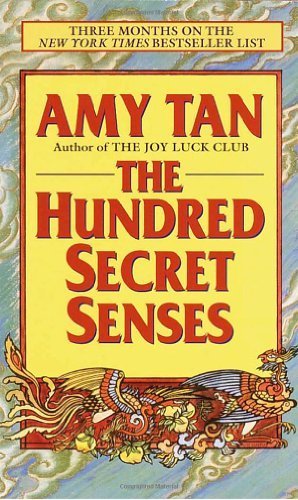

 are Fair Trade Books: when you order them from this web site $1 per book, or more if you insist on a first edition, will be sent to Tan or a charity of her choice. At least four of the blockbuster novels that were reprinted as pocket-size paperbacks (The Joy Luck Club
 , The Kitchen God's Wife
 , The Bonesetter's Daughter
 , plus The Hundred Secret Senses and Saving Fish from Drowning) will fit into one $5 package and leave room for both picture books (The Moon Lady
 , The Chinese Siamese Cat
 ), and if you ordered four novels plus the picture books Tan or her charity would receive $6.

![To Know Her by Name (Rocky Mountain Memories Book 3) by [Wick, Lori]](https://images-na.ssl-images-amazon.com/images/I/51MiD1uU4DL.jpg)

 as a woman, "his" employers and friends turned
on "him," and "he" was hospitalized as a mental patient and
forcibly re-feminized.
as a woman, "his" employers and friends turned
on "him," and "he" was hospitalized as a mental patient and
forcibly re-feminized. . There was a tiny bit more
understanding that an ex-slave helping to rescue other slaves might have a
valid reason for cross-dressing than, in historical fact, there ever was that a
young lady might have such reasons. In historical fact, when White women
were caught doing "men's jobs," "just like a man, and better
than some," everyone seems to have scrambled to brand them insane. And
Tubman was a slave, so nobody cared that she had been married. A single White
woman, whose marriageability was supposed to depend on her being not only a
virgin but "innocent" even of how babies are made, might have been
considered unfit for marriage if it were known that she'd ever travelled alone. Could any Victorian employer have lived with the idea that he was allowing a
single woman to have adventures? To become an adventuress?
. There was a tiny bit more
understanding that an ex-slave helping to rescue other slaves might have a
valid reason for cross-dressing than, in historical fact, there ever was that a
young lady might have such reasons. In historical fact, when White women
were caught doing "men's jobs," "just like a man, and better
than some," everyone seems to have scrambled to brand them insane. And
Tubman was a slave, so nobody cared that she had been married. A single White
woman, whose marriageability was supposed to depend on her being not only a
virgin but "innocent" even of how babies are made, might have been
considered unfit for marriage if it were known that she'd ever travelled alone. Could any Victorian employer have lived with the idea that he was allowing a
single woman to have adventures? To become an adventuress?