Showing posts with label Scotland. Show all posts

Thursday, February 26, 2026

Meet the Blog Roll: Ann Mackie Miller

This web site now has three series of posts on Thursdays: Meet the Blog Roll, Frugal Basics, and Dinner for Two for Less than Ten Dollars. Which comes next? You decide which to sponsor. All three series are sponsored by readers. 

For today, it is Meet the Blog Roll: Ann Mackie Miller, whose blog is "British Birds" at 


It's not been updated recently because it's pretty well filled. This blog gave me the mental model for my butterfly posts--only it consists only of bird articles, no link logs or book reviews or other fun stuff found here. Each article could be a chapter in a field guide, with clear, beautiful bird photos and facts about the birds' lives. If you are not British and have ever seen a reference to a bird in a British book and wondered what kind of bird the author meant, this web site will show you.

As with butterflies, several British species are found on both sides of the Channel and a few are found on both sides of the Atlantic. Many are considered close relatives of eastern North American species, having evolved only slight differences; some might be able to hybridize. Some, like the Mute Swan, Starling, and English Sparrow, were intentionally imported from Britain to North America. Some, like the Robin, aren't related, don't look much alike, and have similar names because British immigrants seem to have wanted to give familiar names to some sort of creature they found in North America. 

The British Birds blog may be more like a book-in-progress than like a typical blog, but those who enjoy birds will enjoy reading it. Its posts never really go out of date.

Some favorites:


Great Blue Herons became the icon for the Chesapeake Bay and efforts to keep the water that flow into it clean. So they are among my favorite birds--in my top hundred list, anyway. We used to think they were solitary creatures, only ever seen by ones. We've learned, as some specific kinds of pollution have been reduced, that herons are as solitary as they need to be. They are obligate carnivores who are built to catch prey in what seems a peculiar, inefficient way, so they spread themselves out enough during the day that each bird can find enough fish and shore creatures to survive. At the end of the day, family groups gather in a favorite tree. It has to be a large tree, for herons to roost in it, and as it will probably be grossly over-fertilized it's unlikely to last long. Anyway they "talk" to one another, and sometimes even "kiss" with their long sharp bills. North America's Great Blue Herons are different from Britain's Grey Herons and the Caribbean Islands' Cocoy Herons, but their ancestors may have been one species and, conceivably, their descendants might some day be considered one speies again.


Same species, and what adorable close-ups of the fluffy little goslings! Canada geese are fun to watch. They may all look alike to humans, but they clearly relate to one another as individuals. Couples bond and mate for life; extended family groups divide into nuclear family units while raising their young, then merge back into big flocks in winter. Some migrate and some don't. The return of the migrating family members to a favorite lake is always an occasion of much happy excitement. During the winter younger birds pair off. A flock of Canada geese often picks up a few geese of different species, and these become part of the extended family. These bold birds don't seem to mind being watched by humans as their babies grow up, but if you come too close they'll "goose" your knees. From their perspective, a golf course is a sad waste of a nice lake, to be discouraged by every means possible. They are, however, pretty good mowers and weeders of ordinary grassy fields.

And, of course...


It's not the little birds' fault that a name intended to sound like a noisee they make happened to sound like "teat" in English. As a result Internet wits are always using "tit pics!" as a come-on and displaying pictures of small gray birds. Britain has a few different species of tits. North America has one, in the West; in most places we have to get by with chickadees, nuthatches, and juncos. Tits not only don't produce milk, but consume it. Britain's blue tits worked out a way to pick the tops off British milk bottles in the mid-twentieth century.


Monday, December 16, 2024

Book Review: Artair's Temptress

Title: Artair's Temptress

Author: Stella Knight

Date: 2019

Quote; "I want ye, lass."

That's what this book has to offer: physical desire. Shamelessly mashing up the fictive worlds of "Outlander" and "Bewitched," it even calls its heroine Diana. Diana is a witch with a special talent for time travel. She's tried to neglect her talent and become a lawyer since her parents were killed by Picts while time travelling. Her aunt, however, insists that she accompany a kilt-clad Highland Scot back to his rightful time, in the late fourteenth century.

Questions come to the mind of the student of history. Could Diana and the Highlander, Artair, understand each other's versions of English? (In the book, Artair speaks good English with the most obvious hints of an accent but with apparent familiarity with contemporary phrases.) What would he think about being accompanied through the Highlands by a young single woman? Wouldn't he at least ask for her old aunt, or would he assume the aunt was also young because people live longer and age more slowly now? Did people in the fourteenth century ever love or trust the sort of witches they believed could exist, and were they obviously insane if they did? (In the book Artair and his family accept Diana as their witch.) 

This reenactment of the fourteenth century, in which Scotland is surprisingly rich, the lice and fleas that plagued people at this period don't seem to exist, and nobody ever heard of bubonic plague or the Inquisittion, appeals to Diana so much that she wants to stay there. But can she disappear into a different time? It's a romance; you know that depends on her decision, and you know what she'll decide, after another detailed bedroom scene. 

I found this novel totally unconvincing, but if "Outlander" fanfiction distracts you from other obligations and helps you fulfill marital ones, this book is for you.


Friday, March 8, 2024

Book Review: Never Trust the Rain

Title: Never Trust the Rain 

Author: Laura D. Bastian

Publisher: Laura D. Bastian

Quote: "He didn't know how much time Chris and Jessie would need, and he had to keep her busy until after the baby came."

It's the ultimate pretty-face job. Not quite a professional "escort," Duncan is the guy people ask to guide their visitors around Edinburgh when they're not doing it themselves. This means, of course, that he's too handsome and popular for Ami to take her attraction to him seriously. 

So Ami doesn't try too hard to attract Duncan. They can just relax and enjoy seeing the sights when Ami's not actually helping her sister with the new baby. As so often happens when people try just hanging out and being friends instead of trying to rush into "love," they find themselves enjoying each other's company more than that of anyone else either of them has ever dated. But is that only because they've tried being friends first? Can long-distance romance work? Should either of them consider immigrating to a different country so they can be together? 

Is this a Christian Romance? I'm not sure...characters do refer to God where, if they were Jewish, they'd be more likely to refer more "modestly" to life, love, or providence, and Duncan does invite Ami to go with him to a friend's wedding, which is unconventional but still presided over by a minister. No moralizing, though. Just a simple Sweet Romance where two twenty-somethings give an attraction time to build up, as it does in real life, at the pace that's realistic for many women of any religious tradition or none. 

Women can, of course, decide at first glance whether a man looks handsome or not. But, as Ami keeps reminding herself in this book, women don't necessarily want a man whose looks and popularity might turn out to be more of a liability than an asset. Who wants to watch other women throwing themselves at her date? An ordinary-looking man might react to a woman in a way that's far more attractive than a mere accident of physical conformation. How interested in us a man looks to be, especially after realizing that we don't flop into bed on the first date, is a much bigger part of his attractiveness than a mere photograph could capture. So, instinctively and automatically and without any conscious effort, many--perhaps most--of us don't start to feel a strong physical attraction to one man more than others the first half-dozen, or dozen, or hundred times we see him. There are a lot of bodies in the world. The way a man behaves toward us, over time, is what makes him attractive. 

This pattern of feeling (and behavior) is common to women around the world, and frequently develops with a little life experience even in girls who formed intense "first crush" reactions to boys who weren't pursuing them. Most religious traditions encourage caution about acting on physical attractions, but women's tendency to wait and see how men behave toward us is instinctive, not produced by religious teaching. If we kept a level head about the fact that we felt attracted to these boys, and waited for them to notice and pursue us, and noticed instead that they were asking other girls for dates or just acting so silly and juvenile as to squelch our attractions, as high school boys so often do...each month's secret attraction felt less intense until we reached a stage of maturity where our emotional feelings just naturally waited to be evoked by the way men pursued us. It's part of our sexual identities. It is not to be confused with asexuality, in which blood hormone levels physically don't produce the biochemical reactions associated with physical attraction, at all, ever, for anybody. Women for whom physical attractions develop slowly often, like Ami in this short novel, feel a general interest in sex and motherhood. Around the midpoint of their hormone cycles this interest may feel quite intense, but still, attractions to one man more than others take time to form.

Nothing kills this slow-building, stable attraction that allows women to be monogamous faster than a man's rushing ahead to ask "Do you want me? Answer yes or no!" Phew. Even Jim Reeves' "velvet" voice couldn't make that kind of question less fatal. The answer is always no, because the question was asked too soon. 

When the question is not asked too soon, as in this novel, the answer may depend on other factors besides hormones. For a considerable part of this novel Ami knows she's attracted to Duncan but doubts his willingness to commit to the monogamous marriage she wants. It's a Sweet Romance, so according to the current rules for the genre he'll have to find a way to convince her before the last page, but this couple will spend a lot of time enjoying the special pleasure of a frustrated attraction. Which makes this book a good choice for women who want to remember what having to wait felt like.  

Some may feel that I should have saved this review for a Sunday. I just don't feel that way. Neither "Christian" nor "Presbyterian," which is the default affiliation for Scots, appears in the text. The characters probably are Presbyterians but they don't talk about it. 

Wednesday, January 10, 2024

New Book Review for 12.27.23: Christmas in Glasgow

Title: Christmas in Glasgow 

Author: Kate Darroch

Date: 2022

Publisher: Darroch Family

Quote: "Hogmanay: New Years Eve. The biggest event in the Glasgow calendar."

Mairi Maguire, the cartoonish figure on the cover, solves cozy mysteries in this author's longer work but this is just a short sketch of Mairi and her family enjoying the holidays. Will anyone claim the dog who's joined the family? Will the dog make himself useful before the holidays are over? Not much mystery about that, is there? 

If you want a longer, more puzzling read, dive straight into the longer Mairi Maguire books. If you want a short cheerful holiday story, this is the one for you.

Wednesday, October 25, 2023

New Book Review: A Kingdom Is Lost

Title: A Kingdom Is Lost, a Song Is Born 

Author: Steve Moretti

Date: 2019

Publisher: DWA Media

Quote: "St Clair had watched in horror every debate leading to this...final vote to accept Union with England." 

In 1707 England and Scotland formed the United Kingdom. The vote was not unanimous. And in a day when only a handful of the richest men had votes at all, how did people settle such weighty matters, demanding such clear thought and public spirit? By fighting and killing one another, of course. Building interest in nonviolent solutions seems to require the influence of women. Eighteenth century males feared few things more than a "petticoat government" that might have required them to reason about their differences rather than fight about them. So they settled things the breeches way (only working men, who had no vote, wore trousers). It cost them many lives, and money neither side could afford...

So, in this not-quite-novel, this series of vignettes published as a "prequel" to a trilogy of novels, three orphaned teenagers, who used to love each other as siblings ought, are set against each other by politics. Big brother James, whose character suffered from his becoming head of the clan in his teens, finds an influential job in the new government and naturally supports it. Baby brother George is a Jacobin who wants independence for Scotland. Sister Katharine just wants to compose music to play on her cello in peace--but the times won't allow any of them much peace.

In the novels, the anguish Katharine and the orphans' Aunt Margaret, who has lost two husbands and two children already, feel over the effects of war builds a time slip that relays their emotions to their descendants. Grandmother Margaret Rose has always been written off as a mental case because she so often dreams, waking or sleeping, about the moments of crisis in Katharine's and Margaret's lives. Granddaughter Adeena (Dee to friends) just wants to compose music, and although she composes in the modern style, she still feels that "the cello chose me." And when Dee gets her hands on Katharine's cello, a series of time travel adventures, in the Outlander mood, is about to begin.

The four chapters of "prequel" introduce the four women, their families, and their cellos. They weren't long enough to make an e-book so Moretti is circulating them together with four chapters of the first full-length book in the trilogy. 

I'm not familiar enough with British history to comment on the accuracy of the storyline. The story is well told, showing only the usual tendency of writers creating opposite-sex characters to overestimate the percentage of the opposite-sex brain devoted to thinking about the writer's half of humankind. I'm not wild about historical romances whose ending is part of their beginning--the prequel has already told us that Katharine's going to hide the cello and Dee's going to find it--but in this story the musical motif adds more than the usual amount of interest.

Given Amazon's interest in digital audio-books, you knew they'd be eager to publish books about music that are actually enhanced with music. Traditionally books about music had to print notation for the sounds the author intended to communicate, or else rely on subjective descriptions. of this song's wistful modal melody and that one's thundering bass chords. But why shouldn't audiobooks, when the author has told you "Mr. Darling was at the piano, writing a song about Cruella de Vil," pause to give you the actual sound of the piano picking out the melody and a man's voice singing the song? 

Moretti wrote this trilogy that way. You can read the traditional books that tell you about the classical pieces Katharine played and the modern pieces Dee composed, or you can listen to the audiobooks and hear their performances.. 

Still undecided? Visit stevemoretti.ca to read the prequel and join Moretti's e-mail list for free. I'm guessing that audio clips will tell you whether you want the full score of these novels.

Will Moretti transfer this pleasing new book concept to nonfiction? He's already written a biography of Tchaikovsky. With encouragement he might do more. 


Tuesday, October 10, 2023

New Book Review: Twisted Wedding

Title: Twisted Wedding

Author: Hazel Smith

Date: 2022

Publisher: Hazel Smith

Quote; "Being a regular maid will be just fine." 

Ivy Stone wants to be a maid at a luxury hotel in London; meanwhile she's practicing at a small private hotel in Scotland owned and operated by old friends. 

Is there such a thing as a vocation to be a hotel maid? Isn't that a job people take out of desperation? Not in Ivy's case. Ivy's not ready to admit it yet, but her real vocation is to be a detective working undercover as a hotel maid.

In Twisted Wedding, a short introduction to a series of longer stories, Ivy soon observes that the couple staging the lavish wedding at the hotel aren't very nice people, nor are they "in love." The bridegroom dreads the wedding and intends to stay disgustingly drunk throughout the celebration. The bride may want to think she's in love, but she's blackmailing the poor drunken idjit into marrying her. The bridesmaids don't like the bride much either. 

And so Ivy  just happens to be in a position to see for sure that, when the bride-to-be whines that she'll die if the bridegroom doesn't go through with the wedding, and he mutters drunkenly "Why don't you?", he's standing at a good healthy distance. Maybe the bride really did jump off the balcony and die. But the bridegroom's pretty sure that, in the gathering dusk, he felt a nudge. Could he possibly have pushed her? He's too drunk to be sure...

Ivy's friends in Scotland include a man who's old enough to propose to Ivy, but not mature or responsible enough to be accepted, and his Great lovable drooling Dane. Ivy will, of course, get the job in London. One of these two true-blue friends, or pets, will accompany her. In an e-mail Hazel Smith confided to a few hundred readers that, although the humans in this story are fiction, the giant dog is based on a real dog her family bought to guard her when she was home alone writing all day; she thought of herself as a cat person and didn't think she'd ever really love the dog, but she did. 

Unlike yesterday's cozy mystery, this one does look like a Real Novel in miniature, with professional-quality editing and no awkward lurches back into a different version of the story. If you like a cozy mystery that slowly unfolds a believable plot, you'll want to order a printed copy of Mystery Maid, the first full-length novel in the Maid Ivy Series.

As a bonus there are recipes for decadent party foods that appear in the story, at the end of Twisted Wedding. You may want to make them, and that will mean organizing a large party since they're far too rich for family use. The shortbread-based torte, especially, needs to be cut into one-bite pieces and offered on a table where it's surrounded by fruit platters and punch cups.

Tuesday, September 12, 2023

New Book Review: Oh My Dog by Peri Taub

Title: Oh My Dog! by Peri Taub PTWP (Pandemic Therapist with Paws) as Transcribed by Her Person Barb Taub 

Author: Barb Taub

Date: 2023

Publisher: Barb Taub

Length: 188 pages

Illustrations: drawings by the author

Quote: "'They're breathing at me.'  'They're breathing at everyone,' he said in the reasonable tone he should have known put him at extreme risk."

Yes, we do need laws spelling out that when a member of the half of humankind that have so much difficulty following a conversation about anything but their feelings takes that "Me rational, you emotional" tone, he's asking for whatever he gets. Ideally that would be divorce papers, but men have found one of every pair of their shoes riding away in a garbage truck for less.

(Fifty points for spotting a male reader who whines, "That's anti-male bigotry!" as further proof of his emotional, logic-challenged mental processes. It is anti-stupidity. Some men can learn to  converse intelligently, even about business, even in the presence of C-cups. Women do not meet these men every day, but we'd like to. Anyway, intelligent people don't necessarily share all of our friends' emotional feelings but we do know better than to try to act as if not understanding their feelings were "reasonable.")

Not that Taub isn't laughing at herself, in this story and in all the other funny stories about her life with Peri the dog, before, during, and after the coronavirus panic years. She even laughs at her own politics. She belongs to the party that all but deified coronavirus for boosting its funders' big online businesses, at the expense of the Taxed-Enough-Already Mom'n'Pop businesses the panic destroyed. Her husband, "The Hub," belongs to the party that was inclined to think coronavirus was a hoax before it killed Senator Cain. A running joke throughout the book is that Barb listens to all the COVID panic talk, takes it seriously, and feels that people not wearing masks are trying to kill her, while Hub tries not to be cruel. Being relatively early in middle age, neither of them actually has much to fear. This is a story about how Peri kept her humans sane even when Peri herself, apparently, wasn't.

Peri is an Australian Shepherd, a relatively new breed (of US origin that surged in popularity for many good reasons. Peri presents herself as embodying several of those reasons. She's calm, sensible, willing to obey, able to communicate her needs, and wherever she goes, people always notice her as a pretty dog. She demands due respect; her humans know that their end of the contract is to go out with her at "zero-dark-thirty" in the morning just as hers is to be as clean and quiet as a cat. She was bred to be somewhere in between Lassie and Barkley, and so she is. 

Early in the history of this web site I dog-sat for an Aussie called Sydney and became one of the people who love this breed...but it needs to be said that shelters are fillng up with Aussies who've been adopted by people who just didn't have what it takes to be Their Persons. Aussies are working dogs who expect their bosses to appreciate their talent and dedication and assign them to interesting jobs. They're medium-sieed dogs, likely to live ten years or more, but 35 pounds is too much for some people to carry or hold back. They need hardly any training to walk at your heel but they do need to run sometimes. The ones breeders sell are usually healthy and low-maintenance; the ones that end up in shelters sometimes have inbred traits that are not only cosmetic "faults" but disabilities. The really distinctive "marle" coat pattern is rare in dogs, generally, because it's the effect of one copy of a lethal gene. With reasonable discipline and attention they make fantastic pets...and they also tend to appeal to people who really aren't qualified to own dogs at all.

Barb and Hub, however, have lived with dogs before, and despite a previous book having affirmed that Life Begins When Your Kids Leave Home and the Dog Dies, they're the perfect family for Peri. They keep her from doing any of the things she threatens to do to the mail carrier, take her outside when she needs to go, and appreciate her job performance as a source of relief from emotional stress. They don't really panic when she has an occasional seizure, but take her to a vet who can help. Peri knows she's loved, and makes sure her humans always know they're loved, too. 

Always loyal, almost always perky, Peri travels with her humans across North America and on adventures not only "to England, to France, and to Spain" but to Italy and Scotland as well. During the coronavirus years they are, as Taub's blog readers know, living in a castle in Scotland.

One thing blog readers might not have been prepared for is that Peri was definitely a senior dog (it doesn't always show) at the beginning of the panic, and though we're spared the dreaded end-of-the-dog-story-is-the-end-of-the-dog scene, at the end of the book we know that there won't be a sequel. The Taubs are the sort of couple who should always have a dog, if only because they enjoy talking to new acquaintances in Scotland, but there will never be another Peri.

There are, however, a lot of gorgeous Aussies in literally howling need of good homes. Giving at least two of those dogs a good home is the sort of good deed that just might compensate for having voted Republican in 1974.

Whatever kind of dog (or even cat) you choose to be owned by, all people who bond with friends of different species can relate to Peri's success in keeping her humans on the funny side of life. So I'd say that just about everybody will enjoy this book.

Friday, June 8, 2018

Book Review: The Granny Project

A Fair Trade Book


Title: The Granny Project

Author: Anne Fine

Date: 1983

Publisher: Farrar Straus & Giroux

ISBN: none

Illustrations: 167 pages

Quote: “However, in spite of the very real difficulties of keeping an old person in the home...as many as __% are still living safely in the bosom of their own families...We chose to study one family in particular, the Harris family, because they so neatly illustrate...so many of the problems involved.”

Thus Sophie and Ivan Harris, revulsed by the thought of their beloved Granny Harris being sent to a nursing home, volunteer not only to take over Granny’s nursing care but to write about it for their school social science project. Younger siblings Tanya and Nicholas, and of course their English father and Russian mother, are part of the project too.

U.S. readers may think of Robin Williams rather than Anne Fine when they think of Mrs. Doubtfire, but Alias Madame Doubtfire was another of Anne Fine’s tersely hilarious, edgy, iconoclastic novels for teens-and-up. She also wrote Goggle-Eyes and The Chicken Gave It to Me. That’s the kind of writer she is. Nothing is sacred.

(U.S. readers may not have realized that these stories are British, more specifically Scottish. A British blogger’s protest about the portrayal of British characters in American fiction—as rich snobs or sinister spies—brought this to mind: Anne Fine’s characters are such down-to-earth, likable Brits that when a U.S. studio made a movie of Mrs. Doubtfire they recast the whole family as Americans.)

Mothers can be so busy being yuppies that, although they always knew their ex-husbands were talented actors, they don’t recognize their ex-husbands playing grandmothers and applying for the job of baby-sitter for their own children. Parents can be so bored with being “the sandwich generation” that they let the kids take full responsibility for their own parents. The Harris children are responsible, intelligent, likable, but not exactly honest; some of their plots to deceive and manipulate their parents succeed, and others fail. In 1983 the U.S. fad for “liberated” use of bad language coincided with a U.K. fad for “talking rude”; the “British Invasion” of U.S. pop culture was reaching its natural end, and one criticism I remember hearing of new British books, in 1982, was that British publishers were allowing more offensive words in books aimed at teenagers.

And all geriatric problems come to one final solution, eventually—and in this novel that end is mercifully near when Granny Harris starts to need a lot of nursing care. If you don’t like the idea of a grandmother’s death being part of a happy ending, you won’t like this book. However, Granny Harris is old enough to be her grandchildren’s great-grandmother before she starts forgetting their names.

In families where late marriage is traditional, anyone old enough to read this book has probably already lived through at least one loss-of-grandparent that prepared them to agree that the Harris family get off easily.

In families where early marriage is traditional, and grandparents may be nowhere near even retirement age, adults may want to use discretion about which children they allow to read this book. The absence of active, healthy grandparents might give young children false ideas.

Anyone old enough to know the difference between an 87-year-old senile grandparent and a 45-year-old yuppie-type grandparent might like The Granny Project. Whether the children’s schemes and lies self-punish more than they pay off is still open to debate, but parents might enjoy discussing it with their own teenagers.

What you’ll like, if you like this book, is the realistic, sympathetic, yet comic study of what home nursing is really like. Grandmother and grandchildren really do care about each other, so the Granny Project has many moments of joy. Home care for a character like Granny Harris has its funny moments, too. The Harris children are horrible brats in some ways, but for this type of story they may be ideal; before flu brings the whole project down, they at least begin to develop real characters, while being so uncivilized (half Russian—this was the Cold War) as to suggest to child readers that they could do what the Harris brats do, and better.

Meh. I was younger than little Tanya Harris when the one of my grandparents who was disabled before she died was living with us. I loved my disabled grandmother. Once in a while I was able to do something that showed it. I wasn’t nearly as good as Tanya is in this book.

To buy it here, send $10 per book, $5 per package, $1 per online payment, as discussed at the Payment Information Page.

Tuesday, April 3, 2018

Book Review: Castle Barebane

Title: Castle Barebane


(Amazon is trying to steer you to a paperback book that doesn't look like this one. No worries.)

Author: Joan Aiken

Date: 1976

Publisher: Viking

ISBN: none

Length: 277 pages

Quote: “When they die...all their cash comes to Kirstie and a devilish great barracks of a place up in the wilds of Lammermuir called Ardnasomething. Castle Barebane, the locals call it—it’s falling to bits.”

Thus Nils Hansen introduces to half-sister Val Montgomery the house where he’s about to send her to look after his children, just in time for a lot of other people’s personal drama to run together into an action-adventure story.

British fiction for adults, Margaret Atwood once observed, tends to reflect ideas of “class.” Nils’ wife Kirstie, and Val’s fiancé Benet, belong to the lower upper classes of Victorian society in Edinburgh and New York respectively. Nils and Val are upper working class. Both write for newspapers; their parents were divorced, and the place Nils has rented for his family in the city is dreadful. Kirstie’s relatives weren’t happy about her marriage to Nils; Benet’s relatives want to prevent his marriage to Val, and rather early in the story Val begins to agree with them. Benet’s relatives want Benet to marry his cousin, and although that seems like a sufficient reason for Benet to persist in pursuing Val, to me, it doesn’t to Val.

So, to give Benet’s cousin another chance to alienate his affections, Val sells her editors on the idea of her writing a travel series, goes to Scotland...and can’t find Kirstie. Come to that, she can’t find Nils where she was told to meet him, either. The children have moved in with some not very nice neighbors. Val takes them up to Castle Barebane, where she has some qualms about leaving them with (their unacknowledged great-aunt) Elspie, and makes some new friends while looking for clues to where Nils and Kirstie might be. We don’t read the story we’re told she’s publishing in New York , writing a few pages every night about her study of Scotland, but that we’re told it’s being published and paid for while we see what Val is actually doing each day makes a withering comment on Victorian travel writing. Her real itinerary includes no visits to tourist attractions and no research...

The “they” whose heirs Kirstie is are her great-aunts, Lady Stroma and Lady Honoria. In his later years Kirstie’s great-grandfather had a secondary relationship, not recognized as a proper marriage, whose product was Elspie; as a result Elspie is paid for living in Castle Barebane as “housekeeper,” but not paid enough to maintain it in good condition. Elspie lacks her older half-sisters’ polish and education, but to Val she seems strangely free from resentment. This is because Elspie, “wintry,” “auld and snell,” but only “approaching her seventies,” is the Real Romantic Heroine.

Both the local doctor, who helps Val see that her niece is not stupid but merely brain-damaged, and a friendly Scottish editor, appeal to Val more than Benet ever did. Val likes having three men friends and will pick one to marry at the end of the book, but Elspie is the one who’s “in love” and has been for longer than Val’s been alive. Val is not the romantic type. She’s what the 1976 blurb writer called neurotic; though not anxious or phobic Val likes her job and feels no urgent need to resign and become a full-time nanny until she can have a baby of her own...yes, even in 1976, women were being told that “normal” mental health meant thinking of our jobs as just ways to pass the time until we could become full-time baby factories...Val doesn’t think she even likes children—but all novels by Joan Aiken contain at least two particularly likable children, and in this one readers get to watch Nils’ children winning the affections of their standoffish aunt.

The blurb writer failed to count Val’s nephew among the “four men destined to change [Val’s] life.” Nephew Pieter is only a little boy, after all. Neither did the blurb writer count Nils. Besides the doctor and the editor, the other two are Elspie’s lover and Nils’s friend, Nuggie Reydon, who seems like an ordinary jerk at first but quickly shows himself to be even worse.

Aiken’s writing style is extraordinary, more appealing even than her famous father’s. Conrad Aiken was a very serious writer of capital-L Literature, which hasn’t worn well but was considered great in its time. Joan and her sister Jane wrote mere genre fiction, avoiding competition with their father, but both wrote their genre novels in ways that both met and transcended their genres. Joan Aiken’s historical romances display and usually exceed the requirements for history, romance, and suspense, while also featuring generous amounts of topophilia, irony, insight, wit, adorable children, and an English stiff-upper-lip version of what I like to call Irish cheerfulness. It’s hard to like fiction and not like hers.

Even some of Joan Aiken’s mystery/suspense novels qualified as gentle fiction—but Castle Barebane does not. It rates PG-13 for violence, with a serial murderer who, Val cheerfully assures Benet’s worried relatives, targets “a particular class of women,” but that class includes “the actress...the friend of Nils” and Val’s association with Nils is enough, all by itself, to get her mistaken for one of that class. In addition to the Fallen Women three sympathetic characters are murdered, one “onstage,” and a whole gang of thugs are steered into fatal misadventures (as per Hollywood convention that really nice characters mustn’t soil their hands by killing even baddies who are trying to kill them).

The blurb accurately describes the novel as “outrageously cheerful improbability”; though the quick humane ends for the murderers are even more improbable than the wholesome middle-aged romance, the cheerfulness amidst bleak realities is credible. After all...the cities are dark, grim, polluted, and full of crime, but Val and friends move quickly to the country. Castle Barebane’s “air of neglect and decay” is boosted by its “smell of damp and mould, and the bitter cold,” “uneven floors,” “warped woodwork,” and “aged towels and tablecloth...of the very finest woven damask but in so tattered and frail a state that every prick of the needle seemed likely to start a new rent,” even before the thugs start “wrecking” the furniture, but the coast and hills are beautiful even in winter. And Val, while losing a few relatives she’s never liked much, is a young writer with three boyfriends and two publishers—how can she keep from singing?

I only wish Joan Aiken still had a use for the dollar she'd get if this one were a Fair Trade Book, but it can be added to a $5 package with at least one and probably more books of comparable size. To buy it here, send $5 for the book, $5 for the package, plus $1 for online payment, to the e-mail address you get from salolianigodagewi @ yahoo, or send $10 by U.S. postal order to P.O. Box 322, Gate City, Virginia, 24251-0322 (the post office will collect its own surcharge).

(When will I get back to the job of adding Paypal buttons to this site? It may take a while; I prefer to shut down other web sites and applications when I open Paypal. Buttons will come, though.)

Wednesday, March 7, 2018

Book Review: The Kelpie's Pearls

Title: The Kelpie’s Pearls


Author: Mollie Hunter (McIlwraith)

Date: 1964

Publisher: Harper & Row

ISBN: 0-06-022656-0

Length: 134 pages

Illustrations: drawings by Stephen Gammell (in 1976 “Weekly Reader” reprint)

Quote: “To think I should have lived to be seventy-two before I see a kelpie!”

In this short novel Mollie Hunter imagines how old Scottish folklore might come to life in a “modernized” Scotland, with tour buses. People who believe Morag MacLeod to be a witch think of her as a curiosity, not an evildoer to be killed.

Morag, age seventy-two, lives in a little old house she inherited from remote ancestors, and although surprised, she’s willing to believe that what looks to her like a man a bit younger than herself is actually a kelpie.

Kelpies were a Scottish species of the Faeries or Longaevi of medieval European folklore. This whole order of lifeforms was increasingly identified with ghosts or devils by theologian, but in the classical tradition they were a separate order of creation, more or less like humans but with longer lifespans. They could be comical, numinous, dangerous, or a useful cover story for anyone who needed to “go underground” in times of war or persecution. Hunter’s kelpie, who can appear as a man, a horse, or a sea monster, qualifies as all four.

Some storytellers tried to classify the Longaevi as good or evil in terms of human morality. Most agreed that they were simply alien, willing to help humans if it served their purposes—or to harm humans. Hunter’s kelpie meets this traditional standard of alien-ness. He doesn’t kill humans, but he punishes some of them, and the whole story leads up to a refusal to say whether he helps or harms Morag in the end.

Though not terribly “old,” Morag has already outlived all her close friends and relatives. She has only two fully human friends, the child Torquil for whom she boards pet animals, and the greedy trapper Alastair, to whom she talks out of loneliness although she knows he’s not a very nice person. She feels safe talking to the kelpie because he can reminisce about the good old days of her youth. She warns Torquil, though, to look at the kelpie from a distance but never come close enough to talk to him, because “it is the young and the strong and the beautiful that the creatures of the other world seek to capture and bind...He will not harm me.” Then again, she tells Alastair about the kelpie’s hoard of pearls, a few of which he’s given to Morag to wear as a necklace. Then Alastair’s greed leads Morag to dig out her grandmother’s book of spells, use one, and tell people she’s used it, which leads to...a plot this review refuses to spoil.

Written within the rules for child-friendliness—no serious violence, no explicit sex, no theological doctrine, no profanity—this story never was very popular with children. I remember reading a copy at a library, as a child, and thinking I was glad I hadn’t chosen it as my book for the week. The one child character is a boy, and more a spectator than a protagonist; the bittersweet ending appeals more to the old than to the young. As an adult, I like the “moral” that Morag is unhappy because she indulges her extrovert tendencies. As a child, I wasn’t even interested enough to notice that dynamic.

So, as with several children’s books I’ve read as a grown-up bookseller...I don’t particularly recommend The Kelpie’s Pearls to children. It’s unlikely to give them nightmares, it won’t teach them bad language, but it’s also unlikely to hold their interest. Buy it for yourself if you like imperfect, nostalgic, delightful old ladies, or are interested in the mix of Christian and Pagan influences on European folklore. As an adult I found it a nice, short bedtime story.

To buy it here, send $5 per book, $5 per package, plus $1 per online payment, to the appropriate address shown at the bottom of the screen. That's a U.S. postal order for $10 to Boxholder, P.O. Box 322, or you may now (in theory) use this new-style Paypal button. Paypal buttons are very order-specific; you can still add three to five more of Mollie Hunter's books to one $5 package, but you'll still need to e-mail salolianigodagewi to set up that custom order. There's no extra charge for custom orders!


Monday, October 9, 2017

Book Review: Number 10

Title: Number 10


Author: Sue Townsend

Date: 2002

Publisher: Soho (US)

ISBN: 1-56947-349-8

Length: 277 pages

Quote: "All went well until Mary Murphy asked him if he knew the price of a pint of milk."

British Humour stereotypically tends to escape the ignorant U.S. reader. At least this is true of some authors whose idea of "humour" consists of inside jokes. I know of no U.S. reader who's found it hard to laugh at Lewis Carroll, P.G. Wodehouse, or Douglas Adams. I can't think of any who'd find it hard to laugh at Sue Townsend either, although, just in case there are any "conservatives" who really can't enjoy a joke from the Left, they should know that Number 10 is written from a left-wing position. The Labour Party is supposed to be left of the Conservative Party and Edward Clare's problem, so far as the other characters in this book are concerned, is that he's not.

Edward Clare, whose rise to the position of Prime Minister is not adequately explained, is a shy, sensitive, uptight, goodhearted English gentleman who's always done very well in school and behaved very nicely toward everyone. He can be accused of "having no politics," which is almost true. He doesn't particularly enjoy being Prime Minister and, when it becomes obvious that he doesn't know the price of a pint of milk, he's delighted by the excuse to drive through Scotland and England with the policeman assigned to guard his front gate, Constable Jack Sprat.

Though heterosexual, Edward Clare is the sort of small, thin man who can wear his wife's clothes, and he enjoys trying to pass as Jack's sister Edwina." And Jack...doesn't mind as much as he expected he would. Jack is also shy, sensitive, uptight, and goodhearted, though not (strictly speaking) a gentleman--he's the only law-abiding citizen in his family--and pretending to be "Edwina's" brother is as close as he's ever come to having a close personal friendship. All the characters in this book, including Jack, are comic, but if you like a policeman to be a hero, Jack won't disappoint you. 

Jack and Edward hire a driver called Ali who quickly becomes almost as close to them as they become to one another. Apart from having too many children Ali is every bit as goodhearted as the other two, only perhaps a bit better adjusted emotionally.

If you like a comedy to contain a lot of onstage violence or at least property damage, Number 10 might disappoint you. The closest Edward, Jack, and their driver Ali come to violence, on their male-bonding adventure, is when they "duff up" a polluter. They've just left the home of someone who's been actively sickened by the poison he's spraying into the air, and all they do is "duff him up," leaving him able to get up, walk into town, and gripe about having been knocked off his tractor. How very... British of them. Those who spray poison into the air really deserve more of a Lethal Weapon sort of treatment.

If you find the use of formerly unprintable words funny, you'll enjoy Number 10. Ignorant characters spew obscenities and profanities because they don't know the right words for what they mean; educated characters throw the same words around for laughs. Sentences baby-boomers used to be punished for saying appear on almost every page. Nobody says "shut up" if they can say "shut the **** up." We all know some people who "really talk like that." I wonder whether anybody actually knows quite so many of them, but I find myself putting up with the nasty words for the sake of the jokes.

The scenes that ring thinnest, for me, are the ones where Edward, Jack, and Ali meet working-class people who claim to need more handouts from the government. An illegal immigrant from Albania openly tells Edward at dinner, "It is traditional for the men of my village to travel to Britain hidden inside a turnip truck." Trains and planes don't run on time. Patients in a hospital have to take care of one another because the overworked staff aren't getting to them on time. A middle-aged policeman tells our heroes, "I'm going to have a bad back in two years' time, and because I'll have hurt my back on the job I'll get compo and the full pension." A teenaged single mother living in a housing project, where "some of the younger inhabitants who'd tried prison said they preferred it... there was more to do in prison," beats her toddler not because she's an unfit mother but because she doesn't have free day care. Greedy country innkeepers try to tell boarders that using boarders to do all the skilled work gives the inn "character," while unskilled work is done by people who might have travelled to Britain hidden inside a turnip truck: "You'll have to get on the phone and order more foreigners," grumbles the husband, and the wife whines, "All I said to the foreigners was that it wouldn't hurt to see a smile now and then...that would have earned them tips." A restaurant that advertises "fresh-picked salad...oven-baked bread, traditional farmhouse scones...and a selection of fruit from the hedgerow" orders everything in packages from a frozen food company. The private nursing home where Edward's uncle lives is about to be converted to a plastic surgery clinic, and Edward's uncle confides that he's planning to starve himself before the patients are thrown out. And it's all because the government isn't collecting more taxes from the rich to hand more things to these people and supervise every move they make. 

Townsend doesn't actually say that the government is to blame for having allowed the young single mother to go out on dates, but she comes close. We have people like that in the U.S. of course, but they're not considered normal, and the guilt trips Townsend inflicts on Edward after each interaction with members of his electorate make me wonder...does anyone actually believe that providing subsidized day care is the way to stop people hitting babies?

However, although I suspect Townsend may have given some credence to her characters' neverending whine that poor people (other than Jack and Ali) just can't be expected to become responsible adults, I don't find her elitism interferes with the story. These characters are individuals. Their whines are only slightly exaggerated from the whines of real people in the real world. That two characters whose own experience disproves every whine the parasites utter seem to respect the whining parasites, and take their complaints seriously, strains credibility--because in real life there are layabout parents of one who'll try to tell hardworking parents of five that they (the parents of one) are too stressed to control their angry impulses toward their own babies. There are people who'll try to tell someone who types with two fingers, because he has only the two fingers, that they can't type because one of their ten fingers was injured. There are people who'll try to tell someone living on $200 a month how hard it is for them to live on $2000 a month. They will say these things, and because the people hearing them are too astounded to laugh, it's possible that these people think their whines are being respected and taken seriously. They are so wrong. Still, Jack and Ali are nicer than the average guy and it's possible, too, that they're meant to be some sort of Socialist saints.


Mention should be made of the subplot of Edward's wife, Adele, who is very clever but a known schizophrenic, and who decides to start advocating for the rights of severed body parts to be given proper funerals. If this is meant to be an exaggeration based on the behavior of real pro-life activists, then the end of Adele's story...oh, why bother? Edward dearly loves Adele, but schizophrenics tend to get worse with age. Adele's main function in the plot is to provide another reason why Edward really wants not to go back to Number 10 Downing Street. There are proportionately smaller subplots for each of Edward's three children, too: the boy who wants to be a real Socialist, the girl who's leaning Conservative, and the baby.

Critics hailed this satire as proof that the United Kingdom enjoyed free speech. I would have used that to describe The Queen and I and Queen Camilla; at least in Number 10 the characters are fictional. It's quite an edgy satire, anyway, and laugh-out-loud funny. Maybe it's even funnier if you're a fiscal conservative, identify with Jack or Ali, and think the characters whining for government help are a real scream.

To buy Number 10 or most of the author's other books here, send $5 per book plus $5 per package plus $1 per online payment, via U.S. postal money order to Boxholder, P.O. Box 322, or Paypal to the address you get by telling salolianigodagewi that you're interested in this book, as shown at the very bottom of the screen. Four hardcover books of this size will fit into one $5 package. Some of the Adrian Mole books are available as pocket-size paperbacks; this web site would love to complete your collection.

This web site only wishes Townsend, who wasn't old, were still able to tell us where to send $1 per book.

Sunday, December 25, 2016

Book Review: Whence Came a Prince

Merry Christmas, Gentle Readers! 

A Fair Trade Book


Title: Whence Came a Prince

Or you could buy the four-book series where this book is volume three, photograph showing volume four: 


Author: Liz Curtis Higgs

Author's web page (Wordpress, unfortunately): http://www.lizcurtishiggs.com/

Date: 2005

Publisher: Random House

ISBN: 1-57856-128-0

Length: 537 pages of text plus notes, glossary, and discussion questions

Quote: “If you find even a single coin of your gold in our possession, I will run my sword through the heart of the one who stole it.”

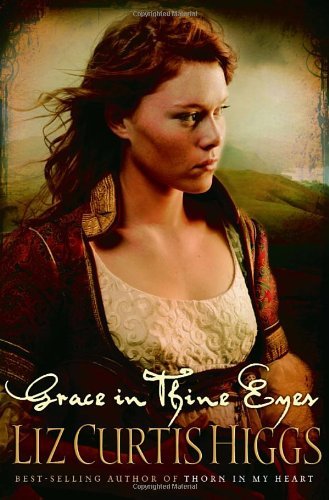
Having recast many Bible stories as contemporary short stories, Liz Curtis Higgs was invited to try historical novels: the legal loopholes that allowed greedy Laban to marry both of his daughters to the same man at the same time would also have been just within the bounds of possibility in eighteenth-century Scotland. Hence the series that began with Thorn in My Heart, in which the one thing that nags at the reader’s suspension of disbelief is that Jamie McKie and his wives (and first cousins) Rose and Leana are reenacting the Bible story of Jacob, Rachel, and Leah, and, though members in good standing of the Church of Scotland, none of them notices.

Thorn in My Heart was about Leana’s falling in love with her cousin. Fair Is the Rose was about Rose’s falling in love with the same boy. Whence Came a Prince is mostly Jamie’s story, about separating himself from his money-grubbing uncle Lachlan and going home to inherit his father’s estate, becoming a man and a father and a Scottish “laird.”

In the Bible Jacob, Leah, and Rachel lived in their bigamous and incestuous relationship for most of twenty years; Jacob worked seven years to earn each sister’s dowry and a few more years for shares of the profits. During this time each sister, trying to produce more babies and thus qualify for a bigger share of the family’s wealth, also ordered a trusted maidservant to make a few babies with Jacob, which babies were “born on the knees” of the rightful wife and recognized as adopted children of hers. At least twelve healthy babies were born—eleven sons and a daughter—and some speculate that these four women may have produced other children, as well, whose names were not recorded because they weren’t heirs. Only at the end of this time did the family move, with poor baby-craving Rachel dying in childbirth, giving birth to the twelfth and last (documented) son, along the way.

In some languages time is counted not by full years but by seasons. In the other books of the Bible time is clearly counted in full years. In Genesis, however, people seem to age at exactly twice the normal rate. Some scholars, considering the ages at which Abraham and his descendants do various things in Genesis, speculate that the word later used to mean years once meant seasons, of which there were typically two in a year. It’s pertinent to mention this because, if the word used to measure age is translated “years” as it is in most English Bibles, Jacob had no relationships with women prior to those two decades of frenetic baby-breeding, and those four young ladies were fighting over his attention, when he was between the ages of seventy and ninety. (And he and Leah lived many years after that.)

The Bible suggests that Jacob was considered to have matured slowly because he was a bit of a “Mama’s boy.” That was why his father preferred his brother Esau, who was history’s first recorded “redneck,” with red hair all over, a hasty temper, little sense of responsibility, no thought of the future, little spiritual intelligence and apparently no outstanding quantity of practical intelligence, but at least Esau was bold and tough. Old Isaac, a gentle man, relished Esau’s hunting adventures as much as he did the game Esau brought home.

The brothers were twins, though far from identical. Smooth-skinned, slick-talking, clever Jacob was a scientific farmer who studied different ways to breed livestock for the traits he wanted, but had to give God the credit for his successes in breeding for minority traits while working for shares of Laban’s profits. He just knew (and so did his mother know) that he was better qualified to inherit the bulk of the estate and the social status that went with it, but since Esau was born first, Jacob had to play tricks on both his father and his brother to become the heir. After playing these tricks he worked on his uncle’s estate to give the righteous indignation time to cool off. Esau’s threat to kill Jacob might have been idle drunken bluster. Then again it might not. Both brothers were wealthy ranchers who employed a lot of young men to supervise their herds of animals. Herdsmen had to be prepared to fight off predators, so if Esau seriously wanted to kill Jacob, each brother was the head of a small army; the “fight” for the estate could have become gory. It didn’t, because Jacob’s “wrestling with God” gave him the grace of humility. As adults Jacob and Esau don’t seem ever to have been close, but they managed to coexist, with Jacob as head of the clan.

In Hebrew sar, a prince, or sarah, a princess, are the noun forms that go with a verb, yisar, meaning “he fights or wrestles.” Thus when Jacob reached his full status as heir, sheikh, patriarch, he received the title “Israel,” which can be understood to mean either “prince of God” or “he wrestles with God.” (In youth his grandmother, Sarah, had apparently earned a pejorative nickname, Sarai, which ought logically to have meant “my princess” but seems to have been understood to mean “quarrelsome.”)

Higgs’ attempt to re-create a man’s spiritual coming-of-age is still told primarily through the eyes of his wife. For me this gives the story more credibility (Higgs has done most research on the home lives and women’s work of eighteenth-century Scotland, which are of course what the “pioneers” brought to the Eastern States). For men, does it inherently, inevitably, keep a story told by a woman, for women, mostly from a woman’s point of view, somewhat off the mark? Possibly. Would a practical, even scientific man like Jacob tell a story of spiritual maturation in more detail than Whence Came a Prince? What the Bible tells us about Jacob’s spiritual journey consists of a few sketchy dreams he shared with his family, plus the record of how people remembered his everyday dealings with other people.

So…eighteenth-century Scotland is not the ancient Middle East. Jamie McKie matures into a “bonnet laird,” not technically a prince…but Jamie McKie is still only in his twenties, and he’s still Leana’s Prince Charming. And Higgs spares us the murky business with the maidservants, although the names of Eliza and Annabel seem chosen as being as close as eighteenth-century Scottish names got to Zilpah and Bilhah.  Jamie, Rose, and Leana are still cousins, but at least, after Rose dies, only two people are sharing a bed.

I suspect that most people who enjoy Whence Came a Prince will enjoy it for the social history. Leana is still using the herbs and recipes, guided by the superstitions, reciting the poems and singing the songs, and dressing everybody in the clothes, of eighteenth-century Scotland. If these novels are on the long side, that does them no harm; anyone who’s read the Bible knows how the story has to come out (although, as noted, Higgs has taken some liberties) so readers are lingering for the atmosphere, quaint yet somehow homelike, of our great-great-great-grandmothers’ time. We want to know when and how people used the herb called lady’s-mantle, what lullabies parents sang to babies, what remedies herdsmen applied to injured sheep. Higgs tells readers all these things, and evidently, judging by the popularity of this series, they relish every bit of it.


All four volumes of this series are widely available secondhand, and the paperback editions would fit into a single package, so you could buy them here under the usual Fair Trade Book terms: $5 per book, $5 per package, $1 per online payment. (Yes, that's $10 or $11 for one book, $25 or $26 for the lot.) Out of this price I'd send $1 for one book or $4 for the set to Higgs or a charity of her choice. 

If you can possibly afford it, though, I'd prefer to encourage you to buy the set as new books directly from Higgs' site. She put a lot of work into these books, they're still reasonably new, and they're a lovely long mellow read for those who enjoy curling up with a good clean novel. (Merry Christmas, Liz...)

Monday, December 12, 2016

Book Review: The Listening Silence

Title: The Listening Silence


Author: Helen Lillie

Date: 1970

Publisher: Hawthorn

ISBN: none

Length: 184 pages

Quote: “‘My father was. So were my aunts and uncles.’ ‘Well, you’re lucky…they can operate for it nowadays and it’s quite successful in about two cases out of three.’”

Margaret Drummond, undecided about whether to try a surgical operation to prevent the loss of her hearing, dashes back to Scotland (where she was born) after her older sister’s death—drowning, possibly caused by deafness. Margaret’s decision about the operation is the “redeeming social value” of what’s otherwise merely a romance of suspense.

What more needs to be said about a romance of suspense? The question is, how blatant are the sex and violence? The Listening Silence is not a complete "cozy," but it’s pleasantly low on violence, on or off stage. (The story seems to have been inspired by one of the classic ballads, which Margaret knows and sings to herself throughout the novel; in the ballad a jealous woman murders her sister, but in the novel Margaret’s concern is finding out whether her sister was murdered at all.)

The sex may be more offensive for some readers. Margaret is divorced from her New York husband. Before marriage she’d always fancied one of her second cousins, now widowed. When they meet again in Scotland they have sex, more than once, before they even consider marrying each other. The sex scenes are much shorter and less explicit than in the supermarket paperback romances that feature similar timing for “love,” sex, and marriage, but neither are readers allowed to doubt what kind of uncousinly squick is going on. (In Scotland, to which my family have traced only a couple of stray ancestors, even first cousins could legally marry each other. In Ireland, where the majority of my ancestors came from, even fourth cousins were supposed to behave like cousins. Well, Margaret is a Scot.)

If you really want to read The Listening Silence as a serious novel you can point out all the passages where Margaret thinks about deafness and operations and, in the end, makes a life-affirming choice…but I’m guessing that you don’t really care about that. You want to read about how she solves the mystery, marries her cousin, and lives happily ever after. I’ll leave you to it.

Some people are using the name "Helen Lillie" in cyberspace, but so far none of them seems to be the author of this book, so this is not a Fair Trade Book. To buy it here, send $5 per book + $5 per package + $1 per online payment to either address at the very bottom of the screen. You could add up to three Fair Trade books of this size to the package for the same $5 shipping charge.

Thursday, November 3, 2016

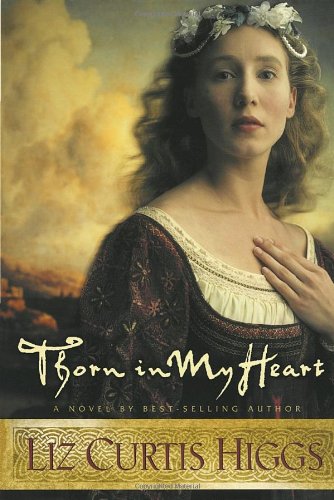
Book Review: Thorn in My Heart

Title: Thorn in My Heart


Author: Liz Curtis Higgs

Author's web site: http://www.lizcurtishiggs.com/

Date: 2003

Publisher: Random House / Waterbrook

ISBN: 978-1-57856-512-2

Length: 475 pages plus notes, glossary, and discussion questions

Quote: “Leana bit her lip, then whispered, ‘I believe God has chosen him for my husband’.”

This first volume in Liz Curtis Higgs’ series of historical romance novels is an odd hybrid, as Higgs admits in her historical notes at the end of the book. She’d read both history and fiction about Scotland and, as an American writer of Bible studies for women’s groups, would hardly have had “the nerve even to try” writing epic-size historical romances about eighteenth-century Scotland. Then a publisher who’d liked the short stories in which Higgs presented her Bad Girls of the Bible as contemporary characters, to give readers a fresh look at what they did, urged Higgs to write long romantic novels and sent her to Britain to research a suitable time and place in which to remake a long Bible story about love in a horribly dysfunctional family.

That was the family of Jacob Israel, as described in Genesis 25-29. Their story is not the worst, but certainly one of the longest, of the Old Testament stories that have caused people to say seriously that the Bible is not suitable reading for children. In Genesis 25-29 we see twin brothers (old enough to know better; if the word for measurements of age is correctly translated by “years” they were in their late sixties) quarrelling bitterly over a relatively scanty inheritance. One twin marries a distant cousin after having married two, or possibly three, other women whom his mother can’t stand. The other marries not one, but two, of his first cousins, at the same time and then sleeps with both cousins' maidservants. Needless to say, the children of these dysfunctional marriages grow up to be…well, the surprising thing is that Joseph and Benjamin apparently grow up to be borderline-nice, decent men. The others seem to fit into two categories: the ones who make you appreciate your own brothers, maybe even brothers-in-law, for not being that bad, and the ones whose dysfunctions even the Bible writers can’t bear to discuss in detail.

Merry Scotland had a lot of laws that seemed strange and dysfunctional to the English. One of them was, apparently, what allowed Higgs to transplant the story of the House of Jacob into Scotland. Many readers have wondered how it was possible that, according to the Bible account, Jacob definitely preferred Rachel to Leah, yet he allowed himself to be married to Leah. In eighteenth-century Scotland a similar mix-up may have been possible; apparently the law allowed that, if the families involved had gone to the trouble and expense of scheduling a wedding, and then the vicissitudes of subarctic weather kept the bride (duly kept a good distance from the bridegroom in order to have witnesses that the bride hadn’t been pregnant) from showing up for the wedding, the wedding could be legally solemnized “by proxy.” In other words everyone would know that someone else was uttering the vows, kissing the bridegroom and relatives, cutting the cake, and so on, just to keep from spoiling a good party, after which this other person would go away and allow the rightful bride to take her lawful place in her husband’s home.

Unless, of course, the proxy had happened to be in love with the bridegroom, and sneaky relatives, despairing of getting her married off, had encouraged her to sneak into the bridegroom’s bed while he was passed-out drunk, and she happened to be single and fertile and able to claim that the wedding had been consummated…as with poor Leah, the unwanted older sister in the Bible, and with Leana, the Leah-like character in this novel. In Scotland as in the ancient Middle East, families hoping to keep the money within the extended family positively encouraged marriage between cousins.

Leana is a perfectly nice, sensible, lovable, even good-looking young woman of twenty; Higgs even gives her the blonde hair, which was generally admired in the eighteenth century, and Rose the black hair. Rose is a fun-loving, commitment-phobic, even sex-phobic, girl of fifteen. Jamie, their mutual first cousin and bridegroom, initially likes both of them in a reasonable, cousinly way. Parental pressure goads him to choose one to marry. Leana is the one who seriously wants to be a wife, a mother, and a real partner in his work. Rose just wants to have fun. Jamie is older than either—not as much older as Jacob must have been older than Rachel and Leah, only twenty-five, but still an almost modern, commitment-phobic, don’t-wanna-grow-up laddie. Throughout Thorn in My Heart (and the next volume of what's become a tetralogy, Fair Is the Rose) Jamie half believes, half tries to believe, that he likes Leana and loves Rose.

In the Bible the reasons aren’t spelled out in full gruesome detail, although more details are given than seems suitable for devotional reading, but Leah has seven children before Rachel’s untimely death. (Not satisfied with one son, Rachel has clamored “Give me children, or else I die,” and she dies giving birth to her second son. Many sermons have been preached on this text.)

In the novels the pace of the story is hastened a bit, and the even ickier part of the Bible account, in which both Rachel and Leah draft their maidservants into their childbearing contest and Leah’s oldest son later sleeps with the younger maidservant as well, is left out. The purpose of the details in the Genesis account may well have been to impress some humility upon the ancient Israelites, not one of whom seems to have had any problems with self-esteem. Moses had ordered them to remind themselves that “A wandering Aramean was my ancestor” and, evidently, that the generations between “wandering” Abraham and themselves had been highly flawed and fallible mortals too. The purpose of the novels is to explore the “heart-piercing story” of Leana’s love for her immature husband, for her sweet, pretty, rather pathetic baby sister, and even for her repulsive father. So there’s no need to go into the business with the maidservants, which would not have worked in Scotland anyway. Eighteenth-century Scotland was newly and enthusiastically Protestant, such that Higgs’ characters’ not recognizing themselves in the “Holy Buik” they devoutly study is one of the most jarring things in the story. Jamie’s bigamy is scandal enough without adding any hochmagandy with the servants.

“Hochmagandy” is not the only word readers will learn in this novel. Well into the nineteenth century “Scotch” and “English” were close to being two separate languages; speakers of one dialect needed glossaries to read things written in the other. More than that, Lowland and Highland Scots spoke different dialects, as did residents of the various parts of England...so even if you’re familiar with the Highland words poets like Burns and Skelton used, you’ll be surprised by the way some of those words come out of Higgs’ characters. The word closest to the modern English word “silly” was apparently pronounced and often spelled “seelie”  in the Highlands; in the Lowlands it was apparently pronounced and sometimes spelled “sully.” Higgs’ characters say “hae” and “gie” and “twa” like Burns’, but they also say “vennel” where one might have expected “lonnin” and “oo-aye,” just like the old French form ouais, instead of “aye,” and so on.

Well…now you know what to expect. If you’ve read Higgs’ Bible studies, some of which have been reviewed here, and/or her blog posts, some of which have been linked here and here, you won’t be surprised by her style of telling the story—frank but not rough, the sort of tone that can reasonably be expected from a Christian teacher.

Whether you can enjoy this particular book may come down to how badly a first-cousin romance grosses you out. It puts me off enough that I wasn’t eager to read this novel and don’t expect to reread it, but not enough that I couldn’t read or sell the novel at all. (The Bible also spells out that Abraham was married to his half-sister—and they wondered why it was so hard for them to have children. I wouldn’t enjoy a long intimate modern-style novel about them either.) I suppose it should be instructive to squeamish modern readers that Abraham, his son, and his grandsons all enjoyed the richest sort of blessings from God while living in their incestuous relationships, and we shouldn’t be too judgmental about the marriage laws of other cultures and so on, but…ick.  

However, there’s more to the story than the romance among the cousins. I did enjoy Higgs’ descriptions of places in Galloway, which she visited, and the farms and parties and recipes and superstitions and so on, which she researched at length. If you like the more gentle and social aspects of history, you’ll enjoy those bits of Thorn in My Heart too. The sister-love, in spite of jealousy and bickering and anger at their mean old father, is also very nice. The proto-Presbyterian religious lives of the characters are nicely handled, and convincing—except that, presumably because it would have been too hard to address directly within the novel, Higgs never allows any of the characters to notice that they seem to be reenacting a Bible story that must have been as familiar to them as all the other Bible texts and stories they cite.


You can now buy seven Higgs novels about eighteenth-century Scotland, as new books, here. Do so if you can, to encourage Higgs, who is an encourager of other Christian women writers. However, Thorn in My Heart has been out long enough that this web site can offer it as a Fair Trade Book. Buy it here for $5 per book + $5 per package + $1 per online payment, and we'll send $1 to Higgs or a charity of her choice. If you buy Thorn in my Heart and Fair Is the Rose together, you pay a total of $15 or $16 for the package, and Higgs or her charity gets $2. If you want all seven of her Scottish tales...anybody who wants to lay out that much siller should hie their sel's to Higgs' site and buy them as a set of new books. 

(For a novel about the House of Jacob that's a little closer to the historical record, consider The Red Tent, also available as a Fair Trade Book.)