Required Reading for All Pro-Lifers
Book Title: Some Assembly Required
Author: Anne and Sam Lamott
Publisher: Penguin / Riverhead
Date: 2012
ISBN: 978-1-59448-841-2
Length: 272 pages
Quote: "The best thing--besides how unbelievably perfect Jax is, not to mention alive--is to watch Sam be a father."
Anne Lamott's first nonfiction book was Operating Instructions: A Journal of My Son's First Year. A little earlier than anyone expected, the son whose infancy was described in that book was able to collaborate with Lamott on Some Assembly Required: A Journal of My Son's First Son. (On the inside back cover, dreadlocked blonde Anne Lamott tries to look as grandmotherly as possible.)
If you're a hardcore conservative fundamentalist type of Christian, you might say that "this," meaning premature grandmotherhood, is what Anne Lamott's liberal (in both senses--ecumenical theology and left-wing politics) approach to Christianity leads to.
If you're any kind of Christian, however, you'll have to love the way Lamott fights the urge to nag and scold her grandson's parents, forces herself to treat them as adults, and focusses on loving her grandson. And her church. And other religious people with whom she spends time during baby Jax's first year (which includes a tour in India). And Jesus.
What's not to love? As in Operating Instructions, this is an intimate, woman-to-woman book about a baby. It's hard to imagine a whole book about a baby that would not be full of moist and smelly medical details. Both of Anne Lamott's baby books bounce easily up and down, like mountain goats, from the spiritual heights ("explaining the Nicene Creed") to the cerebral ("If you try to protect [children] from hurt, and always rush to their side...they won't learn about life") to the earthy ("Is dung an element?"), and back, often within a sentence: "When I was teaching Sunday school, Jax...emerged...having opened up a little container of baby-junk-food sweet-potato bits...he had so much drool on his hands that they were sticking to him." This is Lamott's trademark, the style of writing that's put her among the bestselling Christian writers in the English-speaking world. There are those who prefer a more abstract, less earthy sort of Christian book.
However, what I've said about Lamott's other memoirs, in general, applies to this one. If you want to do something "pro-life," other than bringing up your own children, Anne Lamott can show you how it's done. No harangues. No guilt trips. Just gratitude that Jesus lives in the hearts of people who, approximately twenty years ago, promised a mixed-up young woman that they'd help her raise a child who had been produced by her sleeping with someone else's husband in exchange for drugs. And they did. And she did. And she became rich and famous by writing about it and now has money to give back to those who slipped their change into her pockets at church when she was young and poor.
I had to post something about this book here. Should have done it sooner, in fact, because Some Assembly Required was one of the first books on this site's official Amazon Wish List. Some dear, kind privacy fanatic out there made it possible for me to enjoy this book and tell youall about it. Thanks to you. Thanks to Anne and Sam Lamott, too.
Showing posts with label faith. Show all posts
Showing posts with label faith. Show all posts
Sunday, September 14, 2025
Sunday, July 20, 2025
Book Review: How Can I Let Go If I Don't Know I'm Holding On
Title: How Can I Let Go if I Don’t Know I’m Holding
On
Author:
Linda Douty
Date: 2005
Publisher:
Morehouse
ISBN:
0-8192-2132-5
Length: 180
pages
Quote: “It
is my hope...that this book will encourage you to...practice the art of letting
go.”
This is
another New Agey “spiritual” book people hand to other people, the kind whose
central presupposition is that feelings can be put before facts, that people
can feel happier if they just “let go” of anything and everything that they
want and don’t have. Meh. There may be people out there for whom this line of
thinking leads to lower blood pressure. For me it leads to higher blood
pressure. So this is not a book I can recommend highly.
If this
book is for you, you’re a person of exceptional strength of character who can
resist the temptation to callous selfishness that’s typical of those who preach
this kind of “wisdom.” You know that you must keep these “insights” absolutely
to yourself. Even if God is leading someone else into a Job-like experience,
which is something God might reveal to that person in per prayers but not to you, the meaning of that idea for you is that you need to behave like
Job’s friends after, not before, God rebuked them. Shut your mouth, tremble,
pray, and offer sacrifices.
Suppose
someone you know personally owned a house and worked in an office that have
been buried in lava by an erupting volcano. You might think, “I should show
them something in Douty’s book!” Recognize this as the voice of the Enemy.
Rebuke it. There’s a reason why Jesus never preached about “the art of letting
go,” but rather demonstrated the arts of giving and sharing. What is God
calling you to let go and sacrifice?
Time? Money? Privacy? Listen silently for the Spirit’s guidance, then let go
whatever you’ve been blessed with the opportunity to give to your afflicted
friend.
Be sure to
include that urge you may feel to edit and correct your friend’s emotional
feelings. People who have lost their homes and offices are not usually happy.
It would be abnormal and a possible warning sign of real mental illness if your
friend’s moods didn’t range through grief, anger, and anxiety. Are you feeling an urge to slap a Band-Aid
over your friend’s feelings and insist that person seem happy? Kneel at once in
prayer. Say, “Dear God, please heal my delusional thinking that I have any
business even trying to guess what X is feeling. Please forgive me that I
actually had a fantasy about telling X how X is supposed to feel. This
difficulty I’m having accepting the way X says X does feel shows that something is badly wrong with me. Please help
me to detach my emotions and avoid turning X’s real problems into a demand that
X fix my craziness. Please remind me
that this is not about me. Please shut my mouth, load down my back, and keep my
feet moving until I can get over this mental problem I’m having.”
If
temptation returns, try giving your friend all the groceries and money in your
house. You may find that a few days without food help you to stop trying to
play guru and focus on facts.
The fact is
that, even though our desires do lead to suffering, in Christianity that’s
good. The suffering is not there to help us eliminate desire and die, as in
Buddhism, but to help us reduce the amount of suffering around us. Only in
specific, limited senses do Christians think about “the art of letting go,” or
“the art of losing.” Ours is basically an activist religion. We fast, rest from
our work, abstain from this or that form of pleasure, for limited times and specific
purposes—to make time for prayer, save money for a worthy charitable cause,
etc.—not to achieve the ultimate obliteration of consciousness as fast as
possible. Rather than withdraw from reality and ignore material needs, we
engage with reality and help others meet their material needs.
With this
in mind, if you are having particular difficulty with some particular need to
let some specific thing go...I’d be less inclined to recommend this book than
to recommend examining what you are clinging to. You do know you’re holding on, if you need to let something go, and if
you think about it you know why. Is mourning for one departed family member
interfering with your doing what you need to do for another? (If that’s the
problem, what do you feel guilty of having done or not done for the departed
family member?) Is a sense of identity with one language, computer program,
filing system, etc., interfering with your learning to use a different one? (If
that’s the problem, how can you update your sense of identity?) Is your belief
that something’s not been resolved inconvenient to someone else? (If that’s the
problem, then you might do well to
let go the belief that you need that person’s approval.)
I’ve seen
so many more situations where Douty’s ideas about “letting go,” as if this were
a thing in its own right, were or would have been harmful than situations where
they would have been helpful.The primary use
of these ideas would be in clinical psychology, for counselling people who
can’t bear to rent out the room full of toys that belonged to the children of whom
they lost custody ten years ago even though they do know, on one level, that if a 19-year-old does move back into a room full of Fisher-Price houses the first
thing that 19-year-old is likely to do is to move the toys out. If you are that person with the rooms still
decorated in Fisher-Price and Strawberry Shortcake, by all means read this
book.
If someone
else handed you this book, please be sure you use it liberally against that
person’s manipulative demands. The grandparents who still know their way around
their own house don’t need to “let go” of their independence and move into a
nursing home; their children need to “let go” of some of their wealth and status symbols, and honor their parents by not
putting them into hospices before their time. People who are in mourning
doesn’t need to “let go” of their grief; their friends need to “let go” of
their craving for superficial happiness and accept their share of the duty of
mourning the dead. People who have been unfairly treated don’t need to “let go”
of their demands for justice; their neighbors need to “let go” of their
complacency, stir themselves up and work for justice along with those who have
been done wrong.
Most
Americans really need to “let go” of an unhealthy combination of
social-emotional stress and physical laziness, a fantasy that “we” (meaning an
ever-expanding socialist bureaucracy) can take care of everyone else’s needs
while we, individually, watch
television. Most of us would like to think that we’re “caring for our friends’
feelings,” and some of us can work up real emotional fits as we vibrato, “I’m
sooo sorry that you’re so unhappy! You need to ‘let go’...” Wrong. I re-programmed myself some years
ago to recognize “You need to,” in any context in which I might say it, as a
cue to say immediately, “I’m sorry. I’m being stupid. What do I need to do right now?”
I do not in
fact have to resolve every difficulty everyone I know has. Sometimes I need to
feel my discomfort with the fact that I’m not able to do what ought to be done.
But in all cases I need to focus on the facts of any situation, and only the
facts, and never compound the facts with any idiocy about how I think the
person ought to feel, unless and
until someone says to me “Everything in my life is going perfectly; my
emotional feelings are my only problem.”
Monday, June 5, 2023
Book Review: 100 Places to See After You Die
Title: 100 Places to See After You Die
Author: Ken Jennings
Date: 2023
Publisher: Scribner
ISBN: 978-1-5011-3161-5
Quote: "There’s no way to know for sure where you’re going when you die— and it might, of course, be nowhere. But this book isn’t just for armchair adventurers. Why not start assembling your own afterlife travel checklist now? If the gloomy Hel of the Vikings appeals to your inner goth, you’ll need to start offering sacrifices to the old Norse gods and avoiding— at all costs!— a brave death in battle. If the blissful Pure Land of East Asian Buddhism is more your speed, start chanting the name of Amitabha Buddha to yourself every day, because you’ll never understand the dharma without him."
Last winter I wrote about the multitude of different beliefs found among Christians about what happens after we die. What do near-death visions mean? How literally true is it that, with our departing breath, our consciousness leaves our mortal bodies and goes on to something new? If the Bible's clearest vision of an afterlife, on closer examination, makes no logical sense, what does that tell us? I think it's clear that even the resurrection Jesus described was only a metaphor for something our mortal brains can't imagine.
Trivia king Ken Jennings evidently thinks something similar, but his answer to the same question is of course much more vividly detailed. And it's funny, in a way. Nobody could possibly believe this or that metaphor to be literally true, and yet everyone recognizes that there's something to it...Buddhist countries have notoriously been the home of art, entertainment, even parks, depicting the cosmic punishments for various sins in ways that are sobering and also funny. Jennings has achieved a similar effect by writing about various visions of the afterlife in tour-guide style. Readers are strolling with him through a literary amusement park, considering the rich variety of metaphors various artists and writers have developed for the idea of rewards and punishments in the afterlife. At the same time, the effect on a reflective reader should be to encourage reflection on the sort of afterlives we're in the process of earning.
There are, Jennings shows us, dozens of different visions of Good and Bad Places even within the same religious traditions. Dante's Inferno, a satire on contemporary issues, went far beyond the Bible's few references to the real probability that an ancient Israelite who died poor or unpopular (or wanted to spare person's family the cost of burial) would be burned in the big garbage dump at Gehenna where the fires were never quenched. Milton's Paradise Lost made an ancient sermon on the death of an ancient king into a brilliant study of a personality destroyed by narcissism. C.S. Lewis's attempt to describe a Heaven with room for picture-book scenes and characters, in The Last Battle, also rates a chapter in Jennings' discussion of literary afterlives, as does Sartre's vision of Hell as a boardinghouse where uncongenial people have to share a room, and Lewis's more serious vision of Hell-and/or-Purgatory as a gloomy place where people have to go on being their joyless mundane selves until they're ready to let go of their cherished sins and get into Heaven. So do several other fictional afterlives
Twentieth century pop culture's riffs on the themes of resurrection and reincarnation, though hardly on the levels of Dante and Milton, have likewise used familiar folklore as a base for a story used to make a social point. Jennings describes several TV and movie mixes of wisdom and tackiness: In "My Mother the Car," the character's mother was reincarnated as an antique car the character had to drive and maintain. Different "Twilight Zone" shows, written by different people, presented different afterlife visions; in one episode a man refused to go to what he thought was Heaven without his dog, then found himself and his dog in Heaven where they learned that the place that barred dogs was Hell. The lists of TV and movie afterlives is quite long, though a question arises whether the imagery really makes enough different metaphoric points to justify referring to the afterlife at all, whether some of these stories wouldn't have been better told as ordinary stories about good and bad vacation tours...
There are those who take the afterlife too seriously to feel comfortable with fiction or jokes about the different metaphors humans have used to talk about it. I, as this review shows, am not one of those people. Neither is Jennings. If you are not one of those people, either, you'll probably enjoy this book. It's not really a frivolous or blasphemous book, since the target of satirical wit is the shortcomings of humans' metaphors. It might tend to encourage the folly of someone so determined to choose stupidity that person can't even see the benefit of accepting Pascal's Wager, but then again it might tend to encourage a serious, religious sort of reader to consider what person does believe and how person is preparing for the Final Judgment person believes in.
Sunday, March 26, 2023
Book Review: Cries from the Heart
Title: Cries from the Heart
Author: Johann Christoph Arnold
Date: 1999
Publisher: Plough
ISBN: 978-0-87486-227-0
Length: 219 e-pages
Quote: "Prayer gives us the opportunity to discern God’s will by
coming into direct contact with him. It enables us to ask God
for whatever we need, including judgment, mercy, and the
grace to change our lives."
No doubt every pastor could write a book of the prayer stories people share with pastors. This is Johann Christoph Arnold's collection. People don't always get the results they want when they pray, but they feel that they get some benefit from praying.
This is an evangelical book, given free for the asking to people who are interested in the faith that unites members of Bruderhof communes. The original Bruderhof consisted of people who pooled their living expenses in the economic mess of Germany between the wars. For a long time they could be described, as they were by Andrei Codrescu in Road Scholar, as a small group of German immigrants who survived by making and selling furniture. The group has expanded into several countries, and the different communes do other things to provide members with steady work for a decent living. Their Christian beliefs are in the general category of German Anabaptist; people must make individual commitments, even after being brought up by members, to become church members; the group oppose all war and require everyone to pardon everything even in the absence of real confession, repentance, forgiveness, and reconciliation; some communes' work involves caring for those who can't work, but people who are able to work are expected to do their jobs faithfully.
This evangelical outreach, however, is not church-specific. One of the questions Christians debate is what happens to good people who never became Christians while living, in the Final Judgment. Some picture separate judgments and heavens for people of different beliefs. Catholics have traditionally placed all non-Catholics except a few pre-Christian saints from the Bible in the Inferno. Some Protestants have suggested that the unsaved are not resurrected. Unitarian Universalists, the church associated with Berea College, have pictured different ways everyone might go to Heaven, including the vision C.S. Lewis (who was not a Universalist) shared in The Great Divorce, where the unsaved muddle on in their unhappiness unless and until they forsake their sinful ways and can be admitted to Paradise. Others imagine even Christian-friendly people from other traditions being shut out of the pearly gates of Heaven: "'Almost' cannot avail! 'Almost' is but to fail! Sad, sad that bitter wail, 'Almost,' but lost!"
"Even for our friends, even for Gandhi," my mother said, "the Bible says that Jesus is the Way of salvation. Those who go to Heaven will have to have confessed faith in Him."
"But the Bible also says that everyone will confess, on that day," I said, "and Jesus told us to expect surprises. Some will be saying, 'But, Lord, when did I...?' and will be told that what they did for other people, they did for Jesus without realizing it. Some will be saying, 'But, Lord, I did so much for You,' and will be told, 'I never knew you.'"
I expect to meet in Heaven some people who never considered becoming Christians because they were so thoroughly dedicating to serving God, as they understood God, in some other tradition. I expect they will be about as surprised to find that Jesus is the Lord of Heaven as Christians will be to find out how mistaken we were about Him, and everyone will have a good laugh at the silly things we imagined when we had to do our thinking with mortal brains. I have thought a good deal about Christianity in my lifetime. What I've thought I have generally not tried to publish because, at best, it's only the thoughts of a mortal brain that is not capable of really understanding what it is thinking about.
We don't know that four-dimensional space exists or that spiritual things take place in it, but for my generation there was some benefit in thinking of the spiritual dimension of life as like a fourth dimension of space in one way. We can imagine that there might be some way we might be able to move that was not up or down, not forward or backward, not right or left, nor yet some sort of compromise among those, but along a different plane altogether. We can get that far, and then we stop; we cannot imagine what that other plane might look or feel like. So it is with spiritual things. We have to take it on faith that they exist; we are not able to understand how.
The Bruderhof imagine, as do I, that some people's understanding of God may be such that God calls them to serve as something else rather than as Christians. There may be exceptions. There may be religious cults so vile, like the old Semitic cults that practiced child sacrifice, that nobody can be saved within them. But most of the other religions, including the "other" versions of Christianity, are not vile, so when people identify with those religions God wants them to be good whatever-else-they-are. As good whatever-else-they-are people even be able to accept the grace of God through the sacrifice of Jesus in some unorthodox way. Saladin reportedly did; Gandhi didn't, quite, but he came close; thousands of people are Messianic Jews. So let them work out what "Jesus as spiritual Messiah" or "the Prophet Issa" or some other phrase from their tradition means to them, and let God take matters from there.
Accordingly, though Arnold's closest circle of friends belong to a Protestant group that practice a fairly strict discipline, his book shares prayer stories from Catholics, Jews, Muslims, and perhaps followers of other traditions too.
Along with being a Christian book about the Christian life that does not urge readers to reject other faith traditions and become Christians, Cries from the Heart has another pleasant surprise in store for readers. It is not a depressing study of all the forms of unhappiness. It recognizes that the emotional "heart" cries for joy beyond happiness as well as for relief from misery. People can pray for understanding, for virtue, for marriage and family love, too. This book does, of course, contain long sad chapters about prayers for healing. It even contains some nauseous natter about how people have tried to believe that God wanted or needed that someone be disabled.
Hello? The Power that created the universe...needs for Jane Doe to be unable to walk? What heresy and blasphemy is this?
Yes, Jesus did say that one man was born blind so that he could be healed. Right. You. You can see us now, can't you? And then Paul, who was not born blind, tradition tells us, but whose eyes gradually grew weaker and weaker, prayed three times for healing from his "thorn in the flesh," but wasn't healed, and finally received a message that Christ's "strength is made perfect in weakness." God can bring some special benefit out of the regrettable situations that exist in this world. God does not need the regrettable situations, though. God could bring about benefits without them. Conditions in this material world have material causes. Occasionally God may alter the effects of those material causes. Mostly God doesn't; especially when things have material remedies God expects us to provide for ourselves. God did not need any damage to anyone's vision, but Paul, who was among the strongest, boldest, and proudest heirs of a tradition that had barred people with disabilities from their priesthood, just might have needed to rely first on secretaries and eventually on guides.
But while some of us need a little "weakness" as a check on our natural vanity, most of us have our "weaknesses" merely because material conditions caused them. In the absence of the message that Paul needed to lose his eyesight, we could only say that people in the Middle East tended to lose their eyesight with age because of the bright sun, dry wind, and blowing sand to which they were exposed. It was nobody's fault. It was what it was.
Anyway, Cries from the Heart does discuss babies whose hearts never started to beat in a healthy rhythm and elders who weren't fit to do anything but pray for the world, but it also discusses prayers for stronger faith, for closer connections with loved ones and with God, for unity in the church, for a healthy marriage, for all sorts of things that recognize the spiritual needs of people who basically enjoy good lives. Overall this is a memorably cheerful collection of prayer stories.
This book is recommended to anyone who is interested in a wide-ranging, honest study of why people pray and what happens when they do.
Friday, December 9, 2022
Book Review: The Oracles of Our Stars
Title: The Oracles of Our Stars
Author: Serge Elie Seropian
Date: 2020
Publisher: Serge Elie Seropian
ISBN: 978-1-7771404-1-0
Quote: "Love is not blind / When it sees all / And yet loves anyway."
I don't know how old Serge Elie Seropian was when he wrote these poems. I didn't know how old Tanya Mills was when she wrote Worthless, either...I'm not trying to trigger another adolescent emotional outburst here, but those two books have much in common and could be read as companion books. Both are in-depth studies of the "broken hearts" of very young people, very talented, sensitive, insightful, well-intentioned, but losing the game of Romantic Love.
Both really are the kind of thing that should be written when one is nineteen and aching with frustrated passion, then dug out, polished up, and published as a cautionary study when one is old enough to laugh at one's mistakes.
Poetry tends to appeal to the young so no aunt could possibly proceed any further with a review of The Oracles of Our Stars without a bit of the kind of preaching that so upset Mills. I'm sorry, Seropian. This is absolutely required by the laws of aunthood:
Before going to college, or even going out on a date without a parent driving the car and waiting outside the hosts' front door, every girl should be warned about guys like the narrators of Seropian's romantic poems. They say lovely things about their spiritual love and friendship and admiration and so on and so on. If you take these things seriously and spend nights with them, inevitably it will become "impossible for [the two of you] to be together" and at best, if very lucky, you'll receive letters about their broken hearts written from the faraway places they go. More likely you'll be bitterly blamed and shamed for whatever flaws they can remember or invent; one of Seropian's poems describes the girl as "a free spirit," but non-poets usually have non-poetic names for it--the important thing is that it's usually not true. Sometimes the motive for leaving is to take advantage of real jobs or scholarships, too, but mostly it's to get away from you. And the baby they're afraid you might have. And the disease they may not want to know they've shared with you. Guys really do not want to think about the fact that contact with a harmless little wart they don't see as a serious disfigurement can cause a particularly insidious, asymptomatic, deadly form of cancer in women.
If you are a young woman you need to condition yourself, any time a young man mentions spending a night together before the wedding, to think "cancer." After that you can still spend nights, as it might be at the homes of relatives, close enough together to find out what interesting people are like when they're at home, as long as you don't do anything that could cause cancer.
("But I wouldn't cause cancer!" guys will scream, if you set good clear boundaries. "I'm a very special snowflake! You're a horrible person for even thinking that I would ever..." If they even start telling you what a horrible person you are, for saying no or for anything else, the essential thing for a girl to remember is to move on to the next. If they confine themselves to the claim that they are very special snowflakes, they may actually be special, but let them melt a little just to find out. And don't do anything that could cause cancer, or pregnancy, anyway.)
Spiritual love and friendship and admiration between young unmarried people are beautiful things, and should never be sullied by carnalities like prolonged hand-shaking. One quick shake on the way back from a college Cultural Enrichment Event is enough.
There is not enough attention to the concept of "enough" in The Oracles of Our Stars, though there is some apparently belated romantic renunciation. There is no mention of all of the way courtship, in which a man proves his worth as a provider and protector, starts by protecting a woman from even having to ruin a moment by saying no to anything that could cause cancer or pregnancy. There is also a noticeable lack of attention to the love of brothers, sisters, parents, or family generally. There is only one poem about the love of country, although it's one of the best in the book. There are some good poems about the love of friends, the love of humanity, and the love of God.
The country Seropian's speaker loves, in this book, is Lebanon, which the speaker wants to see "arise with love in [its collective] heart." In the case of war-torn Lebanon it's easy to interpret this phrase as "put the senseless civil war behind us." The value of meditating on what this phrase might mean for other countries or communities is probably worth the price of the book.
Lebanon was the home of Khalil Gibran, world-famous for his poetry collection The Prophet. Reading Oracles brings The Prophet to mind; I suspect this was intended. Rhythm and rhyme occasionally happen, but seem to be tolerated rather than sought after. Lines may or may not be end-stopped. The English is fluent but neither British nor American. The topics, the lack of differentiation among the kinds of love considered...Many of my generation liked The Prophet and may be interested in reading the work of a contemporary admirer of that classic book. For us it's safe. We're past temptation by the misguided romantic poems ("if you are not insane you are not in love") and prepared to appreciate the reflections on the love of humankind.
"[L]ove is its own poet
And its nature is its mystery."
"And what is the great love but the shadow of God's love for you?"
"It's the most confident ones
that are the most broken."
Seropian still sounds young, but his insights on these topics are worth consideration.
Friday, February 15, 2019
Bad Poetry: Man Is a Sinful Being
O Lord, Thou hast delivered me
From sin thus far today (he said):
Now help me, Lord, in greater need,
For soon I must get out of bed.


From sin thus far today (he said):
Now help me, Lord, in greater need,
For soon I must get out of bed.
Tuesday, August 21, 2018
Memorials
@BarbRad posted these thoughts...
https://webnuggetz.com/why-i-believe-in-funeral-or-memorial-services/
...and I didn't want to put my quibbles into a comment on her memories, so I'm putting them here, for The Nephews.
I don't like the kind of funerals that have grown into a tradition in our part of the world.
I agree that the gathering of the bereaved can be an important part of their grieving process, but I detest the waste of money on the funeral industry. I've heard more than enough of the "And for the quartet..."--"QuarTET? My __'s dead and I should pay a @#$% band--?!?!" routine.
My father didn't want a funeral. My natural sister gave him one anyway. Neither my mother nor I went to it.
Mother has since told me that sister talked her around into consenting to a modest funeral, for the sake of the living.
For myself, I have no objection to any private memorial service the living may want to conduct, as long as nobody wastes any money on The American Way of Death.
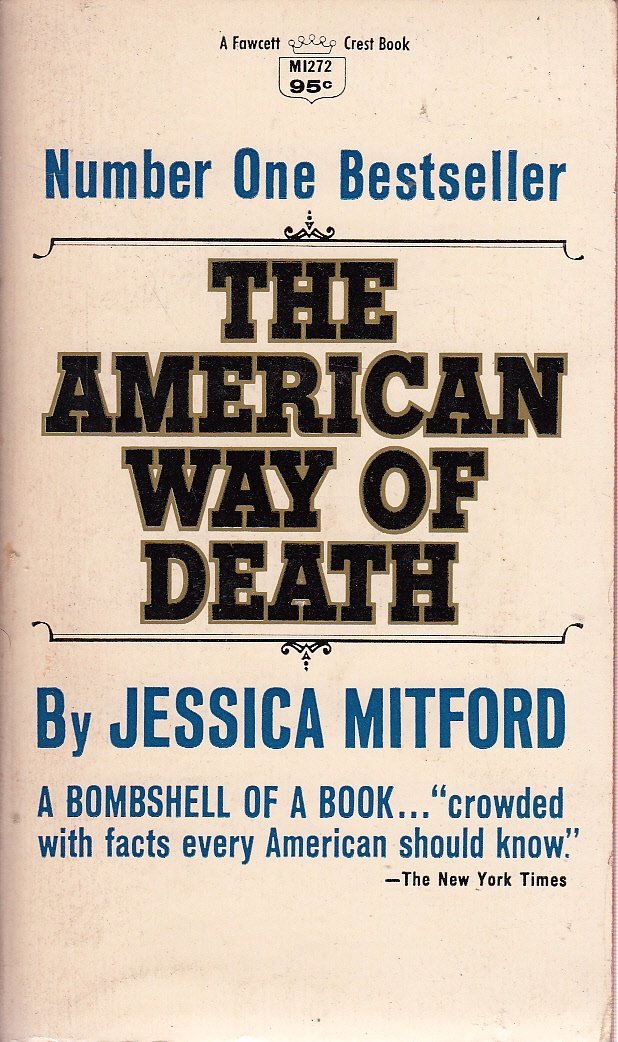

For myself, the main priority is that money living people may need should not be wasted on my bones. Give'm to medical science. I won't need them where I'm going.
If people want to gather and reminisce, let them do that. If they're relatives of mine, and they gather, it would be most unnatural if potluck dinner, gospel music, and Christian "testimonies" did not happen. Let those things happen with my blessing.
Older people who don't get out much, and don't enjoy commercial entertainment, may look forward to such things as the only social stimulation (and perhaps the best meals) some of them get. Let them be fed and entertained, by all means. For more than fifty years we've always poor-mouthed about that aspect of any family gathering, and always managed to have plenty to spare for those who really are poor, in money or in social life.
But the way I'd prefer to be remembered is the way I remember the people I miss: by carrying on, in whatever way I can, something they did while living.
For those who've wondered how it's possible for a blogger who was a 4F to be interested in veterans' issues, or a blogger with no children to be interested in school choice, or a blogger who's not Black to be interested in Black History...that's how. In real life there are other things I support, when and as I can, in memory of other departed friends, in addition to those.
So here is an official short list of ways I'd like to be remembered, instead of being buried in a fancy coffin (in a part of the world where no part of a coffin and few traces of a skeleton last even twenty years):
1. Oppose censorship. Write books other people are afraid to write, or buy them when other people do.
2. Support writers and writing, especially of real books. Buy books. Teach children to read. Teach foreign students English. Coach G.E.D. students.
3. Commit always to live with at least two cats and as many other animals as possible.
4. If unable to adopt a child, at least foster one, or more--the older, and the more siblings you can keep together, the better. Bonus points if they're multiracial in a slightly different way than you are.
5. I started to type, "Be a whole-Bible Christian." No. If you were brought up a Jew or a Muslim, even if you believe Jesus is your spiritual Messiah too, you're still a (Messianic) Jew or a (Sufi) Muslim. So be what you are. Be a real, radical one, waging intense peace with the other kinds of spiritual people in this world.
6. Cultivate topophilia for your own part of the world. Get to know your local wildlife and weather. Practice stewardship of land--which, for one thing, means no poisoning, ever; if things like mosquitoes must be killed, kill them by ones. Spend time outdoors. Practice living outdoors. Unplug yourself from all the mod. con., electric as well as electronic, from time to time.
7. Practice thinking in introverts' terms. Show good will by showing respect, not that horrible false imitation of chumminess that actually sets strangers' teeth on edge.
8. Support people's right to do anything that doesn't directly harm other people--but not so much the trendy pressure groups of rich and/or heavily funded people who whine about things that hurt their little feelings. I was and still am "pro-gay" in the sense that I've never thought anyone had any business telling other people what to do in their own bedrooms, but that battle's been won already and the continuing clamor is distracting attention from the present issues that really are as serious as "gay" people's right not to be locked up. Focus on people's right to earn their livings and bring up their children as they see fit.
9. Don't hate or fear the cities, even the inner cities; good people are there too. Especially avoid the mental trap of thinking of "Washington" as merely the bureaucrats and lobbyists who work there, and failing, when you are in Washington, to notice any of the teachers and storekeepers and bus drivers and religious people and artists and snack vendors who live there too. Do lead as rural a life as possible, especially if you have children, and support other people's right to one, especially if they are old.
10. Be independent of other people. Love people-in-general in the way you love trees. Love your close friends and relatives in the way you love your pets. Be generous and affectionate and empathetic whenever you can, all the more because you are prepared to live a long time after the people you have loved most...because you just might have to.
https://webnuggetz.com/why-i-believe-in-funeral-or-memorial-services/
...and I didn't want to put my quibbles into a comment on her memories, so I'm putting them here, for The Nephews.
I don't like the kind of funerals that have grown into a tradition in our part of the world.
I agree that the gathering of the bereaved can be an important part of their grieving process, but I detest the waste of money on the funeral industry. I've heard more than enough of the "And for the quartet..."--"QuarTET? My __'s dead and I should pay a @#$% band--?!?!" routine.
My father didn't want a funeral. My natural sister gave him one anyway. Neither my mother nor I went to it.
Mother has since told me that sister talked her around into consenting to a modest funeral, for the sake of the living.
For myself, I have no objection to any private memorial service the living may want to conduct, as long as nobody wastes any money on The American Way of Death.
For myself, the main priority is that money living people may need should not be wasted on my bones. Give'm to medical science. I won't need them where I'm going.
If people want to gather and reminisce, let them do that. If they're relatives of mine, and they gather, it would be most unnatural if potluck dinner, gospel music, and Christian "testimonies" did not happen. Let those things happen with my blessing.
Older people who don't get out much, and don't enjoy commercial entertainment, may look forward to such things as the only social stimulation (and perhaps the best meals) some of them get. Let them be fed and entertained, by all means. For more than fifty years we've always poor-mouthed about that aspect of any family gathering, and always managed to have plenty to spare for those who really are poor, in money or in social life.
But the way I'd prefer to be remembered is the way I remember the people I miss: by carrying on, in whatever way I can, something they did while living.
For those who've wondered how it's possible for a blogger who was a 4F to be interested in veterans' issues, or a blogger with no children to be interested in school choice, or a blogger who's not Black to be interested in Black History...that's how. In real life there are other things I support, when and as I can, in memory of other departed friends, in addition to those.
So here is an official short list of ways I'd like to be remembered, instead of being buried in a fancy coffin (in a part of the world where no part of a coffin and few traces of a skeleton last even twenty years):
1. Oppose censorship. Write books other people are afraid to write, or buy them when other people do.
2. Support writers and writing, especially of real books. Buy books. Teach children to read. Teach foreign students English. Coach G.E.D. students.
3. Commit always to live with at least two cats and as many other animals as possible.
4. If unable to adopt a child, at least foster one, or more--the older, and the more siblings you can keep together, the better. Bonus points if they're multiracial in a slightly different way than you are.
5. I started to type, "Be a whole-Bible Christian." No. If you were brought up a Jew or a Muslim, even if you believe Jesus is your spiritual Messiah too, you're still a (Messianic) Jew or a (Sufi) Muslim. So be what you are. Be a real, radical one, waging intense peace with the other kinds of spiritual people in this world.
6. Cultivate topophilia for your own part of the world. Get to know your local wildlife and weather. Practice stewardship of land--which, for one thing, means no poisoning, ever; if things like mosquitoes must be killed, kill them by ones. Spend time outdoors. Practice living outdoors. Unplug yourself from all the mod. con., electric as well as electronic, from time to time.
7. Practice thinking in introverts' terms. Show good will by showing respect, not that horrible false imitation of chumminess that actually sets strangers' teeth on edge.
8. Support people's right to do anything that doesn't directly harm other people--but not so much the trendy pressure groups of rich and/or heavily funded people who whine about things that hurt their little feelings. I was and still am "pro-gay" in the sense that I've never thought anyone had any business telling other people what to do in their own bedrooms, but that battle's been won already and the continuing clamor is distracting attention from the present issues that really are as serious as "gay" people's right not to be locked up. Focus on people's right to earn their livings and bring up their children as they see fit.
9. Don't hate or fear the cities, even the inner cities; good people are there too. Especially avoid the mental trap of thinking of "Washington" as merely the bureaucrats and lobbyists who work there, and failing, when you are in Washington, to notice any of the teachers and storekeepers and bus drivers and religious people and artists and snack vendors who live there too. Do lead as rural a life as possible, especially if you have children, and support other people's right to one, especially if they are old.
10. Be independent of other people. Love people-in-general in the way you love trees. Love your close friends and relatives in the way you love your pets. Be generous and affectionate and empathetic whenever you can, all the more because you are prepared to live a long time after the people you have loved most...because you just might have to.
Recommended Link (Christian, Fiscal Conservative, Libertarian)
This web site has stopped featuring links (for the time being)...but Stephanie Slade's America article, reposted to Reason.com for online readers' convenience, is important. It's like an important addendum to The Conservative Heart. All who read this blog for the political or religious content must read...yes, it's Catholic, originally written for a Catholic magazine, but this Protestant found it easier to follow than some Catholic readers seem to do.
http://reason.com/blog/2018/08/18/skeptical-of-the-common-good-dont-be?
Basically, libertarian politics work best when they're enlightened by public spirit. Yes, unenlightened people have often exploited the masses with appeals to public spirit that actually work out to "Give me your money in payment for bloviating about poor people," and sometimes "for sustaining a poverty industry, for demanding endless inflation of handouts to increasingly well paid 'needers' just because the money is there, and/or for interfering with poor people who try to improve their lives through honest work." Abusus non tollit usum. (Yes, Protestants remember oddments of Latin too.) Abuse does not take away the (proper) use. Public spirit is a good thing even if bad people have stepped on it. And libertarian policies support it.
Or, if we want to help poor people, even sending them money may do less good than just repealing protectionist policies that keep them from earning money.
http://reason.com/blog/2018/08/18/skeptical-of-the-common-good-dont-be?
Basically, libertarian politics work best when they're enlightened by public spirit. Yes, unenlightened people have often exploited the masses with appeals to public spirit that actually work out to "Give me your money in payment for bloviating about poor people," and sometimes "for sustaining a poverty industry, for demanding endless inflation of handouts to increasingly well paid 'needers' just because the money is there, and/or for interfering with poor people who try to improve their lives through honest work." Abusus non tollit usum. (Yes, Protestants remember oddments of Latin too.) Abuse does not take away the (proper) use. Public spirit is a good thing even if bad people have stepped on it. And libertarian policies support it.
Or, if we want to help poor people, even sending them money may do less good than just repealing protectionist policies that keep them from earning money.
Monday, June 11, 2018
Book Review: Twelve Wild Swans
A Fair Trade Book You Never Expected to See Here


Title: Twelve Wild Swans
Title: Twelve Wild Swans
Date: 2000
Publisher: Harper Collins
ISBN: 0-06-251684-1
Length: 320 pages plus index
Quote: “The community we speak of is called Reclaiming. We are part of the larger movement, called feminist spirituality, that critiques the patterns of domination embedded in patriarchal religions...we are willing to identify with the victims of the Witch persecutions.”
Say whaaat? How can a Christian web site touch this book? With a long explanation, of course, in three parts:
1. Sermon for Christian Readers
First the acknowledgment: For many women whose levels of feminist and spiritual consciousness are high, the whole idea of Neo-Pagan groups actively rebelling against their Jewish, Christian, or Humanist heritages seems (a) silly, (b) heretical, (c) satanic or at least vulnerable to satanic influences, (d) embarrassing, and/or (e) inherently subject to abuse and exploitation. Most women prefer to stay in our own faith tradition while critiquing whatever misogynist heresies may have crept into it.
This is a Christian blog. I am a Christian blogger. The last thing anyone at this web site wants would be to suggest that Christians, Buddhists, or Muslims need to try to revive the long-gone religious practices of departed ancestors who weren’t even our own. Nor did their cults, while active, succeed in liberating women from anything. If you are a woman who loves your brothers in faith and your Father in Heaven, you are blessed. You probably have only an academic interest, if that, in Neo-Pagan books.
If that’s the case, you’d do well to begin your study of Neo-Paganism with Starhawk, because she’s more than just the typical feminist heretic. Addressing an audience of misfits and iconoclasts allows her to say more about social psychology, more truthfully, than an academic psychologist could say, and her insights into group psychology are right on.
And if, on the other hand, you’re a woman (or a gender-confused person) who can’t imagine any way to identify goodness or even real power with a Father, whose experience of your religious tradition has been abusive...even if the abuse was limited to a confused admirer or a jealous woman saying “You look like a witch with that black hair,” you might be interested in the Humanist splinter group who’ve tried, during my lifetime, to revive the old custom of praying to “goddess” images. Some of them are True Greens. Some are fun to know. Some are already in your social network. Without necessarily wanting to join their group, you might be interested in reading about what one of the leading groups in this movement actually do.
Most of them have not studied their ancestral religions very thoroughly. They have no idea that the “Heavenly Father” to whom Jesus prayed was clearly described as a Spirit, never limited by the gender or number of a body. Of two names (as distinct from titles) used for God in the Bible, although both are used as “he” words, one has the form of a “she” word and the other has the form of a “they” word. The ancient Israelite religion constantly affirmed in every way that mortal minds can’t encompass an adequate image of the Infinite. God is not to be thought of as limited to any form we might be able to visualize. In the Ten Commandments, “Thou shalt not make any graven image” (of God) actually comes before “Thou shalt not murder.” To profane the faith by perverting faith in a Supreme Being into worship of some three-dimensional mortal creature murders true religion; it causes nice Jewish girls like Miriam Simos to grow up trying to reclaim the Goddess of her ancestors’ Babylonian enemies. Unable to believe what she’d heard about the God of Abraham, Miriam Simos, a.k.a. Starhawk, chose to call herself a Witch rather than a Jew.
Before any correspondents start pointing to Starhawk’s use of Babylonian motifs, or to the medieval Pagan influences on the Kabbalah, as evidence that Judaism is particularly Satanic, let’s note: Although the Reclaiming group grew out of the environmentalist movement in Northern California, in most of the United States a person who wanted to work through the group exercises in this book would go to a Unitarian church. I seriously considered posting this as a Sunday Book Review.
The Bible writer who noted “women weeping for Tammuz” (the Jewish precursor to Lent, an end-of-winter fast associated with a Babylonian myth and cult) in the temple of Jerusalem was not recommending the practice. Nevertheless, Unitarians host Neo-Pagan spiritual exercises in church. My collection of Starhawk’s books started at Unitarian-sponsored Berea College. I’m not sure that Christians ought to bring Neo-Pagan activities into the sanctuary, but if any religious group ought to be trying to encourage dissatisfied Humanists to try “exploring their spirituality” and perhaps work their way back around to a traditional belief, surely Christians should be it; real Christians don’t persecute heretics, but try to correct them—and correct ourselves by them—in a spirit of brotherly love.
If you believe the spirituality in this book to be a bad thing or (as I do) a thing less good than it ought to be, I’d suggest directing the blame toward the sexist perversions of the traditional religions.
Female baby-boomers started saying, “I’m not going to worship a (male body part).” The Bible never suggests that God has any specifically male body parts. The Hebrew language is particularly rich in metaphors, some of which compare abstract qualities to human and nonhuman body parts. If taken literally, the Bible credits God (and people) with wings, credits God (and a few people, but not Satan) with horns, pictures God’s Wisdom copying the marketing technique of the village harlot, and even describes God’s parental love for the Creation using the mixed metaphor of a “nursing father.” It credits God with rachamim, sometimes translated as “bowels of compassion,” literally meaning “female reproductive parts” and the motherly feelings associated with them. It describes God as Shaddai, the Almighty, which literally means “top-heavy” and can describe either a muscular man or a busty woman. (The ancient Israelites’ ideal woman was a farm girl who could work as hard as any man of her size.) But the Bible never uses the precise words for either male or female procreative parts, and although it uses words for “beard” with reference to men, including a prophecy of Jesus, it never describes God having one.
In the twentieth century, when some churches employed female ministers but tried to maintain policies that authorized payment only to male ministers, an absurd argument about a pastor having a “physical resemblance” to God was seriously made by sexist churchmen. Rrreally? According to the plain literal reading of the Bible, God seems to have more “physical resemblance” to Marilyn Monroe than to Billy Graham. “Well, obviously, that can’t be right!” Yes; that’s the point. During my lifetime Billy Graham had little physical resemblance even to Jesus—he was far too old! A behavioral resemblance to Jesus is what Christians are told to cultivate. I sometimes wonder whether Jesus needed to be a young man, with beard, muscles, and presumably all the other evidence of a full supply of testosterone, just to show that it’s possible for a young man to make choices that, apart from the hiking, sailing, and construction work, seem more like a woman’s or an old man’s choices.
2. So What’s in the Book?
The Reclaiming Collective had started operating “Witch camp” gathering for eco-activists who wanted to participate in the sort of politics-as-spiritual-practice Starhawk had described in Dreaming the Dark
 . Twelve Wild Swans describes some of the things they did at these camps: communing with nature, processing their emotions, strategizing, networking, and building their “organizer” skills. Activities were organized around the theme of a myth or folktale. In Twelve Wild Swans a German-Scandinavian tale was chosen, though the authors and contributors mention having used other tales other years. The stories chosen involve quests in wildernesses near oceans.
Everybody can benefit from Starhawk’s insights into how to keep group processes egalitarian. If anyone has spent her life actively resisting the temptation to become the sort of cult leader some followers actually want, she’s the one. She knows firsthand, and is willing and able to explain, more about how groups cohere or fail to cohere, how groups stay democratic and satisfactory or become cliques or cults, than any other living writer I have found.
Nevertheless, though written for as general an audience as possible, these observations are based on observation of the kind of people who attend “Witch camps.”
Much interest in Neo-Paganism has had to do with traditional drug-tripping rituals. Reclaiming officially disclaims any use of those. What we all learned in the 1960s is that anything LSD can do for the human mind, meditation (self-hypnosis) can do better. Twelve Wild Swans offers many guided meditations.
Another (overlapping)category of Neo-Pagans is the people who’ve built up a vast complex of residual emotions about their family’s religious tradition. As regular readers know, the position of this web site is: Fix Facts First: Feelings Follow. In mainstream North American culture, men often deny any emotions other than anger because people who express emotions other than anger are often emotionally abused by people who ignore the real problem (or spoil the real pleasure!) by wasting everyone’s time with attention to someone’s emotional feelings about it. (John Gray wrote a series of horrible books that actually coached husbands in doing this to their wives.) As a result it may be impossible to write about releasing residual emotions, on your own schedule and for your own benefit, in a way that completely rules out exploitation of your words by abusers. Any concession that residual emotions can become a separate fact that a few people need to fix can be used to feed abuse. The coauthors try to discourage that; I doubt that they’ve fully succeeded.
They do try to draw at least a thin, fine line between healthy present-time anger and residual anger.I think they could have drawn the line more clearly. At the very least, the story of the woman who “was able to find her rage, tracing it all the way back to her childhood” (blaming her mother, yet) might have been balanced with a story of the woman who “was able to find her fear, tracing it all the way back to her sexist miseducation, and hear the real, present-moment, adult emotions people are actually expressing, without rushing in to infantilize those people and blame their mothers.”
I think the authors pass too hastily by the present-time abuses people become activists in order to protest, in the discussion of residual anger. Arguably because that’s what the whole book is about. They give airspace to the wounded-inner-child line of talk that was helpful to some and abusive to others in the 1980s, then rush to a discussion of political correctness and “If we can be nice enough to members of ethnic minority groups, maybe a few of them will eventually join us.” They don’t actually say “When you feel more than usually annoyed by one of several undesirable things you see every day, instead of asking whether guilt, indigestion, drug reactions, a hormone imbalance, chemical pollution, increasing social or emotional stress, or simple overcrowding may be involved, just displace that emotion into an hysterical overreaction the next time someone says ‘Merry Christmas’ or ‘straight talk’”—but they come close to it.And the p.c. police certainly seem to be reading whatever advice they do read in just that way.
Baby-boomers grew up hearing a lot about “buried feelings from the past” but my own observation, admittedly of people who are more comfortable with their family culture than the average Neo-Pagan, has yet to identify a baby-boomer who’s actually had that problem. Few of us ever buried anything. Some of us thought we’d broken through to buried memories in the 1990s, then found that it was only Prozac Dementia. Some of the older generation may have buried emotions, and had other psychologically incorrect experiences that either Sigmund or Anna Freud lived to observe; if baby-boomers had psychologically incorrect emotions, we had different ones. We knew it was supposed to be okay to hate your same-sex parent and idolize your opposite-sex parent, so the only problem most of us had with that whole emotional complex was that it didn’t resonate with whatever emotional complexes we had, at all. People generally come down with the diseases for which they’ve not had the vaccine.
The co-authors go on to discuss ego inflation and ego deflation, the value of silence, the value of pageantry, emotionally grounding oneself against hostility or adulation, the problems of jealousy and envy, all in the context of fairy tales, pageantry, and game playing that engage the id...
“I thought witches cast spells.”
They do. The spells Reclaiming Witches consider “most effective” are the ones that aim to change the Witches themselves.
“I thought they worshipped the Devil.”
Reclaiming Witches are Humanists who weren’t content with classical scientific Humanism. They spiritualize their feelings about nature and the environment by worshipping a concept of “immanent divinity,” embodied as a female or couple, human or otherwise, sometimes identified with an old Pagan deity, sometimes with one of the four directions—usually with four or more different images within a prayer or ceremony. Images placed on their altars may include mirrors. They don’t actually believe it matters which images they use, except as it reflects the right kind of mental attitude toward other ethnic groups, because as Humanists they still believe that what they are worshipping is really the “spiritual” part of themselves. Most deny any belief in the Devil. Their belief system has features in common with Satanism, but it’s not the same.
“Y’mean they’re really worshipping themselves?”
They’re not dogmatically denying that there is anything Out There beyond themselves, but they don’t believe they know anything about it, or have any power to change anything beyond themselves. As the co-authors quote Doreen Valiente saying: if Neo-Pagan Witches don’t find what they seek within themselves, they’ll never find it beyond themselves. What they’re actually doing is plain old Jungian psychotherapy, with a left-wing, baby-boomer, American feminist flavor.
3. “And you think that’s something that can be useful to Christians?”
How useful it may be depends on which individual Christians we’re talking about and what they want to use it for.
If our primary motive is to understand and relate to friends who are drawn to Neo-Paganism, then anything written by the best writers in that movement, which would include Elizabeth Barrette
 , Luisah Teish
 , Barbara Walker
 , the late Mary Daly
 , and Jane Caputi
 as well as Starhawk, can be useful. Each of these writers has her own niche, or niches, and offers her own literary voice in addition to her insights into Neo-Paganism.
 If our primary motive is to improve our Christian practice so that sincere, sensitive, True Green people will be more likely to reclaim Christianity than try to revive anything from ancient Babylon, then books like this one deserve serious study. The good that Starhawk is doing is the good we should be doing. Why aren’t we?
Christians don’t direct worship to the natural world. We give thanks for nature rather than to it. Sometimes we forget to show gratitude for nature.
We as a species are dumb enough to build nuclear reactors in earthquake zones, which is what put the “fear of the Earth Goddess” into a lot of people in California in the 1970s, which was where Reclaiming really started. We’re dumb enough to flatten beautiful, scenic, historic mountains to grub out a few more carloads of coal, and we don’t even need to burn that coal. We’re dumb enough to spray so much poison on so much land that our children get sick every time they play outdoors, and then we blame whatever pitiful little amusements they find for themselves, the books and comic books, TV and rock music, video games and cell phone messaging, for making them the pathetic lot of 4F’s they become. Rebellion against these forms of stupidity began with the older generation, grew in the baby-boomer generation, and is still growing for the young. Nature worship, which very few people are able to take seriously as a religion, is one way of rebelling against this abuse of nature. The bid for global totalitarian dictatorship, which really died with the old Soviet Union despite George Soros’s heroic efforts at life support, is studying and using this “Green” rebellion.
The only cure for this Poison Green cultural influence is a True Green movement. It would be convenient (for everyone except umbrella sellers) if every time a Socialist said it was raining outside, the rain would stop! Since the world is set up in favor of the umbrella sellers, we might as well acknowledge the rain. Some Poison Greens really are all about trying to set up a totalitarian government that will self-destruct and end American Democracy, but real Greens are seriously interested in preserving life—human and other forms of life—and respect Christians, like Ozarque or Wendell Berry
 , who care about that too.
Christians may not need to spend as much time on the Jungian self-help meditations as those in rebellion do; political demonstrations certainly aren’t part of our worship services. However, organizing and demonstrating are useful skills for Christians, and I know of no church group that really has no need for group reflections on how people handle ego inflation, ego deflation, and that tendency to form social hierarchies. In fact, in all churches where I’ve spent much time, I’d describe the need for Starhawk’s insights into group psychology as howling. I’d like to be able to recommend a Christian writer to these church groups; unfortunately the late lamented writer known as Ozarque, who came closer than any other Christian I know, had specialized in a different field and didn’t come very close to offering the same kind of insight Starhawk does.
Christians could usefully study the Reclaiming group’s pageantry of nature worship. We don’t need to do that but we need to ask ourselves, individually or in groups, what truth is in the reproof, how we’ve allowed ourselves to do such a poor job of stewardship that anyone could feel a need to look all the way back to ancient Babylon for correction. Where did we let the joy go out of our own concept of stewardship? How did we forget that the original “southern agrarian” writers, serving God through right use of the land they believed God gave their families in perpetuity, were the Bible writers?
The Twelve Wild Swans has been Out There long enough that this web site can offer it as a Fair Trade Book on the usual terms, $5 per book, $5 per package, $1 per online payment, as discussed on the Payment Information Page. From this base price of $10 we'll send $1 to Starhawk or the charity of her choice, presumably Reclaiming. Another book of comparable size and shape that would fit into the package beside this one is Truth or Dare , also a Fair Trade Book; if you order both, you pay $15 (or $16) and we send Starhawk or her charity $2.
, also a Fair Trade Book; if you order both, you pay $15 (or $16) and we send Starhawk or her charity $2. Sunday, June 3, 2018
Book Review: Good Morning Lord
A Fair Trade Book


Title: Good Morning Lord
Author: Donald Charles Mainprize
Date: 1974
Publisher: Baker
ISBN: 0-8010-5959-3
Length: pages not numbered; I count 64
Quote: “The poems and meditations offered here to teachers and administrators...should be received as thought-starters.”
Yes, although the picture shows a different copy of this book, it accurately depicts the copy I have. This little book seems to have warped a bit over the years. It still opens and lies flat, anyway.
Here are thirty “devotions” for teachers. Each end with a Bible reference. Each begin with a little motto, often a single sentence printed with one word to a line, and expands into one or two hundred words about classroom technique, followed by a one-sentence prayer and a one-sentence resolution.
“Behind
some
wild
students
are
two
parents
who
couldn’t
be
more
surprised.
I’ll not soon forget the day I met Tom Beebee’s parent...Tom was lazy...sloppy...Mr. Alfred Beebee...was concerned about his son’s education...The next Monday Tom had a sectioned notebook, a supply of pencils, and, most important, a new attitude...
O FATHER: Remind me that many parents want to know how their kids act at school and want to take part in their education.
TODAY I WILL: Watch for those Jekyll and Hyde kids and use the phone to enlist parents’ back-up...
BIBLE FRAGMENT: Proverbs 29:17.”
Some of Mainprize’s thoughts reflect his time. Writing during the baby boom, he notes that his attention to “Tom Beebee” distracted him from paying attention to “the other thirty-three students” in that class—yes, that was normal. (That’s why charter schools exist.) Christians who teach can probably still benefit, though, from his little reminders of the ideals of their profession.
Mainprize is still living, according to the Internet, so this is a Fair Trade Book. Buy it here, $5 per book, $5 per package, $1 per online payment, as discussed at the Payment Information Page, and we'll send $1 to Mainprize or a charity of his choice. At least seven more books of this size will fit into one package.
Sunday, May 27, 2018
Book Review with Sermon: Abiding in Christ
A Fair Trade Book


Title: Abiding in Christ
Author: Cynthia Heald
Date: 1995
Publisher: Navpress
ISBN: 08910-98879
Length: 110 pages
Quote: “We are the branches, and we must stay firmly connected to the Vine in order to mature.”
Daily devotional reflections are thought to help people stay firmly connected to God, and here is Cynthia Heald’s devotional—for only one month, not a year.
For a hardcover book, it’s an awfully little one. I’m aware of that littleness, from time to time, throughout this book. I wonder, now, whether the book’s small size is catching my attention because...actually it’s not that the contents are too small (some of these devotionals are substantial), so much as that they’re written for the wrong time of day.
Well—why should a hardcover book be so small? It’s not pocket-sized; the hard cover would be an awkward fit even in a coat pocket. It’s not written for children, although the subtitle “Becoming a Woman Who Walks with God” brings puberty to mind. It’s light enough for reading in a hospital bed, but if I had to spend a lot of time in a hospital bed I’d look for a book without firm corners.
When I read most of the individual passages in this book I don’t notice words like “little” and “lightweight” coming to mind, but when I try to describe this book as a whole, relative to other “Daily Devotional” books, I do. The sheer physical packaging suggests thoughts like “light enough for even your poor trembling hands,” and the whole style of this book...I like soft, pretty things like the images of the rose and the brook that blur together on the cover, but it’s possible for softness and prettiness to be taken Too Far. When I consider this book as a whole I don’t feel charmed with a soft, pretty little thing. I feel...coddled.
I think of pale, frail Victorian characters, not Poor Little Beth (in Little Women ) so much as delicate sister Clara in Caddie Woodlawn
 . Clara isn’t dying, but she’s a wimp. She’s encouraged to be a wimp by the culture of her day. The story is mostly about Caddie exulting in the freedom of living in the country, roaring around with her siblings and their dog, because she’s being encouraged to grow up “brown and strong” rather than “pale and delicate” like Clara. Clara hardly ever speaks, in the story, but in each chapter there’s some reference to her “soft voice” and “slender shoulders” and the way she mopes around sewing all the time, even when Caddie and Tom and Warren and Hetty are out running and swimming and having fun. Abiding in Christ is a book for sister Clara, and no girl, however girly she wanted to be, ever read Caddie Woodlawn and wanted to be Clara.
) so much as delicate sister Clara in Caddie Woodlawn. Clara isn’t dying, but she’s a wimp. She’s encouraged to be a wimp by the culture of her day. The story is mostly about Caddie exulting in the freedom of living in the country, roaring around with her siblings and their dog, because she’s being encouraged to grow up “brown and strong” rather than “pale and delicate” like Clara. Clara hardly ever speaks, in the story, but in each chapter there’s some reference to her “soft voice” and “slender shoulders” and the way she mopes around sewing all the time, even when Caddie and Tom and Warren and Hetty are out running and swimming and having fun. Abiding in Christ is a book for sister Clara, and no girl, however girly she wanted to be, ever read Caddie Woodlawn and wanted to be Clara.
Well...the mere fact of a book being short and thin does not usually affect me in that way. There are different ways to fold and cut a full-sized sheet of paper as it comes off a printing press, and some people like a short book. It’s the contents, too, in this one. Twirly-curly script headings and terribly tasteful general topics aren’t bad things. Topics like staying connected to God, taking time to pray, planning to read the whole Bible each year, living one day at a time, aren’t bad topics. Having a “personal relationship with God” gives a slight suggestion of a desperately lonely soul trying frantically to believe in God as Imaginary Friend, but that’s how some people talk about a sane and viable Christian practice...There is probably a tipping point, a precise number of times I can leaf through a book’s pages and see words like “calm,” “patient,” “trust,” “rest”—and it probably depends on how many words like “awake,” “decisive,” “firm,” “vigilant” occur in between them—before I ask myself, “Is this a guide for normal healthy young girls who are ‘becoming a woman,’ or is it strictly bedtime reading for hospital use?”
I don’t know. There does seem to be a market for the kind of Christian thought that is helpful when addressed to women in hospitals, but positively alarming when it’s handed out to women who are doing jobs and rearing children too. There is a difference between the “work” of recovering from chemotherapy and the work of managing an office or teaching a class. Blurring that difference may seem to publishers like a way to sell more books to more readers, but there’s also the danger of alienating readers.
Maybe some stressed-out yuppies, people trying to be extroverts, frustrated corporate ladder-climbers, etc., had their personalities and characters formed by spending their early years in day-care centers where somebody was always whining and as a result everybody else spent a lot of time kicking and screaming too. Maybe some of these people never had enough lullabies sung to them.
Personally, I had all the lullabies and snuggle-up-for-naps time a child could possibly want, and more...and because my mother had increasingly severe hypothyroidism, I saw firsthand that there’s a point at which calmness and soothing and naps are good things, and then there’s a point at which they literally, physically make people sick, even disabled. I inherited a tendency to be slightly hyperthyroid, big-eyed, skinny, fast-moving—when I’ve been walking or exercising fast or drinking too much coffee, positively jittery—which is the reverse pattern produced by the same genetic quirk that allowed Mother to become hypothyroid, dull-eyed, fat, sluggish, and bland. I also observed firsthand that being fat, sluggish, and bland was not normal or comfortable for Mother, that she felt miserable about it and fought hard against it, that when she might have seemed mellow and lovable to other people she was in fact ill. Maybe that’s why I can tolerate a little feminine "soothing" behavior, but then that sound, or image, starts to set off alarm bells. “You’re not calm, you’re sick! Get up! And move!” Too much snuggling and soothing made Mother more sluggish and me more restless; in all the mornings of our lives both of us will always need physical movement, not “calm.”
If you are medically underweight, if your blood pressure is routinely over 140/100, if your resting pulse rate is over 90 beats a minute, if you don’t sleep at all for three nights in a row...then, dear sisters, there’s probably some more serious medical reason for this, but what you need is probably not to try to lull yourself into that false appearance of “calm.” You need vigorous aerobic exercise! Trust me on this—both hyperthyroid and hypothyroid tendencies need to be checked before they become a serious medical problem, and usually the way to check them at that point is to make sure you stay active! “Calm” comes naturally after movement!
On the spiritual level, too...in real life it’s not particularly difficult to know the difference between the genuine peace of mind people have when they have done what they needed to do, and the pseudo-calm people have when they are not doing what they ought to do and can’t bear a single hint that they may need to get their minds off their feelings and start doing something different. Not at all. But Christian women’s groups can be confusing for new Christians, because they tend to be Dead Seas of spiritual sluggishness. Some middle-class American women (enough of them that even Deborah Tannen was able to mistake this minority of Earth’s women for “women” as a whole) have been socialized into a pattern of “We don’t actually want to change or improve our lives in any way, we just want to clump together, grumble and giggle about them, and go on doing exactly what we’ve been doing.” And this is not entirely bad; sometimes, as when mothers of toddlers get together, that cozy whining routine can be a helpful way for everyone to remind herself that the years when children are neediest and most draining are also the years when they’re most adorable. But it is not the way Christians build character—or achieve real peace of mind. Sometimes, instead of “Let’s all just focus on calming down all of our emotional feelings,” Christian women really need to be narrowing their focus and attacking the specific things that provoke unpleasant emotional feelings.
Jane Doe does not need to try to feel calm about the fear of having another baby. She needs to be taking steps to make sure that, preferably without giving up her marriage, she’s not placing her faith in unreliable pills and gadgets but is making sure she’s not starting any more babies.
Mary Smith does not need to try to feel calm about being unemployed and on the dole. She may not need any more emotional grief and guilt about that situation than she already feels, but she needs to focus on getting herself off the handouts by productive self-employment, and her women’s group need to be guiding and supporting her in that.
Susan Brown does not need to try to feel calm about her fear that she’ll develop breast cancer at age forty just as her mother, sister, aunt, and grandmother did. She needs to learn more about the carcinogens to which they were exposed and the antioxidant factors in her diet. If she’s going to develop cancer in any case, if the best she can do is postpone it until she’s fifty, at least she could be working toward the peace of mind that comes from knowing she did the right thing, rather than the false calm that comes from denying unpleasant reality.
If you and your friends are drinking too much, popping pills, shopping compulsively, gossipping, hoarding, tossing, neglecting your children, cheating on your husbands, cheating your customers, participating in an unethical business, getting sucked into TV soap operas, stuffing down anger at other adults and then yelling at children or kicking your pets, consciously opposed to a lot of things you've heard about in the news but not even so much as shopping or tweeting in conscious opposition to those things...don't worry about "calm" just now. Fix the facts first, and a feeling of calm will follow.
If you and your friends are drinking too much, popping pills, shopping compulsively, gossipping, hoarding, tossing, neglecting your children, cheating on your husbands, cheating your customers, participating in an unethical business, getting sucked into TV soap operas, stuffing down anger at other adults and then yelling at children or kicking your pets, consciously opposed to a lot of things you've heard about in the news but not even so much as shopping or tweeting in conscious opposition to those things...don't worry about "calm" just now. Fix the facts first, and a feeling of calm will follow.
At the end of a day of facing reality, engaging with reality, taking responsibility for the reality around you and doing what you can do to change it, then it’s appropriate to think calm, restful thoughts before bed. Abiding in Christ consists of sweet, soft, pretty little thoughts that are appropriate for bedtime reading...except that too many of them are written for morning reading, and morning is the time when we need to get out of that cozy warm bed, when that feeling of chilliness is nature’s way of telling us to move our bodies.
And later in the day, a feeling that hard work is unappreciated may be nature’s way of telling us to stop working so hard to please the unappreciative and do what we want; a feeling of “struggling...striving and straining...to live the Christian life” may be nature’s way of telling us to stop sinning; a feeling of “anxiety about the ‘what-ifs’ of our lives” may be nature’s way of telling us to work harder toward material security, or to give up some insecure material “goods” that aren’t all that good, depending on where we are, but either way that feeling needs to be acknowledged as part of our reality and not swept under an inadequate little rug of illusive “calm.”
For some of those hypothetical readers in hospital beds, it is too late to do things differently, and all they can do really is to say prayers of penitence before they die. And the only way they can be said to abide in Christ is to lie down and die quietly. Life does come to an end.
However, in nature...abiding in Christ the way branches abide on a vine does not mean just passively moaning, “Calm...calm...” while our lives fall apart. It means growing, developing, sometimes even pushing other things out of the way...
How often in the last few years somebody who wants credit for being a Christian has oozed up to me to whine piteously, “I worry about you walking alone in the heat/dark/cold/rain/snow, but I couldn’t share my car with you because I don’t have passenger insurance and my money is so tight with all the other expenses that...” that the person knows very well I’ve been living without, in some cases for all my life including the years of financial prosperity. And any mention of that fact would be likely to trigger a more painful pre-programmed wail, “Everybody wasn’t born ‘smart’ like you and can’t be happy writing and reading and working all day! Everybody wasn’t born ‘strong’ like you and can’t walk everywhere they feel inclined to go, any time of any day or night! Everybody wasn’t born ‘pretty’ like you and can’t just wear what feels comfortable and let her real face show!” I was born with abundant reasons to consider myself anything but “smart” or “strong” or “pretty,” probably less so than the whiner; when people decided I was those things it was the result of my working through and around a lot of the same mental garbage that is impeding the function of her brain as she speaks, so if the conversation does go there nobody is having fun any more...
Deep breath, please. You do not have to become a self-actualizer all at one plunge, although that is what, deep down, your mind is trying to tell you—that you too could be the woman or man you're meant to be. All the Spirit is calling you to do, with that one little feeling of discomfort you’ve identified, is deal with it as reality rather than trying to smother it under insanity.
Listen to yourself. Your worry is telling you what you ought to be doing. If you’re worried about me walking in extreme weather, that’s nature’s way of telling you that you need to share your car—either forgetting about the passenger insurance, paying for it, or working to make it a mandatory part of all motor vehicle insurance with no exemptions. If you’re worried about the victims of the latest natural disaster, that’s nature’s way of telling you something else; whether it’s to offer beds to people, or send money to people, or something other than those likely possibilities. If you’re worried about your parent, child, your dog for that matter, that could indicate that you need to be a better daughter, mother, dog owner. You may have imagined that self-actualizers—the type of people who, in any religious group to which they belong, are recognizable as the “good, mature” ones—were born “worry-free,” or else given the “gift” of worry-freedom during a dramatic spiritual moment...No such. Studies of the lives of self-actualizers, of all faiths or none, have been made, and they’ve shown that if anything we tend to be born worry-prone. This worry-proneness is likely to be what forced us to address the realities and eliminate the anxiety triggers.
Once you’re doing those things, you will know it, and then there is no spiritual danger (or feeling of disgust) in reading a book like this one that has just a little bit too much to say in praise of calmness-as-such, early in the morning. There’s a time for sleeping, and you’ll know it when you come to it.
If you're looking for a one-month bedtime devotional and don't mind the occasional reference to morning in it, send $5 per book + $5 per package + $1 per online payment to the appropriate address, as discussed in the Greeting post and shown again at the bottom of the screen. Probably eight or ten more books of this size, if you happened to find them, would fit into a package along with Abiding in Christ. It's a Fair Trade Book; we'll send $1 per copy sold to Heald (yes, she's still alive and active) or a charity of her choice.
Subscribe to:
Posts (Atom)


