From U.S. Representative Morgan Griffith (R-VA-9):
"
Thursday, December 21, 2017 –
Christmas Stories
You know Dasher and Dancer and Prancer and Vixen
Comet and Cupid and Donner and Blitzen
But do you recall the most famous reindeer of all?
And you likely know what holiday song begins with those lines. The story of “Rudolph the Red-Nosed Reindeer,” both as a song and as a television special, has been a staple of the Christmas season for generations. The story of how it came to be, however, is not as well known. It’s an unlikely story, one not out of place in a season that celebrates miracles.
Robert L. May was a catalog writer for the department store Montgomery Ward with dreams of being a novelist. In 1939, he lived in Chicago with his ailing wife and their young daughter. He was tasked with creating a coloring book that the store would hand out to children for free at Christmastime. Growing up, May had felt like an outsider due to his small stature, so the reindeer that became the central character of his book, Rudolph, took on the attributes of a misfit as well. In this case, the characteristic that set him apart was a shiny red nose.
May’s wife died in July, but he insisted on finishing his story, later writing, “I needed Rudolph now more than ever.” The final result was a hit. In fact, Montgomery Ward printed over two million copies in 1939. In 1947, the company gave May the copyright to his story. Working with his brother-in-law, the composer Johnny Marks, he used the rights to make a song about Rudolph.
Marks shipped the song to Perry Como, Bing Crosby, and Dinah Shore, but all opted not to record it. According to legend, another singer prepared to pass as well, but his wife found the song charming and persuaded him to record it. And so it would be Gene Autry, the Singing Cowboy, who would first record the version of “Rudolph” that became a staple of the Christmas season.
Autry recorded and popularized other songs that remain holiday favorites. One song came from an experience in an annual Hollywood Christmas parade. Autry regularly participated, riding his horse ahead of Santa Claus as they proceeded down Santa Claus Lane. One year, he heard a child shout in eager anticipation, “Here comes Santa Claus!” Sure enough, that became the title of the song.
As its title suggests, most of “Here Comes Santa Claus (Right Down Santa Claus Lane)” expresses excitement about a visit from St. Nicholas, the toys he will bring, and the joys of the season. But the song’s final verse also speaks to the higher meaning of this time of year:
Here comes Santa Claus! Here comes Santa Claus!
Right down Santa Claus Lane!
He'll come around when the chimes ring out,
then it's Christmas morn again.
Peace on earth will come to all
if we just follow the light.
Let's give thanks to the Lord above,
'Cause Santa Claus comes tonight.
Autry was not a man of strong religious affiliation, but he sang of the same good news told to shepherds keeping watch in the Judean countryside so many centuries ago:
“Glory to God in the highest,
And on earth peace, goodwill toward men!”
Songs about Rudolph and Santa Claus are welcome additions to Christmastime, and sometimes without the listeners even knowing it, they spread the good news that Jesus’ birth represents to Christians, such as the reassurance in “Here Comes Santa Claus” that “peace on earth will come to all” and the encouragement to “give thanks to the Lord above.” My hope is that, whatever your beliefs, this holiday season brings peace and goodwill to you. Best wishes for a merry Christmas and a happy New Year.
This column will be the last of 2017 and will resume its regular schedule after the first of the year. If you have questions, concerns, or comments, feel free to contact my office. You can call my Abingdon office at 276-525-1405 or my Christiansburg office at 540-381-5671. To reach my office via email, please visit my website at www.morgangriffith.house.gov. Also on my website is the latest material from my office, including information on votes recently taken on the floor of the House of Representatives.
"
Friday, December 22, 2017
Friday Song: Roll Back
Status update: Merely refrigerator-cold, as distinct from freezer-cold, temperature, and merely expected, as distinct from actual, snow prompted me to take a few bottles of soda pop, one bag of books, and a few knitted things out to Friday Market. Yes, a few diehards do set up there even in the bitterest weather and even on holidays, if they think there's any chance of making money. I did not actually expect to make any money. I went out there mainly to Show a Person a Thing about fortitude.
To my pleasant surprise...although traffic was not what anyone would have called brisk, somebody thought of the ideal Christmas prezzie for anyone who works in a flea market: change! All vendors who sell small, cheap, fast-moving stuff (which is about all anyone can really count on selling, these days) always need more one-dollar bills, so someone brought me a Hallmark card stuffed with a wad of Georges.
Oh, the guilt. My immediate family have been boycotting the whole holiday gift exchange thing for years and, although I've worked in places where co-workers exchanged gifts, I had no idea that anybody would think the Friday Market was one. Actually, because of the festering hostility of an Insane Admirer's offspring, who's not much saner than his father, I've thought of it as a cold and prickly workplace. Actually, I still do.
Anyway, counting the contents of the card, I made $61, which made this slow day the most profitable market day I've had all year...You still need to support this web site, Gentle Readers. I'm not sure what's going on with Patreon--I suspect it's just somebody trying to be very very clever and innovative and load the site down with more bells and whistles, but at the time of writing the site claims they're getting record numbers of complaints. I'm 99% sure Freelancer is a scam; if someone pays US$25 for a writing job done there, we can prove it and possibly help other deserving online workers. Anyway, please use any of the following methods to fund the kind of content you want to see at this web site:
https://www.patreon.com/user?u=4923804
https://www.freelancer.com/u/PriscillaKing
https://www.guru.com/freelancers/priscilla-king
https://www.fiverr.com/priscillaking
https://www.iwriter.com/priscillaking
https://www.seoclerk.com/user/PriscillaKing
To my pleasant surprise...although traffic was not what anyone would have called brisk, somebody thought of the ideal Christmas prezzie for anyone who works in a flea market: change! All vendors who sell small, cheap, fast-moving stuff (which is about all anyone can really count on selling, these days) always need more one-dollar bills, so someone brought me a Hallmark card stuffed with a wad of Georges.
Oh, the guilt. My immediate family have been boycotting the whole holiday gift exchange thing for years and, although I've worked in places where co-workers exchanged gifts, I had no idea that anybody would think the Friday Market was one. Actually, because of the festering hostility of an Insane Admirer's offspring, who's not much saner than his father, I've thought of it as a cold and prickly workplace. Actually, I still do.
Anyway, counting the contents of the card, I made $61, which made this slow day the most profitable market day I've had all year...You still need to support this web site, Gentle Readers. I'm not sure what's going on with Patreon--I suspect it's just somebody trying to be very very clever and innovative and load the site down with more bells and whistles, but at the time of writing the site claims they're getting record numbers of complaints. I'm 99% sure Freelancer is a scam; if someone pays US$25 for a writing job done there, we can prove it and possibly help other deserving online workers. Anyway, please use any of the following methods to fund the kind of content you want to see at this web site:
https://www.patreon.com/user?u=4923804
https://www.freelancer.com/u/PriscillaKing
https://www.guru.com/freelancers/priscilla-king
https://www.fiverr.com/priscillaking
https://www.iwriter.com/priscillaking
https://www.seoclerk.com/user/PriscillaKing
If you prefer safety to convenience (good for you), send a U.S. postal money order to Boxholder, P.O. Box 322, Gate City, Virginia, 24251-0322.
And of course, slow market days being what they are, I wrote another topical song for you. This one fits a tune I was taught in primary school...in case other older folks remember it, the words the fourth grade used to sing with this tune were as follows:
Near a house in the wood, (something-something) was good,
A poor young farmer smiled as he stood,
And he sang as he worked, and he smiled as he sang,
And the woods and the welkin rang (as he sang, singing)
"Hi, ho, my little buttercup!
We'll dance until the sun comes up!"
And he sang as he worked, and he smiled as he sang,
And the woods and the welkin rang.
I don't imagine anyone else has found much use for those words, since grade four, either. The jolly little tune deserves better ones. Whether you think I've written some, or not, is up to you. This one is meant to come after the current tax bill, and refer to next year's budget:
There was once a wise and a righteous man,
When told profit can't be honest, said, "Yes it can,
With a fair price on whatever people may lack,"
And his motto was "Roll back."
(refrain)
Roll back, until we're out of debt!
Don't spend until the costs are met!
Always think of worth rather than of need!
Pay for work instead of greed!
No more handouts for those who can stand on their feet!
If they don't want to work, they don't need to eat.
For help let them appeal to their next of kin,
Because avarice is a sin.
The world's full of junk mass-produced by machine;
All we need now is handmade and mindful and Green,
Paid for by the job, rather than by the hour,
And designed for staying power.
A two-party system is not enough
When each party's squealing for different stuff.
Neither guns nor butter's what tax money's for.
Just stay out of debt and war!
What to do with wealth and prestige and clout?
Whack the Gimmee Monster across the snout.
Leave the fads and extravagances alone
And take care of our own.
Book Review: Big Nate in a Class by Himself
A Fair Trade Book


(Note: What I physically own is a booklet that was printed to publicize the full-size books about Big Nate, not the full-size book shown here.)
Title: Big Nate In a Class by Himself
Author: Lincoln Peirce
Author's web site: http://bignatebooks.com/about-the-author
Date: 2010
Publisher: Harper
ISBN:
Length: 224 pages
Illustrations: cartoons by the author
Quote: "She always calls on me when I don't know
the answer."
For those who've not already seen it, "Big
Nate" is a comic strip syndicated in many daily newspapers. Nate is a
middle school boy, drawn only slightly taller than his classmates, not a big
enough child to be physically intimidating to adults. His problems with
being a "big" child are the manageable kind, like being easy for
teachers to see and call on. His adventures are consistently funny.
In this book, which contains narrative as well as
cartoons, Nate worries about a test. The story has a happy ending. Most parents
probably don't need to explain to fourth grade readers that Peirce is trying to
suggest that Nate could suffer less test anxiety if he took notes and studied,
although somewhere in the Official Rules of Aunthood is a requirement that I mention that. In the full-length book Nate has other things go wrong that day, besides his last-minute test anxiety.
For the full-length story, send $5 per book, $5 per package, and $1 per online payment to the appropriate address at the bottom of the screen--$10 by postal money order to Boxholder, P.O. Box 322, or $11 by Paypal to the account address you get by e-mailing salolianigodagewi. For seven different Big Nate books, all containing a mix of regular printed prose and cartoons, send $65 or $66; Amazon may have mixed up data fields--it looks as if, at the time of writing, a brand-new set straight from the publisher costs less than a secondhand set, and if that's true when you order you'll get brand-new books. (For the new set of nine Big Nate books, including two brand-new ones, visit Peirce's web site.) From this payment we'll send $1 per book to Lincoln Peirce or the charity of his choice.
Thursday, December 21, 2017
Tampering with Santa's Letters: Short Fiction Exercise
Now for the second promised Planned Post, here's a short story...
This dystopian short story was prompted by a Washington Post Style Invitational challenge. I never technically enter the Style Invitational; they collect real-world contact information (admittedly for the benign purpose of blitzing you with prompts to subscribe to the daily paper, which, thanks to modern electronic technology, is available on the same day, in rather messy e-mail form, hundreds or thousands of mile from Washington. I get enough of those in the e-mail already, thanks). I do follow their prompts and contest results, though, which tend to be coffee-snorting hilarious. Here's the link to the words Post readers invented by playing with the letters S, A, N, and T:
https://www.washingtonpost.com/entertainment/style-invitational-week-1259-beat-the-banned-with-euphemisms/2017/12/20/9e37f7c0-e47b-11e7-833f-155031558ff4_story.html?
I kept thinking of words that formed a short story in glossary form. This is as far as the story went, during one meal break I allotted to thinking of words containing the letters in "Santa." If you like writing dystopian novels and see one here, feel free to use this story as a prompt; for me it's gone far enough.



This dystopian short story was prompted by a Washington Post Style Invitational challenge. I never technically enter the Style Invitational; they collect real-world contact information (admittedly for the benign purpose of blitzing you with prompts to subscribe to the daily paper, which, thanks to modern electronic technology, is available on the same day, in rather messy e-mail form, hundreds or thousands of mile from Washington. I get enough of those in the e-mail already, thanks). I do follow their prompts and contest results, though, which tend to be coffee-snorting hilarious. Here's the link to the words Post readers invented by playing with the letters S, A, N, and T:
https://www.washingtonpost.com/entertainment/style-invitational-week-1259-beat-the-banned-with-euphemisms/2017/12/20/9e37f7c0-e47b-11e7-833f-155031558ff4_story.html?
I kept thinking of words that formed a short story in glossary form. This is as far as the story went, during one meal break I allotted to thinking of words containing the letters in "Santa." If you like writing dystopian novels and see one here, feel free to use this story as a prompt; for me it's gone far enough.
Bansters: People who want to ban a lot of things that other people do.
Banstaff: Enforcers of a ban.
Banstave: Heavy stick, officially designed for ceremonial rapping on
the floor by the banstaff when a ban is proclaimed.
Banstable: Roving member of a banstaff, who carries a banstave.
Beanstave: One unofficial but popular application of a banstave;
pantstave: another.
Banstrum: Mood swing invoked by members of banstaff to account for
beanstaving and pantstaving.
Banstress: Chronic mood produced by arbitrary bans in individuals other
than a banstaff.
Planster: Advocate of rigorous family planning, enforced by bans on
keeping two children in one household, by having children while employed in
certain jobs or enrolled in certain schools, etc.
Chanster: One who does not participate in family planning, even as
required by bans.
Granster: Supportive parent of a chanster, typically the only person
who ever encourages anyone to have or keep a second child. Not to be confused
with a...
Grantster: Person who double-checks that recipients of grants are in
compliance with associated bans, e.g. that graduate students don’t have
children.
Loanster: Person who makes a living by lending people money to help
them pay fines imposed on them for violating a ban.
Vanster: One who helps people keep large vehicles, which are no longer
manufactured or factory-supported, roadworthy.
Manstoblame: Principle invoked by banstaff in persecuting the fathers
of banned children, on the grounds that a man cannot be forced to become a
father and must take responsibility for allowing himself to be tricked
into
being one.
Bants: Diets and exercises for weight loss, as did Anastasia Santos
after giving birth to a second child.
Chants: Vocalizes aloud, with or without melody or rhythm, as it might
be to mask the sound of a banned child’s whimpering, as did Stanley Santos
after the birth of a second child.
Rants: What both Stanley and Anastasia did in the hope of distracting
the banstaff, before he was beanstaved and she was pantstaved.
Pants: What you’d like to believe this story is a load of, but it is
not without historical precedents. See Exodus 1.
Nasty: What people suffering from banstress call bansters; what
bansters, deep down, believe all other people are.
Nastynarker: Banstable who checks garbage containers for evidence of
banned activities, e.g. baby supplies.
Nastyniche: Compartment in a modern composting toilet in which evidence
of banned activities can be quickly carbonized. As banning activity increased,
so did the popularity of toilets with this new feature, not part of traditional
composting toilets from the late twentieth and early twenty-first century.
Nastygnats: Short-lived insects whose frozen eggs are sold by the ounce
to people whose evidence of banned activities, e.g. baby supplies, overflows
the nastyniche. Things speed-composted by nastygnats are too hard to recognize
to be collected as evidence; however, the presence of nastygnats attracts
nastynarkers.
Nats: Team Stanley and Anastasia thought would win the World Series
before their nastyniche and nastygnats were detected. They won the Series in 2048.
Natster: Nickname given to Ignatsy Urkel, who tried, unsuccessfully, to
get a ban enforced against jokes about the Nats winning the World Series.
Santa Yocheved: Patron saint of graduate students concealing banned
babies.
Pediatrisanto/a: Pediatrician who works with chansters, for cash or
barter.
Satnite: When nastynarker Ignatsy Urkel traced the Santos to their
home, and snapped a picture of Anastasia playing with both baby Tansy and
eleven-year-old Constantia, after seeing proof that Dr. Istsan was a pediatrisanta
on Frimorn...
Fant'sy: What this story has been...with the intentions of helping you
keep it that way.
(The serious thinking behind this thought is that although left-wing control freaks have tended to be the shrillest, doomiest, gloomiest voices warning us all about overpopulation, overpopulation is real; the reason why predictions like this one haven't come true is that people have become more mindful, and birth rates have dropped. Unfortunately, a declining birth rate means that schemes like our Social Security system can't continue to be as generous as they once were--which shouldn't be news. I don't actually have to explain this, even to Republican correspondents whose posts show willful efforts to deny it. Things like high levels of unemployed or underemployed people, failure to pay contractual obligations to older disabled veterans, large numbers of people trying to bring up children in apartment blocks, etc., indicate that our current population level is a peak figure that needs to drop.)
The Frumpy Frock: Christmas Freebie Post
This is not one of the three more forthcoming prepaid posts; it's just a status update...
Both of my sisters have been taller and heavier than I am since they were twelve or thirteen years old. The one I knew when she was only eleven, however, had the opportunity to hand down a few outgrown things to me. Among them was a bright pink dress that was more fashionable than flattering to the sister in the early 1980s.
By now, of course, it's not even fashionable. Retro, maybe, but hardly retro-chic. The waist is too high, the skirt is too skimpy, the sleeves have fussy little cuffs meant to turn back right at the elbow, and there's a bit of trimming that was fashionable in the early 1980s because it was unflattering to most women. All early 1980s fashions were inspired by what worked for tall, gaunt Diana Spencer, which was, basically, styles that made her look more like a normal woman, which was to say shorter and fatter. Most women need no help to look shorter and fatter. We didn't in the early 1980s, either, although those of us who were eleven years old at the time can be excused for having to try these things on just to see how unflattering they were. And of course red and bright pink always fade, and by this time this particular pink dress has faded in spots.
So how did this fashion mistake wind up in my wardrobe? I certainly never wore it to work in an office or classroom in Washington; I bought, wore, have kept and have handed down a lot of nicer clothes. But I knit. Sometimes I knit handbags. Knitted handbags last longer if they're lined with woven fabric. Every few years, cycling through my wardrobe, I come to things like this dress. I think, "It's still wearable--intact, comfortable, modest, with nice deep pockets--and I don't need to dress especially well today. Why not get one more wearing out of it. In Gate City I'll undoubtedly meet rich old ladies who will be wearing things older and less flattering even than this dress." So I do, and then while wearing it I think of comedy lines...Lewis Carroll wrote about beach toys:
"Who invented those spades of wood?
Who was it cut them out of the tree?
None, I think, but an idiot could..."

Who was it cut this dress out of some good-quality cotton fabric that could have become a good dress? What were they drinking? Even in 1984 I braced myself mentally for someone to say "Is that your baby sister's sewing class project?" to which the answer, of course, is "No, this is actually an off-the-rack dress she bought; her sewing class project came out much better."
Both of us considered giving this dress to a charity store, in the 1980s, and felt that that would be an uncharitable thing to do. Somebody might have bought it for some unfortunate teenaged daughter who had nothing better to wear, and she might have died of embarrassment...
Nevertheless.
On behalf of all the women out there who've been told that they need to "look their best" on all occasions, here is a thought the sisters and I have found liberating...
Sometimes you don't want to be the best-looking, best-dressed person in the crowd.
Right. Pause for the cognitive dissonance to subside. Yes, we understand that on a college campus, or at gatherings of young office personnel in Washington, or in any part of Hollywood, being the best-looking person in the crowd is extremely unlikely to be a problem. That has never been a problem for us either.
Now consider: Winter holidays. Family gatherings. Little hometown churches. Christmas concerts at hospitals. Same-sex relatives who've heard other relatives tagged as the smart one, the musical one, the tough one, etc., etc., and they're the good-looking one--and as you all tend regularly to be mistaken for one another they don't feel terribly confident about that; they're young, for pity's sake. Yes, there are quite a few situations when any ordinary 25-year-old can be the best-looking person in the crowd, and may not want to be. Then after age 30 there are situations where you may or may not be the best preserved person in a group of people your age, and may or may not want that to be noticed, too.
As a social strategy, wearing styles or colors that are not your best look can backfire, but there are times when it can be disarming. Someone who has no choice about being older, no immediate alternative to being fatter, etc., may still feel insecure enough to feel a need to give you friendly advice (which may not be new to you) about how much shorter and fatter you look in, e.g., a 1980s-fashion skirt that creeps up over your knees when you sit down. In an office where you're hired to be the visual attraction, which is the main reason why people in their twenties are hired by people who don't owe their parents money, this advice must be heeded. In a hometown church, not heeding it just might help this insecure person to resent you a little less.
Yes, you always want to "look your best" in the sense of looking your healthiest...but sometimes it's actually useful to dress down.
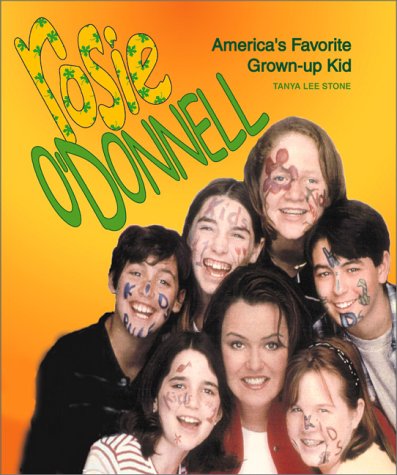

Yes, it's possible to dress down too far...I think Rosie was right to pass by the facial graffiti.
Both of my sisters have been taller and heavier than I am since they were twelve or thirteen years old. The one I knew when she was only eleven, however, had the opportunity to hand down a few outgrown things to me. Among them was a bright pink dress that was more fashionable than flattering to the sister in the early 1980s.
By now, of course, it's not even fashionable. Retro, maybe, but hardly retro-chic. The waist is too high, the skirt is too skimpy, the sleeves have fussy little cuffs meant to turn back right at the elbow, and there's a bit of trimming that was fashionable in the early 1980s because it was unflattering to most women. All early 1980s fashions were inspired by what worked for tall, gaunt Diana Spencer, which was, basically, styles that made her look more like a normal woman, which was to say shorter and fatter. Most women need no help to look shorter and fatter. We didn't in the early 1980s, either, although those of us who were eleven years old at the time can be excused for having to try these things on just to see how unflattering they were. And of course red and bright pink always fade, and by this time this particular pink dress has faded in spots.
So how did this fashion mistake wind up in my wardrobe? I certainly never wore it to work in an office or classroom in Washington; I bought, wore, have kept and have handed down a lot of nicer clothes. But I knit. Sometimes I knit handbags. Knitted handbags last longer if they're lined with woven fabric. Every few years, cycling through my wardrobe, I come to things like this dress. I think, "It's still wearable--intact, comfortable, modest, with nice deep pockets--and I don't need to dress especially well today. Why not get one more wearing out of it. In Gate City I'll undoubtedly meet rich old ladies who will be wearing things older and less flattering even than this dress." So I do, and then while wearing it I think of comedy lines...Lewis Carroll wrote about beach toys:
"Who invented those spades of wood?
Who was it cut them out of the tree?
None, I think, but an idiot could..."
Who was it cut this dress out of some good-quality cotton fabric that could have become a good dress? What were they drinking? Even in 1984 I braced myself mentally for someone to say "Is that your baby sister's sewing class project?" to which the answer, of course, is "No, this is actually an off-the-rack dress she bought; her sewing class project came out much better."
Both of us considered giving this dress to a charity store, in the 1980s, and felt that that would be an uncharitable thing to do. Somebody might have bought it for some unfortunate teenaged daughter who had nothing better to wear, and she might have died of embarrassment...
Nevertheless.
On behalf of all the women out there who've been told that they need to "look their best" on all occasions, here is a thought the sisters and I have found liberating...
Sometimes you don't want to be the best-looking, best-dressed person in the crowd.
Right. Pause for the cognitive dissonance to subside. Yes, we understand that on a college campus, or at gatherings of young office personnel in Washington, or in any part of Hollywood, being the best-looking person in the crowd is extremely unlikely to be a problem. That has never been a problem for us either.
Now consider: Winter holidays. Family gatherings. Little hometown churches. Christmas concerts at hospitals. Same-sex relatives who've heard other relatives tagged as the smart one, the musical one, the tough one, etc., etc., and they're the good-looking one--and as you all tend regularly to be mistaken for one another they don't feel terribly confident about that; they're young, for pity's sake. Yes, there are quite a few situations when any ordinary 25-year-old can be the best-looking person in the crowd, and may not want to be. Then after age 30 there are situations where you may or may not be the best preserved person in a group of people your age, and may or may not want that to be noticed, too.
As a social strategy, wearing styles or colors that are not your best look can backfire, but there are times when it can be disarming. Someone who has no choice about being older, no immediate alternative to being fatter, etc., may still feel insecure enough to feel a need to give you friendly advice (which may not be new to you) about how much shorter and fatter you look in, e.g., a 1980s-fashion skirt that creeps up over your knees when you sit down. In an office where you're hired to be the visual attraction, which is the main reason why people in their twenties are hired by people who don't owe their parents money, this advice must be heeded. In a hometown church, not heeding it just might help this insecure person to resent you a little less.
Yes, you always want to "look your best" in the sense of looking your healthiest...but sometimes it's actually useful to dress down.
Yes, it's possible to dress down too far...I think Rosie was right to pass by the facial graffiti.
Morgan Griffith on the Tax Bill
From U.S. Representative Morgan Griffith, R-VA-9:
"
Tuesday, December 19, 2017 –
Tax Reform: Good for Families, Good for Jobs
In a country whose war for independence was to some degree a tax revolt, taxes can be a touchy subject. A lot of complicated questions are involved. How do we encourage economic growth? How do we raise revenue to pay for spending? What is a fair tax rate? Answering these questions means setting priorities and balancing them.
My priorities for the Ninth District are helping average families and creating jobs. Judging by this benchmark, I support the Tax Cuts and Jobs Act.
While this tax reform is good for businesses, individuals of all income levels will benefit as well. Individual rates are lowered and the standard deduction is nearly doubled. For families, the Child Tax Credit will expand from $1,000 to $2,000. Most of the deductions tax reform eliminates went to higher-income households. This bill’s benefits will be felt most by working and middle-class American families.
The tax system currently in place treats job creators poorly. At 35%, the corporate tax rate stands among the highest in the developed world.
Companies are also taxed heavily when they bring money home from overseas. If they leave it abroad, they avoid most of the taxes. This encourages them to leave money abroad. It’s no wonder they find other countries better for business instead of investing it in the United States.
The Tax Cuts and Jobs Act offers reforms that will encourage businesses to locate their facilities and hire their workers right here in America. It cuts the corporate tax rate to 21% while eliminating many deductions that primarily favored special interests. It lets companies bring money back from abroad to invest here by paying a low one-time tax. It also helps level the playing field between small businesses and large corporations. The bill provides tax incentives for investment in lower-income communities designated as “qualified opportunity zones,” which could include areas of Southwest Virginia.
Throughout the tax reform process, I heard from people living in the district with concerns about particular parts of the code. I heard the historic tax credit has boosted economic development for parts of Southwest Virginia. Accordingly, I had several conversations with House Ways and Means Chairman Kevin Brady about keeping this credit. I am pleased to say that it has been preserved with minor modifications.
I also heard many students express concern about the initial House bill’s treatment of income made as a condition of tuition waivers for graduate students, but the current deduction for this income has been maintained.
While the bill isn’t perfect, it has come under unfair attack for some of its provisions. For example, some say that capping the state and local tax deduction to $10,000 unfairly imposes double taxation.
In truth, the state and local tax deduction primarily benefits high-income earners in high-tax states. An unlimited deduction means lower-income taxpayers are subsidizing high-tax states.
In Southwest Virginia, few people are likely to be hit by this provision. According to the U.S. Census Bureau, the median housing unit value in the Ninth District is $124,100. If a homeowner in the City of Salem, the Ninth District jurisdiction with the highest local real estate tax rate, wanted to deduct his real estate tax on his federal return, the value of his home would have to be $847,457.63 to hit the deduction cap. Other states like New York or California may be hit harder because they have higher property values and more wealth.
But I would ask the question: is it right for Southwest Virginians to pay taxes on behalf of fat cats in New York City in a condo overlooking Central Park or living in San Francisco’s Nob Hill?
No wonder Nancy Pelosi opposes the tax bill. As long as she can convince people from poorer areas of the country to help pay her taxes and the taxes of the wealthy liberal elite, why wouldn’t she? Today, I voted to end this reverse Robin Hood scheme of Nancy Pelosi’s. It’s hard enough for the people of Southwest Virginia without being required to underwrite the expensive homes of the rich.
There are pieces of this tax reform that may need to be revisited in the coming years, but overall, I believe it will do good things for our country, our economy, and most importantly, our people. To judge for yourself, you can read the conference report in its entirety at fairandsimple.gop.
If you have questions, concerns, or comments, feel free to contact my office. You can call my Abingdon office at 276-525-1405 or my Christiansburg office at 540-381-5671. To reach my office via email, please visit my website at www.morgangriffith.house.gov. Also on my website is the latest material from my office, including information on votes recently taken on the floor of the House of Representatives.
Note: due to the holidays, this column has been issued early. There will also be a Christmas column and then the normal schedule will resume after the first of the year.
"
Editorial comment: Thank you, and Merry Christmas, Congressman.
Nancy "Pass it in order to find out what's in it" Pelosi also referred to this tax bill as "Armageddon." Whew. Some thought President Reagan was overstating the case when he compared the "mutual assured destruction" of nuclear war, of which we were all living in fear back then, to Armageddon. For a paid research writing job I recently looked up Ms. Pelosi's history. Some readers may be disappointed to find that her record is all but impeccable; those who oppose her have had to oppose her politics. But that "Armageddon" speech just might be a good one for her to retire on. San Francisco's U.S. Representative seems to be a fine old lady, but lines like that are making her sound a little too old.
There are those who might say that at this point in history it would be better to use tax money to remedy debts and deficits, then start slashing spending...and the position of this web site is that that can be taken up next year.
Tim Kaine, or his staff, also tweeted that the tax bill in its current form contains too many goodies for the Trump tribe. This is possible. Federal legislation tends to pick up all sorts of extraneous additions. A popular bill, such as a budget plan admitting tax cuts, is likely to provoke a debate including ideas like "I'll vote for it if you'll add a provision authorizing $500,000 for my useless brother-in-law to spend on some boondoggle project I know he'll never finish, but it'll keep him busy and away from my house for a year or two." By and large the Virginia legislation this web site will be considering, in January, tends to be well written and free from that kind of garbage, which is why I tweeted, earlier this week, that the U.S. Congress should give more consideration to a requirement that federal laws also be well written, free from garbage, and accessible to the public. Sites like Thomas and Popvox try to make federal bills available to the public but, all too often, don't have access to the full text. This needs to change. That, also, can be taken up next year.
"
Tuesday, December 19, 2017 –
Tax Reform: Good for Families, Good for Jobs
In a country whose war for independence was to some degree a tax revolt, taxes can be a touchy subject. A lot of complicated questions are involved. How do we encourage economic growth? How do we raise revenue to pay for spending? What is a fair tax rate? Answering these questions means setting priorities and balancing them.
My priorities for the Ninth District are helping average families and creating jobs. Judging by this benchmark, I support the Tax Cuts and Jobs Act.
While this tax reform is good for businesses, individuals of all income levels will benefit as well. Individual rates are lowered and the standard deduction is nearly doubled. For families, the Child Tax Credit will expand from $1,000 to $2,000. Most of the deductions tax reform eliminates went to higher-income households. This bill’s benefits will be felt most by working and middle-class American families.
The tax system currently in place treats job creators poorly. At 35%, the corporate tax rate stands among the highest in the developed world.
Companies are also taxed heavily when they bring money home from overseas. If they leave it abroad, they avoid most of the taxes. This encourages them to leave money abroad. It’s no wonder they find other countries better for business instead of investing it in the United States.
The Tax Cuts and Jobs Act offers reforms that will encourage businesses to locate their facilities and hire their workers right here in America. It cuts the corporate tax rate to 21% while eliminating many deductions that primarily favored special interests. It lets companies bring money back from abroad to invest here by paying a low one-time tax. It also helps level the playing field between small businesses and large corporations. The bill provides tax incentives for investment in lower-income communities designated as “qualified opportunity zones,” which could include areas of Southwest Virginia.
Throughout the tax reform process, I heard from people living in the district with concerns about particular parts of the code. I heard the historic tax credit has boosted economic development for parts of Southwest Virginia. Accordingly, I had several conversations with House Ways and Means Chairman Kevin Brady about keeping this credit. I am pleased to say that it has been preserved with minor modifications.
I also heard many students express concern about the initial House bill’s treatment of income made as a condition of tuition waivers for graduate students, but the current deduction for this income has been maintained.
While the bill isn’t perfect, it has come under unfair attack for some of its provisions. For example, some say that capping the state and local tax deduction to $10,000 unfairly imposes double taxation.
In truth, the state and local tax deduction primarily benefits high-income earners in high-tax states. An unlimited deduction means lower-income taxpayers are subsidizing high-tax states.
In Southwest Virginia, few people are likely to be hit by this provision. According to the U.S. Census Bureau, the median housing unit value in the Ninth District is $124,100. If a homeowner in the City of Salem, the Ninth District jurisdiction with the highest local real estate tax rate, wanted to deduct his real estate tax on his federal return, the value of his home would have to be $847,457.63 to hit the deduction cap. Other states like New York or California may be hit harder because they have higher property values and more wealth.
But I would ask the question: is it right for Southwest Virginians to pay taxes on behalf of fat cats in New York City in a condo overlooking Central Park or living in San Francisco’s Nob Hill?
No wonder Nancy Pelosi opposes the tax bill. As long as she can convince people from poorer areas of the country to help pay her taxes and the taxes of the wealthy liberal elite, why wouldn’t she? Today, I voted to end this reverse Robin Hood scheme of Nancy Pelosi’s. It’s hard enough for the people of Southwest Virginia without being required to underwrite the expensive homes of the rich.
There are pieces of this tax reform that may need to be revisited in the coming years, but overall, I believe it will do good things for our country, our economy, and most importantly, our people. To judge for yourself, you can read the conference report in its entirety at fairandsimple.gop.
If you have questions, concerns, or comments, feel free to contact my office. You can call my Abingdon office at 276-525-1405 or my Christiansburg office at 540-381-5671. To reach my office via email, please visit my website at www.morgangriffith.house.gov. Also on my website is the latest material from my office, including information on votes recently taken on the floor of the House of Representatives.
Note: due to the holidays, this column has been issued early. There will also be a Christmas column and then the normal schedule will resume after the first of the year.
"
Editorial comment: Thank you, and Merry Christmas, Congressman.
Nancy "Pass it in order to find out what's in it" Pelosi also referred to this tax bill as "Armageddon." Whew. Some thought President Reagan was overstating the case when he compared the "mutual assured destruction" of nuclear war, of which we were all living in fear back then, to Armageddon. For a paid research writing job I recently looked up Ms. Pelosi's history. Some readers may be disappointed to find that her record is all but impeccable; those who oppose her have had to oppose her politics. But that "Armageddon" speech just might be a good one for her to retire on. San Francisco's U.S. Representative seems to be a fine old lady, but lines like that are making her sound a little too old.
There are those who might say that at this point in history it would be better to use tax money to remedy debts and deficits, then start slashing spending...and the position of this web site is that that can be taken up next year.
Tim Kaine, or his staff, also tweeted that the tax bill in its current form contains too many goodies for the Trump tribe. This is possible. Federal legislation tends to pick up all sorts of extraneous additions. A popular bill, such as a budget plan admitting tax cuts, is likely to provoke a debate including ideas like "I'll vote for it if you'll add a provision authorizing $500,000 for my useless brother-in-law to spend on some boondoggle project I know he'll never finish, but it'll keep him busy and away from my house for a year or two." By and large the Virginia legislation this web site will be considering, in January, tends to be well written and free from that kind of garbage, which is why I tweeted, earlier this week, that the U.S. Congress should give more consideration to a requirement that federal laws also be well written, free from garbage, and accessible to the public. Sites like Thomas and Popvox try to make federal bills available to the public but, all too often, don't have access to the full text. This needs to change. That, also, can be taken up next year.
Book Review: Claudia and the Clue in the Photograph
A Fair Trade Book


Title: Claudia and the Clue in the Photograph (Baby-Sitters
Club Mystery #16)
Author: Ann M. Martin
Author's web site: http://www.scholastic.com/annmartin/
Date: 1994
Publisher: Scholastic
ISBN: 0-590-47054-X
Length: 153 pages
Quote: "I was especially fascinated with the
facade of the old Stoneybrook bank building."
For an art project Claudia snaps lots of photographs of
the bank building. Then they learn that one of the bank's employees has been
misplacing or misappropriating money, and in Stoneybrook, where even the
thirteen-year-old Baby-Sitters have a bank account, there's a lot of money to
be stolen. Claudia, the artist and Nancy Drew fan, suspects a man who's wearing
two watches, one of which doesn't work.
Hmm...this is the third of three BSC books this web site has reviewed lately, and all three feature Claudia. There's a reason for this. Children don't always go for the fashion dolls who look like them; some children think Barbie is supposed to be blonde, and some have a real collector's instinct to acquire one of each of as many types of fashion dolls as possible. There is, however, a local market that calls itself "Indian Mountain," where anything that fits into the Cherokee/pioneer/frontier-days theme seems to sell. Claudia Kishi is Japanese-American, in the books, but since fashion dolls don't really look all that much like humans of any type, for doll buyers there it seems to be all the same thing. Dolls with long black hair, tan skin, and dark eyes sold...and since then I've received more books to match to that type of dolls.
Although you can certainly get secondhand copies of Claudia and the Clue in the Photograph for less than $10 (or $11 online), that $5 per book, $5 per package, $1 per online payment, system is what funds this web site's Fair Trade Books system. When you pay this price, first of all you get to fill a box for $5, which makes it cheaper for you to buy eight or ten BSC books from this web site and pay one $5 shipping charge than it would be to buy eight or ten BSC books from different sellers on Amazon and pay eight or ten separate shipping charges. Then, for each book you order for which we can locate a living author, we send 10% of the total cash price to that author or a charity of her or his choice. So, if you buy eight regular BSC novels or mysteries, or ten BSC books including some of the skinnier "Little Sister" books, Martin or her charity gets $8 or $10; if you buy only one, Martin or her charity gets $1.
As regular readers remember, it's also possible to order dolls dressed to match a book for $10 per doll; if you choose that option, you could order up to four BSC dolls and books for a total of $65 (U.S. postal money order to Boxholder, P.O. Box 322) or $66 (Paypal payment to the account you get by e-mailing salolianigodagewi) to the appropriate address at the very bottom of the screen. From that $65, Martin or her charity would receive $6.50.
Wednesday, December 20, 2017
Belated NaNoWriMo Post
Gentle Readers, the computer says most of you in the United States are offline. Page views here are low; Google + activity is low; Twitter activity is low. If you're offline because you're unplugging and spending holiday time with friends and family in real life, that's excellent news. I don't expect that many of you have been affected by fires in the West and floods in the South...we all know the McDougalls are doctors, but we also know they're taking some heavy financial losses. I hope that's all any readers of this web site are taking.
I never do "National Novel Writing Month," which takes place in November. By and large I think the world has enough novels and, when new novels go slowly, there's usually a good reason.
Many years ago I wrote a novel about the "chronic mononucleosis," or whatever other name people gave it, some schoolmates and I had after having measles vaccinations from that batch, in Michigan. Well, it was fun at the time. The word at the time was that disease novels, however happy their endings, just didn't sell. The world has been spared my CFIDS novel. You're welcome.
This month, however, a niche publisher has specifically asked for disease novels...and I've chosen to stack the odds against myself by writing a whole new one, in one month, about the more timely topic of celiac disease and the celiac-like reactions non-celiacs have been having to glyphosate. I suspected in 1996 that there was some reason why four people living in one neighborhood got four different diagnoses for one identical symptom. At least two of those four diagnoses turned out to be accurate: I have the celiac gene, and my father, who didn't have that gene, was reacting to a prescription medication he was using. One of the four diagnoses turned out to be dead wrong: the man who was told he had fourth-stage cancer is alive and working today. But why did we all have the same symptom at the same time? I look back and can't believe that it took me until 2015 to make the connection...that was when other popular agricultural poisons were being displaced by "Roundup" in my part of the world.
I've made the decision to try to write up what I've been learning as a fact-based novel. Living people's identities will be falsified; events and documents will be accurate. I'll continue sharing and retweeting evidence as it rolls in, because it is rolling in by the truckload--the more people report that glyphosate is making us sick and/or ill, the harder the Monsanto Chemical Company seems to be pushing the stuff. I'll try, though, to put it all in one place, other than this web site, and then pray fervently that future #phenology posts won't have to continue documenting the horror and anguish #glyphosate is inflicting on plants, animals, and humans I know.
After closing on Friday the cafe plans to reopen on Wednesday the third of January. What will I do with all that offline time, when the weather won't be enticing me to take on some sort of outdoor chore? Curl up with a warm computer of course. Thanksgiving holidays were for the cookbook; Christmas-to-New-Year's will be for the novel.
This unfolding story is just so weird, Gentle Readers. Last night I was exposed to a TV news program where the news reader warned people that even egg-free cookie dough now needs to be considered unsafe to eat, because raw grain products may cause E. coli reactions. Now how would that happen? Because "Roundup-Ready" grain has been bioengineered to withstand spraying with glyphosate, even directly on the standing grain, by having DNA spliced into it from E. coli! Back when this bioengineering experiment was going on, E. coli grain "only" made a lot of poorer, darker-complexioned people in the Philippines sick, and there was a lot of foofarah about GMO grain released in the U.S. having been made with a strain of the bacteria that was less harmful to humans. Well...prolonged exposure and all that. Rich Anglo-Americans are now about to share those Filipinos' experience! Even those whom glyphosate has not already allowed to share the Irish celiac experience! And people just don't want to recognize the evidence that is jumping up and down and yapping in their faces...oh, cognitive dissonance is sooo hurtful!
But of course, Steve Milloy seems a little too eager to tell us...the morning after we learn that raw flour now harbors E. coli, we learn that (Monsanto-funded) studies did not show glyphosate to be a (direct, primary, unmistakable, SLAPS-you-in-the-face) cause of cancer.
https://junkscience.com/2017/12/monsantos-roundup-glyphosate-no-carcinogen-concludes-epa/
This web site is not surprised. This web site is not old enough to remember how long it took to prove that cigarettes (dioxin in the bleached white paper more than nicotine in et per se) caused cancer--but its writer and founding members are. Glyphosate produces a wider range of reactions than nicotine does; nicotine is downright predictable. And a lot of money is going into this denial.
Here's my latest activist e-mail, this one addressed to the E.P.A., spun off another Friends of the Earth form:
"
The extent to which different factors promote cancer may be impossible to prove, but I know for sure that glyphosate exposure makes me sick. I didn't want to live through years of experiments to confirm this; others have forced those experiments on me. Breathing glyphosate in the air makes my nose run. Eating glyphosate-contaminated food makes my colon bleed.
I suspect the only reason why studies fail to show one consistent health risk for glyphosate is that genetic factors cause people to react differently. I've seen five people in one house each show a different reaction--but all of them reacted after exposure to this poison.
Walking through a neighborhood, I can tell when some fool's been spraying glyphosate somewhere by the dead songbirds on the ground. Last summer I was able to save my adult cat after she'd eaten one of those birds and become ill, but not the foster kittens she'd just started allowing to nurse...and my house wren also died. I lost plants and helpful insects that were dear to me.
Because the mountain spring close to my home was contaminated, I became unable to drink, cook with, or bathe with my own water. I've known I had the celiac gene for about twenty years, and everyone in town knows I'm an alien freak who can't eat human food anyway...but several of the people who drank that water after it was processed through the town water system have been sick too, and they don't know why.
One friend complained that ever since she had flu *last March* she had bronchitis and vertigo and felt unable to drive or enjoy her grandchildren, some days worse than others, but she couldn't predict or control which days. A few minutes later she mentioned spraying "Roundup" on her garden. I asked whether there was any correlation with her bronchitis and vertigo. She screamed! She hadn't wanted to see it, but the correlation was there.
*In theory*, Monsanto says, glyphosate interferes only with photosynthesis. Over the years since this poison has been used, I've seen that in reality that's just not true.
I find it particularly ironic that the claim that glyphosate *may* not be a *primary* cause of cancer came out hours after the CDC admitted that GMO grain containing DNA from E. coli might give people the E. coli reaction. For those of us who have the celiac gene, wheat is worse than E. coli in any case--but corn, rice, soybeans, nuts, and just about all foods other than wheat, *used to* be safe and we *used to* be able to expect a normal healthy life if we just avoided one food.
Now, in this glyphosate-saturated world, I never know what I can eat with any confidence about not being sick the next day.
I urge the EPA to revoke glyphosate’s registration and pull it from use.
(Yes, this is a form provided by an organization. I'm sure whoever reads this letter has read dozens or hundreds of copies of the data provided in the form below...what I wrote above this paragraph is fresh data from a separate person.)
Apart from significant risks to human health, the U.S. Geological Survey routinely finds glyphosate in U.S. waterways. Ecological data also reports that glyphosate and glyphosate-formulated products are toxic to aquatic organisms and are extremely lethal to amphibians.
Independent studies have found concentrations of glyphosate in human urine and breast milk. Recent studies even indicate glyphosate has the potential to be even more harmful in combination with other chemicals.
In the past 19 years, glyphosate use in U.S. agriculture has increased 20-fold. Glyphosate’s long term impacts are just starting to be apparent with monarch decline serving as just one example. Glyphosate is widely used among the monarchs' migration route -- virtually wiping out milkweed, the only food young monarchs eat. A recent report found monarch butterflies would need a 5-fold increase to recover from risk of quasi-extinction.
Monsanto’s glyphosate is harming our environment and the very ecosystems we depend on for sustainable food and farming systems -- and it’s also harming our health.
The studies are clear -- we need action now. I urge the EPA to protect our health and the environment by revoking glyphosate’s license and pulling it from use.
Sincerely,
" [my name and e-mail address]
(Fair disclosure: Maybe I should have mentioned that pesticide poisoning of amphibians is wiping out the primary natural predator on mosquitoes, which spread diseases. Maybe not. Scott Pruitt undoubtedly knows that and a few dozen other people probably reminded him. But any students out there who may be looking for a winter term paper topic might want to check out the latest updates on endangered frogs and toads.)
For those who feel moved to share your own thoughts, insights, "Aha" moments, gross-outs, whatever, with Scott Pruitt and our Environmental Protection Administration (U.S. readers only, please), click here to open the form and send your own e-letter. German, Italian, and Polish readers, a group I hope includes some old e-friends from Bubblews and even AC, have your own glyphosate ban campaigns, with which this web site wishes you well.
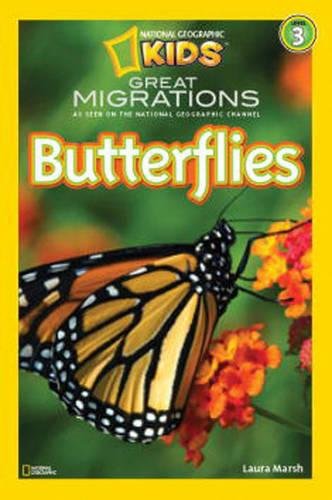
For Amazon, a book about monarch butterflies...it's National Geographic, so you know the pictures will be awesome. (So are the butterflies.)

I never do "National Novel Writing Month," which takes place in November. By and large I think the world has enough novels and, when new novels go slowly, there's usually a good reason.
Many years ago I wrote a novel about the "chronic mononucleosis," or whatever other name people gave it, some schoolmates and I had after having measles vaccinations from that batch, in Michigan. Well, it was fun at the time. The word at the time was that disease novels, however happy their endings, just didn't sell. The world has been spared my CFIDS novel. You're welcome.
This month, however, a niche publisher has specifically asked for disease novels...and I've chosen to stack the odds against myself by writing a whole new one, in one month, about the more timely topic of celiac disease and the celiac-like reactions non-celiacs have been having to glyphosate. I suspected in 1996 that there was some reason why four people living in one neighborhood got four different diagnoses for one identical symptom. At least two of those four diagnoses turned out to be accurate: I have the celiac gene, and my father, who didn't have that gene, was reacting to a prescription medication he was using. One of the four diagnoses turned out to be dead wrong: the man who was told he had fourth-stage cancer is alive and working today. But why did we all have the same symptom at the same time? I look back and can't believe that it took me until 2015 to make the connection...that was when other popular agricultural poisons were being displaced by "Roundup" in my part of the world.
I've made the decision to try to write up what I've been learning as a fact-based novel. Living people's identities will be falsified; events and documents will be accurate. I'll continue sharing and retweeting evidence as it rolls in, because it is rolling in by the truckload--the more people report that glyphosate is making us sick and/or ill, the harder the Monsanto Chemical Company seems to be pushing the stuff. I'll try, though, to put it all in one place, other than this web site, and then pray fervently that future #phenology posts won't have to continue documenting the horror and anguish #glyphosate is inflicting on plants, animals, and humans I know.
After closing on Friday the cafe plans to reopen on Wednesday the third of January. What will I do with all that offline time, when the weather won't be enticing me to take on some sort of outdoor chore? Curl up with a warm computer of course. Thanksgiving holidays were for the cookbook; Christmas-to-New-Year's will be for the novel.
This unfolding story is just so weird, Gentle Readers. Last night I was exposed to a TV news program where the news reader warned people that even egg-free cookie dough now needs to be considered unsafe to eat, because raw grain products may cause E. coli reactions. Now how would that happen? Because "Roundup-Ready" grain has been bioengineered to withstand spraying with glyphosate, even directly on the standing grain, by having DNA spliced into it from E. coli! Back when this bioengineering experiment was going on, E. coli grain "only" made a lot of poorer, darker-complexioned people in the Philippines sick, and there was a lot of foofarah about GMO grain released in the U.S. having been made with a strain of the bacteria that was less harmful to humans. Well...prolonged exposure and all that. Rich Anglo-Americans are now about to share those Filipinos' experience! Even those whom glyphosate has not already allowed to share the Irish celiac experience! And people just don't want to recognize the evidence that is jumping up and down and yapping in their faces...oh, cognitive dissonance is sooo hurtful!
But of course, Steve Milloy seems a little too eager to tell us...the morning after we learn that raw flour now harbors E. coli, we learn that (Monsanto-funded) studies did not show glyphosate to be a (direct, primary, unmistakable, SLAPS-you-in-the-face) cause of cancer.
https://junkscience.com/2017/12/monsantos-roundup-glyphosate-no-carcinogen-concludes-epa/
This web site is not surprised. This web site is not old enough to remember how long it took to prove that cigarettes (dioxin in the bleached white paper more than nicotine in et per se) caused cancer--but its writer and founding members are. Glyphosate produces a wider range of reactions than nicotine does; nicotine is downright predictable. And a lot of money is going into this denial.
Here's my latest activist e-mail, this one addressed to the E.P.A., spun off another Friends of the Earth form:
"
The extent to which different factors promote cancer may be impossible to prove, but I know for sure that glyphosate exposure makes me sick. I didn't want to live through years of experiments to confirm this; others have forced those experiments on me. Breathing glyphosate in the air makes my nose run. Eating glyphosate-contaminated food makes my colon bleed.
I suspect the only reason why studies fail to show one consistent health risk for glyphosate is that genetic factors cause people to react differently. I've seen five people in one house each show a different reaction--but all of them reacted after exposure to this poison.
Walking through a neighborhood, I can tell when some fool's been spraying glyphosate somewhere by the dead songbirds on the ground. Last summer I was able to save my adult cat after she'd eaten one of those birds and become ill, but not the foster kittens she'd just started allowing to nurse...and my house wren also died. I lost plants and helpful insects that were dear to me.
Because the mountain spring close to my home was contaminated, I became unable to drink, cook with, or bathe with my own water. I've known I had the celiac gene for about twenty years, and everyone in town knows I'm an alien freak who can't eat human food anyway...but several of the people who drank that water after it was processed through the town water system have been sick too, and they don't know why.
One friend complained that ever since she had flu *last March* she had bronchitis and vertigo and felt unable to drive or enjoy her grandchildren, some days worse than others, but she couldn't predict or control which days. A few minutes later she mentioned spraying "Roundup" on her garden. I asked whether there was any correlation with her bronchitis and vertigo. She screamed! She hadn't wanted to see it, but the correlation was there.
*In theory*, Monsanto says, glyphosate interferes only with photosynthesis. Over the years since this poison has been used, I've seen that in reality that's just not true.
I find it particularly ironic that the claim that glyphosate *may* not be a *primary* cause of cancer came out hours after the CDC admitted that GMO grain containing DNA from E. coli might give people the E. coli reaction. For those of us who have the celiac gene, wheat is worse than E. coli in any case--but corn, rice, soybeans, nuts, and just about all foods other than wheat, *used to* be safe and we *used to* be able to expect a normal healthy life if we just avoided one food.
Now, in this glyphosate-saturated world, I never know what I can eat with any confidence about not being sick the next day.
I urge the EPA to revoke glyphosate’s registration and pull it from use.
(Yes, this is a form provided by an organization. I'm sure whoever reads this letter has read dozens or hundreds of copies of the data provided in the form below...what I wrote above this paragraph is fresh data from a separate person.)
Apart from significant risks to human health, the U.S. Geological Survey routinely finds glyphosate in U.S. waterways. Ecological data also reports that glyphosate and glyphosate-formulated products are toxic to aquatic organisms and are extremely lethal to amphibians.
Independent studies have found concentrations of glyphosate in human urine and breast milk. Recent studies even indicate glyphosate has the potential to be even more harmful in combination with other chemicals.
In the past 19 years, glyphosate use in U.S. agriculture has increased 20-fold. Glyphosate’s long term impacts are just starting to be apparent with monarch decline serving as just one example. Glyphosate is widely used among the monarchs' migration route -- virtually wiping out milkweed, the only food young monarchs eat. A recent report found monarch butterflies would need a 5-fold increase to recover from risk of quasi-extinction.
Monsanto’s glyphosate is harming our environment and the very ecosystems we depend on for sustainable food and farming systems -- and it’s also harming our health.
The studies are clear -- we need action now. I urge the EPA to protect our health and the environment by revoking glyphosate’s license and pulling it from use.
Sincerely,
(Fair disclosure: Maybe I should have mentioned that pesticide poisoning of amphibians is wiping out the primary natural predator on mosquitoes, which spread diseases. Maybe not. Scott Pruitt undoubtedly knows that and a few dozen other people probably reminded him. But any students out there who may be looking for a winter term paper topic might want to check out the latest updates on endangered frogs and toads.)
For those who feel moved to share your own thoughts, insights, "Aha" moments, gross-outs, whatever, with Scott Pruitt and our Environmental Protection Administration (U.S. readers only, please), click here to open the form and send your own e-letter. German, Italian, and Polish readers, a group I hope includes some old e-friends from Bubblews and even AC, have your own glyphosate ban campaigns, with which this web site wishes you well.
For Amazon, a book about monarch butterflies...it's National Geographic, so you know the pictures will be awesome. (So are the butterflies.)
Book Review: Rascal
Title: Rascal


Author: Sterling North
Date: 1963
Publisher: Penguin
ISBN: 0-590-44671-1
Length: 189 pages
Illustrations: black-and-white pictures by John
Schoenherr
Quote: "We dug out a den of raccoons, and here is
the one we brought home."
Sterling and
Oscar thought their dog Wowser was digging into a groundhog's hole when the dog
dug up the raccoon family. Three of the baby raccoons escaped with their mother.
The boys caught one little raccoon. Sterling was allowed to keep the animal for
a pet. He called it Rascal. Considering the way the boy Sterling admits he
first got his hands on Rascal, he hardly deserved to have the little animal
survive and mature into a lovable companion; raccoons become less lovable when
they're full-grown, but for that first year Rascal followed Sterling around and
trilled and snuggled just like a bigger, cleverer kind of cat.
This was in
1918, a bittersweet year for young Sterling, he recalls, writing as a mature
man. His mother was dead,
his siblings grown up and moved out; his brother was in Europe, fighting the
war. Wartime censorship kept Sterling, his father, and his sisters from
realizing how much danger brother Herschel was in. Sterling was earning his own
money by trapping and skinning wild animals, mowing, weeding, and so on, and
was considered "a very competent eleven-year-old." He would soon be
crippled by polio, but didn't know it yet. He had some other pets, including a
crow and a skunk family, and a remote but sympathetic father who let him do
things like build his own canoe in the living room. His father seems to have
had more money than most of Sterling's friends and relatives.
He had some
of his best childhood experiences that year, he tells us. Reluctant to lock
Rascal in a cage while fresh corn was ripening, he was allowed to spend two
weeks camping beside Lake Superior with his father and Rascal. His friend's
horse, who was a friend of Sterling's and Rascal's too, won a horse race, and
Sterling almost won a timed pie eating contest but
was disqualified because Rascal helped. Ordered to keep Rascal on a leash with
a collar, he visited a local craftsman and had real works of art custom-made to
fit Rascal's half-grown neck. He helped save an uncle's tobacco crop in cold
weather. When the new
catalogue from the trap company featured a picture of a raccoon caught in a
trap, Sterling renounced trapping and hunting. And when Rascal was about one
year old, a female raccoon came to visit, and Sterling took Rascal on a
moonlight boat ride around the local lake...and came home alone.
Flash-forward...When
I was the age of Sterling and Oscar, my parents didn't go into Gate City more
than was absolutely necessary. Once or twice a month they'd let us leave school
early and hang out with one of the older relatives who'd moved into town while
our parent or parents shopped. I remember the afternoon Dad came up to
Grandma's house, very pleased with himself for having found a copy of Rascal in a secondhand store. "As
good a book as I can remember," Dad raved. "Meaning I won't
like it," I thought. Sure enough it was a story about some old boy who didn't even have a
sister...but then I started reading it, anyway, and I did like it. So did my
brother. It became one of our favorite books.
We never
attracted a raccoon, although we thought we wanted one, during my brother's
lifetime. Chickens were still mostly free-range in our neighborhood and
raccoons, possums, and otters had been shot on sight for many years. By 2007,
when someone had a sweet but misguided idea about fostering chickens at the Cat
Sanctuary, raccoon populations had recovered enough that I trapped and evicted
three chicken-eating raccoons.
Then there
was little Rackety...Regular readers remember the sad end of the sweet, polite
little girl raccoon, Rackety. The cats and I liked and trusted her for a few
years, and then she started killing kittens.
In
recommending Rascal to readers I think it's obligatory
to say that of course kidnapping a raccoon out of its nest is a mean, cruel
thing to do. In the book Sterling didn't realize what a bad thing he was doing,
but he does some growing up in the course of the book. You know that if you can afford to let
baby raccoons live anywhere, you want to let them live with their mothers.
This of
course means that they may become very friendly animals, in their way,but they
won't be pets like Rascal who curl up on your bed at night. If encouraged an
adult raccoon may hold your finger in its adorable tiny hand. Then since the
raccoon's instincts are telling it to assert its territorial rights, it may
chomp your finger by way of saying "I'm the boss." One of Rascal's
cute tricks was grabbing a hen by the neck with each little hand--again, more
of a dominance display than even a food craving. Adult raccoons can kill adult cats, and eat them if
hungry. They can kill dogs, too; North says "if cornered," and the
"pleasure" of a raccoon hunt is watching a big male raccoon fight a
whole pack of hounds, but raccoons sometimes start these fights. If a raccoon
thinks you are its private caterer, it may attack other animals who rely on you
for food too. Most carnivorous animals don't actually like the taste of humans
and won't kill human babies unless they're rabid or starving, but raccoons
aren't wired for respectful relationships and, if encouraged to lose their fear
of humans, are likely to bite even the humans who feed them.
Generally,
lovable though these animals can be, everyone is best off when they don't
become real pets. Some people coexist for years with raccoons who keep about
ten feet away from humans and our pets, but then, if those raccoons have
multiple families...Raccoons can be spayed or neutered if you really want to
keep them as pets; they're less aggressive when not raising families. (This is
not, however, a recommended option when raccoons have grown up wild; it wasn't
something I could seriously consider for poor little Rackety. They're neither
stupid enough to forget nor affectionate enough to forgive.) They are as
vulnerable to infections as domestic animals are, and more vulnerable to food
poisoning since they eat a wider range of foods--and non-foods. They have to be
kept in cages or on leashes at all times. They can use their clever little
hands to twist off lids, open locks, take things apart, and generally destroy
any part of a house or garden in which they're not watched. Few if any other
animals seem to be as capable of cruelty for its own sake as some humans are, but
some raccoons come close; they do knowingly kill and destroy just to assert
their claim to a given territory. They really are "bear-cats" that
can display some of the worst qualities of both bear and cat.
But they're
just so dang cute...people probably will always want to bond with raccoons,
even though the happiest possible ending to those pet stories is that, like
Rascal, the year-old animal may just bound off into the woods and never look
back.
There's
another layer of happiness to the ending of Rascal.
During his year of friendship with an animal most humans consider a nuisance to
be killed and skinned, Sterling learns more about the animals his generation
are pushing to "endangered" status. He's looked forward to easy money
from another year's trapping, but when the new catalogue advertises a trap with
a picture of a raccoon caught in it, Sterling turns against the fur
trade--forever, he tells us. He becomes more mindful about hunting, too.
The real T.
Sterling North survived polio and became a writer, mostly about animals and
naturalists. The Wikipedia article about him needs improvement. Hoping to learn
more about this author, I found an article that's not even complete; where's the list of those "many other books"
he wrote, in addition to The Wolfling and So Dear to My Heart, none of which I've never found?
Rascal has been reprinted and translated many
times; a Japanese version (Arasukaru) is credited with creating a market
for raccoons as pets in Japan (where they're non-native and somewhat dangerous),
and I personally have a Spanish edition (Pillastre). If you're not
particular about which printing you get, English editions are fairly easy to
find. To show support for this web site, send $5 per book, $5 per package, and
$1 per online payment to the appropriate address at the bottom of the screen.
Up to four books the size of the original hardcover edition, or eight the size
of the "pocket" paperback, will fit into one $5 package.
Tuesday, December 19, 2017
Tortie Tuesday: Is Heather an Alpha Pet?
(Status update: I received my $260 out of that $300 for that e-book! Yesss! Last week I also received $20 for four more paid, planned blog posts. The local lurker didn't choose a topic; Tweeps suggested "alpha pets."
These days US$260 won't go far. You still need to support this web site:
https://www.patreon.com/user?u=4923804
https://www.freelancer.com/u/PriscillaKing
https://www.guru.com/freelancers/priscilla-king
https://www.fiverr.com/priscillaking
https://www.iwriter.com/priscillaking
https://www.seoclerk.com/user/PriscillaKing )
Because #TortieTuesday posts are supposed to be cute, I did actually ask my senior cat Heather whether she considers herself an Alpha Pet. She purred "yes"--but a lot of guessing takes place in "conversations" between humans and pets, even Listening Pets. Heather is indisputably a pet, and does she ever know it. I'd be surprised if she had any idea what "alpha" means.
According to some people tweeting about this topic, a lot of dog owners don't have the idea either. They inadvertently reward undisciplined or even aggressive behavior, then say "It's just an alpha dog" and either indulge the dog until it does something unforgivable, or write it off and put it up for adoption. Or they misread good advice about maintaining the animal's respect as meaning that they need to bully and abuse the animal until, pushed too far, it fights back.


Harrumph. The position of this web site is that, first of all, most social animals' status hierarchies aren't set in cement. Most if not all animals that recognize leader or "alpha" and follower or "beta" roles play both roles in relation to different members of a group of their own species. The animal who actually becomes the leader is likely to have valuable assets, which may include fighting prowess and aggressiveness, or may be more a matter of seniority, cleverness, food-finding skills, communication skills, and willingness to share. Since humans have superior seniority and cleverness, any self-respecting human should be able to maintain a solid leadership position among dogs.
That said, an animal whose survival assets make it a leader among its own kind is likely to make a great pet for any human who wins its respect. Humans are born with the ability to win the respect of most animals that show any capacity for respectful social relationships at all. How to build and maintain mutually respectful social relationships, with humans or with other animals, is something we can never afford to stop learning.
A third point that's not always as obvious to humans as it should be is that leadership positions in groups of animals are not usually gained or maintained by violence. Yes, most animals play-fight. Yes, superior strength and fighting moves can be among a leader's assets. However, who wants to follow a leader who harms his followers? Animals like to follow a leader who improves their chances of surviving and reproducing, not one who lowers their chances. An occasional nip, slap, or kick may be used to stop undesirable behavior, but if you watch animal groups for very long you'll see that the leaders maintain their status by actually leading the followers (to food, or to other benefits) and sharing the rewards of following. Challenging outsiders with a threat display may be part of leadership, but most of these threat displays are bluffs. Most of the time, other animals respond to a threat display by recognizing the bluffer's claim and backing off. Animal fights make dramatic TV shows but most animals rarely if ever get into a serious fight.
Some animals really like being followers. They may be big enough, strong enough, and smart enough to be quite good "accidental" leaders, but they're glad to fall into line as soon as someone else seems willing to take the lead. They can be wonderful pets, though they seldom become the subjects of great pet stories.
However, when humans live in "submissive" relationships with other animals (reportedly apes and even badgers, as well as canines), it's always in environments where the other species has a clear survival advantage over a lone human. In humans' homes, humans have the clear survival advantage; an animal who shares a human's home is acting on its follower instincts toward the human, and will probably continue to do so unless the human miseducates it. (That's why some wild or feral animals who have bonded with a human won't willingly stay in or near the human's house. They feel safer in their kind of environment.)
Some animals do seem to feel that they'd make a better leader than their human is currently being. Some animals do play roughly--or, rather, the same nips or claw-grabs that feel pleasant to another dog, cat, or horse's hide damage humans' thinner skin. However, an animal who seriously bites, goes for a human's eyes or throat, or even seems to experienced observers as if it might do those things, is not making a friendly challenge for leadership; it's making a panicky defensive display that needs to be subdued and extinguished, not rewarded, and not punished with physical abuse. An animal making a challenge for leadership is more likely to pull hard on the leash, ignore commands it's learned to follow, continue whining or barking or jumping up and down for attention--and that kind of behavior also needs to be subdued and extinguished, but the challenge is doing it while simultaneously showing the animal that the human is a good leader.


For young human children, a hint of submissive behavior can be effective with a basically gentle animal who just knows that the child is not fit for a leadership position. A mare's or cow's corrective behavior, if a child does something the mother animal doesn't want done around her foal or calf, is just too dangerous; small children should just be kept away from large young animals. Most domestic animals' protective parent displays are done with care not to do real harm to the child, and sometimes a dog, cat, chicken, or even goat can defend its young from a human toddler more effectively than a human adult can.
My first pet was an alpha female hen--one of the "Game" breed originally developed for commercial fighting, but prized by Green farmers for their beauty, loyal friendship if they do become tame, and willingness to protect their young. I admired the hen but was small enough, at age five, to be intimidated by her protective-mother threat display. I was offering fresh greens to her babies through a screen of chicken wire, and that hen looked as if she were going to come right through that screen and attack me. I backed down fast. The hen recognized that I'd backed down, and instantly became friendlier. I could sense that she was nonverbally saying, "Come back and be friends." So I did, and although that hen was too old to become a cuddly pet, she and I got along well for the rest of her life. She'd let me reach in under her and remove other hens' eggs from the nest box, or tell me when to wait while she added her own egg to the rest.
Wild canines often show a clear division of leadership between an alpha male and an alpha female, with the female deferring to the male in some situations and the male deferring to the female in other situations, and both (usually a mated pair) taking the lead over the rest of the pack. Wild horses, too, often have an alpha male and an alpha female; which one actually does more "herding" and "dominating" seems to vary from herd to herd. Social cats, I've been bemused to see, can have similar patterns. If a male does spend time among the females, although female cats usually let males dominate at mealtimes (unless they're nursing mothers or half starved), the females set the rules about the care of kittens and the general rules of etiquette for the pride...and my rescued feral cat Mackerel, who grew up to be a big strong tomcat, definitely enforced the rules on behalf of his tiny but tough little sister Polly.
These days US$260 won't go far. You still need to support this web site:
https://www.patreon.com/user?u=4923804
https://www.freelancer.com/u/PriscillaKing
https://www.guru.com/freelancers/priscilla-king
https://www.fiverr.com/priscillaking
https://www.iwriter.com/priscillaking
https://www.seoclerk.com/user/PriscillaKing )
Because #TortieTuesday posts are supposed to be cute, I did actually ask my senior cat Heather whether she considers herself an Alpha Pet. She purred "yes"--but a lot of guessing takes place in "conversations" between humans and pets, even Listening Pets. Heather is indisputably a pet, and does she ever know it. I'd be surprised if she had any idea what "alpha" means.
According to some people tweeting about this topic, a lot of dog owners don't have the idea either. They inadvertently reward undisciplined or even aggressive behavior, then say "It's just an alpha dog" and either indulge the dog until it does something unforgivable, or write it off and put it up for adoption. Or they misread good advice about maintaining the animal's respect as meaning that they need to bully and abuse the animal until, pushed too far, it fights back.
![Chicago Days/Hoboken Nights by [Pinkwater, Daniel]](https://images-na.ssl-images-amazon.com/images/I/51%2BUfUVvJ8L.jpg) |
| This writer knows his malamutes...but in order to understand what he said about them, at least read his general dog book. |
![Superpuppy: How to Choose, Raise, and Train the Best Possible Dog for You by [Pinkwater, Jill, Pinkwater, Daniel]](https://images-na.ssl-images-amazon.com/images/I/51OTlUdKDgL.jpg) |
| A good leader doesn't beat you up, but keeps you thinking and learning. |
Harrumph. The position of this web site is that, first of all, most social animals' status hierarchies aren't set in cement. Most if not all animals that recognize leader or "alpha" and follower or "beta" roles play both roles in relation to different members of a group of their own species. The animal who actually becomes the leader is likely to have valuable assets, which may include fighting prowess and aggressiveness, or may be more a matter of seniority, cleverness, food-finding skills, communication skills, and willingness to share. Since humans have superior seniority and cleverness, any self-respecting human should be able to maintain a solid leadership position among dogs.
That said, an animal whose survival assets make it a leader among its own kind is likely to make a great pet for any human who wins its respect. Humans are born with the ability to win the respect of most animals that show any capacity for respectful social relationships at all. How to build and maintain mutually respectful social relationships, with humans or with other animals, is something we can never afford to stop learning.
A third point that's not always as obvious to humans as it should be is that leadership positions in groups of animals are not usually gained or maintained by violence. Yes, most animals play-fight. Yes, superior strength and fighting moves can be among a leader's assets. However, who wants to follow a leader who harms his followers? Animals like to follow a leader who improves their chances of surviving and reproducing, not one who lowers their chances. An occasional nip, slap, or kick may be used to stop undesirable behavior, but if you watch animal groups for very long you'll see that the leaders maintain their status by actually leading the followers (to food, or to other benefits) and sharing the rewards of following. Challenging outsiders with a threat display may be part of leadership, but most of these threat displays are bluffs. Most of the time, other animals respond to a threat display by recognizing the bluffer's claim and backing off. Animal fights make dramatic TV shows but most animals rarely if ever get into a serious fight.
Some animals really like being followers. They may be big enough, strong enough, and smart enough to be quite good "accidental" leaders, but they're glad to fall into line as soon as someone else seems willing to take the lead. They can be wonderful pets, though they seldom become the subjects of great pet stories.
 |
| Grayzel was a tough, adventurous social cat who liked to be a follower. Most of the time her sisters Mogwai and Bisquit seemed dominant, and even the kittens seemed dominant over Grayzel as they grew up. Nevertheless they respected Grayzel's claims when Grayzel did assert herself; it was just that she seldom did. |
There are occasional records of humans who've lived in social relationships with animals where the animals really were the leaders. Human scientists really have experimentally interacted with wolves in the way Jean Craighead George imagined a runaway teenager doing, and found it possible to convince a big strong wolf who could easily eat a human that the human is innocent and cute enough that the wolf should treat it like a foster pup instead.
 |
| For how long would Julie really have been safe in the wolf pack after Amaroq died? Who knows? |
 |
| For a good long time, Farley Mowat thought. |
However, when humans live in "submissive" relationships with other animals (reportedly apes and even badgers, as well as canines), it's always in environments where the other species has a clear survival advantage over a lone human. In humans' homes, humans have the clear survival advantage; an animal who shares a human's home is acting on its follower instincts toward the human, and will probably continue to do so unless the human miseducates it. (That's why some wild or feral animals who have bonded with a human won't willingly stay in or near the human's house. They feel safer in their kind of environment.)
While some animal species are much more compatible with humans than others, there's always a continuum between human-friendly and human-hostile animals. Human-hostile individuals born in "domestic" species tend to have short unpleasant lives.
 |
| The story of how Flicka became tame was fiction. The story of how her mother ("Rocket, the loco mare, daughter of the Albino") went feral was fact-based, and not terribly uncommon. The story of how Flicka was separated from her mother's bad influence was sad, gruesome, and unfortunately true to what happens--all too often, according to Monty Roberts, who thought many feral horses could be tamed by the right approach. |
 |
| However, even Monty Roberts failed to retrain one memorable horse who wasn't even feral, but had been taught to "hug people's necks" when he was a little colt. This cute trick became more dangerous every month as the colt grew up, and made him an unintentional hazard to human life as an adult. Horses can rest their forelegs on other horses without crippling or killing them, so how can you teach a horse that that's not possible with humans? Fortunately, most horses never think of doing it! Entirely because of bad training, a friendly horse had to be euthanized. |
Some animals do seem to feel that they'd make a better leader than their human is currently being. Some animals do play roughly--or, rather, the same nips or claw-grabs that feel pleasant to another dog, cat, or horse's hide damage humans' thinner skin. However, an animal who seriously bites, goes for a human's eyes or throat, or even seems to experienced observers as if it might do those things, is not making a friendly challenge for leadership; it's making a panicky defensive display that needs to be subdued and extinguished, not rewarded, and not punished with physical abuse. An animal making a challenge for leadership is more likely to pull hard on the leash, ignore commands it's learned to follow, continue whining or barking or jumping up and down for attention--and that kind of behavior also needs to be subdued and extinguished, but the challenge is doing it while simultaneously showing the animal that the human is a good leader.
For young human children, a hint of submissive behavior can be effective with a basically gentle animal who just knows that the child is not fit for a leadership position. A mare's or cow's corrective behavior, if a child does something the mother animal doesn't want done around her foal or calf, is just too dangerous; small children should just be kept away from large young animals. Most domestic animals' protective parent displays are done with care not to do real harm to the child, and sometimes a dog, cat, chicken, or even goat can defend its young from a human toddler more effectively than a human adult can.
My first pet was an alpha female hen--one of the "Game" breed originally developed for commercial fighting, but prized by Green farmers for their beauty, loyal friendship if they do become tame, and willingness to protect their young. I admired the hen but was small enough, at age five, to be intimidated by her protective-mother threat display. I was offering fresh greens to her babies through a screen of chicken wire, and that hen looked as if she were going to come right through that screen and attack me. I backed down fast. The hen recognized that I'd backed down, and instantly became friendlier. I could sense that she was nonverbally saying, "Come back and be friends." So I did, and although that hen was too old to become a cuddly pet, she and I got along well for the rest of her life. She'd let me reach in under her and remove other hens' eggs from the nest box, or tell me when to wait while she added her own egg to the rest.
I was wary of dogs up to about age ten, not because I was afraid they'd bite me, but because I didn't like to have dogs jump up in my face and bark, either. My brother, as a small child, liked dogs enough to be willing to defuse this basic territorial display by lying down and making a submissive puppy display, as Julie does in the novel. It worked for him but I wasn't willing to do it. I didn't really like dogs--although there were a few memorable exceptions--until I grew big enough that dogs greeted me as an adult human; I have vivid memories of being able to enjoy the company of more dogs, and specifically of bigger dogs, during each of my primary school years.

When adult humans let a dog dominate their relationship, something is wrong, and the dog knows it. That kind of relationship is dangerous for humans and dogs. Unfortunately, if the only way the human can think of to "show the dog who's boss" is to beat the dog, choke it, or starve it, the dynamic goes from dog-dominant-over-incompetent-human-friend to dog-planning-revolt-against-abusive-human-enemy--and even small dogs can do quite a lot of damage if they ever become convinced that they have to defeat a human enemy.
On the other hand most social animals do learn to share leadership. While Irene and Ivy were alive, though all three definitely fit the more accurate stereotype of "calico divas" who lap up all the attention they can get, Heather, Irene, and Ivy were a perpetually fascinating example of how three social cats optimized and pooled their individual assets.
 |
| Here long, lean Heather shows her profile, while stocky Irene faces the camera. Though only half sisters, they were closer to each other than most cats are to full siblings. Despite their different body shapes, each cat's healthy weight was about ten pounds...and Irene tended to grow fat in winter. |
 |
| Cute as her face was with those "eyebrows," what Ivy was doing in this picture was nonverbally telling one of Heather's kittens, "I won't let that camera hurt you." Ivy was technically Heather's aunt on their mother's side and half-sister on their father's side, but lost her mother to glyphosate poisoning early in life, and was reared as an adoptive sister. Ivy was the only one of her mother's four kittens who lived to maturity. She seemed to choose not to have kittens after having one litter that didn't survive, and she never was quite as big and strong as Heather; her healthy weight was only seven or eight pounds. |
Heather was the hunter, Irene was the homemaker, and Ivy was the communicator. Each of the three really wanted to be petted first and longest, and would act miffed, but not seriously annoyed, if another one was petted first. They played, hunted, reared kittens, and showed new cats the rules, as a team. They were gentle cats (Heather still is), and seemed completely bewildered when an antisocial cat ignored tactful territorial displays and tried to claim their territory by force. It wasn't even that they were intimidated off their own turf; it was more like, "Say whaaat? We don't fight other cats, here! What kind of cat can't understand that?!" as the cat family surrounded and comforted the more vulnerable individuals the hateful cat attacked. Irene sometimes seemed to enjoy being a follower to her more active sisters, but Heather's failure (or refusal) to fight in defense of her family clearly showed that, for some social cats, being a leader has nothing to do with fighting.
Jeffrey Masson has made more of a study, both of the nuances of his own dog pack and of literature about dogs wild and tame, in a full-length book that cites many other great animal stories:
 |
| I wrote more about this book at https://priscillaking.blogspot.com/2016/10/book-review-dogs-never-lie-about-love.html . |
Wild canines often show a clear division of leadership between an alpha male and an alpha female, with the female deferring to the male in some situations and the male deferring to the female in other situations, and both (usually a mated pair) taking the lead over the rest of the pack. Wild horses, too, often have an alpha male and an alpha female; which one actually does more "herding" and "dominating" seems to vary from herd to herd. Social cats, I've been bemused to see, can have similar patterns. If a male does spend time among the females, although female cats usually let males dominate at mealtimes (unless they're nursing mothers or half starved), the females set the rules about the care of kittens and the general rules of etiquette for the pride...and my rescued feral cat Mackerel, who grew up to be a big strong tomcat, definitely enforced the rules on behalf of his tiny but tough little sister Polly.
The more closely observers watch wild animals' social behavior, the more likely they seem to be to report patterns of shared leadership. One animal may generally set the rules, but another one may lead a particular group activity. Sometimes a large aggressive animal (like Mac) seems to enforce rules set by a smaller animal; Mac often seemed to me like a knight pledged to serve his ladies (both Polly and me); some other alpha male animals seem like loyal sons of perhaps aging mothers. So it may not always be a bad thing to let an animal lead in situations where the animal is qualified to do so.
Before my home had become a Cat Sanctuary, our Founding Queen Black Magic had taught me that it can be useful for both humans and animals to identify things an alpha animal can do more efficiently than a human can, and ask the animal nicely to do those things. Magic had adopted some kittens who had ear mites. Their prescription medication was supposed to be kept chilled and dropped into the kittens' ears twice a day. (I'm glad to report that our current vet prescribes a formula that's effective at room temperature.) The still-nursing kittens made it clear that if I got any of that stuff into their ears, it would be after a real fight, and the kittens would hate me forever. Magic observed the situation and looked at me in a way that suggested that she might be able to help. I asked her. Nicely. And she walked over and tilted her head, took the treatment, then looked at the kittens in a way that clearly told them, "Now you do that." And they lined up in their usual order (they were the ones I could only ever think of as One, Two, and Three, because they did everything in order) and took their treatment. Magic was as loyal and protective a friend as any I've ever had; her awareness that being a cat made it possible for her to do things humans can't do never affected her friendship.
If you have any potential at all for leadership in a group of animals, a recognizable alpha animal can be your best friend and ally. (I didn't consider myself qualified to be a cat owner before Magic was literally thrust into my hands. Magic trained me to be the "feral cat whisperer" I've since become.) Once the animal others of that species are willing to follow becomes willing to follow you, the whole group will follow you. This is the easy way to herd horses and cattle who aren't your pets or special friends: get the "Bossy" cow or lead horse(s) to respond to calls, and most of the time the others will follow them; get the alpha animal to walk into an unfamiliar place, and most of the time the others will go in too. It's definitely a key to herding or taming feral cats, and it helps with dogs too.
You do have to stay in touch with an active, inquisitive alpha animal who wants to lead the others to do new things that the group will enjoy, think of ways to distract them if those things aren't what humans want, and in some cases be willing to give up an alpha animal who wants to do something that can't be allowed. Mogwai, my "Glenn Cunningcat" who survived a crippling illness and became a big strong athletic Queen Cat, rather quickly became bored with only learning words and doing cute poses. I loved Mogwai dearly, but I had to send her away, and condemn her to what she probably found a boring life once the novelty wore off, because as a farm cat her idea for adding more fun and excitement to the cats' lives was following a dog pack and raiding chicken pens.
A few years ago this web site mentioned a local Dog Sanctuary, owned by big strong alpha-type humans who felt up for a challenge, fostering a retired greyhound. Greyhounds are a very special sort of dog, bred to be so gentle, quiet, even clean (by dog standards) as to invite comparison with horses. Though racing greyhounds aren't allowed to form social bonds except by racing, once allowed to retire they become pets easily enough. The problem is satisfying their urge to run. Any self-respecting greyhound can run 99% of humans off their feet, and although they don't mind expanding their horizons to include ambling along beside a human runner or jogger, eventually they become bored. After observing the retired greyhound, I'd recommend that humans definitely consider adopting a greyhound--but first fence in a large yard where you can safely turn him loose and let him show everyone how fast he can still run. Greyhounds are proud of this ability, their main asset, and don't want to let it waste away in retirement.
But as these examples show, the potential problem with alpha pets is that they'll break rules and encourage other animals to break rules--not that they'll hurt anybody. Violent aggression is not a sign of leadership. It's a sign of panic and/or illness, typical of animals who've been bullied or abused.
I don't know to what extent this is true for all feral cats, but among the ones I've observed, there's been a solid correlation: Big strong feral cats who can take care of themselves, like Mac and Graybelle, may back away if they don't want to get close to humans or slap if they're grabbed or cornered, but they don't bite; if they get close enough to touch at all, they're friendly. Tiny scared kittens who, even if they've learned to recognize my scent on their mother, weren't expecting any friend of their mother would be as big and ugly as thaaat, hiss and bite the first time or two they get close enough. After this initial panic reaction subsides, they're likely to be the clingiest cats...in my experience the "diluted red" gene shows up on cats who are smaller and thinner than their siblings, and these cats aaalways seem to hiss at first, then decide they want to be cuddly pets. "Diluted red" cats are a minority, but since Pounce and Bisquit shared and passed on this trait I've seen more than my fair share of this type. My experience has been that, although they can seem hostile on first contact, all pale orange (biscuit-colored, peach-colored, cream-colored) cats want to be loved. Whiny and sneaky behavior seems to go with this type, but subsides when they find someone to bond with. They're not really satisfied to be just one of a cat family; they'll take that position if it comes with food, but they really want to be somebody's very favorite cat in all the world. So they can be jealous pets, clingy pets, not the type I most enjoy living with but the type of cats some people find easiest to like because they're less aloof than others. They're definitely not alpha cats.
How to handle a large animal who's panicky enough to become dangerous? Well, I don't. Space and money were the main reasons why I've lived with more cats than dogs or horses, and lack of experience is the main reason why I can only refer readers to other sources of information about dogs and horses, but the fact is that I've never had to handle an animal whose fear reactions were at all dangerous to humans. Nevertheless, when they're sick and scared enough cats, cat-sized wild animals like raccoons and possums, and even birds can certainly make themselves unpleasant to humans.
As regular readers remember...after Ivy and Irene died, Heather became very lonely. Rather than try to reclaim Violet or Sisawat from their Purrmanent Homes, I looked for a junior social cat who could become a friend for Heather.
Someone recommended to me her "friendly" cat. What was I thinking, that I didn't ask...I remember exactly what I was thinking. I was thinking that this person was willing to part with this cat because she was very ill, and she didn't need to wear herself out talking all day. But I had seen the cat. I might have guessed, but I didn't guess in time, that Suzie-cat's pattern of "friendliness" with humans happened to be identical with Heather's. Both were big, long, lean Queen Cats whose body shape alone warned other cats, "Don't mess with me," and who reinforced their social status by bonding with the human (that's a social asset for social cats!). Both had in fact discouraged junior cats in their social cat families from becoming cuddly pets, although, when Suzie wasn't watching, the junior cats in her family obviously liked being petted. Heather and Suzie did not have complementary talents and, although they didn't fight, neither did they bond. Being kept indoors while a wren was nesting in the hedge was too much, Suzie said; she didn't stay with me long. I've been asked what became of her. I'm not sure, but I have seen a cat who looked like her, who responded to the name "Suzie," and who "was rescued" by neighbors about the time Suzie left the Cat Sanctuary. I believe Suzie has found a lap of her own to curl up on, and if she's in danger, it's from overfeeding.
So Suzie didn't work out as a companion for Heather. Neither did Schatzi, who had attached herself to a place and intended to stay there. (Far from wanting to rebuild her existing family bond with Queen Suzie and her just-weaned kittens, Schatzi wanted to become the Queen at her old home. I'm delighted to see that she was able to do that.) Schatzi's kitten Boots was a real sweetheart; Heather and I were fond of her and were very unhappy when she died after last summer's glyphosate incident.
Then I found Samantha, not in a shelter, but in urgent danger of being put into one as summer ended and she became less tiny and cute. I talked to her humans and saw that Samantha definitely recognized several words; she knew her name, she knew things her humans had undoubtedly said to her many times, and she even seemed to sense a difference between going to live with me (by her own choice) and being sold (without her consent). As regular readers remembers, I ended up paying more than I would normally have paid for a secondhand but still good-quality backpack, and persuading Samantha to ride out to my house in the backpack.
Samantha is a calico kitten and, in my opinion, still cute. (No, I've not received funding to post her picture here; it'll be here one day.) But, social? She has been socialized to some extent--unfortunately, her first social experiences involved normal cats and middle school boys.
"Pathetic little thing" and "poor baby" are the phrases Samantha's behavior brings to mind, and "You're getting paid to be a kitten not a possum!" Instead of promenading and purring and cuddling like the kittens who've grown up at the Cat Sanctuary, Samantha sneaks and snarls and cowers like a possum. It gets old and, since even well-intentioned cats have to learn to be careful of fragile human skin, it can get painful. Samantha has become one of those cats, often described as "unpredictable," who will snuggle up beside you but then panic and slap or nip defensively if you make any moves she find unpredictable--like reaching for a glass of water.
Because cats do play-fight with friends and sometimes enjoy playing with prey, careless observers imagine that this "unpredictable" behavior is further evidence of a mean, cruel, evil nature that cats or at least some cats are just born with. They are so wrong. It's part of a pattern that is predictable, and can sometimes be corrected by steady consistent discipline. It's not part of the pattern of alpha cats' behavior at all--though even Queen Cats may sink to it if they think they're in danger. For Samantha the slapping, scratching, biting, then cowering, behavior is part of a pattern of learned fear. She's known people who were likely to think of "funny" things to do with a glass of water and a friendly kitten. She didn't put that gash on the side of my hand in order to hurt me; she put it there in order to warn me that she doesn't think that kind of thing is funny, especially in the kind of weather when cats are allowed to sit beside me in the warm room.
If a junior cat had done that when Mackerel was around, Mac's style of leadership would have been to knock it across the yard. (Mac was gentle to a fault, most of the time--he let one junior cat sneak up and nip him so many times it built up an infected wound--but he absolutely barred any disrespect toward Polly or me.) Heather's style is different. Hearing me say, "Samantha! That hurt! If you're going to act like that you can just go out in the cold," Heather stood up and let me pick up both cats and take them outside.
(Samantha is probably going to be another cat of some magnitude; as a spring kitten she's already about as big as Ivy ever became, or as the grandmother cat at another local Cat Sanctuary is. She and Heather are quite an armful, although at least they've gone from leaping away from any close contact to cuddling and grooming each other.)
A few hours later, I heard a lonely-cat call. "Mew? Mew? Come out, please?" I went out. Heather was the one who'd been mewing. What she was calling me to do was not to let her come back into the warm room, but to admire a mouse she'd just killed--a fat little thing that had probably been planning to rear a family in the earth-floored cellar, warm and limp, with not a mark on its coat.
"Thank you, Heather. As you very well know, I don't like mice. Maybe Samantha wants it."
"Oh yes I do! Let me have that mouse!" Samantha bounded out of her little den on the porch.
"You can't touch this! I only share mice with friends!" Heather growled, and, grabbing the mouse, she bounded down into the cellar. To eat it herself? She wasn't gone long enough. She was making her point by offering that mouse, first to me, and then to the resident possum. She bounded back onto the porch to claim a treat, and luckily I had some pumpkin seeds on hand to offer both Heather and Samantha.
I suspect Heather has made the point clear.
I suspect it'll take months or years for Samantha to become the sort of pet who can be certified safe around other children...but I wouldn't "cat-egorically" rule out that possibility.
Samantha is a scaredy-cat, not a Queen Cat. She's a frightened follower who needs a calm, steady leader. I think Heather and I may be up to the challenge of being the leaders she needs.
Gentle Readers, I hope those of you who like dogs and horses, and who may be able to foster or adopt one this winter, are willing to learn to be the leaders your friends need.
Subscribe to:
Posts (Atom)


