Showing posts with label Pagan. Show all posts

Wednesday, July 16, 2025

Book Review: Cursed Bones of Sergeant Boom

Title: The Cursed Bones of Sergeant Boom!

Author: Inka York

Date: 2023

Publisher: Inklore

Quote: "Despite the dog's small stature, and indeed despite his death and decay, he was still in possession of a mighty, rumbling bark..."

That's Sergeant Boom! (the exclamation mark is part of his name to make his gravestone easy to identify, though he doesn't seem to stay buried in it).

A character in this story visits the grave of Douglas Adams, presumably seeking inspiration. I can't say that this novel shows much. It's part of a series constructed from all the occult elements usually omitted from whimsical witch and vampire stories. All of the main characters are undead in one way or another; this is another fantasy/mystery where solving the mystery requires readers to keep track of who's able to do what. Some are long-undead British monarchs. Some can only send out feeble thought waves; some have bodies solid enough for mating or fighting. 

Both of the couples are male. There are no heterosexual couples or romances in this book. There's a daughter, now 130 years old, looking 30, and still bratty, and a sister, and passing reference to a wife who's not active in the story. Basically this is a story for men who are interested almost exclusively in other men.

I didn't laugh out loud, though a few throwaway references to history and literature did strike me as  mildly funny, or at least punny. (The homosexual characters don't indulge their emotions in the stereotypical "leave me alone, I'm insane but harmless" way, but one of the undead monarchs is indeed a "screaming queen." The main character is called Kane and his home base is a store called Kane & Fable.) I don't expect even its intended audience will rate this series up there with the works of Adams, Pratchett, or Neil Gaiman, but if you've collected all the novels of the dead British comic novelists of our time and are waiting impatiently for the next one from the surviving novelist, you might smile over this series.

Wednesday, February 28, 2018

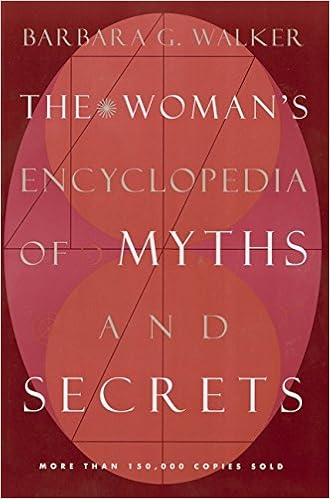
Long Review of a Long Book: The Woman's Encyclopedia of Myths and Secrets

A Fair Trade Book (but for how long? Buy it now!)


Title: The Woman’s Encyclopedia of Myths and Secrets

Author: Barbara G. Walker

Date: 1983

Publisher: Harper Collins

ISBN: 0-06-250925-X

Length: 1121 pages

Illustrations: black-and-white photos

Quote: “History was written by church historians who claimed the church ‘took no part in the corporal punishment of heretics.’...Magistrates were commanded to carry out the death penalty by the dire threat of excommunication and consequent arrest.”

Wow. Eleven hundred fact-packed pages from a world-class research fanatic...wow I said.


Yes, that’s the “wow” of mixed feelings. So much went into this book. It’ a huge book. the encyclopedia format organizes material into short essays, alphabetized by topics; most are about one page long, many are less, and some are ten or twelve pages. Walker sifted out the freshest, juiciest, most pungent facts from literally hundreds of scholarly books, most of which you and I don’t have even at our local public libraries, to make each essay a pithy, memorable read.And ooohhh, how she makes me covet those books that she read and I’ve not...because I have read about a third of her sources, and I don’t think she’s done them justice. To Christianity, against which she and her audience were in active rebellion, she’s not even tried to be fair.

There. How many reviewers would say that about a book of this magnitude? In the 1980s most reviewers just wittered and waffled and murmured admiringly and hoped they sounded as if they’d read the whole Encyclopedia, without actually claiming they had. Most hadn’t.(Fair disclosure: I discovered this book in 1988 and had read the whole thing, once, by 1991. Encyclopedias aren’t meant to be read from cover to cover.) Others just made unsympathetic noises about a fact they didn’t need this book to tell them: Walker is a Secular Humanist, left-leaning, feminist agnostic.

Enough unsympathetic noises already! Secular Humanist left-leaning feminist agnostics made most of the noise, took most of the heat, and allowed quieter, more “conservative” feminists to look good while opening the doors through which my generation strolled, in the 1980s. We owe Walker, and Mary Daly and Germaine Greer, as much as we owe the women we’ve taken as role models.

Now for the big secret...What Secular Humanist agnostics have been saying for more than a hundred years is that our “Abrahamic” (Jewish, Christian, or Islamic) religious tradition is not as unique as some people like to think.

Actually, if you were paying attention, you might have remembered that the Bible writers admit that Abraham’s prophetic message was to reform an existing tradition that he and the Bible writers considered corrupt. (So, for that matter, was Muhammad’s.) The messages that God was One, that God wanted people to behave decently toward one another, and that God preferred “sacrificial” barbecues of sheep or goats to barbecues of humans, are known to have been preached by others as well as Abraham. The Bible mentions Melchizedek; African tradition mentions a visionary woman called Jezanna; in India, during the Old Testament period, Buddha was preaching peace and vegetarianism; the ancient Romans had no history or collective memory of when their culture had renounced human sacrifice. One of Walker’s Christian sources accurately says that it’s a pity that much of the history of world religious thought was either never written down into history, or else deliberately purged out of history. It would have been interesting to know who else had reformed (and/or corrupted) other cultures in which ways...

And what was this corruption? The Golden Bough documented several forms of it. (Oh how I wish I’d ever had a complete, unabridged Golden Bough.) The White Goddess fitted pieces together to form a plausible, though speculative, picture of a viable but extremely corruptible religion. The Woman’s Encyclopedia begins by treating The White Goddess as fact, which it isn’t, rather than well-informed speculative fiction, and by presupposing that all Bible and church history has been falsified, which is unprovable. On this kind of theory, it might seem that the whole ancient world was dominated by a universal faith in a Supreme Goddess whose Mysteries were celebrated by ritually breeding the local beauty queen to the local athletic hero, then killing the young man, duly mourning his untimely death, eating his flesh, and praying for his rebirth in the form of a son next winter.

In practice, a world of scattered illiterate tribes was unlikely ever to have had a universal belief in anything. People worked out different balances of power in different places. Several events that weren’t documented, or weren’t accurately documented, except in crude sculptures or painting, may well have been conflicts between male and female leaders or cults. Anthropologists have speculated, but nobody has proved and most anthropologists no longer believe, that there was a “Golden Age of Gynecocracy”; what is known is that some ancient cultures were matrilineal and matrilocal and to some extent even partly matriarchal. This became important only in the nineteenth century, when Auguste Comte’s fantasy that all women were naturally suited to being “angels in the home” was tested and found unworkable as a basis for public policy. It became necessary to refute the claims that “women couldn’t” do this or that. For every job the masculinists wanted to claim women couldn’t do, including combat, there is historical evidence that some women, somewhere, have done it; just like a man and better than some. There were and still are jobs that nursing mothers shouldn’t do. In a healthy society, where women’s fertile years last less than half as long as most women’s active adult lives do, most women are not nursing mothers.

Most of the preliterate cultures we know about had fertility goddesses, often identified with animal or plant life. However, the extent to which these goddesses were actually worshipped varied, and in most of them the idea of a goddess did not raise the status of most women at all; in fact, when women worshipped goddesses, it seems usually to have been because they were considered too inferior to be tolerated in the cults of the male gods. Walker ignores that inconvenient truth throughout the Woman’s Encyclopedia, which leaves her celebrating many victories like that of the cult of Athena in Athens: the women got the city named in honor of their goddess, yes, and in exchange they renounced voting and civil rights...did they really negotiate this? How reliable were Athenian historians?

Walker tends to favor the assumption that all stories the ancient world preserved as "sacred scripture" were just revised myths, even when they've been documented by contemporary outside sources. Josephus, who wasn't a Christian, had heard something about Jesus, and Tacitus, who wasn't Jewish, had heard something about Moses, but Walker seems to prefer to believe that Moses may not have been a real man at all. This has to be considered a weakness. Both the authenticity of ancient documents and the accuracy of their translation force any serious historian to admit some doubts about them, but the serious historian should doubt all of them impartially.

If anything, the plausible story, like "I wrote this book all by myself at the age of 75," may be more likely to be an outright lie than the mythical story, like "St. Christina the Astonishing, after being dead and laid out for burial, flew up into the rafters..." This would be "flew" in the sense of "fled," and if the poor girl came out of a mild concussion able to run, I don't doubt for a minute that run was what she did! But a lot of things written in the names of well-known people, in their old age or after their death, were actually the work of their students or admirers...

Rereading my way through this book, I found myself wanting to collect the source materials and rewrite the whole dang thing in a way that sounds less bigoted. I almost did that in this review. I'll spare you. Let's just say that, though Walker was an old lady and used tasteful foreign-scholarly-sounding words, the "adult content" of the Woman's Encyclopedia is extremely high and there's an intention to pique, if not goad, even sympathetic female Humanist readers. You won't read this book in a hurry and you probably won't like several parts of it. Sex, violence, and cannibalism were in fact parts of some ancient religions, and in this book they're presumed to be more important parts of more ancient religions than they probably really were. Nevertheless I think the book is valuable.

The essay on the Inquisition is unpleasant reading. The Inquisition was a horror story of greed, murder, rape, torture, and blasphemy--and it's true--and it went on for more years than the Nazi Holocaust; it was the mass murder Hitler would have committed if able, rather than the mass murder he did commit. And every Christian needs to read at least one long essay that details a few of the atrocities committed "to the greater glory of God" by so-called religious men, just so we'll understand that repeating the name of Jesus does not in any way stop evildoers from doing evil.

The essay on Jesus, in which Walker assumes that everyone is familiar with the Gospel story and that Graves' speculative novel King Jesus is more likely to be closer to the facts than the Gospels are, should be a finalist in any collection of "Worst Essays." Whether you believe that humanity needed a spiritual Savior or not, or that Jesus was it or not, discarding history in favor of a second-rate novel written two thousand years after the fact is just not the way to write a serious historical essay. Walker had her reasons for writing to her audience as she did; I say the result is still a bad essay, not even an enjoyably provocative read, and can safely be skipped. Walker was using "junk" and "bunk" to "debunk."

Worldwide, the ideas of resuscitation, resurrection, or reincarnation are expressed in words that suggest getting up; everyone has seen someone fall down and get up again. Visions of the resurrected or reincarnated going up have featured ladders or stairways in every culture that has invented such things. 

The original "Stairway to Heaven," posted on Wikipedia By Pvasiliadis - Own work, Public Domain, https://commons.wikimedia.org/w/index.php?curid=2386101

A sixth or seventh century book, probably pseudonymous as books written by members of the privileged classes were expected to be, was called Klimax (Greek), or Scala Paradisi (Latin), which can be translated as “The Ladder to Heaven” or more recently as “The Ladder of Divine Ascent”; its author is remembered as Johannes Climacus, John of the Ladder. The only documentation of Brother John is a vague undocumented book allegedly written by a fellow monk, also undocumented. Johannes Climacus can fairly be described as an obscure or shadowy writer. Walker rushed to theorize that he was “a bogus saint” invented for the purpose of sneaking Tantric Buddhist thought, in which “the stairway to heaven” has a different meaning, into the monastery.

Ahem. If “The Stairway to Heaven” had communicated Tantric ideas about using the act of marriage as a meditative practice, to celibate monks, it would not have been dutifully copied by hand for all those years, nor would Johannes Climacus have been canonized as a saint. Men with sex on their minds can find an erotic double meaning for anything, but we can be reasonably confident that The Ladder of Divine Ascent does not generally suggest Tantric ideas to normal minds. Using this kind of logic, some future writer might reasonably affirm that the writer known as “Barbara Walker,” author of a book called The Crone, was obviously the same person as the long-distance walker known as “Granny D.” Bunk, I say, and bosh, and also twaddle!

So, do young women still need this outrageously biased book? I say they do. We can afford to keep more recent memories of more pleasant relationships on the tops of our mental files. For every woman writer who’s been discouraged by a sexist priest or pastor, we can find a writer like Anne Lamott or Kathleen Norris who’ll testify that churchmen not only encouraged her writing but were also supportive of her needs for specifically male help—raising a son, or caring for a disabled husband. We cannot afford to forget the hate. We need that long, vitriolic essay about the Inquisition. When we come to the quote translating Hitler’s words as “As a Christian, I...” we can afford to say that Hitler was probably lying (as he advocated doing in Mein Kampf), also claimed to have rejected Jesus in favor of the “stronger” German Pagan “gods,” and in any case was never representative of Christians. We need to remember the Inquisition as proof that the name of Jesus, or even the exercise of copying Bible texts, does not keep people from being greedheads or even sadistic sociopaths.

Talking of Hitler, pop singer Erykah Badu recently tried to cite “finding good things to say about Hitler” as an example of her Humanist philosophy (“Baduizm”) that we should look for good things to say about everybody. Between an unsympathetic interviewer and an apparently hung-over mood, Badu failed dramatically to find a good thing to say about Hitler. Well, he did have an unhappy childhood, possibly because his sociopathic tendencies were noticed and/or because they ran in his family; lots of people have unhappy childhoods and don’t become murderers. And Hitler was on “performance-boosting” drugs, which should be remembered as a warning to anyone who feels tired or depressed enough to need feel-good stimulants stronger than caffeine. But I think it’s very important to remember one set of “good” things about Hitler. He was a sociopath who manipulated people with Big Lies, and admitted it; but he was a smart, successful sociopath. He implemented evil policies by appealing to people’s good wishes. His Big Lies appealed to people all over the world in the 1930s, and when anyone else is spouting them they still appeal to people today. People still want to believe that “we” can make everyone happy and healthy and orderly...and that’s where Nazional Sozialism starts.

If we really want abominations like banning all women, or all Jews, or all members of some other group, from jobs or from cities or from entire countries, to happen Never Again, we must remember that they start when someone grabs control of society by promising to make everything better for everyone. Auguste Comte would probably not have liked Adolf Hitler, if they’d met, but Comte’s line of thought led directly to Hitler’s. And it always has; and it always will.

Walker’s Encyclopedia pries Christian’ hands away from our eyes and ears, and forces us to remember that allowing the Bible or the life of Jesus to influence our thoughts about “making everything better” does not protect those thoughts from exploitation of the most corrupt, degenerate, selfish, greedy, and sadistic kinds. “Make” is the key. The moment we think about making anyone else do anything, as distinct from encouraging or empowering them to do it if they so choose, we begin to enable evildoers to harm the people we fantasize about helping.


Male bigotry is undeniable in the history of all of the “Abrahamic” religions—and of the others. The New Testament documents that women, and specifically enslaved women, flocked to Christianity because the teachings of Jesus were so liberating for them, compared with the rules of Greco-Roman Pagan society. Many were recognized as teachers, “prophets,” “deacons,” and “apostles” (the apostolic church had no priests, claiming Jesus as their one High Priest). St. Paul’s eye must have twinkled with irony when he wrote to St. Timothy, “I suffer not a woman to teach or usurp authority over a man,” because both Paul and Timothy had been taught by Christian women. The “authority” of Eunice, Lois, Prisca-and/or-Priscilla, was not “usurped” from men; it was obviously understood as their own gift from God.

Only one female Christian teacher was denounced as “that woman Jezebel, who calls herself a prophet.” Jezebel was historically the name of a queen of Israel who was greatly hated for reintroducing human sacrifice and introducing the doctrine of “eminent domain” into that country. It seems unlikely that parents named a daughter, or that women named themselves, in honor of her. More likely “that woman Jezebel” was one of those incompletely converted members of Pagan cults that reacted to the Gospel story with, “Ah yes, we have that kind of ritual too...his tortured body disappeared and then reappeared alive and well, you say? And he had a follower called Thomas, which means ‘twin’—that would have been His twin? And did you really send St. Thomas off to India, or did you sacrifice him next?” In any case, later generations of Bible scholars ignored the many women who were advised to teach “with (the sign of) authority on her head, for the sake of the message” (angelion means message), and even the ones who came to Christian meetings “to learn in silence, with due subjection,” and fixated on the one woman who had apparently gained authorization to teach and started teaching the message all wrong. That happened, and if Christians find it “hurtful,” once again they should accept the sting as good for them.


However the male bigotry against the early Christian “prophetesses” was by no means confined to Jewish-Christian scholars like Paul. It came from Jewish rabbis, who had determined, while enslaved in Babylon, that teaching women the Torah was “the same as teaching them prostitution” (and in Babylonian culture that might even have been true). It came from Pagan slavemasters, like the owners of the wretched girl who was “possessed” to screech mockingly in the street that Paul was a servant of God teaching the right way to salvation, who weren’t at all pleased when the girl miraculously recovered apparent sanity. (Many Pagan cultures exploited brain-damaged people to serve as mystical oracles—often females, since brain-damaged men could be used for heavier work—so it’s plausible that this slave had been drugged, and “miraculously” sobered up.) Most of all the bigotry came from Roman overlords who basically resented that Christians were refusing to pay the cost of daily animal sacrifices in the name of the emperor’s supposedly deified ancestors.

“Christians were arrested for civil crimes,” Walker says. Yes—they were at least accused of civil crimes, although encouraging people not to pay for the Pagan animal sacrifices was the main charge. Beyond that, Christians were also accused of lots of other things. Forensic evidence was unknown, so if you knew a ruling official’s prejudices, you could commit murder, arson, theft, and worse, and walk, by claiming to have seen someone against whom the ruler was prejudiced doing those things. And yes, although some of the “virgin martyrs” almost certainly were based on fragments found near a place where somebody wanted to build a church, much later, refusing to consent to a marriage arranged by Pagan parents was punishable as sedition too. I have to wonder how Walker managed to overlook what Kathleen Norris found so obvious, ten years later: some of the “virgin martyrs” probably were real girls, and probably were killed for the “crime” of resisting rape—by the men to whom their greedy parents had sold them in marriage, or by men in the Roman government after the girls had been accused of crimes. (Jailers traditionally claimed a “right” to rape any girl, or any boy for that matter, they happened to fancy.)

If Walker bashed Christianity, Judaism, and Islam alike, what did she positively believe and teach? Nothing in the Encyclopedia; Women’s Rituals was a separate book. Any feminist group that drew on, or cult that might have followed (if one did follow) Walker’s work, would have been essentially a Humanist, activist, consciousness-raising group who used images, symbols, perhaps the I Ching and the Tarot, and surely beautiful stones if they happened (as Walker had) to have collected some, as starting points for group discussions and perhaps demonstrations. (I’m not sure who named “Lilith Fair”; the slogan “Take back the night” can be positively traced to Walker’s work.) Walker was opposed to letting women’s groups deteriorate into spiritualism, in the name of “women’s spirituality.” She wanted them to remain rationalist and Humanist, appreciating traditional archetypes for their psychological and artistic value. The litany she proposed for each meeting of such groups was “Who is our Goddess? Behold, she is ourselves.”


Behold that old-time Comtean Humanist religion in all its glory: collective humanity as the object of worship. It didn’t get far for Comte, and it didn’t get much farther for Walker, because normally human spirituality does not accept collective humanity as an object of worship. But it felt good at the time.

It also gave women an important guideline for any efforts to reclaim women’s status, in any religion. All viable religious groups, most definitely including the Christian Church, must rigorously purge out real abuses. A little heresy here and there may do no harm, but it probably took only a few actual human sacrifices to “goddesses” to get all goddess imagery, all religious women, all women teachers, even all women as citizens with the right to own property, smeared with the ugly reputation of “that woman Jezebel.” What Walker may seem, in the Encyclopedia, to be suggesting that women would want to reclaim, is exactly what she taught, in Women’s Rituals, that they should reject; what she is documenting, in the Encyclopedia, that women were blamed for and suspected of.

Fortunately, in our culture at least, for women religious scholars to resist the temptation of ritual cannibalism should be easy.

If you don't think reading this book will tempt you to practice ritual cannibalism, and want to buy it as A Fair Trade Book to show respect to Barbara Walker, you can buy a used copy here for $15 per book plus $5 per package plus $1 per online payment. Fat though it is, the original paperback edition was not oversized, so one or two more books with similar-sized pages will fit into the same package; I'm not sure whether The Woman's Dictionary of Symbols and Sacred Objects would fit in along with The Crone or The Book of Sacred Stones (surely not all three), but if you want a complete collection I'll try. We'll send $2 to Walker or a charity of her choice for each copy of her Encyclopedia, and a corresponding payment for each of her other books you order through this web site. 

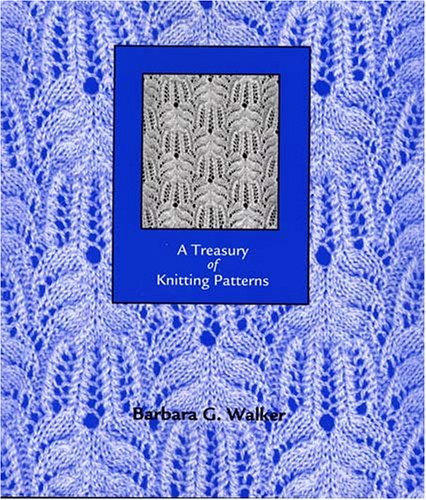
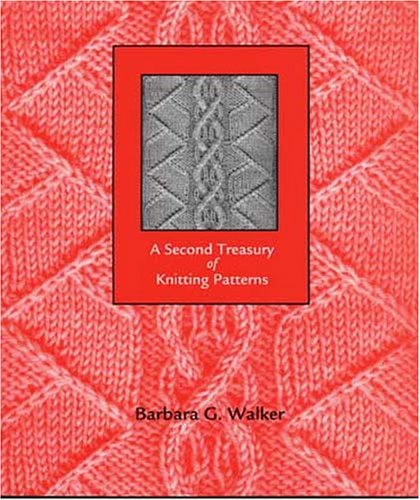
This post is long enough, but since it's obviously not about my favorite of Walker's books, let's add photo links for those of her books I wholeheartedly recommend to everybody...These are oversized, and thick--about 9x12x1" each--so the set of four fits nicely into two $5 packages. Buy them as new books from Walker's friend's daughter (now a Crone in her own right), who had them reprinted for sale as a set, if you can scrape up the $30 each; or buy used copies as Fair Trade Books from this web site if you don't mind getting the older, unmatched editions.


Tuesday, November 1, 2016

Book Review: I Claudius

Title: I Claudius


Author: Robert Graves

Date: 1934

Publisher: Harrison Smith (1984), Modern Library (1982)

ISBN: none

Length: 432 pages

Quote: “I may add that this is not the first history of my own life that I have written. I once wrote another, in eight volumes.”

In the United States, the prosperity of “Between the Wars” collapsed in 1929. In England, recovery from the “First Great War” was slower and less complete, there was less of an economic depression, and the prosperity roared on…if not as riotously as it had in the U.S., nevertheless enough to raise concern among people who thought of frugality and modesty as important moral virtues. Spengler’s fears about a Decline of the West parallel with The Decline and Fall of the Roman Empire were widespread fears. Into this climate of thought Graves released an imaginative and sympathetic novel that attempted to recreate the lost memoirs of the Emperor Claudius, who really was an historian.

Claudius crop.jpg

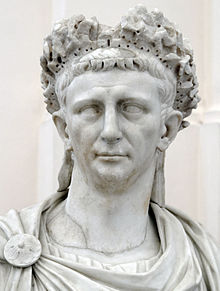
(Photo of a statue believed to be of Claudius by Marie-Lan Nguyen, courtesy of Wikipedia.)

What had survived of Claudius’ own writing were fragments, and a few comments by contemporary readers describing his writing as “inept” and “inelegant,” although he wrote and published many books (scrolls of course). Vergil, Julius Caesar, or even Petronius he was not. Graves and his partner in literary mayhem, Laura Riding, seem to have had a good time making the fictional Claudius’ English sentences as “inept and inelegant” as the real Claudius’ Latin sentences were. If you think in long, elaborate, sometimes chaotic sentences, as so many word-nerd history-lover types do, you can relate to this narrator. If you’ve read other things either Graves or Riding wrote, you can laugh at their Claudius’ style. I enjoyed reading him (the last time around) perhaps as much as Graves and Riding evidently enjoyed writing him.

The real Claudius lived through a remarkable period of history. Within his lifetime, which overlapped the lifetime of Jesus on both sides, Claudius watched Rome “decline” from a republic where people were proud of their own moral virtue into an empire where people thought it was modern and trendy not to be virtuous. He saw Roman law go from mandating death for anyone who presumed to self-identity with the gods or even as a king, to hailing the emperor—a title originally meaning a successful war leader—as God; from placing strict penalties, up to and including death by torture, on adultery, to wallowing and revelling in promiscuity, bisexuality, even incest; from holding people accountable for everything they said to expecting everyone to tell lies whenever lies might be convenient.

Claudius was also, by all accounts, a total nerd with substantial physical disabilities. There was that. Roman culture also evolved, during his lifetime, from regarding people like him as signs of bad luck and discouraging them from letting themselves be seen, to accepting them…well, after the way had been paved by the tyrannical rule of his loathsome relative Caligula, anyway…as minor deities. (The sequel to I Claudius was Claudius the God.)

Graves and Riding retell his irony-rich, drily funny story with an improbable, though entertaining, resonance to events of the 1930s. Graves took the liberty of describing certain barbarians as “French” and “German,” after the allies and enemies of his own military experience, and characterizing the Germans as more “savage” to the extent of describing their favorite weapons as “assegais” (the Boer War was also fresh in many of his readers’ memories). Historically the French had long admired blond hair, if partly because it was unusual; Graves’ Claudius jeers at German slaves’ and savages’ yellow hair. Graves also invented a prophecy that Claudius’ “truest,” secret autobiography would be dug up intact about 1900 years after Claudius’ own time, and other things that were deliciously appropriate to the true story of Claudius.

Riding’s influence is apparent in Claudius’ characterization of the Empress Livia. History presents her in partisan lights; I Claudius accepts the best and worst things said about her as both possibly true, and presents her as a shrewd Peace Chief who both murdered any relative she saw as a threat to her position, thus unwittingly paving the way for Caligula’s disastrous reign, and also maintained peace, prosperity, and stability in a city her husband was too busy being War Chief to govern. She was, after all, Claudius’ grandmother. Fictional Claudius convinces us that he both hated and feared her for the first forty years of his life, reconciled himself to her on historical and patriotic grounds before she died, and missed her when she was gone.

Homosexuality and bisexuality were common in Claudius’ time, and the historical Claudius seems not to have been close to any of the women he married—or was that just the early Roman concept of “gravity,” according to which any noticeable display of affection, as in Ovid’s Art of Love,  was considered ridiculous and disgraceful? (Ovid wrote The Art of Love as a satire.) Graves and Riding, whose hetero-romantic idealization of gender polarity hardly accounts for the full extent of their homophobia, give Claudius an idealized first love who dies young and a nice yuppie-type courtesan friend, later on, possibly just to affirm his heterosexuality against an early wave of suspicion that intellectual activity might have something to do with homosexuality. There are historians who can mention an historical character’s documented or alleged bisexuality without making it the ultimate proof of the character’s villainy. Graves was not one of them.

It's possible that fictional Claudius is nicer than the historical Claudius, since contemporaries described the real Claudius as quick-tempered and mean-mouthed. Graves' Claudius is a shy, even timid, polio survivor who never completely outgrows a nervous stutter. Some historians have speculated that the real Claudius might have had Tourette's Syndrome; apparently his sputtering was heard as more than a simple stammer. Graves' Claudius quietly watches his friends and relatives murder one another, or at least plausibly presents himself as doing so. Historical Claudius was seriously suspected of several of the murders. 

More than an adventure or a romance, this is a survey, with fictional Claudius as guide, of the Pagan Rome under which Christianity could only have begun as a religion for a despised and oppressed minority group. (Graves’ Claudius is even less interested in Judea than in Africa; the historical Claudius expelled Jews from Rome, after the time frame of I Claudius.)

We see a young, Pagan-god-fearing prince mature into a practical, survival-oriented one who, by the time Caligula declares himself divine, has learned to say things like “You set the standard of sanity for the whole habitable world” and worship Caligula in whatever way Caligula demands. I suppose that must have been the way Claudius really was; he was born feeling that to identify himself with “the Gods” was the mortal sin of blasphemy (in many ways Rome was Catholic before Christianity was invented), yet as emperor Claudius accepted his own status of “divinity” with, apparently, classical Roman gravity.

We get all the history, as first-century Romans understood history—military records with a generous dash of palace gossip—any reader could possibly want, and perhaps more than teenage readers like. Claudius has few adventures of his own (history confirms this), but coolly sits out of the way telling us what he thinks he’s determined to be the true account of other people’s adventures.

We get more of the women’s perspective than might have been expected from a male author working alone. For this I’m sure we can thank Riding. We meet, from Claudius’ distance, a Real Princess, Agrippina, who took command of the army camp during her husband’s absence and won battles, and a Real Brat (feel free to substitute other words beginning with B), Plancina, who parodies Agrippina’s valor with a ridiculous display of ignorance as Plancina purports to drill a troop. We get both the Real Queen and the Wicked Witch aspects of Livia. Spengler had identified turn-of-the-twentieth-century feminism with aspects of the decline of Rome. Graves and Riding remind us that, historically, Livia was successful even when hated; it was a backlash, as manifested by Plancina, that was later cited as an excuse for enacting laws that restricted women’s rights—which took place after Rome had declined a long way from its height. Claudius was accused of showing too much respect for women; Graves and Riding show us why.

And, unmistakably, we get an identification of “puritanical” “purity” with virtue, of wealth and wastefulness with vice. Pagan Roman cults had a few holidays; early civic leaders became popular by proclaiming a few additional holidays, for the whole city and not only the cults of this or that deity; Caligula in his insanity proclaimed feasts and holidays almost daily, depleted the city’s treasury, then refilled it by (among other things) murdering a cousin to whom he reportedly explained “I need your money” before the deed. (The historical records of Caligula's craziness are so outrageous that some historians react by suggesting that nobody could have been all that bad and lived--even as long as Caligula did.) During Claudius’s lifetime racing, itself, developed from a semi-serious effort to develop the city’s athletic and military resources into a pit of gambling and corruption in which, as fictional Claudius tells us, organized crime might have made heavy betting a matter of life and death.

These cultural developments really happened and they also happened to be what Graves and Riding wanted to call to readers’ attention in this novel. The point of I Claudius is not “This is how a handicapped boy grew rich” or “This is the sort of adventure a handicapped boy could have if he were rich” but “This is how greed and wastefulness destroy a great nation, even an empire.” In Graves’ and Riding’s day the United Kingdom was still a British Empire on which the sun never set; in 1934 the between-the-wars boom economy seemed as dangerous as the First War had seemed to that empire. 

That was the important thing. That Claudius is found in hiding on page 430, dragged out and proposed as the next emperor on page 431, and persuaded to accept the throne on page 432, isn’t even a spoiler for this novel: anyone who ever read any history knew it would happen, whether in this volume or in the second one, and it’s more of a denouement than a climax. (If you know that the real Claudius was, as emperor, quite a spender and a great issuer of imperial edicts, and willing to be sculpted as Jove in mortal form, I Claudius does a good job of presenting him as becoming that sort of ruler out of fear that he wouldn't be able to be a better kind.)

Which makes I Claudius a very adult novel (though Graves’ Claudius skims over the sexual excesses of Roman imperial history more lightly than Graves himself skimmed over the sex in The Greek Myths, and never wallows in the violence that forms much of the real Claudius’ history). When I was a teenager, the reprints were set before me as classic novels adults admired, and I found them a long dull read. Now I admire Graves’ achievement, although the undeniable lengthiness and dullness are actually part of its comedic charm…and I suspect that teenagers will still find them a long dull read. If you, too, didn’t enjoy I Claudius in high school or college, however, I’d suggest that you turn back to it now. Bits that bored me as a teenager made me laugh out loud as a middle-aged reader. I suspect other readers will enjoy I Claudius, now, too.


Neither Graves nor Riding has any use for a dollar any more but we still have to charge $5 per book + $5 per package + $1 per online payment if you buy I Claudius here. (Both of the Claudius books will fit into one package; if you'll settle for cheap paperback editions we can probably wedge in the small, cheap, two-volume edition of The Greek Myths for a total of $25, or $26.) 
Tuesday, October 25, 2016

Book Review: The World of Wizards

Title: The World of Wizards


Author: Anton and Mina Adams

Date: 2002

Publisher: Metro Books

ISBN: 1-5866-3756-8

Length: 158 pages

Illustrations: full-color decorations by Penny Lovelock, Sue Ninham, and others; several reprinted graphics from historic documents

Quote: “The Wizard’s power has come first of all from observation…Wizards have also impressed with their intense belief in several levels of reality.”

This first book about New Age “Witchcraft” seems intended to have attracted readers from the Harry Potter empire, so probably the first thing to be said about it is that it’s not about Harry Potter’s kind of wizards. In the fictional world of Harry Potter, wizards and witches do things that seem magical to others, partly by character, discipline, and willpower, but mostly by buying and learning to use the right sort of gadgets, and the things they do have predictable, indisputable results in their real world. In this book Adams, or the Adams or the Adamses,  dig back into history to reclaim the term “wizard” for what we now normally call psychics or mystics.

The historical background these authors provide is unfortunately easy to judge. As a bookseller I’d like to say that, oh well, The World of Wizards is beyond my field of expertise, you should ask someone like D.J. Conway or Elizabeth Barrette to evaluate it, I only retail these things…but right away, on page 10, I come to their version of the history of King Solomon of Israel.

Solomon was real, and the facts of his history have been documented in a straightforward, rational way. He was considered the wisest man in Israel not because of his spiritual wisdom (he came into that late, if ever, in his career) nor because of his literary genius (the books of the Bible ascribed to Solomon reflect a wise selection from contemporary thought), but because his clever trading practices, which included literally hundreds of marriages contracted to establish alliances, made his puny little nation rich. He commissioned the building of the national Temple, a splendid structure finished and furnished with gold. Kings in those days served as judges, and the third chapter of 1 Kings in the Bible records the only case we know for sure that Solomon judged. Two women and their infants had been sharing one bed. One of the babies had died. Since the only retirement system ancient Israel had was the obligation of children to support their parents, each woman wanted to claim the living child. To identify the real mother, Solomon offered to cut the baby in half; one woman immediately said “No, give it to her,” and the other said “Divide it,” and so Solomon at least knew, if not which one had given birth to the living baby, which one was fit to rear it. This is a simple enough story to establish Solomon’s reputation as a wise judge, and the records are easy enough to find in the best-selling book of all time…but for some reason The World of Wizards misrepresents the story: “By observing the facial expressions of both women, Solomon was able to divine which one was the real mother.” Wrong. The record tells us that he listened to the words of both women.

There exists another credible story about Solomon, although it was not included in the official historical documents of the time. According to history, Solomon received an official visit from the Queen of Sheba. From the mere fact that this monarch, unlike others with whom Solomon visited, happened to be female has come a rich stream of legends about their great romance, but the historical fact is that after admiring the Temple and admiring Solomon’s wisdom, the Queen went back to her own country. From the fact that Solomon’s mother was called “daughter of Sheba,” some historians infer that, far from being his bride, the Queen of Sheba may have been Solomon’s aunt. In any case she apparently tested his wisdom in some way that is not described in the historical record. According to an Arab legend, she set up a display of exquisitely made artificial flowers that looked, felt, and smelled just like real flowers and asked Solomon to find the one real flower in the bouquet. Solomon waited until a bee flew in and confidently identified the flower it visited as real. If it didn't happen, this incident probably should have happened.

But The World of Wizards only mentions Solomon at all because medieval European alchemists and philosophers appropriated his name for their lore and legends, and…what they said about him is not easily reconciled with the historical evidence. Medieval alchemists and philosophers were always telling rich patrons they could do all sorts of impossible things, talk to animals, fly, change iron into gold, whatever, if they only had enough funding. Apparently the rich patrons, who were not exactly Bible Mavens (or even literate, in many cases) themselves, were more willing to believe these claims, or at least to believe that watching the alchemists and philosophers try would be entertaining, when the alchemists and philosophers claimed that their secret knowledge had been handed down from Solomon.

The historical records do not mention Solomon’s doing anything that anyone else in his position might not have done. “King Solomon’s Ring” is the title of a very successful scientific book about animals.Solomon undoubtedly had a ring—probably he had several rings—and he probably also had a seal, and for all we know the identifying mark on his seal may have been a six-pointed star; but there is no historical description of either the ring or the seal. The stories about the magical properties of these objects appear in history about 1500 to 2000 years after Solomon’s time.

According to The World of Wizards, however, “an angel” gave Solomon “a magical ring that lent him the power to control various spirits…to help with the building of the Temple.” According to the historical records, public spirit undoubtedly did help the various skilled workers who had the honor of building the Temple; off the record, the “spirits” of various fermented foodstuffs probably helped the laborers who were injured on the job. (The real Solomon reportedly advised young princes to “seek not wine” for themselves, but to “Give wine to the one who is ready to perish.”) There is no record of any occult spirits being involved. Solomon’s Temple was built in honor of one God, not in honor of the many nature spirits that were worshipped in other countries, or even of the angels in which the ancient Israelites believed.

The quality of Adams’ research on Solomon is thus comparable with the quality of Walter Scott’s research on Kenilworth Castle, so I don’t think I really need to take the time to investigate Adams’ research on Paracelsus or Gerald Gardner or John Dee. I think it’s safe to say that the historical section of The World of Wizards is not reliable for serious research.

So, this book is recommended for entertainment purposes only. Halloween? Whatever. It’s not history, it’s not Harry Potter, but it is a cute little bit of eye candy. If you buy it here, for $5 per copy + $5 per package + $1 per online payment, I'll undertake to find out which of the many people using the name "Anton Adams" in cyberspace (twenty on Linked In alone) wrote this book, and send $1 to them or a charity of their choice. 

Friday, May 22, 2015

Book Review: What You Need to Know About Masons

A Fair Trade Book

Title: What You Need to Know About Masons
        
Author: Ed Decker

Author's blog: http://eddeckersblog.blogspot.com/
        
Date: 1992
        
Publisher: Harvest House
        
ISBN: 0-89081-945-9
        
Length: 218 pages
        
Quote: “I discovered from an angry church deacon that the ritual of the Masonic Lodge was the actual foundation of the LDS Temple ritual.”
        
In order to research the aspects of the Masonic rituals he wants to share with us, Ed Decker had to promise not to identify his sources or share any real names or stories. So he presents his charges against Masonic Lodge groups in the form of a fictional composite story. The effect is, of course, not just to explain why Decker thinks certain aspects of the “secret rituals” are antichristian or at least doctrinally incorrect, but also to spin a short novel about how any group relationship can go wrong.
        
While some initiates into Masonic Lodges take the “culturally inclusive” references to Pagan deities very seriously, the fact is that any small group, including a corporate department, student social club, or even a church committee can develop the same kind of emotional toxicity Decker’s fictional Masonic Lodge has begun to cultivate. It’s not caused by invoking the wrong spirits or failing to invoke the right ones so much as it’s caused by individuals’ desire to be leaders or key members of the group at any cost. Whenever a group of human beings develops a formal structure, “rituals,” hierarchy, and long-term group identity, it develops the potential to become a harmful personality cult.
        
In Decker’s mini-novel, a young pastor who objects to the Pagan-inclusive language in a Masonic ritual immediately locks horns with the lodge leader, who is also his father-in-law. Lodge “brothers” demand the removal of the pastor from his job. Other residents of the small town take sides. Violence flares, and an “over­insured” building burns down.
        
Could a Masonic leader be as bad as that? One could easily be worse. Decker’s villain is a cantankerous old man, not an evil cult leader; encouraging someone to overinsure a warehouse, then burning it down, is as low as he’d go. When similar group dynamics have existed during labor union negotiations or small-town political campaigns, the violence has gone further than that. And the other Masons of fictional Badger Lake are never suspected of practicing sodomy, patronizing prostitutes, or buying elections, as real-world men’s clubs have done.
        
Even if reading this book makes you suspect that your friendly local Shriners are carrying on like the Masons of Badger Lake, it won’t make you hate or fear the Shriners. It will make you pray for their souls. No harm is likely to be done by praying for people’s souls, and thus no harm is likely to be done by this book. If you are a Shriner and have any reason to consider a higher level of Freemasonry, you're undoubtedly qualified to take this warning for what it's worth.
        
I live in one of those small towns where most of the men who reach a certain combination of age and social status become Shriners. They raise money for children’s hospital expenses by acting silly on public occasions. I’m not sure that it’s really necessary for anyone’s grandfather to ride a tricycle down the main street of town to remind people that the rightful owner of the tricycle may be in the hospital, but it seems to amuse the older men, and they do help families through bad times.
        
Decker asserts, however, that although the lower degrees of Masonic ritualism simply dedicate lodges to “God,” more advanced rituals identify this “God” with  Baal, Osiris, and other unsavory characters from ancient mythology. What he quotes as probably-authentic texts seem to affirm that all names for the Supreme Being mean the same thing. The rituals seem to have less in common with the initiations into real Pagan cults described by people like Zora Neale Hurston than with riding a tricycle, but Decker makes it clear that, for some Christian lodge men, these words still make it seem that the “meat” of club membership has been “offered to idols.” Someone who’s been comfortable with ordinary lodge activities might still feel that progress to a higher level of Freemasonry is not as purely righteous as progress to a higher rank in Boy Scouts.
        
Who needs to read this book? Probably men who have joined a lodge, marched or cavorted in a parade, solicited donations outside a store, etc., and then been invited to consider a higher degree of Freemasonry. (Why did somebody give this book to me? Er, well...it was around the time a local Shriner bought a lot of furniture from my booth at a local flea market. I don't know that I really needed to know much about Masons, not being male, but What You Need to Know About Masons was interesting to me anyway, because it supports everything plausible that I've read about cults...and I've researched several.)


On the assumption that Ed Decker is still living, although his last blog post is eight months old, I'm offering What You Need to Know About Masons as a Fair Trade Book. As regular readers know, this means that when you send $5 per book + $5 per package for shipping to salolianigodagewi @ yahoo, we send $1 per book to Decker or a charity of his choice. If somebody out there wanted to share this book with a Shrine or Lodge group, we could probably fit six copies into each package, for a total cost to the purchaser of $35 and a total benefit to Decker or his charity of $6. 

Friday, February 27, 2015

Book Review: Seaward (Update)

A Fair Trade Book

Title: Seaward
        
Author: Susan Cooper

Author's web page: http://www.thelostland.com/
        
Date: 1983
        
Publisher: Atheneum (hardcover), Simon & Schuster (paperback)
        
ISBN: 0-02-042190-7
        
Length: 167 pages
        
Quote: “Nothing is black and white, Westerly, in this long game we play.”
        
It’s a fantastic adventure quest: two teenagers running together through a surreal alternative world where anything may happen except life-as-usual. Blurbs on both the hardcover and the paperback edition specify that they come from different countries and speak different languages, in the everyday reality of the story; we’re never told which countries those are, although the girl identifies with an old myth from Scotland or Shetland. In the alternative reality of the story they can talk to each other. Both of them have English names, which become vaguely ominous in the context of the story: Westerly is going west and Cally is a phonetic version of a Gaelic word for “old woman”; Death is calling to these kids.
        
They do not fall in love. It’s not that kind of story. Both have recently lost their parents, and their adventures seem to be inspired, vaguely, by the idea of grief as a journey. A superhuman male figure who seems to represent life, or resurrection, or reincarnation, claims their allegiance in the alternative world. A superhuman female figure who seems to represent death, or a permanent death, a Great Sleep, tries to get them away from her brother. Nothing is black or white; neither figure will consent to be identified with good or evil. Lugan, named after the mythical ancestor-god of London, is gold and radiant. Taranis, named after a mythical god of thunder, is blue and usually quiet. It’s all a game to them; both offer death in the end.

The story is certainly imaginative, lively, and well written, but if read as anything more than a fantastic adventure—if chosen for the comfort to the bereaved its symbolism seems to offer—it’s not particularly comforting. Cooper, a specialist in British folklore, here seems to be trying to offer a British Pagan alternative to English Christian beliefs about life and death.

However, Cally and West are not dying in this story. They're grieving, and along the way they're having adventures, coming of age, testing their strength, and even helping other characters. It's possible to enjoy just going along with them for the ride.

Seaward is a Fair Trade Book. As usual, to buy it from salolianigodagewi @ yahoo.com you send $5 for the book, $5 for shipping; you pay only one $5 shipping charge for as many books as fit into one package. Living authors or the charities of their choice receive 10% of the total price you pay for Fair Trade Books, including shipping. I'm delighted to repost this review with Susan Cooper's assistant's comment, the first comment we've received that specifies a charity:

"If you'd like to add Seaward to the list, we certainly approve, and the charity could be Reading is Fundamental."

Click to see more about http://readingisfundamental.org/.