Showing posts with label Jewish. Show all posts

Sunday, September 13, 2026

New Book Review: The Cyrene Conspiracy

Title: The Cyrene Conspiracy 

Author: Ali Kaden

Date: 2026

Publisher: Third Culture Soul Publishing

ISBN: 979-8-9976635-0-6 

Quote: "She claimed to have something connected to Jesus and ancient Christianity that she wanted me to investigate."

Amir Zane, a young Egyptian-American writer, is asked to investigate an old parchment on which is written, among other things, "not him but another." 

If you remember Holy Blood Holy Grail or The Da Vinci Code you may now have some idea what to expect Amir is about to learn. There were, in the ancient world, a lot of ideas about who Jesus was and what had become of him. 

What became the orthodox Roman Catholic view, derived from the epistles of Paul in our New Testament, was that the Holy One is a unity of (probably an infinite number of Persons actually, but Three that we think we know about for sure) Three Persons, and Jesus was the one of those Persons who chose to exist in human form for thirty-some years. He didn't exactly look forward to crucifixion, but chose to take human form at a period when publicly doing and saying even the nice things our Gospels record would offend enough "higher-up" people to result in crucifixion. In some cosmic way this willing self-sacrifice of a perfect man atoned for the sinfulness of humankind and allowed those who followed Him to be saved from the eternal destruction our sinfulness deserved. 

Many people find this hard to believe. How could the Holy One have created a universe where some part of God's self would need to be killed by torture to show love for humankind? Couldn't the real story have been something simpler? Maybe Jesus came to show people how to lead a virtuous life, was murdered in the ordinary way, and came back to tell us that the resurrection will set all of our inherently immortal souls free from really ceasing to exist, which some people seem to fear more than they fear the pain of death. Maybe he wasn't even murdered. A theory that the apostle Thomas, whose name means "twin," was Jesus' twin is hard to reconcile with the Gospels. Some people theorized that Jesus had a secret twin who either was the one who walked around Jerusalem after Jesus died, or died in Jesus' place. Maybe even the apostles didn't know about this twin...

Relatively few churches try to reenact the full "Passion" drama. "Passion" does not merely mean the emotional outburst Victorian writers meant by saying someone "flew into a passion" and presumably yelled or cried, nor does it merely mean the physical feelings modern writers usually have in mind. It means "suffering." Before being crucified the Gospels make it clear that Jesus chose to endure some additional torture. The crucificarii, an ancient Roman term of abuse meaning "men about to be crucified" and used as a general term of contempt, were forced to drag their crosses through the streets before they were hanged on them. All of them were thus displayed to the public as sweating, bleeding, miserable messes. Jesus, we are told, had been beaten thoroughly and lost a fair bit of blood before the crucifixion, and the people who came out to taunt and throw things at the crucificarii felt sorry for him. Along the way he collapsed on the ground. Some say the Roman soldiers dragooned someone else into carrying his cross, so that the mob could watch Jesus' final agony on the cross; some say a kind man  volunteered to do it, to spare Jesus some small part of the suffering he had chosen. Some have imagined that Jesus was given an extra-large cross that was meant for Barabbas and had been built by a relative of someone Barabbas had murdered. In any case, all the Gospel writers say about the man who actually carried the cross for the last part of the way was that he was called Simon of Cyrene. 

About the given name, what we know is that "Simon" was one of those names that become popular in multiethnic societies because they seem traditional in more than one language. Two of the apostles were called Simon, at least until Jesus gave one of them the nickname Peter. Many other men used the same name. It does not tell us whether this man was Greek or Jewish.

About the place he came from, history tells us a little more. Cyrene was in Libya but it was built into a city by Greeks; they might have moved away from one of the islands because of renewed volcanic activity. The official leader of the Greeks who settled there was their princess, the daughter of the king they had lost, and the place was named after her. It was dedicated to the sun god Apollo, who was said to be the father of a child to whom the princess gave birth. Several Jews settled there. Later many people in the city became Christians; it had a church, and bishops who are still on the list of obscure saints. Mark, the Gospel writer, was said to have been a Jew from Cyrene who became the city's first bishop. 


Photo of what's left of part of ancient Cyrene from Wikipedia. 


Photo posted on Facebook by Grigol Pheradze. At least the rich people who had their portraits painted or sculpted in ancient Cyrene look more like modern southern Europeans than like modern Africans. Then again, northern Africans don't look all that different from southern Europeans. Nevertheless, when Passion dramas are enacted, any Black man who attends the church is likely to be cast as Simon of Cyrene. Simon of Cyrene may have been Black but, even if he was, he would have been in Jerusalem to trade or to visit relatives, as a well-off gentleman from a wealthy city. He was not a fugitive slave, or if he was one he hadn't been enslaved in Cyrene; ex-slaves didn't claim the places they'd fled from as home. He might have been Jewish. He might have looked remarkably similar to Jesus. He might have been crucified in Jesus' place, while Jesus faded out of mortal view and, as some old texts say, laughed at the idea of mere men thinking they could crucify the Prophet who had become so virtuous as to be allowed to embody God. 

For all Muslims, Jesus is remembered as a prophet, sometimes called the greatest of prophets, a sinless teacher of peace and mercy. "We don't say 'Son of God,'" a Muslim once explained to me, "but 'Soul of God'. Anyone could choose to embody the Soul of God, but only Jesus did." Was he crucified because his enemies said he had claimed to be a Son of God, which Jews and Muslims agreed would have been blasphemy...or did it only appear that he was? Did he travel on to other places and teach peace and mercy to, e.g., the Persians, who had their own monotheistic religion in which he might have been seen as a fulfilment of prophecy? Could Mary Magdalene have received more ink in the Gospels than even Mother Mary, not because she was much older than the other women disciples, but because she was Jesus' wife; could they have had a child? 

If Christians seriously study the history of the Church, these ideas are familiar to them; they are some of the major heresies. In the Christian tradition the idea that Jesus was a natural man who earned the title "Son of God" by abstaining from all sin and fully embodying the Will of God is known as the Arian Heresy, which, as preached by Bishop Arius, annoyed Bishop Nicholas to the point of "slapping" Arius--whether literally, or with a book or sermon so scathing that it got Nicholas banned from the council of bishops voting whether or not to excommunicate Arius, as unable to hear the debate and vote with an unbiased mind. But most Christians don't bother studying these things, and to them The Cyrene Conspiracy, which is about Amir's discovery of the theory that Simon of Cyrene not only carried Jesus' cross but was crucified on it, may be new and shocking.

It is fiction but, as Kaden explains, it's written in aid of the people of Gaza. In order to investigate the parchment Amir doesn't go to a church or university library and study its history; he takes the parchment right back to the Middle East, where he meets some kind Christian priests and rescue workers, and a liberated modern Arab young lady whose fiance left her because he couldn't distract her from relief work in Gaza. He meets a woman who's been trying to nurse a baby, but her milk has failed due to starvation, and people with arms and legs blown off, and the familiar gallery of casualties of Modern War. He feels left out of conversations among Palestinians because they all introduce themselves to new acquaintances with tallies of the relatives they've lost, many of whom were women and children.

And he finds a ruined church where an heretical Christian sect seem to have met, centuries ago. He recognizes artistic motifs that lead him to begin to research the Manichaean Christian sect, of which the most thorough surviving descriptions were written by Augustine of Hippo after he left the group, and may have been written with prejudice. Exactly who the prophet Mani was, when and where he lived or died, and what he taught, may never be known but the woman Amir starts to fall in love with seems to see him as an intermediary link between Christian and Muslim thinking. In the ruined church his name appears under those of Jesus and Mary Magdalene. Could he have been their son--or "spiritual son," a student--or in either sense their descendant? 

Muslims, like Christians, belong to different denominations. From the news media most Americans have heard that Sunnis were seen as more liberal than Shiites in some ways, but Sunnis persecuted Shiites, which doesn't sound so liberal. (That was only in Iran. The Sunni Muslims from India whom I've known were not inclined to persecute anybody, though they did accept that their leaders had a right to punish heretics against their religion: "Oh yes, if Salman Rushdie really did blaspheme and defame the Prophet, then of course he will have to die.") More recently we've heard of hard-line Wahhabis who take various phrases from the Koran more literally than most Muslims do. 

Relatively few Americans have heard of the Sufis, a liberal Muslim group who seemed to me, when I met them in Washington, to be trying to bridge the gaps between Islam and other religions toward the goal of converting everyone to a liberal, freethinking, New Agey form of Islam. In The Cyrene Conspiracy the heroine doesn't identify as a Sufi in so many words, but she seems close to being one. Sufis are, in my experience, profoundly likable people; they hate nobody, they invite Jews as well as Christians and Buddhists to chant and pray with them, they do not noticeably even disparage women even to the extent the Koran does. Some now say that their niceness is deployed by the evil, power-seeking Muslim political machine as a form of taqiyya, legitimized lying to gain social acceptability as a step toward political power. Those people probably also think the kind old priest in your neighborhood, the nice ladies at the Catholic school fundraising events, and President Kennedy were mere tools being used to restore the Papacy in the United States. Nice people and the nice things they do are sometimes exploited, but they are nice

The kind Christians Amir meets in Gaza are, of course, liberal and humanitarian people too. The Jews, on the other hand...There have been, in historical fact, Jews who volunteered to serve as bodyguards, blockades, and even hostages for their Palestinian neighbors in some past conflicts between Gaza and Israel. They said that human beings are human beings, however misguided, even hateful, some of them may be. That was before October 2022.

I did not write the Bible and have wondered, myself, why even before Moses' time people in the Old Testament treated rape as worse than murder. I can see why people emotionally feel that killing a baby is worse than killing a man, and I completely agree that a rapist has no reason to live, but if killing the murderer himself was enough of a deterrent to murder, why was it felt necessary to kill all the men in a rapist's tribe or town? Of course, Susan Brownmiller theorized that the perversion of sexuality that makes rape possible has to be a societal evil. That argument was credible and well argued, though not everyone is convinced that it's true. It does not sound like an argument Semitic tribesmen before Moses' time would have made. They seem to have seen rape as a peculiarly evil sin, not even so much against the victim as against the God of Life itself, that needed to be "put away from among you." Moses limited victims' families to demanding the execution of the rapist himself, Deborah celebrated that a woman was willing to stop with killing a war chief who was known to allow his army to rape other tribes' women, and David certainly had cause to encourage Absalom to stop with killing Ammon, but in the only other instance recorded in the Bible, where a gang of Benjamite youths raped a nameless and status-less woman, the other tribes joined in the slaughter of all the then able-bodied male adults in the tribe of Benjamin. Why? Because, as a crime, rape was seen as going beyond murder and needing to be punished accordingly. Murder can be, in the ancient world it probably often was, a crime of carelessness or emotionality. Rape has a blasphemous quality that some murders share, but most do not.

In October 2022 the men in the ruling party Gaza chose for itself raped Jewish women and murdered Jewish babies, and a great number of people, worldwide, said: "Let Gaza suffer whatever anyone in Israel cares to do to them," at least "...until the men who committed this crime are dead, buried under layers of dung and carrion, disowned by as many of their families as want to live." The result was Modern War. Even supporters of Israel asked, as did this web site: Really, Mr. Netanyahu, primary schools? And were told: Gazans have built their primary schools above tunnels where the evildoers are known to hide; therefore. That's Modern War. The only way to win a war against things that long ago ceased to be human is not to treat them like human beings again, even if they have taken human beings as hostages.

I believe there are alternatives, difficult and costly as they may be. Afghanistan had already been reduced to a desert before the US went in, but we could have gone as policemen and killed only known terrorists. (Actually I think, mostly, our army tried to do that.) The whole Middle East is already pretty much a desert, but Israel could have limited its violence to the Hamas goons. Maybe they tried. I am not the judge. I am a Christian reflecting on recent events from a religious and philosophical point of view.

Legitimate police work, finding and punishing violent criminals, can sometimes do a certain amount of collateral damage. In the US our big news story for this whole year has been how we had an unsustainable number of illegal immigrants who were contributing nothing good to society, from fraudulent recipients of business grants (who made a good snarky news story) to the usual drug dealers and violent fugitives from justice, and we as a nation said to all these people: Go home! And despite all the publicity given to armed federal agents arresting and deporting these immigrants, masses of them just peaceably recognized that their time was up, and left the US. And others chose to force our government to send armed men after them, and certain people who hardly deserved to be US citizens got in the way, and we had cases like that wretched woman screaming to her driver to run the car over a federal agent who, feeling threatened, shot the woman; and nobody who walks on US streets can blame him. In the same way, if Gazans support Hamas and interfere with the legitimate effort to punish the violence of October 2022, even most Arabs seem to think that missing legs and hungry babies are inevitable.

In The Cyrene Conspiracy, Amir realizes that he's going to have a very hard time staying near the woman he obviously wants to be near. He sympathizes too much with Palestinians. As an American he can't resist yelling "Leave them alone!" and otherwise interfering with Israeli military police who swagger around putting Palestinians in their place. He tries to tell himself that these Israelis--all the Israelis he meets seem hostile--are dealing with their own war zone emotional issues, but then he hears one with an American accent, determines that this particular Israeli soldier comes from Brooklyn, and tells the man off as if they were back in New York City. He realizes that the Israeli police are likely to leave an American visitor alone and then punish his local friends. He can't help it. Amir is a rich young man who grew up in the US. Self-control has not been a major subject in his education, as it has for his friends in the Middle East.

So, back in the US (readers will find out for themselves how the characters' relationships go), Amir writes a novel in which the characters conclude that Simon of Cyrene died in Jesus' place, and Jesus and Mary Magdalene became not the teachers or even the great-great-grandparents but the parents of Mani. It sells well. It seems to remind some American Christians that good relations with the children of Abraham involves good relations with the children of Ishmael too. Then a quiet, fanatical scholar he's met a few times in the course of his research breaks into his apartment and his computer, babbling about sacrificing red heifers to bring about the ultimate conflict with the Muslim world...There will be a sequel. Probably a series.

The Old Testament itself tells us that it's a mistake to take prophetic texts too literally. In Hebrew more than in other languages, most words may suggest visual images, which may or may not literally have anything to do with the fulfilment of the prophecy. Jesus is the Lion of Judah, the greatest and strongest of all the leaders foretold to come out of that tribe; he is not a wild animal with claws and a tail and a foul odor. Abraham's "children" are like the sands of the sea in number; not in size or color or consistency. A red heifer without white spots, like the virgin bride who was to conceive (people would have imagined) in the moment of losing her virginity, is rare but natural; whether God promised to do anything special when a red heifer was literally sacrificed, or when people's dedication reached a level that is rare but natural, remains to be learned. 

The Bible does not promise that Christians will never be forced into war, or forced to choose between warfare and abuse. It does teach us that we are not to choose war with any child of Abraham. For all practical purposes we might as well read "with any one." The children of Abraham include Jews who trace their physical descent to Isaac, Christians who are adoptive heirs of Isaac, Arabs who trace their physical descent to Ishmael, non-Arab Muslims who are adoptive heirs of Ishmael, and the descendants of Keturah, which seems to include most of Africa and India. Cases have been made for the claim that "Red" Russians, who rejected Christianity, were also physical descendants of Isaac through "Red" Esau/Edom and that at least some northern European and indigenous American groups were physical descendants of the scattered tribes of Israel. The Bible does say that God will bless those who bless a child of Abraham, and curse those who curse one. This is probably best interpreted as telling us that we should bless rather than curse all nations.  Egyptians were not Ishmaelites in Bible days but now, having become Muslims, they too should be blessed and not cursed.

What may come as surprising news to some American Christians is that Christianity did not originate in Rome or Ireland. Christianity came from the Middle East. The first Christians were Jews; the Christian message reached other Semitic tribes before it reached European tribes. There were and there still are Christian groups that never had much contact with Rome, that understand the teachings of Moses and Jesus differently due to not having had them filtered through the teachings of Augustine or Aquinas or, in some cases, even Paul. There are Christians who understand resurrection in terms of reincarnation, and accept some of those Lost Books of the  Bible as sacred scriptures, and imagine Jesus laughing at the idea that people thought they were crucifying him rather than weeping for the suffering of someone else who was crucified in his place, and all kinds of things that mainstream churches teach us not to  believe. There are schools of Christian thought that are close to Muslim thought on some points. 

Are these minority Christian groups right? Well...most of the major heresies and Lost Books of the Bible were pushed out of the mainstream, not by war, but by a consensus of people who had studied the Law and the Prophets and the Gospels, discussed these books and ideas, and found them incompatible with the canonical scriptures. Do they have a right to their beliefs? Of course they have.

Islam has been called, by Christian scholars and thinkers no less than C.S. Lewis, the greatest of all the Christian heresies. In the Quran and Hadith the difficult and mysterious parts of Christian doctrine are replaced with ideas easier to understand, and the complexities of ideas like "In Christ is neither male nor female" are replaced with ideas more popular at the time like "Since you [mortals] agree that some of you are of more value than others..." And also some teachings that Christians might want to forget have been preserved, even spelled out in detail: To prevent employers from delaying payment, taking risks with the money, and perhaps not paying employees at all, Muslim employers are specifically told to pay employees "while the sweat is on their faces." To prevent quibbling about a certain level of interest on debt, like the two-figure interest on credit card debt, being defined as usury, Muslims are told not to charge interest on debts at all; there can be flat fees on loans, but creditors are not allowed to make more money by making it harder for debtors to pay off debts. Every American has undoubtedly heard false friends warble that "A friend is someone who knows all about you and still loves you"; Muslims are told to defend their friends in battle and support their businesses in times of peace. We in the US have the right and duty to identify ourselves as a majority-Christian nation, enshrine Christian practices in our law, and deport anyone who wants to replace our constitutional system with sharia law. Nevertheless there are things we could benefit from learning from Muslims. 

We should not tolerate either the efforts some Muslims have made to impose sharia law over and above our own law, or the efforts some of their (weak and temporary) political allies have made to cover up those efforts. We should recognize that, if the Israelis deserve support and protection as children of Abraham, so do the Arabs, and most other nations; for the prophecy has been fulfilled that Abraham's heirs would be like the sands of the seas in numbers. Muslims who seek reconciliation with Christians should also seek reconciliation  with Jews...and I say the sooner the better. 

Not everyone has experienced the peace and good will of a Sufi prayer meeting. I have; The Cyrene Conspiracy recalled it to my mind, and I hope the book can bring something similar to all of your minds. May that peace and good will be with all of you, Gentle Readers.

Sunday, August 16, 2026

Book Announcement: The Lost Books of the Bible

Title: The Lost Books of the Bible

Author/translator credited on the cover: R.H. Charles

Author/editor: Joel Fotinos

Date of original publication of most content: 1894

Date of publication of this book: August 18, 2026'

Publisher: St Martin's

Quote: "And Josias held the feast of the passover in Jerusalem..."

Fotinos doesn't add a lot of explanation to this book--or collection of books. It begins with "And Josias held the feast..." What else had come before the feast? You need to know your study Bible, the one with the Apocrypha in it. Most English translations emphasize the difference between the two Hebrew books ascribed to Ezra, and the two apocryphal books written in Greek and ascribed to Esdras, by spelling the names differently; there are 1 and 2 Ezra, and then there are 1 and 2 Esdras. Spanish and some other translations of the Bible emphasize their intended continuity. Ezra and Esdras are the same name. The books may not have been written by the same man, but the author of 1 Esdras wanted people to believe they were. The narrative in 1 Esdras picks up where 2 Ezra leaves off. Before reading The Lost Books of the Bible you need to know the actual Bible well enough to know what a lot of obscure Jewish and Christian writers, between 1500 and 2500 years ago, were adding their words to. 

It looks like fraud to us, and even ancient writers sometimes felt called to condemn anyone who changed their words, but in this period of history it was commonplace for secretaries and students to write in the names of their masters and teachers. Of course beginning writers sometimes selected as masters the books of writers who had been dead for a long time. Their goal was not to produce "original" work but to imitate their masters' work well enough that people would not know which were the master's own works and which were the student's. There is thus no real way of knowing whether the "real" Ezra suddenly switched to writing in Greek, which his Hebrew books don't sound as if he was likely to have done, or whether someone who worked for him felt moved to write the part of his autobiography he never had time to write, or whether--which seems more likely--some random Greek-speaker wrote down some fragments of history as 1 Esdras and the person's own vision as 2 Esdras. 

Historical perspective makes some aspects of these ancient books laugh-out-loud funny today. The author of the outrageous fiction called the Book of Adam and Eve claimed that God had told Adam, repeatedly, that this mortal world would end after 5500 years--500 years after Christ's time, according to the widespread belief that humankind had been created just 4000 years before Abraham's time. A little further along in the history of the early Church, we find Barnabas (was he the same Barnabas who travelled with Paul? Who knows?) explaining that as the world had been made in six days, so it would end in 6000 years. In the tale of Tobit a demon is exorcised, and a woman healed, by a bit of traditional magic involving a dead fish. In the wildly improbable Acts of Peter a talking dog plays a prominent role; we might want to read this "dog" as a priest in a sex cult, so we are specifically told that he is "a dumb animal," though he has a lot to say. 

The Book of the Twelve Patriarchs looks like what some early Christian writers defended as a "pious fiction," in which a Christian writer retells the stories of Jacob and his sons, emphasizing that each of the founders of the tribes of Israel supposedly had a Christian vision just before he died. The Book of Adam and Eve betrays a lack of familiarity with Old Testament history, but may redeem itself by a careful observation of a parent's interactions with a whiny, entitled, manipulative three-year-old, prone to tantrums, and his quiet enabler, his two-year-old sister. Adam and Eve are characterized as that kind of children. The author of this book should only have written a proper novel about an ordinary family...

Nevertheless, each of these books contains enough real religious thought that some people thought it ought to be printed in copies of the Bible. Some of the apocryphal Christian books clearly reflect the beliefs and personalities of real Christians. Barnabas, whoever he was, may have been omitted from the New Testament because he was more anti-Jewish than Paul's colleague could credibly have been. The Bible does not directly oppose abortion, although it existed; some of the apocryphal Christian writers condemn it in harsh and graphic language. The Old Testament never explains why rape seems to have been more severely punished than murder; the apocryphal writer lets Joseph, the son of Jacob who was sexually harassed by his master's wife, explain why sexual violation is not merely a violation of the victim, of the victim's family, or of social order generally, but a sin against Life itself. 

The Gospel of Thomas is particularly interesting to many baby-boomers. According to European and Indian literary tradition, Thomas was the apostle who went to India. He had known Jesus personally; he was the apostle who wanted to examine His scars. Did Jesus say all the things Thomas claims Jesus said, which neither Matthew, Mark, Luke, nor John ever mentioned? Was the author the same Thomas, or was he quoting the same Jesus? We may never know, but we can see clearly that this Thomas has been influenced by much study of both Christian and Buddhist thought. His book appeals to all of us who felt "seduced," to whatever extent, by "New Age" ideas in the 1980s. 

If you feel up to the challenge of spending time in fellowship with these long-ago writers, even though they were imperfect people, some of them bad writers, and some of them probably dishonest people, you may appreciate the work of the late, great Irish scholar R.H. Charles, who was best known for his translations of ancient literature, and his contemporary admirer Joel Fotinos.

This book is recommended only to people who know their Bibles well. To those interested in the history of the early church, however, it may be a real treasure.

Do you already have all of these books? Here is the complete list of the thirty books in this one-volume library:

1. 1 Esdras
2. 2 Esdras
3. Tobit
4. Judith
5. Wisdom of Solomon
6. Sirach
7. Baruch
8. Letter of Jeremy
9. Prayer of Manasseh
10. Additions to Daniel
11. Additions to Esther
12. Testament of the Twelve Patriarchs
13. Ascension of Isaiah
14. Apocalypse of Abraham
15. Baruch (Syriac)
16. Book of Adam and Eve
17. Gospel of Tomas
18. Gospel of Peter
19. Infancy Gospel of James
20. Infancy Gospel of Peter
21. Gospel of Nicodemus
22. Gospel of Mary
23. Acts of Paul and Thecla
24. Shepherd of Hermas
25. Didache
26. Epistle of Barnabas
27. Apocalypse of Peter
28. Odes of Solomon
29. Epistle to the Laodiceans
30. Acts of Peter

Wednesday, October 16, 2024

Book Review for 10.9.24: Golemcrafters

Should this be a Sunday book? I don't think so. "Jewish" can refer to either a religion or an ethnic identity. In this book it refers to an ethnic identity.

Title: Golemcrafters

Author: Emi Watanabe Cohen

Date: 2024

Publisher: Chronicle

ISBN: 978-1646142699

Length: 264 pages

Quote: "You let them learn Hebrew, become b'nei mitzvot--why not golemcraft?"

Because golemcraft is pure fantasy, that's why. In this fantasy story it works. Yona and Shiloh, whose father is Jewish and whose mother is Japanese American, feel conspicuous even at the Jewish Students Association at their school. Neither is popular. They've been ordered to join clubs. Neither is interested in any of the possibilities. Just as they're looking forward to a quiet "and solitary" spring break, their Jewish grandfather sends them a suitcase full of clay meant to be used to make golems.

According to Jewish folklore, a golem is a robot made from clay animated by the magic of ancestral memories, used to help Jews who were facing religious persecution, only nobody's ever been able to get one to do very much. 

According to this novel, which is full  of snarky wisecracks but is not really a comedy, the grandfather is able to get golems to do very small things before de-animating them. When he tries teaching the children, Shiloh doesn't get the clay to move. Yona does. Then both children start having dreams, which appear to be "portal fantasies," but turn out to be the memories of the departed ancestors they are putting  into the clay. The clay expands; the kitchen becomes crowded with half-seen, half-heard ancestral memories, one of whom insists that they are "Not! Ghosts!" The strongest memories that want to go into Yona's golems are memories of people who were martyred for their religion. It becomes an intensely sad spring break.

The grandfather takes the children to an amusement park with themes inspired by Grimm fairy tales, then points out that although the Grimms' monsters and witches weren't supposed to be human they can be read as having Jewish-like characteristics. Why do witches wear cone-shaped hats? Because cone-shaped hats were a medieval fashion that some people wanted to bring to an end, so they drew pictures where unsympathetic characters wore cone-shaped hats. No witch would have considered a more practical form of headgear while flying on her broom. And in some places in the Grimms' Germany, Jews were required to wear cone-shaped hats. And what about Rumpelstiltskin? Was his long, funny name...Jewish? And so on.

Who knows. Probably those who used fantasy stories to scare children into good behavior did associate their fictional bugaboos with real enemy tribes who might have kidnapped children for ransom. Jews were very far from being the worst offenders on any list of savage European tribes that did it, but they were a different tribe that lived nearby, easy for children to see as funny or scary-looking.  

Was your family one of those that "know a funny little man, as quiet as a mouse, who does the mischief that is done in everybody's house"? Did he have a name? Around the turn of the century I remember feeling disgusted to read that, in some parts of the United States, his name was not "Mr. Nobody" or "the Ghost" or "the Possum," but "Yehudi." People didn't know that this is both a personal name and a tribal identity name, "the Jew, the descendant of the tribe of Judah," nor did they know how to spell it, but they knew that that was whom to blame for plates nobody remembered having chipped and mud nobody remembered having tracked in. The heavens hide their face from our intolerable race.

Cohen, through her characters, frets about the possibility of religious persecution reviving through blather about "the globalist Zionist elitists" who orchestrated the COVID panic and marketed the clot-shots. I see more evidence that people are willing to hate Dr. Fauci individually than that they are blaming him for belonging to any larger group. But I can think of a strategy Cohen doesn't let her characters consider trying: Jewish Americans who don't want to be hated could dissociate themselves from "globalist elitist" thinking people have valid reasons to hate. George Soros was Jewish and dreamed of global tyranny. Other Jews could recognize him as a troubled old man who never realized that he'd fallen into a then-popular but misguided way of thinking, and so never climbed out of it. Most US bankers aren't Jewish and most Jewish Americans aren't bankers, but it wouldn't hurt Jewish Americans to recognize that lending money at interest is not the most ethical way of earning a living and the Rothschilds, may God have pity on them, are not the examples anyone wants to follow. Such little things may prevent a wave of hate from forming. 

What's not to love about Golemcrafters? Apart from its being probably too heavy for readers the ages of Yona and Shiloh (11 and 13). That's not necessarily a serious fault; many young adult novels are more interesting to adults than they are to the young. Beyond that, though, Cohen paints herself into a corner. She objects to stereotypes of possibly-Jewish "outsiders" as ogres, then upholds the stereotype of Jews as eternal victims that makes everyone else ogres. Obviously Jews have been a victim group, but all Cohen offers in the way of a solution is to perpetuate the same irrational thinking that fosters bigotry and hate. 

Snow White, Cohen and her sources forgot to mention, had the pale skin and raven waves that are a rare combination even in central Eurasia, but were seen as the ideal of Indian, or Slavic, or Ashkenazic Jewish beauty. (The physical type may be even more rare in England and Italy but has certainly been idealized there.) When persecuted by an envious stepmother, Snow White ran away and lived with some short people wearing cone-shaped hats. German "dwarfs" were not a stereotype inspired by Jews but an actual genetic mutation found in some German families. Snow White's friends were, however, definitely an "other" group, disadvantaged--miners!--who had a separate, alternative subculture that was prosperous enough to help a refugee from the dominant culture, such as Snow White. Reflection on this might make Cohen's next novel more fun to read.

Sunday, June 16, 2024

New Book Review: The King's Feather

Title: The King's Feather 

Author: Amy Earls

Date: 2023

Publisher: Portal

ISBN: 979-8-9874017-2-9

Quote: "...and now on the afternoon of my seventeenth birthday, the same man who took Mom away would come for me."

This is a science fiction story about human trafficking. About two-thirds of the plot seems to come from the narratives of refugees and trafficked humans in "the developing" countries; about one-third is a very, very, very loose reinterpretation of the story of the siege of Jericho in the Bible. 

Pero, or Ro for even shorter, has a name derived from a word for "feather." She has an adoptive mother she barely remembers and an adoptive brother she's never met. They are the Three Chosen to travel back and forth between alternate worlds, identified by special necklaces whose pendants are "wooden feather" carvings. What they're chosen for is a special relationship with Elohim, the Hebrew name for God that is a plural form used as if it were singular. (If you don't think it's appropriate to use God as a fictional character, don't read this book.) Two villains, Carper, who is "chosen" in his own way and will repent, and Rose, who is still a baddie at the end of this story, think that their being "chosen" means that they need to be part of Carper's army of drugged teen soldiers, 

As Pero's mother has outgrown being a teen soldier, she has been kept as Carper's personal slave. Exactly what that entails has been left to the lurid imaginations of teenagers. We're told that she's been forced to kill other soldiers in the same army and that she's been a "concubine." In the Bible story the Israelite spies stayed at an inn operated by a well-known prostitute called Rahab, and part of the plot was that, as a prostitute, she displayed red things from her windows--a red "cord" from which the spies climbed out of a back window, and a red flag the spies pointed out to the army as a sign to rescue the occupants of that house when they took the city.  In this story Pero's mother's name is Bahar and she ties a red scarf and a red hose to the window at the appropriate parts of the story, but no one specifically says that she's been prostituted. 

Human trafficking is not part of the story of the siege of Jericho in the Bible. Rahab may have been led into prostitution as an enslaved or trafficked child--the Bible doesn't say--but she's a free woman, the manager of her own house, in the story. It's hard to say just why human trafficking is a dominant motif in the novel. One reason may be that it's hard to discuss the moral ambiguity of Rahab's early career in the Bible. We tend to want to judge Rahab as if she had grown up in a culture where we still want to think that women are respected more for chastity than for wealth. She didn't. If we can't whitewash Rahab's past with the claim that innkeepers or even mere extroverts were sometimes called "harlots" in Middle English (they were, but the Hebrew word was more specific), we'd rather see her as a victim. She wasn't. The Bible didn't split Rahab's character into a victim mother and hero daughter; she's a heroine, just as she is, because she acts with the converted form of the same boldness that had to have guided her pre-conversion career. 

Historically, Rahab was part of a culture where fertility and sexuality were literally idolized; the "gods" were worshipped through temple prostitutes, so Rahab might have gained her reputation as a girl who chose to show special religious fervor by sacrificing her virginity instead of her hair (history records that that was the choice girls made before marriage in Babylon), then went on to specialize in legal private prostitution, profiteering on younger women's...enough said. Anyway what she did was legal and socially accepted in her culture. Even in ancient Israel...Rahab married an officer in the army and became one of the ancestors of the kings of Israel, and of Jesus. We're not comfortable with the idea that a woman who very likely participated in the trafficking of young girls who had not chosen sex work as a career, who certainly had chosen that career for herself, could simply convert to a religion that frowned on prostitution and become a respectable man's mature, sultry, yet respectable wife. It's not compatible with that foolish notion, started by weak men, that a "good girl" is basically asexual. But it's in the Bible.

There is an obvious reference to the current focus of the mainstream media's feeding frenzy...In this election year we have three male presidential candidates, three old men, two old enough to be forced out of almost any other job and the third old enough to be pensioned off in most offices. ("You've earned a higher salary than we can afford so now, please, take a pay cut and go home.") And each of those three old men has done things that showed the level of contempt for women that was normal when he was young. And yes, in a more enlightened world, we need to be teaching little boys, any man who's done any of those things will be lucky if anyone ever employs him to come in at night and scrub toilets. But in this present world, that's what we have for presidential candidates. Kennedy has, I think, the most credible excuse--he was on drugs at the time and did himself almost as much harm as he did his friends. Trump has at least claimed a religious conversion, conveniently timed at an age when almost everyone develops resistance to sexual temptation. Biden has never repented and never had a valid excuse. In terms of conventional Christian morality, though I want to emphasize that nobody's soul can be judged by their public record, Biden's public record puts him on the lowest moral ground of the three.

Not that the spiritual struggle Pero goes through when Elohim tells her that Carper can repent and be her friend was necessarily written as a rebuke to people, like Beth Moore, who think Trump should never be forgiven. Carper, when he shows signs of softening and repenting, is still a jerk. It's still hard for Pero and her friends to believe that he's capable of repenting or changing his ways. If they had only the general idea of forgiveness, rather than a directly inspired "chosen" prophetess who hears God's voice regularly, Pero and friends would probably feel inclined to kill Pero; their story gives them so many opportunities, and it doesn't seem as if he could possibly be missed. But in the story Carper does something good for them in the end.

Oh, and also the man who teaches the characters about forgiveness in private prophetic visions is not a romanized Jesus the Christ, but a completely Jewish Rabbi Yeshua the Messiah. The main characters have modern Hebrew, Israeli names and belong to "the Abram family." I'm not sure whether the story is better described as whole-Bible Christian or as Messianic Jewish. (That aspect of the story, as a whole-Bible Christian, I approve.)

So, in summary, this is a very controversial, very speculative novel. I think the author (and editors) did a better job than could reasonably have been expected, splicing science fiction, trending news, and the tattered scraps of a Bible story together into a boys' (and girls') adventure story. I can't say the mix works for me, but it obviously works for Amy Earls' students, Now you know the main reasons why some people won't like this novel and can make your own decision about reading it. 

Thursday, April 11, 2024

New Book Review: If You See Them

NaNoWriMo poem? Why not?

If you see them, you might think they're
Dirty, lazy, sneaky kids,
And they certainly won't tell you
What the situation is--
Steal a cheap roll-on deodorant?
Sleep at friends' house for a week?
Wash their feet in library bathroom?
See the tips of icebergs peek...

I think this study of "them," the neediest kind of homeless teenagers, is one of a half-dozen books of which I received Advance Review Copies from publishers shortly before the storm damage forced me offline; all those books were then lost among the already published Booktober Blitz book, and all I can do about it is try to do better now. I am grateful to Spiegel & Grau for sharing this book with me, and wish I'd come to it sooner...

Title: If You See Them

Author: Vicki Sokolik

Date: 2024

Publisher: Spiegel & Grau

ISBN: 978-1-954118-49-2

Quote: "These youth are like youth anywhere who aren't safe in their homes, or who have no homes, and have made difficult choices in order to survive."

That's what some readers will hate about this book. 

Because what I didn't like about this book is stated so clearly at the beginning, let me start praising it with the faint damns. I'm not doing this because I think the book deserves condemnation. I'm doing it because I think the book, and the local program it introduces to readers, are very valuable for some people and need just a bit of improvement to be more valuable for more people.

The characters in this book are generic, reduced to a lowest common denominator and a single storyline. Generic characters are boring. Writers might as well just make their general statements. While Sokolik tells us that these are the stories of real teenagers who worked with the program she runs, succeeded, came back to encourage others, have remained her friends, and gave permission for their real given names to be used, there's a flatness about the stories, as compared with stories about problem students in Jeff Hobbs' Children of the State

This is unfortunate. While unconsciously revealing the inadequacies of Sokolik and her program, this program promotion calls attention to a situation that really exists, and deserves attention. That I fell asleep three times while reading this book, even while knitting, calls my attention to a relatively simple shortcoming in a valuable document. It completely erases my kind of people.

Jeff Hobbs and the problem students who told him their stories in vivid, personal, though also blur-able detail, were introverts. Vicki Sokolik and the problem students she was able to help are extroverts. She does not merely show this in describing their conversations. She specifically celebrates their extroversion as if it were a virtue.

Maybe that's consistent with her discussion of a cringeworthy lecture about gender-confused youth, through which everyone apparently was required to sit. Sokolik brought in and apparently managed to listen to a lecturer who told her, her students, and other adult volunteers in her program, how calling people with normal, consistent sex characteristics "cisgender" supposedly "normalizes" gender-confusion and makes people who have it feel included...

Stop it, I think. This is so misguided. Does anybody not know how it feels to be "minoritized," even bullied, because of a medical condition we did nothing to choose or create? If the 9,999 of 10,000 people even in Ireland who happen not to be diagnosed celiacs started introducing themselves with "Hello, my name is Tracy Smith, and I'm gluten-tolerant," what would that do for celiacs? In the long run, probably nothing. In the short run, being told they needed to say that kind of thing might make people resent those who can't participate in food-sharing rituals more than they do. It may be something some of us thought we might want, it may be a kindly intentioned gesture, but it's not actually helping.

Despite the damage undiagnosed, misdiagnosed, or glyphosate-aggravated celiac disease does, the celiac trait has good as well as bad qualities. A majority of all celiacs are hardy, healthy people who can be stronger and live longer than average, simply by giving up social eating. Given, for the sake of argument, that gender confusion is also genetic (only some of it really is; never mind) and also has good qualities...gender confusion is, like the celiac trait, primarily a dysfunctional condition. Inability to reproduce is a dysfunctional trait. It doesn't need to have attention called to it--women reacting to the same physical influences in the way that appears first, across species, certainly don't go around proclaiming to the world "I'm barren and I'm proud! Other women need to self-identify as 'breeders' to show due respect to me!"--but, if attention is called to it, no benefit is gained by pretending that the dysfunctional trait is the norm.

But Sokolik subjected her whole organization to an hour or so of terribly trendy blather about how we should all try to pretend that gender confusion is so "normal" that it's natural to invent a special word for the majority and hateful to ask whether people are male or female. I might not mind this being discussed at the length it is, in the book, if it had been matched by equal sensitivity and "inclusiveness" toward introversion, which is a normal, functional, altogether desirable trait. It's not. 

The only specific reference to introverts in this book is mildly disparaging; someone's mother's introversion (as distinct from other people's prejudice against it) is blamed for her general lack of success in life. That by itself wouldn't ruin the book but there's a total lack of awareness that, while the problem students Sokolik found easiest to help may have found it difficult to sleep alone, other students' primary survival needs include at least a room and preferably a garden of their own. There's no mention of a student who has any special talent being helped by the program. There's no mention of how the yappy horde were sensitized to other people's valid, normal, natural needs for quiet, privacy, and personal space. There's no consideration of how the therapy-group exercises Sokolik's program offers teenagers as "classes" can harm some teenagers, or why they've been banned from the regular public school program as constituting Child Abuse in the Classroom.

So, Sokolik has extroversion. That's not something she chose or could help; that's a valid reason why the problem students who bonded with her and were helped most by her all seem to suffer from extroversion too. Extroversion is at least a more common dysfunction than gender confusion, or celiac disease, or cleft palates. It's like cardiovascular disease, or clinical depression; not really part of the majority human experience, but widespread enough that everyone at least knows someone who has it. Most of us even know someone who doesn't have the actual condition but has been miseducated to think person has it. (People used to think that extroversion was the same thing as self-confidence in social situations. It's not.) People tend to bond with, and help, others who are like themselves. When lots of attention is directed to the differences, that may actually help people "reach across the gaps" between young and old, male and female, Black and White. When the differences are poorly understood, the gaps are less likely to be bridged.

Extroversion is a condition produced when the brain fails to develop a clear internal sense of right and wrong, usually also fails to develop a specific talent, may also fail to develop academic intelligence, and, even if academically intelligent, shows a hasty, shallow pattern of thinking and relating to others, which can also cause dysfunctional family life. Extroverts can be described as more or less affected; clearly they're not normal. Still, just as some of the most horrible genetic diseases are caused by inheriting two copies of a gene where one copy provides resistance to other fatal diseases, just as the celiac trait is associated with hardiness and gender-confused people don't overpopulate and people with Downs Syndrome are often described as loving and lovable, mild and well controlled extroversion can be considered an asset for some kinds of jobs. Extroverts don't know when they need to rest and clear their minds from external input, and while this can lead to breakdowns and is the most likely reason for their shorter life expectancy, it can also help them reach out to help one another. It works for the people whose stories are told in this book.

Sokolik presents herself in this book as Tampa's counterpart to Mildred Wolfe in Orlando: an oil-rich Texan who came to Florida, saw a local need, and set about using her money to meet the need. She adopted a homeless adult first and, after putting the young lady and her children in a nice house, had the reward of being told, "You've done so much for us...now go and help someone else." While she was still thinking about that, her teenaged son brought home a school friend who turned out to be homeless. 

The general category of "homeless teenagers" includes runaways who just aren't getting along with their families. Often the best help for them is encouragement to be reconciled with their families; they still have homes. However,  a minority of homeless teenagers fit into a subcategory the government currently calls "unaccompanied homeless youth." In government policy jargon this means that for all practical purposes these teenagers have no parents or homes to go back to. Their parents may be dead, in prisons or hospitals, insane, homeless, or just utterly unwilling to rear them. Sometimes a living parent is married to someone who doesn't want stepchildren. Sometimes a living parent is a drug addict who has used the child as a drug runner or dealer until the child runs to a different city to survive, or an abuser who has raped, prostituted, or violently attacked the child. In one family Sokolik met, the younger children had been placed in foster homes, but the teenager was apparently considered old enough to live on her own, possibly by a newbie social worker who didn't realize that the law considered teenagers differently. In another family the teenager had tried to protect the mother from an abusive stepfather, and the mother had thrown him out in the belief, which nobody else doubted, that the stepfather might kill him.

Even while her parents were losing their wealth, Sokolik tells us, she found her vocation in learning to "see" these teenagers who want very much not to be "seen." She had to warn one youth, "I don't have a money tree in my yard," but she and her husband were blessed with enough money to put the teenagers in apartments until they could renovate and organize a group house.

In the past, truly homeless teenagers could get legitimate part-time jobs and places to stay. As recently mentioned here, my own grandfather was one of those children whose parents wanted to marry people who didn't want stepchildren. Great-Grandfather simply loaded his first wife's children--boy and girl, ages ten and twelve--into the wagon, took them into town, stopped at a street where desperate unskilled laborers looked for jobs, males on one corner and females on another, and set them out on the appropriate corners with orders to find domestic work where they could get room and board as part of their wages. It was common in those days. Little girls sent "out to service" could expect, a hundred years ago, to be hired and supervised by women who spoke to them coldly but not usually unkindly, treated as social inferiors by their employers but free to marry up the ladder if they could; Great-Aunt married well. Grandfather was taken "out west," worked on ranches, qualified as a lawyer, chose to practice horse training rather than law, and had his own farm and family before age thirty. 

Now, thanks to increasing bureaucracy, teenagers in that kind of situation can't get work, may be unable to document their own identity even to get into school, and may be able to stay with friends for a while, but will very likely turn to theft, prostitution, or the illegal drug trade just to feed themselves. In Florida they can sleep outdoors, but they're likely to be robbed of whatever they have, including shoes and socks, and probably also raped. Some of them may feel lucky if they're able to trade sex for room and board...at least until the men who offer such arrangements get tired of them and throw them out. Some may feel successful in their criminal careers. Others feel shamed and defiled by what they've done, whether they've killed rival drug dealers or been caught the first time they stole a box of tampons. 

(Sokolik tells us that, until recently, government handout programs made no provision for personal hygiene supplies--not Kotex, not shaving kits, not even soap. She claims some of the credit for getting Florida public schools authorized to distribute free female hygiene supplies, though not, apparently, the gender-neutral kind. "Poor hygiene" remains at the top of the list she advises adults to look for when looking for "unaccompanied homeless youth." These teenagers go out for school sports teams, whether they're athletic or not, for the showers but a good laundry barter is harder to find than an invitation to sleep over with a school friend for a week.)

So they need homes--not only beds, but people they can trust to reassure them that what's happened to them is not who they are. Of course, it would be too much to expect that Sokolik would be either willing or able to teach these kids about the many reasons to say no to "a thread or a shoe latchet" in federal handouts. She encourages them to take all the handouts they can take. If they could get into foster care and have money sent to someone regularly for offering them a home, she seems to believe, they ought to do that. But of course many of them turn out to have been foster or even adopted children for whom "it didn't work out" with their official parent-substitutes. 

Close to twenty years later, by the end of the book, several of Sokolik's first few rescues are now active "mentors" for other homeless youth in what's become her organization. They're off the streets, off the drugs, off the welfare, employed, married, some with children of their own. 

It's awesome, really. It's a heartwarming true story. You can look up the TV and newspaper stories right here on your computer. There's no shortage of other people publicly saying nicer things about Sokolik than she says about herself. Her message is not "See how wonderful I am" but "What we've done is working. Carry it on!" 

I only wish that, along with if not in place of the story about the teenager who overcame her prejudice against an ethical, monogamous lesbian "mentor," this book had included a story about a teenager who had learned to embrace per own introversion in a satisfactory relationship with an introvert "mentor." 

Wednesday, March 7, 2018

Lady Day? Women's Day? Can Protestants Observe Either?

(Updated to improve and enlarge the book list!)

This is Women's History Month, and the eighth of March has been designated as both "Women's Day" and "Lady Day." Yes, the intention of most of the people publicizing both celebrations is to polarize women into thinking we have to pick just one.

Here, at a site that has steered several readers to this site, is the case for "Lady Day"...I was going to leave this one to the Catholics, but whether the second e-mail about it was addressed to me personally, to all women readers, or to all readers, I felt goaded by the e-mail to write a full-length post in response. (Yes, a sponsor paid cash for a full-length post this morning.)

http://www.returntoorder.org/2018/02/true-motherhood-will-clash-feminist-theme-march-8th-2/

Non-Catholics may be most familiar with the phrase "Lady Day" as an ironic nickname for the legendary singer and addict known as Billie Holiday, whose biography has very little in common with that of the Mother of Jesus.

Ultimate Collection
For those who don't remember...


Catholics observe "Lady Day" as one of several celebrations of the Virgin Mother Mary.

Here's our Protestant e-friend's book about...actually there's some debate whether Mary of Bethany and Mary Magdalene may have been the same person, but Mary of Nazareth was a separate person from either.


Among Christians, not to mention Jews and Muslims, there's a wide range of belief about who Mary was and what it means that she was a "virgin mother." The simplest interpretation is that she became the Mother of Jesus on the occasion of losing her virginity in the normal way, to her husband Joseph or to someone else; in support of this interpretation, the Bible records that Jesus let people refer to him as Joseph's son. The traditional Christian belief is that she became the Mother of Jesus by a miracle, without (ever?) having normal marital relations with her husband. Catholics have built a whole set of minor religious holidays on the further interpretations of this miracle story that people have come to believe. The position of this web site is that which, if any, religious tradition you find believable is probably determined by your life experience or even your neurological wiring, so this web site is not going to argue about the details of Mary's private life.

Jaroslav Pelikan had read enough to be qualified to write an overview...


What we do know about Mary, historically, is that she had the most common given name for women of her generation, and shared that name with as many as five other early Christians; that Jesus was called her "firstborn," and that at least four men and two women were called his brothers and sisters; that she was present at the Crucifixion, where one of Jesus's last words was an order that she and "beloved disciple" John adopt each other; and that she was revered as a leader, a mother figure, by the apostolic church.

From the fact that Jesus "knew letters, having never learned" in a recognized school, many also infer that either Mary or Joseph, or more likely both of them, had been Bible scholars and had taught Jesus at home. During the period of captivity in Babylon many Jewish Rabbis had adopted a Pagan opinion that girls were unfit to study the Bible, but Jesus did not hold this opinion, so it's likely that his grandparents didn't either. (The ancient Roman Empire was actually quite literate; working-class Jews, and even enslaved Greeks, often read extensively and sometimes were employed as teachers.)

Beyond that, the Holy Family themselves seem to have guarded their privacy well. We know that the apostles solicited Mother Mary's opinion while she was alive; we don't know what her opinions were, nor can historians be certain whether she helped Luke write his Gospel, or contributed to the Epistle to the Hebrews, or went to Europe with other early Christians, although legends suggest that she may have done any or all of those things. (What survives in the way of history from this period also makes it clear that there were other noteworthy people called Joshua or Jesus, Miriam or Maria or Mary, John or Jochanan, and Joseph or Yusuf; at least one other person with each of those names was also active in the apostolic church, and some of them were related to each other, which makes the extrabiblical record super-confusing. Unbelievers were particularly apt to confuse Jesus whom Christians call Christ with a different man, Jesus son of Pantera, whose mother was also called Mary; they seem to have lived about a hundred years before the events recorded in the Gospels.) We do know that the best of all mothers was not "tied down to the nursery" or considered unfit for leadership positions among adults.

This web site recently reviewed a long book that examines the religious and social history of the early Roman Empire, with particular attention to the backlash of sexist bigotry that formed in reaction to the excessive sexual freedom of some early Christian groups. It's too soon to go back there again. Let's just say that some authentic statements by some early Christian writers were misinterpreted by later generations who were more bigoted than the original writers were. "Hating" the idea of sex, even the company of the opposite sex, when you are young and full of hormones and determined to practice celibacy anyway, has nothing to do with hating fellow believers of the opposite sex. The apostolic church did not hate or oppress women; it attracted masses of women for that reason. The medieval church, unfortunately, often did hate and oppress women. An emotional need for special celebrations of very private events in the life of a very private lady, as manifested in some of the Catholic "festivals of Mary," seems to have been a backlash to that earlier backlash. To modern-day Protestants, all these festivals in honor of Mary seem distinctly weird.

"Lady Day" is at least a celebration of Mary's public image rather than the mysteries of her private life, so in theory Protestants can join Catholics in honoring the Ideal of Christian Motherhood.

In "Mother" Teresa's case, that would be spiritual motherhood...


We all had mothers. Most of us still have mothers. We should all be able to find something to celebrate about our mothers, even if they were inadequate and still are annoying.

Mine was inadequate in one outstanding way: she was disabled by a genetic disease, which made her hard enough to live with, and on top of that she went around proclaiming how much less sick she was as a result of eating a "California health food freak" diet--while still visibly existing at a level of health people wanted to avoid, at any cost.

Apart from that, and in view of that, she was a rather heroic mother. She still is. She was the beauty queen who chose to be the chaste, modest, and obscure consultant to women who wanted to be "stars." She had to fight, physically fight off bigger and stronger people, to give birth "naturally" so we children would be minimally damaged by her disaster gene. Her home teaching, before we went to school, was what made me the child prodigy and my brother the real "genius" we were. She homeschooled my neurologically damaged natural sister. While being no example of healthiness herself, she succeeded in working a few "miracle cures" for private patients as a home nurse. She never became "too old to learn"; in her sixties she joined a Messianic Jewish temple (in order to be a home nurse for a dear friend) and made Bas Mitzvah; at seventy she became the good example of gluten-free good health she'd always wanted to be, and was a leader in a celiac support group. At eighty-three, she's still complaining that Wal-Mart's afraid to hire her as a "greeter" (unarmed guard)--she wants to walk to a job that keeps her on her feet!

Like most mothers, she's capable of annoying the living daylights out of me. Like most daughters, I appreciate that we have two different houses and work very hard to keep this the case, but I admire and love my mother. If Protestants canonized saints, I think my mother might be one.

We don't, of course. We don't believe we know whether anyone has been fast-tracked into Heaven or promoted to any special position there. We don't even claim to know whether Mother Mary is still resting in peace until the Final Judgment, or is watching us from Heaven. No Protestant would doubt that, if any mortal is watching us from Heaven, Mary would be; but we don't know. (A Protestant friend once quoted a Catholic friend having asked him, "Do you believe that Jesus would leave his mother in the grave?" I don't know that you have to have grown up with a hypothyroid celiac mother to understand how a loving son might have been well trained not to disturb his mother's sleep.)

All Protestants officially think about the great saints is that their lives are moral examples to us. Mary's certainly was. We can celebrate her dedication to a great and terrible lifework, her love of her son, her fortitude in appearing publicly as his mother at the foot of the Cross, her "motherly" position among his followers during what was probably at least a double bereavement--Joseph does not appear in the Gospels after Jesus appears as an adult...

Our Catholic e-friend's post, with its photographs of random girls acting bratty at a pro-abortion demonstration juxtaposed to a particularly young and pretty European aristocrat, contrasts two extremes while overlooking a vast middle ground.

Most women do not, in fact, even have the option of choosing full-time motherhood instead of a "worldly career." Probably, throughout most of history, most women have always had to work. The titled ladies of feudal Europe, like the titled lords, were exempt from having to work and were in fact socially penalized if they even learned any marketable job skills--but poor women, and children, worked in coal mines. Likewise the wealthy could "modestly" cover every inch of skin with yards of expensive material, often dyed and even embroidered in beautiful colors, while the poor were lucky if they could keep the rag they wore day in and day out, and any animal hides they might have been able to throw over it in winter, intact enough to cover all of their sensitive parts at the same time. (When the Bible writers spoke of "clothing the naked," they did not mean the people wearing secondhand clothes.) Today, rather than support women who want to choose full-time motherhood even for a year, some young men will bully the mothers of their children into "choosing" abortion. Historically, when that kind of men weren't aware of abortion as an option, some of them murdered the mothers; or, in countries where they had the options, sold the mothers into slavery or prostitution.

Omie Wise
Amazon link to the classic ballad about a woman who was murdered by the "baby daddy," even after allegedly pleading, "Have pity on your baby, and spare me my life. I'll go as a beggar if I can't be your wife."
Then there are the women who might or might not have "had to" work if the option of being full-time mothers had been available to us, but for one reason or another, it wasn't. As the human population fills up the Earth, increasing congestion correlates with increasing sterility among would-be parents, increasing interest in the "dual income, no kids" lifestyle among couples, increasing homosexuality, increasing asexuality--and if we don't heed those things as warnings, I believe we'll see increasing violent insanity and perhaps cannibalism, as found in overcrowded animal populations.

I might have been able to have children, and would even have been legally allowed to marry, during the years when (for the educated class only, at that time) everyone was screaming that I was "under age" and needed to be "innocent" and "protected" and treated like a "little girl." Like every red-blooded baby-boomer I felt ready to be an adult at fourteen, much less at eighteen--but I wanted to be a celibate adult. No gambling with birth control pills and gadgets for me. I had no idea what the family curse--the celiac gene--really was, but I had seen that, for the women affected by it, it formed a vicious cycle with pregnancy. Celibacy seemed the best way to postpone or reduce the damage. So although I didn't particularly like being an awkward baby-faced adolescent, I accepted the security of being one and worked the "little girl" angle as long and as hard as possible. Then, around the time when older people started to think it might not be the end of the world if I'd felt any interest in marriage, the PCOS kicked in and I became sterile. And I was glad. Even after going gluten-free for years, I saw some evidence that I would have had, at best, problem pregnancies that produced unhealthy babies--while all those other relatives who looked like me, only without the celiac gene, were producing beautiful, strong, healthy babies. As a little girl I'd wanted to play "aunt" or "teacher" more than "mother," and as a mature woman I believe that was the best choice for me.


So obviously there's no way I can endorse any idea that there's anything particularly virtuous about a young woman choosing full-time motherhood over a "worldly career." The closest to that I can get is to agree that, if people want to be parents, then at least one of them should be a full-time parent for at least five or six years after birth. For the first year that practically has to be the mother, and after that, even if the father wants a turn at being the full-time "househusband"--mine did--at best the family can hope to be considered heroically eccentric.

But even the Mother of Christ never locked herself into "the home" and renounced having a "worldly career." She reared competent children (whether or not the other six or more were related to her), and when those children were adults she was qualified to work with at least her own son's colleagues in their job.

Young women who choose Mary as an example would be well advised to train for the best "worldly careers" for which they have any talent. They should plan to work as independently as possible, and either work from home, take their babies to work in their own businesses, or take a few years away from their corporate careers to rear their babies. Rather than disparaging women who need to have decent jobs in order to educate their children, older people might do better to urge more employers to think of marriage as a skill-building detour on a young person's career track, comparable in many ways with military service.

The science in this book is as debatable as the theology in the other books, but it's based on facts.


All mothers risk their lives. (All soldiers and sailors commit to risk their lives, but in reality many never leave the security of a "home base" where their jobs don't necessarily even involve heavy lifting.)

All competent mothers build special, hard-to-measure cognitive skills that can be identified as a solid asset in a corporate career--specifically in management. All competent military personnel build special, hard-to-measure cognitive skills that can be identified as a solid asset in a corporate career--specifically in maintaining discipline and watching details.

Good mothers build a nation by producing the next generation of people. Good military personnel preserve a nation by defending it against its enemies.

Mothers don't punch time clocks and log hours in the federal bureaucracy; they're entitled to hope to be supported and cared for, when necessary, by their adult children. Military personnel are entitled to expect pensions because their service may have left them unfit to bring up children.

Not all mothers made a free, untrammelled choice to become mothers. Not all military people made a free, untrammelled choice to become soldiers or sailors. Though both decisions ought to be made freely and prayerfully, in fact a lot of people have been bullied into making both by financial need and/or social pressure. Amazingly, many of those people have risen to the challenge and been good mothers, or soldiers...

And reality is that even good mothers don't usually have the option of being "Ladies" in the feudal European sense.

In the Southern sense of choosing to act with honor, yes. Though even my English-aristocrat ancestors have been untitled Americans for ten generations, and I personally live in a shabby little old farmhouse on an Internet writer's pathetic income, I was not brought up to consider myself inferior--or allow myself to be inferior in any moral way--to the Duchess of Oldenburg. I was not brought up to believe that a fellow Virginian whose ancestors came from a country that had no feudal aristocracy, or even came here as slaves, may not be as much a Virginia Lady as I am, or as the Duchess would undoubtedly be if she were a Virginian.

Still, when people evoke feudal associations by contrasting "ladies" with "women" of the working class, reality is that most good mothers are, and most always have been, women. Aristocrats are by definition a minority. That minority is defined by an accident of birth and, even if we believe that God may have planned accidents of birth to put people in the positions for which they are best fitted, a lot of the world's aristocrats have accomplished remarkably little good with what they've had, compared with non-aristocrats like Helen Keller or George Washington Carver. In Europe feudal traditions of expecting every aristocrat to be the natural leader in every group may still exist...well, in America, that kind of thinking is what we've put behind us. In terms of social thinking, we are the butterfly in flight, and Europe is the damp, raw, crumpled butterfly still heaving itself out of the chrysalis.

A blurry picture is appropriate since Nancy Ward lived before photography existed...anyway, there's a real lady for you.

So, American Protestants have to identify with "women"...though not necessarily with that sorry-looking mob of abortion apologists at that ReturnToOrder page. I don't want to pass judgment on half-grown girls who are probably going through nobody-wants-to-know-what kind of drug-fuddled emotional aftermath from less than fully voluntary abortions. Any woman or man could have been raped; almost any woman could have become pregnant as a result of rape; many women, and I'm a textbook example of the genotype, could have had a spontaneous abortion as the result of an involuntary pregnancy. We should try to pity more than blame those girls, although I also pity the parents of the ones making obscene gestures for the camera.
Tomorrow, American Protestants are invited to find some way of celebrating womanhood itself--our own womanhood, or our mothers', sisters', daughters', or wives'. Here are a few more book links, in case anyone can use any further suggestions...

One of those left-wing feminist books...that contains a particularly eye-opening essay all Internet users should read.
In this book, a left-wing feminist studies other ways women were liberating ourselves, tries to be fair, and, in my judgment, mostly succeeds. This one is a rare treasure.
And in this one, one of the younger activists Burkett's book interviewed speaks for herself. 
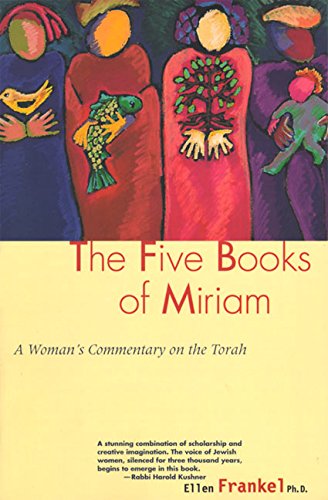
We Protestants have much to learn from Jewish Bible studies...I think this is a different edition of one I remember as a particularly broad-ranging and interesting read.
(Update: I was wrong. This is a book I borrowed from the library about twenty years ago, and appreciate...but the Jewish Bible study book I bought was Five Books of Miriam. Typical mistake generated by trying to finish a post fast.)
And here's volume one (sorry, Amazon's not showing a boxed set) in a series of thoroughly Protestant studies of biblical models for modern women.


Right. More books, more inclusiveness...

Jewish study of women in the Torah, containing much extrabiblical tradition, Hebrew word studies, examples of midrashic commentary...
What this book is, of course, is The Woman's Bible Commentary. It was titled for shock value. 
Episcopalian feminist, utterly "ladylike," reflecting on (among other things) the writing of the novel that's about to come out as a star-spangled blockbuster movie.
Sisterhood is global but, if women overseas are going to make progress, they need to make it for themselves; they do not necessarily want to be "empowered" to be just like Americans.


And what women want to be empowered to do may, in fact, be to support the same just causes our men support.