Thursday, July 23, 2026
Book Review: If I Were You (a.k.a. Deception)
Monday, July 24, 2023
Book Review: Land of Little Rain
Title: Land of Little Rain
Author: Mary Austin
Date: 1903
Publisher: Houghton Mifflin
ISBN: none
Quote: “The county where you may have sight and touch of that which is written lies between the high Sierras south from Yosemite—east and south over a very great assemblage of broken ranges beyond Death Valley, and on illimitably into the Mojave Desert.”
I downloaded this book from Gutenberg.org. If you’re online, you can read, print, or download it too, paying only printing expenses. If you’re not, I’ll print a copy for you at cost.
Mary Austin wrote several novels and is usually remembered for her poetry. (She dared to be trendy, writing poems patterned with thoughts but not sounds, like the translations of Native American poems she had studied.) Gutenberg.org has made several of her books available again, and after comparison, this is the one of her e-books I like best. It’s a nonfiction account of the stories Mary Austin collected in the Southwest—“Western” adventure stories, Native American stories, and Austin’s own stories of what she saw—coyotes, cattle, quail, buzzards, wildflowers. Frantic topophilia.
Austin’s intended audience were “armchair travellers,”and if you like a book that takes your mind on a tour of a different time and place, this is one. If you’ve never been through this part of the continent you may recognize places and wildlife from the old “Bonanza” TV series; no Cartwrights, who were later inventions, but canyons (Austin wrote “cañon”) and bighorns, chamiso and Shoshones. If you don’t care for the melodramas, shootouts, and boy-clique orientation of “Western” movies and TV shows but enjoy watching them for the landscapes and horses, this book is for you.
Thursday, May 18, 2023
Book Review: Seagulls Hate Parsnips
Title: Seagulls Hate Parsnips
Author: Virginia Tanzer
Date: 1989
Publisher: EPM Publications
ISBN: 0-939009-23-4
Length: 196 pages
Illustrations: drawings and map by the author
Quote: “At the 1964 New York World’s Fair…less than half the people questioned were able to identify Delaware as a state.”
Delaware is, as Tanzer explains early in Seagulls Hate Parsnips, the second smallest of the United States. “Nine miles across at its narrowest, and hardly a hundred miles long,” Delaware has at times been populated by more than ten times as many chickens as humans. In fact, Sussex County, the southernmost and largest county in Delaware, was the home of 200,000,000 chickens and 110,000 humans at the time of writing. One of those humans would later become our President.
Tanzer wrote from Sussex County, and her purpose in this book is to celebrate the place and time of which she wrote. “Maryland’s Eastern Shore is awfully nice, but not as nice as Sussex.” New to the place, she liked everything she found, even the local accent: “Lots of people in the County are Volunteer Farmen, who shore do a good job fighting fars.”
Of course, she recognized that many of us would be content to read about Sussex County, Delaware, rather than live there. “FLAT IS BEAUTIFUL! If you yearn for mountains and hills and things like that, try Colorado,” and, “No matter how long you live here, or how involved you get in community life, you will never be considered a Sussex Countian. To qualify as that, your grandfather should have been born here. And even if he was, and your father was, but you, by some quirk of fate, were born in Pennsylvania, you will still be considered an outsider.”
Actually, several of Tanzer’s “hints” to people considering a move to Sussex County are applicable to many of North America’s rural communities. It’s not that the residents of places where “Almost every native…is related to a large proportion of other [natives]” don’t like the eighty-somethings who moved in as children and have been active citizens ever since, who are still deemed noteworthy as what a legendary Vermont town called “dearly loved strangers among us.” It’s partly that they’ve not travelled much, themselves, and find other people’s memories of travel interesting.
Tanzer was a “dearly loved stranger” in Sussex County. Although her book follows a claim that the place has “the nicest weather in America” with, five pages later, a report on a particularly dramatic storm at sea, people seem to have encouraged her to write about how Rehoboth Beach got its name, why people pick up and move entire houses, and so on.
She notes that, before large-scale immigration from India began, Delaware recognized its own five racial categories: White, Black, Red, “Oriental…and Moor.” In other parts of the United States “Moor” was sometimes used to express a more favorable perception of North Africans than of sub-Saharan Africans, even as the misguided “courtesy” of misidentifying any African-American the speaker happened to like as a presumed descendant of North Africans. Delaware’s Moors were another close-knit community that could be described as “triracial isolates,” genetically comparable to Tennessee’s Melungeons, North Carolina’s Lumbees, etc. In the early twentieth century the government of Delaware burdened itself with the obligation of providing separate schools so that neither “Moor” nor Nanticoke children would have to sit beside Black or White children. Tanzer documents that the Moors isolated themselves by choice, and discusses four distinct theories of how some distant connection with Morocco may actually have existed.
If I find her reports on the Moors particularly interesting, it’s because they were one detail of Delaware’s natural history that is not equally applicable to Maryland. Tanzer writes at length about Delaware’s flowers, gardens, birds, farms, and summer tourists, without mentioning any real difference between any of these things and their Maryland counterparts.
She does, however, describe an attempt to follow a friend’s recipe in which she produced a cake that even the seagulls wouldn’t eat. That would have been quite an achievement. I have never seen anyone cook a food item seagulls wouldn’t eat in Maryland.
Speaking of food, you wouldn’t expect two states as small and as close together as Delaware and Maryland to have evolved different “foodways,” but I notice something about Seagulls Hate Parsnips. I don’t believe a book about Maryland could be written without some discussion of crabs. Although Muslims, Orthodox Jews, Seventh-Day Adventists, and vegetarians are well tolerated in Maryland, real Marylanders eat crabs. They don’t even park the crabs on clean sand to get the crabs’ bodies to empty out immediately before they eat the things. They can hardly overlook the reality that blue crabs are scavengers, designed to eat anything and particularly attracted to raw sewage. How people who know this can swallow something that looks like a giant beetle, at best, I have never understood.
Tanzer, writing about Delaware, is able to evade the question of eating crabs. Or is she? She had written another book, Call It Delmarvalous, about the “linguistic peculiarities and culinary specialties” of the DelMarVa peninsula. Presumably that would be where she admits or denies any personal experience with the culinary specialty of Maryland. I’m not sure I want to know.
Anyway, Seagulls Hate Parsnips is an interesting and enjoyable read. It is particularly recommended to anyone who has trouble remembering the names of the original thirteen states because two of them are hard to find on a small map. After reading this book you will remember that that blurry line down the edge of Maryland is a separate, special, historic place.
Seagulls Hate Parsnips is written for adults and contains jokes and references children won’t understand. It is, however, more family-friendly than the average daily newspaper. Sophisticated kids who want to learn about things that interest Real Grownups more than teenagers, e.g. property taxes, might like this book.
According to Spokeo, Tanzer is still living in Delaware at the age of 101, having been born in 1913. It is, er um, 2015 now, so this information could be wrong. If you buy either Seagulls Hate Parsnips or Call It Delmarvalous from either address in the lower left-hand corner of the screen, by sending $5 per book + $5 per package (i.e. if you order both together you send $15), I’ll try to send $1 per book to Virginia Tanzer or a charity of her choice.
Posted on September 23, 2015 Categories A Fair Trade Book Tags Delaware, topophilia
Wednesday, January 11, 2023
Clarence Jordan on Landownership
I don’t know whether you’ve ever walked over a piece of ground that could almost cry out to you and say, “Heal me, heal me!” I don’t know whether you feel the closeness to the soil that I do. But when you fill in those old gullies and terrace the fields and you begin to feel the springiness of the sod beneath your feet and you see that old land come to life, and when you walk through a little old pine forest that you set out in little seedlings and now you see them reaching for the sky and hear the wind through them . . . Men say to you, “Why don’t you sell it and move away?” They might as well ask you, “Why don’t you sell your mother?” Somehow God has made us out of this old soil and we go back to it and we never lose its claim on us.
Wednesday, June 27, 2018
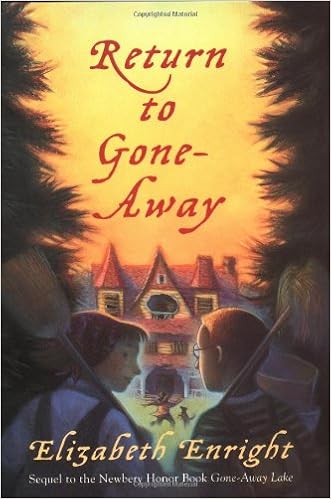
Book Review: Return to Gone Away

Author: Elizabeth Enright
Publisher: Harcourt
Date: 1961
Length: 224 pages
ISBN: 0152022635
Gentle Readers, I still don't feel free to take the time to upload the next batch of book reviews. I'm still hauling this laptop home every night, wearing the little thing out, and when not working on a paid job or socializing with e-friends I want to look at something that's not this screen. Maybe youall know this feeling. It'll pass, I'm sure...I can't say when.
But this morning a random tweet on Twitter reminded me...I am most likely to write a book review when (1) someone has sent me a new book for review, or (2) I've weeded a book I don't want to keep out of my collection--and only (3) I've been sitting at the computer considering what to write, and decided to write about a favorite book I've loved for a long time.
The Twit posted a picture of a little boy's review of a storybook, written on a form handed out at school. "Would you recommend this book to a friend?"--"No, because it is my favorite and I want to keep it."
This web site's book reviews can seem that way. I'm most likely to post about a book I give "ten out of ten," a book I've enjoyed every few years since the Nixon Administration, only when I've picked up a duplicate copy and put the better-preserved copy up for sale. It's unusual for me to turn to the computer right after rereading an old favorite and deciding to keep it.
Today, also, Paypal notified me of a new trick that may allow me to offer Paypal links without the bother of (1) shutting down other sites, (2) going to Paypal, (3) creating a specific product link, and (4) pasting that button into the page. Paypal does not actually care if I've listed a thousand different books I can resell for $11 online. Why would they want to store a thousand buttons? If it works, this Paypal link system will allow you to choose new or used books, or other items that may displayed here, pay with one click, and need only to e-mail salolianigodagewi to specify what you're ordering. The link will give the total amount of US$ to send, including $5 for shipping and usually $1 for that pesky Paypal fee; all you do is click and tell Paypal where to send it from (your Paypal account, linked bank account, etc.), then e-mail me about what you're sending it for.
And finally, Paper.li shared this new e-acquaintance's review of a book I first enjoyed during the Nixon Administration. This is a story about a 1960 family buying a fabulous old house in an abandoned lakeside resort town, exploring the resurgent natural environment and abandoned antiques in the other posh "summer homes" the very rich had built in the 1890s, so the children can be close to two retired friends who've come back to the summer home of their childhood to spend their last days. Lots of adventures, some funny and some scarey; delightfully detailed drawings, and a nice introduction to (by now these two) periods of U.S. history for middle school readers. What I particularly like is the indirect lesson: Nobody tells Mr. Payton and his sister Mrs. Cheever "You're too old to be living alone in these crumbly old houses, miles from town, with no phone and only an ancient clunky car blah blah blah"; the younger family just move into another crumbly house beside them. This is a happy story for seniors as well as kids.
Right. New blogging tricks begin today...let's see how they work! I promise not to post links to other people's reviews of books unless I've read the book and agree with what the other reader says about it. I fully endorse Samantha Bradshaw's review of Return to Gone-Away.
Samantha Bradshaw's review begins:
"
Return to Gone-Away is a children's book written by Elizabeth Enright, which is the sequel to the book Gone-Away Lake and discusses how the Blake family buys a house in Gone-Away. The book was first published in 1961. Plot introduction: When Portia learns of her parents buying Villa Caprice, a tumbledown Victorian house close to Gone-Away Lake, she is excited. She, her brother Foster and her cousin Julian enjoy learning about the "new" old house, with the help of elderly neighbors Mr. Payton and Mrs. Cheever.
"
To read more: https://www.thricereadbooks.com/blogs/news/return-to-gone-away-book-review
To buy it new: https://www.paypal.com/paypalme/PriscillaKingUS/16
To buy it used: https://www.paypal.com/paypalme/PriscillaKingUS/11
Add up to 5 books of similar size to the package, paying only the one $5 shipping fee for 6 books: e-mail salolianigodagewi @ yahoo to list your picks, and our Message Squirrel will send you a Paypal.Me link for the total price for your package.
If you prefer to keep payment real, send your U.S. postal money order to Boxholder, P.O. Box 322, as discussed on the Payment Information Page. Real payments never include the Paypal fee; the post office collects its own payment for the money order and postage.
Monday, April 2, 2018
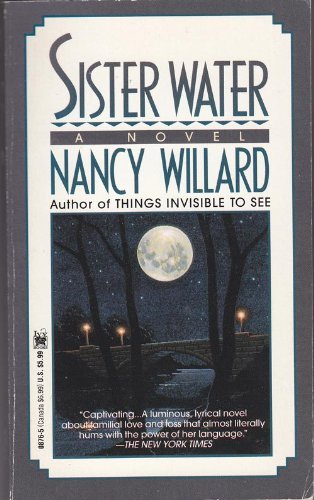
Book Review: Sister Water

(What I have is the hardcover edition. What Amazon wanted you to see is, for no obvious reason, the paperback--I think the Amazon link may steer you to the hardcover edition.)
Author: Nancy Willard
Date: 1993
Publisher: Knopf
ISBN: 0-679-40702-2
Length: 255 pages
Quote: “Even when Ellen was a child, her mother loved to hide.”
Now Ellen’s mother is slipping away into senility. Ellen, a young mother and widow, is getting to know two men who seem to embody two of the different subcultures into which some baby-boomers used to like to separate ourselves. Harvey is the Yuppie, a realtor who wants to turn the local natural history museum into a shopping mall; Sam is the Bobo, a veterinary student who wants to be the responsible adult in the house with Ellen’s mother and son while Ellen works.
The Huron River flows through all the characters’ consciousness, constantly. Everyone but Harvey is sensitive to natural beauty and attuned to St. Francis’s Canticle. Both Sam and Harvey are haunted by the image of a drowned woman. Both remember having seen her, although they didn’t notice each other at the time; how they related to this woman, living and dead, seems to sum up the moral judgments Bobos liked to pass on Yuppies.
Sam’s defense against the false accusation that he killed the woman is what eventually reveals how she came to die, but Sister Water is not your usual murder mystery. Willard is a poet; her stories are always filled with poetic resonance of thought and image. In Sister Water an angel, a “Dog Star Man,” a little town called Drowning Bear, wild rice harvesters, Petoskey stones, American Buddhist health food, playgrounds, pet cats, and more are woven into a luminous, even numinous, densely patterned, pleasing tapestry that suggests reflections at whatever depth readers want to explore. This review will stop at a relatively shallow level and say that Sister Water is an intensely topophilic love letter to Michigan and Wisconsin.
If you’re looking for a novel that gives you the feeling of visiting a real place and meeting real people that you’ll never really visit, but you’d like to, then Sister Water is for you.
Sunday, September 18, 2016
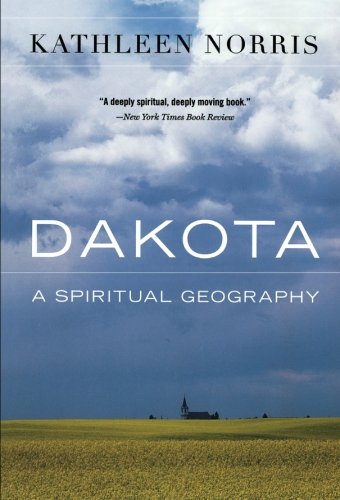
Book Review: Dakota
Friday, February 26, 2016
Book Review: The Housewife and the Assassin
Monday, December 7, 2015

(The tags were: Anderson Island, nature notes, Pacific Northwest,pigeon guillemot, raccoon,Washington state.)