Book Title: The Past, the Present, and the Loud, Loud Girl
Author: Karen McCombie
Author's web page: http://karenmccombie.com/
Date: 2001
Publisher: Scholastic
ISBN: 0-439-99868-9
Length: 200 pages
Quote: "I'm normally very happy to wake up. Except for one particular morning...It was weird--for some reason, my whole head was vibrating."
After two pages of rambling, Alexandra, or Ally, reveals that her head was vibrating because she was "nose to nose with Colin." And after only two more paragraphs, she identifies Colin as a cat who has snuggled around her head and begun to purr.
One of the themes in this series of British novels for middle school readers is that Ally is one of those mildly attention-deficient people who demand more attention from others than they're entitled to expect, only in a quiet way. Her life isn't very suspenseful, so she's cultivated a habit of stretching out any possible suspense as she dithers through unrelated mundane details. After explaining her position relative to this cat, she takes two more pages to build up to the information that her brother is always rescuing injured animals and keeping them in the house. Then after forty-eight more pages she discloses that the thing she'd forgotten, on the morning the cat wrapped itself around her head, was a school project. If you're willing to put up with this literary technique, you might want to collect the complete series of "Ally's World" stories.
But at least Ally is a quiet child. Her whole family are quiet, discreet, and self-contained. On the back of the jacket they're described as "definitely weird," and the wary reader might wonder whether their weirdness consists of being quiet, discreet introverts. Well, not exactly. Because they're so quiet and discreet, the reader might get the impression that the mother of Ally and her three siblings has died. On page 199 Ally finally gets around to explaining that her mother merely moved out.
Meanwhile, on page 56, where we find out about the school project, Ally and her nice, quiet school friend have been ordered to add a new student, Kyra, to their project team. They don't like Kyra because she is loud and pushy. The redeeming social value of this story is that the nice, quiet children have not been bullied into thinking that Kyra is wonderful and they ought to be like her. In fact, Kyra will end up admitting that she acts pushy because she's insecure. (Child readers might be presumed too young for the additional insight that people like Kyra disrespect other people's boundaries because they don't really respect themselves.)
The rest of the plot is that Ally and her siblings are trying to think of the perfect birthday present for their father. They don't have a lot of money, because they spend most of their pocket money on themselves. Of course, they will find a good cheap present their father will like, and the selection will be inspired partly by Ally's school project.
As an introvert I enjoyed the refreshing novelty of a recent novel where an extrovert is accepted only grudgingly, and only after spending a weekend working all by herself to make up for the damage her obnoxious, impulsive, pushy behavior has done. Nevertheless, these 200 pages seem like a lot of words for a predictable story about a week of mundane wholesome-family-sitcom events. I don't know any real child who spins out stories in this way, and don't know that real children need any encouragement to do so. Although it sold steadily, the series wasn't exactly as popular as Harry Potter, the Baby-Sitters Club, or the Lemony Snicket books.
Thursday, September 29, 2011
Book Review: The Path to Home
Title: The Path to Home
Author: Edgar A. Guest
Date: 1919
Publisher: Reilly & Lee
ISBN: none
Length: 178 pages of text, plus index
Quote: "Oh, there isn't any mansion underneath God's starry dome / That can rest a weary pilgrim like the little place called home."
Edgar A. Guest is probably best remembered for his observation that "It takes a heap o' livin' in a house to make a home." That line was printed in a previous collection of poems. The Path to Home promised readers more of the same general type of verse.
None of these poems has been identified by critics as great, nor has any of them contributed a byword to our language, but they would not have disappointed those who liked Guest's earlier books. All rhyme and scan fairly accurately. Some are funny; some are touching. Several are printed in midwestern U.S. dialect.
If you would like to complete a collection or give something to a collector of old books, I had one authentic 1919 edition in good condition: all pages intact, few creases or finger marks, no visible mold at the time of writing. Other editions are available now.
Author: Edgar A. Guest
Date: 1919
Publisher: Reilly & Lee
ISBN: none
Length: 178 pages of text, plus index
Quote: "Oh, there isn't any mansion underneath God's starry dome / That can rest a weary pilgrim like the little place called home."
Edgar A. Guest is probably best remembered for his observation that "It takes a heap o' livin' in a house to make a home." That line was printed in a previous collection of poems. The Path to Home promised readers more of the same general type of verse.
None of these poems has been identified by critics as great, nor has any of them contributed a byword to our language, but they would not have disappointed those who liked Guest's earlier books. All rhyme and scan fairly accurately. Some are funny; some are touching. Several are printed in midwestern U.S. dialect.
If you would like to complete a collection or give something to a collector of old books, I had one authentic 1919 edition in good condition: all pages intact, few creases or finger marks, no visible mold at the time of writing. Other editions are available now.
Wednesday, September 28, 2011
Book Review: Life: a Warning
Title: Life: a Warning
Author: Stephanie Brush
Date: 1987
Publisher: Simon & Schuster
ISBN: 0-671-61130-5
Length: 173 pages
Quote: "All of us are brought into the world with the same basic operating parts. All, if not most, of us are given bodies, and some, if not all, of us are given brains."
In the rest of this very witty, very 1980s book, Brush discusses fear, childhood, school, adolescence, bad luck, jerks, work, pets, food, computers, psychology, romance, friends, parenthood, "success" books, leisure, senior citizenship, the afterlife, and the future.
Brush's "future" would now be our present, which makes her future predictions especially hilarious (although the computer section is a blast, too, for similar reasons). The predictions had a certain logic in their day...and there is currently a massive shortage of (recent) photographs of Diana Spencer...and online dating really is "for the admittedly and unabashedly superficial," in ways Brush did not anticipate.
If you enjoyed the 1980s, you'll enjoy reminiscing about a time when those predictions seemed as goofy as Brush's other predictions: priority parcels would by now travel faster than the speed of light, Evel Knievel would still be leaping, people (i.e. the same people) would still be having their color swatches done...
Brush's style of comic narrative is similar to Dave Barry's, but perhaps a bit jumpier. It was funny then, and it's funny still. This book is recommended to anyone who wants to use laughter for pain control.
What's not to love? Well...Brush was very young at the time. Life: a Warning is a laugh riot but, on rereading, I'm not sure whether there is any serious message behind the jokes. This doesn't interfere with my enjoyment of the comedy but it might be a reason for some people to choose a book like Douglas Adams' Last Chance to See, which came out about the same time, instead of this one.
Author: Stephanie Brush
Date: 1987
Publisher: Simon & Schuster
ISBN: 0-671-61130-5
Length: 173 pages
Quote: "All of us are brought into the world with the same basic operating parts. All, if not most, of us are given bodies, and some, if not all, of us are given brains."
In the rest of this very witty, very 1980s book, Brush discusses fear, childhood, school, adolescence, bad luck, jerks, work, pets, food, computers, psychology, romance, friends, parenthood, "success" books, leisure, senior citizenship, the afterlife, and the future.
Brush's "future" would now be our present, which makes her future predictions especially hilarious (although the computer section is a blast, too, for similar reasons). The predictions had a certain logic in their day...and there is currently a massive shortage of (recent) photographs of Diana Spencer...and online dating really is "for the admittedly and unabashedly superficial," in ways Brush did not anticipate.
If you enjoyed the 1980s, you'll enjoy reminiscing about a time when those predictions seemed as goofy as Brush's other predictions: priority parcels would by now travel faster than the speed of light, Evel Knievel would still be leaping, people (i.e. the same people) would still be having their color swatches done...
Brush's style of comic narrative is similar to Dave Barry's, but perhaps a bit jumpier. It was funny then, and it's funny still. This book is recommended to anyone who wants to use laughter for pain control.
What's not to love? Well...Brush was very young at the time. Life: a Warning is a laugh riot but, on rereading, I'm not sure whether there is any serious message behind the jokes. This doesn't interfere with my enjoyment of the comedy but it might be a reason for some people to choose a book like Douglas Adams' Last Chance to See, which came out about the same time, instead of this one.
Book Review: Laughing All the Way
Book Title: Laughing All the Way
Author: Barbara Howar
Publisher: Stein & Day
ISBN: 0-8128-1539-4
Length: 288 pages of text
Quote: "I have outdistanced even politicians in my race toward the ridiculous. I wanted to make my mistakes at the top and I have."
As I read Laughing All the Way, it occurred to me that Barbara Howar's manuscript must have somehow swapped titles with one of Florence King's books. Florence King (no relation) had me "laughing all the way" with her memoir about growing up in Virginia and going to college in Mississippi...while Barbara Howar's memoir really could be called the "confessions of a failed Southern lady."
In the British system, where "lady" has a precise meaning, Barbara Howar would have qualified as a gentlewoman (some property had been in her family for a long time). In American usage, where "lady" was unofficially reassigned the slang meaning of "female with good manners and a good moral character," Laughing All the Way describes exactly how and when Howar fell short. It's not only that she confesses to blots on her reputation in the areas of chastity and loyalty; it's that, in describing her sins, she continues to wallow in them.
She doesn't even renounce the trivial sin of snobbery, displayed, albeit harmlessly, in this book. "Howar," with a long O and a short A, was her husband's Middle Eastern name. She kept the name after discarding the husband. She was fussy about the way it was pronounced...unless it was misread as "Howard," the name of a more influential Anglo-American family to which she does not belong. Of course, in the present century, one can only sigh for the bygone etiquette that forced even satirists, even after Barbara Howar had confessed to adultery, to pronounce "Howar" with two distinct syllables.
What she does well, in this book, is explain why the career women of the 1960s and 1970s needed a political movement. She documents gender discrimination as it was practiced against women who were abundantly qualified for their careers. She does not attempt to claim that the women who encountered discrimination on the job had prepared themselves for promotion in the same ways their male colleagues did; she documents how and why it was difficult for them to do so.
Another thing she does well is take responsibility for her sins. She doesn't blame Mr. Howar for the fact that she got bored with him, got interested in another man, and got caught, although she does complain about the people who feel that marriages ought to survive times of boredom. She doesn't blame President Johnson for the setbacks in her career after the "big break" she got during his administration. Lady Bird, Lynda Bird, and Luci Baines Johnson are accused of being "not real Southerners," but that was something people had been saying before they ever heard of the LBJ family; even when it was part of the Confederacy, Texas was Texas.
By the end of this memoir, although she's still young, Howar makes it easy to see how Joyce and David Susskind got the idea of casting her as a sort of prototype to "Angry Alice" in the Dilbert cartoons, the acid relief to Joyce Susskind's sweet image. Although Howar describes their show as "exploitation of women," her examples fit precisely into the pattern of Canadian/U.S. rivalry in which Canadian game players attempt to characterize the United States as a big disorderly mannerless mess. The only way U.S. citizens ever score any points in this game is of course to be excruciatingly nice, even charitable. Howar wasn't paid to do this on the show, but shows that she hadn't even thought of doing it in the memoir...and so Laughing All the Way ends with a bit of a whimper.
It's not all that funny but it is a valuable piece of history. If you're interested in what real people were doing in the 1960s, beyond the headline news and pop culture, you need this book.
Author: Barbara Howar
Publisher: Stein & Day
ISBN: 0-8128-1539-4
Length: 288 pages of text
Quote: "I have outdistanced even politicians in my race toward the ridiculous. I wanted to make my mistakes at the top and I have."
As I read Laughing All the Way, it occurred to me that Barbara Howar's manuscript must have somehow swapped titles with one of Florence King's books. Florence King (no relation) had me "laughing all the way" with her memoir about growing up in Virginia and going to college in Mississippi...while Barbara Howar's memoir really could be called the "confessions of a failed Southern lady."
In the British system, where "lady" has a precise meaning, Barbara Howar would have qualified as a gentlewoman (some property had been in her family for a long time). In American usage, where "lady" was unofficially reassigned the slang meaning of "female with good manners and a good moral character," Laughing All the Way describes exactly how and when Howar fell short. It's not only that she confesses to blots on her reputation in the areas of chastity and loyalty; it's that, in describing her sins, she continues to wallow in them.
She doesn't even renounce the trivial sin of snobbery, displayed, albeit harmlessly, in this book. "Howar," with a long O and a short A, was her husband's Middle Eastern name. She kept the name after discarding the husband. She was fussy about the way it was pronounced...unless it was misread as "Howard," the name of a more influential Anglo-American family to which she does not belong. Of course, in the present century, one can only sigh for the bygone etiquette that forced even satirists, even after Barbara Howar had confessed to adultery, to pronounce "Howar" with two distinct syllables.
What she does well, in this book, is explain why the career women of the 1960s and 1970s needed a political movement. She documents gender discrimination as it was practiced against women who were abundantly qualified for their careers. She does not attempt to claim that the women who encountered discrimination on the job had prepared themselves for promotion in the same ways their male colleagues did; she documents how and why it was difficult for them to do so.
Another thing she does well is take responsibility for her sins. She doesn't blame Mr. Howar for the fact that she got bored with him, got interested in another man, and got caught, although she does complain about the people who feel that marriages ought to survive times of boredom. She doesn't blame President Johnson for the setbacks in her career after the "big break" she got during his administration. Lady Bird, Lynda Bird, and Luci Baines Johnson are accused of being "not real Southerners," but that was something people had been saying before they ever heard of the LBJ family; even when it was part of the Confederacy, Texas was Texas.
By the end of this memoir, although she's still young, Howar makes it easy to see how Joyce and David Susskind got the idea of casting her as a sort of prototype to "Angry Alice" in the Dilbert cartoons, the acid relief to Joyce Susskind's sweet image. Although Howar describes their show as "exploitation of women," her examples fit precisely into the pattern of Canadian/U.S. rivalry in which Canadian game players attempt to characterize the United States as a big disorderly mannerless mess. The only way U.S. citizens ever score any points in this game is of course to be excruciatingly nice, even charitable. Howar wasn't paid to do this on the show, but shows that she hadn't even thought of doing it in the memoir...and so Laughing All the Way ends with a bit of a whimper.
It's not all that funny but it is a valuable piece of history. If you're interested in what real people were doing in the 1960s, beyond the headline news and pop culture, you need this book.
Monday, May 23, 2011
Phenology, the Serious Science of Taking Nature Notes
In the 1980s, The Country Diary of an Edwardian Lady was a bestseller. It wasn't a personal diary; it was watercolor sketches of the things the lady saw on her almost daily nature walks, and the poems about them she copied in calligraphy. It generated a small industry, and a fad for books of nature notes by living authors, like Richard Adams' Nature Diary.
I enjoy this kind of book. Read straight through, like novels, they can be boring...but it's interesting to look up someone else's entry for the weather and wildlife observed, on this day in some other place and/or year, and compare what they saw with what I saw. Such things always have the potential of documenting something of historic or scientific value.
Over the weekend, I read the latest Appalachian Voice and learned that professional ecologists agree with me about this. Nature notes now have an Official Scientific Name. When we blog about the first robin in the yard, the first snowflake, and so on, we are actually practicing the science of phenology...and it really can help scientists, especially with the debate about global warming.
So, this blog will now have a Phenology Category. I can't promise to document phenology every day, since I don't even have access to the Internet on most days, but I'll try to log nature and weather notes.


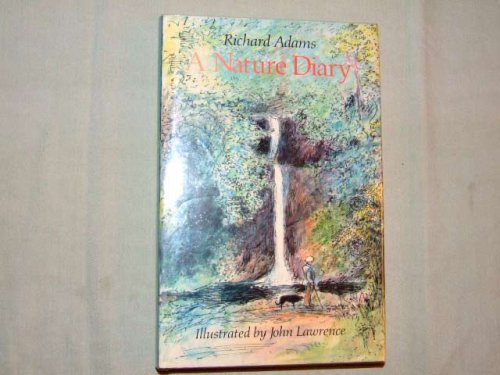

I enjoy this kind of book. Read straight through, like novels, they can be boring...but it's interesting to look up someone else's entry for the weather and wildlife observed, on this day in some other place and/or year, and compare what they saw with what I saw. Such things always have the potential of documenting something of historic or scientific value.
Over the weekend, I read the latest Appalachian Voice and learned that professional ecologists agree with me about this. Nature notes now have an Official Scientific Name. When we blog about the first robin in the yard, the first snowflake, and so on, we are actually practicing the science of phenology...and it really can help scientists, especially with the debate about global warming.
So, this blog will now have a Phenology Category. I can't promise to document phenology every day, since I don't even have access to the Internet on most days, but I'll try to log nature and weather notes.
Subscribe to:
Posts (Atom)


