Showing posts with label moth. Show all posts

Sunday, October 5, 2025

Sunday Post with Bad Poetry: Yellow Bear

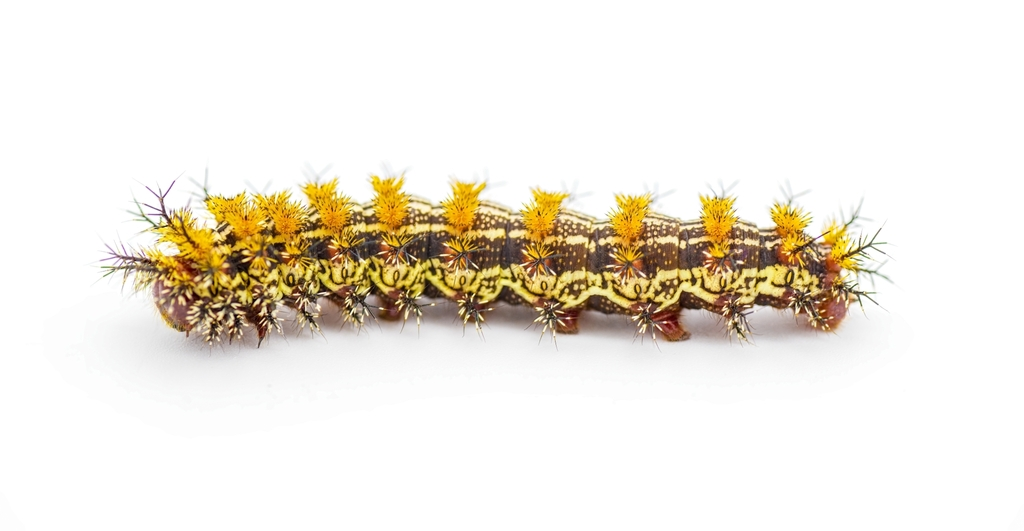
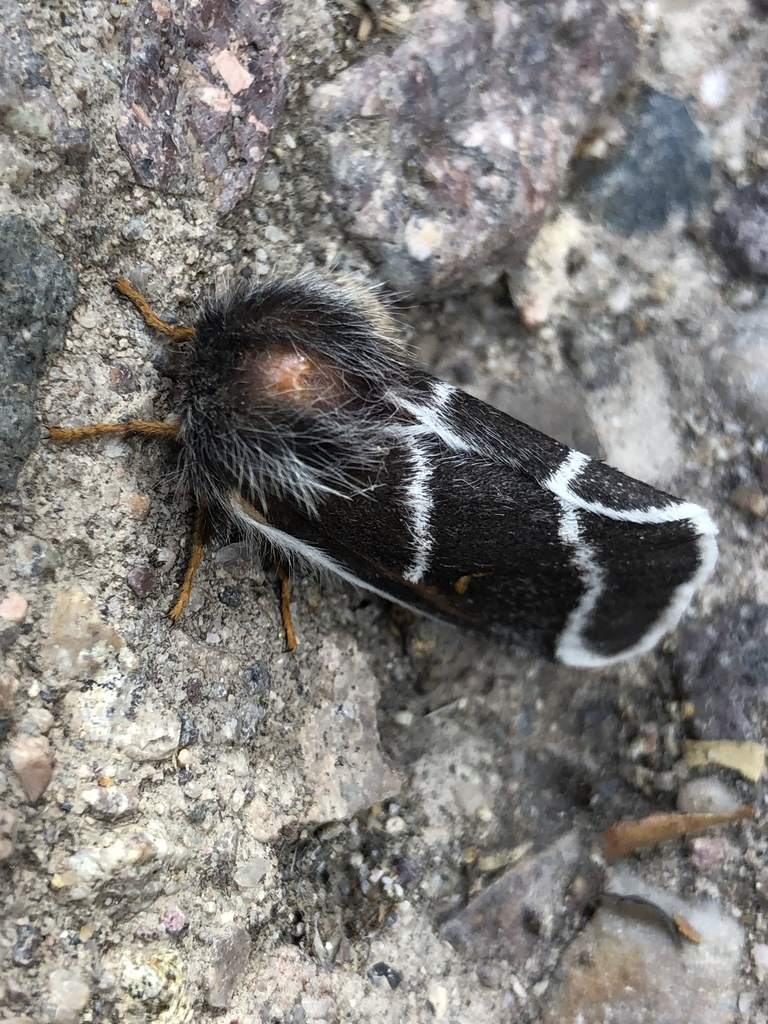
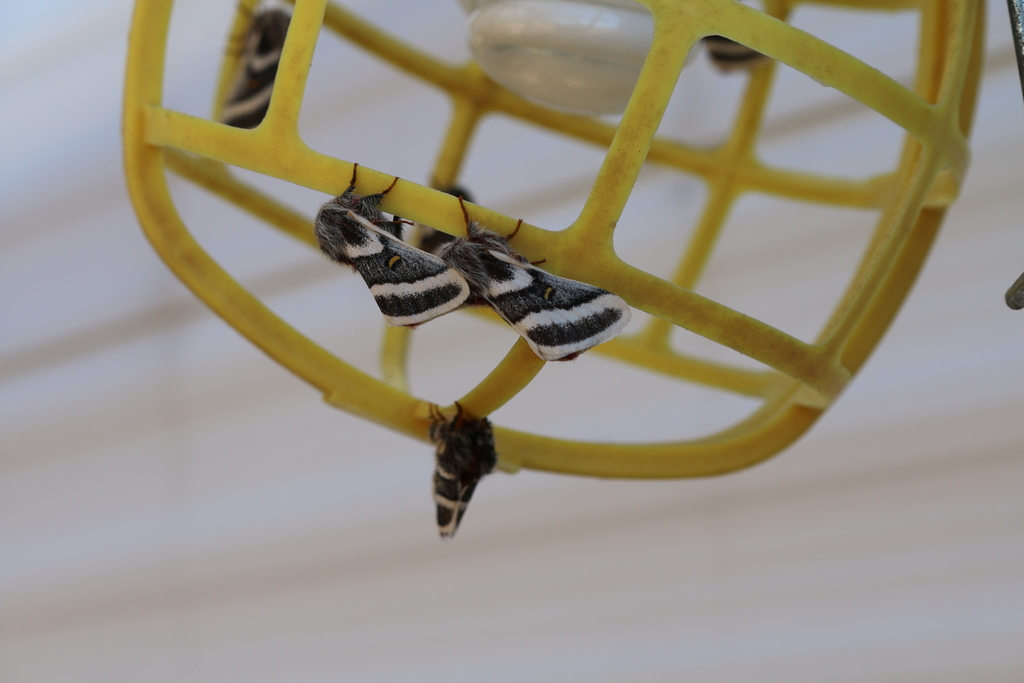
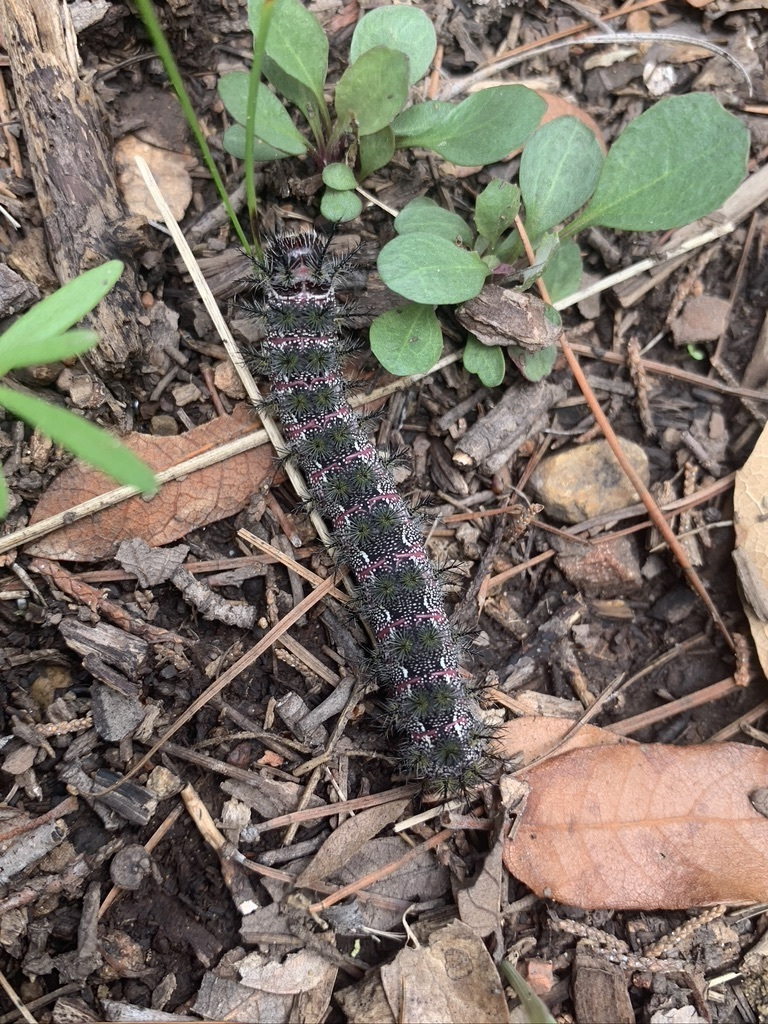
Spilosoma virginica is sometimes called the Virginia Tiger Moth. Since it is found in most of North America, identifying it with Virginia is not a very good description. Some prefer to call it the Yellow Bear, describing the shaggy appearance of the caterpillar. 


Photo from Wikipedia. The caterpillar I met was more of a sepia color than that, but their color varies. They can be pure white, light brown, or red-orange. Their distinguishing feature is that, unlike other Tiger Moth larvae, Yellow Bears are monochromatic; the skin, hair, head, and feet are all similar in color with only a little shading. They don't have tufts, stripes, or bands of contrasting colored hairs, nor do they have contrasting colored heads or feet. Hair and skin colors aren't always perfect matches but generally light hair goes with light skin, darker hair with darker skin. Sometimes bright orange hair goes with dark brown skin. Beyond that, multicolored effects identify other kinds of Arctiids.

They are not venomous. Short stiff hairs will irritate the skin if they get down the back of the neck on a hot day. However, Yellow Bears are not among the species that seem attracted to humans as means of transportation, as Spongeys and Eastern Tent Caterpillars often, and some silk moth caterpillars occasionally, seem to be. Usually they mind their own business, nibbling on grass and weeds, and leave us alone.


These insects are more common in the Eastern States but they are found as far west as Vashon island, in Canada, in Texas, and in Mexico. For some reason they seem to be least common in California, but they're found there too. They can be found at any time of year when temperatures are above freezing, and have two to four generations in a year, but people most often see the late summer generation, always the most numerous. Late summer Yellow Bears are active when leaves start to fall and may hibernate through the winter, rousing and eating on thaw days, in places that have winter. In very warm climates they may pupate, fly, and produce an extra generation in winter.

They can eat just about anything and rarely eat enough of anything to harm the plant. Mostly they eat grass and other low-growing plants found in lawns and pastures among the grass, like clover as shown. They have been known to skeletonize a few leaves of an ornamental plant, and occasionally nibble on a vegetable in the garden, but generally they are harmless, cute little animals. They tend to move faster than Woolly Bears.

How harmless? The North Carolina Parks web page for this species, https://auth1.dpr.ncparks.gov/moths/view.php?MONA_number=8137 , lists 26 plants other than grass on which people have found Yellow Bears munching. Three (basil, eggplant, and rhubarb) are things likely to be planted by humans as food. Three more (dock, plantain, and spicebush) are self-starter species on which some humans occasionally snack. The female moth usually lays about twenty eggs on the underside of one big leaf, and the hatchlings usually stay together on that leaf until they've nibbled it down to lace. Then they crawl away in different directions to explore the wonderful world of flavors. They seldom eat enough of any plant to affect its reproductive cycle. They take a leaf here and a leaf there, mostly from things like milkweed and ironweed that humans can't eat. In theory a Vicious Pesticide Cycle could make them pests; in reality they hardly even become a nuisance.

I was trimming the hedge around a field that had been badly damaged by attempts to "control weeds" with chemicals. Down near the road, hogging the sunshine in the driest places, they had jimsonweed, which has mostly smooth but vaguely malevolent-looking leaves and thorny fruit--the "thorn apple" that looks like a big burr and eventually splits open to release black seeds. Up in the grass they had horse nettles, which look like jimsonweed but with sharp prickles all over the leaves, and fruit that look like tiny hard tomatoes. Both are seriously toxic to humans and domestic animals, though most mammals instinctively avoid eating them so you may find them in pastures where horses and cows have eaten around them for years, and both thrive on herbicide spraying--it clears away the nicer plants and makes room for these nasties to grow. People want to get rid of these weeds, it's a good idea not to handle them, so they've sprayed them with every kind of poison they could get, and both of these members of the nightshade family slurped it up and asked for more. I want to emphasize this point. Corporations tell you you can spray poisons that "only kill weeds," by which they mean lovable wild plants like daisies, dandelions, clover, dock, or chickweed, all of which can actually be used for food...and what that does is cultivate jimsonweed and horse nettles.

Some of the gardening sites mention that people have tried using horse nettles like stinging nettles, as medicinal herbs (stinging nettles' irritant properties can promote healing from some conditions). Does not work. Horse nettles irritate, all right, but they don't stop at irritating surface tissues in that benign and eventually soothing way. They can be fatal to any animal or person that eats them, and the plant sap, even apart from the prickles, can raise a rash on human skin.

So what can you do? If you listen to the corporations, upon identifying these horrid weeds on your property, you will immediately sell out to either an industrial farm conglomerate or a Chinese investor. Why risk your own hands to that nasty rash? Let Chinese people do the farming. Chinese people are foreign so they deserve to do all the...Consider the history of Chinese and Manchurian relations prior to the twentieth century. Chinese people have an average IQ score higher than any European nation's, and they used that "Just let us do all the work" line on the Manchurians who supposedly ruled their country, with great success. While wearing their hair in long braids to show their inferior status they quietly continued to control their own country's business. They have stopped working toward the goal of reducing population, recently. They have made progress toward the goal of taking over North America. I'm not sure how bad that might be, whether people who are foolish enough to sell land deserve to own land, whether Chinese people who get into a country free from the Chinese Communist Party become agents for or determined opponents of that Party. I've known Chinese-American people who were good neighbors but I think you, Gentle Readers, do deserve to own land. 

The way to get rid of the evil, toxic weeds in the nightshade family is to persist. (There are others; the other nasty member of this family that is common in Virginia is bindweed, the most aggressive and one of the less ornamental kinds of convolvulus or "morning glory.") Wearing protective gear (jeans, sweatshirt, boots, leather gloves, and since these weeds like places that get lots of sunshine you'll probably want to add a hat), armed with a hoe and a trowel, pick every little sprout and seedling out of the field as they appear. A year or two of vigilance will starve the roots to death and stop the weeds trying to come back. If they do come back, as it might be because some birds can digest the fruit and drop seeds as they fly overhead, repeat the treatment as needed. 

If a field is badly infested, horse-nettles are one of the species people have successfully killed by "solarizing" the infested area. They cut everything green as close to the ground as possible, then cover the infested area with a few layers of heavy plastic for an instant greenhouse effect. This gets rid of plants that like lots of sunshine but it means a whole year of looking at ugly plastic, after which more desirable plants will be dead too. Weeding out the weeds is probably a better plan.

Anyway, in addition to these nasties I was slicing through tangled mats of blackberries--wasted blackberries, the kind that have grown aggressively and formed tangled mats in response to "herbicide" damage, failed to produce fruit, and become hosts to fungus infections--and Lonicera japonica, the less desirable non-native honeysuckle, and Dioscorea polystachys or polystachya, the cinnamon vine or "Chinese Yam" that some Japanese people insist is delicious and nutritious but Americans won't eat...

Right. Now somebody Out There wants to try it. Here is what that person needs to know. Japanese people do not try to eat the fragrant leaves and cute little dollhouse-potato-like fruits of this annoying vine. They dig and eat the root, which looks like a giant sweetpotato. It does not taste like and can't be used like a sweetpotato or a yam. The Japanese peel their "Chinese yams" thickly, because their outside rind is nasty and toxic too. Then they slice them as thinly as possible. Then they soak the slices overnight in vinegar. This dissolves enough of the little crystals of acid that make the plant toxic that people who eat the slices, in moderation, show no immediate damage from eating it. The slices are still indigestible, though, until they've been stir-fried. They will still add a "pickle" flavor to the stir-fry, but some people like that. They contain plant protein, fibre, Vitamin C, Vitamin B6, and small amounts of other nutrients, and even some allantoin, a helpful biochemical found in garlic. So I suppose they qualify as survival food for people who like pickles. I do not like pickles. People who do are welcome to all of my "Chinese yams." (They grow well in the orchard. I usually spend a fair bit of time picking them out as they appear, but could be paid to let a few roots ripen for a person who wanted them, if I knew of such a person. I don't.)

And there were some pretty little asters some former resident had probably cultivated, long ago. And some nice dock, which I don't like to chop up even though its growing season was over anyway. And some nasty pokeweed, which I do like to chop  down. And some goldenrod, which is pretty, and some bees were enjoying it, but you don't want goldenrod around the base of a black locust tree, which was what these people had in the middle of the tangle that included the goldenrod. And some leafless, flowerless rose bushes. (If you cut roses right down to the ground in autumn, most kinds will grow back and may bloom better next spring, so at least I didn't feel bad about chopping down the roses.) And assorted grasses including sage grass and sedge grass and fescue and even some anemic-looking ladies-thumb, which is one kind of grass humans can eat and which I recommend, though it will not produce the Astroturf look foolish people want in their wretched "lawns." 

Moth and butterfly populations are in a decline; I was glad to see a half-dozen little Bears That Grow Up to Be Tigers foraging in the grass. Moths in the Arctiid family are often called Tigers because they have black and orange markings, and their caterpillars are called Bears because they have thick heavy coats. Woolly Bears, placid little things, didn't seem to mind being picked up and moved out of the way. Brown Bears curled up in my leather glove, saying "If you're going to eat me you'll get a mouthful of nasty hair," not seeming terribly concerned about the possibility. 

And then there was a little Yellow Bear who discovered my shoe. I hadn't anticipated a need to wear boots and was wearing Skechers, made of some sort of textured plastic I don't recommend. Ah, but they were covered in cut grass and grass sap. I stepped away from a pile of cut grass and saw this caterpillar, clinging to my shoe, positively guzzling grass sap. 

Here he (it was small for a Bear, hardly an inch and a half long, and females grow bigger than males; I suppose it might have been a young female but I'm going with "he") had been chewing and chewing and chewing at poor-quality, sprayed grass, trying to extract enough of whatever nourishes Yellow Bears to get him through the winter, and suddenly he plopped down on a surface covered in grass sap! The good stuff! All he had to do was slurp it up! His little head quivered as he slurped as fast as he could go.

I laughed out loud. I walked around, showing everyone how eager the little guy was to get more rewards for less labor. That may be a human failing, but it's not only human. I let the caterpillar clean the top of my shoe as best he could. Then I moved him out of the way before I resumed chopping and slashing and sawing, generally creating an environment where persons hardly an inch and a half long were likely to become a nasty mess in a nice new power saw.

He didn't like that. Here he was, trying to lick every drop of lovely grass sap off every millimetre of my shoe, and up came a strange thing that didn't taste like grass sap and plopped down in front of him. He had no interest in exploring something that probably tasted like horse-nettles when there was so much delicious grass sap to be licked. So then up came another strange thing that probably tasted like gasoline and prodded him from behind! He buck-jumped up into the air and landed on the strange thing that probably tasted like horse-nettles. He started to get himself into position for a mighty leap back down to the stuff that was covered in grass sap, and the strange thing that probably tasted like gasoline came down around him, and he thrashed about and--no doubt feeling that he'd impressed Fate with his tremendous efforts--suddenly found himself leaping down into some grass and weeds, very similar to where he'd been before he discovered the Plains of Pure Grass Sap. 

He resumed munching. What else is a caterpillar to do? But he seemed to smell grass sap in the air, to hear or feel the vibrations of the Pure Grass Sap Experience resuming at a distance. Energized by the grass sap he'd been able to slurp up and the hope of more, he moved at a caterpillar's top speed back to what a caterpillar could not possibly have recognized as a special kind of power saw designed just for cutting through tangled mats of blackberry brambles. And grass. Oh, grass. Oh, pure grass sap. Elysian Fields of grass sap...

I was glad I saw the little fellow coming. I said, "You again!" He was making his way along a plant stem. I picked up the plant stem and moved it across the road. 

This time, no doubt, he was puzzled by his strange experiences. But caterpillars are dumb animals in more than one sense of the word. They have ways to communicate what they consider the most important parts of their experiences to one another. They can smell who's found the juiciest leaves; some caterpillars will follow each other to food. They know who's male and who's female and who's attractive; some caterpillars try to pupate close to a future mate. But they have no way to tell one another, "There was a strange sound that shook all the grass stems around me, and then suddenly I found myself wallowing in pure grass sap, more grass sap than I could lick up, no matter how I tried! Heavenly! And then something took me away and put me back into the ordinary world where you find me now." Even trying to think through such a thing for themselves probably blows what they have in the way of minds. Probably they cope in the only way caterpillars can. Probably they forget the whole thing. 

I saw no more of the Yellow Bear. I soon came to a section of hedge of less interest to him, and didn't meet any of his relatives, either.

Spilosoma virginica, the little Yellow Bear,
Crawled through an old cow pasture and never wondered where
The cattle had gone, long ago, leaving grass and weeds
Ideally suited to a Yellow Bear's nutrition needs.
Spilosoma virginica in coat of faded yellow
Scuttled where birds could not see the hairy little fellow,
Gnawed upon a blade of grass, then gnawed upon a leaf,
And had no brain to tell him that he might be thought a thief.
Spilosoma virginica's jaws had a good workout,
Chewing leaves and grasses up to get their juices out. 
Then, resting from his efforts, heard an unfamiliar sound
And found himself in place where grass sap covered all the ground..
Spilosoma virginica began at once to lick
And gobble up the grass sap where it was both fresh and thick.
"How did I earn such blessings? Oh, but certainly I did!
I ate green stuff by day and night, as my Creator bid."
Spilosoma virginica no longer had to chew
To get the sap out of the grass! His mouthparts fairly flew.
Extracting more reward without exerting extra labor
Pleased him as much as it would please his cow or human neighbor.
Spilosoma virginica slurped, rolling in delight,
Till he was taken from the grass sap. Oh unhappy plight!
He squirmed, he lashed, he thrashed, and what he got for all his pain
Was back among the cellulose he had to chew again.
Spilosoma virginica went back to grass to munch,
Not really an unpleasant way to finish up his lunch.
He roamed from grass to dock leaves under bright October sky,
He eats and grows until time comes to rest, and then to fly.

Thursday, January 23, 2025

Hemileuca Warreni: Emergent Nuisance?

We already met Hemileuca warreni, last summer. It has usually been classified as a southern subspecies of H. maia. Stingingworms found on the peninsula (not the panhandle) of Florida tend to be more colorful, and moths may average darker in color, than other maia. What's changed recently is that in 2023 some scientists voted to list H. warreni as a separate species and, though most web sites haven't added pages for it, this winter some sites have set up separate pages for the "Florida Buck Moth."

Here's what I learned last summer. Basically this species is a minor nuisance. It is a significant food source for some little tachinid flies and braconid wasps. Its primary food plant is oak leaves, often switching to other plants as the caterpillars mature. It does all of its eating as a caterpillar; moths don't eat or even sip liquid, and don't live long. It's not a threat to any plant but it is a great inconvenience to fruit pickers, as caterpillars often like to spend their final instar as caterpillars infesting fruit trees and bushes. Caterpillars are covered in stiff branching bristles; when startled they drop off their food plants and curl up with all their bristles out. Each bristle tip contains about as much venom as a bee sting and will, like a bee sting, continue to cause pain as long as it remains in the skin. If touched by one of these little monsters humans are advised to pat the affected skin gently with duct tape, sticky side down, to remove any bristle tips from the skin. Once bristle tips are gone, wounds generally heal quickly. Reactions could in theory include anaphylactic shock; in practice it's very rare for anyone to report symptoms worse than a painful skin rash.


The name "stingingworm" has been applied to Hemileuca maia at least since colonial days, though caterpillars are not, technically, worms and some scientists dislike names for caterpillars that include "worm." 

The photos of Hemileuca warreni available online are mostly not new; most of these photos were posted on pages for maia in the past, and have been transferred to pages for warreni as those pages have been set up. The Inaturalist group are leading the way to set up separate pages for warreni


Photo by Michaeltrestman. Big, feathery antennae identify the male of the species. 

His anatomy is a bit unusual. Tufts of fur add to the bulk of his thoracic segments, in which is stored most of the fat on which he lives  as an adult. Head and tail segments look tiny by comparison. His little flat head contains eyes and antennae but no mouth, and his thinnish abdomen contains only reproductive parts, no digestive parts, and surprisingly little fat for an animal who can't eat.


Photo by GraceBaffer. The female is similar, though usually a bit larger, only when she emerges from pupation her abdomen looks fatter. This is because she is full of eggs. By all appearances she is eager to unload the eggs as fast as possible. Many individual Hemileucas also show a tendency (if anything, more common in males than in females, though we  see it in this female) to lose the feathery scales that give their wings color and texture, so their wings become translucent. In many species the male has red or orange fur on his tail setments and the female has black, white, or grey, but this is not as reliable an indicator as the antenae. Female antennae are simple; male are featherlike.

Most of these moths probably live only one day. Most of the stored energy from all the food they have ever consumed, such as it is by the time they eclose and fly, goes into finding a mate, preferably on that first day of their adult lives. The female actively pumps out a scent (which humans can't smell) to summon males, and males follow that scent, using all those sensitive nerve endings on their feathery antennae to bumble about as they try to follow a scent on gusty Eastern States wind, for half a mile or more. 


Photo by Logancrees. Eager to mate though they are, couples of Hemileuca usually take their sweet time and enjoy each other's company for about an hour. Mating back to back is the most common position for moths, but Hemileucas sometimes mate face to face (around a twig). They do not, however, show any interest in each other after mating. Moths are most likely to produce viable offspring the first time they mate so, if both of a couple live long enough to mate again, both the male and the female will look for younger mates. 

After mating the male rests for a day or two. He has used up a good deal of his life force and is vulnerable to predators. If nobody else eats him, however, he is likely to regather his energy and flit off in the direction of another female if he can smell one. 

After mating the female uses up the biggest part of her life force flying about to find the right place to lay her eggs. Flying seems to be part of the process; if she happens to be sitting on a suitable tree she still flies about for fifteen or twenty minutes. Then she places eggs in a cluster, vaguely ring-shaped, around a twig. This takes a few hours. After laying her eggs she, too, rests for a day or two. 

If they enjoy the full week to ten days it's possible for them to live, Hemileucas may mate two or three times. Each time they will produce and release fewer fertile gametes. Each of a female's egg clusters will contain fewer eggs, and fewer of those eggs will hatch.

Hemileuca warreni fly in what most of North America calls winter--the temperate season in Florida--and they also "buck" silk moth customs by flying in the daytime. Most photos of adult warreni are dated in January. Eggs hatch in March. 


Photo by Invertebrateguy. Hatchlings contain relatively less venom than older caterpillars, but at all stages of their lives the caterpillars' bristles seem to protect them from one another. They like feeling a sibling's bristle tips brushing their own, on all sides if possible. They may not realize that their bristles are venomous. However, when they are in overcrowded conditions some observers, including the author of this document, believe that older caterpillars may try to sting one another--and fail. It's hard to be sure about this. Being poisonous to everyone but their siblings, and normally enjoying being close to their siblings, allows these caterpillars to have a peaceable attitude most of the time. Only in very crowded conditions are they observed lashing their front ends about in a way that suggests that they know they can sting, and wish they could sting their relatives.

As they grow bigger the caterpillars become more colorful. First the bristles on the upper back show bright red, orange, and yellow color; then patterns of white, sometimes red, and sometimes orange or yellow develop on successive skins. While they live together and eat the same thing siblings seem at least to show a family resemblance, though their colors vary and they seem free from color prejudice. As they mature they separate and eat different things, and their final caterpillar skins vary dramatically in color. Most individuals photographed remained yellow, black, and white in different patterns, but some are real studies in yellow, red, and orange. 


Photo by Mudgiecrabshabistan.


Photo by Hannahwojo. This was the most common color pattern photographed--a mostly black caterpillar with dark yellow rosettes and black branching bristles. White can predominate over black, and branching bristles can be yellow or white. Some aberrant individuals were pale all over, and one had solid reddish-brown skin and brownish-yellow bristles.


Photo by Beach2022. Warreni does sometimes show one real structural difference from other Hemileucas. Their posterior segments taper more; they have only one central rosette-shaped yellow bristle in the next to hindmost ring of bristles, instead of a pair of rosettes, with narrower branching bristles on the sides. However, not all photos identified as warreni clearly show this difference from maia. All photos identified as warreni do seem clearly to show that the central pair of bristles, and sometimes the single central bristle at the tapering rear end, form long rosette shapes at an early age, while maia develop rosette-shaped bristles in the final instar or not at all. Warreni's rosettes are yellowish brown to orange; maia's, if they ever form, are often gray.

Early in the summer the pupal shell pops out of the final caterpillar skin. Although the pupa squirms away from the cast-off caterpillar skin, it does not usually put much distance between itself and its dead skin, and smooth pupae are often identifiable because at the tail end they're still stuck to bristly, empty skins (which still contain venom). The insect then pupates for the rest of the year, finally ecloses, and starts the cycle over again.

So, you might ask, what else is new? Apart from the different spacing of the rosettes, which does look like the kind of structural difference usually considered to identify a distinct species, why does warreni suddenly deserve an article all to itself? It is very similar to maia. All the Hemileucas are very similar to each other. This has been discussed before.

What's new is this report on Reddit: "There were 1000s plus of these guys flying around."


In January? Near Boca Raton, Florida? That has to be warreni. It looks dead but it's probably not. The Hemileucas curl up and play dead under stress, both as caterpillars, when curling up puts their bristles out and makes them formidable opponents for predators that rely on biting to kill prey, and as moths, when the same position displays the juiciest parts of their bodies for easier biting. 

And that's bad news. Boca Raton seems to be the social hub of Hemileuca warreni's world--most photos of warreni on Inaturalist indicate that the individuals were photographed near that city--but Hemileucas are usually found by dozens, not thousands. 

The city could be building up to the kind of irruption the Southwestern States had with Hemileuca oliviae a hundred years ago. By all accounts it was horrible, and left people with a perception of the Hemileucas as even nastier than they are. Chronically overcrowded and malnourished caterpillars seemed to be consciously trying to sting anything and everything. Gnawing desperately on things they couldn't digest, they were blamed for wastefully, maliciously eating pasturage away from hungry cows and sheep, then "poisoning the land" with their dead bodies when they starved to death anyway. They did ever so much more damage during the years when, apparently due to loss of their tiny primary predators, they were found at ten or twenty times their normal population density--when nubile moths fluttered around one another by hundreds instead of dozens.

Floridians know by now what they must do...or at least the ones who read things on the Internet know. They must resist, must positively fight against, any temptation to spray poison on their stingingworms. They must allow natural predator populations to restore the balance of what is, at best, a deeply unlovable species. 

It would be a good idea for the State of Florida to move now, to remove all "pesticide" sprays from every store. (Yes, I know, the mosquitoes. Breathe. Youall may have to live with your mosquitoes to avoid even worse plagues...even a plague of stingingworms would last for only a short season, but a Vicious Spray Cycle with the mosquitoes...) Do not make it possible for anyone to try to "control" stingingworms in a way that will push their population, and other nuisance insect populations along with them, hopelessly out of control.

Thursday, December 26, 2024

Hemileuca Tricolor

With Hemileuca tricolor we come close to the end of the Hemileuca species list. Based on DNA studies alone, Hemileuca vanschayki is a distinct species, but (as with siriae) very little has been written about it; without DNA studies it looks like just another variant of H. eglanterina, and no difference in behavior or habitat has been identified. H. venosa is still sometimes received as a species name but documentation of it online is still limited to lists, no articles or photos. H. washingtonensis has been discussed as a subspecies of H. nuttalli; H. watsoni is now considered a subspecies of H. electra; H. yavapai has been reclassified as a subspecies of H. juno. Not enough material is available to make an article about any of these species, nor do their names appear on a majority of the current lists. So the next and last post about the Hemileucas will be an index. 

What follows will depend on you, Gentle Readers. Although only Automeris io is found in Virginia, the genus Automeris is very similar to the genus Hemileuca; there was some disagreement about which genus some species belonged to. There are more species of Automeris than of Hemileuca. Along with all the Automeris species, some species of Coloradia and Saturnia, and especially Lonomia, can be described as stingingworms and, in some ways, resemble the Hemileucas. In the rest of the world, Africa seems to have no native species of caterpillars that sting, but Europe and Asia have a few, and we haven't even considered the slug moth family Those who enjoy caterpillar gross-outs might choose to fund more articles about those moths. Both slug moth caterpillars, many of which sting, and the other silk moth caterpillars, which don't sting but can be very large and bristly, tend to be hard for insect-phobic people to appreciate. The silk moth genus does, after all, include the horned-devils.

Alternatively, you might prefer to fund articles about prettier things. Birds and flowers have been thoroughly covered. Bees and beetles, and the vast number of moths whose caterpillars don't sting, not so much. Or we could move on to some other field of human knowledge. There are enough butterflies to satisfy most readers' interest in fun facts about insects, I'm sure. 

Now for the fun facts about Hemileuca tricolor, the Tricolor Buck Moth or Three-Colored Sheep Moth.


Photo from ButterfliesAtHome. Exactly how do they count the three colors? Dark, medium, and light on the wings, or white and neutral-colored on the wings and orange on the body and antennae?

Its other distinction is that a higher proportion of the web sites that Google is willing to show, that mention this species, focus on the caterpillar's sting. Its Mexican name is quemador. Some Westerners call them burnworms, as distinct from other stingingworms. Relatively little is available about this species, and though the moths have their admirers, the emphasis seems to be on the fact that "the caterpillars...will sting you something terrible!" (as a Flickr poster put it).

H. tricolor is found in a wide band of land on both sides of the Mexican-US border. Here's a report of its effect on a nature walk in Baja California.


On the US side it's found most often in Arizona and New Mexico, where the caterpillars can get all the paloverde and mesquite they want to eat. They can also eat acacia and mimosa leaves. H. tricolor is listed among wildlife found near Las Vegas, and is sometimes found in Utah and California.


Photo by Astover45. His head looks like a pinhead in a cushion of fur. (Males have feathery antennae; females have hairlike ones.)

Bodies are about an inch long, usually a fraction over one inch. Wingspans range from just over 2 inches to just over 3 inches; females are typically larger than males. The proportions of dark and white speckling in the colored bands on the wings varies. Individuals can look black...


Photo by Desertdutchman.

Or pale...


Photo by Salticidude. Females are more likely to show a pinkish or brownish color, males a bluish gray. Hind wings can be relatively light-colored with white margins, or may look plain white.

The upper legs, as well as the thorax, are furry. The abdominal section is also furry with bands of longer hair around its various segments. Under stress, like other Hem,ileucas, the moth tends to curl up and display its most vulnerable area. Possibly it resembles a wasp enough to make this behavior pay, once in a while. It can't sting, and probably doesn't think it can. It has probably formed the habit of curling up from being a caterpillar who was cushioned, when it fell, by landing on its bristles. The fur may be what causes people to describe these moths as "stunningly beautiful," or "tribbles with wings." The moth's fur is not considered venomous, but some say it can be irritating. (Short ends of human hair can also be irritating.)

The life cycle is apparently similar to that of other Hemileucas. Females exude a subtle scent that humans don't notice, but male moths can smell half a mile away. Males race toward a female, who is as eager to unload some eggs as the males are to fertilize them. 


Photo by Clara4. The one who dared to get close enough to touch her first is 99.99% sure of being her chosen mate, but the other three (or more) hang around, catching their breath and no doubt hoping the chosen male drops dead. Silk moths typically spend some time cuddling and enjoying each other's company before and after the reproductive act. 

However, once the female flits off to lay her eggs, the romance is over; both male and female Hemileucas normally have the ability to mate three times, if they survive long enough, and each time they will ignore prospects of their own age if a younger moth is available. Both sexes release most of their viable gametes in the first mating, because both are unlikely to survive long enough to mate again. 

Females lay eggs on a twig of an appropriate plant and hope it will put forth suitable leaves when the caterpillars hatch in spring. Their first few skins are black, and contain relatively little venom. They like to maintain physical contact between bristles, presenting the appearance of a solid mat of thorns to predators. After eating their way through three caterpillar skins they separate; now they eat fast enough that each one needs a leaf of its own. 


Photo by Suecar. The yellow color can be bright or, as shown, subtle. 

The final caterpillar skin has rows of branching bristles around the head and tail end and along the lower sides, and a double row of rosette-shaped bristles on the back. The severity of the sting depends on the number of bristle tips that stick in the skin. Rosette-shaped bristles inflict more pain than branching ones, though branching ones are usually enough to remind people to avoid contact with stingingworms.

The inflammation we form on contact with stingingworms is an allergy-type reaction that almost all humans have--some more intensely than others. Anaphylactic shock can occur, but it's rare. Usually pain is confined to the point of contact and fades after bristle tips are removed. 

Before the hottest part of the summer the caterpillars hide under dead leaves or sand and pop out of their bristly skins in a smooth pupal shell. The last shed skin is usually near or attached to the end of the pupal shell, and still stings if touched. 

Sometimes in autumn like other Hemileucas, but usually in spring (sometimes January--the Sonora Desert doesn't really have winter) the moths hatch out, or eclose, and crawl up onto the ground looking like grubs with only stubs of wings. 


Photo by Antrozousamelia. The poor little fellow's wings and antennae are still expanding. He can't yet fly. He thinks exposing his curled abdomen may help him survive. Little does he know that he's safe as if his mother had ever had arms to cradle him in.

They climb up a vertical surface and spend some time pumping haemolymph into their extremities, expanding wings and legs. As the female's wings expand her scent gland starts "calling" males. Before most females test their wings, they mate. After mating they fly for a bit, then lay most of their eggs, then rest for a few hours and, if they can, mate again and lay a few more eggs. Whether or not there is a second mating, fewer eggs will hatch from a moth's second or third brood. Second matings will increase the rate of hatching only slightly. 

Thursday, December 19, 2024

Hemileuca Stonei

Hemileuca stonei is the Hemileuca most likely to look brown, as distinct from drab or reddish, and to have significant amounts of bare chitin uncovered with fur on its body. It is considered closely related to H. grotei and H. (grotei) diana, but has consistent visible differences.


Photo from Flickr.

Living in the desert along the border between Arizona and Sonora, H, stonei has received little attention from humans. Its caterpillars eat leaves of a few Mexican varieties of oak trees. It has no economic significance. It is only occasionally a nuisance.


Photo from Southwestdesertflora.com. Even the host plant of the caterpillars is prickly. This is Quercus emoryi, Emory's oak; young H. stonei also eat Q. oblongifolia, Mexican oak.

Mature caterpillars are blackish gray and may have a conspicuous blue or purple undertone. Younger caterpillars were probably black. Young Hemileuca caterpillars have relatively long, thin, sometimes simple bristles that contain relatively little venom, and try as much as possible to live in a cluster of caterpillars with a sibling on either side. Older caterpillars, who leave the family group as they get too big to feed side by side on one leaf, and eat whole leaves by themselves, have shorter bristles with branching brittle tips. Each tip contains about as much venom as a bee sting and may stick in the skin, oozing venom into the skin, for days. The final caterpillar skin has flattened rosette-shaped bristles on the back, allowing more bristle tips to irritate the skin.


Photo from Rtphill1. 

Most Hemileucas hatch when leaves of their host plant are relatively new and tender, but stonei hatch when oaks are blooming, so their first few meals are oak blossoms (which can look a bit like caterpillars). As the caterpillars grow bigger and tougher they find fewer blossoms and have to gnaw on oak leaves.


Photo by Tom Van Devender. A "mature" stonei caterpillar is smaller than most stingingworms, but it can still sting. The bristles sting mechanically, with no conscious action necessary on the part of the caterpillar. The caterpillars instinctively curl up with all their bristles facing out when they fall, but it's not clear whether their primary motive is to drop onto something and sting it, or just to let their bristles absorb landing shock. All stingingworms are so easy to hate that it's hard for humans to imagine what the animals feel or think, whether they have any idea how nasty they seem to everyone but themselves. 

They spend the hottest part of the year pupating in the fallen leaves under the host trees, where the caterpillars usually place what is described as a loose cocoon, or the foundation for a cocoon, on a few leaves they pull together for shade before they pupate. For silk moths, all the Hemileucas produce very little silk.

Adult moths are most recognizable when they have a dark brown color, but their color can be olive.


Photo by Jmbearce.

Others are charcoal gray:


Photo by Blisowsky.

Though less furry than some Hemileucas, with their little flat heads seldom covered by long hair on the thorax, the bodies often show small patches of bright red, yellow, or orange hair. Males have plumy antennae; females have smooth hairlike ones. (Males apparently use the extra nerve endings on their plumy antennae to trace the subtle scents of females, which humans can't smell.)

Males average a little smaller than females and are more likely to have lighter-colored wings and a tuft of bright-colored fur on the rear end. Females are more likely to be described as black and have black fur on the rear end. Males can be blackish, too, and the tips of their tail ends aren't always much more colorful; the antennae are the reliable sex characteristic. Wingspans are usually more than two inches but not known to be all of three inches.

At https://mothphotographersgroup.msstate.edu/species.php?hodges=7744.5 , Ken Osborne has photos of a typical pair. The female's wings are darker and her wingspan is 62 mm; the male's wingspan is 45 mm. The male's wings are rounder, though, and his body is much longer. After laying her eggs the female's abdominal section, which is used almost entirely for holding eggs, is still broader than the male's but much shorter. 

Like other silk moths, they don't eat or drink after pupating. They fly just long enough to reproduce before they die. Hemileucas spend most of a year, or years, in wingless forms. They can fly for more than a week, but most probably live only a day or two after they get their wings. And when stonei do fly, it's in autumn--September to November, after the hottest weather in their range is over.

So, when the adult moths crawl out of their pupal shells, even as they stretch and expand their crumpled new wings the males are sniffing the air and the females are pumping out their scent. Males fly in the daytime and are often mistaken for butterflies. They fly fast, somewhat erratically, following scents on the wind. Females are uncomfortably full of eggs when they eclose; they may prefer young unmated males, but it's all about unloading eggs and, once a male arrives and offers to help with that task, they don't wait for a better offer. 

The process of preparing eggs for unloading is, however, leisurely for Hemileucas. They send some time snuggling and caressing before and after fertilizing the eggs, and often mate face to face. 


Photo by Ksacco, proving that this pair were so focussed on each other that they didn't even seem to mind that a human hand was curving around them to document how small these members of the "giant" silk moth family really are. Possibly their sensitivity to pheromone scents gave them a clue that they were going to be included in a selfie rather than crushed and eaten. Chemical analysis has not been done for all the Hemileucas, but several Hemileuca scents include traces of fragrances used in soaps and hand lotions...is it possible that Ksacco's hand smelled good to these moths? About half the photos of living stonei online document that, if not positively attracted to humans, these moths can easily be persuaded to perch on at least some humans' hands.

("Do people really spend their time and money analyzing the scents of insects humans don't even smell?" Of course they do. For the bigger Hemileucas that live closer to humans, there has been considerable interest in synthesizing their scents in order either to lure them into traps or to guide them to mate and reproduce as far from humans as possible. But stonei naturally do live in places where few humans choose to be, so we've shown less interest in them.)

After spending about an hour with their mates, females usually spend a quarter to a half hour flying about, even if they had time to find a suitable place to lay eggs before coupling. They lay eggs by ones,  taking time to place each one, usually placing them close together in a roughly ring-shaped cluster around a twig that seems likely to produce the right kind of leaves for their caterpillars. 

Thursday, December 12, 2024

Hemileuca Sororia

Hemileuca sororia is another species that's not been very clearly documented. For one thing sources disagree on whether it's sororia or sororius. Sororia is far more often used, but some sources list both.

Google does provide enough evidence to explain this. Early naturalists were sometimes too hasty to describe a single specimen as a new species, when it might have been merely a variant form of a more common species. Males and females of dimorphic species were sometimes reported as different animals. Hemileuca sororius was reported first, from an individual found in western Mexico. H. sororia was described a little later, from individuals found in eastern Mexico with a look similar to what another naturalist had read about sororius. Still later H.G. Dyar reviewed the available literature on the Mexican and border Hemileucas and said that, as nobody had provided further documentation that sororius was a distinct species, that name should be dropped from lists. Most but not all sources have dropped it. Not all have even kept sororia; most sources do list sororia but few writers in English have anything to say about it. It is sometimes found in border States but is basically a Mexican species. 

Both names are atypical for this genus. Earlier Hemileuca species names commemorated goddesses that were actually worshipped; later ones commemorated places or people, like other recent species names. "Sonora" would have been a logical name for a species found there, but it wasn't used. Sororia and sororius mean "sister's," but although the ancient Romans worshipped many abstract ideals, and had an ideal of Brotherhood, I've seen no information (even among feminist goddess studies) suggesting that they ever worshipped Ssterhood. The ancient Romans gave brothers some legal responsibility for each other but expected sisters to be separated by arranged marriages into different families, and to have no power to carry out any responsibilities. So why should there be a Sister's Hemileuca? Presumably some naturalist thought he was honoring his sister, but the story of this species' name is undocumented.

Perhaps it should be. Few sisters would want to have stingingworms named after them.
 

Photo by Suecar. Hemileuca sororia can be drab, or can have rose-brown colors on its wings. Body fur can be drab dark brown or vivid red-orange, or striped with both.

Several sources expressed the opinion that the rose-brown form of sororia is especially pretty. Moth fanciers tend to be people who admire subtle variations in patterns of brown and gray, and this color scheme is the type that pleases their eyes:


Photo by Lazulipiceno. The wingspan is about two inches, The thick fur on the thorax may wear down slightly over the days of the moth's life. 


Photo by Suecar. It's a girl--we can tell the moth is female by her egg-stuffed body shape and flat antennae. Females are a little bigger than males, but not so much that this photo really tells us the size of the moth photographed. Knowing that the moth's wingspan will be a lttle over two inches tells us that Suecar has dainty little hands.

The scope of study of this species may disappoint moth lovers. Nineteenth century naturalists didn't find many, or breed any, before attaching themselves to opinions about how this reddish, sometimes pale moth might be related to Hemileuca dyari, H. oliviae, or H. hualapai. The great Harrison G. Dyar described it as H. oliviae race sororius. What Google would later call Thomas Cockerell's one-page "book" about it was less than a full-page entry in the annual science magazine Psyche, in which he called sororia a "race divine" and said that it was "so large and so dark" he couldn't believe it was the same animal as H. oliviae


Right. Because you think a moth is "beautiful" you want to dissociate it from H. oliviae, which is, more because of its horrid habits than because of its otherwise cute fur-mop face, agreed to be an ugly, nasty moth? Very scientific. Not! Sororia does share the fur-mop face; it has a head, though the head is small since it has to contain only eyes and antennae, but the eyes don't usually show. The moth is protected from decapitation by looking as if it might already have been decapitated. If a  moth has antennae, however, it does have a head--perhaps a small one if, being a silk moth, it has no mouth.

Cockerell thought sororia was related to sororius, which he had apparently seen only as descriptions in books, and hualapai, which MIT's free copy of Cockerell's document computer-scans as "kwalafai." Other words are grotesquely misspelled as MIT's computer tried to scan an older typefont as Times New Roman. "New" appears as "hXW."  

Anyway, to prove that sororia was different from oliviae, dyari, or hualapai we would normally want to rear specimens and see whether they ate the same or different food, whether siblings who ate different food looked or behaved more like those other species, whether adult moths would willingly mate with each other and, if so, whether they produced viable offspring. Apparently none of this has ever been done. Science accepts sororia as a distinct species because it looks like the fresh original of which the other red-skinned, white-furred-and-scaled moths are faded copies. Mexican scientists probably know what the egg, larva, and pupa of sororia look like but they don't seem to have documented online whether these early stages show any consistent difference from the other species.

H. sororia looks more like the Mexican Hemileucas that live nearer to it, H. lex, H. marillia, and these may form a single super-species for all we know. It may be that sororia/sororius from the opposite coasts of Mexico looked more like each other than like Hemileucas found further inland merely because they ate plants that grew closer to salt water. 

Dyar's lumping all the reddish-skinned Hemileucas together with H. oliviae, at the time when he did it, amounted to condemning them without a trial. Everyone agrees that H. oliviae went through an alarming population explosion about a hundred years ago. Crowding apparently induced a change in typically bland, even polite-looking, Hemileuca behavior; caterpillars that normally behave as if they liked each other were showing hostility, making what might have been threat displays or serious efforts to sting each other. (All stingingworms do deliberately turn their venomous bristles toward a possible threat, and toward any surface on which they land if they fall, but it's not clear whether the little dumb animals know they can sting. They may only know that they're protected from being crushed by their stiff bristles.) Caterpillars that would normally allow themselves to be picked up, crawling curiously over an observer's hand, would roll and squirm vigorously as if trying to sting the observer's hand as badly as possible. Claims were made by sober, apparently scientific, observers that these caterpillars' population density was ten times what it is in favorable conditions now, which would explain their apparent hostility; at that level of crowding many animals that are normally social become cannibalistic. When ranchers saw these dreaded, detested vermin crawling up corn stalks, they panicked, especially as the caterpillars were probably starving and probably did nibble on corn leaves after crawling up cornstalks to get off the hot sand on hot afternoons. By all accounts they ate a lot of things they were unable to digest, and many died of starvation anyway.

The normal human instinct to kill stingingworms on sight was thus exacerbated as oliviae became a plague. People wanted to cover fields in arsenic to annihilate the little monsters. This unjustified hostility spilled ove onto all of the Mexican species, though even today nobody seems to know for sure whether they eat grass or, if so, what kinds. They do not eat corn. Populations are usually kept low by natural predators. Most birds and mice don't see stingingworms as edible; a few species can eat them, but no species eats very many. Tiny flies and wasps, however, get inside the caterpillars, often a whole brood inside one caterpillar, and devour enough of its insides that is can't mature and reproduce. Loss of predator population was what made Hemileuca oliviae a terrible plague.

Whether the Mexican species were overpopulated even at this period is unclear. Any animal that is covered from head to tail in bristles, each one of which does about as much damage as a bee sting, does not have to be present in plague numbers to be a nuisance. One stingingworm is a nuisance. However, if sororia or sororius ever was a plague, or even common, no evidence of it has been preserved online.

Thursday, December 5, 2024

Hemileuca Slosseri

"Shinnery oak" is one of those words that seem to have two meanings. Originally it was from the French words chene (properly written with a circumflex accent), an oak tree, cheniere (properly written with a back-slanted accent over the second E), an oak grove. Shinnery oak is a scrubby little shrub, similar in some ways to the big oak and beech trees, but much smaller. Its name sounds as if it meant something that would skin your shins if you walked or rode a horse through it. 

In fact some people use "shin" and "shinnery" in English just like chene and cheniere in French when they talk about this species. "One or two shins in the shinnery seemed completely defoliated."


 Photo from the Morton Arboretum.

Not only would these "shins" skin your shins; in spring they might be infested with large bristly caterpillars, each bristle tip on each of which contains about as much venom as a bee sting. 

Shinnery oak grows where not much else will grow; it can be good ground cover. It becomes toxic to animals that eat very much of it, though. In addition to harboring stingingworms in summer, its leaf litter shelters cotton boll weevils in winter. If the shinnery oak has reclaimed enough soil that grass will grow, and you want to raise cattle on the land, you want the shinnery oak gone. It's woody and would make good fuel, but in the twentieth century people in Texas and Louisiana had more fuel than they knew what to do with. They'd set fires to burn the shinnery oak out of a field, then sow grass and hope the grass would hold down the soil. Shinnery oak is tough stuff and evolved naturally in an area that sees lots of brush fires. The farmers tried spraying herbicides on it. That created a Vicious Spray Cycle. They tried defoliants. Shinnery oak is normally defoliated by H. slosseri, and survives. At the most recent report the farmers were trying running the brushes through shredding machines. That helps to thin it down, but the wood of even scrubby bushes in the oak and beech family is hard on blades.

There was a problem. Well, actually, there were problems, plural, but the problem that relates to our subject today is that Hemileuca slosseri lives in symbiosis with shinnery oak. Burning the shinnery oak was killing a moth, which looks almost exactly like Hemileuca maia, and its caterpillars, which look different from maia but are still unmistakably stingingworms. Getting rid of one nuisance species gets rid of another nuisance species? That's a problem?

Assuming that it wants to live--and at no stage of its life does the moth show enough intelligence to prove that it has a real preference in the matter--Hemileuca slosseri may thank religious people. Humans living in places where the local stingingworm population has died out do not miss stingingworms at all. Humans who care about keeping this species alive are likely to be people who believe that, as God's stewards, we should not allow any of God's other creatures to go extinct. 

I believe that, when we encounter stingingworms, our natural instincts are generally healthy. We should try to avoid stepping on them. Bristle tips can stick in shoes, from which they might get into cars or even houses. We should use sticks or stones. Thinning nuisance species--without starting a Vicious Poison Cycle--helps them evolve healthier tendencies to avoid humans.

However, there is concern about the possible extinction of Hemileuca chinatiensis, H. peigleri, and H. slosseri. In some parts of Texas these species are protected, as are two of the western Automeris species. So far nobody seems to have tested whether, if ordnary H. maia were raised on shinnery oak, they would look and behave just like slosseri. Once grown up, they are unlikely to crossbreed, since their reproductive parts develop different sizes and shapes, but whether this is determined by diet or by heredity seems uncertain.

The State of Oklahoma has listed both H. slosseri and the shinnery oak as species of great ecological concern. Neither was ever abundant in Oklahoma, for which one might have thought the people would have had enough sense to give thanks, but...


Nor has adequate research been done on whether, if the federal government takes a firm line on its having no constitutional authority to meddle in what takes place within a State, the farmers can reach a sensible agreement about their nuisance species. Without asking anyone else's help or permission farmers might be able to work out, like adults, where to allow shinnery oak to reclaim otherwise useless land for a few years at a time, and where to grub it out, turn the wood into chipboard, and plant grass and clover. They might even be able to avoid the monocropping that allows the boll weevil to become such a menace. Many human beings, even if male, are capable of making responsible choices if they are allowed to take responsibility. When other people are drawn into the matter, and compromises are made, they go wrong.

Of those who believe that every species has a right to exist, it took no less a name than Roger Peterson's to plead the case for shinnery oak. In this monograph Peterson described the birds and small animals that benefit from this nuisance plant, presumably as shade and/or cover in which to hide from predators.


He did not mention glyphosate among the herbicides people have tried to use to get rid of shinnery oak. They have tried it. In 1985 J.E. Slosser reported that, although glyphosate appeared to have killed the plant, shinnery oak grew back fast enough that glyphosate spraying did not affect the number of boll weevils using the shinnery. It took a nastier poison called tebuthurion to slow down the growth of shinnery oak enough to reduce the number of boll weevils crawling out of it in spring. Tebuthurion remained the chemical most often used on shinnery oak, starting a Vicious Poison Cycle that drove ignorant people to look for even deadlier combinations. Combinations of highly concentrated glyphosate with tebuthurion have been tried, too, but no other way to get rid of unwanted plants has ever been found to be more effective than digging out the roots. Which, in shinnery oak country, is not only hard labor, but also likely, if done on the scale cotton farmers might prefer, to make coastal Texas another "dust bowl." 


Peigler and Stone, when they registered Hemileuca slosseri as a distinct species, named it after J.E. Slosser in 1989. 


Slosser was still alive and wrote the definitive study of "his" moth in 2001. By that time it should have been published online, and so it was, but neither of the two science sites that have copies will let you read or download it free of charge. A search for Slosser's Biology of Hemileuca slosseri will yield a list of other documents that cite it as a reference.

Back to the moths. Hemileuca slosseri is classified as a Saturnid, a member of the Giant Silk Moth family. In that family it's very far from being the biggest and showiest member--in fact it's near the opposite end of the scale--but it's a fairly noticeable moth. Wingspans average about three inches, give or take a half-inch. The wings get their shades-of-gray coloring from tiny scales. The scales wear off more easily than most moths' wing scales do, so the moth can look translucent or even transparent.


Photo from naturalista.uy. Hind wings showing through fore wings is typical for Hemileucas

Actually the moths not only look very similar to H. maia, but also to H. artemis, H. nevadensis, H. lucina, or why not just say the majority of all Hemileucas. Peigler and Stone described typical differences in a definitive paper about H. slosseri, but these differences are slight in the most typical individuals and leave many individual moths in the "too close to call" category. H. slosseri tends to have somewhat longer, narrower, more transparent wings. 


Photo by Erin_millican. This one's wings do look longer and narrower than H. maia's normally look, to me. Many individuals photographed online do not show this distinction.

Though the wings are often pale and drab, the body fur may show vivid warning colors. If this moth thinks her antennae and front leg may look like the jaws of something that can bite predators back, she's probably pleased.


Photo by Geraniumsmile.

However, DNA studies find differences between some Hemileucas that look and behave alike, greater than the differences between some that seem consistently different. Hemileuca slosseri seems to be a similar-looking yet distinct species from H. maia, but the genetic differences are small:


"The Saturniid moth genus Hemileuca (Walker)," Daniel Rubinoff asserted confidently in 2002, "represents an excellent system for examining character evolution." Even then, in his confidence that a study of the Hemileucas would yield a clear Darwinian progression, perhaps from H. oliviae to H. hera, Rubinoff refused to consider H. slosseri, H. sororia, or H. lucina. What he found was so different from what he seems to have expected as to support the hypothesis I find so easy to imagine--that the Hemileucas were Intelligently Designed by an intelligence that looked forward to a good laugh at Daniel Rubinoff's expense. That the Hemileucas have evolved, perhaps from half a dozen ancestral species, I can believe. That they or anything else evolved as facilely as the fossils Darwin arranged in an order that supports his theories, I'd need to be convinced. Why slosseri don't thrive on the big oak trees maia eat, but only on these oaklike bushes that rarely grow higher than a man's head, is the sort of questions humans may never be able to answer completely. What we do know is that their defoliation of a "shin" here and there probably limits the expansion of the shinnery. This may make slosseri the only Hemileuca that reliably does something useful for humans. 

More recently Julian Dupuis had a crack at understanding how the Hemileucas evolved:


Real Science, of course, recognizes that although trying to imagine how things came to be may be fun, it is not scientific. Real Science studies how things are. 

The number of eggs a Hemileuca moth lays in one place vary consistently in proportion to the size of the host plant she chooses. Instincts tell moths to lay fifty or a hundred eggs on a big tree, ten or twenty on a small plant. H. slosseri egg clusters have been counted containing more than fifty eggs but more often contain only ten or twenty. 


Photo by Nathantaylor.

Hemileucas don't eat the hard, dry shells from which they've just hatched. H. slosseri leave their eggshells on the twigs where they hatched. The shells are still there next spring, and another mother moth may lay her eggs close to the old shells, apparently feeling that at least the site was healthy enough to get those eggs hatched. Or she may not. The proximity of different clusters of eggs on the same twigs made people wonder about this. Moths seem to choose egg sites based on the size of the twig and availability of leaves, not showing a clear preference to lay eggs near old, hatched eggshells. However, eggs laid near fully hatched clusters of eggshells did seem to be the best placed; they were more likely to hatch than eggs not laid near a previous cluster in which all the eggs hatched. It may be that the reason why moths reuse twigs, in the first place, is that they tend to be crowded together in a small shinnery.


The life cycle is timed to fit a hot climate. Caterpillars hatch in April, when leaves begin to open, and et until June. Often they defoliate an entire shrub. Deciduous trees usually have reserves that allow them to refoliate, and since shinnery oaks are seldom defoliated by frost they usually survive the caterpillars' depredation. 


Photo from The Scale Of Nature. Two stubborn pest species are evenly matched.  

Hatchlings are blackish, like most Hemileucas


Photo by Alex_cicindela_guy.


Photo by Nathantaylor. Second and third caterpillar skins start to show yellow.

When they're old enough to strike out on their own the caterpillars are usually pale yellowish white with black and/or white bristles. In the final instar they may show some black or brown speckles on the skin, in between their bristles, or none. 


Photo from naturalista.uy.

But they can be more colorful.


Photo from naturalista.uy. This is not a species that needs to worry much about being eaten by birds, though once in a while one is

The caterpillar's body is about the same size as most of the large, not gigantic, North American caterpillars--seldom much more than two inches long, not all of three inches. It takes up more space than they do, however, because of its bristles. 

The caterpillars aren't intelligent enough to avoid their primary predator, a small fly in the genus Leschenaultia, family Tachinidae. It looks like a very small housefly but it leaves humans and their food alone. Mother Leschenaultia lay their eggs on leaves of shinnery oak. The leaves are tough and uninviting, but that doesn't matter; the little maggots aren't going to eat the leaves. They are going to sit there in the egg form, waiting to be swallowed by a caterpillar. Any caterpillar that eats shinnery oak leaves will do. In the caterpillars' digestive systems, the maggots will hatch and stay inside the caterpillar, eating most of its food, until they're ready to gnaw their way out through the caterpillars' skin and pupate in between the bristles. A caterpillar who has been parasitized by tachinid flies may live long enough to pupate but is very unlikely to survive pupation. 

To encourage tachinid flies and other natural pest controllers, simply stop spraying the field. (Yes, "herbicides" and "fungicides" can kill insects; they can kill humans too. Try transferring species that get in the way of the main cash crop into a separate field where the natural ecological balance can be preserved. Tachinid flies, and other creatures that can eat stingingworms and live, will follow the scents of leaves, blossoms, or other insects. 

So far as is known, all of the caterpillars that hatch in April pupate in June (or late in May) of the same year. When they emerge from their pupae is anyone's guess. In litters reared together under what seemed to be optimal, certainly identical, conditions some moths emerged from their pupae in November of that year and others in the Novembers of the next two or three years. 


Photo by Nathantaylor. Preparing to pupate, the caterpillar burrows into warm dry sand.

No points for guessing where they normally pupate. In the leaf litter under the shinnery oaks, along with the boll weevils. A farmer who shovels up and burns the leaf litter can rid the world of several nuisance insects at once. Hemileuca pupal shells are usually found near, sometimes attached to, the last caterpillar skin, and the bristle tips still sting. It takes more than one year for Hemileuca caterpillar skins really to brteak down into the soil. 


Photo by Nathantaylor.

Most of the males in this species seem to hatch in the first cool days of November. Females hatch at a steady pace throgh November and December. Reasons for this difference are unknown. On the surface it seems to favor the male moths' preferences, giving some older male moths a chance to mate with two or three young females. It may also reduce the reproductive rate, since it means that females who emerge late are less likely to find mates at all.

Moths usually mate on stems of their host plant where they can cuddle up face to face. The silk moths don't even eat; they emerge from the pupal stage to mate and die. The Hemileucas live longer than some of the bigger silk moths, up to ten days rather than up to five.