Showing posts with label 1840s. Show all posts

Thursday, July 20, 2023

Book Review: Harriet Tubman

Reclaimed from Associated Content...What Google doesn't like about an award-winning classic biography from Harper Collins, I don't know. I have never liked the kind of face images that fill up all the space with face, cutting out even the sides of the head; it always looks like a caricature.

Title: Harriet Tubman: Conductor on the Underground Railroad

Buy it

Harriet Tubman: Conductor on the Underground Railroad

Buy it

Author: Ann Petry

Publisher: Harper Collins

Date: 1955 (first edition), 1996 (paperback edition reviewed here)

Number of pages :242, plus index

Illustrations: none

Quote: “I never run my train off the track, and I never lost a single passenger.”

Harriet Ross Tubman was one of those people whose true stories are too unlikely to be printed as fiction. Going by the statistical odds, nobody could do what they did. Possibly things have been left out of their stories as we know the stories today. Nevertheless, the impossible thing was done.

Born a slave in Maryland in 1821, the girl Harriet Ross was marked for life by a head injury. It left her witha  scar, a lifelong tendency toward narcolepsy, and apparently an unusual manner of speaking. She was a small, restless, hyperactive girl who preferred jobs usually done by boys or men. When she wore boys' clothes to suit the job, people thought she was a boy. Her intelligence would have been startling even if she hadn't been expected to die from her head injury. In 1840 men were supposed to hate strong, tough-minded women, but John Tubman, a free Black man, chose to marry Harriet although she was a slave who might have been sold away from him.

By this time the slave system was falling apart. In what were then western states, like Tennessee, there were still "wilderness" areas where ex-slaves could disappear in the untracked swamps or forests. Maryland was not one of those areas. An elaborate patrol system had developed to keep slaves from escaping. The country was well settled, over-farmed, populated by a decaying upper class who thought it was their neighborly duty to keep slaves in their places.

Virginia had outlawed all free citizens of African descent, actually banishing such people to places like, well, Maryland, with the express purpose of keeping men like John Tubman from marrying, buying, and emancipating women like Harriet. Maryland tolerated couples like the Tubmans but when Harriet worried about being sold and urged her husband to take her further north, John laughed, threatened to help bring her back to slavery if she tried to escape,, and shamelessly selected his next wife.

Harriet Tubman made her way to Philadelphia. We know the names of some of the abolitionists who helped her. John Tubman was probably more concerned with courting his second wife, presumably convincing her he wouldn't betray her as he'd threatened to do to Harriet, than with tracking Harriet down.

What will never be fully explained is how this unusual, surely conspicuous fugitive slave was able to spend the next twenty years repeatedly sneaking back into Maryland and leading other slaves out. Mostly she rescued members of her extended family, taking them first to Pennsylvania, later to Canada. She was both illiterate and narcoleptic. Something had to have been wrong with her head for her even to think of trying what she did. Well, something was. And she succeeded. Those who whispered about her being a supernatural spirit, perhaps a reincarnation of Moses, trusted that they'd be safe with her even if she collapsed and lay "sleeping" for hours while they were being pursued. Somehow they always were.

By the time the Civil War broke out, other women of Harriet Tubman's age were considered "old" and expected to act like grandmothers, rocking and knitting. Perhaps because she was already a legend, Mrs. Tubman was not allowed to act "old." She served in the U.S. Army as both a spy and a nurse.

She never received even the pathetic wages regular (male) soldiers got, and never retired. She had bought a house and some land; she raised vegetables and sold them on the streets to make the house payments. She received some money for talking about her experiences. Her stories were collected and published as books, which she was never able to read. John Tubman died first, and Mrs. Tubman married a fellow veteran. He was already dying; he never collected his wages either, and had nothing of material value to give his wife. Harriet Tubman and her parents depended on neighbors' donations of food to balance their own diet.

Novelist Ann Petry fleshes out these facts with fictional details that show some of the ways Harriet Tubman's adventures might have been pulled off. Her version of the story is generally accepted as fact-based enough that some libraries classify this book as nonfiction. Petry's matter-of-fact narrative style, full of color, conversation, and even menus, brings the story to life for young readers, even if it is fictional life.

The books that were based on transcriptions of Harriet Tubman's own stories are no longer in print, though they ought to be. This book is still in print.
 

Tuesday, May 1, 2018

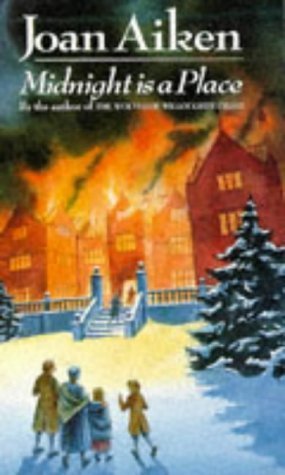
Book Review: Midnight Is a Place

Title: Midnight Is a Place


(This book has been reprinted several times. What you see is the cover design for the book I physically have for sale; I have the original hardcover edition, too, and that one I'm keeping. Since the paperback I have is showing at an unreasonable price on Amazon, the link will take you to a newer edition that's still available as a new book for a more realistic price.)

Author: Joan Aiken

Date: 1974

Publisher: Viking

ISBN: 0-670-47483-5

Length: 287 pages

Quote: “Even in good weather the park around Midnight Court was not a cheerful place.”

In 1842, in the real world, industrialization was raising British awareness of pollution and economic oppression to unprecedented levels. In Joan Aiken’s fictional alternative-nineteenth-century world, the blasted and burnt-out city of Blastburn, later to be taken over by Dido Twite’s horrid uncle, epitomizes everything Dickens’ and Disraeli’s novels railed against. (Did you know Disraeli wrote novels? If not, and if you like Aiken's and Dickens', you are in for a treat.)

Midnight Court is the ancestral manor young Lucas Bell, Anna-Marie Murgatroyd, and some equally unfortunate older people stand to inherit from the thoroughly unpleasant Sir Randolph Grimsby, who, fairly early in the book, burns down the main house rather than pay the taxes on it. Suicide turns out to be the most public-spirited thing Sir Randolph has ever done, and after some horrid experiences of child labor with employers who are trying to kill them, the children settle down to share the outbuildings, associated properties, and income from Midnight Court with the nicest adults they meet.

How the children survive and earn a living is the plot, and will not be spoiled here. Suffice it to say that yes, in 1842, real English and American children did have to work for their livings if they were orphans or even if their parents were poor, and fishing for salvageable items in the sewers, re-rolling remnants of tobacco out of cigar ends, and running machines in factories, were among the jobs actually done by children of thirteen, or even eight years old. In the United States girls, and boys under sixteen, were barred from working underground in coal mines (although children sometimes worked above ground outside the mines); in England children as young as six worked in the narrowest shafts of coal mines.

Lucas and Anna-Marie are typical of the pair of gifted children that appear like a signature in each of Joan Aiken’s novels. Usually, as here, regardless of any age disparities they are fully equal to each other—often the only real peers they have. Anna-Marie is a bit of the strain on the imagination until we remember she’s described mostly through Lucas’s eyes; to him she looks five or six rather than eight years old, then seems to become an adult, overnight, as she realizes that any comforting or nurturing that’s to be done will be done by her. To herself she’s simply herself, a young orphan who learns many things more quickly than the average child. One of those things she learns quickly is that playing mother to her older cousin is less painful than sulking and crying alone.

There were real children like that in 1842: orphans, or functional-equivalents-of-orphans, who had to become “little men” and “little women” overnight in order to survive. One week they might have had nurserymaids and tutors to look after them; the next week they were out on the street, doing whatever cooking and cleaning could be done for themselves, and, if possible, trying to latch on to nice older kids for protection from mean, thieving, bullying older kids. And adults. In Merrie Olde agricultural England such children were probably doing some farm chores, and thus entitled to some help from the lord of the manor. In the cities, or if the manor were being taken over by an unhelpful lord, they had no claim on anything from anybody. They were expected to become thieves or prostitutes or both, then subject to severe penalties if forced into even small steps in either of those directions.

Lucas and Anna-Marie are particularly lovable children. They have no legal claim on each other’s help either, nor are they legally responsible for the care of Lucas’s badly injured tutor. They help each other, and eke out their pathetic wages to pay for the care of the tutor, because they are (I suspect) idealized versions of Aiken’s own children: the way any mother would want her children to grow up. Their niceness is what gives them, and the adults who help them, a plot.

Because there were people like Lucas and Anna-Marie in our world, the idea of a Welfare State came to exist. Couldn’t democratic governments afford to set up whole offices dedicated to the care of orphans? The extent to which the Welfare State has alleviated or aggravated the sufferings of orphans remains a matter of some debate but in any case Anglo-type children no longer find themselves obliged to apply for the very nastiest jobs anyone can imagine.(In China, however, children still reportedly recycle toxic waste...)

Midnight Is a Place is fiction. For a sex-free, romance-free, kid-friendly story (although it was marketed to adults, because it contains violence) it can even be described as “Romantic” fiction—the kind of story that sold during the “Romantic Period” of English literature (the early nineteenth century): It features improbable hair-raising adventures barely survived by improbably lovable characters and a set of coincidences that give the story an improbably tidy ending. Nevertheless, the Romantic Period existed because adventures almost, if not quite, as outrageous as Gil Blas or Wuthering Heights had really happened. I can’t quite believe that Midnight Is a Place is fact-based, but then again I can’t identify at which points exaggeration has to have taken place. It could be based on someone’s real family history.

In any case, all readers are supposed to ask of fiction is an entertaining read, and that Aiken always delivered. Vivid descriptions, an all-prevailing cheerfulness in the grimmest of situations, about as much irony as anyone can stand, make Midnight Is a Place a great deal more fun to read than it would have been to live through.

To order it here won't do the late Joan Aiken any particular good; her heirs would prefer that you buy the new edition directly from Amazon. Do that if you like. If you want to support your favorite web site, you can scroll down to find other books. Or send $5 per book, $5 per package, $1 per online payment, to the usual address as shown at the very bottom of the screen; this web site makes no guarantees as to which edition will be available at that price, but so many editions have been printed, we're sure that one of them will. You'll get that one, and you're warmly encouraged to add as many other books of similar size as will fit into the package for the one $5 shipping fee. (For reference, packages generally hold up to 12 pocket-size paperbacks like the one shown above, up to 2 tall thick hardcover books like the first edition, or up to 6 of the "trade paperbacks" in which many publishers are reprinting classic children's books.)

Friday, December 8, 2017

Book Review: The Big Family

Title: The Big Family


Author: Viña Delmar

Date: 1961

Publisher: Harcourt Brace & Company

ISBN: none

Length: 375 pages

Quote: “Historically, only one incident rests on a shaky foundation. There is nothing to substantiate that John, upon learning that he would be defeated in his first attempt to win a seat in Congress, then cleverly devoted himself to Andrew Jackson’s cause. However, it is true that after the election Jackson rewarded him with the position of United States district attorney at New Orleans.”

If you look up "Vina Delmar" online, with or without the tilde or old-style double N, the first thing you'll find is that it's the name of a city in Chile. The author really was married to a man whose stage name was "Gene Delmar," although his father's name was Zimmerman, and her parents really had named her Alvina. She is not remembered as a scholarly writer. Though first and best known for smutty novels and dramas (her first book was actually called Bad Girl), later on in life she wrote several family-friendly, relatively clean historical novels, only mildly Hollywooded-up. The Big Family is one of those.

I’ve written some harsh reviews of “family saga” novels about fictional families of unpleasant people; The Big Family is my kind of “family saga” novel. It’s about a real family, the descendants of Jane Mackenzie and John Slidell of New York, several of whom really did achieve distinction. John Slidell, Junior, advanced from being a district attorney at New Orleans to being a U.S. Senator for Louisiana. Jane Slidell was married to Commodore Matthew Perry, who opened diplomatic relations between the United States and Japan. Alexander Mackenzie, John’s and Jane’s brother who chose to use the name of his mother’s (much richer) family, also commanded a ship, though not quite so successfully as Perry.

History has spared the Slidells from any documentation of some of the less impressive events in the family saga. These events Delmar has filled in, not always with the most felicitous results.

John Slidell, Senior, was a soap-boiler’s son with nothing to recommend him to the wealthy Mackenzies. He didn’t know who his grandparents had been, or, when the question arose, whether they had been ethnically Jewish or nominally Christian--they were not, in any case, religious. How did he ever marry into that family? A scenario that was not uncommon, in the nineteenth century, was the rich girl who had been deliberately kept so “innocent” of the facts of life that she didn’t realize that one of the stupid, childish gross-out games a boy friend proposed could lead to pregnancy; sometimes, by way of punishment, she was ordered to marry the boy. Another possibility, suggested by old portraits, was that Jane Mackenzie was considered so unattractive that she thought she had to marry “down” or not at all. Another possibility, suggested by the corresponding point in this reviewer’s family history, is that some rich American parents were taking democracy very seriously and thought it was fantastic for an heiress to marry a self-made man. All of those things really happened but Delmar ignores these possibilities and spins a 1950s movie romance for the couple, where a hormone surge leads straight to a happy-ever-after marriage. There was no need for that. The story is really about the next generation, and could just as well have started with the known facts of Jane Slidell’s marriage to her brother’s superior officer.

Delmar also admits having filled in some of the details of Senator Slidell’s early life in what seems to have been the most sympathetic way, and used an unverified legend about his daughter’s old age to wrap up the story. John Slidell was always, to put it mildly, a controversial politician. His alliance with Andrew Jackson may well have been based on similarities of character, and Jackson’s readiness to balance the budget by cutting it, as well as his loyalty to an unpopular wife, were admired (and still are). Slidell probably wasn’t all bad. He was not, however, the fiscally conservative egalitarian Jackson had been. About a politician remembered for his associations with James Buchanan, with slavery, and with the doomed Confederate Cause, it’s hard to find good things to say. Delmar tries.

I don’t know why she doesn’t turn to the Congressional Record for pro-Slidell material; whether she thought that would be too wonky for a novel, or whether the Congressional Record does not in fact record anything Delmar thought would work as pro-Slidell material. I suspect the latter.

The adventures of the naval officers in the family, however, were abundantly documented and are good stories. Those stories are told in a way that addresses adults not children, but won’t embarrass the adults if the children happen to try reading this book, and may actually appeal to the children. Perry succeeds by studying a situation and thinking creatively about the constraints of the problem set before him; Mackenzie doesn’t succeed so much as he survives by being fair and decent enough that one of the men who’ve plotted to rob and kill him feels obliged to warn him.

If you like family stories with ambitious, glamorous, human but not vile characters who owe at least some of their success to talent and effort as well as family connections, The Big Family is for you. It's available (for now) at the standard price of $5 per book, $5 per package, $1 per online payment, to the appropriate address at the very bottom of the screen; one more book of this size, and perhaps one or two smaller ones, would fit into one $5 package.