Showing posts with label Japan. Show all posts

Monday, December 15, 2025

Butterfly of the Week: Graphium Mullah

This week's butterfly seems remarkably poorly documented because many entomologists have  adopted a revised taxonomic list of Asian Graphium species. While the species name Graphium mullah has been in use for a while, the little that's been documented about it is being revised to reflect the recent reclassification of Graphium timur as a subspecies of G. mullah, which only a few years ago was fully separated from G. alebion. DNA studies, rather than field studies, have been followed in reclassification:


It is found in China, Japan, Laos, Taiwan, and Vietnam.


Photo by Tref, who notes that it was taken in March. Butterflies are important pollinators for some flowers and trees, including some trees whose fruit humans eat.


Photo from Dearlep.tw. Subspecies have been identified; a clear explanation of the latest subspecies list has yet to appear online. Some mullahs' wings are clear white and some are tinged with bright yellow. 

Graphium mullah differs from Graphium garhwalica in having bigger, brighter yellow spots on the upper side of hind wings. Sometimes these spots are also conspicuous on the under side. Its black stripes are a little more conspicuous, too. Its upper wings can lose their scales and become transparent especially in that wide border section along  their outside edge. 


Photo by Tref, taken in March. Males gather at puddles or on wet sand and sip water. They are photographed doing this alone, with others of their own species, or with others of different species. 


Photo by Sonata_z, taken in March. Another Graphium seems to be attracted to anything, even plastic waste, that has a sky-blue color. 


Photo by Yancai, taken in April in China. This seems to be an earlier instar than 


Photo by Jiuheng92, taken in May in China. No photo of the egg or pupa was found.

Monday, September 4, 2023

Book Review: Godzilla

Title: Godzilla and Godzilla Raids Again


Author: Shigeru Kayama (or Kayama Shigeru)

Translator: Jeffrey Angles

Date: 1955 (Japanese), 2023 (English)

Publisher: University of Minnesota

ISBN: TBA

Quote: "Right before their astonished eyes, the whirlpool seemed to rise up when suddenly, flash! An intense burst of white-hot light illuminated the surface of the water."

Godzilla was one of the classic horror movies; the first really successful one made in Japan. Its "horror" figure has proved as memorable as Dracula, the Frankenstein Monster, or the Pod People. It was based on a book that was written before the movie. So why was that book never available in English?

One reason is that it's hard for English-speaking people to learn to read Japanese well enough to translate Japanese books, and Godzilla, though popular, wasn't Great Literature in the sense that the works of Basho and Murasaki are. Funding was not available to translate genre fiction until that genre fiction had proved itself to be a classic in the genre.

But another reason was that, although pacifist in intention, Godzilla inevitably touched on feelings that still ran high in 1955. 

The monster's origin and name were straightforward enough. Japanese folklore has always regarded the appearance of "monster" fish as ominous. Gojira, from gorira, "gorilla," plus kajira, "whale," described the monster aptly as a whale-sized gorilla. While most of the "monsters" fished up around Japan are dead and merely frighten people who wonder what they're sent as warnings of, Gojira was specifically created by radioactive fallout from the bombing of Hiroshima; his name was translated the way it was because he was seen, by people who don't necessarily believe in One God, as something like the Wrath of God. Played by a man in a costume, spliced into scenes where he seemed so enormous that he couldn't actually exist, the gorilla-whale stomped out of the sea forming whirlpools that engulfed boats and smashed buildings with his massive paws, but his real weapon was that white-hot light of radioactivity. 

The Japanese people were well aware that in joining the Axis of Fascism in the 1940s they'd bitten off a great deal more than they could chew. Their army was tough. The little island kingdom really had overpowered the drug-addicted men and foot-bound women in China, seemed able to conquer Korea, and might have looked to itself as if it were ready to take over the world. The people had found out otherwise fairly early in the war. Now what were they going to do? Kayama has a character admit in the story that "We Japanese made a lot of trouble." He also admits that people still admired their war veterans as brave men, however misguided; in one scene a twentyish heroine, while focussed on a young man who has not admitted he's in love with her, is even more excited by seeing him in a group of war veterans. Possibly Godzilla symbolizes the desire for revenge that would indeed have destroyed Japan.

Godzilla has only one thing in common with the giant ape of American folklore, the Sasquatch: Both are spoken of as if they were imagined to be singular characters, but are also described as an entire species. There were two movies. Godzilla was killed at the end of the first one but a new Godzilla, this one pursued by another sea monster, threatened Tokyo all over again in the second movie.

Neither novella seems to have aspired to a reputation for literary greatness. They're written in simple, accessible language with minimal description, lots of action, no subplots or comments on life. Angles translates several onomatopoeic words ("grawr!" and "rattat" and so on) and observes in an afterword that Kayama used more of them; when it seemed more natural in the English version to have a character look surprised, Kayama had the character say "ha!". The plot of each novella is a standard horror plot: the horrible monster appears, and the hero has to destroy it, at considerable risk to himself, before it kills any more humans. The heroes are characterized just enough to indicate that they'll be missed if they don't survive; older ones have families, younger ones have sweethearts; those relationships are presented almost entirely through mentioning that the heroes' friends and relatives are concerned-but-supportive.

In 1955 there was no hint, in the books or the movies, that the author even guessed what kind of audience would make up the "cult" for the "cult classics" his movies were going to become. Horror movies appealed primarily to teenagers who wanted to show that they were, or to become, brave enough to think about frightening things. Movies generally, however, become the obsession of homosexual men. To this audience Angles observes that he felt some temptation to "queer" Godzilla, just for them; in Japanese the pronoun used for the monster wasn't gender-specific, yet no word used to describe the monster hinted that it could be seen as female or non-binary. While our Sasquatch is usually imagined as mellow enough that the male ape people always imagine first can be imagined as having a mate and young, Godzilla seems altogether destructive with no softer side. Godzilla might embody thanatos so completely that he doesn't even reproduce, fish-fashion, but only mutates from some natural animal into a bloodthirsty monster. That's a "he" thing, whether the homosexual men like it or not.

Can the human urge to use nuclear weapons be defeated by force? Kayama seems to suggest that it can, and it must. So, build something even deadlier to destroy the bomb, or bury the bomb deep in the Earth, or...? Reading Godzilla today may raise fresh questions...well,. that's how fresh science fiction is produced, anyway. And, once in a while, real science problems are solved by speculating about solutions in fiction.

Friday, June 23, 2023

Book Review: Everything I Wish I'd Known About Japan

Title: Everything I Wish I'd Known About Japan Before I Moved There: Practical Stuff 

Author: Steve Edwards

Publisher: Brilliant Crow

[Date, ISBN, and length: not shown in the e-book]

Quote: "[This book is] meant...to point you in the right direction; not a detailed list of how to do everything and who to contact or where to find them. Depending on where you are or end up in Japan, those details will be for you to find out."

This is a general, practical guide to living in a country that's only just gone full-bore, admitted socialist, rather than just dragging itself down with an appease-everybody model of "gradual progress in that direction, if that turns out to be the way people want to go," as in the US and UK. Japan has done that--but only recently, so although this book reflects a country newly stocked with angry, violent crooks, it still reflects a country where older people at least try to bring honor to their families, beat the competition by doing good work, and show courtesy to everyone (if only by leaving them alone). 

As an English teacher in Japan today, Edwards' experience has little in common with the one Elisabeth Bumiller described, in an out-of-print book about the year she spent observing the life of a volunteer selected for observation as being a good match for Bumiller in age, status, etc. Bumiller and her peer struggled with questions of etiquette: their contract called for Bumiller to observe and not help with any household task, however menial, so when it was obvious that her subject was overextending herself, would it be unbearably rude for Bumiller to help chop vegetables? (A highlight of the book that has stayed with me for more than 25 years: Bumiller sits in the kitchen, watching her peer chop veg, adjusting recording equipment, and dutifully asks the next quesiton on her list. "Do you believe Americans are lazy?" Hostess, chopping furiously, speaking blandly: "Some would say so.") Edwards describes business transactions in which nobody is bothering to try to act polite, or even honest, or even competitive any more. 

Some observers have always felt that a typical Japanese workplace atmosphere was cutthroat, with all the fuss about ethics and etiquette being the only thing that kept people from coming to blows. Edwards and his colleagues aren't in a position to see so much of that, though they do describe having to edge salesmen out the door by looming over them, outshouting them, but not physically touching the wretched pests. Modern Japanese business people do, however, stoop to all kinds of vulgar and disgraceful tricks for bamboozling, guilt-tripping, and even bullying people into paying for things they don't want and may not actually get. Gone are the days of trying to avoid actually saying "no." Today, Edwards says, it may be necessary to scream "NO!" Repeatedly, even.

It used to be obligatory for visitors to Japan to comment on the absence of the more artificial and sentimental forms of male-to-female chivalry in Japanese etiquette. Japanese men were not taught to rush ahead and hold doors open for women, and instead of automatically promoting all women one notch up a real or imagined hierarchy, Japanese husbands were free to promote themselves one notch above their wives. Language learners used always to be warned that men normally used the shorter forms of long Japanese words and phrases, except when speaking to older or superordinate men, but women were expected to use all the full-length forms. (Edwards reports that all language learners are now generally allowed to skip the elaborate keigo dialect; he does not mention whether those who still attempt the keigo or "polite, formal" words ever encounter any reduction of prejudice in socialist Japan.) Now, Edwards reports, on a more primal level chivalry can be observed: among his friends, women occasionally were able to talk their way out of displays of overt hostility where men had to be the bully or be the victim. (This included the high-pressure salesmen; apparently a TV service was notorious for sending out the most obnoxious salesmen, and one woman, Edwards says, was able to get rid of them by clumsily saying the Japanese equivalent of "I no...eat...television.") 

Another indicator of increasing economic insecurity is the reported attitude of Japanese people (on all levels of society) toward foreigners. Japan is an island nation and older, more rural, or more sheltered individuals have always been notoriously chilly toward foreigners, their body language making it clear that they saw Americans especially as big ugly clumsy slobs, but overt rudeness would have been a source of shame. "Begging ten thousand pardons, Sir, the room is reserved" has, Edwards reports, morphed into overt "No Foreigners" or "No Americans" policies even at banks. If his employers hadn't set up an account for him at one bank, he says, he never would have got one. The bank, and various landlords and other people with whom he had to do business, knew he was earning a decent salary on a legitimate job, but due to socialism they weren't dependent on individual customers' good will, and they just didn't like dealing with English teachers who did tacky American things like speaking English. (But what could he do, Edwards laments. Over his years in Japan he learned to understand the language on a basic level, but when he admitted understanding with a single "hai," he felt that the officials with whom he was dealing thought he'd be perfectly well able to speak Japanese if they just kept shouting at him in it. You always knew the delusion that everyone on Earth speaks your language if you speak it loudly and rudely enough has to be global, but the image of its occurrence in Japan...!) The process of applying for a license to drive even a motorbike in Japan seemed meant to keep exchange teachers paying application fees, taking road tests, and being flunked for no obvious reason. 

Not, of course, that Edwards and his colleagues found everyone in Japan to be prejudiced against them; as teachers they'd been invited to be there to serve a useful purpose, and some people actually liked them. Some of Edwards' co-workers married Japanese people. Some became legal, naturalized citizens of Japan. For those who wanted to get out, the primary reason was not the humidity nor the still only occasional crooks and bigots, but the lower standard of living offered by the Japanese version of Social Security, which still pensions off early retirees at what Edwards calculates as the equivalent of US$ 5,000 per year. Another of Edwards' tips for exchange teachers: If you fall in love with the place or the people, apply for permanent residency or citizenship early, before any traffic violations have been added to your social credit score. 

Japan has never been Paradise and Edwards documents a degree of cultural degeneration that may make some readers cry, but Japan has always had charm to spare. Even as its level of kawaii charm declines, Japan still has more people wanting to move in than people wanting to move out. 

Monday, February 5, 2018

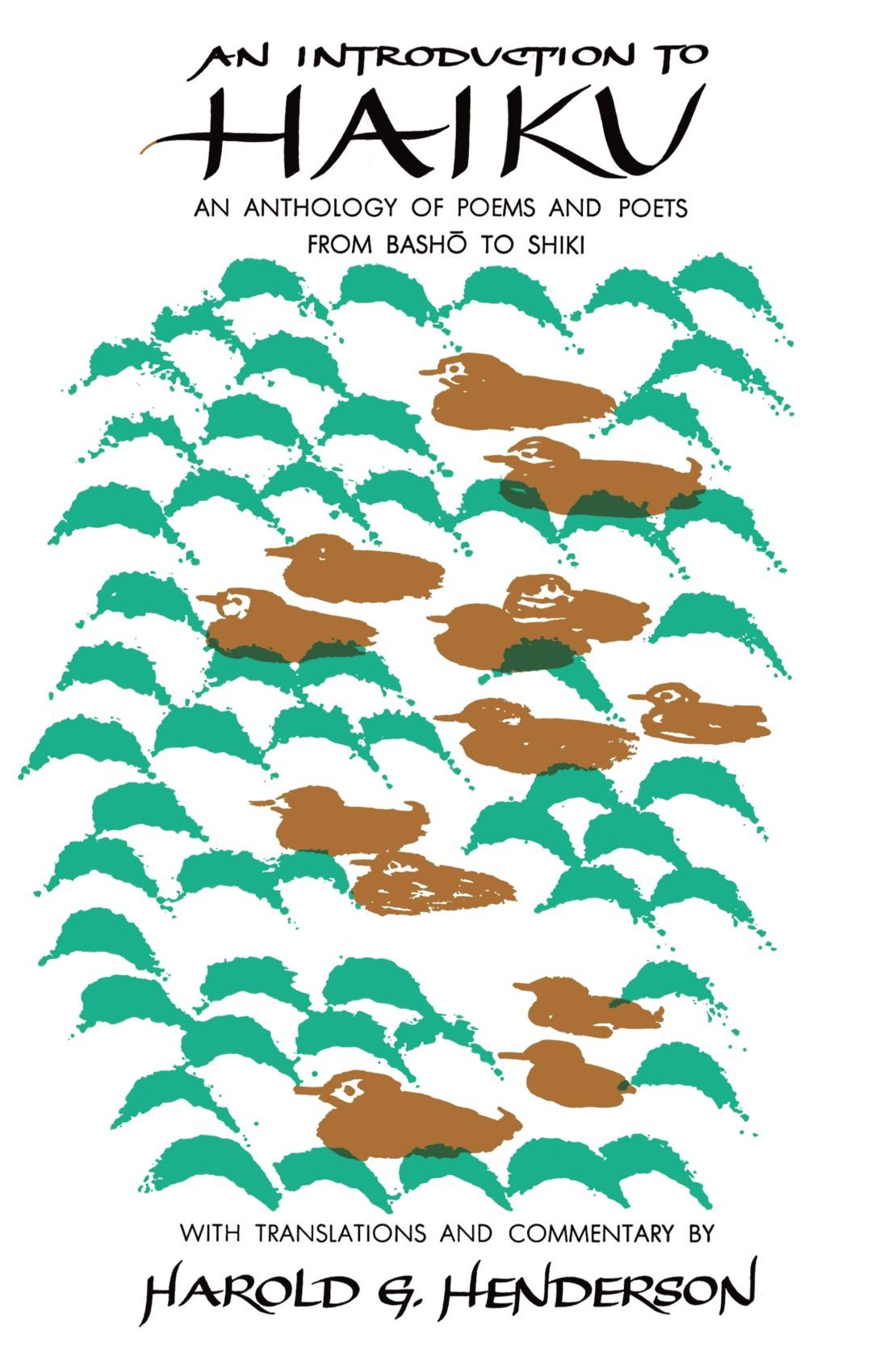
Book Review: An Introduction to Haiku

Title: An Introduction to Haiku: An Anthology of Poems and Poets from Basho to Shiki


Author: Harold Henderson

Date: 1958

Publisher: Anchor Books

ISBN: none

Length: 190 pages

Quote: “I have found that the best any translator can even hope for is to reproduce the effect that the originals have had on him.”

Harold Henderson was “decorated” by the Japanese government for his success in translating the more than 300 classical haiku in this book. Success is never perfect. To illustrate exactly how hard it is to translate poetry, each haiku is printed along with a phonetic approximation of the Japanese original and a literal translation; sometimes the literal translations make sense in English, sometimes we have to take Professor Henderson’s word that the rules of Japanese grammar make it likely that the Japanese words mean something like the translation he’s given them.

Some Japanese words have no true translation into English. Some translate well, but have different connotations in different cultures; after reading a few of the many haiku that refer to the Japanese cuckoo, hototogisu, you’ll remember that audiences hearing hototogisu did not think “amusing oldfashioned clocks.” Several words used in these haiku identify species of birds, flowers, and insects that had no widely understood English names because, even in 1958, they didn’t exist in English-speaking countries. The unfamiliarity of the kiri tree, later sold in the United States as “paulownia” or “Empress’ tree” or “Imperial Japanese Medicine-Bark Tree,” seems ironic now that some parts of the United States are classifying this ornamental tree as an invasive nuisance. The haiku in Henderson’s Introduction mention several insects; a few years earlier Lafcadio Hearn had published a detailed discussion of these insects, what they looked like and what qualities made them prized pets; Henderson calls them “locusts” although most of them seem more like crickets; they were kept as domestic pets, not dreaded as agricultural pests. Sadly, the yujo, a word Henderson can only bring himself to translate as “courtesans,” were a lowlier and less liberated group of women than the geisha, the word more accurately translated as "courtesans." Henderson explains many details of this kind, not always in as much detail as readers may remember from other books.

Henderson also explains that he had read, and translated, hundreds of haiku that either didn’t mean anything to him, or else had needed to be explained to him at such length that he didn’t try to explain them to anyone else in this small book. It’s possible that some readers’ favorites, already translated and published by either more ambitious or less poetically demanding authors, will be missing from An Introduction to Haiku, although most of the easily translated classics are in here.

An Introduction to Haiku was used as a college textbook in its day, and could still be used as one, but it’s not the kind of ponderous, committee-authored book we think of as a textbook. It’s easy to carry around, and a fun read. If you would rather get into a conversation than read a long prose narrative on a train trip, this is the kind of book you might use to start the conversation.

To buy it here, send $5 per book plus $5 per package plus $1 per online payment to the appropriate address. At least three, possibly more, books of the same size can be added to the $5 package.

Tuesday, October 14, 2014

Book Review: Silence

Book Review: Silence
        
Author: Shusaku Endo
        
Date: 1969 (Japan), 1980 (U.S.)
        
Publisher: Taplinger (1980)
        
ISBN: 0-8008-7186-3
        
Length: 201 pages
        
Quote: “They bind you in such a way that you can move neither hands nor feet; and then they hang you upside down in a pit.”
        
During the twentieth century Shusaku Endo was considered Japan’s leading novelist. critics say that his books, though “mainstream” rather than denominational, were “controversial...deeply psy­chological,” depicting “the anguish of faith and the mercy of God.”  In the novel Chinmoku, which translates as Silence, he opened an historical bucket of worms many Buddhists and Christian-phobics would have preferred to keep covered up: the persecution of Christians by nominal Buddhists in Renaissance-era Japan.
        
During the sixteenth century, Portugal briefly competed with Spain in the rush to colonize South America. Then they backed off...partly because Spain was more aggressive and partly because the Portuguese had made successful contact with Japan. A “civilized," though alien, nation that was eager to trade exotic goods was more interesting to some than the junglas of Brazil. To facilitate business, Portugal even sent a few missionary priests to Japan. At first this mission seemed successful; about 150,000 Japanese converts were reported in 29 years. By 1614, however, the ruling shogun became completely convinced that the goal of the “Kirishitan band” was to  “overthrow true doctrine, so  that they may change the government of the country, and obtain possession of the land.” (This was probably true; while missionaries themselves were sincerely interested in preaching what they call “true doctrine,” they have usually been sponsored by businesses and governments with different priorities.) After twenty years of simple persecution failed to stamp out Christianity in Japan, the ruling class resolved to end the conversions by devising tortures that would force the Portuguese missionaries themselves to denounce Christianity.
         
In the historical preface to this edition of Silence, translator William Johnston explains that, in historical fact, a priest called Cristovao Ferreira did apostatize while hung upside down in a cesspit. Not much documentation about the rest of his life has survived; his role in Silence is based on one of two somewhat disparate stories. Sebastian Rodrigues, the protagonist of Silence, is a fictional character. Endo based the facts of Rodrigues’ story on the history of a real missionary called Giuseppe Chiara. Chiara officially apostatized under torture, then lived another forty years in Japan, and finally stated before his death that he was still a Christian. In the fictional letters of the fictional Rodrigues, Endo explores what Chiara might have thought he meant by this.
        
Needless to say, this novel is the sort of serious, intense story older reviewers called “harrowing.” Rodrigues was born in a poor country; he took vows of poverty and celibacy; he travelled halfway around the world on a wooden sailing ship to preach his religion to people who were willing to accept it partly because they were poorer than he. His audience are not the silk-draped aristocrats we can see in paintings, nor the military elite idealized in martial arts clsses. They are ignorant, overtaxed, oppressed, despised dirt farmers. “The Buddhist bonzes treat them like cattle,” Rodrigues fumes, noting by now that the seams of his clothing, too, are “white with lice” after a few days preaching to the crowds who packed into the bare huts of his hosts. To these people the Portuguese had offered a “college,” probably to be understood more as a colegio than as a college within a university system, but still the only place where they could learn to read. As an undercover priest Rodrigues has little to give his flock beyond a modicum of self-respect, a suggestion that some sort of Higher Power might be at all interested in their squalid lives. He gives them this, and feels very humanitarian. And then the torture begins.
        
Rodrigues, like Chiara, hardly wins the traditional martyr’s crown. By telling Rodrigues’ story in terms like those attributed by eyewitnesses to Chiara, Endo implies some acceptance of Chiara’s position. Rodrigues is a tragic antihero, and yet in Christian terms there remains some hope of spiritual redemption for him. In the end Silence can be read as an affirmation of Christian faith. It does not, however, become a fun read.
        
Who should read Silence? Ideally, Americans who have been cherishing a delusion that, after the fall of the Roman Empire, Christians were the persecutors rather than the persecuted. Endo graphically presents the historical proof that Buddhist spirituality doesn’t cure the urge to dominate or manipulate others any more reliably than Christianity, or Humanism, or the latest version of “faith in my own lack of faith” that’s going around.
        
More likely, however, Silence will appeal to readers who want others to know how tough-minded, and/or how multicultural, they are. And to those who get some sense of emotional relief from meditating on the idea that others are a great deal worse off than themselves. Almost everybody in this novel is a great deal worse off than almost any modern English-speaking, or Japanese, reader. At least, anyone not currently dependent on an artificial “respirator” for breath can be considered better off than Rodrigues is at the pivotal point of the novel.
        
Also, perhaps, those who question just what Christianity can mean in Japan even today. For me, Silence is a book-length discussion of a part of history I might prefer to limit to a paragraph. But it needed to be written; a Japanese man born in 1923 needed to have written it. I salute the courage it took for Endo to write this book, and for his Japanese audience to make it a multilingual success. Read this book if you want to see what a Japanese Christian process of self-examination and penitence looks like. 

In 1969 most of the literary world was still trying to sell the world the idea that the Japanese could be nice, quiet, hardworking people who loved their children, and Endo and his audience were admitting, “No—actually—some of us, sometimes, have been as evil as the English-speaking world wanted to think we were in 1942.” Whatever our ethnic background may be, in order to be nice, quiet, hardworking lovers of children we need to acknowledge and reject our potential for evil.

Shusaku Endo no longer needs the $1 that would be his fair share of the $5 plus $5 shipping for which I can offer this book. Online readers can get a better deal on Amazon. I'm posting about this book here because I've posted reviews for a lot of cheerful and funny books this summer, and although I don't like books that wallow in nastiness I do handle books that aren't cheerful or funny.