Showing posts with label travel. Show all posts

Sunday, June 14, 2026

New Book Review: From Sea to Shining Sea

Title: From Sea to Shining Sea

Author: John Christopher Frame

Date: 2026

ISBN: 978-1-954709-08-9

Quote: "My parents...lived in four states and visited all fifty."

And when their son John grew up, he wrote down a pleasant memory his parents shared from each State, loosely linking each little story to a daily devotional thought for Christian readers. Different attractions they visited brought thoughts of sorrow and Christian comfort (war memorials), gratitude for natural beauty, memories of friendship... 

What Christian readers may not like about this goodhearted little book is that the parents' photographs of the places they reminisced about visiting are packaged separately. It takes no deep dives into religious studies, keeps its focus on good thoughts, even quotes from a copyright Bible that's actually called a "children's" translation of the Bible. It is light, accessible, and a celebration of love-of-parents. 

Wednesday, March 11, 2026

Book Review: Three Men in a Boat

Title: Three Men in a Boat

Author: Jerome K. Jerome

Date: 1889, 1957

Publisher: Penguin (1957)

ISBN: none

Length: 185 pages

Quote: “George and Harris and Montmorency are not poetic ideals, but things of flesh and blood—especially George, who weighs about twelve stone. Other works may excel this in depth of thought...but, for hopeless and incurable veracity, nothing yet discovered can surpass it.”

Was that one of the jokes? Who can say? This is a plausible story of three Victorian English gentlemen, and a dog, on vacation in a rowboat.

Jerome K. Jerome was another of those English humorists whose jokes are accessible to American readers. By current standards his jokes may be on the long and indirect side. He spends a page or two describing a scene in the favorite clichés of Romanticist novels and essays, the river singing the little song it’s sung so many thousand years and our thoughts half sad, half sweet, and so on, and then throws in a chunk of “incurable veracity”: “Harris said: ‘How about when it rained?’”

If you want to laugh out loud, Jerome will help. If you don’t...this may not be an ideal book for reading in school.

Many funny things were written in the nineteenth century, although too many comic writers felt a need to make it clear that they were joking by writing in tedious “dialect,” which could not ever have been much fun to read. Why has Three Men in a Rowboat worn so much better than Artemus Ward (I made a samizdat copy of his collected works, with standard spelling, and it’s still pretty funny) or Orpheus C. Kerr (a satire, superficially in favor of expanding government, in the voice of a fictive office seeker) or the other books and writers sampled in Mark Twain’s Library of Humor? Possibly because Jerome’s thought was ahead of his time. Several passages, though written in Victorian English words, sound like something you might read or watch on television today.

“The first list we made out had to be discarded...the upper reaches of the Thames would not allow of the navigation of a boat sufficiently large to take the things...George said... ‘We must not think of the things we could do with, but only of the things we can’t do without.’...with reference to our trip up the river of life generally. How many people, on that voyage, load up that boat...with a store of foolish things which they think essential...but which are really only useless lumber. How they pile the poor little craft mast-high with...expensive entertainments that nobody enjoys, with formalities and fashions, with pretence and ostentation...It is lumber, man—all lumber! Throw it overboard.”

“I...told them that they had better leave the whole matter entirely to me. They fell into the suggestion with a readiness that had something uncanny about it; George put on  a pipe...and Harris...lit a cigar. This was hardly what I intended. What I had meant, of course, was that I should boss the job, and that Harris and George should potter about under my directions.”

“That china dog that ornaments the bedroom of my furnished lodgings...I do not admire it myself...even my landlady herself...excuses its presence by the circumstance that her aunt gave it to her. But in 200 years’ time it is more than probable that that dog will be dug up...with its tail broken...and put in a glass cabinet. And people will pass it round and admire it...and speculate as to how beautiful the bit of the tail that is lost no doubt was.”

And so on. And the message of the story...readers probably wouldn’t have said it has one, if Jerome hadn’t said in his introduction that it has...the message of Three Men in a Boat was a sort of introduction to a large part of the advertising we see now.

The three men and dog spend ten fine long summer days on the Thames and are then glad to go back to their jobs, just like yuppies today. The concept of a summer vacation was new in the nineteenth century. Schools closed in summer, and all right-minded students undoubtedly looked forward to the long summer break between terms, but parents and teachers had agreed to schedule this break so that students could help harvest crops. Traditionally everyone old enough to work had been expected to work at least ten hours a day, six days a week, and give thanks that in Europe and North America employers were expected to concede either Sundays or Saturdays as days of rest. (In Muslim countries only Friday morning was so reserved; after services at the mosque, people had to go back to work.) 

The Industrial Age offered the ideal of equalizing at least the proportions of labor and leisure time among rich and poor people. Jerome’s generation fretted about the impending “problem of leisure”: if the working class had to work only eight hours a day, apparently they would need to be “educated” to use all that free time on something other than getting drunk, oversleeping, and having too many children. The idea of vacation travel was developed to address the urban middle class’s growing awareness that living in crowded cities was bad for their health. Hence the opening scene, in Three Men in a Boat, where the three men (who identify as “young” and are obviously healthy) complain of feeling “bad,” “run down,” and having all the symptoms mentioned in an ad for over-the-counter medicine. People who had been taught that “Wilful Waste Makes Woeful Want” weren’t likely to get into “vacationing” until they’d been convinced that they needed a change of pace, for their health.

The message? “Be a good writer, and eventually someone will pay you to take a vacation trip and write about it.”

Wednesday, October 8, 2025

Book Review: You Can't Go Home Again

No worries, Gentle Readers. Your e-books are still in the computer, assuming they arrived in a format the computer can read. (Many Kindle e-books didn't, or if they did the computer can't read them any more.) I have just been too busy in the real world to make the time to read them. I will be working on this and will try to post more reviews of books that might suggest Halloween costumes, to go with Karen McSpade's newest (look for it on the 28th of October). More wet days like this one--as long as the cables hold up!--will bring more new book reviews. For today, here's the announcement of a classic:

Title: You Can’t Go Home Again

Author: Thomas Wolfe

Date: 1938, 1992

Publisher: Harper Collins

ISBN: 0-06-080986-8

Length: 576 pages

Quote: “I mean do you think you can really go home again?”

He can (and does) and he can’t; that’s the point of this novel.

Could George Webber’s sense of having lost and found “home” have been explained in fewer than 576 pages? Yes, but then readers would lose all the sketches of the people he meets in his travels. Wolfe’s talent was such that, even though most of these people appear in just one short vignette apiece, the book as a whole would be poorer without their stories. They’re good sketches; you just might recognize your grandfather in one of them.

Having been written in the 1930s, Wolfe’s stories of what Americans call the Great Depression are clear-eyed, with no “good old days” sentimentality. Life was hard for many people. Too many things had changed too quickly to suit many people. Neither Wolfe nor his character would be likely to have lapsed into “the world’s falling to pieces because all you younger people are fools” maunderings if they’d been alive in 1992. (Actually, as I recall, most people of their age hadn’t really got there even in the 1960s, when many of my generation were, however, too busy yelling about hair lengths and curfews to notice.) One gets the impression that if Wolfe were still around, he’d recognize his characters in the styles their kind of people are wearing today.

This is not a very plotty novel. Many of the characters aren’t shown doing anything; some are “caught” at the time of their deaths. Webber moves rather passively through a gallery of snapshots, noticing everything, doing little. He’s a writer—when fired up to action he sits down and writes something (which is seldom shared with readers). He sees, hears, feels, and sometimes empathizes, and gradually, although Webber is not a teenager and You Can’t Go Home Again is not usually classified as a young adult novel, he grows up. He does not solve a mystery, commit or prevent a murder, make or lose a fortune, have a mental breakdown, or even have sex under conditions Wolfe deems relevant to his story, although he watches other people doing these things. He just travels, meets people, and ponders the question of where a novelist from a small town in North Carolina can live.

Political correctness as we know it hadn’t been invented in 1938. Webber is not a hater, but he is politically incorrect; he talks about people the way many men of his age and type actually did. He feels sympathy for neighbors whom he knows by name as well as by the then p.c. collective term “Negroes,” then feels cheap contempt for strangers whom he classifies by the illiterate variant from of “Negroes.” His wife is Jewish, yet he professes revulsion for “the rouged lips of Jewesses.” I don’t like this, didn’t like it when Webber’s generation were talking this way, but all I can say about it in this book is that Wolfe has the dialect down. People that age who weren’t haters would casually use the vocabulary of hate speech to describe people different from themselves whom they happened not to like

(Some of my generation learned the habit, and, if particularly unintelligent, still have it. Talking to an employee who is unmistakably triracial, threatening a neighborhood where some of the people who belong don't even have to tell people they're Black, our Professional Bad Neighbor tried to threaten to "sell to n*s." The man's brain rot spreads daily. He wasn't born that way--another point for glyphosate. Still, the point clearly being made was that he didn't mean the illiterate-variant-form-of-"Negroes" for whom he was expressing cheap contempt to include local Black people--presumably he meant the slum dwellers that have been imported into Kingsport, wholesale, contagious diseases and all.)

In 1938 it would not have been realistic for Webber, or for Wolfe, to have been confronted with this vestige of institutionalized bigotry or asked to change it, yet Webber does have to confront hate in the way his generation did. For Webber the confrontation is more close and personal than it might have been for our grandparents; he goes to Germany and sees what increasingly extreme forms of hate look like, he feels his alienation from people who might otherwise have been his friends when he sees them conforming to the pressure to become serious haters. It’s this shock treatment, this exposure to the viciousness hate can produce, that empowers Webber to work out where his home is and reconcile himself to his own people.

Without spoiling whatever suspense the novel has, let’s just say that it has, historically, satisfied liberal readers—if they weren’t completely alienated from the book by the minor and temporary ugliness of Webber’s alienation. 

Thursday, September 18, 2025

Book Review: Road Scholar


Title: Road Scholar

Author: Andrei Codrescu

Date: 1993

Publisher: Hyperion

ISBN: 1-56282-878-9

Length: 193 pages

Illustrations: black and white photos by David Graham

Quote: “Roger Weisberg…a TV producer…was wondering if I would beinterested in making a movie about driving through Florida…I told him…we should…go way beyond Florida’s roadside attractions. We should make a movie about America.”

So they did. Road Scholar was the book to go with the movie, in which formerly car-free Codrescu got a driver’s license and drove across the United States with a video crew. Photos are thus an important part of the book, although it contains more pages of text than of pictures.

It’s a very funny book, and also a thoughtful, sometimes sad, sometimes worried book. Weisberg was, after all, attracted to NPR broadcasts by and about a surrealist poet writing in English, which was not his native language, to comic effect. But not the “me no speak English” kind of comedy; for those who don’t remember, the short funny essays (collected in other books, like A Craving for Swan) were teacherly reflections on the quirks of English language and literature, most specifically on the international (and multilingual) surrealist poetry of the twentieth century, with insights from other genres of art and literature around the world. Surrealism implied goofiness, sometimes inspired by high spirits (and/or booze and drugs), sometimes by nightmares, grief, bad trips, and concern about the fate of humankind. Road Scholar is mostly real, but some episodes, like the send-off party with the image of Jayne Mansfield’s head wired to complain of a “splitting headache” before splitting apart, qualify as surreal…and that’s the way in which Road Scholar is funny. It’s humor for educated adults, or at least college students; it’s meant to promote serious thought as well as laughter. You’ll laugh. You’ll feel bemused by people, sorry for people; you’ll wonder what people are doing now.

Highlights of the trip include:

* A consideration of immigration, the U.S. government, and immigrants legal and illegal, in New York City.

* A visit to Allen Ginsberg, and visits to the graves of earlier writers buried in New York state.

* Tours of the Bruderhof and Oneida “intentional communities” in upstate New York. (Oneida is also where Sarah Vowell reported Charles Guiteau being nicknamed “Gitout.”)

* A photo of a wall on which is painted “Say nice things about Detroit.” Codrescu tries; he reminisces about having lived there, briefly, and dedicates a long poem to the city. We also meet eccentric artists and some nice working people in Michigan.

* A brief, vegetarian consideration of Chicago, “Meat Packer to the World” and home of the first McDonald’s restaurant. Another artist, and a Christian roller-skating group.

* A real, explicit conversation with cattle breeders.

* Shooting lessons with a topless female teacher near Las Vegas.

* Pueblo people, ancient caves, Sikhs, hippies, and faith healers in and around Taos and Santa Fe.

* Biosphere 2, an experiment in which people lived in a giant geodesic dome.

* Geriatric bikers and rockers in Sun City, Arizona.

* Gambling and drive-through weddings in Las Vegas.

* An interview with Lawrence Ferlinghetti in San Francisco. More immigrants; more thoughts on the experience of legal immigration.

If that sounds like a road trip you’d enjoy taking, or hearing the stories about, or seeing the photos from, you’ll enjoy Road Scholar

Friday, June 23, 2023

Book Review: Everything I Wish I'd Known About Japan

Title: Everything I Wish I'd Known About Japan Before I Moved There: Practical Stuff 

Author: Steve Edwards

Publisher: Brilliant Crow

[Date, ISBN, and length: not shown in the e-book]

Quote: "[This book is] meant...to point you in the right direction; not a detailed list of how to do everything and who to contact or where to find them. Depending on where you are or end up in Japan, those details will be for you to find out."

This is a general, practical guide to living in a country that's only just gone full-bore, admitted socialist, rather than just dragging itself down with an appease-everybody model of "gradual progress in that direction, if that turns out to be the way people want to go," as in the US and UK. Japan has done that--but only recently, so although this book reflects a country newly stocked with angry, violent crooks, it still reflects a country where older people at least try to bring honor to their families, beat the competition by doing good work, and show courtesy to everyone (if only by leaving them alone). 

As an English teacher in Japan today, Edwards' experience has little in common with the one Elisabeth Bumiller described, in an out-of-print book about the year she spent observing the life of a volunteer selected for observation as being a good match for Bumiller in age, status, etc. Bumiller and her peer struggled with questions of etiquette: their contract called for Bumiller to observe and not help with any household task, however menial, so when it was obvious that her subject was overextending herself, would it be unbearably rude for Bumiller to help chop vegetables? (A highlight of the book that has stayed with me for more than 25 years: Bumiller sits in the kitchen, watching her peer chop veg, adjusting recording equipment, and dutifully asks the next quesiton on her list. "Do you believe Americans are lazy?" Hostess, chopping furiously, speaking blandly: "Some would say so.") Edwards describes business transactions in which nobody is bothering to try to act polite, or even honest, or even competitive any more. 

Some observers have always felt that a typical Japanese workplace atmosphere was cutthroat, with all the fuss about ethics and etiquette being the only thing that kept people from coming to blows. Edwards and his colleagues aren't in a position to see so much of that, though they do describe having to edge salesmen out the door by looming over them, outshouting them, but not physically touching the wretched pests. Modern Japanese business people do, however, stoop to all kinds of vulgar and disgraceful tricks for bamboozling, guilt-tripping, and even bullying people into paying for things they don't want and may not actually get. Gone are the days of trying to avoid actually saying "no." Today, Edwards says, it may be necessary to scream "NO!" Repeatedly, even.

It used to be obligatory for visitors to Japan to comment on the absence of the more artificial and sentimental forms of male-to-female chivalry in Japanese etiquette. Japanese men were not taught to rush ahead and hold doors open for women, and instead of automatically promoting all women one notch up a real or imagined hierarchy, Japanese husbands were free to promote themselves one notch above their wives. Language learners used always to be warned that men normally used the shorter forms of long Japanese words and phrases, except when speaking to older or superordinate men, but women were expected to use all the full-length forms. (Edwards reports that all language learners are now generally allowed to skip the elaborate keigo dialect; he does not mention whether those who still attempt the keigo or "polite, formal" words ever encounter any reduction of prejudice in socialist Japan.) Now, Edwards reports, on a more primal level chivalry can be observed: among his friends, women occasionally were able to talk their way out of displays of overt hostility where men had to be the bully or be the victim. (This included the high-pressure salesmen; apparently a TV service was notorious for sending out the most obnoxious salesmen, and one woman, Edwards says, was able to get rid of them by clumsily saying the Japanese equivalent of "I no...eat...television.") 

Another indicator of increasing economic insecurity is the reported attitude of Japanese people (on all levels of society) toward foreigners. Japan is an island nation and older, more rural, or more sheltered individuals have always been notoriously chilly toward foreigners, their body language making it clear that they saw Americans especially as big ugly clumsy slobs, but overt rudeness would have been a source of shame. "Begging ten thousand pardons, Sir, the room is reserved" has, Edwards reports, morphed into overt "No Foreigners" or "No Americans" policies even at banks. If his employers hadn't set up an account for him at one bank, he says, he never would have got one. The bank, and various landlords and other people with whom he had to do business, knew he was earning a decent salary on a legitimate job, but due to socialism they weren't dependent on individual customers' good will, and they just didn't like dealing with English teachers who did tacky American things like speaking English. (But what could he do, Edwards laments. Over his years in Japan he learned to understand the language on a basic level, but when he admitted understanding with a single "hai," he felt that the officials with whom he was dealing thought he'd be perfectly well able to speak Japanese if they just kept shouting at him in it. You always knew the delusion that everyone on Earth speaks your language if you speak it loudly and rudely enough has to be global, but the image of its occurrence in Japan...!) The process of applying for a license to drive even a motorbike in Japan seemed meant to keep exchange teachers paying application fees, taking road tests, and being flunked for no obvious reason. 

Not, of course, that Edwards and his colleagues found everyone in Japan to be prejudiced against them; as teachers they'd been invited to be there to serve a useful purpose, and some people actually liked them. Some of Edwards' co-workers married Japanese people. Some became legal, naturalized citizens of Japan. For those who wanted to get out, the primary reason was not the humidity nor the still only occasional crooks and bigots, but the lower standard of living offered by the Japanese version of Social Security, which still pensions off early retirees at what Edwards calculates as the equivalent of US$ 5,000 per year. Another of Edwards' tips for exchange teachers: If you fall in love with the place or the people, apply for permanent residency or citizenship early, before any traffic violations have been added to your social credit score. 

Japan has never been Paradise and Edwards documents a degree of cultural degeneration that may make some readers cry, but Japan has always had charm to spare. Even as its level of kawaii charm declines, Japan still has more people wanting to move in than people wanting to move out. 

Wednesday, May 31, 2023

A Place I'd Like to Visit but Never Have

The Long and Short Reviews blog challenge of the week asks where bloggers have always wanted to visit, but never visited.


Easy peasy. Name a place that is separated from my home in Virginia by a large amount of water. If it's a country, a state, even a large city, it would be a place I've wondered about but never seen, and don't really plan ever to see. There were abundant reasons not to buy airline tickets in 1971. Since I wasn't the one buying the tickets I had let my husband talk me into a trip to Ireland in 2001. Then the airlines started banning knitting needles and peering inside people's shoes--and having reasons to peer at people's shoes--and we agreed all future travel would be done by car or train.

So, was Ireland the place I most wanted to visit? No, it was the place someone was offering us a great deal on airline tickets to visit. All my life I've liked the idea of learning about new places but been less enthusiastic about the actual travel, which is hard on my delicate celiac digestion. 

I like my own country, even my own house, and feel very little desire to leave them. Other places interest me because they're different. I'm not sure that travel for its own sake really does much to educate people, but I do enjoy reading blogs about the places where other people live.

Wednesday, April 12, 2023

Book Review: South Dakota Blues

Title: South Dakota Blues 

Author: Timothy Dorr

Date: 2021

Publisher: Amazon

Length: 264 e-pages

Quote: "Instead of a machine gun, flying hammer or swinging anvil, John hurled snow with a vengeance. Now against a new enemy–the snow."

John plays online games. That's about all. Competent at school, able to earn money teaching computer gaming skills, and considered attractive, John is living with post-traumatic stress so severe he can hardly talk to other males in real life. His parents have torn him away from his first girlfriend, Deidra; though he promptly falls in love with Johanna at his new school, his bigamous tendencies apparently will never be fully resolved. 

Johanna sees John's problems, but she's the kind of girl who takes them as a challenge. As in the Scottish ballad, where someone "forbids" the girls to visit a nearby manor "while young Tam Lin is there," and Janet goes there "as fast as she could hie"...Nobody else has seemed too positive about what's wrong with Tam Lin, who, according to some versions, is an old childhood friend of Janet's, but he tells Janet that he's the protege of some "Faery" people who have allowed him to do whatever he liked while planning to sacrifice him. In order to save him, Janet has to pull him off his horse and hang on to him while he is transformed, by wicked magic, into a series of unappealing forms, ending up as "a naked knight" she must cover with her mantle. Then he will be fully human again. The ballad suggests that just breaking the enchantment makes Tam Lin a good husband and father.

In real life it's not so easy. That's what I like about South Dakota Blues. After a slow start, John and Johanna set off on a road trip where John gradually starts pushing himself to talk to men they meet. His memories soon push up to the surface. He tells Johanna about the incident. But he's not instantly healed; the emotional maelstrom, and the hazards of loving him, seem to be only beginning. He wrecks the motorcycle they're riding and scatters Johanna's clothes and souvenirs on the road. Deidra arranges to run into them on the road, and the novel suggests that she'll continue to bump into them all the rest of their lives.

John dreams of soaring like an eagle, and the novel assures readers that, once he's overcome his PTSD, his career will be able to soar. On his road trip his impressions of the people he and Johanna meet, the stories they tell, suggest something like "past lives therapy." Certainly he learns from empathizing with people in real situations rather than game battles. 

Relatively little of the story takes place in South Dakota. John's home is Florida, he's transplanted to Minnesota (in midwinter), and he and Johanna go to Denver. South Dakota is merely the scene of his biggest emotional breakthroughs. The journey seems to be more about the transformative power of solitude--John is steering his bike, music blasting from a box ahead of him and Johanna clutching him from behind, but that still forces him to face his thoughts and memories--than about South Dakota, as such. 

Music plays a large part in this novel, too. The characters aren't really musical; there's only a passing reference to their taste for 1980s-style pop music as a change from the 1960s and 1970s songs their parents listen to at home. The band and song names mentioned don't come from any list of 1980s pop hits. In the author's mind this book probably has its own sound track of all-new songs with banging beats and synthesizer experiments. It would be interesting if that album were ever released.

Some readers may wish more attention had been paid to the places and people John and Johanna encounter. We spend most of the book inside a young person's narrow, self-obsessed mind. This can be a narrow place. It certainly doesn't make for travelogue-style writing; though John and Johanna are interested in the stories they hear, imagining themselves in the roles of the slaves and Revolutionary War soldiers and country vets and other people they meet, this is not the book for those who want to know all about the attractions of each town along the way. John's focus on music, mileage, and self is believable, though, for his character. He'll be ready to slow down and appreciate places, rather than merely roaring through them, in another twenty or thirty years.

Monday, March 20, 2023

Book Review: Conversations Across America

Title: Conversations Across America 

Author: Kari Loya

Date: 2022

Publisher: XK Productions

ISBN: 979-8-9861258-2-4

Length: 276 pages

Quote: "To families facing Alzheimer's. Find moments of joy."

In his seventies, Merv Loya (the name is Finnish) was in better physical condition than many teenagers. But his mind--which had been a good one--was starting to go. The family reached that terrible, traumatic decision, which so many families seem to be buying into these days, that it was necessary to sell his house, throw away most of his belonging, and put him in a nice private instritution, where he'd be able to stay only a short time before deteriorating enough to be moved to a differen institution.

I don't understand why people make this decision, though Mr. Loya seemed to be part of it. I can understand blind people selling their pictures and mobility-impaired people moving to smaller quarters without stairs, but if I were losing my memory I'd want to stay as close to as many memory triggers as possible; don't start "downsizing" my belongings, don't even dare to move them, if I'm going to remember them I'm going to remember them where I put them. 

But we as a society tell people that they "need to" be packed into barracks with a lot of strangers, and apparently some older people think there is some rational reason for this. 

 Anyway, before the move, Merv Loya and his son Kari did the Last Great Road Trip together. By bicycle. They trained and tested themselves for fitness and started pedaling their way across the continent, from Virginia to Oregon, along the Trans-American bike route. Of this trip Kari Loya made a book.

The format and content of the book may surprise, perhaps disappoint, readers. I do not recommend the e-book version. The publisher opted for two-column formatting, which is a pain to read on a screen. I sighed, I started typing a samizdat copy, I told myself (on page six of the samizdat version) that this review was overdue already. Nobody likes a reviewer who doesn't take the time to read a book properly, properly; a reviewer who takes more than a month may be even worse. Scroll up, scroll down. Read half a paragraph, scroll up, realize you needed to scroll down first. See half a picture. If you buy this book, it's worth buying a printed copy. Columns and pictures can actually work on a printed page.

But then another decision was made, apparently by Kari Loya, that the best way to capture the memory of a road trip with Merv Loya was not with literary essays, maps, reviews, or pictures of scenery, but mainly with snapshots of random people the Loyas met on the trip. Each state through which they rode gets a chapter; the longer part of each chapter is the pages with one, two, or three snapshots of faces and quotes from what people said during their conversations.

At his father's memorial service, Loya tells us, he pictured his father approaching the gates of Heaven. While others introduced themselves with their achievements and what they thought they had to offer to Heaven, Merv Loya would say, "Before I tell you what I've done, let me tell you about these fifteen other people I met on the stairs here, and why each of them will be a great addition to Heaven..."

Most of the people who contributed a face picture and a paragraph of conversation to this book aren't making the case for their admission to Heaven. Most don't even tell real stories, beyond where they came from and how they came to be on the route. They're making casual conversation with people they've met on the road. Some are fellow long-distance cyclists; some are hikers; some are local people or even motorists. Apart from a couple of aggressive drivers, Loya says, the people they met were friendly; cyclists are perceived as non-threatening, eccentric but not violent, not competing for jobs, likely to spend money freely, in the towns along the route. One man talked freely about his involvement in vice and crime. One woman talked about her experience in ministerial school. People provided abundant evidence of the current craze for travel-for-its-own-sake, even nomadism; in each state the Loyas met someone from a different state along their route. 

Though Finnish and Norwegian rather than Irish, Mr. Loya had been diagnosed as having celiac disease. Historically the celiac gene was spread through continental Europe, but it was extremely rare in the coastal countries and almost unknown as far inland as Finland. The diagnosis of celiac disease is often made by a simpler blood test rather than a DNA study. With so many non-Irish people showing celiac reactions on blood tests, it would be interesting to know how many of these people do have the celiac gene (via Norway, it's possible) and how many are having pseudo-celiac reactions to glyphosate residues in grain. The level of general understanding of either condition, along the trail, seems to be pathetic. One restaurant employee was able to assure the Loyas that everything on the menu was gluten-free; most of them didn't know what that meant. 

Mercifully, the Loyas, whose home base was near Tillamook, were lactose-tolerant and able to enjoy Tillamook ice cream. Burning off calories on their bikes, they apparently enjoyed a lot of it, though in one town they found only Ben and Jerry's and, apparently reacting to its novelty appeal, managed to consume two pints each. 

Trans Am cyclists, we are told, like to sleep cheap. One of the first things every cyclist learns is how to drape rain capes across bicycles to make a sort of tent, but after one miserable night in the open the Loyas discover phone apps that connect them to people who offer roofs and floors, even warm showers.  

And there's a mercifully terse vignette of another way a Last Great Road Trip can end, with the younger woman pleading for "an obese man" to stay with her, meaning alive...People do plan these things, cruel though it is to the younger women, who may not realize that the sugar-daddy type singing "I want to die in your arms tonight" just might mean it literally. Women at least seem to want to spare younger men that experience. 

Apart from those, the book gives few details about the actual trip. Mileage is charted in the appendix. I enjoyed Loya's vew of Wytheville, Virginia--not sure why a gluten-free diner would go to the Mexican restaurant when there used to be such a good Chinese one--and was disappointed that he found so little to say about Berea, Kentucky, or almost any other place between Virginia and Oregon. This book really is about what other people told the Loyas. 

Despite its shortcomings as a travel book (there are so many travel books already), this is a heartwarming story of family love. It will remind all readers who have parents who like road trips to share a good one now, while they can. 

Friday, March 15, 2019

Makers & Takers: Should People from Washington Visit Gate City?

Well, duh. Of course they should.

That big bad winter storm is heading our way, at the time of writing, but we've had some lovely springlike days, and the blossoming of Prunus trees (fruit-bearing and ornamental) and forsythia and dandelions and other beautiful things reminds me of a Washington tradition I used to enjoy when I lived in or near the city.

That tradition is usually called a Weekend Getaway, but after sharing it with me my husband prodded, "The purpose is to pump a little money back into the local economy." Sometimes I miss the subtleties of these things. Although I was and still am a frugal fanatic, after it had been spelled out in so many words I remembered the purpose of the Weekend Getaway and packed a hundred dollars or so to spend on our monthly road trips.

But in a way he paid a price for explaining the purpose of the Weekend Getaway to me. Before that time, I used to enjoy visiting other people's favorite places, Morgantown, Pittsburgh, Chincoteague, Luray, Roanoke, Charlottesville, Asheville, Ocracoke, and of course everybody likes the Eastern Shore of Maryland. Afterward, my husband would receive monthly coupons for one night free and one night half price in a participating hotel. He'd say, "Where would you like to go?" and I'd scan for participating towns and say, "We can go to Bristol or Wytheville...I have things to do in Gate City."

The other day I talked to a village idiot type who said, in a confrontational way, "Do you buy things you don't need, just to support someone's business?"

When I read the words by themselves, printed on paper, a funny thing happens. A different answer comes to mind. Nonverbal elements of communication, as the late blogger known as Ozarque often said, change the meaning of the question.

My answer to "Did you use to buy things you didn't need, just to support someone's business?" would have been, "People include different ranges of meaning in the word 'need.' It's a good word not to use if you want to know what sort of things I bought. I did not buy the kind of gift items that are most likely to be re-gifted, the bric-a-brac made in China and so on. If a business deserves support, it sells things for which we can find a use. Prices for things people use regularly, groceries and toiletries, tend to run high in the cities; often we spent our spending money on gas and groceries, and felt that we'd found good bargains relative to what we paid for those things in Washington. More optional purchases, like the yarn stash that still takes up about a quarter of a room in my home...some of those yarn packs were bought as souvenirs of a trip, and yes, I remember the towns, the shops, and the occasions. And if a man wants to make a good impression on me in the city, yes, he should definitely buy flowers from one of the students and immigrants who stand out in the weather and sell flowers. Yes, when possible I do buy new books and records in order to encourage living writers and musicians. I never pay retail prices for ready-made clothes but I do pay for hand-made clothes or clothes resold for a good cause."

My answer, if the village idiot had asked, "Do you ever buy things you don't actually need, just to support someone's business?" in a pleading, despondent manner, would have been, "Yes. Although my handknitted blankets will last for years, although many of them could literally be buried in mud for a month, be dug up and machine-laundered, and look almost as good as new--while your cut-and-hemmed polyester 'fleece' blankets will shrink every time they're laundered--I would buy a few of your blankets, and resell them beside mine, because there is a market for cheap junk and because I recognize the natural limitations on your talent, or lack of one. Fleece blankets are good for pets." Well, "yes" is all I would have said out loud, but...yes. That.

My answer to what the village idiot actually said was "Yes." With nonverbal communication to fill in, "You've both heard and read what I have to say on this subject. I know you've been planning an insulting comment for some time, so bring it on...and pay for it." So idiot spewed, and paid, and if idiot is now telling people I've lost none of my edge at the verbal abuse game, idiot very deliberately asked for it. There's no sin in winning a game. I'm not convinced that there's a sin even in enjoying the misery of sore losers whose verbal abuse game requires them to pretend they're red-faced and teary-eyed about something other than having lost the game. But that's beside the point.

When we want to help people...disasters and emergencies happen, and we should all prepare to handle those and help others handle them, as best we can. Beyond that I think we all need to support one another's business, whenever it's feasible, as opposed to buying things from big-chain stores or giving money to those who just sit around going "needy-needy-needy."

(Which unfortunately does include some otherwise good church, community, and humanitarian causes. I don't mind buying things from their store or bazaar, or even putting money in the plate if I go to a concert or movie or lecture. My father used to say that churches should ban the custom of passing plates for money during regular services, and I used to say, "If people go to an ordinary lecture they chip in a little to pay for the cost of the hall, don't they?" and he used to say, "But a minister ought to be an example of doing without and giving to others," and we agreed to disagree. Dad never acknowledged that extroverts get some benefit from reading and discussing the Bible in groups; I concede that they do, but I notice no benefit to me in doing that, or anything else, along with a group of extroverts. But I'm not willing to pay people for advertising or fundraising. I'll forgive them for doing a little of that if other things they do are worthwhile, but if most of people's e-mails ask me for money, I will stop opening them. If you want to increase sales of a product that's been in the stores for more than one year, show me a low price in the store, not a TV commercial. I'm not rich, but if I were George Soros's last living heir I still wouldn't have any money to donate to the full-time fundraisers.)

We need to support makers, not takers.

We need to support people whose work we respect, not people who we believe are so pathetic that we can congratulate ourselves for being better off than they are.

We need to support people who will, with a little support, be as well off as we are...if only because, by and large, those people tend to be younger than we are, and like it or not we will eventually have to depend on people their age to drive our cars and clean our floors, and anyone over about age 25 should start cultivating a few carefully selected younger friends. I see a lot of baby-boomers in denial about the fact that friends who visit our homes can do a lot more to make our old age enjoyable than wage slaves who work in retirement projects. I see older people who take their children for granted...sometimes their own children are all these people hoped they would become, sometimes not.

Washington is unique because it was meant to be only our nation's capital, the place where our federal government worked as many days as was absolutely necessary before going back home, but it has become a real city in its own right too. Most Washingtonians are, by any reasonable measure relative to any reasonable portion of the rest of the world, rich. The ones who travel overseas know that. They have two "communities" to support: the people who are doing good work in Washington, and the people who are doing good work in the home or host towns where they go on weekends. They can afford to show respect to both.

I read and hear rumors about vague attempts to cut the federal welfare budget. Gate City has a small group of educated people--I refer to them generally as social workers, although some of them have moved up to legitimate jobs, or retired--and a large group of old-age and disability pensioners, both of whom can be counted on to kick and scream about any suggestion that their handouts might be reduced. The rest of us can hardly help thinking thoughts like "My parent/s, grandparent/s, etc., did work and pay into a Social Security handout fund, even if they knew all along that it was an unsustainable scam that was designed to fall apart before they started claiming their money...or X does have a major disability...but actually they like to have something worthwhile to do besides sit around and gossip! They want to work! And those other people who prefer to sit around and gossip? If they did starve, I'm not trying to be cruel, but seriously, they'd never be missed."

I like the idea of cutting the welfare budget. Yesterday this web site passed up an opportunity to commend a specific proposed cut. There are better ways and worse ways to cut the welfare budget and, as long as all I've seen of a proposed cut is someone's name on it, my guess would be that that person wouldn't recognize the better ways if they walked up and bit him. (For example, since social worker types get "high" on believing that "all they ask for is gratitude," by all means cap their salaries at ten percent of the minimum hourly wage.) But cuts do need to be made. People who gossip, people who push welfare, people who fail to support those who set up micro-micro-enterprises to keep themselves off welfare, need to be spending their days on a day labor site, advertising their capacity for unskilled labor. They may not need to starve to death but most of them could only benefit from the experience of hunger, and even more than that, from the experiences of walking to work and doing physical labor. Forcing some people to do physical work, like removing weeds from roadsides with a hand trowel, might actually relieve their physical disabilities.

People in Washington can benefit from meeting the people in towns like Gate City. The makers, not the takers--especially the social workers who claim to speak for the takers, who actually, in many cases, are speaking against the best interests of the takers.

The makers do not, in fact, want visitors to come out and spend their whole $100 in our stores, or roadside stands or flea market booths, just because that would make our days. Well, it would, of course. Days go by when we do not see a hundred-dollar bill. Oh this is sad. We love the sight of Benjamin Franklin's benevolent, un-handsome, greenish face. But actually we want you to buy, e.g., a doll dressed to match a children's book because you know a little girl who likes dolls and whom you'd like to interest in books, or a hand-sewn wallet because you want something to stop money sliding out of your pockets into seats, or a chunk of homemade fudge because you like fudge, and so on. Naturally the more you buy, the better we are pleased, but I don't know anyone in Gate City who is actually selling junk. (The village idiot who's flooding the market with "fleece" blankets is donating them, to the full-time professional "needers.")

Actually we like being a small town in a rural setting. The main reasons why you'd want to visit Gate City would be outside the city limits. People who don't come here to maintain their own homes and visit their own relatives, come here to camp in the woods, paddle on a clean, fresh river, and pick their own fruit on a farm. And you don't actually need to spend a lot of money to do that. Visitors can and should pay to ride the chair lift, swim in the nice safe pool, buy snacks, or rent boats on the Clinch River. If they prefer to bring their own boats and snacks, keep their faces out of the water, and walk on the trails, they can do that free of charge. Some pretty nice trails with lots of bird, flower, and leaf peeping potential are even wheelchair-accessible, too--free of charge. For people who are new to Washington and have not learned how to minimize spending on boring everyday things there, my town does offer a full weekend's worth of pure change-of-scene that won't cost anything beyond the rent of a vehicle you can "camp" in. At the Natural Tunnel Park, cabins with hot showers rent for $30 or $35 a night, plus $5 if you bring a dog.

However, here is a Top Ten List of things to shop for when you visit Gate City:

1. Handmade wooden furniture: Look for this in the Friday Market, but don't be surprised if you don't see any. The couple who make those "Amish-style" chairs, trunks, etc., bring out a truckload when the weather seems right.

2. Garden produce: Pick your own in season, buy from a roadside stand, or look in Friday Market, but be aware that the really fresh local produce is rarely sold to visitors (except zucchini, in some years, and occasionally tomatoes). Farmers who grow organic produce usually sell to short lists of close friends and relatives, then long lists of townsfolk, and only then in public places. For strawberries and blueberries, the long lists can be very long indeed. If people are willing to commit to hand-cultivating these crops, perhaps in time they'll be available to visitors. Much of what you buy even from farmers' stands is retailed from out of state and not organically grown. If the sign says "Mann Farms," it is local and fresh, though not 100% organic, and the quality is probably good. And if we can get a local ban on glyphosate spraying into effect, it will be REALLY good.

3. Homemade food: Well, duh, I am typing this in a cafe, what d'you expect? Mostly sweet baked goods, plus eggy things for breakfast, hot soups and sandwiches in winter, cold salads and sandwiches in summer, can be pre-ordered at the Family Bakery Cafe. Spicy Mexican meals and icy Mexican drinks are available at Molcajetes. Pies, fudge, and other homemade snacks are often sold in the Friday Market as well.

4. Hand-knitted blankets and winterwear: While selling those in the Internet Portal store last winter, I sold a few that were then displayed for resale in other stores. I don't display them in summer, but store them in town and can bring them out on request.

5. Hand-knitted or crocheted washcloths, towels, table covers, etc.: These used to be the specialty of a retired teacher (yes, one of mine), during her lifetime. A few of hers may or may not still be available at the Ivy Cottage, which was her store--if so, they may not be used but they're hardly "new." Others are now making them for sale at Roberts & Jones. I've made a few in each category.

6. Window treatments: If you want to reduce heating expenses in a hastily built Washington or suburban flat, consider a Window Blanket. (These were actually Grandma Bonnie Peters' idea, although if they're knitted they're almost certainly mine.) They're made to be hung over large, odd-shaped windows on cold nights, and can be stuffed with insulation. I also knit lacy curtains to hang in front of windows just for looks.

7. Dolls: I usually dress adult-or-older-child-shaped dolls made at a scale of 2 inches to 1 foot; can dress other kinds of dolls to order. Knitted doll outfits, made with scraps of craft yarn in shapes and colors that generally match a picture, cost $5. Sewn doll outfits, which can involve embroidery and tiny beads and so on, cost more.

8. Chickens or turkeys: If you want to inspect the bird before having it killed and cleaned...I've been pleased to see that the live birds sold in the Friday Market had a healthy, contented look, strolling around in roomy cages, sipping water, "talking and singing" to each other, until they were sold. I'm not so pleased to think about the fact that people who bought them didn't plan to make pets of them, because most of them would have made good pets. Chickens, anyway. Domestic turkeys have been selectively bred not to have enough brain to be made pets, as have some breeds of chickens; my point here is that the chickens I've seen were not those breeds. They were the kind that would have answered to names and followed people around the yard. Anyway, whatever your intentions, Gate City is a good place to buy live chickens and sometimes turkeys. People grew up thinking of these as companion animals and are likely to have led them out to graze in real grass, at least some of their days.

9. Eggs: Hens who have been reared as companions and led out to graze in real grass lay "country" eggs, with a firmer, darker-colored, more nutrient-rich yolk than supermarket eggs have. (I once heard someone say he preferred wimpy, pale-colored supermarket eggs. Pooh! Not only do those eggs contain more cholesterol and less beta-carotene, they also came out of sickly, unhappy hens, and they're likely to contain salmonella.) Buy directly from hen fanciers to be sure of getting fresh eggs.

10. Wallets and cell phone covers: I mention these because they're what I've seen for sale in Roberts & Jones. People who sew them could probably sew other things. Anyway, they're locally made by church ladies who want to be makers not takers, so that alone makes them nicer than the kind sold at Wal-Mart.

This is only a Top Ten List. I'm sitting at the cafe, and just as I got to ten locally produced things I've seen visitors buy, the part-time worker came in. She knows not to interrupt writers, so it's only the sight of her that reminds me that she's the daughter of a fairly well known painter. He's still alive, although retired, and would probably be chuffed if you arranged to look at some of his unsold paintings.

Then there's the knife maker, the T-shirt artist, and others who didn't feel able to commit to keeping the Internet Portal open, but they still live here and would bring out their products to show visitors who wanted to buy them. Sometimes they come to the Friday Market, sometimes not. Some of them tour a more upscale craft show circuit, some don't. Some of them have web sites, some don't. You just have to come out and shop.
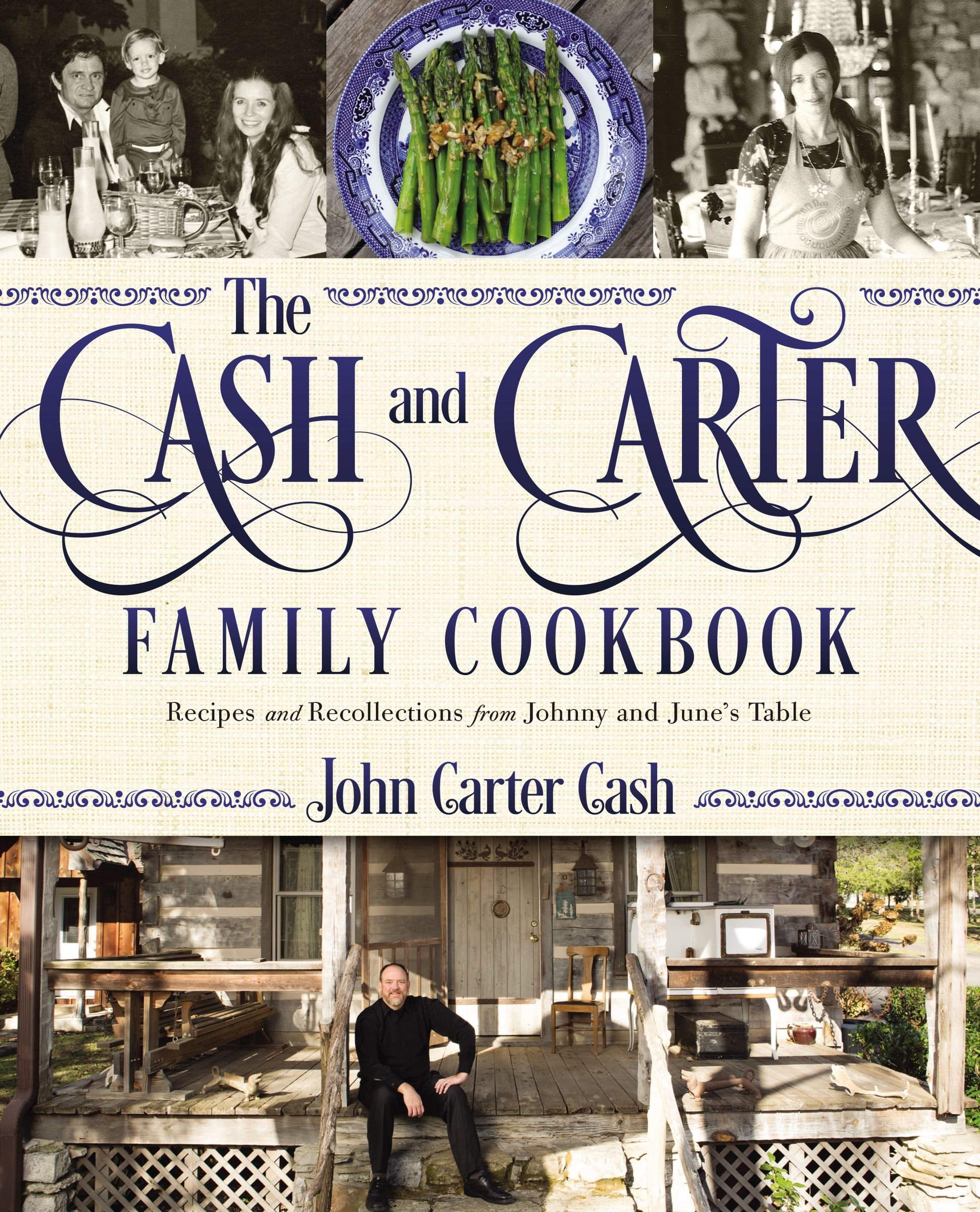


(Currently featured on sale in Roberts & Jones. Johnny Cash and June Carter are gone, and the Carter Family Fold is...easier to get into than it used to be. But how could I mention visiting Gate City and not mention live, oldtime country music as performed by the Carters, Holston River Boys, Dwain Reed, Jim & Jesse, Mac Wiseman, Ralph Stanley, and other twentieth century legends? Most of our celebrity musicians are at best very old, but their former students are still here. If you're not in town in time to spend an evening at the Fold, which is technically in Hiltons, you're probably in time to visit Leonard's Pickin' Parlor, which is technically in Weber City...depending on the time and day you can buy acoustic instruments, have them repaired, sing along, or listen to the professional quality band that's formed in the store.)


If our elected officials and other government employees make a personal commitment to support the individual makers who don't want or need handouts, we could really cut the federal welfare system. More Americans would have taxable incomes, and feel better about having them. Only people who are genuinely disabled would need handouts--and the handout system could probably be trimmed down to the point that people would receive their disability pensions while they were in fact disabled. Oh wouldn't it be love-r-ly!

Wednesday, May 16, 2018

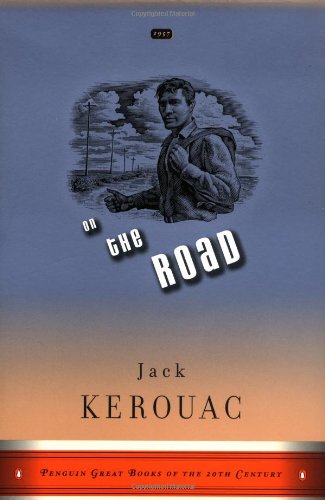
Book Review: On the Road

Title: On the Road


(This is not the edition I physically own; it's the edition Amazon wants you to see first. Lots of reprints of this book are available.)

Author: Jack Kerouac

Date: 1957

Publisher: Viking

ISBN: 0-14-24-3725-5

Length: 307 pages

Quote: “In the month of July 1947, having saved about fifty dollars from old veteran benefits, I was ready to go to the West Coast.”

Was this a novel or a memoir? Kerouac said it was a novel, that he was more like the character he calls Sal (who “shambled after” the character he calls Dean) than like the adventure-seeking Dean, but he had been in the merchant marine, experimented with drugs, and taken road trips. He changes names, places, and identifying details in this book, and probably cleans up the more embarrassing details of his alcoholism, which was going to kill him twelve years later. According to Ann Charters, who wrote the introduction to the reprint I have, “Carlo Marx” was based on Allen Ginsberg, “Bull Lee” on William Burroughs, “Tom” on John Clellon Holmes, “Elmo” on Herbert Huncke, and “Dean” on Neal Cassady. Kerouac stopped road-tripping, though, and went home and wrote books from his mother’s house.

Dean, in the story, “spent a third of his time in the poolhall, a third in jail, and a third in the public library.” Dean was “the holy con-man with the shining mind,” and Carlo was “the sorrowful poetic con-man with the dark mind,” and narrator Sal “couldn’t keep up with them.” Still, Sal says, “the only people for me are the mad ones...mad to live, mad to talk, mad to be saved...who never yawn or say a commonplace thing.”

So they all drive across the continent, east to west and south to north, in search of adventures. And they have a few, narrated in a terse, student’s-letter-to-parents style that captivates the attention by how much it leaves to the imagination.

“I had to sleep in the railroad station on a bench; at dawn the station masters threw me out.”

“Damion’s girl suddenly socked Damion on the jaw with a roundhouse right. He stood reeling. She carried him home.”

“He talked about how bad a driver Old Bull Lee was and to demonstrate...hurled the Plymouth head-on at the truck roaring our way...and swung away at the last moment...The people in the back seat were speechless. In fact they were afraid to complain.”

“It is only seldom that you find a long Nebraskan straightaway in Iowa, and when we finally hit one Dean made his usual 110.”

“Judge said, ‘Did you know what you were doing when you attacked your friend?’ ‘Yessir, Your Honor, I did, I wanted to kill the [BLEEP] and still do.”

Kerouac didn't type "[BLEEP]." Kerouac was not writing a Google-hosted blog. He and his friends were former sailors, and he wrote the way they talked.

The happy-go-lucky road-trippers are of course drinkers, occasional stoners, racists, sexists, and selfish jerks; you’d probably prefer other companions for a road trip you were planning in real life. Nevertheless most readers enjoy On the Road. Baby-boomers liked it so much in youth that we prefer to forget that the characters belonged to the Greatest Generation, not ours.

Of the literally dozens of editions of this book that are available, several contain additions--like Kerouac's other autobiographical novels--that you may prefer to Ann Charters' commentary. Amazon has eighty, count them, eighty pages of results for a search for On the Road, although some of those results are garbage. If you want a specific edition, please specify; otherwise you'll get whichever is available at the best price at the time of mailing, for $5 per book, $5 per package, and $1 per online payment. Reprints of On the Road vary in size; there are small-print pocket-sized editions, standard-sized editions, and bulky omnibus editions where other novels are bound in. Generally four standard-sized books ship in one $5 package.

Wednesday, February 21, 2018

Book Review: In Favor of the Sensitive Man and Other Essays

Title: In Favor of the Sensitive Man and Other Essays


Author: Anaïs Nin

Date: 1976

Publisher: Harcourt Brace Jovanovich

ISBN: 0-15-644445-3

Length: 169 pages

Quote: “Guarded by universal grandchildren, Turkish grandmothers always travel safely.”

Anaïs Nin, famous in her day for lavishly detailed sex scenes in fiction and even more lavish attention to the naughty thoughts of her childhood in memoirs, never was my kind of writer. I was not always an aunt, and back when I had un-auntly tastes I thought stories about a lot of Bright Young Things fondling each other indiscriminately in somebody’s back garden might be fun to read—but they weren’t. Not because polyamory is frowned on by most churches; these characters didn’t seem to belong to a church—but because the group sex seemed to be the only kind of fun the poor slobs had at all.

Few things seem drearier, more mundane and uncreative, to me than the incompletely human sort of mind that, since it “knows neither God, Hunger, Thought, nor Battle, must of course hold disproportioned views on lust.” 


Ironically, because as a porn writer Nin was cast in opposition to censorious anti-sex attitudes, she could blather with the best about “the creative will, which could resist brainwashing,” and apparently people didn’t laugh. Maybe in those longer novels of hers that weren’t in libraries she wrote something about a character with any kind of will.

But I usually like everyone’s nonfiction better than their fiction, even when I like their fiction. So here was a book of Nin’s nonfiction. Maybe I’d like that, I thought hopefully. The twenty essays collected here are nothing aunts or even parents would mind the children finding. They're interviews, reviews, and travel stories that appeared in women's magazines in the 1960 and 1970s.

I’ve read this book five or six times, trying to get into it. Does not happen. Nin could write normal nonfiction with no mention of body parts in it, but somehow...In the final essay, quoted above, Nin claimed as “My Turkish Grandmother” an old lady she and some friends met on a plane, where the old lady, who did not speak French or English, was carrying a letter in French asking people to look after the writer’s grandmother who was coming to France. Nin read the letter and translated it for her English-speaking friends, and they did their best to look after the grandmother. It’s a nice story, but...always travel safely? Do they really? During ISIS attacks?

So I’m not a great fan of Anaïs Nin’s. You, however, might be. She had hordes of fans. In addition to the old lady on the plane she wrote about her psychoanalysis with Otto Rank,her trips to Japan and Morocco and the South Pacific, the music of Edgar Varese, the movies of Ingmar Bergman, a particularly sadistic and probably racist film by Jean Genet, her elderwoman’s view of 1970s feminism, her friendship with Henry Miller (the two were once hired to write his/her pornography together), Ira Progoff’s “journal workshops,” and more. She liked the journal workshops. If she were alive today I’m sure Nin would have a blog.

And maybe, if she’d at least tried to spare an encouraging word for Joan Didion (who got by just fine without one) or Sylvia Plath (who no longer needed one), I’d be able to think of an encouraging word to say about Nin. I’m not. In any case Nin has passed beyond caring whether anyone still admires her books or not. But her books might be due for a revival, in which case you might want to invest in them. If so, buy it here: $5 per book, $5 per package, $1 per online payment; you could fit seven more books of this size into a $5 package, and some of them could be books by living authors.


Thursday, February 8, 2018

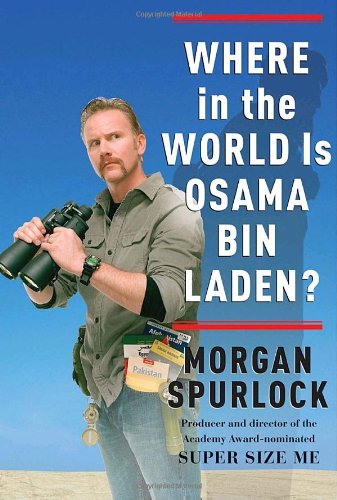
Book Review: Where in the World Is Osama bin Laden

A Fair Trade Book


Title: Where in the World Is Osama Bin Laden?

Author: Morgan Spurlock

Date: 2008

Publisher: Random House

ISBN: 978-1-4000-6652-0

Length: 304 pages including endnotes and index

Quote: “I want [my son] to know these people. Not to see them as ‘the Other,’ but as people he shares this world with.”

One thing I know about military history: It is never written accurately during a war. Can’t be. Shouldn’t be. So forget about anybody, even Morgan Spurlock, telling you anything about “OBL” or Afghanistan that wasn't in the newspapers at the time. Current war news always contains high levels of mis-, dis-, and non-information. As it should—don’t you know there’s a war on?

Nevertheless, I have to respect a guy who filmed himself deliberately losing his looks, and even his sex life, to make a good movie. Although Spurlock does not claim to have discovered anything new while writing his new book, he can be depended on to write a good travel story.

He did not actually try to find Osama Bin Laden and call him out. Others did that; for Spurlock it was a recurring joke. What he did for this book, with the help of James Brabazon and various local “fixers,” was go to countries where Bin Laden has supporters and interview local people about their lives, their history, and their feelings about the war.

There are a few moments when this book shows its author’s age, or youth. Finding it easy to appreciate traditional Pakistani clothing styles, he “instantly thought they were the greatest invention since pajamas.” Well, yes, actually, although shalwar kameez is the most popular name for these outfits because local variations on the same thing and the same name are found in most Islamic countries, the British discovered the comfort of wearing “pyjamas” in India, where they heard people call these outfits paejama. (For an early twentieth century description of the Indian paejama and various other variations on shalwar kameez, check your library for a 1950 book called Costume Throughout the Ages, by Mary Evans.)

Spurlock’s sense of humor doesn’t dominate Where in the World is Osama Bin Laden as thoroughly as P.J. O’Rourke’s sense of humor dominated Give War a Chance. This may be considered a good thing. It’s safe to read Spurlock’s book while eating, but then again it’s easier to believe that unexpected details of his anecdotes are literally true.

In fact, because Spurlock avoids (a) the regressive childish feeling that blowing other people and their buildings up is fun because after all nothing’s going to hurt you (O’Rourke’s biggest problem in Give War a Chance) and (b) slipping into anti-war panic and conspiracy theories (Michael Moore’s biggest problem in everything he’s done since the turn of the century), it’s fair to say that if you’re going to read just one up-close-and-personal documentary of a funny man observing a serious war, this should be it.

I bought this one as a marked-down new book in time to post this review on Associated Content, years ago. The copy I had has been sold. However, as I've reviewed other books that were not eligible to be resold as Fair Trade Books ten years ago but are eligible now, I see no reason not to add this no-longer-new documentary for its historical value. Allegations of Sexual Misconduct that (a) weren't violent and (b) were a long time ago? Meh...at least Spurlock's young enough that I can imagine him being guilty of more Sexual Misconduct in the present century than any reasonable woman would consider cute and/or pitiful, the way Garrison Keillor's alleged misdeed was...if he's still tempted to Sexual Misconduct I say he should stop it at once, but that's no reason not to encourage him to write sex-free documentaries. The usual terms apply: $5 per book, $5 per package (three more books of this size would fit into a package), and $1 per online payment, from which we'll send $1 to Spurlock or a charity of his choice.

Wednesday, January 3, 2018

Book Review: Third Helpings

Title: Third Helpings


Author: Calvin Trillin

Date: 1983

Publisher: Ticknor & Fields

ISBN: 0-89919-173-8

Length: 184 pages

Quote: "[A] Frenchman who goes by the name of Monsieur Mangetout had been hired to entertain...by eating several cocktail glasses, a few dozen razor blades, and about a third of a queen-size waterbed...he once consumed fifteen pounds of bicycle in twelve days...[C]ompared to somebody like M. Mangetout...I am someone of moderate appetite...I have never eaten somuch as a pound of bicycle."

Though Calvin Trillin's first claim to fame was serious reportage;  what he liked writing was mildly snarky humor and satire columns, some in verse form. He often snarked about news items and politics. (In his day there were moderate Democrats; he was one.) He wrote a couple of comic novels. He also wrote enough humor columns about food and restaurants to make up three complete books, which were published together in the 1990s as "The Tummy Trilogy." American Fried was volume one; Alice Let's Eat was volume two; Third Helpings finished the Trilogy.

Trillin frequently mentioned his Jewish heritage in his writings. It can seem ironic in the context of his confessions that he regularly ate whatever kind of pork, shellfish, meat-combined-with-dairy, or even animal-blood-based food any goy offered him. The payoff was that, by flouting traditional rules designed to form a little cultural wall between Jewish and non-Jewish people, he seems to have been regularly invited to the sort of clubs that, he admitted he'd always thought, had been formed just to exclude "people like me." Food bullies dislike and distrust anyone who doesn't eat what they eat. Food bullies may not be conscious of holding any religious prejudices, or even religious beliefs, and they do in fact distrust relatives with food sensitivities in the same way, and for the same reason, they distrust people of different religious backgrounds...Trillin apparently embarrassed his family by not upsetting food bullies. He felt a need to assure people that he wasn't going for the world's record of "Eats Everything," that at least he didn't eat glass and metal.

He didn't like everything he did eat, either. He was curtly dismissive of chimichangas, harsh about anything overcooked or underseasoned, and apt to laugh at super-elaborate "stuff stuffed with stuff." He frustrated wine snobs by growling that, with a lot of meals, he enjoyed coffee--or beer. He ate some very expensive meals and liked them, but he never fell into the trap of praising meals or restaurants merely for being expensive; he enjoyed cheap snacks sold from roadside wagons as much as the traditional annual feast at a snobby club.

"The only thing we know for sure about what the Pilgrims ate is that it couldn't have tasted very good. Even today, well-brought-up English girls are taught by their mothers to boil all veggies for at least a month and a half, just in case one of the dinner guests turns up without his teeth."

"A scholar who makes no priggish distinction between knowledge of phonology and knowledge of latkes is obviously my sort of scholar."

"When I go back for visits to Kansas City, my hometown, and I'm asked...how I possibly survive in New York, I tell them...I only eat sausage sandwiches standing up."

"Friends of the Desert began picketing the market­place, claiming that the Zacatecas nopales 'would inevitably lead to clear-cutting of cactus.'..Moishe's was threatening to pull out if Richard's did not agree to stop serving...shellfish."

"[I]n New York...fried-chicken deprivation can cause some­one who was raised in the Midwest to go feverish with poultry nostalgia."

Trillin delighted his fans, and frustrated other readers, by refusing to print any recipes in detail. No matter how much livelier, funnier, more literary and historic his descriptions of restaurant meals were than a typical restaurant review column, they were intended to steer visitors to restaurants. (In Buffalo, New York, he meets lots of local people actively campaigning to get the name of their city identified with fried chicken wings instead of Buffalo's other claim to fame: frequently reporting the coldest temperatures in the contiguous States.) Or, when Trillin was invited to a memorable meal at a private club, to inspire people who liked to cook to make similar things at home or in restaurants. Trillin described the part of the cooking process that defined a special recipe, but left cooking time, seasonings, etc., for cooks to work out. If you already have recipe books and cooking experience his "Tummy Trilogy" can be considered as cookbooks.

If you merely like travel, history, wisecracks, and/or reading about rich unhealthy meals as "food porn," Third Helpings and the rest of the Trilogy are just fun reads.


Trivial? Maybe, if you don't intend to cook clams or pork. I read the omnibus edition of the Trilogy when it came out as a new reprint, laughed copiously, copied a few recipes for future experiments, did not keep the book. Having acquired a copy of Third Helpings as an old book, I laughed almost as much at the image of edible cactus being "clear-cut" as I had the first time around; I revelled more than ever in Trillin's success in having added "Buffalo Wings," meaning spicy fried chicken wings, to the dialect and menus of at least the Eastern States. I can imagine first-time readers enjoying this foodie memoir as much as they did Under the Tuscan Sun

To buy Third Helpings, with or without the rest of the Trilogy, send $5 per book, $5 per package, + $1 per online payment to the appropriate address at the bottom of the screen. (Salolianigodagewi is not a Paypal address; it's a mail-sorting address from which you get the appropriate Paypal address.) All three books will fit into one package, bound separately or together, whichever is currently cheaper unless specified, and leave room for one or two of Trillin's other books (or your choice of books that have or have not been reviewed at this web site).