Showing posts with label privacy. Show all posts

Thursday, June 18, 2026

Can We at Least Look Forward to Re-Entry?

"Don'it always seem to go, you don't know what you have till it's gone?" Today's main post was a real downer for me to write. I don't know that this needs to be a downer season, though. While we can use the Internet without feeding the monsters we want to starve, let's enjoy it. Most of my online time will be spent downloading content I want to save (mine and other people's) but there's no reason not to share and enjoy all the digital content we've really "liked" for all these years. I may be linking to posts from the 1980s; no apologies. Some people were posting good stuff back then, and deserve credit.

After all...we'll still have our skills. We can reenter the Internet if and when we get...this is my list, I encourage you to post yours:

* Privacy protected by federal law, with heavy penalties for anyone storing in one place enough information to be able to identify any person in the real world. (The federal government has its own special networks that do not connect to the regular Internet. As long as that disconnection is absolute, I'm not opposed to that.)

* Requirement that all "data centers" generate ALL of their own electricity (from sustainable, non-nuclear sources), recycle ALL of their own water (such that they're cut off from public supplies after drawing 50 gallons for workers to drink and wash their hands in), shut down instantly if monitors show them raising the air temperature 50 feet away, pay all content producers for all data they collect or use, are continually monitored and shut down permanently if they prey on data from unpaid sources, are unable to connect with computers that are in use, and generally are such a liability that nobody wants to build one anyway.

* Requirement that any company that uses content produced by any individual must compensate that individual within a week and before using, selling, or publishing the said content.

* Criminal penalties for any use of camera, microphone, or any unpublished content on another person's computer in the absence of either a specific contract signed before the transfer of each individual data file, or a legitimate search warrant for the prosecution of a crime. YouTube may not try to "see" even the silhouette of a human before playing a video. The fact that Microsoft has reacted recognizably to being shouted at, in the past year, must cost Microsoft mucho dinero. (The cats probably think I'm losing my marbles, with all the yelling at this computer they've heard. It's all been a scientific experiment. Yes, the microphone app has been turned off, and yes, Microsoft has still reacted as if it were turned on.)

* Redesign of the Internet to limit electronic payment, criminalizing any attempt to connect directly to any individual's bank or utility account. (Connections among businesses may be allowed at the businesses' own risk and expense, provided that the businesses receive regular and realistic warnings about how foolish this is.) 

* Requirement that any company that delays payment for more than a week, without specific authorization from the person(s) to be paid, will jollywell pay the debt owed AS IT STOOD ON EACH AND EVERY DAY THAT IT WAS OWED. If a content site that owed you $10 in 2011 has not paid that debt by 2027, it can be held responsible, and its owners' assets sold, to pay you $10 for each day since the failure to pay in 2011. Yes, Paypal and many other e-businesses will be hurting, and they'll deserve it. No, companies can't withhold transfers of payment on transactions of which they disapprove. Yes, customers can refuse to pay for content because they don't like what the online worker produced or because they can't afford to complete the project or just because they want to dissolve their companies and get drunk, but they have to do that before a contract is signed, work is done, and the final copy of the content is delivered. 

* Redesign of the Internet to allow NO third party to interrupt the use of a privately owned computer, except for law enforcement agencies with a search warrant for prosecution of a crime. "Updates" and "cookies" and spyware LOCKED OUT of computers for at least one hour after the last keystroke, and preferably, when the infrastructure is in place, for the time it takes the FCC to review a request to meddle with another person's computer and deny permission to companies that aren't making a positive contribution to the computer owner's experience. (Spyware might, following Yougov's example, be allowed to run after a contract has been signed paying the computer owner, say, $10 a month plus complete access to whatever the client company has been allowed to spy on.) Meanwhile, if, say, a Microsoft update causes your computer not to obey a keyboard command INSTANTLY, if you have time to repeat a keystroke because it's not obvious that the first command "went through," you would activate a red button on your screen (or on new computers' keyboards) that would require Microsoft or any other company interfering with your use of your computer to pay you a substantial fine.

* Redesign of Microsoft into HUMBLEsoft, the company that has been put in its place and will never again presume to try to "force" its Lords and Masters the Most Honorable Customers to buy or do anything. Its new slogan must be "One computer per person per lifetime." It can continue to provide an outlet for creative ingenuity...keeping the ever-evolving Internet accessible to every computer, to every software package that pleases its owner.

* Criminal penalties for the unpaid, unauthorized use of any likeness of any living person. Any image of a person who is not fully clothed, or who appears to be touching any part of another person's body other than hand to hand, may be considered unauthorized. Porn lovers now have Craiyon and can watch three-eared porn stars doing whatever occurs to the porn lovers' filthy little minds, but they should not be allowed to drag you or me into it.

* Since plagiarism bots are driving the demand that people use those ugly, hard-to-read sans serif fonts, recognition of the font "Calibri" as identifying data that has been made available for mining and is likely to be plagiarized, while other sites and systems use decent-looking serif fonts that print out looking like the print in real books--familiar and easy to read!

* Well publicized ban of any country whose government wants censorship from the new Internet, which is for responsible adults and does not pamper those whose feelings are hurt by new ideas. Foreign users logging in to the Internet should see a message along the lines of, "You are attempting to connect to the Internet, a service designed by and for a country that has freedom of the press. Successful prosecution of a crime under United States law is necessary to restrict access or 'reach' to any content. If your national government has a problem with this, then the Internet is off limits to you. Work on upgrading your national government. We regret the inconvenience."

* Requirement that electronic devices that cost the owner more than $100 be classified as COMPUTERS and come with physical data storage, solid opaque keys including pointer and clicker keys, and a reliable heavy-duty printer, while devices that store data "in the cloud" and lack these features are classified as ACCESSORIES and may not be sold for more than $99.

Yes, we should have demanded all of these things a whole lot sooner. No doubt, if we'd imagined how fast the garbage features could be cranked out and built into a dysfunctional system, we would have demanded them. Now we must demand them as conditions for re-entry into the Internet. No connection from Windows 10, or Windows 7, or Windows 92? Soooo long, it's been good to know ya...

Bill Busting 108: Cheap Computing

The final installment planned for this frugal series is not happening any more.

With Microsoft threatening to feed all online writers, artists, and data analysts into food for its plagiarism ("artificial intelligence") monsters, I don't know whether there's going to be any valid reason for any frugal person to own a computer, or have one at home, after October.

If there is such a reason, it'll be an old one that no longer links to the Internet but processes words and numbers even better now. 

I'd planned to make this a much more informative and entertaining post that would be worth somebody's $5, but times have changed...so I'm glad nobody paid for the post I intended to write.

I think, instead of planning home computer centers, we should be planning our post-computer lives.

Thursday, June 12, 2025

Does Privacy Need Enumeration in a Constitutional Amendment?

The US Constitution does not use the phrase "right to privacy." It does say, however, that all rights not specifically assigned to the federal government are reserved to the State governments or to the individual citizens. 

The Supreme Court ruling in the Roe v. Wade case recognized privacy as one of those "unenumerated rights." Some people still think the fuss about Roe v. Wade is or was about protecting fetuses from being killed in the abortion process. But no. For the informed members of our governing class, Roe v. Wade was about whether or not government is still willing to recognize individuals' right to privacy. The Left wanted to strike down the Supreme Court's historic decision in order to suppress that right from consideration. And the voters let them--many feeling good about the idea that reversing Roe v. Wade was protecting fetuses. But what really made the control freaks in Big Government and Big Business want to erode women's medical privacy, to make abortion a decision for the State government to make as opposed to one for the individual woman to make, was a different kind of invasion of privacy. 

Without ever taking a vote on the constitutionality of government agencies directly "monitoring" our electronic communication, during the War on Terror W Bush signed legislation requiring private corporations to spy on our electronic communication...and authorizing them to finance all that "monitoring" by allowing private businesses to peek at our electronic communication, too. And now Trump's allowing Thiel's Palantir corporation to put together electronic dossiers on all of us.

 After all, don't you want all those ads they shove in front of you to be "relevant" enough that you want to click right over to the sponsors' sites and buy things? Oh, you didn't? You think it's obnoxious when people presume to know that (based on your age and gender, not because you're stupid enough to take polls about your medical profile) you might be at risk for a disease that people of your age and sex get, but sort of entertaining, in a sick way, when they try to sell you patent remedies for a disease you're absolutely certain never to have? Well you're an outlier. A nasty, secretive outlier. You wouldn't be cackling, "I love being sterile and, if I didn't, Viagra would be the last thing I'd try!" if you were a the kind of person the corporations approve of. 

 And maybe the service you get when you stay in a hotel, or in a hospital, is being influenced by the corporations' disapproval of your protecting your privacy. The fact that you're secure enough in your marriage, or lack of one, to be willing to grow older without any "male performance enhancement products" may be creating prejudice against you. A regular fellow would be insecure enough to pay whatever the ads tell him is a good price for Viagra. 

And matters of religion or politics? Well, as far as the former is concerned, the corporations have determined that you shouldn't have one. Despite the existence of CEOs who want to testify to their faith, the general consensus of those who want to rule the world through manipulation is that religious faith makes people more resistant to manipulation and is, therefore, a bad thing. Politics is different. You should have politics if they're the globalist kind of politics that make it easier for huge multinational corporations to eradicate smaller local competitors. You may be subject to punishment for having a religion or a more realistic type of politics. 

Consider the wreck that used to be Twitter. The same people who urged W to mandate that Twitter be "monitored" then pressed Jack Dorsey to impose censorship on it. Preferably through "shadowbanning" in a way that people couldn't say for sure was happening to them, that could be used, most noticeably, to mute even the blandest members of the other political party during an election season--and it was--but, most importantly, to protect Bayer, Lilly, Merck, and some other corporations from having to deal with tweets about the fact that their most profitable products were killing people. 

Don't be deluded about this (the corporations want you to be). When you've seen vigorous opposition to a harmful product, and you continue to see that product on the market, you are not looking at proof that the problem with the product has been solved. You're probably looking at proof that the complaints have been censored. 

 If chronic diseases that involve internal bleeding are being discussed, and glyphosate is not being mentioned, what you are reading has been censored. Glyphosate is still causing chronic diseases that involve internal bleeding. Some manufacturers are now replacing glyphosate with glufosinate. Glufosinate is likely to cause more dramatic and dangerous internal bleeding. 

If homicide-suicides are being discussed, and serotonin-boosting "antidepressants" are not being mentioned, what you are reading has been censored. Serotonin boosters are still producing a very specific psychotic syndrome involving pain, pseudomemories of past abuse that may never even have been possible but is congruent with the pain the patient feels, and a resolution either to kill innocent people to spare them from what the patient thinks s/he survived or to kill people the patient blames for what s/he thinks s/he survived, then kill oneself. Most psychologists are being successfully pressured not to recognize this disorder and give it a proper name. 

If vaccines are being discussed, and the risk of contaminated vaccines doing more damage than the diseases they're meant to prevent is not mentioned, what you are reading has been censored. For a long time the focus of discussion of vaccine contamination used to be Merck's measles vax. Then the urge to get a vaccine for COVID "Out There," even if it had to be a new untested type of vaccine with new unknown risks, produced much more dramatic statistics of bad results with the COVID vaccine. The majority of people who've had one or more COVID jabs have shown no ill effects, at least, though they've also shown no very good ones--most people received vaccines formulated against an irrelevant strain of the coronavirus and were not actually immunized at all. If you think people who remind us of these unpleasant truths are just "vaccine-phobic," you have been successfully deceived by censorship. 

Elon Musk wanted to show Dorsey that Twitter could be made profitable. Simple! Just turn what still had the look of a free social media site into another outlet for corporate-sponsored commercial messages. Anybody could post anything on X, Musk proclaimed, but "freedom of speech does not equal freedom of reach"--tweets from free accounts would no longer reach even the non-paying Twits' followers, and even tweets from paying "subscribers" might not be allowed to reach anyone but the paying Twits' followers if they were unsupportive of sponsors' products. Wasn't that clever...for a few months, anyway. Every time I look at anything on X I see less activity by real people, more by corporate accounts and bots. People are paying to say what they want to say, then finding no real people listening any more. 

I became a leader of Glyphosate Awareness by adopting an abandoned Twitter hashtag, hosting a series of chats, and compiling a series of newsletters. I happen to be unattached to the idea of "being the leader." I wish more people were. Being a Christian first and an activist only later, I'm comfortable with the idea that we're all supposed to be following one Leader, that this is not done by worrying too much about who else may or may not be following whom. I want to be as close as possible to the Truth. If other people believe that I'm following the Truth more closely than other people are, all to the good. I don't want to lose sight of the Truth by letting my focus shift to concerns about who's following me. 

So I welcome updates, of course, and I think it might be a good thing if people fought to keep a Glyphosate Awareness web site active on the Internet, but I really think we've done what can be done in cyberspace, before censorship. People who use the Internet, who mostly don't feel like a global elite class but we are one, already know how toxic glyphosate is. Fresh news fills in gaps and supplies details, but we're preaching to the choir. We have to keep spreading the word out to the technologically illiterate. We have to keep spreading it out to the same ones, in some cases, because some of these people have minds like sieves. And yes, I still think that's where the action is in our movement. We need to be making sure the workers on the highway--especially!--and the ninety-year-old volunteer groundskeeper for the church and the panhandler on the corner know how dangerous glyphosate, and glufosinate and similar things, are for them too. 

But here I stand to testify that we do not need any young people to be publicly identified as leaders in Glyphosate Awareness, at this stage. "Young," in this case, meaning under age 50. We need young people in the movement but we need them to maintain a low profile. Because the leaders in Glyphosate Awareness are in real physical danger. Ask Karen Kingston. Ask Anna Lappe. This is one of the very few, not even top-downward so much as front-backward, statements I ever intend to make as a "leader" in Glyphosate Awareness. 

I say, if you have children at home, or if parenthood is still ahead of you, you need to be a leader of your children's education now and be a leader in Glyphosate Awareness--if it still needs to exist--later on. Be aware! Teach your friends and your children what we've learned about glyphosate and these other chemicals. Send a postcard to an official and sign a petition now and then. Plant butterfly gardens. If you live in a city where US PIRG sends students from house to house on hot days, bring them inside, give them water, sign their petition sheets, donate money if you can spare any, even give them a Save The Butterflies water bottle. But don't call attention to yourselves as being more aware of these things than everybody in your generation is. 

It may be the best strategy, in any case, to let the evil corporations get a nice healthy scary sense of the rising generation all being forearmed with Glyphosate Awareness, and COVID vax awareness, and awareness of dioxin as the carcinogen in cigarettes, and all the other kinds. Let them feel like, "It's no good even trying to advertise our profitable toxic product to the young any more. They're all onto us. We can't sell them anything." As distinct from "If we can make this or that activist look stupid, other young people will trust us and buy our profitable toxic product."

 One difference between Glyphosate Awareness and the US Army is that a nineteen-year-old can say "I flunked out of college. I don't care if I live or die. I want to join the Army," and the Army will test him and probably enlist him. Glyphosate Awareness will not. We're all about young people having complete adult lives. And we know that that's not a priority for the chemical corporations, at all. 

Why am I such a privacy fanatic? Why can't you write to me at a street address instead of a post office box? Why don't I use anybody's real-world name? Well, for one thing, anyone who knows my home town knows who I am, if they've ever wanted to know. And guess what some people could and would do with that information. Guess what's been sprayed on the property of The Celiactivist. Repeatedly. What has this to do with privacy? Need you ask? I've suffered enough from one glyphosate goon knowing where I live. I want the Internet to be regulated in such a way that no other glyphosate goon is going to find out where I live, or where Carey Gillam or Michael Balter or Ralph Nader live. Corporate goons can get very nasty when there's a chance of even a small reduction in profits. 

The Internet with privacy creates the possibility that people can blow the whistle whenever a corporation's most profitable product happens to be toxic, can get dangers recognized before a harmful product becomes enmeshed in our culture the way Prozac and glyphosate have become. The Internet without privacy creates the possibility that corporate goons can kill the public-spirited person who is warning others about the toxic product. 

Lack of Internet privacy creates a lot of other ugly possibilities, of course. In Babylon Rising, Tim LaHaye imagined a professional assassin cutting off someone's fingers to be able to use person's fingerprints to foil biometric security devices. It could happen. It's not happening now, at least not often, because for people who grew up with computers (as LaHaye did not) it's so much easier to use computer code to foil those security devices. But the more elaborate and biometric we want to make ways for computers to recognize individuals, the nastier the possible abuses can be. Even easier than fooling a computer security "app" into thinking you connected to it from my phone, you know, the one the computer is eager to imagine that I have, is for the good side to recognize that things posted on their web site should not be identifiable with individuals. 

Instead of trying to make sure that nobody else uses my laptop to read an e-book, why not just accept that lots of people should be able to share a computer.  Don't try to tie my Kindle account to me personally; it's for anyone I allow to use my laptop. Amazon needs to strip the account of any personal information. Instead of trying to find ways to sell our contact information to sales pests while keeping that information "secure" from evildoers, web sites need to get comfortable with the fact that they don't know whom they're trading with. Should not be a problem--matters affecting national security have no business on the Internet. 

Anybody has a right to order a T-shirt online. It might be better to use a prepaid, printed, postal money order, to order that T-shirt, rather than put any bank or credit card information online. All e-commerce sites need to be required by law to accept (and mail out!) postal money orders. 

Instead of trying to verify that independent contractors who do writing, coding, or graphic design online are citizens of the US (or anywhere else), the sites that handle those transactions need to let the appropriate tax office verify that...by mail, not online. After earning enough money at an online job site to be required to report the income on your taxes, you should inform the tax authorities. But you should send them a photocopy of your tax information, rather than putting that information online where hackers can get at it. No web site should be allowed to ask you to transmit your tax information online. 

Don't use any electronic device that has a flat screen. Don't touch screens--period. For one thing nobody else wants to try to read the screen through your fingerprints. For another thing, digital images of law-abiding North Americans' fingerprints have resale value.

The push to eliminate online privacy is coming from people who want to reduce private citizens' freedom by setting up "social credit systems," as in China. Americans should not allow this idea to get off the ground. For a start we can all agree: "I have NO 'social credit' and I don't want to work or trade with anyone who has. Anyone who has failed to oppose 'social credit systems' publicly, in real life and on the Internet, is not welcome here." And then we can demand that electronic devices be built with touch controls that are solid and opaque, that don't allow hackers to gank images of our fingerprints. 

Don't use devices that allow hackers to gank images of your face, either. Don't use "apps" that do. We don't like to waste plastic or rare minerals so it's nice to know that manufacturers can easily fit opaque covers over laptops with slick camera-friendly covers through which "apps could use your camera" to see what's in your house. 

How many times did your laptop show that obnoxious message about "Lower your finger if you don't want to have to choose from lots of different fonts"? Nobody has to choose from different fonts; the option of using the default font is always there. How long did it take you to figure out the correct answer, for those who want to keep their fonts or who just don't like that kind of slimy message? The correct answer was to hold up both middle fingers and tap the button to start the computer with your knuckles. How long did it take Microsoft to stop showing you the question? Right

When anybody, whether they're in the federal government, the police, Microsoft, or anywhere else, can sneak a peek at you or your house through a computer screen, that's a search without a warrant. That's unconstitutional. It's a crime even if the person trying to peek into your house is not a burglar. We need laws requiring any programs or "apps" that enable that kind of spying to be disabled, and any further use of such things to be prosecuted as a felony. People who use computers in private homes have a right to work in their underwear. If they wear underwear. The computer should not be able to tell. 

The work people do at job sites, the content they post at forum or "social" sites, should tell people which accounts belong to one real person, a group of people, or a bot. That is all anyone in cyberspace needs to know about anyone else. People choose whether to identify with one screen name, as I've come to do, so that the main difference between what "Priscilla King" writes and what the writer known as Priscilla King says to her friends and family is that "Priscilla King" doesn't mention other people's names, or to have a dozen different screen names and even give them different personalities and relationships with each other. Nobody else needs to know. 

Nobody should be able to identify a real person with things you post online... Unless, of course, the person is a Least Competent Criminal who insists on posting content about the crimes he intends to commit, which should alert local law enforcement. Then they can take out a warrant, trace the location of the computer, and knock on the criminal's door while he's still typing a blackmail letter. We've already seen the uncensored Internet help fight crime. The Internet is designed to make it easy to trace evidence of real criminal activity, sufficient to obtain a warrant for a criminal's arrest. The rest of us need more safeguards to prevent the criminals using the Internet to track us, to search our homes (for valuables) and monitor our interests (for scamming). The easiest way to do that is to ban any storage of information that identifies a person "in the cloud." 

Don't encourage the "we can keep your information safe" scam. The way you keep people from stealing your friends' keys from you is not to carry your friends' keys. If you've not already seen firsthand how this works in cyberspace, trust me: We need to stop letting banks, stores, schools, and other legitimate businesses that are managed by fallible humans put the information that is "key" to our accounts on the Internet where criminals can steal it. 

The Internet can help--any requests for a home address, a credit card number, use of your camera app, etc., could easily be made to cause the offending business computer's screen to flash red and display a message like "This information can be accessed only with a warrant obtained from a local magistrate." 

Amending the Constitution is expensive and tedious and a long hard slog. That's as it was meant to be, and as it should be. Still, I see many benefits and no real risks in making privacy an enumerated right in the Constitution. (Abortion might be said to violate a fetus's privacy, so abortion should just be left out of this discussion). The Internet, in any case, needs to be regulated in a way that respects privacy.

It will happen if we demand it, Gentle Readers. 
Friday, December 9, 2022

Morgan Griffith: The IRS and Big Tech Are Watching You

Editorial comment: I want an app that, whenever any site tries to snap a shot of my computer screen or me, automatically traces the offending site, disables it for a week, and sends ITS contact information to a law enforcement agency. (I want it to be a felony to have an unauthorized photograph of any living person who was not either on your property, or asking you to take their picture, at the time.)

From U.S. Representative Morgan Griffith, R-VA-9:

"

December 9, 2022

When asked why he robbed banks, Willie Sutton, the notorious 1930s fugitive, famously retorted, “Because that’s where the money is.” Democrats in Congress took this advice and ran with it.

A key priority of President Biden’s agenda has been empowering the Internal Revenue Service (IRS). Befitting his party’s addiction to taxing and spending at enormous levels, he has repeatedly sought to expand the size and reach of the IRS.

Last year a change giving the IRS sweeping new power was enacted by one-party Democrat rule and is set to inflict damage in the coming year unless altered. The so-called American Rescue Plan Act of 2021, which kicked off the inflation-driven cost increases hampering our economy, also included a tax provision targeting regular Americans engaged in the digital economy. Democrats have essentially given the IRS and Big Tech a mandate to scrutinize individuals, small business owners, and just about anyone who uses money transfer apps.

The provision centers on the 1099-K tax form. The form is used to report transactions made on “third-party settlement organizations,” online marketplaces such as PayPal and Venmo that allow for money to change hands. These marketplaces allow people to transfer money online. Prior to the changes made by Democrats, the minimum threshold for reporting money transfers made on third-party settlement organizations was $20,000 on 200 or more transactions.

Now, it is $600 on any number of transactions. It could even be a single $600 transaction during the year. Accordingly, PayPal, Venmo, etc. will be required to tell the IRS about transactions that cumulatively reach $600.

I believe that such a low threshold will lead to millions more people being subject to filing additional paperwork with the IRS.

Venmo payments between roommates to reimburse each other for a cable television bill or a similar expense, while not counted as income, could still raise questions, and trigger a 1099-K form landing in your mailbox.

How will the IRS examine all these electronic payments?

Perhaps with the 87,000 new IRS agents provided for under this year’s preposterously named Inflation Reduction Act? Congressional Democrat-supported changes will result in tens of thousands of IRS inquires to average American taxpayers. That could be you.

By lowering the threshold, Democrats have ensured that far more people will be inadvertently ensnared in the IRS’ net. While claiming they are only targeting wealthy taxpayers, sharply lowering the threshold will mean that in the coming tax season, many individuals, small business owners, independent contractors, and casual buyers and sellers of goods and services online will be receiving a 1099-K form for the first time.

This could even include the swim coach who allows parents to pay for their kids’ swimsuits by reimbursing the coach using Venmo or PayPal. While she would not owe any taxes because she is only a pass-through, she could have additional IRS paperwork to fill out for merely being helpful.

It is easy to see that IRS scrutiny would extend to middle-income individuals, who are likely less able to afford tax lawyers and accountants to deal with IRS demands.

Compounding the problem is the uncertainty about what the new requirement entails and what transactions will be subject to taxation. Individuals who use an app on their phone to simply pay their neighbor for babysitting, purchase an auto part, or buy a Christmas wreath from their local Boy Scout troop, will have a new headache. Small businesses already struggling, will now have their tax season stress compounded by an additional layer of bureaucracy and paperwork when working on tax preparation.

Another concern is “third-party settlement organizations” are required to collect taxpayer information and share it with the IRS.

The Treasury Department’s Inspector General for Tax Administration has identified weaknesses in the IRS’ cybersecurity defenses for protecting taxpayer data. Handing over more of it without shoring up the agency’s protections could lead to disaster.

I have cosponsored a bill, the Stop the Nosy Obsession with Online Payments (SNOOP) Act of 2022, to reverse these harmful tax provisions, and I have also signed a letter to the acting commissioner of the IRS urging it to delay implementation and demanding more information about how the agency will carry out the 1099-K requirements.

One of the new Republican-led House’s priorities will be reining in the IRS. As Americans feel the impact of decades-high inflation and a stifled economy, they should not have to worry about more visits from the tax collector.

If you have questions, concerns, or comments, feel free to contact my office. You can call my Abingdon office at 276-525-1405, my Christiansburg office at 540-381-5671, or my Washington office at 202-225-3861. To reach my office via email, please visit my website at www.morgangriffith.house.gov.

"

Wednesday, August 15, 2018

Tim Kaine on Broadband

Editorial comment: We hope this legislation was written with due respect to those who DO NOT WANT Internet or TV access in our homes.

We do not actually live in the post-plague world of benign neighbors who recognize meddling as a serious mental illness, where a local "Internet of Things" might be seen as a blessing to people with physical disabilities. We live in a world where entire political parties are built around the idea of giving bureaucrats more opportunities to meddle. So we live in a world where automatic blocking of electronic signals is one of the things some people like best about our rural homes.

"
After years of pushing for much-needed improvements to Virginia’s infrastructure, I’m pleased that we recently passed a bill in the Senate that would fund key transportation grants and help expand broadband access to rural communities in the Commonwealth.
Specifically, the legislation supports the Better Utilizing Investments to Leverage Development (BUILD) program, formerly known as “TIGER” grants. In the past, Virginia has used these grants for projects including the I-95 Express Lanes, I-564 connector from Norfolk International Terminals at the Port of Virginia, I-64 Delta Frames Bridges in Rockbridge County, and the Pulse bus-rapid transit system in Richmond.
The bill would also help fund a grant program administered by the Rural Utilities Service that brings critical services to some of the most rural, underserved areas in America. This program supports new or improved broadband access across rural areas and enables telecommunications providers to fill gaps where there is little or no broadband service. Broadband access has become a critical part of our basic economic infrastructure and is vital for job creation.
Please know that I’ll keep being a strong advocate for smart investments in infrastructure that can create jobs and make daily life easier for you and your family.
Sincerely, [signature graphic: Tim Kaine]
"

Here's the official summary of the bill:

"
WASHINGTON – Today, U.S. Sens. Mark R. Warner and Tim Kaine (both D-VA) applauded Senate passage of bipartisan legislation to fund federal programs under the Department of Transportation (DOT), Department of Housing and Urban Development (HUD), Department of the Treasury (USDT), Department of Agriculture (USDA), and the Department of Interior (DOI).
On a bipartisan 92-6 vote, the Senate approved the Fiscal Year 2019 appropriations package that covers funding for Transportation, Housing, and Urban Development (THUD); Agriculture, Rural Development, Food and Drug Administration; Interior and Environment; Financial Services and General Government; and all of their related agencies. The bill will now go to conference where it will be reconciled with a version passed by the House of Representatives.
“This bipartisan package maintains key Virginia priorities and pushes back against the Administration’s attempts to impose draconian cuts to vital federal programs,” said the Senators. “The bill keeps federal commitments to help fund the Metro system, which is critical to the capital region, and maintain cleanup efforts for the Chesapeake Bay. In addition, these funds will help expand broadband access to rural communities in Virginia and provide support to the six Virginia tribes that earned federal recognition this year so they can finally access the services and benefits they are owed.”
The following list includes many of the provisions Sens. Warner and Kaine advocated for on behalf of Virginia that were included in the appropriations package:
  • WMATA: The bill includes the full federal funding of $150 million for Washington Metropolitan Area Transit Authority (WMATA) capital improvement. Warner and Kaine previously urged Senate appropriators to fund WMATA at authorized levels.
  • Virginia Tribes: Earlier this year, Congress passed and the president signed into law the Thomasina E. Jordan Indian Tribes of Virginia Federal Recognition Act of 2017, legislation introduced by Sens. Warner and Kaine which for the first time granted federal recognition to six Virginia tribes: the Chickahominy, the Eastern Chickahominy, the Upper Mattaponi, the Rappahannock, the Monacan, and the Nansemond. The appropriations bill provides $1.12 million to largely help these Virginia tribes access the benefits and resources now available to them after their successful, decades-long effort to secure federal recognition.
  • Chesapeake Bay: The bill provides $73 million for the Chesapeake Bay Program, a regional partnership that directs and conducts the restoration of the Chesapeake Bay. It also includes $2.02 million for the Chesapeake Bay Gateways and Water Trails Network, which helps increase public access and the use of ecological, cultural and historic resources of the Chesapeake region.
  • Broadband Grants: The bill provides $30 million to fund a grant program administered by the Rural Utilities Service that brings critical services to some of the most rural, underserved areas in America. The program provides financing to support new or improved broadband access across rural America and enable telecommunications providers to fill gaps where there is little or no broadband service. Broadband access has become a critical part of basic economic infrastructure for Virginians and is vital for job creation.
  • FBI Headquarters: The bill does not include funding for the Trump Administration’s plan to demolish the existing FBI headquarters in Washington and build a new facility in its place. Senate appropriators specifically note in the bill that they will continue to be reluctant to provide additional funds for this project due to the unanswered questions from the Administration regarding their new plan, including the revision of longstanding mission and security requirements for the new facility.
  • National Park Service: The bill provides $3.2 billion for operations of the National Park Service. In 2017, more than 24 million individuals visited Virginia’s 21 National Parks. National Park Service assets also fill critical transportation needs for Virginians, such as the link the Arlington Memorial Bridge, to visit historic sites like Arlington National Cemetery and the national monuments in the District of Columbia.
  • Wolf Trap: The bill provides $2.2 million for the National Capital Performing Arts Fund, which provides the funding needed to operate Wolf Trap National Park for the Performing Arts in Northern Virginia.
  • Community Development Block Grant Program (CDBG): CDBG helps communities develop projects that meet unique housing, infrastructure, and economic development needs and supports job creation. The bill provides $3.4 billion for CDBG, equal to the fiscal year 2018 level. The bill rejects the President’s proposals to increase rent for public housing residents and protects critical sources of funding for affordable housing such as the HOME program. Sens. Warner and Kaine have strongly opposed President Trump’s efforts to cut funding for affordable housing.
  • Payment in Lieu of Taxes (PILT): The bill includes $500 million for payments to counties through the PILT program, in order to help local governments offset losses in property taxes due to non-taxable federal lands within their boundaries.
  • Emergency Solutions Grants (ESG) Program: The bill includes $270 million to assist individuals and families so they can quickly regain stability in permanent housing after experiencing a housing crisis or homelessness.
  • Unmanned Systems: The bill appropriates $6 million in matching funds for unmanned aerial systems (UAS) research. The original FY19 T-HUD base bill made $3 million available as matching funds for companies that partner with the UAS test sites like the one at Virginia Tech, which are working towards integrating UAS into the national airspace. After Sen. Warner introduced an amendment to boost UAS research funding levels, the final bill doubled that amount to $6 million.
  • Healthy Food Financing Initiative (HFFI): The bill provides $1 million to help bring grocery stores and other healthy food retailers to underserved urban and rural communities across America. Recent changes to the program included in the Senate-passed version of the 2018 Farm Bill closely follow Sen. Warner’s efforts in the Senate to eradicate food deserts.  
  • Distance Learning and Telemedicine Grants: The bill provides $33 million for this national competitive grant program that aims to help rural communities obtain the technology and training needed to connect educational and medical professionals with the teachers and medical providers who serve rural residents. USDA has awarded over $587,000 to Virginia telemedicine projects which provide health care services in rural areas, including mental health, drug addiction treatment, and funded two mobile health units that offer on-site care and telemedicine video conferencing with doctors and specialists. USDA also awarded over $215,000 to Pittsylvania County Schools to purchase video conferencing equipment to provide interactive distance learning services for students and educators.
  • Cost-of-Living Adjustment (COLA): The bill includes a 1.9 percent salary boost for federal civilian employees.
  • Land and Water Conservation Fund (LWCF): The bill provides $425 million for LWCF, which has helped preserve forests, trails, wildlife refuges, historic battlefields, and Chesapeake Bay lands and waters in Virginia. According to the Outdoor Industry Association, the Virginia outdoors industry supports approximately $21.9 billion in annual consumer spending and 197,000 direct jobs.
  • BUILD infrastructure grants: The bill provides $1 billion for competitive transportation grants through the Better Utilizing Investments to Leverage Development (BUILD) program, formerly known as “TIGER” grants. Virginia has previously used these grants for projects including I-95 Express Lanes, I-564 connector from Norfolk International Terminals at the Port of Virginia, I-64 Delta Frames Bridges in Rockbridge County, the Pulse bus-rapid transit system in Richmond, and Northstar Boulevard in Loudoun County near Dulles.
"

Tuesday, May 9, 2017

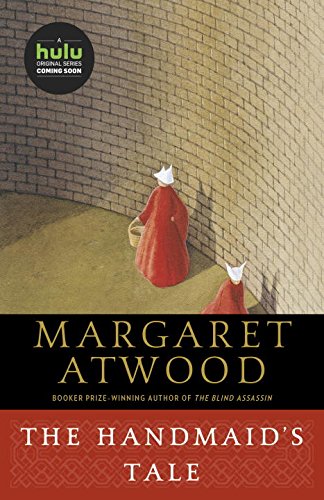
Book Review: The Handmaid's Tale (with Jim Geraghty)

Title: The Handmaid's Tale 


Author: Margaret Atwood

Publisher: Anchor

Date: 1985

ISBN: 978-0385490818

Length: 311 pages

Jim Geraghty's e-mail, quoted at some length below, was headlined "What Fans of The Handmaid's Tale Prefer to Ignore." Actually, for serious fans of Margaret Atwood, what JG then reminded readers is pretty familiar reading.

The Handmaid's Tale is "about" a totalitarian government. Any totalitarian government. As an Amnesty International activist, Atwood received reports about all of them. There are Islamic elements in the fictional dystopian "Republic of Gilead," where both literacy and sexuality have been forbidden to most people in the neo-feudal dictatorship; the life the narrator describes has a lot in common with the descriptions of Afghanistan in My Forbidden Face and The Kite Runner. There are also Christian elements--in order to take over Christian America, the totalitarian Party has adopted Christian rhetoric, although the point of banning literacy is that people are no longer sure which of the texts they're being trained to quote as sacred are from the Bible or from Marx, and there are references to persecution of Baptists. There are also Marxist elements--"From each according to his ability, to each according to his need" has become a sacred scripture of the Gilead Party's official religion. The danger to which this book alerts us does not come from a specific school of religious or political rhetoric; it comes from the fundamental idea of legitimizing some people's "right" to control other people's lives.

For some more of Atwood's own commentary on The Handmaid's Tale, plus other essays--many, frustratingly, about Canadian books not easily obtained in the U.S.--you might want to check out this book, which has been published in the U.S.:


What I particularly loved about this book was that it came out when Alan Greenspan and a few other "progressive visionary" types were eager to build a "cashless economy." A "paperless society." Business is transacted through individual-identity-based Internet accounts. That's how the power-mad Party are able to disenfranchise, if not to wipe out, whole demographics overnight--the ultimate power grab comes when all females suddenly find their economic identities deactivated.

The next step after that was to grab readers' attention with kinky sex. When no woman has purchasing power in her own right, all women become de facto sex slaves. The Party initially claims to respect marriage but quickly trumps up charges against lower-status husbands of fertile women so that those women can be awarded as "Handmaids" to higher-status husbands of sterile wives. (In 1985 there was real fear that exposure to radiation from computers would cause unwanted sterility; in The Handmaid's Tale the ascendance of computer technology coincides with an epidemic of male and female sterility, although Party-sanction speech officially denies these conditions.)

The narrator, whose name may or may not be June, was happily married with a child, although her husband was unpleasantly comfortable with her sudden enslavement to him. Then the Party police separated the family. The narrator was drugged and "re-educated" with the goal of destroying her memory of her own family, her job in a library, and her ability to read, although this goal was not fully achieved. Her husband and daughter may or may not be alive; she never knows. Her friends may or may not be able to help her escape, or even really intend to try; the reader never knows. Her opportunity to narrate her "tale" secretly, as audio recordings, depends on her ability to conceive a living child in pleasureless three-way sex with "The Commander" and his wife, and her biological clock is ticking during the months or years the story takes.

Right...so this plot is fiction, and not particularly fresh, and its initial popular appeal depended to some extent on kinky sex and violence. If you don't like sex and violence but do enjoy Atwood's style, there's enough of the author's trademark wit and insights to keep you reading through the icky bits, which are filtered through the tough-minded but nonviolent narrator. If you're not familiar with Atwood's style and are thinking "Meh, what's so great about this story that I should unplug and read 311 pages of real paper?"--well, first of all, the new release of this book was triggered by Hulu, so you can (ironically) view it online if you want. More important, though, is what Atwood was really telling people in the novel, and has told people in at least one published essay approximately every ten years since. What you need to visualize vividly, and The Handmaid's Tale will sear into your brain in sufficiently vivid detail, is that if and when we really allow computers to edge out real printed books and newspapers and personal letters, a totalitarian dictatorship that just might select any easily sorted sub-group of the population for genocide is just a short step away.

You're reading this on a computer that connects to the Internet. I'm writing it on a computer that connects to the Internet. Obviously we agree that the Internet has its uses. But be vigilant, Gentle Readers. Stay ready to unplug yourselves from the Internet at any moment. You just might have to.

And if you've not yet read the book, or have read the book and want to see how well Hulu handles it, that's what today's Amazon post is for.

Now, from Jim Geraghty, beginning with a quote and continuing with lots of data links:

"
According to a rash of earnest think pieces from dozens of news outlets, The Handmaid’s Tale is “timely” (the Washington Post), feels “chillingly real” (the San Francisco Chronicle), and has “an unexpected relevance in Trump’s America” (the New York Times). Atwood’s dystopia, writes Rebecca Nicholson in the Guardian, “has reignited the interest of readers, who have been drawing fresh parallels between Gilead and Trump’s America, and the novel topped the Amazon bestsellers list around the same time that signs at the global Women’s Marches asked to ‘Make Margaret Atwood fiction again.’”
Never one to miss a good marketing opportunity, Atwood affirmed our apparent unfolding national horror show on April 19, speaking to the Los Angeles Times about the Hulu series: “The election happened, and the cast woke up in the morning and thought, we’re no longer making fiction — we’re making a documentary.” According to a recent article in The New Republic, lo, have mercy, for great woes have apparently befallen me, a wide-eyed, unsuspecting resident of the Lone Star State: “Texas is Gilead and Indiana is Gilead and now that Mike Pence is our vice president, the entire country will look more like Gilead, too.”
We heard a bit of “We’re turning into The Handmaid’s Tale!” panic-hysteria-accusation during the Bush administration, too. I’ll dust off my argument from then: To picture a near-future United States that is a Christian theocracy with open, systematic, and brutal oppression of women, you have to picture some unbelievable changes occurring very quickly: repealing women’s right to vote; a re-acceptance of slavery; widespread Christian acceptance of government-mandated extramarital sexual intercourse; total repeal of the First Amendment; total bans on any other religious beliefs (there are references to “Baptist rebels”). Perhaps most absurdly, almost all men have accepted a regime where the only sexual outlet of any kind is government-monitored breeding with the fertile “handmaids,” reserved for the most powerful.
Do you picture lots of American men signing on for a system that denies them the freedom to have sex with women? [...]
But Margaret Atwood could have set her tale in other places and made it practically a modern-day documentary: say, Saudi Arabia. Or any corner of Taliban-controlled Afghanistan.
How about Yemen, where there is no legal minimum age for marriage, 52 percent of girls marry before 18, and there’s a tradition of “honor killings” for disobedient women?
Or the Democratic Republic of the Congo, where one estimate calculates two million rapes have occurred as part of that country’s continued violent instability, and armed gangs commit rapes with horrifying frequency.
Or Egypt, where more than 125 million women and girls have endured the barbaric practice of “female genital mutilation” and the practice is the norm.
Sudan’s penal code legalized flogging women for inappropriate dress, and girls can be married at age 10.
Human Rights Watch’s most recent report on Pakistan:
In Pakistan, with 21 percent of girls marrying before the age of 18. In January 2016, a proposal submitted to parliament by WHOM aimed to raise the legal minimum age to 18 for females and introduce harsher penalties for those who arrange child marriage. However, on January 14, 2016, the proposal was withdrawn following strong pressure from the Council of Islamic Ideology, a body that advises the parliament on Islamic law. The council criticized the proposal as “anti-Islamic” and “blasphemous.”
Violence against women and girls—including rape, murder through so-called honor killings, acid attacks, domestic violence, and forced marriage—remained routine. Pakistani human rights NGOs estimate that there are about 1,000 “honor killings” every year.
Or Iran:
Women face discrimination in personal status matters related to marriage, divorce, inheritance, and child custody. A woman needs her male guardian’s approval for marriage regardless of her age and cannot pass on her nationality to her foreign-born spouse or their children. Married women may not obtain a passport or travel outside the country without the written permission of their husbands.
The UN Children’s Rights Committee reported in March that the age of marriage for girls is 13, that sexual intercourse with girls as young as nine lunar years was not criminalized, and that judges had discretion to release some perpetrators of so-called honor killings without any punishment. Child marriage—though not the norm—continues, as the law allows girls to marry at 13 and boys at age 15, as well as at younger ages if authorized by a judge. Authorities continue to prevent girls and women from attending certain sporting events, including men’s soccer and volleyball matches.
UAE’s penal code allows the imposition of “chastisement by a husband to his wife and the chastisement of minor children” so long as the assault does not exceed the limits prescribed by Sharia, or Islamic law.
A 2010 decision by the United Arab Emirates Federal Supreme Court ruled that hitting a wife or child was legal up until the point where it leaves marks.
Horrific, brutal regimes that systematically deny basic rights to women and girls based upon religious beliefs are not hard to find. They’re just rarely Christian. (Worth noting about the above list, the most common religion in the Democratic Republic of Congo is Christianity.) The world has plenty of awful places that can be fairly compared to Atwood’s fictional dystopian regime of Gilead. They’re just mostly Muslim.
"


Any of Margaret Atwood's vintage books (first published before 2010) can be purchased here as a Fair Trade Book. The ones that have most in common with The Handmaid's Tale are, in my judgment:


(Bodily Harm was/is about the real present-time use of torture in totalitarian countries, although St. Antoine is a fictional composite Caribbean island.)


(Oryx and Crake and its two sequels warn us about the hazards of a different branch of science.)

Friday, February 3, 2017

Mark Warner on the Internet of Things Act

From U.S. Senator Mark Warner (D-VA), this form letter to Virginia correspondents is being shared for the benefit of the outside correspondents who sent me e-mail for Senators Warner and Kaine's benefit about two bills that came up for votes recently. U.S. readers may follow these bills on Popvox.

https://www.popvox.com/us/bills/115/s19

https://www.popvox.com/us/bills/115/s88

Since I don't own rights to the correspondence of elected officials, this type of posts will continue to be shared here free of charge. Some background information follows, below:

"

Thank you for contacting me regarding the Developing Innovation and Growing the Internet of Things Act (S.88). I appreciate the benefit of your views on this important issue.
As you know, on January 10, 2017, this legislation was introduced by Sen. Deb Fischer (R-NE) and has been referred to the Senate Committee on Commerce, Science, and Transportation. Should the Senate consider this legislation or similar proposals in the future, I will certainly keep your thoughts in mind.
Again, thank you for contacting me. For further information or to sign up for my newsletter please visit my website at http://www.warner.senate.gov.
Sincerely,
MARK R. WARNER
United States Senator
"

Background information shared by Priscilla King:

1. These bills authorize the use of federal funds to construct more cell phone and wireless transmission towers. These towers would support an "Internet of Things" that some hope might reduce interference between one type of wireless device and another, and others fear might adversely affect individual privacy by, e.g., allowing a stranger's "smart car" to broadcast messages to or receive messages from an individual's "smart phone."

2. Many fear that building more of these towers closer to places where humans live and work would raise levels of radiation and risks for various disease conditions. Some correspondents from the Northern States claim that this is happening in their areas. Factors influencing the development of cancer, autism, and degenerative conditions that develop in old age are diabolically hard to study in any scientific way; this web site suspends judgment, but does think it would be useful to medical science if suspected factors were isolated in specific "test" areas where the incidence of these diseases could be compared with "control" areas.

3. What I have seen in Gate City, Virginia, is that since a new cell phone tower was built--high on Moccasin Ridge, well away from people's homes and work sites--people have felt free to punish, rather than work with, the Scott County Telephone Co-operative, whose employees have indulged in the type of arrogant behavior typical of tenured employees in any company that is perceived as exercising a monopoly. More of the people I know now rely on cell phones only than pay to maintain real phones, although cell phone service is more expensive, less reliable, a suspected risk factor in diseases, and less satisfactory in every way.

4. On the Internet, although complaints about excessive wireless transmission devices are coming from correspondents in the U.S., the "godfather" managing this correspondence and claiming that "safer devices are available" is associated with Microsoft Canada.

That's all I know. Over to the geeks...

Thursday, November 17, 2016

Lame Explanations, Useless "Solutions"...

Here's part of an e-mail conversation with a European site that advertised for writers at Problogger:

"
[The site manager wrote]:
Okay I will remove your account from the platform then. We have no
official purpose for documents, we just have to do this to prevent
banned users from coming back, and that's quite a few I can tell you.
Thanks for understanding.

On 17-11-2016 4:08, Priscilla King wrote:
> All personal information, such as real-world names and images, is sensitive to abuse. "Priscilla King" is a U.S.-based, IRS-registered business owned by a native American citizen. The easiest way to verify that this business has existed since 2006 is to read things posted at https://priscillaking.blogspot.com/ and elsewhere. Information about the owner of the business/brand "Priscilla King" can be transmitted by real-world mail upon receipt of a confirmed contract to work with your organization. It would not be cost-effective to mail out the information without such a contract, especially as copies of such information sent outside the U.S. would need to be filed with the U.S. government. In fact, due to the confirmed market value of the identity of the writer known as Priscilla King, you need to send an international SASE with the legal name of the owner of your business to the mailing address displayed at priscillaking.blogspot.com.
"

Now, how stupid can this line of thinking get? Identity documents, whether transmitted by real mail or e-mail, don't prevent banned users from coming back. Duh. You banned these users because they were unethical, so you know they're going to steal some documents. Are you going out to their workspace to confirm that their face looks like the face on the driver's license they copied for you? No, you're going to sit there and accept the plagiarism or slander or whatever, for which you banned some 19-year-old writer, now being done by some 50-year-old "writer" who, upon investigation, turns out to be the 19-year-old's computer-illiterate uncle.

Here's what you do if you want to find legitimate writers online: investigate the quality of the work done under the brands we've taken some time and trouble to build. Priscilla King (this one, anyway) is a brand who "lives" in cyberspace, but from the day one I've been as careful of "her" standards as I am of my own in real life. Every word I've posted has been either my own, or a legitimate and properly credited quote. Every picture I've posted has been either my own, a friend's, a free photo site's, or a properly credited link. Every idea I've uttered or endorsed has been one I sincerely believed to be true at the time; if I've been convinced that I was in error, I've fixed the error; if it went beyond a simple error of fact, I've posted at length about how and why my opinion changed. You can't confirm that by looking at a picture of my face. You can confirm it by reading my web site, and only by reading my web site. One reason why I'm such the total "paranoid" privacy fanatic is that I've invested a lot in my brand.

I'm well prepared to believe that this web site manager is trying to keep out some of the plagiarists and scammers who pulled down some other minimally edited writing sites, in the past, notoriously including Bubblews. I know it's very bad for a writing site when people just copy and paste a computer-translated article from Forbes in such haste they don't even check how much of a table pasted into "their" post, which is something I personally saw a would-be e-friend do at Bubblews. But peeking at copies of drivers' licenses is so not the way to keep those people from coming back to ruin your reputation. It's a way to help those people ruin the honest writers' reputations.

And if you're not intelligent enough to see that coming, frankly, you're probably not qualified to be an editor or publisher of mine. I am sorry about this, but #BlueLivesMatter and you really ought to make a few friends in the law enforcement community, or at least read the occasional detective novel.

Tuesday, September 15, 2015

Windows 10, and Other Train Wrecks in the History of Marketing

Some marketing schemes are so bad they make sense only after a few years. Consider "train wrecks" like:

* Ross Perot's will-he-won't-he farce of a "Reform Party" campaign in 1992. Can anyone who's not even positive about wanting to run be elected President of the United States? Well, Perot wasn't. But he probably did get what he wanted: just enough swing votes to keep George H.W. Bush from being reelected.

* The garbage that was the electric typewriter. Typewriters worked; Royal Standard and Underwood typewriters worked beautifully. Electric typewriters were a big step backward--they cost more, they didn't work as well, they were harder to use, they buzzed, and it cost money just to have them sitting around, not to mention that typists demanded a pay raise just for putting up with the hateful things. Nevertheless, U.S. companies like Smith-Corona, which had been building decent typewriters, abandoned what was working for them and got behind what didn't and couldn't work...because they were in on IBM's scheme to market personal word processors, from which many of us then "upgraded" to PC's, and then laptops, etc.

* The obnoxiousness of Windows 8. Had Bill Gates had the same virus Hillary Clinton had? Not necessarily, when you consider the evil of Windows 10. It's not just that Windows 10 beams everything you do (look at an adult site? mention a confidential business plan in an e-mail? use somebody's real name?) into "the cloud" for hackers in enemy countries to find. It's not only that now the letters you print and mail privately rather than e-mailing are likely to be backed up into "the cloud" rather than onto your disk drive where they belonged. It's that Windows 10 demands that you destroy the external disk drives so that, just in case you wanted to foil Windows 10's universal blabbermouth feature and type a personal letter using Open Office instead, you won't be able to keep that out of "the cloud" either. The only way anybody would buy Windows 10? Well, duh...they either bought Windows 8 on a new computer or accepted it as a free upgrade, and, having Windows 8, they get Windows 10 as a free...

Don't even say "upgrade," Gentle Readers. Windows 10 is a downgrade. Don't use it. If ever a computer software package deserved to be boycotted to death, Windows 10 does.

(Why is this post labelled "censorship"? Because, if all word and data processing is run through "the cloud," we'll see censorship like the world has never seen before. Type a subversive word like "privacy" and the Global Community Gestapo will be on your door. Using "the cloud" to publish only the things people want to publish won't bring about censorship, because "the cloud" has to compete with real publishing. Running everything through "the cloud" does have the potential to bring about censorship. And harassment. And "disappearances" in the Argentine sense.)

I don't think Bill Gates has suffered major brain damage. I think he's suffered from corporate greed, and the only way to save this man whom so many of us admire will be to hit his corporation in the pockets. If any reasonable number of people return their flashy new computers with Windows 10 to the shops, demand refunds, and walk out with an old reconditioned clunker that has a floppy disk drive...then, even though floppy disk technology needed some further improvements, Gates will get the message and develop Windows 11, with external disk drives, a full modem-free Office Suite, and "cloud" contact only for five seconds immediately following a warning-and-consent message.

Old reconditioned clunkers, like the Sickly Snail (yes, it's still here), don't allow us to do much with the Internet. Specifically, they're likely not to run online ads...which may hurt some of us in the short run but, in the long run, will sink the message into Windows' corporate brain. Some e-friends of this site have lived without online contact for eighty years, so we know we can live without it until Windows 11 hits the stores.

I had thought about writing this all weekend, ever since checking out Windows 10; I'm still not sure to what extent the malaise I've been feeling all weekend was caused by exposure to (1) airborne pesticides, (2) being stung by a wild bee (the cute little workers don't have stingers, but as I found out on Saturday, the big fat queens do), or (3) Windows 10. It definitely did begin with Windows 10.

Those who resolve to sit out this Windows Downgrade deserve some kind of reward, so here's a link to Dan Lewis's story, which made me laugh and also suggested the title for this post.

http://nowiknow.com/hey-lets-crash-two-trains-together/

Monday, August 17, 2015

Book Review: Spanking Shakespeare

A Fair Trade Book

Title: Spanking Shakespeare

Author: Jake Wizner

Author's web site: http://www.jakewizner.com/

Publisher: Random House

Date: 2007


Length: 287 pages

Quote: “It's hard to imagine what my parents were thinking when they decided to name me Shakespeare. They were probably drunk.”

In the Bible (Genesis 9:20-27), after the Flood Noah becomes a heavy drinker. One of his three sons, Ham, and that son's son, Canaan, find Noah passed out drunk and naked, and make fun of him. Other sons and grandsons respectfully cover up the old man's indiscretion. When Noah awakens, he “curses” Ham and Canaan with a will that designates Canaan as “a servant of servants unto his brethren.”

This is generally considered one of the least edifying stories in the Bible, usually omitted from Sunday School studies; some think this story may have been added to the Bible to justify the Israelites' less than cousinly policy toward the closely related Canaanite tribe. Nevertheless, even for those who read the story of Noah's drinking binge as politically motivated fiction, it does show how ancient Israelites felt about young people's duty not to make fun of their elders.

Jake Wizner's teenaged narrator, Shakespeare Shapiro, has a lot to say about his family life. What he has to say does not include any consideration of the moral of Genesis 9:20-27 (although he does mention being Jewish, so he should know the story). Shakespeare often sounds as if a good spanking would improve his editing skills, but he never gets one. It's his parents, his younger brother Gandhi Shapiro, his teachers, and his friends, who get spanked (verbally) throughout the novel.

Publishers Weekly called Spanking Shakespeare “bold and bawdy...funny and smart.” A Chicago Tribune reviewer raved, “Brilliantly lewd.” I seem to be the only one who's thinking this novel crosses a boundary.

Nobody else seems to be saying, “Go ahead and write about your parents' drunkenness, about how you couldn't talk about pornography with your father 'because anything he said was bound to be disturbing,' about being taken to an explicit movie by your 'mentally unstable grandmother' and worse. Get it all out on paper. You might even show those pieces of paper to your therapist, or people you meet at Alateen meetings, if you really want to, before you burn them. (And if you're a fictional character, literary tradition allows them to be published in the real world by means you never suspect.) Then all that sort of 'material' will be out of your system when you're ready to write about something other people need to read.”

Spanking Shakespeare is not presented as the private thoughts in the private journal at the back of the teen writer's closet. It's presented as his senior project. I think the teacher should have told him that this kind of story needs to remain private.

And it's not just that we're told that Mr. and Mrs. Shapiro drink, that Shakespeare's buddy Neil talks endlessly about his irritable bowels, or that Shakespeare's teacher orders teenagers to compose their own obituaries and praises Shakespeare for fantasizing about a short life as a failure at everything he's done. We're told these things over and over and over.

And Shakespeare Shapiro, compulsive secret-spiller, is inevitably attracted to Charlotte White, a nice quiet girl who has a big secret. Which he spills. But Charlotte forgives him, because in our society teenaged girls tend to become desperate due to the pressure on them to choose boyfriends their own age, who are, of course, even less mature than the girls are. Like most teenaged girls, Charlotte has never had a serious boyfriend before and thinks having one is too interesting to risk. Charlotte even forgives Shakespeare for ruining a tender moment with, “Can I ask you something?” and when she shyly murmurs, “Of course,” “Where...would be the best place...to go to the bathroom?”

Here's where I see whatever redeeming social value this long, long sequence of dirty jokes may have. Teenaged boys don't need to read Spanking Shakespeare. They already know how to be crass. But teenaged girls should definitely read Spanking Shakespeare, just as an antidote to all those horrible teen romances where the girl automatically assumes that a boyfriend will be a better mentor than a relative, teacher, or counsellor would be. Teenaged girls need to know how immature even the smarter, smoother kind of teenaged boys really are. They need to see it acted out for them: Charlotte may be ready for True Love, but Shakespeare is not.

For the guys, there's quite a range of real memoirs, by real men from Winston Churchill to Tim Tebow, to show them what a fellow can do when he's learned a very important lesson of public memoir-writing: what to leave out.

For those who don't follow this web site over to Google +, this web site recently got into a conversation with another web site that discussed a tacky thing a teenager had done. "What would you do if these were your sons?" This web site replied that what the other web site had done came close to one of the worst punishments with which this web site could ever threaten a teenager...publicizing tacky behavior on social media! That would be harsh, bordering on cruel...but not illegal...even though I'm sure most teenagers would rather be spanked with a two-by-four plank! Something for teenagers to keep in mind if they read Spanking Shakespeare.

Despite this faint praise, Spanking Shakespeare is a Fair Trade Book. If you buy it here, by sending $5 per copy + $5 per package to either address in the box at the very bottom of the screen, we'll send Jake Wizner or a charity of his choice $1 per book.