Showing posts with label Tennessee. Show all posts

Thursday, April 3, 2025

Bad Sign on the Tennessee Border

I don't cross the Tennessee border on Route 23 very often any more. I walked down that road almost daily, just ten years ago, when I had friends and clients on the Tennessee side.

Now they're all dead. 

They weren't young people; some were only "retired" and some were positively geriatric patients,  which was why they hired help, but although their reactions varied, they all had Bad Days at the same time. They all showed reactions to one thing. For about ten years we had no idea what that thing might be. Then Jeffrey Smith mentioned in an e-mail that it might be glyphosate--and all the pieces fell into perfect place. There was no possible room for doubt. Whether they were celiac, pseudo-celiac, cardiac, diabetic, arthritic, or had some other chronic condition, all of them felt worse, were more "disabled" by whatever conditions they had, and were apt to feel grumpy and disagreeable, after exposure to glyphosate. 

More than that, some of them had children and grandchildren whose reactions were worse than theirs. The child who never showed any lack  of empathy, but had vision and hearing impairments, seemed "brain-damaged" or "autistic" to other people when exposed to glyphosate. The man who'd broken a knee walked with more of a limp when exposed to glyphosate. The woman who'd wanted a baby lost the fetus when exposed to glyphosate. It wasn't even so much that people my age had cancer--it was that their kids did.

I don't think any of Mother's friends died of COVID. Most of them died before COVID. Most of them were older than Mother was, and although Mother's death at eighty-five was indeed untimely, most of her friends were one step away from nursing homes before they died. They gave thanks if they died before being sent to nursing homes. Glyphosate probably was not the cause of their death, although it may well have been the cause of Mother's death. Glyphosate most certainly was the most conspicuous cause of their illnesses and suffering during their last years--more conspicuous than sugar, or wheat, or even alcohol, even when those were known to be symptom triggers. 

As long-term readers know, it was only in 2018, after standing in a bustling open-air market and watching a whole crowd react to glyphosate vapors in their several ways, that I started taking this concern seriously as a Celiactivist. I realized that glyphosate specifically, not genetically modified foods generally, was the great universal symptom trigger in 2015 but I still had to see to believe how much harm this poison was doing to everybody, from geriatric patients to primary school children. 

So I'm  not writing this post to judge those Tennessee farmers who plan to be spraying "herbicides," glyphosate and even worse poisons, on the land before planting in the next few weeks. You've all heard arguments for and against glyphosate and the other poisons. By chemical companies' salesmen you've been told that you can't expect good crop yields without these poisons.

Would I lie to you, Tennessee farmers? My parents farmed. My parents tried planting fields, the first year after all chemical use was discontinued. Planting acres of soil with perfectly good seeds and getting hardly enough of a "crop" to provide the whole family with a home-grown side dish at meals. Picking the dozen or so ears of corn, finding the earworms in each ear, taking all that hard-won corn to the animals and buying corn at the store from farmers who still sprayed poison. Enduring the kindly meant lectures of people who wanted to cling to their "pesticides." Living on the wages of one part-time job in town, or moving back to a city to do jobs they loathed. No, the first few years when your farm is breaking an addiction to that Vicious Pesticide Cycle are not going to be good years. Yes, you'll be very lucky if you don't hear piteous whines from the children: "If you really loved us you'd stay in the city so we could have nice things like all our friends have."

Deal with it. Because while Kennedy's mission in this world is to clean the poisons out of the food supply and thereby bring those lean years upon you, Trump's mission is to crank up the economy to the point where you can get those part-time jobs to keep the land while it recovers. You've seen the bumper stickers, "Please send us another 'boom'--I promise I won't waste it this time." Keep that promise. Trump's economic plan is not sustainable but, if we don't waste its benefits, it may get us through the inevitable decline that comes with the end of the Waste Age. Within ten years of breaking the Vicious Pesticide Cycle you can expect to see good crops again. 

You had fifty years to choose to heed what my father tried to show you about breaking the Vicious Pesticide Cycle. Yes, there's a cut-off point for everything. Yes, the people demanding glyphosate-free, glufosinate-free, neonicotinoid-free, paraquat-free, dicamba-free, non-GMO food are demanding something similar to bricks without straw from you. Yes, we feel sorry about this...but there are limits to everything, and at least you can deal with the resurgent monster weed problem, in the first year or two after you stop spraying toxic chemicals on the land, by applying hot water to the weeds. Steaming a weed to death leaves nothing on the land but water that actually helps other plants grow. Yes, you should anticipate a total ban on all "herbicides" and go herbicide-free now. No, you can't expect a lot of sympathy for the pressure to switch to safer weed-wilting technology. Breaking the "insecticide" addiction will be much worse, and you need to start that now, too.

But every economic cloud has a silver lining. In this case, we're talking about longer and healthier lives for farmers. Currently, because of contact with chemicals,  life expectancy (and insurance expenses) for farmers are hardly better than for coal miners. Do organic farmers enjoy longer and healthier lives than coal miners? Absoflippin'lutely. So who's bringing the average for "farmers," generally, so low? Would you like to stop being at such high risk for so many horrible diseases? Would you like to stop having many of the diseases you now have? 

Farm women these days...I remind so many of you of a grandmother or great-aunt you had, just a little-bitty thing who stayed slim and active through middle age, old age, even very old age. You wish you'd taken after her, you say wistfully, looking down over your billows of flab. Even before you had the baby you sprouted up fast and then, right away, you started slowing down, feeling that it was better to buy a size larger clothes every year than to force yourselves to exercise. Well, you got some exercise; not all the work on a farm has been motorized and mechanized yet; but your thyroids...it's a gene...

Stop. Please. Yes, there's a specific gene for thyroid dysfunction. Mother had it back when normal women were slim. I have the gene, too. Did you know that even dysfunctional thyroids can be brought under control with the right diet and exercise regimen? The dysfunction actually flips; Mother's thyroid tended to slow down; mine tends to speed up, but people can actually choose whether to run our thyroid metabolism at a fast, slow, or average pace. Controlling that sort of thing becomes much, much easier when you're not exposed to glyphosate.

Some of you have a different gene for a milder thyroid dysfunction that doesn't flip. Good for you--it's even easier to control, without even taking pills, although the pills you might take would be cheaper than the ones Mother used to take. But yes, that too. You too can be trim, strong, full of energy, and as much of a "hottie" as you want to be, at thirty or fifty or seventy. 

Can we talk, Tennessee farm women? Southerners don't have whole different standard vocabularies we use when talking to people of different generations, as some Asian people do; we say "you" to any person of any age, but we say it with different tones and manners. I have heard a lot of you speak to me as if you thought I was the age of your daughters. I am closer to the age of your mothers. It was understandable. You're fatter than I am, you move more slowly, you feel worse more of the time. You needed glasses before you were old enough to fit into standard eyeglass frames. The skin on your faces sags off the bones and wrinkles and wobbles in that way that actually shows ill health, but is often confused with the look of old age. You blame the way you look and feel on your age, so then you look at me and think I look younger than you are. I do not look young. I look fifty or sixty years old. I am what a well-preserved person of grandparent-age looks like. You do not look old, either, really; you look unhealthy. You have no right to be so "old" when some of you aren't even forty years old yet, but you are. You are going to experience reverse aging when that total glyphosate ban goes into effect. You are going to look and feel the age you really are. Some of you have the kind of hair that turns white earlier than mine, and some have the kind that stays black longer, but nature intended the work you do on your farms, with your men and your children, to be fun--and so it will be.

People in Glyphosate Awareness do not want you to be poor and miserable, Tennessee farmers. We want you to be strong and healthy, to enjoy the job of raising food that keeps other people healthy. We want you to look as good as you feel and feel as good as your work is. 

Many of you inherited land that was already stuck in an addiction-like vicious cycle, and you've kept it in that cycle. You've been enabling the addiction when you had a mandate from Nature to break it. You will have to break the addiction. That never has felt good and probably never will, during the withdrawal stage...but it/ll be worth it when the land is healthy again. 

Imagine relaxing by the river with a rod and reel...and catching full-sized fish that are fit to eat, instead of knowing that your river barely supports sunfish and carp and they never grow to eating size. 

Imagine feeling romantic rather than exhausted at the end of a long day of farm work with your Partner for Life.

Imagine Junior without the learning disorders, Princess without the eating disorders, and The Teenager growing strong biceps, a manly chest, a deep voice, and rejoicing in young manhood instead of fretting that it might have been meant to be a girl.

Chemicals have done you a lot of damage, Tennessee farmers. When you stop exposing yourselves (and other people) to those chemicals, it is going to feel like the Kingdom Coming and the Year of Jubilo. You too will feel like singing along with George Harrison, as an e-friend's got me doing when I recover from a glyphosate reaction: "All (I've) got to take is (a walk) to make it blow away, blow away, blow away!" Goodbye and good riddance to those chronic disease conditions!

There may have to be a year or two when we have to buy our plant-based foods from more sensible farmers in Mexico, and they may cost ounce for ounce as much as gold...but then will come the years when Tennessee farmers are raising and selling "gold," too, before the land recovers completely and the prices of things like strawberries and tomatoes stabilize.

You too have a right to live to be 90 or 100 years old, Tennessee farmers, and you too have a right to enjoy every one of those years. You have a right to grow old without hearing that anyone you know personally has cancer--such a rare, bizarre disease. You have a right to live in a world where the normal end of life is that people's hearts stop in their sleep some time after age 95. You have a right to do as well by doing as much good, and enjoy as much good time in this life, as Jimmy Quillen or Dolly Parton.

But where there are drugs, there are pushers. The pushers of American farmland's addiction to the Vicious Spray Cycle are out there, putting up signs like the bad sign currently disgracing the Tennessee border on Route 450--you know, the one urging farmers to "Stand with glyphosate."

Stand with cancer?

Stand with Crohn's Disease?

Stand with autism?

Are any real Tennessee farmers so glyphosate-damaged you can believe that kind of idiocy?

I know, I know. I've seen it on Twitter--where I also know that it was coming from chemical company spokesmen, because Real Farmers do not waste sunny summer days on Twitter. "Agriculture isn't gardening, Priscilla, dear.  We don't have time to hand-pick weeds and insects away from crops."

Well, if you don't have enough respect for the ecology in which you're raising crops to deal with weeds and insects in a mindful way, without causing harm to anyone but the nuisance species, you may not be the ones who need to be doing agriculture. There's nothing really wrong with selling farm land to someone who cares enough about farming to do it in a mindful, sustainable, natural way. Agriculture must become more like gardening. It must get back to its roots. Abundant crop yields are good but the essential goal of agriculture is healthy crop yields.

Stand with strawberries, Tennessee. 

Stand with corn.

Stand with potatoes.

Stand with tomatoes.

Stand with beans.

Stand with peaches.

Stand with cherries.

Stand with milk.

Stand with eggs.

Stand with turkey.

Stand with quirky little artisanal crops like "wild" persimmons, watercress and land cress, pawpaws, morels, and dandelion shoots.

Stand with the fuel that runs bodies through the kind of lives you want your children to have.

Stand with eating the "weeds"--most unsprayed native plant species are edible, some quite tasty, and many are at their best when they pop up in the places where you don't want them.  Glyphosate positively encourages, through the Vicious Pesticide Cycle, the most unlovable weeds--kudzu and Spanish Needles, Bermuda grass and jimsonweed--but nature intended Tennessee to be blessed with such "weeds" as land cress, dock, dandelion, spring-beauties, ground-ivy, chickweed, chinquapin, catnip, pennyroyal, boneset, queen-of-the-meadow, ladies-thumb, ground cherries, cleavers, clovers, millet, and (at worst) smilax. Native "weeds" are not to be wasted, much less to be poisoned. Most of them belong in salads; the rest are valuable as medicines. They are meant to be received with gratitude, used, and enjoyed. 

Stand with solid bones, strong muscles, vigorous hearts, and generally with bodies that are built to last through ninety years of good hard work that feels satisfying, not debilitating, every day..

Stand with good health and good life, Tennessee.

Stand with a total ban on all "herbicide" sprays this summer, with bans on all poison sprays soon to follow and strict limits on use of "insecticide" powders and oils.

Tell the chemical salesmen to go and drown themselves in vats of glyphosate.

Thursday, November 28, 2024

Book Review: Matched with the Enemy

Title: Matched with the Enemy

Author: Macie St James

Date: 2023

Quote: "I heard...Your store is shutting down. It's being taken over by some big shot."

Brianna's bookstore lasted seven and a half years, a long time in her small town in the Smoky Mountains, but she's closing it down at last. Someone else is paying more for the lease. In theory that would be an enemy, but Brianna has already resigned herself to closing her doors.

When she meets the new lessor, he's not only an enemy but an old school friend. The only sore point in their past was that they stayed in the friend zone back in high school, when both of them secretly wanted to be a couple. 

It's a sweet romance. With, or in spite of, a little nudging from three older women who insist on keeping a book club going, although they're the only members and the books they pick are romance novels, Brianna and Matt soon become so close that they can confide to each other that both of them are secretly rich as well as cute, single, and successful. And delightfully secretive, a quality that's not sufficiently appreciated these days.

(Cute? Well...by this time one is inside the story and can forget the cover illustration. It's not the author's fault if the jacket illustrator couldn't draw nice-looking faces.)

There is no real suspense in a romance any more, but you may enjoy trying to guess what they'll end up doing with the building.  

Monday, June 24, 2024

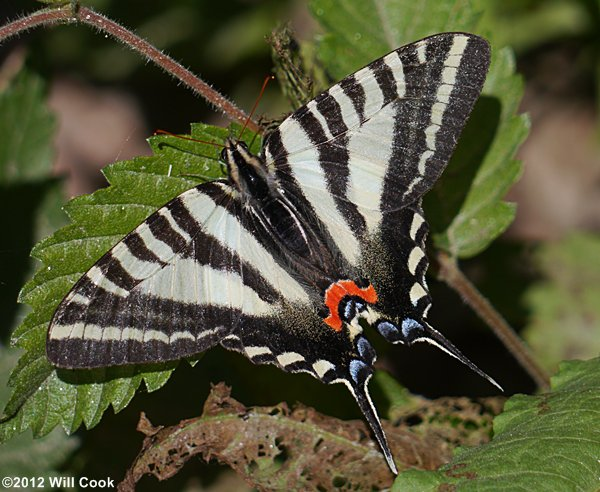
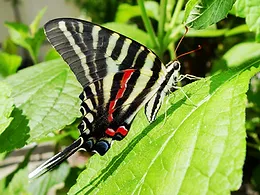
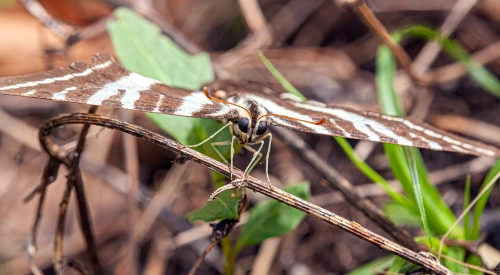
Butterfly of the Week: Zebra Swallowtail

This week we consider the official State butterfly emblem of Tennessee, the Zebra Swallowtail. Unlike the South American Kites, so many of which are so little known, a great deal has been learned about the Zebra Swallowtail. Much of the information available has been learned in my lifetime. In fact one reason why the Zebra remains my favorite butterfly, to the extent that I have one, is that it serves as a reminder to scientists to be cautious about thinking they know more than they do. Basically everything I learned about this butterfly in college has turned out to be wrong.


Photo from carolinanature.com, where the author mentions that this individual was found in Virginia. Bodies are mostly black above, mostly white below, with stripes along the sides. Antennae are brown to amber. Wings are vividly striped, making the Zebra hard to ignore, but the stripes vary, as does the size of the butterfly. Hind wings always have tails, often very long tails, when the butterflies first eclose, though one or both tails may be lost later. The proboscis, the long hair-thin hollow tube that is a butterfly's tongue, is long in proportion to the butterfly's head but still much shorter than some Swallowtail butterflies' probosces are.

The Zebra was my favorite species because, among the early spring butterflies I watched, it seemed to have the "just right" attitude toward humans, neither pushing itself forward nor hiding but calmly letting itself be watched. If more information about the butterfly had been available to me, I might not have liked it so much. Zebra Swallowtails behave nicely toward humans but they are asocial and do not behave very nicely toward one another.  

Other Swallowtails have gone through a few name changes as scientists decided the genus Papilio was too full and needed splitting up. The Zebra Swallowtail holds a record. It was first named Papilio marcellus n 1779. Since then, people have given it the genus names Boreographium, Eurytides, Graphium, Neographium, Protographium, Iphiclides, Iphidicles, Cosmodesmus, and Protesilaus, and the species and subspecies names ajax, abbottii, annonae, broweri, carolinianus, cubensis, floridensis, lecontei, nigrosuffusa (or nigrosuffusus), pricei, telamonides, tockhorni, and walshi.  

Recent changes in the genus name amount to quibbling. The Kites resemble an Asian family of small long-tailed swallowtails, the genus Graphium. Some scientists thought the Kites belonged in the genus Graphium. More scientists disagreed, and debated whether the Kites might have evolved earlier than the Graphiums overseas (Protographium) or later (Neographium). The position of this web site is that living things have evolved and are still evolving, within the range of what is possible for their genotype--what is called microevolution--and Zebra Swallowtail populations give an especially clear and pretty example of microevolution, every year, but if mutant individuals in one species have ever evolved into anything more different than a subspecies or race--which would be called macroevolution--nobody has documented it. Trying to guess how one species might have evolved out of another species is unscientific and not a very useful way to pass time. With the species name Boreographium, however, we come to a name change proposed for valid scientific reasons. Boreo means North, and the Zebra Swallowtail is the northernmost of the Kite species. 

Eurytides is a nice descriptive name when read as coming from the Greek words eury eidos, "broad shape," comparing the Zebra Swallowtail's wings with the Zebra Longwing's. It can also be read as "son of Eurytus." Ancient Greek literature records at least three characters called Eurytus. One was a war hero, one a king renowned for his skill in archery, and one was remembered mainly for having a son called Clonus. 

Several characters in Greek literature had names that include the word eury, "broad, wide." It seems to have been understood in the philosophical sense, used in combinations like Euryale, "wide sea," Eurybe, "grand strength," Eurydice , "wide judgment, universal law," Eurymachus, "wide battle," and Eurynome, "broad realm."

Iphiclides means "son of Iphicles" in Greek. It's not used as the name of a character, though Iphicles was Heracles' little brother and people might have been proud to claim him as an ancestor. Iphiclides is the genus name of the Eurasian Scarce Swallowtail, which has white wings with black stripes. Iphidicles at least started out as a misprint. 

Protesilaus was a hero of Greek literature. According to the Iliad, the troops he commanded had been warned that the first man who disembarked at Troy would be killed in the battle. Protesilaus, whose name comes from protos, "first," and Laos, "the people," deliberately chose to go first and be killed as a sacrifice for his men. His father's name was Iphiclus, possibly a descendant of Iphicles, and his name has been preserved as the species name of another Kite Swallowtail.

Cosmodesmus seems to be the Greek words kosmos, "the universe, creation," and desmos, "band, connection," but Google doesn't find it as a character name in ancient literature. It's the sort of name that might have been invented for a character in eighteenth or nineteenth century fiction, but Google doesn't find the reference. 

Some of the species names reflect the tradition of naming Swallowtail species after characters in literature. Marcellus was a popular name in ancient Rome; among the historical characters called Marcellus were some early Christians. 

Ajax was a warrior in the Trojan War story.  His father's name was Telamon, so he was sometimes called Ajax Telamonides in the Iliad. Linnaeus called the Zebra Swallowtail Papilio ajax, and some people have used "Ajax" as this butterfly's English name.

Of the other names given to this butterfly, abbottii, broweri, lecontei, pricei, tockhorni, and walshi all commemorate people; carolinianus, cubensis, and floridensis obviously refer to places where the butterflies were found (though cubensis may have been recorded in error); annonae describes the plant family that includes its food plant, and nigrosuffusa ("suffused with black") describes the autumn brood as distinct from the spring or summer brood. 

The plethora of proposed species names for this species reflects its variability. We shall, if we live so long, meet another North American butterfly whose reaction to temperature produces even greater variation in color patterns, but a majority of individual butterflies conform to either one color pattern or the other. Zebras seem almost as variable as the larger animals for which they're named. Today scientists prefer to remember that, as early as 1973, some scientists were expressing doubts that what are now recognized as the three general ranges of temperature-determined looks ever were separate species. 

The butterfly that left egg on the scientists' faces made news around the world. "Protographium Marcellus" is a band name. Zebra Swallowtails occasionally flutter through pop culture, too; photos and paintings of them are sold as posters, and they are sometimes printed onto various objects at Zazzle (there are about a half-dozen Zebra images at my Zazzle store, PriscillaKnits). 

Basically, individuals that have lived through some freezing weather are smaller and lighter in color, likely to be described as white butterflies with black or brown stripes. Those who have never been cold in their lives are larger and darker, likely to be described as black butterflies with pale green stripes. In between these extremes is a full range of intermediate sizes and colorations. The length of the "swallow tails" also varies according to temperature; longer tails tend to accompany bigger, darker wings. Body hair also varies; bigger individuals can have hair rather than scales all over their hind wings as well as bodies, while smaller ones look sleek and smooth. Males have scent folds on the inside edges of the hind wings, so especially hairy wings may be typical of male butterflies, though my sources didn't discuss gender differences in the hairiness of this species. 


Photo from keysmoths.com. This furry animal was found on an island south of Florida.


Photo from carolinanature.com. This smoother specimen is typical of Zebra Swallowtails found in the Carolinas, Virginia, Tennessee, and further north.

In Florida, the seasons, to the extent that the Florida peninsula has seasons, produce a white spring brood, a greenish summer brood, and a black autumn brood every year. Further north, the bigger and darker forms are seldom seen. All Zebra Swallowtails in Virginia look closer to the spring brood in Florida than to the other two broods; nevertheless, their size and color vary enough that they have been believed to be distinct subspecies rather than temperature-related variants. 

Into the 1980s, the three broods observed in Florida were generally thought to be three distinct species, despite a 1973 study that opened questions about this. They are three different generations in the same family lines, but they look like three different species.

Individual variations are visible, not only between our spring, summer, and autumn broods but between siblings whose host trees grew at different altitudes. You can take eggs laid by a big, dark, southern autumn butterfly, put them in the refrigerator or freezer for varying amounts of time before they hatch, and get a range from the smallest/palest to the biggest/darkest butterflies. This clearly shows that the look of Zebra Swallowtails does not qualify as a subspecies difference.


Photo from keysmoths.com, which notes that Zebra Swallowtails don't live and breed on the Florida Keys, but stray onto those islands often.

Males and females look pretty much alike, with enough individual variation that the only real way to tell the sex of a Zebra Swallowtail is to observe its behavior. (They recognize each other by scent; humans don't notice their scents.) The hairy patches on the hind wings usually look more conspicuous in males, but are also influenced by temperature.. In some, not all, photos of couples, one butterfly is just noticeably larger and less vividly colored than the other; I found one photo where a pair had been examined under a microscope and the slightly larger and less colorful butterfly, conforming to the usual rule for Swallowtails, was female. Both sexes sip clean water and flower nectar. Zebras who show an interest in polluted water are usually but not always male. Neither is particularly shy; neither is particularly interested in licking sweat from human skin, as composter species often are. They don't seem to mind being watched, but don't fly up in watchers' faces in the threat display some other large butterflies make. Males are more likely to seem "hyperactive" as they flit about in the sun, hoping to meet females. Couples do not always make it obvious which is male and which is female but, after mating, females spend most of their time looking for suitable places to lay eggs.  All butterflies who lay eggs are females but occasionally one finds a female butterfly doing something other than laying eggs..


Photo from lazynaturalist.com. This couple are mating face to face; the female is almost entirely hidden behind the male.

Zebras can be a challenge to photographers. Like most Swallowtails they tend to flutter their wings even while eating, making it hard to snap a good clear shot. The secret is to persist. Swallowtails are most likely to spread out their wings in cool weather when they are warming themselves in the sun. Clear shots of the underwings are most easily obtained when a butterfly is drinking deep, focussed on sucking up nectar; Swallowtails fan their wings when they start to eat or drink, but may slow down or stop the wing movement when they find something good to the last drop. Because it's hard to get clear photos of them, yet the butterflies are locally common and pretty and popular, every wildlife photographer seems to want to publish a photo of a Zebra Swallowtail. Wikipedia had to thin their collection. Wikimedia Commons has thirty beautiful photos in the category "adult butterfly sipping nectar from a flower" alone.


Observing these behavior patterns, Michael Q. Powell was able to snap a rare, clear portrait of a Zebra Swallowtail's face. Furrier individuals can have long eyelash hairs all the way around the large compound eyes. Lots of photographs of eastern Virginia butterflies can be seen at https://michaelqpowell.com .

Another way to get clear photos of butterflies is to find them near the end of their shot lifespans. They fly for a few weeks, and then some seem to feel tired and sit down on the ground and wait for thir hearts to stop, while others drop suddenly to the ground and lie dead. An unusually vivid photo essay with close-up shots of small, commonplace things, including some Swallowtail butterflies, is at https://reinventingclaire.com/tag/eurytides-marcellus/ .

At all stages of their lives Zebra Swallowtails exist in a symbiotic relationship with their host plant, the pawpaw tree, Asimina triloba. (Georgianature.com mentions that science now recognizes a few different species of pawpaw in the Southern States, and Zebra Swallowtails can live on at least four of those.) If you want to see one or two Zebras three times a year, plant one of these native shrubs. The trees and butterflies find it easiest to thrive in the Southeastern States, fairly close to streams. They are known to live as far north as Pennsylvania, Ohio, and Nebraska, but they're rare in the northern part of their range. The butterflies sometimes stray into Michigan and Ontario but are not believed to breed there. 


Photo from MarylandBiodiversity.com. This summer Zebra shares the Monarch's taste for milkweed blossoms with many other insects. Zebras have shorter probosces than most Swallowtails, which limits them to feeding on relatively smaller or shallower flowers. Many people mention their taste for white clover. I often see them pollinating violets. Their favorite flowers also include blueberry and blackberry blossoms. The spring generation sometimes fly in time to pollinate redbud trees.

But they especially pollinate the pawpaw flower, which has little appeal to other butterflies. They rarely stray very far from a pawpaw tree. 


Asimina triloba flower photo from elizabethswildflowerblog. Along the Gulf Coast a few other species of Asimina grow. Some of them have more colorful flowers. Triloba flowers usually look black but in a strong light, as here, they show dull red.

Generally Zebra Swallowtails like to be the only one of their sex and species in the neighborhood. An adult butterfly's life revolves around producing the next generation of its kind. Zebras like to make sure their next generation will have adequate food--a healthy pawpaw tree, or main limb of one, for every caterpillar. In most places you never see more than two of them together. In places where pawpaw trees are very abundant, however, people have photographed small groups of males sipping water from the same puddles. 


Photo from Butterflies Of America.


Photo from MarylandBiodiversity. Since Zebras don't compete with other butterflies for food, we might expect that they'd be more comfortable with drinking buddies of other species than with other Zebras, and so they seem to be. Though their habits are generally cleaner than Tiger Swallowtails', both sexes in both species sip clear water, sometimes at the same puddles. Zebra Swallowtails seem to have very little social instinct, but do participate in the group flapping behavior Tigers do when the crowd at a puddle is disturbed. (However, when a mob of butterflies rise from their puddle and flap around a larger animal who might be a predator, if a butterfly is bold enough to fly at the intruder's face, it will be a Tiger or a Silver-Spotted Skipper.)


In eastern Virginia, Thisbiolife documented quite a large lek. Were these butterflies all reared in cages and released together? In many species immature males hang out in groups called leks, where they compete and cooperate, evade or fend off predators, and wait to grow up and find mates, together. It's not at all unusual to see Tiger Swallowtails in large leks, but usually one finds either one or two Zebras in a large lek of a more gregarious species such as Tiger Swallowtails or Spring Azures.

Male Zebras are not as positively attracted to nastiness as butterflies of composter species often are, but I have seen them choose, among otherwise equally desirable puddles, a puddle downhill from the dung and carrion that attract the composter species. Females, like other Swallowtails, can usually get their minerals from the males, but occasionally visit polluted water themselves. Both sexes drink fresh water and flower nectar.


Photo by Rogue Taylor, donated to Inaturalist. Zebras aren't usually attracted to human sweat, but possibly this one was, or perhaps a sweet drink had been spilled, a flower brushed against...?

Zebra Swallowtails generally have three generations each year, which can be called the spring, summer, and autumn broods. When they breed, as they occasionally do, in the Northern States there may be time for only two broods. In all regions spring butterflies tend to be smaller and lighter than autumn butterflies. Spring butterflies in Pennsylvania have wingspans just over two inches, typically two and a half, while autumn butterflies in Florida have wingspans up to four inches. I think of Zebras as our smallest Swallowtails--in Virginia--but, further south, they can be bigger than our Tiger Swallowtails/ Sources that give a narrower size range are likely to be talking about their local populations.. Wingspans over three and a half inches are normally seen in southern Florida.

Spring butterflies have pupated through the winter, which means they are likely to have survived being frozen solid. They probably don't remember being frozen and don't seem emotionally affected by it, but the experience has affected their growth. They are delicate sprites who don't look as if they'd be able to crossbreed with the big hairy individuals who were their parents. Nevertheless, their offspring will be bigger and darker than they were, and the autumn generation will be bigger and darker than the summer generation. The species microevolves around the range of individual variation for its species within each year. 

According to the photo evidence at Inaturalist, Zebra Swallowtails can mate back to back, side to side, or facing each other around a twig. The back to back position allows one butterfly to enfold the other's wing tips between its own; the side to side position allows them to look to predators like one oversized butterfly. They spend some time together; one photographer was able to snap four clearly focussed photos of one pair from different angles. If a third butterfly is in the neighborhood, it may approach the couple, who seem resolutely to ignore the gawker. 

Mother butterflies look for fresh, tender leaves for their young to eat. They fly around a tree (or a sprout that is trying to become a tree) and check the size and shape before testing leaves with their feet, which seem to have a sense of taste. Meena Haribal and Paul Feeny have identified a specific chemical scent that tells the butterfly which leaves will be ideal for her eggs to hatch on. The larger leaves on mature pawpaw trees can be thick, dry, and tough and contain more of the mildly toxic acetogenins (biochemicals) than the caterpillars need to eat. Zebra Swallowtail caterpillars are well camouflaged and able to evade being seen, but may be least difficult to find on the new leaves at the tips of branches on sprouts hardly taller than humans. 

The infant butterfly hatches from an egg laid on a pawpaw leaf. Eggs look like little round beads, pale green at first, ripening to amber as the caterpillar prepares to emerge. Eggs, caterpillars, and chrysalides are almost always found on the underside of a pawpaw leaf.


Photo from Butterflies of America.

The caterpillar's first meal is the shell from which it emerged. Mother butterflies are usually very careful to lay each egg on a separate tree, or at least a separate limb of a mature tree. (Despite triloba being sometimes called "the tall pawpaw," it's hard for me to describe them as tall or large trees. Beside the buckeye, maple, sycamore, willow, and poplar trees that grow nearby, even the taller triloba are small trees.) 


Photo from mdc.mo.gov. 

Newly hatched caterpillars have mostly black skins with some pale brown stripes and some bristles, and have a humpbacked look that becomes more pronounced as they grow up. 


Photo from Butterflies Of America. This hatchling is peering about in its shortsighted way. The glossy black surface of the head, visible here, is the top and back part analogous to a helmet. The small group of working eyes, found close to the mouth on the same side of the animal with its feet, don't work very well for long-range vision; Vincent Dethier observed, speaking mainly of moth caterpillars, that all the caterpillars whose vision had been tested seemed to qualify as "legally blind," apparently not seeing further than about a yard ahead. Caterpillars approach and avoid us with such disregard for us as persons because they are not able to see us as persons, and species more curious than Zebra Swallowtails--which tend to stay in one place and concentrate on eating--probably have to crawl about on us in order to satisfy their curiosity about what kind of trees we are. 

Most caterpillars' skins, after the very first one, are green to match the leaves they live on. Some have a mottled grey color produced by black and white crosswise pinstripes. A few are brown. At close range all of these colors can be seen as patterns of fine horizontal stripes. All Zebra Swallowtail caterpillars have yellow-orange osmeteria, very large and colorful in proportion to the size of the caterpillars. They don't merely put out their "stink horns" and smell unappetizing; they may actively rub the osmeterium and the mouth, alternately, against a perceived enemy. 


This photo, also from Butterflies Of America, shows a caterpillar in a state of righteous indignation, probably because a researcher keeps prodding it with straws. To a hungry spider the odor those"stink horns" release may be toxic as well as disgusting. The caterpillars try to touch an attacker with the osmeterium, smearing the rancid odor the osmeterium secretes all over their enemy. During this display they also vomit, smearing undigested plant material full of acetogenins over the enemy. A kind person will not subject a caterpillar to this kind of stress merely for display. It gets rid of most of the ants and spiders that occasionally attack the caterpillars. It seems to be less effective on the wasps and flies that lay their eggs on caterpillars' back ends.  Damman found that the osmeterium is more effective in spring than in late summer.

Acetogenins keep vertebrate animals, like deer or humans, from eating pawpaw leaves; they have emetic properties. Their effect even on contact with smaller animals seems to be even more undesirable. Like most Swallowtail caterpillars, Zebras are harmless to humans because we feel no interest in eating them. 

Zebra Swallowtail caterpillars continue to eat their own shed skins throughout their caterpillar lives, and lack the instinct to avoid eating the skins of their own species if the skins are not their own or are still occupied by a sibling. In nature they almost never see their siblings. If you rear these caterpillars you must prevent their meeting one another. Bigger siblings often pursue and eat smaller siblings when these caterpillars are not isolated. Their host plant could not afford to allow any overpopulation of this species. 


Photo by Sara Bright. 

Pawpaw trees bear a soft, bland fruit, "Nebraska Bananas," which most people find delicious, but some people have allergy-type reactions to it. Very few animals try to eat any part of the pawpaw tree except the ripe fruit. As with bananas, the fruits can be eaten while their peels have that nice clean look, but are easier to digest when the peels turn black.

In some places, however, a third party may join the symbiotic relationship  Zebras thrive on fresh new pawpaw leaves; late summer caterpillars may be at a disadvantage since the leaves available to them are older and tougher. Sometimes a pyralid (borer) moth caterpillar attacks a tree branch. Its ravages stimulate the tree to put out its reserve leaves, just in time for the Zebra caterpillars to eat the new leaves. This treatment seems as if it would be hard on the trees, but trees can spare a few leaves in late summer, so even this arrangement seems to work for the benefit of all concerned.


Photo by Donald J. Hall. This unsightly mess attracts Zebra Swallowtail caterpillars but is not caused by them. Zebra Swallowtail caterpillars have none of their parents' appeal--they're sluggish, ugly little stinkers who don't even like one another--but the one who made the mess is the smaller, duller caterpillar lurking inside the little "house" of sand, bark, dirt, and silk. 

As it matures, the caterpillar's humpbacked shape increases to the point where it looks more like its future chrysalis than butterfly caterpillars usually do.


Photo from Butterflies of America. This is the most common type of caterpillar.


Photo from Butterflies of America. This is the most common type of chrysalis.

The pupal skin has a dead-leaf look, light green or light tan, The caterpillars pupate on the undersides of pawpaw leaves, where few predators care to look for them. Pupae tend to match the colors of the leaves to which they attach themselves. Autumn chrysalides are often light brown like dead leaves; summer and autumn chrysalides are sometimes green and dark brown like damaged leaves; spring and summer caterpillars usually stay green while pupating. 


Close to the time for eclosion, this butterfly, photographed at Davesgarden.com, can be seen through its chrysalis. Wings and legs will stretch out after eclosion but the tongue is close to its full size and forms a black line down the middle of the body.


Wings remain wet and crumpled for some time after eclosion as the butterfly finishes the task of growing into its adult body. Photo from davesgarden.com.

Tuesday, December 5, 2023

New Book Review: Kissed by the Scrooge

Title: Kissed by the Scrooge 

Author: Macie St. James

Date: 2023

Quote: "[N]ever, in his eight years on the police force, had he issued a warning to an elf."

Enzo is trying to build a reputation as a serious, tough cop. He was one of the nerdlier boys at Misty Mountain High School. Noelle, who was a pretty and popular blonde, has decided the town needs "Christmas romance" and been hanging buckets of mistletoe on anything she thought could hold their weight. That's littering, isn't it? Actually he just wants her to come to the police station and talk to him. Actually he's finally sensed that the attraction he's felt to her for all these years might finally become mutual. To find out, he'll even act like a Scrooge. 

Noelle will have him playing Santa in no time. You knew that. It's a sweet romance. 

If you like sweet, wholesome romances in which blondes marry policemen, this book is for you.  

Sunday, August 20, 2023

Book Review: Christy

(I know...groan...this is not a new book. Most people have already read it. I'm still trying to catch up after three days without electricity last week.)

Title: Christy

Author: Catherine Marshall

Date: 1967

Publisher: Marshall LeSourd

ISBN: 978-1683701323 (click to buy it from my Bookshop page)

Length: 518 pages

Quote: "That Cutter Gap is right rough country."

Christy, I never know what to expect from you,” wrote an early fan of this novel. I did—sort of. I did not foresee all the twists in the plot but I guessed right away that Christy, being based on Catherine Marshall’s mother’s memories, was going to marry somebody and have to give up her rural mission school in the end. 

Christy is a nice, sheltered young lady from Asheville who heeds a call that was actually made, around the turn of the twentieth century, to help “develop” rural settlements into small towns, with schools and churches where people could be urged to conform to “modern” ways and buy things they might not otherwise have wanted. As the teacher in a one-room school in fictional Cutter Gap, somewhere in rural East Tennessee, she’s also pressed into service as emergency nurse at a woefully undersupplied mission hospital, which is good for several scenes of horror and gross-outs. During a difficult childbirth a man remembers an old Pagan British ritual and sacrifices a finger, but the baby doesn’t make it anyway; then there’s the head injury that calls for a primitive form of brain surgery, which only a few very brave doctors were attempting at this period, but sometimes it did work. Then there’s the epidemic of typhoid fever, a gross-out disease if ever one was. Meanwhile, in addition to teaching all the grades at once, Christy is asked to accept one of her dropout students as a roommate. Then there’s her adult literacy class, in which she makes a real friend—and loses her. Just the sort of thing any urban or rural mission teacher could expect in 1912.

Inadvertently this mission has stocked itself with four bachelors: a full-grown man, a full-grown woman, a young man, and a young woman. What makes this a novel rather than a mere romance is that only two of the four marry each other at the end of the book. Readers aren’t absolutely guaranteed that one of the two will be Christy (the author could have been saving her for a sequel), but whether she will marry the preacher or the doctor, and why, I’ll never tell. Both the preacher and the doctor are nicer than most heroes of fictional romance.

By the turn of the twentieth century I found myself groaning, as I reread this classic novel, at the bad ideas Christy and her friends work to sell people who would have done better without them. But history can’t be changed to suit present tastes. Christy and friends thought they needed to sell the derelict O’Teale family on the ideas of going to school and church in order to sell them on the ideas of, er um, at least burying the bodywastes they leave on the ground as wantonly as their dogs do. Hmph. A little attention to why cats are more pleasant to have in the house than dogs are would suffice. But I mean to say...people like Christy’s mission team are still today doggedly building sewer grids to burden more neighborhoods with unsanitary, outdated water-flush toilets. Though if people are determined to breed roaches, rats, and mosquitoes all that efficiently, it seems to me, they really ought at least to eat them.

Is Christy one big exercise in “dumb, dirty, lazy hillbilly” stereotypes? By no means; although the O’Teales are remarkably dirty and the Taylors are remarkably dumb. Christy is, like Uncle Tom’s Cabin, an attempt to break up a really hateful stereotype into a full spectrum of more realistic types. Some students at any school are always going to be more ignorant than a first-year teacher would believe humans could be. Some are always going to be more intelligent, disciplined, and prepared for a good college education than some of that teacher’s classmates were. Many things about mission schools have changed since Christy’s time. The spectrum is not one of them. None of Christy’s students is rich but some of them are much less destitute than others. A few people in the rural community have even gone somewhere, or sent off somewhere, and got some education; while she meets adults who don't know how to read, Christy also disappoints her audience by not being able to teach Latin and Greek to people who believe (as most people in the nineteenth century did) that English-speaking people ought to need formal education only to read “the classics” of other languages. In trying to delineate the differences between a dumb hillbilly like Lundy and a smart one like the doctor, or between bumptious Ruby Mae, puny Opal, unfortunate Fairlight and fortunate Christy, Marshall was presenting new stereotypes based on the ones hillbillies already had for themselves. At least she does know the differences.

What was it like for a young, naive hillbilly to read this book in the 1970s when it came out? Christy is not as delightful an affirmation of mountain people and their ways as Elizabeth Enright’s Melendy Family was, when I was younger, or as Harriette Simpson Arnow’s Mountain Path or Between the Roses were, when I was older than when I read Christy. (And I remember being shocked by the child abuse scene someone tastefully narrates to Christy. Real child molestation is rare; it used not to be talked about when it did happen, so that character in Christy was the first victim of it I ever “knew,” even third-hand.) I thought Marshall could have confronted more of the generalizations she allows characters to make about hillbillies, but she did understand the critical thing: that although the extreme, desperate cases reported from any community that needs anything usually do exist, usually are almost as desperate as they’ve reported to be, they are not typical. By and large I liked Christy, and still do.

It remained to the current century to generate the sequel, in which a modern Christy-type girl tries to pay off her college debts by working in a poorer community and, at an age where she'd still be shocked to hear that someone she knew had been sexually molested as a child, is accused of doing the molesting herself. I didn't write that story; it happened to a Gate City girl who went to teach in Jonesville. Yes, times have changed. It's still helpful, though, to have a good clear picture of what they've changed from.


Sunday, July 30, 2023

Book Review: Beyond the Quiet Hills

Title: Beyond the Quiet Hills

Author: Gilbert Morris & Aaron McCarver

Date: 1997

Publisher: Bethany House

ISBN: 1-55661-886-7

Length: 351 pages

Quote: “I’ve got a life here with my grandparents, after I was abandoned by a father...Besides, I’m thinking of getting married.”

Basically this is a Teen Romance, set in an historical period when teenagers were legally allowed to marry each other. (Or adults, if they so chose.) Two stepbrothers feel attracted to one girl, and two other girls are also interested in them. As if that weren’t enough “sweet romance” for any reader, there’s also an adult romance between the widowed older couple whose marriage makes the boys stepbrothers, though it’s low-key, the way adult romances really seem to have been in the 1770s.

It is not a particularly well crafted romance. The characters get what sense of reality they have from the fact that they were real; that is, there was a real Watauga settlement, where the names and situations of some of the settlers are known to history, and the minor characters in this book really did most of the things Morris and McCarver have them do in the story, under the names Morris and McCarver give them. (The sheriff’s name is lost to history, the authors admit in a note at the end, so they imagined him as Hawk. When we see Hawk acting as sheriff, that part of his story is fact.) They were the wise, brave leaders of their day. Some of them later made epic mistakes, but that came after the years when this story takes place. In the 1770s they were the parent figures to the first generation of people on the Tennessee and North Carolina border.

In the 1770s the English and Cherokee people were trying very very hard to be “brothers,” learning each other’s lore and language, actively rewarding intermarriage, and (as we see in the novel) political rumblings of discontent were working against that early attempt at “brotherhood.” And, as always, hate was most attractive to individuals who had nothing else to offer their community: Morris and McCarver don’t try to characterize the haters on the Cherokee side, but they do bring to life and characterize the English ones, who probably were as vile as this book makes them seem, and might have been worse.

Their story gives the authors plenty of plot against which to set a predictable story of a young man who has background, money, courage, looks, and brains, and three pretty girls after him, but finds happiness when he confesses his selfishness and self-pity as a sin and becomes a more serious Christian.

I read this novel in a way that made it a more interesting literary experience than can usually be expected from a Sunday School romance. I stored two different works of fiction in separate places and read them concurrently, in the odd bits of time I had in each place. Both novels happened, just by chance, to be about the southern Appalachian mountain region: Beyond the Quiet Hills, and then Harriette Simpson Arnow’s Dollmaker, which is among at least the top fifty novels written in English in the twentieth century. I’ve seen the Watauga country, but Beyond the Quiet Hills does not bring it to my mind’s eye; when I first read The Dollmaker I had not seen Detroit, but the novel brought it to my mind’s eye and I recognized it when I saw it. I noticed how Arnow kept President Roosevelt and “Old Man Flint” in the background and gave her fictional characters a lively, plausible, tragic and comic story all their own; Morris and McCarver rely on history for their plot, even the events that push the hormone-ridden teenagers together and apart. I noticed how tastefully both novels present what Joyce Carol Oates so memorably called “the reality of sex” for middle-aged women—which is to say, apart from something to giggle about with the men we love, children—and how each of the babies produced by the middle-aged romance that runs through The Dollmaker is a young character in its own right, such that no matter how many times I’ve read it I’m apt to cry when one of them dies; the pre-teen children in Beyond the Quiet Hills are just names. Reading these books together was a real study in Why Christian Literature Is Often Overlooked or Belittled In the Literary Community. Prejudice can be a factor, but Sunday School novels tend to make it so easy...

Then I thought about what these novels have in common. Both of them are something that’s not always been easy to find: a fictional treatment of Applachian mountain people as we really are—when not begging and poor-mouthing to social workers, or showing off our disdain for those who do. The perception that social workers, and similar breeds of selfish Lady Bounti-Fools, exist in order to be stripped as bare as a coal mine has its reasons for existing—why else do they exist?—but the art and literature it spawned were dreadful and did a great deal to turn mountain people against the arts. In Beyond the Quiet Hills as in The Dollmaker, mountain people may not be wealthy but are certainly competent to take care of themselves and their own; they’re even people we might want to know.

Nancy Ward is the one I find most interesting. Historians have never been sure exactly how to describe her. As a young girl she’d had a special role in religious ceremonies; as a teenaged widow she’d led a war party to exact revenge, so she could fairly be called a war chief—but by the time she was written about in English she wasn’t going to war any more. Her title was Ghigau, which translates as “Beloved Woman” (or “Lady” or even “Mother”). What exactly it meant may have been undergoing transition .Cherokee society was not bound by feudal hierarchies. People wanted to seem modest rather than pompous about any honors higher than simply being the leader of this particular group on this particular occasion, which was all "chief" meant. Probably most Cherokees, male and female, really were chiefs; Benge, who wasn't even a Cherokee, was called a chief. Nancy Ward’s menfolks ranked higher than the other chiefs. So did she. Thinking in English influenced by other cultural traditions, I tend to read Nancy Ward as a war chief trying to earn the rank of peace chief, except that those weren’t Cherokee phrases and nobody even seems to know how badly they misrepresent the woman’s actual life. Anyway she was a lady of considerable influence; her second husband was English, her opinions were highly regarded, and as an adult she generally stood for peace. This novel includes her best known scene, where some young Cherokee warriors wanted to take a White woman hostage, and Ward said to them something translated in words like “If you want the honor of fighting old ladies, fight me--if you dare.” They didn’t. She was among the Watauga settlement’s main claims to fame...

But that’s the sort of thing that makes me wonder how different the effect of an historical novel, or even of a terse historical study, must be on readers depending on how much history they have already read. Growing up as near to the Watauga settlement as I did, having read as much about Nancy Ward as I did (and about Daniel Boone and John Sevier and Attakullakulla, too), I see her name in Beyond the Quiet Hills and instantly remember her story and think, “So that’s part of this story too!” Which it is. I can picture a schoolgirl in Auckland or Port of Spain getting hold of a copy of this book, liking its conflicted prize of a romantic hero, never having read the names of Nancy Ward or even John Sevier. “So, some of the things the hero(es) and heroine(s) of the romance are thinking about are that one of the neighbors stopped the Cherokee haters from killing an English woman, and another one leaned over the walls of a fort to drag another woman up out of danger during a battle. Well. They lived in interesting times.” Real Hillbillies get more meaning out of the same words. As I’ve said about some of the historical nonfiction books I’ve reviewed here: good historical fiction works if you don’t know the true stories behind it, but it’s much more fun if you do. 

As for the Englishmen of the Watauga settlement, although they were in line with the political philosophy that predominated in Richmond and Raleigh in the 1770s, by the 1790s they would have diverged so far that some would call them traitors. I wouldn’t say traitors, myself. They had a point of view. Any really comprehensive book of U.S. history will discuss that, although when I was in school...well, it was the era of “social studies” and feeble history books. Perhaps it’s better if those who don’t know the full biographies of Daniel Boone and John Sevier remember them best as the young, gallant fellows they were in the 1770s, when Sevier distinguished himself by leaning over a wall to haul a girl in out of danger, and Boone had yet to kill a bear in a fair fight and clean his knife by carving “D BOON KILL A BAR” on a nearby tree. But it would be a pity if readers of this book thought that “John Sevier”was just another random name the authors picked off old lists for a fictional character, like “Hiram Shoate”or “Jacob Spencer." 

I did enjoy Beyond the Quiet Hills—the part of it that attempts to flesh out the facts. The fictional romance I could have skipped, but teenaged readers will probably enjoy it.


Monday, January 4, 2021

Book Review: Tell It Sister Tell It

Title: Tell It Sister Tell It 


Author: Stella Parton

Date: 2011

Publisher: StellaParton.com

ISBN: 0615443141

Length: 222 pages

Illustrations: black-and-white photographs

Quote: "Stella, why not write an inspirational book about your own life?"

As might have been expected, the title of this book has two meanings. It's a line from a gospel song, and Stella Parton's autobiography is a Christian book. It's also a book about being a sister.

Stella Parton's peculiar mix of advantages and disadvantages in life included, most conspicuously, being Dolly Parton's sister. Did that boost her singing career? As she explains in the book, actually, in some ways, it hurt. Even beyond the predictable "They only invited her to sing because she's Dolly Parton's sister so you know her show won't be worth watching." At one point the family worried about having two singers competing against each other, and tried to steer Stella back to waiting tables so she wouldn't compete with Dolly. 

They did grow up singing together--Stella fantasizing about performing with Dolly and another sister as "The Parton Sisters." And they didn't distract attention from their similarities, as John Michael Talbot and Terry Talbot or Loretta Lynn and Crystal Gayle did, by performing in different genres that required different costumes and hairstyles. Life didn't even hand them, as it did Joan Baez and Mimi Farina, all that different vocal qualities. You can tell which Parton sister is singing if you've listened to both of them for a while. Newbies can be excused for mixing them up. Relatives could even be excused for thinking Stella's competition could have hurt Dolly's career.

Well, this is Stella Parton...

https://music.youtube.com/watch?v=MMABXrhw0Ho&list=RDAMVMMMABXrhw0Ho

...and this is Dolly:

https://music.youtube.com/watch?v=LQjMCKq87N0&list=RDAMVMLQjMCKq87N0

Now you know, if you didn't. The sisters look about as much alike as they sound. As a musician's memoir, Tell It Sister Tell It really ought to have a soundtrack, and it does, but the album is sold separately. Just to give people a full range of recording formats, of course.


In addition to lyrics or partial lyrics for the songs, the book contains some reminiscences about the music industry, about Stella Parton's career, about her childhood, and about her son. You expected those. It also contains some plain language about the moral and religious teaching that kept Parton's career ticking steadily along in Dolly Parton's shadow, and some appeals for the causes Parton supports, which would probably have been cut if the book had been published by a conventional press.

In 2012 I didn't go to Parton's book party at the Roberts Family Bakery Cafe. The Roberts Family had not yet invited me to be the scruffy writer in residence so I heard about the party, from someone who had probably stumbled into it at the last minute perself, in a reproachful "A real local interest blogger ought to have gone to that party and bought a book" sort of tone. It took repeated invitations to get me into the cafe: from what I heard, the cafe didn't always have that "free refills on coffee, cream, and sugar" policy. That came after the place had become profitable. Knowing that I'm a slow writer, I didn't feel that Pigeon Forge, Tennessee, is all that local. Still, I do like both Partons' music, so I borrowed a copy and then, finding it a livelier read than the usual celebrity-memoir soap opera, dug up the money to buy one. 

If you think of celebrity memoirs as fluff, you too may be surprised by this one. Publishers urge celebrities to tell all about their dysfunctional relationships, because sex (and violence, if the celebrity can remember any) supposedly sells. Then they urge celebrities not to say anything of any consequence (or interest) about their beliefs or concerns, because that might be too controversial for the celebrity's audience. Never mind the share of the audience who are disgusted by the divorce dramas and might be more interested in the memoirs of celebrities who ever confessed having a serious thought in their heads. 

As a result of this publishing tradition, a lot of celebrity memoirs read as if they'd all been written by one hack writer, which some of them really were. Not this one. There are some expressions of sibling rivalry but the younger sister really starts "telling it" when she discusses sexual predators in the music industry, domestic violence, how it's possible for a Christian to reconcile her faith with singing in nightclubs, disability issues, jealous envy, funerals, miracles, and other things the conventional publishers wouldn't have wanted her to tell us about. 

If you're not going to be shocked to find out that Stella Parton claims homosexual friends, and you don't already have this book, you should get it. Local readers may buy a physical copy from me at the usual discount rates. Others can buy both book and record from Amazon, since they're still "in print" as "new" items, which means Parton gets her share of the profits. 

Friday, January 6, 2017

Book Review: How to Be a Gentleman

A Fair Trade Book 


Title: How to Be a Gentleman

Author: John Bridges

Author's web page: http://johnbridges.com/

Date: 1998

Publisher: Rutledge Hill / Nelson

ISBN: 1-55853-596-9

Length: 150 pages

Quote: “A gentleman is someone who makes others feel comfortable.”

Well...that’s the usual modern usage. C.S. Lewis, who sometimes called himself a dinosaur, used to object to this usage. In Britain “lady” (masculine counterpart: “lord”) and “gentleman” (feminine counterpart: “gentlewoman”) referred to two specific positions in the feudal social hierarchy. American authors used to insist that these words don’t mean anything in a democracy. If they did, the U.S. equivalent of “gentleman” would be “a man who has inherited some property, including a farm and rental property” and the equivalent of “lady” would be “a governor, a member of Congress, a Supreme Court justice, or (by courtesy) the wife or daughter of one.”

There is ancient and honorable precedent for using these words, loosely, to mean anyone who has learned the sort of manners used by the most admired holders of these positions; the first book that encouraged all who read or heard it to behave like gentlemen dates back to the sixteenth century. Lewis argued, irrefutably, that this usage added nothing to the language. 

The case can be made that even in the United States the distinction may be worth preserving. A man whose parents spent their whole lives paying rent may do whatever he does as competently as a man whose parents owned land; he may live by the same moral standards, or by higher ones; he may earn more money and invest it in better things. He has still grown up with a different outlook on life than the landowners’ son has. He can learn the manners the landowners’ son learned, and as a matter of courtesy he probably will, but for him they may always feel like a "second language." Usually it won't make a difference; sometimes it will.

But how far need we carry this quibble? In this book Bridges, editor of the Nashville Scene, describes the behavior of men of the currently active generation who were generally agreed to be polite in Nashville. He’s not as verbose and witty as Judith Martin (“Miss Manners”), nor does he meander into either the formalities or the relationship counselling that enlivened Martin’s books. His book is strictly about the casual courtesies that even young people still appreciate today. A man in search of practical, man-to-man advice on this topic can safely consult How to Be a Gentleman, a book designed for convenient reference anywhere...it fits comfortably into a trench coat pocket.

Reading How to Be a Gentleman wouldn’t do a woman any harm, either; for that matter, this is a book that can be shared with children. Probably one needs to be a man to use tips like “If a gentleman shaves at the health club, he always rinses out the sink.” One does not have to be any particular age or gender to use tips like “If he must leave the theater in the middle of the performance, he does not say anything and does his best not to stop on toes.” A majority of the tips in this book fit into the second category.

So this book can be recommended, with some reservations, to anyone at all...but it was really designed, even to its shape and color, to suggest a graduation, back-to-school, or similar present for a male student.

If you want the most up-to-date edition, as shown in the photo link, it'll cost you new-book prices: $15 per book, $5 per package, $1 per online payment. If an older edition will do, send $5 per book, $5 per package, $1 per online payment, to either address at the bottom of the screen. If you want to compare the three popular editions of this book, you'd send $15 for the new one and $5 for each of the older ones plus $5, plus the optional $1 for Paypal if you don't go to the post office and pay their fee directly to them, for a total of $30 or $31. (Because this is a small book, you could add at least three more thin books to the package for $45 or $46.) In any case, Bridges being a living author makes this a Fair Trade Book, which means we send $1 per copy of his book that we sell to him or a charity of his choice.