Showing posts with label country music. Show all posts

Monday, April 27, 2026

Book Review: Rhinestone Cowboy

It's a rerun. This is one of the early posts that have been pulled down and are being reinstated.

Book Title: Rhinestone Cowboy

Author: Glen Campbell with Tom Carter

Date: 1994

Publisher: Villard / Random House

ISBN: 0-679-41999-3

Length: 241 pages of text, with foreword and discography

Quote: "One of the many characteristics of a chronic cocaine user is that he lies about his use, and I was no exception."

"Christians aren't perfect, just forgiven" could be Glen Campbell's slogan for this book. The only "country-western" singer of the 1960s to have a composition ("Less of Me") reprinted in a Seventh-Day Adventist hymnal, Campbell was on his fourth legal marriage when he wrote this memoir, and had chosen to publicize his use of cocaine as an explanation for some of his bizarre behavior--including attempts to preach and evangelize while "high."

Although Campbell had already become infamous in "family values" circles for the song "Gentle On My Mind," whose words celebrate an apparently illegitimate relationship, he was married when he sang it. He even married four of the five women with whom he lived. The emotional connection with "Gentle On My Mind" seems to have been his lifestyle of frequent travel as a soloist. (None of his four legal wives seems to have been a musician; Tanya Tucker had her own solo career to mess up with drugs.) And, after all, he tells us in Rhinestone Cowboy, he didn't write the song.

But he did have that affair with Tanya Tucker. There's quite a bit about her in the book. Campbell does not question her "official" age as being about half his age while they were together. Although Tucker's early performances were publicized as the efforts of a young teenager, she didn't look, sing, or act like one. I become suspicious when Campbell attributes Tucker's performing style to an earnest teenaged fan's attempt to sing like Elvis Presley. There was a resemblance all right...it's just that Elvis fans were more typically born in 1950 rather than 1960. When people who were born in 1960 were choosing our favorite pop singers, Elvis was fat.

The cocaine memories Campbell shares from this quasi-pedophilic relationship might have been chosen to help scare kids into sobriety. Cocaine was not a safe way to get "high"; it was a way to feel "strung-out" and act stupid. Campbell shares lots of memories of his, Tucker's, and their other cokehead friends' stupidity.

To what extent does this confession restore the credibility one automatically loses by preaching under the influence of illegal drugs? Or, how much credibility did the Rhinestone Cowboy have to lose? Readers will have their own answers. However, Campbell's complaints about Christian-phobia do not rest on his own credibility alone. That section cites several published sources, and is worth reading.
 
What else is in this book? Some celebrity gossip about the singers and actors with whom Campbell worked, including John Wayne, Diana Ross, Frank Sinatra, and Elvis Presley. Some religious rhetoric, heroically frank in view of the anti-Christian bias of the industry in which Campbell was still working. Some memories about growing up in economically depressed Arkansas.
 
I think it's the current celebrity souvenir status of Rhinestone Cowboy (Campbell has finally retired) that's driven the price of this paperback so high. Maybe the book needs to be reissued.
 
Memoirs by people who've said no to cocaine certainly need to be in schools and libraries. When I was in high school, word on the street was that this drug was "safe" and non-addictive. Bosh. Although it's a concentrated extract of a natural herb, even in their natural state some herbs are deadly. Last spring, when Dennis Quaid discussed his post-cocaine experience with Newsweek, at a sponsor's request I collected a half-dozen celebrities who can testify that cocaine is harmful...
 
1. Quaid, in his Newsweek interview, called cocaine his "favorite mistake." "By the time I was doing The Big Easy, in the late 1980s, I was a mess," he said, but "those years in the '90s recovering really chiseled me into a person." Here's the original web link for the story: http://www.newsweek.com/2011/04/10/my-favorite-mistake.html. (The link worked on 2011/10/05.)

2. Although Glen Campbell continued singing after his cocaine years, he never had another hit song comparable with "Southern Nights," "Gentle on My Mind," or "Rhinestone Cowboy." Click here to hear what the drug did to his voice: http://www.npr.org/templates/story/story.php?storyId=1067584.

3. Tanya Tucker still markets her own recordings through a website at which she briefly discusses her trip to the Betty Ford Clinic, in between memories of vintage recordings like "Delta Dawn" and promotion of her new album, "My Turn." Her site seems to be under construction.

4. In the early 1990s, Whitney Houston's drug problems were news. Almost 20 years later, Houston returned to the headlines as her daughter denied allegations that she too is addicted to cocaine. Apparently Bobbi Kristina "Krissi" Brown, daughter of Houston and Bobby Brown, was photographed by a National Enquirer reporter sniffing cocaine at a party.

Does everyone remember the series of Enquirer photos showing Osama Bin Laden sitting in a Las Vegas casino with his arms around sleazy-looking blonds? Does everyone remember how remarkable it was that as the other people in the casino seemed to move around, Bin Laden was in exactly the same position in every picture? Digital photography is a rapidly progressing field of technology; probably that photographer could make his victims appear to move around by now. Nevertheless, Houston apparently took the story seriously enough to order rehabilitation for Brown.

While typing this post, I searched "Bobbi Kristina Brown cocaine" for updates on the March news story about her being sent to rehab. No updates appeared as of October 5, 2011.

5. Trying to impress a connection, President Bill Clinton's brother Roger claimed that the future president had "a nose like a vacuum cleaner." No further evidence that Bill Clinton used cocaine has come forward. Roger served some time in jail for his own drug offenses, but although unfavorable reporters have been watching him, he's not been caught using illegal drugs since his release. What Roger Clinton has to say for himself can be found in his book, Growing Up Clinton.

6. One celebrity who claims to have recognized from the beginning that cocaine was an expensive, dangerous way to lower one's intelligence was Queen Latifah. In Ladies First, the Queen of Rap admits that when someone dipped a finger in cocaine and smeared it across her mouth at a party, she did feel "high"...but she realized that this was dangerous and stayed away from cocaine ever since.

Let's hope that everyone who reads this review, and these books, will be as wise as Latifah. According to Quaid, rehabilitation and recovery after heavy use of cocaine took five years...and feeling confident enough to discuss it took more than 10 years after that.

Thursday, November 20, 2025

Bad Poetry: The Man Who Lost Everything but Weight

At Messy Mimi's blog, a fictional character said there must be a country song about someone whose self-driving truck ran off and left him. Here it is, complete with irregular rhythm and at least one really painful not-quite-rhyme, as required by the genre. So what was the guy's problem? Maybe alcoholism was the worst of it (real alcoholics can get a deadly addiction spiral going on what seems like moderate consumption of beer), and the truck's desertion was where he hit bottom? How much sense do comedy country songs have to make, anyway? Hank Williams had a gas station owner chasing a lovesick customer who was only trying to be funny with a monkey wrench...

Jaydon Jeremiah Brocklehurst Tate
Said he lost everything but weight.
All his life he was a born loser.
He'd tell you all that you could stand to hear
About the things he'd lost, and he'd cry in his beer,
Because, whatever else he was, he was a boozer.

CHORUS:
Losing everything but weight
Has always been ol' Jaydon's fate.
His parents never were rich, but he is a great deal poorer.
All the girlfriends he ever had,
Every one married some other lad,
And men back away, too, because Jaydon is a natural-born loser.

He said, "My dog ran off, and my cat did too,
And my girlfriend texted to say we were through,
And my self-driving truck was found out of gas in Nacogdoches,
And on my last job they told me I could call it 'retired'
But if I came back I was gonna hafta be fired,
And the truck said my house was the place that was full of roaches."

He said, "I won fifty thousand on a lottery ticket,
All trickled away like a leak in a spigot,
Which was where a lot of it went, while I tried to fix.
My job put forty thousand in the bank.
Everybody rolls it out just like turning a crank.
I said "Have I got sixty thousand dollars?" They said "You've got six."

He said, "My life is like a country song
Because everything is always going wrong,
Although I have spent my entire life in a city."
His uncle said, "Might as well work on the farm;
It's not going to do you any more harm.
Even with good luck, city living is a shame and a pity."

He said, "If I get on a tractor,
I'd be sure to fall and get a fracture."
Uncle said, "That's why we'll start you on a terrace with bales of straw."
Jaydon said, "If I tried to milk a cow,
She'd kick me out in front of a plough."
Uncle said, "Go feed the chickens, and let's hear no more of that jaw."

Poor old Jaydon struck it lucky
When he moved back to the country
'Cos at least the rate he was losing money slowed way down.
A woman agreed to see him twice
When he made a little profit on rice,
And he says he's never going back to town.

LAST CHORUS:
Now he's lost a little weight
Jaydon looks and feels just great.
He can work off the calories in a good country dinner.
He lost some money last year on corn;
He'll get it back, just as sure as you're born,
'Cos without the beer Jaydon is starting to be a winner.

Friday, June 13, 2025

Bad Poetry with Links: Songs to Warm the Heart


to those who scorn them now.
"If now and then a fool like me
is found, I don't see how

You hope to find another in
this lifetime. You've gone through
more feeling than I had to give,

Have I been only 'making believe'
you'd ever settle down?
Will fears come true? Am I losing you?
Must I leave this old town,

will pity me, I know?
where I'll have to go.

Pity beyond what man can bear
I'll have to face all of my life
because I've lost my girl."

Out into the November rain
they stamp, hearts full of ire,
and moodily go in and throw

"I'm off to sea! I'll join a circus!
they rant. Behind their hands and fans
the old folks smile to see

a lovers' quarrel, so quick to end.
around a sweet love letter soon
restore hope, joy, and pride.

happy as you are today,"
even as he rages and she weeps,
the knowing parents say.

--Or so it was in the long-gone world
where, long before my time,
Jim Reeves, the sweet-voiced gentleman,
sang songs that scan and rhyme.

I knew that real life diverged
considerably from art
even at age three or four, and still
Jim Reeves' songs warm my heart.

Prompted by the Poets & Storytellers United. Click here to watch others fill in poems and stories:


I've blogged before about how "little Jimmy" Reeves, whom my grandmother from Texas used to baby-sit, grew up to be my parents' favorite popular singer. They liked his music before they discovered that he was a favorite of both. (Even Grandmother wasn't sure the grown-up singer was the toddler she remembered until the album "Yours Sincerely, Jim Reeves" was released, opening with the words "I was born in Panola County, Texas.") Then my parents and Mother's parents became a real fan club and collected multiple copies of all his LPs. They were still playing those LPs when their children came along; Dad recorded them on cassette tapes when those were invented, and my natural sister played those old tapes for her children when they were little. So we are four generations of Jim Reeves fans. The songs of teen romance might have been silly even in 1950, but the family bond is real.

(The title links to YouTube's version of the whole album by Jim Reeves. The titles of individual songs link to a more eclectic mix of single versions by different people.)

Monday, April 24, 2023

Is Country Music Dead? (Linkfest)

There were those for whom country music died, in 1979, with Sara and Maybelle Carter. Not that you don't still hear the music. Much of it's even been digitized for Youtube. Still, I laughed out loud, somewhat bitterly, when the young writer and singer of a recent #1 country song hit (https://www.youtube.com/watch?v=v6tOAafAJCA) lamented that "there's nobody like Waylon Jennings or Loretta Lynn any more." 


Child. There's been nobody like the Carter Family, like Eddy Arnold, Jim Reeves, Jim & Jesse McGlothlin, The Browns, Johnny Cash, Hank Snow, Doc Watson, Roy Drusky, Roy Acuff, Minnie Pearl, Marty Robbins, Jimmy Dean, Rufus Thibodeau, Lester Flatt, Earl Scruggs, Patsy Cline, Dwain Reed, Bill Monroe, or Ernest Tubb, for a long time. There will never be another Dolly Parton (whom my parents considered an early sellout) or John McCutcheon (who never sold out, but whose sound wasn't Southern country), either. 

When I was young there was a sharp dividing line between Real Country Music and "rockabilly." Not only Elvis Presley and Jackson Browne but Kenny Rogers, Waylon Jennings, Willie Nelson, Kris Kristofferson, and The Judds were rockabilly. Dolly Parton's first super-hits were country but, after that, she was considered to have sold out and gone to the rockabilly side. Loretta Lynn was country but her unconvincing claim to be unable to read, even if it was true when understood to mean "in this light," was tacky anyway. Crystal Gayle was rockabilly. 

Real Country Music was at least based on the music people learned in rural areas and small towns. Everybody in Panola County, Texas, didn't sing like Jim Reeves--no one did--but his elders sang his general kind of songs, even if he had gone to university and learned crisp clear enunciation. The Carters learned most of their songs from people in the point of Virginia. Bill Monroe learned from people in Kentucky. Their music was commercialized and copyrighted but it was basically folk music.

Rockabilly, some of which I liked, was not folk music. The Grand Ole Opry used drums as the dividing point, but there was more to it than that. Topics were one thing. Country music could be "topical" in the sense of being about news items, and songs could be snarky, like "Eleven Cent Cotton and Forty Cent Meat" or "Elecatricity and All" or "Old Age Pension Checks," but some attitudes were understood to be too divisive to discuss down the old-time country store, and some just did not exist in the country, so if you heard some opinions you knew it was not a Real Country Song. "I'm proud to be an Okie, from Muscogee" was a country song. "Waist Deep in the Big Muddy" was not because it was understood to be anti-war, and if a real country person did vent anti-war feelings in front of people who had sent their children to fight the said war, they would've been looking for trouble.

More often, songs that were Not Real Country were the ones that showed no understanding of real country people's attitudes toward things. There are parts of the South where nice people might drink wine with meals, as Europeans do, at least before Coca-Cola was invented. Mine is not one. There were people who drank alcohol and places where alcohol was drunk, in my part of the world, in my grandparents' time, but that was a social problem--it wasn't even funny. There are all kinds of country songs about people drinking alcohol when they're deeply depressed, but the understanding is that these people are committing suicide slowly. Jim Reeves could sing a grim, semi-funny little song about a barroom brawl, "Take your drink to the end of the bar, buddy...he's sure a quick-tempered jealous man. What's that you say? I guess you're right. It's nothing to me," and so on, up to "Here they come to take him off to jail, buddy, and tomorrow someone will bury you. Oh well, that's life, or it was. It's nothing to me." That was country; the people who sold alcohol were hard, mean people, friendless, with no compassion for the heavy drinkers in a place where most people are alcohol-intolerant. A country song could portray a boozy, woozy loser drooling over a bar girl, "I didn't know God made honky-tonk angels," or rebuke him, "It wasn't God who made honky-tonk angels!" There are lots of country songs about the death of people involved with alcohol in any business--running "moonshine, moonshine to quench the Devil's thirst. The law they swore they'd get him, but the Devil got him first" or "Pour the wine, dim the lights, and play the jukebox...what's the difference if you die in this or that place?"--and the sad plight of their orphans: "My father died a drunkard, Sir, I've heard my mother say. I am helping Mother as I journey on my way." There are a few songs about the manic phase of Taking to Drink, "We'll go honky-tonkin'" or "Fill up my jug with that good ol' mountain dew"; they're still sad, cautionary songs. 

Cheating on marriage, even to the extent of dancing with someone else's partner, was another thing rockabilly music got just exactly wrong. Country songs were full of broken hearts. Country people believed that "for every boy and girl there's just one love in this whole world." In Virginia they didn't actually say beshert, probably because using German words was considered a Pennsylvania thing, but they believed in that idea. In the old songs couples often ruined their lives by leaping to conclusions when they saw their One And Only laughing and talking with some long-lost relative. Real Country singers did, of course, divorce and remarry. but that was a source of shame. People would move to a different state or country after a divorce. "You can't love two and still be true." There are "blended families" in country music, but there aren't happy "blended families." 

Some early country songs actually preserved the perspective of people who didn't buy into the motorcar fad. "I've been wagoning for over twenty years...I'll be here when the trucks are gone." (Last song on the album: https://www.youtube.com/watch?v=i3uVfkCBv9g.) Before about 1945 the means of transportation most mentioned in country songs was trains, though there were also songs about wagons, horses, mules, and of course walking. Later country songs mentioned cars and buses because country people started riding those. "Leaving on a Jet Plane" was not a country song, and while a few older country songs mentioned ships and "sailing far over the sea," Real Country Songs were for and about landlocked people whose travels were usually day trips to a nearby town.

Country music was mostly about people who led wholesome Christian lives but it did include cautionary songs about bad decisions that put people in prison. Almost as bad were decisions that left people in cities. There are pre-country songs of love and pride in American cities, but country songs were about people for whom cities were places to visit, not places to live. "Memphis" was where the speaker wanted to call somebody. "Jackson" was where foolish people wanted to "go and make a big fool of yourself." "It's a Long Road Up to Atlanta" because the speaker was going there to serve time in prison. Even tiny little settlements were mentioned as places people might have visited: "I left someone there that I might lose...the one I left back in Maces Springs." Country music had a sort of default assumption that people lived on farms, unless they were renting places in cities and singing about "oh, how I want to go home." 

Some other things that, if mentioned in a song, generally indicate that no matter who is singing it, or in what style, it's not a Real Country song:

* Religious differences (we may talk about them, but we don't sing about them)
* Any other country, except Mexico
* Any technology "higher" than tractors
* Department stores
* Any kind or expression of "sexuality" other than monogamous, heterosexual "falling in love" and marriage
* Welfare (if everybody lives on a farm, everybody has food)
* Drugs or medications
* Credit card debt ("In God we trust, all others pay cash")
* Selling land, viewed as anything but a tragedy (if you wanted to move into town, you're not country)
* Television (country people got their news from the radio)
* Abortion (if a country woman couldn't keep a baby, she knew which friend or relative adopted it)
* Big businesses, including professional sports 
* Real mental illness 

On the other hand, country songs could be pretty frank about:

* Snobs, and contempt for them
* Money, from any point of view, including that of someone who has just recently acquired a lot of it
* Any legitimate job, and some questionable ones like moonshining, that farmers did for extra money
* Travel, originally train trips, later road trips in cars
* Advice and philosophical reflections, especially as attributed to old people
* Stupidity--the choice
* Symptoms/effects of alcohol intolerance
* Man's inhumanity to man
* Love, and despite the 1950s' obsession with romance, country music was more likely to focus on sex-free kinds of love
* Pollution and desecration of land
* Being "crazy" in the sense of "lovesick"
* Any form of homesickness, nostalgia, the rather pleasant sadness people feel when remembering good things in the past
* Above all, contempt for the idea that "Progress" was pushing people to move into cities

And they could draw very sharp distinctions between silly fantasies about everyone being "equal" and real abuses of the poor, too. Country music was the music of people who had little use for Communism because they had a better ideal, of Christian charity.

Also, country music is accompanied by stringed instruments only, no drums and no winds. The Grand Ole Opry did allow a piano, and harmonicas have occasionally been sneaked into country music performances, but basically country music is accompanied by guitars. Fiddles, banjos, mandolins, Maybelle Carter's autoharps, and Alisa Jones' dulcimers, were country music before Nashville became the home of the industry built on exploiting it, but even those instruments never became part of That Nashville Sound. Other instruments are not country.

Country music is of course part of the Anglo-American musical tradition, and when it started being performed by union members in Nashville it was largely restricted to the four chords all of those people could play, so it's a dumbed-down, lowest-common-denominator form of Anglo-American music. That said, country music has never been exclusive. If you like it, well, it's easy to learn to perform. Some performers of Real Country Music were neither White nor American. Why Canadians or Black Americans or Icelanders wanted to perform country music, I don't know. Some of them did it well. 

And, speaking of the dumbed-down chord progressions, of course country music is known for memorably idiotic refrains. I think it has that feature in common with Bad Poetry. If you can write something great, that's good. If not, maybe you can write something funny, a self-parody of your own efforts and their shortcomings. 

Youtube pulled up a 1982 version of this early protest against so-called country music radio stations allowing rockabilly to displace the real thing. It was not a new song in 1982. I looked it up because I couldn't remember whether Justin Tubb started singing it in 1977, 1978, or 1979. I started singing it in 1979. It was like the national anthem of people who, when they chose to listen to country music, liked the real thing.


Considering how narrow the definition of Real Country Songs is, I think it's fair to mention that even country music stars have always listened to, and often performed, songs that don't quality. There's nothing wrong with that. The traditional LP format pushed studios to produce albums of ten to fifteen songs that all sounded pretty much alike. Now that Youtube allows people to mix their own playlists, does anyone you know have a playlist that always sticks to one genre? Knowing the difference between an apple and an orange does not mean loving apples and hating oranges.

But some local radio stations are losing audiences because first the Rabbit and then the Possum shows tried to "update" their content, and the local listeners just don't like the results. "But we can't play all oldies all the time. The old song hits may still be subject to copyright, and anyway it's discouraging to young people if radio stations only ever play songs by people who are retired or dead." They have a point there. Young people have talent and deserve to be heard. If they want to be heard by people who listen to country music on the radio, day after day, they need to stick to the rules of the country music genre. 

Including, but not limited to...

* Country music is deeply conservative in the sense of conserving and preserving traditions. If you want to sing about "social change," country music is not your genre. 

* It's possible that some country people are found in bars in towns, but since it means they're deeply, in most cases suicidally, depressed, this should not be the theme of the majority of songs broadcast in an hour. One song about that horrible situation is more than plenty.

* As with all other forms of entertainment and communication, the corporate sponsors don't have to like what the individual listeners are telling them--they have to "Just do it." 

* Country music is family-friendly. That means you don't say "sexuality"; you say "fell in love," "courted," or "married." If those aren't what you're talking about, country music is not your genre. 

* Country music is not sympathetic to hate. It is sympathetic to sarcastic expressions of disdain for the stupid things people do. It isn't even forgiving about expressions of contempt toward whole groups of people. The country music attitude toward people different from oneself is more of a good-natured "Whatever." A song, for example, about how evil same-sex marriage is would not be country. A song about the possible absurdities of a same-sex marriage, like the spoof of cross-generation marriage, "I'm My Own Grandpa," might be considered country if the words were family-friendly and the overall attitude was "What a mess these people did make for themselves."

* But country music is not p.c., either. I receive e-mail, regularly and by choice, from someone who'd like to change this...Country music is heterosexual. Homosexuality seems to be a biological reaction to crowded living conditions, partly because very little of it exists in rural areas. Even if Dolly Parton writes and sings a song in support of her "gay" men fans, it's nice that she appreciates her fans, but that is not a country song. And all country music has to say about "apartments" is how much some people regret having taken jobs that oblige them to live in such horrid places, and how much they want to go home. And if there are country songs about "climate change," they'd be silly ones about the poor fool still waiting to get the use of his beachfront property in Atlanta.

* In the country music worldview, if you want "social change" other than perhaps changing back to the way things were fifty years ago, you need to understand, you are the joke. 

That is something a lot of country music fans like about country music. It's not going to change because country music is and always was the music of people who resist being pushed into "social change."

Monday, January 4, 2021

Book Review: Tell It Sister Tell It

Title: Tell It Sister Tell It 


Author: Stella Parton

Date: 2011

Publisher: StellaParton.com

ISBN: 0615443141

Length: 222 pages

Illustrations: black-and-white photographs

Quote: "Stella, why not write an inspirational book about your own life?"

As might have been expected, the title of this book has two meanings. It's a line from a gospel song, and Stella Parton's autobiography is a Christian book. It's also a book about being a sister.

Stella Parton's peculiar mix of advantages and disadvantages in life included, most conspicuously, being Dolly Parton's sister. Did that boost her singing career? As she explains in the book, actually, in some ways, it hurt. Even beyond the predictable "They only invited her to sing because she's Dolly Parton's sister so you know her show won't be worth watching." At one point the family worried about having two singers competing against each other, and tried to steer Stella back to waiting tables so she wouldn't compete with Dolly. 

They did grow up singing together--Stella fantasizing about performing with Dolly and another sister as "The Parton Sisters." And they didn't distract attention from their similarities, as John Michael Talbot and Terry Talbot or Loretta Lynn and Crystal Gayle did, by performing in different genres that required different costumes and hairstyles. Life didn't even hand them, as it did Joan Baez and Mimi Farina, all that different vocal qualities. You can tell which Parton sister is singing if you've listened to both of them for a while. Newbies can be excused for mixing them up. Relatives could even be excused for thinking Stella's competition could have hurt Dolly's career.

Well, this is Stella Parton...

https://music.youtube.com/watch?v=MMABXrhw0Ho&list=RDAMVMMMABXrhw0Ho

...and this is Dolly:

https://music.youtube.com/watch?v=LQjMCKq87N0&list=RDAMVMLQjMCKq87N0

Now you know, if you didn't. The sisters look about as much alike as they sound. As a musician's memoir, Tell It Sister Tell It really ought to have a soundtrack, and it does, but the album is sold separately. Just to give people a full range of recording formats, of course.


In addition to lyrics or partial lyrics for the songs, the book contains some reminiscences about the music industry, about Stella Parton's career, about her childhood, and about her son. You expected those. It also contains some plain language about the moral and religious teaching that kept Parton's career ticking steadily along in Dolly Parton's shadow, and some appeals for the causes Parton supports, which would probably have been cut if the book had been published by a conventional press.

In 2012 I didn't go to Parton's book party at the Roberts Family Bakery Cafe. The Roberts Family had not yet invited me to be the scruffy writer in residence so I heard about the party, from someone who had probably stumbled into it at the last minute perself, in a reproachful "A real local interest blogger ought to have gone to that party and bought a book" sort of tone. It took repeated invitations to get me into the cafe: from what I heard, the cafe didn't always have that "free refills on coffee, cream, and sugar" policy. That came after the place had become profitable. Knowing that I'm a slow writer, I didn't feel that Pigeon Forge, Tennessee, is all that local. Still, I do like both Partons' music, so I borrowed a copy and then, finding it a livelier read than the usual celebrity-memoir soap opera, dug up the money to buy one. 

If you think of celebrity memoirs as fluff, you too may be surprised by this one. Publishers urge celebrities to tell all about their dysfunctional relationships, because sex (and violence, if the celebrity can remember any) supposedly sells. Then they urge celebrities not to say anything of any consequence (or interest) about their beliefs or concerns, because that might be too controversial for the celebrity's audience. Never mind the share of the audience who are disgusted by the divorce dramas and might be more interested in the memoirs of celebrities who ever confessed having a serious thought in their heads. 

As a result of this publishing tradition, a lot of celebrity memoirs read as if they'd all been written by one hack writer, which some of them really were. Not this one. There are some expressions of sibling rivalry but the younger sister really starts "telling it" when she discusses sexual predators in the music industry, domestic violence, how it's possible for a Christian to reconcile her faith with singing in nightclubs, disability issues, jealous envy, funerals, miracles, and other things the conventional publishers wouldn't have wanted her to tell us about. 

If you're not going to be shocked to find out that Stella Parton claims homosexual friends, and you don't already have this book, you should get it. Local readers may buy a physical copy from me at the usual discount rates. Others can buy both book and record from Amazon, since they're still "in print" as "new" items, which means Parton gets her share of the profits. 

Thursday, June 7, 2018

Book Review: The Adventures of Slim and Howdy

A Fair Trade Book


Title: The Adventures of Slim and Howdy

Authors: Kix Brooks, Ronnie Dunn, and Bill Fitzhugh

Authors' web site: https://brooksanddunn.wordpress.com/

Date: 2008

Publisher: Hachette

ISBN: 978-1-931722-82-7

Length: 275 pages

Quote: “You bet the truck?” “Yeah.” “Which half?”

Two young musicians, admittedly “like” Brooks and Dunn but not yet the authors of a hit song like “Boot Scootin’ Boogie,” drive through Texas to sing in local bars. Strangers when they agree to share a truck, they soon discover mutual friends and interests, though the story ends before they try singing together.

For now they’re bonding by drinking, gambling, getting themselves into trouble, and getting each other out. Slim spots the trick by which Howdy lost the truck in a card game; Howdy wins the right to beat up Slim before another young idjit does, then postpones the beatings indefinitely. Then things get livelier when one of their employers is kidnapped for ransom, making this novel a trifecta: comedy, western, and mystery. (Readers are led to suspect two possible kidnappers; Slim and Howdy suspect two others; who really dunnit...)

Meeting the requirements for a western novel, lots of people get shot in this story, but mostly in the feet. Gross-outs involve the sale of venomous reptiles as pets, the making of a kinky porn movie that wins an art film contest, and a lot of offstage but unmistakable drunken promiscuity. While in Texas the characters speak English and their bad language is tersely summarized as bad language. When the action crosses the Mexican border they speak Spanish, and use a lot of words that probably aren’t in your dictionary, that just might get you expelled from Spanish class for asking the teacher to explain.

At a certain stage I think teenage girls should read this book. The plot is romance-free but not sex-free. This is what happens when women think it’s “liberated” to throw themselves at men, trying to do what makes babies while spending their own money on pills and gadgets that they hope will keep the babies away. Slim, Howdy, and the guys they meet are emotionally immature, man-sized little boys, who have left a lot of emotionally immature, woman-sized little girls behind, and meet a few more in this book. Some of the gals are the sort any reasonable person wants to avoid; the worst pair demand that Slim and Howdy help them rob someone’s house even before they flop into bed. Others are the type who end up embittered and miserable because, surprise, flopping into bed with a young idjit does not magically turn him into a husband-and-father. As a result there seem to be only two women characters in this book: The Barfly, cloned at several stages on the way down into being the stoned, demented hooker the guys observe in a police station, and one full-grown woman (she was married to a real man, apparently, but he died) whom the guys like and respect as a sort of aunt-substitute. A woman who respects herself, at any age, will probably be treated by this kind of idjits as a sort of aunt-substitute, so a teenager feeling her hormones can use a good close look at the alternative. There is only the one alternative, and she just goes on and on and gets worse and worse, in however many bodies Slim and Howdy meet her.

There is an alternative to being a secular nun or ending up mindlessly, hopelessly offering your no-longer-wanted body at fellow drunk-and-disorderlies until somebody arrives with the money to “put this thing,” meaning you, “back to work.” It sounds like this: “Safe sex only until my husband is in a position to support the baby and me.” Repeat as necessary, and never imagine that pills or gadgets make sex safe. If the Marilyns and Briannas and Slims and Howdys of this world are all in agreement that nothing they do is ever going to “lead to” baby-making, they can all have fun, even while sober. But it only takes one moment of confusion for one of them to spoil all the fun for everyone.

I suspect Brooks, Dunn, and Fitzhugh wrote this book with the intention that it be something their aunts would not have liked. Hah. I got my copy of this book from someone’s grandmother. I laughed out loud, several times. So, very likely, will you. Fitzhugh has a reputation for comedy, and Brooks & Dunn knew their local-bars-with-live-music. But you probably won’t want to have it around the house when the grandchildren come to visit. Read it fast (that’s unlikely to be a problem), laugh over it, and then quickly pass it on to a single friend.

This web site would never deprive anyone of the fun of surfing the’Net and compiling their own soundtrack of classic country songs mentioned in the book, but since The Adventures of Slim and Howdy is old enough to be a Fair Trade Book, this web site will suggest a few songs that fit the mood, here.

To buy it here, send $5 per book, $5 per package, and $1 per online payment as explained at the Payment Information Page. Four books of this size will fit into one package.

Wednesday, April 11, 2018

Bad Poetry: Country Music Song

Continuing the celebration of National Poetry Month, here's a lyric in country-music-song manner (tune based on "Casey Jones") about how much Nashville's current output makes me miss the more authentic, and enjoyable, country music of my youth...

Either of the first two verses can be used as the (only) first verse. The one showing up on top, I call "Tom T. Hall Was Right, or the 'No Country Music' Reprise," and I think it really ought to open with the classic sound track...

“These words I’m saying oughta be scribbled all over them billboards
In big old black and bloody letters, ten feet tall:
There won’t be no country music! There won’t be no rock’n’roll!
When they take away our country, they’ll take away our soul!”

From which the singer may improvise a bridge...If you can think of an original tune, please feel free to use one.)

Well, back around 1976
A real country song warned us of the terrible fix
We’d get into when we couldn’t hear the nightbirds cry
Or see the wild goose flying through polluted sky.
When cityfolk write “country” songs the misery of the hangover
Is weighed against the agony they feel when they are sober.
If that’s all that “country” music means today,
Why would anybody sing about it anyway?

Country music used to come from the country!
“Good times” used to mean things that left you feeling good!
Country music used to be a mix, but mostly cheerful,
And if you don’t remember that sound, man, you really should!

Well, my friend likes to listen to the radio,
Likes the “country” music on the Rabbit Show,
And it always makes me sort of sad to know
That “country” music has sunk so low.
Seems like three quarters of the songs have sunk
To “stories” about some poor fool getting drunk
And four fifths of the rest of the songs they’ve played
Are about some poor fool trying to get laid.

Country music used to come from the country!
A lot of it was silly, but some of it was real!
Country music used to be a mix, but mostly cheerful!
Love was the emotion that it made us feel!

Well, you could sing of loading sixteen tons of coal
Without losing the compassion in your country soul,
Keep those eighteen wheels rolling down the line,
Take it home to Julie, she surely was fine.
You could sing about the places that make you proud;
Your home town, or just “America” made you shout out loud.
You could sing about the children walking home from school,
On a hot summer day, stopping at the swimming “pool”—

But country music should come from the country!
Love and work and worship, that’s what country people do!
Country music should sound like real country living,
Not just drinking like a city slicker does when he feels blue.

Sunday morning singing in a little country church.
Johnny home from the Navy—if he drank beer, it was birch.
Y’know R.C. Cola’s what to serve with a Moon Pie.
(A more substantial snack might call for Canada Dry.)
What with old dogs and children and watermelon wine,
Country’s full of inspiration for songs that feel just fine,
But sometimes we wanted a protest song, back in the day;
That was time to sock it to the Harper Valley P.T.A.

Country music—don’t let it die with the country!
Country music rocks if we can keep it fresh and green!
Country music should remain the music of real cowboys
And not some drunks just riding some old “bull” machine.

Oh, line dance, square dance, sashay down the middle!
Who needs drums if they can get an old-time fiddle?
Railroads, steamboats, rivers and canals!
Good Old Faithful, Bossy, Blue, and other four-foot pals!
Dirt roads, campfires, truck stops, dusty highways,
Lovers taking detours down along the byways,
Weddings, births, and funerals made country folks’ hearts whirl,
Spring fever made’em feel like the richest in the world.
Country folk can go to Memphis or to Detroit on the train,
But it’s time to come home when they feel nothing but pain!
They write home, “Tie up a ribbon if you still have room for me,”
Then go home and see the ribbons covering up a whole tree;
Because it’s all about love, not just a woman and a man,
But love of kin and love of neighbors, love of God and land.
Country people even love the plough that turns the sod,
’Cos country’s in the second place, right there next to God—

Country music should stay in the country
(And so should reggae, jazz, and rock’n’roll);
Country music’s swept across the nation
’Cos country is the music of this country’s living soul.


(Most, though not all, of the song lyrics referenced were printed in this collection...)

Thursday, October 19, 2017

Book Review with Lots of Music Links: Composed

A Fair Trade Book


Title: Composed

Author: Rosanne Cash

Date: 2010

Publisher: Penguin

ISBN: 978-0-670-02196-3

Length: 244 pages

Illustrations: few small black and white photos

Quote: “ I have often attempted to explain my experiences to myself through songs...I relish the opportunity to write about my life in this book...to extend the poetry.”

Rosanne Cash was born in 1955, the first daughter of Johnny Cash's first marriage. Ever since, her career has consisted of being a singer who learned from her superstar father and stepmother, but does not sing like either one of them, even if she concedes fans' requests and sings their songs. There are stories of life with Johnny Cash, June Carter, and stepsister Carlene in this book, but not many. Rosanne Cash wants us to know that she's had her own life, written and sung her own songs, even if at times she's had to go to different countries to do it.

For starters she grew up in California, with few ties to Johnny Cash's family in Arkansas or June Carter's in Virginia (although she mentions knowing them), and none to Nashville. She lived in England, in New York, in California, in Europe. She lived with her parents, at times, in their old age. She lived with her husbands (plural) and children. She often has more to share about the process of recording than about any of her huge extended family:

“I knew Rodney shouldn't produce the record. He agreed, and I made appointments to meet with a few different producers...I had the idea of approaching the record as if it were a collection of Celtic songs...nearly all acoustic...I was sick of the big snare sound of the eighties, and I didn't want to spend hours sorting out drum sounds...it had never really occurred to me that I could record drums differently, without the hyperfocus on the exact snare and tom and kick effects...Every studio...was in the process of switching to digital.”

She can go on like that for pages on end, and she does, because that's who Rosanne Cash is: not only a musician, but a music geek, as fascinated by recording technology as she is by melody, harmony, and rhythm. If you want to learn about recording music, you'll love this book. If you want the illusion of being part of the Carter-Cash clan, read one of June's or Johnny's books instead.

While being a team worker, Cash has played most of the positions and pulled more than her own weight on her own recording and marketing business. The high-tech music machine that is Rosanne Cash seems to run at a less furious pace than the one that is Madonna Ceccone, but still...technology has not reached the point where big-name musicians can have time for much of anything else in the way of a life. Partly the detachment from friends and family in this book is a matter of preserving those people's privacy but also, I suspect, it's that the music industry still allows stars precious few opportunities to play with their children or hang out with friends. To be recognized as a master of music (or of most of the arts), it's still necessary to become a slave to it.

As the music industry has evolved, Cash became involved with every aspect of producing and marketing her music. She shares some nice memories of working with “country” and rock stars, but many more of working with the engineers, band members, and obscure musicians you've never heard of; in a subtle, tactful way, she's letting us know that new performers and the non-performing support crew are at least as interesting, to her, as the star singers are, maybe more so. Cash has always been the star of her own shows—her name, all by itself, is a big attraction—but she's worked very very hard at not being a spoiled rich-celebrity-daughter diva.

That may be why, although the song lyrics in this book are solid ones, I can't remember actual tunes for them. Most of them were recorded back when I was still buying records. Cash just didn't want to slot herself into the preset role of Nashville or rock diva, and she could afford to record her own songs, her own way, and as a result, even during the fashion for fusion of the 1980s, she wasn't “packaged” enough to be promoted on the radio. People bought her records if, and only if, (1) they wanted to listen to Johnny Cash's kid, and (2) after hearing how completely unlike Johnny Cash she sounded (duh! she's a woman!), they still wanted to listen to Rosanne Cash. It was an admirable statement...but somehow, like a lot of people even in the folk-and-independent-music community, I didn't become familiar with songs on the radio and buy the albums on which those songs appeared. As a result, although Cash's memoir has a “sound track” with at least one song, singer, or record mentioned every few paragraphs, most of that sound track doesn't play in my mind. People make choices; musical integrity in obscurity has been hers.


If, however, her book makes you curious...you're reading this on a computer, and thanks to today's technology, if you choose to buy things online and set your computer up to play back sounds,you can listen to the sound track while you read Cash's book, probably on the computer you're using to read this review. This is an Amazon Affiliate site (sorry, those who don't like Amazon, I need the money) and Amazon sells digital recordings of music. So here are some links you can use to hear what she's talking about:

(Rosanne Cash's own playlist is linked, but at the time of posting the link doesn't work, at Amazon. Here are the songs: 

"
Here, she’s provided readers with a special playlist—along with behind-the-music liner notes--that puts her unique life story to music. You can also sample and download these songs in our custom MP3 playlist. 

"Sleeping In Paris" (1993)

I wrote this just before I went to Paris in 1990. It became a metaphor for resolving things that could not be resolved. 

"Seven Year Ache" (1981)
Seven Year AcheThis song began as a long poem, three or four pages long, and I distilled it down into the song it became. I wrote it when Rickie Lee Jones first album was out, and it was really influential for me. I was thinking that I didn't know any country songs about being on the streets, or street life, and I wanted to write one. This was my attempt. 

"On The Inside" (1990)
On The InsideThis is the first track on my album "Interiors." The whole album was about the difference between what is going on inside, and what you show the world on the outside. 

"Rules of Travel" (2003)
Rules of TravelI wrote the chorus to this YEARS before the whole song was finished. It became the title song of the album. I still think it is one of the best choruses I've written. 

"Dreams Are Not My Home" (2006)
Dreams Are Not My HomeI was in Cambridge, England, playing at the Folk Festival, and my daughter and I climbed to the top of an ancient church, and I looked out over the River Cam and a picture unfolded in my mind, of the river rising, and Chelsea and I flying away. All the images in the song are dream-like, and the chorus is a longing to break free of the dreams. 

"House on The Lake" (1980)
House on The LakeJohn Leventhal and I wrote this song, and it's full of detail about the home my dad and stepmother lived in. It's from the album 'Black Cadillac'. Many of those songs are about loss, but this one is also about what remains-- the love and memories. 

"The Way We Make A Broken Heart" (1987) 
The Way We Make A Broken HeartThis song is written by the great John Hiatt, one of my favorite songwriters. It was a big hit for me on the country charts in the 90's. It was an innovative record and just such a beautiful song. 

"Like Fugitives" (2006)
Like FugitivesThis was the last song I wrote for my album "Black Cadillac," shortly after my mother died. I was angry and sad, and I didn't pull any punches, lyrically. 

"Black Cadillac" (2006)
Black CadillacThis was the first song I wrote for my album "Black Cadillac." It was like a 'postcard from the future'. Everyone started dying after I wrote this. 

"She's Got You" (1986)
She's Got YouThis song was written by the great songwriter Hank Cochran, and it was made famous by Patsy Cline. I had to get Patsy's voice out of my head to even approach singing this! I finally just asked her to help me. It seemed to work. 
")

King's Record Shop

Black Cadillac

The List

The River & The Thread

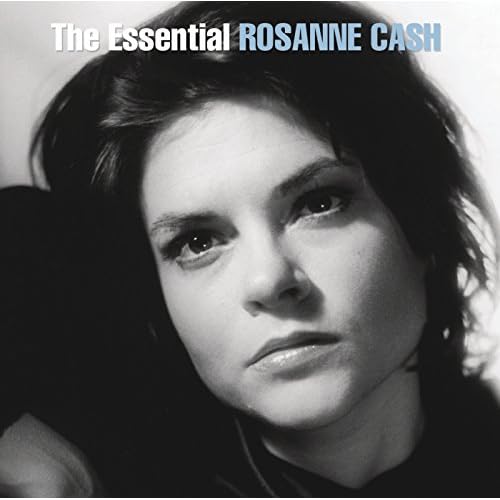
The Essential Rosanne Cash

The Essential Johnny Cash

Press On

Carter Girl

Not physically related to Rosanne Cash, Dale Jett is June Carter's cousin and the current proprietor of the Carter Family Fold...where it's become much easier to get in since Janette Carter's demise. If you're in southwestern Virginia and want to meet the writer known as Priscilla King in real life, the Fold would be a good place.

Going Down The Valley

And here's a digital reissue of Patsy Cline...

The Definitive Collection

Most people are reading this on a computer, so you don't have to buy the albums from me; download them directly from Amazon and go somewhere where you can play them on the computer. E-mail salolianigodagewi to buy LPs or cassettes. To buy only the book, e-mail salolianigodagewi or just send $10 ($5 per book, $5 per package) to Boxholder, P.O. Box 322, Gate City, Virginia, and mention that you're interested in this book. Cassettes can be shipped together with books; LPs have to be shipped separately.

Monday, November 3, 2014

Nostalgia: Jim Reeves' Twelve Songs of Christmas

(Reclaimed from Bubblews. Topic credit: Realityspeaks wrote http://www.bubblews.com/news/8825132-this-time-we-do-not-want-to-listen-to-christmas-carols-by-jim-reeves . Image that really goes with this post: photo of the record cover here. Image credit: Quicksandala at Morguefile.com.)


"There's an old Christmas card in an old dusty trunk, and it brings back sweet memories dear to me..." is how one of the schmaltzy 1950s-style songs on Jim Reeves' Christmas LP begins.

How many more of them can I remember? In 1973 I'd sung along with this album so many times I could have sung the whole batch in sequence, but after forty-one years...

"C is for the Christ Child..." and on through the letters C H R I S T M A S, "And that's why there's a Christmas day."

"Dear Senor Santa Claus, I think I tell you what I would like for Christmas..." The best and worst thing I can say about this one is that, like Booth Tarkington's African-American characters, the icky stereotype was presented with genuine good will toward the grandparents of the people most likely to be offended by it.

"This is Christmas season, so there isn't any reason we can't dance the Christmas Polka." That was my favorite song, in 1973. I did not know how to dance the polka.

"O come all ye faithful, joyful and triumphant..." Sing along. The idea of different pop singers singing the same old favorites, just as they were written (it's hard to be sure, given the quality of monaural recording, but I think Ernie Ford recorded this one in the same key), was to make it easy for everyone to sing along. I hate "new, personalized versions" of the classic Christmas carols.

"Jingle Bells," "Silent Night," and "O Little Town of Bethlehem" are other sing-along carols on this album.

"I'm dreaming of a white Christmas..." Bing Crosby also recorded that one. "I'll have a blue Christmas without you..." Elvis Presley also recorded that one. Do you like one version better than another? Neither has ever really been my favorite Christmas song.

But by now the whole album brings back memories of the year we found a secondhand copy in a thrift store and wore it out. This was the last year of my maternal grandmother's life. It was the year my sisters were born--one of them right in the house where I was living at the time. (My brother and I were allowed to spend the morning with relatives, instead of going to school, and rush right home to see the baby.) Lots of distant relatives we hardly knew spent time with us that year. My parents had officially decided that Christmas was not a Christian holiday, so we didn't have a tree, but we had parties and prezzies for about six months, and this was the background music for all of it.

After 1974 we listened to Jim Reeves' Christmas album again, but only once or twice a year, as I recall.


For those who don't have the LP, it's still possible to buy this album online. For those who like mellow, traditional holiday music, it's warmly recommended.

Friday, July 25, 2014

Four Generations of Jim Reeves Fans

One of the first of those long ten-dollar articles I published on Associated Content was prompted by "List your Top Ten Songs by any one of up to five different bands or singers." That's a lot easier for me than trying to pick a favorite song.

And the singer that came to mind first was Jim Reeves, who died in a plane crash a few years before I was born...because, at the time, my family had been three generations of Jim Reeves fans.

In fact, the smooth-voiced singer from Panola County, Texas, actually helped confirm my parents' interest in each other. Dad was a student renting a room in one boarding house near a university. Mother was not a student, but had gone to trade school at night while going to high school by day and launched her own business at age eighteen. Since her parents managed another boarding house on the same street, they had seen and liked each other, but weren't sure that they'd really be compatible at first. One of the things that convinced them was that both of them were claiming Jim Reeves as their favorite singer.

They bought all of his records, and my grandmother, who had also grown up in Panola County, mentioned that she used to baby-sit a "little Jimmy Reeves." When the memoir-album "Yours Sincerely, Jim Reeves" came out, Grandmother was sure the singer was her old friend. So he became her favorite singer too.

My parents had all but one of Jim Reeves' LPs, up to half a dozen copies of some of them because LPs wore out fast. We listened to those LPs until my brother and I knew most of those old 1950s teen-romance songs by heart. One effect of this was to immunize us to teen romance by making us notice how idiotic it seemed to anyone not suffering from it at the time. Another effect was to give these particular songs nostalgia appeal for us too.

A sub-genre of "country" music, as founded by the Carter Family, is associated with my part of the world. We didn't get television broadcasts until 1977 or 1978; before then, singing was what people did in the evenings--and a lot of people made money at it. My parents and teachers took music as seriously as they did math and English. Dad had some hearing loss and often coached us to "Notice how he enunciates every word so that the song sounds pretty, but you can still understand every word of it. Most singers don't do that." Especially not on monaural records.

As we grew up my brother's voice started to break and he stopped singing in public. I sang with school groups and church groups, and eventually did make money at it. When I sang for old people, in their homes or in hospitals and nursing homes, the songs they requested included several I'd learned from those Jim Reeves LPs.

My natural sister was born a better singer than I was--until she was six years old, when she had severe hearing loss (and became depressive) after a fever. She says that she doesn't hear most of the notes women sing. I didn't expect her to like music, as an adult. It was a surprise to find out that my nephews were also familiar with the cassette tapes we made from the old LPs, and they, too, are now Jim Reeves fans.

It was also a surprise that there are a lot of us in cyberspace. I don't remember offhand which ten songs I listed as favorites. I remember that they were some of my favorites to sing, not the ones that had been the best-selling singles, and some people thought this made the list "strange." I also remember that although I was unknown when I published the list and attracted several regular readers while writing for AC, "Top Ten Songs of Jim Reeves" *remained* the most popular article I ever wrote for that site. Other things peaked and declined; people kept reading that one.

This is already a long post for BubbleWS...in future Bubbles I may post more about the individual songs.