Showing posts with label drug education. Show all posts

Monday, April 27, 2026

Book Review: Rhinestone Cowboy

It's a rerun. This is one of the early posts that have been pulled down and are being reinstated.

Book Title: Rhinestone Cowboy

Author: Glen Campbell with Tom Carter

Date: 1994

Publisher: Villard / Random House

ISBN: 0-679-41999-3

Length: 241 pages of text, with foreword and discography

Quote: "One of the many characteristics of a chronic cocaine user is that he lies about his use, and I was no exception."

"Christians aren't perfect, just forgiven" could be Glen Campbell's slogan for this book. The only "country-western" singer of the 1960s to have a composition ("Less of Me") reprinted in a Seventh-Day Adventist hymnal, Campbell was on his fourth legal marriage when he wrote this memoir, and had chosen to publicize his use of cocaine as an explanation for some of his bizarre behavior--including attempts to preach and evangelize while "high."

Although Campbell had already become infamous in "family values" circles for the song "Gentle On My Mind," whose words celebrate an apparently illegitimate relationship, he was married when he sang it. He even married four of the five women with whom he lived. The emotional connection with "Gentle On My Mind" seems to have been his lifestyle of frequent travel as a soloist. (None of his four legal wives seems to have been a musician; Tanya Tucker had her own solo career to mess up with drugs.) And, after all, he tells us in Rhinestone Cowboy, he didn't write the song.

But he did have that affair with Tanya Tucker. There's quite a bit about her in the book. Campbell does not question her "official" age as being about half his age while they were together. Although Tucker's early performances were publicized as the efforts of a young teenager, she didn't look, sing, or act like one. I become suspicious when Campbell attributes Tucker's performing style to an earnest teenaged fan's attempt to sing like Elvis Presley. There was a resemblance all right...it's just that Elvis fans were more typically born in 1950 rather than 1960. When people who were born in 1960 were choosing our favorite pop singers, Elvis was fat.

The cocaine memories Campbell shares from this quasi-pedophilic relationship might have been chosen to help scare kids into sobriety. Cocaine was not a safe way to get "high"; it was a way to feel "strung-out" and act stupid. Campbell shares lots of memories of his, Tucker's, and their other cokehead friends' stupidity.

To what extent does this confession restore the credibility one automatically loses by preaching under the influence of illegal drugs? Or, how much credibility did the Rhinestone Cowboy have to lose? Readers will have their own answers. However, Campbell's complaints about Christian-phobia do not rest on his own credibility alone. That section cites several published sources, and is worth reading.
 
What else is in this book? Some celebrity gossip about the singers and actors with whom Campbell worked, including John Wayne, Diana Ross, Frank Sinatra, and Elvis Presley. Some religious rhetoric, heroically frank in view of the anti-Christian bias of the industry in which Campbell was still working. Some memories about growing up in economically depressed Arkansas.
 
I think it's the current celebrity souvenir status of Rhinestone Cowboy (Campbell has finally retired) that's driven the price of this paperback so high. Maybe the book needs to be reissued.
 
Memoirs by people who've said no to cocaine certainly need to be in schools and libraries. When I was in high school, word on the street was that this drug was "safe" and non-addictive. Bosh. Although it's a concentrated extract of a natural herb, even in their natural state some herbs are deadly. Last spring, when Dennis Quaid discussed his post-cocaine experience with Newsweek, at a sponsor's request I collected a half-dozen celebrities who can testify that cocaine is harmful...
 
1. Quaid, in his Newsweek interview, called cocaine his "favorite mistake." "By the time I was doing The Big Easy, in the late 1980s, I was a mess," he said, but "those years in the '90s recovering really chiseled me into a person." Here's the original web link for the story: http://www.newsweek.com/2011/04/10/my-favorite-mistake.html. (The link worked on 2011/10/05.)

2. Although Glen Campbell continued singing after his cocaine years, he never had another hit song comparable with "Southern Nights," "Gentle on My Mind," or "Rhinestone Cowboy." Click here to hear what the drug did to his voice: http://www.npr.org/templates/story/story.php?storyId=1067584.

3. Tanya Tucker still markets her own recordings through a website at which she briefly discusses her trip to the Betty Ford Clinic, in between memories of vintage recordings like "Delta Dawn" and promotion of her new album, "My Turn." Her site seems to be under construction.

4. In the early 1990s, Whitney Houston's drug problems were news. Almost 20 years later, Houston returned to the headlines as her daughter denied allegations that she too is addicted to cocaine. Apparently Bobbi Kristina "Krissi" Brown, daughter of Houston and Bobby Brown, was photographed by a National Enquirer reporter sniffing cocaine at a party.

Does everyone remember the series of Enquirer photos showing Osama Bin Laden sitting in a Las Vegas casino with his arms around sleazy-looking blonds? Does everyone remember how remarkable it was that as the other people in the casino seemed to move around, Bin Laden was in exactly the same position in every picture? Digital photography is a rapidly progressing field of technology; probably that photographer could make his victims appear to move around by now. Nevertheless, Houston apparently took the story seriously enough to order rehabilitation for Brown.

While typing this post, I searched "Bobbi Kristina Brown cocaine" for updates on the March news story about her being sent to rehab. No updates appeared as of October 5, 2011.

5. Trying to impress a connection, President Bill Clinton's brother Roger claimed that the future president had "a nose like a vacuum cleaner." No further evidence that Bill Clinton used cocaine has come forward. Roger served some time in jail for his own drug offenses, but although unfavorable reporters have been watching him, he's not been caught using illegal drugs since his release. What Roger Clinton has to say for himself can be found in his book, Growing Up Clinton.

6. One celebrity who claims to have recognized from the beginning that cocaine was an expensive, dangerous way to lower one's intelligence was Queen Latifah. In Ladies First, the Queen of Rap admits that when someone dipped a finger in cocaine and smeared it across her mouth at a party, she did feel "high"...but she realized that this was dangerous and stayed away from cocaine ever since.

Let's hope that everyone who reads this review, and these books, will be as wise as Latifah. According to Quaid, rehabilitation and recovery after heavy use of cocaine took five years...and feeling confident enough to discuss it took more than 10 years after that.
Friday, May 4, 2018

Tim Kaine on Helping Opioid Addicts

Official editorial comment: At least he's concerned about them. The position of this web site is that people become opioid addicts in order to work longer, harder, faster, through fatigue and pain, and they need better education about saying no to the "pain medication" in the first place.

From U.S. Senator Tim Kaine (D-VA):

"
The opioid and substance abuse epidemic continues to hurt communities in Virginia and poses significant public health and law enforcement challenges, and we’re past due for strong legislation that can address it. We need to really commit our resources to addressing this crisis from all angles, especially prevention, treatment and recovery.
That’s why I’m proud that we’ve recently passed opioid crisis response legislation in the Senate committee that’s focused on public health. The bill was a real bipartisan effort and it came together after significant research, committee hearings, and feedback from the public. The legislation includes forty different proposals to increase the ways resources can be spent to combat this epidemic – including two of my bills: the Ensuring Access to Quality Recovery Living Act to improve standards for addiction recovery homes and the Jobs Plus Recovery Act to promote job training programs that include addiction recovery support services.
More specifically, the Ensuring Access to Quality Recovery Living Act would give states the information and guidelines necessary to ensure recovery homes are able to effectively help residents sustain recovery from opioid and other substance use disorders. These homes support those who are battling addiction and it’s critical for residents and their families to know that these facilities are providing a safe environment that can help people transition back into their communities.
The Jobs Plus Recovery Act would establish a pilot program that gives individuals impacted by opioid addiction or substance use disorders access to job training and support services to aid in their recovery and lower their likelihood of relapse. With this bipartisan reform, we are investing in better outcomes, which will have a positive impact on the economy, employers, and entire communities.
We’ve made some good progress, but it’s clear that we’ve got much more work to do. I look forward to working with my colleagues to get this comprehensive bill across the finish line so we can help combat this crisis.
Sincerely,
" [that nice signature graphic Google doesn't like: Tim Kaine]

Tuesday, March 27, 2018

Morgan Griffith on the Continuing Opioid Crisis

All these years...is painkiller addiction still a crisis any more, or has it become a problem? From U.S. Representative Morgan Griffith (R-VA-9):

"
Opioids: An American Crisis
You probably hear a lot about the disagreements in Washington, and that’s not surprising. Having two major parties that disagree on some bedrock principles, such as the role of government, means a lot of give and take.
But there are some things on which we largely agree. Solving the opioid crisis, which takes the lives of 115 Americans on average per day, is one of them.
On March 20th, 21st, and 22nd, the Subcommittees of the Energy and Commerce Committee on which I serve advanced our bipartisan work on the opioid crisis with a series of hearings looking at the problem from several angles.
As I wrote a few weeks ago in this column, the Energy and Commerce Committee is at the center of the action on this issue in the House of Representatives because it has jurisdiction over health issues.
The first hearing was convened by the Subcommittee on Oversight and Investigations, and continued a years-long investigation into “pill dumping.” The committee has sought answers as to how enormous quantities of opioids made their way to pharmacies in small communities; for example, the 20.8 million hydrocodone and oxycodone pills shipped over ten years to a pharmacy in Williamson, West Virginia, which has a population of 2,900.
We’ve held hearings and asked for answers on these questions before. This hearing focused on one big question: has the Drug Enforcement Agency (DEA) been doing its job effectively? Regrettably, in my opinion the answer is no.
The DEA has the authority to crack down on suspicious distributions of controlled substances through Immediate Suspension Orders (ISOs), which revoke registration for entities engaged in the manufacture, distribution, and dispensation of controlled substances when the DEA Administrator finds an imminent danger to public safety. But as the opioid crisis worsened, the DEA used ISOs less, dropping from 65 in 2011 to six in 2017.
Robert Patterson, the DEA’s Acting Administrator, was the sole witness. Members on both sides of the aisle identified lapses in the DEA’s enforcement steps and pushed for stronger actions from the agency. Acting Administrator Patterson agreed that the DEA fell short in the past. I hope that the hearing will encourage the DEA to use the legal authority it already has to step up enforcement against illegitimate distributions of opioids.
While the O&I hearing focused on ways laws were not being used properly, a two-day Subcommittee on Health hearing explored how laws could be improved. Nineteen witnesses, from public health officials to addiction specialists to those recovering from addiction, offered their perspectives on 25 pieces of legislation related to the crisis.
Many of these bills are bipartisan, such as a draft I authored with Rep. Frank Pallone (D-NJ), E&C’s Ranking Member. It would improve federal support for state-run prescription drug monitoring programs, providing increased data for health care professionals to consider as they decide how best to treat patients.
These three days of hearing were illuminating, but more work remains to be done. E&C will hold more hearings on this topic, with the goal of marking up legislation and moving it to the House floor in the near future.
Many residents of the Ninth District have been affected by the opioid crisis in some way. According to a report from the Centers for Disease Control and Prevention, more opioids were prescribed per person in Martinsville in 2015 than any other jurisdiction in the country. The Bristol Herald Courier ran a powerful series last year on neonatal abstinence syndrome (NAS), which affects infants born to addicted parents, in Southwest Virginia and Northeast Tennessee. Some of the “pill mills” in West Virginia which distributed enormous quantities of opioids are close to the border with Virginia.
Opioids are a tragic equalizer in our country today. People from every background, of every income level, can become addicted. Red states and blue states have been afflicted by this scourge, and their representatives in Congress are looking for ways to fight back.
Families across the country are counting on us to continue working together in an effort to alleviate one of the great health crises of our time.
If you have questions, concerns, or comments, feel free to contact my office. You can call my Abingdon office at 276-525-1405 or my Christiansburg office at 540-381-5671. To reach my office via email, please visit my website at www.morgangriffith.house.gov. Also on my website is the latest material from my office, including information on votes recently taken on the floor of the House of Representatives.
"

Friday, March 23, 2018

Senator Carrico on Trump Opioid Drug Plan

From Virginia Senator Bill Carrico, R-40:

"
Trump Releases New Plan to Curb Opiate Abuse
"We will work to strengthen vulnerable families and communities, and we will help to build and grow a stronger, healthier, and drug-free society." – President Donald J. Trump

ADDRESSING THE DRIVING FORCES OF THE OPIOID CRISIS: President Donald J. Trump’s Initiative to Stop Opioids Abuse and Reduce Drug Supply and Demand will confront the driving forces behind the opioid crisis.
  • President Trump’s Initiative to Stop Opioid Abuse will address factors fueling the opioid crisis, including over-prescription, illicit drug supplies, and insufficient access to evidence-based treatment, primary prevention, and recovery support services.
  • The President’s Opioid Initiative will:
  • Reduce drug demand through education, awareness, and preventing over-prescription.
  • Cut off the flow of illicit drugs across our borders and within communities.
  • Save lives now by expanding opportunities for proven treatments foropioid and other drug addictions.

REDUCE DEMAND AND OVER-PRESCRIPTION: President Trump’s OpioidInitiative will educate Americans about the dangers of opioid and other drug use and seek to curb over-prescription.
  • Launch a nationwide evidence-based campaign to raise public awareness about the dangers of prescription and illicit opioid use, as well as other drug use.
  • Support research and development efforts for innovative technologies and additional therapies designed to prevent addiction and decrease the use ofopioids in pain management.
  • This will include supporting research and development for a vaccine to prevent opioid addiction and non-addictive pain management options.
  • Reduce the over-prescription of opioids which has the potential to lead Americans down a path to addiction or facilitate diversion to illicit use.
  • Implement a Safer Prescribing Plan to achieve the following objectives:
  • Cut nationwide opioid prescription fills by one-third within three years.
  • Ensure that 75 percent of opioid prescriptions reimbursed by Federal healthcare programs are issued using best practices within three years, and 95 percent within five years.
  • Ensure that at least half of all Federally-employed healthcare providers adopt best practices for opioid prescribing within two years, with all of them doing so within five years.
  • Leverage Federal funding opportunities related to opioids to ensure that States transition to a nationally interoperable Prescription Drug Monitoring Program network.

CUT OFF THE SUPPLY OF ILLICIT DRUGS: President Trump’s OpioidInitiative will crack down on international and domestic illicit drug supply chains devastating American communities:
  • Keep dangerous drugs out of the United States.
  • Secure land borders, ports of entry, and water ways against illegal smuggling.
  • Require advance electronic data for 90 percent of all international mail shipments (with goods) and consignment shipments within three years, in order for the Department of Homeland Security to flag high-risk shipments.
  • Identify and inspect high-risk shipments leveraging advanced screening technologies and by using drug-detecting canines.
  • Test and identify suspicious substances in high-risk international packages to quickly detect and remove known and emerging illicit drugs before they can cause harm.
  • Engage with China and expand cooperation with Mexico to reduce supplies of heroin, other illicit opioids, and precursor chemicals.
  • Advance the Department of Justice (DOJ) Prescription Interdiction and Litigation (PIL) Task Force to fight the prescription opioid crisis. The PIL Task Force will:
  • Expand the DOJ Opioid Fraud and Abuse Detection Unit’s efforts to prosecute corrupt or criminally negligent doctors, pharmacies, and distributors.
  • Aggressively deploy appropriate criminal and civil actions to holdopioid manufacturers accountable for any unlawful practices.
  • Shut down illicit opioid sales conducted online and seize any related assets.
  • Scale up internet enforcement efforts under DOJ’s new Joint Criminal Opioid Darknet Enforcement (J-CODE) team.
  • Strengthen criminal penalties for dealing and trafficking in fentanyl and other opioids:
  • DOJ will seek the death penalty against drug traffickers, where appropriate under current law.
  • The President also calls on Congress to pass legislation that reduces the threshold amount of drugs needed to invoke mandatory minimum sentences for drug traffickers who knowingly distribute certain illicit opioids that are lethal in trace amounts.

HELP THOSE STRUGGLING WITH ADDICTION: President Trump’s OpioidInitiative will help those struggling with addiction through evidence-based treatment and recovery support services:
  • Work to ensure first responders are supplied with naloxone, a lifesaving medication used to reverse overdoses.
  • Leverage Federal funding opportunities to State and local jurisdictions to incentivize and improve nationwide overdose tracking systems that will help resources to be rapidly deployed to hard-hit areas.
  • Expand access to evidence-based addiction treatment in every State, particularly Medication-Assisted Treatment for opioid addiction.
  • Seek legislative changes to the law prohibiting Medicaid from reimbursing residential treatment at certain facilities with more than 16 beds.
  • In the meantime, continue approving State Medicaid demonstration projects that waive these barriers to inpatient treatment.
  • Provide on-demand, evidence-based addiction treatment to service members, veterans and their families eligible for healthcare through the Departments of Defense or Veterans Affairs.
  • Leverage opportunities in the criminal justice system to identify and treat offenders struggling with addiction.
  • Screen every Federal inmate for opioid addiction at intake.
  • For those who screen positive and are approved for placement in residential reentry centers, facilitate naltrexone treatment and access to treatment prior to and while at residential reentry centers and facilitate connection to community treatment services as needed.
  • Scale up support for State, Tribal, and local drug courts in order to provide offenders struggling with addiction access to evidence-based treatment as an alternative to or in conjunction with incarceration, or as a condition of supervised release.
"

Tuesday, February 20, 2018

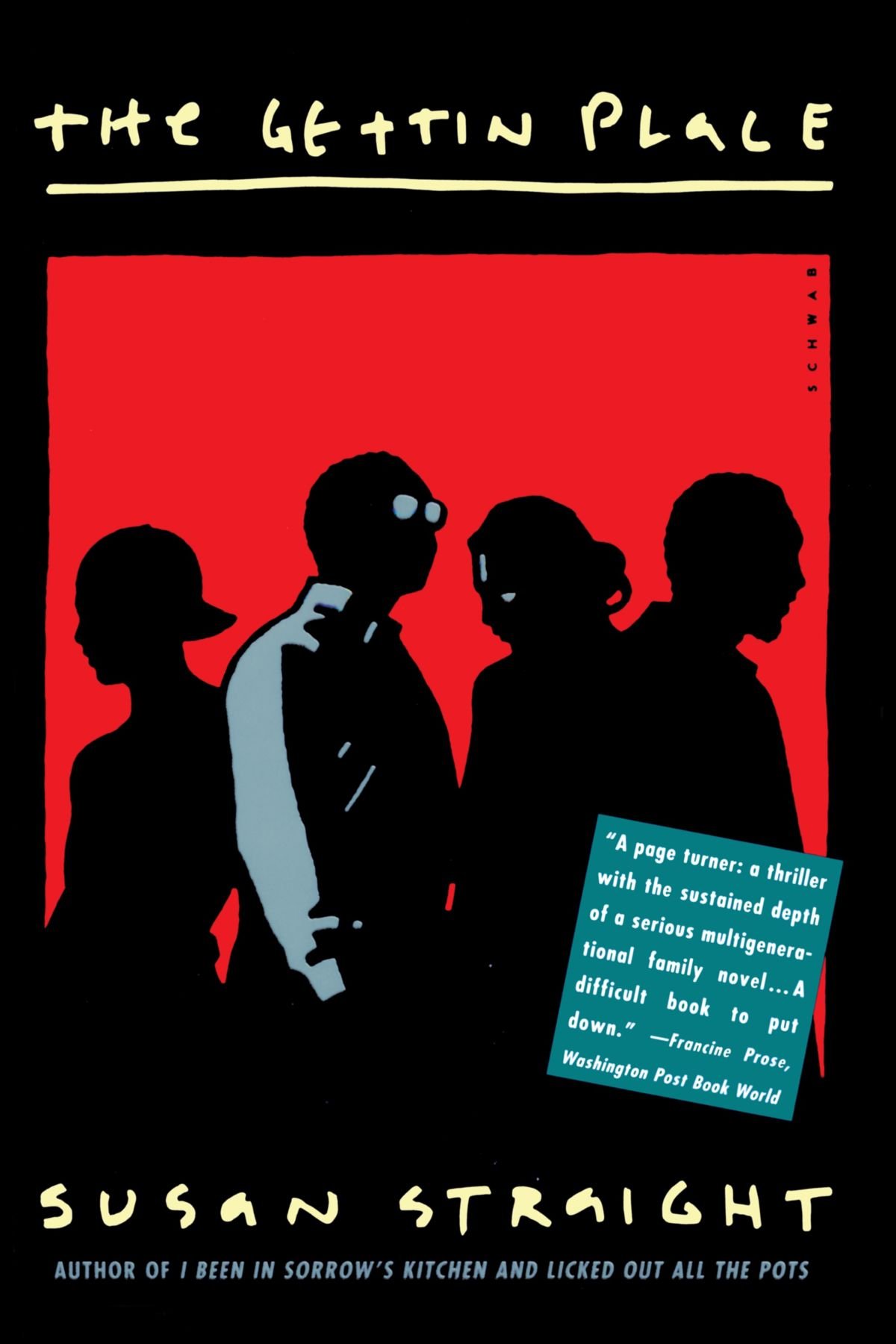
Book Review: The Gettin Place

A Fair Trade Book


Title: The Gettin Place

Author: Susan Straight

Author's web site: www.susanstraight.com

Date: 1996

Publisher: Hyperion

ISBN: 0-7868-6086-3

Length: 488 pages

Quote: “The wafting smell must have been the dream again, the dream of Tulsa burning, the same ashen days he’d been seeing in his sleep for...Seventy years.”

Hosea Thompson survived race riots as a boy in Tulsa. As the riots in Los Angeles start waves of violence through the small towns nearby, he’s not always sure whether he's seeing current reality or post-traumatic-stress flashbacks. He and his wife have bought a small farm in southern California, kept it going, and brought up children and grandchildren. Some of those descendants will die in the course of this novel; some are already dead, and one who’s been missing will come home. Only together will the three generations of Thompsons solve the murder mystery. (The Gettin Place is a novel, but at the center of its plot is a murder mystery.)

The Gettin Place received good reviews. Washington Post’s David Nicholson called it “a triumph,” reading it as “a portrait of a young [B]lack man trying to find his way...with...acceptance of responsibility.” That would presumably be Hosea Thompson’s son Marcus, although he’s not all that young. Marcus’s nephew and student, Mortrice, is also trying to find his way; just because he's a teenager he helps the adults solve the mystery, but his story is hardly triumphant. The story begins and ends with Hosea, but if readers prefer to identify with Marcus and read it as his story, they can. They might even identify with one or more of the women in the family: the Thompson women are as stalwart as their men. The drug culture has reached the Thompsons, leaving one man and one woman with drastic brain damage, but even they are memorable survivors.

One of them has survived a real horror story, which Straight mercifully keeps offstage. The part of the story we read is more than enough. The Ariel Castro news report shows that, yes, hatecrimes against women still occur at this magnitude.

Some of this web site’s readers may like The Gettin Place because the notion of “eminent domain” comes into it, and although Straight wasn't able to give that plot element a really satisfactory ending, at  least she shows us a greedhead land-grabber getting what all greedhead land-grabbers deserve.

Some local readers might ask whether this novel about southern California was a nostalgia trip for me. It wasn’t. I have no sense of nostalgia about any part of California, and don’t remember the southern part well enough to say how well Straight brings that landscape to life—although she certainly brings a landscape to life, and convinces me that she’s writing about a place where she’s actually lived and known people. The story, however, strikes lots of ideological resonances with me. Strong women seek freedom from oppression beside, and together with, their men. One of those men even overtly separates himself from “landless boys” who’ve failed to learn responsibility. Land should be passed down through a family, not bought up and “redeveloped” by greedheads. Natural beauty and honest work do more than psychology or psychiatry to help people with traumatic stress. Teenagers who reject family ties in favor of “peer-group relationships" get stabbed in the back—in Mortrice’s case, literally shot in the back (he survives, that time).

This is an “adult,” in the sense of “adolescent-mentality-bait,” or R-rated, novel with lots of violence, digusting language, at least three offstage rapes, and an onstage relationship that includes premarital sexual intercourse. Gritty contemporary reality, here. We’re not told whether the Thompsons consider themselves christian but there’s little evidence of specifically religious influence on their lives. nevertheless, the healthier Thompsons do take a good solid stand for traditional values, including sobriety—and loyalty to the family members who fail to uphold those values. If you like either Ishmael Reed or Alice Walker, you’ll consider The Gettin Place a feel-good book.

Still undecided? Check out her web site, and consider buying her new books as new books, by all means. This web site's Fair Trade Books program promotes older books and sends 10% of their price to the writers or their favorite charities, as a gesture of encouragement...but buying writers' new books is even more encouraging. Anyway, The Gettin Place is A Fair Trade Book: when you send $5 per book, $5 per package, plus $1 per online payment, via U.S. postal money order to Boxholder, P.O. Box 322, or via Paypal to the address you get from Salolianigodagewi, as shown at the very bottom the screen (whew!), we send $1 to Straight or the charity of her choice. One more book of similar size will fit into the $5 package; if it's Been in Sorrow's  Kitchen we'll send $2 to Straight or her charity.

Sunday, October 8, 2017

Book Review: Beyond Barriers

A Fair Trade Book...Maybe


Title: Beyond Barriers

Author: Harold Morris

Date: 1987

Publisher: Word

ISBN: 0-84-9999-93-6

Length: 182 pages

Quote: “I want to ponder the past. I can't forget where I've come from or what God has done for me...I'd like to proclaim the present...what I've been saved for...I'd like to project the future...I have faith that there is good ahead.”

Once there was a bright, promising young athlete who got interested in drugs, thrills, joyriding with even more morally degenerate young men. When his so-called friends killed somebody, they asked him to drive the getaway car. When the three louts were caught, the other two claimed that Harold Morris had committed the homicide. Though Morris was a criminal in his own right, he also received two life sentences for crimes he had not committed. In prison, he became a Christian, recovered from his drug addiction, became a model prisoner...and eventually qualified for parole, which he'd been warned not to expect, serving less than ten years of those two life sentences. That is not the story of Beyond Barriers. That is the story in Morris's first book, Twice Pardoned.

At the end of Twice Pardoned readers learned that Morris, though now law-abiding and even an evangelical preacher, had developed cancer. Beyond Barriers tells the story of how he learned that he had cancer, went through chemotherapy, recovered, and supported an active evangelical ministry. He certainly had stories to tell.

Morris was divorced in Twice Pardoned. In Beyond Barriers we see how, although some fellow evangelicals thought he had a right to remarry, it just didn't happen. One pen friend who Morris imagined as “blonde, with long legs,” turned out to be just as likable as her letters made her sound, but unable to write those letters herself. Nurses wrote the letters while Morris's partner in evangelical campaigns only lived with severe, full-body cerebral palsy. Nevertheless, both of them enjoy being “inspirational” ministers, and at the end of the book they're still friends.

So the opportunity to be an active father may have passed Morris by. However, so many men are so weak, physically and morally, that no Real Man can completely avoid being a father-figure. Morris be-fathers, be-brothers, be-friends teenaged boys wherever he goes...even though he admits having scared one boy into good behavior by taking him to talk to a rapist in prison.

If there's something not to like about Morris's ever-cheerful account of his difficult yet blessed Christian life, it's probably that too many of us already think that this is what being a Christian means—being a full-time professional preacher or teacher, using talents other than the ones God may actually have given you. Maybe the musicians who lead the audience in song before or after an evangelical sermon, or the office manager at the Christian school, are seen as likewise dedicating their talents to God's service, but what about the people whose accounting talents are being used by a bank, whose gift of proofreading is on display in a law firm, or whose “people skills” have so far been used in selling shoes? Morris is offered a more lucrative job as a salesman and turns it down because he already has his effective, if not lucrative, ministry as a preacher. Does he come across as thinking he's doing something better than those who do well in sales but never have a ministry as a preacher?

I'd hope not. Jesus and John the Baptist, Paul and Peter, James, John, and Jude, told people no such thing. They seemed quite comfortable with, as Dorothy Sayers famously put it, the idea that it might be as wrong for people to leave their vocation of waiting on tables, and preach, as it was for the apostles to wait on tables. We are not told that Dorcas and Lydia gave up their textile work to preach, but that they used their textile work to clothe the needy and host the evangelical meetings.

Apart from that quibble...Morris is Morris. Not all people naturally like that ebullient, salesman-like personality so many churches imagine an evangelist needs to have. For some of us that hearty voice, confident manner, and enthusiastic handshake just scream “Abrasive, obnoxious, pushy pest! Make it go away!”

Peter was a great saint; Andrew, we suspect, was a greater one, because he had to live with Peter. For all those years while Jesus was grinding off the rough edges of which Peter's personality was naturally made, Andrew lived with Peter, and we're not told that he ever even seriously considered murder. Andrew was a great saint indeed.

Yet God did have some ultimate purpose in mind even for the likes of Peter, and God undoubtedly has some use for the too-loud, too-cheery, too-pushy evangelical types. I don't like them, myself, but then I don't need to like them. They are called to minister to those who do like them. If whatever they have in the way of spirituality is enough to smarten and sober up an addict, then obviously it's a good thing.


We know Morris was sincere because Morris was sober. He had not received the talents of Christians like Milton or Aquinas or C.S. Lewis, of Schweitzer or Elisabeth Elliot or Teresa of Calcutta, of Billy Graham or J. Vernon McGee or even Jerry Falwell. He was called to help salvage what addicts have left in the way of minds. That is a gift the spiritually sensitive, and well educated, might well envy.

What we the online reading community do not know is whether Morris is still living. He has no web site of his own; his publisher's web site went down for scheduled maintenance, promising to return to electronic life in August, but I'm writing this in September; search engines, given the terms "Harold Morris," suggest the popular search "Harold Morris author still living"--and nobody seems to know. 

I'm scheduling this post a few weeks ahead. Possibly, by the time it goes live, somebody will have found out whether this web site can still offer Harold Morris's books as Fair Trade Books. He wrote three (the one I don't physically own was Unshackled), all available at prices that allow this web site to offer our usual $5 per book, $5 per package, $1 per online payment, and all three plus at least one more book would fit into one $5 package. If Morris is still living when you buy Beyond Barriers here, we'll send $1 to him or a charity of his choice; if you buy all three of his books here, we'll send him or his charity $3. 

Friday, August 19, 2016

Morgan Griffith on Oxycodone and Marijuana

Er, um...Just to make sure everyone is on the same page with this, we're talking about studies of medicinal tinctures of marijuana, not smoking leaves or whiffing wax.

I have an anti-marijuana anecdote to share, actually. Secondhand marijuana smoke may not make people believe they can fly, the way the real hallucinogenic drugs do, but it certainly can make them sick enough to impair their judgment. Once, as teenagers, my brother and I did some inadvertent research on secondhand pot on a Greyhound bus. Neither of us ever smoked; I don't think my brother ever went to a party or worked in an office where people were passing a joint around, and when I did, I left...but back then Greyhound encouraged people to smoke tobacco at the back of the bus, which of course made the air all over the bus so foul that people could smoke quite a lot of marijuana, too, before anyone could be positive about what they were breathing. All you knew was that it was sickening. And, yes, depending on body size and sensitivity, you could get stoned that way. We did. Nobody was sharing the joint with us half-grown kids, up near the front of the bus...but we got stoned. To this day I have a neat little scar on my left hand because my brother, for no obvious reason, suddenly reached over and dug a thumbnail into my hand. And I was feeling too sick, too sleepy, too polluted, to care, at the time. Both of us were hung-over in the morning, too, over and above being "allergic to Florida" (reacting to all the mosquito poison sprayed along the beaches).

If an hour or two of breathing secondhand marijuana had that effect on us, y'know...much depends on your body size and sensitivity, but not all Greyhound drivers were (or are) huge, numb individuals either. The driver on that particular bus was just about our size...

I don't think it should ever be legal, or even be decriminalized, to subject anyone else to marijuana smoke. In a moving vehicle, that might deserve to be ruled a felony. Under ordinary circumstances, the amounts of secondhand smoke I've inhaled gave me a headache, nothing worse, but people have gone into anaphylactic shock from breathing secondhand marijuana smoke.

Medically regulated, controlled doses of marijuana extracts that may (or may not) really help sick patients? Surely the police have better things to do than bother about that. And although I know firsthand that a pot hangover feels yucky, I've never seen anyone coming off marijuana attempt suicide because the backlash of pain was unbearable, the way people coming off pain pills do...I used to live next door to a man who committed suicide when he was coming down from codeine. Neither have I seen anyone smoking marijuana go barking, howling mad, or have a heart attack, or both, the way some people do on meth.

The position of this web site is that there are better ways to control pain than any drug. However, I believe the people who are currently involved with illegal pills and meth would be a lot less dangerous to have as neighbors if they were legally growing marijuana for medicinal and scientific purposes. Congressman Griffith speaks here out of concern for his constituents.

From U.S. Representative Morgan Griffith (R-VA-9):

"
DEA Appears to Think Oxycodone Less of a Problem than Marijuana

In recent years, more and more people have expressed an interest in advancing medical research into potential benefits and risks associated with the use of medicinal marijuana. I am among them, having supported efforts to address the burdensome processes that currently impede legitimate medical research on marijuana.

Unlike many other circumstances, I believe this is a situation in which President Obama has the authority to appropriately use his pen and his phone to remove barriers to research in order to help sick people.

Regrettably, the Drug Enforcement Agency (DEA) recently announced it is not changing the scheduling of marijuana, which is to remain a Schedule I substance under the Controlled Substance Act, the same classification as heroin.

For comparison, oxycodone (OxyContin) and methamphetamine are Schedule II drugs. Schedule II controlled substances are defined as drugs that have a DEA-accepted medical use in treatment as well as a high potential for abuse.

Schedule I controlled substances such as marijuana, on the other hand, are substances which according to the DEA have NO medical use AND a high potential for abuse.

In other words, the DEA is saying that oxycodone and methamphetamine have medical uses, though they seem to have determined these drugs do not have high potential for abuse. I would say to the DEA, “Get your head out of the sand and look around. Marijuana has significant issues for which we should be concerned, but it seems to have nothing near the addictive qualities of oxycodone and methamphetamine.”

Keeping marijuana classified as a Schedule I drug and denying it may have medical use limits the ability of researchers to study the drug’s safety and effectiveness as a treatment.

Accordingly, rescheduling marijuana under the Controlled Substance Act would indicate that the federal government finally acknowledges an accepted medical use and would help to allow research into potential therapeutic benefits and risks of medical marijuana use.

There are countless reports of marijuana’s medicinal benefits in treating conditions including cancer, epilepsy, and glaucoma, but patients, doctors, pharmacists, and policymakers must have more to rely on than anecdotal evidence.

It is maddening that this Administration and this DEA seem to be continuing to refuse to make it significantly easier for scientists to study medicinal marijuana so that those patients, doctors, pharmacists, and policymakers can rely on science and facts.

I have been working to change the laws to permit the rigorous study of medicinal marijuana. But the President appears to be taking no action either way, creating a situation in which the federal government is not enforcing the law in some states and maybe enforcing the law in others, in effect prohibiting doctors from using medicinal marijuana.

For example, a mother with an epileptic child can purchase a marijuana tincture for her child in Colorado. She doesn’t know exactly what dose is appropriate, but knows it significantly reduces the amount of seizures her child endures. But if they travel to Virginia, she either has to risk arrest by state or federal officers by continuing to use the treatment, or instead, watch her daughter suffer.

Philosophically, I believe the laws of our country ought to either be enforced or changed. The President, it seems, turns a blind eye to blatant recreational use of marijuana, but callously allows his DEA to continue to block potentially life-improving medications. You see, in this case, the President has the ability to reschedule the drug through his DEA, but for unknown reasons, is neither enforcing nor changing the policy.

DEA also recently announced it is increasing the number of DEA- registered medical marijuana growers/manufacturers. Previously, only one entity in the United States – the University of Mississippi – had been authorized to produce marijuana for American researchers.
That, to me, is a step in the right direction.

While I am concerned that limited access potentially resulting from DEA’s decision not to reschedule marijuana may continue to delay potential treatments and therapies, I am optimistic its decision to expand the number of growers will make it easier for scientists to study medical marijuana and its risks/benefits. This work may be of interest to folks at research universities in the Commonwealth, particularly Virginia Tech in the Ninth District which has agricultural expertise as well as a medical school based on doing research.

If you have questions, concerns, or comments, feel free to contact my office. You can call my Abingdon office at 276-525-1405 or my Christiansburg office at 540-381-5671. To reach my office via email, please visit my website at www.morgangriffith.house.gov. Also on my website is the latest material from my office, including information on votes recently taken on the floor of the House of Representatives.
"

Thursday, July 21, 2016

Health News from Morgan Griffith

From Congressman Griffith's E-Newsletter:

"
Fighting Opioid Abuse – An Update
Our nation is in the throes of a real, devastating opioid epidemic that is plaguing our communities. Too many have been affected by this growing epidemic, which destroys lives, families, and communities.
Addressing this epidemic continues to be a priority. I am pleased to report that legislation to help tackle this problem – the Comprehensive Addiction and Recovery Act (S.524) – has cleared both chambers of Congress. It is heading to the President’s desk, where we expect it soon to be signed into law.
That bill, which deals with many different issues driving the opioid crisis, comes after much bipartisan work. It earned the support of many of our nation’s leading advocacy groups, many of whom are on the front lines of the fight against the epidemic.
Interestingly, one of the concepts included in the legislation was actually discussed by a participant in a roundtable I hosted in Bristol with Congressman Phil Roe M.D. (R-TN) as part of our ongoing efforts to combat opioid drug abuse in the region. This concept was to permit certain additional people to take back expired, unused, or unwanted prescription opioid drugs. Currently only the Drug Enforcement Agency can do so. Under this bill, however, pharmacists, doctors, etc. will be able to take back drugs, helping keep households free of unneeded medications. Accordingly, this would work to decrease opportunities for folks to acquire drugs that aren’t theirs. Our roundtable included local health and law enforcement exports, focused in on how we can better collaboratively fight the opioid abuse problem.
The National Institute on Drug Abuse has reported that more than 25,000 people died from prescription drug overdose in 2014, and more than 17,000 died from an illicit drug overdose. While the Comprehensive Addiction and Recovery Act includes important solutions to help our communities, our urgent efforts to help save lives will continue.
Mental Health Reforms – An Update
As with the opioid epidemic, mental health issues affect the lives of many. According to the National Alliance on Mental Illness, approximately 53.8 million Americans suffer from mental illness. Unfortunately, drug abuse and mental health issues can go hand-in-hand. Some with mental illness may try to self-medicate, and some who abuse drugs can develop mental illnesses.
Following a multi-year effort, my colleagues and I on the Energy and Commerce Committee unanimously passed on a bipartisan basis the Helping Families in Mental Health Crisis Act (H.R. 2646) on June 15. This is an important step forward in strengthening our mental health care system and helping families and loved ones struggling with mental health disorders.
The legislation went on to pass the full House of Representatives earlier this month in a vote of 422-2, and this effort now moves on to the Senate. Though there is more work to be done, I am encouraged by this progress and am pleased to have played a role in the advancement of this legislation. I encourage the Senate to quickly consider and approve it.
"

Friday, December 18, 2015

How to Get High

(Reclaimed from Blogjob, where its "long-tailed tags" were: annoy bores by having fun,endorphin boostfitness on the jobhappinesshaving fun while soberlimerence,natural mood elevator,serotonin boost .)

Wholesome aunt Priscilla King is telling everyone how to get high? That's right, and I'm recommending that readers get high--in these ways--as often as possible.

(This post grew out of an observation I wrote into, and read onto, a George Peters FacTape in 1996. The topic was suggested by @andriaperry , who commented on one of my posts about the ugly effects LSD had on some of our generation. These techniques work better than LSD.  Even if you can't get really high, you will not have a bad trip on any of these techniques.

Basically there are five safe, reliable, and usually affordable ways to get high. None of them involves ingesting any specific substance, although eating a diet that promotes a healthy balance of electrolytes in the blood will help. Most of our bodies are capable of producing all the chemicals we need for a safe reliable high.


  1. Intense work. If your job is usually tiresome to you, think of "work" in terms of a hobby, sport, volunteer work, or housework. The high comes from achieving a "flow state" where your mind and body are completely immersed in your work. You don't need to distract yourself or others with chatter; you just focus on what you do, and love it. It is possible to get high on monotonous work if you focus on it. I was skeptical about this as a teenager. Of course writing fiction or poetry that expressed something I thought/felt, however clumsily, felt like riding on one of Anne McCaffrey's flying dragons...but could I get into the kind of typing jobs that were assigned to entry-level workers? I could. I'll never forget the thrill of having correctly addressed every bill to each of two thousand and some customers, in fewer hours, using fewer envelopes and labels, than the job had ever been done before. Not that that was all I wanted to do all my life, but hey, it's a safe high...does anybody really want to spend the rest of his or her life drinking beer?
  2. Exercise. Same principle; you're getting high on your own natural endorphin, and for many people it's easier to get there by running or pumping iron than by proofreading copy or waiting tables. However, if you have a mindless menial job, think of it as a way to get high, because doing it at an efficient pace is boosting your endorphin level.If you are getting high on a job like cleaning hotel rooms or hand-washing cars, while your co-workers are trudging along with their heads full of gloomy thoughts, you will be noticed, not necessarily in a good way. You will be suspected of getting high on something less legal than endorphin, being in the manic phase of a bipolar disorder, or at the very least carrying on a secret love affair. Persist, and the love affair will probably happen, even if the secret is that you've been married to your lover for years.
  3. Music. Part of the effect here is that when listening to music, even if you don't sing along out loud, you're breathing in rhythm. There's that diaphragm muscle again, cranking out endorphin. Of course, if a song or style of music also happens to remind you of pleasant memories, that also helps elevate your mood.
  4. Meditation. Whether this is Christian meditation on your daily study of the Scripture, transcendental meditation where you "let the mind abide nowhere," or sensory-awareness meditation on the sensations of walking in slow motion, the high probably still comes from breathing deeply and activating the diaphragm muscle. At the same time, meditators also relax tired muscles, release tensions, and focus their attention on topics that elevate their moods.
  5. Falling in love. This high involves different biochemicals than the others--less endorphin, more serotonin. We usually think of "falling in love" as an experience that relies on sex hormones, but a natural serotonin high is independent of sexuality. In neurological terms, falling in love is measurably different from a sexual attraction. Confusion is possible because the two things often happen at the same time.So, if you're already married and don't feel tense and excited about the person you married, you can still fall in love without compromising your marriage. You can let yourself be carried away on the kind of love you feel for other family members, just for variation's sake. "Isn't She Lovely" is a song about a man falling in love with his infant daughter--men fall in love with their infant sons, too. Once we've accepted the idea that falling in love is not about sex, we're free to enjoy the high of falling in love with our parents, with other relatives, with friends who've done something that impressed us, with people whose work we admire, with our pets, with trees or landscapes...it's about admiring something that's good and right and beautiful.

And once we've accepted this idea, there is no actual limit on the number of times you can fall in love with your spouse. Even (and especially) after you've become accustomed to living with this person, you still have opportunities to observe the admirable and adorable things about him or her too. Sex hormones are likely to reappear on their own natural schedule, but meanwhile, you still get to admire his rapport with his students or her feeling for music or whatever.

For people who've already used drugs it can be hard to recover a real high, with or without drugs. Nevertheless, after recovery, people who've made the comparison say that these natural highs feel different but as good as, or better than, even a "good trip" on drugs.

Me? I grew up when the safe highs were being researched. I've always used these techniques to get high, and never needed to try anything else.

Morguefile image courtesy of Earl53: www.morguefile.com/archive/display/791523/

IMGP8411

Sunday, December 13, 2015

Book Review: Guardians of Hope

(Regretfully removed from Blogjob.)

Title: Guardians of Hope 
Author: Terry Lynn Taylor
Date: 1992
Publisher: H.J. Kramer Inc.
Length: 186 pages
Quote: "One reason I don't use a lot of angel stories to prove the existence of angels is that I don't want people to get a preconceived notion of what an angel experience has to be like or, worse, to be sad because they have never had such an experience. I don't share some of my angel experience because I feel they are meant for my stage of learning."
Fair disclosure, for those who didn't know: Terry Lynn Taylor is one of those ecumenical New-Age-y writers whose angels are not necessarily Christian. One section of Guardians of Hope is written for use by twelve-step groups. Some illustrations involve Buddha and yogis, rather than Bible stories. Books quoted in the text include Chesterton's Orthodoxy, Leonard Foley's Saint of the Day, and Norman Vincent Peale's Power of Positive Thinking, but also Deepak Chopra's Quantum Healing, the Dalai Lama's Policy of Kindness, and Chogyam Trungpa's Shambhala. So the Christians who want to reject all New Age influences will want to give this book a miss. There's a more strictly Protestant view of angels as individual beings, as well as a more mainstream Christian understanding of "angel" as meaning any message or messenger from God--those are not the views of angels discussed in this book.
Taylor's subtitle of Guardians of Hope is perhaps a more accurate description of what's in this book: "The Angels' Guide to Personal Growth." This is primarily a book about personal growth, with ecumenical spiritual thoughts. Taylor's angels aren't going to carry anyone up to Heaven, but her "angelic practices" may help people "clean the window of the soul," "remain centered with humor time-outs," "eliminate negative programs and patterns" from the brain, "allow the winds of Heaven to dance between" the parties in personal relationships, "count blessings instead of sheep," "transmute anger," "cultivate patience and discipline," and "cease comparing, labeling, and judging."
Taylor encourages twelve-steppers to "call on angels for all of the Steps"; turn personal struggles over to the angels so they can recover, call on the angels to keep them from taking their "searching and fearless moral inventory" too seriously and "abolish fear" of taking responsibility for past actions. Does her approach help? Well, Taylor's angel books have been wildly popular and are available in many editions and languages, so evidently some people find that it does.
Taylor's approach to spirituality is a little too fuzzy and visionary for my taste (I think of "angels" as messages and messengers, myself) but it may help you. If you choose to buy it as a Fair Trade Book, send $5 per copy + $5 per package to either address in the lower left-hand corner of the screen; I'll send Taylor or a charity of her choice 10%, or $1 (even if you buy eight copies at once for a total of $45, Taylor or her charity still gets $8).
The edition of Guardians of Hope I physically own is an older edition, and has, to my eyes, a prettier cover drawing than this one (from Amazon, http://ecx.images-amazon.com/images/I/41aVMHg4%2BTL.jpg .)

(Wordpress tags: angel meditation in recovery from addiction,ecumenical angels,emotional healing,spirituality in personal growthTerry Lynn Taylor,twelve-step group.)

Thursday, December 10, 2015

Book Review: Confessions of an English Opium Eater

(Reclaimed from Blogjob.)

Title: Confessions of an English Opium-Eater 
Author: Thomas de Quincey
Date: 1821
Publisher: Dover
ISBN: 0-486-28742-4
Length: 70 pages
Quote: "Think of me as of one, even when four months had passed, still agitated, writhing, throbbing, palpitating, shattered."
Thomas de Quincey wrote two very distinct versions of his opium memoir. This first version is, according to the Dover editors, "the more impressive" for its "readable intensity." The second version is "much longer, more verbose." Students who need to read one edition of Confessions of an English Opium-Eater and have a free choice as to which, therefore, will probably prefer this one.
It's not, however, the whole story. Like many drug addicts, de Quincey struggled through recovery, wrote on page 70 of this edition "I triumphed," published his memoir, was employed on the strength of his having recovered...and then backslid again, and again, and again. He lived until 1859 but, as the Dover editor puts it, "the author's personal indulgences had affected his prose," making his writing "rambling, involuted and flaccid. An additional result of de Quincey's opium abuse was the hopeless disorder of his personal papers: intending to include...sections of greater length devoted to his opium dreams, the nonplussed writer discovered that he had misplaced the countless scraps on which they were recorded...his memory as to their contents and whereabouts was a blank."
His use of opium was, of course, legal at the time. His testimony about how addictive it was, and how unhelpful, was cited in the debates about subsequent legislation against addictive drugs. Laudanum, the beverage form of opium, continued to be sold in the English-speaking countries for almost a hundred years after de Quincey wrote about his addiction and recovery. It was given to abused and neglected children, to prostitutes, and to people dying of incurable diseases (groups that overlapped to a considerable extent) all through the nineteenth century. Laudanum was not, in fact, taken off the market until its refined derivative, heroin, was available, nor was heroin banned until the current refinement, morphine, was available; it's still legal for doctors to prescribe morphine in some situations.
If we know what became of de Quincey, why do we need to slog through his story? Because he does give us an interesting picture of how poor students lived at the turn of the nineteenth century. He "was reduced to only one meal a day," and sometimes "the single meal, which I could venture to order, was coffee or tea," or "blackberries, hips, haws, &c." (things he picked in hedgerows and uncultivated fields) and "the casual hospitalities which I now and then received, in return for such little services as I had an opportunity of rendering"--he would write letters for food. His relationships with landlords, tutors, prostitutes, derelicts, and wealthy patrons remain as interesting as a novel, and shorter than most.
Although de Quincey no longer needs a dollar, in order to afford anything better than wild blackberries and rose hips I am still obliged to ask $5 per copy of his book + $5 per package if you buy it here. The $5 per package shipping charge, however, allows you to order Confessions of an English Opium Eater together with one or more Fair Trade Books and pay only the one shipping charge.
I've been decorating book reviews on this site, for Google + purposes, with various cute public-domain images from Morguefile, Wikipedia, or Pixabay. This doesn't satisfy me; I think it looks distracting, no matter how lovely the pictures may be. Amazon refuses to provide this site (Blogjob) with clickable photo links you could use to compare prices for this book at Amazon. Here's a picture of the book, although it's not a link, ganked from http://ecx.images-amazon.com/images/I/41PoeyKtW4L.jpg . (Note that the Dover Thrift Edition I physically own and have for sale, at the time of writing, has a different cover--no portrait.)

(The problem with the clickable links was probably something to do with "i-frames," which have somehow been declared forever out of bounds in my part of the world, although they're what a lot of the web hosting sites that promise to facilitate payment for Online Stores rely on...often completely. Amazon does offer other ways to generate clickable links; in this post they appear as text. Long-tailed tags were 1810’saddictionopium and opiatespoor student in Englandprostitution,recovery.)