Showing posts with label crafts. Show all posts

Thursday, May 21, 2026

Book Review: Rug Hooking Made Easy

Title: Rug Hooking Made Easy

Author: Charlotte Kimball Stratton

Date: 1955

Publisher: Harper & Row

ISBN: none

Length: 214 pages

Illustrations: many photos and charts

Quote: “If I were to teach an inexperienced pupil, the first lesson would be entirely on the technique of making the loop.”

Nevertheless, possibly guessing that most of her readers will be experienced rugmakers (she keeps calling them “hookers”), Mrs. Stratton begins with chapters on design, dyes, and materials, and gives the lesson in making the loops only on pages 48-49. After that, pages 51 through 207 give geometric patterns, shaded picture patterns, and tips on making a variety of elaborate design.

Rug Hooking Made Easy provides an intermediate step between the blind-follower stage, in which crafters buy beginners’ kits and try to make something exactly like the picture on the package, and the advanced-crafter stage, in which crafters design their own projects.

Stories of old-time rugmakers fill out the back of the book.

For knitters, like this reviewer, rugmaking can become a source of frustration. It’s another textile craft that can be done with the same material (heavy wool yarn), so supplies are usually shelved together in stores, and books are usually shelved together in libraries... and almost everything that’s right for one craft is wrong for the other. Rug patterns can be fun to knit, but they won’t look right. Yarn that makes comfortable socks and sweaters is always too soft, and nearly always too thin, for rugs. Rug yarn can be made into caps or sweaters, but few people want to wear them.

The good news for knitters is that rugmaking is easy to learn, and rug hooks, rug yarn, and either pre-stamped or unstamped rug canvas (backing material) are quite cheap. If you’re a knitter or a practitioner of some other needlecraft and would like to expand your horizons, Rug Hooking Made Easy will take you as far into rugmaking as you want to go, whether that’s the plain doormat, or the stair carpet with fifteen different detailed landscapes between the sixteen steps. (Yes, Mrs. Stratton hooked such a thing, and patterns are included.)
 

Sunday, November 16, 2025

Book Review for 11.14.25: Step by Step Quiltmaking

Title: Step-by-Step Quiltmaking

Author: Barbara Danneman

Date: 1975

Publisher: Golden / Western

ISBN: none

Length: 80 pages

Illustrations: photos and diagrams

Quote: “Piecing together several layers of cloth to make warm garments probably originated in ancient China.”

Step-by-Step Quiltmaking is much shorter than most of the quilting books I’ve seen. It was published by a company famous for short, information-packed nonfiction books for children. In the tradition of books like the “Golden Nature Guides,” it’s less comprehensive than bigger books, but will keep a determined beginner busy for a good long time.

All the usual quilting techniques are covered, at least briefly, except for “cathedral quilting,” in which squares are folded into curved shapes that suggest cathedral windows. For basic instructions on how to cut and join patches, then quilt layers together, this book will suffice. 

Thursday, November 13, 2025

Book Review: Pictures in Patchwork

 Title: Pictures in Patchwork (Le Patchwork)

Author: Marie-Janine Solvit

Translator: Walter A. Simson

Date: 1976 (French), 1977 (English)

Publisher: Dessain et Tolra (French), Sterling (English)

ISBN: 0-8069-5380-2 (Englsih)

Length: 112 pages

Illustrations: many color photos and drawings

Quote: “Patchwork as we know it is basically an American craft.”

On page 7 of Pictures in Patchwork, the quote above is surrounded by three photos of antique quilts from France. However, patchwork and quilting are actually two different techniques. Patchwork is joining patches of fabric into a single flat seamed surface; quilting is stitching two or more layers of fabric with lining between them into a thick, textured, insulated material. Quilting was not new when it appeared in French fashions of the seventeenth century, nor was patchwork new when it became a fad throughout Europe and North America in the eighteenth century.

In France, however, the fashion for patchwork didn’t last. Even in England it was a rather short-lived fad. In the United States, patchwork became a Folk Art Tradition and continued to be practiced after the fashion for patchwork clothing had passed.

Solvit provides some examples of traditional patchwork patterns (examples in French museums are older than those in American museums), but her book is mainly about pictorial patchwork and appliqué, sometimes enhanced with embroidery, as shown on the covers of the book. She also briefly considers knitted and crocheted patchwork.

Pictures in Patchwork is less of an instructional guide than Creative Patchwork, less of a reference work than American Quilts. Published under the auspices of Elle magazine, it’s a perky, whimsical guide to what the author clearly regards as a “creative” fad hobby. For those who want inspiration to patch together their own semi-abstract landscapes, this book should be inspiring. 

Tuesday, October 7, 2025

Book Review: Better Homes & Gardens Applique

Book Review: Better Homes & Gardens Appliqué

Author: Better Homes & Gardens magazine staff

Date: 1978

Publisher: Meredith Corporation

ISBN: 0-696-00435-6

Length: 96 pages

Illustrations: full-color photos and templates

Quote: “Even a beginner can create the vibrant, attractive floral pillows.”

Appliqué is a quick and easy craft; the challenge is finding the perfect material, not perfecting the skill of cutting it out and tacking it together. These are fun projects for Scouts, for middle school sewing classes, for parents and children. Because the work goes fast and can be done by alert patients in bed, appliqué is also nice for people with disabilities; I suppose this comes to mind because, when my wheelchair-bound grandmother lived with us (I was seven years old), one of the things she and I did was make coordinating appliqué curtains for all the windows in the house.

So, what will this book show you how to make? Pillows, window shades, a “game banner” with pockets for game boards and pieces, quilts, toys, curtains, wall hangings, tablecloths, napkins, gift boxes, sleeping bags, even a “soft headboard,” and if the perfect pattern for what you want to make isn’t in the book, at least reading the book will give you a good idea of how to make the pattern you want.

Better Homes & Gardens Appliqué offers a thrifty way to recycle worn-out, out-of-style clothes without losing any memories that may be attached to them—even polyester, in 1978 when people were discarding masses of polyester—and entertain children, convalescents, and also nurses or baby-sitters.  

Thursday, October 2, 2025

Book Review: Easy Bazaar Crafts

Book Review: Easy Bazaar Crafts

Author: Better Homes & Gardens magazine staff

Date: 1981

Publisher: Meredith Corporation

ISBN: 0-696-00665-0

Length: 96 pages

Illustrations: photos, diagrams, graphics

Quote: “If you’re planning a money-making bazaar, stock up here on ideas.”

The patterns in this book include dolls, pincushions, scarves, purses, pillows, oven mitts, decorative flowers, puzzles, place mats, napkins, napkin rings, key racks, trivets, letter sorters, and more. Templates for an extension of traditional dollhouse furniture (one inch to one foot) can be used with felt, cardboard, pipe cleaners, and fabric as well as wood, or enlarged for dolls built on a scale of two inches to one foot (like Barbie) or even three inches to one foot (like the American Girls). Several patterns for hand knitting, crocheting, sewing, appliqué, embroidery, and quilting are included. There’s also a selection of clever things kids can make with cones and seed pods, and an extensive collection of bread, cookie, and candy recipes.

The editors mean “easy” when they say “easy.” What they call an “intricate pattern” for a baby sweater is what Barbara Walker might have called “barely enough pattern to keep the knitter awake.” Even after having made a few elaborate Aran or fairisle masterpieces, most knitters still find room in our knitting lives for “mindless, instant-gratification, quickie holiday gift” knitting too, and this book contains some. Most projects in each craft category would be encouraging first or second projects for beginners. Most of the recipes are suitable for kindergarten children to use (with adult supervision, of course).

Easy Bazaar Crafts is recommended to anyone in search of quick, fun projects to sell for fundraisers and stuff into stockings. 

Tuesday, September 23, 2025

Book Review: Better Homes & Gardens Christmas Crafts

It's not too late to start simple winter holiday projects...

Book Review: Better Homes & Gardens Homespun Christmas Crafts

Author: Better Homes & Gardens magazine staff

Date: 1983

Publisher: Meredith Corporation

ISBN: 0-696-02097-1

Length: 24 pages

Illustrations: photos and diagrams

Quote: “These calico greetings are so bright and cheerful they’re sure to be popular at your Christmas bazaar.”

There’s not much narrative in this little pattern book, just plenty of patterns for stuffed animals, stuffed letters to sew together for greetings, stuffed bells, straw ornaments, big heavy-duty stockings for filling with mini-gifts, wreaths, alphabet blocks, and “storybook pillows” with pockets to hold a book in place.

All projects are cheap and easy, accessible to any member of the family who can be trusted not to swallow a sewing needle...not all of the projects require a sewing needle. This book is recommended to anyone who decorates for Christmas. 

Thursday, May 9, 2024

Sharing Crafts with Your Niece

Almost twenty years ago, Associated Content requested articles with the title "Sharing Crafts with Your Niece." What follows was one of the most popular of the articles they published. I think the idea is "evergreen," but some things about this post needed to change.

One major change: I need to mention that, obviously, the niece who was discussed here is older and more capable by now. Perhaps one day she'll write something about Sharing Crafts with Your Aged Aunt. 

The other: Back then, we did search engine optimization by simple stunts like repeating the keyword ten times in the subheadings for each item on a Top Ten list. Now, we don't need to bother about search engine optimization, because the top ratings on Google are for sale and you can't afford them, but we can decorate posts with fair-use photos.

The article:

My mother sews tailored clothes. My sister sculpts ceramic animals. I knit sweaters. All of us have also done some drawing and painting.

My niece looks lovely in the clothes her aunt and grandmother have made for her. She enjoys drawing, but isn’t quite ready to rent a gallery. She does help me use up a lot of scrap paper.

Here is a Top Ten list of things preschool and primary school children can make, and even display at a craft show or at least a flea market, while they’re still at the drawing-on-the-other-side-of-scrap-paper stage.

#1: Glitter Glue. You need: some old bottles and jars, too small or odd-shaped for canning; glitter glue; some string, yarn, ribbon, etc.; paper decals, macaroni letters, etc., for embellishments. 


Clean and dry the bottles or jars. Decorate with glitter glue, ribbon, decals, etc. Bottles can be used to hold flowers or organize nails, pencils, knitting needles--whatever will fit. 

#2: Scrapbooks. You need: a nice binder, some durable paper (the more different colors the better),some pictures (newspapers and coloring books can be used), assorted crayons and markers for decoration. 


No one is ever too young for scrapbooks, whether you’ve lived long enough to have compiled a really historic scrapbook, or just want to have fun cutting and pasting. Add decorative stickers, ribbons, sequins--whatever you find to enhance photos, programs, cards, etc. You can also buy or make stampers for further decoration--see below.

#3: Stamping. You need: stampers (purchased, and/or carved out of wood or linoleum, and/or carved out of carrot ends or potatoes); paper or cardboard; stamp pads, preferably in a selection of colors. 


Very young nieces enjoy just stamping all over the place. School-aged nieces usually want to make a neat, professional image that fits onto a page, and can design and make professional-quality greeting cards if you buy nice card stock.

#4: Calligraphy. You need: a calligraphy pen with a point (not cheap, but the whole family can reuse it indefinitely); attractive paper; if you want your niece to have a whole table or corner to herself, a selection of colored paper and ink; and some beautiful thoughts for her to write out in beautiful style. 


Anyone who can write legibly is ready to try calligraphy. Use scrap paper until your italic or cursive style pleases you, then move on to fancy paper.

#5: Buttons. You need: easy-baking clay such as Sculpey; suitable paint; an oven, as recommended for the clay you use. Polymer clay makes durable buttons and bakes at ordinary kitchen temperatures.


Your niece presses the clay into interesting shapes--round, square, free-form, whatever. You poke holes in it and bake it. Either or both of you can paint the buttons when dry.

#6: Braids, Bows, and Macrame. You need: lengths of ribbon, cord, string, yarn, or thread. 


Find material to suit your purpose--heavy cord for hanging flowerpots, dainty threads for bracelets and hair ornaments. Begin by letting your niece practice making basic braids and knots. Once she’s learned the techniques, you can add beads, junk jewelry, shells or other found natural objects, to make things suitable for hanging on the walls, wearing around your neck, or hanging flower pots. 

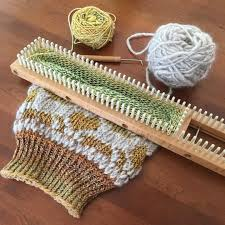
#7: Pot Holders. You need: a cheap plastic weaving frame, a crochet hook (or the wire hook that may come with the frame), and a selection of sock tops (or similar bands of fabric).


You can cut thin even strips off the tops of your family’s old socks, if you’ve accumulated enough of them, or buy precut loops just for weaving, or even use loops of knitting yarn (trim the knots to make a nice even fringe). Your niece can have fun planning stripes, plaids, and rainbow-shaded effects. 

#8: Frame Knitting. You need: a knitting frame, or frames; some yarn; a crochet hook 


Knitting frames come in a wide range of sizes and shapes. Straight plastic frames can be hooked together to make full-sized garments and afghans. Knitting spools or circular knitting frames are usually suitable for knitting only a limited selection of shapes. You can, however, use circular knitting frames with eight or more pegs to make flat strips, which can then be sewn, braided, or woven together to make legs for stuffed animals, sleeves for dolls’ clothes, strands for braided rugs, or even fingers for thumbs or mittens.

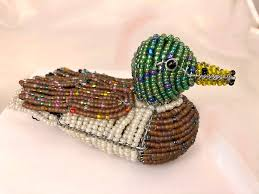
#9: Beadwork. You need: lots of beads (patterns published in adults’ craft magazines will specify the numbers and colors, or you can design your own pattern on graph paper and count the dots), and string or cord for stringing them on. You can also use pins or wires to make bead sculptures.


The usual rule is "smaller fingers, bigger beads." 

#10: Nature Crafts. You need: twigs, cones, leaves, seed pods, and other things found on nature walks; glue or paste; paint, ribbons, and thread for embellishment, if any. 


What you find on a hike will suggest other things to make with nature crafts. You might use glitter glue or paint to make holiday decorations, hang objects up to make a mobile, glue them into position to suggest a house or boat or some other image, even use them to build or furnish a dollhouse. 

Monday, April 22, 2024

Book Review: Timeless Treasures

Title: Timeless Treasures 

Author: Pamela Elcik

Date: 2023

Publisher: Pamela Elcik

Quote: "For the serious student, the path is endless. The world of beads is vast."

Indeed it is. Beads are among the first artifacts humans learn to make, and among the more durable ones that clearly show human handwork. A history of beads could easily fill volumes.

Which is why this skinny little book is such a disappointment. I had some trouble acquiring it--I asked for it as an advance review copy!--and suspect I acquired the plain text that was pasted into a gorgeous coffee-table book, only. The appeal of the printed book might be in big colorful photos of museum pieces of beadwork, and what I have might be just the "filler."

It reads like "filler" in a series of short magazine articles, the kind of low-content captioning that links photos to advertisements. The photos might tell a reader something about beads that the reader did not already know. The "filler" text probably would not. Beads were used at this place and time, or that one, of historical interest, Elcik tells us, in words that gush admiration of the beads, but she doesn't really tell us who was making and using them. Queen Elizabeth's court wore clothes with valuable tiny beads sewn all over them. You knew that. Paris artisans made bead purses. You knew that; you might be lucky enough to have gone to Paris and bought one. 


Google offered this photo of an antique beaded purse from Antiques Off Broadway, where it probably is or once was for sale. This photo and a few thousands more. 

Though Elcik occasionally uses a beadcraft term like "faience," she doesn't explain it. How would  you know a faience bead from any other bead you might happen to find? You'll have to look it up. Wikipedia says that faience is a general term for finely glazed ceramic pieces, beads and bigger things, found in ancient Egyptian archaeological sites. Elcik doesn't say. Presumably her paragraph that mentions faience beads was meant to be printed beside a picture--but I don't see the picture.

Elcik certainly likes beads and, if this text was printed in a coffee table book, you might feel that the photos delivered your money's worth of artistic beauty and/or artistic inspiration. Her prose is evocative; if you've gone to museums or read art books and seen samples of historic beadcraft, you can at least remember what you've seen.

And I suspect that the copies of this book that I didn't receive last year were lost in the e-mail because they were full of pictures. I know some e-books arrived slowly, were filed as spam, and/or failed to open because they were full of pictures. 

So it may not be entirely Elcik's fault...but I think tighter editing could have made room for more facts, telling me something I didn't know, by cutting back some of the multitude of phrasings the author finds to communicate just "Pretty, pretty!"--even if the photos are the point, and by receiving it as a free book I've missed the point of the book.

I would not recommend that anyone buy what's finally landed in my Kindle. But I suspect that what's in my Kindle is not what you might find in a bookstore, and that readers may love what's in the bookstore.

Monday, December 18, 2023

Book Review for 12.13: Blocked (Issue 6)

Title: Blocked (e-magazine)

Editor: Neil of Uknitted Kingdom

What is Blocked, and does it interest you? You've not seen this magazine in bookstores or wool shops, so I probably need to introduce the whole zine...

Right. Once upon a time, Ravelry.com was the knitting site. I visited a few times, downloaded a few free patterns, appreciated that favorite patterns from some favorite designers' books were there, and then made little time to visit Ravelry. I don't usually knit while online, unless the connection is down. And I've never felt a need to join a knitting circle, either. Many knitters do; knitting can be done as meditation to help give the verbal part of the brain a rest, or as an anchor to keep us awake while the verbal brain is reading or listening or watching something else, and some knitters prefer that that "something else" be someone who can help them figure out when they've made mistakes. I never formed the habit of talking about my knitting and have to prod myself even to mention it online, having figured out that, without good quality photos, it's unlikely to sell online.

But I was not pleased by recent news from that site. Knitting is one of the things that can serve the purpose, for women, that spectator sports serve for men: giving almost any two women a common interest they can discuss, regardless of age, background, politics, religion, nationality, even language.  Well, it can. We all know how men can be sitting around, commuting, waiting for things, not very happy about being where they are, and a "good," clean, close game comes on the radio or TV. Instantly they forget that they're not friends and not happy about being where they are, and start cheering, joking, slapping fives. If they do happen to favor the same team, and that team wins, a whole train lights up like a fireplace! How'bout them Dawgs! Women could use knitting to fill that same social need...

...But at Ravelry they didn't. Someone whose knitting was acceptable was blocked for posting pro-Trump comments. Well, a lot of knitters did really like Hillary Rodham Clinton. I liked her, myself--not enough actually to vote for her, because no matter how iconic she is her politics do not represent mine, but enough not to pick fights with her fanatical fans; enough to respect the fact that many knitting circles are Hillary fan clubs. But of course I don't hate Trump either. I dislike him, as most Washingtonians did when he was a Democrat and was merely a tacky new neighbor spoiling favorite views with ugly new buildings, but I do recognize that he's a human being who's done bad things and good things like everyone else. Some knitters appear to be unable to break out of that mindset of judging and hating other women who are different from themselves. I find that very sad. 

So the pro-Trump knitters stormed away from Ravelry and swirled around various social media sites during the more-than-a-year when "reliable Internet access" was an oxymoron in my town. When I came back, most of those sites were dead or dying. There was a handcrafts site devoted specifically to craft items with Religious Right motifs, as having been down-rated at Etsy, and there was a social forum for knitters. I joined the forum. One of its active members was Cezanne Pellett, who tipped me off to Blocked.com, an edgy knitting zine that's for all sorts of people who have been treated like outsiders, at Ravelry or wherever else. 

Compared with Knitty, Blocked is...new. Raw. It reminded me, first, of some of those pulp-paper crafts magazines that lasted a year or less. On closer consideration, and in view of the fact that Blocked has already outlasted the pulp-paper mags, it reminds me more of those rare collectible early issues of Knitter's Magazine. Knitter's would soon become the leader of its field, but it too went through a raw, new, obscure stage when, although each project was professionally photographed, it still printed rather too high a proportion of articles to projects. 

It's a zine not a mag. Projects are credited by screen names rather than real names. Despite several nice, normal ads for yarns and shops, which make it free to read if you print it yourself, there are still appeals for donations. Content is on the edges of several people's boundaries--not so much pro-Religious-Right as anti-censorship, generally, with awareness that the people being censored these days often are Religious Right. 

Issue #6 is Christmasy, with the crocheted Santa Claus hat on the cover and a half-dozen Christmas-themed coasters to knit inside. Projects are small and simple. If you download it today, you can knit or crochet something cute before Christmas morning. In addition to the hat and coasters, other projects are also easy to knit, in Christmas colors, all-winter-long colors, or whatever colors you like. There's a bulky cowl, a pair of long slouchy socks to knit in thicker than usual sock yarn, a scarf and two shawls to crochet, an historic hat design (as easy to knit as crochet, but it may work better in crochet), and stash-busting coffee mug holders (I would only ever knit a coffee mug holder in brown). One article offers the helpful suggestion that knitting or crocheting super-bulky projects will help make the stash of leftover yarn disappear faster. Another rants about a less than satisfactory online store; another rants about COVID vaccines. Another article discusses the "Brexit" controversy and the current state of British import and export taxes. There are helpful directories of pattern testers and craft videos, and an obnoxious cartoon featuring bare navels and decapitation. There is NOT ONE SINGLE SWEATER PATTERN IN THE MAGAZINE! That's the way today's young and cheeky knitters knit. Only cute little accessories! They're still moving too fast to feel cold!

There's a claim that someone has whined that Blocked is racist. That one invites a whole paragraph of elaboration on the general theme of "Bah humbug." Knitting is not racist, exactly--it has North African roots, and is practiced on every continent--but the revival of knitting as a craft and fashion, in the 1980s, was indeed a rich White arty liberal baby-boomer thing. Diversity meant that an occasional older or younger knitter (Elizabeth Zimmerman, Lily Chin) or a man ("gay" like Fassett or Xenakis, or knitting in solidarity with a wife and/or daughters like Huber, Jones, Rutt, Bourgeois, et al.) slipped in, and er um yes "Chin" is a Chinese name and, oh, er, wait, the Bourgeois were Canadian weren't they? So knitting was international, right? The knitting universe wanted diversity, but it was well into the 1990s when Melanie Falick's Knitting in America irked me by featuring exactly two older women in the crowd of rich White arty liberal baby-boomer women. "I want to write a big glossy coffee-table book," I growled, "about Shirley Paden and the Hubers and Elaine Rowley and all the other knitters who do not fit into Falick's little mold!" But at Stitches Fair we just didn't meet enough of them. Knitter's was actively working to help the knitting universe diversify, bringing in visiting knitters from different countries...but they were all fairly rich, even if some of them had quaint exotic accents, and the ones who really became known in the US and UK had to stay, at least no further away than Canada. Too bad. But let's be very clear: Nobody discriminated against Shirley Paden, or Lily Chin, or Kaffe Fassett. Far from it. The knitting universe saw their first few brilliant designs and bowed at their feet. Most knitters are still rich White arty liberal baby-boomer women but they love the fact that knitting, itself, is global and cross-pollinates itself continually by bringing in fresh influences from faraway places. When African or South American knitters have brought in their wares, what happens is that they tend to sell out fast and go home, rather than stay and try to sell another big glossy coffee-table book of knitting patterns that will probably lose money.  

Oh, well. Nobody bought Knitter's for the articles, clever and informative though some of those were. What made Knitter's were the patterns, and Blocked offers some good patterns for the whimsical little projects the young are knitting and crocheting today. If you want to be a trendy knitter, read it. If you want to be a Real Liberal, send the Free Speech Union some money. 

Wednesday, May 17, 2023

Non-Book Hobbies

This Wednesday's Long and Short Reviews prompt invites bloggers to post about what we do for fun other than reading.

I knit.

I used to dabble in all kinds of different arts and crafts. I learned to sew well enough to make just a few of my own clothes--hand-me-downs and charity store finds were cheaper. I drew and painted, embroidered and wove, shaped clay and papier-mache. My one crocheted hat and one macrame flowerpot hanger may still exist somewhere. The paper dolls for whom I used to draw clothes and things, as if practicing to be a commercial artist, definitely do exist. In my early twenties I bought a really nice sewing machine; there wasn't room in the cheap rooms I rented in the city to spread out fabric and sew, so I sold it to Mother, who did sewing better anyway. Mother sewed, one of the great-aunts crocheted, and one of the neighbors quilted, for the neighborhood.

Nobody else knitted. I'd bought a spool knitting kit for each of the sisters; neither of them did much spool knitting but, while recovering from flu in 1989, I started knitting on two needles. I never looked back. I went on to knit with single "circular" needles, and with batches of four or five double-pointed needles, and on frames...and soon knitting had crowded the other crafts out of my life and home.

As regular readers know, there are several posts about knitting here, including the original designs for knitted doll outfits,


and hats; 

and reviews of knitting books, and a series about "Eighties sweaters." 

Monday, April 17, 2023

Book Review: American Patchwork Quilts

Title: American Patchwork Quilts

Author: Lenice Ingram Bacon

Date: 1973

Publisher: Bonanza / Crown / Morrow

ISBN: 0-517-30940-8

Length: 190 pages

Illustrations: many full-page photos

Quote: “In that section of Tennessee where I grew up in the early part of the twentieth century, quilts still served…We had a goodly supply for ‘everyday wear,’ but they were not made at home. They were made by the Witt sisters.”

Lenice Ingram Bacon has collected stories of individual quilts and quilters to flesh out, and sometimes debunk, familiar stereotypes. I could wish she’d debunked the stereotype of “the areas of Appalachia”—a fine and scenic town, but too small to occupy many “areas.” However, Bacon was concentrating on quilts rather than general history, and her book is full of interesting anecdotes about European as well as American textiles.

Both typical and unusual quilts have been documented in this book. There’s a lovely, patchwork-appliqued, finely stitched “Pineapple Quilt” made in China, by order of a rich American, in 1791; an unfinished “crazy quilt” looking crazy indeed after a hundred years of wear and tear; a bizarre applique piece in which the figures represent scenes from history and the Bible, but few could be recognized without a page of written explanations, which was fortunately preserved in the same museum.

Anecdotes from quilting history make this book an entertaining read, and large, colorful photos make it an inspiring collection for quilters who feel confident enough to make their own templates. So it can be recommended to anyone interested in quilts.

Lenice Ingram Bacon is remembered in the Quilters’ Hall of Fame (http://www.quiltershalloffame.net/index_files/Page924.html). Since she is no longer living, American Patchwork Quilts is not a Fair Trade Book. You may still buy it online here for $5 per book + $5 per package, payable to either of the addresses in the lower left-hand corner of the screen.

Posted on October 5, 2015 Categories Book, Crafts Tags patchwork quilts

Monday, February 27, 2023

Book Review: Piecework January 1998

Title: Piecework January 1998

Editor: Linda Ligon

Publisher: Interweave Press

Date: 1998

ISBN: none

Length: 80 pages

Quote: “In this issue, we explore the craft traditions of waterbound places.”

For some of the traditional handcrafts—weaving, embroidery, knitting, quilting, basketry—in some years, in our Machine Age, an industry develops. Shops and magazines are devoted entirely to the crafts that are fashionable enough to support these enterprises. Books are published. Clubs, with conventions and even competitions, are organized. Classes are taught for college credit. Meanwhile, other crafts languish in the shadows and receive little attention until the restless currents of fashion move on in search of something “new.” In the 1970s, when weaving was “in,” knitting was derided. In the 1990s, when knitting boomed, Knitter’s magazine sold widely while its publishers’ other venture, Weaver’s magazine, was never in stores. Meanwhile, does anyone else remember macramé?

Piecework magazine was the production of some people who recognized the deep silliness of these fads. If you really enjoy a craft, you continue wanting to do it whether it’s in or out of fashion. Piecework offered something for everybody. It was not a dabbler’s magazine; the articles were too scholarly and the projects too advanced. (While knitting magazines were bowing to the market for thick yarns that knitted up at 3 stitches to the inch, Piecework continued to print patterns to be knitted with traditional yarns and needles that knitted up at 8 or 9 stitches to the inch…and if you were not a specialist with serious money to spend, good luck finding those yarns.) Piecework was a magazine for serious crafters of all kinds. The magazine didn’t have room to feature every craft every month but they had something for everybody in every year.

So, in this issue, what you’ll see are gorgeous full-color photos of museum pieces and prize winners, an occasional landscape, and an occasional face, from Haiti, Australia, Greece, Guam, Wales, the Faroe Islands, the Maritime Provinces, and Japan. In the same order, the crafts featured are beading (“Sequined Flags of Haiti”), embroidery, weaving/embroidery, basketry, quilting, knitting, rug hooking, and kitemaking. What you’ll find detailed instructions for making are embroidered flower motifs, a “whole-cloth quilt” where the focus is on stitching rather than patching, a knitted shawl, and a hooked rug. Beaders, basket makers, and kite makers will have to draw their inspiration from the pictures.

Because the articles focus on craft history—usually specific stories, as, in this issue, the story of two needle artists who signed up for a twenty-year competition and competed so exclusively against each other that others petitioned to have them dropped from the group—they are evergreen. If you like reading stories about a particular craft, looking at pictures of masterpieces, and at least considering a pattern for something in that general style of your craft, you might happily collect as many as two-thirds of all the Piecework magazines ever printed. Like National Geographic or Birds and Blooms, these magazines would be perfect for waiting rooms.

If you’re more of a specialist, you might want to know: The embroidery is “shadow” embroidery, featuring effects produced by carefully stringing colored floss across sheer white fabric so that the shadow of the floss at the back shows between the stitches at the front. The quilt is worked from an elaborate design of flowers, leaves, and hearts, which you copy onto fabric, first with a pencil and then with matching thread; it’s all about textures, in white or one color. The shawl is worked at 5.5 stitches to the inch in Icelandic lace-weight wool; you could get the same gauge with a pound of Bernat “baby” acrylic yarn, and make a nice shawl for someone who refuses to own wool, but at some time in their lives everyone should get a chance to feel the softness of all-natural wool from a brown, black, or gray sheep. The rug must be made with real wool; the hooking technique used, though certainly easy and fast, relies on wool’s natural tendency to mat to hold the rug together. (Latch hooking would be more reliable, and would allow you to use mixed materials if you really wanted to; it would not be traditional, because the traditional rug hookers were turning bags of rags into something to wipe muddy boots on, so who had time to latch the loops? They had wool fabric; they let it mat together.)

The quality of the eye candy in all issues of Piecework was consistently high. The articles always left people wanting to know more…which was the point. Piecework was the bimonthly magazine of a publishing house that specialized in craft books. If you wanted more information, Linda Ligon could always recommend a book. Most books cited in Piecework were advertised in the same issue of Piecework, and some of those books may still be available in libraries or at specialized craft shops.


Tuesday, September 20, 2022

New Book Review: NFT Your Art

Title: NFT Your ARt 

Author: David Elrad

Date: 2022

Length: 192 e-pages, not including publisher or ISBN inormation

Quote: "An NFT can be literally anything you can put into a digital format—including musical compositions, drawings, or videos."

"NFT" is short for "non-fungible token," a high-tech way of storing data. Owners of digitalized content, including pictures of three-dimensional arts and crafts, can pay to have their content stored on a "block chain" system that theoretically pays them and only them each time someone buys a copyof their NFT. In theory the "block chain" will preserve your content and your right to it forever. 

In practice...well, have you tried changing your Paypal account to a different computer lately? 

Like other recent technological developments, NFT will be fun for a few people as long as it's  a hobby for a few people, and offers a world of opportunity to bullies, dictators, thieves, and other conscience-challenged types if it ever becomes widespread. You're reading this on a computer so you should already know about the benefits and dangers of making anything digital.

Elrad is definitely in favor of NFT, raving about how much money it's made for artists and inventors. Not everything preserved in museums is painting or sculpture, Not everything preserved as NFT needs to be a painting or sculpture, either. NFT's can include game tokens and souvenis, including 3-D printable clothes or shoes. Jack Dorsey, founder of Twitter, preserved the first tweet ever sent (his, saying "Just setting up my Twitter") as a NFT and sold it for a large price. Audio and video files can become NFT's. So can text--instructions, recipes, poems, blogs, or whole books.

What may be the most valuable part of the book now is likely to be quaint by 2024. That's a detailed discussion of different sites you can use to "NFT your art," why people choose one or another, how each site collect its fees ad delivers your commissions. I don't consider myself a geek, and this section made sense to me. If you own a computer, play online games, design digital art even for a relatively old (not NFT) site like Zazzle, you may not realize how geeky you sound to really low-tech people. 

Elrad  also considers the question of exactly how, once you select a system, you're going to be making money from your productions. A drawing or animation of your product--socks, luggage, arty guitar picks--can be considered art, and some NFT communities like Discord can help connect you to rich sponsors and celebrity mentors, but in order to make millions from your art you have to have created something people want to buy. You have to pay to register and "mint" each NFT piece, so it would be foolish to rush every doodle you've ever done into the NFT  market. Take the time to make NFT pieces as good as the work you take to real-world shows. 

Your computer won't do all the work of making you a genius artist, but some of the new apps may help. Even old cell phones that didn't take videos may offer special effects that make those low-resolution photos look different, if not beautiful  Newer apps that have more memory offer more possibilities for cropping, enlarging, color filtering, brightening, darkening, or converting photos into cartoons.  You can animate drawings with some apps, or combine elements from different pictures with others. Some apps specialize in isolating elements of a picture to be recombined with others, or matching screen swipes to musical tones to allow you to compose background music synchronized with animation. 

In the last few weeks some e-friends of mine have frittered away hours of slow-recovery time with a free-to-use web site called Craiyon, the "mini" version of a sophisticated app-in-progress called DALL-E. The system automatically generates images created by mixing images it finds on the Internet. Human faces tend to be spliced into images that don't look human, and searches like "blue jeans on a cow" yielded images of pictures of blue jeans stuck on sides of cows, but images the system generates for abstract phrases can be oddly appealing. Craiyon's free site, a sort of promotion for Dalle, has come to exist during the time NFT Your Art was being published. In another year or two there will probably be several more new "artist's assistant" sites that aren't in this book, but the book is still a valuable guide to the sites that existed last spring!

There are tricks that will help NFT pieces sell. Elrad discusses tricks that worked for some users, like using popular relevant keywords to describe NFTs on lists, or designing NFTs that have practical value for purchasers. There are no guarantees that any amount of investment of time, money, and ingenuity will boost any creative work to the top of the sales charts, but because NFT is new it offers higher than usual possibilities for artists to make sales.

If you do creative work with a computer, NFT Your Art is worth having as a current reference work and checklist. I don't recommend reading it naively and rushing to post everything in your studio on Open Sea. I do recommend using it as a general guide to designing and marketing low-investment work, and deciding which if any of your collection you may want to invest in marketing as NFT. 

Thursday, September 15, 2022

Book Review: The Diddakoi

Title: The Diddakoi

Author: Rumer Godden

Date: 1972

Publisher: Viking

ISBN: none

Quote: "Kizzy...was what they called her, a ''diddakoi,' not all Gypsy. 'We don't say gypsies now. We say travellers," Mrs. Blount told the children."

Kizzy Lovell may or may not have been named for a friend of her great-grandmother's. Certainly that friend's grandson has always let Kizzy's "Gran" live in her little old wagon in his orchard, so that in her old age Gran Lovell felt she was aging and dying in the proper Romany way. Her last wishes were that her wagon be burned when she died. She assumed that relatives, who have modernized enough to live in trailers towed by motor vehicles rater than horses, would take Kizzy but when the child heard talk of their horse being sold for dog food she led the horse up to the house where Gran's friend lives and asks him to keep the horse.

During the next year Kizzy's grief is aggravated by bieng bullied at school. The bullying is bad; Kizzy spends a large part of the year recovering from one illness or injury or another. Her Gran's friend, the Admiral, a bachelor who's been living happily with two other men, needs a wife in order to be able to adopt Kizzy, and his story is a sweet romantic comedy. Exactly how he feels about adding Miss Brooke to his household, we don't have to know. They and the two hired men all like and respect each other and care about Kizzy. 

If you've read Godden's memoirs you may remember that, though she married men, she was attracted to women. If anything I've liked her more, since learning that about her, because she wrote her novels with discretion. Most of her characters are heterosexual and whether the others are "gay" or "ace" we don't need to know. The Admiral and Mr. Peters, who does the domestic work in the house, think they're happier without women in the house until they're resigned to the fact that Kizzy has to have an adoptive mother. Maybe they mean they're happy without sex; Kizzy wouldn't know or care, and people who grew up before antibiotics often achieved what could pass for spiritual chastity as the result of fevers. If you're looking for "gay" couples who are described in a way that's appropriate for seven-year-olds to read about, on the other hand, the Admiral and Mr. Peters are easy to picture that way too. 

Unusual among characters in Godden's children's books, Kizzy doesn't have or want a doll, but she and the Admiral share a fascination with miniatures...the nativity scenes, miniature boats, and of course eventually a miniature Gypsy wagon. Only in one book did Godden give detailed instructions for readers to make their own versions of the miniatures in the story. In all her books she described the miniatures in rich, loving, inspiring detail. Older children (like the character Clem, "a big boy of fourteen") could build a child-sized trailer like the one shown on the front cover.

The story is told in the apparently artless way Rumer Godden wrote children's books. The plot might even have been suggested to her by a teacher or school committee--"You are a writer whose books little girls look forward to reading. Write a happy story about integrating a Gypsy child into their little homogenous clique at school'." Nevertheless, some libraries classified The Diddakoi as an adult novel, because the level of violence in the bullying is higher than it was at the local schools and adults didn't want to give the children ideas.

Well. I have a copy. Parents, it's your call. There are a couple of paperback reprints; what I have is the original hardcover edition with the wagon on the front. 


Friday, February 15, 2019

Book Review: With Scissors and Paste

Title: With Scissors and Paste

Author: Leila M. Wilhelm

Date: 1927, 1948

Publisher: Macmillan

ISBN: none

Length: 117 pages

Illustrations: many diagrams

Quote: “You may cut a pattern, or draw it, or tear. it. But do not make it too small.”

This advice comes form the first pattern, which is for a stand-up cardboard Christmas tree. Other things primary school readers can learn to make from directions in this book are “window pictures,” place cards, scrapbooks, dollhouses and furniture, an oldfashioned “Fifth Avenue bus,” animals and a circus wagon, a Noah’s Ark, a diorama, a toy village, toy cars and trains, and an “express cart.”

They will, of course, have a quaint, almost antique look about them. They can be made using currently available supplies. The trademark “Tempo paints” were nontoxic, non-staining tempera paints, suitable for use on cardboard, wood, or paper. Similar products are available in craft stores.

Instructions are given for making the projects from paper and cardboard. The “express cart” is problematic. It’s big enough for toys or a small child to ride in, but won’t give much satisfaction unless adults make it in wood.

This was an unusually well built book. The copy I resold showed its age more in its quaint illustrations, little boys in knickerbockers and Fifth Avenue pedestrians in hats and long skirts, than in any other way. The thick smooth semi-glossy paper lay flat and had resisted mildew, and the sturdy cloth binding held up through years of library use.


Thursday, May 26, 2016

Book Review: (A Handbook of) American Crewel Embroidery

Title: (A Handbook of) American Crewel Embroidery 


Author: Muriel L. Baker

Date: 1966

Publisher: Charles E. Tuttle

ISBN: none

Length: 67 pages

Illustrations: many drawings and black-and-white photos

Quote: "While mounds sometimes occupied only a small part of the whole design...they other times formed the whole base of the design. Very often the latter was the case with petticoat borders."

Crewel embroidery is defined as embroidery done with relatively thick "crewel wools, which are slackly twisted two-ply worsted yarns," rather than fine cotton thread or silk floss. Historically, this relatively fast and cheap kind of embroidery was often used for very fancy "painting with yarn" effects. Crewel is not unlike drawing and painting--it can be used to make simple line doodles, or elaborate three-dimensional pictures with subtly shaded colors.

Baker found dozens of garments, linens, purses, chair cushions, and framed pictures that were not only attractive enough to be preserved in museums, but also clear enough to be documented in black-and-white photos. This limits her selection to relatively simple colorwork.

She explains briefly how the basic embroidery stitches are formed, and provides clear, traceable templates for embroidering birds, flowers, animals and even a mermaid in the sizes and styles found on the museum pieces dating back to the eighteenth century. No templates are provided for motifs used in the more recent pieces, which might still have been considered subject to copyright.

This attractive little book was successful enough in its day that it's still available for its original price, or even less, so you may buy it here for our minimum price of $5 per book + $5 per package. Although Muriel Baker no longer needs a dollar, we can probably squeeze four or five Fair Trade Books into the package, which may make this price quite competitive.

Friday, April 15, 2016

Funny Fantasy Football Shirts

(Blogjob tags: comic T-shirt images, fantasy football, funny football shirts, individual designs for T-shirts, NFL stars, sports souvenirs. I later learned that the client had complained to the agent that he'd wanted more different links. Sorry, Mike, you get what you pay for; this is $5 worth of online research.)

Here's a guest post I wrote for another site, by which it was rejected...so, just to make sure the reasons didn't include plagiarism, the whole world gets to know what I wrote. Does it belong in the "Crafts" category? Of course! Designing T-shirts is a craft!
The site was about fantasy football. For those who may not be familiar with this sport, here's our Amazon book link:
Yes, you can actually Google "funny sports shirts," or "funny football shirts," or (fill in the blanks). If you're not too busy Twittering, you can even search the Net for funny football shirt designs during commercial breaks in a game. Or, if you think your web site really needs to consider this fascinating topic, you might spend an hour or two searching for the shirts that make you chortle.
Your results may vary. One reason for that is that people can interpret the word "funny," and even the word "football," in different ways. This article is, for obvious reasons, primarily about football in the NFL-fantasy sense.
Also, it's about shirts that are funny in the sense that someone who's not even a serious football fan would be likely to smile upon seeing these shirts. Some football shirts are funny to people who share a certain memory or attitude. There's nothing wrong with that, but these shirts are funny to someone who, if invited to draft a fantasy football team, is likely to start with Steve Young, Jerry Rice, and Doug Williams--it's a fantasy, so why can't they be on the same team with the Mannings, Brett Favre, and Tim Tebow? (At the fantasy football site I wouldn't have needed to explain...fantasy football is played by drafting a team of current players and then comparing their current performances.)
First, the Fantasy-Specific Football Shirts.
"Don't drink and draft fantasy football." Draft your team first! Any drinking buddies who don't get this have had too many and should switch to coffee now. These shirts come in a wide range of sizes, styles, and colors; if your friends like this message, there's a different, individual look for everyone. The link shows a white, 100% cotton, high-end man's shirt style. Long sleeves, short sleeves, cheaper shirts, ringers, hoodies, even a woman's stretch-to-fit polyester-blend shirt, and 41 colors, are also available.
"Fantasy football: it's not a game." Someone who really wants to talk to you can always ask, "Then what is it?" Other people can just smile at the novelty of a shirt message that's not advertising a product. This shirt comes in a lighter weight, finer grade of cotton than the standard T-shirt, in six "unisex" adult sizes and twenty different colors.
"Don't act like you're not impressed with my team (FFL)." Fellow fantasy football fans will get it. People who aren't fantasy football fans can ask you to explain it. This shirt comes in a heavy, durable grade of cotton, in five "men's" sizes and fifteen colors.
For high school footballers who still have the muscles, even if you use them in boring grown-up ways now...
Zazzle will print this motif on men's, women's, or children's shirts, but you can see why they chose to display it as a muscle shirt. If you have ripped muscles like the model's, explaining that you now get your workouts on a job or at a gym, and play fantasy football, will get an appreciative chortle from muscle admirers. If you don't, explaining that your sport is fantasy football will get a sympathetic chuckle from just about anybody.
(There are dozens of "Fantasy Football Loser" shirt motifs, too, for those seeking sympathetic smiles. Among those who appreciate the element of chance in the sport, "Fantasy Football Champion," "Fantasy Football Commissioner," "Fantasy Football King/Queen," and similar motifs should also get smiles.)
For Fantasy Football Gals...
This designer also has a basic "Fantasy Football Chick" shirt, if you check out her Zazzle store. Something about the female symbol with the football in it just struck me as... "eye-opening." The fabulous thing about Zazzle shirts is that you can order them in any size, any style, and almost any color you can think of--cheaper or pricier, sleeveless, long-sleeved, to fit men, women, or children.
Fantasy football puts an I in "TEAM" for men too. The only reason why this design is listed "for women" is that the designer chose to offer it in women's (stretch-to-fit) sizes only. It's available in six sizes and twelve colors.
(Sexier "Fantasy Football Female" and "Fantasy Football Loser" shirts are out there. Some women think they're funny, and wear them...but probably not in public. An "I rosterbate after games" motif that really is funny, but might confuse and upset certain high school teachers, was not included in this list. This article considers only shirts that would not get a teenager sent home from school or banned from the mall.)
For Football Fans Everywhere...
"If you want me to listen to you, talk about sports." Fair warning to those who don't really want to talk to you, and a witty way to invite those who do. Movieshirtguy has designed other "If you want me to listen..." shirts too. These come in "unisex" sizes (six of them) in eighteen colors.
Just the basics about how to be a football fanatic...available in men's, women's, children's, and even maternity shirts, all sizes and lots of different colors (including camouflage). I like the basic black, standard-fitting man's style best but it's available in almost any style you can think of, including pajamas and a grill apron!