Title: Woven by Hand
Author: Ramses Wissa Wassef
Translator: Denis Mahaffey
Date: 1972
Publisher: Hamlyn
ISBN: 0-600-03876-9
Length: most pages not numbered
Illustrations: most pages consist of full-color photographs
Quote: "My wife and I decided to...prove the artistic potential of the group of children."
To prove, yes; to improve, no. That's the trouble with Woven by Hand.
In the village of Harrania, in Egypt, between 1951 and 1971, Ramses Wissa Wassef and his wife set their elementary school students down in front of simple looms and let them weave tapestries. The result was Modern Primitive Art. Primitive Art was very fashionable in 1972. Both the children's original work, and this book about it, sold well to the international art community and helped some of the children stay in school as long as they did.
The children were carefully shielded from any kind of criticism, or any opportunities to study the work of adult artists, Wassef seems to be bragging in his introduction to this photographic retrospective of the children's work. At the time this was trendy...even if the children's work was deliberately, artificially being kept primitive.
The children were, in fact, paid for their work. "The finished tapestry was measured, and the child...received a sum corresponding to the area...The real value of this system is that it frees me completely from the task of checking the hours of work." It also "freed" the teachers to keep the profit if some tapestries turned out to be more valuable than others, and "freed" the students from any hint that this might have been because some tapestries were more pleasing to the eye than others. Wassef does not discuss this interesting ethical wrinkle.
The children are well along in middle age by now. Their tapestries have faded, if not biodegraded, by now, and if any of the children have grown up to be artists, they probably feel that it's just as well. They did quite well at weaving simple geometrics and images like tangled vines and gnarled trees, but my guess is that even ten-year-olds would have welcomed more instruction in how to make representational art more representational than some of the village scenes these children wove into their tapestries.
In Woven by Hand "The Mad Bull" looks as much like a two-toed cat as like a bull. "Women Going to Market" and "Caliph Ali and His Two Sons" have birdlike faces; conversely the people in "Palm Sunday" have no noses at all. I suspect that the child who wove "The Flooded Village" would have appreciated a chance to see how the boats could be made to look more like boats on a river than like cards laid out for solitaire, and the child who tried to weave "The Calves" would have welcomed material in colors other than watermelon red and denim blue as well as a tip that real calves do not have gory fangs. Children do not actually see the world this way. They see the same shapes and colors adults see, only from lower angles, and some children growing up at this period have expressed a preference for help toward making what they drew look more like what they saw, rather than rhapsodies about their "unique visions."
Was the benefit of sales of "authentic primitive art" worth the cost of failing to help the children bring their work closer to what their "unique vision" really saw? The ethical debate Woven by Hand raises is still interesting.
So are the tapestries. Despite the shortcomings of the ones that try to suggest real-life pictures, the more abstract tapestries are appealing. They all have a "definitely different" look that might inspire a needle art project today.
Showing posts with label children's crafts. Show all posts
Showing posts with label children's crafts. Show all posts
Wednesday, August 5, 2026
Friday, July 31, 2026
Book Review: Mrs. Sharp's Traditions
Title: Mrs. Sharp's Traditions
Author: Sarah Ban Breathnach
Author's web page: http://simpleabundance.com/
Date: 2001
Publisher: Scribner / Simple Abundance
ISBN: 0-7432-1076-X
Length: 256 pages, mostly illustrated
Quote: "It gives me great pleasure to introduce my first book to the admirers of Simple Abundance. You see, the seeds of my simply abundant life (and yours!) were lovingly sown in Mrs. Sharp's Traditions, which was originally published in 1990."
Sarah Ban Breathnach is a multilayered, semi-fictional character in her own right. In an earlier, more ordinary life, she was married to Ed Sharp, who became mayor of Takoma Park, Maryland. Takoma Park is one of the suburban towns around Washington, D.C., each of which tended to attract different demographic groups. Takoma Park was "developed" in the 1890s; its first buildings, other than farmhouses, were a hospital, schools, and office buildings brought in to create the world headquarters of the Seventh-Day Adventist Church. This global church was founded in New England, so the community that hosts its headquarters was, naturally, a mix of New England and total multicultural madness.
Later, cheap housing attracted students and artists as well as Adventists. The real Mrs. Sharp, not an Adventist, liked collecting antiques and adored presiding over the historical pageants, re-enactments, folk festivals, craft shows, and flea markets her husband's electorate staged almost every weekend. Much of this pageantry commemorated the 1890s, when a few of the older houses had actually existed and some of the antiques in their attics had been new.
Mrs. Sharp's first fictional alter ego was a hypothetical ancestor, Victorianna Sharp, who liked to reenact Victorian entertainments using the Victorian paraphernalia the real Mrs. Sharp collected. Paper dolls, May baskets, and magic lanterns naturally suggested daisy chains, flower "fashions," and terribly cute things made from pine cones. Mrs. Sharp found that children loved these pastimes. Parents loved them, too, because they're cheap and wholesome.
So the first edition of Mrs. Sharp's Traditions was published, and sold well, especially in the Washington Metropolitan Area where people knew Mrs. Sharp. It wasn't a bestseller, but it encouraged Mrs. Sharp to write other books, including Simple Abundance...which sold so well in the 1990s that Scribner named a whole division of its publishing operations for that book.
By the time Simple Abundance came out, the author was no longer married to Mr. Sharp, and chose to write under her Irish Festival name (pronounced more or less like "Bonn Brannock"). By 2001, the daughter with whom she'd shared all those Victorian games, crafts, and poems had grown up. Other people entered her life. She moved to Britain. As she summarized in this 2001 edition of Mrs. Sharp's Traditions, she hardly felt like the same person who had written the first edition. "While aficionados of the original volume begged me not to make any changes, I couldn't help but indulge in revising and redesigning it." Most of the same poems, recipes, and projects are in this book, but it looks completely different from the 1990 edition.
It's also "more sensitive" to single-parent families (less interest in Daddy's role in the fun and games).
Mrs. Sharp's traditions mostly come from the British Isles. This was not a problem in multiethnic Takoma Park, where neighbors re-created their own cultural traditions; the idea was to keep your own little display of ancestral art, music, cuisine, etc., as pure as possible when you were displaying it to the public, and also appreciate everyone else's. If your heritage isn't British or Irish you'll probably have a lot of traditions of your own to add to Mrs. Sharp's. She wouldn't mind. She would have been a nice guest at your special celebrations.
Some of Mrs. Sharp's traditions actually fell out of favor because they were historically linked to Celtic and Saxon Pagan traditions. How bad is that? You decide. The book is arranged in calendar order. Each month of Mrs. Sharp's year includes something that's completely secular, sensible, and accessible to everybody.
Mrs. Sharp's Traditions is warmly recommended to anyone looking for ideas for simple family fun and wholesome alcohol-free parties.
Author: Sarah Ban Breathnach
Author's web page: http://simpleabundance.com/
Date: 2001
Publisher: Scribner / Simple Abundance
ISBN: 0-7432-1076-X
Length: 256 pages, mostly illustrated
Quote: "It gives me great pleasure to introduce my first book to the admirers of Simple Abundance. You see, the seeds of my simply abundant life (and yours!) were lovingly sown in Mrs. Sharp's Traditions, which was originally published in 1990."
Sarah Ban Breathnach is a multilayered, semi-fictional character in her own right. In an earlier, more ordinary life, she was married to Ed Sharp, who became mayor of Takoma Park, Maryland. Takoma Park is one of the suburban towns around Washington, D.C., each of which tended to attract different demographic groups. Takoma Park was "developed" in the 1890s; its first buildings, other than farmhouses, were a hospital, schools, and office buildings brought in to create the world headquarters of the Seventh-Day Adventist Church. This global church was founded in New England, so the community that hosts its headquarters was, naturally, a mix of New England and total multicultural madness.
Later, cheap housing attracted students and artists as well as Adventists. The real Mrs. Sharp, not an Adventist, liked collecting antiques and adored presiding over the historical pageants, re-enactments, folk festivals, craft shows, and flea markets her husband's electorate staged almost every weekend. Much of this pageantry commemorated the 1890s, when a few of the older houses had actually existed and some of the antiques in their attics had been new.
Mrs. Sharp's first fictional alter ego was a hypothetical ancestor, Victorianna Sharp, who liked to reenact Victorian entertainments using the Victorian paraphernalia the real Mrs. Sharp collected. Paper dolls, May baskets, and magic lanterns naturally suggested daisy chains, flower "fashions," and terribly cute things made from pine cones. Mrs. Sharp found that children loved these pastimes. Parents loved them, too, because they're cheap and wholesome.
So the first edition of Mrs. Sharp's Traditions was published, and sold well, especially in the Washington Metropolitan Area where people knew Mrs. Sharp. It wasn't a bestseller, but it encouraged Mrs. Sharp to write other books, including Simple Abundance...which sold so well in the 1990s that Scribner named a whole division of its publishing operations for that book.
By the time Simple Abundance came out, the author was no longer married to Mr. Sharp, and chose to write under her Irish Festival name (pronounced more or less like "Bonn Brannock"). By 2001, the daughter with whom she'd shared all those Victorian games, crafts, and poems had grown up. Other people entered her life. She moved to Britain. As she summarized in this 2001 edition of Mrs. Sharp's Traditions, she hardly felt like the same person who had written the first edition. "While aficionados of the original volume begged me not to make any changes, I couldn't help but indulge in revising and redesigning it." Most of the same poems, recipes, and projects are in this book, but it looks completely different from the 1990 edition.
It's also "more sensitive" to single-parent families (less interest in Daddy's role in the fun and games).
Mrs. Sharp's traditions mostly come from the British Isles. This was not a problem in multiethnic Takoma Park, where neighbors re-created their own cultural traditions; the idea was to keep your own little display of ancestral art, music, cuisine, etc., as pure as possible when you were displaying it to the public, and also appreciate everyone else's. If your heritage isn't British or Irish you'll probably have a lot of traditions of your own to add to Mrs. Sharp's. She wouldn't mind. She would have been a nice guest at your special celebrations.
Some of Mrs. Sharp's traditions actually fell out of favor because they were historically linked to Celtic and Saxon Pagan traditions. How bad is that? You decide. The book is arranged in calendar order. Each month of Mrs. Sharp's year includes something that's completely secular, sensible, and accessible to everybody.
Mrs. Sharp's Traditions is warmly recommended to anyone looking for ideas for simple family fun and wholesome alcohol-free parties.
Thursday, July 30, 2026
Book Review: Sock Craft
Title: Sock Craft
Author: Helen Roney Sattler
Date: 1972
Publisher: Lothrop Lee & Shepard
ISBN: 0-688-40004-3
Length: 150 pages including index
Illustrations: diagrams on almost every page
Quote: "This book is full of things you can make from socks."
More specifically, this book gives very clear, detailed instructions, with drawings, for using old socks to make eight different kinds of stuffed animals, six kinds of dolls, extra doll clothes, a hobby horse, a jack-in-the-box, a ball, a beanbag, a jumping rope, a bag, four kinds of puppets, headbands, caps, mittens, purses, dog toys, dog sweaters, pincushions, glasses cases, shoe bags, padded coathangers, doorstops, potholders, mats, and several kinds of decorations.
Different sizes, colors, and types of socks are recommended for the different projects. This book contains some suggestions for using up every discarded sock in the house, but the project you want to make may not be ideal for the socks you want to recycle.
Color photographs aren't provided. You know some of these projects will look like kindergarten projects, and some will make satisfactory gifts, but you have to rely on experience and intuition to decide which. Recycled bands cut from sock tops make satisfactory yarn for mats and potholders. Stuffed socks attached to broken broomsticks don't really look like horses, whatever you do. Some of the dolls and puppets will look like old socks, and some won't.
Sheer nylon stockings are recommended primarily for use as stuffing. Opaque nylon tights, which have gone in and out of fashion several times since 1972, would work for some projects; the author doesn't recommend them, probably because she wasn't sure that readers would have any to use up.
Sock Craft is recommended to anyone in search of cheap craft materials and instant-gratification recycling projects.
Author: Helen Roney Sattler
Date: 1972
Publisher: Lothrop Lee & Shepard
ISBN: 0-688-40004-3
Length: 150 pages including index
Illustrations: diagrams on almost every page
Quote: "This book is full of things you can make from socks."
More specifically, this book gives very clear, detailed instructions, with drawings, for using old socks to make eight different kinds of stuffed animals, six kinds of dolls, extra doll clothes, a hobby horse, a jack-in-the-box, a ball, a beanbag, a jumping rope, a bag, four kinds of puppets, headbands, caps, mittens, purses, dog toys, dog sweaters, pincushions, glasses cases, shoe bags, padded coathangers, doorstops, potholders, mats, and several kinds of decorations.
Different sizes, colors, and types of socks are recommended for the different projects. This book contains some suggestions for using up every discarded sock in the house, but the project you want to make may not be ideal for the socks you want to recycle.
Color photographs aren't provided. You know some of these projects will look like kindergarten projects, and some will make satisfactory gifts, but you have to rely on experience and intuition to decide which. Recycled bands cut from sock tops make satisfactory yarn for mats and potholders. Stuffed socks attached to broken broomsticks don't really look like horses, whatever you do. Some of the dolls and puppets will look like old socks, and some won't.
Sheer nylon stockings are recommended primarily for use as stuffing. Opaque nylon tights, which have gone in and out of fashion several times since 1972, would work for some projects; the author doesn't recommend them, probably because she wasn't sure that readers would have any to use up.
Sock Craft is recommended to anyone in search of cheap craft materials and instant-gratification recycling projects.
Friday, December 19, 2025
Book Review: With Scissors and Paste
Title: With Scissors and Paste
Author: Leila M. Wilhelm
Date: 1927, 1948
Publisher: Macmillan
ISBN: none
Length: 117 pages
Illustrations: many diagrams
Quote: "You may cut a pattern, or draw it, or tear it. But do not make it too small."
That piece of advice comes from the first pattern, which is for a stand-up cardboard Christmas tree. In addition to the Christmas tree, With Scissors and Paste shows primary school readers how to make "window pictures," place cards, scrapbooks, dollhouses and furniture, an oldfashioned Fifth Avenue Bus, animals, a Circus Wagon, a Noah's Ark, a diorama, a toy village, toy cars and trains, and an "express cart."
Older readers can use the templates to make sturdier objects out of wood, but the book is written for six-year-olds who may want to try "tearing patterns" if they're not allowed to use sharp scissors.
The toys will, of course, have a quaint period look about them. Neither the illustrations nor the diagrams were changed between the 1927 copyright date and my copy's 1948 reprinting.
Because these toys are so cheap and simple, they can be made using currently available supplies. "Tempo paints" were nontoxic, non-staining tempera paints, suitable for use on wood, cardboard, or paper; similar products are available online and in craft stores.
That "express cart" is problematic. As shown, it's big enough for toys or a small child to ride in. If the child reader understands that only stuffed animals can safely ride in a cardboard cart, a cardboard box can be used, as suggested. If there's any chance of a pet or younger child climbing into the cart, adults should find a sturdier kind of box.
This unusually well built book shows its age more in the early-twentieth-century styles of clothes and vehicles, in the illustrations, than in any other way. My copy has thick, smooth, almost glossy paper that lies flat and resists mildew, and a sturdy cloth binding that has survived years of library use. If it hadn't been in a library and been exposed to mold, it would be good as new.
Author: Leila M. Wilhelm
Date: 1927, 1948
Publisher: Macmillan
ISBN: none
Length: 117 pages
Illustrations: many diagrams
Quote: "You may cut a pattern, or draw it, or tear it. But do not make it too small."
That piece of advice comes from the first pattern, which is for a stand-up cardboard Christmas tree. In addition to the Christmas tree, With Scissors and Paste shows primary school readers how to make "window pictures," place cards, scrapbooks, dollhouses and furniture, an oldfashioned Fifth Avenue Bus, animals, a Circus Wagon, a Noah's Ark, a diorama, a toy village, toy cars and trains, and an "express cart."
Older readers can use the templates to make sturdier objects out of wood, but the book is written for six-year-olds who may want to try "tearing patterns" if they're not allowed to use sharp scissors.
The toys will, of course, have a quaint period look about them. Neither the illustrations nor the diagrams were changed between the 1927 copyright date and my copy's 1948 reprinting.
Because these toys are so cheap and simple, they can be made using currently available supplies. "Tempo paints" were nontoxic, non-staining tempera paints, suitable for use on wood, cardboard, or paper; similar products are available online and in craft stores.
That "express cart" is problematic. As shown, it's big enough for toys or a small child to ride in. If the child reader understands that only stuffed animals can safely ride in a cardboard cart, a cardboard box can be used, as suggested. If there's any chance of a pet or younger child climbing into the cart, adults should find a sturdier kind of box.
This unusually well built book shows its age more in the early-twentieth-century styles of clothes and vehicles, in the illustrations, than in any other way. My copy has thick, smooth, almost glossy paper that lies flat and resists mildew, and a sturdy cloth binding that has survived years of library use. If it hadn't been in a library and been exposed to mold, it would be good as new.
Wednesday, December 17, 2025
Book Review: You and I and Yesterday
This review appeared here many years ago, when I had a physical copy of the book for sale. It sold. These short essays go all through the year; some of them fit into the Christmas theme.
Author: Marjorie Holmes
Publisher: William Morrow & Company
Date: 1973
Length: 191 pages
Amazon ASIN tracking number: B002K4YKZK
Illustrations: line drawings, presumably by the author
Quote: "[T]he Good Old Days. Were they all that good? No, frankly not...The pain and humiliation of that desperate time left scars. But the Depression stiffened our backs and toughened our moral muscles. Nobody brainwashed us into thinking that the government owed us a living."
Marjorie Holmes was a gracious, gentle, witty Washington hostess. When she died in 2004, she was 91 years old. Women of her age and type did not beat people over the head with their religious and political views. Holmes was both Christian and conservative--and that's "conservative" in terms of my grandparents' generation--but, although this book describes the background of a Christian conservative growing up in the early twentieth century, it's almost pure reminiscence. Vivid sensory images. Adults' chores, children's games, the food people ate, the cars they drove, the movies they watched. You and I and Yesterday is a work of cultural history that was targeted toward a Christian conservative market...but if you're not Christian or conservative, you can still enjoy reading it.
Holmes' classes and conversation were liberal, in that sense, too. It used to be expected of Washingtonians.
What readers learn about in this book are kites, Maypoles, roller skates, gardening, parades, street games, canning vegetables, making fudge, silent movies, street peddlers, playgrounds, hanging out laundry on the line, haymaking, aprons, mail-order catalogues, singing as evening entertainment, antique cars, circuses, Chautauquas, Christmas trees, and a few brief glances at the personalities of Holmes' parents.
You and I and Yesterday can be shared with children. In fact it begs to be shared with children. The vocabulary should be an enjoyable challenge to middle school readers, and the reminiscences of things children did in the 1920s and 1930s should inspire many hours of frugal fun.
Thursday, October 2, 2025
Book Review: Easy Bazaar Crafts
Book Review: Easy Bazaar Crafts
Author: Better Homes & Gardens magazine staff
Date: 1981
Publisher: Meredith Corporation
ISBN: 0-696-00665-0
Length: 96 pages
Illustrations: photos, diagrams, graphics
Quote: “If you’re planning a money-making bazaar, stock up here on ideas.”
The patterns in this book include dolls, pincushions, scarves, purses, pillows, oven mitts, decorative flowers, puzzles, place mats, napkins, napkin rings, key racks, trivets, letter sorters, and more. Templates for an extension of traditional dollhouse furniture (one inch to one foot) can be used with felt, cardboard, pipe cleaners, and fabric as well as wood, or enlarged for dolls built on a scale of two inches to one foot (like Barbie) or even three inches to one foot (like the American Girls). Several patterns for hand knitting, crocheting, sewing, appliqué, embroidery, and quilting are included. There’s also a selection of clever things kids can make with cones and seed pods, and an extensive collection of bread, cookie, and candy recipes.
The editors mean “easy” when they say “easy.” What they call an “intricate pattern” for a baby sweater is what Barbara Walker might have called “barely enough pattern to keep the knitter awake.” Even after having made a few elaborate Aran or fairisle masterpieces, most knitters still find room in our knitting lives for “mindless, instant-gratification, quickie holiday gift” knitting too, and this book contains some. Most projects in each craft category would be encouraging first or second projects for beginners. Most of the recipes are suitable for kindergarten children to use (with adult supervision, of course).
Easy Bazaar Crafts is recommended to anyone in search of quick, fun projects to sell for fundraisers and stuff into stockings.
Tuesday, September 23, 2025
Book Review: Better Homes & Gardens Christmas Crafts
It's not too late to start simple winter holiday projects...
Book Review: Better Homes & Gardens Homespun Christmas Crafts
Author: Better Homes & Gardens magazine staff
Date: 1983
Publisher: Meredith Corporation
ISBN: 0-696-02097-1
Length: 24 pages
Illustrations: photos and diagrams
Quote: “These calico greetings are so bright and cheerful they’re sure to be popular at your Christmas bazaar.”
There’s not much narrative in this little pattern book, just plenty of patterns for stuffed animals, stuffed letters to sew together for greetings, stuffed bells, straw ornaments, big heavy-duty stockings for filling with mini-gifts, wreaths, alphabet blocks, and “storybook pillows” with pockets to hold a book in place.
All projects are cheap and easy, accessible to any member of the family who can be trusted not to swallow a sewing needle...not all of the projects require a sewing needle. This book is recommended to anyone who decorates for Christmas.
Friday, June 28, 2024
Book Review: Who Wants Music on Monday?
This post originally appeared here on Blogspot with some links that rotted and needed to be removed. Without those links, it seems timely, so here it is again. What I forgot to put in, while putting in five links none of which is useful any more, was that this was one of my very favorite books in high school. If the high school librarian had done as most of the grade school teachers did and let everyone pick a book off the shelf to keep, this would have been my pick.
Author: Mary Slattery Stolz
Publisher: Harper & Row
Date: 1963
Length: 267 pages
What a disappointment being a parent must be, Cassie muses, midway through this book. You look forward to your children's being a comfort and a joy, and then you get...a son like Aaron. Or a daughter like Cassie.
Cassie, the skinny introvert artist in the family, is what her older brother calls "absolutely letter-perfect honest about everything in life," and Who Wants Music on Monday is to some extent the story of how she develops enough private feelings to understand the value of tact. Cassie enjoys some immunity to high school crushes because her older brother is the object of her idealistic love--idealistic not in the sense that she thinks he's perfect, but in the sense that she wants to be the perfect, adoring sister. At the beginning of the story boys have yet to notice that Cassie is a girl.
However, in the course of the story, Cassie notices a boy, Aaron, and he notices her, at about the same time...and then Lotta, the fluffy blonde middle child in the family, develops a crush on this boy too. After all, they have things in common: both of them are employed as entertainers at children's parties.
All late bloomers, younger sisters, and girls who've deliberately chosen to hang out with friends who seem more popular or sophisticated, will love what happens next. (If your friend or sister is nicer than Lotta, the story is still a delicious warning to her.)
Let's just say that at the end of the story Cassie has three solid friends outside the family, one of whom is Aaron, and Lotta has some growing up to do. Lotta thought she was popular. And mature.
What's not to love? Well...at fourteen, I remember being disappointed that there's not much music in the book. In 1963 teen novels were selling like hotcakes and publishers were trying to tag each one with a unique, clever title. "Who wants music on Monday?" is a throwaway line uttered when the mother and aunt are eating lunch in a restaurant that advertises live music, but doesn't have a band on Mondays. This is not a book about music or musicians. If anything it's a book about differences.
Mary Slattery Stolz was one of the best authors of the late twentieth century. She specialized in stories about sensitive, introspective young people, partly because they allowed her to call readers' attention to the thoughts and feelings of the adult characters too. Cassie tries to understand why her parents seem to prefer Lotta's way of being a teenager to her way, and why her Irish-American father (who's never actually been in Ireland) is prejudiced against both of her brother's very nice roommates (one's an English expatriate and one's African-American).
Writing about sensitive, socially conscious characters also made Stolz's young adult novels real period pieces. Sometimes the factors that date the books aren't the ones that seem meant to place the books in time. Fluffy pale yellow sweaters have come back in and out of fashion since 1963, and had even, as one Amazon reviewer suggests, been a possible time-stamp for a story set in the 1950s. What's definitely 1963 is the sense of the girls needing work, and only being eligible for gender-specific, lower-paid jobs. (Not to mention Dave's willingness to attend an almost all-White college where he's always conspicuous and sometimes a target...readers already knew about that time-stamp.)
Another time-stamp is the important plot element of Lotta's being an entrepreneur. She and one or more buddies collect small amounts of cash for supervising children's parties. Parents are willing to spend that kind of money on small, home-based birthday parties with only three to six guests. Parents are willing to hire teenyboppers to supervise the parties. One "strange," very rich and trendsetting couple even trust their seven-year-old birthday girl to entertain her little friends, and supervise three teenagers the parents haven't actually met, all by herself..."She doesn't have the sort of childhood babies cry for," one of the girls observes about this child, while another one can't get over the child's not clinging to a parent's hand--is she an alien disguised as a child?
If you want to find the political element in everything, you may enjoy remembering the trade-off. Lotta works harder than Aaron, and collects less money, even as an entrepreneur, and Lotta would definitely be stuck in a pink-collar job--perhaps, like her aunt, working her way up from cashier to floor manager or buyer if she made a "career" of doing student labor in one place all her life. On the other hand, it's ever so much easier for Lotta to open a business of her own, which has the potential of becoming the real career of her dreams, than it would be today.
Peer pressure would definitely be applied to any parent who let three teenagers supervise a party for their birthday child these days, especially if one of the teenagers was a boy. However, there are people, about the age Lotta would be if she'd been real, who still make a business of entertaining at children's parties. (When this review was originally posted, it contained an advertisement for a local couple who did that. Their web site is no longer functional. That's why the post was pulled and reposted.)
What I would like to call to your attention, Gentle Readers, is yet another social change. In 1963 the child who didn't fall to pieces, emotionally, when her parents blew off her birthday party, seemed like an alien freak. I read the book, not for the first time, in 1983 and thought, "By now everybody knows a child like that." By 1993 I'd taken a class where the professor argued that children whose parents left them in day-care-type environments, routinely, could be considered to have been blessed with precocious "social skills." By 2012 I'm afraid that the child character Ella may seem normal to young readers. And I'll bet you can't visualize her as a trim, healthy, active child, either.
When this review originally appeared, some of The Nephews were small children who had a terrible choice: their father thought they needed to be plugged in to all the current electronic fads, at his house; their mother, grandmother, and aunt agreed that they needed a place to unplug at Grandma's house. The kids loved the real world of real, physical interactions with adults, plants, animals, food, swimming pools, and so on. What made them wistful and misty-eyed was the thought of sharing comparable unplugged quality time with Daddy.
Do the children you know feel the same way? I recommend finding out before the birthday bash. Hire the clowns, by all means, and learn from the professionals along with the child. Try clowning around the house. Try baking cake from scratch, too, and playing the real-world games with the child in real time. Children become able to have more fun and remember it better as they grow up, so regularly spending summer vacation time with them almost guarantees that each summer will be the best one they ever had.
Thursday, May 9, 2024
Sharing Crafts with Your Niece
Almost twenty years ago, Associated Content requested articles with the title "Sharing Crafts with Your Niece." What follows was one of the most popular of the articles they published. I think the idea is "evergreen," but some things about this post needed to change.
One major change: I need to mention that, obviously, the niece who was discussed here is older and more capable by now. Perhaps one day she'll write something about Sharing Crafts with Your Aged Aunt.
The other: Back then, we did search engine optimization by simple stunts like repeating the keyword ten times in the subheadings for each item on a Top Ten list. Now, we don't need to bother about search engine optimization, because the top ratings on Google are for sale and you can't afford them, but we can decorate posts with fair-use photos.
The article:
My mother sews tailored clothes. My sister sculpts ceramic animals. I knit sweaters. All of us have also done some drawing and painting.
My niece looks lovely in the clothes her aunt and grandmother have made for her. She enjoys drawing, but isn’t quite ready to rent a gallery. She does help me use up a lot of scrap paper.
Here is a Top Ten list of things preschool and primary school children can make, and even display at a craft show or at least a flea market, while they’re still at the drawing-on-the-other-side-of-scrap-paper stage.
#1: Glitter Glue. You need: some old bottles and jars, too small or odd-shaped for canning; glitter glue; some string, yarn, ribbon, etc.; paper decals, macaroni letters, etc., for embellishments.

Clean and dry the bottles or jars. Decorate with glitter glue, ribbon, decals, etc. Bottles can be used to hold flowers or organize nails, pencils, knitting needles--whatever will fit.
#2: Scrapbooks. You need: a nice binder, some durable paper (the more different colors the better),some pictures (newspapers and coloring books can be used), assorted crayons and markers for decoration.

No one is ever too young for scrapbooks, whether you’ve lived long enough to have compiled a really historic scrapbook, or just want to have fun cutting and pasting. Add decorative stickers, ribbons, sequins--whatever you find to enhance photos, programs, cards, etc. You can also buy or make stampers for further decoration--see below.
#3: Stamping. You need: stampers (purchased, and/or carved out of wood or linoleum, and/or carved out of carrot ends or potatoes); paper or cardboard; stamp pads, preferably in a selection of colors.

Very young nieces enjoy just stamping all over the place. School-aged nieces usually want to make a neat, professional image that fits onto a page, and can design and make professional-quality greeting cards if you buy nice card stock.
#4: Calligraphy. You need: a calligraphy pen with a point (not cheap, but the whole family can reuse it indefinitely); attractive paper; if you want your niece to have a whole table or corner to herself, a selection of colored paper and ink; and some beautiful thoughts for her to write out in beautiful style.

Anyone who can write legibly is ready to try calligraphy. Use scrap paper until your italic or cursive style pleases you, then move on to fancy paper.
#5: Buttons. You need: easy-baking clay such as Sculpey; suitable paint; an oven, as recommended for the clay you use. Polymer clay makes durable buttons and bakes at ordinary kitchen temperatures.

Your niece presses the clay into interesting shapes--round, square, free-form, whatever. You poke holes in it and bake it. Either or both of you can paint the buttons when dry.
#6: Braids, Bows, and Macrame. You need: lengths of ribbon, cord, string, yarn, or thread.

Find material to suit your purpose--heavy cord for hanging flowerpots, dainty threads for bracelets and hair ornaments. Begin by letting your niece practice making basic braids and knots. Once she’s learned the techniques, you can add beads, junk jewelry, shells or other found natural objects, to make things suitable for hanging on the walls, wearing around your neck, or hanging flower pots.
#7: Pot Holders. You need: a cheap plastic weaving frame, a crochet hook (or the wire hook that may come with the frame), and a selection of sock tops (or similar bands of fabric).

You can cut thin even strips off the tops of your family’s old socks, if you’ve accumulated enough of them, or buy precut loops just for weaving, or even use loops of knitting yarn (trim the knots to make a nice even fringe). Your niece can have fun planning stripes, plaids, and rainbow-shaded effects.
#8: Frame Knitting. You need: a knitting frame, or frames; some yarn; a crochet hook
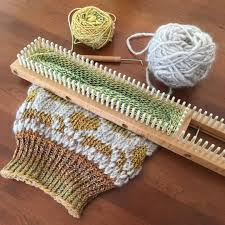
Knitting frames come in a wide range of sizes and shapes. Straight plastic frames can be hooked together to make full-sized garments and afghans. Knitting spools or circular knitting frames are usually suitable for knitting only a limited selection of shapes. You can, however, use circular knitting frames with eight or more pegs to make flat strips, which can then be sewn, braided, or woven together to make legs for stuffed animals, sleeves for dolls’ clothes, strands for braided rugs, or even fingers for thumbs or mittens.
#9: Beadwork. You need: lots of beads (patterns published in adults’ craft magazines will specify the numbers and colors, or you can design your own pattern on graph paper and count the dots), and string or cord for stringing them on. You can also use pins or wires to make bead sculptures.
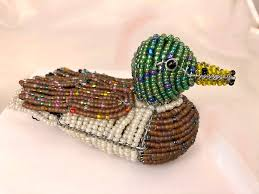
#10: Nature Crafts. You need: twigs, cones, leaves, seed pods, and other things found on nature walks; glue or paste; paint, ribbons, and thread for embellishment, if any.

What you find on a hike will suggest other things to make with nature crafts. You might use glitter glue or paint to make holiday decorations, hang objects up to make a mobile, glue them into position to suggest a house or boat or some other image, even use them to build or furnish a dollhouse.
Friday, February 15, 2019
Book Review: With Scissors and Paste
Title: With Scissors and Paste
Author: Leila
M. Wilhelm
Date: 1927,
1948
Publisher: Macmillan
ISBN: none
Length: 117
pages
Illustrations:
many diagrams
Quote: “You
may cut a pattern, or draw it, or tear. it. But do not make it too small.”
This advice
comes form the first pattern, which is for a stand-up cardboard Christmas tree.
Other things primary school readers can learn to make from directions in this
book are “window pictures,” place cards, scrapbooks, dollhouses and furniture,
an oldfashioned “Fifth Avenue bus,” animals and a circus wagon, a Noah’s Ark, a
diorama, a toy village, toy cars and trains, and an “express cart.”
They will,
of course, have a quaint, almost antique look about them. They can be made
using currently available supplies. The trademark “Tempo paints” were nontoxic,
non-staining tempera paints, suitable for use on cardboard, wood, or paper.
Similar products are available in craft stores.
Instructions
are given for making the projects from paper and cardboard. The “express cart”
is problematic. It’s big enough for toys or a small child to ride in, but won’t
give much satisfaction unless adults make it in wood.
This was an
unusually well built book. The copy I
resold showed its age more in its quaint illustrations, little boys in
knickerbockers and Fifth Avenue pedestrians in hats and long skirts, than in
any other way. The thick smooth semi-glossy paper lay flat and had resisted
mildew, and the sturdy cloth binding held up through years of library use.
Friday, December 30, 2016
Book Review: Squirrel Hotel
Title: Squirrel Hotel


Author: William Pène du Bois
Date: 1952
Publisher: Viking
ISBN: none
Length: 48 pages
Illustrations: drawings by the author
Quote: “Do you really like squirrels?”
The narrator of this story, a young writer, met an eccentric old man who told him that the old man had built a full-sized Squirrel Hotel and that squirrels had actually stayed in it long enough to play with the gadgets he built in. If the young man liked squirrels enough, the old man promised, one day he’d show the young man where the Squirrel Hotel was and leave it to him. But then several days went by when the old man didn’t come to the place where they had been meeting...and readers are left to wonder whether the whole purpose of the story was to share an idea for a toy William Pène du Bois thought it might be fun to build, or at least to draw.
As with many of Pène du Bois’s early, whimsical books, the main attraction is the drawings. Here the old man is drawn in a lifelike style, and the miniature hotel for the squirrels is a very lifelike model house children might want to make. Whether squirrels would care to stay in it, or whether it would make a good setting for (depending on its proportions) a collection of dolls or stuffed animals, the author leaves child readers to find out.
If you buy this book for a child, be prepared for “Why don’t you make one for me?” or, depending on the age of the child, “Can I make one?”
This is another book I stupidly sold, in real life, before checking its current price on Amazon. It's gone into the collector price range. To buy it here will cost $20 per book + $5 per package + $1 per online payment, and although that would mean $2.50 for the author or a charity of his choice, if he were still alive, it no longer means anything to the author. If you're adding it to a package, because it's a thin book and we charge only one shipping fee per package, sending payment to this web site will save some money over sending payment to Amazon. If you're buying only this individual book, you pay less and in theory I get a small commission if you use the photo link to buy it directly from Amazon. Your call, Gentle Readers. Scroll down, though, to find Fair Trade Books whose authors actually profit if you buy them here.
Thursday, December 3, 2015
Mittens a Child Can Knit
(Reposted from Blogjob)

Seeing this Pixabay image on Blogjob (https://blogjob.com/ideasforindoorliving/old-fashioned-christmas-activities-kids/) reminded me that one of the first few things I knitted was a pair of mittens very similar to the ones the little girl is wearing. I was fascinated by space-dyed yarn too. I used a brushed acrylic yarn, which feels very cozy until it gets wet.
Acrylic yarn is often the cheapest and easiest kind to find in the U.S., and it makes gorgeous recycled fashion doll outfits, but there are good reasons to look for pure cotton or pure wool when you want to knit mittens. Cotton mitts are good for picking up hot or slippery dishes in the kitchen; when they wear out, they make good dishwashing rags. Wool mittens feel prickly when your hands are warm, which makes them self-warming when your hands are cold and wet. Acrylic mittens will turn snow if they're thick enough, and these are thick...but once the snow melts and soaks into the mittens, you'll have cold, wet, soggy mittens that stretch and droop off your hands.
To make a pair of thick, easy mittens, you want about three ounces of any of these yarns, but I seriously recommend buying four ounces, even five if using cotton:
 , or
, or  , or
, or 
Wool: Fisherman's Wool
 , or
, or 
(They'll cost less if you buy them from a local store than if you have them shipped online.)
Experiment with different needle sizes, because following these instructions with different needles will give you different sizes of mittens. I usually use #8 needles for most projects that use the yarns mentioned above, but since my hands are somewhere in between the standard "small woman's" and "large child's" sizes, if I want to knit these mittens for myself I'll use #6 needles. Plain straight needles, the 10" length, are fine for this pattern.
(If you already have a set of four or five double-pointed needles for knitting more traditional seamless mittens, feel free to join the stitches into a round and knit this type of mittens seamlessly.)
- To find out how many stitches to cast on, measure around the hand of the person who will be wearing the mittens. Make a test swatch of 30 stitches and measure how many stitches per inch you get with the needles you use. The most useful mittens are knitted a little more firmly than a sweater would be--you want them to be snowproof rather than drapey--so you want 4.5 to 5.5 stitches per inch; if you get fewer, try again with smaller needles. Multiply the number of stitches you get by the number of inches around the person's hand to get the right number of stitches for these mittens. This will probably be about 40 stitches for an adult, 30 for a child--but do the math first.
- Since our model is a child, let's say the Right Number of Stitches is 32. Cast on 2 stitches fewer than the Right Number, which would be 30. Work K2P2 rib for 1 to 3 inches, or as long as the person wants the cuff of the mitten to be.
- Shape the palm by increasing 2 stitches and changing to stock stitch (knit the right-side rows plain, purl the wrong-side rows). Work 4 rows straight stock stitch.
- Shape the thumb. This is the most complicated part of making a mitten. Starting (for the sake of simple pattern writing) on a knit row, knit 1 stitch less than half the total number--for a 32-stitch mitten, knit 15 stitches. Increase (M1) by lifting up the thread between the last stitch knitted and the next one on the needle, and knitting it through the back loop. Knit 2 stitches. M1 again. Knit to the end, and purl back.
- For as many rows as it takes to cover the part of the hand that is joined to the thumb, knit the same number of stitches you did on the first row of this Thumb Gusset Section, M1, knit 2 more than you did between the M1's on the previous row, M 1, knit to the end, and purl back. For a typical 32-stitch mitten, this will be 10 rows, and the last row of thumb shaping will be "K 15, M 1, K 10, M 1, K 15."
- On the next purl row, separate the thumb from the hand: P 27, wrap and turn, K 12, wrap and turn, then stock st on these center stitches only until the thumb is about 2 rows shorter than the person's actual thumb. (For a child, you can knit the thumb and hand a little too long in case the child's hand grows.)
- On the next knit row, decrease 4 by *K 1, K2tog, K 1* across the row. If this leaves 8 stitches, purl back. If you've made a bigger mitten and this first decrease row leaves more than 8 stitches, decrease by *P 1, P2tog* across the row, and if necessary by *K2tog* until 8 stitches remain.
- When you have 8 stitches, purl back if necessary, then *K2tog* and break the yarn leaving about a 12" end. Put this end through a yarn needle and draw it through the last 4 stitches. You can sew the thumb together now, or later.
- Return to the hand. Pick up 2 stitches from the base of the thumb (if you don't know how this is done, ask someone to show you). Stock stitch on 32 stitches until the mitten is long enough to reach from the person's wrist to the person's little finger.
- K 1 stitch. K2tog. K to 3 stitches before the halfway point--10 stitches, if you're making a 32-stitch mitten. K2tog. K 2. K2tog. K to the last 3 stitches. K2tog. K 1. Purl back.
- Repeat the first decrease row by K 1, K2tog, K 8, K2tog, K 2, K2tog, K 8, K2tog, K 1, or similar shaping for the size you're making. Purl back. Continue to decrease until the mitten is as long as the person's hand from wrist to middle finger.
- Divide the remaining stitches in the middle and bind them off together. Sew the open edge together.
- Commercial mittens come in pairs, so if you bought only 3 ounces of yarn, you can knit one more mitten and call it a day. However, if you have 4 or 5 ounces of yarn, you may knit two more mittens, because people tend to lose one mitten during the winter.
- Remember (or remind the person) to enclose the pair of mittens in a pillowcase before putting them in the washing machine, to avoid having to pick one mitten out of the washing machine. (Washing machines really do "eat" mittens; more about that at https://priscillaking.blogspot.com/2011/11/green-tips-for-maintaining-household.html .)
- Optional: For a child who's small enough, or an adult who's confident and practical enough, to appreciate "stringalong" mittens, you may crochet a string, tie it through one of the loose cast-on stitches at the wrist of each mitten, and thread it through a coat.
Here's what I meant about the doll outfit: https://blogjob.com/priscillaking/2015/11/04/how-to-knit-mandies-dress/

This is a basic mitten pattern. Similar but not identical mitten patterns, plus patterns for fancier mittens and/or matching caps and scarves, are found in pattern books like these:
 and/or
  by Elizabeth Zimmermann
Urban Knitter  by Lily Chin
by Lily Chin
Folk Mittens by Marcia Lewandowski
by Marcia Lewandowski


Tuesday, June 2, 2015
Book Review: Papercraft
Title: Papercraft
Author: Joseph Leeming
Date: 1949
Publisher: J.B. Lippincott
Length: 84 pages
Illustrations: drawings and diagrams by Jessie Robinson
Quote: “This wallet, which resembles a real leather one, is made by folding a piece of paper. If you use strong wrapping paper...you can safely carry coins, bills and papers in it.”
Years before this book, Joseph Leeming wrote a book called Fun with Paper. He asserts that the seventy folded-paper projects in Papercraft are all new and different from the “classics” in that earlier book. In addition to the wallet, there are some origami flowers and representations of other living things, boats that will float if coated with something waterproof, boxes, gliders, pop-up pictures, whistles, optical illusions, puppets, simple papier-mache, and even a sundial.
Papercraft is recommended to anyone who has paper to recycle and children to amuse. It should be good for several days of frugal and wholesome fun. Tots can learn how to snip, fold, and paste junkmail; tweens and even teens can print, paint, laminate, and decorate their creations and have a booth at a bazaar or decorate for a party.
Should you buy Papercraft from this web site? We have to charge the minimum of $5 per book + $5 per package shipped, and although this price allows us to send payments to living authors of books sold here, Joseph Leeming hasn't had any use for a dollar for almost fifty years. Papercraft was deservingly popular and is still easy to find at other online bookstores. However, if you buy one of the Fair Trade Books discussed below (or above) this post, or some other secondhand book by a living author, we can tuck a clean copy of Papercraft into the package. To order books here, e-mail salolianigodagewi @ yahoo.com.
Thursday, March 19, 2015
Book Review: Buttons to Wear
Title: Buttons to Wear
Date: 1991
Publisher: Design Originals by Suzanne McNeil
Length: 12 pages
Quote: “Buttons to wear as earrings or button covers...we can wear a visible symbol of our talents wherever we go.”
This mini-book explains how to put buttons together using simple precut wooden shapes and plastic covers. These are glued together and decorated with fine-tip markers and other trimmings, acrylic paint, ribbon, doll hair, and so on. It’s a simple craft that requires more patience with itsy-bitsy materials than anything else. The buttons can be used to fasten jackets or worn as accessories.
Some of these buttons come in matched sets, and some in related sets; you could button a sweater with five little “book” shapes, or you could use a square cookie-sheet design, a round fruit-bowl design, a book shape marked “cooking,” a heart marked “I ♥ cooking,” and a round button with a hairnet around a cook’s face, if you succeed in painting all five designs to suit your requirements. Some of the buttons match. Anyway, the booklet contains instructions for what are shown as 19 sets of one-inch buttons and 11 two-to-three-inch lapel-type buttons.
Buttons to Wear is a Fair Trade Book. To buy it online, send $5 for the book + $5 for shipping to salolianigodagewi @ yahoo.com, and we will send 10% of that price, or $1, to Jean Kievlan or a charity of her choice. You pay only one shipping price for as many books (or other things) as can be shipped in one package, so feel free to throw in a few books by deceased authors (or by corporations) when ordering this thin book.
Tuesday, December 2, 2014
Book Review: Twig
Book Review: Twig
Author: Elizabeth Orton Jones
Date: 1942
Publisher: Macmillan
ISBN: none
Length: 152 pages
Illustrations: many drawings, some partly colored
Quote: “Twig stood on the back porch which belonged to the fourth floor of a high sort of house in the city.”
Twig is a rather lonely, imaginative little girl, probably in primary school, like the children who are most likely to read her story. The characters in the adventure she invents for herself include an ice-wagon horse, a cat, a couple of sparrows, an elf dressed in potato skins, a fairy with a fur stole that is indeed a caterpillar, and a magician who takes the elf home with him when Twig gets tired of imagining herself shrunk to elf size.
Twig is a pretty, pleasant little book that nice little girls can read, as it might be at or after a Brownie meeting. It has not become a great favorite, but it will amuse anyone in need of diversion during a time of boredom. The drawings and story line may help crafty little girls build really cheap and interesting dolls’ houses.
As with
Mrs. Jones’s more realistic stories, this book may be too juvenile for one
child but just right for another child in the same class. Boys seldom admit
much interest in stories about a girl and her imaginary friends, but a
particularly talented boy might enjoy making a miniature house out of junk as
much as a girl would.
This book has become a bit of a collector's item, but I'll try to keep the price here down to $5 for the book + $5 for shipping. I doubt that Mrs. Jones needs the dollar. I also doubt that you'll find a much better deal elsewhere.
This book has become a bit of a collector's item, but I'll try to keep the price here down to $5 for the book + $5 for shipping. I doubt that Mrs. Jones needs the dollar. I also doubt that you'll find a much better deal elsewhere.
Subscribe to:
Posts (Atom)


