I read three whole e-books on Wednesday. All of them were seasonal. Those reviews will appear in their season. Here is a review that's not been online for a while.
Title: The Haunted Birdhouse
Author: Flora Gill Jacobs
Date: 1970
Publisher: Coward McCann & Geoghegan
ISBN: none
Length: 74 pages
Illustrations: drawings by Reisie Louette
Quote: "It's a martin house. Martins, you know, are very fond of nesting together in birdhouses that are almost like little apartment houses."
Five-year-old Jamie thinks the elaborate antique martin house looks haunted. Nine-year-old Polly feels "all the scorn of a nine-year-old sister" for this idea...but there is something spooky and strange about the birdhouse! The cat thinks so too!
The mystery stretches out to tantalize readers between ages five and nine. Possibly some nine-year-olds know the perfectly rational solution, but let's not spoil it for them.
This is a nice, cheerful, friendly, spooky but occult-free mystery for primary school readers. If it inspires them to build their own stark, modern-style martin house, all to the good. Even the "ghost" in this story is a fairly nice creature to have around.
Fair disclosure: the copy of this book that I sold was not in good condition. It had not spent forty years in an antique birdhouse, but the children's room in a well-used public library is almost equally hard on books. Then it was stored in a shed, where it was found and greatly appreciated by my frequently annoying cat Bisquit...Bisquit never expressed much interest in the grown-up mystery series by Sneaky Pie Brown, but she thoroughly enjoyed a more juvenile mystery with cat pictures in it. I've never seen a cat show so much interest in a book before. Her stamp of approval was on almost every page!
Right...so this copy is recommended to anyone looking for something to read in a tree house or share with a cat. A clean copy, which I'd be delighted to send you, is recommended to any primary school reader who would like to know what really might haunt an old abandoned birdhouse.
Showing posts with label children's stories. Show all posts
Showing posts with label children's stories. Show all posts
Thursday, July 23, 2026
Friday, January 9, 2026
Book Review: Contes Jaunes
Title: Contes Jaunes
Author: Gérard A. Dubé and Andrée Soucie-Dubé
Date: 1986
Publisher: Guérin
ISBN: 2-7601-0077-4
Length: 176 pages
Illustrations: many colorful drawings
Quote: “Contes jaunes rassemble une variété de textes conçus spécialement pour l’initiation à la lecture chez les débutants.”
In other words, this is a French Canadian first grade reader. It will also work for home-schooled students, or students at schools that are enlightened enough to offer language immersion programs in the primary grades.
It might be too juvenile for high school students learning French. This is the sort of book n which dogs playing in the snow are shown not only sitting on sleds and making snowmen, but sitting down in a human position. There’s a Chicken Little story in which what hits Petit Poussin on the head is an apple, and the wise old owl tells him to eat it up quickly before someone else does. And Frère Jacques, and a French version of “This little piggy,” and similar nonsense.
In an ideal world, adult readers would be eager to share this book with children. We don’t live in an ideal world. We live in a world where, after France balked at supporting our war with Iraq, the few U.S. libraries that stocked children’s books in French discarded their collections...even when the communities the libraries served included Haitian, Algerian, and Ivorian immigrants. Still, one can hope that American adults will recover their senses. French may be less of an international language than it once was but it’s still the language in which many of the world’s great books were written.
Sunday, January 4, 2026
Book Review: Uncle Arthur's Bedtime Stories Series 41
Title: Uncle Arthur’s Bedtime Stories Series 41
Author: Arthur S. Maxwell
Date: not shown
Publisher: Stanborough Press Ltd
ISBN: none
Length: 87 pages
Illustrations: photographs, mostly in color
Quote: “I thought of all the boys and girls who are just like Suzanne’s little doggie. Lively, mischievous, and naughty as can be—but their mothers love them anyway.”
In the preface to this book, Maxwell explains, “When I finished writing Bedtime Stories 40 about a year ago the thought passed through my mind that it might be a good place to stop. Since then, however, the story ideas have come flooding in so fast that what could I do but go on?”
For more than forty years, “Uncle Arthur” had been collecting true stories from churches all over the English-speaking world and published them in his moral, easy-reading, illustrated Bedtime Stories books. Publishers bought the right to rearrange these stories in new editions as the original editions were used up, during and after Maxwell’s lifetime, so over 60 volumes of Bedtime Stories exist.
Bad news for some online readers: these stories contain none of the self-mocking winks and nudges a series of “uncle’s bedtime stories” might suggest to you. Maxwell was absolutely serious about his life mission of supplying true and edifying stories for children.
How did actual children relate to these occasionally preachy books? When Maxwell went to Australia, he reported in the preface to all-new volume 41, he met “fathers and mothers, grandfathers and grandmothers, who read the books when they were children. What a welcome they gave me!”
I was a child of the appropriate age for these books, that year (it would have been around 1970). I had three volumes of Bedtime Stories, one original and two of the first rearranged edition (Maxwell lived to see at least two rearranged collections). It’s a painful duty to tell you that the Bedtime Stories weren’t the favorites I practically memorized. I enjoyed them, though.
I have met a few people, mostly lifelong Seventh-Day Adventists, who don’t remember liking the Bedtime Stories. “All those morals are enough to give any child a guilt complex.”
Funnily enough they didn’t give me a guilt complex. I think more depends on the family than on the stories. It won’t do first-graders any harm to read about the doggie who chewed up the new shoes and ran over the freshly washed car with his muddy feet, or the stray lamb who had to be chased back to the flock, or the boy who thought prayer might have saved a misplaced toy from being burned at the dump...if they’re allowed to enjoy the stories as stories, if parents don’t preach or nag or use the stories as punishments.
Volume 41 is hard to find in the U.S., and so far as I know none of these stories was included in the reprint collections. My copy was printed in England. I don’t know whether any copies were printed here. The period-perfect photos give the book a special nostalgic appeal. It’s aimed at children who are learning to read and/or still being read to, but I think it’s worth reading once, at any age, just as a piece of popular culture.
Wednesday, December 17, 2025
Book Review: You and I and Yesterday
This review appeared here many years ago, when I had a physical copy of the book for sale. It sold. These short essays go all through the year; some of them fit into the Christmas theme.
Author: Marjorie Holmes
Publisher: William Morrow & Company
Date: 1973
Length: 191 pages
Amazon ASIN tracking number: B002K4YKZK
Illustrations: line drawings, presumably by the author
Quote: "[T]he Good Old Days. Were they all that good? No, frankly not...The pain and humiliation of that desperate time left scars. But the Depression stiffened our backs and toughened our moral muscles. Nobody brainwashed us into thinking that the government owed us a living."
Marjorie Holmes was a gracious, gentle, witty Washington hostess. When she died in 2004, she was 91 years old. Women of her age and type did not beat people over the head with their religious and political views. Holmes was both Christian and conservative--and that's "conservative" in terms of my grandparents' generation--but, although this book describes the background of a Christian conservative growing up in the early twentieth century, it's almost pure reminiscence. Vivid sensory images. Adults' chores, children's games, the food people ate, the cars they drove, the movies they watched. You and I and Yesterday is a work of cultural history that was targeted toward a Christian conservative market...but if you're not Christian or conservative, you can still enjoy reading it.
Holmes' classes and conversation were liberal, in that sense, too. It used to be expected of Washingtonians.
What readers learn about in this book are kites, Maypoles, roller skates, gardening, parades, street games, canning vegetables, making fudge, silent movies, street peddlers, playgrounds, hanging out laundry on the line, haymaking, aprons, mail-order catalogues, singing as evening entertainment, antique cars, circuses, Chautauquas, Christmas trees, and a few brief glances at the personalities of Holmes' parents.
You and I and Yesterday can be shared with children. In fact it begs to be shared with children. The vocabulary should be an enjoyable challenge to middle school readers, and the reminiscences of things children did in the 1920s and 1930s should inspire many hours of frugal fun.
Tuesday, April 10, 2018
Book Review: Lazy Liza Lizard's Tricks
Title: Lazy Liza Lizard’s Tricks


Author: Marie Curtis Rains
Date: 1953
Publisher: Winston
ISBN: none
Length: 119 pages
Illustrations: drawings by Vera Neville
Quote: "‘Don’t be hanging’round here,’ said Mr. Snake. Liza got up. ‘You say Liza’s hanging around here, Mr. Snake? Is she on your bushes?’”
Before this book, Rains had written a book called Lazy Liza Lizard containing animal fables. (You know, the kind where the smarter animals, though described as adults, are characterized like ten-year-old children, and the animals whose mistakes are supposed to furnish a lesson are more like four-year-olds.) At the end of that book Liza had reformed and stopped playing tricks like stealing the other animals’ food right out of their cooking pots. Children wanted more stories about Liza’s tricks. Rains knew more stories of that kind, so, as the publisher explained, Lazy Liza Lizard’s Tricks was a prequel about some of the other things Liza had done before she reformed.
Sample: While arrogant Snake and complacent Frog are waiting for their six new potatoes to boil, Lizard takes the whole pot home and sets it over her fire. Frog sees a feather bolster hung out on a bush to air, drops it down the chimney, and steals the pot back as Lizard’s house fills with smoke. Strangely enough the pot now contains only four potatoes. Possibly, Frog observes, “that’s the way it should be.”
Who ever heard of a snake, a frog, or a lizard wanting to eat a potato? Liza is fairly hard to miss as a fictional stand-in for the child audience’s even younger siblings—a nuisance to whom the other animals have to be kind—in these stories. The stories themselves are part of the transition from oral-tradition folk tales to animated cartoons. Nobody behaves well enough to be a good role model for human children. Nobody gets badly hurt. The stories draw on earlier forms in European and African folklore, and have been transplanted to the Southern States in the 1910s or 1920s. The sunbonnets and mufflers and steam trains, in both drawings and narrative, are delightfully nostalgic.
Lazy Liza Lizard’s adventures never were on my top ten list of favorite books, as a child, but they were on my top hundred list. They’re not p.c. but they’re free from the cloying attempt to write different dialects that ruined some similar storybooks for baby-boomers. Adults who are interested in folklore, or children who want an easy, funny read with appealing pictures, might want to keep the stories of Liza Lizard alive.
But the price...would you look at those prices on Amazon? As public libraries rushed to discard their copies of these books, whether the books were badly worn or not, non-library-discards leaped into the collector price range. What I have is a library copy--by me, the wallpaper sample lovingly cut to shape to protect the cover adds nostalgia value, thank you very much--and discarded because of mold; I've cleaned it, but there will never be any guarantee that mold won't grow back in damp weather. In real life that copy won't cost $350, but good-as-new copies ordered online may cost that much, or more if prices keep rising.
Currently, to purchase these books here, you'll need to send $350 for Lazy Liza Lizard's Tricks, $200 for Lazy Liza Lizard, plus $5 for the package, to Boxholder at P.O. Box 322, or add $6 to the Paypal payment to the account you get by e-mailing salolianigodagewi at Yahoo. Both books will fit into one package, along with probably two more of similar size.
Currently, to purchase these books here, you'll need to send $350 for Lazy Liza Lizard's Tricks, $200 for Lazy Liza Lizard, plus $5 for the package, to Boxholder at P.O. Box 322, or add $6 to the Paypal payment to the account you get by e-mailing salolianigodagewi at Yahoo. Both books will fit into one package, along with probably two more of similar size.
Sunday, January 21, 2018
Book Review: Faith Trust and Pixie Dust
A Fair Trade Book


Title: Faith Trust and Pixie Dust
Author: Mark I. Pinsky
Author's web site: http://markpinsky.com/
Date: 2004
Publisher: Westminster John Knox
ISBN: 0-664-22591-8
Length: 267 pages plus acknowledgments, bibliography,
and index
Quote: "These film essays vary in approach. Some
are primarily critical readings of the narratives, highlighting elements of
faith and values,and may provide a helpful guide for children's caretakers.
Others probe deeper or take off in a different direction...I have chosen not to
dwell unduly on the differences between the Disney features and the source
materials from which they have been adapted...it would be difficult to argue
that...the printed word could in any way compete with images on the screen for
impact."
Well, right there in the introductory
"Methodology" chapter, in a nutshell, is what I like least about this
book.
My parents didn't go to theatres, and videos weren't
sold for home viewing when I was a child, but my parents did approve of the
bland, sappy, but generally wholesome Disney cartoon movies for children. I
learned to read by reading Disney movie stories: Snow White, Pinocchio, Mickey
Mouse as Sorcerer's Apprentice, Dumbo, Bambi, Cinderella, Alice in Wonderland,
Peter Pan, the Lady and the Tramp, Sleeping Beauty, 101 Dalmatians, the Sword
in the Stone. (Those are the topics of chapters 3 through 14 in this book.)
Also (minimally discussed because they were short, or not discussed because
they weren't cartoons) Brer Rabbit, Johnny Appleseed, Peter and the Wolf, Robin
Hood, the much criticized MACOS tours of countries like Scotland and Morocco,
Niki and Neewa (the Nomads of the North), the Swiss Family Robinson, Old
Yeller, the Odyssey of the Otter...I loved those stories, and in his turn my
brother did too.
Then we grew up, found the original books in the
library, and realized how vastly superior they were, how Disney had desecrated
good stories and cheated people out of the fun of reading stories that were
more interesting and complicated than Disney's stale babyfood. Pinocchio
originally had lots more adventures. Cinderella in The Glass Slipper (by
Eleanor Farjeon) did a lot more than sit around feeling sorry for herself.
Alice in Wonderland wandered through all sorts of delightful wordplay the
cartoon version missed. Perdita wasn't even Pongo's original mate in the real
101 Dalmatians
(by
Eleanor Farjeon) did a lot more than sit around feeling sorry for herself.
Alice in Wonderland wandered through all sorts of delightful wordplay the
cartoon version missed. Perdita wasn't even Pongo's original mate in the real
101 Dalmatians  story. The Sword in the Stone
 was a serious story,
good enough to be worth rereading even as an adult. Even Peter Pan and Wendy
was a serious story,
good enough to be worth rereading even as an adult. Even Peter Pan and Wendy ,
a dreary sentimental book, full of tired muddled metaphors for sex and death,
that Brigid Brophy
,
a dreary sentimental book, full of tired muddled metaphors for sex and death,
that Brigid Brophy skewered as "teasing children who want to know
where babies come from" and that Dave Barry
skewered as "teasing children who want to know
where babies come from" and that Dave Barry has profoundly improved by
discarding James Barrie's what-was-he-thinking original and working
directly from the movie, at least had more to it than the Disney
version, even if what Disney lost was pretty "stoopid."
has profoundly improved by
discarding James Barrie's what-was-he-thinking original and working
directly from the movie, at least had more to it than the Disney
version, even if what Disney lost was pretty "stoopid."
(by
Eleanor Farjeon) did a lot more than sit around feeling sorry for herself.
Alice in Wonderland wandered through all sorts of delightful wordplay the
cartoon version missed. Perdita wasn't even Pongo's original mate in the real
101 Dalmatians story. The Sword in the Stone was a serious story,
good enough to be worth rereading even as an adult. Even Peter Pan and Wendy,
a dreary sentimental book, full of tired muddled metaphors for sex and death,
that Brigid Brophy skewered as "teasing children who want to know
where babies come from" and that Dave Barry has profoundly improved by
discarding James Barrie's what-was-he-thinking original and working
directly from the movie, at least had more to it than the Disney
version, even if what Disney lost was pretty "stoopid."
For me as an adult, a study of the art of Walt Disney
would begin with C.S. Lewis's reaction to "the simpering dolls intended
for our admiration" as more horrific than the demonic figure (and in Sleeping
Beauty Maleficent gets pretty demonic; I wouldn't share the original movie,
where she invokes "all the powers of Hell," obviously not referring
to the tourist town in Michigan, and turns into a monstrous dragon, with a
nervous child). From there it would go on to detail how much was lost when
classic short stories were expanded, or classic novels cut down, into movies.
It would assert that, for those children who happen to be ear thinkers, images
on a screen can't compete with printed words, and go on to trace how Disney's
neverending quest for perfectly inoffensive pictures had, in fact, offended a
lot of people, including but not limited to the people who had appreciated the
books.
And it would mention, as Pinsky does mention toward the
end of this book, the "evil subliminal imbedding" in the cartoons. As
Pinsky confirmed by asking the animators themselves, animators get bored
redrawing scenes so that they seem to move; sometimes they'd draw something
offensive or merely silly into a picture and see whether someone else would
notice and remove it. Was the word "sex" spelled out in clouds?
Actually, the animator admitted, it was "sfx," "special effects,"
but yes, it's there. The good news is that such occasional subliminal imbedding
has not been shown to affect human behavior; deliberately imbedding
"popcorn" into movies turned out not to increase the sales of
popcorn.
Pinsky's primary approach, highlighting the values in
the plots of Disney movies, may be useful in its own way. If you want to watch
movies with children rather than reading books to them, here is your guide to some
classic movies many children enjoy.
I think it's also helpful that Pinsky is Jewish. Two
reasons:
(1) Judaism is not evangelical; its emphasis has tended
to be on teaching the young "what we do" and supposing that a just
and merciful God probably relates to all those People Different From Us in
other ways.. This gives Pinsky an edge on writing objectively about how much
Christianity, Paganism, or Islam there is in one movie or another, and whether
it reaches levels that offend a reasonable Jewish viewer. (This is something
many Christians want to know. We are Christians and we're not going to
stop talking or writing about that, but we don't intend, primarily, to offend people.)
(2) Although Walt Disney specifically purged his movies
of overt references to Christianity, or even to God, to avoid offending Jewish
viewers, and although he worked with Jewish colleagues, he's been accused of
anti-Jewish bigotry. Pinsky considers the evidence and finds Disney not guilty.
On the evidence Disney seems to have known enough Jewish people, without
prejudice, to have liked some and disliked others as individuals. (The wolf
acting out the stereotype of a Jewish peddler, in the original Three Little
Pigs, was apparently based on what the Disney brothers had watched
"well-known Jewish comedians portray" and written in as, according to
a later critic, "a positive reference to the trust most Americans of the
time had in Jewish peddlers." Nevertheless, Disney reworked the movie.)
What may be less helpful is that, when Pinsky
"probes deeper and takes off in a direction," he seems to get stuck
in a rut that leads in only one direction: Is the movie politically correct?
Does it, shudder, quake, stereotype anybody?
It's enough to trigger a backlash in readers: How bad
is it if a fictional character does resemble a stereotype? Stereotypes
don't come to exist without some base in reality. Stereotypes bore readers
because they have nothing new to tell us. Stereotypes are the native language
of movies; where a memoir would tell you "I felt these emotions because
what was said stirred up these memories," and a novel would have given you an image that
stirs up or builds memories for readers too, and a journalistic or historical
version would tell you the consequences of what was said, a movie gives you a
stereotype, usually a face that is presumed to look the way the character's
face would look in reaction to an emotion. (Facial expressions are sometimes
assumed to be a universal language of emotions. They are not. At
communicating whether the feeling has anything to do with the conversation or
is strictly a physical feeling about something going on in the person's
body, much less communicating the degree of emotion or the mix of emotions or
what the person is going to do about it, one word can be worth a thousand
pictures.) Movies work, to the extent that they do, by manipulating
stereotypes. What flashes around the screen is not a living person, but a set
of stereotypes that attempt to evoke something about a living person.
Ooohhh, but some stereotypes, the ones about
currently active pressure groups, are hurtful...
Nothing brings out my sadistic side like this whole
concept of "hurtful." People who have actually been hurt don't whine
about what is merely, intangibly "hurtful" in some stereotyped way
that's usually being invoked as a camouflage to describe something that's more
effective than some more recent effort they, or some "creative"
friend of theirs, has wrought. The Taming of the Shrew works if it's
played strictly for laughs, as a
little-bully-quietens-down-when-exposed-to-bigger-bully story; it does not work
if you try to take it seriously as a statement about women or marriage or the
hope for peace...but, because the whole point of the story is that the mean
girl is not beaten or raped but simply beaten at her own game, it's not
subject to criticism as being "hurtful to women." Spare me.
Women are tougher than that, and also more individual.
works if it's
played strictly for laughs, as a
little-bully-quietens-down-when-exposed-to-bigger-bully story; it does not work
if you try to take it seriously as a statement about women or marriage or the
hope for peace...but, because the whole point of the story is that the mean
girl is not beaten or raped but simply beaten at her own game, it's not
subject to criticism as being "hurtful to women." Spare me.
Women are tougher than that, and also more individual.
works if it's
played strictly for laughs, as a
little-bully-quietens-down-when-exposed-to-bigger-bully story; it does not work
if you try to take it seriously as a statement about women or marriage or the
hope for peace...but, because the whole point of the story is that the mean
girl is not beaten or raped but simply beaten at her own game, it's not
subject to criticism as being "hurtful to women." Spare me.
Women are tougher than that, and also more individual.
Stereotypes of whole demographic groups of people in
the arts have hurt people whenever they've become normative. It never
hurt anybody to recognize that there are passive, wimpy girls like Disney's
Cinderella and that some of them do occasionally "luck out" and get
what they've been whining for.. (Whether they like it when they get it is
another matter; as Gregory Maguire reminded us in Confessions of an  Ugly
Stepsister, in historical fact the prince who invited all the single women
in the realm to the ball was free to marry a commoner because he was dying.)
What has, in the past, hurt women writers and women audiences has been that
publishers and movie-makers have refused to recognize that more interesting
girls, like Farjeon's Ella, or like Maguire's, or like Amelia Earhart or Helen
Keller or Hedy Lamarr, also exist; for too many years the high-paying
publishers, and all the Hollywood movie-makers, wanted to define every
female character as Disney's Cinderella. That hurt a generation of women's
sales figures, and the next generation's ability to enjoy contemporary fiction,
rather badly.
Ugly
Stepsister, in historical fact the prince who invited all the single women
in the realm to the ball was free to marry a commoner because he was dying.)
What has, in the past, hurt women writers and women audiences has been that
publishers and movie-makers have refused to recognize that more interesting
girls, like Farjeon's Ella, or like Maguire's, or like Amelia Earhart or Helen
Keller or Hedy Lamarr, also exist; for too many years the high-paying
publishers, and all the Hollywood movie-makers, wanted to define every
female character as Disney's Cinderella. That hurt a generation of women's
sales figures, and the next generation's ability to enjoy contemporary fiction,
rather badly.
Ugly
Stepsister, in historical fact the prince who invited all the single women
in the realm to the ball was free to marry a commoner because he was dying.)
What has, in the past, hurt women writers and women audiences has been that
publishers and movie-makers have refused to recognize that more interesting
girls, like Farjeon's Ella, or like Maguire's, or like Amelia Earhart or Helen
Keller or Hedy Lamarr, also exist; for too many years the high-paying
publishers, and all the Hollywood movie-makers, wanted to define every
female character as Disney's Cinderella. That hurt a generation of women's
sales figures, and the next generation's ability to enjoy contemporary fiction,
rather badly.
But, now that it's over, spare us the whines about how
older fiction with passive "heroines" needs to be buried--regardless
of whatever other merits it has or doesn't have--because any portrayal
of a passive "heroine" is sooo "hurtful." Bah, humbug, and
also pooh. That's "pooh" as in Winnie the ..., a charming
storybook that might have been better if Kanga had had more lines, but that
works just fine as a story about a little boy's imagination of all his toys as
little boys if they're not designed to look unavoidably like mommies, and that
does absolutely no harm to little girls who can now read it along with other
stories where different kinds of lively, active female characters have plenty
of lines.
..., a charming
storybook that might have been better if Kanga had had more lines, but that
works just fine as a story about a little boy's imagination of all his toys as
little boys if they're not designed to look unavoidably like mommies, and that
does absolutely no harm to little girls who can now read it along with other
stories where different kinds of lively, active female characters have plenty
of lines.
..., a charming
storybook that might have been better if Kanga had had more lines, but that
works just fine as a story about a little boy's imagination of all his toys as
little boys if they're not designed to look unavoidably like mommies, and that
does absolutely no harm to little girls who can now read it along with other
stories where different kinds of lively, active female characters have plenty
of lines.
Or, more to the point: Disney Studios' Aladdin,
produced long after the Disney brothers' death, is true to the Disney tradition
of being vapid and shallow and silly. Eisner didn't want the Disney movie list
to discriminate; Disney always meant it to present "simpering dolls"
of every ethnic type from around the world, to desecrate every available
artistic tradition impartially. And yes, the grandfather in Peter and the
Wolf, of whom my brother once said, pointing to the picture in our book,
"Is that the grandfather or the wolf?", gave some of us a certain
image of what Russian people look like that lasted until we started to see them
venturing into warm climates and peeling off the dead animals' skins, and wotta
surprise that they look just like other humans underneath. And Pinocchio is
ineffably Italian, too. Why didn't Pinocchio and Geppetto shape my generation's
unspoken expectation of what Italian people look like? Because we saw real
Italian people, both Italian-American immigrants, and images of Italians doing
their own thing in Italy. Many of us didn't know any Russian-American
immigrants, and the images we saw of people in the bad old Soviet Union seem in
retrospect to have been chosen to support the idea that they all dressed
up in bearskins because they intermarried with bears. War propaganda, even
during a "cold" war, is harmful--by design. But the cure for
the image of the grandfather in Peter and the Wolf was not to suppress Peter
and the Wolf, which is actually a rather delightful introduction to
classical music for children; it was more images of good-looking Russian
athletes.
Eisner, I suspect, wanted Muslim or Arab-Americans to
celebrate Aladdin as a step toward interfaith dialogue, and was
disappointed that they didn't like it. Because they hadn't been conditioned
by two generations of mass-market stupidity, that's why! Aladdin is a set
of caricatures of stereotypes of the Arab countries, just as Sleeping Beauty
is a set of caricatures of stereotypes of the European countries. Nufsed. I
don't blame Muslims for being disgusted by Aladdin in the same way Lewis
was disgusted by Sleeping Beauty, and for the same reasons, but the
remedy is not to suppress Aladdin and wail about how the main characters
(deeply tanned, with black hair and huge dark eyes and Arab-style clothes)
don't look "Arab" enough, so "all the Arab characters"
(meaning the minor characters caricatured as mean or foolish people, not
counting the Genie, who's not human) "are violent or very nasty," and
that makes Aladdin "hurtful." I think, historically, part of
the problem is that the Arabian Nights stories were collected from all
over the world and Aladdin was originally Asian not Arab--which might be what
the cartoonist was trying to say by drawing him from what I suspect was an
Indian model--but then, too, it's a long step from "Badroulbadour" to
"Jasmine" or from Aladdin's Arabian Nights adventure to the
Disney plot, so who cares. I watched the movie and I recall plenty of
uncharacterized animated images of vendors and buskers and beggar children who
were neither violent nor nasty; maybe the whiner seriously thinks that all real
Arabs' faces look like the way Americans draw facial expressions that stereotype violent or nasty intentions, but that's still not
the real problem, nor is it a solution. The solution is for Muslims to get busy
writing children's stories, and making videos of them for those who prefer
videos, that Muslims can actually like, in the same way Lewis liked The Wind in the Willows  and Animal Farm
 . American children badly need stories
about Arab people that are neither fantasy fiction nor cartoon movies...so Arab
people need to stop whining and start writing, translating, and filming.
. American children badly need stories
about Arab people that are neither fantasy fiction nor cartoon movies...so Arab
people need to stop whining and start writing, translating, and filming.
and Animal Farm. American children badly need stories
about Arab people that are neither fantasy fiction nor cartoon movies...so Arab
people need to stop whining and start writing, translating, and filming.
For me Pinsky's obsession with stereotypes is not as
useful as his focus on the moral values portrayed in the stories.
That said, if you like cartoon movies and want to share
them with children, Pinsky has given you a wonderful guide to choosing from the
classics of the genre. Should Pocahontas, who left not a word about her
spirituality beyond the fact that she eventually joined the Church of England,
have been shown practicing a very twentieth century New Age impression
of a Native American religion that, like cartoon Pocahontas herself, belongs to
the Plains not the Coast? Is Robin Hood a hero you want to discuss with your
children? Does it matter that the Deep South accent grotesquely assigned to the
monkey chief in Mowgli belonged to a White actor, that "King
Louis" was named after that actor rather than Louis Armstrong? (Oh,
please...the voice was so obviously not Louis Armstrong's.) Pinsky notes the
details and leaves you to decide.
And, if you don't like cartoons, don't want to watch
any, and would prefer a Cliff's Notes approach to this aspect of twentieth
century U.S. pop culture, Faith Trust and Pixie Dust can hardly be
recommended enough. Here are well written, accurate, terse, and enjoyable
summaries of thirty major Disney cartoon movies. I can testify that they bring
back memories of the movies I've watched and stories I've read; I'd trust
Pinsky's summaries as a guide to which, if any, of the newer movies I would or
would not be willing to sit through.
Pinsky's web site indicates that he's sold enough of his books about the spiritual values reflected in pop culture to have dropped that thread and changed his focus to historical studies. So, his earlier books, about the values or "gospels" of Disney movies and "The Simpsons" cartoons , are now Fair Trade Books; they're more widely available secondhand than new, and you can get them for lower prices, but when you send this web site $5 per book + $5 per package + $1 per online payment, we'll send $1 to Pinsky or a charity of his choice. (If you want both Faith Trust and Pixie Dust (The Gospel According to Disney) and The Gospel According to the Simpsons, you'd mail a postal order for $15 to Boxholder, P.O. Box 322, or e-mail salolianigodagewi for the correct current Paypal address to send $16, and Pinsky or his charity would get $2. Contact information is at the bottom of the screen, below the Amazon widget.)
, are now Fair Trade Books; they're more widely available secondhand than new, and you can get them for lower prices, but when you send this web site $5 per book + $5 per package + $1 per online payment, we'll send $1 to Pinsky or a charity of his choice. (If you want both Faith Trust and Pixie Dust (The Gospel According to Disney) and The Gospel According to the Simpsons, you'd mail a postal order for $15 to Boxholder, P.O. Box 322, or e-mail salolianigodagewi for the correct current Paypal address to send $16, and Pinsky or his charity would get $2. Contact information is at the bottom of the screen, below the Amazon widget.)
For Pinsky's recent contribution to North Carolina history, Met Her on the Mountain, go here.
Sunday, July 31, 2016
Book Review: Uncle Arthur's Bedtime Stories Volumes 1-4
Title: Uncle Arthur’s
Bedtime Stories, Volumes 1-4
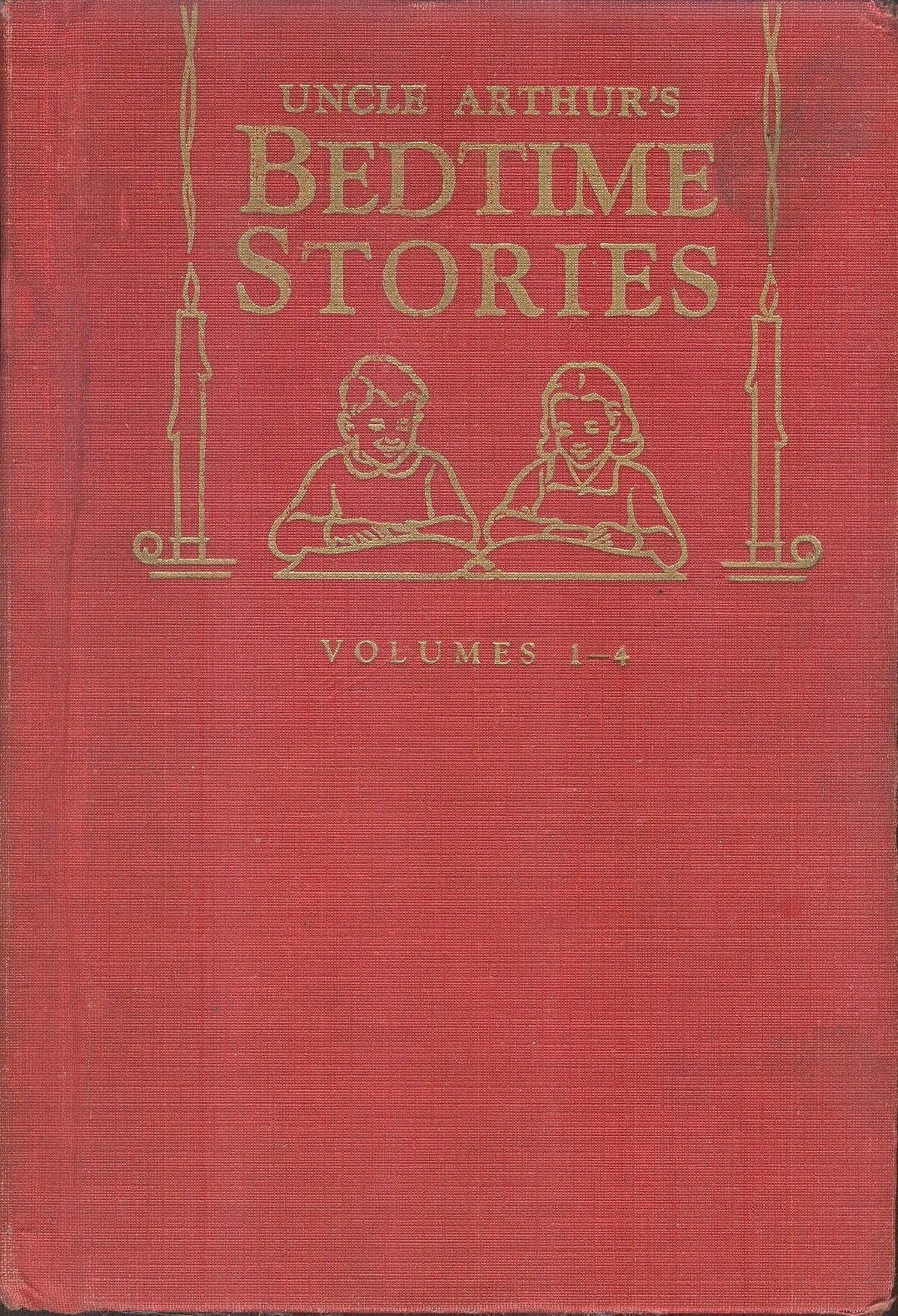

(Hurrah for Amazon for coming right up with a beautiful image of the first omnibus edition of Maxwell's first four collections of "Bedtime Stories." Only $13...yes, and check out the next seller's price!)
Author: Arthur S. Maxwell
Date: 1927
Publisher: Review & Herald
ISBN: none
Length: each reprinted volume is paginated separately—over
300 pages
Illustrations: black-and-white drawings and photos
Quote: “But there were two Carolines…the home Caroline and
the school Caroline…[T]he home Caroline was a cross, pouty, grumbly, growly,
and disobedient Caroline, quite unlike the Caroline that everybody saw outside
and thought such a nice girl.”
Arthur S. Maxwell has gone down in history as the author of The Bible Story , the ten-volume,
splendidly bound and gorgeously illustrated set of Bible stories for children.
This was by no means his only contribution to the Christian literature of the
twentieth century. He was the editor of various church magazines like Our Little Friend, the author of a few
books for adults, and also the author of Bedtime
Stories.
, the ten-volume,
splendidly bound and gorgeously illustrated set of Bible stories for children.
This was by no means his only contribution to the Christian literature of the
twentieth century. He was the editor of various church magazines like Our Little Friend, the author of a few
books for adults, and also the author of Bedtime
Stories.
, the ten-volume,
splendidly bound and gorgeously illustrated set of Bible stories for children.
This was by no means his only contribution to the Christian literature of the
twentieth century. He was the editor of various church magazines like Our Little Friend, the author of a few
books for adults, and also the author of Bedtime
Stories.
There were many, many volumes of Bedtime Stories; more than thirty first editions, each of which was
allowed to go out of print in a few years, and then a variety of reprint
collections containing only the less dated stories with fresh up-to-date
pictures. Volumes 1-4 may have been
the first reprint, an omnibus edition in which four thin books were reprinted
and bound together to make one full-sized book.
“Uncle Arthur” continued to write these stories—all retellings
of stories people reported to him as true—between 1927 and shortly before his
death in 1970.
“The Two Carolines,” which first appeared near the beginning
of Volume 1, probably reappeared somewhere in all the reprint editions. In most
of the Bedtime Stories Maxwell
changed the names and identifying details; this one was apparently shared by a
real “Caroline Herman.” Caroline was cured of lapsing back into bad manners at
home when her teacher overheard her talking rudely to her mother.
Not all the Bedtime
Stories were about how children cured their faults. Several, especially
before the Bible Story became a
separate series, featured retold Bible stories. Some were about historical
events. Some were about nice things children did, and some were about
life-and-death adventures. Volume 2 summarized “The Story of Ships” and “The Story of Balloons and Airplanes”: “In a little while airplanes will probably be
as common as motorcycles,” Maxwell speculated in 1928. “Perhaps boys and girls
will…fly to school!”
Many children who were and were not Seventh-Day Adventists
grew up with one or more volumes of Uncle
Arthur’s Bedtime Stories during the twentieth century. Children who came
from relatively happy families loved these books. My brother and I did.
Nevertheless, a few years after dear old Mr. Maxwell passed
on, the opinion of the Seventh-Day Adventist church shifted. Apparently too
many children who had grown up in S.D.A. homes experienced the Bedtime Stories, even the historical
ones, as one big guilt trip. The moralizing that was actually refreshing to
kids who also watched the occasional Roadrunner or Scooby-Doo cartoon, and even
read the occasional Nancy Drew or Hardy Boys novel, became unbearably
oppressive to kids who weren’t allowed to read other kinds of stories. So
Adventists stopped marketing the books that had formerly been their second best
sellers for children. The ways of Adventists are passing strange.
My copy of Volumes 1-4
is…a survivor, to say the least. It was bound to stay bound, printed on
good-quality “slick” but not glossy paper. It’s survived exposure, two fires, being
stored in barns and chewed by puppies, being hauled around in the backs of
trucks, being cleaned with bleach solutions repeatedly. It’s a tough little volume, and not only
continues to hold together when closed and lie flat when opened, but has even
preserved some of its original dark red color. It's not as pretty as the one somebody else has photographed for Amazon's archives, but still, this book was designed to make
the publishers of ordinary, shoddy, short-lived children’s books feel ashamed
of themselves.
Every book given to children should only be as durable, in
physical quality and in content, as Uncle
Arthur’s Bedtime Stories. Of course, their tone is quaint and corny and avuncular and,
at this period, veddy veddy British. (Maxwell later lived in the U.S. and in
Australia, and cultivated a more widely accessible vocabulary; this book is
English through and through.) Even so, their mix of moralizing with adventures and
inspiration appeals to healthy, happy children, today, probably as much as it
did in 1927. There aren’t enough copies of the original Bedtime Stories to go around. That’s a pity, because every child
deserves at least one.
I can offer this edition online for $15 per copy + $5 per package, today. That will change the minute someone clicks on the Amazon photo link. The good news is that the copy I have for sale in the real world is not in such good condition. Local lurkers may haggle down. Online readers, send $20 to either address at the very bottom of the screen.
Tuesday, June 28, 2016
Book Review: Best Loved Good Night Tales
Title: Best Loved Good
Night Tales
Author: “Parragon”
Date: 1999
Publisher: Parragon Press
Publisher's web site: http://www.parragon.com/
Publisher's more recent book of similar style, but different content:


ISBN: 0-75252-919-6
Length: 479 pages
Illustrations: many anonymous black-and-white drawings
Quote: “Molly was a sheep who loved to wander.”
In the first of these thirty-two bedtime stories, Molly the
sheep is one of several sheep who have been acquired by people who wanted to
take responsibility for only one sheep, not recognizing that sheep prefer to
graze in flocks. In their wanderings these sheep find each other and form a
flock.
The rest of the publisher-"authored" stories are similarly whimsical and
family-friendly. Although this is a thickish book, it’s a paperback, printed on
lightweight paper, suitable for children to read to themselves in bed. It’s
also a nice collection for adults to read aloud to children who are just
beginning to learn to read, or to give to a child to find out whether the child
can really be said to be reading yet.
Whose best loved tales these are may never be known. They
are original stories, not versions of traditional stories, yet they’re not
claimed by an individual author or authors. The suggestion is that these are
the tales children loved best from among those the author(s) made up and told
children, but which children? Which author? This book has not sold very well in the U.S. and has been allowed to go out of print even in the U.K. Of course, since their merger, Parragon has acquired much flashier, new, competing books...Disney, Eric Carle...
If children think of these tales in competition with those
of, say, Dr. Seuss , Beatrix Potter
 , Arthur Maxwell
 , Russell Hoban
 , Joan Aiken
 ,
the Disney movie tie-in collections
,
the Disney movie tie-in collections , or even Thornton W. Burgess
 , it’s unlikely
that these will be their best-loved
tales. On the other hand, there is a stage, just before parents and teachers
really do lose their minds from rereading the tots’ best-loved tales for the
thousandth time, when children reach out for new stories they’ve not heard or
read before. (Often this stage coincides with children’s beginning to read for
themselves.) That is probably the ideal time for a child to receive this book.
, it’s unlikely
that these will be their best-loved
tales. On the other hand, there is a stage, just before parents and teachers
really do lose their minds from rereading the tots’ best-loved tales for the
thousandth time, when children reach out for new stories they’ve not heard or
read before. (Often this stage coincides with children’s beginning to read for
themselves.) That is probably the ideal time for a child to receive this book.
, Beatrix Potter, Arthur Maxwell, Russell Hoban, Joan Aiken,
the Disney movie tie-in collections, or even Thornton W. Burgess, it’s unlikely
that these will be their best-loved
tales. On the other hand, there is a stage, just before parents and teachers
really do lose their minds from rereading the tots’ best-loved tales for the
thousandth time, when children reach out for new stories they’ve not heard or
read before. (Often this stage coincides with children’s beginning to read for
themselves.) That is probably the ideal time for a child to receive this book.
If you miss that precise moment…I wouldn’t worry. Children’s
preferences among the stories that are offered to them are individual. Many
children are attracted to storybook features like colorful pictures, TV or
movie tie-ins, rhyme and rhythm and repetition, and this book doesn’t really
offer any of those features…but you never know when a child may become
interested in sheep and decide a story about sheep is his or her favorite.
Anyway, stories don’t have to be children’s very best loved tales in order to delight children; the mere fact that a
real book is being read aloud by a real adult makes it special.
So, Best Loved Good Night Tales is out of print, it's hard to find on Amazon, and it's gone into collector prices...and I acquired a copy for a dime, and I will now offer it for sale for $65 per copy + $5 per package, and it's not even a Fair Trade Book. If you don't want to pay collector prices, scroll down, and/or check out the Amazon links two paragraphs up. If you do, send payment to either address at the very bottom of the screen.
Monday, June 13, 2016
Book Review: Harry Potter and the Chamber of Secrets
A Fair Trade Book :-)
Title: Harry Potter
and the Chamber of Secrets

Author: J.K. Rowling
Author's web site: http://www.jkrowling.com/
Date: 1999
Publisher: Scholastic
ISBN: 0-430-06487-2
Length: 341 pages
Illustrations: black-and-white drawings by Mary Grandpré
Quote: “Harry Potter…was as not normal as it is possible to
be.”
Of course Harry Potter’s reactions to being an orphaned
wizard, whose relatives loathe him but who can talk to snakes, are as normal as it’s possible to be,
under the circumstances. This may be the secret of his (and his author’s)
success, which reached such fantastic heights that in 1999 adults were admittedly buying and reading these
novels about children.
In case anyone out there doesn’t remember…during the first
three of Harry Potter’s seven years at the Hogwarts School of Witchcraft and
Wizardry, the characters are children,
and their adventures are only slightly more intense than the adventures in an
ordinary school story. In the later volumes the characters are more like “young
adults,” and their stories contain Adult Content, both in the sense of gore and
violence and in the sense that they raise more “adult” philosophical issues.
The philosophical issues raised by the mere idea of a School
of Witchcraft and Wizardry were controversial at the time. Rowling, a member of
a Christian church, pointed out that the “wizardry” at Hogwarts consists of
things medieval Christian adults seriously believed might be possible. Some
Christian readers believed these things are “occult” and shouldn’t be topics of
books Christians read. Others observed along with Washington Post book reviewers that in many ways Harry Potter’s
studies of “wizardry” resembled his generation’s experience of computer
technology, where a minority of people with a modicum of talent were doing
things that had seemed impossible to their elders; how “occult” can metaphors
for computer technology be? At least one writer seriously proposed that
Christian parents whose children got into the Harry Potter fad could use
volumes one through three as bases for many specifically Christian lessons,
outlined in the book The Gospel According
to Harry Potter. (I read the original version, which was about volumes one through three; only just found this one on Amazon...it should be an interesting read, because Harry's shamanic "death" in volume seven definitely touched on Christian theological issues.)


None of this is exactly news to most readers. What do you
still need to know about a book that you probably either made a commitment not
to buy, or already have bought? No book is harder to sell than a recent
bestseller. To offset the current difficulty of marketing a Harry Potter book,
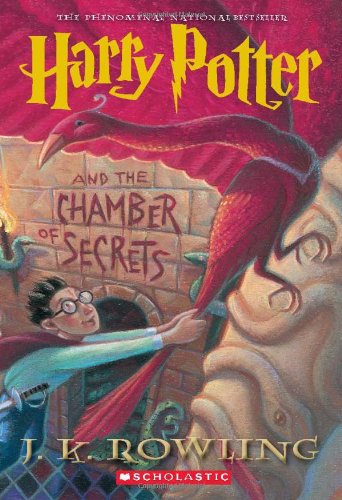
I dressed a doll like the character as shown on the cover: pale blue shirt,
dark blue trousers, red cape…although Hogwarts was based on Eton and the text
specified that the school uniform consists of black robes, as formerly worn by
judges and Etonians, and still worn by members of some church choirs.
I wrote this review on June 13. I'm posting it on June 21, using the scheduling feature so that it shows up for June 13. Somebody saw the physical copy of the book, and the doll, and bought both on June 17. Maybe some people are still buying Harry Potter books after all. Well, J.K. Rowling is still a living writer, so they are still available as Fair Trade Books. Any or all of the seven volumes can be bought here for $5 per used book + $5 per package. Each volume was a little bit thicker, as well as being more "adult," than the ones before it; I might be able to squeeze all seven into two packages, for a total cost of $45, but until I've physically done that I can't promise that they wouldn't require three packages for $50. Either way, J.K. Rowling or a charity of her choice gets $1 for each book you buy here. Seriously...we all know she no longer really needs the money, but she supports valid charities. Payment may be sent to either address at the very bottom of the screen (down past the blog feed).
Tuesday, February 16, 2016
Book Review: The Peep Show Man
(Blogjob tags: drawings by Lois Lenski,Irish folk tales, Irish short stories, Irish writing in English, moral fables told by Catholic priests,nineteenth century entertainment, Padraic Colum, Pooka.)
 (If you click on the picture, you'll open the Amazon page where you can buy a copy directly from MW Books. I get a small commission for that, too.)
Title: The Peep Show Man
(If you click on the picture, you'll open the Amazon page where you can buy a copy directly from MW Books. I get a small commission for that, too.)
Author: Padraic Colum
Date: 1924, 1938
Publisher: Macmillan
ISBN: none
Length: 65 pages
Illustrations: partly colored drawings by Lois Lenski
Quote: “It was not a bad thing that the Pooka did when he carried off the twelve silly sisters...”
Down, unclean thoughts! Before movies were invented, the Peep Show Man was usually an honest entertainer who told wholesome stories about the pictures inside his box. Sometimes these were just drawings or dioramas; some Peep Show boxes contained devices that made pictures pop up or seem to move. These must have been quite a novelty at the time, if the old rhyme about “Ask your mothers for fifty cents to see the elephant jump the fence” is historically accurate—fifty cents was a lot to spend on entertainment. It was only after every community had a movie theatre that “peep shows” began to be limited to the kind of images Hollywood didn't allow in movies.
In this slim book the Peep Show Man tells three fairy tales, all reasonably wholesome, although the first one may be a pretty way of explaining that the Peep Show Man became a travelling entertainer because he doesn’t get along with his wife. The second tale is about the Pooka, or faerie horse, and the third is the sort of Catholic fable that used to be told as facts by priests in the Dark Ages.
All the stories are, of course, set in Ireland, and told in the way English-speaking Irish people heard their dialect—no misspellings, but several examples of the quirky syntax early twentieth century Irish English inherited from Irish Gaelic.
There are bigger and prettier collections of Irish tales, but Padraic Colum’s fans must have this one. I think the stories are his own original imitations of traditional tales. My copy of the book is in good physical condition for its age. Lois Lenski won many awards for her unique, slightly cartoonish drawings, and her fans will want The Peep Show Man too.
This is a vintage book and is available only at collector prices. Although the copy I physically own is locally available for a lower price, for online sales I'll have to charge $15 per book + $5 per package, for shipping, + $1 per online payment. However, "$5 per package" means one shipping charge applies to anything else I can stuff into the package, which should include two or three more books.
Wednesday, May 27, 2015
The Gift of Good Land
(Reclaimed from Bubblews, where it appeared on February 19, 2014. Image credit: Pedrojperez at Morguefile.com.)


Today's why-I'm-here post is an old story; credit goes to Yohoonews for retelling a story on a similar theme, prompting me to share this one...
Once upon a time there was a farmer who wanted his children to have everything when they were little. As a result they grew up lazy and greedy, and soon wasted everything their parents had given them. Probably the children would never even have visited their loving parents, after they grew up and had homes of their own, if they hadn't believed that their father had a lot of money stashed away somewhere. (Well, maybe while their mother was alive, for the free baby-sitting...)
Anyway, the old farmer soon realized that his children were more interested in this money they believed he had than in his company. He didn't want to tell them that he had no money, for fear of being left alone in this world. When they asked where he'd hidden the money he just smiled. Finally, realizing that the only reason why they were all gathered around at one time was that he was about to die, he said, "Out in the field...somewhere out in the field..." and died.
So of course, instead of selling the land right away, all of those greedy young people came to the old farm every day and watched each other dig and cultivate the fields. Once the fields had been thoroughly worked over they realized they might as well plant something, so they did that. Although they were only part-time farmers, they worked diligently, and at the end of the year they had all gained some profit.
Some say it took them five years, and some say ten years, to realize that there was no buried treasure anywhere on their parents' farm. By that time they had realized that, just like their parents, they weren't going to make great profits every year, but on the whole they were going to gain more than they lost as long as they rotated their crops each year and let each field rest for one year out of seven. They had also learned to appreciate each other's work better. They no longer wanted to sell the land, because it was fun working together.
Just in case anybody's forgotten, or more realistically in case any new readers discover Bubblews and me today...my purpose here is still to help a needy family stay on their own land, instead of having to become homeless welfare cases in the city:
Monday, March 30, 2015
Book Review: Little House in the Big Woods
Title: Little House in the Big Woods
Author: Laura Ingalls Wilder
Date: 1932
Publisher: Harper & Brothers
Length: 176 pages
Quote: “Once upon a time, sixty years ago,a little girl lived in the Big Woods of Wisconsin...and she called her father, Pa, and she called her mother, Ma...”
And you know the rest. That girl was so little, and it was so long ago, that everything she did was an adventure. One day they smoked some venison! One day Pa shot a bear, but all the little girl saw of that adventure was the cooking and preserving of the bear meat. And sometimes she churned butter! And sometimes Pa made his own bullets! And at Christmas their cousins came to visit, and they played in the snow! And so on!
Sometimes the grown-ups told stories that were even more adventuresome! Once Grandpa was chased by a panther! Once Pa, as a boy, was frightened by an owl! Once a dog warned Aunt Eliza away from another panther, a big one! And so on!
And after many, many more of these adventures and stories, the little girl grew up! And got married! And had just one little girl of her own! And then that little girl grew up, and she said, “Why don’t we write down all the stories you’ve told me about your childhood, make them into books, sell the books, and become rich and famous?” And her mother did, with some help from her own, now grown-up, little girl. And lots and lots and lots of other children read the books. Boys liked them too, because Laura was so close to her Pa and all the hunting and fishing and wolves and bears and “American Indians” in the stories made them exciting.
But only after Laura’s own little girl was an old, old lady, in fact mostly after she had died, did two little girls, both called Melissa, and a laid-back actor called Michael Landon who didn’t look anything like Laura’s Pa, make a television show of the books. Then Laura’s relatives really started to collect the money. The little old house, one of several houses Pa had built for his family as they travelled, became a museum. Friends and relatives went on writing more Little House books, about Laura’s little girl, Rose, and her mother, her grandmother, and even her great-grandmother, when they were little girls. The Little House industry is still going strong (see http://www.lauraingallswilderhome.com/ for more information), and this little book is where it starts.
Probably every library in America now has a complete set of the edition of these books issued after Laura died and the original series was considered complete, the edition with pictures by Garth Williams; but a few libraries treasured their original editions for years, and so what I physically sold in between writing and posting this review was a harshly used, though superbly bound, 1932 copy with pictures by Helen Sewell.
Although these books are wholesome and educational, one reason why kids loved them was that they offered an escape from both the safe little nicely-nice nursery world of children’s books in the 1930s through 1960s and the mindless, predictable violence of “Westerns.” There’s no melodrama in these books. The “Indians,” like the large animals, usually frighten the Ingalls family because they’re alien and unpredictable, but they come in peace; when fed or given souvenirs, they go away. There aren’t very many “bad men,” and they aren’t very bad, but you never know when you’re going to turn a page in these books and find one of the characters in what could be mortal danger—employees threaten to riot because the manager can’t pay their wages on time, a man wakes up to find his wife standing over him with a knife—and Laura’s matter-of-fact narrative tone, in these scenes, hardly varies from the tone in which she explains how they salted fish. This is not a world in which anyone asks children to talk to therapists about their feelings about having a new baby sister or losing a baby tooth. To a certain kind of child it’s a profoundly reassuring world.
Laura Ingalls Wilder no longer needs a dollar, but this web site still needs to charge $5 for the book + $5 for shipping. If you're not buying a Fair Trade Book and tucking this one into the package, you might as well find a better price online.
Subscribe to:
Posts (Atom)


