Showing posts with label frugality. Show all posts

Thursday, April 4, 2024

Bad Poetry: Tent

It's thriftier to live in your own tent
Than pay some money-grubbing landlord rent.

Are any of you using these prompts, Gentle Readers? Please share links (to poems, not business sites!) in the comments section.


Wednesday, November 9, 2022

How to Reduce Your Electric Bills

This post contains shameless tongue-in-cheek bragging, so let's start with a confession of something I probably ought to change. Since the COVID mess I've become very lax about going to the post office. The electric company sent me an extra piece of mail, apparently, in August. I picked it up in October and, having opened and paid the bills, let other things pile up around it and only read it today. 

Apparently in August the company sent people a "Home Energy Report" showing "How you compare to others" in terms of kilowatt-hours of electricity people use per month.

Apparently the average house the size of mine uses about 827 kwh per month.

The 20% of houses in the same size range that were the most energy-efficient averaged 312 kwh per month.

I used just 92 kwh that month. Well, that was the month before the POG was replaced by the Unsatisfactory Toshiba.

Mother and I used to be just a tiny bit competitive about how low we could get the bills. I don't use a lot of electricity; even the toilet and water heater work, not at their peak but adequately, on solar power alone in summer so that's how they generally do work. Mother was conscientious about not leaving computers or stereos plugged in, but she used electric blenders and suchlike. I'd show her a bill and say, "How do you like that?" and she'd say, "Meh...you were working in town most of the days, weren't you?" I felt a great urge to show this little printout to Mother. I was not working in town. I was at home almost all day, almost every day. I was using the Lasko Fan to cool the desktop computer and me, and one electric light, and that's it, that's all! 

Of course my energy efficiency rating went down in the next month when I started running the Unsatisfactory Toshiba, and it's due to go down further whenever the weather turns cold. 

Nevertheless. 92 goes into 827 9 times. How Green is that?! 

Here's the hilarious part. Those "Home Energy Reports" came with "tips for you."

Any time a machine offers anything "for you," prepare to chortle.

The company's recommendation to me was "Choose an efficient television...save up to $10 per year."

I last plugged in a television set in 1989.

Right. Serious tips for getting a seriously Green Home Energy Report:

1. Install things that use electricity as a source of heat right in the way of the afternoon sunshine. Let that sun shine in on them. If more than two people are using the toilet and water heater you will want to plug them in, but they'll need much less electricity to maintain the same temperature. If only one or two people are using them, go solar-only--the heat will be lower, warm baths less warm and the toilet slower, but you still have warm water and heat-dried, sanitized biomass.

2. Television is a great distraction for people who have to spend a lot of time lying around healing from something. If you are not in that category, donate your television set to someone who is. Life's too short.

3. Instead of watching television, listening to the radio, etc., learn to sing and play your own music on acoustic instruments. Nobody starts out perfect. Some superstar musicians have released recordings in which they sounded as bad as your family probably do. June Carter Cash used to be known for singing off key. Joni Mitchell got the giggles during her first recording of her best known song. I don't even want to talk about Celine Dion, because I suspect somebody told her to mangle those melodies on purpose, as a trademark. I also suspect James Brown was considered more of a dancer than a singer. I don't know how anybody ever could stand to listen to Louis Armstrong's voice--they must have hoped that if they were polite about it, considering that he seemed to be in so much pain, he'd stop trying to sing and just play an instrument again. So there are five very famous professional musicians than whom you probably sound better. So you can do your own music.

4. Instead of trying to exchange texts with a lot of different people and getting them mixed up and creating drama, actually pick a friend, or small group of friends, and go out and do something in the real world. Walk in the park. Play a real game instead of watching other people play. Volunteer at an urban mission. Use all the money you're saving on your electric bill to go shopping. Sing.

5. In summer the only real reason to cook is to can surplus produce for winter. In winter you can do most cooking over whatever you use for heat. A wood stove is great, but it's not the only heating device that can also be used for cooking. In winter my office is heated by electric room heaters. The 200-watt models will do a surprising amount to keep one room livable. To cook rice, beans, scrambled eggs or even cornbread for one, I suspend a saucepan above a candle in front of an electric heater--the 1000-watt one alone most of the year, the 1000-watt and 200-watt ones together in extremely cold weather. The main reason why more people don't do this is that soot forms on the bottom of the saucepan, but soot is not hard to wash off.

6. Healthy people are their own primary heat sources. When the weather turns cold, put on extra layers and get some exercise. In a few days you too can become comfortable at earth temperature. Of course this means you'll feel that most people's houses, offices, and businesses are overheated, but perfection is hard to come by in this mortal world. Human bodies really were designed to adjust to the weather, wearing extra layers at 40 degrees Fahrenheit (refrigerator-cold) and scampering about in cotton shirts at 50 degrees Fahrenheit. If you make this adjustment, in many of the United States there will be only a few days each winter when you have to turn on a heater or light a fire. This is not applicable to households where anyone is running a fever, is immobilized by a disability, or is using anti-hypertensive medication--don't try. If you come down with a virus, you'll need to keep yourself warm until you've completely recovered, then readjust to cool weather all over again. But learning to adjust your internal thermostat rather than an external one will serve active healthy people well.

7. Do not overlook the value of your close friends and relatives as heat sources. In extremely cold places, where people build houses out of thick blocks of ice and snow, a family can pack into such a house and soon have the inside of the pile of ice feeling warm. The temperature outside has to be bitterly cold for this to work; in the kind of weather most of the United States get, the body heat indoors would melt the ice. So our homes are not made out of ice and we can pack a half-dozen family members (children, parents, grandparents) into one warm room and, with no other heating at all, raise the temperature by about ten degrees Fahrenheit. 

8. If you don't use a refrigerator, you won't buy food that needs refrigeration. If you do use a refrigerator you can save some time and trouble, so think long and hard about deciding not to use or replace one. However, a refrigerator is not an essential part of a healthy diet. If you want to eat meat or dairy products every day, you just have to go to the store and buy them every day--you can't store unrefrigerated food of animal origin in warm weather. You can, however, buy dried or canned meat, which will last for several days.

9. Bring back public computer centers. If daily use of the Internet is not in your job description, have an Internet-free home.

10. Get a few solar-powered lights to use in place of electric lights. Get some solar-powered batteries and solar collectors, too, as your budget allows. Next time the power company starts wailing about the need for a new power plant or new energy sources, call your Congresspeople (all three) and tell them to say no. Let the company invest in the community by turning your outbuildings, if not your home, into solar power plants. Home owners should be able to collect enough solar energy to sell electricity to the companies, to get paid for staying "on the grid" and helping heat and light the cities.

The "Solar Power Carol" deserves a better music video than this one. So make one.

Thursday, September 1, 2022

Book Review: The Art of Enough

Title: The Art of Enough 

Author: Becky Hall

Date: 2021

Publisher: Practical Inspiration

ISBN: 978-1-78860-288-4

Length: 253 pages

Illustrations: graphics by Daisy Mojave Holland

Quote: "One of the concerns that people have expressed to me about the concept of Enough is that it represents mediocrity – settling for average – not trying hard."

Even some of the blurbs from people who've recommended this book seem still to be thinking of Becky Hall's ideal of Enough (capitalized, since it's being considered as an ideal) as a way to console ourselves for not having, doing, etc., "more." Blurb writer Kate Bottley recommends it as "helping you to ditch the guilt about failing and falling short." This would be a mistake. The ideal of Enough being discussed here is about personal liberation and joy. Not living in poverty, and not feeling enslaved to the pursuit of riches. Not renouncing worldly possessions, but having only those you want to keep. Not isolating self from others or defining self in opposition to others, but recognizing the benefits for self in having a healthy, balanced relationship with others.

This is a good place to throw an idea that seemed to be trying to become a separate post, a few months ago, and didn't. One paragraph may be enough. A few years ago, North Americans were discovering the Swedish word lagom and saying that it had no English equivalent. Americans would never wish someone "an average day," someone said. Actually English does have a close equivalent to lagom--our word "fair." We think of "fair" as having such different meanings that it could be considered as two or three different words that happen to look alike, but those means were once connected. Ir means what is normal and appropriate and satisfactory, as distinct from excellent. Fair trading was at least something people wanted to associate with fairs as gatherings, though that sense of "fair" originated in a different source. Fair weather was not adverse or dangerous to human activity. A fair complexion was the kind the average person in England has, not really pale blonde, not dark, and not ruddy of skin or reddish of hair either. Fair hair is the kind that is blond in childhood, darkens to brown in young adulthood, and fades back to blond in old age. Before "nice day" became the popular phrase, people did indeed look forward to, and wish one another, fair days, fair weather, or fair sailing. 

What makes this relevant is that, even while Americans vent resentment at being scolded by Europeans as young as Greta Thunberg, this book is not actually about something that's European-as-opposed-to-American, even in terms of history. It's about an ideal of balance, temperance, justice, and prudence, that has rewarded those who've pursued it in many times and places. The ideal of Enough is for everybody even though, in this British book, it's presented in terms familiar to people who've been accustomed to self-identifying as Europeans. 

Not that the author has neglected the value of giving a book written in English an international appeal. There are several references to U.S. writers and thinkers, some to Australian, and some to voices from other countries with large English-reading populations. 

In this guide to the pursuit of Enough as the goal, Hall discusses seven "arts," none associated with actual creative work. The three "arts of being enough" are the mindset, permission, and presence of "Enough." The two "arts of doing enough" are cultivating "Enough" boundaries and resources, a healthy balance between life and work. The two "arts of having enough" are "Enough Growth" and "Enough Connection," which sounds as if it might be an affirmation of small towns and uncluttered social calendars, but is actually about planning growth and connections with the ideal of Enough in mind. 

And what do these generalities look like in practice? Despite their implications for people who are not focussed primarily on problematic emotions, Hall chooses examples that focus on that. A woman seeks "life coaching" with a goal of learning to project her voice better and generally be a more effective speaker (page 50). Hall hastily redirects her to familiar ground, the family counselling of the 1970s: which person in the family of her childhood thought she could or should have this job, and which one thought she couldn't? Such redirection worked for some people, and apparently works for this woman. It's also one of the old cliches from the Age of Therapy that are most easily ridiculed and used to belittle everyone in the psychology department; but let that pass. How does the concept of permission to want and have Enough work for the person who really wants voice coaching, speech coaching, and/or help preparing and presenting speeches? In the 1970s too many psychotherapists really thought that, if people weren't enmeshed in the neurotic thinking patterns that shaped their problem emotions, they would magically "discover within themselves" all the information and experience they needed to do whatever they wanted. There are people whose deployment of their existing resources is being locked by emotional confusion, but we meet fewer of them than, perhaps, our grandparents did. By now I think more people have found it more effective to "Fix Facts First--Feelings Follow." 

I have met people who don't seem to have learned anything since 1971 and who might benefit from a little vintage-1977 attention to their Erroneous Zones of thought. However, even in the 1980s I remember feeling that trying to fix my feelings about being unemployed and ill, with student debt, was going to be a hamster wheel exercise, and then stumbling on a library book that actually explained a thing I was doing wrong--certain intonations of the voice were generally heard as offensive rather than being part of a regional accent, and I could benefit from not using them any more. I've had flashes of psychological insight into my emotions, too, but never one that's been either as thrilling or as useful as a new insight into the facts of what I'm doing, or trying to do. 

U.S. and U.K. uses of English seem to be converging over the years, but there are still a few phrases that confuse people on the other side of the pond. Toward the end of the discussion of being Enough, which strangely seems to lack any practical advice on how most of us might set about that task, we come to one of those. On page 60 Hall asks readers to define their identities with "If you were a stick of rock, what would it say in the middle?" The secret of embedding harder and softer crystals of sugar in the middle of a stick of rock candy does not seem to be known in the U.S. The image is that, as the candy gradually melts into the consumer's mouth, from begnning to end the candy always has some tiny inane phrase such as "Present from Brighton" spelled out in those bits of sugar. Anyone reading the e-book edition can open a tab and look up this kind of thing.

The "stick of rock" metaphor was not opaque to me, but the rehash of emotion-focussed psychology put me off. By the end of the Third Art section I was about ready to dismiss this book as one for the people who managed to miss the benefits of the Age of Therapy. I need to mention this because it was such a pleasure to find the rest of the book more relevant to people with thoroughly processed emotions. 

"Doing Enough" seems more promising but the discussion seems confused. Hall writes in one breath about working out what you, the reader, want to do, and in the next breath about taking a flock of birds as a model for life--the birds follow the three simple rules of matching each other's speed, following another bird, and not bumping into one another. Is she telling readers to follow Thoreau's "different drummer" in their own minds, or to follow the crowd and conform? She seems to leave it up to readers to interpret the fact that she is, inconsistently, recommending both. Nevertheless, this section may be more useful to people who've already processed their emotions to the consistency of casein knitting needles. Readers are encouraged, after resolving the initial contradiction of this section, to think about practical ways to set boundaries, refuse requests kindly, and set priorities among tasks. Hall discusses burnout and the possibility that, when people feel that they have to work overtime all the time, they've encouraged others to expect too much of them because that fed an excessive ego need to be "bigger" than others. 

"Having Enough" presents the radical example of a couple who decide at the beginning of a year how much money they want to earn, and, having earned that much, use the rest of the year for other things than earning money. Hall quotes U.N.-funded Donella Meadows: "Growth is one of the stupidest purposes ever invented by any culture. We’ve got to have enough… we should always ask, ‘growth of what, and why and for whom, and who pays the cost, and how long can it last, and what’s the cost to the planet, and how much is enough?" 

It's valuable to consider the source of discussions of "having enough." When individuals decide how much work, money, promotion, etc., is Enough for them, the experience is liberating. When other individuals decide how much is "enough" for them, the experience is definitely not liberating. In offering equal representation to countries and cultures that lack experience or even the concept of functioning as democracies, the United Nations became a dangerous organization that needs to be kept strictly in its place as a mediation office. Studies that purport to show that "the happiest nations on Earth" are the ones where people don't actually have what they want, or much hope of getting it, but do live in fear of penalties for expressing discontent, can probably be ignored. 

From the U.S.-centric perspective that some readers of this website prefer, The Art of Enough may be sounding like a subversive enemy document. I ask those readers to consider the facts of history. The United States did not, in fact, reach its position as a world power by a "consumer economy" based on waste, greed, and debt. Our ancestors followed the economic wisdom of Benjamin Franklin and Andrew Jackson, both of whom knew a good deal about saying "no" and "enough." The late twentieth century's "Waste Age" culture of deliberately wasting irreplaceable resources started, as Hall mentions and as older writers expounded in detail, as a temporary effort to whip up the postwar economy. Thinkers like Vance Packard did not expect, in 1963, that the Waste Age could possibly last as long as it has; they'd not be surprised by the increasing hints that we really are starting to run out of valuable things to waste, that it's time for frugality to make a comeback as a crucial part of American Democracy. 

Although this book may also appeal to people who oppose all that they stood for (good ideas being for everybody), in the True Green tradition I've inherited from George Peters and Wendell Berry I say: I believe Becky Hall gets the point. 

Friday, September 14, 2018

Bill Carrico for Parents of Children with Disabilities

Gentle Readers, I apologize for this one. Senator Carrico didn't do it. Some person who's been educated beyond his level of intelligence thought you couldn't pay attention to the sentences below if they were printed in a simple straightforward manner that would display correctly on any device. No, the bright boy thought, you needed the "excitement" of garish colors and images of little bells and whistles. In the twentieth century nothing was wrong with adding this kind of frivolity to printed posters hung on walls; in the 1990s printers came with certain amounts of colored ink, and frugal people looked for ways to use up all the colors at the same time. It didn't make announcements "exciting" but it did show that you were the kind of person who didn't waste purple ink. This is the twenty-first century, and nobody should ever presume to add this kind of silliness to a document you might be trying to read on a computer or, bless your poor little heart, a cell phone.

I've shrunk the image so it will fit on everyone's screen; if you're using Google Chrome, you can use CTRL-+ to enlarge it so you can read the words. Feel free to use the comments to express feelings about how public information should be made available online in the form of plain text. People who use computers know how to read. People who don't plan to turn their computers into toxic waste every year know that letters and numbers don't use up nearly as much memory as graphics do, and that graphics should therefore be used only when readers really need to match an image to a real object (maps, diagrams, photographs).

"
Free Training for Parents of Children with Disabilities

"

Wednesday, February 1, 2017

The Glamorous Life of a Writer, Even When Paid

"I have never killed a man, but I have read many obituaries with great pleasure."

https://nitabeshear.wordpress.com/2017/01/27/twelve-classy-insults-from-the-past/

What did I do Monday?

6:00 a.m.: Wake up. Turn up the heat. Pull covers back over head for another forty winks while bedroom warms up.

7:45 a.m.: Bedroom is still on the chilly side, but further sleep is impossible. Enjoy lovely view of patchy snow, at least until thinking about what needs to be done today becomes unavoidable. Temperature is in the low twenties, Fahrenheit, well below freezing.

8:15 a.m.: Call local lurker who has sometimes offered use of Internet on Monday. Wait for reply. Local lurker's Internet is not available. Possibly this is because you are not making actual money on the Internet every day, so local lurker is not interested in studying your strategy any more. The only payment you've received for the previous week's online activity is a Michaels giftcard. You started receiving those about the time you lost the only sponsor you've ever had who actually liked going to Michaels with you, the painter who finally died at the age of 89.

9:30 a.m.: Call less-local lurker who has more than once mentioned shopping trip to Kingsport, since if Michaels giftcard is in the mail, which it should be, this trip may be worth the trouble. Wait for reply. Less-local lurker doesn't want to bother coming through Gate City in time to do this on a Monday.

10:00 a.m.: Air temperature remains around 25 degrees Fahrenheit, though ground temperature isn't all that cold and snow is beginning to melt in sun. Put on thick sweater underneath heavy-blanket-weight shawl. Go to post office. Collect Michaels giftcard. Decide to walk, as shawl is adequate for this weather. Reflect on all the cold-weather situations in which this shawl has served you well: sitting in warehouse market space in refrigerator-cold weather, actively working open-air markets in freezing-cold weather, 20-mile walk in 20-degree chill during blizzard...Give thanks to the Creator who made you a knitter. Say a blessing for Deborah Newton, whose quick and easy pattern inspired you to string together a lot of leftover ends of yarn to make this, your very first hand-knitted shawl, which didn't cost you a penny and has been worth its weight in gold.
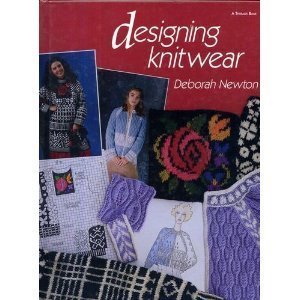
There's a new paperback edition of this book; hurrah! Not many patterns, and the patterns are sort of odd, but lots of information and inspiration. I've had the hardcover book for almost twenty years and am not about to sell mine.


(Newton's original shawl was knitted with just one strand of yarn on thick needles, and is lacy and pretty. Mine was knitted with one scrap of wool or mohair and one of acrylic in almost every stitch, and is literally a blanket and a half--it forms an L-shape, but if I lie down I can curl up under two-thirds of it and throw the other third over my head. It looks more like a Mexican poncho than like a Shetland shawl.)

10:30 a.m.: Old man parked outside gas station, in position that suggests he's waiting while his wife uses the convenience store, steps out of vehicle to speak to you. Does not identify himself, but rushes to show that his vision is much, much worse than yours by blurting out, "Our church has a blanket ministry! Could you use this blanket?"

I am not making this up.

Here I am, wrapped up in a blanket and a half. I am the grandmother of blanketry, the wellspring of blankets. And this idjit is shoving a tacky little summer-weight blanket, made in a sweatshop in China, toward me. That cheap little thing might make a cute coverlet on a hospital bed, but for sure it would not turn snow--which my blanket shawl does.

Somebody has made the terrible mistake of teaching this old amadan things to say to a homeless person in the unlikely event that he ever sees one--my town has never had a homeless population--and he's so locked into his script that he has no idea to whom he's even parroting it.

(Amadan is Irish; it's traditionally translated by "fool," but without the connotation of hate that "fool" acquired from being used to translate the Greek word more in Matthew 5:22.)

I say gently, "Can you see what I have?"

I'm not sure that he can. As his face comes into focus for my astigmatic eyes, it appears to me that his baggy-lidded blue eyes are looking at me but not necessarily seeing details like the shawl. He continues to spout his little spiel, "I was just trying to help you."

"If you want to help me, I have some handcrafts you can buy!"

He backs hastily back to his vehicle. "I don't need to buy anything!"

At least the pleasure of reading his obituary isn't likely to be far away.

Walking away, hoping his wife is driving, find a good deal of free money on the way to Kingsport. Three handfuls of pop-tops (the cans are still there, if any local lurkers need a few dollars). Enough actual coins to buy a snack at Michaels, if all that hungry. Lots of miscellaneous metal. Somebody's even left a few scraps of men's clothing, deliberately cut into pieces, a pair of boots, three pairs of shoes, and one extra boot and one extra shoe, on a street corner; leave that where it is, in case the original owner is looking for it.

2 p.m.: There's a reason why breakfast and lunch have not been mentioned in this timetable. All the same, the prices on snacks at Michaels--double their price at Krogers, which is only three long blocks away--motivate me to stick to yarn and knitting magazines first. Michaels does not have Knitter's or Interweave Knits but has filled up its rack with random news magazines. Michaels is not trying to cater to the serious crafters who are its original clientele. The yarn department has shrunk to less than half its original size and replaced most of my favorite yarn brands with store brands, ick. Well, it makes sense that Michaels isn't trying to compete with Wal-Mart on anything Wal-Mart might stock, but...lose those store brands and silly half-inch-thick broomstick-"knitting" yarns, please! Nevertheless it doesn't take long to find a clearance sale on just the right amount of Bernat yarn to knit a Sally Melville sweater from the "knit when the right yarn goes on sale" list, and also use up my giftcard quite nicely. (And, as always, I find half a dozen other yarns that make me think "I want to come back when this is on sale.")
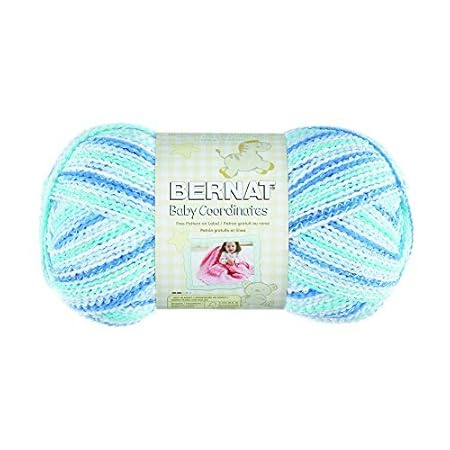
Bernat Small Acrylic Baby Co-Ordinates Ball of Yarn, Buddy Blue/Multi-Colour by Bernat
Warning: if the store near you has already sold the last of this novelty yarn, the seller offering it on Amazon intends to exploit its scarcity. Novelty yarns are sold for one season only. This season's shades-of-blue sportweight boucle acrylic yarn from Bernat is more of a denim blue, and will make stripes rather than flecks.

This collection of Sally Melville designs was not intended to flatter top-heavy women...but I've already sold some of the sweaters to women who weren't top-heavy. What I plan to make with the blue fleck yarn is the hoodie, which is less specifically for bottom-heavy women than the sweaters on the front of the hardcover book.
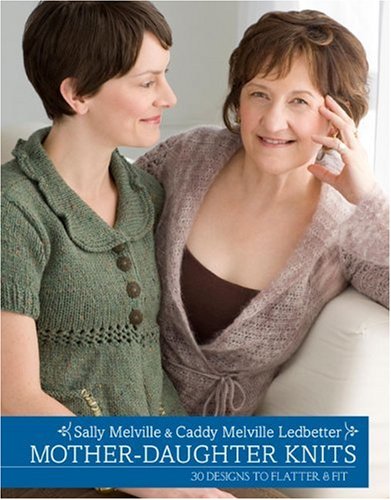
There's a new paperback edition, and even a Kindle edition...any body can wear some of the sweaters in this book.

4:00 p.m.: Ooohhh, the frustration. Kroger is running sales on everything you like to buy when you're there. Want to buy about $50 worth of groceries. Have $9. 

4:05 p.m.: Break down and send text message to that less-local lurker, who has reached Gate City by now. Rationalize that this person will want to stock up on groceries at Kroger, too, when person sees these sale prices. Realize that on Mondays, after weekends upstate, this person really wants to settle back into person's Gate City house and not drive any more, and also this person qualifies for senior discounts on Tuesdays, and you are shamelessly exploiting the person's protective parental feelings, fear of cold weather, and tendency to say "Oh I can buy that for you"--which is inexcusable, when (a) it's not senior discount day and (b) you're not prepared to reimburse the person via Paypal for who knows how many more weeks.

4:07 p.m.: Meet another person who lives further into Virginia than you do, and will be driving through Gate City, right there at Kroger. 

4:08 p.m. Send another message to the less-local lurker before that person wastes any gas. 

5:30 p.m.: Eat most of your $9 worth of bargain-price groceries.

6:30 p.m.: Give thanks that your cat, although a Listening Pet, does not actually understand enough English that you need to bother trying to explain while, when trying to pick out just $9 worth of bargains at Kroger, you completely forgot about kibble. Anyway you're still feeding only two cats, and you bought human food the cats can share, so the cats consider their share of your meal plus the last bits of kibble in the bag to be a good dinner. Purr. Purr. 

7 p.m.: You should be writing book reviews. You are not. Your mind really wants to come up with a strategy that will persuade the churches that "have a blanket ministry" to pay American women to knit snowproof, useful blankets, instead of buying cheap garbage from China. You think of some, too, but unfortunately they all depend on the persuasive power of rich and famous people. In order to accomplish this or any other good thing you really need to focus on getting better funding for your online bookstore.

The following chunk of text will show up here until it has met its monthly subscription goal, or until I've given up eating altogether, whichever comes first:

If you are an adult reader whose income for the past year was over US$12,000, you're much better off financially than I am, and you should support this web site. The safest and simplest way to do that is to send a U.S. postal money order to Boxholder, P.O. Box 322, Gate City, Virginia, 24251-0322. (Attention junkmailers: all junkmail is recycled right in the post office.) If you're not already on the e-mail list(s) of one or more of the real-world members of this web site, e-mail salolianigodagewi @ yahoo for the appropriate Paypal information to use to support whichever aspect of this blog you would most miss if it starves to death. Or send the price of a week's worth of coffee, plus 10% since funding sites have to live too, to this link:

https://www.patreon.com/user?u=4923804