Monday, July 18, 2016

Book Review: Road Scholar

A Fair Trade Book


Title: Road Scholar

Author: Andrei Codrescu

Date: 1993

Publisher: Hyperion

ISBN: 1-56282-878-9

Length: 193 pages

Illustrations: black and white photos by David Graham

Quote: “Roger Weisberg…a TV producer…was wondering if I would beinterested in making a movie about driving through Florida…I told him…we should…go way beyond Florida’s roadside attractions. We should make a movie about America.”

So they did. Road Scholar was the book to go with the movie, in which formerly car-free Codrescu got a driver’s license and drove across the United States with a video crew. Photos are thus an important part of the book, although it contains more pages of text than of pictures.

It’s a very funny book, and also a thoughtful, sometimes sad, sometimes worried book. Weisberg was, after all, attracted to NPR broadcasts by and about a surrealist poet writing in English, which was not his native language, to comic effect. But not the “me no speak English” kind of comedy; for those who don’t remember, the short funny essays (collected in other books, like A Craving for Swan) were teacherly reflections on the quirks of English language and literature, most specifically on the international (and multilingual) surrealist poetry of the twentieth century, with insights from other genres of art and literature around the world. Surrealism implied goofiness, sometimes inspired by high spirits (and/or booze and drugs), sometimes by nightmares, grief, bad trips, and concern about the fate of humankind. Road Scholar is mostly real, but some episodes, like the send-off party with the image of Jayne Mansfield’s head wired to complain of a “splitting headache” before splitting apart, qualify as surreal…and that’s the way in which Road Scholar is funny. It’s humor for educated adults, or at least college students; it’s meant to promote serious thought as well as laughter. You’ll laugh. You’ll feel bemused by people, sorry for people; you’ll wonder what people are doing now.

Highlights of the trip include:

* A consideration of immigration, the U.S. government, and immigrants legal and illegal, in New York City.

* A visit to Allen Ginsberg, and visits to the graves of earlier writers buried in New York state.

* Tours of the Bruderhof and Oneida “intentional communities” in upstate New York. (Oneida is also where Sarah Vowell reported Charles Guiteau being nicknamed “Gitout.”)

* A photo of a wall on which is painted “Say nice things about Detroit.” Codrescu tries; he reminisces about having lived there, briefly, and dedicates a long poem to the city. We also meet eccentric artists and some nice working people in Michigan.

* A brief, vegetarian consideration of Chicago, “Meat Packer to the World” and home of the first McDonald’s restaurant. Another artist, and a Christian roller-skating group.

* A real, explicit conversation with cattle breeders.

* Shooting lessons with a topless female teacher near Las Vegas.

* Pueblo people, ancient caves, Sikhs, hippies, and faith healers in and around Taos and Santa Fe.

* Biosphere 2, an experiment in which people lived in a giant geodesic dome.

* Geriatric bikers and rockers in Sun City, Arizona.

* Gambling and drive-through weddings in Las Vegas.

* An interview with Lawrence Ferlinghetti in San Francisco. More immigrants; more thoughts on the experience of legal immigration.

If that sounds like a road trip you’d enjoy taking, or hearing the stories about, or seeing the photos from, you’ll enjoy Road Scholar. This web site also gets a lot of correspondence from people who care passionately about some side of some immigration-related issue, and according to Google it attracts a huge amount of readership in countries from which we suspect people may want to emigrate; those readers should also read Road Scholar.

Although some people selling this book on Amazon are already asking for collector prices, I'll stick my neck out and offer it under the usual Fair Trade Books terms: $5 per book, $5 per copy, for a total of $10 out of which we send $1 to Codrescu or a charity of his choice, and although this one is slightly oversized you can probably fit one or two more books into the package. 

Sunday, July 17, 2016

Christian Book Review with Reservations: The Hidden Power of Kindness

Title: The Hidden Power of Kindness


Author: Lawrence G. Lovasik

Date: 1962

Publisher: Sophia

Publisher’s web site: www.sophiainstitute.com

ISBN: 1-928832-00-8

Length: 247 pages

Quote: “You’re almost certainly not as kind as you ought to be.”

With this book, at least, the part you won’t love is right out on the cover. While it’s probably true that nobody is always as kind as an ideal person would be, it’s also undeniably true that (1) many people’s difficulties come from misguided efforts to practice an idealistic, yet unenlightened, version of “kindness” (usually because they’ve absorbed the kind of generalizations about “kindness” in which this book abounds) and (2) Lovasik didn’t know whether you, the reader, were one of them. He doesn’t give very helpful guidelines for determining when “kindness,” in the ordinary sense, actually serves the Highest Good of nobody, either.

Apart from that, this is a nice, Catholic-approved, long essay in praise of kindness. Practicing kindness, or just thinking about kindness, has been shown to have a mild beneficial effect on the human immune system. Therefore, this book may do you some actual physical good—if it doesn’t do you harm.

Catholic teachings have often been denounced as promoting unhealthy masochism by idealizing altruism, so this book needs some debunking. “The only return you should try to get out of someone is the feeling that you have done a favor for him without his being able to do anything whatever in return for you.”

That kind of thinking has done a lot of harm. On the surface it seems nice, even pathologically altruistic. In reality—think about it! How radically selfish a piece of one-upsmanship that little feeling is! “I have done a favor for you without your being able to do anything whatever in return for me. I am so much better, nicer, more generous than you are. I am on a higher plane of existence than you. I am God. You are a worm.”

What does that leave the other person thinking or feeling? There are two possibilities. (The popular psychology of my youth postulated a third possibility; I’m not sure to what extent it was ever really observed.)

(1) “Someone has done a favor for me without my being able to do anything whatever in return for him, her, or them. Good for me! I don’t need to bother about doing any favors for anyone else. I can just lie back and take, take, take. I don’t have to grow up. I can be a ‘playboy,’ a ‘lounge lizard,’ a ‘Peter Pan,’ or a ‘welfare queen,’ or a ‘professional student’ who lives off the favors of other people. It’s so much fun to be me that I’d hate to spoil it by trying to imagine what it’s like to be anyone else.”

(2) “Someone has done a favor for me without my being able to do anything whatever in return for him, her, or them. People imagine that I have nothing to give them. They despise me. Having a normal self-serving instinct, I don’t despise myself. I despise them. In fact, I hate them. Whatever natural talents I have to offer the world, and whatever kind impulses I feel, should not be wasted on these stupid fools who think they’re so superior to me.”

Let me try to say this as charitably as possible. The second of these possibilities is the stereotypical attitude certain ethnic minority groups in these United States have toward Anglo-Americans. That’s why there’s so much smoldering hate in certain communities, always waiting to burst out in the faces of the “allies” who sincerely want to build a world without race hate. However, these are feelings Anglo-Americans can and do share. They are involved in a large share of the backstabbing that goes on among co-workers, the “cattiness” among young women, and the surliness of corporate employees who have not been trained to express gratitude toward their employers’ customers.

Just a few of the relationships among human beings really are inherently asymmetrical, like the parent/child relationship. Parents are, of course, serving their own Highest Good when they care for their children, but any reciprocity that may ever be observed lies a long way ahead of the young parent changing the baby’s diapers today. The immediate reward of being a parent is probably closer to “I have done a favor for you without your being able to do anything whatever in return for me” than  anything else in normal, healthy human behavior is. Even then, do parents really sit around gloating over their immediate physical superiority to their helpless infants, or do they look for, and encourage, the infants’ first feeble efforts to reward the parents by “smiling” and babbling in ways that an eager parent can hear as “Mama” and “Papa”? Most parents consciously seek out emotional rewards, even though the emotional rewards are out of proportion to the physical efforts the parents invest in getting those emotional rewards.

The more consciously we try to love others as ourselves (which is Christian charity, as distinct from loving others more than ourselves, which would be pathological altruism if it were genuine), the more we become aware that the Highest Good for us is not, in fact, opposed to the Highest Good for them.

According to legend the original “Santa Claus,” St. Nicholas, Bishop of Myra, wanted to do a favor for a parishioner, or parishioners, who wouldn't be able to do anything in return for Bishop Nicholas. Unfortunately it is only a legend, and it exists in several forms—some ridiculous—but, according to the legend, someone donated three big, heavy balls of gold to the bishop, or perhaps the old bishop hoarded up the gold all by himself over his many years of faithful work. Some say the gold was offered to decorate the cross in front of the church; some say the balls of gold were already stuck on to the cross. The parishioner(s), being very poor, had contracted to sell his, her, or their three children. Some say the children were to be sold as slaves, some say prostitutes, and according to the wildest story the children had been sold to cannibals and packed in a tub of brine for shipping. In the version that comes closest to the American Santa Claus myth, upon seeing the slave dealer (or whatever) entering the home of the three children, the old bishop ran back to the church, grabbed the balls of gold (some say the balls were so heavy that he had to make three separate trips), and threw them down the chimney—or into an open window—of the house. The parents reclaimed their children and even the slave dealer was converted upon the spot. Some say that Bishop Nicholas left this sad world the next day, or a few days later, from overexertion and/or overexposure and/or overexcitement. Is this not, Lovasik might have said, a story of altruism?

Not if you’ve ever tried anything like it. If you have, if you have ever succeeded in rescuing children from whatever form of misery awaited those children, or in saving someone’s life, or in fighting a fire, or even in a long hard campaign to accomplish something worthwhile at your job, you know that carrying those balls of gold through the street was a “high” for Nicholas (or whoever actually did it). If he did die as a result of doing it, he died happy. The delight of the children and the conversion of the slave dealer were the consummation of his life. Perhaps he never received any money in return for what he did, but it is possible—according to some versions of the story it’s probable—that he literally died of joy. Nobody hearing this story has ever pitied Bishop Nicholas.

The pleasure of “being the giver” can be so intense, in fact, that some people would actually miss the human suffering they try to alleviate, if it were permanently eliminated.

Of course, as long as diseases and natural disasters exist, as Jesus said, “the poor will be always among you.” However, in a healthy community it is also true, as Moses foretold, that “there shall be no poor among you”—no separate class of poor people. In the United States our general prosperity, and a healthy, sophisticated sense of self-interest, has brought us very close to realizing both of these predictions. There are, and will always be, people in a temporary condition of having less; apart from the victims of diseases and natural disasters, there will always be younger people setting up homes of their own with less than older people have accumulated. There is no permanent “lower class” of people who are doomed always to have less. Even when, as occasionally happens, someone’s income is low enough to suggest anything like poverty as the non-democratic countries know poverty—and mine is, at the time of writing—the poverty is temporary. There are Americans who sneer at Americans who have less than they have—but most other Americans recognize that the ones doing the sneering are the ones who are stupid and inferior; if they had any sense they would know that those who have less may be only one sale or one inheritance away from having more.  

And there are those who would actually like to change these wholly desirable conditions of life in the United States. People who have never lived in a democratic society bitterly resent the fact that a penniless widow in the United States can enjoy more personal freedom, and a higher social status, than a successful storekeeper in a country where storekeepers belong to a permanent lower class. More than that, though…the sort of people who become social workers become so addicted to “being the giver” that, usually without having given the matter much conscious thought of course, they would actually prefer that more children be hungry than that all the children be well fed.

What they have sometimes succeeded in training children to say is that third possible response to the “me God, you worm” approach to generosity, which I’m not convinced is ever quite sincere:

(3) “Someone has done a favor for me without my being able to do anything whatever in return for him, her, or them. People think I have nothing to give anyone, and they are right. I am a useless, worthless worm. The best thing for me to do would be to commit suicide at once.”

There may be people whose behavior shows that they honestly, wholeheartedly do think that way—but there aren't many. The behavior of most depressed people shows that their thinking is really much closer to either the first or the second possibility discussed above. Usually it’s the first, and this is why it’s so hard to feel charitable toward depressive people.

How do we avoid the cruelty of inflicting any of these three undesirable reactions on other people? Genuine kindness never tries to put self “one up” on the other person. It is more like, “I have something to give to others, the work I enjoy doing, a thing I would prefer not to have to keep in my own house any longer, or whatever it may be. I would like to give it to someone who would enjoy receiving it, independently of what, if anything, that person offers in return, either directly back to me or by way of passing the good feeling along. I am not overly concerned about what the other person offers because I, having enjoyed the pleasure of using the luxury item once or twice, or cultivated my talent, or cultivated my garden or whatever else, am now seeking the pleasure of giving.”

Genuine kindness does not seek to hoard the pleasure of giving all for self, nor does it despise what others have to offer. The Highest Good is not about “self versus other.” It is not versus. Lovasik commends Mother Mary’s trip, during pregnancy, “to serve her cousin Elizabeth” as an example of self-sacrifice. The Protestant reader smiles, having naturally imagined this trip being undertaken to reduce unfavorable publicity about the timing of Jesus’ birth. Obviously, when we think about it, it was both. The best ideas are good for self and others. Personally, when I find myself wanting something that directly conflicts with what others honestly want for themselves (as distinct from ego clashes), I reconsider why and whether I wanted that thing. Perhaps I really want something that works for those others, as well as for me, and is therefore even better than my first thought seemed to be. I really want neither to trample on others’ rights, nor to let them trample on mine.

Once we have learned (or re-learned) to think intelligently about this distinction between charity and altruism, we see that even some of the received wisdom Lovasik offers about merely social or emotional kindness is misguided. “Don’t ask yourself whether the person involved…should take the first step” toward reconciliation, Lovasik urges, but “forgive him at once.” This is good advice for those who realize, after thinking it through, that what really bothers them about the other person is not a sin of which he needs to repent and be forgiven. Forgiveness, in the sense the Bible writers used (and I use) the word, is a process that begins when someone repents of something s/he has done, changes her/his ways, and seeks to make amends. Until repentance happens, the person offended can and should release the emotional feelings that would otherwise keep him or her insanely entrapped in the mood of outrage s/he felt when the offense occurred—but claiming to have “forgiven” the unrepented sin is like claiming that the road is not under water when it is.

“Never…open the door to anger,” Lovasik advises. To anyone who has spent time among Christians, any mention of anger recalls the vast amount of denial and hypocrisy to which false teaching about anger has led the whole Church Militant. I think we can cut out much of the hypocrisy here if we read everything Lovasik has to say as being addressed to those who become physically addicted to the sensation of feeling angry. All confirmed “rageaholics” so far have been male; their “anger addiction” is part of male-pattern cardiovascular disease. (Multiple myeloma, which is what killed my husband, also produces sudden drastic changes in blood pressure and can mimic “anger addiction.” If any women seem to have “anger addiction,” they should check for cancer.) If these individuals want to live and work as long as possible, they may be well advised to focus on the emotional feelings of “anger” (or “righteous indignation”) before they have addressed the facts of the situation about which they feel angry.

For women, I can say firsthand, the best way to spare ourselves the unpleasant feeling of anger is to focus on the facts. “Fix Facts First: Feelings Follow” has become my mantra and I recommend it to all other women, and to men who are not “rageaholics.” Most people who yell, swear, throw objects, etc., have formed these habits because they learned early in life that acting angry would motivate “kind” adults to try to solve their problems. They will find it more empowering to move directly toward solving their own problems. Of course, this will require the other people who live and work with them to be willing to solve the problems, rather than dumping their own repressed anger on the nearest child, subordinate, junior employee, etc., and then blaming that person for “being so angry” with the ongoing manifestations of the one problem that this person is being emotionally abused. Women, especially, need to stop carrying the can of anger for everyone around them. If “She Had a Bad Day” because one or more other people said something to her that they would object to her saying to them, then “She” may want to try a different response that breaks the pattern of their verbal abuse, but “She” must never for a minute forget that their verbal abuse, not her anger, is the problem. It is not actually kind to allow others to be bullies; even if a woman feels too busy or too tired to address a verbal abuse problem, even if a woman enjoys feeling martyred, she really ought to consider that the Highest Good for her verbal abusers is to be taught to respect her, and women generally.

And on and on it goes. The Healing Power of Kindness continually alternates between bits of real inspiration to practice kindness—including more attention to respecting people’s privacy than more recent pop counsellors have given—and bits of misleading, potentially toxic advice to practice sick altruism. It is a well written, thorough essay, but it needs to be read with discernment. It is recommended to people who have been practicing Christianity in a serious, radical way for a long time. 

Although Lovasik no longer needs a dollar, this web site still has to charge $5 per book + $5 per package if you order it here (from either address at the very bottom of the screen). Meh. The best part of the deal here is that you can add this book to a package containing one or more Fair Trade Books, encourage a living writer, and save money on the shipping charge, so that our price may be competitive with the price of the seller who uploaded that pretty picture to Amazon, after all. But you can also click on the picture and buy it from that seller; in theory I get a small commission on that too.

Friday, July 15, 2016

July 15 Link Log

Wow--no politics! Enjoy your weekend :-) Categories: Amazon, Animals, Christian, Condolences, Economy, Fun, Health, Zazzle.

Amazon Link 

If anybody doesn't recognize the (mis)quote under "Christian," below, or the tune for that matter, the following book will explain it to you.


Animals 

Belated Independence Day eagles.

http://www.loudountimes.com/news/article/bald_eagles_making_strong_recovery_in_virginia321

Christian 

Dang-all if I know what the next step toward launching my debt-free bookstore is going to be, but I'm not going back (i.e. to debt, crime, or welfare-cheating). Forward to my final bed or to victory. Your support of the online bookstore, or non-support, decides which, Gentle Readers. If you enjoy the Link Logs, don't skip the book reviews.

http://www.insight.org/resources/daily-devotional/individual/a-step-at-a-time?

(While I'm here: I can't review a book I have not personally read from cover to cover. You, however, win the right to post your review of a book you've read and I've not read, whenever you buy a book here. You can say what you like about the book, under your own name. Yes, that means you can market evangelical books, Positive Thinking books, "gay" books, whatever, as long as your review (a) doesn't contain graphic sex, violence, or blasphemy, and (b) delivers fair warning to readers if you're reviewing a book that does contain those things.)

Condolences 

Possibly the first time this web site has wished anybody a happy Bastille Day (while pre-scheduling a book review, I typed that in), it's been a horrible one...in the city whose actual name is Nice, yet. This web site officially expresses condolences to anyone who feels more aggravated than piqued by the irony.

Economy 

Um...Jim Hightower is a deeply nice guy, but just a tiny bit uninformed. I waded into the "gig economy" at seventeen, and as long as there's enough water to swim in it I'd rather swim in it than row in the galleys of some corporate ship. But he's right on one part of what he's saying. When corporate workers are thrown out into a "gig economy" that's already to dry to float those of us who know how to swim or paddle in it, who like being independent contractors, have always been independent contractors, and just aren't finding decent contracts any more...that is mean. Cruelty to dumb animals.

https://hightowerlowdown.org/podcast/mean-gig-american-workers/

Faith (Not Christian) 

Bolivia officially affirms a religious faith in the "personhood" of the Earth Goddess Pachamama. I don't think this would work in most countries. I think our planet is probably better off with laws that affirm the rights of individuals not to be harmed by pollution, under traditional criminal laws about poisoning. It'll be interesting to see how this works for Bolivia, though.

http://www.dailygood.org/story/1337/bolivia-s-law-of-mother-earth-ryan-hewlett/

Fun Stuff 

Dan Lewis's "Weekender" includes an item about "survivorship bias." A good example of survivorship bias may be detected in my mid-July post, triggered by that preposterous Washington Post story this morning. But do people who've been lucky flatter themselves that they've been smart, or is it smart to attend to little details that help people get lucky? Fascinating report.

http://nowiknow.com/the-weekender-july-15-2016/

For local lurkers' calendars, something different at Natural Tunnel:

http://www.dcr.virginia.gov/state-parks/park-event-info?id=NT160047-14&utm_source=dlvr.it&utm_medium=twitter

Health 

From an immunologist, even if it's posted at a chiropractor's web site, here's a (dead obvious, except to vaccine marketers) debunking of the silliest vaccine-marketing scare tactics.

http://circleofdocs.com/harvard-trained-immunologist-demolishes-california-legislation-that-terminates-vaccine-exemptions/

Zazzle 

Y'know, Blogger doesn't really like these Zazzle links. Google and Zazzle need to work it out. Apparently what I use is http, and Blogger's problem is that some of you may be using https, which may be disabling the Zazzle image links. I say that's less bad than disabling them for the version of Blogspot I use myself, so I'm leaving them in. If you readers are using https and not seeing the Zazzle pictures, please let me know.


Shop Local Tote
Shop Local Tote by Hikaru811
Check out more Fruit Bags at Zazzle


So of course there needs to be a Fix Facts First canvas tote bag, too!


No More Rage, Please

"Day of Rage" sounds like the very last thing we need. Here, shamelessly ganked from a site that buried Daisy Luther's excellent article under an unreasonable number of pop-ups that this site refuses to inflict on a reader's computer, is an official list of places that have been targeted for displays of "rage." If you're in any of these cities, this web site is officially sorry for you just because of the local warming. We hope you can cool off somewhere safe this weekend. Bus or car pool, please.

Phoenix: 5:00PM (EASTLAKE PARK, 1549 E Jefferson St , Phoenix, AZ 85034)
Tuscon: 5:00PM (CATALINA PARK, 900 N 4th Avenue, Tucson, AZ 85705)
Little Rock: 6:00PM (OUTSIDE STATE CAPITOL BUILDING, Dr Martin Luther King Jr Dr., Little Rock, AR 72201)
San Francisco: 4:00PM (CIVIC CENTER PLAZA, 355 Mcallister St, San Francisco, California 94102)
Oakland: 4:00PM (FRANK OGAWA PLAZA, 1 Frank H Ogawa Plaza, Oakland, CA 94612)
Los Angeles: 4:00PM (LEIMERT PLAZA PARK, 4395 Leimert Blvd., Los Angeles, CA 90008)
Denver: 5:00PM (CIVIC CENTER PARK, 100 W 14th Ave Pkwy, Denver, Colorado 80204)
Washington DC: 7:00PM (OUTSIDE WHITE HOUSE, 1600 Pennsylvania Ave NW, Washington, DC 20500)
Atlanta: 7:00PM (OLD DECATUR COURTHOUSE, 101 E Court Sq, Decatur, GA 30030)
Tampa: 7:00PM (OUTSIDE HILLSBOROUGH COURTHOUSE, 800 E Twiggs St, Tampa, FL)
Orlando: 7:00PM (LAKE EOLA PARK, 195 N Rosalind Ave, Orlando, Florida 32801)
Miami: 7:00PM (GWEN CHERRY PARK, NW 71 St., Miami, Florida, 33147)
Chicago: 6:00PM (RICHARD J DALEY CENTER, 50 W Washington St, Chicago, Illinois 60602)
Des Moines: 6:00PM (IOWA STATE CAPITOL, 1007 E Grand Ave, Des Moines, IA 50319)
New Orleans: 6:00PM (LAFAYETTE SQUARE, New Orleans, LA 70130)
Baltimore: 7:00PM (201 E Pratt St, Baltimore, MD 21202)
Boston: 7:00PM (MASSACHUSETTS STATE HOUSE, 24 Beacon St, Boston, MA 01233)
Detroit: 7:00PM (Campus Martius Park, Detroit, Michigan 48226)
Lansing: 7:00PM (STATE CAPITOL BUILDING, Capitol Avenue at Michigan Avenue, Lansing, MI 48933)
Ann Arbor: 7:00PM (THE DIAG, Burns Park, Ann Arbor, MI 48109)
Minneapolis: 6:00PM (MINNEAPOLIS URBAN LEAGUE, 2100 Plymouth Ave N, Minneapolis, MN 55411
St. Louis: 6:00PM (GATEWAY ARCH, St. Louis 63102)
Carson City: 4:00PM (NEVADA STATE CAPITOL BUILDING, 101 N Carson St, Carson City, Nevada 89701)
Manhattan, NY: 7:00PM (TIMES SQUARE, Manhattan, NY, 10036)
Newark: 7:00PM (NEWARK CITY HALL, 920 Broad Street, Newark, New Jersey 07102)
Durham: 7:00PM (200 E. Main St. Durham, North Carolina)
Columbus: 7:00PM (GOODALE PARK, Columbus, Ohio 43215)
Cleveland: 7:00PM (CLEVELAND PUBLIC LIBRARY, 325 Superior Ave E, Cleveland, Ohio 44114)
Portland: 4:00PM (PIONEER COURTHOUSE SQUARE, 701 SW 6th Ave, Portland, Oregon 97204)
Philadelphia: 7:00PM (LOVE PARK, 1599 John F Kennedy Blvd, Philadelphia, Pennsylvania 19102)
Pittsburgh: 7:00PM (PITTSBURGH CITY-COUNTY BUILDING, 414 Grant St, Pittsburgh, Pennsylvania 15219)
Nashville: 6:00PM (801 Broadway Nashville, TN 37203 Estes Kefauver Federal Building)
Memphis: 6:00PM (Health Sciences Park Memphis, TN)
Austin: 6:00PM (TEXAS STATE CAPITOL, Outside South Gate-11th and Congress Ave.)
Salt Lake City: 5:00PM (SALT LAKE CITY COMMUNITY COLLEGE, 4600 S Redwood Rd, Salt Lake City, Utah 84123)
Seattle: 4:00PM (QUEEN ANNE BAPTIST CHURCH, 2011 1st Ave N, Seattle, Washington 98109)
Milwaukee: 5:00PM (DINEEN PARK, Milwaukee, Wisconsin)

Tim Kaine on GMO Labels

From U.S. Senator Tim Kaine, D-VA...once again missing the point. Electronic scanning doesn't count as labelling because most of the grocery stores and shoppers, at least here in the point of Virginia, don't have or need electronic scanners. We need to avoid adding extra expense to the process of buying groceries... grumble grumble grumble. Actually, I believe just giving manufacturers bragging rights, if they can claim their products are "GMO Free," is a step in the right direction...but this step could and should have gone sooo much further.

"
I believe consumers have a right to know what is in their food. For that reason, I voted for a bipartisan bill in the Senate on July 7th, 2016, to establish a federal requirement that GMO food products be labeled. The President is expected to sign this legislation into law.
This bill creates a national standard across all 50 states for how GMO products may be labeled. It provides three options for labeling: a statement saying the product contains GMO ingredients; a symbol conveying this; or an electronically-readable code, such as a QR code, that consumers can scan to find out GMO information. It eliminates a number of exemptions to labeling granted by Vermont's state-level GMO law so that some 25,000 more food products will be labeled.
I've heard from some Virginians who have concerns about several aspects of this bill, and I'd like to address them.
On the preemption of Vermont's state law, since food products are sold nationwide, I believe it is appropriate in this case for federal law to establish uniform standards for these products. Virginia's state government has no plans to label GMOs at the state level, so under this federal bill, Virginians will have access to GMO information on their store shelves for the first time.
On the definition of what constitutes a GMO, this bill's definition covers the GMO ingredients of all food products on the market today and gives the U.S. Department of Agriculture authority to close off any loopholes that companies may seek to exploit. Though certainly narrower than other definitions of GMO, the bill specifically clarifies that this does not apply to current standards of the USDA Organic certification. Consumers can rest assured that if they see "USDA Organic" on a product, it means the product is GMO-free.
On the availability of an electronic scanning option like a QR code as a form of labeling, the bill requires that the scanning option to be minimally cumbersome and to take the consumer directly to the GMO information. In addition, many food companies like General Mills, Kellogg's, and Campbell's Soup have already decided that an on-package GMO label is easier than this electronic option.
I agree that some improvements could have made the bill even better, which is why I voted with Senator Bernie Sanders and others on a procedural motion to allow more amendments during Senate consideration. Though this motion did not pass, I still believe this compromise bill is a major net win for those who believe consumers should have a right to know GMO information about the foods they consume.
Thank you again for contacting me and for sharing your views on this important issue.
Sincerely,
Signature
Tim Kaine
"

Lives Matter, Black or Blue or Whatever. So We All Need Fortitude.

Canada was where slaves went to win their freedom in the bad old days. Some say Canada doesn't have racism; some say what it has is racial ignorance, due to the overwhelming White majority. To some extent Blackness has been literally erased by Canada. Studies of some ex-slaves' families showed that they intermarried with White people for so many generations that by now their descendants look White. What my husband (triracial, but mostly southern Indian ancestors) recalled was that sometimes he buddied up with a student of African descent and a "full blood" Eskimo, the non-Whites at McGill that year, and once when they were walking down the street a child pointed them out, squealing, "Look at that!" He said they called each other "That," later, as a joke. Not exactly persecution, he allowed.

Nevertheless:

https://www.washingtonpost.com/news/morning-mix/wp/2016/07/15/i-was-just-reading-a-book-canadian-cops-called-on-black-man-reading-c-s-lewis-in-his-car/

I'm inclined to believe that Mr. Dauphin was right not to cry racism, because so many people, these days, live in fear, and call the police when they see anything unexpected. Is that person (they probably don't dare get close enough to see the color or gender) just relaxing in a car, or is s/he homeless? Ooohhh, they're afraid of homeless people, they've heard that a lot of them are mentally ill, so they call the police and they run and they hide. And then the person who just wanted to take "time out" from a work or family quarrel, curling up with a good book in a public place, instantly feels that s/he has been accused of a crime.

How many times I've been walking to or from a job or a store or a friend's house, and someone feels afraid to share his/her car with a "stranger," even a little old lady, so some 250-pound fullback calls the police and asks them to undertake the terrible danger of asking whether I need a lift somewhere. No matter how much I might appreciate a lift with a neighbor who was going in the same direction, I probably would feel that I don't need a lift with the fullback. I probably feel even more strongly that I don't need a lift in a police car, either.

http://priscillaking.blogspot.com/2015/03/why-we-should-not-report-pedestrians-to.html

How many times I've been called reckless and foolish, but...when I saw a "familiar stranger" from a nice suburban neighborhood lying flat on the ground, on the neighborhood "parkway," I just went up and asked him if he was all right. I figured it would be less stressful for him to see a neighbor first, even if he wanted that neighbor to call the police.

I ask people who've stopped their cars beside the road (and aren't already talking on phones) if they want to call someone for help, too. Or if I'm driving, which I earnestly try to avoid doing, I ask if they want a lift. Of course, in my home town, real strangers hardly exist; people I don't immediately recognize are neighbors, and most of them are distant relatives, and some of them are even people I claimed as friends, long ago when they didn't look like the grandparents they now are.

On a road trip, or in the city...well, I say a quick mental prayer for guidance. I have faith that I might receive a warning that I was walking into something worse than a boring conversation. (Once, just once, I did walk into a dangerous situation by talking to a stranger, but it wasn't as dangerous as living in fear is.) Mr. Stranger Danger does exist in the real world, but for every one of him there are at least 9,999 people who might, at worst, raise your blood pressure by sticking to an annoying opinion.

Should other people be braver about talking to strangers? Well...it might be like dating. For years I thought I just happened to have only ever met good, decent, respectful men. Then when two guys who'd been in my "friend zone" for years had to admit, in court, that they hadn't behaved toward other, younger girls the way they'd always behaved toward me...I really was shocked. Those guys definitely understood that my no meant no. Why did they not understand that someone else's no also meant no? It seemed that they thought some other women were sending mixed messages. High-heeled shoes, or the way women walk in them, are a mixed message. Too much eye contact, too many smiles or giggles, or other "flattering" or "flirty" behavior, is a mixed message. Guys who respected me and my sisters, even when my sisters were thirteen and the guys were twenty-five, had less respect for some other people's sisters, even when those sisters were thirteen and the guys were thirty-five, because of those mixed messages. So I'd have to say that other people should be mindful of the kind of nonverbal messages they send out when they try to build up the courage to approach strangers.

One thing that makes police officers special is that they've been selected and trained to send out messages that definitely don't communicate anything like "I'm just a natural-born victim," which is the primary message women express by wearing high-heeled shoes outdoors. Yes, hooker heels attract men who like to act chivalrous; they also attract predators.

On the other hand, the body never stops communicating. Even when he's looking at something else, a big, strong, young man nonverbally communicates "I may be dangerous." Police officers typically start with that nonverbal message and add other bits of nonverbal communication--not limited to visible weapons--that amplify the warning. Mostly that's good; police officers typically learn to speak very, very respectfully to law-abiding people, to soften the nonverbal threat message, and those of us who grew up with scarey-looking protective fathers naturally appreciate scarey-looking protective cops.

There are, however, some young men whose hormones lead them to challenge other prospective alpha males. We're seeing a lot of stories about them in the news lately. It's not exclusively Black guys getting into quarrels with White cops, although that combination attracts a lot of attention. It's "Type A" males getting into quarrels with other "Type A" males, especially but not exclusively when one of them is a police officer, or a nightwatchman or a Neighborhood Watch volunteer, or an irate property owner speaking to a trespasser. Race prejudice may escalate those quarrels, or the things those men say to each other may do it. (Hot, humid weather doesn't defuse situations, either.) Either way, somebody says something below the full Alphonse-et-Gaston standard of formal courtesy, and the next thing you know somebody is hurt or dead.

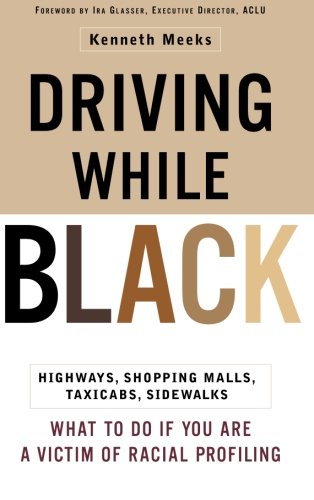
I don't know how many young readers "of color" (Black, Latino, Dakota, any minority that has a poor-and-disreputable image in your part of the world) this web site has, but once again, this web site pleads: Don't be a victim of those who may actually want to rekindle the race war of their youth, whether because old-school Communism is still their religion, or just because they've lived and not learned. Be brave. Be tough. And that means tough enough, if you meet a police officer while "Driving While Black" or whatever else, to realize that s/he is under stress too. If you are (a) a young man, (b) large, (c) dark-complexioned, (d) foreign-accented, and/or (e) otherwise associated with a "problem" group in your area, that also sends out threat messages that you need to defuse. Show respect, even if that means "saluting the uniform not the man" and living to document the fact if you have found the real jerk who occasionally gets hired as a police officer.


Black lives matter. Blue lives matter. This July has been long and hot enough, with enough black days, already. So this web site recommends that people just not set up this kind of situation. If you don't seriously believe that someone has committed a crime, think three or four times before you call the police. If you think the person might be lost, sick, confused, in danger, or the owner of a stranded car you saw a few miles back, it may be safer to ask the person yourself. Oh, of course you should be cautious--approach from inside your vehicle, with the window rolled down just an inch, and be accompanied by a friend when possible. I believe a cell phone is a good primary defense weapon because, when I take it out as I approach a stranger, that little light nonverbally says "I'm here to help you...by any means necessary." But I think we as a nation need more courage, more sanity, and more levelheadedness.

As my generation become officially "old ladies" or "old gentlemen," I think more of us should reflect on what those terms mean. They don't mean "weak" or "stupid" or "helpless." They mean senior. They mean responsible. I'm definitely smaller and older than the average person in cyberspace, so I'm entitled to call myself a little old lady--and what that means is a responsible adult who is obliged to offer whatever help I can to anyone who may need it.

Especially in these hot, humid, brain-melting Dog Days of July.

Book Review: Knitting for Peace

A Fair Trade Book


Title: Knitting for Peace

Author: Betty Christiansen


Date: 2006

Publisher: Stewart Tabari & Chang

ISBN: 1-58479-533-6

Length: 132 pages

Quote: “Knitters have…long been gathering in yarn stores and guild meetings, calling the work they do ‘charity knitting’.”

Here is some straight talk to other knitters. Personally, I have mixed feelings about that whole concept. “Charity knitting” has long tended to be perceived, to put it charitably, as bad knitting. If it were good knitting, people would use it themselves or sell it. Some knitters do, in reality, get all wrought up about doing something “altruistic” with their leftovers of yarn and time. The things that can be made from scraps of good yarn may be both useful and beautiful. Unfortunately, nobody really believes in altruism, and the effect of giving away hand knitting tends to be to lower the reputation of hand-knitted things even when they are good enough for knitters to use or sell. My generation’s “knitting for giving” spawned a genre of jokes about the hand-knitted “gift” sweater—not even the “charity” sweater, the “Christmas gift” for a relative—being the worst of all possible gifts, less desirable even than the dried-out commercially made fruitcake, because even soaking it in vodka won’t relieve the awfulness of the lumpy, ill-fitting, ill-made Christmas Sweater. This devalues all knitting, and all knitters, by association.

Am I being mean? Hard-nosed, peevish, money-minded? Maybe. I’ve also made a small but consistent profit on my knitting hobby, and I’ve also been happily married to a willing sweater model. I've also talked to people who actually say things like "I'm living on a disability pension...but I don't buy or sell hand-knitted things! I knit things for giving!" (Disabilities aren't always obvious, but this lady was walking around without a cane, driving, reading, recognizing colors, and talking normally...whatever her disability is, whatever expenses she may really need help with, her disability would not prevent her from doing quite a lot of jobs.) So, dear ladies, you can wail and wring your hands, dismiss my opinions, go on clutching your altruistic feelings through the long nights when the men for whom you’ve knitted sweaters refuse to answer their phones, and Heaven help some of you when the welfare funding runs out; or you can start thinking rationally about the function of hand knitting in the modern world, say no to that disability pension (whether you're 70 years old yet or not), and just get over your phobia of doing anything both for profit and for pleasure. Choose.

There are legitimate charities that welcome hand-knitted items. They usually have fairly rigid rules about what they will and won’t take, in order to limit the number of donated items that needy people transfer directly to the nearest landfill. For similar reasons, their rules also tend to dictate fairly simple projects that are hard for amateur knitters to mess up, made with decent quality yarns that are suitable to their intended use.

Knitting for Peace is primarily a book that explains which organizations will take beginners’ projects, which projects they’ll take, and why. It’s not exhaustive, and by now it’s ten years old, but most of the information inside is still useful.

Secondarily, it’s a book of short, cheap, simple projects that beginners can practice making for use or sale. Practice is a keyword. Because these projects are meant to use up leftover yarn fast, the realization that you may need to unravel and reknit them, or else save them for emergency middle layers you don't want anyone to see you wearing, won’t hurt as much as if you’d plunged right into the $250 designer sweater of your beginner-knitter dreams.

I’m not saying you should never knit something “for you, from me, made to show my love etc. etc. etc.” I am saying that, until you’re using and selling your own handiwork, your friends and relatives are likely to feel more embarrassed by your “love” than they are proud of your gifts. I am saying that, even if your work is just as good as the “handmade” sweaters big-chain stores get from foreign sweatshops, people need to see your work in a store window before they’ll let themselves see that it’s equally good.

So Betty Christiansen has given us this wonderful little book of practice patterns. Along with short articles about the history of knitting and charitable organizations to read while you knit the mindless bits, you get patterns for a tote bag (to felt or not), adult-size and child-size socks, a child’s to small adult’s vest, a woman-size “prayer shawl,” a kid-size shawl-or-comfort-blanket, a full-sized patchwork afghan (or you can just knit a few patches and donate those), a pet blanket, a basic cap, two fancier caps, an infant’s or preemie’s cap, a child’s sweater, stuffed toys (if you have enough scraps you can make a whole family of animals/dolls/puppets), and mittens. These are very, very simple patterns; the only ones that require any skill are the sweater and vest, which do involve picking up and knitting in different directions—in order to encourage you to try mixing different scraps for different effects. All but the preemie cap can be made with blanket-weight yarn, so you can practice with dimestore yarns until you enjoy using your work enough to invest in the yarns recommended by charitable organizations.

Yes, this means patterns for blanket-weight socks for the whole family. They’ll be on the bulky side to wear inside shoes or boots. For someone who bought oversized leather boots and plans to wear them while they shrink, chunky socks are just the thing. Otherwise, blanket-weight socks make great bedroom slippers.

The organizations’ yarn recommendations are especially valuable. Read them so you’ll understand why, if you knit some of these projects using the yarn you like, you may get a wonderful result for your own use but not for the organization’s purposes. Wool shrinks, which means it won’t stretch, droop, and fall right off a needy orphan’s cold little hands the way acrylic might do. Cotton is comfortable for wearing next to the skin, which means it’s a better choice than lovely, fluffy, but sometimes itchy mohair for a chemo cap. Acrylic survives years of institutional machine laundering, which means it may be preferable to beautiful wool or cozy cotton for a dog’s or child’s comfort blanket. Rayon is not very good for any purpose, unless you happen to fall in love with one of those rayon novelty yarns some manufacturers keep bringing out, in which case you can always knit yourself a scarf. 

I don’t part with knitting pattern books easily. Unless I’ve acquired duplicates, I keep them until I’ve knitted my way through each and every pattern. So I can tell you that for a professional knitter, using these patterns, as well as having them all conveniently bound in one place, is great fun. For years I’d been wondering what to do with some very arty thick-and-thin natural wool I’d acquired in a bag sale in aid of a charity; I made the bag. I made the basic pair of socks, which sold within the week, and a tailored pair to fit my own curvaceous calves, which I’m still letting people drool over (when they’re ready to pay, I can make additional pairs to fit them). The vest used up some impractical chenille yarn, also from a charity store. The shawl pattern inspired me to use up leftover yarn from a small jacket I’d knitted for sale and make an unmatched set for a tall mother and small daughter. Knitting one of everything in this book was a few months of fun fun fun, as discussed here:


I donate my knits to charity only when sponsors pay for that—and a sponsor actually did.

That ooey-gooey prolactin gush of "oh I wanna be a giver" that I'm urging you to resist does seem to have inspired this book, but it doesn't have to be a problem. Fear not: persevere, and you too will become a professional knitter, able to donate actual money, as well as hand-knitted tokens, to the charities of your choice.

I should mention that another weird thing happens to knitters who persevere and put price tags on our time and work. Things we knit for fun, as jokes, as protests, or for learning experiences, have a way of becoming Art. I am not making this up. More than once, something that I’ve thought nobody could possibly want (including one of the projects in this book, the way my first version came out) has sold for a higher price than I’ve put on things that I would want.

So I can honestly recommend that all knitters let this book inspire you, too, to “knit on, with confidence.” It'll cost $5 per copy + $5 per package, and Christiansen or any charity of her choice will receive $1 per copy. Payment may be sent to either address at the very bottom of the screen. 

Thursday, July 14, 2016

July 14 Link Log

Whew...just finished a piece of fiction, and now it's time to put together a Link Log. Categories: Animals, Books, Economy, Family, Funny, Health, Local, Politics, Weird.

Animals 

And when does a timber rattlesnake pose a threat to a person's life? Any time a person sees or hears a timber rattlesnake, it poses a threat to a person's life.

http://wjhl.com/2016/07/14/wildlife-officials-rattlesnake-death-warranted-after-scott-county-va-utility-worker-almost-bitten/

Books 

+Neil Gaiman recommends Jenny Lawson's new, crazy coloring book. I can see why; it's certifiably crazy (Lawson claims she locks herself up to draw it) and intricate enough for many, many hours of coloring fun. "Adult" in the sense that the images are too complex and weird for toddlers, not in the sense of likely to embarrass adults in front of kids...unless you're the sort of pompous adult who claims to have outgrown doing anything kids like to do, like coloring.

http://thebloggess.com/2016/07/14/i-have-a-big-announcement-to-make-and-im-not-sure-how-to-say-it-but-its-all-your-fault-sort-of/

He was on Twitter, btw, to promote his book via this interview. Serious fans may be able to watch:

https://www.waterstones.com/blog/waterstones-exclusive-video-neil-gaiman-and-chris-riddell?

Tom DeWeese has written a novel. (Not an Amazon link. I get no commission.)


Now I need an Amazon book link...see below. This one's a comedy classic.


Economy 

The funny thing is...Earlier this month, the news broke that my county was planning to raise property taxes to balance the budget. Naturally, as North America's Queen of Frugal, I could think of several alternative ways to balance the budget, one of which I was willing and able to do myself. So I was invited to address the county board meeting...but the board members did not want to discuss any immediate plans for cutting expenses before tax bills went out. They wanted to "think about it" for another year, or maybe decade. Our federal government are the same way, Gentle Readers. The donkeys balk, the elephants stand around chewing their cud. And so it will always go, until we go beyond the scope of previously proposed balanced budget rules and amend our national, state, and local constitutions to the effect that, if proposed expenses exceed income, government may allow volunteers to engage in fundraising to save their favorite programs, but government may not raise taxes.

https://www.conservativereview.com/commentary/2016/07/5-takeaway-from-obamas-parting-present-eye-popping-debt

If you want to read this one the way I do, I want you to visualize the last person who mentioned depending on a disability pension to me: Sixty years old, short sensible white hair, sensible clothes, Northern accent. Straight healthy back. Walks without limp. Reads; stack of library books not selected from the Large Print Collection. Carries own books. Drives own car. Crochets; can see to match colors. Speaks in normal tones, neither loud like the profoundly deaf nor muted like the hard-of-hearing. Could easily pass for fifty. I mean, for all I know she may have early-stage multiple sclerosis or some such thing, but I have no idea what her disability might be, after seeing her and talking to her and car-pooling with her, several times. I mean, if I had the money I'd hire her as a driver today. That's the Face of Supplemental Security Disability Pensions today. Not that it takes less than a year, still, for an ordinary working person to convince the federal government that the arm or leg s/he has lost doesn't seem to be growing back...if anything, the difficulty of getting a disability pension may explain why someone who obviously could do a job is clinging to that pension.

http://dailysignal.com/2016/06/28/social-security-programs-face-depletion-in-near-future/?

Family 

Ways to be a healthy parent rather than a helicopter parent. (Use judiciously.)

http://www.parenting.com/parenting-advice/tips-tricks/6-radical-parenting-ideas-to-consider-your-kids

Fun 

Dan Lewis discusses the history of tug-of-war. (In junior high school we had a rougher version called a rope fight, which is what it was; winners dragged losers around the field, and to keep the game going people from the winning side would then be transferred to the losing side. Considering the amount of cross-gender body contact that went on, I remember rope fights as something of an "adult content" game, not what I'd consider suitable for junior high school.)

http://nowiknow.us1.list-manage.com/track/click?

Funny 

Now this is just plain ridiculous. Someone advertising a job that really might have been suitable for me, if I'd had access to Skype on the right day, has got me onto a job search mailing list that clearly is not edited by humans at all. This is a legitimate job all right...but what thought of matching a car-free writer in Virginia with an ad for a rural route mail carrier in Arkansas? Well, I laughed...and maybe some reader has a car and is in Arkansas. (Searcy, to be exact.)

http://www.indeed.com/cmp/United-States-Postal-Service?

Health 

John McDougall is sticking his neck out with this one, but it's true: some people with Type 2 diabetes can be considered "cured" in ten days. Adayahi has done this. (Diabetes may eventually recur, though, if for some reason you have to give up the exercise component. Adayahi stays on the good side of the diabetic borderline when working but has to take insulin when ill.) And, as always, if you take a McDougall vacation to test one of these claims, doctors will be standing by.

http://us4.campaign-archive2.com/?u=5e58f59d97611f910916b6276&id=7bd1947bab&e=4d57a9fdfb

More good news, if true:

https://www.theguardian.com/world/2016/jul/14/zika-epidemic-has-peaked-and-will-run-its-course-within-18-months-say-experts?CMP=twt_gu

Local 

Regular readers may be asking, "Why the cafe? Time offline, in a store building, writing about items in the store, we can understand...but why is the Queen of Frugal using an Internet Cafe in a town that has a public computer center?" Yes, some of you may have guessed: the cesspit erupted.

http://priscillaking.blogspot.ca/2014/09/nefarious-librarian-in-scott-county.html

The Nefarious Librarian hasn't accused me of stealing books; instead she wangled permission to post a set of rules that included subjective terms, and then accuse me (and some other people, by ones) of breaking her rules. That means she gets to confront us in the more supportive atmosphere of a regional library board meeting, rather than having to accuse us of crimes, go to court, and go directly to the mental institution where she should have been all along. And what's a Lee County reject doing, making rules for Scott County taxpayers, anyway?

So you might say I'm campaigning for librarian. Actually, I'm campaigning for the idea, which has already been proposed by members of the county board, of defunding the library. Our public library is indeed tied into a big, clunky regional system with clunky, inflexible policies; those policies have indeed been used to inflict the coveted position of head librarian in Gate City on a Lee County reject who was expected to consider it a punishment. That reject is close enough to my age that I knew a long time ago that, unless she dies, I'll never be offered the one and only nine-to-five job I have ever imagined I really wanted. I've coped; I've worked in public libraries enough to know by now that I prefer private ones. So, for all these years, I've been watching the reject, a.k.a. Nefarious Librarian, a.k.a. Double-Wide (because her bottom half is twice as wide as her top half, which is massive), systematically destroying my town's library. Yet I've not been pushing to get her out. I'm not a pushy person; I've been trying to earn my living without looking at or speaking to the Nefarious Librarian. She has been pushing to keep me, and at least half a dozen other serious adult library patrons, from doing any serious work in the library. For at least five years. And it seems the only way to stop Scott County's money being spent to prevent what Scott County taxpayers intended it to accomplish, namely to have a library and/or computer center for serious adults, is to shut down the public library as it currently exists. Then we can have a bookstore, which is what this web site was intended to support from the day one.

Big Stone Gap has a bookstore (one of my working role models) located within walking distance between the public library and the college library, and that bookstore is making a profit. I would have thought Gate City had room for at least one library and a bookstore. Maybe not. What's certain is that we don't have room for Double-Wide.

Politics (Election 2016) 

Where could Candidate Trump possibly find a nominee who might be considered life insurance? Hmm. If my name were Pence, I might make a career of sitting on every possible fence, since I almost do that anyway and doggerel about it would be publicity. My impression is, however, that that's not what the voters want in the White House. (One reason for doing it. I don't want to be President.) Which may be Pence's crucial life insurance appeal.

https://www.washingtonpost.com/news/the-fix/wp/2016/04/29/why-endorsing-ted-cruz-wasnt-an-easy-call-for-mike-pence/?tid=sm_tw

Weird 

Or do I just mean tacky? This one is just plain tacky. After a murder is no time to blather about whether the victim might have been a racist, or anything else with which you disagree, of which you disapprove, or which you don't like. Shame, Jesse Benn. Brave people criticize those in power, cowards criticize those on their way down, and people who are just plain mean bash the dead.

http://www.theblaze.com/stories/2016/07/14/huffpo-blogger-claims-slain-dallas-cop-may-have-been-white-supremacist-offers-this-as-evidence/

No, I've not joined the boycott of the Huffington Post because that'zine featured an article claiming that Jesus might have foreseen Muhammad as a true prophet. (Who or what is a prophet? How much good and how much harm did Muhammad do? How do we know? Is Koranic scholarship sounder or more solid than Biblical scholarship? How do we know? Can any of these questions be answered based on facts, or must all of them be answered based on faith? I say faith, and HP has the right to feature whatever statements of whatever faith they may choose.) Some readers may, however...

http://www.florida-family.org/take_action_desktop.php?message=312

Morgan Griffith on GMO Labels

Editorial rant: This web site wants mandatory GMO labels, in large clear type, preferably in Spanish as well as English, as a requirement for any company that wants to market any GMO product as food--even for hogs.

Some of our correspondents are going to have a field day bashing Republicans and moderate Democrats who voted against mandatory GMO labels. Yes, of course manufacturers can start labelling food GMO-free, and they should. Yes, of course Americans can write (and e-mail) food manufacturers about their concerns. We're entitled to demand that "Roundup-Ready" products marketed as food be burned; we're entitled to demand that they be wrapped up in a great big symbolic shape--the cross has been taken--and burned outside Monsanto corporate headquarters. And that should happen.

But our Congress should also have held the entire nation up to Vermont's standards for GMO labelling, rather than dragging Vermont down.

That said, I do understand that GMO labelling may be a hardship for some food manufacturers. Of course, the longer we stall, the worse the hardship will be. If GMOs hadn't been sneaked into the food supply, meat processors wouldn't have to worry about verifying what hogs or chickens have been fed.

Meanwhile...food manufacturers are U.S. citizens. They vote. In a democracy they're entitled to lean on the U.S. Congress like everyone else. I only wish Virginia's congressional representatives, who represent more small than large food producers, had stood up for the right thing...like ten years ago. If only for the record.

From U.S. Representative Morgan Griffith, R-VA-9:

"
On July 14, 2016, the House of Representatives considered the Senate Amendment to the House Amendment to S.764, dealing with GMO labeling requirements. This bill establishes mandatory labeling and disclosure requirements for genetically modified foods, under which the U.S. Department of Agriculture would determine which foods qualify as genetically modified. Food companies would then be able to choose among several methods of labeling and disclosing that the product contains GMOs to consumers. The labeling and disclosure requirements contained in this bill would pre-empt state standards. States would be prohibited from establishing a labeling requirement for bioengineered (also known as genetically modified organisms (GMOs)) in interstate commerce if the food is subject to the measures’national bioengineered food disclosure requirements. The Senate Amendment to the House Amendment to S. 764 passed the House on July 14, 2016.

I believe that this legislation was a case of a bad option vs. a worse option. The House version was a good bill (H.R. 1599) and I voted for it. While the Senate version would allow for some labeling requirements to be provided online, the mandatory requirement is unfortunate. I would anticipate that large food production companies will be unable to comply with this requirement since some of the food that they produce contains numerous ingredients such as corn, wheat, soy, etc. It will be difficult for them to determine if GMO products might be included due to cross-pollination with other nearby crops. Small manufacturers can more easily provide, with certainty, non-GMO selections as opposed to large companies. I would have preferred the House version become law, but the Senate version of the legislation is better than no action. This is because taking no action would allow a crazy quilt patchwork of state labeling laws to be implemented on companies that sell product in more than one state. Vermont already has such a law and failure to create a national standard now will cause such an unworkable patch work. Please know that I will keep your thoughts in mind should other legislation come to the floor of the House of Representatives regarding GMOs.

For more information on what is happening in Congress, please visit my website at www.morgangriffith.house.gov. If I may be of further assistance to you on this, or any other issue, please feel free to contact me in my Washington, DC office at (202) 225-3861. I remain

Sincerely yours,
https://iqconnect.lmhostediq.com/iqextranet/Customers/VA09MG/mgriffith_signature.png

H. MORGAN GRIFFITH
"

[Blank space represents a signature graphic.]

And how does this relate to Agenda 21? U.N. Agenda 21, breaking from traditional "Communist" ideology for practical reasons, calls for more support for huge factory farms owned by corporations, as opposed to small sustainable farms owned by families.