Showing posts with label chicken. Show all posts

Friday, January 2, 2026

Remembering Sandy

Content warning: This is not a happy story. It's a story about an animal who probably had only two or three years to live, and didn't get to live even one year. If you are depressive, read something else.

Anyway, since I've posted a free-verse scribble about the hen Loretta and a memoir about the hen Linda, it seems only fair to post one about another memorable pet chicken we had when I was growing up. She belonged to my brother but she did stupid pet tricks with me. We called her Sandy.

Her beginning was unpromising. Some neighbors--of course they were related to us--had had a big farmhouse. One October afternoon it caught fire and burned to the ground. The neighbors rented a house on the edge of town, complained that being in town felt like being in jail to them, and generally browbeat several of our relatives into building a new house ten yards from the site of the old one. When people were unhappy, older people used to give them chickens. I'm not sure about the origins of this custom but it did seem to help; chickens need just enough attention to take people's mind off their grief and get them on their feet a few times every day. So someone gave these people three very pretty bantam-sized Ancona hens, and someone else gave them a pair of Cornish Game chickens, hen and rooster. One of the Ancona hens had rusty spots rather than white spangles on her mostly black feathers.

Well, but the people who wanted to be back in our neighborhood didn't like keeping chickens in town. It wasn't fair to the chickens, they said. Other people kept chickens, who seemed content enough, in fenced yards on their street, but "Wouldn't you children like some more chickens? They're so pretty, if you could teach them tricks they'd make a great show..." 

We took the chickens, and what we learned right away was that Anconas, even bantam-sized Anconas, are aggressive chickens. Only the males were bred to fight each other as a spectator sport for humans to watch and gamble on, but the females are rough and tough enough to live with the males. We had at the time a family of tiny, goodnatured, cuddly Inglebright bantams. The Anconas and even the Cornish Games were much bigger, and rougher. The dominant Ancona hen didn't just peck at the other two--she tore strips off them. 

She was quite tame, had apparently been somebody's pet, but she had very strong prejudices about humans. Women were the kind of humans she was used to. Men, like the son of the old couple who had sent these birds to us, she respected. When released from a shipping box into our chicken shed, she perched on my shoulder and snuggled; she saw me as a woman. My brother, who was almost as tall as I was and whose hands were bigger, reached out to invite her to perch on his hand. She struck out at him like a snake. Her beak was sharp enough to graze the skin visibly, though not to draw blood. She hated children. She classified my brother as a child, and if he approached her she ruffed up the "hackle" feathers on her neck, nonverbally saying "Touch me and I'll bite." 

We didn't want her persecuting our gentle little birds, or my brother. Chicken soup was a possibility we broached at dinner, but we agreed to send her to stay with another neighbor, whose chickens were all much bigger than she was. That mean little hen wasn't likely to do them much harm, we gloated.

Before the Anconas and Cornish Games had been sent to us, it seemed, they had been starting a brood of eggs. Sometimes a group of hens put all their eggs in one place for one hen to rear. This lot had been doing that, and the mean old Ancona hen was the first to go broody and want to rear the eggs. We didn't think she deserved to have babies but that was the way things went. So there were six or eight black chicks, three or four white ones, and the sandy-colored one. The children at the house where this chicken family were now staying naturally called the sandy-colored chick Sandy, and called one of the white ones Andy. 

One day my brother passed by that house and saw the children, who were younger than we were, throwing baby chicks through the air for their dog to fetch. A few years before when he'd seen some other children mistreating a pet chicken he'd knocked them down and brought the chicken home. That year he was old enough to deal with the situation in a more mature manner. "That's no way to treat baby chickens, or dogs either," he said. "What'll you take for the pullet? I've got four dollars."

Andy had turned out to be male; my brother knew better than to bring home another male chicken. Sandy was by this time recognizable as female, but she was no longer sandy-colored. She was white with rust-colored spangles. 

"Not another one of those mean chickens!" our mother said.

"She's not mean. She's shy," I said. "She's already met our hens, and didn't even try to peck back when they pecked at her."

Even the sweet little Inglebrights did a little harmless pecking when the hens stopped brooding and feeding the spring chickens, which process was going on just then. Loretta was one of the spring chickens the hens pecked and chased away from them. Adolescent chickens form sub-groups of their own. Loretta and Sandy became particular friends. The rest of their sub-group included Loretta's brother and a smaller, younger white pullet we called Vickie the Chickie, and a few others who didn't learn tricks or become pets and didn't stay with us long. 

For a month or two, while they were at the right size, Loretta and Sandy liked to ride around in the big patch pockets of the old jacket I put on when practicing stupid pet tricks with the chickens. (They were "clean birds," but I preferred to be safe rather than sorry.) 

They didn't look at all alike. Loretta was a sleek, pretty, dainty little bird, her body only ever about six inches long from neck to tail. Her feathers were always smooth and coal-black, tail feathers usually folded neatly behind her. Sandy was half again the size of Loretta. She had managed to inherit both the full, round breast of a Cornish Game and the triangular frame of an Ancona; all her body mass was up front. She looked from a chicken fancier's point of view like a mongrel and a freak, but she worked with what she had. She was one of the minority of chickens who can leap up off the ground and flap several yards. Even Sandy couldn't fly very high or far, but she could fly all the way over our house, lengthwise--about 25 yards, counting the distance it took her to gain and lose altitude: more in the way of flying than any other chicken we kept ever managed. (Though not even half of the world's record: the longest documented flight of a chicken was just over 100 yards.)

"Being pocket peeps" was Loretta's and Sandy's own idea. They would approach me together. Loretta would stand still and chirp, inviting me to pick her up, so she could get into my pocket. Sandy would fly up, perch on the edge of the pocket, and lower herself down into it. They would ride around with their heads sticking out over the pocket tops. After they grew too big to fit into pockets, they rode around on my shoulders. 

We worked with about thirty chickens that summer. Most of them never did any real tricks beyond coming when called and greeting people who wanted to take a chicken home. The ones we kept, going into the winter, were Sandy and Loretta, Vickie the Chickie, Loretta's brother Grayling, and two older hens called Silver and Spartan. Silver had reared Loretta and Grayling; Spartan had reared Vickie and others...that's another story. Spartan was my brother's special pet, and always had been. Dad wanted my natural sister to be part of the show and have a pet chicken who did tricks with her; Silver was officially her pet but Silver's only trick was perching on someone's arm, and mostly she perched on mine.

How is it possible to work with chickens? Most of the work consists of teaching them to trust you and come close to you. That done, some people have spent a lot of time and energy teaching the empty-headed birds to peck out tunes on xylophones or push checkers around a board,  but we never aspired to anything so complicated. We just watched for a chicken to do something that could be made to seem cute or clever, and tried to get the bird to do the same thing again, reliably, on cue. Chirp when its name came up in a song. Step forward when asked. Point to an object. Chickens can see colors and can learn to do all sorts of variations on the theme of "pick out the red ball." Most chickens don't seem to recognize words, or even tunes, but a few of ours learned dozens of words. 

Sandy's main trick was her ability to leap up and fly. Her preference to fly to and perch on me seemed to have more to do with her relationships with other chickens than it did with a preference between us; she seemed to like both of us. The thing was that Loretta liked sharing her human with her best buddy, while Spartan might have been just a bit jealous of my brother, as well as protective of Vickie the Chickie. Spartan growled and pecked at Sandy if Sandy came too close to Vickie, though Sandy had never threatened Vickie. 

Vickie the Chickie never learned anything. She couldn't even be said to come when called. She followed when the other chickens were called. Her only contribution to any show was that she was tiny and pure white; but Spartan seemed so attached to her that we didn't want to let her go.

Sandy's moment of glory occurred one afternoon while I was still on the school bus. My brother and sister were at home to see it. Hawks often rear their chicks in autumn. A hawk with chicks to feed can become desperate. Most hawks don't eat other birds if they're not starving; when red-tailed hawks eat other birds they tend to lose their health. Sometimes hawks have taken chickens to their aeries to feed to babies who were not quite starving, and the hawk family ended up keeping the chickens as pets. Who knows whether that was what almost happened to Vickie the Chickie. In any case a big female red-tailed hawk stooped as if to seize the smallest, youngest chicken in the flock. 

Sandy chirped a warning. Vickie, and the other chickens, scattered and hid under bushes. Chickens are not known for their courage.

But Sandy was not a normal chicken--everyone always said that. Sandy was a mongrel, a freak. Sandy, my siblings reported, charged at the hawk. The hawk flew up into the air, to stoop and sink her talons into Sandy. Sandy flew up into the air too. Disconcerted, the hawk dropped to the ground, and Sandy blinded the hawk on one side. The hawk tried to defend herself, and pulled out most of Sandy's tail feathers. Sandy flew up again, settled on the hawk's back, tore strips off the hawk with her beak and claws while slapping the hawk silly with her wings. Then my brother ran out and whacked the hawk with a stick. Bleeding and confused, the hawk flew away. 

She had a name, now, that hawk. People could recognize her. She was Old One Eye.

Grayling was staring at Sandy in wonderment, by the time I came home, and Sandy was keeping her back end toward the bushes, not wanting Grayling to see her without long tail feathers fanned out behind her. Most birds seem to be a bit vain about their tail feathers. 

Spartan showed much more respect to Sandy after that day. All of them did. And also, after that day, the chickens were positively stalked by two red-tailed hawks. "Old One Eye" and her mate seemed bent on revenge. One of us had to be out with them whenever the chickens were outdoors. Even when my sister was out with them, Old One Eye tore out Grayling's tail feathers. But that only seemed to give him and Sandy more of a bond. They mated. Sandy laid a few eggs in between Christmas and New Year's Day. The eggs could have hatched, but who tries to raise chickens in winter? We ate them.

It was never as much of a pleasure as a duty, but some winters we had to spend a few weeks with "Aunt Dotty" and "Uncle Pete" in Florida. That was one of the winters. Dad stayed at home; he had some jobs to do. 

As teenagers neither of us minded being separated from our parents for a few weeks, but Mother and Dad hated to spend a single night apart. They wrote letters and mailed them every day, not caring how many letters crossed in the mail. 

Dad wrote that every time he went outside long enough to let our bantams come out with him, which he tried to do every day, he saw at least one of the hawks. Watching. 

One day, his letter reported, he'd gone into a shed for just a few minutes. When he came out, Old One Eye and her mate were taking their revenge. Hawks aren't very good fighters on the ground; if they're going to kill chickens they have to drop onto the chickens' backs out of the air. Old One Eye managed to drop onto Sandy's back, and her mate onto Spartan's, during the minutes Dad was in the shed. When he came out they flew up, leaving the two hens dead on the ground. Then the male hawk dropped again and carried off Vickie the Chickie.

They knew what they were doing, we said. 

I forget now who shot Old One Eye. It was not considered much of a feat. Euthanasia, really. By the time we came home the three remaining chickens were free to roam, unmolested; but none of us ever wanted to turn the chickens out for the day and forget about them, ever again.

Tuesday, September 3, 2024

Book Review with Dogs: The Dog Who Wooed at the World

Title: The Dog Who Wooed at the World

Author (primary): Laura Lee Cascada

Date: 2024

Publisher: Every Animal Project

Length: 317 pages

ISBN: 9798325940063

Illustrations: digital color photos

Quote: ""[W]hile I was out protesting circus cruelty, Powder was at home, protesting my absence."

Powder was a problem dog. (True story. All stories in this book are basically true, though some are imaginative--one writer put lyrics to a friendly robin's songs--and all are edited for length and clarity, no tangents about how the "pit-beagle" might also have been part this and that else and so on.) She was part pit bull, she had not had a good start in life, she did not do well in dog "school" or even at making friends with neighbor dogs at the dog park. Yet this seemed to make her a good therapy dog for a young person having her own problems with this complicated world.

Most of what we learn about animals from this book, we (probably) already knew. That's not a problem; we never mind re-learning that animal friends are delightful to know. This book may have something new to tell readers about the people who love animals. 

People who love animals form a wide spectrum. There are farmers who see most chickens as food, but recognize something about this chicken. There are people who work in modern, ethical zoos where animals are likely to live longer, and have more viable offspring, than is typical "in the wild," and people who believe that the existence of zoos is somehow immoral. There's a man who always liked fishing but suddenly stopped fishing when he suddenly felt empathy for a fish he'd caught. There are the "professional vegan" types who agonize over the plight of dogs living outside in clean yards in mild climates, who even manage to project love onto beetles. ..people who don't just observe an unusual beetle on the window screen, look it up, and blog about its place in the environment, but give it a name and talk to it. (Social isolation during the COVID panic gets the blame.)

I would actually agree that, although we'll never know what beetles feel, it's unscientific and a rather transparent emotional defense mechanism to claim that beetles can't feel. Probably they feel something; we just have no way to imagine what. 

But, even in extraordinary circumstances--the beetle one woman picked out of the spider's web was unable to fly, and it crawled into her home as if it could think that she might be willing to offer it food and water, so she did--should people devote their time, energy, and compassion to beetles? Isn't that taking time, energy, and compassion away from the person's relationships with other human beings?

I'd have to say that one thing this book documents is that, no, that's not the case. Some of the people whose animal stories are in this book do, as the editor does, mention mental illness, relationship problems, isolation by disabilities or diseases. Other stories mention ongoing, apparently healthy, relationships with other humans: friends, families, even careers in "human services" fields. While reading I was aware that some writers' social lives seem "immature," and yes, they mention being in their teens and twenties at the time. Other writers' social lives sound more mature and stable, sometimes even supporting them through physical illness. 

Working in markets where different people rented spaces, I've noticed a paradox. It is true that customers bring in only so much money to spend and, if they spend their money on one thing, that is money they're not spending on another thing. It can be very annoying when vendors who are not being paid for their time see someone come in and talk about buying several items, then wander on through the market and finally come back loaded with bags and buy one small item "because this is all the money I have left." People, especially the ones who live on handout checks and don't even want to have to admit making a profit, can be tempted to project their frustrations onto other vendors and start what the Bible calls "biting and devouring one another." "Don't buy their stuff, it's probably stolen, it's probably not any good!" And a few people who wanted to buy their stuff anyway will listen to them, and may even buy more of their merchandise--one day. And then what happens? A market where people sabotage one another has an unpleasant atmosphere. If A says B's merchandise is no good, customers think it's likely that the whole marketplace is not a good place to shop, and they take their money somewhere else. A hostile market is an unprofitable market. A market where vendors encourage each other, or even buy each other's stuff to cement alliances, gives off friendlier vibrations and attracts more customers. 

I suspect it's the same way with the energy humans invest in other species. People can and do let their relationships with animals become obstacles to some specific relationships with other humans. They have reasons for this. Powder, staying with Cascada through short-lived relationships, was the "therapy dog" who helped a young person come to terms with the amount of control of our lives we mortals do not have. Someone else takes time to notice birds or insects at the window while the person is bedfast or quarantined. Someone who lets a dog "chaperone dates," jumping up and down and yapping in between the person and a "date" on the couch, may be consciously aware that "I can't afford another intimate relationship while I'm paying child support." But most people whose love of animals is conspicuous to other humans--definitely most of us "cat ladies"!--actually relate to animals as part of a social life that includes about the amount and kind of inter-human relationships we want. 

My contribution to The Dog Who Wooed at the World mentions, but does not explain, the Cat Sanctuary. I don't go into much detail about it here, either. Because I try to avoid writing about living people other than myself, it may sound as if it's just me and the cats. There are hours when it really is just me and the cats, but actually the local Cat, Dog, and other animal sanctuaries are a social network beyond the friends and relatives of the individual (or couples of) animal rescuers. Empty-nesters are likely to have room for more animals, but some animal sanctuaries are operated by young working parents, too. 

Some other contributors to this book mention working, whether paid or not, with animal rescue and protection in some way. (Regrettably, none of them questions HSUS' tacit agenda of extinction for domestic animals.) Many don't mention their jobs or social lives at all, but several mention living with parents, spouses, and/or children. Some mention the animals as part of their relationships with family members they've lost. 

One contributor shares an experience that was among the better ones in my childhood too: when you live in the country and have time and space to do more or less anything, so people send all sorts of animals to you, just to see what you might be able to learn by nursing, perhaps healing, and training them. A brother brought two baby raccoons to her and announced that they were hers. Baby raccoons are adorable, though also a great nuisance to their whole neighborhood, so it's hardly surprising that she mentions crying real tears when park rangers explained that the raccoons were being transferred deep into the forest where they wouldn't see humans again.

A few contributors do mention living alone with an animal, like the parrot who accurately announces "the day when you are to die" and how the parrot will save the human. (Was the parrot speaking English, or a language in which the thoughts it utters would be easier for a parrot to say?) However, these stories, taken together, provide evidence that people who care about animals tend to care about other humans, also.

Do some animal lovers go to unjustified extremes, projecting their own emotional dramas onto animals that know nothing of what the humans imagine they must be feeling? Yes, I think so. I think this book shows some examples. Exotic fishes very often do die prematurely because their survival needs aren't adequately met or understood. Does that make it inherently inhumane to keep tropical fish? I think it's hard to justify the expense of keeping tropical fish, but do fish have enough consciousness that keeping them can really be considered humane or inhumane? Goldfish, the practice pets given to children, are among the few species of fish who seem able to remember or learn anything, yet their function is often to be underfed, overfed, or poisoned by things dropped into the bowl, and teach the children about death. One story in this book describes exotic fish who were dyed to match bridesmaids' dresses, as favors. Did the fish enjoy being dyed, or displayed in small jars? Probably not. Did they remember it the next day? If left in the lake, would they have been eaten by other fish? Who knows? Would the bridesmaids have preferred to receive more useful souvenirs--purses, or plates, or handkerchiefs or whatever--rather than live fishes? About that we can at least ask. I'd be surprised if any bridesmaid ever wanted an exotic dyed fish as a souvenir.

It would be good for our human characters if all our dealings with other animals were based on respect for whatever consciousness the animals seem to have. It's unlikely to happen. Should animal advocates sometimes get some perspective, and put more energy into activism on behalf of humans as well as animals? One of the stories in The Dog Who Wooed at the World is about how a dog, adopted because he was ill and seemed unadoptable, was kept alive for a few years but is now ineluctably dying, at the same time that his human, who was able to keep food down during a short visit to Japan, is now unable to keep food down back in the United States. I remember our dyspeptic kitten Traveller, how much better he looked during the week when an extravagant friend donated some top-priced kibble, how hard it was at the time to find human food that wasn't full of glyphosate, how outrageous it seemed to ask anyone to pay for overpriced kibble when chickweed and dandelions were about the only non-allium vegetables most people could afford for ourselves. If cheap grain-based kibble had been free from chemical sprays, would Traveller be alive today? How many animals', and humans', chronic conditions would be cured if we insisted on unsprayed, non-GMO food? 

Animal stories tend to be biographies rather than comedies. They're usually written after the animal has died, as memorials. These days they often end with confessions of how, after so many years of love and friendship, the human killed the animal. Humans who've opted for euthanasia find comfort in sharing these stories. Children don't like to read them. About the last third of The Dog Who Wooed at the World consists of stories about the ends of pets' lives. If there's a sequel I'd hope that more of the stories would at least focus on animals alive and well, with only brief mentions of the ends of their lives.

One cat, returned to a shelter at age fourteen because its "Daddy" is dying of cancer, appears as the narrator of its own story: "Though we were miles apart, I heard my Dad take his last breath as surely as if he'd been beside me. I curled into a ball and closed my eyes. One more deep breath, and my body shuddered. I was sitting on the arm of Dad's chair, and he was brushing my silky black fur." It could well be true. Animals have dying visions of happy reunions with friends, often with their human friends, just as we do. That they sometimes die not only calling but clinging to a friend who isn't dead yet, looking for all the world as if they are going to join that particular person in Heaven, does not necessarily prove that they may not join that person in Heaven some day. 

Whatever your favorite kind of animal is, there are not enough stories about it in this book. There is a manatee story. It's not much of a story; manatees are not the liveliest animals. There could have been another chicken story, you might think, or a story about a hawk or a skunk, or a horse, or a few more dogs and cats. I don't know anyone who's ever claimed that possums make very good pets, but I could have stood another story from someone who's learned to like a possum. The sight of the manatee--a rather ridiculous-looking animal, truth be known--convinced one writer that it's worth warning motorboat users to avoid manatee habitat, where motorboats often wound or kill the slow-moving, slow-witted manatees. A lot of us feel that way even without looking at a manatee's face. Whatever it takes, I suppose. There's more variety in stories of how living animals behave than there is in stories of animal euthanasia, in any case.

Beyond this ability, which non-participants find macabre, to take comfort from stories of other animals being euthanized, do animal lovers show other cognitive blind spots? Consider the one chicken story in this book. The humans had built a safe habitat for a few brown hens of their own. One day a smaller hen with black and white spots found her way to their house, and wanted to get into the safe habitat with the brown hens. The humans let her in, but the brown hens pecked her so mercilessly that the humans ended up building a special mini-pen for the hen who was "different" and was never going to be accepted by the others.

Are hens that mean? Some are. The question also arises whether humans exaggerate the brutality of chickens' pecking behavior. Basically, if they're not crowded, they rarely do each other any harm; if they are overcrowded, chickens can and will peck other chickens to death, and eat the bodies. The story is about how the humans devised a way to keep the speckled hen "not alone," but not among the other hens. 

Then, reflecting on this story, the writer thinks that she's like the speckled hen because her job in the medical care industry required her to deliver COVID messages from the government to her community. By now those official COVID messages are known as Lies My Government Told Me, which is the title of an actual book on the subject. New vaccines are always experimental. By denying the reality that the COVID vaccines were experimental and might do more harm than good, our bureaucracy laid itself wide open to charges of having lied with genocidal intentions, rather than merely hyped new products for experimental purposes (and/or for profit). Many people had the vaccines themselves, and recommended them to others, in good faith, and many who had the vaccines show no effects--good or bad. We now know that there were some bad batches of vaccine, and there were several people who should have been discouraged from having any vaccines at all, who were given a COVID jab and died the same day, and the whole scientific basis for at least one of the COVID vaccines was a badly flawed idea, and most people were far better off just building natural immunity to the virus, because it turns out that, if anything, being vaccinated against one strain may make people more susceptible to the new strain that's likely to be in their neighborhood by the time the vaccine arrives. 

This writer might have concluded, "Unlike the hen, who was pecked merely because she was an outsider, I'm finding myself unpopular because my job required me to help market a dangerous product. Unlike the hen, I have some apologies to make. I should give thanks that the COVID vaccines didn't turn out worse than they did, as might easily have been the case." No such luck. Her cognitive blind spots allow her to tell herself that, like the hen, she's being persecuted just because being paid made her a bit "different" from the people who weren't being paid to sell pro-vaccine propaganda. 

People who've had every vaccine that's come out are still down with COVID this summer. The writer is not to blame for this, nor is she to blame for not having had a premonition of it a few years ago. In view of how difficult it is for anyone who's done a job long enough to have "successful professional experience" to get any other kind of steady work after quitting, I'm inclined to forgive her for overlooking what everyone ought to know by now about new vaccines against virus. Still, she could at least admit that people who blame her behavior are not merely prejudiced against the color of her plumage. 

So...who doesn't have blind spots? Overall, what this book tells us about animal lovers is that they, or we, are a very diverse lot of mostly nice, kind, imperfect people whose social relationships with other humans are probably within the normal range for our life situations. We suspected as much. It's nice to read a book that confirms it.

The animals in this book are a delight to "meet," too. Which is why it's taken me so long to write the full-length review of this book. Manatees and, arguably, beetles apart, these animals are as individual and interesting as Mogwai was. Beetles don't have much personality, but the (two separate) humans who bond with them do. This is a book to savor.

Full disclosure: I received payment for my story, which appears about the middle of the book, and receive no further commissions on sales of copies. But you should absolutely buy this book, anyway, because Cascada pre-invested a lot of money in making fair payments to each of us deserving writers and because the Every Animal Project is not a big publisher with sales of textbooks or genre fiction to prop up investments in books like this one. Sales of this book determine whether there will be more books with, one can hope, a higher proportion of stories that aren't about how the animals died. Definitely buy a copy for everyone you know who has kept a pet alive until euthanasia seemed necessary, and is likely to find comfort in that kind of stories.

Now three dogs...As usual these are just the photo contest winners. They don't even predict which animal, if you were to meet all the animals in the shelter, you would consider the most appealing. These dogs have "special needs." Like Powder. They're not the photos people used to tweet with the suggested message, "Have you ever seen a more perfect [specimen of breed]?" but the fact that people are setting up Petfinder pages for them tells us that some experienced dog rescuers believe these dogs will be great pets for the right person. So let's share the photos and see if we can find the right person for...

Zipcode 10101: Gunnar from New York City 


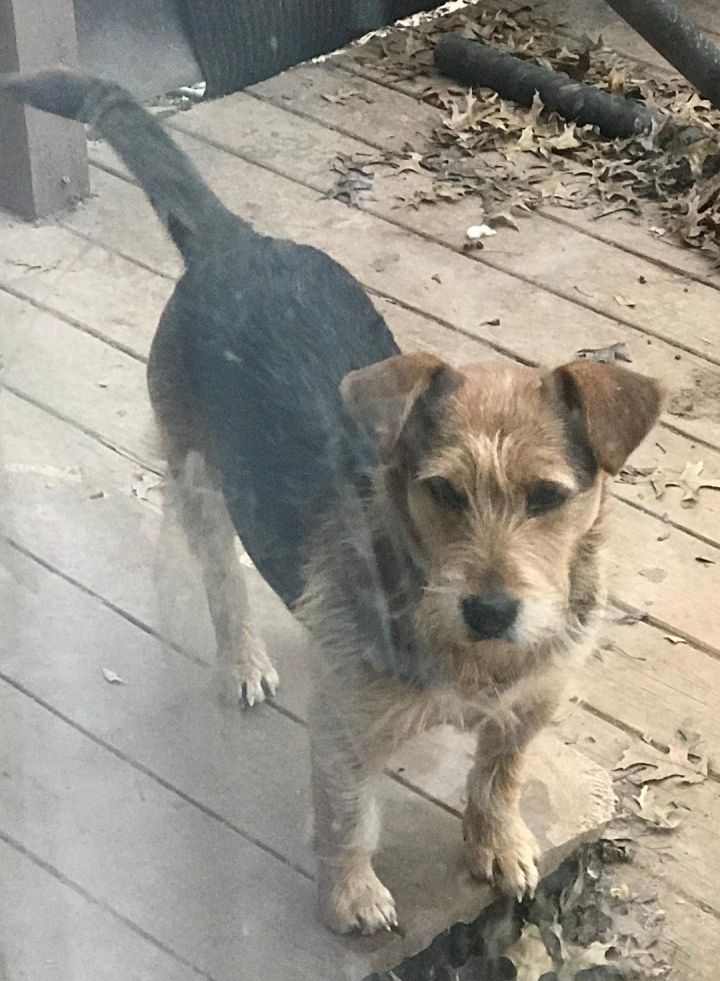
Gunnar is a foster pet. Sometimes something about the Petfinder experience for foster pets just doesn't fit right. Foster pets are shelter animals being kept in private homes, outside the shelter; the organization running the shelter pays the food and vet bills because that's cheaper than paying for a bigger shelter building. It's also better for the animals. But, no points for guessing, sometimes the family who've agreed to help place the animal in a new home really don't want to part with it, and one way or another the animal stays with the foster family for years. I suspect Gunnar is likely to be one of those dogs. Do you really want to separate him from that child? This little terrier is described as fifteen pounds of perfect pet except that he will have to take anti-seizure medication all his life. You could work out an arrangement just to help the foster family pay for the meds, so they could keep him. 


As it might be this Chihuahua, who has to take heart medication. There seems to be some disagreement about whether to call him Midnight or Chico or Tiny Dancer. He's nine years old, but sometimes Chihuahuas live fifteen years or more, like cats. This one is recommended for a quiet, adults-only home--no chance of his bonding with a child.

Zipcode 20202: Snoop from Bowie 


Yes, HSUS. Apologies. Anyway, this three-legged beagle is said to get around pretty well with only a little trouble going downstairs, and enjoy running around the yard and chasing squirrels. He's recommended to families where the children are over age twelve, but said to get along well with everyone. 

Or, as an alternative to going to HSUS, consider Ginger from Arlington...


She has cataracts. Already she doesn't see well; she needs to be able to learn her way around a place before she's completely blind. She's not a young dog, either, but she is a cocker spaniel, bred to be a sweetie-pie. 

Zipcode 30303: Charlotte from Decatur 


Charlotte's special need is training and socialization. She's not well-behaved around other animals, though she is described as friendly and just a bit "mischievous" with humans. Basically she's just a big mutt that nobody bothered to train when she was little. She needs to be taught about sitting and staying and walking at heel. For someone who is strong enough to hold her and patient enough not to spoil her friendly dsposition, she might still be a great dog, though the shelter stafffdon't even have a guess what breeds her ancestors might have been. If you like smarty answers, Charlotte could furnish lots of opportunities for them.

"What kind of dog d'you call that?"

"An excellent dog."

For someone who is patient, but not necessarily all that patient, an alternative might be Daisy, also from Decatur. 


Daisy is deaf. She's not very energetic; needs lots of short leisurely walks throughout the day, will romp and wrestle for a few minutes a couple of times a day, mostly likes to hang out with people. She has done reasonably well adjusting to a foster home with other animals, but they think she'd be just as happy to be someone's only pet. She gets scared and wants to leave dog parks, and she can get overexcited and do what her current caretakers call nibbling on people. This is friendly puppy nibbling, like kissing only with lots of little sharp teeth. When terriers bite people, it's serious. Daisy is not known ever to have bitten anyone but, like a puppy or kitten, she does encourage people to tickle her and then chomp on their hands in an affectionate, though occasionally painful, sort of way. She just might be a good therapy dog for someone who wants to practice slowing down, mellowing out, and remaining calm. Her favorite things, once her need for short leisurely walks (about every three hours) has been met, are said to be playing hide-and-seek and snuggling up beside people. 

Wednesday, August 28, 2024

Links to Funny Animal Videos

This week's Long & Short Reviews question asked reviewers to link to funny animal videos.

Although this web site never overburdens older browsers by posting videos, it does follow a few sites that specialize in cute, funny, fluffy things for the refreshment of the activist soul. Descriptions are provided for those who can't just click on the links and see what I'm talking about.  

Let's start with a video that was linked here in 2015. At first you may wonder what's funny about a dog bumping into things while carrying a box in front of his face. Then the light dawns. Although the dog's humans keep telling him he's "such a dummy," this dog knows exactly what he's doing. He's crash-testing a box. He's using his peripheral vision to ram the box into things without bumping his head. The joke's on the humans. They have made more than one video of this dog repeating this behavior. 


Then there's the whole "Stern Du Tube" series. These are compilations of short video clips, not all featuring animals and not all funny, but usually an animal doing something funny is in each one somewhere. The editors also like straight nature videos, especially of sea creatures swimming underwater, and sequences where humans fall down. Here's the latest episode, for those who've not seen it yet. There's a dog who's supposedly being taught to ask for an old shoe as a toy, who just knocks the man over and takes the shoe, but the sequence where I started laughing out loud is the remodelling job that is sooo not going to pass inspection. 


Actually, if you watch only the short opening sequence with the big fluffy dog, who does not look like Huckleberry Hound to me, even this Paulides video is sort of funny. For those who 've not watched them yet, Dave Paulides' videos are not funny. They tend to feature unsolved mysteries in which missing persons turn out to have been kidnapped or murdered. However, the sequence where he's trying to flatter the dog into sitting still on the set, talking about what a cool, quiet dog she is, and the dog starts barking...It's funnier if you've already seen a dozen or so of these videos where the dog does sit calmly and stoically on the set.


Dogs! Always dogs! What about the chickens? In this compilation, with the help of a pre-programmed electronic keyboard that uses a red light to show the hen which keys to peck, a hen finally learns to play a tune. 


Finally, there's the "Cat Jams" music videos. For those who've not discovered "The Kiffness," he's a musician who takes recordings of almost anything, including animal noises, and composes music around them. Is a theme emerging here? Yes, I do like funny animal videos where the joke's on the humans.

Wednesday, February 21, 2024

Pets I Used to Have

Today's Long & Short Reviews question asks about the pets reviewers used to have.

Since I want to post a lot more short reviews and also do some errands today, I'll keep it short. I've lived with a lot of pets--not even counting the "pet rock" discussed in response to a previous L&SR prompt. In this post I'll reminisce about the first one.

Some introduction to the breed may be necessary. When I say my first pet was a chicken, it seems, most people think of a different kind of bird than I have in mind. 


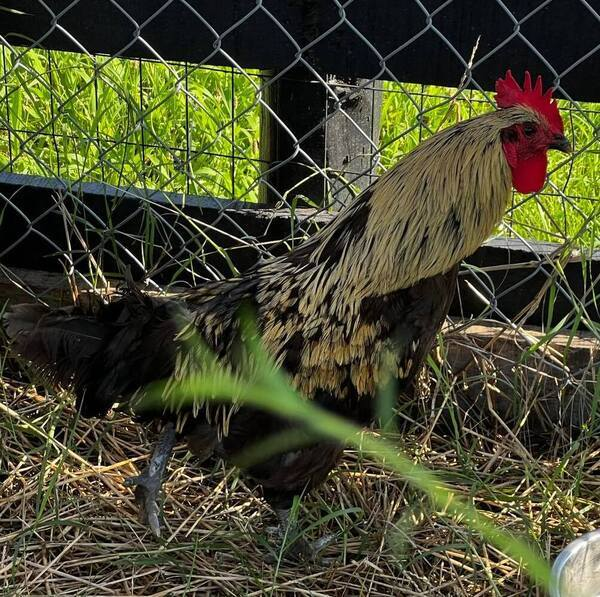
This photo from Poultrykeeper.com is not what Linda looked like. She had that red-brown-yellow color all over, except for some dark brown wing and tail feathers. Folding the tail in like that is a submissive display Linda probably never made. Her tail feathers were usually fanned! When I was growing up, most farms had free-range chickens and kept a few descendants of Old English Game chickens to protect their mixed flocks. Everybody knew what a yellow Game hen looked like. Old English Game breeders, however, don't recognize that type. Our yellow Game hens might have been crossbred with Buff Orpingtons or some other more gentle breed. They weren't gentle but their coats resembled Buff Orpingtons'.The saying was that you can't tame a Game chicken. You can, and my brother eventually did, but it's easier to tame almost any other breed. However, Old English Game chickens do share humans' territory on friendly terms. Like cats, if you move away they'd rather stay in their own place and go feral than move with you, so you have to find a near neighbor who's willing to look after them. If fed and protected from predators they can live five years, occasionally even longer. 

Old English Game chickens may once have been related to Cornish Game chickens, but as the breeds have evolved they now have little in common. Old English Game chickens are bred for strength and toughness, and are one of the few chicken breeds that can go feral and live long enough to reproduce. Cornish Game chickens are bred small enough that one person can eat one bird at one sitting, and docile, and even as chickens go the ones I've seen seemed extra-stupid. They can live longer than a year but they mope around the yard as if they knew someone was going to eat them and wanted to get it over with now.

My first pet was a chicken--a tough, long-legged, yellow Game hen. She and her two multicolored sisters strayed into a neighbor's barn one morning. 

By this time we had moved back to the Blue Ridge Mountains and rented a house in the neighborhood where I live now. Back then the local wildlife had been hunted down so that chickens could roam freely around people's yards and gardens, keeping the weeds and insects down. This system made the chickens useful, but sometimes they strayed. 

The neighbor traced the hens to their original owner. The original owner didn't want them back. Dad offered to trade one Plymouth Rock hen for the three Game hens and for the Game rooster the three hens had probably come to visit. Everyone was pleased with the trade. 

I already had two Brown Leghorn Bantam hens. They seemed like a chore, not pets. They thought they knew something about children and ran away, flapping and squawking, when I brought them food. To make the chore more interesting I was told that when one of the hens raised some baby chicks, the chicks would grow up around people and would be friendly. 

Game chickens are not known for their friendly dispositions. Ours were not pedigreed "feathered warriors" reared for the purpose of staging fights, but the rooster did stray around picking fights with other roosters. Of the three hens, the two multicolored ones were sassy and bossy enough to scare the bantam hens, and the yellow one was the boss. "She'll be the best mother hen," Dad opined. "She won't let anyone come near the baby chicks." When the yellow hen got ready to brood, she didn't just peck at his ankles; she flew up in his face, going for the eyes. 

Most chickens can't just leap into the air and start fllying. The breeds raised on meat and egg farms can accurately be described as flightless birds, able to flap just enough to break their fall if they jump off a perch, but hardly more than that. Even in the smaller breeds, like Game and Ancona chickens, what flying the birds can do usually has to start with jumping off a perch. This hen was in the minority of Game hens who can actually fly--not far, but enough to get back onto their perch if approached by predators.

So this fierce little hen was put in charge of six brown Game eggs and six little white bantam eggs. The five hens had been assigned names: Sally, Suzie, Sarah, Shirley, and the bossy one was Linda. I'm not sure that even Linda ever knew she had a name. I was five or six years old, and neither Linda nor her mate looked little to me.

When the baby chicks hatched, though, on sunny afternoons I went out and picked tender young weeds out of the garden to hold up to the chicken-wire "screen door" on their coop. Instinctively I wanted to offer these treats to the baby chicks, and stroke their fluffy little heads with a fingertip. I didn't really want to get that close to Linda. Like most Game chickens she bit all of her food, even tender little leaves and grains of wheat, as if it needed killing. 

A funny thing happened on those afternoons, though. Unlike most chickens, who stop learning anything new when they reach their full size, Linda was paying attention to my behavior. She figured out that I was scared of her. She changed her whole policy. Whatever I might have heard about her going for humans' eyes, she seemed to be saying, had nothing to do with me. She knew my intentions were good. She'd even let me touch her feathers. 

Not that she ever followed me around the yard, or answered to a name, as a pet hen would do. She was still the queen of the chicken coop. Sometimes she followed her mate, and sometimes he had to follow her just like everyone else. But eventually the babies' feathers grew in, and Linda stopped brooding over them and started laying eggs again. She laid her eggs in straw-lined nest boxes we provided. If she happened to be in a box when anyone else reached in to remove any other eggs other hens had left there, she'd bite the intruding hand. She never bit me. I could reach into the warm space under her. So everyone interested in motivating me to do more of the chicken-keeping chores agreed that she'd become a real pet. 

This boosted Linda's reputation in the neighborhood. She was not only unusually strong and bold, but also good with children. Linda was still alive, not noticeably mourning for her mate or sisters, when after four years we left the neighborhood again. A neighbor was glad to take her, and, unlike most of the baby chicks she had reared in her lifetime, Linda never seemed like the base for chicken soup. I was told not to expect to find Linda alive when we went back home. "Little animals have little lives. Linda was four years old when we left. Chickens hardly ever live more than five years." But when we came back Linda was still strutting around the neighbor's yard, bossy as ever. Roosters usually make a big show of aggression when anyone approaches the flock, then run away if the intruder calls their bluff. Linda didn't run. Nobody was going to bother her brood while she was alive. That was how the neighbors knew she was the same bird. They had a few other slim, leggy yellow hens who looked very much like Linda, but no other hen had her attitude.

She didn't rush up and greet me as a long-lost friend, though. The neighbor had a lot of grandchildren who looked a great deal alike, and I'd grown and changed since Linda had seen me, so probably she didn't recognize me. She seemed happy where she was, and meanwhile Mother wanted to try raising "Easter Eggers" anyway. So instead of reclaiming Linda we bought some of those little Araucana-bantam crossbreeds from the neighbor.

Linda died of old age in her seventh year. By that time I had raised and trained a batch of funny, fluffy Easter Eggers who did silly tricks on cue when my brother and I, and sometimes our baby sister, sang our repertoire of mostly Sunday School songs. They really were pets, like the dog who belonged to a neighbor but went to meet my brother and me at the bus stop and "told" all the kids she was my pet, or the pony who had got out of the habit of carrying children but liked to hang out with me in the orchard. Linda never was what I'd call a pet. But she had taught me how to like chickens, and even respect them, for what they are. 

Tuesday, December 20, 2022

What Good Have the Petfinder Posts Done?

Have we made a difference even to America's most photogenic pets, in July and August? Let's count. Of course, far too many lovable animals are still in shelters...but let us revisit:

July 
Ziggy from New York: Adopted.
Jenny and Ilene from Beltsville: Adopted.


Andy and Jane from Marietta: Remain unadopted, though the foster humans are pushing hard. https://www.petfinder.com/cat/andy-43311066/ga/marietta/all-paws-considered-inc-ga175/ These links are for sharing, Gentle Readers. If you agree that these animals are adorable, post their pictures and links everywhere.

J.C. from Bristol: Adopted.


Prince Charles from New York: Remains unadopted. Roosters are hard to place, but you'd think the shelter would have posted a better-looking picture of this undoubtedly handsome bird. All birds molt and replace their feathers in August. He should have a full, bright coat and long curved tail feathers by now. https://www.petfinder.com/bird/prince-charles-56392993/ny/smithtown/smithtown-animal-shelter-ny53/

Roo Paul from Chesapeake Beach: Adopted.
Rooty from Lexington: "Possibly adopted."
Sadie from New Jersey: "Possibly adopted."
Lenny from Falls Church: "Possibly adopted."
Orion from Georgia: Adopted.


Eddie from Pennsylvania remains unadopted. Possibly that's because the shelter staff seem hypervigilant about his being adopted only by people with "experience with undersocialized dogs." Eddie needs to be trained to trust humans before he can be trained to do anything interesting. Though not as tough as White Fang, he needs that kind of person. If I'd seen our Grouch in Gate City working with the hound he's adopted, last summer, I might have tried to goad him to drive up and adopt Eddie. https://www.petfinder.com/dog/eddie-44761986/pa/spring-city/forever-home-animal-rescue-pa568/

Itty-Bitty from Joppa (Maryland): Adopted.
Messi from Atlanta: "Possibly adopted."

September 
Sophie from Texas via New York: "Possibly adopted."


Monty from Chantilly remains to be adopted, possibly because a certain absentminded blogger failed to make sure the link to his web page appeared in the post. Here is his link: https://www.petfinder.com/dog/monty-56481562/va/chantilly/collie-rescue-inc-va369/

Kyler from Cumming: Adopted.


Lucy from New York: Remains to be adopted. Well, she is thought to be ten years old, and she does take medication. https://www.petfinder.com/cat/lucy-53828902/ny/new-york/frankies-fund-for-feline-care-and-rescue-ny1043/

Lotta from D.C.: Adopted.
Bandele from Atlanta: "Possibly adopted."

So for these two months we have eight wins to five losses. 

Thursday, August 18, 2022

Pet Roosters and Lovable Men

This post reflects a synchronicity. I thought of a lot to say at a forum where some women were massaging the collective ego of American men; and somebody "wanted to see a pet rooster."

It's not the ideal season for photographing most birds, but shelter staff who are trying to find new homes for them do. Here, courtesy of Petfinder, is Prince Charles of Smithtown, New York:


He was found wandering the streets, lost and looking pitiful...because it's August. Birds normally shed and replace most of their feathers in August. Some of them look dreadful, and if they're as image-conscious as chickens they probably feel embarrassed...and if they've been the pets of people who aren't getting any more use out of their human brain cells than chickens do, these chickens may even be abandoned because their humans think they've got some horrible disease. Prince Charles the Rooster will probably have a shiny new coat by Labor Day. To meet this pet rooster in real life, click: https://www.petfinder.com/bird/prince-charles-56392993/ny/smithtown/smithtown-animal-shelter-ny53/ .

Here is Roo Paul from Chesapeake Beach, Maryland: 


It's not enough that he was born a chicken, and photographed while replacing his tail feathers? They have to stick a silly necktie on him? Roo Paul must be cooler-tempered than many roosters because he is reportedly sharing living space with a buddy, Cluck Norris, who's also been photographed in a tie. Roosters who are caged together tend to fight and can hurt each other. These guys really need homes. Meet them at https://www.petfinder.com/bird/roo-paul-54491509/md/chesapeake-beach/mabels-orphaned-angels-rescue-md477/ .

Here's Rooty from Lexington, Kentucky: 


None of these birds looks his best, because it's August. Rooty is being held in a Humane Society shelter where the staff have little to say about him. He can be rescued via https://www.petfinder.com/bird/rooty-the-rooster-56616390/ky/lexington/lexington-humane-society-ky61/ .

Everybody prefers hens to roosters until they've bonded with a rooster. This does happen. (When it happens in cities there is likely to be one miserable person in the neighborhood who carries on about the fact that roosters crow, not just at dawn but whenever they're feeling glad to be alive. The easy way to stop one rooster crowing is to get another rooster who will bite him if he crows, but then the dominant rooster will take over the job of crowing. The easy way to deal with this is enact a local ordinance recognizing that roosters' crowing is not a loud enough noise to do any material harm to anybody. Then the miserable person will have to go and be miserable somewhere else, in which case your pet rooster will have made an excellent contribution to society.) Usually it happens when a fluffy baby chick who's established itself as a cuddly pet fails to become a hen, but when  my family went back to the land my father bonded with a full-grown rooster. 

Chickens were free to roam in our neighborhood back then--nobody was "protecting" raccoons or possums--and one particularly brash bird, some sort of Game-bantam-Leghorn mix with more white than black feathers, started visiting all the other chicken yards and challenging bigger, older roosters. Apparently he won every fight. "Old Faithful" got to be his name. Some neighbors with whom he took to roosting had less respectful names for him and said Dad was welcome to keep him, free of charge, just for keeping Old Faithful from bullying their roosters. The parents had bought some hens for us children to look after, and it just happened that Old Faithful was particularly enamored of one of these hens. He had never been a pet, but he knew one human from another. "Take a heavy sack to drag that one out in," his reluctant hosts warned, but Dad carried Old Faithful home in his arms, unrestrained and looking contented. After that Old Faithful was not exactly docile, certainly not cuddly, but he liked his new home and respected the man of the house. He could fly, but no longer seemed to want to. He was, Dad said, all that a rooster could be expected to be. He obeyed simple commands, led the flock to the pasture instead of the garden in spring, was nice to the hens and baby chicks, and though he never seemed to like us children, at least he never attacked either of us.

Later we had our own pet roosters, show birds we taught to do simple tricks, and both of us cried real tears when told we couldn't keep two especially lovable roosters as a twin act. "They'll not act like twin brothers long.  They'll grow up and start fighting. Pick one and sell the other." We couldn't pick one; each of us had picked one as a stage partner, but both of us liked both of them. We moaned and wailed and procrastinated until we prevailed on a neighbor to adopt one of those birds. Both of us looked for him whenever we visited the neighbor's house for the next five years, and we thought the little rooster recognized my brother. 

For what it's worth--color does not reliably predict whatever a chicken may have in the way of personality--the twin brothers had the same general color pattern as Rooty, above. Most roosters in North America have white feathers that take all kinds of dyes well. The ones kept as pets often have gorgeous mixes of colors. In September they grow two long, curved tail feathers surrounded by a fan of shorter fathers. The tail feathers are mostly ornamental and shed easily. The reward for keeping a big clean chicken yard is that many of the feathers you find lying about the yard are clean and decorative. Rooster feathers can legally be used and sold in place of all those protected wild birds' feathers it's illegal to keep, but they're not profitable enough to support raising roosters as a hobby.  If you want roosters to pay for themselves most of them will have to be eaten by humans.

The roosters we kept seemed to know that a male farm animal has to make himself more lovable than the female of the species, just to survive. Most male animals are sterilized, without anesthetics, as soon as their gender becomes noticeable, and even then they're living on borrowed time, waiting to be slaughtered and eaten. Well, tomcats weren't eaten, but they were usually killed, back then. Dogs are the only non-human species in which most males have a chance to grow up. And if you ever get tired of a rooster, you know what somebody will probably volunteer to do with him. 

In contrast to which, at that time, male humans were expected normally to be wise, brave, heroic protectors of their family. At least they were supposed to protect their wives and children from having to take jobs in town. Around the time I was born, as television became a major part of our culture, comedy writers thought it guaranteed a laugh to reverse that stereotype. The stereotype for shows that were meant to be funny (sometimes the only way a kid could tell was by the recorded laugh tracks) was that animals were smarter than children, children were smarter than Mommy, and everybody including the goldfish was smarter than Daddy. It had lost its surprise value, and men were starting to grumble about it, probably earlier than 1965.

Despite the characters that made Lorne Greene, Michael Landon, and Bill Cosby super-rich, "Everybody is smarter than Daddy" is still a comedy cliche. Men still grumble. Women could be doing the grumbling. In real life most of us have felt that everybody in some household or other was smarter than Daddy, but only if you believe that wisdom and fortitude are carried on the Y-chromosome do you think there's anything funny about it. In real life those families seem sad and pitiful.

Michael Landon's effort, in "Little House on the Prairie," to create another character like Lorne Greene's on "Bonanza," seems particularly instructive. In Laura Ingalls Wilder's books, Charles Ingalls is Laura's and Mary's beloved Pa. No fault is ever found with him. But he's not part of all of Laura's memories--the girls spend time with, and learn life lessons from, Ma Ingalls. Also, though capable of doing farm work, he's not exactly a successful farmer; the family live in holes in the ground and desperately gnaw their way through their seed wheat to survive. But when they're teased about having less than other girls at school, Laura and Mary are loyal, as some of my generation still expected ourselves to be. No whining about how Pa ought to give them what Mr. Oleson gave Nellie and Willie. Laura and Mary recognize that the richer kids are horrid little brats. Pa Ingalls doesn't have to live at home all the time, or bring home much money when he's gone off in search of a job. They just love him, and remember every word of the songs he sings in the evenings, when he is at home.

On the TV show, Michael Landon's version of Pa Ingalls has only a name in common with Laura Ingalls Wilder's version. As a kid I noticed that Wilder could hardly have recognized the TV character; as an adult, watching the reruns, I notice that Michael Landon's character never looked, talked, or sounded like a nineteenth century man at all. A decision had been made to sacrifice the character's authenticity to TV-Land's great howling need for another wise, strong father figure. The TV version of Pa Ingalls was not believable as a serious attempt to bring Charles Ingalls to screen life, but he did a good job of showing twentieth century men how to behave like fathers.

Fortunately, society's expectations for fathers are low. Males are biologically expendable after conception. Women prefer to share their homes and babies with the fathers of the babies, but everyone will survive if an aunt or grandmother steps in as the secondary parent. All a man has to do is keep some sort of job, come home  at night, and avoid positively abusing his family, and they'll remember him  as a pretty-good husband and father. Some people even become sentimental about fathers whose jobs are classified as "dead-end." 

Being a secondary parent makes fathers automatically popular with babies. If Mommy is always there to provide food, warmth, and dryness, and Daddy is there only sometimes to provide entertainment, Daddy's presence generates squeaks of infant joy. 

As children develop more skills and fathers develop more expectations, it's easy for Daddy to lose his popularity. Temporarily. If he's been trained to lead or manage adults on his job, as most men seem to want to be, he's likely to be perceived as demanding too much of children. But some day they'll grow up and thank him for preparing them for the company of high-achieving adults, the most interesting kind of people to know.

Men are just desserts for women. Having them around the house as active fathers is a privilege and a luxury for children. Women resent this benefit men get from the law of supply and demand, in an abstract theoretical way, but most of us seem to adore our own male relatives. In fact, we tend to spoil them, which is part of what makes it so easy for other women to resent them as a privileged class. 

At a blog I visit often someone commented that she didn't even mind her husband leaving the toilet seat up, because at least he was still alive...I cannot relate to that comment. My husband left the seat down and the floor clean. There were a few times when it was possible to tell that he'd used the bathroom for purposes other than cleaning it, and this told me that something was wrong. As a teacher my husband did happen to be a full-time professional role model for other men. If he could leave the bathroom clean, so can they. 

But my point here is that even when a  man is blind, and leaves messes everywhere, spilled drinks and shattered radios and all, just a little practice of patience and good will toward other people will keep them happily cleaning up the messes. He lived with a Y-chromosome long enough to go blind? That's an achievement, sort of. He is loved. Women try not to sound like spaniels who have somehow figured out how to talk, to hold out some sort of human expectations for our husbands, but if anything most of us forgive too much too easily. 

It can be hard for men to tell because some wives unfortunately don't have their own homes to go back to, so they stay in the houses they share with their husbands and nag. It can be hard for men to remember that on any accurate moral scale nagging is less awful than most of the sins people nag one another about. It might help some women to live with a whiny cat who pushed them to the point of saying "Well I'm not going to feed you if you whine." It might help their husbands, too, to note that in order to reduce whininess in cats you do have to make sure the cat is fed when it's not whining--even if you have to fill its dish very quietly while it's asleep.

I've never had to exaggerate the achievements of my male relatives. Several of them really were legendary. I never said to myself "I don't want to date any ordinary C-average students, second-string athletes, nice ordinary guys who will grow up to be middle managers," either. Actually I don't like obsessive competition, as a habit for myself or others, and the men I've brought home have been able to live with their ordinariness in some ways. Because, in other ways, they were spectacular.

My husband was a Phi Beta Kappa at McGill. Theoretically that's the sort of achievement that's available only to the privileged and would make a person easy to resent. Actually it was one of his most lovable qualities. What made him wonderful to live with was not that he'd been able to cram in enough grammar and vocabulary to earn A's in a language he never used. (He spoke French and Spanish well enough that McGill made him take German. He earned A's in written German and then, if he heard words he had written in German pronounced, he'd say "I don't speak German," in English.) It was that he kept that fantastic ability to learn things throughout life. He used it to learn how to give the perfect back rub, where to tickle in order to start a great pillow fight, and how to keep everything around the house in perfect order, too. I don't even think cleaning the bathroom was anything anyone ever had to pound into him. I think he just noticed that bathroom floor material lasts longer when ammonia compounds are never allowed to soak in.

As fiction readers and watchers men are right to complain about excessive use of "Everyone is smarter than Daddy" being a cliche. As husbands and fathers, they can be legends in their own time if they listen and learn to all those annoying stupid-man jokes. 

If you are someone else's husband, not mine, I don't like you very much; I don't want to like you, nor do I want you to like me. You're for your wife to like. You're for me to ignore in real social life, most of the time, and write snarky jokes about in cyberspace. You're not supposed to want to spend time with me. That's the point. You're supposed to think of me as a fanatical perfectionist who only likes super-achievers who are also 6'4" and have perfect cheekbones.

Though in fact my husband was 5'9" and, being 5'4", I liked that about him. In reality my Significant Other's height has been something I've put up with because I enjoyed working with him. Short men should let that sink in. Short women do not particularly want men to be tall but we do like it when the confidence some men derive from being tall allows them to learn things. About how to use and maintain their bodies, for a start. 

But for the general benefit of humankind, I would like to see men stop growling  at feminist writers who are not their wives, which is appropriate, and then quietly use our judgmental remarks as a way to learn things about living with their wives. E.g.: You're not "winning" if your wife loves you, or needs your contribution to the budget, enough to clean the bathroom every time you use it. You're winning if you figure out how much you can save on bathroom flooring and decor if you keep your bathroom shiny-clean,  all by yourself; and, as a secondary benefit, your wife then wastes less energy on the bathroom floor and has more energy available for tickling and pillow fighting.

Thursday, April 8, 2021

Beloved Companion Loretta

Here's another free-verse thingie in response to a prompt at Poets and Storytellers United, where other people are undoubtedly posting better animal stories...When my brother and I were growing up, we had a dog of our own for a few months, boarded a pony, and bonded with other animals, but our main pets were bantam chickens. 

I always write about cats. Today 
I want to be different and remember the hens,
who, like my social cats, were most interesting
in their relationships with one another. 
Loretta was my last pet hen, and closest,
the one who used to mimic the sound of speech
and briefly managed to say the word "freebie." 
Loretta knew her male kin, and ignored them.
Also ignored full-sized chickens, male or female,
as being a different species she disliked.
(Bantams are miniature chickens. Loretta's body
was a perfect fit in the palm of my hand.)
At intervals she met a bantam rooster
from outside her own family, and became
flirtatious, even eager. Handicapped
by black-rose instead of bright red on her face,
she called and coaxed and showed no shame.
In spring, outdoors, in a family, she might have laid
eight or ten eggs a year; never very many,
and she never tried to raise a brood of her own.
Every feather she ever had was black.
We joked that they'd mistake her for a crow
if she didn't insist, in every way, she was a hen.
In fact her whole breed was developed for a look
produced by low levels of estrogen, low fertility.
When bantam roosters were not in the neighborhood
she tried to take the social role of one
by crowing in the morning and flirting with hens.
But she knew friendship, loyalty, generosity
with Silver, Sandy, Blanca, and with me.
Animals bond by sharing food. Loretta
would eat off my plate any time she could
and show me yummy pebbles, leaves, or beetles.
As a fledgling she used to snuggle in my pocket;
when cold or scared she'd fly on to my shoulder
but, like most birds, preferred not to be held.
The family kept her while I was at school,
isolated, to prevent lesbianism, and because
they didn't want to keep another whole flock.
Nobody cared about trained chicken shows
after my brother died. So Loretta was
often without companions, but she never
complained in any noticeable way; only
trilled happily when we could be outside together.
Most hens live three or four years. She lived six.
She'd become a burden on my young womanhood
but still I missed her, after her long life.

Thursday, May 24, 2018

Dear Stanford Students: Why I'm Not a Vegan

Dear Stanford Students...

Of all the paid survey sites I’ve found...Yougov has separate sites in other countries that operate by other rules, but Yougov US is the best survey site. They don’t collect personal information; they don’t use up your cell phone minutes or allow anyone else to do; they don’t sell your contact information to spammers; they don’t waste your time, as many sites do, loading screen after screen of personal questions and then telling you you’re not in the right demographic group to take the actual survey. Your Yougov demographic information is stored and used to filter surveys so you only open surveys for which you get points. They’re legitimate; if you don’t shop much it can take months to earn a giftcard, but they do deliver those cards. (I took one to Michaels again last week.) If you’ve not already joined Yougov, you can join all by yourself, but both you and I get points if you join using this link.


Because they don’t exploit and abuse respondents, or demand information that respondents are going to falsify, Yougov is trusted by polling companies too. When I saw that Stanford students were using a Yougov survey to do a research project, I was chuffed. Yougov has arrived!

The actual project, however, left me with more to say than a survey form has room for, and I think it’s worth a post.

First of all, I don’t know whether a confrontational, judgmental approach was what the students intended. If it wasn’t, they must be awfully young students, and I recommend that they read Business Speak before they next communicate with full-grown adults.

Fun fact: Elgin didn't like the original cover of Business Speak and reworked the second edition into (almost) a different book, to go with its different title.

The survey began by asking participants to watch a very icky live video of the slaughter of animals for meat.

Fair disclosure: I’ve never been the one who went out and killed the steer or the rooster, but many’s the time I’ve cut up and cleaned his body. I know where meat comes from. If it’s fit to eat, it comes from a young healthy animal who was enjoying life before he was killed, probably by someone he’d always considered a friend. If the animal was not killed by a close friend at his home, however, he probably spent his last days in a filthy, crowded slaughterhouse, where he was undoubtedly exposed to contagious diseases and probably overdosed with antibiotics, may have been injured in a fight over crowded standing space, and was probably fed hormones at doses that probably made him feel sick. He wouldn’t be used for human food if he’d reached a stage where cancer became visible, but he may have had cancer. Slaughterhouses use machines to kill animals; they’re supposed to be humane and efficient, but if the animal wiggles about they may be inefficient and disgusting. And, in another shocking disclosure, all babies are made by adults doing things adults have told you not to do or think about.

After watching the video the survey proceeded to ask how often respondents eat different kinds of food, including the meat of which we’d just watched the ugliest moments of the commercial production. Then it asked whether our plans to eat those meat products had changed as a result of watching the video. If not, why not?

This is very similar to the “How could you...” vap discussed in Business Speak (new link for a newer edition). It’s a valid question, and since the questions pop up on a computer screen there’s no obnoxious spoken intonation to identify the “How could you” verbal attack. The words “how could you” weren’t actually used. Nevertheless, the effect of the survey was a lot closer to “How could you do such a horrible thing!” than to “If you (or ‘some people’) intended to do X, how could you/they address or accomplish Y?”

Partly that was because the survey included a few teenybopper questions like “Are you aware of the concept of eating less meat as a way to protest the disgusting, unhealthy, inhumane practices of the commercial slaughterhouses?”

Oh, children...I can’t imagine a literate adult not being aware of that concept. It’s older than I am; I’m only about fifty. When I was a child we never bought chicken at the grocery store. We ate chicken at family gatherings, where one of my older cousins would go out and call one of his tame animals into the back yard and kill it. We didn’t buy chicken from people who weren’t as kind to their fowl as we were. “Why Your Daddy Turned Down the Job at the Commercial Chicken Farm” used to be a bedtime story my mother told my brother and me.

I’ve phased in and out of being vegan. My body does not absorb protein from wheat; some years it seems to be getting enough protein from rice and beans and peanuts, some years not. Currently I buy chicken, turkey, and sometimes fish, when I can afford them, for the bonding ritual of Sharing My Own Food With the Cats. Often the cats eat kibble and I eat beans or nuts. I don’t complicate my life with any commitment to be a full-time vegan, but I have vegan days.

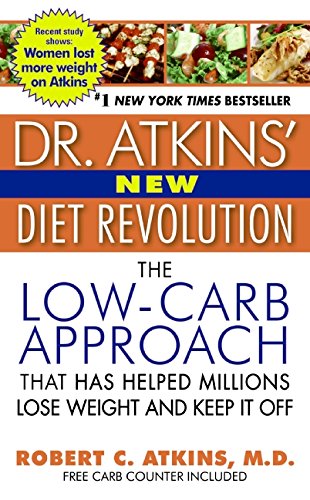
Because I’m one of those who find it easier to follow a McDougall-type diet (more complex carbs, less protein, minimal fat) than an Atkins-type diet (more protein, fewer carbs, lots of fat), I could be tempted to agree with Dr. John McDougall that a plant-based diet is The Way (for everyone) To Go. Research shows that either a McDougall diet or an Atkins diet is better than the restaurant-food diet advertisers want to sell us, either may work for some people, and neither works for all people. Grandma Bonnie Peters has been happily “McDougalling” for many years but some people say they become listless and depressed when they go vegan. I refer those people to Dr. McDougall, who will tell them to go ahead and have a fat-and-protein “feast” once or twice a month if they feel the need, but if I’ve learned one thing from the celiac gene it’s that humans are diverse. We are not all designed to eat the same things.
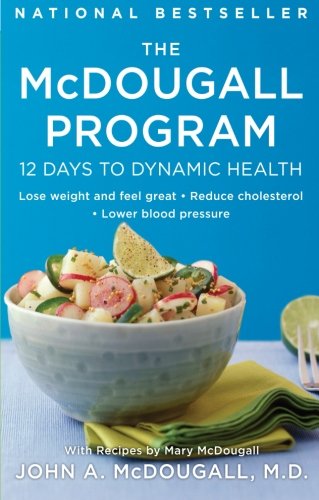
These recipes will lure carnivores over to the vegan table. And I can tweak this diet, easily, into something that works for me--though it's not cheap. I feel no need to lay a guilt trip on those who say they can't.

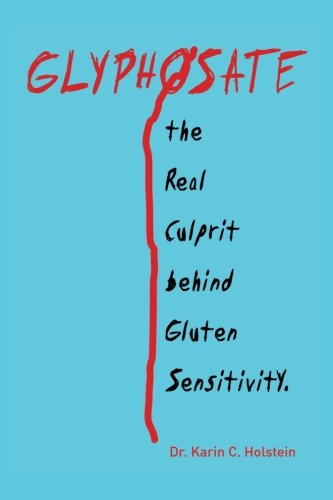
Human bodies run on different types of fuel. A majority of humans can digest wheat efficiently, as long as it’s natural wheat, not soaked in glyphosate, as most wheat sold today has been. A majority of humans can digest cow’s milk efficiently only in early childhood. The minority genes for the opposite of these traits occur separately, but in an overlapping area, in Britain and Western Europe. The “strong form” of the celiac gene fairly well proves descent from certain specific families in Ireland. There are also genes for about half a dozen specific patterns of alcohol intolerance, of which the most common is found in a majority of both Irish and Native American populations, suggesting that those ethnic groups weren’t separated as widely for as long as many people think. Some people think there are genes for fat tolerance, too. Some have even found correlations between food tolerance and blood type, and recommended four different types of diet...Much remains to be learned. I feel perky on a low-fat vegan diet, and so do all the people I’ve known well who’ve tried one. That’s no guarantee that other people will.

However, what we know about Stone Age cultures suggests that more humans are likely to have evolved to live mostly on plant products than to need a high-protein, high-fat diet. The explosion of “eating disorders” in the mid-twentieth century reflected several things; one of them was that many bodies instinctively rejected the high-protein, high-fat diet that had been “scientifically” recommended to American families based on the proportion that worked best for rats. Most of our metabolisms are not that much like rats’.

What I believe is really unhealthy is our cultural tolerance for Food Bullies who think everyone should eat the same thing. If people want to make it their mission to change the way Americans eat, I’d recommend that as the problem they should tackle. How can we become a culture where a conversation like,

A: “No, thanks.”

B: “Why not? It’s good! It’s good for you! Much healthier than that stuff I’ve seen you eat...”

—generates universal agreement that B should not be allowed to eat at the same table with other humans. People need to tune out this kind of obnoxious “peer pressure” and pay attention to what works for their bodies.

I don’t like bacon. I’ve observed living hogs and felt that, like possums, hogs are animals I don’t care to touch, dead or alive. I’ll agree that pork fat, like cat urine, smells yucky in its natural state but yummy when it just starts to burn, when some of its chemical components carbonize. The rich aroma of sizzling bacon doesn’t make me want to eat it, any more than the rich aroma of charring cat cage liners makes me want to eat those. If you enjoy bacon, fine. You can have my share of it. Just don’t ask me why I don’t want it, because I don’t want to become the sort of person who talks about this kind of thing at the breakfast table, and I will.

My body is my own. Your body is your own. None of us should ever allow anybody to tell us what to eat. Information about nutrients generally, and food contamination alerts, and recipes, are fine...but don’t even think about telling me how bad something that doesn’t make me sick is “for me,” and how I should be eating something that does make me sick, instead, even if it works for you.

A primary reason why I’m not a full-time vegan is that I do belong to one of those Irish families that have the gene for full-blown celiac sprue, which is even yuckier than it sounds. I can’t eat anything containing any form of wheat, or any kind of cheese, without being sick. Any exposure to glyphosate makes me sick. As a result the list of things I can safely eat has become very short, in recent years, and I’m not about to add any optional boycotts to a list of dietary restrictions that’s already unnecessarily, and non-negotiably, very long.

Ask anyone who’s been successfully living with the celiac gene during the past twenty years, and I’m sure you’ll get the same answer. If the people who raise food we can eat, without immediate physical distress, also run an abortion clinic so they can burn fetal tissue on their backyard grill and dance around it howling “Hail Satan,” probably most of us are going to continue buying from them. It would be nicer to buy more food from a nice local farm, but since Big Government has handed Big Agriculture enough regulations to strangle all the ones we used to know, we’ll probably continue buying from the Satanists. That’s just a fact of life these days.

I liked this book. I recommend it...to non-celiacs. I also blame it for 90% of all the unhappiness in my childhood, which came from constantly trying to eat things I was not built to digest and consequently feeling sick.

I first read Diet for a Small Planet in grade two. I learned all about how, if everyone on Earth could eat bread and cheese, there’d be enough for everyone who was alive in 1970 to eat bread and cheese every day. Nice theoretical thought! The fact is that everyone on Earth can’t eat bread and cheese. The majority of humans worldwide can’t eat dairy products, and celiacs can’t eat wheat products. For me bread and cheese is poison. I might as well try making lunch out of D-Con sprinkled with Sevin Dust. And I’m sure you food bullies would just love to discuss how bread and cheese affect my body right at your lunch table. Not.

I went to a Seventh-Day Adventist college. They used to serve those Worthington and Loma Linda soybean loaves and sausages and so on, at almost every meal. I ate those things. I liked them. In those days the soy wasn’t saturated with glyphosate and I had no idea that the wheat was what was making me so ill. It was the 1980s; we thought minor illness was psychosomatic and the cure was to deny it and push yourself to act perky. I denied, I pushed, I acted perky, I crashed and burned. I had mononucleosis for most of two dang years and, having been in Michigan when I got that disease, I hadn’t even kissed anybody. Mono is caused by a virus, and the strain that contaminated a batch of vaccine (that I didn’t need) against a trivial disease (that I’d already had) in Michigan was a particularly nasty virus, but I’m sure that that “healthy” wheat-based diet contributed to my “chronic mononucleosis, opportunistic hepatitis” experience.

I have lived through a lot of unnecessary pain that was caused by allowing anyone outside my own body to tell me what I “should” eat. At least I’ve learned, thoroughly, that there is no single diet for the whole planet. People are different. People absorb different protein in different ways. People have evolved to live in different places where different foodstuffs grow. I can safely eat some things, like (unpoisoned, non-GMO) peanuts, that are poisonous to some people. Some people can safely eat some things, like wheat, that are poisonous to me.

North America has long been, and is still, a place where delicious, nutritious vegetables grow well. Our problem is that big industrial-model farms want to nurture pest species by monocropping and try to control them by spraying poison on them. Possibly Americans would eat more vegetables if we hadn’t had reactions to the poisons humans have added to those vegetables. I like garbanzos, but since they’re often planted in glyphosate-drenched soil in rotation with wheat, I can’t eat very many garbanzos very often. I love strawberries, but since they have no peel to speak of and soak up poisons sprayed into the air like little sponges, I have to plan around the possibility of being sick for a few days after eating strawberries. I like corn, but when it’s been genetically modified to be more like wheat so that it can be saturated with glyphosate, I know better than to expect corn to like me.

Animals eat poisoned plant-derived food, so meat isn’t safe either...but generally the ratio of glyphosate to food is still considerably lower in meat than it is in grains and beans. In recent years, as farmers have been encouraged to spray this particular poison right on food, Americans who like vegetables are being conditioned to avoid vegetables, and eat more meat, by our own bodies.

I inherited the “strong” form of the celiac gene. I have that in common with approximately one of every ten thousand people of Irish descent and, for all practical purposes, nobody in any other ethnic group. A “weak” form can be traced back to other parts of western Europe, including Iceland and Italy, but it’s still a minority gene. Since glyphosate spraying and GMO crops have become common, though, we’re reading that one out of five, one out of four, even one out of three North Americans, not necessarily even those of Western European descent, are having celiac-like reactions to wheat, soy, and other glyphosate-soaked foodstuffs. Those people don’t always have any idea what’s making them sick, nor are their symptoms necessarily easy to identify as celiac-like. They just know they’re chronically hungry, chronically malnourished, chronically dyspeptic, and if they switch from eating more meat to eating more grain they’re much more of those things. 

I do not like this diet plan at all, but it works for some people.

So we have the Atkins Diet. Reading an Atkins Diet menu makes me queasy but some people choke down their turkey sandwich with mayonnaise and milk for lunch and then their beef jerky for a snack and then their porkchop for dinner, and they feel better than if they’d eaten a peanut butter sandwich with strawberries, a V-8 for a snack, and a big salad full of sunflower seeds for dinner. I imagine that that would not have been the case before 1990 but it is the case today. Even people who enjoyed being vegans before 1990 are getting sick after enjoying a delicious, comforting, vegan meal like Mother used to make, today.

No doctor, Euell Gibbons didn't even follow the special diet he needed, didn't live very long...but his "wild foods" are what I eat a lot of these days. If you live in the country and can trust your neighbors, these are a few things it's still safe to eat while Irish.

I don’t buy a lot of supermarket vegetables these days. I eat what grows in my own garden, much of which are not supermarket-type vegetables; they’re exotic native plants only Euell Gibbons and fans used to eat, but my mother happened to be a Euell Gibbons fan. I have a patch of violets in the not-a-lawn. When they bloom, I think “How pretty!” and then I think “How tasty!” I eat about half my violets. That’s my fresh vegetable for the day. Violets are so vitamin-rich that a whole bowlful would cause a Vitamin C overdose, which isn't dangerous, but people for whom I've cooked health food feasts have been alarmed by one.

I used to enjoy all the vegetables in the supermarket, though. I do not have childish tastes. I like raw or barely cooked veg; I like the different flavors, bitter, earthy, watery, pungent, and the crunchy textures. I miss them, now. But the last time I feasted on fresh corn, which was a big annual celebration for the old-time Cherokee, I was sick. The last time a farmer gave me some fresh juicy vine-ripened tomatoes, oh goodness gracious they were good, but I was sick. I am a human not a vulture, but the last time I ate chicken, even if that chicken led a miserable life, it passed through my body in peace and did not make me sick.

Stanford students...I picture them with their fresh young faces, pearly teeth, long glossy black or blonde hair. Who knows what Isaiah meant by saying “Ye are gods,” or what Jesus meant by quoting him, but there is something of what the ancient Roman Empire called divinity, the goddess of youth, Juventas, about that splendor of youth and health. Many of Earth’s population, past and even present, feel something like worship when they look at you. Many people want to do anything you ask them to. So whyyy do so many of us mean, grumpy older people not join your protest against the meat packers?

I’ve not even mentioned, nor do I want to go into, the political reasons some of my correspondents would have put first. I don’t think they’re particularly worthy reasons. Old Socialist drivel about separating people from family farms, homes, land, and animals, does tend to mix into some people’s embrace of a vegan diet; but not others’. I do notice some vestiges of Old Socialist religious thinking in Stanford’s course catalogue—home of the economics class titled “Love as a Force for Social Justice”!—and suspect the students’ young minds-full-of-mush have been corrupted a little bit, but wotthebleep, Stanford minds can get over a little corruption once they’re exposed to reality. I do think the students need to concentrate more on how individualism built the once-provincial United States and collectivism destroyed the once-mighty Soviet Union.

That is, technically, a separate issue. If Khrushchev or even Hitler said it was raining, that, by itself, did not necessarily cause it to stop raining. Even though socialism as a national policy is unsustainable, from time to time a socialist does get something right. A vegetarian diet could be one of those things. Many Americans eat far more meat than their bodies need, and feel better if they eat a well balanced vegan diet for up to two years at a time. (Vegetables don’t contain enough Vitamin B-12 for most humans’ needs but healthy humans manufacture their own Vitamin B-12 in the process of digesting grain.)

So here are my three positive recommendations to the Stanford students:

1. All life thrives at the expense of other life. Humans have the physical traits of animals that need a mix of plant-based and animal-based food. When we slice into vegetables they register an electrical shock that is probably more like pain than pleasure. So a productive discussion of cruelty to other living things needs to accept that we humans are predators. We kill other living creatures. The question is whether we mistreat them before we kill them. Try a focus on restoring the ideal of small communities made up of individuals who raise their own animals and vegetables. Emphasize how much longer, healthier, and happier cows’ and hens’ lives are on a small family farm than in a big commercial meat factory. In the twentieth century we as a nation went considerably too far in the direction of centralizing too many things. Your focus should consistently be on decentralizing, on small, on independent, on well separated. Cows are miserable when hundreds of them are packed into a barn or lot; they’re happy and healthy when two or ten of them are browsing through a few acres of grass.

2. If you are less than 100% sure that someone else is 100% unaware that something he or she is about to eat has been poisoned with something that’s 100% fatal, don’t question other people’s food choices. Ever. Try not to look.

3. Naturally, even if a totally socialist education had made you ashamed of it, you’d like to see everyone eating California-fresh vegetables—beautiful California children that you are. I do like that about you. So, focus on getting those vegetables glyphosate-free, and otherwise unpoisoned, so that everyone can safely enjoy eating them.


I've yet to read this one, but the evidence just keeps piling up--the title says it all.