Showing posts with label homeless. Show all posts

Tuesday, October 15, 2024

Book Review for 9.26.24: December on 5C4

Title: December on 5C4

Author: Adam Strassberg 

Date: 2024

Publisher: Nat 1

ISBN: 

Quote: "I remembered many stories from my residency years, some apocryphal, some accurate, of involuntary hospitalizations of various patients with delusions of being either Jesus or Santa. It occurred to me it would be interesting to see what might happen if a patient with similarities to Jesus were hospitalized concurrently with a patient with similarities to Santa. Would they be friends? Enemies? Both?"

/First, Strassberg imagines, they'd get into a quarrel about their different approaches to giving. Then, as men who've chosen to identify with models of generosity, they'd become friends and help each other...In the best Christmas-fairy-tale tradition, Josh N. will give encouraging counsel to the other patients, and Nick K. will hand out trinkets.

/Josh left his Orthodox Jewish family after realizing that they just wouldn't understand that he thought an incestuous act with a male cousin was a kind of baptism. He had since organized other street dwellers into a community who share their skills and resources and help others. He is frequently troubled by mad suicidal urges, which he identifies with Jesus''s temptation to throw himself down from the Temple. Hospital staff want to give him stronger medication that will suppress these urges, but will also cut off what he experiences as a sort of communion with God.

Nick likes the "trinity of coke," cocoa, Coca-Cola, and cocaine. After using a lot of the latter he was arrested for trespassing when he got stuck in an acquaintance's chimney. His purpose was to rescue three immigrant girls, and their parents, from coyote types who were prostituting the girls. Nick seems to think he has a wife at home. His wife has been dead for a long time.

They're homeless mental patients but somehow their giving seems to be touched with supernatural grace. They heal the other patients' emotions; the gifts they make in Occupational Therapy seem magical. Josh prays and preaches traditional Hebrew prayers as Jesus might have done.

Maybe, Josh appears to think, in another incarnation they'll be born in the right time to be Jesus of Nazareth and Nicholas a.k.a. Kriss Kringle. 

This story is funny, sad, and always close to the edge of blasphemy. Strassberg isn't saying that Jesus was either schizoid or homosexual or a street character; He is saying that it's possible for a Christian t see reflections of Christ in schizoid homosexual street characters. 

This is not your usual Christmas story. Josh doesn't even have a Christmas tradition. But it's worth ordering now if you want to read it during December.

Thursday, April 11, 2024

New Book Review: If You See Them

NaNoWriMo poem? Why not?

If you see them, you might think they're
Dirty, lazy, sneaky kids,
And they certainly won't tell you
What the situation is--
Steal a cheap roll-on deodorant?
Sleep at friends' house for a week?
Wash their feet in library bathroom?
See the tips of icebergs peek...

I think this study of "them," the neediest kind of homeless teenagers, is one of a half-dozen books of which I received Advance Review Copies from publishers shortly before the storm damage forced me offline; all those books were then lost among the already published Booktober Blitz book, and all I can do about it is try to do better now. I am grateful to Spiegel & Grau for sharing this book with me, and wish I'd come to it sooner...

Title: If You See Them

Author: Vicki Sokolik

Date: 2024

Publisher: Spiegel & Grau

ISBN: 978-1-954118-49-2

Quote: "These youth are like youth anywhere who aren't safe in their homes, or who have no homes, and have made difficult choices in order to survive."

That's what some readers will hate about this book. 

Because what I didn't like about this book is stated so clearly at the beginning, let me start praising it with the faint damns. I'm not doing this because I think the book deserves condemnation. I'm doing it because I think the book, and the local program it introduces to readers, are very valuable for some people and need just a bit of improvement to be more valuable for more people.

The characters in this book are generic, reduced to a lowest common denominator and a single storyline. Generic characters are boring. Writers might as well just make their general statements. While Sokolik tells us that these are the stories of real teenagers who worked with the program she runs, succeeded, came back to encourage others, have remained her friends, and gave permission for their real given names to be used, there's a flatness about the stories, as compared with stories about problem students in Jeff Hobbs' Children of the State

This is unfortunate. While unconsciously revealing the inadequacies of Sokolik and her program, this program promotion calls attention to a situation that really exists, and deserves attention. That I fell asleep three times while reading this book, even while knitting, calls my attention to a relatively simple shortcoming in a valuable document. It completely erases my kind of people.

Jeff Hobbs and the problem students who told him their stories in vivid, personal, though also blur-able detail, were introverts. Vicki Sokolik and the problem students she was able to help are extroverts. She does not merely show this in describing their conversations. She specifically celebrates their extroversion as if it were a virtue.

Maybe that's consistent with her discussion of a cringeworthy lecture about gender-confused youth, through which everyone apparently was required to sit. Sokolik brought in and apparently managed to listen to a lecturer who told her, her students, and other adult volunteers in her program, how calling people with normal, consistent sex characteristics "cisgender" supposedly "normalizes" gender-confusion and makes people who have it feel included...

Stop it, I think. This is so misguided. Does anybody not know how it feels to be "minoritized," even bullied, because of a medical condition we did nothing to choose or create? If the 9,999 of 10,000 people even in Ireland who happen not to be diagnosed celiacs started introducing themselves with "Hello, my name is Tracy Smith, and I'm gluten-tolerant," what would that do for celiacs? In the long run, probably nothing. In the short run, being told they needed to say that kind of thing might make people resent those who can't participate in food-sharing rituals more than they do. It may be something some of us thought we might want, it may be a kindly intentioned gesture, but it's not actually helping.

Despite the damage undiagnosed, misdiagnosed, or glyphosate-aggravated celiac disease does, the celiac trait has good as well as bad qualities. A majority of all celiacs are hardy, healthy people who can be stronger and live longer than average, simply by giving up social eating. Given, for the sake of argument, that gender confusion is also genetic (only some of it really is; never mind) and also has good qualities...gender confusion is, like the celiac trait, primarily a dysfunctional condition. Inability to reproduce is a dysfunctional trait. It doesn't need to have attention called to it--women reacting to the same physical influences in the way that appears first, across species, certainly don't go around proclaiming to the world "I'm barren and I'm proud! Other women need to self-identify as 'breeders' to show due respect to me!"--but, if attention is called to it, no benefit is gained by pretending that the dysfunctional trait is the norm.

But Sokolik subjected her whole organization to an hour or so of terribly trendy blather about how we should all try to pretend that gender confusion is so "normal" that it's natural to invent a special word for the majority and hateful to ask whether people are male or female. I might not mind this being discussed at the length it is, in the book, if it had been matched by equal sensitivity and "inclusiveness" toward introversion, which is a normal, functional, altogether desirable trait. It's not. 

The only specific reference to introverts in this book is mildly disparaging; someone's mother's introversion (as distinct from other people's prejudice against it) is blamed for her general lack of success in life. That by itself wouldn't ruin the book but there's a total lack of awareness that, while the problem students Sokolik found easiest to help may have found it difficult to sleep alone, other students' primary survival needs include at least a room and preferably a garden of their own. There's no mention of a student who has any special talent being helped by the program. There's no mention of how the yappy horde were sensitized to other people's valid, normal, natural needs for quiet, privacy, and personal space. There's no consideration of how the therapy-group exercises Sokolik's program offers teenagers as "classes" can harm some teenagers, or why they've been banned from the regular public school program as constituting Child Abuse in the Classroom.

So, Sokolik has extroversion. That's not something she chose or could help; that's a valid reason why the problem students who bonded with her and were helped most by her all seem to suffer from extroversion too. Extroversion is at least a more common dysfunction than gender confusion, or celiac disease, or cleft palates. It's like cardiovascular disease, or clinical depression; not really part of the majority human experience, but widespread enough that everyone at least knows someone who has it. Most of us even know someone who doesn't have the actual condition but has been miseducated to think person has it. (People used to think that extroversion was the same thing as self-confidence in social situations. It's not.) People tend to bond with, and help, others who are like themselves. When lots of attention is directed to the differences, that may actually help people "reach across the gaps" between young and old, male and female, Black and White. When the differences are poorly understood, the gaps are less likely to be bridged.

Extroversion is a condition produced when the brain fails to develop a clear internal sense of right and wrong, usually also fails to develop a specific talent, may also fail to develop academic intelligence, and, even if academically intelligent, shows a hasty, shallow pattern of thinking and relating to others, which can also cause dysfunctional family life. Extroverts can be described as more or less affected; clearly they're not normal. Still, just as some of the most horrible genetic diseases are caused by inheriting two copies of a gene where one copy provides resistance to other fatal diseases, just as the celiac trait is associated with hardiness and gender-confused people don't overpopulate and people with Downs Syndrome are often described as loving and lovable, mild and well controlled extroversion can be considered an asset for some kinds of jobs. Extroverts don't know when they need to rest and clear their minds from external input, and while this can lead to breakdowns and is the most likely reason for their shorter life expectancy, it can also help them reach out to help one another. It works for the people whose stories are told in this book.

Sokolik presents herself in this book as Tampa's counterpart to Mildred Wolfe in Orlando: an oil-rich Texan who came to Florida, saw a local need, and set about using her money to meet the need. She adopted a homeless adult first and, after putting the young lady and her children in a nice house, had the reward of being told, "You've done so much for us...now go and help someone else." While she was still thinking about that, her teenaged son brought home a school friend who turned out to be homeless. 

The general category of "homeless teenagers" includes runaways who just aren't getting along with their families. Often the best help for them is encouragement to be reconciled with their families; they still have homes. However,  a minority of homeless teenagers fit into a subcategory the government currently calls "unaccompanied homeless youth." In government policy jargon this means that for all practical purposes these teenagers have no parents or homes to go back to. Their parents may be dead, in prisons or hospitals, insane, homeless, or just utterly unwilling to rear them. Sometimes a living parent is married to someone who doesn't want stepchildren. Sometimes a living parent is a drug addict who has used the child as a drug runner or dealer until the child runs to a different city to survive, or an abuser who has raped, prostituted, or violently attacked the child. In one family Sokolik met, the younger children had been placed in foster homes, but the teenager was apparently considered old enough to live on her own, possibly by a newbie social worker who didn't realize that the law considered teenagers differently. In another family the teenager had tried to protect the mother from an abusive stepfather, and the mother had thrown him out in the belief, which nobody else doubted, that the stepfather might kill him.

Even while her parents were losing their wealth, Sokolik tells us, she found her vocation in learning to "see" these teenagers who want very much not to be "seen." She had to warn one youth, "I don't have a money tree in my yard," but she and her husband were blessed with enough money to put the teenagers in apartments until they could renovate and organize a group house.

In the past, truly homeless teenagers could get legitimate part-time jobs and places to stay. As recently mentioned here, my own grandfather was one of those children whose parents wanted to marry people who didn't want stepchildren. Great-Grandfather simply loaded his first wife's children--boy and girl, ages ten and twelve--into the wagon, took them into town, stopped at a street where desperate unskilled laborers looked for jobs, males on one corner and females on another, and set them out on the appropriate corners with orders to find domestic work where they could get room and board as part of their wages. It was common in those days. Little girls sent "out to service" could expect, a hundred years ago, to be hired and supervised by women who spoke to them coldly but not usually unkindly, treated as social inferiors by their employers but free to marry up the ladder if they could; Great-Aunt married well. Grandfather was taken "out west," worked on ranches, qualified as a lawyer, chose to practice horse training rather than law, and had his own farm and family before age thirty. 

Now, thanks to increasing bureaucracy, teenagers in that kind of situation can't get work, may be unable to document their own identity even to get into school, and may be able to stay with friends for a while, but will very likely turn to theft, prostitution, or the illegal drug trade just to feed themselves. In Florida they can sleep outdoors, but they're likely to be robbed of whatever they have, including shoes and socks, and probably also raped. Some of them may feel lucky if they're able to trade sex for room and board...at least until the men who offer such arrangements get tired of them and throw them out. Some may feel successful in their criminal careers. Others feel shamed and defiled by what they've done, whether they've killed rival drug dealers or been caught the first time they stole a box of tampons. 

(Sokolik tells us that, until recently, government handout programs made no provision for personal hygiene supplies--not Kotex, not shaving kits, not even soap. She claims some of the credit for getting Florida public schools authorized to distribute free female hygiene supplies, though not, apparently, the gender-neutral kind. "Poor hygiene" remains at the top of the list she advises adults to look for when looking for "unaccompanied homeless youth." These teenagers go out for school sports teams, whether they're athletic or not, for the showers but a good laundry barter is harder to find than an invitation to sleep over with a school friend for a week.)

So they need homes--not only beds, but people they can trust to reassure them that what's happened to them is not who they are. Of course, it would be too much to expect that Sokolik would be either willing or able to teach these kids about the many reasons to say no to "a thread or a shoe latchet" in federal handouts. She encourages them to take all the handouts they can take. If they could get into foster care and have money sent to someone regularly for offering them a home, she seems to believe, they ought to do that. But of course many of them turn out to have been foster or even adopted children for whom "it didn't work out" with their official parent-substitutes. 

Close to twenty years later, by the end of the book, several of Sokolik's first few rescues are now active "mentors" for other homeless youth in what's become her organization. They're off the streets, off the drugs, off the welfare, employed, married, some with children of their own. 

It's awesome, really. It's a heartwarming true story. You can look up the TV and newspaper stories right here on your computer. There's no shortage of other people publicly saying nicer things about Sokolik than she says about herself. Her message is not "See how wonderful I am" but "What we've done is working. Carry it on!" 

I only wish that, along with if not in place of the story about the teenager who overcame her prejudice against an ethical, monogamous lesbian "mentor," this book had included a story about a teenager who had learned to embrace per own introversion in a satisfactory relationship with an introvert "mentor." 

Thursday, October 20, 2022

Book Review: Homelessness and Housing Advocacy

Title: Homelessness and Housing Advocacy

Author: Curtis Smith

Date: 2022

Publisher: Taylor & Francis

Length: 184 pages

ISBN: 9781003050872

Quote: "Given what we have learned today, if you experienced homelessness tomorrow, what would you do?"

What you'll learn on the day, or days, you spend reading this book is that, if you experienced homelessness tomorrow, you'd be in a very bad situation. While Curtis Smith teaches sociology and identifies with the social workers he describes in this book, he also shows us some of the ways in which the welfare system makes matters worse for homeless people.

The heroes of this book are the "red-tape warriors" who are determined to get their welfare "cases" off the streets. Instead of sitting at desks and blandly telling homeless people to go and talk to other people sitting at other desks, preferably in different neighborhoods, Smith's best-case social workers go out on the streets. They warn people who've been squatting in abandoned lots to stash their things before the next police "sweep" in which all their possessions are dumped. They call those other offices to request duplicates of documents homeless people have lost. They go out to inspect rooms and apartments people are willing to rent to homeless people with incomes. They are the complete opposite of social workers this web site has so often deplored, who seem to want to keep comfortably housed people depending on food stamps, bogus disability pensions, and if possible subsidized heat, housing, and phone service, forever, in order to justify the social workers' employment.

Yet in their own ways they, too, are making matters worse--because they're working in a big inflexible system that has to try to seem to offer equal treatment to everybody, even though people's needs and assets are anything but equal. The situation is not really funny, but it's an irony overload and a half.

Two mental attitudes are possible for homeless people. One is what used to be called learned helplessness. "I've lost everything, I'll never have another chance at a normal decent life, I'm a useless failure who can only depend on other people while I'm alive, it's positively selfish and mean for me to survive or even want to survive," and if a person who thinks this way is not suicidal, then person must embrace the idea of living as a parasite. 

The other alternative is desperate courage. "I've lost all of my things but I'm still the same person. I'll get through this. I'll find another job, another house, a way to get my children out of foster care, eventually." Homeless people who take this mental attitude are hard to spot. They don't flop down on sidewalks at night in defiant despair; they don't rush down to the welfare office to get food stamps while they sign up for a few years on a "housing" list. They find places to hide at night that are close to work and to low-traffic public restrooms; they look normal, or only a little more tired than normal, on the jobs they usually continue to do--if only cleaning houses or raking leaves. They may actually own houses, and their difficulty may be that those houses are far from the job site where they worked all day; they may have taken jobs with the intention of staying at a campground or in their car for the first few weeks. Their homelessness tends to be temporary. Afterward the only way you ever realize they've been homeless is that they tell you.

When you discover that people are homeless, it usually takes less than five minutes to tell which approach to homelessness they've chosen. The ones who can and will be successful workers and desirable tenants tend to focus on their assets, even if they're pawning and peddling their valuables and sleeping in  their cars today. 

"How is your health? Do you have any disabilities?"

"Fine! All this walking outdoors is good for me. I could do any kind of job."

"What about your mental health? Your mood?"

"Fine, I said." (I once asked this question of a middle-aged widow, unemployed, living in a shelter, whom I'd had the gall to start to pity, and she snapped back, "Blessed!")

"Are you safe, sleeping in your storage bin at night?"

"Only two people have keys and I make sure to leave no traces in the morning, before the other one comes in."

Typically these people are strong and healthy, and the only help they really need is for neighbors to keep rent rates nice and low, so that they can be living in a conventional sort of house within a few weeks after signing a long-term employment contract. Their problems are cash flow problems. If you want to help them, think of a respectful way to get money into their pockets.

But in order to fill in the right boxes on the forms that keep the handouts rolling, the social workers who are most successful in getting their clients sheltered and employed turn out to be the ones who, if homeless people don't want to exaggerate "needs" others really have, will do that for them. The system prioritizes sheltering the most "vulnerable" homeless people first, according to a "vulnerability index" that assigns points in the following categories: veteran, suicidal, severe mental illness, addiction, HIV, other disability or disease, sex workers, families, age, sex offenders, or low income. Obviously, among the homeless population, the individuals most likely to keep jobs or homes will score points in a maximum of four of those categories. The welfare system, however, is designed to reward those who score the maximum number of points, which means all of those categories. A sensible, healthy single woman who thinks federal "housing" is help would actually be ahead to buy a sleazy secondhand outfit and start soliciting for prostitution, preferably near a high school, where she might be able to qualify as a sex worker and sex offender without actually having to take off her hooker heels. For those who've passed that stage in life, or missed it by being male, Smith describes the red-tape warriors helping people claim or cultivate severe mental illnesses the people don't actually have, or want to have. A diagnosis of attention deficiency or depression may be acceptable to the homeless people, may even be accurate, but it's not severe enough to bump a sober hardworking flood survivor very far up the list. None of Smith's heroes actually says "Just stick with the 'depression' for now and see if you can't get up to 'paranoid schizophrenia' after a few weeks on the medication they'll give you," or "He's so despondent, I just know he can get a diagnosis of 'autism' if he tries," but they come close.

Unfortunately from the red-tape warriors' point of view, many homeless people believe they have a future and don't want to be, or become, or seem to be, higher up the "vulnerability index" than they really are. Many don't even want to claim disability pensions when they know other people who are working around disabilities that are much worse. These nonconformists might even say that we need to change the rules in such a way that welfare policy stops rewarding dysfunctional life choices. 

One of my e-friends regularly derides the idea of disability pensions for young veterans who have tinnitus--ringing in the ears. I have tinnitus; many retired musicians and music lovers, as well as veterans, have it. It's certainly an inconvenience to a career in music, but I can understand how, to a homeless veteran whose buddies lost arms or legs, even mentioning tinnitus as a disability feels...profoundly tacky. Sleazy, even. 

We've all heard stories of people who qualified for some benefit by walking into a clinic with filth dripping through their clothes and claiming incontinence, but some people believe that conscience-karma just may bite you for that. Some even hesitate to report the "chronic obstructive pulmonary disorder," a.k.a. cough, they get from sleeping in a moldy warehouse. A cough doesn't seem much of a disability to people who know wheelchair dwellers. Identifying as able-bodied, on the other hand, boosts their mood and their chance of getting a job or a home. More than identifying as disabled boosts their chance of getting "housing"? Maybe, maybe not. The salvageable homeless, themselves, don't seem to mind. The red-tape warriors then have the duty, as they see it, of persuading people that they are disabled.

Smith's red-tape warriors are not stupid, and they don't seem to intend to destroy their clients or their communities. They are frustrated by the system, as are the homeless people. "It wouldn't be social work," Smith quotes one of them saying, "if something didn't go [CENSORED] wrong!" 

Exactly

Smith would be regarded as a traitor by his colleagues if he didn't write from a consistent assumption that all federal programs always need more funding but, he admits at the end of the book, they need more flexibility. The "red-tape warriors" who bend the rules are more trusted by homeless people and more successful in getting them...not only off the streets where they are a nuisance, but also enmeshed in the welfare system for life. They should be rewarded, Smith argues, not punished.

The position of this web site is that social work, as a career, is a symptom of a sick society and needs to become obsolete. In healthy societies, it's easy enough for people to help themselves that they need regular subsidized assistance only from specialists--doctors, physical therapists, teachers, perhaps drivers, perhaps child care providers. Many homeless people do need help from specialists, in things like breaking addictions or confining sex offenders. 

Others might be helped if more individuals recognized that throwing money at federal programs is not solving their problems and may be aggravating those problems. What solutions can individuals offer for those homeless people who can benefit from help? What about renting out rooms, attics, and basements at prices minimum-wage workers can comfortably afford, so that healthy, employable homeless people don't need to add "vulnerability" points in order to find homes? What about more exploration of the "rent to own" concept, more recognition that it's a disgrace to ask people to pay for things they never own? 

When individuals help their friends and neighbors, they may or may not find ideal solutions for everybody but they have a chance of doing that. When people depend on "social work" as a specialized job to house the homeless, the result is the kind of stories Smith tells in this book.

Written for use by college freshmen, this book is a valuable eye opener for fiscal conservatives...and fiscal liberals, if anyone still admits to being that any more. Read Smith's explanation of the double meaning of "housing-ready" and understand why federal programs, though perhaps necessary to clean the addicts and sex offenders off the streets, are not likely to help people who really are ready to be the tenants or housemates you need. You still need to help those people. By becoming or remaining a home owner, you can help them. Seeking the Highest Good of all rarely if ever requires real altruism: If we all agreed to help prevent sane, healthy, employed or employable people becoming homeless, not only would federal "housing" programs have less excuse for screaming for more money to create more slums, but those of us who want to grow old in our own homes would be making a profit by keeping these people out of the welfare trap.

Tuesday, June 27, 2017

Makers and Takers: Homelessness Revisited

(Status update: On Friday morning, after which I went online but didn't post anything here, I earned $19; once again a light misty rain just wouldn't stop until everyone had left the Friday Market, and all I dared to display were bottled drinks, and of the very few shoppers who came out most weren't even thirsty. After buying groceries for the weekend and bottled drinks for the next market day, I had very little pocket change left. On Sunday, once again my market buddy didn't want to go up to Wise County. My income so far this week has been $8, which brings this blog post to you from an unhappy, grudging local lurker who says you should pay some of the cost of maintaining this blog already. If you were living in the United States during the past year and your income was above US$12,000 for the past year, you need to support this blog.

https://www.patreon.com/user?u=4923804 .)

Someone at a members-only forum posted something about the reported impending crisis of homelessness in the United States.

Here's what this web site had to say about homelessness a few months ago:

http://priscillaking.blogspot.com/2016/10/how-do-you-picture-homelessness.html

Has not changed. So, here's what I posted on the forum:

"
One thought that may cheer you is that homelessness is being misrepresented by greedy agencies and motel owners.

A large portion of the homeless population in the U.S. became mentally ill after using certain overprescribed medications in the 1950s, and remained incurable for life. That generation is disappearing.

There will always be people who lose their homes due to fires and other disasters, everywhere. That's a problem, but not an overwhelmingly big one.

In some places, there are people who lose their homes because rent rates are higher than retirement, disability, or unemployment pensions can be stretched to cover. I worked with Mitch Snyder, who used to try to present that as the main cause of homelessness, and believe he sincerely thought it was--he was passionately sincere, but not the sharpest knife in the drawer. It did happen, and still does happen, that people who have low-paid jobs or have just lost their jobs can't afford decent homes in the places where they used to work or may still be working. As Marge Piercy illustrated with a composite fictional character in The Longings of Women, these people are competent and resourceful and often find ways to make it hard to tell that they are homeless. They want to believe their homelessness is temporary, like that of the Holy Family in Bethlehem, and in many cases it is. This type of homelessness is not an overwhelming burden to government agencies either, except when people who've refused to plan for life with disabilities become unable to work and have to seek help...and some of them won't consider it as long as they can stand up, even if they have relatives who are willing, and planning, to offer them homes.

But greedheads are encouraging welfare recipients to whine for "more low-income housing now" when these people actually have homes, but they claim their homes are "substandard"--by which may be meant perfectly livable, but older, oldfashioned, hard to heat, too small for a young family, too big for a geriatric patient, etc.

As long as things like leaks, broken windows, and (horrors!) wallpaper on the walls, are being used to define people as "homeless, in need of more subsidized apartment buildings" rather than "low-income and/or unskilled, in need of basic home maintenance work," I can't worry too much about "homelessness."

Though some individuals really are still homeless, and, for those who know where they are and why they're homeless, they really are a problem...or have a problem, or problems.
"

Well, I own a home. That's been the main source of worldly happiness in my life as a widow: a home of my own where I can be alone with the cats and work on potentially profitable projects in peace. I don't leave my home, or invite people to see it, or disclose where it is, without a very, very, very good reason.

Houses are, of course, financial dependents on their owners. If they're not maintained and "kept up," they deteriorate. Squirrels tear metal or shingles off roofs. Rodents chew siding off walls. Foundations settle lower into the earth. My home doesn't smell moldy, but that's the result of daily work; the basement has always reeked of black mold, as most basements in my part of the world do, such that, before I made a study of fungi, I thought the distinctive odor of Stachybotrys atra was what basements smelled like. Windows need caulking. Screens need replacements. Chimneys need repairs. The older part of the house needs rewiring. The newer part of the house has always had only a temporary, unsatisfactory roof and, although it does have proper drywall, in a moment of manic whimsy one of my elders pasted wallpaper over some of the walls anyway. The water heater and composting toilet, as installed by my brilliant father, work surprisingly well on solar power alone--for one person--but wouldn't work efficiently enough for two.

Over the weekend, during the off-and-on rain, I did some of what an old lady can do all by herself in the older part of the house. (I no longer let my mother do physical work, although she still does all kinds of things that cause anyone who happens to see her to rush up and grab things out of her hands...) The condition in which some things had been preserved was a joyous surprise; the condition into which other things had sunk was an unhappy one. Inevitably I looked at things that need fixing, but require more than two hands or a "reach" of more than six feet off the floor, and remembered a few well-meaning people who've said, "That's dreadful! That's unlivable! You're living like a homeless person! You could easily qualify to move into a low-income housing project in town..."

How many ways is it possible (or necessary) to say: I do not want a low-income housing project in town. I have a home. It's adequate for my survival needs, and likely to remain so for as long as I'm likely to live, even if neither the house nor I ever look any better than we now do. I want to scream, to broadcast the sound all the way to Richmond and all the way to Washington: DO NOT SPEND TAX MONEY ON LOW-INCOME HOUSING PROJECTS FOR PEOPLE LIKE ME. HELP US MAINTAIN AND IMPROVE THE HOMES WE HAVE.

I've already spent as much of my life as I ever want to spend watching other people's toilets flood into my ceilings, overhearing other people's noise day and night, being exposed to other people's colds, seeing other people's faces distorted with hate and envy whenever I felt or looked cheerful, stepping on the insects that breed in other people's dirty kitchens...that's not what I call living, and it's not what I endured places like that, in my formative years, to be able to stay out of as an adult.

I've not actually lived in a building that had bedbugs, thank God, and touch wood (blogger touches head). Not yet. But relatives who truly were disabled, whose foster children failed to move back in and maintain their lovely old historic home with them, have been forced into a four-storey hovel infested with bedbugs. People who wanted to reproach me for not being able to do what a Virginia landowner ought to have done, for those relatives, have made sure I received all the lurid details of how the bugs got into a geriatric patient's surgical wound. Not in my name, and not with my property tax money, should anyone ever fall for that anti-American meme about "older and disabled people needing to be in small apartments rather than separate houses."

Personally, if I couldn't live in my own house, I'd live in the cave above it. Or I'd just move directly to the bottom of the local lake, before I'd consider moving into a low-income housing project in town.

Well, that's my personal point of view. I am, as regular readers know, an introvert, a person whose brain and nerves have developed more completely than some people's ever do, thus a person who enjoys plenty of personal space and solitary quiet time. I enjoy congenial company; that does not include the company of extroverts, whose brains and nerves are, from my point of view, as poorly developed as dogs are, and who can therefore be loved only in the way that dogs are loved. (I do love dogs, but I've never wanted to commit to living with one permanently.) Extroverts enjoy dashing aimlessly about and making low-content, repetitious chatter with lots of different faces. Extroverts probably like living in small apartments in housing projects.

Extroverts are often reported to be the majority personality type in these United States, but after age fifty, the older the median age is, the lower the percentage of extroverts becomes. As a group extroverts do not live as long as introverts do, nor do they age as gracefully. They're very seldom, if ever, the people who build meaningful lives around major disabilities, either. So, any effort to help aging and disabled people should be designed for introverts; even if we're not a solid majority, we are the ones who continue to enjoy life and make positive contributions to society after becoming "old" or disabled.

That means single-family houses, with designated care givers of our own individual choice if necessary to replace our spouses and children (or help care for our spouses and children!), with green space, with gardens, and with rooms of our own that have doors that lock from the inside.

Not that most of us are asking for tax money to be spent to give us those things. Most of us already have those things. What we need is to keep more of our money, and our freedom to pay people we find competent and congenial, to ensure that we keep the homes we have.

https://www.change.org/p/department-of-veteran-affairs-expand-comprehensive-caregiver-benefits-to-severely-disabled-veterans-of-all-generations

(Y'know...personally and confidentially...if, as his wife, I was cut off from receiving any financial benefits from looking after my Significant Other if he ever became really disabled...I think I wouldn't shove him into a nursing home and walk out to get a higher-paid job, the way so many able-bodied younger spouses do. He really is...all I'm allowed to say is "a man you don't meet every day"; the sort of person that somebody might choose to stay with, and help, just out of respect. But what would I live on, if I didn't even have time to peddle my handcrafts? I have sooo been there, with my late husband who wasn't a veteran but was phenomenal in other ways, and I say nobody should ever be there. If the disabled partner is entitled to benefits at all, then those benefits should include support for the caregiver of the person's choice.)

I'm destitute, and desperate, but not homeless. Grandma Bonnie Peters is destitute, and desperate enough to be trying to do physical labor at the age of 82, but not homeless. Forget the "homeless" meme. Forget the whole stupid, harmful idea that people can only be helped by directing massive amounts of money into massive assembly-line-type, one-size-fails-to-fit-much-of-anybody "federal programs." As long as people are conscious, it doesn't serve their Higher Good to allow them to "pauperize" and depend on financial handouts, whether those handouts are given in the hope of buying forgiveness for individual sins or are extorted from the taxpayers. As long as people with fully developed introvert-type brains, with consciences, are conscious, it is acutely painful to them to suggest that they need or can use handouts, anyway. It is cruel to pour money into these monster "programs."

If the federal welfare programs were created in order to keep conscience-impaired types from battening on the charity of individuals who don't realize how they're being exploited...which is why most Republicans and "conservative" Democrats, the vast majority of Americans, voted to build and maintain federal welfare programs in the first place...well, there may be some use for tightened-up federal "safety nets," but I say as a poor person that we still must never depend on federal programs as the primary way to keep even people with minor disabilities alive.

What we as a nation have been doing is saying to people "Here, take these food stamps to buy food until you can get a job," and most of us have been emphasizing "get a job!" all right, but we've not been looking at the larger picture:

* Jobs may not be available--and in some areas, federal programs or even charity-funded programs that try to "meet needs" are directly to blame. (For example, in my part of the world, do-gooders funding Mountain Empire Older Citizens have put hundreds of taxi drivers out of work...while also making it difficult or impossible for able-bodied people to take jobs even five miles from their homes, or take college or trade school courses, or even take advantage of advertised sale prices on groceries.)

* Jobs may be available, but able-bodied food stamp recipients may do the math and feel that they're better off turning down a part-time job and keeping their food stamps and subsidized medical care. (For example, while investing her life savings in a business, GBP found her business failed partly because the needy people she wanted to employ found it unprofitable to work for a living.)

* Jobs may be available, and some able-bodied food stamp recipients may be young enough to be considered for entry-level jobs (which, here I stand to testify, most of the adult population are not)--but they may be discriminated against because, due to not owning cars or being able to afford new clothes and so on, they arrive at job interviews in a sweaty condition.

And it's the same way with what's currently being described to unsuspecting taxpayers as "homelessness." Real homelessness as my generation remember it is actually declining. Today's "homelessness" is being manufactured by deliberate efforts to pack more people into more overpriced and inadequate slums, and the kindest, most humane thing to do is to ignore the chatter about it. Houses exist. Technology to allow people to work from those houses exists. Most of the new "homeless" population will be much happier and healthier if we as a nation just tell the social workers to shut up, because these people are not homeless (or, if they have become homeless, they didn't and don't need to be), and tell these people to go home and go to work. All we have to do is remove the silly protectionist regulations that keep them from earning a living in their homes, and they'll be just fine, thank you very much.
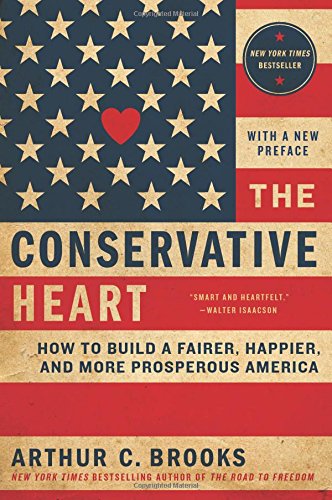


This is still a good first book, but it's been out there for a while, and it doesn't go far enough. This web site can and will update what Arthur Brooks had to say, with more about what real poor people do and don't need.

One-to-one "giving" is actually more efficient than either medieval-style almsgiving or socialist-style handouts, but it has to be done right...and that's where the "conservative" part comes in, and yes, even Ayn Rand's ideas about never "giving" but always "trading," properly understood. Ayn Rand was not as good a writer as her admirers wanted to think; she expounded her views in a language that was foreign to her, in novels written for Hollywood, and presented herself as even more of a hard-boiled greedhead than she was--so in some ways her books are as cautionary as they are exemplary. But let me say this again, as a poor person. I don't want you to "give" me anything. I want you to acknowledge that you're "trading." If you don't think this blog offers something worth paying for, I want you to tell me what you are willing to pay for, and pay me to do that.

"Lady Bountiful" is a fool, and deserves to know that the people to whom she dispenses her bounty have been exploiting her as a fool for years. That's not because she shouldn't have been helping her neighbors in a mindful, intelligent, hard-headed-fiscal-conservative way that would have been building up her community; it's not because she should have been paying an ever-more-bloated totalitarian scheme to crush her community, which is what socialism always was, no matter how willfully the Old Left have refused to recognize it. It's because everyone but a hospice-list, brain-damaged quadriplegic--even a hospice-list quadriplegic who still knows where s/he is!--has something to offer, and it serves everyone's Highest Good if those who want to help recognize what they have to offer.

Stop saying "Ooohhh, those poor, needy, hungry, homeless people, we need a big federal program to meet their needs."

Start saying "If my neighbors are hungry or homeless, and I'm not, I need to be helping them--in a respectful, evenhanded, responsible way--by paying them to do things that meet my needs. I need to be spending less money on corporate products and more on the goods and services my needy neighbors are able to provide."

Don't walk past panhandlers; don't steer them to those "programs" of large-scale grift that, in Washington at least, are likely to have set them out on the corner to panhandle. When you pass panhandlers, carry a reasonable amount of cash, and offer it to a reasonably alert panhandler in exchange for escorting you through the neighborhood or helping carry your bags. I've known people who were able to go from panhandling (after an injury that was indeed disabling, for a while) to owning businesses...Asian-born people, who had that goal in their minds; I've not seen native-born U.S. citizens do that, because we as a nation have been blathering about our Welfare State for so long that unless they've known Asian or African-born people our native-born panhandlers don't realize that it's possible.

Don't confuse people selling stuff on the streets, or people "marketing" stuff from their homes, or people asking for money for things they do, with panhandlers. Recognize them as entrepreneurs, which they are. If you don't want to buy what they're selling, tell them honestly what you do want to buy from them, and talk to them honestly about what it would take for them to start selling that.

In the "marketplace of ideas," a few people have been decent enough, respectful enough, to tell me things like "I'm not funding your idea because I'd rather be funding an engineer's invention or a comedian's comedy novel or some other project that you, writer known as Priscilla King, wouldn't be qualified to undertake even if you wanted to steal that other person's idea." I respect that. I don't blame you-the-individuals-who've-said-that (Neil Gaiman is the one whose name other readers know; I continue to respect and support Neil Gaiman, although he no longer needs much support). And I've never, ever, turned down a valid suggestion of what people needed to have done, either for elitist reasons (people who advertise any connection with Berea College are saying we don't turn down any job for elitist reasons) or because someone else could do those jobs better than I could; I've helped find that person for the people who wanted that job.

Feel free to say to me, "I don't like a book site." (If you say that while funding something else, no worries--the book site will still be here for those who do like it!)

Feel free to say, "I don't agree with your politics or want to read about them." (If you say that, no worries--I have absolutely no doubt that the correspondents who keep sending the political links and discussions will carry on. The political contacts I personally don't follow, and flag as spam when their names turn up in my e-mail, continue to feed content to other people who forward it to me.)

The effective, respectful, legitimate way to say those things is to say, "I do want to see this, and I'll fund it." Two ideas that came in last week were a romantic comedy novel in Twitter form (yes, I'd be willing to do that if people pay for it), and a forum about forums about chronic health issues (I'm not sure how profitable that can be, but a correspondent wanted to fund it and the McDougalls will undoubtedly continue to be a great source of updated information for it). Feel free to send in other ideas if you don't want to fund those.

In real life, the reason why I've advertised odd jobs has always been that I know people who think writing isn't Real Work. They're wrong, of course, but they're partly right--the writer's brain and liver do need the stimulation of physical labor. I both want and need physical labor jobs to feed my writing, for more than merely financial reasons. Local people may feel free to say "I want you to help wash windows or weed hedges or extirpate poison ivy." I not only do those things; I enjoy them.

And I want you to feel free to say those things to other "needy" people, too--individually and collectively. Nobody should be rewarded in any way, even through the "reward/punishment" of having to report to bossy social workers, for sitting around whining "needy-needy-needy." Instead, we should tell the people who are claiming to be homeless and hungry, "Houses and land exist. Go home and go to work"--

...And then wait. These people know what the problems they face are. Listen to what they're saying, and then start thinking and talking about ways to address those problems. Maybe there are legitimate needs for programs to help people make their homes more accessible, to pay for individual in-home care from the individual a disabled person trusts, or just to remove barriers to entrepreneurship in the neighborhood. Maybe there are legitimate needs for elected officials to toss the "ball" of responsibility back to local communities and individuals. In Virginia, at least, no "real" lady or gentleman ever could eat while neighbors were hungry, and I for one want to get back into the "Lady Not-Bountiful-But-Actually-Helpful" position for which I was born and brought up. I want to be part of a community of people who have something to give, not that horrible colony of parasites social workers have parked on Jackson Street to sit around going "needy-needy-needy." (Admittedly some of those people deserve to be there, bedbugs and all, but not in my name would anyone I ever knew ever have gone there.)

There are not legitimate needs for more federal handout programs. There is a need to cut those programs, in order to de-pauperize poor people and put America back to work.

Tuesday, October 4, 2016

How Do You Picture Homelessness?

The discussion here…


…highlights one of the biggest disparities I’ve noticed between Washington, D.C., and other parts of the United States. (Please read the discussion before continuing, and if you can sit through a 20-minute online video, I'm sure that's also informative...I couldn't watch the video on which Elizabeth Barrette commented.)

My comment is that it's interesting to see how other LJers' comments reflect the different mental impressions they've formed of "homeless people." It would be even more interesting if EB were to poll all respondents about how much time they've spent around homeless people in a big city. I believe that Mitch Snyder, a sincere man if not the smartest guy in Washington, honestly believed that a majority of homeless people are working people or retirees who've been evicted from their homes following rent hikes, because in Washington a lot of them (if not a solid majority) really were. I also know that people in smaller cities and towns have trouble visualizing the homeless population this way because, in the 1980s when the Community for Creative Non-Violence was my official charity and I actually worked there, I was reliably informed that D.C.'s homeless population was very different from the homeless population in, e.g., Cleveland, Ohio; I already knew that it was totally different from what, e.g., Kingsport, Tennessee, has in the way of a homeless population. My guess is that the people typing in things like "homeless people are insane" come from places like Kingsport.

In most of the U.S., most of the people who are sane enough to remember where their home is can have homes. (In order to collect federal funding, some oh-so-helpful types in the school systems sometimes succeed in redefining “homeless” as meaning “living in an older house,” with defects like, shudder, gasp, wallpaper; this allows them to claim that there are homeless people in southwestern Virginia. It also unnecessarily embarrasses people who like their old houses, partly for their yuppie-repellent value thank you very much. It also shows that the majority of people in southwestern Virginia know nothing about homelessness or homeless people.) 

Although the demographics are changing as this generation die out, homeless people in low-rent areas have long tended to be people reacting to treatments offered for various “mental problems,” like insomnia and boredom, in the mid-twentieth century. These people have severe cognitive impairment, memory loss, perceptual distortion, and chronic neuromuscular spasms. This type of homeless person is not competent to use a kitchen, bathroom, or key if provided with one, and is likely to destroy a house if offered the use of one. They are not autistic. They are more dangerous than even severely autistic patients, because they are more aggressive; they are less competent than patients with mild autism. Most of them were released from mental hospitals because they're too brain-damaged to be violent, but they can still wreak a fair bit of havoc; you wouldn't want them in your home or around your children. Therefore many people automatically define “homeless” as “insane.”

Of course, another large category of homeless people, the vast majority in my part of the world, are temporarily homeless. Maybe they have a home somewhere, but they are travelling or doing a job a hundred miles away from that home. Or they had a nice house, but it burned down. Or members of their immediate family have a home, but they can’t bear to live with those people any longer, so they’re out looking for another place to stay, whether they can afford one or not. These are the people likely to be in the minds of people who say that homeless shelters need to be more pleasant and respectful places.

Then, in our nation’s capital and apparently in some other cities, because the majority of people are quite well paid and there’s a big incentive to keep neighborhoods looking affluent, you really do meet a lot of people who become homeless simply because they’re not earning enough to pay their inflated rent. Property owners routinely raise the rent, to meet their expenses or to cover improvements to the property or just on general principles, and every month a few people who may actually be employed are unable to pay the rent and become homeless. Because they are competent and resourceful, these people can, as discussed in The Longings of Women, maintain themselves well enough that other people don’t realize they’re homeless. They may be living in their car or storage shed, but as long as they can charge the cell phone at work so it serves as an alarm clock, wash off the grime in a public restroom, wash their clothes in a public laundromat, etc., they seem just like ordinary members of the working class…because they are. People who have this type of homeless people in mind are likely to say (if they’re left-wingers) that “we” need to commandeer overpriced foreclosed homes for these people, or (if they’re whole-Bible Christians) that we need to reconsider the biblical model in which land permanently belonged to one family, could be sold only temporarily, and had to be shared with family members who were unable to provide for themselves.


How do you visualize homelessness? How does your mental image affect your opinions about homelessness as a social issue? If you watched the documentary about Anchorage, which type of homelessness did you see as most pervasive there, and what do you want to do about it?


(Jesus said, “What you have done for the least of these My brethren, you have done for Me.”)

Thursday, May 14, 2015

Temporary Home for Christmas

(Reclaimed from Bubblews, where it appeared on January 8, 2014. Is this one worth reposting, even for historical reasons? Yes...so it can show up on web searches as a testimony to what a scam Bubblews turned out to be. Yes, the fundraising effort discussed below was successful. No, although Bubblews said they were sending my first Bubblews payout of US$50 and change to the church fund, they never actually sent the check.

Image credit: Keyseeker at Morguefile.com.)


The last time I was here, I posted an article about a family threatened with homelessness on Christmas Day:www.bubblews.com/news/1829386-homeless-on-christmas-day

Here's the update. Good news first: The family were offered free use of an apartment for January and February. They're in it now. 

Now the bad news: Social networking is not bringing in a big rush of money for these people. After the fundraising drive in local churches, the campaign to get a decent trailer house set up on their property, so they can work with generous construction workers to rebuild their home as they become able, seems to have hit a plateau. 

Becoming homeless in March is not as bad as becoming homeless on Christmas Day. Anyway they're not going to become homeless, unless they really hate my house and me. (That's possible...especially if any of them is allergic to cats.) However, this family have always lived in Hawkins County, Tennessee, and don't want to have to move to Virginia. The children still have a grandmother in Hawkins County. The disabled adults feel less miserable when they're close to home. The children have always gone to school in Hawkins County; neither the public school nor the Christian school near my home is known for being especially easy for students to transfer into. We want them to be able to live on their own land.

We're not asking total strangers in cyberspace to rebuild the big two-storey farmhouse for this family. If they can settle into their trailer house, get the disability pensions straightened out, give the mother time to get well and go back to work part-time while the children help their father, they will have a chance to work with local construction workers on that. If anybody out there wants a big tax write-off, they can write a big cheque to the church that's working with this family, but all we're really asking is that people chip in enough to pay for a decent-quality used trailer house, water, and electricity. 

I'm dedicating my Bubblews payout(s) to this fund. I will try to post five Bubbles on each of five days each week and donate the money to the church on the homeless family's behalf. 

So, please...share this story with your rich relatives. Print it out and mail it to the ones who don't use the Internet:
priscillaking.blogspot.com/2013/12/homeless-victims-of-welfare-state.html

Thursday, December 18, 2014

Book Review: Call Me Bandicoot

Book Review: Call Me Bandicoot
        
Author: William Pène du Bois
        
Date: 1970
        
Publisher: Harper & Row
        
ISBN: none, but click here to see the cover picture on Amazon
        
Length: 63 pages
        
Illustrations: color paintings by the author
        
Quote: “Ermine Bandicoot...looks ratlike, as his name suggests.”
        
Actually, as painted, he looks like one of the masses of Beatle fans found in high schools at the time, and his name turns out to suggest that he belongs to one of New York’s old Dutch families, but why quibble? This is another funny story about inventions that might or might not have worked in real life, as designed by William Pène du Bois, as seen in Squirrel Hotel and Peter Graves...only there’s more to it.
        
When I consider the funny story in its historical context, I confess, Gentle Reader, I am puzzled. Toward the end of his distinguished career, William Pène du Bois set out to write a short book, accessible to children but amusing to adults, about each of the seven deadly sins. (He died without having figured out a way to write a kid-friendly story about Lust, though one might have thought that the 1980s panic about sexual predators would have simplified that problem.) There was no question that Lazy Tommy Pumpkinhead was a caricature of Sloth. Porko von Popbutton and Pretty Pretty Peggy Moffitt were vaguely linked to historical events, but were clearly about Gluttony and Pride (well, vanity). Call Me Bandicoot is about Avarice, but it’s not clear what’s being held up as the bad example, or who learns what, or what the author wanted readers to learn from this story.
        
There are two forms of Avarice in Call Me Bandicoot. Which one you consider worse probably depends on which side of the famous “generation gap” you were standing on in 1970. Teenaged Ermine Bandicoot seems to be homeless; he rides around on the ferry, demanding snack-bar food from the audiences to whom he tells elaborate stories, presumably on the way to and from school. When the narrator realizes that a story he’s taken for fact was probably fiction, he takes an unfavorable view of young Bandicoot...until he sees old Hermann Vandenkroot and decides, “Ermine Bandicoot was as great as he had said he was.”
        
So, which of these stubborn men is “the stingiest, money-grubbingest cat that ever was,” and what’s the moral? While making their judgments, readers will be entertained by Bandicoot’s preposterous stories.

This book is recommended to anyone who likes picture books that are either funny or serious. It rates high on both qualities.

If you buy it here, the price is $5 for the book + $5 for shipping, and anything else that fits into the same package comes under the same $5 shipping charge. If you can get a better deal elsewhere...this author no longer needs a dollar, and I've sold the copy I had on display when I wrote this review.

Sunday, March 10, 2013

Houses Without People, People Without Houses

There are a lot of homeless people in America, but it's been estimated that, for every homeless American, there may be as many as five empty houses:

http://www.truthdig.com/eartotheground/item/more_vacant_homes_than_homeless_in_us_20111231/

Why isn't the obvious solution being tried? Because when people take a closer look, it's not a solution at all. While anybody can become temporarily homeless, most of us don't stay in those situations very long. When people are homeless even long enough to be noticed as being homeless, their problems usually go far beyond simply not owning any real estate. There are usually obvious reasons why they don't have friends or relatives with whom they can stay. Being homeless causes people to be grimy, angry, and mildly paranoid, but that doesn't even begin to describe the condition of most homeless Americans. If you handed these people keys to houses, some of them would be likely to burn down the houses, and others of them wouldn't remember what keys are for and would throw them away. A very small percentage of homeless Americans are simply poor. Most have enough brain damage that they'll probably never be able to keep jobs or homes of their own; they need a lot of help to survive.

So it's not a simple matter of pairing houses with people. But if you click on that "more below the ad" button, the cluelessness of the comments is mind-blowing. The people who could and should be living in America's abandoned houses have been herded into rental housing projects, where they're wasting on rent the money they should be able to use to own separate houses with gardens and adequate growing space for children. Somebody proposes, by way of a solution, making it illegal to rent out housing. So help me...so help us all.

The incredible thing is that nobody proposes that the banks that have emptied the houses could just voluntarily acknowledge the reality of a recession, lower payments for the duration, and encourage the people to whom they sold these houses ten or twenty years ago to finish paying off the houses. I know that's not the way banks typically behave, but it's physically possible that banks could try doing what private people who rent out or sell houses are doing, for their own good and everyone else's. So it takes a little longer for a renter to pay off a building. So what? Isn't it better for someone to keep paying you the seller some money every month as long as you live, even if they go on making tiny monthly payments to your grandchildren, rather than for you to throw out a renter or would-be buyer, not find another one, and lose your whole investment altogether?

I'm not sure what the moral is. Maybe "Buy houses only from individuals, and get a good real estate lawyer to make sure you've drawn up a workable contract that leaves the money-grubbing banks out of the deal."

Meanwhile, Elizabeth Barrette offers a poem about the situation:

http://ysabetwordsmith.livejournal.com/2757820.html

Any more thoughts out there, Gentle Readers?

Monday, February 4, 2013

Prizes for Visitors to Portland, Oregon

How can you unload worn-out paperback copies of recent bestsellers, be thanked, help homeless people, and possibly win a prize, all at one time? Check out this Street Books web page.

(Note to future readers: if you're reading this after March 2013, this link may not work--it looks like one of those temporary web address things.)