Friday, June 21, 2019

Are You Still Shadowbanned?

Disqus has been tweaking things that didn't need tweaking, recently, also. I should have seen notification of this comment when I opened Disqus and saw that other people had posted comments on other blogs. The commenter is a Real Twit, a real blogger, and a real Zazzler.


Poster: Cactus in Mission Garden, San Luis Obispo Poster

Poster: Cactus in Mission Garden, San Luis Obispo Poster

by barbsbooks


In theory I get a few pennies if you use that specific link to buy that specific poster. Who knows? Zazzle has been tweaking and "innovating" and messing everything up too. If you browse the whole Barb's California store and like other things better, no problem. If you're not able to follow the link, find Barb's California, or buy stuff, I wouldn't be surprised; almost everything at Zazzle is currently malfunctioning for sellers.

Anyway, here's the comment:

"
Got here by way of the Twitter link you sent me. Not sure still that I completely understand your tweet to me (@)barbsloco) -- You sent a tweet I'd posted on May 2 and said I'd been shadowbanned. Does that mean you and others are not seeing my tweets on my profile the way they look to me? Or do you mean they get lost in all the ads that are inserted?
I'm as careful as I know how to be to check every profile before following anyone to avoid fake followers. I'm not sure I understand this whole shadowbanning thing. (I don't use chemicals in my garden, either, just so you know.) How would I know if I'm shadowbanned? Does that mean those empty black tweets I sometimes see in my stream are from shadowbanned people temporarily on restriction. I work hard on Twitter to try to show followers what I think they will enjoy. I send different tweets to accounts focused on different subjects. If no one is listening, I may as well spend that scheduling time blogging. Feel free to notify me if you answer this comment. I'm not finding a box to check.
"

Valid questions. The thing about Twitter's infamous "shadowbanning" is that it's hard to know when or whether it's happening to you. Your profile page looks the same way it always does. People who take the trouble to visit your profile page still see your tweets there. People who are following you, however, and looking for your tweets in their stream, don't see them.

I keep opening Twitter and checking, and although I've taken the trouble to turn off all the evil, anti-free-account "filtering" and to tag several hundred people, and to keep resetting my stream to "Latest" rather than what greedheads are paying to call "Top" (which are generally around my bottom rating), I'm still not seeing any tweets from Real Twits like @barbsloco in my stream where they ought to be. So yes, BarbRad, you're still shadowbanned.

If someone is being "timed out" today but someone has retweeted one of their previous tweets, and/or you've blocked them or they've blocked you but someone you follow has retweeted their tweet, or if they've chosen to delete a tweet that was attracting a lot of unfavorable attention, what you'll see (at least in Google Chrome) is a white box with a note like "This tweet is not available."

I've not seen the black boxes--yet. I suspect they would be tweets from people who've chosen to turn on "Dark Mode," which would be the innovation cravers, which would not include any of my Tweeps. (I follow people on all sides of issues, but I try to pick intelligent ones.) "Dark Mode" displays your words in white-on-black rather than black-on-white. White-on-black is hard for many people to read, but on different devices the code for white-on-black might show up as deep-purple-on-black. (Live Journal has offered "Dark Mode" for a long time, and on any random day browsing there is likely to pull up a complaint from people who "can't read some people's 'exciting' all-black Journals.")

Currently, even the tweets that aren't being blocked and that do belong in my stream, from the newspapers and the superstar writers, are still being crowded out by nasty irrelevant ads. I'm working on this. Block! Block! Block! About all I do when I check my own feed is block the advertising garbage.

I don't like blocking people. I don't like blocking even corporations, because I still think of Twitter as the place where real people can have real conversations with corporations that might help them improve their products and services such that we might actually buy their stuff. That is, I now realize, an old, outdated position to take. Greedhead corporations wanted to turn Twitter into another channel on commercial television where they blare deliberately obnoxious ads, on the principle that we might block the annoyance from our memory and remember the brand and buy the product when we're in a quieter place and thus in a friendlier mood. Twitter's given them what they wanted. The corporations aren't seeing and replying to my tweets. They're just screaming and not listening. So, until each corporation prevails upon a private person using a free account not linked to a phone to tweet to me, personally, "Please, @5PriscillaKing, This Corporation sincerely apologizes for Twitter's Rudeness Policy and humbly begs permission to follow your account without being blocked. This Corporation promises to read and interact with your account daily to retain access to your Twitter stream"...Block! Block! Block! If it's "promoted," even if it's from an account I might have wanted to follow on Original Twitter, it must be BLOCKED!

I'm no longer an "insider" at a web site whose idea of monetizing itself seems to be destroying itself. I don't want to be one. Should Twitter decide to stop sabotaging its sponsors by "filtering" private accounts in any way except by letting users block them, Twitter will need to publicize its return to sanity. Maybe the first "sponsored tweet" everyone sees, at the bottom of the first 25 tweets of interest to the Twit reading per stream, should display the words "Twitter isn't filtering anything any more. Twitter respects your ability to filter your Twitter stream for yourself."

Then the tutorial for those who don't know how to use the "block" button should feature, "Block all videos. Show thumbnail views of pictures only (100x100 pixels) until I click on them. Block all "promoted" tweets from people I'm not following," and nothing remotely resembling that awful "Block all accounts that haven't linked to a phone number I can use to annoy them with sales calls."

Unless and until that's done, Twitter is, by its own choice, just another "free" but basically hostile web site that needs to be replaced.

The Internet has been made "free" to the public at considerable expense to the corporations who've been subsidizing it. As those corporations realize that more access to private individuals' thoughts is not automatically going to generate profit for them, we can expect Facebook, Yahoo, Twitter, Zazzle, Instagram, Youtube, Paypal, and probably also Google and Amazon, to become increasingly less user-friendly as they claw and yowl for our money. All I can advise is: Don't give it to them. If cyberspace ceases to be a happy place for us, let's go back to real mail with real paper. The Internet can continue to be free and friendly to private people who have spent twenty or fifty or eighty years learning to ignore anything that resembles a corporate advertisement, or it can disappear--and we might all be better off if it disappears.

For posterity's sake, just in case any of the corporations begin to wonder where their audience went, here's a short list of what the corporations must do to keep the Internet alive. Non-negotiably:

1. Only newspapers and magazines that already have high subscribership and choose to offer their full content online, at a price well below the price for subscriptions to the printed edition, can afford to consider a paywall, or any form of discrimination against visitors who aren't paying them a penny.

2. As a general rule, web sites need to remain compatible with all browsers. People who rejected Windows 10 did so for a reason. Maybe when Microsoft recognizes its mistake and unrolls Windows CR (for Customer Respect), featuring an external, physical data storage system to which everything must be backed up before contact with the Internet can be made, a program that makes it impossible for anything that looks like a phone number or Social Security number to be transferred through the Internet, and an upgrade back to the version of Word that worked with Windows ME for everybody at no extra charge, maybe we'll change the browsers we have. Not before. Computers' memory is finite and people don't want to waste it on changing browsers.

If web sites are too shabby to be able to hire people who can keep them fully compatible with everything, they should be required to list the browsers with which they work, up front, ahead of any graphics, so those of us who are rejecting Windows 10 will know which sites aren't going to work for us, and not waste any time on them.

Which means advertisements must display quickly and smoothly in 1992 Google Opera, or they do the company more harm than good and should be removed.We click. We blink. If the command we just clicked into has not been executed, you're an inadequate web site...goodbye. Never imagine that looking at a white screen while a flashy ad loads, or seeing words jiggle up and down around big messy graphics, is going to build any kind of support for your brand. Get a computer that still has 1992 Opera and make sure your site works efficiently on that thing. If it doesn't, remove all graphics and start over.

3. Anticipate that a lot of us deliberately block audiovisual content. If you want your message to be reached, put it into printable words. Don't bother with podcasts for which the full text is not on the screen.

4. Free users, whose contact information YOU MUST NEVER TRY TO FIND, are your prospective customers. Many of us aren't going to buy anything online but, if you're very polite and respectful, if you show that you're good neighbor types whom we want to support, and if you make your product available through real-world Internet Portals, we might pay cash for it in the real world. Never, never, never put anything anywhere on the Internet that offends us, or even anything that openly makes sites friendlier to paid customers. Any benefits you offer to individual customers should be mentioned in private messages to them only. For-profit sites can only hope to become actually profitable if they market their brand to people who don't buy stuff online. The Internet could possibly be a great marketing tool, reducing the cost of all those annoying "traditional" ads we systematically ignore, if you don't get greedy.

5. If you can't make the Internet pay by keeping it friendly to those of us who don't buy things through it, the time may have come for the whole Internet fad to pass on.
Thursday, June 20, 2019

Book Review: The Irrationalist

Title: The Irrationalist


Author: Andrew Pessin

Date: 2017

Publisher: Open Books

ISBN:978-0998427447

Length: 508 pages

Quote: “For a moment the two men glared at each other, their breath steaming in the air. From the side, from a certain angle perhaps, they almost resembled each other...”
The Irrationalist by Andrew Pessin (Kindle Locations 24-25).

And neither of the poor fellows, one of whom was to become known as RenĂ© Descartes, was much to look at. The short pudgy guy with the sneery face at the right side of the red-draped table, in the jacket drawing? People who drew or painted Descartes’ face agreed that he really did look like that, or sort of. As this novel suggests, the facial expression may have been produced by scarring. 

Of the things for which Descartes is remembered, a mysterious death isn’t one. He wrote brilliant late-Renaissance-to-early-modern works of scientific philosophy, was famous, invited to teach in all the best universities but attacked by would-be rivals at each of them, and died middle-aged, possibly from pneumonia or tuberculosis. He was the first of many authors to use the phrase “Cogito ergo sum,” or “I think, therefore I am,” in a book. He wrote that dogs had no consciousness and couldn’t feel pain, but he lived with a dog and was accused of making a ridiculous fuss over it, pampering it in its old age, probably having some sort of sick and perverted relationship with the animal...in the seventeenth century fear of “witches” and “wizards” whose religious cults allegedly worshipped animals ran high, and it was a dangerous time for anyone, however devout a member of the church, to have a pet. During his carnivorous phases Descartes ate some remarkably disgusting meals (Pessin relishes the yucky seventeenth century recipes), coughed a lot, and was believed to be unhealthy. During vegetarian phases he apparently felt better. He outlived many people of his own age.He was a Catholic school product and, though not a priest himself, never married; he was the quintessential nerd-who-never-outgrows-it.

But could he have been murdered? His contemporaries didn’t think so, but who knows? Apart from a facial expression he may have been unable to help, how obnoxious was Descartes? He had enough enemies to generate an intriguing murder mystery with a heart. Pessin invents a young ministerial student, troubled with nightmares and lost memories, who discovers his own courage and maturity in the process of trying to solve the mystery of Descartes’ death. (The fictional student Baillet shares the name of a real Adrien Baillet who wrote a biography of Descartes, but the real Baillet was born much later than the fictional one.)

A good detective story should keep readers guessing. I congratulate Pessin on that. Although I guessed part of the ending after reading the prologue, I didn’t guess the other part up to the end.

What I didn't like (and the only thing I didn't like) was the polite, but trite, presentation of Christina of Sweden (Descartes' last employer). Male historians always tend to focus on her sexuality rather than her achievements of the young Queen Christina of Sweden. Like other ruling queens of her era, Christina was sometimes titled "king" (in some languages "she-king"), described as "manly," and generally conceded the benefits of being an honorary man. Unlike some other ruling queens of this era, Christina at least didn’t develop a reputation for flirting with or sleeping with other people’s husbands, and it just tears some male readers up to imagine that she might really have been capable of self-control. What options did she have? Well, Elizabeth of England wasn’t very kind to other women, ordering her male "Peers" to report to court and leave their wives at home, and was vindictively accused both of being male and of having secretly disposed of unwanted babies. Catherine of Russia spared her court ladies’ reputations by overtly using men as sex objects. Nzinga of Angola officially married wives and, as tradition required, claimed paternity of some of their babies, too. (Angolans, at least, apparently managed not to laugh.) Christina summoned men to her court as counsellors and teachers and, apparently, resisted all of their charms, or at least avoided pregnancy, though some of her court gentlemen had to have been more attractive than Descartes--in their day fifty really was old. Christina slept with other women for security, and possibly for other reasons; she called Ebba Sparre "Beauty," but I've seen no other writer claim that they smooched in public.

But The Irrationalist generally steers clear of graphic sex, apart from noting the number of seventeenth-century working women who didn’t own rental property, were barred from most legitimate jobs, and therefore earned their livings as legal or semilegal prostitutes. Descartes at least tried to appear to be chaste; Pessin’s fictional detective really is chaste. Instead the lives of real and fictional characters are fleshed out with lots of historical details...and with murders. This is a murder mystery after all. There are fights, some of which are kept miraculously bloodless, some of which are not, and there are freshly and not so freshly killed bodies.

There are moments when I’m aware of the presence in the novel of a narrator from my own time: people protested Christina’s edict changing her legal gender, we’re told, until she “nipped them [the protests] in the bud by nipping a few of their [the commoners’] heads in the bud.” And there are a few computer-editor typos: a “pour hound,” and a priest wearing a nice “cossack.” (Cossacks, or Kazakhs, were not Catholics, and the possible ways a Catholic priest might have been described as wearing one--or maybe just the fur hat?--beguiled me for a few seconds before the thought “Cassock, of course” came to mind.) And then there are the flashes of genuine wit that a novel about seventeenth century writers needs. Their own sense of wit could be dry, obscure, longwinded and sometimes rather horrible (among the attractions of a “Gala” is a fight staged for a buffalo, a lion, and a bear), but at their best people like Descartes could be as funny as Shakespeare. Witty epigrams were much admired, and definitely belong in this novel.

I thoroughly enjoyed The Irrationalist and imagine a lot of people in cyberspace will, too. What U.S. students read of European history tends to fixate on England and France, probably due to the idea that foreign history is more palatable if your own personal ancestors are mentioned in it. (This is true, but a lot of people's ancestors did not come from England or France.) Dutch and Swedish history is fresher. Descartes is part of both, and Pessin sketches lively, plausible pictures of both of those countries in this novel. If you like armchair tourism, buy The Irrationalist now. It's long enough that your eyes will thank you for buying the printed book, although I received a review copy via Kindle and can report that, yes, Kindle was able to handle its length, sacrificing only page numbering.

Wednesday, June 19, 2019

Book Review: Eat the Evidence

Title: Eat the Evidence

Eat the Evidence (The Bar Jonah Trilogy Book 1) by [Espy, John E.]

Author: John E. Espy

Date: 2019

Publisher: Open Books

ISBN: 978-1948598156

Illustrations: black-and-white photo section

Quote: “He finally uncurled his hands from around the little girl's throat, sat down on the floor and started screaming that he hadn't done anything. Mary had grabbed his hands and put them around her throat, he said. She made him choke her.”
John E. Espy. Eat the Evidence (Kindle Locations 218-219). Open Books.

So he said...to people who'd seen that his excuse was not true, who'd watched him get up and attack another little child.

In the commercial media, images of mental illness tend to be selected for their soothing qualities. Usually young and pretty faces are matched with terribly sympathetic, motherly voices throbbing on about dainty, girly "mood disorders” that ought to be treatable with an extra dollop of mothering: depression, anxiety, sometimes anorexia.

In the real world, major mental illness usually appears in reaction to drugs—including the pills some women (and men) legally pop in the hope that pills will help them feel happier. Serious mental illness also appears in old age, in reaction to atherosclerosis and other things that damage the brain. What people my age mean by autism is another major mental illness, which is still rare; the young report more autism at least partly because they use "autism" to mean any brain or nerve damage, including cerebral palsy. 

Once in a while, though, people really do seem to be born, not with understandable perceptual differences, learning disabilities, chemical sensitivities, or mood swings, but with their brains wired so completely at cross-purposes to the rest of humankind that they really can’t be allowed to live among other people. They can’t be understood or reasoned with; they have to be stopped. They're not even clever sociopaths like Hitler; their violence doesn't even have an understandable motive like greed or fear. Their existence supports the idea of a cosmic Evil Principle. With few exceptions, this genuinely dangerous mental illness is almost always found in males. (Some claim to find it in male animals other than humans.)

Jeffrey Dahmer had it. Charles Manson had it. David Brown, who changed his name to Nathaneal Bar Jonah, had it. Eat the Evidence is volume one of what would fit into one printed volume, but is being published as an e-book trilogy, of the preposterous stories Bar Jonah told a psychologist and the extent to which other people could verify that some of those stories were partly true. 

Bar Jonah was “legally sane” enough to try to deny or justify the things he did. His fascination with the Bible and membership in churches even suggests that some part of his brain was close enough to normality to want to be healed through religious conversion. But he wasn’t healed. While people clung to hope that Bar Jonah could overcome relatively minor spiritual challenges like gluttony and homosexuality, Bar Jonah’s real problems were pedophilia, sadism, murder, and cannibalism.

He was different from other babies, in bad ways, even before birth. He was born with hereditary defects, like teeth that grew in without enamel, and his brain was probably damaged by a fever and by other things in early childhood. He was just a little boy when he suddenly started choking little Mary and claimed she had “made him” do it. His father found him repulsive—as did most people throughout his life—adding layers of emotional trauma to his fundamental insanity. Bar Jonah was the sort of guy people tend to pity, figuring he can’t be as bad as he looks. Bar Jonah was worse.

Espy tries to understand Bar Jonah and concludes that the whole idea of understanding a man like Bar Jonah is probably what readers will like least about his book. I will agree that Eat the Evidence is not your average true crime story about how a smart baddie almost pulled off a series of crimes until an even smarter detective, etc., etc. If you like true crime stories about nice clean bank robberies or clever swindles, you will not like Eat the Evidence. I would guess that, if anybody actually liked Raven or Helter Skelter, even they would not like Eat the Evidence. Bar Jonah was not clever at all; he got away with his crimes for years because the normal human brain does not comprehend such pure abomination. He confessed one of his murders in horrible detail to an acquaintance; when she told the police, the police assumed she was “crazy” and failed to investigate.
Where I think the book falls short of its own goal is that Espy tries to understand Bar Jonah as a typical pedophile. The concept of a typical pedophile may be as oxymoronic as the concept of a typical case of autism, but Bar Jonah’s insanity seems to me to be a separate thing from either his pedophilia or his homosexuality. Pedophiles who are not otherwise insane can, like Nabokov’s famous character, live with a sexual obsession they know better than to act out in any way, or can focus on building a relationship they can legally consummate when the child reaches age sixteen or eighteen or whatever the legal limit may be. Those who physically molest children often rely on denial, or on ordinary emotional blackmail, rather than physical brutality, to keep the children quiet; relatively few commit murder.

What readers probably need to know about the Bar Jonah Trilogy is that it’s not been edited to spare any sensitive readers anything. We’re not only told repeatedly that Bar Jonah had unusually small and foul-smelling private parts; midway through the book we get nude photos. We’re told exactly what his boyfriend did before moving in with him, in words of three and four letters. We’re told exactly how the same police department that refused to believe Bar Jonah’s confession, secondhand, tortured the mother of the murdered child with accusations based entirely in their own bigotry: the mother had been divorced and remarried a few times, and the child was biracial.


Do you need to read a book that’s guaranteed to disgust you? My impression of young parents in my part of the world is that they already tend to overestimate the number of pedophiles out there and the pedophiliac appeal of their offspring. And another stereotype to lay on fat guys with bad teeth, dead-end jobs, and exploitative boyfriends is probably not something the world really needs, either. 

But, given the persistence of the undead “Ignore any new information a woman offers, however well researched and verifiable it may be, because ‘she’s incompetent’” meme, perhaps we do need more awareness of what real “craziness” is: a rare thing found almost exclusively in males. On that ground, this close-up look at a genuinely mad man may have some redeeming social value.

Nathaneal Bar Jonah is no longer able to dispute Espy's representation of him; he died in prison in 2008. If you read this book, you'll probably be glad to know that.

The Saddest Moment at the Cafe

A couple of cafe philosophers were talking about the saddest moments observed at the cafe. (Click on that word "cafe" to see the foodstuffs discussed below, photographed with a good camera-phone.)

Obviously, this did not include one-off moments of private personal anguish such as break-ups, rejection slips, or noticing that a now-retired neighbor read the part of your long-ago Yelp observation that his store was seldom open, due to illness, rather than the part about its having good deals on good stuff when it was open. This discussion was limited to the kind of dissatisfactions cafe customers generally have to be prepared to encounter.

There are moments behind the scenes...let's just say there's a reason why these books are displayed on the reading table.


There are moments of dissatisfaction, like realizing (if you still eat oatmeal) that they're out of your favorite flavor of oatmeal...you wanted the mad Moroccan spices, and you're going to have to settle for the red-white-and-blue-berry-flavored Patri-Oats.

There are times when people go in too late to ask for a fresh batch of Appalachian Morning coffee, which tends to move fast, and have to cut Jamaica Me Crazy (which is sweet) with decaf (which is bitter).

There are moments that stir up activists, such as realizing that, although a cafe that employs a gluten-sensitive baker gets full marks for offering gluten-free food options like oatmeal cups at any time of day, chocolate oatmeal "Cow Patties" cookies, or just the icing for a cupcake, or taco soup in winter, or salad in summer, these days all of those things are still likely to be contaminated with glyphosate. I ate taco soup last winter and didn't get sick, ate a Cow Patty last week and didn't get sick, but it still feels like gambling...I just give thanks that the cafe doesn't serve glyphosate-drenched Kona coffee. I can safely drink coffee here. So few things sold as food and drink these days are safe for me that people have expressed concern about my "having to live on weeds." Currently that would be fresh raspberries so I don't feel terribly deprived, and although the waistline reflects different levels of inflammation from day to day I'm still sitting on a nice cushion of honest flab...other years have been worse.

Most days, however, these things don't happen to anybody.

The saddest moment that regularly recurs at the cafe, if you think about it, is when you eat the last bite of your cookie (or whatever).

Another one would be too much. The portion you get was a generous amount for most people to eat at one sitting.

Although they're oatmeal-based cookies the Cow Patties are mostly chocolate fudge...a thin slab of nut-free fudge about as big as a man's hand.

The wheat-based cookies aren't quite so rich so they're even bigger. If you're enjoying a conversation you could probably make them last ten minutes or more.

The Fat Bottom Girls (high-frosted cupcakes with cheesecake underneath) turned out to be a little too much for some people. Customers now have to ask for the full original pile of frosting, because it seems that a lot of people can enjoy a fist-sized wad of frosting or a full-sized cupcake filled with cheesecake, but not both at the same time.

The Buckeye Brownies are double-wide brownies. (The buckeye, foreign readers, is a sort of inedible nut, which is usually bigger than a buck deer's eye but similar in its glossy brown color. It's not sphere-shaped; it has a flattened patch of lighter brown on one side. Though sometimes considered an emblem of Ohio it grows abundantly in Virginia too. The original "buckeye" candy was a ball of peanut butter fudge dipped in chocolate, with a patch of peanut butter fudge showing at the bottom. The Buckeye Brownies are just bricks of chocolate and peanut butter yumminess.) If not literally thick as bricks, they're certainly generous portions of rich cake. People might buy one to share, or wrap up half of one to take home and eat later.

Whole cakes on display tend to be baked in smaller pans than the standard nine-inch round layer cake pans used at home, but since each one has two layers with a thick mortar of penuche, or caramel, or ganache, between and on top of them, people know better than to try to eat a whole cake at once. You can have one boxed up to take home, or share one with friends in the cafe, or buy just a slice.

Winter soups, summer salads, and year-round sandwiches also tend to be generously portioned. (And I don't particularly want to mention the quiches, because after perfuming the cafe with onion and/or bacon the cook then fills the cafe with the smell of melting cheese, but yes, some people love those quiches.) The cafe is one of those eateries where nothing is cheap, but you do get your money's worth.

But now it's gone.

There's nothing to do about this. Your only recourse is to come back and buy another one tomorrow.

Sad...ish...isn't it?

May this be the saddest moment of your day, Gentle Readers.

Tuesday, June 18, 2019

Status Update: Yelp Is Seriously Whacked

So I opened an e-mail from Yelp, and this is what it said:

"You have a new Follower! Great News! -- thinks your reviews are Top Notch!"

And some more blah-blah and graphics, and a link to click to meet my new e-friend, --.

Actually, Yelp now gives people only three options for rating reviews: "Useful," "Funny," or "Cool." Actually, -- was an owner of a store about which I'd tried to think of something nice to say fast, although the store was about to go out of business, which it has since done. I knew the reason why the store was seldom opened, by part-timers if anybody, was that the owner and some of his family were ill; didn't know them personally enough to ask who was suffering from what. So I dashed off something like "If you're in town when this store is open, probably on a Friday or Saturday, they still have some good deals." That was many years ago; I'm surprised Yelp even displayed the review by now, but apparently -- had gone online, seen the review, and retorted that I must "dislike him personally, maybe his hair."

Yelp thinks THAT's a follower who thinks my reviews are Top Notch? ??????!!! What happens when computers are programmed to generate e-mail...apparently Yelp's system is reading all replies as raves, when in fact they may be rants!

For --, who read my review as a rant when I meant it as a regretfully qualified rave, there's some excuse...meds and all that.

And Yelp would even have some excuse for taking this interchange as support for Yelp's main thesis--that big-chain businesses are better than independent local businesses, because in a big-chain business, when somebody becomes ill, the corporation can just order somebody from a different outlet to go in and keep that store running at something like par.

Meh. There's something to be said for another independent local business moving in to take the first one's place, but Yelp didn't even debate that.

Instead, what Yelp has to tell us all, today, is that automated customer service is seriously whacked.

Wednesday, June 12, 2019

Thank You On Behalf of Friends...

(This post is applicable to the United States. Amazon links may behave differently in other countries.)

As most of you already know, Amazon offers two forms of commissions on sales through associated or affiliated blogs. When readers buy things in the ordinary way, using the precise link they see on this web site, Amazon adds a small commission to my for-profit account. Readers can, however, shop for the same items at smile.amazon.com, which directs the commissions to the charities of bloggers' choice.

When you click on the Amazon links at this web site, they usually open the page for what Amazon wanted you to see first at the time of posting. That was days or years ago. There's a high probability that another seller on Amazon is offering a better deal by now. As a result, even when you buy things to which I've linked, I don't get a commission. That's not a problem so long as you remember to type the "smile" in front of "amazon.com" before buying that item that's a better deal. Then you should, in theory, get a choice of which charity you'd prefer to receive the commission.

Most links at this web site go to my for-profit account but I also link to two charities: Heifer International, in memory of the blogger known as Ozarque (ozarque.livejournal.com), and the Adventist Disaster Relief Agency, in honor or memory of the occasional writer known as Grandma Bonnie Peters.

Heifer is so called because it places farm animals, such as a heifer, a female calf, with poor farm families. A poor farmer who invests the work in rearing a heifer for a few years will soon have a cow who repays the farmer with milk. There are other ways this Arkansas-based charity supports small businesses in poverty zones like Ecuador and Cambodia--you can give a goat or chickens, or vegetable seeds, or tuition for a needy student. They have a "gift catalogue" at www.heifer.org. This is a legitimate, well established poverty and disaster relief organization.

Despite their focus specifically on disaster relief, ADRA actually offers similar benefits in areas where people are recovering from physical disasters. Their "gift catalogue" at giftcatalog.adra.org looks similar to Heifer's, with options for donating the cost of chickens or chicken coops, vegetable seeds, tuition, shelter meals, and so on.

(Today's Amazon book link is an ordinary for-profit link, unless you browse around to Amazon Smile.)


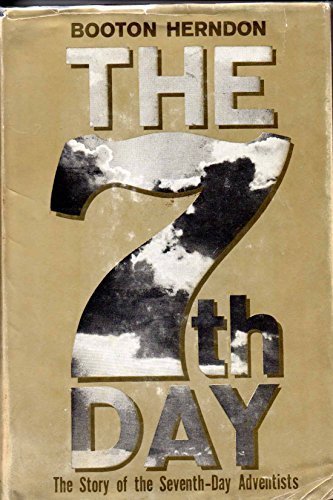
In a 1960 book called The Seventh Day, Booton Herndon described a recent ADRA mission after an earthquake in Mexico: "Most of the damage was in the nice part of town where people were used to new things, and the Adventists did not let them down," having previously been blessed with shiny new plastic-wrapped bedding. As a child I remember hearing people ask GBP whether ADRA raised money to deliver brand-new stuff to the rich. Actually the gift catalog doesn't even discuss shelter supplies. Adventist churches generally collect, refurbish, and redistribute store overstock and gently used stuff through a separate, volunteer-run, local-church-managed program they (used to) call the Dorcas Society. Let's just say that when they do hand out clothing it's likely to have all of its original buttons.

Both charities support ongoing missions in some parts of the Southern Hemisphere; both web sites display those familiar images from poverty pockets in Africa and India. Both are, in fact, global. There has never been and will never be a charitable organization that didn't "lose" a fair bit of donated money on operating expenses, and in many countries on bribes to local honchos; Heifer and ADRA are two of the most efficient.

So when I get an Amazon giftcard, I personally like to run it through Amazon Smile and give a few pennies on the dollar to one of these two beloved elders' favorite charities.

Today Amazon started a new thing. Amazon always reports on the tiny amount of commissions this web site has earned on for-profit sales. They mail out the check when affiliate site commissions reach US$100 and this web site is...actually quite ambivalent...to report that, at the current rate, this web site should receive a check in approximately 75 years. (I'm already over 50 years old; GBP is over 80--and we're going to split that check.) But today they also e-mailed out reports on the amounts our charities have earned. According to Amazon, Gentle Readers, you've raised over US$2,500 for ADRA and over US$23,000 for Heifer.

Presumably Amazon Smile aggregates funds directed to these charities through all uses of Amazon Smile, not only those referred by this web site, to calculate these figures...

Anyway, you have been most generous in supporting two legitimate charities that don't promote a political agenda or build up a handout culture. Thank you. Thank you all.

Tuesday, June 11, 2019

Mailing List Update

Well...let's just say nobody seems to be hanging out on Twitter any more.

Lacking faith that Twitter can continue to exist very long in its current form, I am hereby, as a matter of policy, blocking all corporate tweets that aren't relevant to any ongoing conversations. Jack Dorsey had every right to offer to "promote" corporate tweets by shoving them into everyone's Twitter feed, if he hadn't insulted his audience by "filtering" our tweets out of each other's feed. There are still writers I follow who still use Twitter to promote their books, and I'm still not seeing their tweets in amongst all the corporate rubbish.

So, until all private individuals' free accounts are reestablished as Prime Accounts and the Lifeblood of Twitter, all accounts of the other kind will be blocked. I'm sorry about this. As mentioned before, I think insurance companies could make a worthwhile contribution to the Glyphosate Awareness page...if Twitter's "filtering" system weren't preventing them from even seeing what their self-advertising sludge is interrupting. Sorry about that, corporate accounts. Unless there is a two-way dialogue you do not have my permission to fill up my Twitter stream.

In order to give corporate accounts the kind of exposure they claimed to want, New Twitter blocked the dialogue. Buzz! Buzz! Wrong answer. On social media, there is not and should not be much tolerance for anyone blaring on without listening to other people and participating in a social conversation. On Twitter there has generally been a high level of tolerance for lots of different conversations among people who aren't interested in each other--Twitter has made it easy to tune those out--but, even if you're paying for maximum exposure, you can't get that exposure by insulting and locking out the people who are talking to each other. That is just too rude.

There is, still, a way private people can counter the rudeness. In addition to tagging each other so we see one another's tweets, we can block the commercial squick. Banks, insurance agencies, and car manufacturers can continue to tweet to me--if they tag me, directly, and reply to something I've said. Otherwise they can pay to tweet exclusively to one another, and I wish them joy, screaming their throats out in a room without a single listener.

Everyone is cordially invited to join me in hitting that "block" button every time we see anything from a corporate account we don't follow. It'll be fun. If Twitter goes into a fatal tailspin, well, it seems to be heading in that direction anyway.

Meanwhile...I'll continue to post links to all the good stuff I find online at Twitter, as long as Twitter continues to be there. I'll continue to host the Glyphosate Awareness chat, ditto. You should be able to find the Glyphosate Awareness chat a little longer but, since Twitter is not enabling us to chat easily, I'm asking those who want to continue to hear from me to sign up for either an e-mail or real mail list.

I've considered, even tested, allegedly free mailing services and decided against using them. Mailchimp, the one that's sometimes considered most trustworthy, is currently making no secret of its ambitions to go all-for-profit and become spammier. I don't want to do anything spammy. I don't want to send out e-mail in a way I would object to receiving it. So, no Mailchimp, no Paracom, no Paper.li; if you sign up for my e-mail you'll receive individual e-mails, no automated list for hackers to gank and sell.

E-mail will be free. Once a week you'll receive an e-letter that summarizes the week's Bayer Boycott News. It will be plain text; it will be short; you'll see only your and my e-mail addresses.

Real mail will cost me money. Again, I don't want to run afoul of the elaborate and ridiculous laws that govern bulk mailing for reduced rates. I'm not doing Glyphosate Awareness for profit but I will have to charge a fee for printing and postage. That fee will be an even amount in U.S. dollars, covering the cost of printing and mailing whatever number of pages the weekly newsletter amounts to. People who choose this option can choose small, medium, large, extra-large, or huge print, and they can choose to receive links, abstracts, or full text of documents cited.

I don't want to know anything about you except your e-mail or mail drop address and any information, whether published or "anecdotal," you choose to share about glyphosate and the Bayer Boycott.

To join either mailing list, please send the appropriate address (yours) to the appropriate address (mine) at the bottom of the page. Real mail to P.O. Box 322 should be addressed to "The Boxholder."

Quality Park 9 x 12 Clasp Envelopes with Deeply Gummed Flaps, Great for Filing, Storing or Mailing Documents, 28 lb Brown Kraft, 100 per Box (37890)

No, weekly newsletters won't (usually) require big envelopes...but Amazon's picture of small, plain, cheap envelopes, which are white, didn't stand out on the white background. Newsletters will be mailed in the plainest, cheapest envelopes the post office offers. You will not have to pay for fancy packaging.

The Bayer Boycott Song

I promised a theme song...Y'know, boycotts have grown smaller in my lifetime, while corporations have grown bigger. In view of the number of different kinds of pain people have after glyphosate spraying in the neighborhood, this trend needs to reverse here. The Bayer Boycott could easily be, and should be, the grandmother of all boycotts past, present, and future. Make the grape boycott in the 1970s look small! We need a good song. We need several good songs. By way of encouragement, here is a song. I make no claims that it's especially good. Write a better one, please.

The Wiz

There may be a better Winning Protest Song than "Everybody Rejoice," in The Wiz, but since I don't know it, I've used the tune of "Everybody Rejoice." Most of us can't reach Diana Ross's top notes. So, lower the key by a third, or a fifth. It's still a great tune for marching or dancing.

Well, Bayer's on the run! Do they remember 1945?
The day of profit's come and gone! They are just trying to get out alive!
Their glyphosate makes people sick a dozen different ways,
Yet they debate, to wear out cancer patients' dying days!

Join the Bayer Boycott now!

Headache trying to begin? Drink some water, take a good hot bath.
Throw out the aspirin! Make Bayer feel the loss and do the math!
Lose Dr. Scholl's--just buy some shoes that really fit your feet!
Bayer controls less of our lives than they thought, ain't that sweet?

Dog or cat has fleas? Then boil their blankets and flea-comb their coats.
No need to make them wheeze, no need to burn their noses and their throats.
Pets' allergies are mostly chemical reactions, just like ours.
Ban things like these*, relief lasts more than twenty-four short hours!

Tampering with genes will feed more population growth, or so they claim?
Bosh! All that means is profit for themselves, their only aim!
No vitamin pill undoes the damage Bayer's poisons do!
They've made us ill! That's why the boycott's good for me and you!

* "These": Printable list at https://www.bayer.com/en/products-from-a-to-z.aspx .

Car Show, or There Must Be More to Life than Glyphosate, Politics, and Cats

On the way to work this morning I walked facing a parade of nostalgic old cars in all their glory, all on their way to Duffield for one of those Antique Car Shows the auto parts shop stores find such a festive way to attract business.


Although the cars may be up to a hundred years old, local tradition requires that the winners be roadworthy enough to be driven to the show. There is scorn for "garage princesses." The cars people admire most have been tagged and insured throughout most of the years they've existed.

This is possible because of the local custom of buying a second car as a showpiece.

The typical local motorist's first car is a clunker. He bought it secondhand, to have something to drive to a minimum-wage or student-labor job, and chose the most recent, most popular junk car possible because most of the working parts already needed replacement. Although he may later remember this car fondly, he is currently embarrassed by it, and may even buy one of those "My other car is a..." bumper stickers. The day when the auto parts store guys tell him "They're not making those any more," he'll be glad to sell the thing for scrap and buy another car, probably an economy model, probably also secondhand.

Meanwhile, when he can afford it, he buys the showpiece car. This may be a blatantly impractical model; it may already be a "classic," or it may just be a very, very expensive car. It will sit in the garage and nonverbally tell people "Somebody in this house has surplus income" for years during which it's driven only when the working car, or truck, is not working.

Actual road trips are taken in old Ford Escorts, Chevy Cavaliers, Toyota Corollas, and Honda Accords, or if a new car has to be bought, in Ford Fiestas, Chevy Sparks, Honda Civics, and new Toyota Corollas; or in pickup trucks or minivans.

Driveways hold Bel Airs, Chevelles, Mustangs, Corvettes, Camaros, Lincolns, Cadillacs, Beemers, Mercedes, Lexus, Volvos, and Miatas, which are tagged and insured and driven, if all goes well, fewer than fifty miles in a year. If the family fall on hard times their tags may be taken off. If the owner is desperate they may be sold, with an eye to their future value as antiques.

Some people do drive the more expensive of two or more motor vehicles the family own, if it's the one that gets better fuel mileage or the one that's still covered by a warranty. If people have a Prius, they drive it. However, Bel Airs seen on the road are usually on the way to or from a car show.

When these vehicles converge on a local town, road conditions become...well...nostalgic. Oh the roar of engines lacking mufflers! Oh the stench of exhaust systems lacking filters! Real antique cars have never had these innovations. Some of them never had seat belts, either, and some are so low-slung that oil pans, as well as any muffler or filter the car might have, seem likely to fall off if anything as big as an incompletely squashed rabbit happens to be in the road. In a part of the world where private roads often demand a minimum of 19" clearance, a car with less than 12" clearance still makes a statement.

From time to time it's good for middle-aged and older people to note some ways in which "the former days" were not better than these. Vintage car shows are jolly social occasions and generally bring business to the towns that host them, but automotive technology really has improved.

Amazon book link? But of course. For every vintage car fancier there's a book in this series...