Tuesday, July 4, 2023

Morgan Griffith's Fourth of July (with Music Links)

This year, this web site is delighted to accept our Congressman's invitation. Here's Morgan Griffith's E-Newsletter with music links:

"

Born on the Fourth of July

This year marks 247 years since the United States of America declared itself an independent nation, no longer under the rule of King George III of Great Britain. With the ratification of the Declaration of Independence by the Second Continental Congress on July 4, 1776, the United States began its incredible journey as the greatest nation on Earth.

Just like in years past, this July 4th holiday will be celebrated with parades, barbecues, fireworks, and concerts filled with patriotic songs.

This time of year often reminds me of a great American: George M. Cohan, an actor, playwright, composer, director, and performer who is most famous today for his patriotic songs and contributions to musical theater.

George was born the day before Independence Day on July 3rd (though he and his family always insisted that he had been born on the Fourth of July) in Providence, Rhode Island, to Irish American parents who were traveling vaudeville performers.

By age nine, George became a member of his parents’ traveling act and by age 13, wrote songs and lyrics for the act. When he began directing The Four Cohans (his older sister being the fourth member) in his late teens, it is reported the family was such an attraction that they were earning up to $1,000 a week. That would be in excess of $30,000 a week today.

Not long after, George turned his sights on Broadway. By 1904, George had a hit on his hands with the musical Little Johnny Jones, about the life of an American jockey who rides a horse named Yankee Doodle in the English Derby. One of the play’s song, “The Yankee Doodle Boy”, also known as “(I'm a) Yankee Doodle Dandy,” is one of Cohan’s most famous. Most recall the lyrics:

I'm a Yankee Doodle Dandy,

A Yankee Doodle, do or die;

A real live nephew of my Uncle Sam,

Born on the Fourth of July.

https://www.youtube.com/watch?v=N8wxb-wwQnA


In 2004, the American Film Institute raked the song at No. 71 on its 100 Years...100 Songs list.

The play also included the popular song “Give My Regards to Broadway,” which has since been recorded by many artists, including Patti LuPone, Judy Garland, and Bing Crosby.  The song’s most famous lyrics include:

Give my regards to Broadway, remember me to Herald Square,

Tell all the gang at Forty-Second Street, that I will soon be there;

Whisper of how I'm yearning to mingle with the old time throng;

Give my regards to old Broadway and say that I'll be there ere long.

https://www.youtube.com/watch?v=rD9rQrbU-HM


Two years later, in 1906, George wrote and produced the musical George Washington, Jr., in which he marched up and down the stage with an American flag singing his song “You’re a Grand Ole Flag.”

“You’re a Grand Ole Flag” has since become one of the most popular marching band songs of all time and became the first song from a musical to sell over a million copies of sheet music.

https://www.youtube.com/watch?v=cXpHJTXih0A


Years later, when the United States was fighting in World War I, Cohan was inspired to write the song “Over There,” by a bugle call. 

Over there, over there,

Send the word, send the word over there

That the Yanks are coming, the Yanks are coming

The drums rum-tumming everywhere.

https://www.youtube.com/watch?v=921z4LAHvak


The patriotic song was a signal that the U.S. had decided they would be involved in world affairs. “Over There” became hugely popular during both World War I and II.

George received a Congressional Gold Medal from President Franklin D. Roosevelt for the song, the first person in any artistic field to be selected for the honor by Congress.

George passed away in 1942, the same year Yankee Doodle Dandy, a musical biopic about his life, would come out. Actor James Cagney starred as Cohan in the biopic and went on to win an Oscar for Best Actor for the role. A few years later, in 1968, the musical George M!, based on Cohan's life, became a hit on Broadway.

In all, he created and produced over 50 Broadway shows and wrote over 300 songs during his life. George’s statue, the only public statue of a theater performer in all of Manhattan, has stood for decades at the center of Times Square

His many patriotic songs will, no doubt, be played this Independence Day, as we celebrate the birth of this great nation. If you are unfamiliar with George Cohan’s work, I highly suggest you take time to listen to a few of his songs this Fourth of July.

If you have questions, concerns, or comments, feel free to contact my office.  You can call my Abingdon office at 276-525-1405 or my Christiansburg office at 540-381-5671. To reach my office via email, please visit my website at www.morgangriffith.house.gov.

" 

Monday, July 3, 2023

Web Log 7.2.23

Is anybody online today? If only because, and while, it's raining? Since we had our family gathering and fireworks show on Saturday, last night I did make some time to read blogs and find links.

Animals 

The Roads End Naturalist observes bison, prairie dogs, and weird rocks in Dakotaland.


Maria Pavlik observes llamas in Canada.


Bayer, Lilly, Merck, and Other Scum 

Linked in English earlier, here it is for those who want to read it in French: 


Peut-etre qu'il faut chercher Google Translate; il fonctionne.

Or in Spanish: 


Con ciertos aparatos hay que buscar Google Translate, pero aun funciona.  

Climate 

Local warming! Empathy to those who have to survive summer in cities...Here's a poem where the writer imagines how one of the minor miracle stories in the Bible might be told if it happened in modern times, well, twentieth century anyway.


Here's the song track that comes to mind...


Now, this mess is North Carolina's problem, but it is the kind of thing that contributes to local warming, heat-related fatalities and crop failures, and wildfires. And other things--this proposed natural gas pipeline, for which the mess has been made, is planned to cross over 400 natural watercourses. That's more than 400 opportunities for gas, possibly burning gas, to foul water from mountain springs--and channel flaming gas right into houses, maybe when a drowsy child is reaching out to the tap for that last drink of water before bed. Pennsylvania and Colorado have not solved the problems they've had with natural gas pipelines. Understandably many people in North Carolina want to see those problems solved before they are reproduced in North Carolina. They're asking for out-of-state signatures on a petition to the federal government...you readers must do as you think best about that.


All that brown is soil erosion waiting to clog city water lines.


"Gay Rights" 

Politicians do what politicians do--appease deep-pocketed interest groups. Robert Kennedy's mandate is going to be to annoy enough of those groups that he can't afford to lose the LGBTQIA...Z mob. Too bad for those who want to keep drivel about how Heather has two mommies who "love" each other (as the usual "two mommies" arrangement, a mother and grandmother or mother and aunt, presumably don't?!?!) away from children, but I think it's going too far to say RFK is advocating for porn in the schools. 

Though I would like to see a realistic picture book called Olivia Has a Mommy and a Grandma in first grade classrooms across the fruited plain... "Olivia used to have a Mommy and a Daddy like everyone else. Then her Daddy went away. Then her Grandma came to stay!" We need more celebration of the heterosexual friends and relatives, 99% of whom are women, who step in to replace missing fathers and make it possible for single mothers to survive. 

But in view of the Supreme Court's recent ruling...Anybody can refuse to serve anybody because they just feel like it, if they're not serious about building a business. Burger flippers at McDonald's can refuse to sell you a hamburger because they're tired of flipping burgers and are going home now, and that may be a good thing because their little burst of bad temper just might mean they're coming down with something contagious. But if I saw, in real life, store employees going "Ewww ick, I'm not going to sell you a battery or a hamburger or a dozen eggs because your personal choices go against my religious beliefs"? If it came to that I'd be pro-"gay" too. I never heard of anyone being converted to the True Faith by hateful bad manners. People have a right to do what they choose in their own homes, no questions asked.


Poems 

Can we make or do things beautiful enough to honor the memories of our departed friends?


Topophilia 

An ancient paradox: What if our individual self-actualization happens to involve rootedness, maintaining and preserving the connections between generations at their home? We humans share a natural instinct to wander, mingle, seek out exotic DNA, with all kinds of animals--and insects. Yet it seems to me that we realize our human potential when we've found that exotic DNA for mating purposes, satisfied the urge to wander, and reconnected to our ancestral roots on our ancestral home ground.


Zazzle 

Did you ever think of personalizing USB flash drives? Why not? For those who still use the Internet in the most intelligent way, at public (or school) computer centers, customizing the outside of your flash drive would make it easier to find if it were misplaced. So here's a sample "Save the Butterflies" design. Nephews, I expect you to personalize yours with different butterflies, or completely different images. You'd know this by looking at the sample. Although it's a valuable composter species, is the Silver-Spotted Skipper really the most propitious image for an electronic storage device? Right. Insert a better one.


Here's a new thing for Zazzle--cornhole bags. 


They go with this board:


So that's the old-style cornhole set, where the boards were decorated and came with plain, generic bags. You can always keep the generic bags for spares. But just wait...I look forward to the launch of cornhole sets with customizable bags to match the boards! 

These boards aren't mine. I'm not keen on the idea of throwing things at butterflies, but wouldn't this design make a great jigsaw puzzle?


This link was generated when I clicked through the process to transfer the picture above to a 20x30", over-1000-piece jigsaw puzzle. If it doesn't work for you, clicking through to generate your own link should take about 90 seconds.


This one's not mine. It looks a bit like a fever dream but it celebrates a butterfly that really exists in tropical South America. 


Book Review: New Discoveries in American Quilts

(Reclaimed from Blogjob.)

Title: New Discoveries in American Quilts

Author: Robert Bishop

Date: 1975

Publisher: E.P. Dutton & Company

ISBN: 0-525-16552-5

Length: 127 pages

Illustrations: most pages contain color photos

Quote: “The reason for this…book…is simply to document as many as possible of the beautiful quilts that have been brought to my attention since 1972.”

Bloggers who enjoy “Wordless Wednesday” posts should enjoy New Discoveries in American Quilts. Most of the words in this book are captions, credits, and historical information about the textiles photographed.

Not all of them are traditional pieced quilts; there are also quilted “bed rugs,” single pieces of fabric joined with stuffing and quilt-stitching, and there are some modern pieces quilt-stitched around printed designs. Most are shown in full color, and the colors aren’t as faded as you might expect, given the age of some of the pieces. These quilts were not worn out in everyday use. They were designed and preserved as works of art. They were selected, photographed, and published by an art historian because they’re beautiful enough to compare with works of “fine art.”

As a book of “glorious inspirations” for textile crafters and collectors of all sorts, this book is recommended. Raw beginners may want to invest in a quilt book with detailed instructions and templates. Experienced quilters (and other crafters) can use this book for inspiration.

Several writers were known as Robert Bishop; apparently the art historian who wrote this book died in 1991, so New Discoveries in American Quilts is not a Fair Trade Book. The minimum price to buy it online here is $5 per book + $5 per package, payable to either address at the lower left-hand corner of the screen. Two copies of this book would fit into one package for a total of $15. Alternatively, you could fit in one or two Fair Trade Books, and I’d send $1 per book to an author who is currently alive.

Here is a quilt image from Jjulian812 at Morguefile, 

Posted on October 2, 2015 September 28, 2015 Categories Book, Crafts Tags antique quilts, patchwork quilts, quilting, United States art history


Butterfly of the Week: Pachliopta Oreon

This week's butterfly is rare. It may always have been rare. Pachliopta (or Papilio or Menelaides or Atrophaneura) oreon has been found in nature only on some of the smaller islands in Indonesia, the Lesser Sunda group. It's not on the endangered species list because nobody knows for sure how rare it's meant to be.


Photo donated to Naturalista.mx by James Lambo. Most web sites show images of museum specimens; it's instructive to compare these photos from Insecta.pro, which show how rapidly and drastically these butterflies fade. Even living Atrophaneuras often fade from iridescent black to subtle shades of brown and gray, and discussions of this species in Spanish describe the main color as pardo, fusco, and oscuro rather than negro. 


Butterflies really need to be "collected" alive in order to look like anything, and fortunately most of them now are collected by camera...but oreon has seldom been seen by anyone who had a camera.

Oreon is big, with a wintspan between four and five inches, and showy. In 1891, W. Doherty described it as "a local form of P. liris." He observed no obvious difference between males and females. It:did not occur to him to take the dead bodies apart and examine the proportions of their inner parts under a microscope, which is how scientistis identify some similar-looking moths and butterflies today. As with the other Red-Bodied Swallowtails, females are usually a little bigger than males, sometimes much bigger, but individuals vary enough that both of a couple may be the same size. 

In 1895 Walter Rothschild reported that he'd seen oreon, too, and believed they were a distinct species, though he admitted they looked like a sort of combination of features from pandianus nad liris. The shape and markings were consistently different enough from liris to justify calling it a separate species, he reasoned--quite wrongly. Some butterflies that look like completely different species, including some of the swallowtails, are the same species as its development is influenced by its environment. 

The Rothschilds, as meddling Europeans who wanted to divide and conquer the United States, were the leading villains in the history of the American Civil War so it's pleasant to note that even Walter, the peaceful naturalist in the family, was wrong. He seems to have been correct, though, in guessing that oreon would be a distinct species. So far nobody has found that oreon can morph into a closer resemblance to another species under different environmental conditions, nor that it's apt to crossbreed with another species. It behaves like a distinct species. If it really is one, it's always been rare.

Doherty also observed that, while being exposed to this rarity and also to butterflies in the Birdwing and Monarch groups, the islanders regarded these butterflies as ordinary. Another big, dark Swallowtail, Papilio memnon, which is still listed in the genus Papilio today, was the one they considered most interesting. The Memnon, or Mormon, or Great Mormon, was considered sacred--though not so sacred that the islanders interfered with Doherty killing a few specimens for his collection. Money has always been of great benefit to science.

Perhaps because he wasn't sure it was a distinct species, Doherty gave oreon a name that's unusual in the Atrophaneura group--neither a living person's name, nor the name of a character in ancient literature, nor the name of a specific place where it was found. Then again, he might have been thinking of Orion. Both oreon and "Orion" mean "of the mountains." Pachliopta oreon lives among wooded hills. Like the other Red-Bodied Swallowtails it thrives in the deep shade of the rain forest, where their subtle, greyscaled dark wings can look wonderfully mysterious, a patch of shade that seems indefinably more mobile than the shade around it.

Last week's butterfly was a somewhat rare species about which a Blogspot blogger may have been the first to document information about its life cycle. That story illustrated the importance of private blogs. This week's butterfly research brings up a reminder of the need to read things on the Internet with a certain skepticism. A blogger, who shall be nameless here, posted this picture on Pinterest and labelled it Pachliopta oreon.


An excellent picture, clear enough to show all the field marks of the more common Crimson Rose, P. hector. They are similar enough that scientists assume they could be forced to hybridize (though I'm not finding any indication that anyone's done it), but the complete double border of red spots is typical of hector; oreon has a single border.

The life cycle of Pachliopta oreon may have been documented for the first time in 2022, by Trevor Lambkin, in a paper that is free for the downloading from ResearchGate. The PDF version uses formatting that's easy to view, but copy-resistant, in Chrome. Other programs can probably copy Lambkin's pictures but I think they're new enough that he has a right to feel possessive about them. His photos show that at all stages of its life this animal is easily recognized as a Pachliopta with only slight visible differences from others of its species. 

Lambkin found that, although the forest on Flores island had lost its big old trees and been invaded by a non-native vine, the forest was still supporting about eighty different kinds of butterflies, including the island's specific subspecies of P. oreon, godmani. (A hundred years ago, naturalists thought Godman's Rose was a different species from the Mountain Rose, but they're now regarded as two of several subspecies.) Pachliopta oreon godmani flies in the wetter season, November to April. It is a pollinator species, attracted to lantana flowers. Males often fly high, probably thinking they are patrolling their territory. Females tend to fly lower, spending more time looking for unused vines on which to place their eggs. 

The egg is a little round bead, slightly flattened at the top, with the usual droplets of aristolochic acid adding texture at the sides. 

The caterpillar is reddish-brown to black, with pale orange to red tubercles. It looks designed to say to birds, nonverbally, "Another bird already ate me and it was very sorry. You do not want to eat me." Viewed head-on, its actual face--eyes, mouth, tiny proto-antennae--is turned down in line with its feet, but the back of its head and upper body suggest a sort of false face with bright red glaring eyes. The false-eye spots are on the upper segment that widens behind the head--where the upper thorax of the butterfly is going to be, or what would be its shoulders, if caterpillars had shoulders. It's large for a caterpillar, up to three inches long with a head about a quarter-inch across. 

Lambkin didn't find pupae. He may not have looked in the right places, or it may turn out that the pupae look different from the typical Pachliopta pupa, which is pale brownish orange, flattened, with some tubercles remaining and making it look from a distance like a tattered dead leaf/ 

In 2015 the late Danny Burk and Mark Goode reportedly described another island's sbspecies, P. oreon batuata, in a paper that's not available on the Internet: 


Burk maintained a web site, while living, where he discussed his studies of primarily Delias butterflies (he used "deliasfanatic" as a screen name). His web site apparently still exists but is not open to the public.

Sunday, July 2, 2023

Web Log 6.30.23 and 7.1.23

From a total time of 24 hours, this post presents frank discussions of the birds, the bees, and the flours (without violating our contract of course).

Activism, Ineffective 

When people have gathered for the express purpose of proclaiming hate and defiance for what the Bible teaches, reading the Bible at them is provocative. It's like going into a bar in a miniskirt, propping one foot up on the bar stool, and purring "Hey, handsome, buy me a drink?" There is no excuse for taking advantage of a drunk and there is no excuse for tearing up someone else's Bible, but, er, um, Christians are not told to go out looking for persecution.. 


So, "Is the Bible still relevant?" I think so. I think the sneering, gibbering haters who harassed the misguided Bible reader could have engaged him in a Scripture-quoting contest and made him admit that the Bible condemns only one specific same-sex act ("lying with mankind as with womankind") as an "abomination." The Bible says no word against same-sex friendship, or love, or touching. Probably the scenes of same-sex love and touching in the lives of Bible heroes celebrate sex-free friendship rather than bisexual lust, but hey, as long as they're not doing the thing that really is an abomination because it spreads AIDS...


Anomals, Adoptable 

Even more shelter cats. These are in Louisiana but no worried, there are kittens up for adoption near you, because some of all those people who adopted animals in 2020 neglected to have the animals sterilized, even though they didn't want kittens or puppies and didn't know anyone who did either. That is irresponsible. If you don't have a clear plan for the babies, you should have your pets neutered. 

(This serves as official notice to the owner of the little red Manx tomkitten who's been calling on Crayola lately. (Serena and Silver are still yelling at him, a lot, but they're clearly only teaching him the rules.) Crayola has had enough sorrow in her short life, and does not need to have to give birth to a lot of Manx kittens and watch all or most of them die of Manx Syndrome. Take care of that little fellow now, or I will.)


Birds 

The Roads End Naturalist is on a road trip out West...not all of the other pictures in his post are as informative as this one, but several are.


Bees 

Well, insects generally, in Britain Warning: most of the animals the East Sussex Wanderer has photographed in this post aren't as pretty as this Peacock Butterfly: 


Alana Mautone visits the largest, and some say the nastiest smelling, flower known to humankind: 


Glyphosate Awareness 

You knew glyphosate damaged the human liver. Here's a study quantifying how badly...yes, it can "cause" liver cancer. 


Green 

For those who need to look at it...


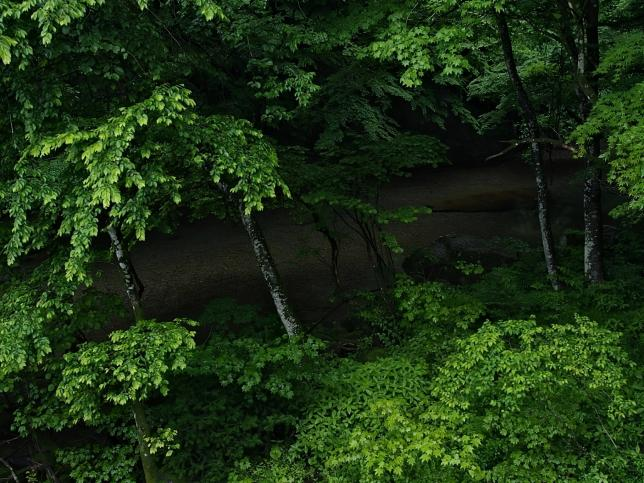
It looks just a bit like my spring branch, and probably like several other creeks in Virginia, but Google says it's of Chinese origin.

Climate skeptic Judith Curry has a new book out: 


Poems 

The writer known as Ysabetwordsmith or Elizabeth Barrette has done hundreds of these things by now. They identify as poems. I hear them as prose but they're nice, succinct stories that mix goofy fantasy with serious real-world skills and information.


Book Review: Lord Teach Me to Pray for Kids

Title: Lord Teach Me to Pray for Kids

Author: Kay Arthur and Janna Arndt

Publisher: Harvest House

Date: 2002

ISBN: 0-7369-0666-5

Length: 176 pages

Illustrations: line drawings by Steve Bjorkman

Quote: “Welcome to Camp MacHaven, the training facility for God’s Special Forces.”

Kay Arthur wrote a Bible study for adults called Lord Teach Me to Pray in 28 Days. Janna Arndt revised and abridged it for middle school readers. Her revision features a lot more silliness about the hypothetical boot camp for future “prayer warriors,” and it’s printed in a school workbook format, but it still contains plenty of Bible references and instructions on studying the Bible’s teachings.

Topics discussed include what it means to pray “with faith,” the hazards of expecting that Christians can “just name it and claim it” while praying for personal benefit, the concept of trying to know and fulfill God’s Will, the Lord’s Prayer, praying for forgiveness, praying for protection from temptation, praising God, avoiding “vain repetition,” and more.

Bonus features include several puzzles, “sound off” chants, and an explanation of Morse code.

Vacation Bible School and Sunday School teachers who feel up to the challenge of telling half-grown wigglers to sit down, read, write, and learn things, will be able to use this book to good purposes. Scattered throughout, at the beginnings and ends of sections, are hints about providing physical drill, hydration, and Meals Ready to Eat for ten-year-old “soldiers.”

When considering Vacation Bible School I’m tempted to pad out this review with a reminiscence of the summer I “taught Vacation Bible School.”

I was fifteen years old.

I had never attended a V.B.S. sponsored by any church, anywhere.

I had no idea whatsoever about what I was expected to do.

That made me a little bit less prepared than many of the parents who volunteer to teach V.B.S. at their church…but not a lot.

And it turned out that what I was expected to do was very similar to what the teachers are expected to do for parents who sit down and plan, “Now there’s a Baptist V.B.S. for the first week of June, there’s one at the Church of Christ for the middle two weeks, one at the Methodist church in the fourth week, and one at the Adventist church in July…”—In other words, V.B.S. teachers are typically handed a few Sunday School books and some junk the children might use as craft materials, and expected to baby-sit the rug rats whose parents don’t want to pay to send them to summer camp.

Some factors that made my “teaching” experience a little less embarrassing were that the children were relatives whose parents were gathering to rebuild a house that summer, they all liked each other and looked forward to spending time together, the ones who spent the most time in our little home-based Vacation Bible School were the ones I’d been baby-sitting all winter, and they had all gone to an “official” V.B.S. sponsored by some church or other and had some idea what they were supposed to be doing. They were nice Christian children, on the whole. (Later in life I tried teaching a Sunday School group of middle-schoolers who had heard it all before and who always wanted to skip the lesson and just order pizza.)

We all liked singing Christian songs together; those of us who had some musical ability were accustomed to putting up with the voices of those who had none. We all were familiar with Bible stories and could draw or enact scenes that everyone recognized right away. That took up about an hour while the morning dew dried off the grass, after which we could reach a consensus about whether the weather was more favorable to Wholesome Socializing or Getting Out In God’s Creation. In other words, it was baby-sitting.

That is what some Vacation Bible Schools accomplish and there’s nothing much wrong with it, but a good teacher can actually use V.B.S. to teach children something about the Bible, along with the physical activities, refreshments, and music.

The funny part about my V.B.S. experience was that, after the summer when I’d read The Living Bible at thirteen and the summer when I’d read the Psalms, the Prophets, and the Epistles as well as the stories at fourteen, this was the summer when I was reading the entire Bible. Aloud. To my siblings—at least two children, separated by five years in physical age and at least ten years in mental age. From some Mennonite friends our parents had bought a Spanish Bible, and I was earning it by translating it aloud into English by way of a bedtime story for the siblings, while Mother followed along in the English Bible and supplied words I didn’t know. (We skipped the most violent sections and the dullest ones, but we read the entire book of Job.) It was a good way to learn more Spanish words and more about the Bible. I think, by age seven, even my baby sister was getting something out of our explorations of the non-narrative parts of the Bible.

So why did I not even try taking that Spanish Bible to the home where we met for V.B.S., letting one of the older children follow along in one of the English Bibles there, and astonishing the cousins as well as the siblings with the fact that it’s possible to read words printed in one language while translating them into another language? No idea. Well, nobody told me that getting the kids to think about anything in the Psalms or the Epistles would have been a valid goal for a Vacation Bible School.

You, Gentle Reader, now have this information. A Vacation Bible School teaches children who are old enough to read something about the Bible, and if you and your students can endure the corny “soldier” motif in this book, you can use it for that purpose. They will learn about prayer, about the Gospel According to St John, and they might even choose to learn the Morse code.


Faye Park's Tips for a Tidier Barbecue

It may or may not be too late to use these tips for this year's Fourth of July gathering (my family's bash took place yesterday), but summer's only starting...we can always incorporate these tips into the rest of the season's outdoor parties. If only to show support for the students doing their first grown-up jobs at the PIRG, trudging around the cities in the heat, knocking on doors and asking people to support efforts to reduce plastic waste...

From Faye Park of the US Public Interest Research Group: 

"

Who doesn't love a good Fourth of July barbecue?

Hamburgers on the grill, watching the fireworks display, and at the end of the night ... cleaning up lots and lots of plastic waste?

Here are five tips for how to cut back on plastic at your cookout:

1. Choose reusable serveware

Rather than rely on single-use plastic plates, cups and utensils, opt for reusable alternatives instead. The most environmentally friendly plate, glass or fork is the one you already own -- and if you don't have enough on hand for the whole party, make it a BYO BBQ and encourage your friends and family to bring their own from home!

2. Ditch the single-use straws

Plastic straws are one of the most common forms of plastic waste found in our oceans.1 You can avoid contributing to this problem by providing your guests with reusable or biodegradable straws. Consider offering paper, bamboo or stainless steel straws as a sustainable alternative -- or, simply skip the straws altogether.

3. Say no to plastic bottles

Plastic bottles are another major source of plastic waste, and fortunately, it's easy to find an alternative. Instead of purchasing individual plastic bottles, opt for beverages that come in aluminum cans or glass bottles. You can also offer pitchers of water, homemade lemonade or other refreshing drinks in large, reusable dispensers, and provide your guests with a designated area for refilling their reusable water bottles.

4. Choose eco-friendly decorations

Store displays are full of disposable plastic decorations for the Fourth. But there are plenty of plastic-free alternatives, perhaps even right in your own backyard. Consider using cloth tablecloths or picnic blankets you already have on hand and natural materials such as flowers, leaves or branches to make centerpieces.

5. Have a plan for waste management

Set up clearly labeled trash, recycling and composting bins to help your guests dispose of their waste correctly. By doing so, you can minimize your barbecue's environmental impact by ensuring cans and bottles get recycled and food and paper waste can be composted.

By following these five tips at your Fourth of July barbecue, you can significantly reduce plastic waste and inspire others to adopt eco-friendly practices. Together, we can celebrate our independence while also safeguarding the planet for future generations.

" 

By the way, although Zazzle does use plastic and polyester, it's reusable plastic and polyester.