Showing posts with label horse. Show all posts

Friday, December 20, 2024

Feline Friday: Day of the Horse Was Last Week

The only prize this web site can afford to give our photo contest winners is sharing the pictures, so please share them everywhere where you think they might interest someone in adopting a shelter pet! Most weeks we do only cats and dogs. This week we have three cats, three dogs, and three horses.

I had planned to do a special Petfinder post for the Day of the Horse, and then another idea came along and I, well, didn't. So. Take Two. Let's find out how the Day of the Horse affected Petfinder's horse rescue page. But first, of course, the cats, and then the dogs. 

For the cats...we've not had a Manx photo contest lately.

The position of this web site is that nobody should encourage the breeding of Manx cats, but once the actual cats have been born, yes, they do make good pets. The birth defects that make up the Manx look are caused by a lethal gene. There are three degrees of mutation with which cats can survive; "Rumpies" have no tails, "Stumpies" have obviously incomplete tails, and the cats that can reproduce successfully have complete but short tails, fore and hind legs about the same length, and broad British-type body frames. (Our Queen Cat Serena, her father, and her grandmother, had the complete tails and broad frames--they can look like big fat cats, from a distance, when they're actually underweight. Serena's great-grandfather had a stump of a tail.) The lethal gene can also cause kittens not to be born at all, not to be born alive...or to be born alive and die painfully, as a result of having incomplete vital organs, when they're a few weeks old. Sometimes they survive with disabilities like blindness, or incontinence. The position of this web site is that breeding Manx cats is somewhere in between deliberately breeding humans with cystic fibrosis and deliberately breeding humans with Downs Syndrome.  

But the cats, the ones who survive, can be quite nice. They tend to have calm, reserved, stereotypically British temperaments and to bond with one human for life. Some don't climb well; some do. Some enjoy chasing thrown toys so much that they can be trained to retrieve their toys and bring them to you for more throwing and chasing. The retrieving and the "one-man cat" behavior cause some to call them "dog cats," or cats for dog people. The out-of-proportion legs, especially when the cats climb, cause others to call them "bear cats." People who adopt Manx cats generally love them. Although they have many little ways of making it clear that they love one person, Manx cats are generally friendly and even-tempered, and some are sociable enough with humans to be good visiting/therapy cats.

Proper Manx cats have short, but very thick and soft, coats that benefit from daily grooming. Crossbreeds can have extra-thick, extra-long hair. Graybelle, the long-haired Manx mix who was our Third Queen, used to "meow" for her coat to be brushed once or twice a day. Even with care that super-dense fur can become messy in the house and inside the cat. If you like the look of a huge mound of fur that you will have to brush every day, however, this could be the cat for you. 

With our usual disclaimers about the pet photo contests being about the pictures and the probability that you might prefer a different animal at the actual shelter, here are our picks of the most adorable photos of adoptable Manx cats in three Eastern States.

Zipcode 10101: Tippy from Nutley


Despite her very "typical" Manx look, Tippy is a crossbreed with a Siamese way of "talking" at humans. She likes to play. She's not social, tolerates other cats but "thinks she's a dog" and wants to own her own human. She is two years old, probably as big as she's going to get (Manx is one of the breeds that often revert to their ancestral size). 

Zipcode 20202: Mira (and Micah) from Flint Hill 


Mira is the pretty-faced, long-haired Stumpie shown above. Micah, at least her half brother, is the buddy she likes to hide behind. Both of them have super-sized coats that make them look much fatter than they are, but it doesn't sound as if they're underfed. They must be adopted as a pair. Born in 2022, they were house pets until their human died. Then they were feral for ten months. They are wary about new humans. I'd take some time to get to know them before offering to adopt them. They might decide they love you, if you proceed slowly and respectfully.

Zipcode 30303: Ozmerelda and Ozadora from Powder Springs


These sisters were the result of crossbreeding a Manx with the other breed that shares a similar mutation, a Japanese Bobtail. However, Ozadora has a short tail and Ozmerelda has a complete one. They're not show quality. Isn't that just a pity and a bleepin' shame. Shelter staff are willing to separate them but it sounds as if Ozadora is accustomed to letting Ozmerelda go first and check out new things and people, and might panic on her own. Both cats have gorgeous glossy black coats; visit their web pages to see them under different lights. 

This web site has often prodded the Georgia shelter photographers about putting homeless animals' best sides forward...well, if you visit the page for all the adoptable Manx cats at the zipcode 30303, you are in for a treat. Nine beautiful cat photos!

Now for the dogs...We've not done poodles lately, either. A poodle person visited the Cat Sanctuary this morning; why not a poodle photo contest? 

Be warned, though: Homeless poodles don't have the cute haircuts of poodles appliqued onto various clothing items during various twentieth century fads. Their curly coats grow long, stringy, and matted. The fancy cuts evolved from the need to cut out hopelessly matted patches. Whether you cut a poodle's hair short all over, cut fancy patterns, or prefer a long-haired shaggy dog, dogs need daily grooming with a fine-toothed flea comb. For a true poodle person this is a great way to relax.

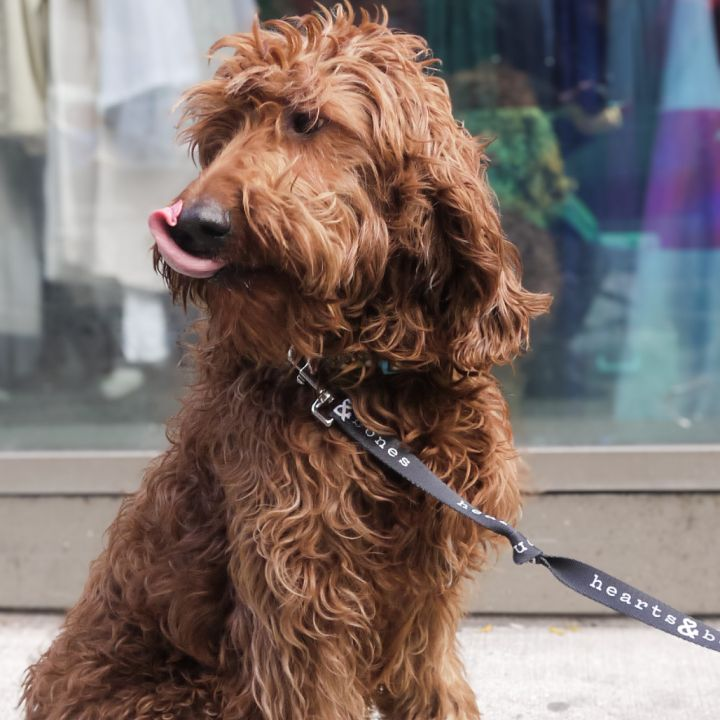
Zipcode 10101: Popular from Brooklyn 


...says he is indeed popular, and so will you be, if you lead this dog home. French Poodles are a medium-size breed. Their American descendants have crossbred with big and small breeds--poodle hair comes on bodies of all sizes. Popular is at the large end of the spectrum, 58 pounds (his other ancestors are thought to have been retrievers). Apart from looks, he's popular because he doesn't bark, walks nicely on a leash, is crate trained and housebroken, makes friends with other dogs, and seems happiest when snuggled up beside a human. Maybe I should have picked a runner-up. This dog doesn't sound likely to spend much time looking for a home.

Zipcode 20202: Sriracha from Chestertown 


Yes. The photo contest winner comes from a horrible HSUS shelter. There are some close runners-up on the general page for poodle-mix dogs near DC. Anyway, Sriracha is said to weigh just twelve pounds--mostly fur. She's one year old and will probably grow a little bigger, but she'll always be a small dog with a quirky mix of poodle and beagle traits. She is full of energy, described as a dog that will wear you out and then snuggle up beside you. 

Zipcode 30303: Lulu from Social Circle 


Her other ancestors are thought to include Shih Tzus. Lulu is a very small poodle mix who likes to snuggle and be held, and even models a pink knitted sweater. If you want the complete spoiled lap dog, Lulu is for you. There's a fantastic mix of poodle-mix dogs on Petfinder's Atlanta page, including some big ones crossbred with retrievers and Irish setters.

And now...horses! Yes, Petfinder still has several horses looking for homes.

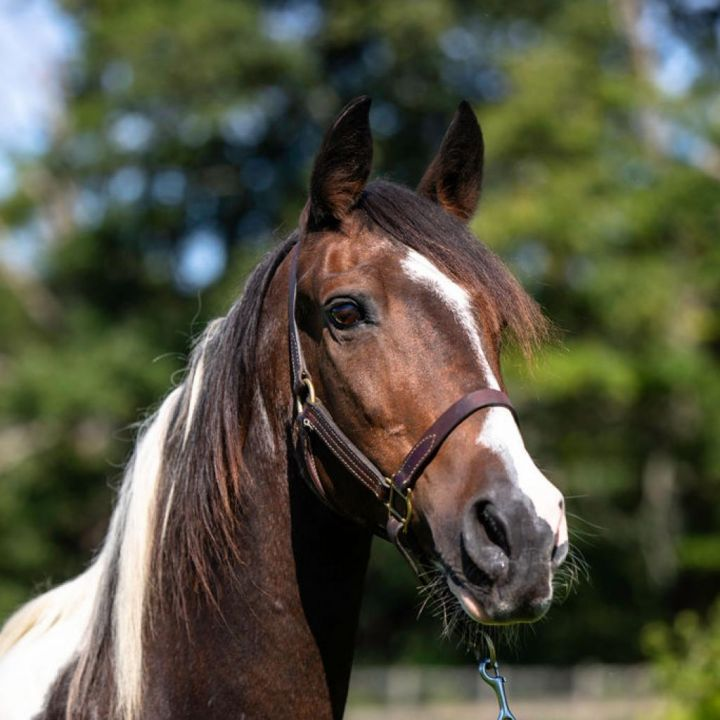
Zipcode 10101: Spirit from Quakertown 


All kinds of horses get into rescue situations. There are some race horses and show horses at Petfinder too, but the photo contest winner is an old mare who's not recommended for serious riding. She's recommended as a companion animal for someone who has a field and barn where she can roam around and hang out with you. Horses are social. Spirit is accustomed to hanging out with other mares and geldings (neutered males).

Zipcode 20202: Elle from Waldorf 


This one can be ridden. She's a Thoroughbred, only sixteen years old and in good physical condition. 

Zipcode 30303: Chance from Ellenboro 


Granted, Ellenboro is a long road up from Atlanta, but Petfinder's Atlanta page failed to load, and I wanted to show you one Tennessee Walking Horse in any case. Tennessee Walking Horses are a special breed. They have a gait called the "running walk" that looks like a goose step, but the horse is absorbing all the shock; the human in the saddle always says it's quite comfortable. People who wanted to show off have sipped drinks while riding a horse who was running-walking around a show ring. Chance is said to be a friendly, trustworthy horse who behaved well when rented out by the hour for children to ride. His adoption fee is high because money could still be made by hiring him out that way. The organization also has a mare who's recommended for a companion more than for serious riding, for one-fifth of the cost. 

Can you believe it? Only one more Petfinder post this year! Then we'll go into review mode. Share these pictures far and wide so we can find new ones next year.

Saturday, June 15, 2024

New Book Review: Grumpy Billionaire Rider

Title: Grumpy Billionaire Rider 

Author: Willow Finn

Date: 2024

Publisher: Willow Finn

Quote: "There was only one equestrian school close to here. I owned it."

Coti, who owns the equestrian school, is the grumpy billionaire who hires Wes to teach children how to ride in horse shows. 

What I both like and dislike is the realistic presentation of the way this type of Americans relate to money. They're not in the top one percent of the extremely rich. They've never had the foggiest idea of what it's like not to have plenty of money, probably old money at that. If they're related to you, they're the relatives who will listen to your explanation of how your business is in danger, the mutual older relative living in your house is in the hospital again, your husband just broke his leg, and you just found out that a third child was on its way to your house, and they say, "I'll pray for you." While dutifully using ten percent of their money to shelter addicts or preserve historic buildings. 

Horse people. Wes's family own a veterinary practice in Virginia. Coti's family own a horse ranch in Texas. Wes and Coti are in their twenties, and have gone to college, but they own houses and don't even mention having loans to pay off. Both Wes and Coti are wary because, as rich kids, they've learned about people who are only interested in their money. Both try to act as if they weren't rich. Each imagines that the other doesn't know they're rich. Rich Virginians are famous for poor-mouthing, while rich Texans stereotypically consider themselves poor because they work with super-rich Texans, but hello, does anyone seriously think their bank accounts are as small as even six figures? A little awareness of the more typical twenty-something lifestyle they've missed, a little gratitude, would be in order. But in real life, how many twenty-something billionaires have you found to have any idea what they've missed?

Well, cheers to Willow Finn for portraying this type of people well, and trigger warnings to those who can't stand them. The word "billionaire" is on the front cover. You're warned...except that fictional billionaires aren't always as realistically drawn as these two.

What I wholeheartedly liked about the book: It's a full-length "slow burn" romance. We see Wes and Coti having lives beyond their feelings about each other. We learn some things about the equestrian lifestyle. We meet the horses, one of whom rescues Coti after an accident. We see Coti snapping that a question about her favorite color is "unprofessional" during work hours, because she likes Wes but she's liked a few Mr. Wrongs before. We meet her latest Mr. Wrong, who at one point confides to Wes, after a particularly harsh snub from Coti, that of course money is the only thing that could possibly motivate anyone to put up with the attractive, successful business owner. 

Wes and Coti have similar backgrounds and personalities, though she seems to have more surplus wealth than he has. They care about the children learning to ride show horses; they love the horses. Their compatibility is believable. Not everyone would want to live with either of them, but as a couple we can believe they'll live happily ever after. They take a long time deciding to kiss each other; when they get behind closed doors, we know the passion that's built up by waiting will make whatever they do in private feel awesome to them.

If this is your kind of romance, too, run don't walk. 

Monday, August 14, 2023

Book Review: King of the Wind

Title: King of the Wind

Author: Marguerite Henry

Date: 1948

Publisher: Rand McNally

ISBN: 0-590-45316-5 (Scholastic paperback)

Length: 192 pages

Illustrations: drawings by Wesley Dennis

Quote: “[S]elect six of the most perfect steeds in the royal stables. They will be a gift to His Majesty, Louis XV, the boy King of France.”

There’s just one problem with using the history of the horse known as Godolphin Arabian, or Godolphin Barb, as an inspirational animal story for children: It’s an adult story. To make a novel for children out of it Marguerite Henry had not only to invent a little boy who not only lives with a disability but never seems to grow up or change his clothes, but also to alter the pivotal moment in the horse’s own life in such a way that the inspirational consequences have to be narrated thirdhand.

The broad outline of the story needed no changing, just a little fictional embroidery. History records that in the eighteenth century Sultan Mulai Ismael of Morocco sent six fine Arabian race horses to France for racing and crossbreeding. At the time Europeans were trying to breed fast race horses, but the fashion was for breeding big, heavy, thickset animals (of all species, actually). The preferred types of horses were the ancestors of today's Clydesdales and Percherons. Beside them even healthy, well fed Arabian horses looked small and thin. And these horses, apparently, weren’t well fed when they got to France. Apparently a greedy ship’s captain had supplied scant and poor food for the six horses and the six stable boys who travelled with them. When they got to France the boy king’s many aristocrat advisers sent five horses and boys directly back to Morocco. The palace cook being between horses, one of the bony Arabian stallions was harnessed to the cook’s shopping wagon.

Unaltered male horses aren’t the easiest to handle. Why the cook sold the Arabian horse to a vendor of firewood rather than having him neutered is one of the unanswered questions of history. Anyway, during the tough little horse’s first winter in France, an English visitor found him fallen down on the ice, being beaten by the vendor. The Englishman bought the horse, brought him back to England, and sold him. To the Earl of Godolphin, who wanted to breed race horses. The Earl did not, however, want to breed fine-boned, long-necked Arabian horses. He bought this horse as what horse breeders call a “teaser.”

Horses mate only once a year, and their preferences about exactly when and with whom they will share this moment often conflict with those of humans. The Earl, it seems, had particular problems getting visiting mares interested in his big fat male horse, and had noticed that they seemed to find the Arabian stallion more interesting. So the job of the stable boy, who history records was still travelling with the horse, was to lead the Arabian horse out to greet visiting mares before the mares were led in to mate with the Earl’s stallions.

“Stud farms” are not as idyllic as non-horsey men fantasize that they would be. Unaltered male horses do not have a natural instinct to graze peaceably in herds like cows. Nor do horses pair off and live in human-type families. Male horses fight, sometimes to the death, to select one leader who is then allowed to mate with all the females who form his herd. Young horses follow their mothers about until they reach adolescence, when the males start fighting. Most males will try to go their own way and perhaps start their own herds, if they can. But on stud farms there’s no place for them to go, so all these male horses spend their days indoors. Their instincts give them a tendency to be hostile and dangerous at best. Since their situations are not the best, from their point of view, the expectation is that they’ll become vicious, and can be handled only by teams of professionals using various restraining devices, sometimes including drugs. Nobody expects a male horse who is kept specifically for breeding purposes to be pleasant to have around. A male horse who is free to roam a pasture with a mini-herd of female and/or neutered horses and other animals is nearly always easier for everyone, including himself, to live with, and may even make himself useful, if only to one particular human friend.

The Godolphin Arabian had such a friend in the stable boy who came with him from Morocco. Who this man was, where he came from, whether he was completely unable to speak or just never learned to speak English, have been lost to history. The Earl called him Agba. Both horse and man were young when they came to England; they grew up, and the horse grew old, on the Godolphin farm.

The adolescent horse was led out to meet several females who were then bred with the Earl’s male horses before, as young male horses used as “teasers” will, he realized he was old enough to mate, too. Probably with the connivance of his human friend, he “broke loose” from the team of men who were supposed to control the male horses. He whipped the bigger, lazier, older horse in a fair fight and, as male horses do after winning a fight, mated with the female “before his handler could stop him.” The Earl was not pleased.

But he kept the mare and her colt, along with the other colts his horses had produced, and he soon saw that the lean and wiry Arabian-British crossbreed colt was faster than any of his purebred British colts. Or, it turned out, than anybody else’s. The Godolphin Arabian’s first two colts were called Lath, meaning a thin bit of wood shaved off on a lathe, and Cade, meaning the smallest young animal in a litter—and they won races under those names. The Godolphin Arabian’s third colt was called Regulus, because he was expected to win races regularly, and he did. These and the Godolphin Arabian’s other crossbreed offspring became the founders of the Thoroughbred breed. Two other male Arabian horses were imported to England. Before long, one-mile races were restricted to Thoroughbreds—descendants of these three stallions, whose offspring were then bred with one another. On one side or another the Godolphin Arabian was an ancestor to almost every horse whose name you’ve seen in the newspapers: Man o’ War, Black Gold, Native Dancer, Secretariat, Seattle Slew, Seabiscuit, Barbaro, Smarty Jones...

Horsey adults have long enjoyed the ironic history of the first Thoroughbred horses, but it’s hardly an edifying story for middle school readers. Making it one remained for Marguerite Henry to do. She did this by telling the story from the point of view of Agba, about whom the real world knows nothing, which left Henry free to invent an inspirational little story based on what really happened to children whose parents had died young and poor in the eighteenth century. Agba is taught nothing but how to groom horses. We learn with him about the body proportions required for show-quality Arabians, but mostly we see him being loyal to his horse.

In the children’s story version, the horse just eats, rests, or runs about, often carrying Agba and their pet cat, in between intervals of starvation, until he falls in love with the Earl’s youngest mare. The urge to inject an “affectional” quality to animal sexuality rings about as false as Agba’s reaction when he and the horse and the cat are banished from the stables to an isolated property down in the Fens, then brought back when the Earl sees how Lath can run. At Wicken Fen he sees only one other human being, a poacher; free to farm or fish, he doesn’t learn how to do either, but subsists on barley cooked in brackish polluted water. We can believe he might have been shy enoough to feel not much more isolated during this time than he is by his muteness all the time, but I suspect a real man would think of better rations at the Earl’s farm, new clothes, and presumably a little pocket money, before thinking about the horse’s reputation. Well, read the book. Maybe, if you’re as goodhearted as Agba, and a horse is what you have to love, you might think of the horse’s reputation first. I’ve never been sure.

Henry also gave the horse an Arabic name: one of the simplest sords in the language, Sham, “sun,” although the horse’s coat was usually described as the shade of brown called “bay.” Though, if the stable boy really couldn’t speak at all, the horse would never have answered to that name either, many Thoroughbreds don’t know their official registered names. Stable staff often give them simpler, more descriptive nicknames, often things like “Horse” or “Big Boy.” Man o’ War, the newspapers reported, actually answered to “Big Red.” The Godolphin Arabian might have had a grandiose official name like "King of the Wind," and "daughters of the wind" is a traditional name for Arabian mares, but whether the horse had a name will never be known. To the Earl his being an "Arabian" or "Barb" was distinctive enough.

In any case, most children who like horse stories like Marguerite Henry’s. Though what I currently have for resale is a reprint with only a few of the original illustrations, I recommend looking for the original if you can find it. Most of the illustrations in children’s books are badly done, included just to distract the eye, but Wesley Dennis’s horse and dog drawings are lifelike. Children who consciously study how to draw and paint animal pictures, with or without humans and landscapes in them, will want to study all of his. If you grew up with a copy of King of the Wind that had the full-page color pictures in it, a reprint with only the little black-and-white pictures above the chapter headings seems unsatisfactory somehow.

Thursday, April 13, 2023

Book Review: Dixie Dobie

Title: Dixie Dobie

Author: Margaret S. Johnson and Helen Lossing Johnson

Date: 1945

Publisher: Harcourt Brace & Company

ISBN: none, but click here to view it on Amazon

Length: 90 pages

Illustrations: several pencil drawings

Quote: “The most important animals on Sable Island are wild ponies.”

On Sable Island off Nova Scotia, as on Chincoteague, harsh conditions have caused an abandoned herd of horses to evolve into a breed of sturdy “ponies.” These ponies were sometimes rounded up and sold to people on the mainland. Dixie Dobie is the story of a Sable Island pony.

Written for grades two through four, this is a simple be-kind-to-animals story that will appeal to even younger children if they are precocious readers or if the story is read aloud to them. Sophisticated fourth grade readers might pronounce it dull. There’s no suspense, no surprise.

The pony’s first purchasers, a family called Dobie, expect “Dixie” to behave like a well trained farm horse and are predictably disappointed. Her next human family, the Bradfords, add “Dobie” to her name, take the time to make friends with Dixie Dobie, and are able to benefit from her toughness and good sense.

If it’s not the straight facts, Dixie Dobie is certainly true in essence, and predictable as it can be. There are no distracting subplots or characterizations. Like the drawings of horses, people, and landscapes that break up the text, this story is meant to communicate information clearly, not to entertain anyone with flights of imagination.

As a first book about How to Care for Your Pony, Dixie Dobie might disappoint children who imagine that the bonding process will be as quick in real life as it sounds in the story. Adults reading this story to children who are going to be living with any kind of animal may want to emphasize that, although Johnson didn’t expect anyone to sit around and read about each day, the Bradfords would have spent months making friends with their feral, independent pet.

People who seriously intend to adopt a feral horse will need more informative books than Dixie Dobie. In fact, they’ll probably need a support group. Nevertheless, Dixie Dobie is a nice first book for those people to give to young children as a pre-introduction to their new friend.

Wild pony photo from Thelesleyshow at www.morguefile.com/archive/display/977192:

Posted on October 8, 2015 Categories Book, Horse Tags feral animal, Nova Scotia, wild pony

Thursday, September 22, 2022

Book Review: Dark Horse of Woodfield

Title: Dark Horse of Woodfield

Author: Florence P. Hightower

Date: 1962

Publisher: Houghton Mifflin

ISBN: none

Length: 233 pages

Illustrations: black-and-white drawings by Joshua Tolford

Quote: "You know, Maggie, if we went into this together, and you earned fifty dollars at the horse show, and I earned fifty dollars selling butterflies, we could get her a good horse."

How old is Maggie? She's in high school; her best school friend is already at the boy-crazy stage of adolescence, but Maggie is still in the more empowering presexual stage, focussed on using her new near-adult height and reach to perfect her skills--in Maggie's case, horsemanship. Though her once wealthy family have sold off most of their surviving horses, Maggie still has show-quality Stardust to ride after school.

Well, although the story is set in 1933, it was published in 1962, and in 1962 it was simply not acceptable for a girl to succeed by being focussed. Antifeminist editors and teachers demanded a story about how Maggie learns that there are other things in life besides horses. If Maggie hadn't already known that, she wouldn't have been focussed on winning the prize to help buy a good horse for her favorite aunt, and the story wouldn't work at all, so this is not just another story about "How a Girl Who Had a Goal of Her Own Learned to Throw It Away and Be Satisfied with a Boyfriend." Hightower gave them perhaps the cleverest story on the contemporary market about how a brother and sister succeed through working together. Maggie wins her prize, her ten-year-old brother Bugsy earns his money, and their beloved Aunt Cinny gets a good horse...and the romantic happy ending contemporary publishers demanded.

Along the way they solve a family mystery, find long-missing valuable documents (in a place where it's hard to believe that nobody looked, but Hightower portrays eccentric and distracted adults well enough that, y'know, maaaybe...), save their brain-damaged domestic helper, and mend the rift that's forming between Maggie and her boy-crazy friend in a way that does not insult girl readers.

More than any of Hightower's other books, it's fair to say that this one is a feel-good family story rather than a mystery. It's funnier than some of her other stories, and in some ways even more realistic (despite the inevitable Very Happy Ending). One pleasing detail is that, although her aunt and her best friend are happily "in love" at the end of the story, and there's no reason to doubt that Maggie may become interested in boys later, Maggie stays delightfully ace.

Contemporary critics also raved over the vivid characterization of Maggie's and Bugsy's grandmother and her late husband and brother-in-law. Contemporary children's fiction had a tendency to focus on the child characters by killing off the elders, but Mrs. Armistead is active and healthy and the two men of her generation, though dead, have left their mark on the family. Reading or rereading stories about children as a middle-aged adult does provide a different view of the plot than a child reader would have. A surprising number of stories that purport to be for children really have more to say about the adults, usually their parents...Dark Horse of Woodfield keeps my attention on Maggie and Bugsy and Aunt Cinny, but I like the grandmother.

Monday, September 5, 2022

Book Review: Too Many Ponies

 Title: Too Many Ponies (Pony Pals #6)

Author: Jeanne Betancourt

Date: 1995

Publisher: Scholastic

ISBN: 0-590-25245-3

Length: 86 pages

Illustrations: drawings by Paul Bachem

Quote: "Too many apples will make you sick."

Somehow I'm reading that as an oblique reference to Scholastic's "Little Apple" trademark for very very short, simple, bland books, the kind that would have appealed to me when I was four or five years old, about characters who are obviously closer to twelve years old. Adults can enjoy even infant-type picture books where the pictures are printed on fabric and bound together with cords, but too many of them, as when that's all the school's "book club" offers for an entire middle school grade...

Anyway: Pam, who has been riding ponies for five years, is blessed. She loves ponies, her mother is a riding instructor, and Pam gets to train new ponies before other children can pay to spend time with them. It's a grown-up-sized responsibility, for someone whose story can be told on what I hope is still considered a second grade reading level, and it brings a grown-up-sized problem. People become jealous of Pam. Her friends resent that she doesn't have time for longer trail rides with them on "her" pony, and "her" pony resents that she's bringing out three apples and giving two to those other two ponies.

There's an obvious answer, but complications set in when the children aren't sure how to interpret Pam's main ride's behavior. Why won't the pony let children come into her stall? Is she all that jealous, even when she's the center of attention...or could there be some other reason? Could it have anything to do with the pregnant stray cat Pam's family have adopted? Can the way others treat us really NOT be all about us? Can people, even when they're looking at wonderful us, actually have other things on their minds? Yes! 

If a middle school student liked the pony stories and pictures enough not to mind that the story is made accessible to kindergarteners, it might be a good writing prompt: "Write about a time when someone seemed impatient or unfriendly to you, and you waited patiently and learned what was really on that person's mind."

If it's helped even one child not to grow up like the whiny young retail employees who think shoppers' stressed-out, hung-over, financially distressed moods are all about them and the shoppers are responsible for making their jobs fun, this book would be worth much more than $5.

Tuesday, May 15, 2018

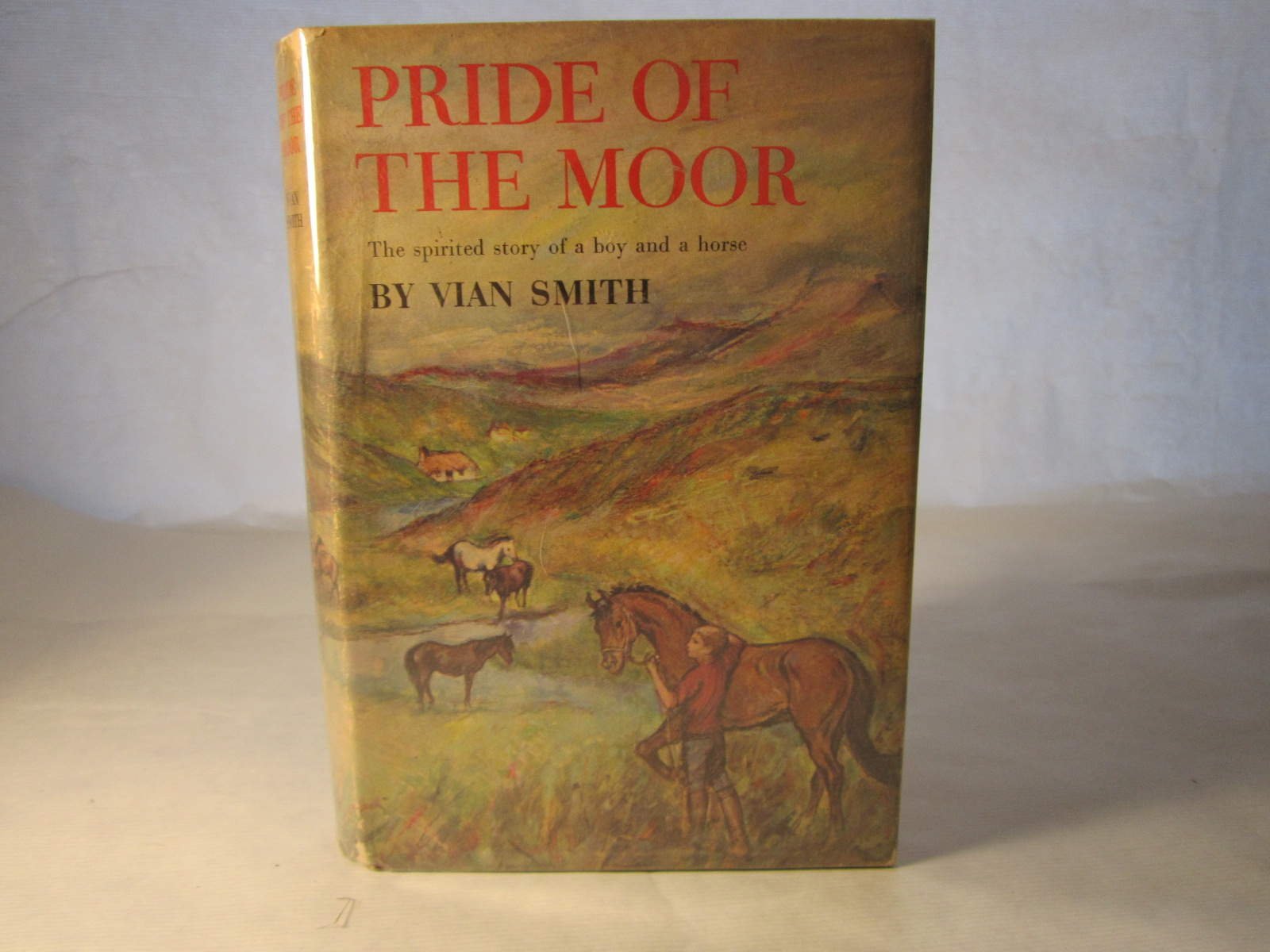
Book Review: Pride of the Moor

Title: Pride of the Moor


Author: Vian Smith

Date: 1962

Publisher: Doubleday

ISBN: none

Length: 284 pages

Quote: “There’s got to be a change of luck some time.”

Like my short story, “The Luck of Jesse Barclay,” this novel is an exploration of beliefs about “Luck.” In my story one man seems to have “all the luck,” both good and bad. In Smith’s novel one man, Howard Wonnacott, has all the bad luck.

Wonnacott has inherited a farm; he works; he earns money, but never gets ahead. Even if he were to find an abandoned champion race horse out on the moor, browsing with the moor ponies, and bring it home, it’d die.

So his little boy Mark finds such a horse. Mare, rather, and she’s pregnant. She won races and was bred, in her day; now she’s old, her humans don’t want to feed her. Howard brings her home. Almost immediately she dies. But she leaves behind a colt who grows up with Mark and will do anything for Mark. Win races? Steeplechases! The horse they call Question Mark, son of the Pride of the Moor, keeps winning, bringing home prize after prize. Howard can’t make a profit at anything, but Mark and his horse are raking it in.

Do not buy this one if you’re looking for a feel-good story. There’s a spin-off—in a later, happier novel Smith picked up the career of Pilgrim Star, who raced against Question Mark. Pride of the Moor is only for readers who can handle a sad, ironic story.

To buy it here, send $5 per book + $5 per package + $1 per online payment to the appropriate address at the very bottom of the screen. Three more books of this size should fit into one $5 package.

Sunday, December 24, 2017

Book Review: Wyoming Summer

Title: Wyoming Summer


(The copy I physically own still has its original, pretty dust jacket, but it's in poorer condition than that library discard is guaranteed to be...)

Author: Mary O'Hara (Alsop)

Date: 1963

Publisher: Doubleday

ISBN: none

Length: 286 pages

Quote: "I have named one of the yearling fillies Flicka...a beauty with the same coloring Floss had--golden coat and cream-colored mane and tail...Why should this little filly not be the heroine of the horse story I am going to write?"

The writer known as Mary O'Hara had a life more interesting, and layered in fiction, than any of her fictional characters ever had. Rich society girl (her real birth name was Mary O'Hara Alsop) turned part-time rancher, she struggled with then-unmentionable health and marriage problems in youth. Her two children were brought up by their father. In midlife she tried composing music in the classical tradition, and had some success in that fading genre--some of her real compositions are discussed in Wyoming Summer. She tried a romance about humans, a youth whose lack of social background is compared to that of a "catch colt" (a term defined in Wyoming Summer). Then she thought of writing stories, not exclusively for children but teen-centered, about some of the adventures her husband's teenaged students had with the horses they rode during summer camp at their ranch.

Those stories became a trilogy of novels. By some standards they're bad, sentimental novels. The most powerful novel in the series, My Friend Flicka, builds up to the dramatic climax of an injured feral horse (more precisely a filly) becoming too ill to stand up and climb out of a stream where it's fallen into the cold water. Little Ken McLaughlin fails to pull Flicka out of the water, instead he falls in, and he lies all night in the cold stream holding Flicka's head above water. In the morning the power of True Love (for we might as well admit that some presexual children feel True Love for animals) has allowed Ken to absorb Flicka's infection in some mystical way, so when the child comes out of the hospital Flicka is healthy as, well, a horse, and "gentle as a kitten."

Unsentimental readers apparently always suspected that something like that really happened, and, "The filly died, didn't she?" someone demanded of Mary O'Hara. She did, O'Hara admitted, but she ought to have got well. A lot of readers--maybe all of us clapped dutifully, too, to revive Tinker Bell in Peter Pan--wanted Flicka to have recovered.

At the end of My Friend Flicka the filly is strong and healthy, but in Thunderhead and Green Grass of Wyoming she's become a rather weak character, considering how intensely Ken projected love onto her in volume one and how vibrant a horse-personality she'd seemed to be. Well, the adult reader is not surprised. In the other two novels about the fictional Goose Bar Ranch, we're told that Flicka is a big strong race horse, but we hardly even see Ken riding her. In real life that's because the sick filly died, and the real Flicka was a pretty animal but not a "heroine," and the real "Goblin" was not even half Thoroughbred and his mother was a funny-looking crossbreed and he wasn't raced...

Nevertheless most of the animal stories that went into the Goose Bar Ranch trilogy were true, even if the "Goblin" colt was a draft horse and the boys at the real Goose Bar Ranch weren't O'Hara's sons, and, for that matter, the identity of O'Hara's husband as "Michael Bergwin of the Goose Bar Ranch" has been deliberately blurred. There was a filly who didn't become docile when stressed out, so rather than try more brutal means to "break" her O'Hara and "Michael Bergwin" let her run with the rest of the breeding stock. There was a colt O'Hara persuaded her husband not to sterilize, although that meant he, too, had to be kept away from the only male horse Bergwin kept. There was a Swedish farmhand who demonstrated a traditional dance. There was a bull who attacked, not O'Hara, but a visiting customer, and had to be killed. To some extent even the animals' short stories were fictionalized for the novels, because novels are fiction; but there were animals like those.

In Wyoming Summer O'Hara shares some animal stories that didn't fit into the novels, too. The McLaughlins have a normal cat. The almost-real-life Bergwins have a normal cat and a social cat...and O'Hara explains why the social cat didn't belong in the horse novels, nor did the hyperactive dog O'Hara made it a project to calm. They would have been a distraction from the horses' story.

Wyoming Summer is not a full or accurate memoir; neither is it a true work of fiction. It's an out-of-sequence narrative compiled from pieces of diaries patched together into one fictional summer season, some vaguely noted as having taken place earlier than others. Perhaps the original entries weren't dated and worked naturally in a phenological rather than chronological order; whether something was seen in 1939 or 1959 seems to matter less than whether it was June or July weather. Some people seem to be identifiable but have actually been fictionalized a bit; the idea was to preserve living people's privacy. O'Hara wrote a memoir explaining some of these things, a little later, after more people had granted permission and/or died.

So where does this semi-true story of how the fiction trilogy was written fit into the trilogy? I'll say this much. I read My Friend Flicka when I was seven years old and rated it among the top five books I'd ever read for at least another seven years, before I became too old to suspend disbelief. I read Thunderhead at nine, Green Grass of Wyoming at ten, and Wyoming Summer at sixteen. From that day forward Wyoming Summer has been my all-time favorite of O'Hara's books.

They're not exactly Sunday School books. They contain little doctrine and some New Agey ecumenical thoughts. Nevertheless O'Hara's life and thought and all her works were saturated with an appreciation of beauty, and of the Highly Sensory-Perceptive perception of beauty, that are profoundly Christian; she didn't try to suppress that appreciation or make it less specifically Christian in the novels, either. Many of her generation discarded Christianity. O'Hara was too perceptive to do that. If it could be proved that Christianity were not true, she affirmed, the existence of beauty would prove that something like Christianity is true. She wrote no altar calls into any of her books but she did write about the way the sky seems dome-shaped from a high elevation, about long arching ribbons of whitewater, about colts whose "manes and tails seem to have a separate life, every hair springing out," about birch groves with fluttering green leaves, and about the colt who really did develop infected wounds from running into barbed wire, require a lot of nursing, and recover.


She doesn't preach about these things...until she comes to a point where it seems relevant to mention a Christian book, thought, or experience, and then she says (in the novels too) that she believes in a Creator because she loves all these beautiful created things.

My Friend Flicka was the bestseller and is widely available at low prices; O'Hara's other books are moving into the collector price range. This web site will do the best it can. Currently I have to say $10 per copy, $5 per package (which could include the fiction trilogy as well as Wyoming Summer), $1 per online payment. If Amazon sellers step up to offer better prices, then we will too. As always, feel free to mix old books by living authors, who receive 10% of the total cash price for which we sell their vintage books, into the package with this one; O'Hara no longer has any use for $1.50, but by now searching for the label "A Fair Trade Book" will pull up over a hundred books by living authors and you're welcome to suggest more.

Tuesday, December 19, 2017

Tortie Tuesday: Is Heather an Alpha Pet?

(Status update: I received my $260 out of that $300 for that e-book! Yesss! Last week I also received $20 for four more paid, planned blog posts. The local lurker didn't choose a topic; Tweeps suggested "alpha pets."

These days US$260 won't go far. You still need to support this web site:

https://www.patreon.com/user?u=4923804

https://www.freelancer.com/u/PriscillaKing

https://www.guru.com/freelancers/priscilla-king

https://www.fiverr.com/priscillaking

https://www.iwriter.com/priscillaking 

https://www.seoclerk.com/user/PriscillaKing 
)
Because #TortieTuesday posts are supposed to be cute, I did actually ask my senior cat Heather whether she considers herself an Alpha Pet. She purred "yes"--but a lot of guessing takes place in "conversations" between humans and pets, even Listening Pets. Heather is indisputably a pet, and does she ever know it. I'd be surprised if she had any idea what "alpha" means.

According to some people tweeting about this topic, a lot of dog owners don't have the idea either. They inadvertently reward undisciplined or even aggressive behavior, then say "It's just an alpha dog" and either indulge the dog until it does something unforgivable, or write it off and put it up for adoption. Or they misread good advice about maintaining the animal's respect as meaning that they need to bully and abuse the animal until, pushed too far, it fights back.

Chicago Days/Hoboken Nights by [Pinkwater, Daniel]
This writer knows his malamutes...but in order to understand what he said about them, at least read his general dog book.


Superpuppy: How to Choose, Raise, and Train the Best Possible Dog for You by [Pinkwater, Jill, Pinkwater, Daniel]
A good leader doesn't beat you up, but keeps you thinking and learning. 


Harrumph. The position of this web site is that, first of all, most social animals' status hierarchies aren't set in cement. Most if not all animals that recognize leader or "alpha" and follower or "beta" roles play both roles in relation to different members of a group of their own species. The animal who actually becomes the leader is likely to have valuable assets, which may include fighting prowess and aggressiveness, or may be more a matter of seniority, cleverness, food-finding skills, communication skills, and willingness to share. Since humans have superior seniority and cleverness, any self-respecting human should be able to maintain a solid leadership position among dogs.

That said, an animal whose survival assets make it a leader among its own kind is likely to make a great pet for any human who wins its respect. Humans are born with the ability to win the respect of most animals that show any capacity for respectful social relationships at all. How to build and maintain mutually respectful social relationships, with humans or with other animals, is something we can never afford to stop learning.

A third point that's not always as obvious to humans as it should be is that leadership positions in groups of animals are not usually gained or maintained by violence. Yes, most animals play-fight. Yes, superior strength and fighting moves can be among a leader's assets. However, who wants to follow a leader who harms his followers? Animals like to follow a leader who improves their chances of surviving and reproducing, not one who lowers their chances. An occasional nip, slap, or kick may be used to stop undesirable behavior, but if you watch animal groups for very long you'll see that the leaders maintain their status by actually leading the followers (to food, or to other benefits) and sharing the rewards of following. Challenging outsiders with a threat display may be part of leadership, but most of these threat displays are bluffs. Most of the time, other animals respond to a threat display by recognizing the bluffer's claim and backing off. Animal fights make dramatic TV shows but most animals rarely if ever get into a serious fight.

Some animals really like being followers. They may be big enough, strong enough, and smart enough to be quite good "accidental" leaders, but they're glad to fall into line as soon as someone else seems willing to take the lead. They can be wonderful pets, though they seldom become the subjects of great pet stories.

Grayzel was a tough, adventurous social cat who liked to be a follower. Most of the time her sisters Mogwai and Bisquit seemed dominant, and even the kittens seemed dominant over Grayzel as they grew up. Nevertheless they respected Grayzel's claims when Grayzel did assert herself; it was just that she seldom did.

There are occasional records of humans who've lived in social relationships with animals where the animals really were the leaders. Human scientists really have experimentally interacted with wolves in the way Jean Craighead George imagined a runaway teenager doing, and found it possible to convince a big strong wolf who could easily eat a human that the human is innocent and cute enough that the wolf should treat it like a foster pup instead.

For how long would Julie really have been safe in the wolf pack after Amaroq died? Who knows?
For a good long time, Farley Mowat thought.

However, when humans live in "submissive" relationships with other animals (reportedly apes and even badgers, as well as canines), it's always in environments where the other species has a clear survival advantage over a lone human. In humans' homes, humans have the clear survival advantage; an animal who shares a human's home is acting on its follower instincts toward the human, and will probably continue to do so unless the human miseducates it. (That's why some wild or feral animals who have bonded with a human won't willingly stay in or near the human's house. They feel safer in their kind of environment.)

While some animal species are much more compatible with humans than others, there's always a continuum between human-friendly and human-hostile animals. Human-hostile individuals born in "domestic" species tend to have short unpleasant lives.
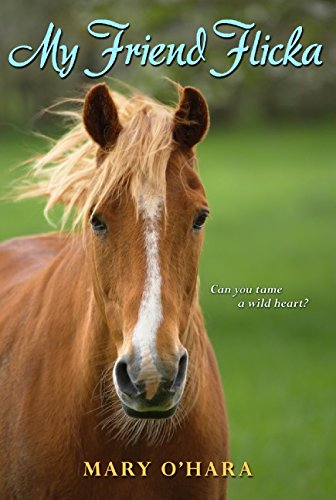
The story of how Flicka became tame was fiction. The story of how her mother ("Rocket, the loco mare, daughter of the Albino") went feral was fact-based, and not terribly uncommon. The story of how Flicka was separated from her mother's bad influence was sad, gruesome, and unfortunately true to what happens--all too often, according to Monty Roberts, who thought many feral horses could be tamed by the right approach. 
However, even Monty Roberts failed to retrain one memorable horse who wasn't even feral, but had been taught to "hug people's necks" when he was a little colt. This cute trick became more dangerous every month as the colt grew up, and made him an unintentional hazard to human life as an adult. Horses can rest their forelegs on other horses without crippling or killing them, so how can you teach a horse that that's not possible with humans? Fortunately, most horses never think of doing it! Entirely because of bad training, a friendly horse had to be euthanized.

Some animals do seem to feel that they'd make a better leader than their human is currently being. Some animals do play roughly--or, rather, the same nips or claw-grabs that feel pleasant to another dog, cat, or horse's hide damage humans' thinner skin. However, an animal who seriously bites, goes for a human's eyes or throat, or even seems to experienced observers as if it might do those things, is not making a friendly challenge for leadership; it's making a panicky defensive display that needs to be subdued and extinguished, not rewarded, and not punished with physical abuse. An animal making a challenge for leadership is more likely to pull hard on the leash, ignore commands it's learned to follow, continue whining or barking or jumping up and down for attention--and that kind of behavior also needs to be subdued and extinguished, but the challenge is doing it while simultaneously showing the animal that the human is a good leader.


For young human children, a hint of submissive behavior can be effective with a basically gentle animal who just knows that the child is not fit for a leadership position. A mare's or cow's corrective behavior, if a child does something the mother animal doesn't want done around her foal or calf, is just too dangerous; small children should just be kept away from large young animals. Most domestic animals' protective parent displays are done with care not to do real harm to the child, and sometimes a dog, cat, chicken, or even goat can defend its young from a human toddler more effectively than a human adult can.

My first pet was an alpha female hen--one of the "Game" breed originally developed for commercial fighting, but prized by Green farmers for their beauty, loyal friendship if they do become tame, and willingness to protect their young. I admired the hen but was small enough, at age five, to be intimidated by her protective-mother threat display. I was offering fresh greens to her babies through a screen of chicken wire, and that hen looked as if she were going to come right through that screen and attack me. I backed down fast. The hen recognized that I'd backed down, and instantly became friendlier. I could sense that she was nonverbally saying, "Come back and be friends." So I did, and although that hen was too old to become a cuddly pet, she and I got along well for the rest of her life. She'd let me reach in under her and remove other hens' eggs from the nest box, or tell me when to wait while she added her own egg to the rest. 

I was wary of dogs up to about age ten, not because I was afraid they'd bite me, but because I didn't like to have dogs jump up in my face and bark, either. My brother, as a small child, liked dogs enough to be willing to defuse this basic territorial display by lying down and making a submissive puppy display, as Julie does in the novel. It worked for him but I wasn't willing to do it. I didn't really like dogs--although there were a few memorable exceptions--until I grew big enough that dogs greeted me as an adult human; I have vivid memories of being able to enjoy the company of more dogs, and specifically of bigger dogs, during each of my primary school years.

When adult humans let a dog dominate their relationship, something is wrong, and the dog knows it. That kind of relationship is dangerous for humans and dogs. Unfortunately, if the only way the human can think of to "show the dog who's boss" is to beat the dog, choke it, or starve it, the dynamic goes from dog-dominant-over-incompetent-human-friend to dog-planning-revolt-against-abusive-human-enemy--and even small dogs can do quite a lot of damage if they ever become convinced that they have to defeat a human enemy.

On the other hand most social animals do learn to share leadership. While Irene and Ivy were alive, though all three definitely fit the more accurate stereotype of "calico divas" who lap up all the attention they can get, Heather, Irene, and Ivy were a perpetually fascinating example of how three social cats optimized and pooled their individual assets. 

Here long, lean Heather shows her profile, while stocky Irene faces the camera. Though only half sisters, they were closer to each other than most cats are to full siblings. Despite their different body shapes, each cat's healthy weight was about ten pounds...and Irene tended to grow fat in winter.

P051214_1848.jpg
Cute as her face was with those "eyebrows," what Ivy was doing in this picture was nonverbally telling one of Heather's kittens, "I won't let that camera hurt you." Ivy was technically Heather's aunt on their mother's side and half-sister on their father's side, but lost her mother to glyphosate poisoning early in life, and was reared as an adoptive sister. Ivy was the only one of her mother's four kittens who lived to maturity. She seemed to choose not to have kittens after having one litter that didn't survive, and she never was quite as big and strong as Heather; her healthy weight was only seven or eight pounds.

Heather was the hunter, Irene was the homemaker, and Ivy was the communicator. Each of the three really wanted to be petted first and longest, and would act miffed, but not seriously annoyed, if another one was petted first. They played, hunted, reared kittens, and showed new cats the rules, as a team. They were gentle cats (Heather still is), and seemed completely bewildered when an antisocial cat ignored tactful territorial displays and tried to claim their territory by force. It wasn't even that they were intimidated off their own turf; it was more like, "Say whaaat? We don't fight other cats, here! What kind of cat can't understand that?!" as the cat family surrounded and comforted the more vulnerable individuals the hateful cat attacked. Irene sometimes seemed to enjoy being a follower to her more active sisters, but Heather's failure (or refusal) to fight in defense of her family clearly showed that, for some social cats, being a leader has nothing to do with fighting.

Jeffrey Masson has made more of a study, both of the nuances of his own dog pack and of literature about dogs wild and tame, in a full-length book that cites many other great animal stories:

I wrote more about this book at https://priscillaking.blogspot.com/2016/10/book-review-dogs-never-lie-about-love.html .

Wild canines often show a clear division of leadership between an alpha male and an alpha female, with the female deferring to the male in some situations and the male deferring to the female in other situations, and both (usually a mated pair) taking the lead over the rest of the pack. Wild horses, too, often have an alpha male and an alpha female; which one actually does more "herding" and "dominating" seems to vary from herd to herd. Social cats, I've been bemused to see, can have similar patterns. If a male does spend time among the females, although female cats usually let males dominate at mealtimes (unless they're nursing mothers or half starved), the females set the rules about the care of kittens and the general rules of etiquette for the pride...and my rescued feral cat Mackerel, who grew up to be a big strong tomcat, definitely enforced the rules on behalf of his tiny but tough little sister Polly. 

The more closely observers watch wild animals' social behavior, the more likely they seem to be to report patterns of shared leadership. One animal may generally set the rules, but another one may lead a particular group activity. Sometimes a large aggressive animal (like Mac) seems to enforce rules set by a smaller animal; Mac often seemed to me like a knight pledged to serve his ladies (both Polly and me); some other alpha male animals seem like loyal sons of perhaps aging mothers. So it may not always be a bad thing to let an animal lead in situations where the animal is qualified to do so. 

Before my home had become a Cat Sanctuary, our Founding Queen Black Magic had taught me that it can be useful for both humans and animals to identify things an alpha animal can do more efficiently than a human can, and ask the animal nicely to do those things. Magic had adopted some kittens who had ear mites. Their prescription medication was supposed to be kept chilled and dropped into the kittens' ears twice a day. (I'm glad to report that our current vet prescribes a formula that's effective at room temperature.) The still-nursing kittens made it clear that if I got any of that stuff into their ears, it would be after a real fight, and the kittens would hate me forever. Magic observed the situation and looked at me in a way that suggested that she might be able to help. I asked her. Nicely. And she walked over and tilted her head, took the treatment, then looked at the kittens in a way that clearly told them, "Now you do that." And they lined up in their usual order (they were the ones I could only ever think of as One, Two, and Three, because they did everything in order) and took their treatment. Magic was as loyal and protective a friend as any I've ever had; her awareness that being a cat made it possible for her to do things humans can't do never affected her friendship.

If you have any potential at all for leadership in a group of animals, a recognizable alpha animal can be your best friend and ally. (I didn't consider myself qualified to be a cat owner before Magic was literally thrust into my hands. Magic trained me to be the "feral cat whisperer" I've since become.) Once the animal others of that species are willing to follow becomes willing to follow you, the whole group will follow you. This is the easy way to herd horses and cattle who aren't your pets or special friends: get the "Bossy" cow or lead horse(s) to respond to calls, and most of the time the others will follow them; get the alpha animal to walk into an unfamiliar place, and most of the time the others will go in too. It's definitely a key to herding or taming feral cats, and it helps with dogs too. 

You do have to stay in touch with an active, inquisitive alpha animal who wants to lead the others to do new things that the group will enjoy, think of ways to distract them if those things aren't what humans want, and in some cases be willing to give up an alpha animal who wants to do something that can't be allowed. Mogwai, my "Glenn Cunningcat" who survived a crippling illness and became a big strong athletic Queen Cat, rather quickly became bored with only learning words and doing cute poses. I loved Mogwai dearly, but I had to send her away, and condemn her to what she probably found a boring life once the novelty wore off, because as a farm cat her idea for adding more fun and excitement to the cats' lives was following a dog pack and raiding chicken pens.

A few years ago this web site mentioned a local Dog Sanctuary, owned by big strong alpha-type humans who felt up for a challenge, fostering a retired greyhound. Greyhounds are a very special sort of dog, bred to be so gentle, quiet, even clean (by dog standards) as to invite comparison with horses. Though racing greyhounds aren't allowed to form social bonds except by racing, once allowed to retire they become pets easily enough. The problem is satisfying their urge to run. Any self-respecting greyhound can run 99% of humans off their feet, and although they don't mind expanding their horizons to include ambling along beside a human runner or jogger, eventually they become bored. After observing the retired greyhound, I'd recommend that humans definitely consider adopting a greyhound--but first fence in a large yard where you can safely turn him loose and let him show everyone how fast he can still run. Greyhounds are proud of this ability, their main asset, and don't want to let it waste away in retirement.

But as these examples show, the potential problem with alpha pets is that they'll break rules and encourage other animals to break rules--not that they'll hurt anybody. Violent aggression is not a sign of leadership. It's a sign of panic and/or illness, typical of animals who've been bullied or abused. 

I don't know to what extent this is true for all feral cats, but among the ones I've observed, there's been a solid correlation: Big strong feral cats who can take care of themselves, like Mac and Graybelle, may back away if they don't want to get close to humans or slap if they're grabbed or cornered, but they don't bite; if they get close enough to touch at all, they're friendly. Tiny scared kittens who, even if they've learned to recognize my scent on their mother, weren't expecting any friend of their mother would be as big and ugly as thaaat, hiss and bite the first time or two they get close enough. After this initial panic reaction subsides, they're likely to be the clingiest cats...in my experience the "diluted red" gene shows up on cats who are smaller and thinner than their siblings, and these cats aaalways seem to hiss at first, then decide they want to be cuddly pets. "Diluted red" cats are a minority, but since Pounce and Bisquit shared and passed on this trait I've seen more than my fair share of this type. My experience has been that, although they can seem hostile on first contact, all pale orange (biscuit-colored, peach-colored, cream-colored) cats want to be loved. Whiny and sneaky behavior seems to go with this type, but subsides when they find someone to bond with. They're not really satisfied to be just one of a cat family; they'll take that position if it comes with food, but they really want to be somebody's very favorite cat in all the world. So they can be jealous pets, clingy pets, not the type I most enjoy living with but the type of cats some people find easiest to like because they're less aloof than others. They're definitely not alpha cats.

How to handle a large animal who's panicky enough to become dangerous? Well, I don't. Space and money were the main reasons why I've lived with more cats than dogs or horses, and lack of experience is the main reason why I can only refer readers to other sources of information about dogs and horses, but the fact is that I've never had to handle an animal whose fear reactions were at all dangerous to humans. Nevertheless, when they're sick and scared enough cats, cat-sized wild animals like raccoons and possums, and even birds can certainly make themselves unpleasant to humans.

As regular readers remember...after Ivy and Irene died, Heather became very lonely. Rather than try to reclaim Violet or Sisawat from their Purrmanent Homes, I looked for a junior social cat who could become a friend for Heather.

Someone recommended to me her "friendly" cat. What was I thinking, that I didn't ask...I remember exactly what I was thinking. I was thinking that this person was willing to part with this cat because she was very ill, and she didn't need to wear herself out talking all day. But I had seen the cat. I might have guessed, but I didn't guess in time, that Suzie-cat's pattern of "friendliness" with humans happened to be identical with Heather's. Both were big, long, lean Queen Cats whose body shape alone warned other cats, "Don't mess with me," and who reinforced their social status by bonding with the human (that's a social asset for social cats!). Both had in fact discouraged junior cats in their social cat families from becoming cuddly pets, although, when Suzie wasn't watching, the junior cats in her family obviously liked being petted. Heather and Suzie did not have complementary talents and, although they didn't fight, neither did they bond. Being kept indoors while a wren was nesting in the hedge was too much, Suzie said; she didn't stay with me long. I've been asked what became of her. I'm not sure, but I have seen a cat who looked like her, who responded to the name "Suzie," and who "was rescued" by neighbors about the time Suzie left the Cat Sanctuary. I believe Suzie has found a lap of her own to curl up on, and if she's in danger, it's from overfeeding.

So Suzie didn't work out as a companion for Heather. Neither did Schatzi, who had attached herself to a place and intended to stay there. (Far from wanting to rebuild her existing family bond with Queen Suzie and her just-weaned kittens, Schatzi wanted to become the Queen at her old home. I'm delighted to see that she was able to do that.) Schatzi's kitten Boots was a real sweetheart; Heather and I were fond of her and were very unhappy when she died after last summer's glyphosate incident. 

Then I found Samantha, not in a shelter, but in urgent danger of being put into one as summer ended and she became less tiny and cute. I talked to her humans and saw that Samantha definitely recognized several words; she knew her name, she knew things her humans had undoubtedly said to her many times, and she even seemed to sense a difference between going to live with me (by her own choice) and being sold (without her consent). As regular readers remembers, I ended up paying more than I would normally have paid for a secondhand but still good-quality backpack, and persuading Samantha to ride out to my house in the backpack.

Samantha is a calico kitten and, in my opinion, still cute. (No, I've not received funding to post her picture here; it'll be here one day.) But, social? She has been socialized to some extent--unfortunately, her first social experiences involved normal cats and middle school boys. 

"Pathetic little thing" and "poor baby" are the phrases Samantha's behavior brings to mind, and "You're getting paid to be a kitten not a possum!" Instead of promenading and purring and cuddling like the kittens who've grown up at the Cat Sanctuary, Samantha sneaks and snarls and cowers like a possum. It gets old and, since even well-intentioned cats have to learn to be careful of fragile human skin, it can get painful. Samantha has become one of those cats, often described as "unpredictable," who will snuggle up beside you but then panic and slap or nip defensively if you make any moves she find unpredictable--like reaching for a glass of water. 

Because cats do play-fight with friends and sometimes enjoy playing with prey, careless observers imagine that this "unpredictable" behavior is further evidence of a mean, cruel, evil nature that cats or at least some cats are just born with. They are so wrong. It's part of a pattern that is predictable, and can sometimes be corrected by steady consistent discipline. It's not part of the pattern of alpha cats' behavior at all--though even Queen Cats may sink to it if they think they're in danger. For Samantha the slapping, scratching, biting, then cowering, behavior is part of a pattern of learned fear. She's known people who were likely to think of "funny" things to do with a glass of water and a friendly kitten. She didn't put that gash on the side of my hand in order to hurt me; she put it there in order to warn me that she doesn't think that kind of thing is funny, especially in the kind of weather when cats are allowed to sit beside me in the warm room.

If a junior cat had done that when Mackerel was around, Mac's style of leadership would have been to knock it across the yard. (Mac was gentle to a fault, most of the time--he let one junior cat sneak up and nip him so many times it built up an infected wound--but he absolutely barred any disrespect toward Polly or me.) Heather's style is different. Hearing me say, "Samantha! That hurt! If you're going to act like that you can just go out in the cold," Heather stood up and let me pick up both cats and take them outside. 

(Samantha is probably going to be another cat of some magnitude; as a spring kitten she's already about as big as Ivy ever became, or as the grandmother cat at another local Cat Sanctuary is. She and Heather are quite an armful, although at least they've gone from leaping away from any close contact to cuddling and grooming each other.)

A few hours later, I heard a lonely-cat call. "Mew? Mew? Come out, please?" I went out. Heather was the one who'd been mewing. What she was calling me to do was not to let her come back into the warm room, but to admire a mouse she'd just killed--a fat little thing that had probably been planning to rear a family in the earth-floored cellar, warm and limp, with not a mark on its coat. 

"Thank you, Heather. As you very well know, I don't like mice. Maybe Samantha wants it."

"Oh yes I do! Let me have that mouse!" Samantha bounded out of her little den on the porch. 

"You can't touch this! I only share mice with friends!" Heather growled, and, grabbing the mouse, she bounded down into the cellar. To eat it herself? She wasn't gone long enough. She was making her point by offering that mouse, first to me, and then to the resident possum. She bounded back onto the porch to claim a treat, and luckily I had some pumpkin seeds on hand to offer both Heather and Samantha.

I suspect Heather has made the point clear.

I suspect it'll take months or years for Samantha to become the sort of pet who can be certified safe around other children...but I wouldn't "cat-egorically" rule out that possibility. 

Samantha is a scaredy-cat, not a Queen Cat. She's a frightened follower who needs a calm, steady leader. I think Heather and I may be up to the challenge of being the leaders she needs.

Gentle Readers, I hope those of you who like dogs and horses, and who may be able to foster or adopt one this winter, are willing to learn to be the leaders your friends need.