*****
UPDATE: On revisiting this post I've become convinced that it uses the word "measles" in an outdated and misleading way. If you read the whole long post, I do talk about the related but different virus infections that people my age and older used to call "measles." In my town in 2019 we did indeed have an outbreak of what used to be called three-day measles. People who had had the recently used measles vaccine showed the rash because what doctors now call measles is what we used to call the three-week kind, so, although people were blaming anti-vaxxers for the three-days measles in 2019, in reality the vaccinated were about as likely to show the rash as the unvaccinated were. One person quoted as denouncing anti-vaxxers in this post later passed on the correction to me: "If it had been measles it would have been world news. It wasn't measles. It was something else."
If the virus are different enough that a vaccine against one has no effect on the others, it's misleading to use "measles" to mean any of a group of similar virus infections, even though that's the way we understood the word fifty years ago. It's as bad as using "COVID" to mean any strain of any coronavirus when you have a load of vaccine for Original COVID to distribute to people who have already had that virus, whether they recognized it or not,, and are now at risk for Delta COVID, against which the vax for Original COVID was useless. So I officially declare this post misleading. I will leave it up with this warning for a few more weeks. Then it will disappear.
*****
Interviews with Grandma Bonnie Peters, the Grandmother of This Web Site who is some readers' primary reason for reading it, are scarcer than they used to be. However, she called me early Monday morning to predict, accurately, that Monday was going to be a lovely day for me to walk out to Kingsport and chat face to face.
The trouble with doing things "spontaneously" or even as the weather dictates is that people miss out. About a dozen people in Gate City had expressed an interest in visiting GBP the next time I did. Of these at least half were, or have since become, non-drivers so I didn't even bother calling them unless one of the others had room in a car. Of the ones who are still driving, all were busy on Tuesday, though some used up many pre-paid phone minutes trying to reschedule the visit.
The good news is that GBP is still quite an active grandmother--not mine, but of four young people who are hoping to spend part of the summer at her house. She declined to go for a walk with me because she had walked too far with the children's group at the church picnic on Saturday, in new shoes, and raised a blister. She walks more slowly and stiffly than she did before taking a fall last year, but still likes to walk a mile or two before breakfast. She has come to terms with having become too old to work at Wal-Mart just as Wal-Mart opened the store near her house, and is now angling to volunteer as a teaching assistant at a growing church school.
We talked, as usual, of many things. GBP admitted with some embarrassment that she might not have handed this computer down to me if she'd known how easy it is to enlarge the view of any web site or Word document. She admitted, without embarrassment, having voted for President Trump, or at least against Hillary Rodham Clinton. I admitted, without embarrassment, having thoroughly enjoyed Melania Trump's revival of the red plaid suit or dress, this winter. Mostly we talked about glyphosate and measles and the new wave of censorship that's threatening to destroy the Internet, or at least the public, social, recreational uses of the Internet.
We agreed that being an aunt or a grandmother is a semi-chronic condition. As your own nieces/nephews/grandchildren grow up you find yourself having auntly or grandmotherly feelings about other children.
Well, one child to whom I'm partial, who's not
my nephew, is having a rough time with measles.
These "childhood diseases" spread fast. Last Tuesday I saw, at a good healthy non-speaking distance, three people who looked as if they'd been cast in a movie about a poor, pitiful, hardworking single mother who couldn't afford the measles vaccine, and she'd just been called away from her minimum-wage job, at the risk of the said job, to take her measles-stricken children home from school, and their story was about to reach its tragic end because this young woman was so obviously unfit to drive...I don't know. I hope they lived in town and were able to walk home before anyone fainted. Measles is usually a "measly" infection, but for those who don't take it seriously and try to walk while infected, sudden collapses are possible.
On Thursday I saw a young woman who has the gift, partly because she's a tall blue-eyed blonde, of seeming cool when she's actually steaming. A friend asked a leading question about her child, and the steam spouted in all directions! He was sick in bed after an insensitive nurse, and/or over-solicitous doctor, had been "just jabbing needles in and out of his arms," giving him a mad mix of symptom-suppressing medications, and she already knew she reacted badly to one of those medications, etc., etc.
Ouch. I'm fond of this child too. Then when I spoke to one of my generation in that family, the grandmother, she was steaming too. "The
crazies," she hissed and spat, "who don't have the vaccine and
spread the measles..." I expressed good wishes for her health and rushed on to catch a ride with someone who had spilled a box of fresh, fragrant dryer sheets on the floor of the car. When I sneezed four or five times I blamed the dryer sheets, but four hours later I knew it wasn't
only the heavy chemical scent I'd inhaled for ten minutes.
On Friday I wasn't too sniffly to notice an unfamiliar smell in the room. Yikes, it seemed to be coming from
me! It didn't wash off! It wasn't a body odor, or strep or listeria, but somehow it brought back memories of being ill. And I felt very tired and sleepy, although I'd slept well all night. And grumpy. And bleary-eyed--I couldn't read anything in the normal display settings on any of the computers I use! I could hardly read a
book! The morning air felt chilly--I guessed, as I went out on the porch, the temperature would be around 35 or 40 degrees Fahrenheit, going by how chilly I felt. Wrong. The temperature was 50 degrees Fahrenheit. But a cold raindrop on my face made my nerves jangle...my own personal temperature was a degree or a half-degree above where it ought to be. I'm well and widely known for not being afraid to get wet when I'm not fighting an infection, but when I
am fighting an infection I do have enough sense to come in out of the rain. No market, no cafe, no Internet for me. I texted to someone who'd complained of feeling sick that I hoped she'd had, and I now had, mere Norwalk Flu (the "24-hour" tummybug), but what I was feeling and smelling was definitely not Norwalk Flu.
It was measles.
Even when I was in grade nine, in the Carter administration, measles, mumps, rubella, chickenpox, and scarlet fever were "childhood diseases." (Some people were trying to popularize the words "rubeola" and "rubella" to refer to two different virus infections, both of which people I knew called measles.) Vaccines were sometimes offered, but not trusted or recommended for most children. The best "prevention" for having these diseases as an adult, for whom they might become serious, was to have them as a child and enjoy the quarantine as a vacation from school.
"Measles was no vacation for me," GBP recalls. "I had all
three kinds, the three-day kind, the three-week kind, and a kind that lasted me about ten days." (These three separate viruses all produced eye inflammation and flushed, sunburnt-looking skin, so they were all called measles in the 1930s and 1940s when GBP was suffering from them. Nicknames like "German measles" and "black measles" were also used by her generation, although I've heard them linked to the current names for this type of virus in different ways.) "They all settled in my eyes, and I was miserable. I cried, which of course made it worse. My eyes swelled shut. Mama rocked me, Daddy rocked me, Sis rocked me, and nothing helped. I had a horrible time."
My brother and I had inherited relatively good resistance to all of the "childhood diseases," and thoroughly enjoyed our quarantines, but even I remember measles as a massive bore, because of the risk of permanent damage from aggravating bleary, inflamed eyes. To achieve immunity to measles as a possibly-serious disease for adults (or for fetuses), the child has to be constantly supervised and entertained. If siblings or cousins can recuperate together they have the best chance of not minding being unable to read, sew, etc., for several days. (Television was still not universal when we had measles--we didn't have to miss any favorite TV shows--and video games, computers, and cell phones were the stuff of science fiction. Kids
could talk on the telephone when they had measles, for as long as they were willing to sit on a chair below the big black box phone on the wall.) At one point I remember promising not to read or write if allowed to spend some time in my own room, then getting scolded for aggravating my eyes...Mother hadn't
said I couldn't work a 750-piece jigsaw puzzle, why
not, no
faaair, but I had to admit my eyes felt blearier.
Measles vaccinations became popular, I suspect, because more and more parents are afraid of losing their jobs if they take the time to nurse children through measles. And although GBP, at 84, still uses "lower strength" eyeglasses than some of her grandchildren wear, "three-week" measles
was typically the most unpleasant of the childhood diseases...
Oh, not that scarlet fever was the picnic for everyone that it literally was for my brother and me, we reminisced. Scarlet fever is basically a cold triggered by a tougher than average strain of streptococcus bacteria. We all live with streppy-bugs all the time--one strain is even among the "friendly" bacteria, along with acidophilus and lactobacillus, deliberately added to milk to make yogurt--and most of us don't notice them, but a few strains of these bacteria can, in vulnerable people, produce "strep throat" or "scarlet fever" or, in the worst case, "rheumatic fever," which became less rare in times and places when vaccines for scarlet fever were being tested.
Did I even
have scarlet fever? Well, one morning when Mother woke us for school and asked how we felt, my brother said, "Not like going to school," as usual, and for some reason--maybe he'd unbuttoned or pulled off his pajama shirt--Mother said, "You're not going to school." Then she came in, turned up the lights, felt my forehead, yanked up my shirt, and said, "You have a fever too, even though it's low, and a little bit of the 'scarlet' rash around the waist, and you're not going to school either." Back then your mother (or whoever) called the doctor to describe your symptoms, and the doctor said "Yes, that's going around at school; keep them home for this many days." I was an undiagnosed celiac who didn't know what normal health felt like, and at no time during our quarantine with scarlet fever did I feel in any way worse than I usually did. It was about this time of year. The basic immune system reaction tends to produce a lazy grumpy mood; at a lower level, when the infection has lost the battle, the immune system reaction produces a "high" mood--when I do notice the scratchy feeling and foul breath known as "strep throat" I feel exhilarated. So my brother and I did indeed pack picnic lunches and pick morels in the woods, and play tennis, and bake cookies, and generally enjoy that vacation. What convinced us that we had a real disease that was worth missing things for was when my natural sister came down with it. She did not get the gene for resistance. She was miserable for six weeks and is still living with permanent nerve damage.
I used to wonder whether our parents should have tried to get antibiotics for my sister, until Heather Whitestone, the deaf dancer, won the Miss America pageant. She had scarlet fever at about the same time, within a few hundred miles of the same place, my sister had it; presumably the same germs. She had the antibiotics. Six of one, half a dozen of the other, she proved. Heather Whitestone kept her graceful step and charming, cheerful personality, but lost
all sense of hearing. My sister became depressive, but she can still hear most men's and some women's and children's voices.
Any fever can damage anyone's brain and nerves at any age. Both of us ranted a bit about the unhelpfulness of using "autism" as a synonym for "neurological damage of any kind at all, if a child seems shy and awkward about it," but obviously any prolonged fever
can bring out, or aggravate, autistic tendencies. Or paralysis. Or blindness or deafness, or bizarre partial losses of sight and hearing--people can lose the ability to hear only certain sounds. Children almost never die from measles, or from reactions to vaccine (although some children's reactions to Merck's MMR vaccine
have been fatal) or from reactions to antibiotics; but before the vaccine was invented, many people
did use to blame loss of vision on measles. Here, too, an honest consideration of the evidence can look like six of one, half a dozen of the other.
(For a blast from the past, consider the measles sequence in
Five Little Peppers and How They Grew.)
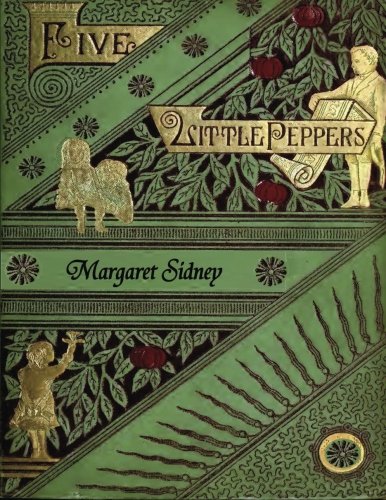

So, people who don't want to go through all this may reasonably choose to have the measles-mumps-rubella vaccine instead. As noted, this web site recommends a risk-benefit analysis...
![Take the Risk: Learning to Identify, Choose, and Live with Acceptable Risk by [Carson M.D., Ben]](https://images-na.ssl-images-amazon.com/images/I/51ByVzxU8NL.jpg)

Dr. Carson says the benefits of the MMR vaccine outweigh the risks for most people. I wonder to what extent a defective sense of priorities affects that, but I'm biased, because I had the vaccine...after having the diseases. In order to attend Andrews University in Michigan in 1985, before a blood test for immunity was developed, I had the MMR vaccine. 1985 turned out to be a very bad year to make that choice. Along with about a hundred other young people I didn't even know, I became one of the "Michigan Group" of people who showed symptoms of mononucleosis for more than one year, some up to five years. Despite the superficial things some wanted to claim we had in common (more U.S. than Canadian citizens, more girls than boys, etc.), what we
all had in common was a contaminated batch of vaccine. MMR is a live-virus vaccine, which always involves some risk of contamination. Far more than a hundred people have enjoyed the benefit of immunity to measles...but recently, rather than mere mononucleosis, a few people have claimed another batch of vaccine caused fatal encephalitis.
The position of this web site continued to be that the risks and benefits of MMR vaccination should be discussed with an individual's doctor. Some strains of an infection are deadlier than others. Some batches of vaccines (or antibiotics for that matter) are more beneficial than others. Some individuals' resistance and weakness is different from others'. For your own personal benefit, don't rely on either corporate advertising, which is total garbage,
or other people's experience, which may be honest but still be irrelevant. A good, competent, personal doctor has access to the facts that are most relevant to you, which neither corporations nor organizations nor random people on the Internet have. Of course, a careless doctor can be worse than none...
"One of my grandchildren had a double dose of the vaccine as an infant on the Navy base," GBP says, "and I saw that that child had a fever, and now that child has permanent neurological damage." (Actually she named the child and discussed per symptoms in detail, but this web site does not disclose identifying information about private individuals.)
Nevertheless...GBP had all three measles-like infections as a child. As an adult, she enjoyed full immunity and "could not" get measles.
I had measles, mumps, rubella,
and the vaccine before my twenty-first birthday. As an adult, I enjoy full immunity and "cannot" get measles.
Right? Well...right
and wrong!
It's probably no longer possible for known strains of the measles virus to linger in my body long enough to give me the flushed face that used to be diagnostic for everything that used to be called "measles." In that sense I can't get measles now. I could be one of the people who rock infected babies or read aloud to infected children, and probably feel no worse than I did after seeing those three measly faces in a crowd.
On the other hand, like any other living or non-living thing, I can get measles in the sense that the airborne virus can alight on me. The way I was feeling on Friday and Saturday (and I did a lot of extra sleeping on Sunday, too, and although this computer has the highest resolution of any I use, it's bothering my eyes more than it usually does today)...reminds me that the virus can still activate my immune reactions. And if it can activate my immune reactions, it could infect a vulnerable child. I was right to stay home all weekend
as a matter of quarantine. Measles can no longer do me much harm, but it could still ride around on me and do harm to someone else.
This morning, I saw Measles Boy's mother again, driving, turning a car into the morning sun. Through the window her face looked bright red, her eyes squinty as if the morning sun hurt them more than it normally could. Later in the day I sneaked a peek...she'd painted on a lovely California-style tan, but she still looked tired and took extra-long breaks. She, too, "can't get measles" in the sense of really coming down with it, but, from being around Measles Boy, she
has got measles in the sense that the virus is giving her "cold-type symptoms" and could affect anyone near her who lacks immunity to the virus.
Which is why those anti-Jewish, anti-Jehovah's-Witnesses campaigns ("Everyone MUST have the vaccine or be banned from schools, parks, libraries, from entire neighborhoods!") are a load of corporate greedhead rubbish, and should be recognized as self-discrediting.
I bristled all weekend at these people's being smeared as "crazies," although I'm not one of them. I made my personal commitment to Christianity in a whole-Bible church, now defunct, that
did preach that Christians should avoid all contact with the blood of any other lifeform, because in some mystical way "the blood is the life" and that still has some spiritual meaning for us. I grew up to have some doubts. I've seen that transfusions, transplants, and vaccines have saved lives, and I've had no mystical vision telling me that that was a bad thing. I incline to think my adoptive brother's ability to see through a transplanted eye, or my husband's extra days of life after receiving a transfusion, were sort of
wonderful things. But transfusions, transplants, and vaccines do involve enough risk that reasonable people feel that "the science" vindicates their belief that God wants them to avoid all contact with blood, eating a
kosher or
halal or even vegetarian diet, as part of their spiritual identity.
When I was a teenager in the Lord's Covenant Church, people used to cite a book called
The Poisoned Needle, which deserves to be out of print now. I still have pages copied from that book among my souvenirs. They're historically valuable. They show how, long ago, some vaccines were epic fails--continuing up to the 1970s, when one batch of flu vaccine was shown to cause one kind of cancer. They're not relevant to this post, because none of those failed vaccines is used today.
The Poisoned Needle still ranted about injections being given for polio...
mercy. In my lifetime nobody had injections for polio! Dr. Salk had moved us into a whole new world of polio-freedom! People who are still appealing to science about "vaccines" generally are on quicksand. Their spiritual beliefs, and their personal risk factors, are relevant data. A "scientific" consideration that fails to distinguish among the different vaccines that have been used since Pasteur's time is not scientific, and would be better not used at all.
Although avoiding vaccine might allow unvaccinated people to carry more disease germs further and longer than fully immunized people do, it does not make them the only ones who might transmit those germs to immune-compromised people. Their constitutional right to practice their religious beliefs should be respected. Immune-compromised people need to face the reality that anything, a passing bird or butterfly, can transmit an airborne disease germ to them, and they have to take responsibility for quarantining themselves.
The position of this web site remains that vaccines carry enough risks, despite their benefit, that only in cases of mortal danger (if it were a
polio epidemic...yes, in spite of my family's survivor gene...no polio survivor has disputed the claim that, even if they went on to give birth to children without anesthetics or walk on broken legs, polio was The Worst Pain They Ever Had, while the majority of children exposed to polio simply didn't survive) should children be vaccinated without their informed consent. I'm not saying I would never try to persuade a five-year-old to have a vaccine that was working for me, but I am saying I wouldn't
force the vaccine on a child.
Both measles and mumps can be painful for children, or for their parents to watch, if children choose the safest way to immunize themselves for life. Say no to the measles vaccine, say yes (maybe) to weeks when the child must not read, or watch TV, or play video games, or...I think most people who live in cities, where about all there is to do at home does involve having to focus their eyes, are going to want the vaccine. If you want it, and/or your doctor says you personally will need it,
get it now.
But take the vaccine (if you do) for yourself, not "for the immune-compromised to benefit from the herd immunity effect." Herd-schmerd! Most people who are immune-compromised to the extent that they can't have the MMR vaccine are immune-compromised
generally and their best chance of living through the year is to quarantine themselves. If other people who are immune to measles are exposed to measles, what happens is that we become immune carriers of measles, as we are of so many things that are hazards only to the immune-compromised.
Breathes there a soul so dead as not to feel empathy for children whose immunity is compromised by chemotherapy for leukemia? I hope not. But, whatever the pharmaceutical companies may want us to think, your or my being fully immune to measles
does not protect those children in any way. If little Luke the Leukemia Survivor prefers the risks of socializing with other kids to the risk of growing up in a "bubble" of permanent quarantine, that may be his choice, and if he were my son I'd let him make it; I would not blame those other children for the reality that, if measles didn't kill him, something else, maybe rhinovirus or strep or common blue mold, for which there is no vaccine, would do it.
What has really happened, when a critical mass of people achieved full "herd immunity," such that nobody on an entire continent had certain diseases, has been well documented in the history of the last millennium. North America became a paradise, rich in resources, sparsely populated, and free from smallpox and syphilis and several other things. And then Europeans "discovered" or rediscovered North America, started immigrating in masses, brought those diseases back to this continent...and the descendants of the people who had enjoyed "herd immunity" suffered from "herd lack-of-immunity," because resistance had been bred out of the population, and they died like flies in the first frost. That's why our continent now has a majority of European or crossbreed rather than Native American ethnic types.
This year's "epidemic of measles" is no more likely to kill children, or even blind them, than any of the previous "epidemic of measles" that all baby-boomers and seniors survived, unharmed. That is not to suggest that it'll be pleasant, or that all parents can afford to let children acquire immunity by having the disease. Even so, the position of this web site is that censorship is more harmful than measles. Merck's corporate effort to impose censorship of "anti-vaccine" posts on Facebook is vile, and should be opposed in every way. You should even consider writing an actual letter to P.O. Box 322 about how we're going to continue circulating information in a post-Internet world, if the Internet does not vigorously reject all efforts toward censorship.
Don't ever delude yourself that having the MMR vaccine, or any other vaccine against any airborne disease, will protect other people. If your doctor insists that
you need it, take it for yourself. Do that now.


