Showing posts with label civil rights. Show all posts

Tuesday, May 5, 2026

Book Review: Young King

Title: Young King

Author: Lerone Martin

Date: May 5, 2026

Publisher: Harper Collins

ISBN: 978-0-06-334094-7

Quote: "This book...asks us to strip [the] Reverend Dr. King of the iconic status that adorns him today and allow him to simply be an adolescent."

Fair Disclosure: This review is based on an advance review copy of the manuscript I received in February 2026. Though advance review copies are sent to reviewers in good faith, occasionally reviewers mention things in advance review copies that are changed when the final edition is published for everyone else to read. 

Before there was a Reverend Dr. Martin Luther King, there was a boy, smaller than his younger brother and sometimes bullied by same, originally called Michael, then M.L., sometimes Tweed for the suits he liked to wear in the years when high school boys were required to wear suits, sometimes Will Shoot for the way he played basketball. This book is about that boy. It is a real, thoroughly researched, "Childhood of Famous Americans" story. 

Because Martin Luther King himself never told us much about his childhood, this book is based on other people's memories and written records. It's not as intimate a record, nor in some ways as accurate, as memoirs like Helen Keller's Story of My Life or even memory-based novels, where other people's identities are blurred in order to let the author/character speak frankly, like Little Town on the Prairie. It probably contains all that is known about the early life of Martin Luther King.

Lerone Martin raises the question that the future Dr. King showed both introvert and extrovert behavior; he did seem to have a strong internal conscience. He was nonviolent as a little boy and as a man, despite a conscious plan to develop the ability to fight like a man of his time in his teen years; he was also one of those "outgoing" children who want to "make friends" of every other child they meet. I've suspected that this mix occurs when a healthy introvert brain sustains some minor damage. The baby later to be known as Martin Luther King didn't start breathing easily; his mother had been ill and there was some question whether he was going to survive. Just a data point, for whatever it may turn out to be worth.

"ML," as Martin calls his subject, was not the best student, either. To some extent this may have been due to competitiveness. Children and some parents admired a student who was able to skip through school and graduate earlier than others. Little ML King wanted to start kindergarten before he was old enough, then wanted to skip through high school and start college before he was even sixteen years old. He was bright enough to get into those classes with older students but not bright enough to do very well in them; he was mostly a C stream student who could sometimes pour on the effort to achieve a B. What he learned as an undergraduate at Morehouse was mostly public speaking; he entered Morehouse unsure about whether he wanted to be a preacher, and emerged as one of the greatest preachers of all time. But he didn't write much and his sermons borrowed heavily from other people's words, notably those of the poet Langston Hughes. 

And was he really a Christian? Warning: the reviewer is about to say something "liberal" here. In the history of Christianity there have always been people who naturally love "religious language" and contemplative prayer and thoughts about Heaven. They can look, especially when young, alarmingly similar to people with certain kinds of mental illness, though they are not mentally ill and can have effective ministries. Then there are people who may believe Heaven is real and even wish we could spend hours in contemplative prayer, but whose idea of being Christians is essentially practical, firmly rooted in this earthly life. There have always been tendencies for people with these different types of approaches to our religion to question whether both types really are Christian. Some people think the other kind of believers aren't doing Christianity right--they are "trying to be holier than God," or "all about people rather than God." Some people think the other kind may be doing Christianity better than they are, and wish they had the ability to express their faith in the other way. I think both kinds are at least capable of serving Christ. He did, after all, call both John and Peter.

As a young ministerial student Martin Luther King was a good match for Morehouse. He had quarrelled with his father, asserting that many things in the Bible were "fairy tales." Morehouse's teachers met young men who felt that way where they were and challenged them to discover the spiritual truth behind the "fairy tales." They took the "Of course Jonah wasn't really swallowed by a whale, so what can we learn from the allegorical story about him?" approach, and, as a university for young Black men, turned out preachers prepared to take their place in the Black American tradition. White churches could afford to have pensive, contemplative spiritual sons of St John in the pulpit. Black churches demanded active, practical sons of St Peter, which happened to be what King had aspired to be--to the extent that he'd dreamed of being a doctor or lawyer before he considered being a minister. 

Martin shows evidence that ML really was the idealist people wanted to believe he was after he'd become a martyr. Not in all ways, of course. On jobs that involved physical work he was voted the laziest student laborer in the crew. In his social life he was the typical selfish young man, coolheadedly pursuing the right combination of charm, beauty, talent, and altruism necessary to an ideal pastor's wife (or unpaid minister) in a series of three girls he seriously considered marrying, joking with friends about seeking treatment from young women of lower social background as "doctors" who cured all a fellow's problems so long as he made sure to wear his "shoes," and planning to go on exploiting and betraying women similarly after marriage. But he really did hate race prejudice and segregation with such a passion that, given opportunities to put it behind him and live in a place where segregation was not the law, he preferred to live in a place where segregation was the law and work to change that law. He really did know that working for change might shorten his life expectancy. He really did seem to think that ending segregation was a cause worth being a martyr for. 

So, although this book is not a hagiography, although it mentions ML's moments of rebellion and indiscretion and even quotes teachers who gave him low grades, it will still leave activists who read it feeling humbled. None of us will ever, at least not for several more generations, escape comparison with Dr. King. Few if any of us will ever accomplish as much as he did. Knowing that he had his moments of insecurity, frustration, and being-a-bad-example may at least reduce any resentment the comparisons make us feel. Nothing will ever change his status as the "King" of all activists.

Sunday, January 15, 2023

Bad Poetry: Martyrs

Is this one doggerel or topical poetry? You decide. It connects ideas discussed at a couple of other web sites. 

Rommy Cortez-Driks asked for poems about wheels: 


The "wheel" comes in from the context of Chinese literature. See a previous poem protesting the same abuses this one protests: 


My poem came out without the word "wheel" in it, but it does refer to the philosophical image, common in Asian and American thought, of actions and their consequences as a sort of cycle. "What goes around, comes around." Put a huge injustice like the torture of political prisoners on the wheel, give it a spin--that wheel can spin very fast, and what comes back around can be very heavy indeed.

Falun Gong is described as not so much a religion as a system of exercise, like Qi Gong, and meditation developed by a thinker from the generation before ours, a Mr. Li, who was apparently critical of Mao Tsetung. There is no need for the Chinese government to be sensitive about that. Is not the entire world critical of Mao? Would it not be better to acknowledge that the man had faults as great as his gifts, that after their successful revolution his party went down in history as making some disastrous mistakes in government? There are things in every nation's history that foreigners just don't understand, and there are things that are so obvious, even to foreigners, that people might as well acknowledge that massive mistakes were made...Anyway, people say they were drawn to Falun Gong as a way of exercise and breathing that cured chronic pain such as backaches, but they were persecuted for it and clung to it with religious fervor. Why do people feel religious fervor about raising their arms and counting their breaths? Why but because enemies persecute people for doing that?

You can read more at https://fofg.org/what-is-falun-gong/ about why people feel that doing easy exercises and thinking about philosophical ideas (truthfulness, tolerance, and compassion) is a sort of religious opposition to satanic persecution. Warning: some of these people's firsthand stories are real-life horror stories.

If you click around that site you'll find links you may use to enter a poetry contest. You can probably write a poem better than this one if you try. There is no entry fee for sending them a poem. The best poems will be posted on the site. If you keep clicking you'll find some good poems, although the subject matter makes them heavy reading.

There spring from the blood of a martyr
A hundred souls more for each loss,
So never oppose a religion--
Far better to let them be boss!

No harm is done by meditation.
Oppression can bring down a state.
It made mighty Russia a beggar,
Reduced Rome to city from state.

A ruler who fears meditation
That old people do for their health
Destroys the good name of his nation
And keeps all its merchants from wealth.

To the world he announces his weakness.
He might as well break his own knees.
Believers who die in their meekness
Inspire all people, and please.

When "truthfulness, tolerance, compassion"
Are what the rebellious uphold,
Then Heaven has favored the nation
With better than diamonds and gold.

That government's best that least governs.
Against a religion to fight
Proclaims that a government's evil,
Despised in every one's sight.

A leader who would be beloved,
Like Kublai Khan or Britain's Queen,
Bows to the God his people worship,
While tolerance toward others is seen.

And if China would be respected,
None would persecute Falun Gong.
The tortures and murders reported
Teach children to say "China's wrong."

For reading and breathing and chanting
Do government no harm at all,
But torturing believers in prison
Makes the world seek that government's fall.

May there spring from the blood of the martyrs
A hundred souls for every death,
Make the Falun Gong tough as the old Tartars,
Disperse the corrupt with a breath.

Monday, January 9, 2023

Book Review: Go Set a Watchman

Title: Go Set a Watchman

Author: Harper Lee

Publisher: Harper Collins

Date: 2015

ISBN: 978-0-06-240985-0

Length: 278 pages

Quote: “It could be, might be, still was, a horrible mistake. Her mind refused to register what her eyes and ears told it.”

That’s Jean Louise Finch, physically sickened by the cognitive dissonance as her mind wraps itself around the sight of her father seeming to support local political activities she expects him to despise as heartily as she does. Jean Louise was the little “Scout” who watched her father—not “Daddy,” but “Atticus” to his children—defend a Black man from false accusations of crime. Now he’s sitting there nodding his head as outsiders try to stir up race hate in their relatively peaceful town.

And that’s not the only surprise on this poor little girl’s plate in this her twenty-sixth summer. (It's the early 1950s; single women of twenty-six are supposed to think of themselves as little girls, but Jean Louise Finch has managed to keep on thinking like one.) Her aunt, who she thought would naturally agree that her boyfriend was one of her “own kind,” insists that her boyfriend is socially beneath her. And her boyfriend is nodding along with the haters, too. And the housekeeper who cared for Jean Louise and her brother, when they were little, is now a Black woman who sees Jean Louise as a White woman, nothing more. Jean Louise thinks she’s become a New Yorker but, to her surprise, she cherishes her memories of her sleepy little home town and hates the thought of its being torn up by race hate. Oh, it’s just one surprise after another, and all of them are awfully upsetting. Jean Louise spends so much time feeling sick, in this book, that a question arises to what extent it may also be describing the effects of pesticides sprayed on local cotton fields.

By now I suspect most readers have read this book and know the back-story. The book Harper Lee published only at the end of a long life, when she knew she wouldn't have to deal with audience reactions for long, was the one she wrote first. A publisher suggested she write a prequel about what Jean Louise and her brother admired about their father. That was To Kill s Mockingbird,

What more is there to say? A disagreement, of course. You have very likely read that this book exposes Atticus as "a vicious racist." It would be easy to say that that's an out-and-out lie, but I think it's more of an illumination of how confused the young have become about history, how little they know about vicious racists. Vicious racists are moving into peaceful little Maycomb, Alabama, but though Jean Louise's father and boyfriend are blandly failing to oppose them--which is bad enough--they, themselves, are not vicious racists. This book is a study of what led up to the violence of the 1960s. It is principled and nuanced. Anyone who thinks Atticus is a vicious racist is failing to perceive either the principles or the nuances, and was not redy to have read this book.

None of the characters in this book is vicious, although they are about to encounter social pressure to become so. None is a hater. All of them are based on real people, believably presented. This is a true (as true as it could decently be) memoir of a place and time that would later be oversimplified into a commercial media stereotype. 

The pressure to hate has started with the most vulnerable. The housekeeper does not hate Jean Louise; she still has a job, probably better than most of her friends' jobs; she's still a decent woman who knows a child can't really be blamed for the racist system. But she's been being sensitized to the evils of the racist system, probably encouraged to feel that she deserved a "better" job all these years, and she's been encouraged to blame and resent White women. She remembers having been kind to Jean Louise because little "Scout" was a child. She has put that kindness and behind her. Jean Louise can still want to trust the housekeeper as a friend, but the housekeeper has been influenced to cut off that possibility and, with it, any possibility of a nonviolent, reconciliatory resolution to her legitimate resentments.

This summer, the pressure is reaching the White working class. Atticus and other educated ladies and gentlemen are still bland, objective, and principled. More aggrieved people will be ready to blame Black people for their being left behind the wave of economic growth, their being despised by families like the Finches, some incident of bullying or harassment. The haters aren't having much effect on Atticus, actually; he's too old and too smart. All they need is his tolerance while they prepare his social inferiors to start burning crosses the next time a Black teenager says a rude word, or uses the one door or water fountain or toilet available, or wants to register to vote. People whose real grievance is with attitudes like Jean Louise's aunt's will be ready to transfer their emotions to an easier target.

Atticus, who probably has few days left to live, is impartial. No, he couldn't sit and watch a man be punished for a crime the man didn't commit. No, he doesn't believe the Black population in Maycomb, as a group, is ready for equal treatment with the White population, either.

He has a point. In objective fact, the gap has narrowed, but the fact is that people are not created social equals. Societies that cling to class distinctions rear people who are not prepared to be social equals. In towns like Maycomb in the 1950s, very likely no Black person had been trained for any job but labor, though they might have been by nature capable of being physicists. The infrastructure for "progress" even in the crassest consumerist sense had not been built. Black students might have been capable of going to top universities, but they had hardly been prepared to go to high school. Even the "wonder drugs" that ended the plagues in the early twentieth century were less available to poorer neighborhoods; Black people might have actually been more likely to have tuberculosis. It was convenient to blame that infamous gap in I.Q. test scores rather than recognizing it as yet another part of the problem that Maycomb was not prepared to accept upward social mobility among Black people.

The problem could perhaps have been addressed without hate, blame, or bitterness--but unfortunately, in many places, those reaching out to aggrieve Black victims of bigotry were "revolutionaries" who wanted to increase hate, blame, and bitterness. 

There are documented cases of Southern White people and communities of good will taking various initiatives to help improve the social status and quality of life for Black youth they recognized as deserving. Joycelyn Elders' education was sponsored by White neighbors, for one. There are documented cases of people who worked together to organize integrated schools like Berea College, or all-Black towns where race prejudice would not hold anyone back from any positions like Zora Neale Hurston's home town. 

Those calmer stories weren't told because "revolutionaries" kept screaming out the story that fit their agenda: Southern White people were all "vicious racists," Black people were always and only and ever victims, and Northern interference was necessary to save Alabama from itself. Northern interference meant a bigger, more intrusive federal government, which suited the "revolutionary" agenda. 

Atticus would probably have been more alert than Jean Louise to the "revolutionary" point of view, though in the 1950s he might have felt no need to explain it to her, or might not have felt that he understood it well enough. He considers the haters' point of view too. Both are alien to him. He is developing the detachment that comes with extreme old age, the sense that the social problems around him are for the young to solve and not for him. There's not a vicious bone in Atticus's body, but Atticus is passive. His passivity enables viciousness. He won't live to realize how much viciousness he is likely to have enabled. 

In the 1950s it could truly be said that "Black people weren't ready" for many things they had been told they ought to want, for which they had not in fact prepared. They were in fact not ready./Technological change was sweeping (or running) everyone off their feet, at best. Maycomb's Black population hadn't even set their feet in the way of it. The children may have wanted Cadillacs; the parents might have been happier with wagons. There could have been more honest discussion of just what the Black people in Maycomb did want, why they wanted it instead of having it, what to do about it.

Probably every earnest twelfth grade student reading Go Set a Watchman would agree, for example, that Black people deserve equal access to education at big-name universities. Well, so would I; they do. And in fact, if not in 1950, certainly by 1990 the university professors and deans and presidents agreed with that statement. 

So what happened in the 1990s? Black students were admitted to big-name universities, and some of them stayed through one midterm exam, and several left before that. I remember watching it happen at Berea, the school that had started out with integration as its raison d'etre. Berea also advertised the ideal of a good liberal arts education for youth of all ethnic types. More Black students was actually a goal, but in practice, too many of those Black students were intelligent enough for the quality of education Berea offers but unprepared to do the work it entailed. The "research" schools, like Berea, are set up to accommodate students with high school records including two or three years of math, science, foreign languages, at least a year of history, preferably some "classics" in the sense of Greek or Latin, a computer course or two, some fine arts, and at least one year of independent study projects. High school students who majored in being cool and popular, with one year of math, one year of science, no languages, lots of study hall and "fun" classes like Current Events Seminar or Family Life Education, arrive at college not even knowing how to study and their first few quizzes warn them that they are not in a place where they are likely to succeed. That the attrition of Black students is not caused by racism is shown by the fact that a minority of Black freshmen do stay in school and graduate, but the percentage of Black students decreases from more than proportionate in September to less than proportionate by November.

Anger, yelling, picketing, holding deans hostage, has been tried and has not fixed this. Crybullying and calling everything and everybody "racist" won't work either. What's not been tried nearly enough, but has helped when it was tried, has been systematically teaching bright but lazy sixteen-to-eighteen-year-olds, of all ethnic types, how to study. Giving them a clue: "You are no longer in high school. You are expected to do some reading on your own before and after class, as well as reviewing your notes on class discussions and lectures. You will be expected to do independent projects. You are responsible for being a good citizen of the college and its town." 

That, plus a few good basic courses, bridges the gap between some intelligent Black students--and other types of students coming out of second-rate high schools--and their academic superiors at colleges and universities. Screaming "racist" does not help Black students succeed at university. Good community colleges do.

Atticus's objective, detached approach is the one that actually works, if it can be separated from the detachment and fatalism Atticus shows in Go Set a Watchman. The fact is that all students are not equally prepared to succeed at universities. When people detach from emotionality enough to observe the fact, but retain enough attachment to care about helping a student or group of students succeed, the problem is easily solved. The students' fundamental relationship to their school needs to shift from "School is a place where I am forced to spend time, although I hate the school and either already knew, or don't believe, everything teachers ever tell me" to "This school is a place where I want to spend time and can use the information teachers offer." This change is unlikely to be made overnight but it is what levels the field when students from "Hogwash High" join students from "Pride Prep" and "State Trophy High" and "St. Oldmoney's." 

Screaming "They're vicious racists!" is aggravating the problem if the students from the second-rate high school view themselves as a "race" minority. Analyzing, "This is the style, these are the standards they expect from students" gives disadvantaged students an actual chance to succeed.

Are the standards "racist" because they come from one culture rather than others? Possibly. The question is how well the cultural standards serve the culture. Cultural norms like coming to meetings on time, drinking alcohol at parties or not at all, maintaining a healthy interpersonal distance, respecting women, and composting rather than wearing out soil, are useful ones for other cultures to adopt, even if other cultural norms from the same part of the world seem to be less valuable

In Go Set a Watchman Atticus Finch's integrity in being himself, an imperfect but decent member of a dying generation, upsets his daughter; so does her own abiding love for her home town despite other people there not sharing the new ideas she's embraced with youthful zeal. After her own little fit of screaming "racist, racist" in her own way, Jean Louise is prepared to think, though the novel doesn't show her thinking, about what--besides "Just vote for our party!"--might actually help address the patterns of racism and elitism in Maycomb. Harper Lee never did take her protagonist that far, and now she never will. She left it to readers to consider how we can intelligently address the issues of racism, sexism, and elitism.

Thursday, August 16, 2018

Peevish Post: The Comment Google Plus Ate

This is not a full-length post either, although it's possible that Google + thought it was long enough to be one, especially now that it's been typed out at full length with the links cited. I read this round of haiku:

https://stardreamingwithsherrybluesky.blogspot.com/2018/08/is-this-land-my-land-is-this-land-your.html

I don't know this blogger well enough to know whether person is genuinely distressed, or is just another Democrat flogging that poor old dead meme about Republicans being racists. But in any case, a few quick data points showing that Progress Has Been Made:

1. Even if Trump fell out with a former "Apprentice," names and photos of his appointees show representation of ethnic minorities, women, and the younger generation at high levels of his administration. Could be more; could be fewer.

https://en.wikipedia.org/wiki/Cabinet_of_Donald_Trump

Trump was born into a White man's world. He is not, never was, and will probably never learn to talk like a gentleman. He has learned that White men no longer own the world merely by being White or male. Even if he still uses the ugly, nasty slang that...I do know some baby-boomers who I would believe have never said all the naughty words Trump ever tweeted, but they're all either women or clergymen. (In the 1980s even women and clergymen said things like "grab'em by the short hairs" or "hit'em where it hurts," which are basically sanitized equivalents of Trump's famous line, so let's move on please.)

I'm not claiming any accurate inside information about whether Trump has seriously converted to Christianity or become less of the selfish jerk he's widely believed to be. I am citing evidence that, if his selfishness ever was more racist or sexist than merely selfish, he's at least learned that that doesn't work any more.

2. That "White Nationalist" rally that triggered so much angst last week? Twenty-some White Nationalists were nonviolently stared down by hundreds, maybe "thousands," of anti-racists counter-demonstrators.

http://reason.com/blog/2018/08/12/punch-a-nazi-in-the-face-antifa-says-wor

(I saw a cartoon version this morning on Twitter; didn't retweet, and won't link, because the caricature of the "damp, sad" White Nationalists was inaccurate in an unhelpful way, but its primary point was that the media were ignoring the evidence of progress and screaming about the mere existence of a remarkably unsuccessful fringe group.)

3. From a discussion I was able to find only because I'd saved my Disqus record as a Word document: the Atlanta correspondent's observation was similar to mine.

"
AtlantaDude

I'm sure it had some effect, but the type of people who get up in arms about "NY values" were not previously supporting Trump, but mostly Cruz or Carson.

I say this as someone living in the Deep South.
"

4. And then, from Twitter this morning...Residents of thoroughly segregated neighborhoods choose to open an integrated charter school:

https://www.al.com/news/index.ssf/2018/08/charter_school_opens_doors_as.html

Progress is well and truly being made, Gentle Readers.

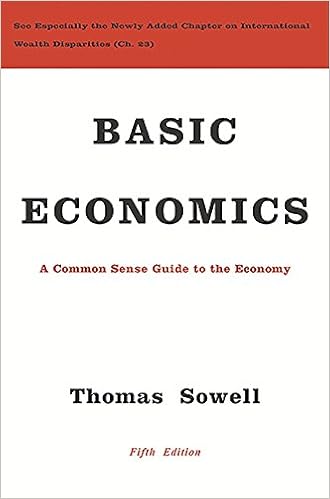
Amazon link? Have all of you read the books that explain why the grandfather of all "fiscally conservative, socially liberal" thought was an Independent, as are those of us who've learned from him? For those who don't know, the thing about Thomas Sowell was that, besides being fiscally conservative, socially liberal, and Black, he had the gift of explaining economics to people who don't have the math gene. You may actually enjoy reading:

Friday, August 25, 2017

Clues for the Clueless: Symbols versus Substance

(Status update: $18.50 in the Friday Market plus $6.25 from PL means, among other things, a free blog post here. You still need to support this web site. You can do this by clicking on the appropriate buttons at

https://www.patreon.com/user?u=4923804

Or by hiring me to write something, or do some other sort of work, through your choice of

https://www.guru.com/freelancers/priscilla-king

https://www.fiverr.com/priscillaking

https://www.freelancer.com/u/PriscillaKing

Or by buying any product discussed/marketed in any post at this web site, either with a postal money order to Boxholder, P.O. Box 322, or a Paypal payment to the address you get by writing to salolianigodagewi ; addresses are at the very bottom of this screen.)

Problem: Most young Black men are decent, law-abiding people. Enough young Black men are violent criminals that people, including older Black men, who see a young Black man approaching on a city street instantly brace for trouble. Because of this stereotype people, including police, sometimes feel a need to counterattack when young Black men are not actually attacking anybody. Even when the young Black men in these scenarios are not injured or killed, they're more likely to be found guilty of more serious crimes, on less evidence, than any other demographic group in America. Even if you're not personally acquainted with any young Black men, you know this is just not right. (I'm not only acquainted with some, I'm related to a few, so my sense of the wrongness of this situation is urgent.)

Possible Solutions: (1) Hire and train more young Black men as police officers, to improve the ability of the police force to recognize young Black men as individuals.

(2) Pay more attention to young Black men who are behaving well, and not exclusively as athletes or musicians, to improve the ability of the general public to see beyond stereotypes. Build consciousness of the possibility that a young Black man approaching on a city street might be a teacher, doctor, mechanic, storekeeper, chef...

(3) Write more movies and TV shows with a richer assortment of young Black men in all kinds of roles that somebody out there might want a child to see as models--from truck drivers to astrophysicists.

(4) If you are a young (or mature but well preserved) Black man, just hang in there and keep being decent and teaching people to see you, at least, as a good neighbor, a friend, or even a rescuing hero. If you are a Black man with a talent for teaching elementary school or operating a library, bookstore, wholesome video game arcade or cafe or some other sort of place where youth hang out, do the work that will be piled on you; it is needed. If you are not a Black man, find a colleague who is one, who is doing a good job, and promote what he is doing.

(5) Pick fights, insult other people's ancestors, and attack symbols of their family history. Make sure people see you as a bully with a chip on your shoulder.

One of these thoughts is not like the others! One of these thoughts just doesn't belong! 

As a Daughter of the Confederacy, I've traced most of my ancestors back through the 1850s--all of my ancestors were in the United States by 1850. Of the ones who were male and physically qualified, all but two were Confederates. Each one joined the Confederate Army at a different stage in life, for different reasons. Slavery was not the issue in the war--money was--and only one of those Confederate ancestors ever owned slaves.

Living in Virginia, I see lots of people whose first approach to studying our history, which those who don't learn are doomed to repeat, involves identifying with their Confederate ancestors. Even descendants of Union troops who get interested in the actual battles tend to be interested in the Confederate Army's strategy--what were the "great" but not victorious leaders thinking? how could winning this battle have convinced Confederate troops that they could win the war? would it have been possible for them to have won this other battle? and so on. Descendants of Confederates can't always name their Confederate ancestors or remember any family legends about them, but they tend to assume that, if they'd existed in 1862, they would have been where some of their DNA really was.

The wave-Confederate-flags, salute-a-print-of-General-Lee's-portrait stage is one I remember feeling embarrassed by when I was going through it at ages nine and ten. It's a childish reaction; even to a child it surely can't look or feel much like an adult's understanding of history, philosophy, or morality.

I was blessed not to have to spend a lot of time with that fantasy of "Whoever my great-grandfathers were, whatever they did, must have been heroic." One of my great-grandfathers had been an especially young Confederate; living people had known him. And one of the first things I learned about him was that he did not keep waving that Confederate battle flag. He later served in the U.S. Army, as did his eldest son, my grandfather; they were buried under U.S. flags. If he'd been a sloganeer he probably would have said that it was his duty as a Virginian to defend Virginia, from Pennsylvania when necessary, along with Pennsylvania when possible.

I am interested in history, as this web site shows. I like to see younger people taking an interest in history, identifying with their ancestors. When I see Confederate flag motifs on cars, shirts, houses, etc., in Virginia I think, "So that's the level they're on," and hope some of them will join me on a more advanced level of historical studies. I'd like to hear more discussion of the complexities of the Civil War, the impossibility of identifying either side of that war with the philosophical issues of our own time. But if all you know about your great-great-great-grandfather is that he was a Confederate, and you don't know in which of the Confederate troops he fought or what his given name was, then you probably, understandably, feel a need to identify with General Lee.

This has nothing whatsoever to do with your feelings about Black people, if any. Some people have both Confederate and Black ancestors, and their family stories tend to be more interesting than "After his wife became ill, Great-Grandfather took advantage of the nurse," although sometimes they turn up that kind of stories too. What are they supposed to do? Blame, hate, disown their Confederate ancestors to honor the Black ones? Or vice versa? Please. Why can't those of us who are adults with a little education encourage young people to try to understand their ancestors--all of their ancestors--in a balanced historical perspective?

Then there was, a few weeks ago, a discussion on The Blaze about whether Northerners should fly or buy Confederate flags (apparently somebody wanted to sell the things at a county fair in Wisconsin). My initial comment was that collectors of Nazi memorabilia, in the English-speaking countries, tend to be proud descendants of the victorious troops who've preserved the spoils of war; as a Southerner I don't feel welcomed by Yankees flying Confederate flags. Not terrorized, but not welcomed. Well, someone said, what about those descendants of Confederates who had moved north in the past 150 years. Well, wouldn't a better demonstration of loyalty to their Confederate ancestors involve moving back to their ancestors' farm? It can be hard to take these things seriously, or believe that people do, but evidently a few people do.

Like it or not, gripers, this is America. When the English moved in, one of the sneakier strategies the more hateful English immigrants used, to gain an advantage against the then-majority ethnic groups, was to encourage old feuds and quarrels between groups. And what I learned about my own ancestors, well before the Civil War, was that they didn't buy into that. The ones who came from Europe recognized that Virginia and North Carolina were places that naturally inspired gratitude to God, as shown by burying the feuds and quarrels they had left behind in Europe. The Irish ones married the English ones, the German ones married the French ones, and the ones who reached the Tennessee border married Cherokees. They appreciated the value of interpersonal distance in limiting interpersonal conflicts, but apart from periods of military "duty" none of them had any serious quarrels or blood feuds with anybody; they were Christians. That's an example I wish more people's ancestors had set, and more people were willing to live by.

Here's a good exercise for those currently waving Confederate flags--or claiming to feel terrorized by the sight of them. Read the collected, preserved, reprinted letters of General Lee. Pay particular attention to his support for General--no, President--Grant.


Yes, he wrote a lot of letters. No, you're not done with this exercise yet. Now read the letters of Martin Luther King.


Now try to imagine these two misguided, yet still definitely Christian, gentlemen living at the same time. After reading their letters, do you doubt that they would have shaken hands? I don't.

So what's causing this blindness to history and common sense, this effort on the part of Afro-American gripers to stir up hostility among Euro-American Southerners who were at least trying to rethink their stereotypes of young Black men? I do have a guess. When people grow weary in the service of any good cause, prudent leaders look for a quick-and-easy victory to encourage them.

Thus feminists, confronted with the excessive simplicity of the Equal Rights Amendment and the impossibility of rallying Americans to support drafting girls into the military, became hypersensitive in the 1980s to nice innocent words. They liked to pick on the words that ended in "-man," including "human" and "woman," although some feminists claimed that those were formed by a different process and still usable. To me the suffix "-man," pronounced "m'n," sounds different enough from the word "man" that calling Barbara Lee a Congressman makes as good sense as calling me (in the 1980s) a Takoman (one whose Washington neighborhood of choice was Takoma Park), or calling any fourteen-year-old a freshman. But after some ritual grumbling about the clunkiness of "Congressperson" and the beloved resonance of "America, America, God shed His grace on thee, / And crown thy good with brotherhood...", most Americans conceded that it was sensible and courteous to stop insulting people with the presupposition that they were male. Most of us, even if we still say "Congressman," do now write general sentences like "Each student should bring her/his..." or "All students should bring their...", and old documents containing "Each student should bring his..." now seem musty and misogynist.

Thus, likewise, the whining about renaming things that were named after Native Americans. Meh. I think many of these names are intended and used to honor actual people, not to defame them; I think, even when the names are used in a silly way, the whining sounds even sillier; to the very limited extent that I'm a football fan (I'll sit through a game if the man in my life wants to), I can think of good reasons to rename the Washington Redskins, as in ending the "They mean their faces are red because they've not won the Super Bowl since 1989?" routine, but I know of no way renaming the'Skins would help anybody in Pine Ridge survive another Dakota winter. However, most owners of sports teams and other commercial ventures want the names they use to appeal to customers, so in most cases renaming has been a quick-and-easy victory for any Native Americans (not that I personally know any) who've seen it as a victory.

Well...it just happens that the birthdays of Martin Luther King, Robert E. Lee, and also General Thomas "Stonewall" Jackson, all fall within the same week: January 15, 19, and 21 respectively. Before King's time, some people had been observing a "Lee/Jackson Day" in mid-January. So around 1970 when people wanted to add "Martin Luther King Memorial Day" to the calendar, nationwide, some people objected to this observance being scheduled on the same day as Lee/Jackson Day.

Meh. Those of us who don't work in government offices tend generally to feel that people should celebrate holidays that are meaningful, at times that are meaningful, to them, and that if government offices were able to find people willing to work on Christmas Day (and take a corresponding holiday to celebrate, e.g., Moon Walk Day on July 20), that would be a good thing. Lee/Jackson Day was a nuisance to many independent workers, and Martin Luther King Day is one now.

Anyway, the image of protesters waving images of Dr. King and protesters waving images of General Lee, on opposite sides, entered American consciousness around 1970. Over the last fifty years a lot of people have been willing--I was willing--to stop displaying Confederate flag motifs if they allegedly distracted or alienated people, at least when we were in the North, as a point of courtesy. So apparently some activists think that demanding that everybody stop displaying Confederate flag motifs is one of those easy-victory thingies.

They're wrong about the reactions of Southerners. I have never, not even in grade four when I didn't know better ways to show pride in my state and my ancestors, felt so inclined to wave a Confederate flag as I do this week. I don't believe it's right to give bullies what they want; I perceive the screeching about Confederate flags and images as crybullying, and I don't want to seem in any way to support it. That's the reaction of a Southerner who's been getting by just fine without a Confederate flag, ever since the Carter Administration. Do you even want to know what Southerners for whom a Confederate flag is their only link with their great-grandfathers are saying?

They're also wrong about the usefulness of this strategy in achieving its intended purpose. Remember, #BlackLivesMatter activists, the goal is (or should be) to build awareness of the good qualities of Black men. Crybullying and picking useless quarrels are not good qualities.

They're wrong even about the use of this strategy in rallying support from adults who identify as Black. I didn't plan to write about this topic today, but when I checked this web site's feed, this was what I saw:

The quarrel-seekers are quarrelling with Andrew Young:

http://www.theblaze.com/news/2017/08/24/civil-rights-leaders-opinion-on-confederate-statues-wont-sit-well-with-the-left/

They are quarrelling, in a very ugly way, with NBA athlete-turned-analyst Charles Barkley...Ambassador Young's argument was based on politics, but Barkley, oh dear, dared to mention that young Black men could break down that hateful old stereotype by brawling less among themselves. He will now become a target, like Bill Cosby. Pray for him.

http://www.theblaze.com/news/2017/08/25/charles-barkley-is-branded-a-black-white-supremacist-after-comments-on-crime-confederate-statues/

They are quarrelling with Stacey Dash, apparently about a lot of other things I've not been following, other ways they've been trying to define Blackness as Left-ness:

http://www.theblaze.com/news/2017/08/25/stacey-dash-blasts-maxine-waters-as-a-corrupt-media-buffoon-the-backlash-is-intense/

Sigh. In the name of Martin Luther King, in the name of Robert E. Lee, in the name of the ancestors of the members of this web site...can we all, please, stop picking stupid quarrels about symbols, and move on with the substance, already?

There is still a real need for more awareness of the existence of good, kind, decent, honest, peaceable Black young men.
Friday, September 2, 2016

Book Review: Uprooting Racism

Title: Uprooting Racism


Author:  Paul Kivel

Date: 1995

Publisher: New Society

ISBN: 0-86571-338-3

Length: 243 pages

Quote: “This is a book about racism for [W]hite people…what it means to those of us who are [W]hite, and how we can make a difference…White racism is the uneven and unfair distribution of power, privilege, land and material goods favoring [W]hite people.”

On page one, Kivel says it all about this book.

A few years ago I read Uprooting Racism, thoroughly. I worked through it, writing out essays to Kivel’s questions. It was a good thought exercise. It would be interesting for a study group.

In the end it’s unsatisfactory, because Kivel’s underlying assumption, throughout, is that a “fair” distribution of power, privilege, land, and material goods would be a mathematically “equal” distribution carried out by an all-powerful central government, rather than a system that offers opportunities to earn those things for individuals, impartially. He thinks fairness can be measured by whether people who fit into different demographic categories have equal amounts of this and of that, rather than whether people who have agreed to do or provide X in exchange for Y have received Y upon the provision of X. He seems not to have noticed, while he was writing this book, that the kinds of government he thought he wanted were crumbling around the world. (He's still alive and, according to some grumpy reviewers, he still hasn't noticed.)

Basically, then, when Kivel asks readers to think about the images of people different from ourselves we observed early in life, the extent to which we may still be reacting to those images when we meet brand-new individual acquaintances who may have little in common with the images, he’s helpful; when he claims that the only improvement possible is to move to the Extreme Political Left and join those squawking about absurdities like “restitution for slavery” long after the last slave died, he’s not helpful.

Are there ways to overcome racism and build social relationships with people different from us, without joining the Extreme Left? There certainly are. This web site has frequently highlighted ways to do that within the allegedly racist Tea Party movement. Color in no way determines whether people are able to notice that they’re Taxed Enough Already. Tea Parties have emerged from all parts of America (including the moderate Left) and built alliances across all the barriers of subculture, even, to some extent, politics. (A majority of Tea Parties were and remain Republicans. Do not be deceived. Policies that worked for FDR, JFK, and even Bill Clinton are acceptable to some Tea Parties.) 

If you are White, or partly White, or part of a minority group that tends to be seen as White during color wars, and you think a bigger federal government, a global government, and/or more regulations and taxes, are not what your country needs…first of all, even before you read this book, I recommend reading something recently written by Thomas Sowell, something by Larry Elder, and something by Ben Carson. Those are three completely different writers. None of them says the same things the others say; none of them says the same things any White, female, or young writer says, so far as I know; if you’ve read several of their books you’ll find that the bits you remember definitely come from one of their books and not another, too. When you’re an older Black male conservative writer you sort of have to make each book unique and fit it into a precise market niche, just to get a publisher to print it. Left-wing Black writers are allowed to sound exactly alike, and often they do, because publishers assume that they have a choir to whom they are preaching. Conservatives who are not White, male, and old have a wide-open space in which to cultivate their ideas, and if they’re not careful, they may let the lefties convince them that they’re all alone in it.

If you really enjoy reading, feel free to repeat this exercise with non-socialist writers from other demographic blocs, as time and money permit. Karibu Books used to do an excellent job of stocking books by multiethnic and multilingual authors; Ishmael Reed has done an excellent job of finding and publishing them. But let’s save the discussion of young and other minority-type writers, even women writers, for another day, for purposes of space. In fact I’d even suggest that you print out or “bookmark” this review, if you’ve not already had the pleasure, and go and read at least one thing by each of Sowell, Elder, and Carson. For people who are fiscally conservative enough to tolerate this web site, that is homework. Know their voices, their differences, the sources of their authority. Know why we can take their word that they know racism, they hate it, and they’ve not allowed it to consume them; they don’t hate White people.

Now it is helpful to think how slavery and segregation may have affected your individual ancestors and what may have been passed down to you—after you’ve read firsthand testimony from people who are old enough to have seen at least segregation, and opposed it. Note the complexities of the problems, of the solutions, and of the failed solutions.

Part of the civil rights story that today’s Left prefers to forget is how racial segregation came to exist in the first place. After slavery ended, young Black people wanted education; they wanted well-paid white-collar jobs. They complained to local officials when their diplomas didn’t get them hired. At least one of those local officials said, on the record, “I’ll get you jobs for young Black doctors and nurses, but you’re not going to like it.” Then he went on the stump and preached to the White majority how horrible it would be if their loved ones had to depend on some filthy disease-infested Black nurse, etc., etc. He was fighting cognitive dissonance since the more affluent voters in his district had been brought up by Black wet nurses, but epidemics of tuberculosis and other diseases were sweeping through slum areas and even nice, clean-living poor people often were plague carriers…and the people voted to fund separate schools and hospitals for Black people in the hope that exposure to fewer bacteria would give them more chance not to come down with those diseases. After a whole demographic generation, or two, had grown up constantly hearing “clean and white” treated as synonyms, in districts like that one there were those pathetic women screaming hate at tiny innocent children who they may have sincerely believed to be disease carriers. And all the while, in places where Big Government had not been systematically preaching hate and prejudice at people, there were also places like Berea College where Black, White, Red, and other types, from North and South, were willing to consider each other as equals, part of their own minority group of gifted and talented students…

Conservatives should most definitely listen to the ethnic minorities in North America today. All of them. The best thinkers, writers, and speakers in a group will not necessarily be the most “conservative”…but, as American thought digests the reality that the socialist experiments of other countries have failed, there will be a correlation between intelligence and movement away from the whole socialist philosophy. It may look “conservative.” Do not be deceived. A movement back toward respecting the primacy of the individual may be to the right side of the Extreme Left, but it won’t mean that the real progressive thinkers of the twenty-first century will think like Archie Bunker.

As a White ally to Black men, since we’re talking about them here, you naturally want to show all due respect and courtesy to any and all Black men you meet, and their wives and children too—but as a fiscal conservative you’ll probably most particularly respect the work of the ones who think like Sowell, Elder, and Carson. That won’t interfere with your enjoyment of Harry Belafonte’s music, Reuben Jackson’s poems, or Morgan Freeman’s movies, of course…but it will remind you to look for Denzel Washington’s movies, Ishmael Reed’s poems, and Lloyd Marcus’s music, too.

Paul Kivel’s main shortcoming is that he’s listened only to the left-wingers in each of the minority groups with which he consulted while writing this book. To some extent the people in those groups who are closer to contemporary reality share the ethnic, racial, cultural, linguistic, etc. etc., minority experience…but they have different ideas, often better ones, about improving it.

Paul Kivel is still alive; therefore Uprooting Racism is a Fair Trade Book. When you send $5 per copy + $5 per package (which covers as many copies of as many books, or other things, as will fit into the package) + $1 per online payment to either address below, we send $1 to Kivel or a charity of his choice. (If you pay by U.S. postal money order, you don't pay that $1 surcharge to us; the Post Office collects its own surcharge. The total amount is thus $11 for online payment, $10 for postal payment. If you throw in two more copies, or two other books that cost $5 each, the total would be $21 online or $20 via the Post Office.)

Tuesday, June 14, 2016

Stanford: Another Required Course Won't Help Anything (Updated)

Here's a three-page letter that was shared via Change.org recently. Warning: the topic here is what should be done about a violent crime.

https://docs.google.com/document/d/1EtscS1DUF8umFbZkFC7FZa8kr9fpqPQDhXHIloN5_c0/edit

The position of this web site is that, if creatures like this Brock Turner is allowed to live--which neither the Bible nor this web site suggests that they should be--it should be in a physically altered condition that will make it impossible for them to repeat this crime, or any other violent crimes. Good people live and work with their legs amputated above the knee; why would violent criminals need knees?

This web site would even support the claim that Stanford University needs to apologize to the victim and pay for whatever compensation she may find appropriate. She is not the one who needs counselling; regrettably, she seems to have already made use of legal counselling that may not have been aggressive enough, but it's too late to do anything about that now.

What this web site does not support is the idea that a mandatory one-unit "class" is going to teach students anything. Most students automatically disrespect all required courses just for being required. Basic common sense is better absorbed in real life than in a required course.

This web site also distrusts the idea of "violence prevention classes" that basically tell people never to go outside alone. Basic common sense, and actual statistics, show that the way to prevent violence is for more people to be outside--alone, in groups, whatever--day and night, such that violent criminals can never really count on being unobserved.

Sites of hatecrimes against women, such as Stanford has reportedly become, particularly need to be systematically patrolled by women who know that many violent crimes can be prevented by individuals' refusing to be intimidated...while many non-violent crimes (specifically, damage to school property) are caused by required courses.

[After posting the above, I received another Change.org e-mail proposing a more realistic way to alleviate the victim's emotional feelings and keep things like Turner off the streets. This petition has a million signatures already, and they're going for a million and a half:

https://www.change.org/p/california-state-house-recall-judge-aaron-persky ]

Monday, May 23, 2016

Book Review: The Road to Memphis

A Fair Trade Book 


Title: The Road to Memphis

Author: Mildred D. Taylor

Date: 1990, 1992

Publisher: Dial (1990), Puffin (1992)

ISBN: 0-14-036077-8

Length: 290 pages

Quote: “Y’all in trouble...Not you, Cassie...Rest of y’all are, though.”

It’s 1941, and sassy little Cassie Logan, the narrator of Taylor’s “Logan Family saga,” is in high school with her brothers and their friends. Although she’s aware that she’s a teenager, that she’s considered pretty, and that one of their buddies has a crush on her, Cassie isn’t boy-crazy...like her friend, Sissy, whose infatuation with one of Cassie’s brothers’ buddies has led her to get pregnant and say she’s not sure who the baby’s father is. Actually, Sissy confides to Cassie when they get a chance to talk, the baby’s father is definitely Clarence; she was trying to make Clarence jealous. All the teenagers, including Sissy, agree that Sissy’s uninhibited immaturity is “crazy,” but that marrying her is the right thing for Clarence to do. But poor, foolish Clarence and Sissy aren’t destined for a happy ending.

First we have to find out what’s going to become of Jeremy Simms, who has acted throughout the series as if he has a crush, not really on Cassie, but on her older brother Stacey. The way Cassie tells it, anybody would have to admire her big brother...but falling in love with Stacey Logan is especially dangerous for Jeremy, not only male but the son of one of the ugliest, most bigoted rednecks in Mississippi.

The character of Jeremy has always been handled with wonderful sensitivity. This is, after all, 1941; for anyone to have suggested outright that Jeremy may be homosexual would have been a crime. It’s bad enough that his feelings for Stacey have sensitized Jeremy to the race war that’s going on and the injustices Stacey and his friends and relatives have to deal with. Only Cassie, who’s been warned against Jeremy, notices what’s really going on with this odd, naïvely idealistic boy. Child readers are free to imagine that Jeremy is just an unusually idealistic, guilt-ridden kid. 

I appreciate this tactfulness and hold it up as an example to other writers (like the ones at Disney). Children can benefit from reading about characters whom adults may recognize as homosexual, without having more information about these characters' sexual lives or fantasies shoved at the children than a decent person would shove at a child in real life. Jeremy Simms is excellent.

Jeremy’s father wants Jeremy to be more like his three big, mean cousins. Nothing sentimental, naïve, or (don’t say effeminate) about that lot. They’re bullies who just love to exploit the racial tensions of their time and place in order to torture Stacey, Cassie, and Jeremy. Not brave enough to challenge Stacey and not quite vile enough to molest Cassie, they try to provoke the Logans into hitting first by bullying their friends. In the Simms goons' first real scene, the two groups of teenagers meet in the woods, hunting. One of Cassie’s and Stacey’s buddies is a fat kid; the Simms boys think it’s funny to sic their dogs on him. When he climbs up a tree, falls out of it, and breaks a leg, Stacey tells Jeremy their friendship is over.

In their next scene the three louts turn their attention to Clarence, who has been having terrible headaches ever since he joined the Army. Blood pressure? Brain tumor? A reaction to some of the vaccines and medications for which Army recruits were lined up? It’s 1941, so we’ll never know. Anyway, when the louts make a joke of knocking on Clarence’s aching head, Cassie’s shy, quiet admirer, Moe, picks up a crowbar and lays Jeremy's Cousin Troy flat. Jeremy, who was waiting in the truck, quickly hides Moe under a tarp in the back and drives away.

If Troy dies, Jeremy knows he’ll be considered an accessory to murder. Even if Troy gets up and walks away, Jeremy’s family will disown him. They would have disowned him anyway, so Jeremy can afford not to worry too much about that. In the Army he'll be with Stacey in spirit.

Meanwhile the kids take up the job of helping Moe get out of Mississippi. They plan to go with him all the way to Chicago. They have a fictional version of the sort of road adventure real kids had in 1941: dirt roads or none, low gas mileage, few gas stations, and no hope—unless you happened to break down within sight of the home of a fellow “motor enthusiast”—of replacing any broken parts on a Sunday. Cassie is threatened, and basically mugged, just for looking wistfully at a gas-station restroom door marked “White Ladies.”

Clarence runs out of over-the-counter painkillers and wants to check into a hospital, but of course it, too, is “for Whites only.” Segregation in American hospitals was supposed to guarantee ethnic-minority Americans opportunities to succeed in the health care professions; in practice it guaranteed many “colored” types (the term that included Native Americans in some States) no professional health care at all in the many places that had no sizable "colored" population. Clarence’s symptoms are so ominous that it’s not clear whether hospitalization would be of any benefit to him. In any case, all that can be done for him is for hospital staff to refer him to the home of a private nurse who can at least give him painkillers and a place to lie down. He doesn’t go to Memphis.

With all the excitement they’re having in the small towns along the road, the kids are surprised, when they get  into Memphis, to find people talking about “what’s happened.” While they were camping in their broken-down car and trying to find a fan belt, Pearl Harbor was attacked.

Along the way Cassie finds a temporary job and falls in love. It seems to disappoint some people nowadays as much as it used to reassure many people, even in the 1990s, that most of the high school girls who still want to be “just friends” with high school boys are not lesbians. Cassie has been levelheaded enough not to become obsessed with any of her buddies. She’s even levelheaded enough to act sensible about it when she gets a chance to dance with, and even kiss, a handsome, charming, sophisticated grown-up man...but readers, who are taken into her confidence, know she’s feeling as thrilled by this man as poor old Sissy felt about poor old Clarence. The difference is that Cassie is intelligent. 

How true is this book? How true are any of the Logan Family stories? Mildred Taylor hasn’t given readers a memoir to compare with these novels, but she has consistently affirmed that they’re based partly on stories her father, “who lived many adventures of the boy Stacey,” used to tell. They are not, however, the stories of any one particular family. The Logans and their friends become, in their “saga,” representatives of all the African-Americans in Mississippi during this period, when all Euro-Americans, even the nicest ones, are still from the enemy side and any interracial friendship is downright dangerous. At the same time, the stories adhere to the rule that nothing really bad should happen to the major characters: Cassie gets harassed, while Jacey has already been raped in Let the Circle Be Unbroken; Stacey is allowed to walk away from trouble, while T.J. has been brutally beaten in Roll of Thunder Hear My Cry. Things like the horrors the Logans keep surviving did go on in this time and place, but in real life all of them did not happen to the friends of two strangely unscathed children. The Logans are, therefore, a fictional frame on which ugly bits of history are displayed. People who don't enjoy this series complain that there's too much ugly history and not enough attention to the family love that sustains people like the Logans in real life.

I’m a fan of this series--have been ever since I read the school bus scene in Roll of Thunder, which still makes me smile--but I have to warn those who’ve not read the books yet that none of them, not even The Friendship and The Gold Cadillac, which are thin volumes containing short stories and color pictures, is really a children’s book. They’re too grim. They can leave readers feeling angry. The Road to Memphis, in which so many teenagers are doomed to heartache, is not the most violent novel in the series but may be the saddest.

So, to whom is this series recommended? To people who are free from both depression and Positive Thinking, who can appreciate stories about people who survive and resist injustice without any temptation to blather, “See, they’re surviving, so the abuse and injustice aren’t really bad things, they’re actually good for the characters’ characters.” Abuse and injustice are not good for anyone’s character. I think that’s why I like the Logan Family series so much. Growing up amidst the injustices of an unofficial war may be helping Cassie and Stacey develop qualities of toughness, reserve, and resourcefulness, but just being a farm family in the Depression would have done them that much good; the race war is also helping them develop qualities of resentment, bitterness, and suspiciousness. And it’s also preparing them to embrace a political strategy that, although sometimes useful to them, was planned to serve other people’s interest more than theirs, and that may not have been the best strategy.

We can’t change history; we can only learn from it. The Logan Family stories show us how good people were systematically prepared to become pawns in a movement toward totalitarianism. Cassie’s and Stacey’s future politics are being refined in a crucible of us-against-them, which-side-are-you-on violence. A girl who’s just been mugged is naturally likely to be wide open to the propaganda that that’s the way things are supposed to be in her state, but that a more powerful federal government can force change...even though force is what created the hostility in the first place, even though further use of force is likely to work against Cassie within her own lifetime. Nobody cares to remember the story of how the hospital policy that banned Clarence from the hospital was created by a demand that government create more jobs specifically for “colored” health care workers. Cassie is going to vote for a bigger, stronger, more coercive federal government, probably all her life. This actually happened. The Logan Family stories tell us why.

By the time these stories began to be published the whole world had watched the sequel—the smallest, most  helpless-looking children in cities being marched into forcibly integrated schools between armed guards, harassed by the trashiest adults in those cities, while private schools had integrated themselves freely and happily. Ruby Bridges’ memoir, Through My Eyes, would later ask the question why African-American community leaders would have wanted to subject her and other harmless children to the torment she lived through. Because some of them were “living the adventures” of Cassie Logan, in real life, in 1941, that’s why.


The Logan Family stories are therefore especially recommended to those who want to work toward the improvement of society. When we're tempted to feel that “anything would be better than this,” they remind us to learn from history rather than repeat it.

Thursday, August 27, 2015

Patrick Hope on Background Checks

Pheeewww. How to handle this one? Another probably-Prozac-demented fool committed another murder earlier today. You knew the left-wingers would have to exploit this, digging up their tired old mantra of "more gun control, more gun control."

Regular readers also knew that I don't believe "more gun control" equals less crime. "More gun control" was an emotional reaction I shared in middle school, then outgrew after seeing the facts in Washington. Washington, D.C., had gun control in the 1990s, so we had murders with illegal guns. Ireland had gun control in the 1970s and 1980s, so they had murders with bombs. I think we're safest when everybody knows that anybody is likely to have a gun, and that gun control means hitting the target.

Not all of our regular readers agree with me about, so far as I know, anything. They have, however, noticed that this web site nearly always publishes correspondence from elected officials, whether we agree with their opinions (or support their political careers) or not, because what elected officials publicly say about news and issues is part of the public record.

So I'm online later than usual tonight, spending the night in Kingsport again, and in comes an e-mail from Delegate Patrick Hope, of Arlington, chanting the mantra, "more gun control, more gun control."

I considered just hitting "delete." He's not my Delegate. But regular readers may remember that this web site likes some things most of our Delegates (and State Senators) have done. We've liked some of Delegate Hope's ideas. This is not really even an idea, this document that went out under his name. This is a hasty emotional reaction to (a) having witnessed a horrific murder live on television, an experience that should never happen to anybody, and (b) being a Democrat, a condition that I believe has redeeming value but also has to be awfully confusing at this point in history.

We must be kind. One of the nicest things anybody has ever said about this web site was the result of a Google search I did for a hack writing job this morning. Although the computer shows that most first-time visitors to this site are looking for posts about seldom-discussed plants and animals, Google is doing its bit; this web site should come up if you search for "kindness."

Believe it or not, Delegate Hope, limiting the number of innocent bystanders a Prozac-demented maniac can kill (by allowing him to use a gun rather than a bomb) is an act of kindness.

I want to be kind about this e-mail document. This web site doesn't need to display the words themselves. They're online at Change.org. Here is the link. It probably won't work forever. That's another bit of kindness, because this document contains at least one glaring typographical error.

https://www.change.org/p/terry-mcauliffe-virginia-state-house-institute-a-comprehensive-background-check-for-all-gun-purchases-in-virginia?

No matter how many immigrants have been packed into Arlington in recent years, there's no way "92%" of Virginians support any gun control measure. I'm dyslexic too, Delegate Hope, so I understand...depending on how the poll was worded, it's possible that a poll yielded something like 29%. Though even then I'd bet they weren't natural-born Virginians, who are close to our nation's capital and regret the murders committed there too.

Somebody out there might want to start a petition to the Governor of Virginia to require that anybody who starts chanting "more gun control, more gun control" receive a study of the history of gun control in Washington, D.C., and the right to remain silent (or at least be ignored) until s/he has absorbed the facts therein. I'd sign that one.

Tuesday, August 11, 2015

Why "Gun Violence Tax" Is Likely to Be a Bad Idea

This web site is neither in nor of Seattle, and doesn't know whom that city is trying to encourage to leave, or why...but this web site can testify that gun dealers are a valuable part of our community. So, here's a comment on the following news story reported by Liz Klimas:

http://www.theblaze.com/stories/2015/08/11/opponents-of-citys-recently-passed-tax-say-its-meant-to-run-gun-stores-out-of-seattle/?

Running any legitimate, tax-paying business out of a city is a bad idea economically. And, because they're already over-regulated, gun dealers are likely to be very conscientious taxpayers.

However, for those who think that selling guns shouldn't be considered a legitimate business, because you failed to read this web site's discussion back in June of why Christian homes do need firearms...here are some reasons why legitimate gun dealers are good neighbors:

1. Legitimate gun dealers tend to rely on other things beside gun sales for everyday income. As noted in June, our local Gun & Pawn stores make a good share of their money from secondhand stuff--which is what Bud, Gilbert, or their helpers are likely to encourage people to buy. They are much more likely to check the story of how valuable items came to be for sale secondhand than a consignment store or even a charity store would be. Investigating the source of secondhand baby clothes, paperback novels, or used furniture is rarely profitable for law enforcement. Investigating the source of secondhand guns, jewelry, or TV sets often pays off for law enforcement. Every gun (and every diamond ring) that comes into these stores is checked against a list of objects reported stolen.

2. Legitimate gun dealers who stay legitimate and stay in business know their market. They're likely to market firearms safety classes. If they suspect that an individual should do something completely different from buying a gun, they're likely to recommend that too--whether it's pepper spray, karate lessons, a burglar alarm, or counselling. Prudent gun dealers, like the one near where I used to live in Maryland, actually host the safety classes and have a financial reason to require first-time firearms purchasers to take them.

3. Legitimate gun dealers aren't and don't have to be "narcs." They are watched, so those who visit their stores are also watched, by the police. Enough said.