Wednesday, May 10, 2017

Book Review: Snow Flower and the Secret Fan

A Fair Trade Book


(Amazon wants you to know that a newer edition is available; this is the one I have.)

Title: Snow Flower and the Secret Fan

Author: Lisa See

Date: 2005

Publisher: Random House

ISBN: 0-8129-6806-9

Length: 253 pages

Quote: “I dreamed that my mother would notice me and that she and the rest of my family would grow to love me.”

Where do I begin to describe this historical novel? Is it primarily about…

(1) A woman who desperately craves love, and her closest friend, and the nature of friendship.

(2) Nineteenth century China, including the not “secret” but simply overlooked “women’s writing” system called nu shu, and the Taiping Rebellion, and more.

(3) An old Chinese woman’s memories—actually,of life in the early twentieth century.

(4) The role of conformity in society; the possibility that mindless adherence to harmful customs may have some sort of social value of its own.

(5) All of the above, plus sex and violence.

I’d say (5).

Throughout history, people have found ways to cultivate social ties as a sort of back-up for those whose families don’t keep everyone “secure,” financially or emotionally. Clubs, “secret societies,” artisans’ guilds, religious fellowships, unions…and in nineteenth century China, in addition to marriage contracts, parents might invest in friendship contracts for their children. Middle-class women had little freedom, with their feet bound and very limited access to wheeled transportation, but in places where custom dictated that they visit their parents at several annual festivals, women friends could see each other and fulfill the obligations of these friendship contracts, known as lao tong. The contracts even stipulated that women friends would sleep together, apart from their husbands, during these visits.

Lily, the middle daughter in a middle-class family and narrator of this story, craves love. Feeling overlooked by her family, she pursues sister-love with Snow Flower. The girls become close friends and even share one of those moments of sexual exploration the curious young often confess later in life. (Lily never mentions any particular interest in sex with men and remembers cuddling with Snow Flower in loving detail.)  Snow Flower marries beneath her; her marriage is even abusive, but she likes sex anyway. If the women’s friendship is considered the primary plot, then a pivotal moment in the plot is Lily’s sense of betrayal when Snow Flower spends a night with her husband during Lily’s visit. Lily has a lot to say about the purpose of women’s lives being to maintain cultural standards. See leaves room for readers to imagine that Lily’s sense of outrage may come from other factors as well.

Nevertheless this novel does not seem to me to be primarily about the bitterness of a frustrated lesbian. Lily’s story is about her relationship to her society and culture, footbinding, needlework, cooking, nu shu writing (and learning isolated characters from the official Chinese writing system), camping in the mountains during the war (with bound feet, yes), in the end earning respect just by living long enough to be old. Whatever Lily’s sexual preference may be is not her primary identity in any case.

See’s informant about many of the customs of Lily’s village, she says in the endnotes, was a very old woman in a nursing home. The same lady also taught See several songs and poems that appear in the book…and also the rules of status and social hierarchy. Age was honored, the old lady emphasized. Ancestry mattered. Gender mattered terribly. Toughness was valued for women as well as men; footbinding defined a Real Lady more even than money or ancestry did, because a girl who could stand that much pain could stand anything. Learning was prized, most obviously for men since it qualified them for the best paid jobs, but also, although girls learned different subjects, for women. Parents bragged about their daughters’ painting and needlework, cooking, reciting poetry. The nu shu “letters” were often arrangements of polite conventional phrases, but those phrases rimed and could be considered a way of writing poetry...greeting-card-level poetry.

And yet, as ever…the most important aspect of status was money. The matchmaker who proposes Lily’s and Snow Flower’s friendship assures Lily’s family that Snow Flower’s family are richer than they are. They can believe this, because Snow Flower has learned more poems and more rich-girl affectations. Part of Lily’s dissatisfaction, later on, comes from the fact that although Snow Flower’s family used to be wealthy, they’ve become poor.

These characters live in “interesting times,” and See gives them a lively story. It's funny and sad, with births and deaths and lust and jealousy and grief and greed and battles and exotic food and beautiful landscapes and gross-outs and poems and celebrations and just about everything novel readers could want. I won’t spoil the plot by trying to discuss to what extent, if any, Lily ever finds love. Let’s just say that the combination of exotic settings and interesting historical events tends to be fertile ground for novelists. Carolyn See, Gus LeeAmy Tan, Maxine Hong Kingston are themselves a generation further removed from Old China than Bette Bao Lord or Jade Snow Wong, and Lisa See is a generation further removed than they; nevertheless her novel is at least as interesting to read as theirs.

See is still alive and active in cyberspace so this and other "older" books, or editions of her books, are Fair Trade Books. This web site's usual rule applies: Send $5 per book + $5 per package by U.S. postal money order to the post office box at the bottom of the screen, or that amount + $1 per online payment to the Paypal address you'll get when you e-mail Message Squirrel Salolianigodagewi, and we'll send $1 per book to See or a charity of her choice. At least four books of the size of my copy of Snow Flower and the Secret Fan would fit into one package; to buy four copies you'd send me $25, or $26 online, and See or her charity would get $4. You may order books by different authors in one package--as many as fit--and pay only one $5 shipping charge.
Morgan Griffith Explains AHCA

From U.S. Representative Morgan Griffith (R-VA-9):

"
Because health care is so important, there are two parts to the newsletter today, Chapter 1 and Chapter 2 - Preexisting Conditions. Both are below.

Health Insurance: Chapter 1
Last week, the House passed the American Health Care Act (AHCA) to repeal Obamacare and start a health care reform process to return power to the states, drive down costs, and offer options to American families.
Let’s review the current state of health insurance.
Across the country, costs have sky rocketed and choices have decreased.
In Iowa, 94 out of 99 counties will be left with literally zero insurance options on the Obamacare exchanges, when insurers pull out as they have announced. It’s the same situation for 16 counties in Tennessee. 1 2
In Arizona, the Obama Administration reported premiums increased 145% in Phoenix and 116% across the state in 2017.3
Don’t think it can happen here? Recently, Aetna announced they are pulling out of Virginia individual markets. Aetna said they “could still lose more than $200 million in its individual market products this year. That's on top of the nearly $700 million it's lost in the three years after the exchanges opened in 2014.”4
CareFirst Blue Cross Blue Shield requested a 35% increase in Virginia customer rates.5
More than 40% of Healthcare.gov (Obamacare) counties have only one insurer option.6
In the words of Majority Leader McCarthy, you know what doesn’t cover preexisting conditions? A health care system that doesn’t have coverage. No options means no coverage.
Democrats blame Republicans. But there is no way Donald Trump and the Republicans are responsible for these results.
In Bristol in 2008, Obama claimed typical families would save $2,500 a year in health care.8 Now, Nancy Pelosi and others who claimed or defended that promise, along with “If you like your plan, you can keep your plan,”9 are whipping up hysteria over hypothetical, alarming stories about the Republican health care plan.
The Democrats’ claims weren’t true then and they aren’t true now.
I’ve heard stories from Ninth District residents who struggle to pay increased premiums and are still faced with deductibles they can’t afford, forcing them to sell off assets.
Democrats’ claim the disabled won’t receive care and preexisting conditions won’t be covered.
That is just not true.
The idea that a rape victim, asthmatic, or child born with a severe health issue will be uninsured is blatantly false.
Democrats’ claims are so outrageous, even the Washington Post fact check gave 4/4 Pinocchios to one of the Democrats accusations. That’s a whopper.
Democrats also claim Republicans didn’t allow time to read the bill. We didn’t put a 2,000 page bill on the floor like Obamacare. I pointed out on the House floor, our base bill was 130 pages, available to read since March. The MacArthur Amendment was around 8 pages, the McSally Bill was less than 1 ¼ page, and the Upton amendment, offered the day before the vote, was only 2 pages. As I said, they could have read the text during the time it was being debated. But it appeared to me, the Democrats were more interested in scaring the American public than understanding the bill.
According to the Center for Medicare and Medicaid Services, an average of 10.4 million consumers paid premiums and had an active policy through the Obamacare marketplaces for the first half of 2016.10
However, 19 million Americans either paid the IRS penalty or claimed an exemption.11
That means more people rejected insurance under Obamacare than people who gained insurance.
Heritage Foundation reported, the average deductible for a family on a bronze plan is $12,393 and the average nationwide premium increase for individuals is 99 percent and 140 percent for families from 2013-2017.12 While I haven’t heard of deductibles that high here, I have spoken with a number of families with a $10,000 deductible.
In 2016, there were almost 30 million Americans still uninsured. 13
Is anyone really going to try and argue the costs and chaos of Obamacare were worth it for the increased premiums and deductibles, lack of choice, and significantly less expansion of coverage than forecasted?
Massive, one size fits all programs from Washington most often prove to be ineffective, wasteful, and expensive. Health insurance included.
The health insurance system won’t be fixed overnight.
Even if the Senate passed some form of the AHCA tomorrow, the benefits will not be seen next year. Insurers are already setting their rates for 2018 under Obamacare, and most likely will set 2019 rates before reforms can be enacted.
But the AHCA is the first step in getting Washington out of your health care, providing more choices, and lowering costs.
Health Insurance: Chapter 2
Preexisting Conditions

There are many falsehoods being spread about the American Health Care Act (AHCA).

You’ve probably heard Democrats and talking heads on the news warning that those with any preexisting conditions will no longer be able to get health insurance.

As Speaker Ryan put it, "Let's remember what is happening right now. Obamacare is collapsing. Obamacare isn't working. What good is Obamacare for anybody, let alone for a person with preexisting conditions if you don't have a health insurance plan that you can even get. So this is a rescue mission to make sure that we can achieve the goals we all want, which is getting the cost of coverage down and making sure that everyone has access to affordable health care, especially and including people with preexisting conditions.”

Furthermore, the AHCA prohibits denying coverage on the basis of a preexisting condition.

Democrats on the floor last week kept saying tens of thousands would lose their coverage because of preexisting conditions.

That’s just not true. It’s false.

Their theory is derived from the idea that if a state, in the future, requests a waiver (see below) from the Department of Health and Human Services, nobody in that state with a preexisting condition will get insurance.

Let me walk you through how it works and why the Democrats are just plain wrong.

It’s not a quick sound bite.

The waiver provisions, as included in the MacArthur amendment, would affect 7% of Americans who currently get health insurance from the individual market.1 Also, it would hopefully encourage some of the 8% who have currently chosen to be uninsured, to come back into the insurance market. It’s important to address health insurance needs of all Americans, but these percentages illustrate the scope of this scenario.

Out of those 7% +, the waiver changes would only affect an individual who lives in a state that receives a waiver AND
has allowed their health insurance to lapse more than 63 days.

The bill stipulates that if you have had no coverage for 64 days and then purchase health insurance, in a waiver state, with a preexisting condition, you can be charged more. Being on Medicaid counts as being insured.

Further, if you read the bill, one or more of the following criteria must be met for the Department of Health and Human Services to accept the states’ application for a waiver.

(i) Reducing average premiums for health insurance coverage in the State.
(ii) Increasing enrollment in health insurance coverage in the State.
(iii) Stabilizing the market for health insurance coverage in the State.
(iv) Stabilizing premiums for individuals with preexisting conditions.
(v) Increasing the choice of health plans in the State.

(Note, particularly iv)

Keep in mind, even with the waivers, a person can buy insurance. The question is, would their rates go up exorbitantly?

So for the Democrats’ dramatic claims to be true, we have to assume

1. You are uninsured for more than 63 days
2. You wish to enter the individual health insurance market
3. Your state asks for a waiver
4. Your state gets the waiver
5. Your state crafts a plan that meets the criteria above and still leaves people out
6. We did nothing to stop the rates from rising exorbitantly

But wait… we did something to help those with preexisting conditions who are also currently uninsured. Because there was a concern that some people could fall into that category, the Upton-Long amendment was adopted.

That amendment provides $8 billion in funding to help pay down the cost of insurance for a person with a preexisting condition, in a state with an accepted waiver, and placed into a health care risk sharing plan. So the cost charged to a person with a preexisting condition cannot be exorbitant.

But wait… there is even more.

The increased premiums, whether paid by the government, individual, or a combination of the two, only applies for one year under the AHCA.

If you have questions, concerns, or comments, feel free to contact my office. You can call my Abingdon office at 276-525-1405 or my Christiansburg office at 540-381-5671. To reach my office via email, please visit my website at www.morgangriffith.house.gov.
"

Tuesday, May 9, 2017

Morgan Griffith on the House's "Health Care Act"

If it doesn't require people to buy into insurance scams, I'll put up with it. I'm tired of all the bickering about which insurance scams are less evil than others. I want a cash-based medical care system. U.S. Representative Morgan Griffith (R-VA-9) explains how a system that's still insurance-based may be seen as a step toward a sustainable system. Do you believe this?

"
Health Insurance: Chapter 1
Last week, the House passed the American Health Care Act (AHCA) to repeal Obamacare and start a health care reform process to return power to the states, drive down costs, and offer options to American families.
Let’s review the current state of health insurance.
Across the country, costs have sky rocketed and choices have decreased.
In Iowa, 94 out of 99 counties will be left with literally zero insurance options on the Obamacare exchanges, when insurers pull out as they have announced. It’s the same situation for 16 counties in Tennessee. 1 2
In Arizona, the Obama Administration reported premiums increased 145% in Phoenix and 116% across the state in 2017.3
Don’t think it can happen here? Recently, Aetna announced they are pulling out of Virginia individual markets. Aetna said they “could still lose more than $200 million in its individual market products this year. That's on top of the nearly $700 million it's lost in the three years after the exchanges opened in 2014.”4
CareFirst Blue Cross Blue Shield requested a 35% increase in Virginia customer rates.5
More than 40% of Healthcare.gov (Obamacare) counties have only one insurer option.6
In the words of Majority Leader McCarthy, you know what doesn’t cover preexisting conditions? A health care system that doesn’t have coverage. No options means no coverage.
Democrats blame Republicans. But there is no way Donald Trump and the Republicans are responsible for these results.
In Bristol in 2008, Obama claimed typical families would save $2,500 a year in health care.8 Now, Nancy Pelosi and others who claimed or defended that promise, along with “If you like your plan, you can keep your plan,”9 are whipping up hysteria over hypothetical, alarming stories about the Republican health care plan.
The Democrats’ claims weren’t true then and they aren’t true now.
I’ve heard stories from Ninth District residents who struggle to pay increased premiums and are still faced with deductibles they can’t afford, forcing them to sell off assets.
Democrats’ claim the disabled won’t receive care and preexisting conditions won’t be covered.
That is just not true.
The idea that a rape victim, asthmatic, or child born with a severe health issue will be uninsured is blatantly false.
Democrats’ claims are so outrageous, even the Washington Post fact check gave 4/4 Pinocchios to one of the Democrats accusations. That’s a whopper.
Democrats also claim Republicans didn’t allow time to read the bill. We didn’t put a 2,000 page bill on the floor like Obamacare. I pointed out on the House floor, our base bill was 130 pages, available to read since March. The MacArthur Amendment was around 8 pages, the McSally Bill was less than 1 ¼ page, and the Upton amendment, offered the day before the vote, was only 2 pages. As I said, they could have read the text during the time it was being debated. But it appeared to me, the Democrats were more interested in scaring the American public than understanding the bill.
According to the Center for Medicare and Medicaid Services, an average of 10.4 million consumers paid premiums and had an active policy through the Obamacare marketplaces for the first half of 2016.10
However, 19 million Americans either paid the IRS penalty or claimed an exemption.11
That means more people rejected insurance under Obamacare than people who gained insurance.
Heritage Foundation reported, the average deductible for a family on a bronze plan is $12,393 and the average nationwide premium increase for individuals is 99 percent and 140 percent for families from 2013-2017.12 While I haven’t heard of deductibles that high here, I have spoken with a number of families with a $10,000 deductible.
In 2016, there were almost 30 million Americans still uninsured. 13
Is anyone really going to try and argue the costs and chaos of Obamacare were worth it for the increased premiums and deductibles, lack of choice, and significantly less expansion of coverage than forecasted?
Massive, one size fits all programs from Washington most often prove to be ineffective, wasteful, and expensive. Health insurance included.
The health insurance system won’t be fixed overnight.
Even if the Senate passed some form of the AHCA tomorrow, the benefits will not be seen next year. Insurers are already setting their rates for 2018 under Obamacare, and most likely will set 2019 rates before reforms can be enacted.
But the AHCA is the first step in getting Washington out of your health care, providing more choices, and lowering costs.
If you have questions, concerns, or comments, feel free to contact my office. You can call my Abingdon office at 276-525-1405 or my Christiansburg office at 540-381-5671. To reach my office via email, please visit my website at www.morgangriffith.house.gov.
"

Book Links: Readers' Choice

After considering whether to add these new books to posts about books I already have for resale, I've decided to add a new recurring feature: Tell me about the books you're reading, and once a week I'll share Amazon links so we can get some fresher titles onto this web site. And maybe somebody out there will even send me a copy. Readers' Choice book links are for books I, the writer known to Priscilla King, have not read--mostly because they're new. That means that buying them as new books helps their authors. I'm willing to post them here because I trust these correspondents to recommend books that are worth reading.

This post contains the most interesting books people recommended in April, while I was offline. Henceforward...I'm not promising that I'll be online daily (especially not while the weather is so favorable to working outdoors), and I'm not promising that I'll eat unless you support this web site with payments or work orders. However, if I am online, I'll make Readers' Choice book links a Friday feature.

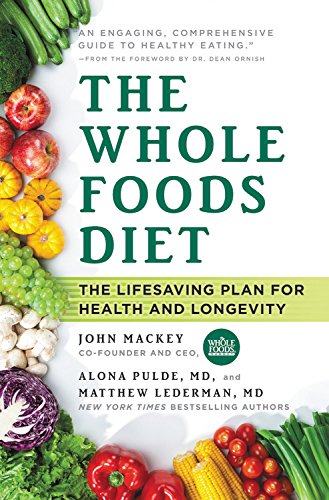
The McDougalls endorsed this new book:


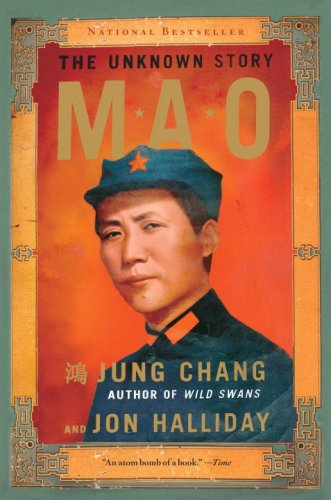
I've misplaced the e-mail that recommended this one. How authoritative is it? Mercy, how would I know? I know I really liked Jung Chang's family history novel, Wild Swans, as storytelling; I'm guessing her biographies (she's done more than one by now) are also a joy and a delight to read.


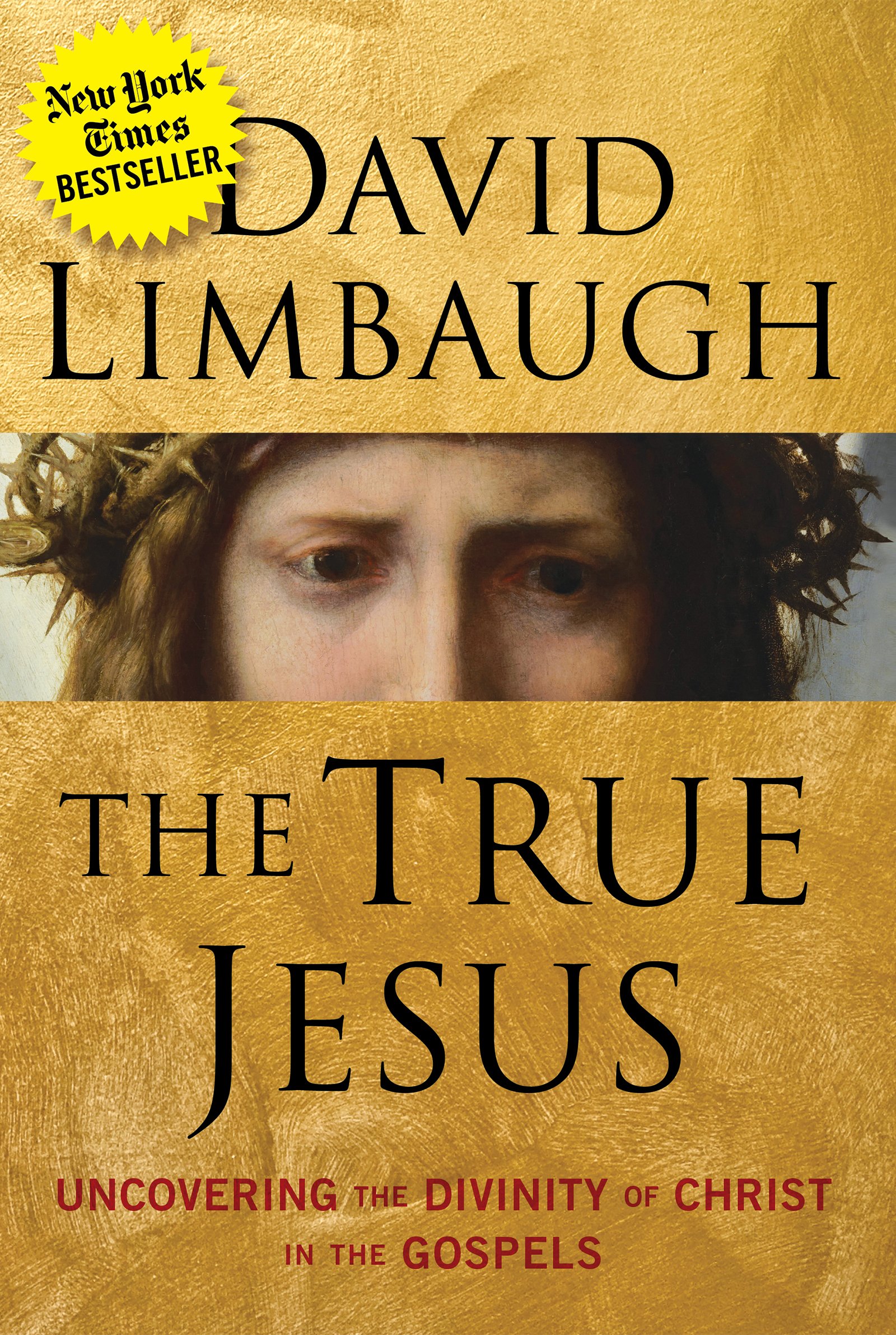
David Limbaugh wrote a decent unsympathetic history of the Obama Administration, Crimes Against Liberty (by now it's a Fair Trade Book), and here's what he's been doing more recently:


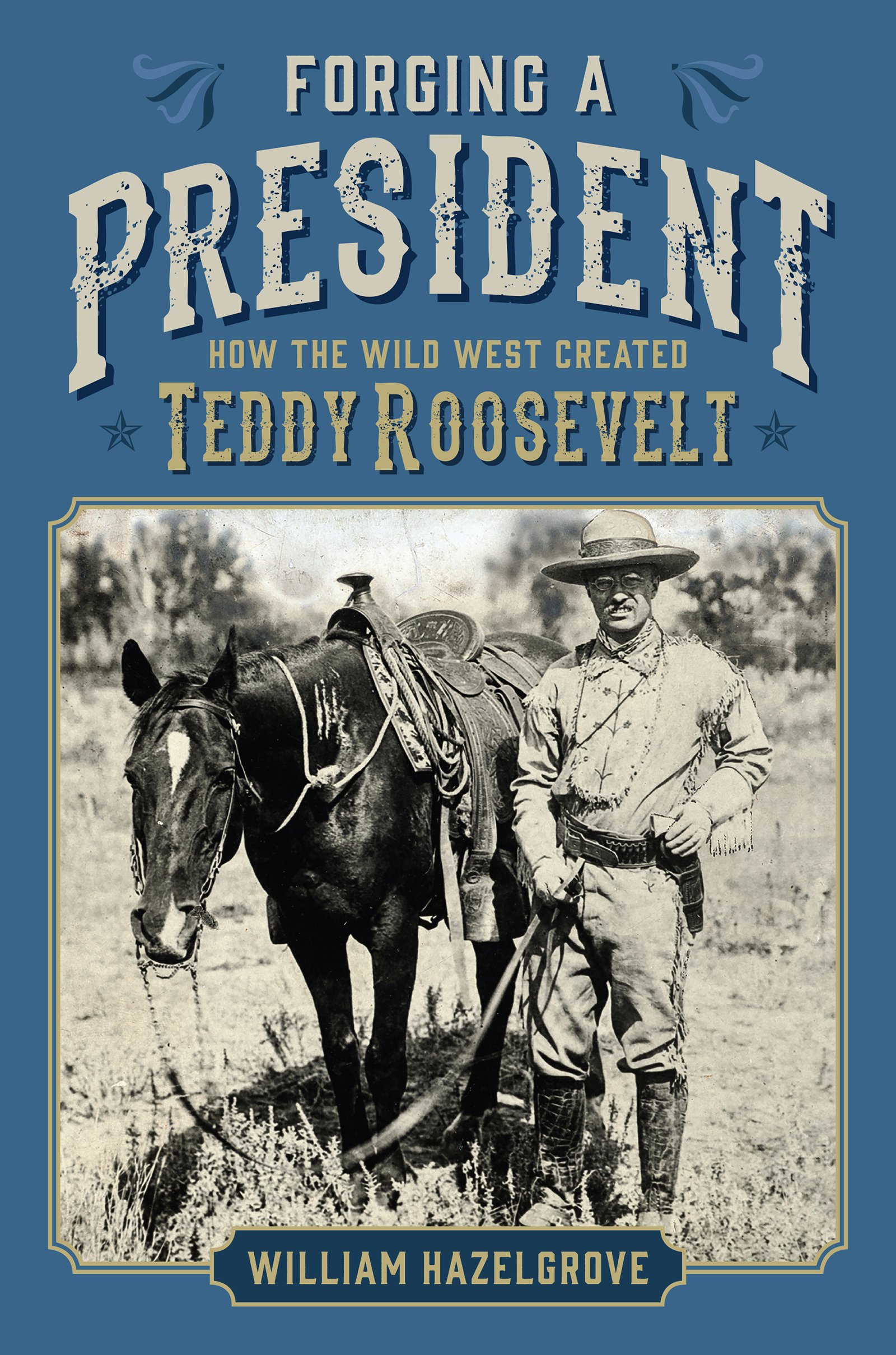
President Theodore Roosevelt was, as Glenn Beck has reminded us, a progressive--almost as much of one, in some ways, as his younger relatives Eleanor and Franklin. But he was (and they were) such admirable, inspirational progressives...decent people who fought hard to overcome real hardships and do what they believed to be the right thing.

Charity News

Hmm. This web site has two Amazon Smile charities: Heifer International, in honor of Ozarque, and Adventist Disaster Relief Agency, in honor of Grandma Bonnie Peters. Adding another charity would make our Amazon shopping even more complicated. However, for those who either don't already have a favorite charity listed at Amazon or want to change yours, now you can also support our e-friends the McDougalls:

"

AmazonSmile is a simple and automatic way for you to support the McDougall Research & Education Foundation every time you shop on Amazon, at no cost to you. 0.5% of your purchase price will be donated to our Foundation (a tax-deductible 501c3 nonprofit organization).

It's easy to sign up!

  • Login to Amazon at https://smile.amazon.com/
  • Enter "McDougall Research & Education Foundation" under "Or pick your own charitable organization:" and click on the "Search" button
  • Click on the "Select" button to the right of "McDougall Research & Education Foundation"
  • To make a purchase on Amazon, login to AmazonSmile first and shop like you usually do.
Every penny our Foundation receives goes to help change the lives of people suffering needlessly from dietary diseases.

We are now using some of our foundation money for the education of medical students and medical residents from the US and around the world to learn how to practice diet-therapy. Help us support this unique opportunity to change the way medicine is practiced in the 21st century. Learning students now spend 10-days working directly with Dr. McDougall and the McDougall Team in Santa Rosa, CA.

Read more about AmazonSmile or for more information about the Foundation visit The McDougall Research & Education Foundation.
"

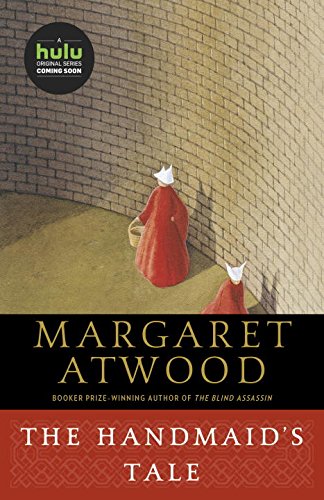
Book Review: The Handmaid's Tale (with Jim Geraghty)

Title: The Handmaid's Tale 


Author: Margaret Atwood

Publisher: Anchor

Date: 1985

ISBN: 978-0385490818

Length: 311 pages

Jim Geraghty's e-mail, quoted at some length below, was headlined "What Fans of The Handmaid's Tale Prefer to Ignore." Actually, for serious fans of Margaret Atwood, what JG then reminded readers is pretty familiar reading.

The Handmaid's Tale is "about" a totalitarian government. Any totalitarian government. As an Amnesty International activist, Atwood received reports about all of them. There are Islamic elements in the fictional dystopian "Republic of Gilead," where both literacy and sexuality have been forbidden to most people in the neo-feudal dictatorship; the life the narrator describes has a lot in common with the descriptions of Afghanistan in My Forbidden Face and The Kite Runner. There are also Christian elements--in order to take over Christian America, the totalitarian Party has adopted Christian rhetoric, although the point of banning literacy is that people are no longer sure which of the texts they're being trained to quote as sacred are from the Bible or from Marx, and there are references to persecution of Baptists. There are also Marxist elements--"From each according to his ability, to each according to his need" has become a sacred scripture of the Gilead Party's official religion. The danger to which this book alerts us does not come from a specific school of religious or political rhetoric; it comes from the fundamental idea of legitimizing some people's "right" to control other people's lives.

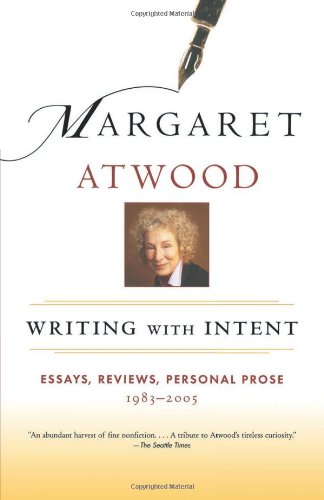
For some more of Atwood's own commentary on The Handmaid's Tale, plus other essays--many, frustratingly, about Canadian books not easily obtained in the U.S.--you might want to check out this book, which has been published in the U.S.:


What I particularly loved about this book was that it came out when Alan Greenspan and a few other "progressive visionary" types were eager to build a "cashless economy." A "paperless society." Business is transacted through individual-identity-based Internet accounts. That's how the power-mad Party are able to disenfranchise, if not to wipe out, whole demographics overnight--the ultimate power grab comes when all females suddenly find their economic identities deactivated.

The next step after that was to grab readers' attention with kinky sex. When no woman has purchasing power in her own right, all women become de facto sex slaves. The Party initially claims to respect marriage but quickly trumps up charges against lower-status husbands of fertile women so that those women can be awarded as "Handmaids" to higher-status husbands of sterile wives. (In 1985 there was real fear that exposure to radiation from computers would cause unwanted sterility; in The Handmaid's Tale the ascendance of computer technology coincides with an epidemic of male and female sterility, although Party-sanction speech officially denies these conditions.)

The narrator, whose name may or may not be June, was happily married with a child, although her husband was unpleasantly comfortable with her sudden enslavement to him. Then the Party police separated the family. The narrator was drugged and "re-educated" with the goal of destroying her memory of her own family, her job in a library, and her ability to read, although this goal was not fully achieved. Her husband and daughter may or may not be alive; she never knows. Her friends may or may not be able to help her escape, or even really intend to try; the reader never knows. Her opportunity to narrate her "tale" secretly, as audio recordings, depends on her ability to conceive a living child in pleasureless three-way sex with "The Commander" and his wife, and her biological clock is ticking during the months or years the story takes.

Right...so this plot is fiction, and not particularly fresh, and its initial popular appeal depended to some extent on kinky sex and violence. If you don't like sex and violence but do enjoy Atwood's style, there's enough of the author's trademark wit and insights to keep you reading through the icky bits, which are filtered through the tough-minded but nonviolent narrator. If you're not familiar with Atwood's style and are thinking "Meh, what's so great about this story that I should unplug and read 311 pages of real paper?"--well, first of all, the new release of this book was triggered by Hulu, so you can (ironically) view it online if you want. More important, though, is what Atwood was really telling people in the novel, and has told people in at least one published essay approximately every ten years since. What you need to visualize vividly, and The Handmaid's Tale will sear into your brain in sufficiently vivid detail, is that if and when we really allow computers to edge out real printed books and newspapers and personal letters, a totalitarian dictatorship that just might select any easily sorted sub-group of the population for genocide is just a short step away.

You're reading this on a computer that connects to the Internet. I'm writing it on a computer that connects to the Internet. Obviously we agree that the Internet has its uses. But be vigilant, Gentle Readers. Stay ready to unplug yourselves from the Internet at any moment. You just might have to.

And if you've not yet read the book, or have read the book and want to see how well Hulu handles it, that's what today's Amazon post is for.

Now, from Jim Geraghty, beginning with a quote and continuing with lots of data links:

"
According to a rash of earnest think pieces from dozens of news outlets, The Handmaid’s Tale is “timely” (the Washington Post), feels “chillingly real” (the San Francisco Chronicle), and has “an unexpected relevance in Trump’s America” (the New York Times). Atwood’s dystopia, writes Rebecca Nicholson in the Guardian, “has reignited the interest of readers, who have been drawing fresh parallels between Gilead and Trump’s America, and the novel topped the Amazon bestsellers list around the same time that signs at the global Women’s Marches asked to ‘Make Margaret Atwood fiction again.’”
Never one to miss a good marketing opportunity, Atwood affirmed our apparent unfolding national horror show on April 19, speaking to the Los Angeles Times about the Hulu series: “The election happened, and the cast woke up in the morning and thought, we’re no longer making fiction — we’re making a documentary.” According to a recent article in The New Republic, lo, have mercy, for great woes have apparently befallen me, a wide-eyed, unsuspecting resident of the Lone Star State: “Texas is Gilead and Indiana is Gilead and now that Mike Pence is our vice president, the entire country will look more like Gilead, too.”
We heard a bit of “We’re turning into The Handmaid’s Tale!” panic-hysteria-accusation during the Bush administration, too. I’ll dust off my argument from then: To picture a near-future United States that is a Christian theocracy with open, systematic, and brutal oppression of women, you have to picture some unbelievable changes occurring very quickly: repealing women’s right to vote; a re-acceptance of slavery; widespread Christian acceptance of government-mandated extramarital sexual intercourse; total repeal of the First Amendment; total bans on any other religious beliefs (there are references to “Baptist rebels”). Perhaps most absurdly, almost all men have accepted a regime where the only sexual outlet of any kind is government-monitored breeding with the fertile “handmaids,” reserved for the most powerful.
Do you picture lots of American men signing on for a system that denies them the freedom to have sex with women? [...]
But Margaret Atwood could have set her tale in other places and made it practically a modern-day documentary: say, Saudi Arabia. Or any corner of Taliban-controlled Afghanistan.
How about Yemen, where there is no legal minimum age for marriage, 52 percent of girls marry before 18, and there’s a tradition of “honor killings” for disobedient women?
Or the Democratic Republic of the Congo, where one estimate calculates two million rapes have occurred as part of that country’s continued violent instability, and armed gangs commit rapes with horrifying frequency.
Or Egypt, where more than 125 million women and girls have endured the barbaric practice of “female genital mutilation” and the practice is the norm.
Sudan’s penal code legalized flogging women for inappropriate dress, and girls can be married at age 10.
Human Rights Watch’s most recent report on Pakistan:
In Pakistan, with 21 percent of girls marrying before the age of 18. In January 2016, a proposal submitted to parliament by WHOM aimed to raise the legal minimum age to 18 for females and introduce harsher penalties for those who arrange child marriage. However, on January 14, 2016, the proposal was withdrawn following strong pressure from the Council of Islamic Ideology, a body that advises the parliament on Islamic law. The council criticized the proposal as “anti-Islamic” and “blasphemous.”
Violence against women and girls—including rape, murder through so-called honor killings, acid attacks, domestic violence, and forced marriage—remained routine. Pakistani human rights NGOs estimate that there are about 1,000 “honor killings” every year.
Or Iran:
Women face discrimination in personal status matters related to marriage, divorce, inheritance, and child custody. A woman needs her male guardian’s approval for marriage regardless of her age and cannot pass on her nationality to her foreign-born spouse or their children. Married women may not obtain a passport or travel outside the country without the written permission of their husbands.
The UN Children’s Rights Committee reported in March that the age of marriage for girls is 13, that sexual intercourse with girls as young as nine lunar years was not criminalized, and that judges had discretion to release some perpetrators of so-called honor killings without any punishment. Child marriage—though not the norm—continues, as the law allows girls to marry at 13 and boys at age 15, as well as at younger ages if authorized by a judge. Authorities continue to prevent girls and women from attending certain sporting events, including men’s soccer and volleyball matches.
UAE’s penal code allows the imposition of “chastisement by a husband to his wife and the chastisement of minor children” so long as the assault does not exceed the limits prescribed by Sharia, or Islamic law.
A 2010 decision by the United Arab Emirates Federal Supreme Court ruled that hitting a wife or child was legal up until the point where it leaves marks.
Horrific, brutal regimes that systematically deny basic rights to women and girls based upon religious beliefs are not hard to find. They’re just rarely Christian. (Worth noting about the above list, the most common religion in the Democratic Republic of Congo is Christianity.) The world has plenty of awful places that can be fairly compared to Atwood’s fictional dystopian regime of Gilead. They’re just mostly Muslim.
"


Any of Margaret Atwood's vintage books (first published before 2010) can be purchased here as a Fair Trade Book. The ones that have most in common with The Handmaid's Tale are, in my judgment:


(Bodily Harm was/is about the real present-time use of torture in totalitarian countries, although St. Antoine is a fictional composite Caribbean island.)


(Oryx and Crake and its two sequels warn us about the hazards of a different branch of science.)

Cannibal Post?

In reposting this--going "ditto, ditto, ditto"--am I cannibalizing the writer known as Hope Clark? The following information was in a e-mail HC invited people to share...A lot of blog posts are just social chat, keeping in touch with long-distance friends. That sort of "writing" has never been paid, and arguably shouldn't be. But if you do any research, if your writing boosts someone's business, if you work to produce documents that the general public will want to read, then it actually harms other writers as well as you to continue writing just for vanity's sake. Post a few free samples, but reserve most of your work for payment.

(If the pasted text looks tiny, you probably already knew that, on most computers, pressing the CTRL and SHIFT and + keys will enlarge the image.)

"
WRITERS CANNIBALIZING WRITERS

Last week, I mentioned a new trend of blogs/online news sites that offer payment and no bio link, or just a bio link instead of payment, in exchange for writing an article. I launched into a mini-rant as to how disrespectful this is by the site. I've asked for names of such sites from readers, and the main names cropping up are The Penny Hoarder and The Write Life.

But a similar theme kept cropping up in the emails I received. That of reading and writing groups and sites taking advantage of writers . . . asking them to appear for free, write for free, using the age-old offer of exposure, or the over-used excuse of being non-profit. But then the group offers no promotion, no advertising, no effort to spread the word about the article, the appearance, or the writer's contribution. In other words, no exposure. They not only don't pay, but they don't provide the exposure, either.

Writers cannibalizing writers.

Writers . . . if you are going to be true to your profession, please consider the following:

1) Ask for compensation or tangible reward for your work. For every instance you give in and write for free, you are costing hundreds of other writers the opportunity to earn a living by making their journey that much harder.

2) If you want to use another writer's work, offer to compensate them. Practice what you preach. Or simply, Do Unto Others . . . you know the rest.

3) Buy books to support authors. Don't take free books unless you are a reviewer, and even then, post the dang review unless the book is so bad you don't care to. In that case, let the author know. Some may not like it, but others will want to know what you found lacking in the story. But don't take a free book for any reason without offering payment in terms of a review.

4) If you only buy books at discounts, help compensate the author for the loss by posting a review on Amazon. It doesn't matter if you aren't a professional reviewer. Your opinion matters to that author's career.

5) If your group asks a writer to appear, by all means offer compensation. Or offer to purchase a minimum number of books. Ask attendees to pay a fee if your budget doesn't have a purse. Don't take advantage of the writer.

6) If your group asks a writer to appear, ADVERTISE IT. That is assuming you want a lot of attendees. If this is a private appearance, limited to members, then it's even more important to find some way to compensate the writer because you are denying them the exposure gained from a larger crowd.

We cannot afford to be our own worst enemy.

"

Other people's writing doesn't usually get Amazon book links here, but in this case...

The Edisto Island Mysteries (4 Book Series) by  C. Hope Clark

Morgan Griffith on Tax Simplification (April 24)

From U.S. Representative Morgan Griffith (R-VA-9), with this editorial comment: I think one of the arguments for the BAT, below, has to be a joke. The others make sense.

"
Tax Debate
“In this world nothing can be said to be certain, except death and taxes," said Benjamin Franklin.
Although taxes may be certain, American families and businesses shouldn’t be crushed by the tax code.
Our current tax code is so complex that a majority of families have to spend money hiring someone to help with their taxes, costing time and money.
Many of us in Congress are working to pass tax reform in order to simplify the tax code, encouraging jobs to be created and wages to rise.
To bring relief to families, we will lower the tax rate for most Americans. A few of the widely used and most beneficial deductions will remain in place, like the mortgage interest deduction, charitable giving deduction, and the child credit. But most other tax write offs and special interest loopholes will be eliminated to lower tax rates and simplify the code.
Fixing the tax code does not mean increasing taxes to bail out Washington’s spending problem. Our tax reform will be revenue neutral. The tax cuts will be offset by transforming our tax system to include a border adjustment tax (see below) that taxes imports while exempting exports. Additionally, the tax cuts will spur economic growth, which increases revenue. Historically, when American families have more money at their disposal, the government generally sees an increase in revenue.
America’s current tax code encourages companies to send jobs overseas. Currently, we punish corporations that make money overseas by charging a 35% tax when the money is brought back to the U.S. This has led to an estimated 2 trillion dollars to be kept overseas, instead of being invested back into our economy.
When companies bring money back to the U.S., it will provide a jumpstart to stimulating the American economy. Under the reformed tax code, companies are not slapped with a crippling tax when spending their earnings in the U.S. They can build or upgrade factories and facilities, hire new employees, or find other opportunities in the U.S.
The tax plan will also address the corporate tax rate, which is currently the highest in the developed world at 35%. A lot of companies can’t afford to stay in America with this tax rate. Many companies have moved their headquarters out of the U.S. Our plan lowers the rate so we can compete with other countries around the world.
The plan also proposes to include a border adjustment tax. This means goods leaving the country will not be taxed, but when goods are made elsewhere and brought into America they will be taxed. At the same time, it will eliminate the tax on the income attributable to exports.
Some favor a value added tax (VAT) with a border adjustment feature. A VAT means that whenever a value is added to a product, the increased value is taxed. I think a VAT is too complicated and prone to future special interest loopholes.
I prefer a straight border adjustment tax.
Industrial countries around the world all have either a border adjusted tax or value added tax, except for the U.S. The next three largest economies that don't have either a VAT or border adjusted tax are Iraq, Angola, and Cuba.
I think we are better than Iraq, Angola, and Cuba. Don’t you?
Implementing the border adjusted tax will stop penalizing products Made in America.
Companies that manufacture products in places that don’t have hardly any work safety or environmental regulations or minimum wage laws can sell their products cheaper than products manufactured in America. This tax will help increase jobs here in the U.S. and even the playing field for American products.
Some argue that a border adjustment tax will increase the cost of goods, because the cost of cheap goods made in Asia and other places around the world will increase to account for the new tax.
But many believe the buying power of the dollar will get stronger, thus offsetting any increase. And, even if a stronger dollar doesn’t completely offset the increase, most folks I know would rather have a good paying job than a cheap pair of underwear.
The tax reform plan will have many other components, including the elimination of the death tax. This is a tax on assets you receive as an inheritance. This tax historically hurts family owned businesses, including the family farm.
Our current tax code is broken.
For far too long, the tax code has punished hardworking Americans, burdened small businesses, encouraged companies to leave America, and stifled the economy.
The time for reform is now.
If you have questions, concerns, or comments, feel free to contact my office. You can call my Abingdon office at 276-525-1405 or my Christiansburg office at 540-381-5671. To reach my office via email, please visit my website at www.morgangriffith.house.gov.
"

Friday, May 5, 2017

Morgan Griffith on the Role of the U.S. Congress (April 17)

From U.S. Representative Morgan Griffith (R-VA-9):

"
Monday, April 17, 2017 –
Congress Takes Back
Our Founding Fathers deliberately set up three equal branches of government, in order to establish a separation of powers to protect American citizens. Over the years, the legislative branch has slowly handed some of its powers to the executive branch, increasing the ever-growing powers of the presidency and its bureaucracy.
Since taking office in January, the 115th Congress has reined in some of the executive branch powers utilizing the Congressional Review Act (CRA).
As you may remember from the November 14, 2016 column, the CRA is an oversight tool Congress can use to overturn certain agency actions with special procedures under which to consider legislation to overturn rules, in the form of a resolution of disapproval. If a CRA resolution of disapproval is passed by both houses and signed by the President, the rule at issue cannot go into or continue in effect.
Since its inception during the Clinton Administration, only one CRA had been signed into law, but thirteen have been signed so far this year. I am encouraged by the passage of each CRA. Regulations rolled back under CRAs have been rules passed near the end of the Obama Administration including rules that hurt small businesses, hindered job creation, and in many cases, were poorly written.
By signing the bills that repealed or blocked these onerous rules, President Trump is making good on his promise to cut through burdensome regulations and reduce bureaucratic roadblocks. At the same time, Congress is returning power to the legislative branch.
Congress takes back its power when a CRA is passed because the regulation is set aside, and in the future, an agency cannot propose a substantially similar regulation without specific Congressional authority. Thus, the authority in these thirteen specific areas has been restored to Congress and where necessary Congress must act.
Too many times in the past, Congress has actually been willing to cede its authority to unnamed bureaucrats or the President, so it wouldn’t have to take tough votes.
While I am glad Congress is exerting more authority in the regulatory process, I would also like to see Congress exert authority in regard to the authorization of the use of military force.
The Constitution makes the President Commander in Chief of the Armed Forces, but gives exclusive power to declare war to Congress. This is spelled out in Article I, Section 8 of the Constitution. Congress must defend this prerogative.
I acknowledge complex and dangerous predicaments we face in the world. Under Presidents Bush, Obama, and Trump, use of force to address challenges in the Middle East and against terrorists is justified based on two Authorizations for Use of Military Force (AUMF) that are fifteen and sixteen years old.
Only approximately 20% of members who voted on these remain in the House of Representatives, meaning 80% of the current members never voted to authorize force in the Middle East.
Let’s not forget one Congress cannot lawfully bind another Congress. Having an AUMF that 80% of House members haven’t voted on, is more than a decade old, and passed two presidencies ago is both intellectually dishonest and inappropriate.
The current Congress should vote on a new AUMF. This AUMF should include a provision so it does not extend indefinitely into the future.
Major conflicts our country has been involved in, including the War Between the States, World Wars I and World War II, for us lasted less than 5 years. Yet the conflict in the Middle East has dragged on for more than a decade.
Even though in the 1400s the French and English fought in a conflict known as the 100 Year War, I don’t think our Founders envisioned the United States engaging in a war lasting 100 years. Particularly not one authorized by votes from only one Congress.
Although the definition of war has evolved, the American people should be able to count on their representatives to decide when, where, and under what circumstances our country should enter into an ongoing military conflict.
Again, Congress should not shirk from its responsibilities merely because it’s easier to look the other way and let the President handle it.
I believe you elected me to take tough votes. Although sometimes we may not agree, I am always willing to study an issue and make a decision. This is what Congress is supposed to do.
I didn’t get elected to be part of an impotent debating society; I was elected to get things done.
And I will do my darnedest to get things done for you.
If you have questions, concerns, or comments, feel free to contact my office. You can call my Abingdon office at 276-525-1405 or my Christiansburg office at 540-381-5671. To reach my office via email, please visit my website at www.morgangriffith.house.gov.
"

Tuesday, May 2, 2017

Morgan Griffith on Coal and Related Matters (April 3)

From U.S. Representative Morgan Griffith (R-VA-9), e-mailed on April 3:

"
Monday, April 3, 2017–
War on Coal Ends
President Trump promised to end the war on coal. The Executive Order he signed recently is indication he intends to keep that promise. In his order, the President directed an immediate review of the Clean Power Plan (CPP).

From when the Obama Administration first announced their plan, I believed the CPP was a job-killing federal overreach. The CPP, which would have imposed unreasonable carbon emissions regulations on fossil fuel powered plants, has not been implemented, because the Supreme Court, in an unusual move, ordered a stay while they examined its legality.

The Trump Administration agreed, and made the review of this order a priority. I believe their review will result in an end to the illegal CPP.

The order also dissolves the Interagency Working Group on the Social Cost of Greenhouse Gases that was created to incorporate the “social cost of carbon” when issuing new regulations.

In testimony written for an Energy Subcommittee hearing I participated in recently, Dr. Ben Zycher explained his view on why the working group’s obsession with carbon was misguided.

Dr. Zycher stated: “It is important to note as an aside that carbon dioxide---the most important anthropogenic GHG---is not ‘carbon.’ ‘Carbon’ is soot, or in the language of environmental policy, particulates; carbon dioxide is a colorless, odorless GHG (greenhouse gas), a certain minimum atmospheric concentration of which is necessary for life itself … By far the most important GHG in terms of the radiative properties of the troposphere is water vapor…”

Interestingly, the National Oceanic and Atmospheric Administration says, “water vapor is the most abundant greenhouse gas in the atmosphere.”

In other words, carbon dioxide contributes to retention of heat that leads to changes in the atmosphere; however, water vapor likewise contributes to retention and warming.

Water vapor was not targeted for new regulation, as common sense would dictate.

So was carbon merely targeted for regulation as part of the now defunct war on coal?

President Trump is following through on his promise to bring relief from strangling regulations.

The reaction to Trump’s actions from the left, particularly those in the Obama Administration, was swift. Their reaction was also revealing.

Politico reported that Brian Deese, who served as Obama's energy adviser, hopes that coal will not come back. He told Politico that “stock prices for coal-related companies are down, underperforming the market by several percentage points.

Furthermore, according to Politico, he argued that is partly because of the Obama team’s efforts, “not only on the regulatory side, but also with respect to research and commercialization, tax incentives and otherwise.”

He's essentially admitting the Obama Administration had a war on coal.

Although coal may not reach its peak again, coal is not dead. Cutting through the regulatory measures that were aimed at stifling coal will unleash the coal industry to compete fairly and help bring back the industry.

Black Lung Clinic Funds

Mining coal is an important profession, and those who have mined coal have provided Americans with electricity, heat, and power.

Many coal miners are proud of their contributions, like the coal miner featured in a video I saw at the Stone Mountain Health Services Black Lung Clinic in St. Charles. Jerry Moore from Jonesville was proud to have spent his life digging coal, but he wished in return, that he had the support he needed to have his expenses covered as he fought the lung disorder, which would take his life.

I believe miners like Mr. Moore deserve the benefits they were promised and deserve to be taken care of.

Many miners turn to clinics like Stone Mountain to provide the services they need.

I recently led a letter to President Trump, along with other Members of Congress, requesting an increase of $3.3 million to black lung health clinics, to total $10 million.

The increasing demand for the health clinic services in the last few years has not been matched with an increase in funding. In the letter, we explained that some clinics are so underfunded that they are operating with obsolete and inefficient diagnostic equipment, which is needlessly increasing miners’ radiation dose when they receive a chest X-ray.

In rural communities, where many of these clinics are located, depressed economies have made it difficult to find funding, and I believe the federal government should help.

If you have questions, concerns, or comments, feel free to contact my office. You can call my Abingdon office at 276-525-1405 or my Christiansburg office at 540-381-5671. To reach my office via email, please visit my website at www.morgangriffith.house.gov.
"

Spring Cleaning

Gentle Readers, I feel almost guilty. At the time when I posted that I was going home to do the Ultimate Hunger Strike, I meant it; I then went home, started a bit of spring cleaning, and found food in the house. (No ravens, no handouts from do-gooders, just an unopened can somebody had left in a bedroom.) So I ate it, it stayed down, and I've been eating since...the internal bleeding from glyphosate poisoning has even subsided. (I was starting to believe I'd finally developed colon cancer, but no, apparently I'd just eaten enough GMO peanuts and pesticide residues that the lacerations weren't healing within a few hours.) What I actually did with the month of April was enjoy the perfect weather for spring cleaning. 

I hauled some things out to markets and sold them. Providence, in the form of my Significant Other's social network from the Wise County coal community, got those things into enough markets to pay for meals, gas, and booth rentals. I sold one entire box of books, at the end of one market day, to a lady who offered me a lift home; on the way she stopped at a charity store (where she used to work, before retirement) and said, "You can haul that box into the store and donate them for me," so I did. Good books, too; some in good condition, some fairly rare, though not valuable. I moved lots of boxes and stacks and heavy objects with a goal of clearing a path for laborers to haul away some large objects for recycling. I sent several bags of metal and plastic to the recycling plant on the state line. 

What I didn't do, and (to some acquaintances' surprise) didn't allow a friend to do, was "toss." She had some books that she and I had been thinking, some year, I'd get around to reading and discussing at this web site. She got impatient. "I want to move those books out of storage now and have more space for pricier things I can sell for more money faster! Take them away!" 

I needed another cubic yard or two of books, at the Cat Sanctuary, like I needed another hole in the head. I literally have things, including books, in barrels--old steel storage drums, some of them big enough for a grown man to curl up in, thirty-some barrels of Things Someone Might Find Useful Some Day. "Fiction by the pound, by the barrel, or by the cubic yard" was not just a joke here...but I took another pickup truck bed full of books. 

I've read some of them, too, in what I have in the way of spare time, which isn't much--when I'm not on someone else's time clock, I am on my time clock, doing something that is at least likely to be marketable, as a Christian steward of the time God has lent me. And this friend knows nothing whatsoever about books. She bought some really good, valuable antique books, and stuck them in a dark corner where they grew moldy; she paid money for some trashy recent bestseller novels that won't acquire any market value whatsoever during our lifetimes, and because they still look "new" she was thinking of them as the gems of her collection; she had set up a book display, for shoppers to see, in which she thought old encyclopedias would be a good focal point...I am not making this up. She's actually knowledgeable about antique furniture, and she has a good eye for paintings and sculptures; though currently at that awkward "new books or new glasses?" stage of life, she used to be quite a reader, so it amazes me that she's so clueless about books.

But, yes, I really do believe that it's worth sorting through the junk fiction to find the real gems from other people's libraries. It's not unlike the fabulous yarn bargains I've found at charity stores, where clerks didn't know whether they were trying to sell cheap secondhand yarn for more than the same stuff currently cost at Wal-Mart or were selling fabulous imported luxury yarn for the cost of factory rejects yarn. And y'know what...as a child I enjoyed reading, and learned a lot from reading, the nonfiction stories in old Golden Book, Childcraft, World Book, and Funk & Wagnalls encyclopedias. There are a few really bad books that deserve to be burned, but most books deserve to be cherished and shared with the right people. "Outdated information" needs updating...I think it was actually easier for me to absorb new information about the countries now known as Belize and Zimbabwe because I'd previously absorbed information about the places when they were called other names.

I'm still going through 58 pages of e-mail in the order it was received, actually reading two or three of the e-mails on each page, seeing who's been a Real E-Friend and paid for something. I'm glad to report that the sponsor who paid for that week of free Link Logs, and the links to the cancer fundraiser hats, did send payment--apparently he's just on a limited Internet schedule that doesn't overlap with mine. I suspected that at the time, and regretted not being able to work with him in March, but it is a fact that it costs me about $5 to spend a day online, so I can't afford to keep one $5 job running longer than one day. I mean, I don't mind waiting on other people's Internet access schedules, in theory, but I can't promise that I'll have an Internet access schedule that works with theirs.

The other good news, so far, has been that Amazon is finally reporting some sale commissions, so book reviews and book-related posts are back, with Amazon photo links. Hurrah! 

I wrote this bit of Bad Poetry a few years ago...one of the things I spring-cleaned off my home computer, while I had the laptop in the house (where it complained briefly and then adjusted very well to being offline), was a file of Bad Poetry that I plan to post this summer, verse by verse. E-friend John Horvat, who blogs at returntoorder.org , had posted about spring cleaning back in March too, and had asked for stories about family treasures. I'm not sure how relevant he'll find this one, now, but here it is for yourall's pleasure:

I want to be one of whom people say,
“She never threw anything away.”
To make this the whole literal truth would be rough,
But I always have tried to make it true enough.
I was brought up to see ecological issues
In throwing away even used paper tissues,
Which should be secured, as the household requires,
Until they are used, in due time, to light fires.
My ancestors’ storage barn is a great source
Of many things that are now useless, of course,
Likewise many things that are useful, give pleasure,
And things that have gained value and become treasure.

(Mother did all her canning in jars of clear glass,
But she saved Grandma’s jars, some of which were dull blue.
Now blue jars are antiques that give dining rooms “class,”
And some day, in great need, we might sell off a few.
Someday someone may need the odd-shaped windowpanes,
Start tomatoes in even the shabby old pots,
Amuse a sick child with quaint model trains,
Or reprint the old tintypes, of which we have lots.
And there is no such thing as a useless old book;
Even though some books were, and still are, very bad,
Historical perspective permits us to look
Back and marvel at what quaint ideas people had.)

Nomads are not free, merely driven, to roam.
Why not leave your own mark upon your own home?
No matter how hard some folks may try to sell
The idea that a home should look like a hotel,
I prefer a house furnished with objects that go
Back through five or six generations or so.
What friends really need, of course, one should not hoard,
But nothing should be tossed if it can be stored.
How I bless those ancestors of whom people say
(Though not literally true) “They threw nothing away.”

Now, some of the really unexpected treasures...until I looked'em up on Amazon I had no idea that these books were valuable, but they are.


Tim Kaine's Judgment on Judge Gorsuch

From U.S. Senator Tim Kaine (D-VA), March 29:

"
Dear Friend,
After meeting with President Trump’s Supreme Court nominee Judge Neil Gorsuch and reviewing his testimony and past decisions, I've decided to oppose his nomination to the Supreme Court.
I’ve observed that he has repeatedly taken an activist approach to cases involving a woman’s right to make her own decisions about her health. He made the astounding argument that bosses have an individual right to prevent their company’s female employees from using their own health insurance to buy contraception. He even cavalierly referred to contraceptive use as ‘the wrongdoing of others.'
More than 60 percent of American women of childbearing age use contraception and the right to do so has been constitutionally protected for more than fifty years. Judge Gorsuch unquestionably has an impressive professional and educational background, but a nominee to the Supreme Court must also demonstrate sound judicial philosophy. His decisions restricting women’s rights and framing of women making their own health decisions as ‘the wrongdoing of others’ are jarring and do not demonstrate a philosophy that belongs on the Supreme Court. I will oppose his nomination.
Sincerely,
" [nice signature graphic that, along with the "like/follow buttons" graphic, wouldn't work on this site]

Testing: What's New with Amazon?

Hurrah! Amazon is showing that youall are finally clicking on some ads here! Thank you, Gentle Readers.

With the e-mail notice that their system is finally crediting some commissions to my account, Amazon sent notice about a new ad widget format. Let's try it here. To test the new format against the one I've been using...I've embedded dozens of book links, so the test for the new format should be a classic book that I wholeheartedly recommend, one that I'm sure readers will like, one that everybody should have read...


Hmm. I think I'll stick to the embedded book links for now. What I typed in, to create that ad, was "Book Thoreau Walden." What the system is delivering may vary, but what I'm seeing is a row of links to the packaged rice mix discussed in the previous article.

But why not leave it up...lots of people like Zatarain's rice, and it may be fun to see whether Amazon's robots replace those ads with other things later.

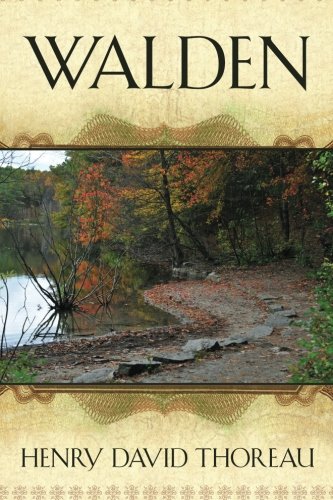
For those who are reading to see how Amazon Associate blogs work--which is very much something we Amazon Associates are learning as we go along!--I still have to copy and paste in a book picture to be sure that what you'll see, in a link to Thoreau's book Walden, will look like this:


It's not as fast as the ribbon of five automatic suggestions in the sidebar used to be, but it gives youall a good clear picture of the book I have in mind. Much better than what the suggestion system used to do when a post hadn't spelled out the full name of an author and title and Amazon's robots would default back to the household linens style known as priscillas...