Wednesday, October 4, 2017

Little Bullies and How to Improve Them

Pet stories, with political overtones for those who want such, and a hat tip to +Andria Perry for the Alabama update...

Once long ago, in the bad old days of DDT when it seemed that every North American bird except the European Starling was becoming endangered, the house now known to cyberspace as the Cat Sanctuary did not allow cats or dogs. Apart from the pony and some cows we cared for in some years, the pets my brother and I kept were chickens. Some of these chickens were merely laying hens, and others were real pets who followed us around and did silly pet tricks.

Whether these chickens became pets did not depend on their looks. It was their choice, or their brain wiring, or whatever. All the tricks they did were their own. All we trained them to do was do on cue some cute thing they'd done all by themselves. All of our chickens were reasonably healthy, sleek, and "pretty" birds. Several belonged to fancy breeds.

We had some neighbors who encouraged us in making pets of chickens, and one year some of them found a set of four Ancona bantams for us.

Some people, it seems, don't know what a bantam is. Most breeds of chickens exist in "full-sized" and "bantam" strains. Bantams typically weigh less than half as much as the full-sized chickens they resemble:
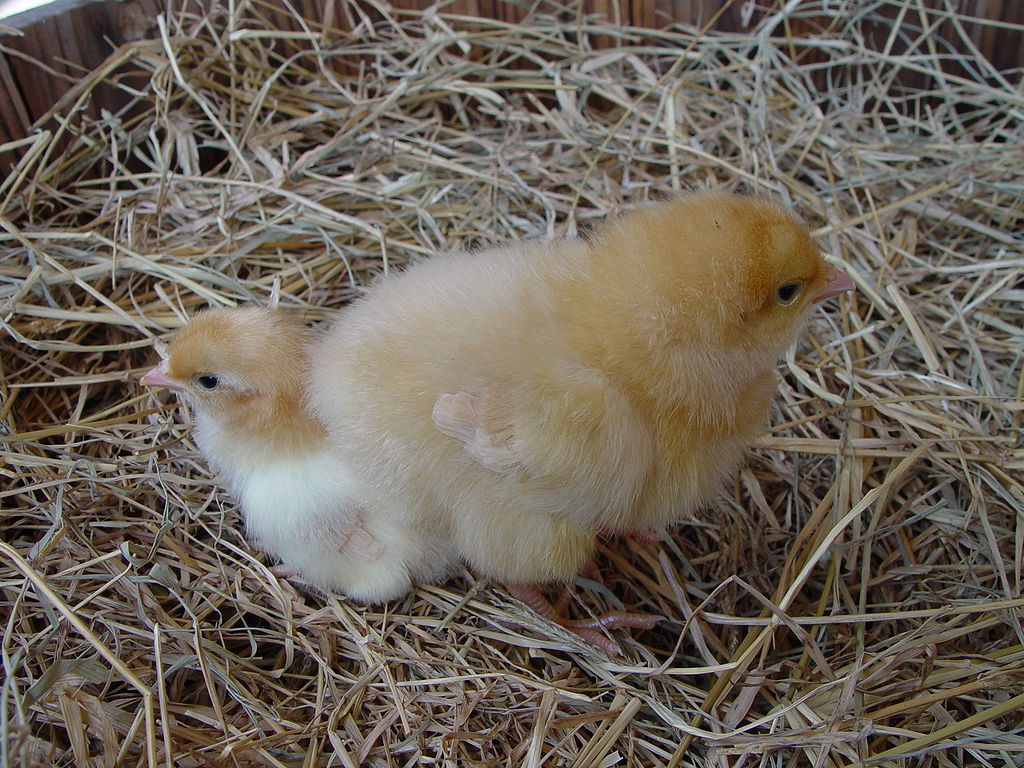
Baby Bantam chicken standing behind full-sized litter mate, donated to Wikipedia By gina pina from Austin, TX - [1], CC BY 2.0, https://commons.wikimedia.org/w/index.php?curid=4129236 

Ancona bantams are pretty birds. This ruffled-up, full-sized specimen shows the color pattern...
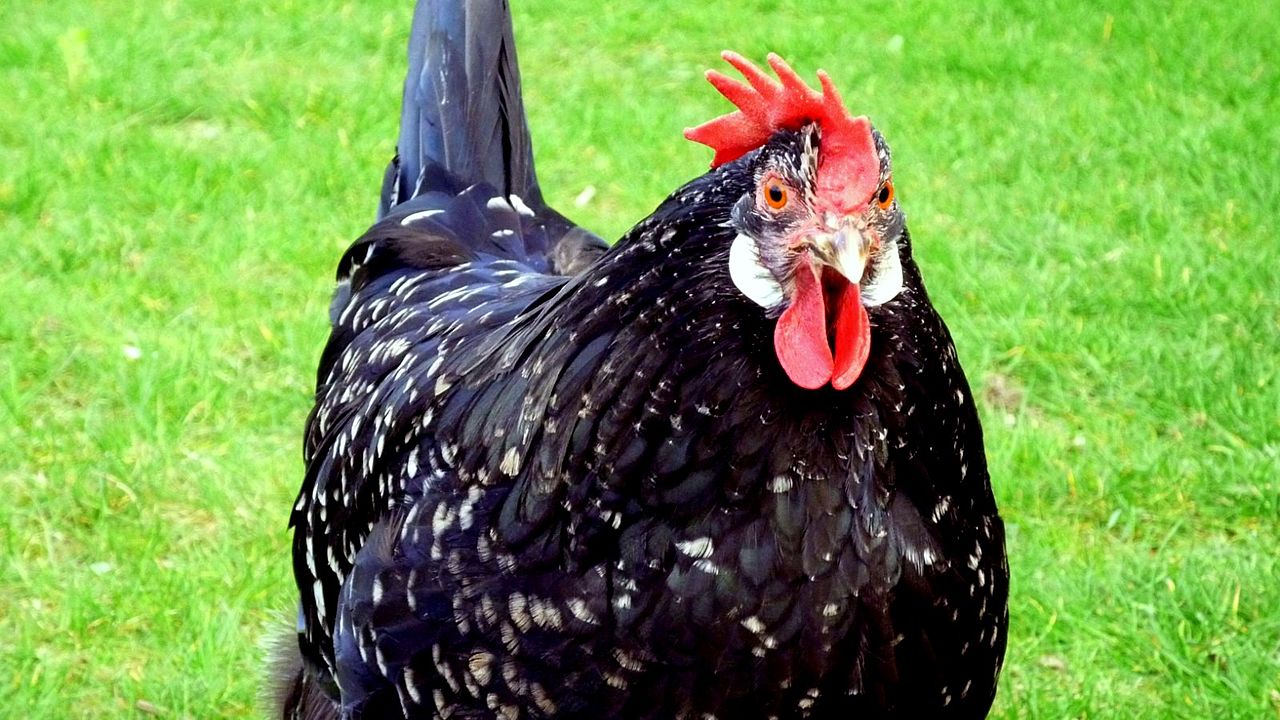
Ancona chicken.jpg
Large Ancona hen photographed for Wikipedia By Festina lente - Own work, CC BY-SA 3.0, https://commons.wikimedia.org/w/index.php?curid=15230791

Now imagine that coloring on a dainty, graceful little bird that can sit comfortably on the palm of your hand, and can fly, like these Sebright bantams:

Sebrights were one breed we didn't keep. No special reason; lots of people like them. Photo donated to Wikipedia By No machine-readable author provided. Mz~commonswiki assumed (based on copyright claims). - No machine-readable source provided. Own work assumed (based on copyright claims)., CC BY-SA 3.0, https://commons.wikimedia.org/w/index.php?curid=1901846

The attitude of our Ancona hens was similar to that of those strutting, tail-fluffing Sebrights in the picture, but Anconas have higher "combs" and positively fierce-looking beaks, like miniature hawks. (They can beat a hawk in a fair fight, too.) 

Anyway, that strutting, tail-fluffing attitude is not necessarily desirable on a new family you want to introduce to an established family of chickens. Most chickens have a distinct social hierarchy known as a pecking order, in which smaller, older, slower, or sicker birds are often pecked until blood flows. We had a chicken family that did not peck, of which we were proud. Instead of fighting, our birds asserted positive leadership by sharing food treats with the others. (That year they were a mix of Inglebright, a breed that apparently no longer exists, and Black Rosecomb.) Those Anconas had never heard of such a thing. Full-sized Anconas are one of the more aggressive breeds...there's actually an online game in which they're valuable pets, because in real life Anconas will fight in defense of their friends. They fight among themselves, too.

The alpha hen in the Ancona family had been a pet before and had formed some attitudes toward humans. She respected men, kissed up to women, and hated children. My brother and I were about the same size, and his hands were bigger, so how that hen knew to classify him as a child rather than a man we never did figure out...but she did. She cuddled up on my shoulder, and when my brother reached out to invite her to move onto his hand, she bit him. Even full-sized chickens can't bite hard enough to break the skin on your hand, but if she could have, she would have.

Then just to throw her weight around she tore a chunk of bleeding flesh off one of her daughters, and then when she met our resident flock and immediately attacked the smallest, gentlest little Inglebright hen, we agreed that it didn't matter how pretty these hens were; we didn't want them as pets. Especially not the one who'd already been a pet and learned a few cute pet tricks. She had become disgusting to us. The words "chicken soup" came to mind.


Well, we did, and it did. That little Ancona bantam hen was so busy dodging the Rhode Island Reds that when we visited those neighbors she didn't even try to bite my brother's ankles any more. She raised a fine brood of younger, more gentle Ancona crossbreeds. My brother later reclaimed a daughter or granddaughter of hers, who became one of our best beloved pets.

Thirty-some years later, about a year ago, regular readers remember that the Cat Sanctuary had attracted a truly antisocial stray cat, a gorgeous fluffy half-grown Himalayan with a hostile, sneaky, cowardly personality. It attacked our sweet, docile Irene who had never had to think about fighting or quarrelling with anybody in all her five-year life, and as I cleaned Irene's wounds, terrible, unspeakable thoughts about what to do with Antisocial Cat Barnie came to my mind. So did the wisdom of my elders. When I trapped Barnie, instead of killing it I thought that sending Barnie to live with city people, where it would see only humans, ought to improve Barnie's disposition. Apparently it worked and I even got a little money out of the deal.

Last week's big news was that, as the State of Alabama has had to hold a special election to replace Senator Sessions, the "extreme right" Candidate Roy Moore defeated the "moderate Republican" Candidate Lester Strange. What wonderful names for comedic purposes. "Can this election get any more strange?" "Moore is more strange than Strange!" and so on.

Observing the effect of the Democratic Party strategy of allowing its extremists to claim to represent its moderate to conservative majority, I tend to feel that victories for right-wing Republicans may be good for the nation as a whole--if Republicans can just pull together as a team. Right-wingers like Judge Moore don't represent the majority of the nation or even of the Republican Party but, for strategic purposes, they offer a balance the nation needs. They give the vast howling majority of Americans, who are moderate, a chance to reclaim leadership and take that long step back toward the Right we need to correct the Obama Administration's lurch toward the Left. Much as I'd prefer to see real progress past the old Right/Left split, I think we need first to get our government back to the majority position in which "conservative" means, well, Judge Moore, "moderate" means Ronald Reagan, and "leftist" means Bill Clinton. The majority of Americans remember that Marxism has already failed.

Andria Perry reported that in Alabama some Republicans distrust former Judge Moore. They say he's been the kind of judge who thinks he's there to write his own laws, rather than evaluate people's interpretations of existing laws. I'll agree that that's not a good kind of judge to have.

I wonder, though, whether Alabamans may not be better off sending Judge Moore to Washington.

A judge has considerable autonomy, and can be tempted to misuse it. Judges who "go rogue" can mete out sentences that may not be terribly cruel, but are unusual, even bizarre. They can ignore traditional rules about evidence, in the absence of a jury. They can become overtly silly, like a geriatric judge who used to infest my home town and, during his last days as judge, asked a young blonde witness to prove some point or other by undressing on the stand. They can uphold the sale of a house by someone who never owned it, lived in it, or was invited to visit it, out of race bigotry. They can sentence people to prison terms for things that aren't even crimes--things, like homeschooling in one of Virginia's two test cases in 1981, that will be formally declared legal within weeks after a rogue judge has treated them as crimes. They can blatantly favor one religious tradition, ethnic group, gender, generation, or political party over others. I've heard of judges, presumably as a joke, asking people which football team they were "rooting for" in next week's game before passing a verdict. Judges can be removed from office in disgrace; this having failed repeatedly in the case of Roy Moore, booting him upstairs may be the next best thing.

A U.S. Senator has more legitimate influence on the legislative process, but less autonomy. As Senator, Moore would of course be a more influential connection for people to have than other Alabamans who are equally old and rich (Moore is seventy). And he'd continue to be well paid, perhaps better paid than some Alabamans think he deserves. In terms of actual legislative influence, however, he'd have to form an alliance with 66 other alpha personalities in order to get anything done.

I wonder whether that may improve his disposition.

Book Review: Joachim Quelque Chose

Title: Joachim Quelque Chose

(This is quite a rare book. Amazon lists it but shows no price, picture, or record of having ever sold it. In order to show you the picture I'm going to have to use a link to E-Bay which may, of course, be broken by the time this review goes live.)

Livre-pour-enfant-vintage-Francois-Regis-Bastide-JOACHIM-QUELQUE-CHOSE-1959
Price shown in euros, approximately US$28, on E-Bay: http://www.ebay.com/itm/Livre-pour-enfant-vintage-Francois-Regis-Bastide-JOACHIM-QUELQUE-CHOSE-1959-/262632529558

Author: Francois Regis Bastide

Date: 1959

Publisher: Hatier

ISBN: none

Length: pages not numbered; I count 68

Illustrations: original artwork by Monica Bastide, some color, some black and white

Quote: “Voici un drole de petit garcon, habille comme un coureur cycliste, coiffe d'un grand chapeau rouge de napoleon-arlequin, tout embobine dans les quatre-vingt six ficelles d'un parachute.”

I might have known this book had collector value. It's not an especially great book; it's a whimsical picture book that was published because it happened to be written by an influential French diplomat of his day. It was not published in large quantities, did not become a bestseller, and has all but vanished. 

Joachim is a humanoid space alien who left his home on the Moon because it was boring. He finds a job on Earth (in a circus) on condition that he can produce some documentation that he's a Moon Prince. He decides he wants a Moon Princess, as well, although his people are apparently asexual and Joachim has to explain to them what girls are...

This picture book may be too silly for children, who want to know either what the world really is like or what it would be like if people were nicer. For adults it's a cute, wacky fantasy. You don't even have to read the story (in French) to appreciate the goofball charm of the pictures.


This story looks as if it were made up to go with a marionette show, and is recommended to anyone who enjoys making marionettes or other dolls or puppets. Several of the characters are classic puppet-show types that could dance through dozens of sequels.

Since Bastide's first book has become so obscure, here's an Amazon image of a more substantial book that bears his name, a re-edition of the founding French Socialist's work.


In the absence of an Amazon price, I'm not sure I can offer Joachim Quelque Chose online (no, it no longer qualifies as a Fair Trade Book). Local readers deserve to know what makes this quirky little book so special. Online readers may or may not be able to buy copies here.

Tuesday, October 3, 2017

The Song of Avarice

This one was written two Fridays ago, on a slow market day. I thought I might find the time to compose a Topical Song to a Familiar Tune, a genre that borders on parody. So which popular tune would I desecrate? An old man was wearing a hat advertising "Country Gentlemen: Fox on the Run," a 1970s Nashville song with a tune that continues to appeal to male harmony groups. The original words were about a woman who "took all the love that a poor boy could give her, and left him to die like a fox on the run." Hmm. Sounds like something the Evil Spirit of Avarice--greed--is always trying to do in one way or another.

Fwiw, I believe that where there are humans, there will always be Avarice. A totalitarian socialist state doesn't wither away and expose a communitarian paradise; it breeds more aggressively vicious greedheads and more timorous victims. As C.S. Lewis observed, people who were cheaters and bullies under one system will soon find ways to be those things under a different system. Nevertheless, the more individual liberty people have, the less vulnerable they are to other people's Avarice.


At this point in time, I see Avarice actively working to destroy small towns, to herd people away from the land, pack them into slums to die. I see this having been set up for years with estate taxes, land use regulations, tax benefits for "depreciation," efforts to prevent people from working from home, campaigns to replace even private houses with tax-funded "housing" boondoggles that rapidly become slums. I think both rural and urban Americans need to recognize that this "trend" was better described as a deadly War on Rural America. Human beings need uncrowded, Green places to live in just as every other creature does. Let the huge agro-corporations raise their hydroponic and bioengineered products in airtight "high-rise" buildings...and raise money, if we throw money at "the housing problem" at all, to make sure every child in America has a pet and a garden of its own.

So here's the song. "She" refers to Avarice...in modern cartoons Avarice is usually drawn as a fat old man, but in Latin Avaritia is a feminine noun.

She looked on the bottom-land down by the river;
She envied the soil and she envied the sun.
She took everything that that small town could give her
And left it to die like a fox on the run.

Some want to build a nation; she'd rather watch one fall.
She has a nose for money, and she wants to get it all.
So she'll corrupt our government with the promise of control,
Corrode it from within like a weevil in a boll.

She looked on the bald patches high on the mountain;
She envied the clouds and she envied the coal.
She stripped off the resources, too fast to count them,
And left people there like a fox in a hole.

She tells the people everything should start out big and then grow.
She overlooks the question--where does a cancer go?
She tells poor fools, "Invest it all," and waits to see them fail,
While writing rules so tangled they'll send any one to jail.

She looked on the shining sands out by the ocean,
She envied the minerals, she envied the water.
She grabbed for the rights to all that struck her notion,
And left people like a fox driven to slaughter.

To her the honest worker is the same as the common bum;
If you don't have a fortune, then you don't have a crumb.
She hates to see a little business that can make ends meet.
She'd give the multinationals monopoly complete.

She looked on the green grass that covered the prairie,
She envied the oil and she envied the plains.
She grabbed everything where the owners weren't wary
And left them to die like a fox caught in chains.

She's trying to disguise herself as a Girl Scout dressed in green.
Just cut off all her money, and you'll soon see what I mean:
She never was a woman; she's a limbless parasite.
She'll soon dry out and wither up once she is brought to light.

She looked on the delta land down by the river,
She envied the rich black earth, she envied the heat.
But the people woke up and said no more they'd give her,
Like a fox that's learned something, back up on its feet,
Like a fox, like a fox, like a fox, like a fox on its feet!

September Book Links: Correspondents' Choice

It's time for another post about other people's book selections that I don't physically own. Alphabetically by authors...Once again, images of books recommended by fellow Amazon Associates link to their Amazon referral links so that I'm not directly sabotaging their work. The Blogspot system moves those images to the middle of the screen while keeping my Amazon link images on the left, so if you click on a left-aligned picture you're supporting this web site...but of course you should click on the books you want!


(This one is being sold as a fundraiser for #HoustonFlood recovery efforts. Janice Dean had already written a first book about flash floods for beginning readers; according to her, it just happened to reach bookstores just as a flash flood reached a city full of book buyers...and are children's fiction publishers still sending authors the tip that the biggest regional market for children's books is Texas? She knew there was likely to be a flash flood somewhere, right around the time this book became available. She didn't know where, though, and cheers to her for donating the profits.)

Recommended by Mudpie's Human here. (If the link doesn't go directly to that picture, search mochasmysteriesmeows.blogspot.com .) 
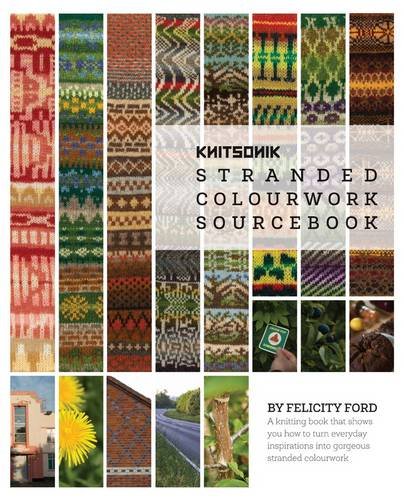
Amazon shows Felicity Ford's Knitsonik Stranded Colourwork Sourcebook as "currently unavailable." FF says a new edition will be available soon. In the U.K., at least, it can be purchased as a new book at http://knitsonik.bigcartel.com/ . Fairisle stitch, but anything but another book of traditional Fair Isle patterns.


Jerry Jenkins, co-creator of the Left Behind blockbuster series, wants everyone to know he's written a series of short, realistic mystery stories about a young woman who bonds with a young man as they solve mysteries together. These "books" were released as thirteen short novels and have been collected into two "volumes" of Kindle e-books.

Margo Mysteries Books 1-7 by [Jenkins, Jerry B.]

Margo Mysteries Books 8-13 by [Jenkins, Jerry B.]


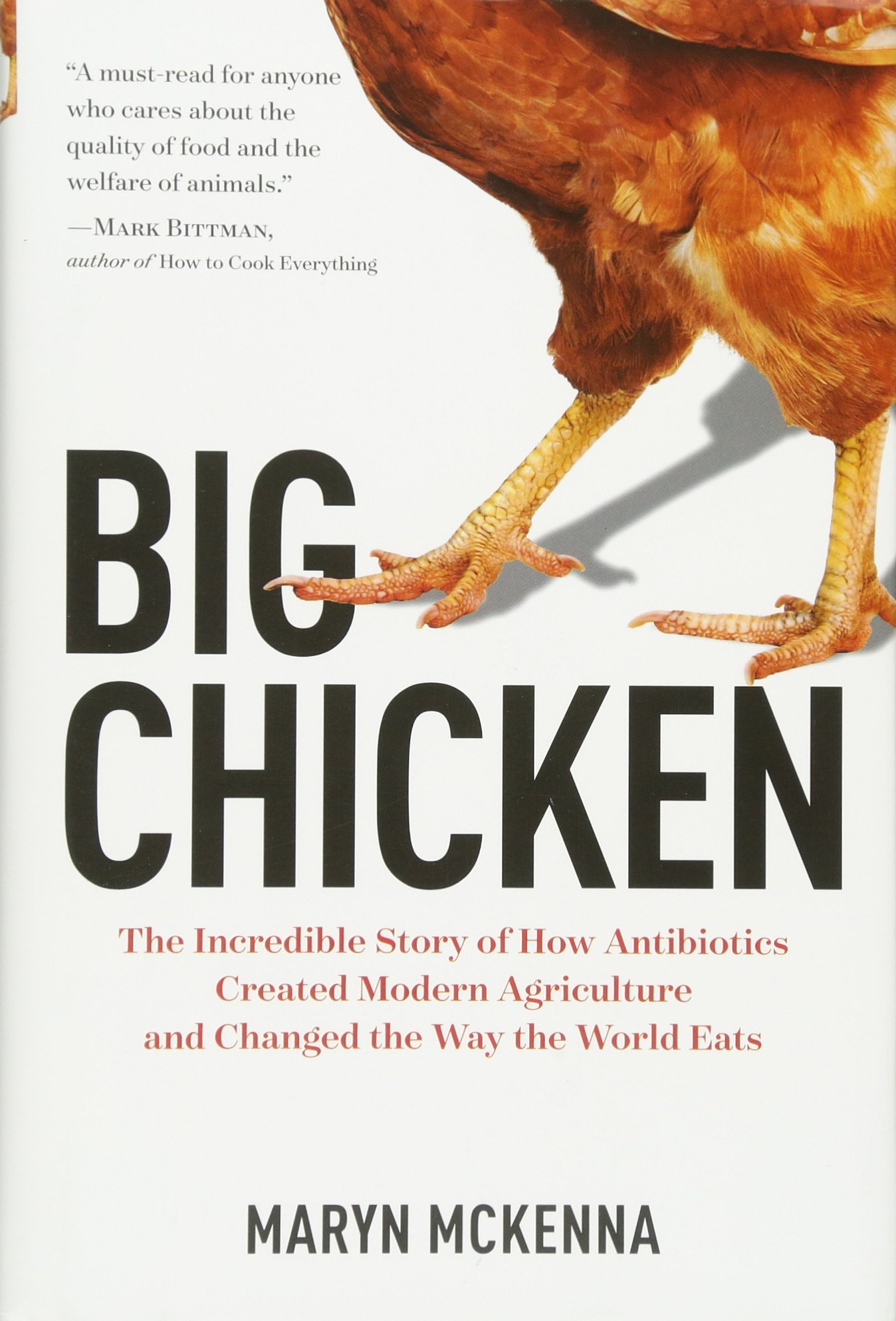
Science Friday recommends a book that sounds like the data to support something GBP's been saying for years: When animals are raised on big factory farms, they're kept in crowded conditions favorable to plagues of diseases, some of which also harm humans. So the big farmers routinely feed antibiotics to the animals they're raising for meat. So...antibiotic-resistant disease germs, like MRSA, become the dominant strains in the local population. Most healthy people are immune carriers of Staphylococcus aureus, the bacteria most likely to turn an ordinary blackhead into a nasty-looking sore; most people first realize they're immune-compromised when Staphylococcus aureus gives them pneumonia; most pneumonia has been successfully treated with methicillin, a fungus derivative--and methicillin-resistant Staphylococcus aureus has actually killed humans, not all of them even seventy years old. Eating factory-farmed meat can become hazardous to our health.


(If you eat at Olive Garden, you might want to sign:

https://www.change.org/p/olive-garden-demand-better-from-your-chicken-suppliers .)

Anne Peterson recommends:

BROKEN: A Story of Abuse and Survival by [Peterson, Anne]
The author dedicated this one to her sister who became a Missing Person: http://www.annepeterson.com/no-more-talking/
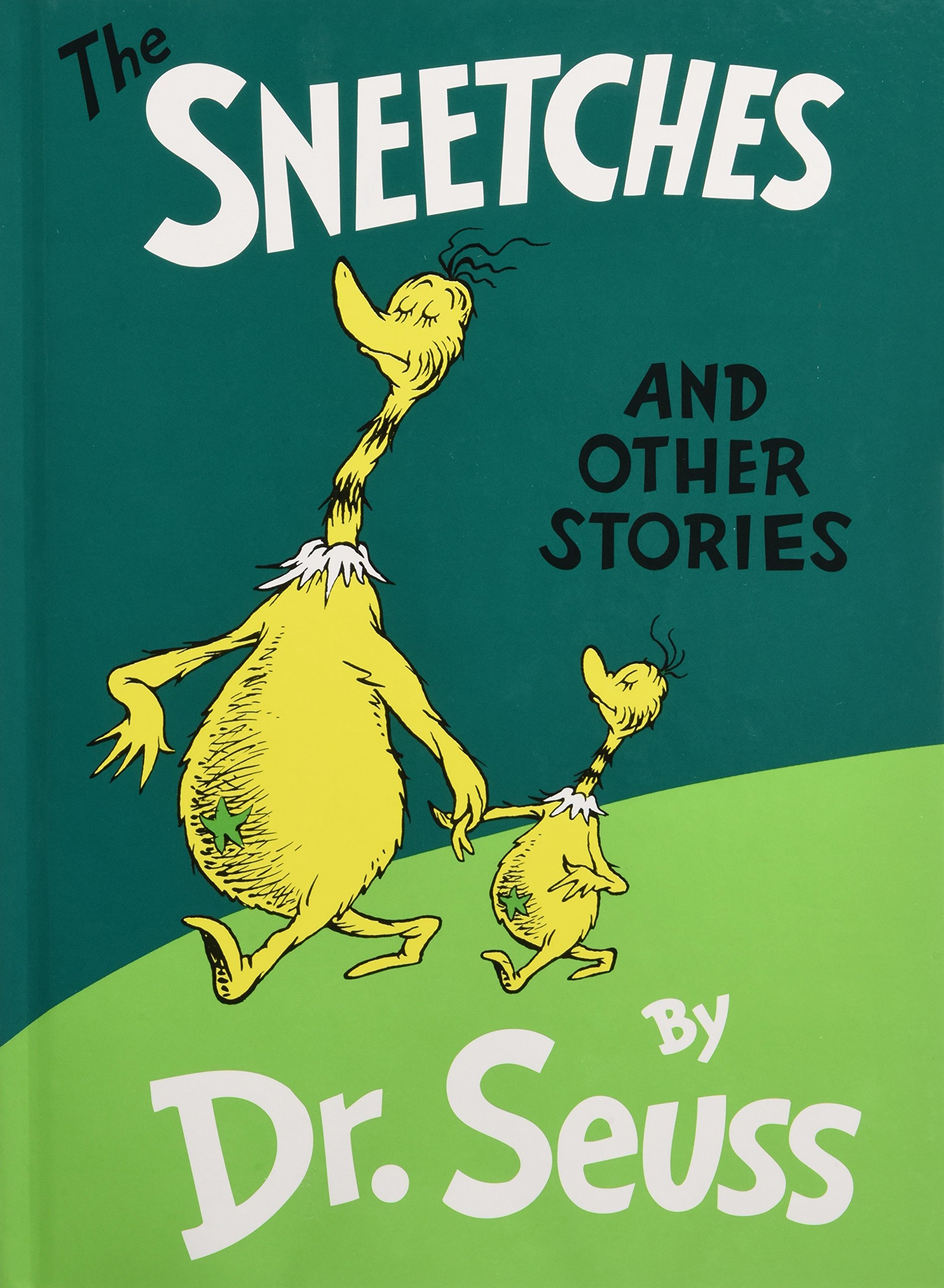
This one's so old I actually remember reading it when it was a new book, and I was in the age group for which it was recommended. (Hah. All books by Dr. Seuss appealed to adults at least as much as they did to kids.) It probably deserves a book review, except that I don't currently have a copy available for physical resale. Why? The rhymed story tends to stick in people's heads. I don't have to have opened a copy of this book in the past five years to recite lines of it. And apparently it's been forgotten by the young, because a recent news item was about a young idjit claiming that T. Seuss Geisel was racist (most of the creatures in his cartoons aren't human, but most of the human ones are little White boys). I think he was in fact sexist, and biographers report that he bought into the anti-Japanese hate campaigns of his youth, but I remember recognizing this as a story about the stupidity that is racism when I was seven years old. Anyone who does not remember it from primary school should read it now.


Cats have a much more intelligent view of "race." They probably don't enjoy colors as fully as (most) humans do, but they do notice different coat colors and textures. I've even seen, when social cats have integrated litters of weaned kittens, that young social kittens gravitate toward their color matches (I would not have made this up). Social cats are fascinated by their look-alikes. And they may choose color-matched mates, given a choice; Graybelle was certainly partial to a long-haired blue-gray mate, who later came to the Cat Sanctuary after losing his human and was officially named Graybeau. But, beyond that, cats don't seem to take color seriously. The fluffy white cat shown below would probably be just as desirable to a sleek black cat as a slinky Siamese would be.

Also recommended by Mudpie's Human.

You can't buy this one yet; you can pre-order it. You read this web site, therefore you're interested in real life in the modern Appalachian Mountains, therefore you should read Wendy Welch's book. This web site recommends that you pre-order it, new, from its publisher, to show respect. Nonfiction books don't get their fair share of respect these days.

Buy it from the University of Ohio at http://www.ohioswallow.com/book/Fall+or+Fly

Book Review: The Last Waltz

A Fair Trade Book


Title: The Last Waltz

Author: Nancy Zaroulis

Date: 1984

Publisher: Doubleday

ISBN: none

Length: 402 pages

Quote: “There is no family so secure that scandal cannot touch it.”

And in the late nineteenth century, when a few American women—who thought themselves well off—devoted their whole lives to the pursuit and display of social status, scandal really hurt. The Last Waltz is about one of those families.

Mostly it's about two women, Isabel and Marian, who meet in their late teens and grow “old” (by pre-twentieth-century standards) together. Both have “married well” in the sense of having married rich men who can give them liberal allowances of money to maintain the levels of extravagance they need to hold their social positions. (Isabel's husband is a standard-run snob-and-bore; Marian's is a 1980s caricature of 1880s sex phobia. They also have a friend, who answers to the name of “Pussie,” whose husband's gift to her is a then-fatal sexually transmitted disease.) Both are profoundly unhappy with their husbands.

At one point in the novel, Isabel says that what she really wants for one of her children is a life of freedom from all the burdens of “a social existence,” but when that child elopes and goes West to have that sort of life Isabel and Marian feel devastated.

It's interesting to note, reading this 1984 novel in 2017, how much research went into crafting these fictional steel-magnolia types as historically plausible in everything but the way their lives echo the trendy concerns of the 1980s. We're supposed to feel sorry for characters who aren't having lots of sex and enjoying every minute of it; Victorian sex phobics reinterpreted as stifled homosexuals would have appeared in a novel written around 1994; Victorian sex phobics reinterpreted as genuine asexuals (which was how they presented themselves) would be cutting-edge now, likely to appear in novels like The Last Waltz by 2014. If this novel had been written either earlier or later, Isabel and Marian might have taken more interest in “How the Other Half Lives”--Social Darwinism was a trendy idea in the late twentieth century, but so were charity-theme social events. Their ignorance of global history, and ability to ignore technological progress, are plausible given their characters but might have made them seem more narrow-minded than the average “society matron” of the 1880s. Their lack of spirituality or religion, ditto...and although there were a few Victorian “society ladies” who could describe a dress in less than a full paragraph, a Victorian lady who didn't carry around and identify herself with some form of needlework must have been a bit of a freak.

It's a study of the period, albeit a study shaped by twentieth century Women's History courses, but it does eventually form a plot. A “society gentleman,” of the type who was told at the time that he was No Gentleman but a Cad and a Bounder, is murdered. Masses of “society ladies,” Isabel and Marian tell us, had motives for wanting him dead. Whodunit? Isabel is accused and proved innocent, and another character's suicide might be an admission of guilt, but Marian is never quite certain.

The intention of The Last Waltz seems to be to cause readers to reflect, “Hmm...my great-grandmother didn't keep a diary but she seems to have had more fun than that.” Having a life was an option even for Victorians burdened by wealth, and did not always require a young person to “run away” to sea or with a circus. The biographies of Victorians like Florence Nightingale, Lottie Moon, Theodore Roosevelt, Laura Ingalls Wilder, or David Livingstone, show that even rich Victorians could always let the “society ladies” write them off as eccentric and/or provincial, and proceed to have all sorts of adventures. 

A favorite theme among the post-Victorian “Progressive” generation was, however, the claim that working-class Victorians had more fun than wealthy ones. This was occasionally true, as was the claim that rich Victorians still tended to die horribly young, but the undisputed fact was that poor Victorians were more likely to die younger from not yet preventable causes like tuberculosis. Silly, snobby social rules were enforced on rich Victorians largely by fear of diseases. In real life it would have been a lucky Victorian who reached the age of fifty with only one horrible memory of only one friend, like poor old Pussie, literally dissolving into pus. Those families with ten children and fourteen hired servants all went into quarantine together, during the epidemics of infectious diseases, and surviving family members might have watched three or four close relatives die within a month. Wearing all black, or black and white, was recognized to mean that an early Victorian was in mourning, but so many Victorians hardly found time to wear colored clothes that, for Isabel's and Marian's generation, black and white came to mean “formal” rather than “mourning.”

As I read my reactions kept vacillating between “This might be taken from the writer's grandmother's confession” and “This is a baby-boomer's fantasy of resurrecting her grandmother at a 1970s feminist consciousness raising session.” I'm still unsure to what extent Isabel and Marian are each of those types of fictional character.

Anyway, here's a relatively attractive pair of Victorian “society matrons,” “Yankee Ladies,” bustling and flouncing around the fashionable parts of the fashionable Northeastern cities, genteelly not mentioning any part of the history of their world except their own well-repressed misery. I'm not sure I believe them but I enjoyed reading about them more than I usually enjoy reading about fictional discontented rich people. Their 400-page story is not such a page-turner as to be hard to set aside at the end of your commute, and should amuse you through several train rides.


Nancy Zaroulis is still alive and writing, though not blogging, according to Bing, so this is a Fair Trade Book. When you buy it here, for $5 per book, $5 per package (at least two books of this size would fit into one package), + $1 per online payment, this web site will send $1 to Zaroulis or a charity of her choice. 

Monday, October 2, 2017

Book Review: The Prevention Get Young Get Thin Plan

A Fair Trade Book


Title: The Prevention Get Thin Get Young Plan

Author: Selene Yeager

Author's web site: https://seleneyeager.com/

Date: 2001

Publisher: Rodale

ISBN: 1-57954-217-4

Length: 472 pages plus index

Illustrations: lots of black-and-white photos of successful dieters

Quote: “Most diet plans focus exclusively on diet and exercise...This is the first plan that helps you boost your self-confidence and overcome stress...[and] learn how to play again.”

Yeager, co-author Bridget Doherty, and the fact-checking team at Prevention magazine claim that they recruited two men along with seven women to test this weight management book. (Each man was married to one of the women.) Once in a while their text surprises me by throwing in a reference to the male dieters' experience. Most of this book is definitely addressed to women, with detailed sections about clothes and hair styles to enhance a woman's look at whatever stage of weight loss she may be, an “activities quiz” including the question, “My favorite sport in school was: a. Basketball; b. Soccer; c. Softball; d. Gymnastics; e. Cheerleading” (Hello? What about tennis?), and some tastefully airbrushed discussions of the “women's health” concerns not directly related to childbirth (but including those related to menopause). So if you're a man, unless you're buying this book for a woman (who suggested you buy her a diet book!), you probably want to give The Prevention Get Thin Get Young Plan a miss.

If you're a woman...well...no, there's nothing scientific about Yeager's little quizzes. (I think they're meant to provide comic relief. Laughing out loud works the diaphragm and tones one of the spots where most women most need toning.) The short version of the insulin resistance, or pre-diabetic, test is the only quiz you really need to take seriously, and only if it shows that you might be pre-diabetic.

And then...there's no menu plan, no recipes. This book is for the woman who's been there and done that. You observe what you are eating and make mindful choices about what you ought to be eating, instead, to lose weight. This book does not activate any insulin reactions with long considerations of food.

What Yeager does, instead, is give her audience twelve weeks of short articles to read, including some articles about nutritional considerations, but more about exercise, sports, motivation, stress relief, and fashion. Her goal is to help steer the overweight woman away from the kitchen. For each week, there's one or two commonsense articles about food choices, with titles like “Double Up on Fruits and Vegetables” and “Fat-Fighting Fiber,” and one or two more about exercise, sports, and fashion. For some weeks there are those short, amusing quizzes with titles like “Are You a Cher or an Oprah?”


For any woman who's already memorized the calorie, fat gram, and carb counts for a couple hundred food items, who's already lost weight and even kept it off for five years but then after the last baby or broken ankle etc. etc., this book may be to the conventional diet books what Walker Percy's Lost in the Cosmos was to psychological self-help books in the 1980s...far from being the most complete, the most influential, or the most informative, but nevertheless quite possibly the one that may help readers pull together and use what they've learned from the others.

As regular readers know, "A Fair Trade Book" means that the author is still alive, so if you buy a gently used copy here we'll send 10% of the real-world total payment to the writer or a charity of the writer's choice. In this case (as in most cases) that means you send $5 per copy plus $5 per package plus $1 per online payment to the appropriate address (see the very bottom of the screen), and we'll send Yeager or her charity $1. Note that salolianigodagewi is not the Paypal address; it's the address that sorts correspondence and delivers the right Paypal address for what you're buying here. If you don't want to wait for the e-mail, send a U.S. postal money order to Boxholder, P.O. Box 322. At least one more book, two if both are small, will fit into one $5 package along with this one.

Sunday, October 1, 2017

Book Review: It's Your Time

A Fair Trade Book


Title: It's Your Time

Author: Joel Osteen

Author's web site: www.joelosteen.com

Date: 2009

Publisher: Simon & Schuster

ISBN: 978-1-4391-0011-0

Length: 304 pages

Quote: “The book begins with a section entitled 'It's Time to Believe,' because tough times require strong faith...'It's Time to Trust' builds your resolve by reminding you...that all things work together for good...”

When +Andria Perry  identified Joel Osteen as “her preacher,” what came to my mind was another book by him I'd seen somewhere, which I remembered as a generic evangelical Protestant book identified with another currently popular TV preacher.

When somebody started sponsoring ad messages, “What's Wrong with Joel Osteen,” to clutter the screen of my e-mail...the Advertising Age is sooo over. If you seriously want me to buy, read, or believe something, you don't want me to see that thing in an ad. I'm sorry. I would like to believe that slick commercial ads work for somebody, but for me they do not.

So I was biased in Osteen's favor...until I read this book.

This is what's wrong with Joel Osteen: If your face is contorted in a strained, squinty, toothy grin because you are looking at harsh lights, that might just mean that you don't have the best TV crew in the world. If you are grinning because you are talking about one of the Bible passages that are in fact funny, like the inconsistent teachers who “strain at a gnat and swallow a camel,” that might offend people who think reverence equals solemnity, but I'm not one of those people and I don't read Jesus as one of them either. If you are grinning because you are the pastor of a church that just got a good deal on a restaurant building you plan to use for bigger and better fellowship dinners, cheers to you!

If you are grinning because you have somehow convinced people who are in financial straits, themselves, to send you enough money to make you wealthy, and you are raking in the money as you tell them to be sure and say grace while they are eating either rice or beans because they can't afford both, then...I want to be very very charitable here...the kindest thing for Christians to do about you is for everybody to sit on their own money and let you try living on head trips instead of actual wages. The experience of foraging through dumpsters for something to eat might give some credibility to your message, and no right-thinking Christian should interfere with your having that experience.

I'm sorry to report that that's how I read It's Your Time: another round of “Send all your money to me and you just think about growing rich, through some mystical 'spiritual law' unrelated to any actual or potential plan to generate or recover any money.”

Meh. I could probably preach that, the way so many people seem to have got rich doing. I've never had telegenic teeth, always said I'd have to have the good-looking kind of teeth implanted and always felt it was easier to live with the ugly teeth I have, but Osteen's teeth don't look all that expensive. I don't like the way I look on television, but people who are older and fatter in real life seem to survive. And anybody can repeat the Proof Texts of Positive Thinking while ignoring the original New Testament altogether: just keep chanting “As a man thinketh in his heart, so is he” and forget about “As ye have done unto the least of these My brethren, ye have done unto Me”...


...Unless, of course, that person actually believes any part of the Christian message. That's fatal. That accounts for the weird, off-putting quality of the grin in the cover photo. Real Christians can't forget "As ye have done unto the least of these My brethren," no matter how hard they try.

Real Christians might even find themselves remembering the actual context of "As a man thinketh in his heart, so is he." It does not preach Positive Thinking. The passage is warning a young man about false friends and hypocrites. (You can click on the lighter-colored text in those Bible quotes to read both of them in context at Biblia.com. Isn't that a nifty web site?)

Osteen's notoriety surged, of course, during the Houston flood, and the Twitter chatter about whether he was setting up a shelter for flood victims in the less than floodproof basement of the Lakewood church, and whether it would have been better to start packing people into the said basement when the waters might have continued to rise and the people might have had to be packed out again...Some people are too quick to pounce on any possible error any Christian might make. It would be interesting, if anyone wanted to bother, to see how many of Osteen's instant critics were themselves using Twitter to search for friends and offer lodging to them. But, er, um...I don't think I ever left the bus station in Houston, I know I never actually visited my cousin there, but from the words "floods in Houston" my mind automatically jumps to "Is my cousin out there dry? If not, does she need to come to my house? Does she know she's welcome to pack a van with needy neighbors, if she has any, and of course she should bring her cats?" (I'll admit I'm glad she didn't need lodging.) So the idea of a "church family" where some of the "brethren" might be sweltering in city shelters, and others are not automatically going "Do they need to come to my house?" sounds less than family-like, not to mention less than Christian. 

Positive Thinkers...if you sit at their table, beware, for what they're thinking in their heart is what they really are, and that's likely to be: false friends and hypocrites. Sincere Christians have been attracted to Positive Thinking, have tried to believe it, have even been confused enough to mistake it for solid Christian teaching, and of course we can't be completely sure that Osteen's not one of them. But Positive Thinking is a completely different way of thinking, more Pagan than Christian, and my heart goes out to those sincere Christians who expect Christian fellowship from Positive Thinkers. So many of them have been so badly disappointed.

Can this web site say something a tiny bit more encouraging to Osteen? What about the closing points from the greatest sermon ever preached...Matthew 7, copied here from the Biblia page:

"
7 fAsk, gand it shall be given you; hseek, and ye shall find; knock, and it shall beopened unto you: 8 For every one that asketh receiveth; and he that hseeketh findeth; and to him that knocketh it shall be opened. 9 Or what man is there of you, whom if his son ask bread, will he give him a stone? 10 Or if he ask a fish, will he give him a serpent?11 If ye then, being evil, know how to give good gifts unto your children, how much more shall iyour Father which is in heaven give good things to them that ask him? 12 Therefore all things kwhatsoever ye would that men should do to you, do ye even so to them: lfor this is the law and the prophets.
13 mEnter ye in at the strait gate: for wide is the gate, and broad is the way, that leadeth to destruction, and many there be which go in thereat: 14 ||Because strait is the gate, and narrow is the way, which leadeth unto life, and few there be that find it.
15 nBeware of false prophets, which come to you in sheep’s clothing, but inwardly they are oravening wolves. 16 pYe shall know them by their fruits. Do men gather grapes of thorns, or figs of thistles? 17 Even so every good tree bringeth forth good fruit; but a corrupt tree bringeth forth evil fruit. 18 A good tree cannot bring forth evil fruit, neither can a corrupt tree bring forth good fruit. 19 qEvery tree that bringeth not forth good fruit is hewn down, and cast into the fire. 20 Wherefore pby their fruits ye shall know them.
"

Positive Thinkers blather about how people should tell themselves not to feel like victims while sweltering in shelters. Christians give whatever God has allowed them to give. It is not impossible for a Christian to break the habit of Positive Thinking and become a real, radical, sincere follower of Christ...who neither hoarded worldly goods, nor told people how to feel, and most assuredly did not tell people to try to feel like something other than victims when a natural disaster had destroyed their homes. I can't say much in support of Osteen's books but I can say that it's still possible for him to start following Jesus.

Wow. Way not to sell a book! Well...if you want to preach against Positive Thinking, buying a secondhand book that's full of it may be useful, and if so, I have a copy of It's Your Time, yet another title from that book-clueless friend...I'm not even halfway through her contributions yet, Gentle Readers. $5 per book, $5 per package, $1 per online payment, and if you do buy this book here, this web site will indeed send $1 to Joel Osteen or a charity of his choice. And we (yes, Grandma Bonnie Peters, and likewise Lisiwayu, as well as me) will pray for Osteen.

He certainly writes as one who could use a lot of prayer.