Tuesday, December 5, 2017

Morgan Griffith Went to Puerto Rico And...

Our Congressman, Morgan Griffith (R-VA-9), went to Puerto Rico and shared some nice clear photos and links. Hmm. Do you see pictures? Will I see pictures when this press release goes live? Here's Take One with the pictures in it. More about what the committee learned at those links, below. Testing, testing...

From U.S. Representative Morgan Griffith:

"

Bipartisan Committee Delegation Toured Storm-Ravaged Puerto Rico and U.S. Virgin Islands

WASHINGTON, DC – Bipartisan leaders of the Energy and Commerce Committee and committee staff joined Delegate Stacey Plaskett (D-VI) and Resident Commissioner Jenniffer González-Colón (R-PR) on a trip to Puerto Rico and the U.S. Virgin Islands this past weekend to receive a first-hand look at the damage wrought by the recent series of hurricanes and to receive an update on response and recovery efforts.
The Energy and Commerce Committee will continue to oversee the progress of the federal response and recovery efforts in Puerto Rico and the U.S. Virgin Islands to ensure that these territories and their people receive the assistance they need amid the massive challenges they face.
The delegation consisted of: Full committee Chairman Greg Walden (R-OR), Full committee Ranking Member Frank Pallone, Jr. (D-NJ), #SubEnergy Chairman Fred Upton (R-MI), #SubEnergy Ranking Member Bobby Rush (D-IL), #SubEnvironment Chairman John Shimkus (R-IL), #SubHealth Chairman Michael C. Burgess, M.D. (R-TX), #SubOversight Vice Chairman Morgan Griffith (R-VA), and #SubOversight Ranking Member Diana DeGette (D-CO).
Codel1
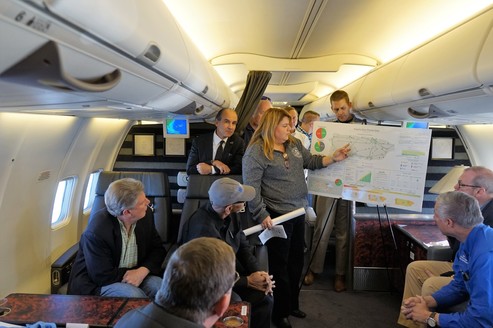
Resident Commissioner Jenniffer González-Colón briefs committee members with a map of Puerto Rico’s power grid
Codel2
Committee members hold a press conference after a full day of touring Puerto Rico
Codel3
Members tour a temporary bridge in Utuado, Puerto Rico, built by the U.S. Army Corps of Engineers to reconnect an isolated community to the mainland
Codel5
An aerial shot of a damaged solar farm outside of Humacao, Puerto Rico (10 miles south of where the hurricane made landfall)
Codel6
Chairman Walden gets a firsthand look at a damaged solar farm in the U.S. Virgin Islands
Codel7
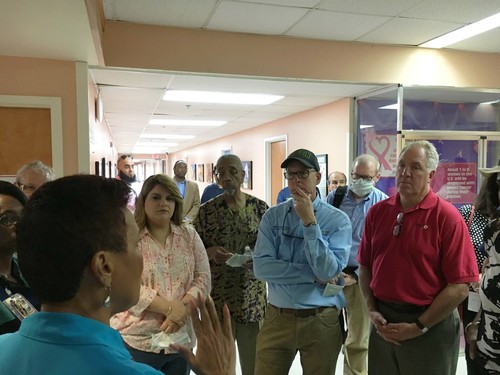
Chairman Walden, Rep. Rush, Rep. Shimkus, and Puerto Rico Resident Commissioner González-Colón listen as they tour the Juan F. Luis Hospital in St. Croix
Codel8
Members briefed by the U.S. Army Corps of Engineers at the Palo Seco power plant in Puerto Rico
Codel9
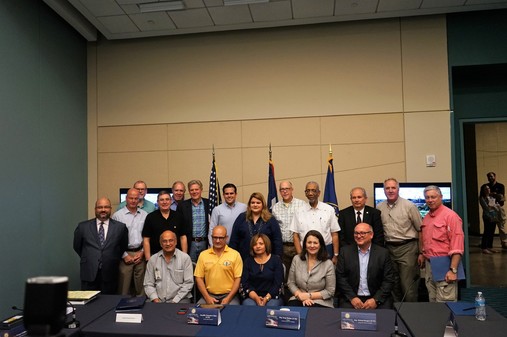
Committee members, Puerto Rico Governor Ricardo Rosselló, and community health care leaders pose after a briefing
Codel10
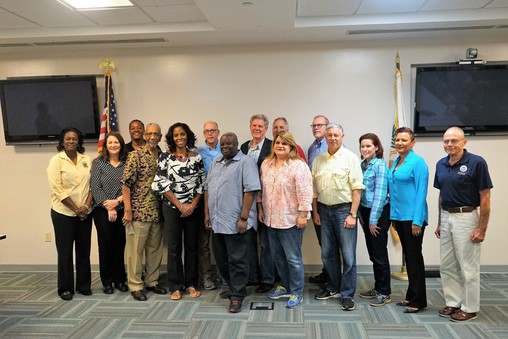
U.S. Virgin Islands Governor Kenneth Mapp, Delegate Plaskett, committee members and local public and private sector leaders following a roundtable discussion
The Energy and Commerce Committee has held three hearings on the recent series of hurricanes.
  • #SubOversight held a hearing on October 24, 2017, examining the public health response and preparedness efforts related to the hurricanes.
  • #SubEnergy held a hearing on November 2, 2017, examining the federal and state response and recovery efforts.
  • #SubEnvironment held a hearing on November 14, 2017, examining the federal, state, and local response to the environmental damage. 
"

Book Review: The Canaan Legacy

Not a Fair Trade Book, But...


Title of book I have: The Canaan Legacy

Title of new edition you should buy to encourage the author: 


Author: Michael A. Kahn

Author's web page: http://www.michaelakahn.com/

Date: 1988

Publisher: Lynx

ISBN: 1-55802-156-6

Length: 385 pages

Quote: “But men like Graham Anderson Marshall don’t bury pets in Wagging Tail Estates.”

Rachel Gold wants to find out what Marshall did bury under a memorial to “Canaan, 1985,” with a legacy for maintenance in ludicrous excess of the posh pet cemetery’s standard fees. Rachel is a heroine in the great Hollywood tradition. She might have been a corporate lawyer if she hadn’t preferred to abandon the career for an amateur detective adventure, then stay home and have babies. Not until the adventure is in full swing will it occur to her that Canaan’s little coffin can simply be opened.


You'll forgive Rachel for taking the time and money to do a lot of things that are more dangerous to her and her friends than looking at a decomposing dog, though, because the wild goose chase she starts turns into a lively, and deadpan-funny, detective story. Instead of the usual tour of yucky criminal subcultures or rich people with horrible secrets, this mystery, like some of Chesterton's, introduces us to intelligent people who have too much time on their hands, because they've not been hired to do jobs that really used their brains, and consequently think of outrageous posthumous pranks to play on their heirs. People who like detective stories not only forgive Rachel; by now they've liked her enough to generate a whole series. 

Some day, a battered first edition of The Canaan Legacy may be valuable. Local readers should buy mine by all means. Online readers, please buy Grave Designs and successive titles as new books from Michael Kahn, to show support.

Monday, December 4, 2017

Book Review: Crockery Cookery

Title: Crockery Cookery


Author: Mable Hoffman

Date: 1975

Publisher: HP/Bantam

ISBN: none

Length: 288 pages

Illustrations: black-and-white photos of food

Quote: “You can go to work or spend a day leisurely shopping while your slow-cooking pot gently mingles flavors...and retains many vitamins high temperatures destroy.”

It is possible that, if I’d read this book and realized that it was possible to cook things in a removable, washable dish inside an electric slow-cooker, I would have got some use out of the one I briefly owned. As things were, trying to clean a pot that wouldn’t fit into the sink and couldn’t be immersed in soapy, chlorinated, and fresh water in turn got old in a hurry; I don’t think I used the Crock-Pot twice. Yet many busy cooks swear by them.

Slow cooking was not a new fad in the 1970s. It’s actually traditional in many cultures, where the original recipes might have involved sealing an earthenware pot with raw clay and burying it in the ashes overnight, steaming food between dense mats of seaweed in a heavy pot, or starting Sunday’s stew boiling over the fire that roasted Friday’s meat and then leaving the stew in the pot on Saturday. Foods called daube, olla,or tagine were named after heavy pots designed for slow cooking. Slow cooking methods fell out of favor when Americans got all excited about cooking with gas or electricity; slow-cooking on a gas or electric stove is as difficult as it is wasteful. When people became nostalgic about the slow-cooked stews Grandma used to make, manufacturers developed special electric slow cooking pots that used lower amounts of electricity to maintain lower temperatures longer, and slow cooking recipes became popular again.

Here is an expert recipe tester’s guide to cooking everything, including bread, in each of the early electric slow cooking pots. The main difference among those models and between them and more recent models, as Hoffman notes, is size; bigger recipes may not fit into some of the smaller pots. Also, I’ve not seen a slow cooker with a “browning” device lately, so if you want to brown or boil something on high heat, these days you do need a conventional pot, and if you want a crisp crust on baked goods you need to finish them in a hot oven. Otherwise...well, the recipes will work.

Personally, I’m not keen on that “baked beans” flavor produced by combinations of salt, sugar, vinegar, and mustard. It doesn’t make me sick, as some popular potluck dinner dishes do, so at a potluck dinner I’ll eat it and may even like it, but I don’t buy it for myself or cook it at home. Reading through her recipes, I suspect that that was Hoffman’s very favorite flavor in all the world. Then again, sweet-sour-salty flavors are traditional in Eastern Europe, the home of one of the major slow-cooking traditions, so Hoffman probably found a lot of recipes that featured that combination. In any case, considering how many recipes this book contains, it surprised me how few of them I added to my own “must try this some time” file.

You, however, might be another baked beans lover, in which case this cookbook is just for you.

In the 1970s mainstream foodies weren’t snobs about food additives so much as about having taken the time to prepare food at home. Recipes from this period often integrated “convenience food” products into elaborate recipes. Hoffman doesn’t use monosodium glutamate as a seasoning (it was marketed as one in the 1970s) but does use some bottled sauces that, although she doesn’t specify brand names, probably weren’t the same ones you might use now.

Of mostly nostalgic interest—although some of these gadgets are still in active service—is Hoffman’s 84-page guide to the slow cookers of the early 1970s, with full-page black-and-white photos of each one. That leaves almost 200 pages of recipes for meats, vegetables, breads, and desserts. There’s no particular effort to cater to any special diet, but among this many recipes it’s easy to spot the ones that are naturally gluten-free, dairy-free, vegan, low-sodium, sugar-free, or whatever else you might want. Not many of the recipes are vegan, but enough are that this book might inspire vegans to use their slow cookers.

Next question: How will you, personally, like these recipes? Try them and see. Some things taste much the same whether they’re simmered half an hour on a stove burner turned to “low,” or steamed eight hours in a crock-pot. With other things, the difference is easy to spot. Steamed breads have a texture of their own, not unpleasant but distinctive. Some vegetables taste fresher when blanched briefly in boiling water and served before they completely wilt, and some are fresher (and more digestible) when slow-cooked. Beef slow-cooks well. Some people positively insist on slow cooking for rice, and you may like slow cooking for other grains. As with the microwave, the slow cooker adds a whole new range of possible flavors to the same old foods your family always eat.

If you have a slow cooker, you should have a collection of recipes for it. Here is an extensive one. 

Sunday, December 3, 2017

Book Review: Meet Yourself in the Parables

A Fair Trade Book


Title: Meet Yourself in the Parables

Author: Warren W. Wiersbe

Date: 1979

Publisher: SP / Victor

ISBN: 0-88207-877-1

Length: 160 pages

Quote: “The parables are not bedtime stories to put us to sleep, but bugle calls to wake us up!”

There are a few different ways of looking at the stories Jesus told. Some want to believe all of them were literally true; some want to find an allegorical meaning for every detail. Warren Wiersbe tries to steer a middle course and stick to the moral lessons Jesus seemed to be emphasizing.

The result is thirteen solid and unobjectionable Bible studies, each of which contains a call to action:

1. Study the parables
2. Study in order to teach
3. Make your church lively
4. Forgive others as God has forgiven you
5. Help others in practical ways
6. Pray about your immediate needs, but pray on “higher” levels too
7. Give money to your church
8. Welcome diverse kinds of people, specifically including the poor and the disabled, to church
9. In the Great Controversy between God and Satan, take a side and stick to ti
10. Don't set too much value on money and “career success”
11. Forgive others as God has forgiven you
12. Avoid the Deadly Sin of Envy
13. Be a bold “investor” of the Gospel message

These may not be the calls to action that suggest themselves to you as you read the parables studied, each of which is reprinted in this book. And the repetition...some Protestant churches structure their Bible study programs (Sunday School) around the idea of tracing one theme through thirteen weekly studies, and Meet Yourself in the Parables is an excellent specimen of that genre, but two identical calls for action in one “quarterly” course...oh dear, oh dear. Luke 7:36-50 and Matthew 18:21-35 actually contain different stories told to illustrate different ideas—the former is about the prejudice “nice” people feel toward newly reformed people with especially interesting pasts, and the latter is about forgiving someone who actually sinned against you and has repented—but Wiersbe overlooks the opportunity to expound on these two passages in such a way as to generate two distinct calls to action.

As for Luke 19:11-27...denominational differences have been based on this passage. There are two ways of hearing the story. Either the nobleman, although he represents God, was in historical fact the mean, greedy, money-grubbing man his fainthearted servant said he was, and liked being that way, and had seriously expected the fainthearted servant to lend the money at interest; or he was insulted by the craven servant's blundering accusation and basically sneered, “Right; since you know I'm a thief, why didn't do you do what a thief would have done with the money?”If we'd been watching Jesus tell his story we might understand which way He meant it. Since we've not had that opportunity, let's just say that the Torah forbids collecting interest from a fellow believer (Jews were allowed to lend money at interest to Gentiles, which has been a fertile ground for endless hate and prejudice ever since Moses' time) and Jesus probably was not recommending an interest-based economic system to Christians. To bound away from this controversial study into an oh-so-spiritual discussion of “investing the Gospel” in evangelical efforts certainly shows creativity. It may be useful to you; it may seem more of a distraction. I'd like, here, just to salute the creativity of Sunday School teachers who've thought of it.


Verdict: This was one of my book-clueless friend's contributions to that bookstore (in which some Christians need to invest the Gospel all right) but, on consideration, it's a book I'd like to keep for another while. Y'know, when someone is in between prescription glasses and doesn't even read books but just judges them strictly by their covers...sooner or later that person is going to pick something really good! No worries. This is what Amazon is for: allowing me to keep my books and sell them to you too.

Warren Wiersbe is still alive and active, so this is still A Fair Trade Book: when you send $5 per book, $5 per package, plus $1 per online payment, this web site will send $1 to Wiersbe or a charity of his choice. At least twelve of these little books would fit into one package and, if you ordered twelve copies, you'd pay $65 (or $66) and Wiersbe('s church) would get $12.

Friday, December 1, 2017

Conyers Cosby Lauer Keillor Moore O'Reilly I Lose Count: About That Twitterstorm...

(Trigger warning: discusses sexual abuse from viewpoint of a brave AND LUCKY old lady...)

This is a free, unsponsored, looong post for those who've seen some of my Twitter comments and wondered which side I'm on. In this post I share some memories of the cultural context in which some alleged crimes occurred, by way of explaining why, no, they don't sound all that bad to baby-boomers, and, yes, their being stirred up does sound like a potential hazard for the next generation. I think it's a good sign that these things do sound like crimes to the young. I think most of them sound like something less than rape or child abuse--but yes, it's good to see evidence that young women aren't expected to accept membership in a "Touchable Caste" (Mary Daly's phrase) as automatically part of being junior employees.



Feminist activist organizations? Should men send them money as proof of good will? Hahaha, they'd love that wouldn't they? Meh. I was actually on the payroll of one of those organizations, for a while, with the official job title of "Feminist Activist." Did I agree with the other women in that organization about everything, even in 1988? Of course not; most were real left-wingnuts and a majority were also lesbians. Did I agree with them about the need for a rape crisis hotline and shelter system in Washington? Well, duh...at the time, that was sort of like agreeing that Washington is located at the confluence of the Potomac and Anacostia Rivers.

Below is the first feminist organization link that turned up in this morning's e-mail. I expect to receive more. I won't post all of the links here, but will probably post them on Twitter. For reference: I recommend thorough research on any of these organizations you want to support. The fact that women are "Feminist Activists" and/or lesbians does not automatically mean that they're wingnuts, or that your funding can't be specifically directed to those of their goals that you also endorse.

I do recommend that conservatives, men, and happily married women network with those "shrill, strident, man-hating" feminists who become leaders by default in so many of these groups. Dialogue with "the opposition" (on things like abortion, which I know some readers believe is close to murder) works when it begins with good will and Christian compassion. Hear them out when they vent about their abusive step-relatives, ex-husbands, etc.; try not to treat it as a moral issue that the men in your family are, or the women in your family say you are, different from those jerks. Let'em know that what you're supporting is sensible education of the public, about things like "Women have the right to walk down the street or ride on the subway without being harassed" and "Patting junior employees is obnoxious unless, and until, you really are close enough that they feel equally free to pat you," and fair payment for work done, and equal (not privileged) access to scholarships, and so on. Do support those things. Why should Soros and his ilk be the only ones to coast on all that gynergy? Why not steer the organizations toward things that can actually be good for all women?

http://www.aware.org.sg/research-advocacy/lets-unite-to-end-violence-against-women/

Here's the problem I'm seeing: Picture a whole room filled with--to make this bearable, let's picture them as papers. Creditors seized the furniture and dumped all the files out on the floor, and what we're now sorting out are letters in which different women have described the gender-related ( #metoo ) incidents of their past.

In one corner we have letters about outright rape. These are scenes of life-threatening violence. Attackers broke into women's homes. Some of them were motivated by hate for the women's fathers or husbands, whom they had murdered. Or they were stepfathers, stepbrothers, in-laws, family friends, teachers or school/church/camp employees, who felt entitled to teach young women the lesson that young women should expect violence and live their whole lives in fear of violence from men. Or they were school or neighborhood bullies who dragged women back behind the dumpster outside a low-security store. In many countries the majority of rapes are war crimes. In others they're committed by employers and supervisors who contract for cheap foreign labor through international job/training/volunteer organizations. These women are physically unable to resist or escape, or believe they are; the rapes may be committed by gangs; weapons may have been held against the woman's head or throat. Some of these letters have had to be written by the next of kin, because the women were murdered during or after the rapes. (There's a common pattern in which rapists are actually impotent, so instead of completing a rape they maim or kill the victim.) A handful of these letters come from men.

In another corner we have letters about real child abuse. Although some of these are vintage-porn-style stories about teenagers who struggle with mixed feelings about having been seduced, some of them are too disgusting to imagine. They're as violent as the stories about rape except that the rapists don't even have the nerve to approach young women, so they pick on small children.

When I think of child abuse, I think of a teenager whom social workers and foster parents were really trying very hard, in the late 1980s, to train to think of her experience as "abuse" rather than "seduction." She looked like a full-grown woman, had felt like one while having sex with an emotionally abusive older man, and would have liked to have society recognize her "right" to have sex with other full-grown men who might have been more fun to know. She wasn't raped; I find it hard to agree with those who said she was even abused. Even some social workers, at the time, were making the claim that what this swingin' chick needed was a free supply of birth control pills. But the problem with the predatory older man was that after having seduced the teenaged girl he moved on to her eight-year-old brother...obviously having been close to someone like that would leave anyone, of any age, feeling defiled.

The pile of letters in the corners for rape and child abuse are horribly high, but as we sort other letters into other corners those piles quickly rise even higher.

"Date rape"? "I liked this guy, I suggested that we park in a well-known 'lovers' lane,' I was really enjoying the kissing and petting in his car, but I'd been taught that petting was supposed to stop short of orgasm so I stopped, and it really grossed me out that he (sob) soiled my coattail..." I have a very hard time with the idea of this experience being described as rape. When I was growing up the consensus of opinion was that this gal was asking for what she got, and this guy had behaved as well as could be expected, under the circumstances. I still think the woman's emotions represent a hormone reaction known as frustration. I'm glad to see young people agreeing that that's no longer the case, that it wasn't just the status difference or the betrayal of his marriage that made Bill Clinton's getting Monica Lewinsky's clothes dirty so unacceptable. But in 1979 there was no such consensus.

Because, Young Readers...your parents understandably don't like to talk about this with you, but in the 1979s we were still "enjoying" (well, some of us claimed to be enjoying) a so-called sexual revolution. AIDS had not become an epidemic; treatments for other STD's seemed safe, cheap, and easy; and some people may honestly have believed that if everybody just had as much sexual pleasure as possible, we wouldn't feel that nasty old frustration that caused people to dislike each other. A few people were starting to say "Make love not babies," but the bumper sticker you saw on every road trip was "Make love not war." Some "sex educators" were waxing enthusiastic about the idea that children ought to be exposed to the sight of adult sexual activity, encouraged to act out what they'd seen at home, and "gently initiated" into having sex with, oh well maybe not parents or siblings, arguably not their own teachers or doctors, but anyone else who was interested, at any age after the first hormone-related mess appeared on a bed sheet.

P.J. O'Rourke summed it up in one of those vintage books this site has recently reviewed, I forget which one: "The sexual revolution is over. The microbes won." Nevertheless, Live Journal had a flourishing "Polyamory" page for a long time; a lot of people wanted to try "expressing their sexuality" in relationships they imagined might be more egalitarian than marriage. And in 1979, if Jane Doe was enjoying the petting but wanted to stop before John Roe did, even the affluent educated class would have agreed that Jane Doe really needed to break through those nasty old inhibitions--in the parked car, or at John's house, or, if necessary, with the help of a professional "sex therapist" who could help her reprogram her emotions through hypnosis (and probably at least heavy petting with the "therapist").

For the working class it was different.

In 1979 I was one of the "preppy" teenaged girls who were not trying to snare husbands through what they claimed was less than promiscuous premarital sex. I really was a virgin--no dates, and minimal kissing, because I knew where that sort of thing normally led. Some of my school friends really were virgins too. Others were actively husband-hunting--and, high school boys being what they are, nearly all of those early bloomers were rushing into the open arms of older guys, whether that meant a 19-year-old girl and a 21-year-old guy (like my parents when they met), or a 14-year-old girl and a 38-year-old guy (such as my husband and I would have been if we'd met when I was 14).

In fact my virginity and affected asexuality were a point of controversy I was blessed to be able to avoid by having a baby face to hide behind. I was and still am smaller than most White American women my age. I was one of those kids whose name everybody learns, in high school, after a conversation that begins with things like "What are you looking for here, little kid?" or "Hey, look at that one--which grade school did that one escape from?" People felt sorry for me, being in high school while looking and apparently feeling like "a child," which was not a complimentary term; but at least they didn't grab at me. I was grateful. At the same time I was aware that the controversy ran deeper than whether or not I was young enough to have a right to edge away when an older kid said something raunchy, or old enough to need some sort of counselling to appreciate that that crass invitation was at least meant to be flattering.

I think it may help some readers to consider the data, anecdote by anecdote, and see if they don't reach the same conclusion I do.

It was also that...(reset the generic names) Jane Smith successfully lobbied for the right to be too "modest" to wear those awful gym uniforms, for which the whole class admired her, and she didn't date or admit to any interest in sex. (Her father was a successful businessman nominated for public office.) Mary Jones, and Suzie Brown, and Jennifer Miller were popular girls who treated all the popular boys like cousins, even to the point of using "cool, liberated" (raunchy) words in mixed company. (Their parents were also rich.) Sally Doe, the preppiest and most virginal of us all, wasn't rich; she was the daughter of The Vietnam War Widow and had a scholarship to maintain. They were going to college. They were going to have high-salary jobs, if only for a year or two until they found someone to marry and decided to stay home and have babies.

Whereas Monica Roe, who scribbled things like "Please rape me" on her schoolbooks in grade eight (yes, she was 14), found an older man, got pregnant, and got married, in that order, in grade nine. I don't remember the man's age, although I was probably told. I don't know how long the marriage lasted. Mr. Roe was a businessman, but not so successful. Monica was not classified as a "college-bound student."

And Paula Smith, who gigglingly confided at the bus stop that her relationship with an older man was "getting awfully close," such that she told him they'd better think about marriage during a scene like what Leigh Corfman described with Roy Moore...I don't know exactly how old he was, either. Probably not all of 30, but definitely more than 19, which was Paula's age. I was 16. Paula was in my class because she'd started strategically underachieving in order to repeat classes and stay in school, to extend the time she could afford to stay home with her disabled mother, who drew a Supplemental Security Income pension. She was as nice a girl as any of us and I'm glad that she and her older guy are still married.

And Leigh Doe, who was no friend of mine, at all, until she saw how the baby-face gene was offset by my brother's height, shamelessly threw herself at my brother when he was twelve...Her parents had some money, but she wasn't very bright and nobody expected her to get into college, which she didn't. Her first marriage began and ended during my first year in college. I was glad my brother politely ignored her.

And Lolita and Juanita Hotlips, ages 13 and 16, got parental permission to double-date for safety. Safety? Hah. Lolita was the one who was willing to demonstrate her sexual reactions to her whole class at school. Both of them became single mothers on that one double date. I wasn't close enough to either of them to hang out at their house before that, but after the babies were born my mother took me out to pay a sympathy call on them, to adore the two dear little babies and go home with a healthy feeling of "This is so not what I want to do."

And then there was Joe Doe the bus driver. I never heard anyone call him "Mr. Doe." Most high school students were Mr. This or Ms. That to younger students, but he was just good ol' Joe. He was one of those thickset, pale-colored White guys whose hair fades and thins early, so in the 1970s I saw him as an old man; but he was an early baby-boomer. On the last day of the year, when everybody was revelling in all the mischief we hadn't wanted to get into during the term, it was traditional that the nervier high school girls would step forward for a hug and grope with good ol' Joe. He never tried to urge anyone to step forward, never touched a girl who didn't, but he spent quite a few minutes caressing the girls who'd accepted membership in the Touchable Caste. I remember noticing that those were the least-likely-to-succeed contingent; older counterparts to the sisters Hotlips. I remember, too, that when I was his mother's home health aide, out on a farm in the back of beyond where only a disabled geriatric patient would have noticed if Joe Doe had molested me, Joe Doe couldn't have behaved better if I'd been his sister.

I remember 1979 as the year feminists succeeded in injecting a note of "right to say no" into all the chatter about how sexuality is central to everyone's life from, if not before, the moment of birth. Not only was it possible for men to move too fast, it was possible for women just not to want to have sex, even if those women were "liberated" enough to enjoy sex at other times? Wow, what a concept.

Our school received a series of dismal little movies designed for teenagers to view and debate about, on days when it was too old to put on gym uniforms. One of the short movies I remember best featured a girl, age unspecified, who was having a bad day (a PMSsy day?) and missed the school bus. An older man, his age also unspecified, pulled over to offer her a lift to school. She accepted. On the way to her school the guy said something to the effect that she was cute, and would she want to go out with him some time, while touching her arm. She growled something like "Don't touch me, you dirty old maaan!" He snarled a really ugly reply about what ought to happen to her while physically shoving her toward the door. He told an interviewer--his psychotherapist? a mutual friend? a cop?--that he'd lost his temper because "she made me feel dirty." Everyone knew: yes, this was the sort of thing a girl should expect.

Question for discussion: "Does it make a difference that he felt angry because she made him feel dirty?"

Question for discussion: "Was he right to assume that she wanted a date simply because she accepted a lift?"

(Writer later to be known as Priscilla King, well trained in 1979: "She should have known he would think that. She should have called a cab!"

Jennifer Miller: "All right for you Baby Face. I don't trust cab drivers!"

Juvenile PK: (lowers head in embarrassment, not only about her baby face, but about an unfair advantage: the owner of the local taxicab service is her cousin, so she can count on not only respect but credit whenever she calls a cab in 1979. The Millers moved in from a smaller town and aren't part of the extended family that is my home town. It is deeply embarrassing to Southern Preppies to catch ourselves enjoying unfair advantages--I'll come back to this.)

Consensus: both characters had been rude and tacky, but since "nothing really happened" worse than the girl having to walk and being late at school, this was just a story about etiquette, not about violence...certainly not cultural contempt for women. Nor, although the guy was obviously beyond school age and he obviously knew the girl wasn't, was there any question about child abuse. No questions like "Is it worse because he was older?" were asked.

"Child abuse" was, in fact, a fighting word, and used as such by a local sports columnist chiding our team for losing a game to a school we usually clobbered. No baby-boomer of high school age was going to dodge anything, short of the Vietnam War and thank goodness that was over, by self-identifying as a child.

And when, exactly, did this change? I'm not sure. I think the Prozac craze in the 1980s--and yes, I do mean a craze, a witch hunt in which innocent men went to jail and were tortured for things it was later proved they couldn't possibly have done--gave some advantage to those advocating for children's right to affirm that "My Body Is My Own."

Item: In college, after having politely verbalized to everybody (the church college was small enough that "everybody" did hear this kind of thing) that I really, really didn't like being patted as a dominance display by anyone who was older, I still got an unwelcome pat from a woman who might or might not have been all of 30 years old. I slapped her hand down. What embarrassed me, later, was that I succumbed to bad temper so far as to make an unfair reference to her given name--"Hands off me, Leslie!" Since "nothing really happened" I wasn't "really," officially, punished for doing this, but neither was she officially punished for fouling up paperwork I needed for scholarship purposes, and other school employees set out to talk me into going directly to university to finish my bachelor's degree.

Item: After most of our college freshman class graduated and several were hired as junior professors, a boy I'd dated in college needed one more term to complete a double B.S., and was also willing to take a freshman math class--so he was simultaneously a senior student and a junior teacher. He and I were still friends and still had friendly, casual, go-to-the-same-free-church-sponsored-things-together "dates." On one of those "dates" he didn't rush to my side, and seemed tense all evening, after a long conversation with a freshman I recognized because my sister had pointed it out as a cute boy. He introduced this freshman as a girl. Apparently their relationship got quite close under the cover that the gender-confused freshman was "just one of his students" and he was "still dating a young woman who used to be in his class." At some point the truth came out, and he married the freshman right after "her" 18th birthday. "If he's 'gay,' isn't it better to find out now?" was what people said to me. "One of his own students" was still considered the main stain on his character. Nobody mentioned the freshman's having been 17, and although I heard a lot of meant-to-be-sympathetic vulgarities about how the wedding night was likely to go, no official confirmation that "she" had XX chromosomes--if she had--was required either. (Who knows how many men legally married younger males in dresses, in those days.)

Item: A school employee one of my sisters admitted to liking came to our house "to go out for some counselling with her." He told me he was 42. I remember feeling panicky about having to be the "uncool," unsympathetic wet blanket. "Sorry, but I can't let you go out alone with him on a Saturday night unless your mother says it's all right."

Subsequent conversation: "She said you told her to ask me...NO, she should NOT ever be alone with an older man! Mercy!"

"If she gets across the Kentucky border, she's old enough to marry the guy in Kentucky."

"I know! I hope she doesn't know that, though! Is that what you'd want for her?"

I remember thinking that, no, early marriage was not something I wanted for the sisters, but what I wanted for them was none of anybody's business; my task, as I saw it, was to detach from any aspirations I might have cherished on their behalf. I hadn't intended to go to college, myself. I'd intended to be a writer. I'd been pushed off to college because, having passed the G.E.D. test on a dare, I was supposed to have outgrown the hometown high school where I wanted to finish at least grade eleven in the normal way; gone back to Washington because I hadn't found a good job at home. I still wanted to finish growing up, on a farm, as a writer, rather than to be the yuppie entrepreneur I'd become. Far be it from me to shove anyone else "upstairs" if she preferred "downstairs."

Item: In the mid-eighties, Virginia enacted legislation that any "sexual contact" between someone whose eighteenth birthday had already occurred, and someone still waiting for that birthday, would henceforward be subject to prosecution as rape if the kid complained. I remember a nightmare vision of being groped by a hormone-raddled 19-year-old boy who could then complain that I'd raped him. All consideration of a full-time teaching job evaporated out of my mind on that day. (When I did teach, even in my thirties, I limited my prospects in that career by never tutoring or supervising a male student. I did other jobs that offered some possibilities for inappropriate behavior, and felt confident about being able to behave properly while alone with men, as such--but not with that "teacher" hat on.)

Item: In the late eighties, my adoptive brother dragged in a pathetic loser-guy who made a tentative pass at me. I wanted to be seen out on lots of dates with different men; at the time that seemed like the best way to survive the humiliation of being dumped for someone who looked gender-confused. This one, however, was a hopeless case, squatting in an attic apartment he'd broken into and eating at soup kitchens. So after being rejected by me, loser-guy made a tentative pass at my sister. I'm glad to say she rejected him too. I remember his loser qualities being the main factor in these rejections. I don't remember age being a factor, although he was 28 and she was 14 and, if she had been tasteless enough to encourage him, I was prepared to say she wasn't allowed to date older men.

But...is this data adding up yet? Society's protectiveness of teenaged girls, in the 1970s and 1980s, was a very spotty thing and also an elitist thing. If you were "college-bound," rich and/or pretty and/or talented enough to have "good prospects," you were encouraged to save sex until you were old enough to have access to a wider gene pool and potentially more desirable men. If you weren't those things, when you were big enough to flop into bed with a full-grown man, you were old enough. I'm sure a lot of girls did regret their early sexual activity. So did the guys who "got caught" and had to marry them and support their babies. But not only was that "sexual revolution" and "make love not war" garbage in the air; a lot of people's grandparents, or even parents, had married early, made the best of it, and told them there was nothing wrong with early marriage--to prevent the "sin" of premarital sex, and give their elders the maximum possible number of grandchildren.

When I thought about it that way, all the evidence seemed to support the generalization: when I was growing up, "the gentry" married late and clung to the idea of preserving sexual "innocence"; "the lower classes" didn't.

During last year's presidential election, Scott Adams played on that sense of fairness-at-all-costs to support (to the extent he supported) Donald Trump. Trump has an abrasively blue-collar Noo Yawk accent and manner. How many of the people who dislike Trump are East Coast or West Coast snobs who just don't like working-class Yankees?

Hmm. I've seen Washingtonians flock to listen to sermons or lectures by people with heavy Noo Yawk accents, e.g. Ron Halvorsen. I've seen other Washingtonians snub those people, too. Maybe some of the city-wide distaste Trump always seemed to arouse was based in prejudice...

I saw something similar going on during Ben Carson's campaign, which I did support. People profoundly admire Ben Carson (they at least have to respect Donald Trump's talent)...but, for a lot of people in the political-blogs-and-columns community, that admiration is still balanced against a feeling of "Is he ever different from me." I noticed that feeling some time ago, thought it through, dealt with it. Dr. Carson is obviously different from me in age, gender, color, regional background, and (oh, this is a hard one to confront!) brainpower. For me that's less important than his being like me in religion and temperament. I find it easier to read his actual books and say that, yes, he does represent my opinions about several things, than many even of his supporters seem to do. I suspect some of his supporters were still stuck in the "He's old and Black and Northern and a Seventh-Day Adventist, as well...so we must be fair!" mode.

I felt it when the Internet picked up on the Alabama Senate campaign. Someone asked me to review and write up a short summary of Roy Moore's life and work. I can't say I was overwhelmed. I felt something more like "He's a 'conservative' Southern Protestant but is he ever different from the ones I know...almost like a hostile outsider doing some sort of parody of us." But, no, he doesn't seem to be that; Judge Moore of Gadsden may not be the most popular man even in Gadsden, but he is a bona-fide "conservative" Southern Protestant after his fashion. We must be fair.

So, the worst thing his enemies can dredge up against Judge Moore is not more information about why they dislike him (apart from party politics), but this claim that he behaved like a "nice guy" of his age and class...in 1979? I'm sorry that this is a trigger for some people who really were abused children, but to me, if that's the worst thing anybody has to say about Roy Moore, he must be a better human being than I would've guessed.

I expect today's e-mail to contain a few campaign messages staffers send out on behalf of good ol' Roy--come off it, I've never met him and likely never will--and if I really were on first-name terms with Judge So-Not-Roy-Rogers, what I'd say to him would be: When in Washington, at least try to modulate toward the behavior of a Real Virginia Gentleman, as distinct from a Deep South Redneck, which stereotype deeply annoys and embarrasses Virginians. And, although there are valid arguments for other courses of action, the one that I'd recommend as most like a Real Virginia Gentleman would be to plead age (I know, baby-boomers are about as likely to admit being "old" now as to admit being "children" in 1979), choose a younger conservative with a clean record who can testify that as his or her role model you behaved perfectly, and ask your supporters to elect him as your protege and political heir. I'm sure that both Roy Rogers and Robert E. Lee would approve if you chose that option, dear Roy...

But of course the story didn't end with the accusations against Judge Moore. Maybe it got out of hand with the "Our candidate? What price your candidate?" mudslinging.

I personally happened to like both Bill Cosby and Garrison Keillor. I personally happened to think that what Cosby allegedly did (though I'm not convinced that he did it) was vile, and what Keillor admittedly did was, at worst, clumsy. But look at all the other accusations. Who'll be next? Denzel Washington's call for welfare families to take some responsibility is likely to activate a lot of inner demons. Lots of people hate Hillary Clinton, Nancy Pelosi, Sarah Palin--it is not physically impossible for an older woman to make a young woman feel "harassed"; Tallulah Bankhead comes to mind. Any celebrity with grey hair...it's sad but true that these people have fans who'd be delighted to "go down on history" if the celebrities were still interested in sex, and, for that reason, other people who'll believe that they made that demand of people who were not such fanatical fans...

Look at those accusations. Can you imagine telling your lawyer, "I want to sue X for damages because, although nobody else saw it at the time and I've not mentioned it to anybody for 20 or 50 years, long ago he sideswiped my car, which is affecting its resale value as an antique..."?

Well, I wouldn't try it with mine; if your lawyer would humor you by discussing such a case, at your expense, you might want to look for another lawyer.

Look at the accused. John Conyers, whom this web site called out years ago as a misguided geriatric Congressman who ought to retire, is actually in a hospital...

If these men were still young and hormone-raddled, still sprawling around the office telling 17-year-old interns to "Come over here and show me a little dedication to this job," still cruising and pub-crawling, conceivably even braying "I'm rich and good-looking and I can do anything I want to do because nobody will believe you said no to me," I'd join the chorus. If they were dangerous, I'd be singing "Take the keys and lock'em up" as loudly as their worst enemies are.

However many drugs he used or passed around in the 1970s, or didn't, poor old Cosby doesn't look much better in recent photos than poor old Timothy Leary did. Admit it: if he'd pinched your daughter, the source of trauma for her is likely to be that she'd step back and he might fall down!

John Conyers is flat on his back in bed--talk about kicking somebody's grandfather when he's down. This web site has had its fair share of fun with Congressman Conyers, his age, and his apparent fragility, years ago when his misinformed remarks justified it, but there are limits to everything. Sue a geriatric patient in a hospital bed, now, over something he allegedly did away back when he was young and cute? Sounds like one of the best arguments I've ever heard in favor of spanking. John Conyers has been uttering the public thoughts of a deeply misguided man for a long time, and his private thoughts may have been as badly messed up as his public ones for all I know, but get real! Whom is he likely to harm, now?

Or maybe the real problem is that baby-boomers didn't take the bait when the rising generation tried to upset us with self-mutilation, obnoxious song lyrics, and other parent-provoking efforts, so the only way the young can feel satisfied that they've raised my generation's blood pressure is by demonstrating that they really think they hate us. I don't know, I really don't. All this garbage I've been hearing about how "Oh, now you're fifty, you can forget about getting paid for your work, just fake a simple disability and go on SSI"? All this suicidal collective insanity about cutting out pension funds to which our older veterans are entitled by contract? Do these things directly connect? I don't know, but they couldn't look much more connected if one evil person had been behind all of them.

This web site has called on women to cultivate a little reverse chivalry toward their husbands as they grow old together; today it calls on young people, male and female, to cultivate a little reverse chivalry toward those only now accused of things they allegedly did forty years ago. At least leave the hospitalized patients out of this muck-flinging spree.

I see Judge Moore's resurgence in the polls as evidence that people are paying attention to the actual charges against these old, most likely postsexual, certainly calmed-down men...and that, young sisters (and brothers), is what's really dangerous.

Consider Genesis 39, please, whether you are Christian or Jewish or not, as the human-interest story it is. Joseph is a child. Some scholars believe, and I tend to find it plausible, that the age given as "seventeen years old" in the KJV may originally have referred to "seventeen seasons" or eight or nine years old, which would explain Joseph's physical flight from temptation and the abusive woman's charge of his "mocking" rather than raping her. How does (this section of) Joseph's story end? Helpless enslaved child, subject to death by torture as the normal penalty for a crime he probably can't even imagine committing, thrown into prison by a real child molester...not because the ancient Egyptians had a policy of "When it's her word against his word in a sex offense case, take her word" but because, like other feudal societies, they had a policy of "When it's a rich person's word against a slave's word, in any case, take the richie's word."

These United States may not have made as much progress beyond that level as we might hope...but some progress has been made. Women, and young men who have been sexually abused, are entitled to a fair hearing without being permanently smeared with the "You wish" or "If you hadn't been doing something wrong, s/he wouldn't have bothered you" nasties--while, in many cases, the abusers walked. This is new, young people. It was not part of the culture in which I grew up, or your parents did. It is by no means permanent. A backlash against the sheer nastiness of some of these accusations could do you and your children a great deal of harm.

Is it actually the case that no young people are being raped or molested nowadays? I wish it were, but local news shows that it's not. If anything, present-time sex predators are hiding behind the clamor about alleged long-past misbehavior. The people who really need to be locked up with metal keys, which are then immediately recycled, are not the 70-year-old celebrities.

And are these present-time predators capable of planning to exploit a backlash against groundless, politically motivated accusers to discredit all accusers?

If they are, Gentle Readers, don't let them do it. By all means let's denounce sexual predators and support young people's right to assert that their bodies are their own. By all means let's ban all present-time patting, first-naming, and other obnoxious displays of dominance through bogus intimacy, from the modern workplace, and fire those who currently insist on the "It's not sexual contact, I touched/spoke to him/her just the way I'd touch/speak to my child or my dog..." whine. But let's drop the ancient history, and for pity's sake leave people's dying grandparents in peace.

Cute Animal Post: Complementary Species

It didn’t seem worth quibbling about when I read a recent short-short story, but perhaps it will help those who have not yet learned to love domestic animals, if they can understand: Domestic animals aren’t human. Nobody wants them to be. They are separate creations.

In the story I read, a young Muslim’s employers ask her to walk and handle their dog. Contact with the dog makes her ritually impure; to restore ritual purity she has to wash with special soap after handling the dog, and the soap is too expensive. An older friend, a mutual acquaintance, tries to explain to the dog owners that the dog is “unclean” to Muslims.

The dog owners don’t get it; like many Americans (although they’re not Americans), they think it’s about the dog’s physical sanitariness. They argue that the dog lives in their house and eats off their table. They think that that makes him physically less likely to harbor or transmit diseases than a wild animal would be, although in scientific fact it doesn’t; even if vaccinated against infections wild dogs share with other wild animals, their house dog is, in exchange, exposed to infections pet dogs share with humans. Their intimacy with the dog shows that they’re immune, so far, to the disease-causing agents he probably harbors, as they are to the disease-causing agents they undoubtedly harbor; that doesn’t mean that other people share their immunities, or that their own immunities will last forever.

What they need to understand is that ritual purity is a spiritual thing, not just a matter of the more viable ancient religions having chosen things that did tend to harbor disease-causing agents to declare ritually unclean. Christians and Humanists are free to evaluate the probability that certain things should not be touched for strictly medical reasons. Jews, Muslims, and followers of several minority religions are bound by traditional rules that teach: “You must not touch this if you want to be a faithful, observant Jew or Muslim or whatever.” Asking a Muslim to groom your dog is not like asking person to clean a chimney. It’s more like saying, “Here, when you light the furnace, tear up this Bible and use it to start the fire, and while you’re about it burn this flag of your country.” It’s demanding that person  stamp and spit on per identity. If you are a polite person you don’t ask a Muslim to sit down in a house where a dog (or a cat) is allowed to sit down, just as you don’t ask an Englishman to wipe his boots on a portrait of the Queen. Like duh.

But the dog owners want the young Muslim to understand that their dog is clean because it’s part of their household, and while this is likely to be true it’s irrelevant...and yet the older woman doesn’t think of the words to explain that. She’s not a dog person herself, so she’s disgusted by the fact that they are. They mention a son who died, and she wonders whether the dog was named after the boy, or the boy after the dog, because, in her mind, the only way a dog becomes part of a human household is that there’s some confusion about the dog being a human part of their household.

This misbelief is not confined to either Muslims or Asians. It seems to pop up in all people who don’t appreciate domestic animals and, on closer examination, usually don’t appreciate individual humans much either. Often these people do claim to love “Humanity”—sometimes by setting up improbable lifeboat scenarios and accusing those who appreciate animals of wanting to bring the animals on board and leave humans behind. (And would we? Depends on which humans we have in mind; if we’re talking about a lot of cat haters... ) Some of these people are Humanists and seem seriously to be trying to do something for “Humanity,” but, on closer examination, they always limit their benevolence to humans whom they perceive as like themselves. People who have not learned to appreciate the alien quality of other animals usually don’t score high on understanding the alien thoughts and habits of their own species either.

It’s noteworthy that in the “lifeboat” scenario Christians have (Genesis 5), Noah is told not to decide between saving humans and saving animals, but to build an ark with room to rescue at least a few of every known species. Seven of every “clean beast” and two of the “unclean beasts” quite clearly means, in context, “Save enough of each species to have a chance of reestablishing the species when you next see land, and take enough of the edible species along for a nice variety of meals.” There probably were cats on Noah’s ark...

I believe there was a Noah and an ark all right. Most cultures around the world have an old story, or stories, about how just a few ancestors escaped from a great flood or related events. Geology suggests that the continents we know now used to be just one or two connected continents, that they broke up due to geological events beyond our imagining. Carbon dating is theoretical, unreliable for anything whose approximate age in centuries we know, so we don’t know how long ago those great floods and earthquakes occurred. There might have been humans who lived through continental drift. There might have been an Atlantis, and either North America or Australia might be what’s left of it, for all we can really scientifically know. I think it’s likely that Noah was one of several people who were mysteriously, miraculously led to help others escape, not all in the same time or place—and that most of the living creatures he helped to escape were not human.

I don’t think that even seven animals of each species would account for all the variations, no. I think Noah must have been more isolated than truly alone. We’re not told who hauled the last/first of the surviving species of cats. Sabre-tooth tigers were left behind; Bengal tigers and lions and Egyptian desert cats obviously were not. But there was no question of precedence between them and Noah’s children. Animals were saved ahead of the ratbags who, in the Noah story, self-identified by making fun of Noah for building his ark.

In a lifeboat scenario, I seriously don’t see much of a problem with Noah’s perspective on things. My Nephews? Absolutely. Your nephews? Well, if they really want to come, and don’t mind sharing a bunk with the skunks...

Because, no matter how much you love a human child, and I have some reservations about human adults who don’t love a human child, all that child is only ever going to be is a human. He’s not going to pollinate any bean vines; for that purpose he’s worth less than a bee. He may figure out ways to catch a mouse, but he’s not as motivated to catch mice, as trustworthy to leave beside a mousehole, as a cat is. He’s never going to weigh a ton, and he’s unlikely to be able to carry even two hundred pounds any distance, so for some things he’s not as good as a horse. You can forget about ever getting milk, wool, or eggs out of him. Why, he’s not even able to fill a gnat’s place in the ecological food chain.

Humans are humans. Only humans can fill humans’ places in the world. Other animals are animals, of their kinds. Only they can fill their kind of animals’ places in the world. Most people believe that each species, and each individual within a species, was created in a distinctive way, for a distinctive purpose. Those who aren’t sure about “creation” have still been forced, by empirical scientific study, to concede the value of “biodiversity.” Cultural and individual diversity have value too, but when an ecosystem loses biodiversity, you actually see living things die.

Yes, there’s a traditional stereotype of the pathetic old fool who, being childless (probably because person was an unfit parent), tries to  use an animal to stand in for the child person can’t have. The usefulness of this stereotype is to illustrate how stupid it is to ignore diversity. The person who wants a dog to replace a child, or a child to replace a dog for that matter, is doomed to perpetual frustration. Like the parents who wanted a child of a different gender or temperament, they can neither make anyone unfortunate enough to be around them be what it’s not, nor allow it to be what it is.I’ve known far more humans who tried to demand that humans be the kind of humans they wanted than humans who seemed even likely to confuse a house pet with a child. This pathology is so rare, in real life, that the animal haters’ claims that people adopt animals as surrogate children sound to me a bit like claims that people apply for jobs primarily in order to become embezzlers, or usually get married in order to beat their wives (or husbands).

I dislike the way the same people who are behind the current #WarOnPets are using “adoption” rhetoric these days. Their idea is not that their own dog is a child surrogate (some of them don’t even live with a cat or dog), but that, if unreflective people form a habit of saying “adopt an animal” (even when a considerable sum of money is paid) rather than “buy an animal,” then unreflective people will be more vulnerable to “How caaan you sell animals?” rhetoric, and these “animal rescue” groups, many of which are now controlled by people who want domestic animals to go extinct, will then have control of all human/cat and human/dog relationships. In some areas they’re making a bid for control of human/horse and human/fowl relationships as well. 

Some animals are capable of understanding a distinction between being sold, without their consent, and being adopted, with their consent. My junior Tortie cat, Samantha, is one of them; she wasn't cooperative with being sold but was willing to be adopted. It's because this kind of thing is sometimes observed that I've become so disgusted by the Humane Pet Genocide Society's use of "adopt" when what they mean is rather blatantly "sell."

At the very least I’d like to see a demand that #HSUS get its terminology into line with English usage. When you go to an animal shelter, even though you may be rescuing a dog from death or torture (and being in those shelters has to be torture for most animals), you do not adopt a pet. You buy the animal. If you want to be annoyingly self-righteous about it you might say you’re redeeming the animal--English has a traditional word for the concept of giving someone money to rescue someone else from being killed by or enslaved to that person, and "redeem" is the word. But you are giving money to someone else who has claimed control of the animal. 

When you adopt an animal, you go to a friend’s house or to the kind of place I’ve previously described as a sanctuary-as-distinct-from-a-shelter, you spend time with the animal, you bond, and the main criterion for your being authorized to take it home is that the animal clings to you and climbs into your car. Most people authorized to adopt cats I’ve been keeping, for example, have in fact supplied food or paid for medical care for the Cat Sanctuary cats—but not all of them have. Payment is not a criterion. Most people have more money than I do, and if they don’t offer to contribute some money toward the cats’ well-being I may begin to suspect that they’re either miserly people or not fond of cats; but there are other possibilities—they might, for example, have been living with other animals, and have lost them—so they might be allowed to adopt a cat without paying me money, if the cat agreed to adopt them. Whenever a fee is stipulated up front, the correct word to use is buy.

And on what terms do animals adopt humans? Some dogs and horses obviously think of their favorite humans as leaders they naturally want to follow. Cats aren’t followers. It’s probably unfair to assume that all cats’ own words, if they thought in words, for their humans would literally mean “dear can opener.” At least some cats also think of their humans as “ear groomer” or “wielder of the flea comb,” too...

Rita Mae Brown's fictional animal narrators refer to their human both as "Mom" and as "Our Dear Can Opener." Brown is a long-term animal rescuer in real life.

Cats, dogs, and horses obviously do bond with their humans, show pleasure when their humans come home, feel insecure if their humans go away for very long, and often prefer to rest within sight or sound of their humans; and they can be protective of their humans, sometimes to the point of showing the kind of “mad desperate courage” that allows grandmothers to lift Buicks. 

Black Magic, the Founding Queen of the Cat Sanctuary, died trying to defend me from a sociopath who probably weighed more than twice as much as I did. Probably, if she thought in words, her word for me included some concepts analogous to “friend” or “pet” or maybe even “aunt.” She might even have thought of me in terms that included “leader” or “protector.” Probably, going by her body language, she was aware that that kind of human/cat bond existed and saw me as a suitable candidate when she was five months old. But I was not her “mother” as my social cats have clearly come to understand that word. She never nursed at my breasts, nor did I ever clean her back end.

Animals do unmistakably adopt humans—for mutual benefit. Some animals, like cows, willingly accept more of a parent-like role in relation to humans; they are, after all, bigger or stronger. (Julie of the Wolves was fiction but Jean George claimed to know a real Eskimo naturalist who had persuaded a big alpha wolf that the naturalist was harmless, amusing, and willing to try to help, enough to be adopted as a sort of foster pup.) Some researchers seriously believe that cats took the initiative in domesticating humans, and I used to live with an alley kitten who did that, all on his own, in spite of his parents’ concerns, when he was three months old.

This classic "fact-based fiction" has been translated into several languages, but is easiest to find in English.

Part of the problem in the pet haters’ thought process is their attempt to define entire species as wild or domestic. In fact, if you live with mostly domestic species, you soon learn that some individual cats, dogs, horses, cows, goats, even sheep and chickens, don’t like humans and won’t be domesticated; the best you can do is prevent them from doing harm to anyone else, and live with them on a sort of uneasy truce. If you spend time around mostly wild species, you soon learn that some individual wild animals do like humans, and will happily hang around you and your home, as long as you respect whatever rules of proximity they’re comfortable with. 

Large predatory birds, the kind that can be dangerous, almost always bond with humans who’ve rescued young orphaned or injured birds, but they do form bonds that include mutual protection and food sharing. Elephants are famous for enduring very rough handling before they lose patience, partly, of course, because their skins are literally thick as elephant hide, but also because—so far as it’s possible to imagine that humans understand these things—many elephants think humans are cute and useful pets.

Bonding with individuals of other species is not one of the behaviors that are peculiar to humans, or even domestic animals who’ve lived around humans. Horses adopt all kinds of smaller animals as pets. Red-tailed hawks have been known to keep chickens as pets—the hawks were probably thinking “If we get hungry we can eat him,” but healthy red-tailed hawks actually prefer any other kind of flesh to fowl, so they end up keeping these chickens in the nest and the young hawks just let the chickens pick at their leftover food. Eagles have been known to keep red-tails as pets, probably in the same way. Inter-species bonding usually begins with some benefit from exploiting the other species’ difference, but then if the animals involved have sophisticated enough brains (which some humans apparently lack), it develops into real friendship...the kind of voluntary individual friendship that makes the control freaks absolutely itch all over with non-comprehension.

This week Dan Lewis shared a super-cute story about a dog who bonded with a goose. Who's the master and who's the pet? Hard to say, isn't it?


But no, it’s not that a beekeeper likes bees better than children (even if he yells at children in defense of his bees). It’s not that cat, dogs, or horse people like cats, dogs, or horses better than humans (although, again, cat haters are not a variety of humans for which I have much use). It’s not that lovers of “wild nature” like lions or gorillas better than people, either, although both Joy Adamson and Dian Fossey do seem to have been women ahead of their time, and found few real friends and a lot of enemies for that reason. It’s that we recognize that the other animals make things better for the humans—for all humans.

Cats protect humans from rodents and the diseases they carry. That’s the basic relationship between our species. Some humans also enjoy grooming cats and giving them names, and some cats also enjoy being groomed and trying to figure out whether there’s any pattern of reference in the noises humans make, such as names. (Most cats either don’t hear or don’t listen to human speech enough to recognize words or names. Most humans, likewise, either don’t hear or don’t listen to cats’ “meows” enough to recognize that most cats have a particular kind of “meow” they associate with their humans—that cats give us names.) Grooming and cuddling promote the formation of emotional bonds through other affectionate behavior, food-sharing, playing, travelling together. Some cat/human bonds can be as intense and as mutually protective as any of the individuals’ other relationships are. Yet the cat/human relationship is profoundly different from either a relationship between cats or a relationship between humans.

So where does that leave the dog lovers and their Muslim employee? Duh. If you want to live with both a pet and a Muslim employee, you keep the “unclean” animal in a separate room, or outside, while the Muslim employee is working. Dogs, even small dogs, provide protection; they’re like burglar alarms that work when the electricity is cut off. They provide protection for people to whom they are ritually impure, too.

Book Review: Oil Lamps

A Fair Trade Book


Title: Oil Lamps

Author: Catherine M.V. Thuro

Date: 1976, 1998

Publisher: Collector Books

ISBN: none

Length: 360 pages

Illustrations: photos by Ken Bell

Quote: “Kerosene lamps...have been and still are a stand-by for electrical power failure. Bless the blackouts! Without them, thousands of early lamps, burners and chimneys would have been destroyed years ago.”

Kerosene, Thuro admits on page one, is “dirty smelly smokey COAL OIL.” Firelight and candlelight seem romantic, but who'd ever want to spend a romantic evening sitting around an oil lamp? In fact the generation that grew up with kerosene lamps tended to form a habit of putting out the light and going to sleep after one hour, because one hour of smelling kerosene was more than plenty. Thuro obviously likes her kerosene lamps, and was delighted to report that in 1976 it was possible to get a new, more “refined petroleum product” that “gives a much cleaner and brighter light than candles.”

Just about anything can be made into an electric lamp but the quirky-looking shapes of kerosene lamps served practical purposes. Oil was stored in a bowl, or “font” or “fount,” below a vertical passage that held a wick upright in a limited amount of air space. The wick was lighted in a small open “burner” space, beneath another piece of glass, typically an inverted bowl or dome or cone, which often featured an upward-pointing stem that served as the chimney. The result was usually a knobbly upright shape that left lots of room for creative shaping. Since it had to be taken apart and cleaned regularly, it was likely to be made in separate pieces, sometimes sold separately for easy replacement since glass often broke.

Lamps also generated a great variety of cute and collectible accessories. Since metal bases might damage a table and kerosene might drip down, a proper Victorian housewife knitted, crocheted, or tatted a doily to set under each lamp. Metal match holders were convenient, one for new and one for used matches if possible. Some lamps were suspended from hooks screwed into shelves or ceilings; some were ensconced on walls. Special gadgets for cleaning chimneys and trimming wicks were patented. Bell-shaped glass hoods were sometimes suspended above a lamp chimney to trap a little more of the soot generated by burning kerosene. Kerosene was brought home and stored in “oil cans,” sometimes just well-covered buckets, sometimes specially designed with pouring spouts that admitted air so the kerosene didn't bubble on the way out, or “whistled” when the contents of the can ran low. Truro has collected samples of each of these, some dated by one specific year.

Her passion, though, is the glass domes and bells, of which she's collected a splendid array of designs. The glass parts of a lamp could be plain and generic, but nineteenth century taste encouraged artistic creativity. If nothing else, the glass manufacturer might dimple the glass with a rod. Usually they seem to have wanted to do much more. Scallops, ribs, curlicues, flower shapes, leaf shapes, diamonds, bows, stars,bars, hearts, shells, human heads (some identified with celebrities although, as Thuro observes, no particular resemblance was necessarily observable), and even landscape pictures could be etched or molded into a glass dome, and were.

Prices fluctuate wildly, and what are usually found in estate sales and spring cleaning sprees are no more valuable than they were when new. Still, even if vintage lamps aren't especially valuable, they can add an important authentic touch to any reproduction of a period look. Kerosene lamps were very much a part of any nineteenth century evening or night scene in North America. Critics jeered when George Selznick allowed lamps made a few years too late to be used in Gone with the Wind. Thuro offers to help anyone producing a drama or reenactment from this period, or seeking the perfect lamp to set on an antique table.

What I had at the time of writing was an imperfect copy of this book, in which an extra copy of one set of pages seems to have displaced other pages. Since this is a picture book whose purpose is to help collectors recognize antiques, however, both the glass collector who bought the book and the antique collector to whom he bequeathed it claimed to find it useful anyway—and the copy I have won't be appearing on a display any time soon, either; it's taken. If you want to collect Oil Lamps, you'll want to own this book about them.


This is a big coffee-table book with glossy paper and lots of pictures, originally sold for a high price, and due to its appeal as an investment guide its price apparently never has come down very far. This makes Oil Lamps a rarity--A Fair Trade Book from which your purchase will actually direct two dollars' worth of encouragement to a living author. When you send this web site $15 per book plus $5 per package plus $1 per online payment, we'll send $2 to Thuro or a charity of her choice.