Tuesday, November 7, 2023

Some Things I Have Believed, But Found Out Weren't True

The Long And Short Reviews question for this week is about things reviewers once believed, but have found out weren't true. Short list:

1. Up into the 1980s I believed that gun bans would have to reduce the incidence of gun violence. I lived in a city that had a gun ban in the 1980s and 1990s. I saw firsthand that gun violence increases in correlation with two types of drugs, and that gun bans do not reduce the incidence of gun violence. Even if a gun ban forces one person to choose a different weapon, it brings in armed criminals who want to be able to kill unarmed victims. The United States should be extremely wary of countries whose people spout nonsense about our needing gun bans. These are enemy countries.

I came to believe, based on the actual history of Washington DC as "the nation's murder capital," that violence generally increases in proportion to the use of drugs that fall into one of two categories. One category is "illegal drugs" that are distributed by criminals, who form competing gangs and settle their disputes by violence. The other category is "mood-boosting drugs" that can produce a mental disorder that involved (1) awareness of pain caused by reactions to the drugs, (2) association of this pain with incidents of horrific violence or pain in the past, and (3) a desire to kill others who are blamed for causing the pain and/or whom the patient wants to spare from the pain, then kill oneself. While dangerous illegal drugs may be a self-limiting disease in a neighborhood (eventually users sober up or die, or in some cases they recognize specific drugs like LSD and PCP as just too dangerous), mood-boosting drugs are often prescribed recklessly for anyone who seems "depressed." Violence associated with either type of drug is not less likely to occur, nor is it less likely to be fatal, if the violent lack access to firearms. The alternatives they choose, as when a "depressed" bus driver smashed a fully loaded tour bus into a wall in Jerusalem, may kill or injure more people than firearms. The way to reduce violence is to reduce use of either of these kinds of drugs. 

The Lilly Pharmaceutical Company hates me for having noticed this. Lilly has deliberately pressured news media not to mention the role of "Prozac Dementia" in homicide-suicides for about 25 years.

2. I used to believe the Veterans Administration was committed to their original policy of giving all veterans better retirement benefits than the ordinary Social Security pension, specifically including the right of veterans to pay family members who provide them home health care. During my father's lifetime, this was true. I learned, early in the history of this web site, that it is no longer true. In fact the VA has tried to evade its responsibility to provide medical care and pensions for disabled veterans "who are old enough to qualify for Social Security." The superior retirement benefits traditionally offered to veterans, of course, played a large role in many younger people's being veterans.

Why are women attracted to veterans? For me it's nothing to do with the uniforms or "military styles" most of them quickly reject after leaving the Service, and it's not the hint of violence (I see all males as violence-prone) or any sentimentality about their service being heroic (Dad always taught us that some veterans had been heroic and some had been vile). My husband was not a veteran. The man to whom I referred online as my Significant Other was one. His service record did happen to be extraordinary; so did his medical record, and so did his business career. I liked him because, when we met, I said I was looking for more odd jobs. He said, "I can get you jobs--if you want to work in construction." It was a dare; I said, "You're on." So we worked as a team, found we had synergy, and, as people who work in synergy usually do, soon started talking about love and marriage. It occurs to me now that that's the only way I ever have been able to take a man seriously. The ones who expect anyone to care about their physical feelings, alone, are a bad joke. A man who becomes a real friend and working partner can be loved. In any case: if his foster son had chosen to stop taking care of my Significant Other when he was ill, as any normal lad his age would have done, I would have been out there in seconds; but among my Significant Other's extraordinary accomplishments was having reared a faithful foster son. Considering the logistics (both of them were over six feet tall) I could only give thanks. The foster son was not concerned about whether the VA paid his allowance or not. Nor was I. But there's no denying that disabled people get better care when the people who help them are receiving enough money to live on..

3. I used to believe that a vegan meal is a safe, healthy way to flush out the toxins the body has absorbed from a meat-based meal. I still believe that it can be, and I still find vegan meals tasty and satisfying. Not the overpriced fake meat products, but a meal of plain good fruit, vegetables, nuts, or grains. And I still give thanks for people like Mary McDougall who compiled whole books of vegan recipes that will bring the carnivores sidling around to the vegan table, and people like our late lamented Grandma Bonnie Peters (that was her screen name, she wasn't my grandmother) who have taught classes of people how to prepare the vegan dishes that will bring the carnivores around. 

I used to believe, too, that the reason why people didn't eat more fruit and vegetables was prejudice, or the result of those outdated cooking techniques children hate. I used not to realize the extent to which "pesticide" contamination causes plant-based foods to make people ill. 

4. I used to believe that, although cousins are not necessarily more congenial than any random group of people are, my cousins had all absorbed the same teachings about loyalty and solidarity being our family's real strength that I absorbed as a child. For the majority of the two thousand or so living people who are, in Virginia, legally related to me (up to third cousins once removed), I don't remember ever feeling any special admiration or affection. They were simply relatives, owed a certain level of loyalty because relatives, whether or not any more personal feeling ever developed and even if that feeling was unfavorable. Among the cousins we saw enough of to form any feelings about at all, there was a fat peevish girl who didn't appreciate my kindness to her, when we were kids, and a whiny smaller boy my brother got into considerable trouble for protecting from a bully, who never seemed grateful. Even at family gatherings it would be an outright lie to say I wanted to spend time reminiscing with them, or that I spent time that way. There were of course a lot of cousins I only ever knew as names on a list, if that; people I never have spent time with. Still, they were cousins; telling other people not to hire them for jobs, or playing mean tricks on one of them and trying to blame another one, or trying to interfere in any serious way with their ives, never crossed my mind. I didn't imagine it crossed theirs, either.

Well...for one of us, I now know, that sort of disloyalty not only crossed his mind but became positively a career. The estate of an elder (which wasn't even a million dollars) turned some relatives against each other, and then Old Wrymouth, that tool of Satan, my Professional Bad Neighbor, started positively sowing discord and aggravating ill will. No sooner had some relatives, for instance, asked me to go to their house and have a look at an animal, than that house started being vandalized. I have not gone within sight of the house since. The rift between another person and person's parents has also been made into a scandal, though as far as athat's concerned many people quarrel with their parents. One of us is trying to tear the whole extended family apart--and some of us are letting him.

It is a great mistake to think that any of our individual gifts and talents will compensate for the loss of the solidarity we used to have. All people are given talents. We had the greater gift of loyalty. On the most infantile level it was what kept my father, when he had polio and stopped growing, from being bullied at school; kept me and most of the girls my age from being harassed or molested; kept a tight lid on any harassment of some relatives with conspicuous disabilities. On more adult levels it was the same: it was not a good idea for anyone outside the family to start a fight with anyne inside it. The young should not imagine that being brilliant or good-looking, although they are those things, will keep other people from hating them. On the contrary those things will make haters hate them even more. 

5. Up to about 2010 I believed that, when I had celiac-type reactions and had not knowingly eaten wheat products, I must have eaten something into which a little wheat flour had dropped by accident. From 2010 to 2015, as these incidents became more common, I believed genetically modified foods might be to blame. In 2015 I was tipped off to the possibility that glyphosate contamination was to blame. Long story short (see the whole rest of this web site), I found no evidence that anything but glyphosate was causing these reactions, and no evidence that glyphosate exposure ever failed to cause them. There are celiacs who deny it, but I saw that, for me, glyphosate affects celiacs the same way wheat gluten does, only much moreso.

Bayer/Monsanto and the other commercial companies that make a profit on glyphosate hate me for havng noticed this. 

Monday, November 6, 2023

Book Review: Invasive Species

Title: Invasive Species

Author: Hildy Silverman

Date: 2023

Publisher: Neo Paradoxa

ISBN: 978-1-949691-26-9

Length: 105 pages

Quote: "The Unscaled (aka humans) eventually became more difficult to avoid. Of course, Stan had no way of knowing why, but the fault was mostly his own."

"Cryptids" is the trendy word for the half-human monsters that populate local legends. Despite passing mentions of Sasquatch and Jersey Devils, this is a cheerful, mostly wholesome though not nonviolent, novella about a Swamp Lizard Man and a Catawampus. 

The Catawampus, a super-cougar-woman who may be of Shawnee origin but has parallels in European and Asian legend, is intelligent and fairly civilized in human form; she can get jobs, and worked for the county welfare office for a while. Being a long-liver if not immortal, she's had five different names, and slightly different looks, in order to keep her home through several human lifetimes, transferring the title to a relative whenever people who think she's their age think she's getting ready to retire. She growls at the term "wampus" and prefers to be called a Cat Shifter. She's a nice, solitary lady who cares about children, except that, when she spots a case of child abuse, she likes to shift into wildcat form and eat the abuser.

The Lizard Man, however, has less of a brain. He calls attention to himself, and gets into a hostile relationship with humans, when he's unable to steal cans of butter beans, his favorite food treat. It's hard to read his story without suspecting that, despite the fearsome drawing of him on the cover, his character was really based on a brain-damaged shelter dog.

The story is about how they get into a conflict with each other and some humans, with a memorable minor role for a teenager who whines that camp is for the bears but, when her father confronts Lizard Man to defend her, loyally creeps up behind Lizard Man with a weapon and threatens to kill him.

All who enjoy cryptid stories should enjoy this piece of frivolity. (Does it have any kind of mortal or social message? Hmm. Maybe that cryptids are human too...well...sort of.)

Butterfly of the Week: Battus Belus

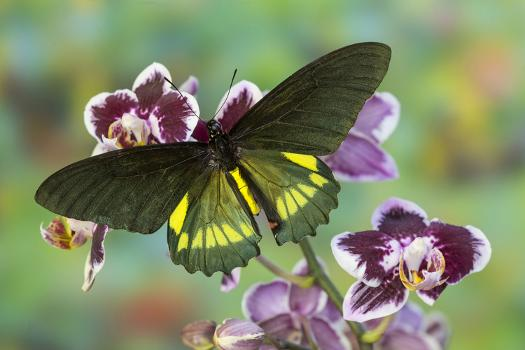
The genus Battus is American but has several points of resemblance to the Atrophaneuras. Though all Battus are in the swallowtail family, some of them have "swallowtails" on their hind wings and some don't. In the species Battus belus, most subspecies are tailless but some have tails.


Photo by Rick Costa. 

Battus belus does not have a generally recognized English name. Of the suggestions Google offers, I like "Midnight Swallowtail" best, but you have to be familiar with the color Binney & Smith's Crayola crayons label "mdinight blue." It's a rich, complex, almost metallic dark blue with both green and purple undertones, like the wings of iridescent black-blue-green birds and butterflies. It's also called the Belus Swallowtail, which looks like a misprint in English, and the Golden Swallowtail, which sounds like a name for one of the yellow species. But does "Midnight" do justice to those individuals of this species whose color is distinctly greenish black? Is it an accurate name for a day-flying species? 

"Triple Cream" is sometimes found, but seems to describe only the minority who have large cream-colored (or white or yellow) patches on the fore wings, white or yellow upper borders on the hind wings, and white abdomens; people who write about "Triple Creams" often can't even find a specimen of that pattern to illustrate their posts, so it's not as if the "Triple Cream" pattern were even the dominant pattern in some places. "Midnight" at least describes a common and noticeable pattern, if not the most common or noticeable. 

Both Battus amd Belus were minor characters in the story of Hercules. I don't like Belus as a butterfly name, because it's a different word from bellus, "battle, war." Though later Greek and Roman authors treated it as a man's name, it is that pan-European word for "Lord and Master" by which the gods of various cults became known. Butterflies don't own anything, any more than they know anything about war. 

What about bella, the word for 'beautiful" in this butterfly's habitat? Would people agree that they are beautiful butterflies? 

Since English names for butterflies tend to stick only when they describe the butterflies' looks, and this species doesn't have a single memorable look, it may have to get by with multiple English names.


Males look more alike. Subspecies are defined by the different color patterns typical of the females, who can be bluish, greenish, or brownish black, with or without white or cream-colored, yellow, or red and blue spots. Abdominal segments are often chalky white; thoracic segments, and the head, are usually black, often with polka dots of white and/or color. Often, though not always, there is a white stripe along the upper edge of the hind wings where the wings overlap. Wings can be somewhat translucent.


Photo by Ondřej Prosický.


Photo from the Reiman Gardens. 


"Triple Cream" subspecies varus can have a large cream-colored spot on each forewing, conspicuous both above and below, and some white or cream-color on the abdomen. The photos I saw did not show the cream-colored border at the top of the hind wings, which is visible only on the upper surface and usually covered by the fore wings of living butterflies; it is visible on some museum specimens.


"Golden" subspecies cochabamba has bright yellow patches where other subspecies have white patches or none.

This tropical species is usually found near the equator in Brazil, Costa Rica, Ecuador, and Guyana.  Though some other butterflies in the tropics are bigger, it still tends to be noticed as large, with a wingspan of 3-/1/2 to 4 inches. Females tend to be just noticeably bigger than males.

Before research persuaded scientists that these different-looking butterflies all belong to one variable species, many species names were proposed for the different forms. Some of these names are still used for subspecies. Various subspecies, genders, and color morphs of Battus belus have been written up as Papilio numitor, Papilio amulius, Papilio caburi, Papilio varus, Papilio heteropterus, Papilio belus chalceus, Papilio belemus, Papilio cochabamba, and Papilio belus gastoni. Heteropterus refers to the fact that a few specimens have been found with different color patterns on left and right. Here's a vintage discussion of these different looks that have turned out not to be different species, much too long to be copied:


The velvety green upper wings of some females fascinated Victorian artists.


Walter Rothschild and others tried to work out a pattern in the variations and intergrades that eventually suggested to naturalists that these butterflies really were a single species. I've not tried to figure it out because, reading what's written about this species more recently, I'm not convinced that anyone else understands why they can look so different either. They recognize one another by scent rather than color, and they seem to think they're all the same kind of animal.

Males are most often found at puddles, where they are easy to photograph. Like many swallowtail butterflies, males take some time to become ready to mate. When they do mate, their spermatophores contain minerals the females need. Females can drink brackish or polluted water for themselves, but their preference is to drink nectar and absorb their mineral supplements after mating. So a likely place to find and photograph these species is at a puddle, where males gather to drink water, hang out, and wait to grow up, and females cruise around the edges of these groups of males, checking to see if any of them is ready to mate. Thus, females are primarily pollinators (who occasionally do some composting if  driven to it) and males are primarily composters, but some species have cleaner composting habits than others. While Battus belus is much better documented in images than written words, the material I found did not mention this species' showing any interest in carrion.

Though Rothschild speculated that different altitudes might select for the different color patterns, all subspecies of Battus belus are typically found at low altitudes, usually within about 1000m above sea level. Individuals often stray as far north as Mexico and have been found all the way up to British Columbia, but the northern border of the species' habitat is probably in Nicaragua. 

Caterpillars eat the leaves of vines in the genus Aristolochia. Unlike the typical Atrophaneura caterpillar, their skins may display warning colors separated into interesting patterns.


Both photos anonymously donated to My Species. 

Unlike many swallowtail caterpillars, Battus are often gregarious. Mother butterflies lay several eggs on one leaf and baby caterpillars travel along the host vine in a group, possibly being less recognizable as caterpillars and/or more intimidating to predators that way. People who rear these butterflies persuade the caterpillars to crawl over their hands side by side. Three or four of these large caterpillars cover a human hand at a good healthy distance from one another. The vines grow fast enough to survive and host the caterpillars. As they mature the caterpillars separate into smaller groups as necessary to fit themselves around the stem or along the leaf they are eating, but are still often photographed just a few inches apart. A cluster of eighty Battus belus eggs has been reported. How many of those eggs hatched, how long the caterpillars stayed together as a family, and how widely separated they were when they pupated, was not reported, nor does there seem to have been any effort to determine why the mother was so sedentary. A half-dozen or a dozen eggs, yielding almost as many baby caterpillars or three to four big ones, seems to be a common observation.


Photo from the Reiman Gardens, documenting the pupa's dead leaf pattern.

William James Cooper has a time-lapse video showing a butterfly's eclosion. 

Sunday, November 5, 2023

Dona Nobis Pacem Linkup Book Review: En Busca de Paz

Today's blog posts (both of them) reflect Mimi Lennox's call for posts on the topic of radiating peace from within out into the world. It just happens that the Christian book I've been reading this week is on that exact topic. This book is about a Christian group who try to carry peace from their prayers out into the world. Mimi invited everyone to customize their peace graphic, but I only really know how to do graphics with Zazzle, so I've copied and pasted one of her basic ones.


Title: En Busca de Paz 

Author: Johann Christoph Arnold

Translator: Juan Segarra Palmer

Date: 2015

Publisher: Plough

ISBN: 978-0-87486-000-9

Length: 248 pages

Quote: "Se habla constantemente de paz, pero hay muy poca."

This book is available in English; the English edition came out first. Sometimes I find it useful, when a book is available in two or three languages, to read the Spanish or French edition first. It is slower reading; it helps me focus on what may be fresh ideas stated in familiar phrases. Just as some teachers urge us to read the "copyright Bibles" because the Authorized Version is so familiar that we may get lost in pleasant memories and overlook the meaning of the words we study, I find that reading in a different language helps me to think past previous experiences with people who used popular phrases and consider whether this writer may be using the same phrases to say a different thing. 

This book serves two main purposes. One is to teach us about the history of the Bruderhof group as one of the "Peace Churches"; the other is to share what the author has learned, from a long religious life, about the peace of Christ. 

It is valuable, and should be in libraries, as an historical artefact. Here are the testimonies of Bruderhof members, now mostly old people, from Europe and from South and North America, explaining why they chose a sort of voluntary small-scale communism, or communalism, as an essential part of their Christian practice. Although some of them came to the Bruderhof because of conflicts at home, work, or school, some lost their positions only after joining the group. One or two were addicts who drifted in off the streets, but more were middle-class people who wanted a deeper, more radical religious practice than they had had before. These people felt a special vocation to live in communities along with their callings to oppose war.

It is also valuable for Christian readers because of its thoroughly detailed discussion of how people manage to live in peace after giving up the simple, natural solution to interpersonal problems: interpersonal space. A good healthy distance allows all the world to live in harmony. When people want to reduce that distance, the question arises how they do it? 

My guess is that those people must be extroverts and the Bruderhof is yet another church for extroverts alone, but some of Arnold's language in this book suggests that masochism is also involved. 

Why do Christians suffer? Because we live in a flawed world. What consolation does Christianity offer? When Christianity works, a group of Christians actively reduce one another's suffering: they tend and distract the sick, they trade with the poor with a long-term goal of relieving poverty, they shelter those who have lost their homes and visit or write to those who have been imprisoned for being Christians. In many churches it's hard to see any evidence of this being done; in a welfare state it's far too easy for churchgoers to say "Oh well, they can always go on welfare...and why is it that, when I'm not physically attracted to anyone in the room, I don't feel anything special about going to church?!" Before welfare states were invented Christians used to be known for falling into a different trap--embracing suffering for its own sake, becoming infatuated with suffering, imagining that we become better people by suffering more; this is known as masochism. They didn't just take a quick cold shower to distract themselves from an unproductive train of thought; they deliberately sought the experiences of frostbite and pneumonia. Masochistic religious groups flourished in the medieval era, when the incidence of gruesome diseases was high, and true believers seem to have made a positive effort to infect themselves with as many diseases as possible while subjecting themselves to hunger, cold, and filth; we don't need further details, although they have been documented. If Christians do think of going out of our way to help others, we're "radical." The Bruderhof certainly qualify as radical Christians whose self-supporting communities have stayed out of the welfare trap and made real efforts to reduce the large-scale suffering of humankind from starvation and diseases. 

How much of human suffering is small-scale, caused by too much physical proximity to others? A great deal  How can Christians relieve that kind of suffering? We can reduce it by increasing interpersonal distance; we can treat its root cause by teaching people how to show respect for others if they don't naturally feel it; we can be masochistic about it and, while perhaps being able to feel that we are burning ourselves out for God, misrepresent Christ by being part of the harmful effort to normalize extroversion. There may be other possibilities. I'm afraid that what Arnold describes in this book looks like the masochistic one. 

Most people participate in schemes that pool resources toward a common goal to some limited extent, but never consider giving all of their resources to an "intentional community" beyond marriage. Some marriage contracts even intend to limit the material commitment to the marriage. So, most readers of this book will find Arnold's description of how Bruderhof groups pack people into every room in every house, and survive, merely interesting as a sociological pattern of minority behavior. Some Christian widows, however, may be more interested in the idea of leaivng their estates to groups who will function in the places of the children they may have lost, or never had, by the time they need home care. These people (male or female) may be very much interested in how the Bruderhof live. They need this book. 

Another category of readers who will be interested in this book are Christians who've been attracted to "the social gospel" but recognized that socialist totalitarian government has sometimes managed to reduce wealth, but only to expand poverty. It's easy to waffle about how loss of individual incentives discourages individual workers from doing more to increase overall profitability. That happens, and then there's also the truth that absolute power corrupts absolutely and, when governments are given a chance to cheat the people, they invariably do. We must uncompromisingly reject socialism. We must find ways to move beyond even the benign "Social Security" pension schemes in the English-speaking countries--benign, but unsustainable, and intended to lead people into the trap of expanding socialist government. The easiest way to defy this "devil" is to say "No Social Security pension for me! Whatever I paid in, I paid to support my parents," and while I personally intend to work for my living until I die, people whose elders have led them to anticipate a long painful decline may be looking for a nice monastic order to join about now. 

(Disclaimer: I know nothing about different religious or secular intentional communities' policies with regard to Social Security pensions. Nor vice versa. Such groups prefer to take in members who are dedicated to working for the group's mission, without thinking of retirement...but it must be admitted that many of Europe's medieval saints "founded" this and that and accomplished other good works by running to the nearest convent to sign over their land as soon as some other family member was buried.) 

Well, if you would prefer to adopt some religious people as son-and-daughter surrogates, the only respectable way to do that is to get to know them, work with them, and join them while you still have some years of service to offer them. Old left-wingers may find the Bruderhof congenial. Reading Arnold's words, I can imagine a Bruderhof group being congenial to somebody like Zahara Heckscher--to the extent that there may be other people like Z Heckscher--and that is high praise indeed. The "miraculous grace" that allows these groups to live together, a married couple sharing their home with any number of students and elders and disabled people, and the fact that the Bruderhof has grown steadily around the world, offers hope that a religious approach to social problems may do more than political approaches have done.

For me, personally...I sit on my hill up above the town and remember my kinfolk who have gone on. I always loved my home for the privacy it afforded. Houses were built by people who needed to be close together for physical safety, one to two hundred years ago, but also needed to be well separated, from one another and from their townsfolk, for safety from the plagues that ravaged my town a hundred years ago. I love the place itself, the rocks and trees. I enjoy being here. I have a healthy introvert brain and never feel lonely, though I have outlived many good people and my home is where I'm most often reminded of most of them. I do not want just to bring in more people, any old people. But I remember that my paternal-line ancestor was a German Anabaptist; none of the women his male-line descendants married was German, and by 1860 they were no longer radical pacifists if they'd ever been, but they were radical Christians. I think my father, who never tried sharing a house with another couple after marriage, and my grandfather, who did, would have liked Johann Christoph Arnold. I may not always agree with him, but I enjoy his writing. 

Web Log for 11.3.23 to 11.4.23

Status Update

Am I over the silly cold? I've been feeling better since Thursday, but when I went out to burn the trash (lots of tissues) Serena took a good long look at me and visibly warned her daughters, "No running games! Don't touch! MY human is still shedding virus." No hand sniffing for me this weekend. The water-sharing ritual was fine, because the cats' share is poured out before I take a sip. Serena has an excellent sense of these things. Cats can't smell as much as dogs but can smell much more than humans.


Photo from Walmart.com. 

History 

Grandma Bonnie Peters and I had some disagreements we didn't want to make into arguments. She liked W Bush. She was in Florida at the time, and liked Jeb Bush and thought his brother was doing a fine job as President. Well, her attention was mostly on her health ministry; she was living with a private patient while also leading the youth group and teaching classes at her church. She was not reading the Washington Post in 2001. 

I was in Washington, reading the morning Post with the toast.  Like many Washingtonians I felt revulsion when W Bush orated about freedom and then signed the loathsome P.A.T.R.I.O.T. Act.I I wanted to say, "Liar, liar, pants on fire!" I had a husband who had legally adopted a younger relative, my stepson who is just about my brother's age, who had gone underground. Children and students always loved my husband, and he loved them right back, but the cousin he'd adopted to be his son and heir, of course, most of all. I had to watch my husband not-knowing whether my stepson had been shipped out to Afghanistan. I wanted to say, "Why don't you send your own children to Afghanistan, W-For-White-Privilege? Sober them up! Better yet, why don't you go, yourself?" I said bland neutral things like "He's certainly got that 'blond' act down," because it was war, and that's one of the things I hate about war. In war lying is a valuable skill. 

One thing, though, that I did like about W Bush: Although the War On Terror was war, W Bush refused to give Al-Qaeda the status of a nation. We were going after individual criminals who happened to have hidden in other countries. We had nothing against those countries. We just had some murderers to deal with by any means necessary. W-For-Walking-Target would have done better to stay out of Washington, where his presence inflamed our enemies; but, having attracted an act of war to the city itself, he did at least wage war in a commendably fine-pointed way. 

Holidays 

While today's frivolous fiction takes place at a Halloween-and-Christmas party, and one book reviewer actually proposed combining the two merely-commercial, un-holy days...they are actually separated by Thanksgiving. Which, unlike Halloween and Christmas, has a biblical basis and a certain "holiness" for Christians. Though more directly descended from the Harvest Home celebrations in some parts of Britain and Germany, and most specifically linked to incidents in US and Canadian history, North America's Thanksgiving Days can trace their origins to the Bible's autumn holidays, which began with a general assembly, a fast and days of penitence, and culminated with a feast and time of rejoicing. It's what we do in place of Simchath Torah and Rosh Hashanah. It's one of two holidays my parents observed consistently every year when I was growing up (New Year's Day was the other; they weren't sure what to do about Resurrection Sunday). 

There's a delightful Thanksgiving story in Barb Taub's new book Oh My Dog. While wandering about in cyberspace this week I stumbled across the first draft on her blog. The story is told better in the book, but the blog has an actual color photo of Peri, not yet a Pandemic Therapist With Paws.


Philosophy 

Not new, but worth viewing again. I've not found a copy of the book. I want one.


A word about the "loneliness," or "anomie," DeSmet talked about...For extroverts roaring around with a crowd may prevent the despondent feelings associated with "loneliness." For introverts it may provide some temporary relief, but few things are closer to the analogy of a Band-Aid on a broken leg. We don't need a lot of social contacts, as such. We can tolerate social contacts as a possible way to find the one or two real friends we really want. Those friends are people who do at least one of the things we do, well enough that, when doing that thing with them, we accomplish more together than the two (or more) of us would accomplish alone. Their age, race, sex, social background, even religion, does not matter but I suspect they have to be introverts, or at least people born with introvert brains who have "become more extroverted" after some sort of illness or injury. 

So, do extroverts want real friends, although they're not physically wired to be real friends? If they do, can anything be done about this? I have no idea. 

Then there are people like this poor sex-ridden idjit. At a club he might meet somebody who might love him, he thinks, but when nobody comes home to flop into bed right away he gives up...he's very unlikely to be anything but lonelier every year. He's not looking for a real friend. People can marry mere bedmates who are not their friends, and stay with them, at the cost of all possible friendship with half of the limited number of potential friends in this world...but I've never understood why. They're still lonely. 


Some prefer to use "masculinity" in a good sense. At one site people have given the name "Toxic Masculinity" to a good husband's care for a cancer survivor. Whatever. A faithful husband is a wonderful thing. But then there is a toxic, and false, sense of masculinity that keeps people--women as well as men--from thinking that the "masculine" reaction to situations is not always best. After the cowardly Yom Kippur attack fifty years ago Israeli young men sang a splendidly appropriate song, now preserved on YouTube. In the basic modern Hebrew that speakers of Arabic can understand, they roared, "This is Judgment Day! God is not with you! Here we come to beat you again...They sneaked in under the sound of the shofar," part of a religious service, "and they went out...in pieces!" The video is a traditionally "masculine" delight to watch. The young men sound as if they're running out to a game; they're shown soaring through the sky in planes and slicing through the water in speedboats. Right. The day after the attack that reaction was as natural and inevitable as blood pouring out of cut skin--those heroic little corpuscles pouring themselves out, to be wasted as a nasty stain on clothes, or to be the ones that seal and heal the wound, they don't know or care which. The day after that, when the corpuscles have spurted out and it's time to heal...? In pieces is probably the best way for Hamas scum to be; now how do those who claim descent from Isaac make peace with their cousins who claim descent from Ishmael?

Men who care for others, heal, build, are certainly no less masculine because those are less gender-limited activities, because women do them too. Men who can teach little boys how to do things are sexy as all-get-out. Men who can make plants grow are magical. Men who have nursed girlfriends through some trivial, yucky condition like flu will be loved and respected forever. Women tend, mend, and befriend in a feminine way, men in a masculine way. Do we teach young men this?


Zazzle 

It's that time again...I wanted to do a beautiful full-color American butterflies daybook, with a butterfly for each State, the District of Columbia, Puerto Rico, Guam, and possibly St Croix. I could do one but, even without paying editors and typesetters and suchlike, the cost of just printing it would be over $100 per book. So, time for a special offer. I will put together a beautiful printable full-color daybook with a butterfly for each State, etc., and e-mail it to you as a PDF for $25. You can then print all or part of it as you wish. 

If, as a sponsor, you want not to be outdone by the sponsors who are currently connecting this web site to the Internet and having Purina kibble, bottled water, and minimally contaminated provisions delivered to the front gate, you may order Deluxe Collectible Editions of the Butterfly Day Planner printed and bound by me in "Save the Butterflies" binders, with a personal hand-lettered poem in each one, for just $200 per. This option is strongly recommended to any millionnaire cousins who are missing our elders and would like to get in touch.

For the rest of us, here are your basic Zazzle day planners. The big one is recommended to retirees who write large clear letters they can read, and to very busy people who collage memos and business cards onto the pages.


The smaller one is for people who hand-write information in neat little letters and numbers, rather than stuffing cards into their day planners.


Here's the 2024 Save the Butterflies Calendar, with almost all new butterfly pictures. If it sells more copies than the 2023 Save the Butterflies Calendar did, the 202 5Save the Butterflies Calendar will feature twelve completely new butterflies. But hello? It's Zazzle. If you want to order a Save the Butterflies calendar for your mother-in-law, customize it around the theme "Grandchildren," upload 14 pictures of the kids, I will be pleased, and the grandmother of the children will probably invite you to use the beach house next summer. And PIRG will get the same five percent. 


This Swallowtail mouse pad isn't mine, but it's so cool I don't even need to design a mouse pad calendar.


And I feel a new collection coming on. Fifty-four butterflies will be bearing holiday greetings this winter. Obviously butterflies know nothing about Christmas or Hanukah or Kwanzaa or Festivus or why anybody might prefer one of those to the others. Butterflies do, however, know all about a new year, when they come out of their diapause mode and even we thickwitted humans can tell that they're alive. So they will be wishing people a good new year. The butterfly greeting cards will be suitable for mailing to Members of Congress, who still receive postcards faster than letters, or to friends and neighbors.

Oh, and maybe I should mention again...Save the Butterflies is US-specific, though Monarchs and some other butterflies are sometimes found in other countries. That does not mean it's not global. It's the pretty face of Glyphosate Awareness; how could it not be global? This web site regularly features foreign butterflies. (Around Christmas we should finally get to a species I've actually seen.) As Zazzle opens sites in more countries I'd love to see people in those countries designing "Save the Butterflies" images around their butterflies. I always look on Zazzle and see all these Brazilian Morpho butterflies, the big bright blue ones. People like to look at Brazilian Morphos. Well, somebody in Brazil should be designing "Save the Butterflies" gear with Morpho images. 

Friday, November 3, 2023

New Book Review: All I Want for Christmas Is a Happy Halloween

Title: All I Want for Christmas Is a Happy Haloween 

Author: Misha Crews

Date: 2016

Publisher: Misha Crews

Quote: "[T]he other parents hadn't dressed up...Morgan, herself, was wearing a...pumpkin costume...approximately the size of a Mini Cooper."

Single mother Morgan is old enough to know that people do not actually die of embarrassment. That's a good thing, because her embarrassment just keeps getting worse and worse with each of the new revelations of the community association story that comes out at the Halloween party. 

It's a sweet wholesome romance, so you know how it will end. The question is whether you believe the whole story could play out during the time of one neighborhood party. Meh. It ought to resolve itself as quickly and nicely as it does, anyway. 

Amazon wouldn't list a story as short as this one as a separate e-book. Book Funnel would, and does. If you're looking for a short, sweet, happy story with comic scenes in it, this one's for you. It'll probably be printed in a hardcover anthology some day, but you're reading this online so why wait?

I Couldn't Have Done It Without You

Today's Poets & Storytellers United prompt is "I couldn't have done it without you."

All week I've thought about ways to write that sort of poem that can be shared with the general public. 

 When I think about writing such a poem for the more likely candidates, my late and great "Aunt Dotty" pops in my head: "S/He does not use the Internet. Don't you have some nice stationery? A medium ballpoint pen that makes a clear strong line? Calligraphy, yes, but not too many flourishes--s/he is 98 years old." 

More often no particular voice needs to tell me: "S/He is already dead."

Brands age by decades but I've been over 50 long enough to qualify for senior discounts. Most of the time I think seniority is fun. It's great to put that old hormone cycle in the garage, it's cool to think that in another five or ten years I might become a great-aunt, but one thing I hate about middle age is that around age 50 you start losing friends left and right. Not even elders. So far six women whose school years overlapped with mine have had breast cancer; the one who had it first is still alive; the others aren't. A friend of a friend had a tumor removed last week and was told the Stage IV cancer had metastasized. An e-friend seems to be going down fast. 

I'm having an empathy attack. It's not as devastating as the one when this latest war started. I try to think about poems and my mind keeps going back into prayers for this friend of a friend, whom I only met once or twice, and the people who are already starting to miss him. 

But I couldn't have done it without you,
Gentle Readers, these twelve years.
I couldn't have kept on writing this record
of the laughter and the tears
if youall hadn't kept reading, 
Gentle Readers, every post.
I couldn't have done it without you!
In the old phrase, you're the most!. 

Thursday, November 2, 2023

Petfinder Post: Black Cats, with a Local Stray Dark Gray Tabby in Blountville

I do the Petfinder photo picks on the day they're published. Today that's not such a good thing. My eyes are watery. My cats have had quite a lot to say but, instead of trying to write any of it down, I want just to pick some photos while I can see them. It's the week after Halloween, when some shelters bring black cats back out to meet the public after having hidden them in October, so of course we'll be looking at lucky black cats. 

(Do they attract good luck or bad luck? Which superstition you've heard depends on where you live, or your ancestors used to live, showing that there's no scientific basis for the question. In England black cats were said to attract good luck and orange cats bad luck, in France the other way round. Black cats are more likely to be female and orange cats to be male. That's the way the genetic odds incline but it's not an absolute rule; lots of black cats are male, lots of orange ones are female. Do you consider kittens or tomcat odor to be bad luck? What a question. It's good luck to be a black cat's friend and very bad luck to miss a chance to be one.)

Zipcode 10101:  Luna and Onyx from New York City 


Born on the 7th of July, they're a little young to be adopted yet (social cats extend lactation for six months, mostly for birth control I suspect) but certainly at an adorable life stage. They are described as inseparable bouncy-pouncy and purry-cuddly siblings who follow their human around. You'll be able to tell them apart because Onyx, the brother, is already bigger than Luna, the sister, and will almost certainly be a lot bigger when they're grown up. They are also said to have small white spots underneath that will be an extra clue.

Zipcode 20202: Sabrina from D.C.


She's a mix of long and short hair--you can see her head and legs are sleek, but her body is fluffy and brushable. This shelter's "adoption fees" are on the high side but they're actively looking for foster care, which means that a lucky local person for family can keep this cat free of charge on condition that they either take her to meet prospective adopters or save up the money to bail her out. 

Zipcode 30303: Ray from Atlanta 


I didn't plan to pick all long-haired cats kept in the cities--it just happened. Ray has really impressed the shelter staff with his good nature. Although he's been a stray and even been shot, he still seems to take a "why not the best?" attitude toward humans. He purrs and cuddles and plays with the best. The writer of his web page used the word "gentle" three times, plus "gentleman." 

Bonus: Zipcode 37662: Lady from Blountville 

This is somebody's strayed or stolen pet. She has special needs, including a need to be the only pet (or only indoor cat), but she's friendly and cuddly and obviously misses her humans. If you know someone who's lost a cat like this, local readers, please rescue her. She's not being held for an inordinate ransom. If her human is dead, please give her a good home.

In a place where the majority of the population are active senior citizens, the most likely reason why a friendly, lovable animal is out on the street--and may resist coming home with you, or try to lead you to its home--is that something's happened to its human. People need to have an animal emergency plan. Knowing that pets will be cared for can be a great comfort if these people are in hospital, so...


Book Review: Uncomfortable Ecologies

Title: Uncomfortable Ecologies 

Author: Elizabeth Joy Levinson

Date: 2023

Publisher: Unsolicited Press

ISBN: 978-1-956692-600 

Length: 100 pages

Quote: "A small herd of deer / grazes the rough shoots / along the highway."

This is a picture book; the pictures happen to be drawn with free verse rather than pencils. Each poem draws a picture, usually of a landscape or wildlife. Each picture then suggests something about human life. Only in a few cases are humans the subject of the picture. 

Often the statement is about humans' relationship with the rest of the natural world, often in terms of ecology, and often it's somewhat uncomfortable. Beekeepers "love a thing that is dying--and the narrator, having been brought up not to fear bees (honeybees try to avoid stinging unless they're crushed or they think their hive is threatened), imagines that she could help collect the honey or move the hive and still feel only "something furry" at a crack between glove and sleeve, rather than "something fiery." An old man makes sure his children know how to handle the boat if something happens to him but does not discuss how to handle his medical care. "Florida girl" knows all the fishes, crustaceans, turtles, and insects by name, but does that only make her miss them more as humans crowd them out?

If you can stand a bit of prodding to raise your ecological consciousness, perhaps to observe and document yoour own "ecologies," Uncomfortable Ecologies is for you. 

Web Log for 11.1.03

So, I was reading a new book of "poems"--free verse actually, but pleasant free verse--and preparing for the first freeze of winter, and then I started dripping. I don't get head colds except during glyphoste reactions, and where would I have got the virus from? I hadn't visited or been visited by anyone legitimate in the last 72 hours. Oh, wait...the rodents. The Professional Bad Neighbor was redistributing rodents up here this week. You think it's just that they come in from the cold, and when dumped out in a strange place they certainly do, but rodents do not normally travel in groups of a half-dozen individuals of different species, nor do they turn up by the boxful at all the houses in the neighborhood on the same days without some help. One of them got inside, went straight for the trap, and evidently dropped off some human germs on the way. \

Censorship 

When I read stories and share links from Rebel News I'm usually on their side. This time I'm divided. Do elected officials have a right to block their constituents, not for posting hateful content, but just because they can't keep up with every constituent they have who uses social media? I think they do. I think it's very foolish for them to block any constituent openly or for a long period of time, but y'know, even reporters can't be expected to read and respond to every single post from every reader. Even assuming that elected officials hire students to sort their electronic messages, like their mail, and deliver only what's relevant...how many students can Canadian officials keep on staff? Students' eyes get tired, too, eventually.


I mean to say...As a candidate, Vice-President Harris blocked me. For no reason. I bash ideas but I'm predisposed to support women. Except, of course, Harris. I've read things about her that I'd just love to publicize, if they'd been proven true! She lost a vote. She lost a blog. She convinced me that she's both a hateful person and a stupid one. But she's a human being; she has a natural right to be spiteful and stupid, even in public, like the rest of us. 


Should Web Sites Remove Misleading Health Information?

The breakthrough occurred during the coronavirus panic, while so many adults who had been using the Internet from work or school were offline. The multitudes of polls and surveys on this subject finally told some people what they wanted to hear: a Yahoo News survey found a sample of Web users who wanted web sites to protect them from “misleading information” about health matters.

Interesting. Wonder why I didn’t get that survey? Maybe because the subjects were set up to respond as they did by watching a movie, which my computer wouldn’t have played, that pretended to “document” blatantly false, upsetting “information” about COVID-19 having been deliberately bioengineered.

No points for guessing that the survey was sponsored by some corporation whose executives hoped the survey could be used to suppress accurate information by association with the misleading kind. It is in fact misleading to state that “Vaccines cause autism,” so Merck and other pharmaceutical companies’ official are no doubt drooling with the hope of persuading web sites to suppress more accurate information like “Individual reactions to vaccines can include fevers high enough to do permanent brain damage, which may produce or aggravate autism.”

It’s hairsplitting, but surely everyone sees the difference? Masses of people who are not autistic have had vaccines, so obviously vaccines don’t always cause autism. On the other hand hundreds of children who seemed normal before having certain vaccines have seemed autistic afterward, so, equally obviously, vaccines had something to do with their autism. The simple physical process by which some vaccine reactions produce or aggravate autism has been accepted by responsible pediatricians for more then sixty years. It’s not news. In fact, denying that a measles vaccination may make all the difference in whether a given child will become or seem autistic would be misleading information.

How do people recognize "fake news"? Well, on a five-minute timed test, they don't--and this came as a shock to some people. 

During the Trump Administration a hurricane left many people without electricity or drinking water in Puerto Rico. This web site was one of several that posted nags like our little ditty, "Our territories we'll protect, we said, come flood, come fire. If we don't stand by Puerto Rico, then we are a liar. A liar, a liar, we'll be a big fat LIIIIar..." Naomi Parker, whose blog is about knitting patterns, posted more political comments on Twitter and was also vocal about our obligations to Puerto Rico. So some Tweep of hers teased her and her other Tweeps with a bit of fake news. Trump had invited Puerto Rican hurricane victims to stay in Florida, but he was going to seize their passports and make them pay to get them back. 

Instantly NP and I posted comments like "How tacky can you get?" 

Then, because this was a qiestion of human rights and not merely budgeting, I asked first: "They have passports? People on that income level usually don't have passports. Why would they need passports anyway--they are U.S. citizens. They can visit any State for as long as they want and go back to their own Territory when they want."

And then we recognized that the news item was fake news. "Gotcha!" the joker scored off, by now, a couple dozen of NP's Tweeps who'd posted things like "How tacky can you get?" There has always been some fake news out there. Much of it slips past people because they don't really care. When people care whether a news story is true or not, they may not recognize fake news on sight but they can and do recognize it by following up on it. 

I say large multi-user web sites should continue to assume no responsibility for whatever facts, opinions, or outright lies people choose to post. I say people who read the words, if not people who believe whatever they see in a movie, are capable of remembering that anybody can post anything on Twitter, including typographical errors like omitting negative particles. That is, it’s possible for people to intend to tweet “It’s not raining outside” and actually post “It’s raining outside.” So if you see outright lies, e.g. “Glyphosate is safe” or “Measles is a deadly disease from which measles vaccines, which are harmless, keep us safe” or “The temperature in Virginia was 69 degrees Celsius at the time of writing,” on Twitter you check the facts elsewhere. You know that few people would survive if the temperature were 69 degrees Celsius so you automatically think “The person meant 69 degrees Fahrenheit.” About other things people say out loud or post on forum sites as if they were facts, you might need more work to reach a less positive conclusion.

Measles is a mostly trivial disease that can cause complications, including high fevers, brain or nerve damage most often associated with blindness, and death, in a minority of vulnerable individuals. Measles vaccines are a mostly non-fatal cure that can cause complications, including high fevers, brain or nerve damage most often associated with conditions that resemble autism, and death, in a minority of vulnerable individuals. Measles is a virus, which means vaccines contain live virus and are extremely susceptible to contamination. It also means the virus can mutate, so measles vaccines do not necessarily guarantee lifelong immunity to measles; people who’ve had either measles or the vaccine don’t “come down” with the disease but they can have unmistakable symptoms of it, twenty or thirty years later. The facts about measles and vaccines generally may not be as prejudicial to Merck as the facts about certain specific batches of Merck vaccines have been, but the facts are not “product-supportive.” After exposure to accurate facts on this topic many, if not most, people will not want the vaccine. And accurately reported facts will dramatically reduce sales of flu vaccine and other vaccines against minor diseases, too.

About health matters, the corporations will frantically admit when confronted with the product-unfriendly facts, there are, um, er, a lot more opinions than facts. This is true. For example, “[Cows’] milk is the perfect food [for humans]” definitely qualifies as misleading information, but what about “Cows’ milk has some place in a healthy diet for humans”? The majority of humans, worldwide, lose lactose tolerance at least by the age of fifteen! “Cheese is more digestible than milk, so restaurants should decorate everything with cheese”? Demonstrably false for some people, like me, who can still drink a glass of milk and keep it down, but cannot eat a slice of cheese and keep it down. (That cheese smells like vomit is an officially confirmed fact. That the vomit-like odor of cheese is disgusting and should be confined to a separate, fully enclosed room in restaurants that do continue to serve cheese is my opinion.) “Some humans do absorb some nutrition from milk, even as adults, so milk should still be sold as a food product” is less misleading, but it’s still an opinion. I happen to like ice cream but, if web sites are held responsible for any harm done to anyone by potentially misleading information about other people’s opinions, Twitter would have had to censor my encouragement to Ben & Jerry’s to keep their considerable weight behind the cause of making ice cream glyphosate-free again...because some people really do not need the suggestion that ice cream is food. For me ice cream is food; for many people it's toxic waste.

What about gluten? I saw this prompt on a survivalist site. What is gluten and should you be concerned about it when stocking your emergency supply of food? Several plant proteins are described as glutens, and in fact a few people may be unable to digest the others too, but wheat gluten intolerance is the kind that’s a problem for a large number of people. As many as one out of four or five people of Celtic descent may have some difficulty digesting wheat gluten but, during periods of history when wheat had not been treated with certain chemicals, serious health problems caused by this genetic trait were found in about one of every ten thousand people in Ireland, one in a hundred thousand in other parts of Western Europe, with no known incidence in non-Celtic populations. (The word “celiac,” the name for these people and their gene, is not related to the word “Celtic.”) As recently as 2008 it was possible to say that, although the gluten-free plates offered in some institutions tended to contain better and fresher food than the stale bread-based alternatives, for most people wheat gluten was a valuable source of protein and nutrients. Vegetarians actually throve on high-gluten bread! Then in 2009 glyphosate, which had previously been used only as a pesticide, went generic and manufacturers encouraged farmers to spray it directly onto grains, nuts, fruits and vegetables as a ripening agent to allow them to harvest more crops at one time. Masses of people became ill, didn’t get accurate information or helpful treatment, and found that adopting a gluten-free diet helped—somewhat—for a while—because avoiding gluten reduced the amount of glyphosate in their food. People have died from the unacknowledged effects of the glyphosate reactions they were having, some of which resembled celiacs’ gluten reactions, some of which did not. When stocking your emergency supply of food, if you’re not a celiac you should not have to worry about wheat gluten, which ought by rights to be a safe healthy food to store. Unfortunately the glyphosate that’s been added to the existing supply of wheat in the United States has killed many non-celiacs already and will probably kill more. Survivalists, very unfortunately, currently need to avoid stockpiling wheat. In fact almost any commercial plant-based food grown in the United States, including overpriced "organic" food, contains enough glyphosate to make you sick. And the corporate weasels have worked to prevent farmers from telling you if any of their crops do happen to be safe to eat. Many "gluten-free" foods trigger celiac reactions because they're not glyphosate-free...and the industry has attacked, and sabotaged, food processors who've tried to offer products that were glyphosate/GMO-free. 

Should web sites remove the misleading suggestion that wheat, other grains, nuts, vegetables, fruit, or meat commercially grown in the United States are safe for humans to eat? Or touch? In many cases, due to the extreme level of glyphosate contamination the industry is fighting so hard to maintain, that’s not true. If web sites are held to account for allowing people to post “misleading health information,” anyone who tries a yummy vegan recipe somebody posted on Tumblr and develops massive bleeding ulcers from ingesting glyphosate-poisoned tomatoes and glyphosate-poisoned spinach will be able to sue Tumblr. Is this really the way we want American society to be?

We need to put coronairus behind us and get back to work on the glyphosate contamination issue. We need to accept the fact that, during the coronavirus panic, even the most authoritative sources spouted “misleading information” about the dreaded virus, and because they were really reporting hasty opinions based on incomplete information about something new, “misleading” was the only kind of information about coronavirus that existed.

The value of the Internet is that it allows rapid transfer of information. Whenever news is breaking, some of that information is certain to be incomplete and, therefore, misleading. That is the nature of early information.

In order for the Internet—or daily newspapers—to be useful, people need to be reminded that some of the information they convey is going to be misleading. There will always be items like “Four people died in the fire” reports that have to be followed by next week’s “No, actually seven, counting the three who were taken to hospitals but not revived,” or “Candidate A won a close race in the Eastern States” followed by “But then Candidate B’s party rallied the vote and swept the polls in the West, so B won the popular vote.” On interactive sites there will also be items like “John Doe has an apartment for rent—oh no he doesn’t, his grandfather just moved into it,” and “Jack and Jill’s wedding will take placenext Sunday—or no, wait, it won’t take place at all, now that Jill got a good long look at Jack’s porn collection,” or “Suzy Q’s boutique has X on sale...erm, make that ‘had’.” And there will also be “Celebrity X just collapsed...was it a heart attack, an overdose? No, doctors now say it looked more like diabetes. No, wait, it’s not diabetes, it’s...” and similar “misleading health information” whenever any piece of health news, private or public, trivial or substantial, is either new, or bitterly resisted by unethical profit-oriented corporations.

The best way to reduce the harm done by misleading information is to allow prompt correction. Therefore web sites need to avoid clogging the flow of information by any kind of censorship. Instead they should rely on disclaimers, like “Individual users are responsible for the information they post here.”

--At least, that is what reason has been telling web site owners from the beginning of the Internet. However, web site owners are fallible mortals, and as a Twitter Insider I had opportunities to see firsthand how the marketing department wheedled, “Oh please, can’t we offer big corporate sponsors the brand-friendly benefits of corporate censorship, just like all those TV news channels that Real Twits dislike, distrust, and avoid for that reason? Yes, of course Twitter will lose all redeeming social value if it becomes the voice of the big corporations, another form of television, and Real Twits will detest and abandon Twitter if it does...but can’t we destroy Twitter, grab the money and run? Please please pleeeeasse?” 

I don’t really expect web site owners to grow enough of a spine to tell the marketing departments that, if that’s what it takes to make their web sites profitable, they might as well just shut down the web sites while their individual names still have some credibility, or while the basically unsustainable Internet retains enough users to make it usable for any purpose. I expect the Internet to self-destruct, actually; the way things are going now, I give it three years.

But, if any web sites are going to be around five years from now, I think they’ll be the ones that rely on disclaimers rather than censorship to avoid the horror of being held responsible for misleading information. 

As for the sites, like Elon Musk's X.com, that agree to censor content that hurts sales of sponsors' products--i.e. whistleblowing on vaccines that are more likely to kill previously healthy people than COVID was, or glyphosate, or cigarettes...I think we all know what decent people do about them.

Wednesday, November 1, 2023

Mini-Book Review: The Mystery of the Stunned Soprano

Title: The Mystery of the Stunned Soprano 

Author: E.L. Johnson

Date: 2023

Publisher: E.L. Johnson

Quote: "Rachel, you're clever. You look into this."

Rachel the amateur detective, a would-be singer who's not even a member of the Carnation University choir, just happens to be backstage and hear a scuffle in which the lead soprano is knocked unconscious. By talking to each of the other girls who were near enough to have done it, none of whom liked their bandmate much, Rachel finds out which one hit Ashley and with what.

This detective story really is a freestanding short story--sort of a prose chapbook. Publishers have not found it profitable to print such short stories as separate books but the Internet makes it possible. If you want a super-short mystery in which nobody's even maimed, this one is for you. 

Do You Look Like Anyone Famous?

What a question Long And Short Reviews is asking this week. Do you look like a "celebrity"?

Well...not to the extent that a cousin whose actual name was Cherie used to look like the actress known as Cher. Sometimes as a joke someone would say her name in a public place just to see if people would come up, gushing or stammering, and beg for autographs. Usually they would--when Cherie was thirty or thereabouts, and Cher was overexposed.

Not to the extent that the cousin to whom I gave the screen name Oogesti used to look like Donald Trump. Now that he's gone, one thing I have to dislike about Trump is that he looks like Oogesti but he's not. I don't believe Trump ever in his life took a dumpster dog home and trained it to be a real working dog. 

Nor do I resemble any celebrities even to the extent that my mother resembled Elizabeth Taylor. She was shorter, and had brown eyes instead of "violet" blue, but at either the glamour-queen or the fat frump stages of their lives, the easiest way to direct someone to Mother in a crowd was to say she looked like Elizabeth Taylor. 

There are, however, three movie stars to whom I've been compared:

1. Yvonne DeCarlo...in her last really famous acting job, she played a vampire, and my front teeth were such a mess they suggested fangs, so I've never taken being compared to DeCarlo as a compliment. Nobody my age remembered her human characters. 

2. Jodie Foster. That one I didn't see at all until I read her brother's memoir, Foster Child. Had people ever wondered why such a pale blonde wanted to play black-haired characters? It seems one of their stepsisters wanted to work as a stunt double, and Jodie Foster had enough name recognition to get stepsister employed as her double. They weren't related and didn't look alike. Jodie Foster looked a little more believable in a black wig than stepsister did in a blonde wig. In Foster Child there's a photograph of the stepsister, whom audiences never saw standing still in a movie. She did look a bit like me, though less top-heavy and with better teeth.

3. Penelope Cruz...after she came along. That is a compliment, her being so much younger. I'm not a great fan of her work, but people can say the shape of my face and neck is like hers if they want to.

Locally I've been surprised by the people I've been mistaken for. Not only my sister, who was the pretty one, even in our family. Not only my mother and various other relatives who were even older, either, though that's happened. Apparently this summer's gossip credits me with having given birth to two children who are younger than The Nephews--actually a friend's grandchildren. The mother of those children was the Beauty of the County recently. The children's day is not far ahead. But that family came in from another town, in the 1960s, and are not related to me.