Saturday, March 19, 2022

Book Review: Thorns and Roses

Title: Thorns and Roses

Author: Edward Aaron Mugabi

Date: 2021

Publisher: E.A. Mugabi

ISBN: 978-9970-757-02-2

Length: 142 e-pages

Quote: “She felt tiredness, faintness, morning sickness and a craving for pumpkins. She was the gladdest woman on earth.”

That was at the beginning of the emotional roller-coaster ride Regina Wotali takes in this book. Happily married, she adored the idea of having a beautiful healthy baby—a daughter, for choice, and as an admitted “mythology geek” she liked the name Olympia. The story begins with her wearily remembering those days after the loss of a fetus that could never have lived. In successive chapters we share her feelings of misery in the hospital, comfort that most of her friends and relatives visit and sympathize with her, envy of other women, resentment that her mother and sister were visiting each other when other people were visiting her (it’s their long-term relationship so it doesn’t need to make sense), indignation, concern about a young relative, forgiveness, the sense of emotional relief that fills the mind with gratitude for little things, more. She keeps reminding herself that life is like that, full of nasty and nice things, thorns and roses.

This is a religious book; it tries to keep its religious content inclusive. Traditionally many African people have been very religious, although many were neither Christians nor Muslims. The people we meet in this book seem to accept each other’s different beliefs. Regina and her husband are Christians. Due to laws that allowed polygamy, Regina has two mothers-in-law, the “co-mothers” of her one and only husband. One of them is a Muslim but has strayed from her faith, not only by marrying a Christian but later by sneaking off to pay a traditional “witch doctor” (Mugabi’s phrase) to help put a curse on Regina. She’s sorry now, when years have passed and she’s become fond of Regina...and has the worse half of the curse descended upon her own daughter Joan, whom Regina takes in when Joan is sent home from school?

The level of Christian content is high. The pastor from Regina’s church visits her along with the relatives and quotes Bible verses to her. Regina remembers other verses for herself and her relatives. Mugabi is a Christian but he’s trying to be fair and polite about the other beliefs in which Ugandan people grow up. Everyone in the book seems to be basically good and honorable, apart from a few adolescent “wacks” who, we’re free to hope, may improve with age. Even the witch doctor advises against hexing people, doesn’t try to keep clients coming back, and urges Hawa, the mother-in-law who cursed Regina, to bless and pray for her. The story ends with a lovely scene of Muslim and Christian reconciliation, with dignified kneeling and blessing.

For many U.S. readers most of what we’ve heard about Uganda has involved their late dictator Idi Amin, with whom some wanted to go to war. So it may be helpful now to add Mugabi’s e-“booklet,” or even more of his teaching stories for Ugandans, to our libraries. Here are pictures of the Ugandan part of Planet Nice. The people are very polite to one another in a charming, African way reminiscent of the novels of Alexander McCall Smith, or the way African exchange students, exchange doctors, and diplomats actually talk when they’re in Washington. People who are not wealthy appreciate books and flowers. Working people travel on business; Regina’s younger sister’s significant other is in China. The harsher tribal traditions are breaking up: traditionally fathers and daughters didn’t talk about intimate details, but Regina’s father visits her because they’re close enough that he knows she sets a high value on courtesy visits. People still say a lot of things in traditional "proverbs."

How much have U.S. readers read or heard about the African proverbs? I’ve seen very little about other cultures’ traditional sayings (these are Lusoga) but I used to have a little book that translated a few dozen Luganda proverbs. Each ethnic group and language had its own set of proverbs. Not to be confused with the biblical book of Proverbs, these are traditional phrases, like the “old sayings” old farmers repeat in the United States. Some may be remembered primarily because they sound good or because a notable historical figure said them, like our “Early to bed and early to rise makes a man healthy, wealthy, and wise”—it’s not always true for everyone who’s tried it, but it sounds good and Benjamin Franklin said it. Others are wise and true, and might even be considered to translate isolated Proverbs from the Bible. References to the local environment abound. For several African languages, learning the language requires learning the proverbs of the people who speak it. Traditionally the proverbs were preserved only as oral folklore. Children were rewarded for learning as many as possible. The Africans I met in Washington did not speak to Americans in traditional proverbs. I hope they remembered several, though, and kept them alive at least when they went home. 

Thorns and Roses is a teaching story, and what can I say? I’ve never had a maybe-baby to lose. Grandma Bonnie Peters, who lost one that seemed viable long enough to be identified as a boy, would be better qualified to rate this book, but now we’ve lost her. I would imagine that the flower lore, the sympathetic and adorably formally courteous visitors, and the distracting-healing visit from the troubled teenager would offer hopeful messages to young women mourning the loss of fetuses or babies in the United States too. 

The relationship between Regina and her sister Robina is presented more like a teaching story than in the detail a novel would usually provide. When her mother once again seems to favor Robina over Regina, as an educated Christian Regina turns to the Bible and considers stories of family favoritism and the harm it can do. Parents should try not to have a favorite child, Mugabi says clearly—but it can be hard to help. Robina, six years younger than Regina, apparently left school much earlier to live with a man who didn’t even give her a formal wedding. When he does seem to have given her a baby, oh thrills thrills, Robina and their mother are too busy celebrating that to make the formal courtesy call Regina expects. Mother always liked her youngest best, it’s not faaaair... Here I stand to testify that even a parent who found another child more congenial, when the children were growing up, is subject to the mind-melting influence of grandparenthood when one of the children presents a grandchild. Regina didn't dare tell everyone she thought she was pregnant, so when Robina broke her news, even if their mother had inclined to favor Regina, Robina and her maybe-baby would have driven all other thoughts out of their mother's mind. We know Regina is a better woman than many, and will be a good aunt and a good mother if and when she has a child, because she does still love Robina. 

The status of women in Africa is another point of interest for U.S. readers. This sometimes thorny topic is handled delicately in Thorns and Roses—one of several things that can be compared to handling a living rose. Regina obviously loves, trusts, and admires as well as respecting the men in her life: husband, pastor, and father. Their conversation with her is as courteous as her conversation with them. Whatever political problems women confront in modern Ugandan society seem to have little effect on personal relationships between people of good will.

One chapter of Regina’s story is somewhat mysterious. After she seems to have recovered from whatever went wrong with her pregnancy, Regina goes into a state of mental confusion. Has she been bewitched? Could she go insane? It’s hard to say, but I’d like to stick my neck out and mention that I’ve seen Americans go into that sort of state of consciousness when they had thyroid problems. The thyroid gland regulates our metabolic rate. It also regulates the processes of pregnancy and lactation, so, although either men or women can have thyroid disorders, women are more likely to have them than men are, and they often begin after pregnancy. Typically people with low thyroid metabolic rates are the ones whose thyroid activity can fluctuate, causing truly bizarre behavior that can be terrifying to watch, not because these people become violent but because losing touch with reality is totally out of character for them. They are the calmest, steadiest people you know until one day you find them in a sort of trance, as if they were stuck in between sleeping and waking. A flaw in their thyroid metabolism is causing them to be stuck between sleeping and waking. They might start to go into a dream state and speak or otherwise react to something in the dream, or try to hide in a dark quiet place in hopes of getting into normal sleep but be unable to get there. This condition is temporary. The danger is that these people will be taken to a psychiatrist first, and as the psychiatrist is not trained to recognize their condition they’re likely to get misleading diagnoses and useless or harmful prescriptions. It’s important that they see an endocrinologist rather than a psychiatrist. Nevertheless, some patients recover before the endocrinologist actually makes time to see them, and eventually most even seem to survive the mistakes of psychiatrists.

All the book actually tells us is that Regina behaved strangely for several hours. The emotional vibrations, and even spiritual forces, associated with a formal curse probably contribute something to what even literate people around the world used to perceive as a “bewitched” state of mind affecting a generally sane and sensible person. In some parts of Europe and North America, up into the nineteenth century, these people were regarded as inspired prophets, which led to much confusion; in other places, notably France and England, they were thought to be possessed by evil spirits and beaten “to drive out the devil.” Regina’s family’s reaction is more modern and humane. 

What’s not to like? This book is easy to read (lots of Lusoga vocabulary words, all explained in the text) and easy to like. Something or other about it seems likely to appeal to almost anyone who wants to read a work of fiction, and its instructive benefit may appeal to students and teachers who prefer nonfiction. 

I promised an honest review. Does it need to be brutally honest? Maybe. I think that, as a window on another country, Thorns and Roses has things in common with the nonfiction e-book I read earlier this year, Between the Bear and the Lioness, and with the Tiger trilogy I read some years ago. That these books are being published in the United States is pretty blatantly a bid for the good kind of sympathy in a more “privileged and developed” nation. The appeal in Thorns and Roses is much more pleasant. Instead of “Some of us were some of your friends, once” or “Pray for us in our desperate straits,” it’s more like “See how much nicer our country is than you thought it would be! We have churches! We have mosques! We may still need some financial aid and expert consultants from countries that have been ‘privileged and developed’ through their Christian or Muslim alliances, but that’s all. We’ve made Progress! Soon we’ll be able to give something back to you!”—and I say, Heaven speed the day. This is the third book I’ve read this year that specifically called attention to the progress both of churches and of schools in Uganda. Though it’s reported as a general tendency over time rather than as breaking news, it's the most encouraging news I’ve read all year.

Caturday Post

It's Saturday. What am I doing in town? Saturday is the day of rest and worship. 

Well, I owed someone a book review. In fact I owed a couple of people book reviews and one of the books actually discusses Jesus's advice to pay debts before we make offerings...more about that in the forthcoming review of Salt and Light. In theory I suppose I ought to post the reviews and run without reading anything online, since I do try to keep one day of the week Net-free. In practice that's like eating just one peanut. So here I am.

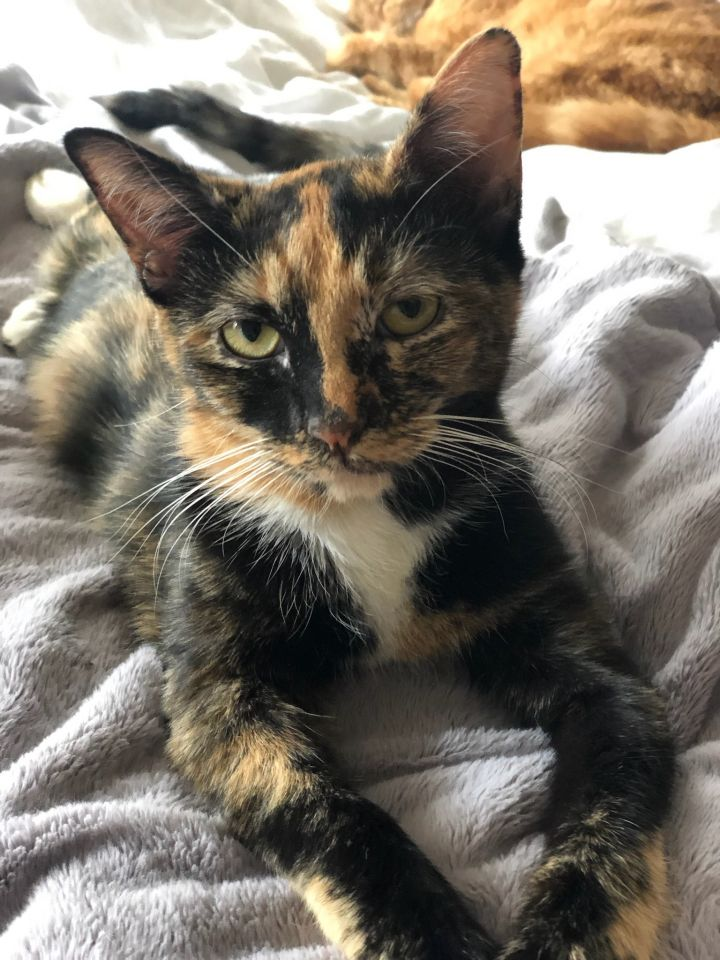
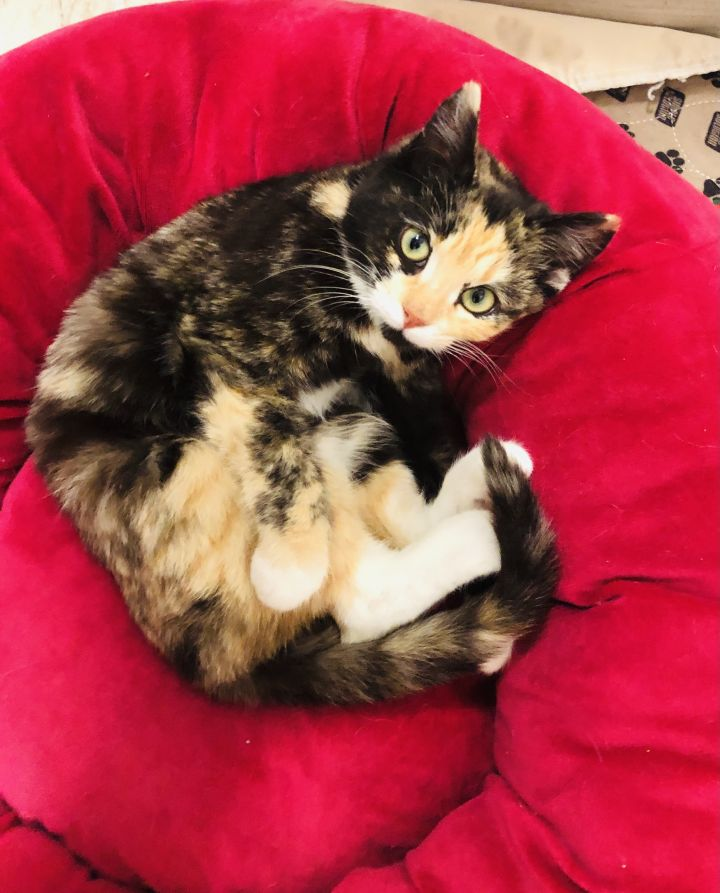
At one blog I follow, Saturdays are Caturdays. I like catching up with their cat pictures on weekdays. So what better time than to post a long comment, made in consultation with Cat Queen Serena and her current family, about cats. And, since people are sponsoring the Petfinder posts, this post is brought to you by three of the most photogenic adoptable cats in the Eastern States...calicos, in honor of Serena's daughter, the Princess Who Has Yet to Choose a Name, who opened her eyes for the first time this morning. She looked at me nonverbally saying "Where did you come from, big ugly monster? Go away! Leave my sisfur and me alone!" As I moved closer she showed all her tiny teeth and hissed. I gave her a chance to bite my hand. She sniffed, recognized me, and snuggled. Clearly the main problem this kitten is going to present is remembering that it wouldn't be allowed, if it were even possible, to be more lovable than Serena is.

So, the cats some of youall might be able to adopt this week, or, if not these individual cats, possibly their fellow shelter inmates who are also adorable in real life...

Zipcode 10101, New York: They figured nobody could resist a cat who answers to the name of "Betty White." She's not white. Whatever.


Currently living in New Jersey, the colorful Betty White has run up a substantial vet bill that includes even dental care. Reminding me of a comment on a book this web site reviewed last winter: At the end of the main story of Upon Destiny's Song, the teenaged Ane Marie has completed a long hard adventure of her own, standing on her own little frostbitten feet. Ahhh, I like that in a novel. Women choose our own adventures in life and very few of our adventures involve being rescued by men. However, Ane Marie's story stretches forward through and beyond the end of her lifetime, and after she walks into Salt Lake City to start working she runs up some bills, from which her husband gets a chance to prove his love and rescue her. Fair enough, I suppose. Well, Betty White Cat has run up bills from which you may now rescue her. Details are at https://www.petfinder.com/cat/betty-white-54889076/nj/jersey-city/jerseycats-nj638/ .

Zipcode 20202, Washington: The shelter staff don't sound very lovable, but...


...to their credit, they're willing to let you "foster" Auburn before you go all the way to "adopting" her. She's described as a beautiful kitten with a lot of personality. Details are at https://www.petfinder.com/cat/auburn-54699528/va/alexandria/tails-high-inc-va540/ .

Zipcode 30303, Atlanta: It's a tie. How can anyone resist Papaya, here nonverbally saying "Let's pretend you're my foster sister Peaches, who travels with me but is not available at this moment, so you be the one to pretend you're trying to eat me so I can pretend I'm killing your hand." 


She's described as both athletic and a couch potato, which is hard to picture, but she's adolescent so she probably cycles between the extremes. Her Petfinder address is https://www.petfinder.com/cat/papaya-52901336/ga/atlanta/southern-animal-rescue-ga653/ .

But how could I pass up Catherine, who travels with her brother Julius? 


On the Petfinder index page Catherine's cute face appeared in a really bad photo that nonverbally said "How can people discriminate against me just because that camera slipped." Fortunately, her own individual page reveals several super-cute pictures, including this one that shows Catherine and Julius as a pair. Take two, they're small and said to be quiet, rather shy cats looking for a quiet home. Visit Catherine's page at https://www.petfinder.com/cat/catherine-50593730/ga/smyrna/kudzu-cat-alliance-ga958/ .

Now, over to Serena for what she's taught me about Four Easy Ways Some Humans Might Communicate Better with Their Cats:

This is the way my human remembers me best...sort of like the way the senior human used to remember my human having once weighed seven pounds and five ounces. As a grandmother cat I've grown into the queenly attitude I had as a four-month-old kitten. Not that I'm fat...I'm a large cat relative to cats in general, but not at all large for a Manx cat, which some of my ancestors were. I'm active and healthy.

Hello, obviously I, Cat Queen Serena, am not the one typing this post. That is a human’s job. Nevertheless I am the source of these ideas, and entitled to a by-line, just as Jim Babka was the source of most of the post titled “What’s Statesploitation?”. My human is typing these thoughts while I am basking in the sun, this St Patrick’s Day, watching over my kittens. It is still March, but it’s warm enough for us to keep our kittens warm in their nest space on the porch.

“What do you say to this, Serena?” she asked, looking at something on the Lap Pooper (http://www.michellesmirror.com/2022/03/time-time-time.html). Much to my disappointment it’s never actually pooped on her lap yet.

“Throw it out,” I said, as so many times before. I don’t like the Lap Pooper. I see no use for it. The Real Computer at least generates heat, which is useful in winter, but the Lap Pooper is what the humans call a late model with the Energy Star, which means it hardly ever even feels warm.

“Well, it’s only a cartoon, so it might not make sense to you anyway. This man lives with a fat cat who he says is always standing on his table and showing him its back end. That’s not something you’ve ever done, but if you saw a cat doing it, what would that mean to you?”

So I exercised my powers of mind control to remind her of some general truths more humans need to understand about cats.

1. Pay attention. 

As a cat who grew up in a human’s office room I believe humans must have some kind of consciousness, though it must be very different from ours. The ridiculous and revolting things they choose to eat seem to meet their species-specific nutrient needs. Humans need less taurine and more of something called Vitamin C than cats do, so it no longer amazes me that my human will reject a prime-grade, freshly killed mouse, and eat disgusting pineapple instead. Humans are apparently designed to digest pineapple so it must taste nice to them.

Still, even humans can learn some things. Do they enjoy being grabbed and stroked by every new acquaintance they meet? Why, then, do they seem to imagine that cats enjoy that? Some of us are willing to indulge the humans we love. Some of us didn’t get enough snuggling as kittens and really do crave snuggles. Some of us use touch to get our humans’ attention in a polite, friendly way. Then there are those of us who really don’t like having to wash human odor off our coats, at all, and are likely to go feral if we think we’re tough enough.

I like to sniff my human, of whom I am very fond actually, and then tell her when, where, and whether she’s allowed to touch me. Her own personal scent is at least familiar to me, and bearable, when she washes herself with water not soap. Some of the scents humans pick up in the natural course of events,. like food, are very nice. Most of the things humans use to disguise their natural odors are disgusting.

Those of us who live with humans spend our days trying to tell them everything they really need to know about life. We know humans are not built to be able to understand everything, but they can learn a lot if they pay attention.

2. If you want to be heard, try listening.

Again, do humans always come when they are called? Do they recognize their names? Most cats who live with humans give their humans names, but most humans don’t respond to those sounds differently than they respond to anything else their cats say. So why do they expect cats to figure out that somewhere in the general natter of noises humans make, there might be something like a a name a humans has given to one of us?

It's always been my belief that humans and cats can learn to talk to each other, in a limited way, even though each species is designed to make a different set of sounds. I taught my human to recognize a small set of spoken words, similar to the noises humans make, and she seemed to “translate” those words into human noise and respond to a few simple commands fairly consistently after just a few weeks’ training. But if we work out anything close to a common language with a member of a different species, our own species think that is strange and question our relationship with our alien friends. So we seldom even try. Siamese cats, which some of my ancestors were, are known as the most likely to try to work out an audible "language" for communicating with humans. Long ago, back in ancient Siam, legend says there was an Ancient Thai human who understood everything cats said to it.

Most cats don't bother trying to talk to a creature that can't even figure out that it has a name. Among ourselves we do more of our talking with gestures and postures, facial expression, scent, and touch. We are more likely to try to train humans to understand things the way we naturally say them, so humans can "listen" to us using their senses of sight and touch. Those senses seem closer to ours than whatever sense of hearing humans have.

3. Feasting has consequences—for cats or humans.

Once in a while, nearly all of us like to eat all we can hold, especially when something tastes specially good. Then what happens? We lie around digesting the feast. We don’t want to eat very much, or at all, until it’s been digested. We may overeat to the point of feeling grumpy or sick, and don’t let anyone dare poke at our middles, even if we’re lying about bulging up into the air. One huge binge of a meal may be fun, but we don’t want to pig out again the next day!

Some foolish people—both cats and humans—lack that warning sense that tells them that “once is better than twice” when it comes to indulging any carnal appetite. They are easy to spot. Their midsections bulge even when they’re not pregnant. They’re not comfortable in their bodies. They don’t move gracefully, or enjoy movement. They develop all sorts of disease conditions, and tend to have short unsatisfactory lives.

Why humans get into this condition is not clear. What’s to keep them from going out for a good walk whenever they need one?

When cats do, it’s usually because some human has tried to change our nature so that we won’t want to go out and explore the world. Not that we want to explore very far; we’re built for short bursts of speed but not for long-distance travel. But we like to know what’s outside any wall we might be inside. To change this some humans try to tempt cats with one feast after another until they find themselves living with a great bloated grumpy pile of flab covered in fur. Even the fur of such a cat is likely to be rough and unsatisfactory to the touch, not that the wretched animal inside can enjoy being touched anyway. Cats in this condition can usually be cured by offering less food and more exercise, but their humans may not be willing to do this.

Humans who want to live with active, healthy cats won’t live in places where the cats can’t explore and hunt naturally. I don’t know what that means for those who want to live in Hawaii, Australia, New Zealand, or other places where cats aren’t native and our hunting endangers rare valuable species. Some might say that since humans have already introduced invasive nuisance rodents into those places, the least they can do is import cats to control the rodents. Others might just as reasonably wail that they don’t want either cats or rats to kill all the kakapos—whatever those are. (The human says they’re a sort of large greenish bird, which sounds like something you’d see in a nightmare after eating a bird that died of aspergillosis.) Humans are safer when they live with cats, so maybe it’s best that humans just choose to live in places where bigger felines were native. When we human-friendly house cats are displacing the so-called big cats in the local food chain, everyone wins. We hunt the same creatures the big cats do, but we’re smaller and slower, and let more of them survive. That leaves more prey for humans, and humans obviously enjoy killing prey more than we do; they kill all sorts of animals they don’t even want to eat.

Sometimes humans who are old and ill themselves want an old, dozy cat to curl up on the couch or bed and help keep them warm. That can work well for both parties if the humans can find an old, dozy cat to begin with. Old, dozy cats sometimes need medication and are put in shelters by humans who don’t want the bother or expense of looking after them. Shelters are often eager to place these cats and, if the cats accept new humans, the cats probably have a good idea which part of the bed or couch is best for napping on. This kind of family will need a healthier person to clean the house daily to prevent flea infestations. If they have that, the arrangement can work.

Bonus Petfinder cat: Here's Lucy, an old, dozy cat from Tennessee who needs medication and absolutely has to be in a safe place indoors where she can snooze out of reach of predators. 


Lucy Locket lost her pocket; Lucy the pale calico cat has lost her claws. Not many cats have had this cruel surgical procedure done these days, but Lucy has. 

(When my daughter Silver claws at the door, my human clips Silver's claw tips just as she trims her own nails. This can be dangerous for some people who might want to try it at home, so let's mention that, if you humans reading this have trouble seeing which part of a cat's claw is the quick and which is the dead tissue, our claws can also be filed down--if we can stand the sound of a nail file! But Silver has learned to sit still for a pawdicure. Having the dead ends of claws clipped doesn't hurt.)

Lucy is also diabetic so her medication requires close supervision, for a cat. She impresses the shelter staff as a very sweet alley cat who is really grateful to those who treat her more kindly than some humans she has known. Though her picture came up on a search for senior cats in zipcode 40404, Kentucky, she is in Clarksville, Tennessee. Her Petfinder page is at https://www.petfinder.com/cat/lucy-47205279/in/clarksville/purrfect-friends-for-adoption-inc-in368/ .

Humans or cats who overeat and become fat are likely to develop diabetes. Then they become thin and ill, and have to spend a lot of time and money controlling this disease before it kills them. Laziness, grumpiness, and an urge to shove our strongest odors right into other people's faces are early warning signs of this disgusting disease.

4. The back view is what you get when you don’t seem to understand the front.

Most of the polite things we cats say to one another can be said face to face. We use gestures, facial expressions, postures, and scents (mostly the subtle scents called pheromones) more often than sounds. Sounds are mostly for talking to humans. Of course some of our sounds are reserved for other cats—courting and fighting “words”—but we use those much less often.

Sometimes we display our back ends to make a message painfully obvious. Soft yet obvious, polite scent messages come from our faces and are picked up when we kiss one another in greeting. Messages from our back ends are harder to ignore, so if people are determined to ignore what we’re telling them we’re likely to show them our back ends. How rude is this? Maybe like rolling your eyes up when other humans say the stupid things they say. Maybe like saying “What part of ‘no’ don’t you understand?” or “Repeat after me...” “Read my lips...” “For the tenth time...”

Also, sometimes we show our back ends to one another, and if our intimate cat associates want to answer us back they’ll sniff at our back ends, or even shove their faces up against us. This is not what it looks like to humans. Couples are not more likely to do it than siblings are. Humans probably wouldn’t understand what this exchange of gesture “words” means in most of the contexts where it’s observed. Usually some sort of territorial or status dispute is going on so a translation might be “Sez you?”—“Sez I,” or “Move it.”—“Make me.” It’s like giving the other cat a choice whether to let a disagreement escalate or let it drop. Humans might see this happen when cats are working out whose pet that individual human is going to be, or how much lap time each cat gets if we’ve agreed to take turns for lap time. My human says some long-ago cats called Minnie and Pepper used to do it when bickering about which of them should lead the procession, and which should walk closest to her, as they led her around the yard.

It’s not something that’s happened here, or is likely to, but when cats overeat we do release surplus gas. In that case, if a human were trying to communicate with an overfed cat who preferred to go on digesting a heavy meal, the back view of that cat might say “Can’t you smell what I’m doing? Leave me alone.”

Occasionally we use our back ends to scent-mark a human to send a message to other cats. If traces of our fur aren’t enough to tell other cats which humans are ours, or if we think the other cats smell interesting and we’d like them to visit us, we might want to make our scent on a human stronger. Sometimes an exuberant young male cat will mark his human’s legs the same way he marks the gateposts, doorways, and other features around his home. Usually we prefer just to encourage humans to scratch that hard-to-reach spot just above the tail joint. Sometimes it itches, and always it leaves a very clear scent message on their hands and laps.

Rarely do we social cats at the Cat Sanctuary show our human our back ends. We do, however, show them to our mates. In that context, the message may not be subtle, but it’s not rude.

Wednesday, March 16, 2022

Book Preview: Other People Manage

Right...Esperanza Rising was meant to have been last week's book review. I was just opening Petfinder when a friend rolled up to McDonald's and offered me a lift home, for which I was grateful, since it was raining. Today's book is one of those previews of books publishers send out to generate Advance Publicity before books actually arrive in stores. It's been scheduled for April. I read it last winter, checked this morning, and learned that now you can pre-order at least the Kindle edition here.

Title: Other People Manage

Author: Ellen Hawley

Date: 2022 (Yes. This is a preview-review of the final draft of a book that’s still “in press.”)

Publisher: Swift

ISBN: 978-1-80075-098-2

Length: 208 e-pages

Quote: “When I try to remember the stages now, I come up with denial, bargaining, something else, another something else and acceptance. No matter how often I come back to fill in the blanks, I can’t name the missing stages.”

Bereavement, “Minnesota Nice” style. When you’re in Nice Mode you don’t let yourself think about anger and despair. There are anger and despair in the story, of course, because people die, but they’re like the mythical fnord: If you don’t see it, the fnord cannot eat you.

This is a story about bereavement. Any widow can relate, even enjoy it, see the little flashes of life and hope in the cloud of grief. Those who are not widows might learn something from it.

This story starts out with three young lesbians. (As regular readers know, I don't usually like romances; I’d rather read the future book of what Ellen Hawley’s learned about England by living there, but her fiction’s not disappointing either.) The characters are not Catholic and don’t mention the fact, but they have a patron saint in common: Marge, Peg, and Megan. Marge, the narrator, is the big strong one who accepts her orphanhood years before it becomes an irreversible physical fact. Peg is the sweet domestic one who draws Marge into the life of an ordinary, semi-functional family. Megan is just bad news. The story ends with Marge reminiscing about the other two, surviving bereavement with the help of family love.

After Megan’s melodrama reaches its end, Marge and Peg fret a bit about whether they’ve lost that loving feeling, then settle down and provide the stability for Peg’s teenaged sisters. Marge seems to be a classic LBS introvert. Peg seems to be another. They don’t feel a need to live at the pitch that is near madness. Marge narrates their mellow, if too short, story in a classic LBS wry tone: what’s happening in the present tense in her life is not hilariously funny, but you might as well laugh as cry. (Hawley’s Jewish, I’m Irish; that feeling that you might as well laugh as cry is something the cultures have in common.) In the depths of that stage of grief she can’t name, Marge says things like, “If half the country was sinking into the sea, I might care, but only enough to make sure I was on the part that sinks.” She’s not playing for laughs; this is the way her long brain stem manages despair.

Topophilia is another of this novel’s delights. Marge, Peg, and their family enjoy being Minnesotans. If you never thought you wanted to be a Minnesotan you can enjoy the place vicariously through the book.

Which brings me to the question some readers will ask. Should Christians read about lesbians? Well, should Virginians read about Minnesotans? People different from us exist, they’re not going to become us, we’re not going to become them, so we might as well acknowledge what we have in common with them. One of the purposes of reading is to help us learn to feel and practice good will toward people different from us. Bedroom scenes are mostly conversation, without the gross detail with which Marge Piercy and Lisa Alther got away in the days when publishers demanded explicit sex.

The use of another kind of intimate detail in Other People Manage is justifiable as part of the development of Marge’s character, and probably helps all the other characters seem as real as they do, though some of Hawley’s readers may not like it. I do think too many women writers forget that physical details in scenes of motherly love can be as tasteless as physical details in scenes of sex or violence. In real life people need to overcome the aversion some of us feel to nursing and mothering. Marge is such a person so it’s important for her personal growth that we see her maturing from noticing only young, perfect bodies as sources of erotic or aesthetic pleasure, to noticing Peg’s symptoms and the children’s maturation as indicators of what they require from her. 

Well, this is a novel about family ties so it’s more tactile, let’s say, than Hawley’s history and coronavirus posts are. Marge is a tactile person; what she likes about her job is not the sights along her route but the feeling of the bus’s power. If you’re one of the hand thinkers who like to “feel” rather than “see” a story as you read it, who probably find slim pickings here but may receive a link to this review from a friend, you will like Marge.

Book Review: Esperanza Rising

Today's book review is brought to you by three of the most photogenic beagles on the East Coast. The Petfinder pages for some of these dogs are unreal. "Send us a begging, pleading letter and maybe we'll get back to you at our convenience to discuss selling you a pup that resembles the picture for $500"? Who do these shelter people think they are? Whom are they saving these allegedly homeless beagles for--Fauci? The fact that I rejected some pictures from consideration, because the pages looked so phishy, in no way implies that the purported rescuers of the selected dogs are legitimate or will not be collecting and selling any information you give them. Nor does it imply that they won't try to charge fees more appropriate for, say, 18-karat gold jewelry than for stray dogs. Anyway beagles are cute.


Zipcode 10101, New York
: Copper is described as a four-year-old, forty-pound male who's already been neutered and vaccinated, good with other dogs. He is available for "foster" care or adoption. His Petfinder page is https://www.petfinder.com/dog/copper-54805537/ny/ozone-park/heavenly-angels-animal-rescue-ny1047/ .


Zipcode 20202, Washington, D.C.: Shelby is described as also being about four years old, a 32-pound female in search of a permanent home. "Her $350 fee includes vaccinations and spaying" so it might not be outrageous; ask your vet about the cost of those operations for a dog found in a less expensive neighborhood than Potomac. Her Petfinder page is https://www.petfinder.com/dog/shelby-54956952/md/potomac/petconnect-rescue-md250/ .


Zipcode 30303, Atlanta: At the county shelter, all the staff have found time to post about little "Bagel Bite" is that she's a small female puppy. Small size could mean large price since the veterinary care is still ahead. They have other beagle puppies, a younger litter so small that most of their photos haven't even been posted yet, and adult and senior dogs as well...my guess is that this shelter will be very reasonable about letting you pick one of a wide selection of future Best Friends. Contact Bagel Bite's caretakers at https://www.petfinder.com/dog/bagel-bite-54976201/ga/atlanta/fulton-county-animal-services-ga217/ .

Meanwhile, back at the Cat Sanctuary, the Bad Neighbor succeeded in killing some kittens with his poison spray. Other things can go wrong with kittens besides glyphosate, but no, it's not only a coincidence that kittens who seemed healthy before I felt a glyphosate reaction beginning were dead a few hours later. I went out to bury one baby kitten and when I came in one of its litter mates had crawled out of its warm nest and died. 

During the cold snap four of Serena's kittens (she gave birth to six, four born alive) and two of Silver's (she gave birth to five, all premature, one dead, one gruesomely defective) came into the warm room, and I didn't leave. Serena is hostile to the idea of being in a cage but she and Silver behaved perfectly in the office, staying with their babies and venturing out only to summon me for valid reasons. I didn't want to jeopardize this relationship of love and trust by confining the cats where they couldn't feel desperate and look for their own solutions to any problems that might have arisen. So at the other end of the office I brooded over the kittens almost as much as the cats did. Today was warm enough for the kittens--only five, one of Silver's didn't make it--to be returned to their original nest where the cats can come and go. So I finally ventured out again. It wasn't raining when I walked down to the road, but started raining after I joined a car pool and is raining heavily as I type. It had rained earlier in the morning; I'm praying that the rain had washed the glyphosate vapor out of the air so there'll still be five living kittens when I come home. Their eyes aren't open yet but they're starting to crawl around and sniff at their mothers' tracks when left alone. 

The good news, if there is any: All animals that have been studied can react to glyphosate, but dogs seem to be the species least likely to show immediate unmistakable symptoms. (Which is why those corporate labs found it so profitable to extrapolate their estimated safe level of exposure for humans from what seemed like a nearly-safe level of exposure for dogs. Big mistake. Humans in my part of the world show a range of reactions much more similar to rabbits'.)

Now, today's book:

Title: Esperanza Rising

Author: Pam Muñoz Ryan

Date: 2000

Publisher: Scholastic

ISBN: 0-439-57617-2

Length: 253 pages of text plus 9-page historical note and 2 pages of discussion questons

Illustrations by Joe Cepeda

Quote: “‘Your uncles are very powerful and corrupt,’ said Alfonso. ‘They can make things difficult for anyone who tries to help you.’”

Esperanza was a happy little rich girl up into her teen years. Then her father died, and her uncles wanted Esperanza and her mother and grandmother to go away and let them take over her father’s land. So they went to California and became poor laborers.

This historical novel is written to be accessible to middle school children. There’s a hint, but only an age-appropriate hint, of a sweet romance between thirteen-year-old Esperanza and sixteen-year-old Miguel. In Mexico, although they were close, her father’s being his father’s employer put “a river” of social prejudice between them. In California both are poor, and looked down on by everyone outside the labor camp where they live, so they’re free to...enjoy holding hands and thinking about their future.

They won’t always be poor, any more than they’ll always be teenagers, Muñoz Ryan wants us to know. This is a fictionalized reconstruction of her grandmother’s story; the tendency for grandmothers to tell grandchildren about their Teen Romances, if any, when such romances involved the children’s grandfathers, may tell us what Esperanza’s and Miguel’s future will be, but Ryan never specifically tells us so.

Efforts have been made to market history to specific ethnic groups only. This, I think, is a mistake. History is for everybody. Esperanza Rising deserves a place beside Caddie Woodlawn, Johnny Tremain, or Little House on the Prairie. Let middle school students choose their own favorites and their ability to cross gender, ethnic, and regional boundaries may surprise teachers. Sometimes even teenagers like stories that work like windows rather than trying to work like mirrors. 

Thursday, February 24, 2022

Book Review: As Southern As It Gets

Title:  As Southern as It Gets

Author: H. Jackson Brown

Date: 2017

Publisher: Nelson

ISBN: 978-0718098100

Length: 224 pages

Quote: "Grandmother's handwritten recipes."

Talk about short, easy-reading books. Well, on the Internet, there’s the list as article, or “listicle.” This book is a list as book—a listook? Lisk? A person’s name or a recipe name is a paragraph. 

This is a long list of memory triggers for Southerners. Long, but incomplete. “Dale Earnhardt. Dale Earnhardt Jr.” The mind goes to “Davey Allison.” That’s not on the page. (Davey Allison, a young, popular NASCAR driver from Alabama, died in a helicopter accident one summer when Dale Earnhardt Jr. was in middle school.) And Lake Speed, the name used by an actual driver who raced with them that summer, later the name given to a lake in North Carolina near the homes of several NASCAR stars, is also not on this list. Richard Petty, I’m glad to see, is on the list, right before Ricky Skaggs. 

The list is not given in consistent alphabetical order or any other kind of order. Items seem to have been added just as they occurred to the author (and presumably some of his friends). The book could have been written to order for gift shops from Texas to Maryland, where it's likely to be on the shelves, and will remind visitors what not to miss.

If you try to analyze this book, it’s political in a very subtle, polite, Southern way. The point of these lists is that the Southern States cover a lot of territory, geographically and otherwise. People who can be described as Southerners do not necessarily look or sound alike, nor do all of us relate to all of these memories in the same way, nor are all of these memories really exclusively Southern. “Southern” includes all three corners of Virginia—three different cultural and ecological places—similarly cornered North Carolina, culturally distinct South Carolina,, both halves of Georgia plus Atlanta and the islands, Florida, the self-styled “three States of Tennessee,” Alabama, Mississippi, Arkansas, Louisiana, Cherokee Town, Seminole territory in Florida, arguably Texas and Oklahoma, and, more arguably, Maryland and Kentucky. Southerners are Black, White, Red, and also Cuban, Puerto Rican, West Indian, and Cajun. Most let themselves be culturally defined by a religious identity; some have none. We have furious diversity. 

The rest of the country used to goad us with insinuations that we all sounded alike. Even now that television is breaking up the different dialects we learned from our elders, Southerners do not sound alike to our own ears. A “Southern accent” generally means one of a wide range of ways people speak English as a first language; for some Southerners English is still a second language. “Southern accents” identify socioeconomic classes as well as regions, and pack enough social-political baggage that you used to hear young Southerners speaking BBC English to communicate that we wanted to opt out of that whole mess.

My natural sister and I grew up in the same place but don’t sound like it. I have paid enough attention to the politics of practical linguistics to understand why we sound so different; we chose two ways to make a statement about rejecting snobbery. Growing up in Virginia, we heard our elders say things that they would correct us for saying to them. At school we were told that those ways of speaking were “wrong.” (I had only one teacher who went so far as to scold people for saying "thuh" instead of "thee," and "a-gan" instead of "a-gayne," in sentences like "Excuse me, Ma'am, the sink is stopped up again." Most teachers had relaxed on those points.) Saying things like "ain't," or "ya" for "you" or "I'm gonna" for "I shall," were the way people who had grown up in dreary little tract houses near factories, or in mining camps, or similar, were expected to speak. They were the way our elders would speak to the yardman to communicate acceptance and understanding. They were “wrong” for use among our own socioeconomic class. Feh, who needs! Kids mostly spoke "wrong" and let the teachers scold, figuring that scolding was teachers' favorite thing anyway. I married a diplomat and usually speak the way white-collar White Americans in Washington speak; when I had a mild head cold I was told I could pass for a native of Maryland. My sister married a coal miner’s son and sounds to me as if she’d grown up, with major hearing loss (which she has), in a coal camp. You could say that I speak to yardmen the same way I do to teachers, and my sister speaks to teachers the same way she speaks, or they speak, to yardmen.

“Southern” includes those diverse socioeconomic indicators, too, of course. We like to think of “class” as merely a matter of courtesy, equally available to rich and poor. It’s not, of course. A venerable cultural tradition has always allowed rich Southerners to copy some points of style from the lower classes, and considered this cute. That tradition merged into the twentieth century European fad for artists and designers to “take their inspiration from the streets.” So it’s none too surprising that people like Jeff Foxworthy, Lewis Grizzard, to some extent even President and Mrs. Carter, whose manners drip “background,” can charmingly affect “redneck” or blue-collar styles. Up to a certain point that sort of thing has always been considered adorable but you have to know where to stop. Actually being poor, or even fanatically frugal, is not considered nearly so cute as affecting blue-collar styles while wealthy. Actually being Yankee-ish...well, there's a reason Hillary Clinton moved to New York instead of pursuing her political career in Arkansas. 

But here’s a mix that at least tries to represent everybody, and if it’s a little heavy on the shrimp for my taste, it most definitely succeeds in getting Southerners to share memories from the twentieth century in which we grew up, without breaking down in division between those who did and did not have Confederate ancestors. And these memories include more sports, music, and pop culture, so they’re less fattening than an equally unifying Southern Living cookbook.

This Daughter of the Confederacy appreciates the author’s intentions. Pride in our own great-grandfathers is all very well; I don’t imagine my great-grandfather would have wanted his memory used to make perfectly nice people who are only third-generation Southerners feel left out of things. Black beans go just fine with cornbread. 

Checking the Amazon page, I note that somebody grumbled that he could have written an equally long list of things he likes about being a Northerner. Well, for pity's sake, why doesn't he? 

Wednesday, February 23, 2022

Book Review: Southern Fried Makeover

Title: Southern Fried Makeover

Author: Carla Jablonski

Date: 1999

Publisher: Pocket Books

ISBN: 0-671-03437-5

Length: 149 pages

Quote: “‘Maybe you should try to find out about your man’s interests,’ Gigi instructed Janet, ‘instead of expecting him to pay attention to yours.’”

Carla Jablonski had an axe to grind. That’s the only explanation. Gigi Rabinowitz , high school antifeminist and Cher Horowitz’s new worst friend who makes even Amber seem lovable, may have been based on a real person, and that real person was the late Helen Andelin from California. A couple of Gigi’s bad manners even have counterparts in the Southern States, like Gigi’s encouraging Murray to use the bordering-on-obscene word “honey”to refer to De. More of them do not. Gigi reads not as a real Southerner transplanted to Beverly Hills, but more like a Northerner transplanted to Georgia first and then Beverly Hills, trying very very hard to be a Southerner but not quite getting it right.

Item: Gigi introduces herself to Cher, De, and Amber, before their parents push them to work together on a project, by jumping up on a table in the cafeteria and lecturing Janet, De, and others on their dating behavior. At length. Hello? Helen Andelin was invited to speak to groups of church ladies. It is hard to imagine, even for a homely little thing who’s been bullied at her old school, given a makeover, and unleashed on a new school to take her revenge on strangers, a real Southern Belle preaching at people without a solid invitation. A real Southern Trash Act who wanted to challenge Cher’s popularity would drop her barbs by ones, behind the backs of her victims. 

Item: Gigi defends herself from the “Southerners are racists”meme by overtly flirting with Murray, who is Black, in the presence of De, who is also Black, and Sean, who is also Black—and single. According to the books Murray is generally agreed to be more attractive than Sean; according to the TV stills on the covers there’s little difference between them. A real Southerner might feel obliged to show he or she was willing to consider interracial dating, and somewhere in the former Confederacy there probably has been a formerly pudgy and homely girl who wanted to feel that she was getting revenge on a cheerleader by stealing a cheerleader-type’s boyfriend, but I find it hard to imagine a real Southerner making a play for someone else’s date in the victim’s presence. Girls who took Helen Andelin’s Fascinating Girl seriously would’ve known enough to make their bids for Murray’s attention behind De’s back.

Item: Gigi overtly brags about her successes and bashes the other kids’ successes. Real Southerners know that that’s not the most effective kind of verbal attack by age three at the latest. Bragging is such a Yankee-ish way of annoying people, so much more the way Cher and De exasperate people than the way a Southerner would.

So the only way to read Gigi is to imagine that her real formative years, in the North, possibly with her real father, were so horrible that during the year Daddy bought her all the cosmetic surgery Gigi decided to forget her real childhood, like maybe in Chicago, and pretend she was from Atlanta when she moved to Beverly Hills. Her parents say they've always been married to each other, but they seem like unreliable sources of information. 

This explains some of Gigi’s other mistakes...like “honey.” Real Southerners do call people that, just as they say “bless your heart,” but these expressions are always put-downs. If Gigi were a real Southerner with a social personality that’s one big cry for help, such that she wanted to annoy De and flirt with Murray, she’d be calling De “honey.” Murray might be “darlin’” or “handsome,”or else Gigi would be drawling “Mur-raaayyy”in an insinuating cooing tone that’d make De’s fingers twitch with rage. Or, if Murray were not by far the nicest boy in their class—he calls De things like “baby”and “honey” because bickering is the way the two soulmates keep their relationship age-appropriate, but otherwise he’s nice—and Gigi wanted to turn him off, then she might be saying things like “Murray-honey, I’m sure any of these six other girls would rather sit next to you than I would.”

But wherever Gigi really comes from, Jablonski certainly succeeds in showing us why every girl at their school wants her to go back there. Cher and her crowd are consistently Clueless, and have not noticeably matured between grades ten and twelve, but Gigi is a real poison-pill.

And Daddy Horowitz wants the Rabinowitzes as clients. And the Rabinowitzes want Cher to be Gigi’s friend, especially when the girls’ school is tapped for a talent search: The winning V.J. will get a glamorous internship that will move him or her to a different school, near the TV studio. Cher instantly wants to take this opportunity to highlight her beauty-consultant skills by coaching all the contestants, and she and De want Gigi to lose so much that they almost forget how much more pleasant a place their school will become if Gigi wins and goes away.

As if that message didn’t make the moral clear, there’s a subplot; Murray almost loses his friend Sean to competition for the V.J. job before the boys consider the advantages of cooperation. The book doesn’t spell out whether Gigi or the boys will win. Readers already know that, and they know why: The young men who played Sean and Murray had a full-season contract...

Anyway, it’s funny. 

Tuesday, February 22, 2022

Book Review: Mystery at Shadow Pond

Title: Mystery at Shadow Pond

Author: Mary C. Jane

Date: 1958

Publisher: J.B. Lippincott

ISBN: none

Length: 121 pages

Illustrations: drawings by Raymond Abel

Quote: “Mr. Willey scares me...Usually he doesn’t say a word, and that makes me think he’s cross.”

Siblings Margie and Neale Lawson live on a farm. Mr. Willey, their neighbor, who lives alone and buys milk for his cat, shows signs of being a miser. He “could live on beefsteak and ice cream if he wanted to. But even your grandfather could never persuade him to spend an extra penny,” so he grows thinner and his cat grows fatter.

That’s not the mystery the title promised, though. Someone is snooping around the farm, and meanwhile the Lawson parents are fretting about having to sell a horse the children love. First the children have to find out what their recently deceased grandfather left behind that might interest thieves. Then they have to find their grandfather’s treasure. Mr. Willey’s memories of their grandfather and a friend who died before he did, and his thoroughly normal, non-social, food-oriented cat, will help.

This is a wholesome little story primary-school-age readers can enjoy—could read aloud to preschoolers if they felt like it. “Treasure” and “poultry” are about the most challenging words used, and though there’s no suspense about who the thieves are, an adult might pass an enjoyable fifteen minutes finding out how the children recover the treasure. I thought this writer’s mysteries were on the easy-reading side when I was in grade two, but I was a precocious reader. Many primary school children of my generation liked them, and as an adult I appreciate their nostalgic, topophilic Maine atmosphere. 

Monday, February 21, 2022

Book Review: Cher's Furiously Fit Workout

Title: Cher’s Furiously Fit Workout

Author: Randi Reisfeld

Date: 1996

Publisher: Pocket Books

ISBN: 0-671-00322-4

Length: 163 pages

Quote: “We are totally the bomb. Of course, we do have that little annoyance known as high school to contend with.”

Cher Horowitz is a type of character, the narrator whose faults are obvious to everyone but herself, that had always before been done much better in the U.K. than in the U.S. Jane Austen’s Emma was very young, self-centered, a fashion victim, helping a friend impress a rich husband, trying to impress one rich man and not realizing that she’d already made quite an impression on a different one, almost but not quite failing to achieve the wedding that was every fashion victim’s dream in the 1820s. Well, as some movie producers realized in the 1990s, if Emma were a contemporary Bright Young Thing she’d still be in high school. The producers ran with this idea, got excited, got carried away and almost let it run them off their feet—but authors H.B. Gilmour and Randi Reisfeld rescued them with the unprecedented creation of Cher Horowitz, the embodiment of the concept of “gilding fine gold and painting lilies white.” Cher was Emma plus the stereotypes of Teen Princess and Jewish Princess and blonde and California Girl. In real life it’d be hard for anything to be such a self-parody and live—but in the movie and the TV series, Gilmour convinced us that there just might be a golden girl as pampered, as sheltered, and as clueless as Cher, and she might be a lovable child at heart.

She’s exasperating. She says and does things that make you just know the reason why she has school friends has to do with Daddy’s deep pockets, and want to say to the adults in her life, “Spanking was not always altogether bad.” And at her sweetest she’s merely a naïve little girl. She’s not a real heroine, nor destined ever to be one. She’s a caricature, meant to give us an opportunity to laugh at the golden Teen Princesses of our schools....but gently.

There is something lovable about the chutzpah of a high school girl even aspiring to be a Teen Princess without having a steady boyfriend. And having adventures that end happily, with Cher achieving at least part of her goal, and still being uncoupled. If you’re looking for teen heroines who stand on their own two feet, there’s Menolly inDragon Singer, Hermione in Harry Potter...and...and...well, there’s Cher Horowitz in Clueless.

In this episode, Cher is still in grade ten, and teetering on the verge of being left out. Her very best friend, De, played by the young Stacey Dash, has decided to reconnect with her Black heritage (by buying books by Toni Morrison and Maya Angelou, of course; no slumming for these kids). Her second-best friend, Tai, has taken a volunteer job. Even her worst friend, Amber, makes a bid for attention in her own right by running for class president. Cher, feeling a need to call attention to herself, decides to make an exercise video. But it’s hard to motivate her friends to stop preening their sleek little selves long enough to do actual exercises.

Like the rest of the series, this is a self-parody with a happy ending.

Those who look for political or at least social overtones everywhere will find a few. Cher’s circle of school friends represent all the major ethnic minorities; in addition to Cher and Amber being Jewish, De being both Black and Jewish, and De’s boyfriend Murray and his pal Sean being Black, their other school friends have Chinese, Japanese, Iranian, Hawaiian, and Spanish names, and of course the little boy whose name was Christian, in the first book or two, was “gay.” Cher even has a grandmother who still remembers how to cook chicken soup, and Murray’s always annoying De by trying to talk and dress like a rapper. These kids, as epitomized by De’s quest for self-understanding through bestsellers, feel some sense of ethnicity, but their real identity is strictly Beverly Hills. There were kids like that in 1996; there still are. And as long as Americans accept any sense of obligation toward any “historic victim groups,” kids like them will, five years later, lap up the benefits. They’re so sleek and pretty and poised and prepared, if they don’t win any competition they ever enter, they’ll just know it’s because of prejudice against their ethnic-minority heritage.

But for now they’re all just kids, and they’ll succeed in making a juvenile exercise video, giving readers lots of opportunities to laugh at their follies along the way.  

Sunday, February 20, 2022

Book Review: The Hills Are Calling

This Sunday Book review is being pre-posted, so there's no adorable adoptable animal...how would I know which animals are still unadopted at the time of reading? 

Book Review: The Hills Are Calling

Author: Irene B. Brand

Date: 1990

Publisher: Mountain State Press

ISBN: 0-941092-224

Length: 189 pages

Quote: “‘Don’t cross my path again. I only warn once.’ As Adams climbed unsteadily into the saddle, he held Don with his wicked stare, and Don thought, Why is this man wretched?”

Irene B. Brand’s intention in this “inspirational novel” was to present a good oldfashioned romance that avoids the ordinary kind of unhealthy fantasies, so it is my sad duty to warn readers that this whole novel is one long indulgence in an unhealthy fantasy. Here is no premarital sex, no murders or elopements or impossible fortunes. The romance is clean, with just a few family-filtered kisses before the protagonists are married. The book is still pervaded by one of the most harmful fantasies in which Christians can indulge.

That fantasy is: “Christians, or at least Christian ministers, know all the answers in life.” Don, the minister given the leading part in The Hills Are Calling, comes to town and immediately falls in love with one man (Adams, the mean drunk) and one woman (Addie). It is probably not homoeroticism, but a desire to make this novel a bit different from every other wholesome-type romance you’ve ever read, that prompts Brand to tell us that Don is impressed by Adams’ handsome face, but not “even the eyes of love” could call Addie beautiful. However, what Don is really in love with is not these people as they are, but his fantasy that he can rescue them from their “wretchedness.” Don is not physically afraid of Adams merely because the bigger, stronger man threatens to beat him up, and later does; he just holds on to his perception that nobody becomes a mean drunk unless he is really “wretched” and in need of the sort of counselling Don can offer. When he meets the two single women in town, the pretty one who works at the post office and the plain one who is complaining about a local character tampering with her mail, he’s not (conscious of being) attracted to the plain one because he senses that he’s not enough of a catch for the pretty one; he’s drawn to the plain one because, although he never thinks about a woman’s right to privacy needing any defense, he wants to cure her “bitterness” with more counselling.

In a really inspirational story, even on the level of Christy, events would shake Don out of his pseudospiritual pigheadedness. Some people who did or did not go to his church would know things Don didn’t know. If not physically crippled, he’d be at least mentally humiliated, forced to confront his imperfection and mortality. Although Don’s self-confidence is a realistic portrait of the act very young men tend to put on, he needs to develop a more realistic form of self-esteem, a faith that the Great Spirit can still work through even complacent oafs like him if he consents to move his ego out of the way.

In The Hills Are Calling, what needs to happen, to make Don a believable or likable character, fails to happen. He steamrollers along, his fantasy undisturbed by reality. Adams is wretched! And Addie is bitter! And both of them are so eager, and so grateful, for Don’s counselling! (Well, at least after Don improbably beats him up Adams is grateful for Don’s counselling.) This by itself would not be altogether unbelievable—once in a while a very young Christian does get to watch an alcoholic hit bottom, and Addie wouldn’t be the first lonely girl who, in the bad old days when a woman really couldn’t depend on her ability to work for her living, expressed a need for counselling in order to snag a promising preacher. But nobody else knows anything Don needs to learn, either! All the old married people in the fictional town are just sheep, bleating gratefully about how much they need a minister...and although, in real life, this by itself would be an indicator of how much Don stands to learn from them, the story doesn’t go on long enough for Don to see the indicator. At the end of the book other characters’ lives have changed, but Don is still the selfrighteous adolescent fool he was at the beginning of the story, with no hope for change and people depending on him for guidance, and God help them all.

The book doesn’t fail all its characters, or readers, as badly as it fails Don. What deserves mentioning is the fact that, apart from their “less educated” dialect, the townsfolk aren’t portrayed as hillbilly stereotypes. Adams is, of course, a stereotypical drunkard (apparently not a true alcoholic), and Addie is a stereotypical 1930s romance heroine as played by Greta Garbo. The other townsfolk get only cameo appearances, as generic parishioners—but not as hillbillies. The ones Don doesn’t have to pray over in their sickbeds, or bury, actually work. They’re either much older than Don, or much younger, but they’re presented as the kind of people we can believe Don would be interested in knowing.

The blurb promises “humor, drama, pathos, and superb dialogue.” ??? It’s a romance, people. There is a minor character who tries to make people laugh, and in real life his twinkly eyes might have that effect, but the novel is no more hilarious than it is suspenseful. I didn’t laugh, or even smile, once while reading The Hills Are Calling. The drama is about as predictable as it is in most romance novels: Jack shall have Jill and all will be well. The pathos is believable: this is the 1930s but Brand actually lived in West Virginia and didn't confuse it with the fantasy of "AppaLAYsha" from Eleanor Roosevelt's guilt trips. The dialogue is readable, but “superb” is not an adjective that comes to my mind. 

The book would be more satisfactory if it didn’t have to compete with its blurb. I wish Don had learned a lesson; my fingers itch to add a few chapters to the end—“Then Don remembered the little boy who’d told him he fought like Max Schmeling when he’d finally pitched into Ezra Adams on Paul’s behalf...and Don realized that this big, mean drunk was fighting like Joe Louis.” Or, “‘Reading my letters again, are you?’ Addie yelled, as the still-warm clothing he had just dropped on the floor draped around Don’s head. ‘What’s the matter with you now?’ he asked, wondering what had become of her joyous new life in Jesus. ‘The matter with me is that I’m married to you,’ Addie bayed, ‘but I won’t be for long!’” Still, I could deal with the limitations the romance genre imposes if the blurb hadn’t promised “humor, drama, pathos, and superb dialogue.” Authors need to stop writing inflated blurbs for each other, or letting others write inflated blurbs for them. This is a sweet, clean romance, if you’re in the mood for one; it is not The Grapes of Wrath, Gone with the Wind, or even Christy

Friday, February 18, 2022

Book Review: Uncle Shelby's ABZ

Book Review: Uncle Shelby’s ABZ

Author: Shel Silverstein

Date: 1961

Publisher: Simon & Schuster

ISBN: 0-671-21148-X

Length: pages not numbered

Illustrations: large cartoons (suitable for coloring) by the author

Quote: “[A]lthough Uncle Shelby has never been blessed with children of his own, the little ones have always had a very special place in his tired old heart...I have heard them playing and laugh­ing outside my window while I was trying to sleep and I have thought about them...And so this book—to help all my little friends get all the things in life that they so richly deserve.”

In other words, this book is a collection of mean practical jokes people, mostly older children, have played on innocent young children. The publisher did not recommend sharing it with children. 

It’s funny for those who are old enough to laugh at a collection of more than thirty mean jokes that wouldn’t work on adults, and that it would be cruel to play on children. They range from a drawing of a lion identified as a dog who likes to be scratched, to a suggestion that if you brush your teeth often and keep them bright and white a predator will find you first in the dark, to a certificate children are advised to turn in at the grocery store to receive a real live pony, to a joke about a travelling salesman who told the farmer “I don’t need to sleep with anybody, I just need directions,” to a recommendation that kids count their fingers while holding their hands over an outline of a six-fingered hand. There’s a smudge on a page identified as where a quarter was supposed to have been glued, if Mommy didn’t pull it off and keep it. Then of course there’s the scrambled alphabet, and the drawing of an oboe (a diabolical suggestion to make to a small child, all by itself) mislabelled as “gigolo.”

Recommended to those for whom laughing-out-loud-as-therapy works well enough that they never feel all that mean.

Thursday, February 17, 2022

Book Review: Love and Laughter

I'm pre-scheduling some book reviews. If I get online within 24 hours of the time they go live, each will be presented by an adorable adoptable animal who has an especially appealing picture posted at its Petfinder page. So here is Scarlett, a five-year-old untrained hound, looking for someone who wants to teach her basic house-pet skills: 


I can't say much for the nannyish approach this organization takes to rescuing dogs who are at risk of being euthanized, or used in gruesome medical experiments by somebody like Anthony Fauci...but if you want to rescue this dog from a group that sound as if they're getting a lot of dogs killed in the name of "rescuing" them, paste https://www.petfinder.com/dog/scarlett-54096655/dc/washington/rural-dog-rescue-md384/ into your browser.

Title: Love and Laughter

Author: Marjorie Holmes

Date: 1967, 1972

Publisher: Doubleday (1967), Bantam (1972)

ISBN: none

Length: 239 pages

Quote: “It doesn’t take money to achieve an atmosphere of charm and quiet. It merely takes time, efficient management, and the little artistic touches...”

And also, as Holmes goes on to show on pages 9 and 10, a family who want the same kind of charm and quiet for which Mother envies her single friends, which is probably a family where all the children are over age twelve. When Grandma wanted an “atmosphere” at dinner, she had the children fed somewhere else. Which probably involved paying someone money.

The writer known as Marjorie Holmes (a pen name) wrote a successful book called I’ve Got to Talk to Somebody, God. Seeing that the book had sold well, the old Washington Star newspaper started printing regular short columns by Holmes. These columns were secular, and dealt with the brand-new, made-for-TV “traditional” family lifestyle in which all husbands were full-time breadwinners, all wives were full-time homemakers, all sons went into the Army, all daughters moved away to wherever their husbands had come from or gone, and everybody was happy-happy-happy because they had the latest expensive toys.

Although a full-scale industry grew out of publishing the complaints of people for whom this lifestyle pattern didn’t work, it was working pretty well for Holmes. Here and there we find a gentle murmur of dissatisfaction...but Holmes did seem to have a nice life, with the income from a big-city newspaper to help support her “cabin” at a posh lakeside community in suburban Virginia. She wrote short pieces about her children’s love of water, about holding a child’s hand, about letting neighbors’ children visit her home, about squirrels, about catalogue paper dolls, about the joys of helping her husband with some of their home improvement projects and watching all the neighbors pitch in to help with others. Being a Total Woman, Full-Time Wife and Mother and Part-Time Writer was a truly plushy job for those who could get it; what all those other women (and men) were complaining about was that they couldn’t get it, that simply finding a husband (if female) or a full-time job (if male) wouldn’t put you straight into a family life like Holmes’s, even in 1967.

Holmes was grateful. Her way of showing gratitude was to write these pieces, with occasional touches of humor, but more often with heartfelt sentimental bliss. This is a volume of Blessings being Counted: baby carriages, suitcases, even a ticket for fishing without a license (it was legal to fish from the pier, but not from their own boat, at the lake)—and even the children. Not everyone had them, Holmes knew. She herself might not have them forever. Best to write down what she loved about them, in case she needed to remember it someday.

The result was what 1970s pre-feminist literary circles dismissed as calendar art. Some pundits even claimed that in a good story somebody had to die, and of course there were, at the time, the Radical Red Writers clamoring for revolutionary work that would make people fighting mad, like Richard Wright or Allen Ginsberg, or at least thoroughly dissatisfied, like all those depressing Europeans you had to read for college credit. Meanwhile, ordinary unpretentious people were buying more copies of books like Holmes’ than of books like Wright’s. When one wasn’t trying to impress other artsy types with one’s tolerance for the ugly, depressing, or positively psychotic avant-garde, whether or not one had a house by the lake or even had children, it was nice to remember the good things about being a mother. Or a father. If a book like Love and Laughter didn’t make you glad to be a parent, it might at least make you glad to have one.

Anybody who can construct sentences on paper could write a book similar to Love and Laughter, and these days dozens, if not hundreds, of bloggers are doing it. If you enjoy the filtered reality, as distinct from fiction, found by reading blogs, you’ll enjoy having one of the best collections of this kind of writing bound in a nice little feel-good book.

Wednesday, February 16, 2022

Book Review: Do You See What I See

Status update: A series of miscellaneous posts have been sponsored by someone who wants them to be presented by Petfinder's most photogenic homeless cats and dogs.

This book review is brought to you by a cat called California...obviously just so her foster human could shorten it to "Cali." Guess why? California is actually in Washington, D.C., where she was found as a stray earlier this month. Not much is known about her but she's described as friendly and affectionate. It goes with the facial markings that suggest a cheerful mood. 


If clicking on the picture doesn't work, paste https://www.petfinder.com/cat/california-54627193/dc/washington/humane-rescue-alliance-foster-homes-dc03/ into your browser to adopt Cali.

Book Review: Do You See What I See

Author: Russell Targ

Date: 2008

Publisher: Hampton Roads

ISBN: 978-1-57174-559-0

Length: 239 pages plus notes, bibliography, and index

Illustrations: black-and-white photos

Quote: “Our principle (sic) source of suffering is our defense of the story of who we think we are—the story of Me.”

Interesting quote for a memoir...by definition a printed copy of “the story of Me.” Russell Targ, currently 87 years old, is an extremely nearsighted (legally “blind”) physicist and a believer in extrasensory perception. His other books have been about ESP and a Buddhist-flavored New Age spirituality. He is still encouraging people who want to experiment with ESP, according to Google, in Chicago. Google didn't mention whether he's still riding his specially adapted motorbike.

So, do his accounts of how psychics were able to draw images similar to real locations convince readers that ESP is real? Only if you want to be convinced. If you are asked to draw a landscape every day, whether you’re thinking about the location of something someone is looking for or about images you’ve seen on television, in the course of a year it’s almost guaranteed that you’ll draw one image similar to the location of something someone is looking for. You could have picked it out of the person’s mind, or you could have produced a coincidental resemblance.

Americans seriously, scientifically debated about the existence of ESP, fourth-dimensional space, and other concepts that interested Targ, in the mid-twentieth century. During the 1960s and 1970s there was a great deal of rational, non-occult interest in finding out whether we had, or could develop, some limited degree of telepathy, perhaps with one or two close friends. At least two fellow “brainers” and I attempted to communicate through telepathic dreams, while living in different neighborhoods, to save postage and telephone expenses. We had what seemed to be the usual results: one or two stunning successes—often with trivial bits of information, I remember "seeing" the last dress my friend had bought—but usually not even a sense that a message had been transmitted, and massive failures to transmit important bits of information. Our results convinced me that what information got through was more a matter of friends with similar temperaments thinking alike than of telepathy actually being a useful way to transmit messages. Targ’s experience was apparently different...or at least it took place earlier.

What's been learned later in the twentieth century is that when people testing their telepathic skills are physically close to each other, even if they then separate themselves by a mile or two before attempting to transmit a message, most people who have the High Sensory Perceptivity (HSP) trait will get encouraging results. This is due not to ESP but to perception of people’s reactions to what they’re thinking about. Most, if not all, HSPs were told we were psychic if we were alive in the mid-twentieth century...but high sensory perception is a different phenomenon from extra-sensory perception. Targ is a classic case of HSP, which is why I remain skeptical about his ESP.

HSPs consciously, normally perceive things that non-HSPs need some sort of amplifying device to perceive. Individual HSPs have different combinations of “super” senses and, in some cases, impaired senses. For example, people with normal perceptivity don’t feel a difference between one fingertip, and three fingertips held close together, touching most of the skin surface on their backs; HSPs do. People with normal perceptivity see seven stars in the Big Dipper and five of the Pleiades without a telescope; HSPs see eight stars in the Dipper and seven Pleiades. HSPs can usually feel, and sometimes even see, differences in the atmospheric field surrounding a living body where blood circulation and skin temperature are high or low, which is often known (mostly to charlatans) as “the aura.” HSPs probably notice pain at lower levels than other people do, but use our perceptivity to learn to manage pain and treat the conditions that cause it, so The method by which HSPs can diagnose, and occasionally cure, painful or disabling conditions in other people is empirically verifiable and teachable, but taking a class in it is unlikely to help non-HSPs use it, just as taking a class in music is unlikely to cure tone-deafness. None of this is the same as either the hope that psychics might be able to trace fugitives, or the intimacy that allowed Upton Sinclair and his wife to “read” each other’s pheromones and eye movements well enough for each of them to guess what the other was drawing (and hiding) well enough to draw something similar.  

Targ is, beyond all doubt, HSP. The claim that the trait is genetic is supported by its correlation with physical traits. HSPs come in all colors, but within a family HSP siblings are usually taller, thinner-boned, and fairer-skinned than non-HSP siblings. Targ, being Jewish (not even Scandinavian), 6’5”, with partial albinism, was an extreme example of this correlation. Despite a combination of genetic and traumatic eye damage severe enough to be classified as blindness, he seems to get more use out of his damaged eyes at 70 than some people get out of normal eyes at 25. Given that he does have HSP, is it possible that he’s conditioned himself to believe that he has ESP because his normal perceptivity was always acute? It is likely.

In Do You See What I See, Targ describes a few memorable successes of his own and his friends’ ESP experiments...and hints at a dull majority of failures similar to what the rest of us obtained. Does this prove that he and his friends were truly psychic, or does he prove that the unconscious mind guesses, just as the conscious mind does, and anyone who keeps guessing for seventy years is sure to have some great stories to tell? Probably, whichever opinion you inclined toward before you read it, Do You See What I See will confirm.

Meanwhile, it’s about as entertaining as talking to any seventy-year-old with an intact memory is likely to be. Targ knew some interesting people; the one you might have been wondering about was chess champion Bobby Fischer, Targ’s brother-in-law. His life at the time of writing had acquired an inspirational quality, with the suggestion that not only happiness, but some form of erotic love, may have remained available to him after a colostomy. His self-description as “a blind biker” may be somewhat misleading since he was actually a “legally blind,” nearsighted rider of a specially adapted motorbike, but perhaps it’s defensible on the grounds that it establishes Targ as an interesting, likable, practical researcher.  It’s also been known to turn skeptics off his book. This is unfortunate. “Blind biker,” like “heart transplant” and “portable phone,” may once have described impossible dreams but now describe real things.