Wednesday, August 24, 2016

Nationalization of Local Police?

From Patricia Evans. (I've been reposting these things at Freedomworks, but Freedomworks has shut down its whole social/blogging section, probably due to lack of traffic...)

One comment: The price of liberty is responsibility...see that bit that Rose Wilder Lane undoubtedly inserted into Little Town on the Prairie. "I will have to make myself be good...This is what it means to be free." If we don't act on our Judeo-Christian principles, there's nothing to stop us becoming a Muslim or Marxist or fascist nation, and we'd deserve it. I go on bothering to write, or eat or breathe, because I believe we as a nation can stop ourselves becoming a Muslim or Marxist or fascist nation. But it requires some voluntary ethical choices. I don't know how people in Baltimore have grown up relating to each other, or why...but if they want the right to regulate their own police, they'd jollywell better demonstrate that they've stopped prioritizing emergency calls with "Is the victim Black or White?" Because that sort of behavior invariably generates either a more or less consensual takeover by some outside "authority," or more of the kind of idiocy recently observed in poor little Korryn Gaines.


"
"The much-feared nationalization of local police departments is already being initiated by the Obama administration's Justice Department. And somehow nobody noticed. It's time to support local police, not render them impotent via federal restrictions against maintaining law and order. No less than the very existence of local government is at stake." - Robert Romano, senior editor of Americans for Limited Government.
Our hearts are heavy and our prayers are for the safety of our law enforcement officers; they are under attack.

“Police Brutality” was the communist rallying cry in the civil rioting in the 1970’s.

Now, police are being targeted again. Protesters, including “Black Lives Matter” devotees, wave the communist hammer and cycle flag, give the communist clenched fist salute and chant for killing the police.

Law enforcement under local control, keeping America free, is unique in history. But the power-hungry want federal control of law enforcement; it is needed to establish martial law and establish a dictatorship. A separate national police force is one means of doing this but not the only one.

Another way is to leave the local police forces intact but regulate and control them at the national level. Such as:


  • Imposing federal controls after making local departments dependent on federal grants.
  • Suing police departments on the false charge of Police Brutality or Police Prejudice. Local government agrees, then federal policy changes are imposed. This has happened in 30 police jurisdictions.
  • Merging the smaller more rural law enforcement departments with the larger more urban departments, forming regional departments.


Additionally, we now have the United Nations’ plan calling on local police forces in America to comply with what it calls “international standards,” bringing together more than 100 national police chiefs at its first-ever UN “Chiefs of Police Summit.”

We must keep law enforcement under local control to keep America free.

UN Backs Secret Obama Takeover of Police

United Nations calls for federalization of U.S. law enforcement to be 'beefed up,' cover all of America

by Robert Romano | Updated 04 Aug 2016 http://www.lifezette.com/poliz ette/un-backs-secret-obama-tak eover-of-police/
Robert Romano is the senior editor of Americans for Limited Government.

“The Civil Rights Division of the Department of Justice has provided oversight and recommendations for improvement of police services in a number of cities with consent decrees. This is one of the most effective ways to reduce discrimination in law enforcement and it needs to be beefed up and increased to cover as many of the 18,000-plus local law enforcement jurisdictions.”

That was United Nations Rapporteur Maina Kai on July 27, a representative of the U.N. Human Rights Council, who on the tail-end of touring the U.S., endorsed a little-known and yet highly controversial practice by the Justice Department to effect a federal takeover of local police and corrections departments.
The Obama administration has been pursuing the federal takeover of local police right under Congress' nose — and Republicans in Congress were apparently unaware it was happening.
The consent decrees are already being implemented in Newark, New Jersey; Miami, Florida; Los Angeles, California; Ferguson, Missouri; Chicago, Illinois; and other municipalities.
Here's how it works: the Civil Rights Division at the Department of Justice files a lawsuit in federal court against a city, county, or state, alleging constitutional and civil rights violations by the police or at a corrections facility. It is done under 42 U.S.C. § 14141, a section of the 1994 Violent Crime Control and Law Enforcement Act, granting the attorney general the power to prosecute law enforcement misconduct. The municipality then simply agrees to the judicial finding — without contest — and the result is a wide-reaching federal court order that imposes onerous regulations on local police.

The federal court orders are designed to undo Rudy Giuliani-style policing tactics that were effective at reducing crime in big cities in the 1990s and 2000s.
statistic_id191219_reported-violent-crime-rate-in-the-us-1990-2014
In short, the much-feared nationalization of local police departments is already being initiated by the Obama administration's Justice Department. And somehow nobody noticed.
Federal requirements include how searches are conducted, what constitutes legitimate use of force, the mandatory use of on-body cameras by the police, and so forth. The agreements impose years-long compliance review regimes, implementation deadlines, and regular reviews by federal bureaucrats. This makes local police directly answerable to the Civil Rights Division at the DOJ.
One example includes a 77-page March 30 consent decree between the department and the City of Newark, New Jersey, that resulted from a 2011 investigation, a 2014 series of findings by the Civil Rights Division, and then finally a federal lawsuit alleging police misconduct in the U.S. District Court in the District of New Jersey.
The original complaint alleged that the Newark Police Department (NPD) "has engaged in a pattern or practice of constitutional violations in its stop and arrest practices, responses to individuals' exercise of their rights under the First Amendment, uses of force, and theft by officers. The investigation also revealed that the pattern or practice of constitutional violations stems in part from deficiencies in NPD's systems that are designed to prevent and detect misconduct, including its systems for reviewing force and investigating complaints regarding officer conduct."
The city of Newark, via the consent decree, agreed to the allegations and to implement a "comprehensive and agency-wide policies and procedures that are consistent with and incorporate all substantive requirements of this agreement," including rules on stops, searches, use of force, etc. The city has two years to implement, with the full agreement lasting five years. Meaning — even if the political parties change power in the city of Newark, the new mayor and city council would still be required to implement the court order.


U.S. Cities with Active DOJ Consent Decrees
CityStatePolice Force
ChicagoIL11944
Los AngelesCA10000
MiamiFL1259
FergusonMO54

Source: Americans for Limited Government
These consent decrees are in essence regulations. That, is, without the niceties of administrative procedures requirements, public comments, or even any congressional oversight.
Remarkably, congressional offices contacted by this author were generally unaware of the regulation of local policing via DOJ consent decrees with cities — even though the agreements have been implemented for years. Not a single hearing or word of protest has occurred on this topic.
The lack of oversight is pathetic enough — but to make matters even worse, this could actually be the first step in a new wide-ranging body of federal rules on local police.
The Department of Housing and Urban Development regulation "Affirmatively Furthering Fair Housing" (AFFH) actually originated as a consent decree in 2009 against Westchester County, New York, requiring affordable housing units to be built in the county. Afterward, Republican Robert Astorino was elected county executive and yet was still required to implement the court order.
Westchester became the basis for AFFH, where every city and county in the country that accepts any part of $3 billion of annual community development block grants to 1,200 recipient cities and counties now has to comply with HUD's dictates on zoning along racial and income guidelines.

DOJ may very well end up doing the same thing with the local police — that is, if Congress does not wise up to what's really happening and defund implementation of 42 U.S.C. § 14141. This is dangerous. What is most chilling is how far along the Obama Justice Department is in this process. The breadth of regulation here shatters any notion of local governance or federalism. The Obama administration has been pursuing the federal takeover of local police right under Congress' nose — and Republicans in Congress were apparently unaware it was happening.
No doubt the practice would continue under a Hillary Clinton administration too. Do you want a Clinton Justice Department running your local police force? That is how important the election in November suddenly becomes — with law and order already hanging in the balance and police being targeted by domestic terrorists in the slayings in Dallas and Baton Rouge.
As Americans for Limited Government President Rick Manning noted in a statement calling attention to the U.N.'s interest in the DOJ program and urging Congress to act, "The fact that the U.N. Human Rights Council — which includes some of the worst abusers of human rights in the world that hate the U.S. — is cheering for this DOJ national takeover of the police should tell members everything they need to know. It's time to support local police, not render them impotent via federal restrictions against maintaining law and order. No less than the very existence of local government is at stake."

--
"Educate and inform the whole mass of the people. They are the only sure reliance for the preservation of our liberty." - Thomas Jefferson
"

HUD's Plan to Herd Americans Into Slums

Tom DeWeese's e-mail contained links. Google suspects that the site to which one of those links led has been hacked; it looks as if that may be the case. So, instead of posting possibly bad links on the Link Log, I'll post some key selections from the e-mail:

[DeWeese quoted this bit from a "National Mortgage" site:]

"
The U.S. Department of Housing and Urban Development (HUD) is the subject of a class action lawsuit that claims its Note Sale Program has created a disproportionately discriminatory impact on New York City’s African-American homeowners.

The lawsuit, which was filed last week by MFY Legal Services Inc. and Emery Celli Brinckerhoff & Abady LLP, alleges that HUD sold approximately 1,000 delinquent Federal Housing Agency (FHA) mortgages in New York City to private investors without informing the homeowners and without alerting these homeowners that they would no longer have the basic due process protections of an FHA mortgage. The lawsuit cites cases of mortgages being sold even as the homeowner was in the process of receiving a loan modification.

The lawsuit also presents data that determined the mortgages being sold off in HUD’s Note Sale Program were primarily on residences in predominantly African-American neighborhoods, particularly southeast Queens and east Brooklyn. HUD’s next Note Sale is scheduled for Sept. 14.

“Homeownership is the principal way that families of color accumulate wealth,” said Diane Houk, of Emery Celli Brinckerhoff & Abady. “It is stunning that HUD, whose mission is to affirmatively further fair housing for all Americans, would carry out a program with a disparate and destabilizing effect on African-American communities.”
"

[And this bit was actually written by Kathleen Marquardt:]

"
What is social engineering? According to Social Engineering.org, it is influence, manipulation, elicitation, info gathering, psychology, science, profiling, communications modeling, facial expressions, body language, art, misdirection, pretexting, emotional hijacking, rapport.
What is Smart Growth? According to Rosa Koire at Democrats against UN Agenda 21.com: “Redevelopment is a tool used to further the Agenda 21 vision of remaking America's cities. With redevelopment, cities have the right to take property by eminent domain---against the will of the property owner, and give it or sell it to a private developer. By declaring an area of town 'blighted' (and in some cities over 90% of the city area has been declared blighted) the property taxes in that area can be diverted away from the General Fund. This constriction of available funds is impoverishing the cities, forcing them to offer less and less services, and reducing your standard of living. They'll be telling you that it's better, however, since they've put in nice street lights and colored paving. The money gets redirected into the Redevelopment Agency and handed out to favored developers building low-income housing and mixed use. 
Smart Growth. Cities have had thousands of condos built in the redevelopment areas and are telling you that you are terrible for wanting your own yard, for wanting privacy, for not wanting to be dictated to by a Condo Homeowner's Association Board, for being anti-social, for not going along to get along, for not moving into a cramped apartment downtown where they can use your property taxes for paying off that huge bond debt. But it's not working, and you don't want to move in there. So they have to make you.”
And HUD is the ATM through which the PTB (powers-that-be) first maneuver cities, counties, and even states into submitting to the globalist control, then pull the strings to eventually force them into Regional Planning.
Once Regional Planning is in effect in most communities, our elected officials will be eliminated and the regions will be run by globally appointed stakeholders. To see what the regions for the US will be, go to america2050 and look under ‘maps.’ In case you think this might be benign, the site states: “In the coming years America 2050 will continue to provide leadership on regional planning and major infrastructure priorities in the nation, including integrating water and energy planning with land use considerations and developing recommendations for the transition to a new presidential administration in 2013.”
As Tom said last month in “Listen this time or HUD will destroy your city,”
For twenty years we opponents of Agenda 21 and Smart Growth have warned of the dangers of taking these HUD grants. We were ignored and called conspiracy nuts. The result now is that HUD has taken the gloves off. There is no longer a pretense that any kind of local control over spending the grant money exists. HUD now controls your community. Property rights are dead, property values are dying, and the local officials you elected to guide your community have been rendered irrelevant by HUD mobsters who have come back to collect.
Also last month, Smart Growth America announced they are going to start targeting rural areas for regional control even though those residing in rural areas are going to be driven into the cities. So why do they bother with Smart Growth in the sticks? Add redistribution of wealth to their goals:
A new program to help rural places use smart growth strategies
“Smart growth strategies can help small towns build durable local economies, reduce public costs, and preserve the features that make them unique. And reinvesting in existing places can actually be even more impactful in smaller communities than in big cities. Small communities have fewer financial resources to work with, so even modest efforts to reduce costs—or generate more revenue—by growing in different ways can make a big difference.”
"

These comments apparently come from Tom DeWeese himself:

"
DESPITE DENIALS, HUD DOES CONTROL LOCAL ZONING
“‘It is important to note, however, that while zoning and land use are generally local matters, when local zoning or land use practices violate the Fair Housing Act, they become a Federal concern…”’ Federal Register July 16, 2015
As per John Anthony, an expert on the AFFH:
  • “HUD contends they leave planning and zoning to local communities. AFFH is merely a ’planned framework’ that provides ‘nationwide uniformity and consistency for fair housing.’
  • “First, HUD requires each applicant for CDBG and other grants, to complete an Assessment of Fair Housing, to identify all “contributing factors” to discrimination.
  • “Next, the applicant submits a plan to HUD detailing how they will eliminate the “contributing factors” and foster integrated, balanced lifestyles.
  • “Then, HUD can accept the plan, ask for modifications or reject it. If accepted, the jurisdiction receives funding and begins plan implementation.
“This sounds straightforward. But, there is a ‘catch.’
  • “AFFH requires that civil rights groups, affordable housing developers and/or other civic activist organizations participate in creating the plan that defines and resolves potential areas of discrimination.
  • “The applicant also signs an agreement to take no actions ‘materially inconsistent with its obligation to affirmatively further fair housing.’
If the community receives the grant money and decides to ignore one potential area of discrimination because of current zoning restrictions or voters’ choices, and instead focus on another, they are now vulnerable to lawsuits for failure meet their obligation to AFFH.”
"

So what does all this mean, in plain English? Well, consider Scott County, Virginia. The county's existing financial commitments are reportedly "forcing" a property tax hike. Most of us will grumble and pay higher taxes, as we've done so many times before. Some people will lose their homes. Oh, never fear, HUD is here to hold out funding to that otherwise absurd idea of building a new housing project on the site of the Friday Market in Gate City! A grant has already been handed out! Of course, the able-bodied people in Scott County would rather die than move into a housing project. (Wouldn't I? Wouldn't you?) And nearly all the old-age pensioners already living in our existing housing project look White, although some of them used to have black hair and would still have copper-toned skin if they spent more time outdoors. So HUD can carry out their plan of relocating...they'll say "blackandhispanic," in their discriminatory and deeply anti-Black and anti-Hispanic way, but they'll mean worst-case ghetto-type welfare cheats...into Gate City, just for the purpose of destroying what really does make us want to live here, in the name of "preserving" the physical, geographical features that make Scott County "unique." Then when they've ruined whatever we have in the way of a community, they can sell our lovely scenery to China, or whatever may be left of Europe, or whoever else may be the highest bidder.

Is there a way to stop this? There is, but it won't be popular with welfare cheats or their enablers. I have a name for it: "Not a thread nor a shoe latchet." Just say no to the funding. Force those who want to re-colonize Scott County to fight for it. Force those who want to be part of our community and its decisions to invest in Scott County, in a legitimate fair-trade-based way, before they can whisper a hint.

Do we have enough common sense and fortitude to do this? I'm not optimistic. Then again, the Cherokee Nation had good reasons not to be optimistic in the early nineteenth century...and yet...here I am, within an hour's walk from the border point where that ancestral Reid from Scotland married that ancestral member of the Ani Godagewi who was commemorated (via mistranslation) by changing the family name to "Reed." My family can say no to "funding" for "programs" and "projects." Can yours?

Book Review: The Braeswood Tapestry

A Fair Trade Book


(Amazon refuses to link properly; click around on the page the link opens if you want this book, not the audiobook series or the Kindle.)

Title: The Braeswood Tapestry

Author: Robyn Carr

Author's web site: http://www.robyncarr.com/

Date: 1984

Publisher: Little Brown

ISBN: 0-316-12975-5

Length: 297 pages

Quote: “Lady Anne was a fine hand with a needle, and the tapestries she finished were hidden away with her jewels when the war was upon them. This one is her own scene of the brae behind the house.”

That’s about as much as there is about the tapestry in this novel. Readers who might have been attracted to the tapestry-inspired, green-gold-and-black jacket painting are likely to be disappointed by the story of The Braeswood Tapestry because it’s not about tapestry work or a tapestry worker at all. In fact none of the characters has any particular talent for anything, which is probably why I don’t find them interesting or memorable as characters—and this is supposed to be a story about people, about moral character. 

Carr seems to be writing for women who like romance novels. A romance lies at the center of her story, so it’s tempting to describe The Braeswood Tapestry as a romance novel; it contains enough detailed sex scenes to qualify. But there’s more to the story than the romance; there are several pages of plot resolution after the wedding.

This story is set in England in the seventeenth century, in the time of King Charles II, the “Restoration” of the British monarchy after a brief, war-torn experiment in democracy. Charles promised to restore property to various “Loyalists” who had helped him reclaim the throne. In historical fact, he had some difficulty doing this because there were sometimes disputes about which pieces of property should be restored to different supporters. The fictional manors of Braeswood and Dearborn have been reassigned to the fictional Kerr and Wescott families. Carr is vague about the precise ranks, titles, and etiquette that Sir Stephen Kerr and Sir Trent Wescott would have enjoyed in real England; perhaps we can forgive her for not learning, and educating us about, the differences between knights, barons, viscounts and so forth, because her goal is to educate us about the responsibilities Trent and Stephen wield. Seventeenth-century British lords-of-manors didn’t just sit around sipping tea and wasting the rent money they collected from poor farmers. They enforced the law, and were supposed to be examples of morality, for “their” farmers and villagers.

Stephen, who is blond, enjoys the reputation of being honest and virtuous. Trent, who is dark, suffers from a less wholesome reputation (and eventually confesses having participated in a few robberies during the war years). Both of them carry riding whips with which we see them hit people in the story. The story begins with Stephen lashing out, literally, at teenaged Jocelyn, who tried to take a basket of food to her older brother, whom Stephen is threatening to have hanged (for no valid reason). Trent rescues Jocelyn. When their sad, sick, abusive father scolds Jocelyn rather than trying to comfort her or rescue her brother, Jocelyn decides to throw herself on Trent’s mercy and see whether he can save her brother’s life. Trent doesn’t mind rescuing Jocelyn’s brother, just to score points for virtuousness off Stephen; as his butler tells Jocelyn, initially mistaking her for a boy, “He meant you no particular kindness…he simply hates the ****.” (The level of profanity and scatology in this book is lower than in some actual seventeenth-century literature.) Trent doesn’t bother telling Jocelyn that her brother is safe before accepting What She Has To Offer—her chastity—because contemporary social notions of moral rectitude do not positively condemn male aristocrats for taking advantage of any “sluttish wenches” of the lower classes who fail to conceal any possible charms they might have from the male aristocrats’ view and are, therefore, Asking For It.

Because this is a novel, and because similar things were happening in the colonies (where homesick British fortune-seekers and remittance people were glad enough to find fellow Brits that they began to overlook differences of social caste), Trent likes Jocelyn enough to want her to like him, too, and she does, and romance blossoms. Carr is aware that that’s not the way these relationships normally went in real life, but, to keep the romance readers interested, she reminds us constantly that Trent and Jocelyn are different from most of their respective peers, and both of them constantly surprise each other just by acting like…well, like decent human beings whose minds haven’t been bound by feudal European notions of caste.

She might have done this, perhaps more credibly, by making either of them devout Christians. She doesn’t do that. Jocelyn’s father is a preachy old Puritan; Jocelyn is, like Trent, so thoroughly turned against what they think of as Christianity (or “churchianity”) that she doesn’t recognize the clergyman she meets for the first time at the wedding. For a story about morality this novel is curiously silent about the British laws that penalized failure to attend church. I can accept the idea of seventeenth-century English characters not being active Christians, as I’m sure many were not, in real life; I can’t quite believe that seventeenth-century English society would have allowed them to be unbelievers in peace.

Meanwhile, as the conflict between Trent and Stephen develops, Trent comes to represent good ethical conduct (despite his extramarital fling with Jocelyn) and Stephen comes to represent evil. He’s not just a spoilt brat or a bully. He may be a sociopath. His father wants to disown him and leave Dearborn to his cousin, Lady Adrienne, who is not exactly a Good Girl either. Trent likes Jocelyn because, despite the rebellious impulse that led her to barter her virginity for her brother’s freedom, she is otherwise a Good Girl; she doesn’t meddle, doesn’t ask for more—she’s delighted with anything he offers her, sort of a prototype for Julia Roberts’ character in Pretty Woman—doesn’t gossip, doesn’t manipulate, and does help him avoid being framed by Stephen.
Adrienne likes Trent, partly because he seems to be considered reasonably attractive, partly because she’d like to end the Kerr/Wescott feud by marrying a Wescott, partly because she’s going to have to marry one rich aristocrat or another within the year and Trent is closer to her age than most of the other possibilities…but Adrienne “falls in love” with Troy, an adventurer who will break her heart by confessing, after a discreet sexual affair with Adrienne, that he’s not really an aristocrat at all. Adrienne would like to marry Trent and continue having sex with Troy, which was the kind of arrangement with which many male and female English aristocrats contented themselves at this time. Carr won’t let that happen. Romance apart, all four of these young people find each other attractive; the question is which of them should marry each other.

Neither of the girls is even sixteen years old yet, but half-grown chicks like them were considered women at this period, which partly explains some of the disparagement of women in seventeenth century literature. The boys are about as close to being men as the girls are to being women: Trent's voice frequently "booms," and Stephen's higher voice may or may not have yet to change. Neither girl is fully aware, either, of the moral conflict Carr is building up between Stephen, whom nobody wants, and Trent, in their rivalry for King Charles’ favor and for advantages over each other’s hereditary claims to property and social status. That conflict will end only when one of the young men is dead. No points for guessing which one that will be.


In the end I’m not sure how to judge this novel because I’m not sure what it was meant to do. If it’s meant just to entertain us, for a little longer than the average romance does, by doubling the romance and ending with four good friends living happily ever after, then the moral conflict between Trent-as-Good-Feudal-Lord and Stephen-as-Evil-Feudal-Lord is unnecessary; Stephen could have been nasty enough to get the story rolling by introducing Trent and Jocelyn without half the vice and violence he drags into the book. If it’s meant to make a statement about a Humanistic sense of good and evil, as distinct from either chastity or religious identity, then the detailed sex scenes are unnecessary; more research about the positions and duties of the young men could have displaced most of the sex and made a stronger story of moral/ethical conflict. Either way, The Braeswood Tapestry is adequate as a sexy, violent novel-for-adults; either way, it seems to me to have tried to be a better novel-for-adults than it succeeds in being. 

But who cares? It's been a bestseller. If you've discovered Carr through her more recent novels, you may want to go back and read this old one. If so, you can buy it here as a Fair Trade Book by sending $5 per copy + $5 per package to either of the addresses at the bottom of the screen, and we'll send $1 per copy to Carr or a charity of her choice. 

Tuesday, August 23, 2016

August 23 Link Log

Yesterday I wrote a book review that should show up here next month; the book was a "bad day" story for children. Well, so far today I've noticed "summer cold" symptoms, after removing a visiting cat's fresh mess from the porch (over the weekend) and noticing a streppy odor about the mess; then when I dragged my weary bones into the cafe, wondering how many U.S. dollars those forty-something New Zealand dollars had shrunk down to, instead of a Paypal payout notice I found funny business going on at Freelancer.com. The theoretical probability is that this day has to get better soon. Categories: Animals, Books, Food, Politics, Psychology, Zazzle.

Animals 

This web site has mentioned my dislike of "light pollution" before. I like watching and wishing on falling stars; this was one of the few years when clouds didn't prevent me from watching the main meteor shower of the year--but light pollution did. Here the writer known as Casey Jones documents how light pollution affects cute, likable turtles:

https://www.change.org/p/help-stop-baby-sea-turtles-from-dying?

In a separate, though related, case of human stupidity, +Sandy KS documents how ungrateful humans blame and persecute the cats whose "nuisance" activity was probably protecting them from a rat infestation. No, confining and sterilizing the cats is not the answer. Educating the humans is. For me, living in an upscale, but catless, Maryland suburb where rats became the dominant species was very educational. I gave thanks to and for every cat that sneaked out of someone's house!

http://www.blogbourne.com/keep-your-cats-inside/

Books

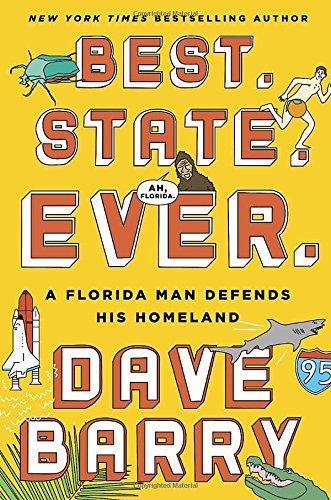
The trailer for Dave Barry's new one...is hilarious, even for those of us who actually like grapefruit. (Bonus joke, however, and a true recollection: I learned to like grapefruit at my church college, where I started eating it in a show of friendly defiance to a friend who was fond of saying things like, "Don't do anything I wouldn't do--which leaves you pretty much anything except murder, high treason, and eating grapefruit.")

http://www.miamiherald.com/living/liv-columns-blogs/dave-barry/article97208577.html


In theory, this link allows you to pre-order a new copy from the publisher in such a way that both DB and I get commissions. Test it, Gentle Readers. You know you want to...

(Btw, how was it possible that, after merely mentioning a few Controlled Substances got Congressman Griffith's E-Newsletter routed straight to the spam folder last week, the weird news stories headlined in Dave Barry's Blog newsletter made it into my in-box? Two of them name body parts which this site isn't going to mention. Also one of Dave Giles' "clashing" headlines, which referred to humans most of whom aren't even female by an obsolete term for female cats, made it through. The ways of Yahoo are strange.)

Food 

Determined to get to Google + this week or bust, I found this recipe. Delicious, especially if stores in your area have marked-down, end-of-season fresh raspberries.

http://rusty2rustyschatter.blogspot.com/2016/08/raspberry-trifle-recipe.html

Should this one go under Food, Animals, Nature, or Travel? This photo post contains good specimens in all four categories. I think it goes under Food, because the gluten-free macarons are different (though not hard to figure out) and the gluten-free crepes may be unique. Thanks to +LadyNightwaveBrendaMarie Writer for sharing this friend's post.

http://www.handmadedreamsofmine.com/2016/08/montreal-diaries-landscapes-and-raccoons.html

Politics (General) 

U.S. readers, here's a free e-course (intended, of course, to publicize a real school) for all ages--anyone who'd like to know more about what the President of the United States does, should do, can do. If you sign up now, you'll have absorbed the information before the election.

http://info.hillsdale.edu/the-presidency-and-the-constitution?

Psychology 

Kyla Matton Osbourne explains why it's so hard for some people to Fix Facts First (and let) Feelings Follow:

http://www.blogbourne.com/do-you-have-a-negative-emotional-response-to-other-peoples-feelings/

Technology 

Can you unplug yourself? For how long? +LadyNightwaveBrendaMarie Writer challenges you...I routinely unplug altogether on weekends, as youall know. (On Mondays, the cafe doesn't open but I've usually prodded myself to go to the store and write offline about the goodies we have for sale; those posts then go live on schedule, after I've been back online.) Despite its having been a good year for raspberries, which literally kept me alive this summer, I still don't have electricity (which still means no indoor heat) at home...

http://www.blogbourne.com/can-you-go-24-hours-without-tech/

Zazzle 

This will be the last Zazzle image I'll share for a while, because Zazzle has become a user-hostile site, infested with nasty Captchas that cause the site to fight the user at every single move. I hope my e-friends who've used Zazzle are making money from the sales of their creations. I'm not going to support a site that uses Captchas.


Morgan Griffith on Telemedicine at Work

From U.S. Representative Morgan Griffith (R-VA-9):

"
Telemedicine – Now is the Time

From time to time, this column highlights ongoing challenges, promising innovations, etc. being undertaken by various people, organizations, and/or businesses from throughout Ninth District. For example, I wrote earlier this month of a local cow/calf operation and its owner’s support of improving our tax code. I have also discussed the Radford Health and Rehab Center, which has made strides in health care innovation and improving patient care through “telemedicine,” which generally refers to clinical services provided remotely using various telecommunications technologies.

Another local facility taking advantage of developments in telemedicine is the Salem Veterans Affairs Medical Center (VAMC), which treats many Ninth District veterans.

I visited the Salem facility last week and, in addition to more general issues I discussed with their leadership, I was able to visit their physical therapy department which uses telemedicine to provide greater services to rural areas of Virginia.

As you may know, the VA has what are called Community Based Outpatient Clinics, or CBOCs. There are hundreds of them throughout the country, as they provide common outpatient services and are intended to help make it more convenient for veterans – particularly those in rural communities – to receive care closer to home. In the Ninth District, there are CBOCs located in Norton, Tazewell, and Wytheville.

In the Wytheville CBOC, a room that previously housed a printer and other equipment was turned into a physical therapy room. There, Ms. Jessica Edwards, a Licensed Physical Therapist Assistant, uses Clinical Video Technology (CVT) as part of their telerehabilitation program.

After a veteran completes a one-time evaluation at the Salem VAMC, follow up treatments may be provided at the Wytheville CBOC through CVT. Ms. Edwards works remotely with folks at the Salem VA including Dr. William D. Adkins, PT,DPT, OCS, ATC, Cert. MDT (a Doctor of Physical Therapy and Salem-based physical therapist) and Dr. Anthony Caruso, PT,DPT (a Doctor of Physical Therapy and the Chief of the Physical Therapy Department at the Salem VAMC).

During my visit to the Salem facility, Ms. Edwards joined us via camera from the Wytheville CBOC. They conservatively estimated that their telerehabilitation program has saved veterans 93,380 miles in travel for treatments and reevaluations, as those veterans would otherwise have to drive to the Salem VAMC. This is in addition to the estimated $26,700 they estimate saving in completed consults, the $61,600 they estimate having saved through follow-up visits provided in Wytheville, and the $2,097 potential savings in telehealth re-evaluations provided in Wytheville.

A similar program recently began at the Staunton CBOC, which is outside of the Ninth District.

This telerehabilitation program uses taxpayer money wisely, and provides a valuable service to veterans by delivering musculoskeletal care to those living in rural Virginia communities. Without such a service, the benefits of a veteran’s physical therapy may have worn off in a cramped car during their drive home from the Salem VAMC.

The Carilion Family Medical Clinic in Giles County, a clinic I visited several years ago, also practices telemedicine. If a patient were to come in with pneumonia, for example, and it was determined the patient has a mental health issue such as depression, they would connect via telehealth with a mental health worker for additional assistance.

I am sure other Ninth District facilities make use of some telehealth technologies as well, but I have not yet had the opportunity to visit all of those.

Telemedicine is a trend we as a nation should embrace, particularly for rural and underserved areas. As part of that, federal policies and coverage should reflect that telemedicine is a way for rural and underserved areas to receive a higher degree of health care services. It is also a way for patients to save money and time traveling numerous miles to seek help.

As a part of that vision, I have introduced legislation to expand access to stroke telemedicine (also called “telestroke”) treatment in Medicare. Through telestroke, a patient having a stroke can gain access to specialists through the use of interactive videoconferencing, even if the hospital at which the patient is receiving treatment does not have a stroke neurologist available around the clock. This telestroke service should, for many patients, reduce the need for rehabilitation and nursing home stays because data shows us quick intervention can often prevent the most devastating effects of a stroke. The Furthering Access to Stroke Telemedicine (FAST) Act (H.R. 2799) can be found at www.morgangriffith.house.gov.

If you have questions, concerns, or comments, feel free to contact my office. You can call my Abingdon office at 276-525-1405 or my Christiansburg office at 540-381-5671. To reach my office via email, please visit my website at www.morgangriffith.house.gov.
"

Robert Hurt on Obamacare

Once again, the obligatory editorial comment: The way I believe the cost of medical care can be reduced is to remove the "premiums and deductibles" and other insurance-gambling garbage from the equation, altogether, and forever. Nevertheless, outbound U.S. Representative Robert Hurt (R-VA-5) offers his successor good clear guidance on this...Any chance youall in the Fifth District can keep him in Congress? We need more people who can admit the need to abolish Obamacare.

"
Washington policies have real and often painful effects on Fifth District Virginians, and the implementation of the President’s healthcare law is a prime example of such. This misguided law has forced many hardworking Americans to accept reduced working-hours and unsustainable increases in their insurance premiums, co-pays, and deductibles. Time and again we have seen examples of the shortcomings and flaws in this legislation; just last week we saw another culmination of these hardships as Aetna, the United States’ third largest health insurance company, pull out of Obamacare in 11 out of 15 states in which it operates due to unsustainable rate increases.
We have also seen this law result in cancelled policies, loss of access to current physicians and providers, and an online marketplace system that has proven to be vulnerable to data breaches. Developing the federal online marketplace cost the American taxpayer over $840 million because of poor planning and management. The implementation of the law has not only cost taxpayers billions of dollars, but it is not achieving one of the key promises the President made about the law - that it would reduce the cost of health care. As higher premiums, deductibles, and drug prices continue to drive health spending upward, he has clearly failed to deliver on that promise.
Perhaps most concerning of all is that the Administration has taken action in implementing a law that lacks constitutional or legal authority. The House Oversight Committee has uncovered information which shows senior officials within the administration expressed concern over the lack of legal authority to fund the Affordable Care Act program, but ultimately their concerns were pushed aside to further the President's political agenda. This revelation demonstrates that the administration knowingly ignored the Constitution to try to make the Affordable Care Act work. The House has sued the administration for improperly spending taxpayer dollars without legal authority, and in May of this year, a federal judge ruled that these payments are indeed unconstitutional. We will continue to fight tirelessly in the House to ensure this harmful law is repealed and fully replaced with a more responsible healthcare plan.
Unquestionably, there is no issue I hear about more from concerned Fifth District Virginians than the negative impact of the President’s healthcare law on their families and businesses. As I travel throughout our district, I consistently hear about the law’s devastating effects on our families, our workforce, and our struggling economy. President Obama sold his signature healthcare law to the American people on the basis of false promises, saying his signature law would lower premiums, but they are higher and will continue to rise, causing major healthcare providers to drop out of the healthcare exchange because the expenses are too high. The president told us we could keep our current health plans if we liked them and could continue seeing the doctors we know and trust, but that too proved incorrect. We have to implement real healthcare reform that actually reduces the cost of care, premiums, and deductibles and does not separate patients from their doctors. I remain committed to reforms that are patient-centered and market-oriented to deliver the healthcare system the American people deserve.
If you need any additional information or if we may be of assistance to you, please visit my website at hurt.house.gov or call my Washington office: (202) 225-4711, Charlottesville office: (434) 973-9631, Danville office: (434) 791-2596, or Farmville office: (434) 395-0120.
"

Tortie Tuesday: Heather Plays Peacemaker (Again)

It's a Tuesday. Tortie Tuesday, the day when cat bloggers everywhere post tributes to our beautiful orange-and-black, or orange-black-and-white, or buff-gray-and-cream-colored cats. I am not in that sort of mood. Yesterday, when I burned the trash that included a visiting tomcat's extra-disgusting, streppy-smelling mess, my cat Irene went around and kissed the garbage barrel, nonverbally saying, "But it was a souvenir of a dear friend!" Most of the time I can relate to my cats, but...well, actually, I think this lack of empathy for Irene's feelings has roots in the lack of empathy I feel for women who act idiotic and sentimental about men who should only hope, after a couple million years in the afterlife, to become good enough for these women to wipe their boots on.


And then this morning, when I stumbled out of the house feeling streppy and yucky, Irene's precious little daughter Violet ran right out in front of where I was walking and dropped another load of fresh germs right on the path. Of course, Violet was nonverbally saying, "I don't feel well, do you know why, can you help?" Of course, this is a danger point--Violet's made it past the age where I expected to lose her to Manx Syndrome entire and alone, hurrah, but if she's inherited milder forms of the typical Manx weaknesses, or other weaknesses, her first infectious illness could still wipe her out. Of course, deep down inside I want Irene to have one living daughter to love, before she is (I hope) spayed so that we don't have to watch any more cases of Manx Syndrome. Being able to keep one of her daughters mattered a great deal to Irene's grandmother; I suspect it'll mean as much, or more, to Irene. But as I looked at those two beautiful three-colored cats and my mind vibrated back and forth between the thoughts of "my precious pets" and "my feeling so bad this morning" I have to admit I did not feel a lot of love for Violet.

(Violet is bigger than she was when this picture was taken, and, if anything, cuter, and never doubt, she knows she's cute. Her face and underside show distinct color patches; her back is a "heathered" or "tortoise-shell" mix of black and orange.)


For Heather, the one whose orange and black hairs are mixed together above, with almost all the cream-white spots down where they don't show, yes. Heather's dark face doesn't look especially "purry" in her all-time best photo...


...but she is one of the nicest, kindest, most helpful cats it's ever been my privilege to know.

I don't personally know any humans called Heather; if I'd remembered that that was the name a human friend had given a daughter of hers whom I've never properly met, I wouldn't have given a cat that name. This year, when the human Heather has spent more time with her mother, her mother and I have looked at each other strangely on more than one occasion, in a way I've tried to avoid when naming cats. I will say, though, that if a human has to have a cat namesake, the human Heather has been blessed with a great one. There are days when I wish I were as nice, for a human, as Heather is, for a cat. This is one of those days.

Heather has never been an especially cuddly cat. Even with her own kittens, she's apt to leave them with Irene (whose previous kittens all had Manx Syndrome and died young, but not for lack of motherly love) and go off hunting, or teach them to hunt, rather than spend a lot of time snuggling. All cats touch, kiss, and "eye kiss" their friends of all species (if they have friends), and Heather does those things frequently, but efficiently. In some ways, although she and Irene are absolutely heterosexual, Heather plays "Daddy" to Irene's "Mommy." She's the tougher, more adventurous, more woodswise cat...but by no means the less loving or generous one.

For instance, when I yelled at Irene and Violet this morning, "You disgusting dogs! You make me sick!" Heather came up and kissed my hand. 

I all but literally heard her saying, "I'm sorry you're not feeling well. They're not feeling well either. Let's all be patient and stay friends, shall we?"

She looked to me as if she were coming down with the same little strep-related "summer cold" that I have, and presumably Violet has, by now. For the adult cats and year-old kittens, as for healthy humans like me, it's not serious. Antibiotics will wipe it out if it does last longer than two days, which it probably won't; many of us won't even feel our immune systems fighting it off, which is what's dragging my energy level down now. It is, nevertheless, a bore.

(And what's left to sell if I have to pay for antibiotics? Don't let's think about it. Violet, the one remaining kitten of this spring's fourteen, is still awfully young...antibiotics are about as likely to kill as they are to cure kittens. I've missed Violet's slightly younger, healthier cousins and long-buried siblings, especially Heather's adorable little buff-gray-and-cream, "pale tortoise-shell" or "grayzel" colored Peri (with "blue"-gray brother Winkle), but now I'm glad Heather's kittens were adopted early. Maybe the infection won't reach them for another two or three months.)

In sickness as in health, however--through all her years in this world--Heather has been consistently a kind cat. She'll slap an unruly kitten if necessary, show a tooth or a claw as a friendly warning, and I wouldn't want to make her fighting mad, but she's never bitten or scratched anyone in anger. She's a peacemaker, as her great-aunt Mogwai, her great-grand-uncle Mac, and the long-gone cat Black Magic to whom they're probably some sort of distant kin, used to be. Even among humans you don't meet a peacemaker every day. Heather doesn't get a chance to be one (mostly between kittens) every day, but she has consistently been one when she's had the chance.

I'm not one; that's why I admire them....my late husband was a peacemaker. The boy I actually liked in high school (as completely distinct from the random boys to whom I felt random, short-lived physical attractions) was a peacemaker. Our late e-friend Ozarque was not only a peacemaker, but also a writer who was able to write in a detached, scientific way about being one--possibly a unique combination. I'm not sure I know of any other peacemakers; I know people in the litigation-mediation field who try to be peacemakers, but have not always succeeded, and I've known a couple of people who actually sowed discord among people in order to gain social-emotional "power" by playing peacemakers. (They were, I suspect, like the people Ozarque described as seeing life as like a game of chess--dangerous, in a way.) Jimmy Carter may have achieved the unique distinction of being a peacemaker who was designated and used as such by sowers of discord...hard to say, but that's the way he comes across to me.

Blessed are the peacemakers.

What Is White Privilege?

At another site someone posted a poll question: "Are you aware of your White privilege?" Someone posted in reply: "What is White privilege?" Well, duh. I mean, I'm glad if younger people really have not noticed White privilege...that is, provided that they weren't just failing to pay attention.

First, let's admit that sometimes there is such a thing as non-White privilege, too. Just being the one who sticks out in a crowd can become unpleasant. White Americans who've travelled have had that experience, as have those of us who've worked in certain neighborhoods, certain school districts...there can certainly be privileges based on being an insider, or a kind of non-insider that's more liked/trusted than another kind.

Then there are the times when it's hard to be sure. Did the distracted employee actually not see who was there first?

(Once I waited at a pharmacy counter where two geriatric patients, one with pink skin and one with sable-brown skin, were waiting for prescriptions, along with a younger patient; I was with the darker-colored patient, the one who was too ill to go in alone, and who was there first. However, the counter worker had been in a back room when the patients approached. She looked at the patients, "Who was here first? You, sir?" and the White man, who had walked in alone and probably driven to the store alone, did have more white hair and more wrinkles. To her that patient might have looked like the oldest, therefore sickest, person who needed to be waited on first. Well, appearances are deceptive. The young person might have been sicker than either of the geriatric cases for all I know.)

And sometimes it's not actually about race, even if it looks that way. Have you ever liked one music recording better than another, without seeing the faces of the performers? Is the snooty server kissing up, not to the White customer as such, but to the customer who looks as if s/he spent more money? Did the other student's paper get a better grade because it flattered the teacher more?

But then sometimes the only reason people don't notice their White privilege has to be that they've never looked at the other point of view.

Remember this sweet little children's story? It's a story of White (middle-class, well-connected) privilege:

http://priscillaking.blogspot.com/2016/06/book-review-logan-bruno-boy-baby-sitter.html

Ghetto boys have gone to jail for the kind of stunt that got the fictional character Logan Bruno hardly even rapped on the knuckles.

Back in my AC days, I wrote about "National Return Shopping Carts Month" (February, when it's easiest to see and recapture shopping carts in much of North America). I shared an anecdote about living in Maryland. I was always baffled by seeing so many shopping carts lying in bodies of water, and used to pick them up on the way to the store and push them in with me. One day I found a stray cart while walking through a majority-minority neighborhood, and the person walking beside me panicked. "Don't touch that cart! Do you want to go to jail?" I couldn't believe that my Cuban immigrant friend had seen anyone arrested just for returning a shopping cart, but yes, indeed, some store managers and some police officers worked on the assumption that anyone seen pushing a stray cart was probably the one who'd stolen it. I'd lived in neighborhoods where the assumption was that you were returning a cart that had blown down the stream bank in a storm. Those are typically majority White neighborhoods. That's White privilege.

More recently, a paranoid storekeeper reportedly demanded that a Muslim shopper remove her veil. Would she have demanded that a White American shopper remove a skirt, or even an overcoat, that could have concealed a lot more stolen merchandise than a face veil would cover? I frequently haul knitting and knitted goods around in bags that have room for a whole load of stolen goods; nobody's ever demanded the right to inspect my bag, even in stores that display a warning that they claim that right. That's White privilege. Not so much the assumption that no White woman is ever a thief as, in many cases, the assumption that if White women have robbed the store the staff will henceforward be able to recognize them from individual photos displayed in the staff lounge.

http://www.theblaze.com/stories/2016/08/03/muslim-woman-told-to-leave-dollar-store-after-refusing-to-remove-veil/?

Once in Arlington I walked out of the library carrying a big stack of books. With my astigmatism, I walked right up to the car at the end of the row in the parking lot where I'd left my husband, wondered why he'd turned the car around in the parking space, but didn't focus closely enough to notice that someone else had parked another car, the same type and color...at the end of the row, actually, just beside my husband's car. I opened the door and said, "What'd you do, pick up dinner?"--to a total stranger. Then I saw the stranger sitting in the driver's seat, whirled around, saw my husband waving from his car, and smiled and said, "Oh, sorry, wrong car!" The stranger laughed, "Yes, it's the same car!" Nobody's scared by a little teacherly-looking woman loading books into the wrong car. And as we drove off my husband said, "You know, if you'd been a young Black man he would have called the police--or shot you." That's White privilege.

Well...I do not, actually, mind having enjoyed this kind of White privilege. Nor do I plan to stop extending it to other White people, this "privilege" of assuming that people are honest and decent until they indicate otherwise. I have, however, made a conscious decision to extend it to other types of people too, on the grounds that they deserve it about as much as White people do.


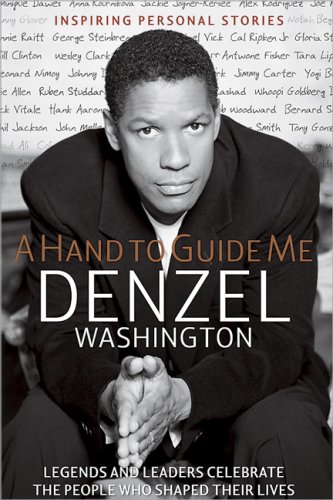
(These stories, collected by a minister who also happens to be a movie star, go into more detail about how extending the "privilege" of good faith toward young people can help.)

August 19 Link Log

My e-mail is getting just...too...interesting. All week all I've found time to do online have been writing-for-pay and e-mail. But that's a good thing, because I'm not making money in the real world! Categories: Food, Movies, Politics, Zazzle.

Food (Yum) 

Stuffed peppers for any season is a "yum." The toasted wheat germ? Meh. Adds gluten (without the wheat germ this is gluten-free), and a bitter flavor some people love and some hate. You could substitute flaxseed or meal and/or sesame seed or meal, and I'd love these peppers too.

http://www.motherearthliving.com/food-matters/quinoa-black-bean-stuffed-peppers-recipe.aspx

There are too many food writers in Washington to justify my trying this writing job, but here's a dream job for a D.C.-based foodie.

http://dcist.com/2016/08/help_wanted_were_looking_for_food_w.php

Movies 

I'm still not planning to watch either movie, unless the right person asks me, but Noah Gittell's review, comparing a wannabee blockbuster remake with an obscure documentary to be seen in just one small independent local theatre, is too witty to miss. If NG ever compiles a book, this post belongs in it.

http://www.washingtoncitypaper.com/arts/film-tv/blog/20831255/lo-and-behold-and-benhur-reviewed

Here's our Amazon link to the classic version of Ben-Hur, which is the one I recommend, although one of my sisters went to a Christian school that actually required her to read the book. (Her review: too many pages. I did read all the pages in Quo Vadis and The Silver Chalice, and for Ben-Hur I think the movie is enough.)

Ben Hur

Politics (Election 2016) 

Would you like to help vet Donald Trump's tax returns? Ben Eisenberg would; if interested, you can sign BE's petition here:

http://pac.petitions.moveon.org/sign/why-is-trump-hiding-his?

Is this petition to Mike Pence a legitimate petition we want to support, or a bogus petition got up to discredit the candidate? I don't know, but I say Governor Pence should look into it.

https://www.change.org/p/indiana-governor-pardon-an-innocent-man?

Zazzle 

If you've ever had a nice sweater ruined when somebody slapped a nasty "my name is" sticker on it, first of all this web site salutes you if you were so kind and gracious you didn't even slap them down a long flight of stairs, and next, this button will probably appeal to you:


And, of course, there had to be one...


Book Review: Green Green My Valley Now

Title: Green Green My Valley Now


Author: Richard Llewellyn

Date: 1975

Publisher: Doubleday

ISBN: 0-385-03374-5

Length: 236 pages

Quote: “I suppose if something big is to be felt when you leave a place you love, then something bigger it should be when you go back.”

Huw Morgan, narrator of the earlier novel How Green Was My Valley, had left his home in Wales and gone to Argentina at the end of that book. Now he’s back in Wales to report on the “modernization” of his home town.

Many geologists believe that all of the currently inhabited continents were once a single land mass, which they hypothetically call Pangaea. Among the evidence that supports this theory is a physical and geological similarity between southern Britain and northeastern North America. According to the bedrock, Wales may once have lain just northeast of Nova Scotia. The landscapes of Huw’s beloved Valley, which fill him with “a drift of wonder beyond words,” look like the Appalachian Mountains; both may once have been part of a single land mass.

The damage the coal industry has done is, predictably, similar. “[W]here the other mountain once was, behind our house, is only plain sky…the pit has gone these years, with our house and all the other houses on the hill, flattened and buried under the slag.”

The language and culture are, of course, different. “[O]ur women worked in the pits long, long before, and good as any man, and earning with the best…and they left the pits only when oil began to take coal’s place…Awful years, those were, my mother said.”

Huw’s story is fiction, and his own, although it takes place in some (not all) of the places where Llewellyn had lived. In between How Green Was My Valley two other novels, Up into the Singing Mountain and  Down Where the Moon Is Small, described Huw’s fictional life in Argentina, his first marriage, widowhood, remarriage and so on. He returns to Wales with his second wife, Sus, “an Indio of Indios.”

If peace-loving, church-going Huw is disappointed by the decrease in church attendance, the number of little local “chapels” that have been rededicated to secular use,  he’s really dismayed by the violent “revolutionary” activities going on in the early 1970s in Europe. He’s shocked by the unchristian behavior of the people, many of whom aren’t even Welsh, that he meets in this section of his life. Among other things he retires, disturbed, from the company of two lesbians. He’s widowed again, in the course of this story, and he remarries again. In order to preserve some suspense for anyone interested in reading a story that’s mostly about an older man’s discomfort with the behavior of the young (the generation who are now “older”), this review won’t mention whom he remarries. There are a lot of women in the story and Huw is so consistently polite, discreet, oldfashioned, Protestant, or whatever, that readers won’t be sure which, if any, of them to regard as “a love interest” for several chapters in the middle of the book.


Huw’s character keeps the tone of this book discreet, but there’s no lack of sex and violence in this book; it’s merely less graphic than was fashionable in 1975. It is, in fact, more of a chronicle than a novel. The central question raised by the plot is whether Huw still wants to live in the Valley and, despite his conservative personality, there’s not a great deal of suspense about that.

The copy of Green Green My Valley Now that I physically own is in poor condition, and is cheap. Otherwise, prices for all three sequels to How Green Was My Valley are in the collectors' range, but as of today this web site can still offer copies of Green Green My Valley Now for $5 per book + $5 per package. (How Green Was My Valley, which was a bestseller and became a movie, is still cheap; the other two volumes are rare and more expensive--the set of four may well go over $100.) As always, the shipping charge applies to as many books as fit into the package and would cover all four volumes, or any other combination of books you choose to order.

Monday, August 22, 2016

Book Review: Kristy and the Secret of Susan

A Fair Trade Book


Title: Kristy and the Secret of Susan (Baby-Sitters Club #32)

Author: Ann M. Martin


Date: 1990

Publisher: Apple /Scholastic

ISBN: 0-590-73189-0

Length: 145 pages

Quote: “The teachers and Mr. Felder and I are hoping that, through music, Susan can acquire some meaningful language as well as some social skills.”

Susan is the sort of child that even the Baby-Sitters Club are glad they don’t have to mind very often. She’s autistic, doesn’t speak, isn’t toilet-trained, but she can play anything on the piano. Note-perfect. Including the mechanical errors in the old LP on which she heard a song.

The strangest thing about Susan as a character is that, although she doesn’t seem ever to have learned to talk, read, or understand words, she’s swallowed (mentally) a perpetual calendar and can give the day of the week on which any date fell or falls. Some late-talking children, usually boys who are not autistic and who talk fluently when they begin talking at all, are in fact understanding words; they just learn to talk by mentally rehearsing their language, to themselves, until they can talk right, without going through the babbling and baby-talk stages. It’s possible that they might memorize huge amounts of written information, possibly as a visual image, before they’re able to discuss the information or even understand it, and regurgitate that information by rote. But how would Susan have absorbed dates if she didn’t know words? Something is missing, whether from the fictional story of Susan, or from the story Martin heard about some real child before creating Susan.

Maybe that’s why it seems to Kristy as if Susan must really understand things, as if a little more niceness from other children might precipitate a Real Breakthrough. Genuinely autistic children don’t have Real Breakthroughs; whatever they do perceive is sufficiently different from what the rest of us perceive that, if they do acquire meaningful language and social skills, it’s a long slow process. But maybe, if Susan can hear and understand words, she’s not really autistic so much as just extremely shy…? Kristy makes an effort…and it’s no use. Whether she’s been accurately presented or not, in the reality of the story Susan really is autistic.


This is one of the less cheerful BSC books, irredeemably, despite having a subplot that gives Mallory a summer “boy friend.” Autism is a sad thing. But everyone is very, very nice. Even the kids who are making fun of Susan do it in such a nice, subtle, sophisticated way that Susan will never care. Or know.

To buy it here, send $5 per copy + $5 per package to either address at the very bottom of the screen. You can get several BSC books into a $5 package, and we'll send Martin or a charity of her choice $1 per book.

Sunday, August 21, 2016

Book Review: To Chase a Dark Shadow

A Fair Trade Book


Title: To Chase a Dark Shadow

Author: Carole Gift Page


Date: 1985

Publisher: Accent

ISBN: 0-89636-161-6

Length: 195 pages

Quote: “Why couldn’t she put her child out of her mind as she had intended six years ago at his birth?”

Victoria is a thoroughly modern yuppie-type Christian of the 1980s. If she used birth control devices that are only 98% effective, and one of those times happened to be the one time in fifty when the product was guaranteed to fail her, she could just put the child up for adoption and get on with her life…couldn’t she?

Well, no. Victoria’s life, such as it’s been, has been a student’s life shared with her mother. When her mother dies, the university becomes a barren place, her thesis almost boring, and she finds herself spending a lot of time at her mother’s grave…where she soon notices a young man visiting his wife’s grave. By the time he tells her he’s a private investigator who helps people find missing family members, she’s starting to think a lot about the son she never knew. She’s also warning herself that the young man still seems to be attached to his lost wife. Little does she know that, according to the mysterious workings of Providence and novel writers, she’s being called to rescue her son from mortal danger.

Her son lost his adoptive parents in a car accident. He was injured. He has post-traumatic seizures. Medication can help reduce the severity, but only time cures post-traumatic seizures. But in the 1980s there were Americans who believed that post-traumatic seizures had something to do with demon possession. Had the patient sinned? Had the patient been “conceived in sin”? You see! Proof! Demons begone! And if one or two prayer sessions didn’t banish the demons, it was the patient’s fault! It had to be, because otherwise it’d be the fault of the Christians who’d tried to cast out the demons! (A student, not at my church college but at a different denominational school nearby, used to have post-traumatic seizures; I'm sorry to admit that one of the teachers tried to exorcise him, too, and blamed him when he continued to have "demon headaches.")

Victoria will learn about seizures, and about local laws and other things, as the plot heats up. Eventually, after she’s made full use of his professional services and would have no further use for him if she really weren’t hoping he’d make a move, Phillip the private investigator will admit to a more personal interest in Victoria, who of course returns his interest…it’s just that women who were students in 1985 had been taught that our role in the dance of romance was to respond to the male’s pursuit.


To Chase a Dark Shadow is a nice, plausible piece of chick lit about a nice, plausible young woman. The way Victoria prays is not necessarily the way every reader has been taught to pray. I for one am willing to accept that she does pray, after whatever fashion she’s been taught; characters who pray are nicer than characters who wail, have hysterics, or pop pills.

Carole Gift Page is apparently still alive and writing, so this is a Fair Trade Book. Buy it here, for $5 per copy + $5 per package, and we'll send $1 to Page or a charity of her choice.