Showing posts with label mold. Show all posts

Friday, October 6, 2017

Must Have Been the Moldy Coffee: Status Update and Rejected Guest Post

(Three parts: money, song lyrics, and the Rejected Guest Post.)

Money

Status update: In real life, I had no income until this morning, when a lot of people were conspicuously absent from Friday Market, even though it was a perfect market day and a lot of people had just received their pension money. Nickelsville's Town Festival was blamed. I had a volunteer driver, who usually has to baby-sit for another vendor, and was able to haul out lots of things. I sold $18 worth. Oh, wail...If you made more than $18 this week, you need to be supporting this web site. Here's where you do that:

https://www.patreon.com/user?u=4923804

https://www.freelancer.com/u/PriscillaKing

https://www.guru.com/freelancers/priscilla-king

https://www.fiverr.com/priscillaking

https://www.iwriter.com/priscillaking 

https://www.seoclerk.com/user/PriscillaKing


You can also mail a U.S. postal money order to Boxholder, P.O. Box 322, Gate City, Virginia, 24251-0322.


Song Lyrics

Next, for someone who wanted links to song lyrics I've written, here's a list of things at this web site some part of which can be sung, although I retired from singing solos professionally many years ago. Twelve songs, or at least verses--the parodies at "Blog Post Bilingue" and "Fleece My Sheep" consist of only one verse each for a tune that originally had three or four verses. If you want to sing them, sheet music is available by real mail.

https://priscillaking.blogspot.com/2017/10/the-song-of-avarice.html 

https://priscillaking.blogspot.com/2017/09/friday-song-and-status-update.html 

https://priscillaking.blogspot.com/2016/02/blog-post-bilingue-todays-fundraising.html

https://priscillaking.blogspot.com/2015/12/saturday-post-gospel-song-with.html

https://priscillaking.blogspot.com/2015/07/what-now-my-love-reprise.html

https://priscillaking.blogspot.com/2015/04/its-complicated-world.html

https://priscillaking.blogspot.com/2015/04/bosnywash.html

https://priscillaking.blogspot.com/2015/03/fleece-my-sheep.html

https://priscillaking.blogspot.com/2015/03/it-aint-necessarily-so-reprise.html

https://priscillaking.blogspot.com/2014/08/bad-poetry-love-song.html

https://priscillaking.blogspot.com/2014/05/so-nuts-to-you.html

https://priscillaking.blogspot.com/2013/06/why-dont-children-help-mother-more.html

The Poor, Forlorn, Rejected Little Guest Post, Boohoohoo!

But in theory I was supposed to have sold some guest posts to another site. Well, that didn't work. The client, also a web site, claimed that it was visited regularly by Mainstream Respectable Health News Sites, so I wrote drafts for two guest posts based on what Bing brought up from that type of sites. Product-supportive guest posts, I was thinking, but not advertising or panic-pushing. 

The client rejected the drafts. This is unprofessional. When you hire a writer, you don't reject drafts. You either buy them as they are, or request revisions. That's the difference between inspecting a draft, which is meant to be changed, and repurchasing something that's already been published, which is not. 

So the client is an unprofessional web site, and the client even emoted unprofessionally, "You should not be writing on health topics." Feh. Based on the one-sided, emotional response I saw, the client should not be posting on health topics.

The health hazard of moldy coffee really exists. As with moldy food generally, it's not a very widespread problem; most food sold isn't moldy, and most people consume or discard food before it becomes moldy. However, it is possible for mold to grow inside a seldom-used coffee maker. 

Here's what I wrote:

"
Moldy Coffee?

Mold can grow inside washing machines, so is it a surprise that mold can grow inside coffee makers?

Coffee beans have some antibacterial properties and resist contamination by some microorganisms. Heat destroys other fungi, yeasts, algae, bacteria, and even parasites. However, the world of tiny organisms (and tiny traces of toxic chemicals) that can make humans sick is rich and various. Some fungi grow, even above the ground, in the Arizona desert. Some fungi grow in the Alaskan tundra. Some fungi (and algae and bacteria) grow in the water reservoirs of coffee makers.

The longer an unwashed, unused coffee maker sits, the better, from the microorganisms’ point of view. If just a little warm water sits in the slowly cooling, well-insulated reservoir all weekend, the walls, rubber gaskets, etc., have the kind of warm, dark, damp environment fungi love. Mold is less likely to form when coffee makers are used continuously, but it’s still possible.

You may have heard an Internet rumor that Keurig coffee makers are “impossible to clean.” Snopes checked this and rated it partly true. Keurigs are no more likely to harbor mold than older-style coffee makers, but they do take longer to clean.

How Bad Is Moldy Coffee?

Don’t panic! The way your individual body reacts to mold is an allergy-type reaction. Symptoms may vary among different people who’ve imbibed the same fungi. People who use steroids or immunosuppressants or who are otherwise immune-compromised may have conspicuous reactions while others don’t notice a reaction at all. (However, those who don’t notice a reaction may become noticeably more cheerful and energetic when they drink cleaner coffee.)

Typical reactions include coughing and sneezing, watery eyes, dry mouth, sore mouth and/or throat, skin rash, and indigestion. Sensations of numbness in the mouth or tongue are usually caused by drinking coffee too hot, but have been reported as reactions to moldy coffee. Less noticeable but common reactions can include aggravated mood swings, anxiety attacks, resurgence of childhood learning disorders like dyslexia or attention deficits, “brain fog,” “absentmindedness,” and flares of immune system dysfunctions like arthritis or colitis. Very few people have reported asthma or anaphylactic shock from exposure to moldy coffee, because relatively small amounts of allergens are actually swallowed. A much more likely complaint is “Someone else’s coffee” (or “Everyone else’s coffee”) “tastes better than ours.”

Moldy coffee is likely to be a problem in environments where mold grows easily. That means it’s only one part of an overall problem...but, because people don’t expect mold to infect coffee, moldy coffee can be the part of the overall problem that goes untreated after walls have been scrubbed, carpets removed, curtains laundered, books mothballed, and so on.

Cleaning and Descaling a Traditional Coffee Maker with Vinegar

Traditional coffee makers brew a small pot or “carafe” of coffee all at once. Usually scales of minerals that precipitate out as water heats up are visible before mold and algae are, but you never know. Although the water used in these coffee makers has usually been treated with chlorine, some bacteria—like the ubiquitous E. coli that’s often transferred directly from the user’s fingertips—have evolved resistance to chlorine. Mineral scales are an ongoing problem that will eventually clog the machine. Vinegar is recommended because it dissolves mineral scales at the same time it kills fungi and bacteria.

To clean and descale the traditional coffee maker, fill the water chamber with equal parts of water and white vinegar, and insert a clean paper filter. Turn it on and let it brew until about half the liquid has moved through the system. (This allows the vinegar solution to coat every surface.) Turn it off and let it sit for half an hour. (This gives the vinegar solution time to kill microorganisms.) Turn it on and finish brewing. Discard the vinegar solution, change the filter, and brew one pot of plain clean water. Discard that, change the filter again, and brew a second pot of plain clean water. This should yield a clean, sterile coffee maker that brews good-tasting coffee, just like new.

Cleaning and Descaling a Keurig Coffee Maker

To clean the cold water reservoir, lift out the water level guide and clean it, then wipe out the cold water reservoir with a clean damp cloth, then replace the water level guide.

Some models come with a water filter, and instructions for changing and replacing the filter. Stale water filters can become very nasty since they filter out the chlorine that kills bacteria that may get in the other end. The instructions that came with the machine specify how often to change the filter.

Keurig sells a special Descaling Solution in bottles to fit the different coffee makers the company offers. This is used in more or less the same way you use vinegar to clean a traditional coffee maker, but the company provides more specific instructions for different sizes and models of Keurig.

Cleaning the Coffee Itself

Mold can grow on coffee beans and coffee grounds themselves; that’s the easiest way for mold to get into a coffee maker. The kinds most likely to grow on coffee are universal and not highly toxic, but, if you notice mold on a “puck” or in one of those cute new individual cups of coffee, you have a valid reason for complaint—just as if you’d noticed mold growing on a loaf of bread.

If you’re very concerned about moldy coffee, you may want to grind your own beans. Check for freshness at the store, buy only small amounts of nice fresh coffee beans, and grind and rinse them just before using them.

Mold is not the only possible allergy trigger. Coffee manufacturers claim that coffee doesn’t contain enough residues of chemicals used in processing to cause a reaction, but if you have a persistent reaction to coffee, you may be more sensitive to a chemical than the average person. It’s even possible, though unusual, to be allergic to coffee.

SOME LINKS


"

What do you think, Gentle Readers? Is this article too wimpy? Does the description of mold allergy reactions not sound like something everybody wants to avoid? I mentioned arthritis and Mental Illnesses; isn't that sufficient motivation to clean the coffee maker already? I don't know what the client wanted to motivate customers to do, buy, or discard. I wanted to motivate them to keep their coffee makers clean, if they use the things at all (I don't!), but not to make themselves sicker worrying about moldy coffee than they'd make themselves if they're actually drinking it.

(Would you know if you were drinking mold? Coffee has a strong flavor and odor. So, according to what I found online, have the molds that infest it. The nastiest kind of mold that can grow on coffee beans is Aspergillus flavus, the black rot most often found in peanuts. Some vulnerable people apparently react to very small amounts of aflatoxin, the poisonous chemical A. flavus produces...but nobody would eat or drink more than a very small amount. If your coffee came out tasting like that a web site wouldn't need to tell you to stop using it. Your tongue would tell you to run to the bathroom and spit.

The most common kinds of mold found on coffee beans/grounds are the reddish Fusarium molds, with which I have no direct experience. Some of these molds are toxic in the sense that consumption of large amounts of Fusarium is known to have made many people sick, but again, reportedly people have to be starving to consume large amounts because the mold makes coffee, grains, etc., taste foul. Fusarium health problems are most often reported with large wheat processing operations. Traces of Fusarium in coffee usually generate complaints, not illness.)

The client complained that vinegar doesn't kill all mold. Nothing completely kills all mold. Baking soda kills many of the microorganisms that survive exposure to vinegar. A strong chlorine solution kills almost anything, although if you can't scrub something you've bleached you'll have to rinse it many times to remove the taste (and toxicity) of chlorine. Even bleach won't kill mold spores, which are not yet alive, strictly speaking, and just may be able to "sprout" into life after the chlorine has dried out and blown away. (She says, blandly, having survived the initial panic the first time she used a rag to scrub something down with straight Clorox and saw fast-growing Aspergillus niger mold growing on the rag the next morning. A. niger is the fluffy-looking, sour-smelling fungus that supplies most of the citric acid used in the U.S. food supply.) The process of steaming with vinegar and chlorinated urban tap water, soda and tap water, and/or bleach and tap water, repeatedly, will reduce the living mold population...and the more parts you can scrub and dry, the better...but if you have a serious ongoing problem with one of the new coffee makers for which you can't just order replacement parts, you may end up having to pitch the thing out and grind and brew your own coffee the oldfashioned way. 

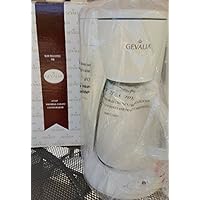
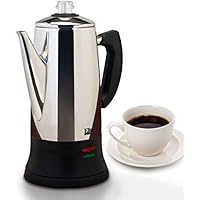
Should the article have gone into more detail about fungi? About more oldfashioned, labor-intensive alternatives to those cute little Keurig and Gevalia coffee makers? About how my father used to brew his coffee in a cheap stainless steel percolator that was designed to be taken apart and scrubbed along with the coffee cups and other dishes?

Should the client have gone into more detail about how to improve the draft article, rather than waxing judgmental and unprofessional about this web site?

Should this web site absolve the client web site of blame, because the client's reaction sounds as if the client might have become embittered by drinking moldy coffee? Y'know, early in the morning--the sun is rising late and the mornings are getting cold these days--the writer stumbles into work all tired and hung over, brews a double-strength cuppa joe using the office coffee maker, doesn't even savor the steam but just gulps down a great big swig of...that black rot taste found in bad peanuts! Aaauuuggghhh! Like being bitten by a bittern, that sounds like an experience that would leave anybody feeling bitter...

(blogger fails to remember author and title of nonfiction book in which birdwatcher was bitten by a bittern)

...enough to replace this...

Product Details

...or this...

Product Details

...with this...

Product Details

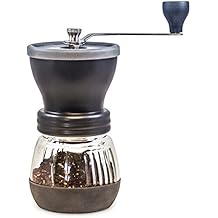
...or even this?

Product Details

(Sorry, Amazon didn't show a picture of a manual coffee grinder that looked like my grandfather's.)

Monday, July 27, 2015

Phenology with Stealth Nag: Ivy Wants My Water

Well, this is the South, and it's July, so what did you expect? Even in the hills above Gate City, Virginia, without the local warming effect, temperatures have peaked around 90 degrees. People in Kingsport, Tennessee, haven't complained of local warming sending their temperatures over 100 yet, but they've certainly gone further past the 90-degree mark, and stayed there much longer, every day. At least overnight lows have been dropping back to around 70 degrees, which would be comfortable if the humidity weren't so heavy. The air feels thick. Everything smells musty, and feels damp to the touch.

As regular readers know, I always reuse soda bottles and bottled-water bottles at least twice. First I refill them with drinking water, then I refill them with cleaning water. One day this weekend I had brought in some bottles filled with drinking water. I sat down on the front porch. My cat Ivy sat down on my knee. I petted her and told her what a precious pretty kitty she is, and she purred, and I still felt tired. It occurred to me that drinking one of those bottles of water might help me recover the energy to stand up and take the bottles into the kitchen.

Ivy sniffed at the bottle when I opened it, and then began to meow. "May I have some?"

"It's only plain old water, Ivy." The cats usually go down to the spring branch for water, and ignore water I've put out in dishes in the mud room when we've had little kittens in there.

"Meow? Meow?" Ivy knew it was only plain old water, and she wanted some.

"Is it too hot to walk fifteen yards?" Some empty tins the cats had licked clean were in a bag for recycling in the yard. I poured one or two ounces of water into an empty tin.

"Purr. Purr!" Ivy started lapping up the water. I sat down again and took another sip from the bottle.

Irene and the kittens came out from the cellar. The cellar stays close to earth temperature and is where the cats usually go in extreme weather. "What are you purring about, Ivy? Share it! Share it!"

To my surprise, Ivy growled and glared at them. "This is my special treat the human gave to me." Ivy is the smallest adult cat; once in a while she feels a need to assert herself.

"Oh for pity's sake." I poured a couple more ounces of water into another tin. Irene and the kittens tasted it but didn't seem especially thirsty. Ivy didn't drink all the water I'd poured out for her, either. I expected the cats would leave it to evaporate; they usually like fresh running water.

Later in the evening, though, Heather came in from hunting with nothing to share. She seemed tired and thirsty, and approached the tins of water. Ivy growled at her, too. I went out and found Ivy defending the tin that was her special treat...I think she even drank all of that portion of water herself.

Sharing food is the main way all animals show friendship. Most of the time, in my cats' minds the category of food hasn't seemed to include water. In extreme weather, apparently, it does.

That was the nag for all pet owners. Now the rest of the phenology report:

Flowers: Lots of clover, Queen Anne's Lace, chicory. A few daisies are still blooming. Mimosa and crepe myrtle, mostly cultivated in people's yards. The "Rose of Sharon" hibiscus, H. syriacus, is blooming well wherever it's been planted and in at least one place where it's not.

Butterflies: Apparently thriving on this weather; I'm seeing lots of all the usual kinds: Spring Azures, which are actually more of a periwinkle blue than azure, and fly from spring through fall; Wood Nymphs (little brown ones); Sulphurs; Cabbage Whites; fritillaries; Silver-Spotted Skippers; lots of Tiger Swallowtails, a few Zebra Swallowtails, and occasionally the species most of the world calls a Black Swallowtail; and a Red Admiral. I have yet to see a Monarch or Mourning Cloak this year.

Moths: All our local species of Tiger Moths seem to have been decimated this year. I've seen only one Tiger Moth--dead--in Duffield. The Geometrid species that live in the black walnut tree and have been using my computer screen as a nightclub continue to be a nuisance. A Peach Borer moth, the kind that hold their very narrow wings in a way that suggests giant mosquitoes more than ordinary moths, but have mothlike heads, got into the Cat Sanctuary one night; this was a surprise since I didn't think there was a peach tree left in the neighborhood. (We used to have peach trees in the orchard, but they never bore fruit and didn't live long.) I've seen relatively few of the dapper little Desmia moths that live on wild or domestic grape leaves, but think I've seen one or two of each of our three species this year.

Birds: Even the crows haven't been flying or singing (well, in the case of crows, squawking) this weekend. It's just too hot! In Gate City, however, one species remains active...those blasted pigeons that roost on the courthouse dome. I saw a flock of them flying above town this morning.

Fungi: Apart from the nuisance molds that thrive in this kind of weather, Stachybotrys, Aspergillus, Mucor, Penicillium, Cladosporium, and "I don't care what it is--just kill it!"...I've seen one mushroom that was new to me. Everybody has seen the big, tan or orange, saucer-shaped kind of mushroom that occasionally pop up in the woods in late summer...Wikipedia says they're species in the genus Lactarius, one of the most common mushrooms in North America. Most of them aren't fit to eat (they don't look very appetizing) and may stain your clothes. This weekend, though, I saw a blue one. Same size and shape as an orange specimen growing about twenty yards away (maybe six inches high, saucerlike tops about the size of the palm of my hand), but the color shaded from pearly white to baby-blue. It almost glowed in the woods. Wikipedia says there's a species of Lactarius that are normally pale grey. I'd never seen one before.

Wednesday, October 22, 2014

Ghosts and Fungi: Halloween Spooky Post (Updated)

"In the basement, my skin felt clammy and clenched tightly around my bones. My heart pounded so wildly in my chest, I felt as if I was facing my own death. I felt so uncomfortable underground, in fact, that I thought I was going to pass out."--Theresa Wiza at http://paranormalminds.blogspot.com/2014/10/a-true-chicago-haunting-its-halloween.html .

In that basement...but not in another basement? I thought, reality-testing as I read. Yes, I can believe that a sane, intelligent person could have this reaction in only some basements, because I've watched it happen. Just as vertigo is a physical reaction that's distinct from fear of heights but is triggered by looking either up or down a "visual cliff," the phobic reactions some people have in only some buildings or basements are physical reactions to substances in those places, distinct from claustrophobia.

As discussed here ...real "horror" houses that seem to be exuding palpable waves of evil at almost everyone are likely to be physically polluted with nastier things than ordinary mold or insects. Houses that make only a few people feel "sick with horror" are likely to be polluted with mold or other natural substances to which only a few people have the nasty reactions that produce the sense of panic.

As when I was writing for Associated Content and working a flea market that was set up in an old tobacco warehouse. Some days it reeked of black mold, Stachybotrys atra, and some days blue mold (Aspergillus, usually a mixed growth), and some days my nose clogged up and I couldn't smell anything until chlorine bleach had become the dominant odor. And the funny thing about the warehouse was that, although the building was well aired, well lighted, and frequently scrubbed, people acted so weird as they walked through it. Sun would be pounding down on the big tinted skylight overhead, vendors' booths would be ablaze with lights, and we'd hear would-be shoppers babbling, "It's like walking into a cave," "It's spooky," "It's like being in a coal mine." 

So, some people don't know much about caves or coal mines. But things got weirder when other people wanted to work the booth with me. A laid-off father of young children who honestly wanted a job, especially a job where kids were positively appreciated, came in for a day. As he walked through the building his eyes teared up, his hands started trembling, and he began to cough. "I can't do this. I don't know why, but I cannot be in this building. I could not bring the children here."

A human friend and partner (yes, I do have a few of those in real life) had gone into the building, without blathering about caves or mines, and happily reported that she'd found me a booth with doors that locked for lower rent than I was paying in another indoor market, farther from home, at the time. Great job! Now she could work the booth and market her own wares some of the time! She came in with me, and after half an hour her mood and manner changed. She started looking nervously around, clock-watching, wanting to go to the bathroom or go out to a store or go home early every few minutes, like a child. Didn't she want to sell her stuff? She did, but..."I don't know what's wrong. I know it's not cold, but I feel cold." Halfway through the day, despite all those breaks, she was obviously trying to cope rationally with irrational mood swings, as her sinuses began to clog. She didn't like the people in the building, even when they bought things. She didn't like the way I'd set up the booth. Something might have been wrong with the food she'd bought. She just had to get out of that horrible building! She couldn't breathe! Her heart was pounding, her head was throbbing! She was going to faint! And this lady doesn't faint easily, nor does she have any kind of heart disease or suffer from migraines...

There's no local legend about the warehouse being haunted. Nobody's ever died there, or even become ill in any dramatic way. There is a solid history of vendors having failed to make a profit there, no matter what they've done. I was one of those vendors. So I left. Around that time, the tornado about which I wrote my last AC article passed by. No funnel cloud was seen, but the "spin-off cyclone" took out one wall of the building. The vendors voted to take out what remained of that wall in hopes that better air circulation would reduce panic reactions in shoppers. From what I've heard, either this didn't work (mold continued to thrive in the shade) or any benefits were offset by the loss of what the building had in the way of climate control, which was inadequate.

Anyway, those people's reactions started to make sense to me when I researched an AC article about the effects of exposure to mold and mold spores on different people. What was "toxic black mold"? (Stachybotrys atra is not toxic but, for reasons unclear, it's more likely than any other mold to cause a toxic chemical reaction when people are exposed to it.) Was there, then, a non-toxic black mold? (Aspergillus niger is generally regarded as safe enough to be the source of most of the citric acid used as flavoring in processed foods...but now we know, although a few years ago we didn't know, that A. niger can cause significant chronic illness for a few unlucky people: 

http://blackmold.awardspace.com/aspergillus.html .) 

What, exactly, does mold do to people? Different things depending on who they are, what they've been eating, what other chemicals they've ingested, and who knows what-all. Allergy reactions definitely include mood swings, panic attacks, rage outbursts, depressive episodes. Mold does not usually mess with most people's minds, but it can mess with some people's minds.

Some sane and intelligent people believe that various kinds of paranormal influences are involved when they have panic attacks, or unexplained surges of rage or depression or, for all we know, maybe even manic energy. There's no proof that these paranormal influences do not exist. If evil spirits exist, they must absolutely love Stachybotrys atra. There is, however, proof that various kinds of allergies and sensitivities can be involved when a long series of nasty things happen in a specific place.

Last winter I wrote about a cancer survivor whose wife had also become ill, while caring for him at home, after another death in the family. Thanks perhaps to some of you and to other kind people, they got the trailer house parked on their own property, as requested, and have reclaimed their right to privacy. But the Kingsport Times-News printed a sequel last summer. A house close to their property seems to be unsalable at any price because it's been described as haunted or at least unlucky--a long series of occupants died of different kinds of cancer in that house. People who don't believe in ghosts or aliens feel creepy about that house, too...should it be called the Hawkins County Horror? And, er um, are that family still sure they want to live there? Should they at least have the place tested for known carcinogens before they rebuild a solid house?

Some people's panic attacks occur frequently, and may be a symptom of something wrong with a natural warning system. Other people seldom have panic attacks, but when they do, theirs may be a healthy indication that something is genuinely dangerous--at least to them. A place where some people feel comfortable, some think that if there's a ghost it might be a friendly one, and others feel sure that the place is haunted by evil spirits, sounds to me like a place where physical triggers of those people's physical sensitivities are present.

This does not necessarily prove that ghosts aren't present...especially if humans have lived in the area and kept records for a long time, and several of those humans have had psychological reactions to the same physical trigger. In theory, if a lot of people's reactions included paranoid panic, there might be a history of murders and suicides, and for all we know the ghosts of all the people involved might haunt the place, as is rumored to be the case with some historic houses in England. But, for those of us who are skeptical about ghosts, "evil spirits" like mold, radon, pesticides, and other pollution are evil enough to explain why some places evoke feelings of horror.

(Update: I didn't search for links to authorities who could validate that mood swings and other psychological phenomena can be allergy symptoms, because that had been recognized in the 1990s. However, for those who are interested in more complete and recent discussions of mood swings as symptoms of mold allergies, here are some links:

http://www.cnn.com/HEALTH/blogs/paging.dr.gupta/2007/08/are-you-suffering-from-brain-mold.html

http://www.mold-help.org/

http://sonoranallergy.com/2013/06/26/news-acaai/

http://www.ncbi.nlm.nih.gov/pubmed/16200814

The doctor a landlord is likely to call as a witness if you sue for damages from mold in a building: http://users.physics.harvard.edu/~wilson/soundscience/mold/lees.html He doesn't say that mold does not cause insanity or major brain damage; he just says that lots of people live with mild brain damage, and it's hard to prove that mold does or doesn't cause damage to any specific brain.)

Thursday, April 3, 2014

Sick Building Update

(Reclaimed from Bubblews)

I know I've posted something on this topic at Bubblews before: Some buildings are sick. Some buildings make people sick. Some translations of the Bible, trying to express the concept of "something that needs to be quarantined because it will make people seriously ill," describe these houses as "leprous," while describing what's actually in the houses as fungi in the genera Cladosporium and Fusarium--green and reddish mold. Those lucky ancient Hebrews must have suffered terribly from exposure to out-of-control household mold, but they never had to contend with the modern-day pesticides that induce more serious allergy and flu-type symptoms in susceptible individuals, faster. 

Is this a sponsor-friendly topic? Who knows, who cares, I want to be honest. The corporations that make these toxic chemicals also make other chemical products that aren't intended to kill smaller animals and that I've *not* seen do any great harm to humans and domestic animals. For example, in the U.S., I'd like to urge everybody to stop buying "Raid" (the insecticide) and buy "Off!" (the insect repellent, which also comes in an aerosol can that produces an oily vapor you could use to kill insects if you really wanted to, and which doesn't make me ill). The cats don't like the smell of "Off!" but I've never had a healthy cat collapse and die just after "Off!" has been sprayed.

Anyway, the update: Last week, when I didn't have a way to get online and didn't want to be inside a computer center anyway, I went into a cute little store down by the Clinch River.

It happens that a car pool buddy (for that day) had gone into that building with me, years ago, when it was up for sale. The owner had proudly told us he'd just sprayed poison on the weeds in the side yard that day. That was the last thing I heard before I started sneezing and couldn't stop. I grabbed a handful of napkins and ran outside, holding them over my face, and shut myself inside the car. The "hay fever" symptoms became less disabling right away. They lasted for another two hours. Car pool buddy had no explanation to offer the owner about why I'd rushed out, but decided not to buy the building.

So now, seeing that the building was finally open under new ownership, car pool buddy wondered who'd bought it and how they were liking it. So we went back into the building. Nobody had sprayed any poisons lately. However, the ground floor of the building was still just ten feet above the river, and we've had some very wet summers since then. The building smelled musty. I walked slowly down one aisle, looking at merchandise. By the end of the aisle I didn't notice the odor any more...because my sinuses had started to clog. I walked back up the next aisle, and by the time I got there I was trying not to sneeze. Car pool buddy had been talking to the new proprietor, who had released as much information as he wanted to and was now trying to sell my car pool buddy some overpriced object, so car pool buddy must have been glad to look at me and say something about "take her to the doctor." We got out fast, and since this was apparently a fungus allergy reaction rather than a pesticide reaction, I was breathing normally, three miles down the road.

And there, in the interest of science, is the difference between the way I react to mold and the way I react to toxic chemicals. As a child I had one allergy reaction or another, constantly; as an adult I rarely have allergy reactions. My whole family was seriously confused, at times, wondering what I was allergic to...because apparently I have no pollen allergies whatsoever and have very little reaction even to poison ivy. But I'm extremely allergic to some "pesticides."

Monday, August 19, 2013

Phenology: Slime Molds On Deck

At Grandma Bonnie Peters' house in Kingsport, Tennessee, last week I saw a row of the same slimy-looking fungi Zirconium photographed so vividly...

http://zirconium.dreamwidth.org/60052.html

Like the fungi in the picture, GBP's slime mold was sprouting amidst flat green Cladosporium mold that had bloomed all over wood that was supposedly covered in mold-resistant paint. After eight super-soaker summers in a row I wouldn't be surprised to find mold sprouting inside someone's ever more beloved bleach jug...

There are prettier results of this weather. Besides luxuriant crops of the roadside wildflowers I was able to photograph over the weekend (cheese! cheese!), gardeners are seeing superabundant blooms on jewelweed, sunflowers, and myrtle. That invasive but pretty japonica honeysuckle, which didn't get enough sun to bloom very well in spring, is trying to re-bloom along Route 23.

Unfortunately for those who like food, food plants have tended to be on the losing side of this weather. The computer says there's been a lot of interest recently in that pawpaw bread recipe I called "Baked Nebraska." I'll be greatly surprised if I find even one pawpaw this year; pawpaw trees' short stature makes them the first casualties of fire blight, and the pawpaw trees near the Cat Sanctuary have been devastated.

Ecology 101, as taught when I was in primary school: Water vapor hanging in the air produces rain. Motor exhaust fumes, even when filtered, pollute the air. Trees absorb many of the pollutants from motor exhaust fumes. Trees also release massive amounts of water vapor into the air. Air pollutants not absorbed by trees keep water vapor hanging in the air longer. Therefore, when people want to use some kind of motor vehicle every time they mow the front yard or drive up to the second house up the road, and plant lots and lots of trees to absorb the fumes, the climate becomes uncomfortably wet. Are you local lurkers noticing this effect yet?

Thursday, July 11, 2013

The Amityville Horror Remembered

Lorraine Warren, one of the "ghostbusters" who visited the house that was named High Hopes but then rechristened The Amityville Horror, remembers that "haunted" house while publicizing the new movie also based on her long psychic career:

http://movies.yahoo.com/blogs/movie-talk/ghost-hunter-lorraine-warren-tells-us-one-haunted-050927065.html

Although this web site is generally skeptical about ghosts, reminding people that the Bible tells us "the dead know nothing" about the living and warns us not to be misled by "deceiving spirits," my observation is that some "haunting" experiences are definitely not just confined to someone's mind. I'm not talking here about the fond memories and sense of closeness with the recently departed that sometimes comforts bereaved people; that may come from Heaven. I'm talking about the mysterious, horrific experiences that upset people who've never heard that one or more nasty things happened on that site in the past, but can believe such things happened because the site itself still feels horrible to them.

Ghosts tend to be associated with mist and vapors in foggy areas...and really evil, foul-smelling, nasty experiences, like the Amityville Horror, tend to be associated with certain forms of pollution. Green slime, putrid ooze, and feelings of panic and rage--probably including murderous rage--are very real effects that can be produced by things as mundane as septic tanks. The perception that one is levitating can be a reaction to fungal and bacterial pollution. Hallucinatory horrors are another effect many people would be likely to experience. Whether you believe in ghosts or not, walking into this kind of house is a horrifying, even nauseating experience.

The Bible describes certain houses not as "haunted" but as "leprous." These houses need to be vacated and thoroughly cleaned; moldy-colored patches need to be scrubbed and dried, and patches showing green or reddish slime need to be removed and replaced. If green or red slime reappear, the house may have to be burned.

When I was in junior high school, kids enjoyed scaring ourselves with The Amityville Horror and reassuring ourselves that it couldn't be true. After growing up and doing odd jobs that involved renovating old houses, I believe that story could very well be true. Most horror houses can be cleaned and renovated, but sometimes geological conditions make sites hopeless.

It's almost enough to make me want to watch The Conjuring, and if any local lurkers want to buy tickets I'll go, just to try to guess which of the effects are believable, natural, real...and fixable.

Monday, June 17, 2013

Valley Fever

Erica Ritz reports on the dangers (and expenses) of fungus infestation:

http://www.theblaze.com/stories/2013/06/17/the-unexpected-reason-thousands-of-california-inmates-might-be-moved/

More about this disease:

http://www.mayoclinic.com/health/valley-fever/DS00695

Animals get it, too:

http://en.wikipedia.org/wiki/Coccidioidomycosis

The irony is that this fungus is most likely to affect allergy sufferers who hoped for relief in a warm desert climate.

http://www.casa.arizona.edu/~peter/valleyfever/web/page4.html

Fungi that live in damp climates can make humans and pets ill too; Stachybotrys atra, whose odor I grew up believing was the natural odor of cellars (it's familiar to anyone who rides the Metro in Washington), has been blamed for deaths. But moving from place to place is not the answer. Fungi are everywhere. We have to contend with the kind that grow where we are.