Friday, May 19, 2017

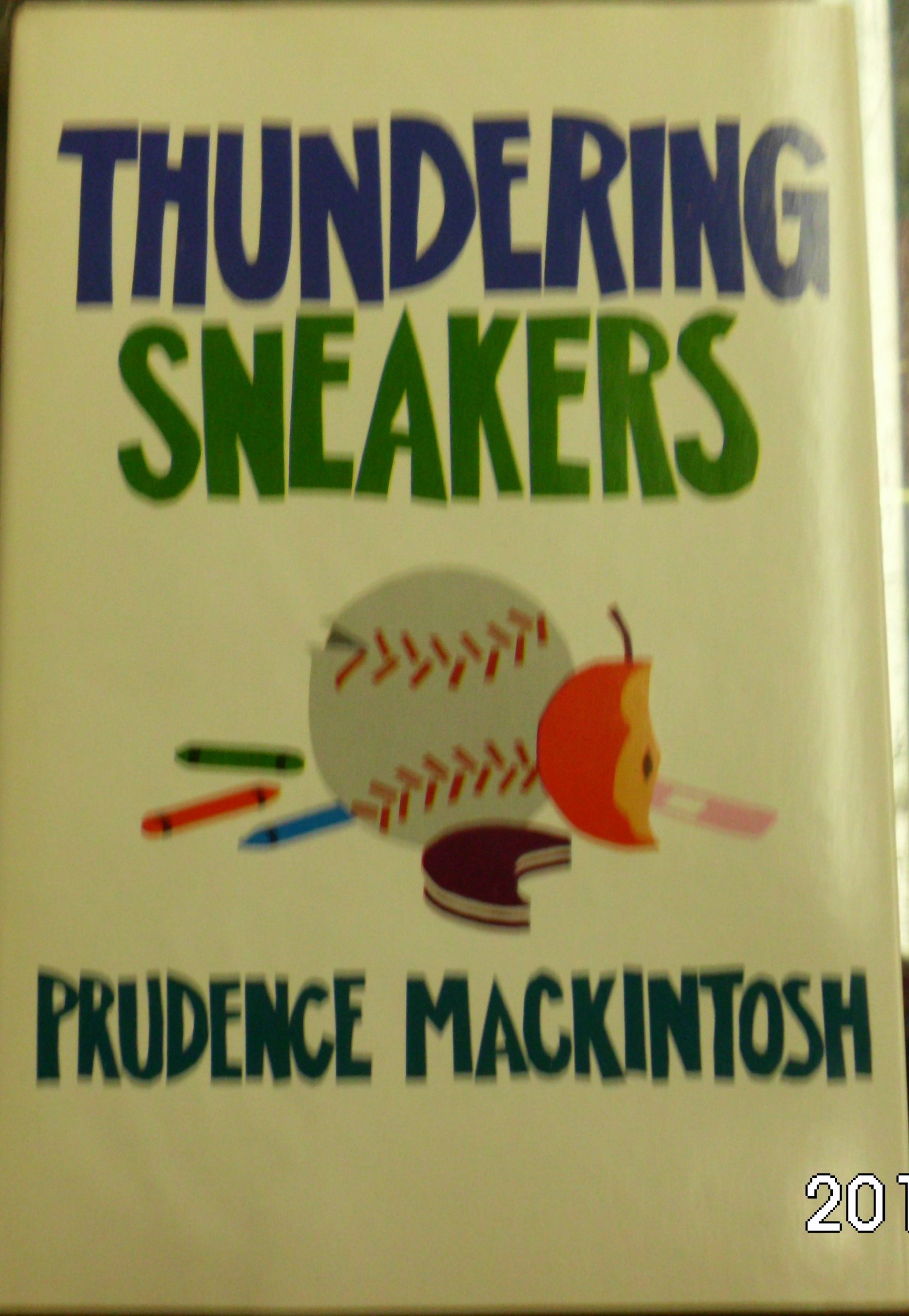
Book Review: Thundering Sneakers

A Fair Trade Book


Title: Thundering Sneakers

Author: Prudence Mackintosh

Date: 1981

Publisher: Doubleday

ISBN: 0-385-12879-7

Length: 188 pages

Quote: “It never occurred to me to make anything up—especially my third male child. The real material at hand always came faster and fresher than any I could have created.”

Before the Mommy Blog genre, there was the Mommy Comedy Book genre, open to any parent (daddies as well as mommies) willing to document the emotional-chaos-remembered-in-tranquility of living with children. Betty Macdonald in the 1950s, Jean Kerr in the 1960s, and Erma Bombeck in the 1970s, sold literally millions of books in this genre and thereby created a market for slower-selling, though not necessarily less funny, Mom-Com. Writers like Prudence Mackintosh and Teresa Bloomingdale remained “mid-list” writers, published mainly in special-interest magazines; publishers bought their books, and even promoted them a little bit, but they maintained these writers as a sort of second string, never meant to become national celebrities who might have competed with Erma Bombeck or Delia Ephron.

If you enjoy gentle family-type comedy, it’s worth the trouble to dig up the second-string Mom-Com writers’ books when you find copies. Bombeck softened up, after a series of laugh-out-loud funny books, and started writing things that weren’t funny. Sometimes other families’ emotional chaos was funnier than that of the superstar Mom-Com writers.

Prudence Mackintosh was typical of the second string. Her local-market tags were (1) living in Texas, (2) with an otherwise-all-male family of husband, three sons, and a tomcat. Her family were as funny as any family documented in Mom-Com:

“I polished my fingernails, something I’m sure I haven’t done in at least five years. My older son was irate. ‘Mama,’ he yelled, ‘you’ll have to get that stuff off...you’re...supposed to help us dig those holes this afternoon.’”

“At the counter, I look up from my check writing to see that Jack is climbing on top of the gum machine. ‘You’ll fall,’ I say. ‘But I won’t hurt myself,’ he replies, and he’s right. He falls squarely on his soft brother.”

“I still believe the basketball that landed in the stir-fried squash was deliberately thrown.”

She tried to involve the children in more active self-entertainment instead of watching television. “Legos are extremely absorbing toys...[M]y son determined that he had to have some ‘slopy pieces,’ which are contained only in the set that retails for $25.95. When I explained that we couldn’t afford the desired pieces, he responded thoughtfully, ‘Mom, I guess we just don’t have enough money to do without TV.’”

“[O]n hearing a Raggedy Ann story on the radio, they had asked, ‘Mom, if that doll really has a candy heart, why doesn’t somebody just rip it out and eat it?’”

I chortled.If you like Mom-Com, you’ll chortle too. If Bombeck and Ephron and Judith Viorst hadn’t been famous first, if Jean Kerr’s and Art Linkletter’s books hadn’t remained in print, if bachelor comedy writers hadn’t been occupying a huge share of the funny book market, Thundering Sneakers might have been another bestseller. As things were, it sold mostly to readers of Texas Monthly magazine. If you were not in Texas during the Carter and first Reagan Administrations, you missed a good Mom-Com book and may want to turn back to Thundering Sneakers.

Bad news? Online purchasers may not get the first edition, which is what I physically own and which has become somewhat rare. Good news? The University of Texas has put forth a second edition, so a clean secondhand copy is still available for $5 per book + $5 per package + $1 per online payment, from which we'll send $1 to Mackintosh or a charity of her choice. At least two and probably all four of the author's Texas Monthly collections (Retreads, Sneaking Out, Just as We Were) will fit into one package; four books in one package would cost you $25 by U.S. postal order or $26 online, from which Mackintosh or her charity would receive $4.

Thursday, May 18, 2017

Book Review with Sweepstakes: Surrounded by Idiots

A Fair Trade Book


Title: Surrounded by Idiots

Author: Mike Gallagher

Author's web page: http://www.mikeonline.com/

Date: 2005

Publisher: Harper Collins
ISBN: 0-06-973798-0
Length: 222 pages

Quote: “Liberal lunatics have surrounded us with their agenda-driven ideology. It’s time to fight back.”

Thus spake the Fox and Newsmax super-moderate-Republican pundit…who may have wished before now that he could retract this book.

Why? “Not every Democrat is a lost cause,” he wrote, introducing Barack Obama as “the kind of Democrat who represents the best in his party’s future.”

Of course, that was on the basis of that one great speech the future President made in 2004, when he was still saying that “the people I meet…don’t expect government to solve all of their problems. They know they have to work hard to get ahead…They know that parents have to teach…and eradicate the slander that says a Black youth with a book is acting White.” Gallagher, and others of us who appreciated President Obama’s clean lifestyle and gentlemanly manners, can still say that, well, that was 2004, and President Obama’s awareness of those “people he met” in 2004 made his failure to represent them in the White House all the worse.

But where does that leave Surrounded by Idiots, now? It’s a collection of news magazine editorials and talk show pieces. It’s not tear-inducing inspirational. It’s not laugh-out-loud funny. Do you still want or need to read this book? To whom can I honestly recommend it, and why? 

Or: to whom is Amazon still actively marketing this as a new book, especially in its "Audible (trademark) audio edition"? 

I say: to all overweight people. Y’see, Gallagher was one of those Big Losers. The healthy-looking body you see on the front cover had been seventy pounds heavier a year before that photo was taken. Although “Fighting Fat—Another War Worth Winning” is only chapter 14 and takes up only 13 pages, it’s still a solid, sensible, reliable story a lot of people still need to read.

Gallagher’s weight loss story helps point up the difference between Wide Loads and those of us who may put on a few unwanted pounds, but, when we are fatter than we want to be, we shed a few pounds quickly and continue wearing the same size clothes… “Do around thirty minutes of some kind of exercise daily,” Gallagher lists as one of his “unbreakable guidelines” on page 179.

Yes, Wide Loads of America. What he said. If it's physically possible for fat people to become thin people, regular exercise is the key.

If you want to hear it from the other side…regular readers may remember that my mother and I share a genetic quirk that actually produces contradictory effects under the influence of other genes and conditions. If we ingest wheat (or glyphosate residues, or products from plants that were genetically modified to be glyphosate-resistant) our thyroid glands falter at a certain point in the metabolic cycle. This same faltering can produce fat hypothyroid celiacs who can actually gain weight while fasting, who need capsules if not injections of some other creature’s thyroid hormones in order to be able to exercise, and also skinny hyperthyroid celiacs who can eat like hogs and remain skinny, sickly, and nutrient-deficient. Mother was a fat celiac; I was a skinny celiac, able to gain unwanted pounds only after going gluten-free. Exercise, even if it takes thyroid supplements for patients to be able to do the exercise, is what keeps fat celiacs within the “noticeably overweight, slow-moving, slow-thinking, ditzy but competent” range rather than the “Wide Load, sluggish, incompetent” range. Exercise is also what makes it possible for skinny celiacs to sleep at night. I miss exercise at least as much as I miss food, if I have to get through a day without one or the other; if anything, I miss exercise more.

I read that line, “Do around thirty minutes of some kind of exercise daily,” and my immediate reaction was “Only thirty minutes?!” Oh Gallagher, Gallagher…I don’t monitor my pulse or do repetitious gym exercise daily, or yearly if I can avoid it, but my ideal day starts with a brisk five-mile walk before breakfast. (I can skip the walk if it’s raining and spend an hour or two puttering around the house instead, but I prefer the walk.) And that’s why, enjoying food as much as I do, and having acquired the ability to gain weight when I went gluten-free, I’ve never been medically obese. I’ve never thrown away a good pair of fat pants, but neither have I had to buy bigger shirts, since grade nine.

If you’re overweight, this web site has a dare bet for you. Buy Surrounded by Idiots (as a Fair Trade Book, with a percentage going to Gallagher or a charity of his choice). Follow the guidelines on page 179.  Post, to this web site and to any web site you may maintain on your own, notes and photos about how and where you’re exercising and about how much weight you’re losing. That’s the dare. The bet is that within a year you’ll find that you, too, actually enjoy exercise…but just to make it interesting, let’s throw in a sweepstakes: Those who succeed in losing 50 pounds or more will be eligible to win a free hiking, camping, and boating weekend in scenic Natural Tunnel, Virginia. (Available to legal residents of the United States and Canada only, this offer can include as many slimmed-down family members as fit into your camper and/or tent.)

Secondhand copies of Surrounded by Idiots are available cheaper from other sources, but if you buy it as a Fair Trade Book, $5 per copy + $5 per package + $1 per online payment, we'll send $1 to Gallagher or a charity of his choice. You can throw in 50 Things Liberals Love to Hate, too, for a total of $15 (via postal order to P.O. Box 322) or $16 (via Paypal to the address Salolianigodagewi will send you), from which we'll send Gallagher or his charity $2.

Wednesday, May 17, 2017

What Is Hate and How Do We Oppose It?

Posted to a forum where people have been discussing whether social media sites should censor hatespeech, earlier...

There is a horrible, hateful, hypocritical meme the left wing have been circulating for many years, to the effect that all conservatives are haters (presumably of the White male variety). Since most of us here are mature enough to have become at least somewhat conservative about some things, and we're not haters, what are we doing about this Big Lie...in the sense of showing active good will, or in the sense of refuting specific fallacies within the Big Lie, or (preferably) both? 

Opposing a policy that might or might not benefit even the group supposedly demanding it (at everyone else's expense), or might be mere quarrel bait to distract attention from other issues, has nothing to do with hating or persecuting people. Opposing same-sex marriage, whether you do or not, is a different thing from hating homosexuals. Opposing aid to Israel, whether you do or not, is a different thing from hating Israelis or Jews or "Semites" (which means Arabs and Jews impartially, as a "race" some people claimed to hate back before the settlement of modern Israel). 

Laughing at the "snowflakes" who want to censor anything that might make anybody other than themselves feel bad, specifically including all conservative political ideas, has nothing to do with hating or persecuting people. 

Believing that the whole idea of "hatecrimes" is specious, because it's so hard to tell to what extent a crime was motivated by hate of a group of people as such versus hate of an individual as such versus ordinary greed and/or rage and/or a desire to force society to feed and shelter the criminal in prison, has nothing to do with hating or persecuting people. 

Believing that censorship is worse, in several ways, than hatespeech is (one reason being that tolerating hatespeech makes it easier to identify those seriously planning crimes, and stop them!) has nothing to do with hating or persecuting people. 

Even distrusting a group of people identified with the Old Left, which I vividly remember some right-wingers used to do during the Cold War, is not the same thing as hating or persecuting those people. 

My suggestion to Twitter would be that tolerating *and monitoring* anything reported as threats of violence, against either individuals or groups, could be a very helpful way to prevent that violence happening. Let the individuals block whatever they don't want to read, whether because it's threatening or because it's annoying or just because it's in the way of the updates they're watching for...and let Twitter staff reroute threats toward local law enforcement and watch them. 

(Alternatively...Facebook tries to monitor individual users all by itself, collecting and publishing information about who they are, where they live, where their children go to school. Nice way to hand that information directly to the violent haters...Facebook can ban them, and they can then stand behind other people whom Facebook hasn't banned and collect all the information they want to use to harm the Facebook users they hate. Another alternative for Facebook might be to store the information without publishing it; that would give the information resale value for hackers! No, thanks. We're all safer when web sites do monitor activity from specific IP Addresses, if necessary, but do not collect or store information about anyone's real-world identity. Leave that for the police to collect when they arrest those using computers to commit crimes.)

Now, what's going on? No, the computer I've been using was not taken into police custody because it had been used to commit a crime! I gave someone headed in a different direction the key ring that has the key to the building where that computer is, for today, and had to drag out the good old Sickly Snail this morning. I actually thought it'd be interesting to find out what the Sickly Snail, which may well be the oldest privately owned laptop computer in North America, could still do online. 

What it can do is of course frustrate the livin' daylights out of me, by making things that ought to take ten minutes take an hour--that's why it's been named the Sickly Snail. It can open the e-mail inbox and, at its standard snail-like pace, delete the spam, file the bacon, and determine that you've not been sending payments and don't deserve a live blog post today. It can view, but not post to, Live Journal; it can open some of the news-and-opinion-'zine sites for long enough for me to copy and paste an article, but not longer; it can open a new Blogspot post from the Blogspot page you readers are seeing, but not from the "inside" page that's supposed to open when I log into Blogspot. I was surprised that it could open any of the forum sites. I'll be even more surprised if it can open Amazon or Twitter, although those fancy graphics-heavy sites do have "mobile" versions the Sickly Snail was able to use a few years ago... Fascinating, anyway.

Meanwhile, since the Sickly Snail will absolutely not do the other things I'd planned to do online with the other laptop,  here's a me-me-me story for those who care. I seriously think our Russian readers, who the computer reports have been fascinated by the keywords, need to see this one...

As they probably remember, my parents were whole-Bible Christians and were affiliated at various times with three whole-Bible Protestant churches, including one that's been (quite easily, I must admit) misidentified as a hate group...the Lord's Covenant Church. What was it like, being a "tween" and early teen in the L.C.C.? Was I being taught to hate? I was not.

I was picking up some older people's fear--loudly and clearly--although my parents tended to debunk those older people's fear. I was being taught wariness...specifically about Eastern Europeans, about Russians, and about Ashkenazic Jewish Americans, but really about everybody. Wariness is a different thing from hate. My parents didn't have to say much about hate during our L.C.C. years, except that they wouldn't have stayed around if they'd smelled it, and back when Dad (who'd volunteered to go over and kill Nazis) was still a strong young man with HSP "super" long-distance vision, if there'd been any Nazis lurking around, you pitied the fools. There were not, noticeably, any Nazis in my childhood world. Conservative Christian communities in the U.S. were not healthy places to be a Nazi.

What my brother and I learned from the version of Anglo-Israelite theory to which the L.C.C. subscribed was...well, first of all, that it's a feeble theory, based on the oral traditions of feuding European tribes. It can't be disproved but neither can it be proved. It rests heavily on words that sound alike, and may or may not have meanings that were once related to each other, in different languages. 

Anyway, each of the three churches to which we were exposed had a different view of the Anglo-Israelite theory. Seventh-Day Adventists ignore it; they say nobody really knows who their ancestors were, that far back, and if you feel called to be a whole-Bible Christian you may consider yourself an adoptive or spiritual child of Abraham. The Worldwide Church of God accept the theory that different European tribes were physically descended from the different tribes of Israel, with Jews representing, specifically, the tribe of Judah. The Lord's Covenant Church (which no longer really exists) went further and accepted a version of that theory that...appealed to haters, but the L.C.C. actually got it from Jewish sources, so if you're Jewish please bear with me. 

According to this speculative version of history, Bible prophecies that foretold an attack on Israel by the Edomites, which never happened in Bible days, actually foretold an attack on the United States and Canada (the gathering place of the modern descendants of the various tribes of Israel) by the descendants of Edom. Who were they? Well..."Edom" means "red," as discussed in the Bible, and which European people (1) had names for themselves and for their ruling political party that meant "red," and (2) were threatening North America in the mid-twentieth century? Yes, those big bad ugly anti-Christian "Asiatic" Soviets. 

And also...in European history there's a lost tribe of Northern Eurasians whose name for themselves was Khazars. They faded out of such records as were kept, back when they existed, right around the time the Jewish population of Northern Europe and Asia expanded, and Ashkenazic Jews came to be recognized as culturally different from Sephardic Jews. With a higher incidence of blond hair, even. And although "Khazar" was that tribe's name for themselves before they were noted as having reached relatively harmonious terms with the local Jewish community, and probably meant something like "men" in their language, it happens to resemble a Hebrew word for "impure"...

Hence Arthur Koestler's Thirteenth Tribe, which isn't exactly science fiction, although some people prefer to regard it as such...and hence the L.C.C.'s somewhat ironic recognition of Koestler, who identified himself with those hypothetical Khazar converts to Judaism, as "an honest Jewish scholar." 

For the L.C.C. "Jewish" had two distinct meanings, sort of like the word "that" in "that person"...or, apparently, like the word "Irish" in North America in the 1840s and 1850s, when there were prosperous, well established Irish-Protestant-Americans who participated in the prejudice against desperate, destitute Irish-Catholic immigrants. Sephardic Jews had been in the United States for a long time, often respected and influential, before the mass immigration of Ashkenazic Jews from Eastern Europe starting in the late nineteenth century, and some Sephardic Jews behaved very much like some Irish Protestants toward their less fortunate fellow tribesmen. Some of the ugliest words and stereotypes can be traced to them. 

So there were, for L.C.C.'ers, ordinary Jewish people who were sincerely religious but, for whatever reasons, unable to accept Christianity. This was sad, because in the L.C.C. interpretation of more remote Bible prophecies those people weren't going to be resurrected at all. You could pray for them, if you knew them personally and were fond of them, but you might as well know it was probably going to be a wasted effort. The majority of humankind, including some Anglo-Americans and almost all foreigners of all kinds, were in this category actually. 

And then there were those anti-Christian, anti-American, pseudo-Jewish Khazar types, who were "of the synagogue of Satan," who were actively working to suppress Christian religion and conservative politics in order to help their fellow tribesmen in the Soviet Union cause the United States to drop like rotten fruit into their nasty hands. They could be recognized by their work not merely by their ethnic origin, but they were going to be resurrected and dumped into a lake of fire. 

According to the L.C.C. there was no call for hate or violence at the time when that church was active. One popular L.C.C. book had the title The Bible Says Russia Will Invade America and Be Defeated but only when the enemy was actually on our shores were we supposed to start fighting. In the meantime we were supposed to prepare ourselves by studying the whole Bible, practicing its teachings as best we could, educating anyone willing to be educated--and, yes, accepting any individual foreigners who sincerely wanted to be whole-Bible Christians as adoptive Israelites, too. 

The L.C.C. taught that, after the rout of the invading Soviet army, then foreigners would start to appreciate the benefit whole-Bible Christianity would have for North Americans who practiced it, and would become enlightened enough to embrace whole-Bible Christianity for themselves. Before that time, missionary activity would be a waste of time and money, but sincere conversion was possible and not to be discouraged. Sincere converts would not be put off by the unfavorable observations L.C.C.ers had published about the rest of their nations, as groups...the L.C.C. did in fact admit and baptize Black converts, although it never attracted many of them.

I say this to anyone who may be thinking, "As a conservative Christian, the writer known as Priscilla King must be aware of, and tolerant of, a lot of anti-Jewish hate." I am not. 

I'm aware that some things reported as expressions of hate, by snowflakey types, are not expressions of hate at all--that even being pro-Palestinian in no way presupposes that you wish the Israelis anything worse than the blessing of being able to live peacefully in places the Palestinians aren't fighting for. (How realistic that wish may or may not be, I wouldn't know.) 

I'm also aware that real hate and violence, targeting Jews-as-such, here in these United States, as reported by a fellow respondent on one of those forums...have been rare, thank goodness. Because they make me as a Christian pretty dam' mad

Scared? Maybe...to the kind of people who think you can recognize Jews by looking at them, I've often been told, I look Jewish. I've received some social "benefits," to which I hastily explained I was not entitled, for possibly-being-Jewish even when I've been making active Christian noises. I've not been a target of hate, ever, nor have friends or e-friends who really are Jewish. I've known that, like the violent rape of women over age 25, violent hate may pop up here and there but it's not really high on any list of things to worry about.

Mostly, I pity the fools! For one thing, hundreds of thousands of people joined the best army on Earth just for the purpose of beating that kind of stupidity to death in 1940. They may be dying out, but their children and grandchildren are still around, and well represented in conservative Christian circles. Don't mess with us, haters (though I seriously believe the L.C.C. got away with some of the things some of them published, without being claimed as allies by haters, because relatively few haters know how to read).

For another thing...some S.D.A. types are still calling me a heretic, which is fine by me, but I believe there are going to be a lot of Jews in Heaven. And a few Muslims. And the Jewish neighborhood in Heaven is not going to be occupied exclusively by the great saints of the apostolic church, either, although they didn't stop being Jewish when they became Christians.

In the book of Matthew (the Sickly Snail won't give me a direct link) Jesus shared His vision of the Last Judgment. Whether everybody on Earth is resurrected, or only a minority of people who deserve either eternal life or special punishment, is not specified. In any case, He said, every tongue shall confess that He is Lord. Only those who confess that He is Lord will be saved, but not all of those who recognize that fact, on the Judgment Day, will be saved.

Some of them, He says, are trembling in fear and shame. "Forgive me, Lord, I never realized..."

"Well done, you good and faithful servants! You did various nice things for Me. Enter in to the joys of Heaven." (I'm paraphrasing--in a bit of a hurry to type this thought.)

"What did I do for You? I mean, I would have..."

"What you did for the poorest, sickest, most miserable or pathetic people on Earth, you did for Me, not knowing it. You are saved. You go to Heaven." And that's where the sincere Jewish, Muslim, and other types of people get into Heaven.

Then, turning to a lot of Christian churchgoers and preachers...they're saying, "Oh, Lord, I did this and that for you," but somehow they're not going in the doorway...

He says, "When you refused to do what you could have done for those who were poorer or more disabled or in any way more wretched than you were, on Earth, you refused to do it for me. You never fed me, you never visited me in the hospital, you didn't even share your water with me in the desert. Depart from me ye cursed into everlasting fire!"

And that is why,

"To dwell above with saints we love,
Indeed that will be glory.
To dwell below with 'saints' we know,
Oh, that's another story!"

And if anybody out there is claiming to be a Christian and hating on the people Jesus chose to claim as His blood relatives...what's there to say? Pity the fools. Pity the damned fools!

Book Review: Lucinda's Party Foods

Title: Lucinda’s Party Foods


Author: Lucinda Christenson Larsen

Date: 1946

Publisher: Caxton

ISBN: none

Length: 315 pages plus 6-page index

Illustrations: several black and white photos, full-color frontispiece

Quote: “The contents of this book on Party Foods consists of cakes of all kinds and frostings…every type of candies, both homemade and commercial…plain and fancy cookies, rolls, sweet rolls, coffeecakes, doughnuts, pastries, pies, frozen desserts, puddings and Danish pastries.”

That’s what you’ll like and what you’ll not like about this book. Lots of desserts…but it’s all desserts. If you’re looking for savory as well as sugary recipes, you’ll have to find another cookbook.

Actually, I found other things not to like about Lucinda’s Party Foods. One is that the author fell short of her own goal. She claimed to be offering these recipes to “the newest cook” but she frequently expects the cook to know which type of pan to use. Actually most baked goods can be baked in almost any pan, in almost any oven, but the time they take to bake and the texture of the finished product will vary accordingly. You don’t get the same cake someone else made if you bake the same batter in 8” or 10” instead of 9” round pans.

Another thing I’m not wild about in this book, despite its historical interest, is that as a professional chef Mrs. Larsen used several “industrial” ingredients that were never available in ordinary grocery stores. Some of them are no longer used, or, if the same chemicals are being manufactured, they’re not sold under the same names. Of course industrially prepared processed desserts contain even more chemicals than Mrs. Larsen’s confections…in any case, some of these recipes are the kind of thing our grandmothers used to make, and some of them are the kind of thing our grandmothers used to warn people off buying in stores.

And then, of course, in 1946 nobody knew anything about food intolerance. People had food intolerance diseases, and oh how they suffered, because they didn’t realize that conforming to the idea that all people ought to be able to eat anything any person could eat was what was making them sick. A few of Mrs. Larsen’s recipes don’t contain milk, egg, or wheat products, but that’s strictly by accident. (Between 1940 and 1945, planned shortages of popular food items had inspired cooks to develop dessert recipes that relied less on sugar, eggs, wheat, and dairy products. Some of the resulting “War Cakes” and similar treats were quite palatable, and remained popular after the war.)  All of them are loaded with simple carbs; if they don’t call for sugar as such, they call for some alternate form of sugar like corn syrup, molasses, or honey, and since those were often more expensive and harder to find than sugar, the alternative sweeteners are usually combined with sugar anyway. Most are high in saturated fat, as well.

Does that leave anything to like about this book? Much. If you want to make your own candies that are “free” from some additive or other while being based on sugar and corn syrup processed the same way they’re processed in the big factories, here are explanations of (usually several different ways) to make fondants, cremes, marshmallows, nougats, caramels, toffees, and hard candies.

Mrs. Larsen was Danish-American, and her “Danish pastries” collection goes beyond a few recipes for the flat sweet rolls we all know so well. There are six different recipes for aebleskiver, the apple-stuffed pancakes (although only the first recipe explains that what makes these things aebleskiver is the apples tucked in between the two dollops of batter before cooking). There’s also a recipe for pebernodder that illustrates how, although the general term in several European countries literally translates as something like “pepper cookies,” the actual spices used in these spice cookies were more often cinnamon and ginger rather than pepper.

If your family like to bake a different cake or batch of cookies every weekend and eat your way through it all week, Lucinda’s Party Foods offers new treats to last you…more than a year, especially since several of the recipes are basic ones that leave room for a few dozen variations. When Mrs. Larson said “flavoring,” she meant “Experiment with all the different ones a well-stocked supermarket offers! Not just vanilla and almond extracts…try banana, mint, hazelnut, pineapple, brandy…” She was well paid for helping grocers move the less popular spices and extracts, and some of them actually taste good in cakes and cookies. “Make several batches using different nuts and flavorings,” she urges.

If your family can’t make one cake or batch of cookies last a week…and that’s not because you’re talking about an extended family…then fewer recipes for sweet treats, and more creative suggestions for using more vegetables, may be what you need.

The general purpose of this book is to ensure that you’ll always have something “homemade,” not merely chips or drinks, to take to a party. Cherry cake? Pumpkin cake? Chocolate eclairs? Not all of these recipes are foolproof enough for “the newest cook,” and some (like angel food cake and divinity candy) depend on conditions that may be beyond the cook’s control, but most should yield reasonably satisfactory results. There are certainly enough recipes here that any non-diabetic reader has to be able to find some that s/he likes.

Mrs. Larsen no longer needs the dollar she'd get if this were a Fair Trade Book but, as usual, it can be purchased together with one or more Fair Trade Books: $5 per copy of Lucinda's Party Foods + $5 per package (for shipping) + $1 per online payment (Paypal takes its bite) to the e-mail address you receive from salolianigodagewi @ yahoo, or $5 per copy + $5 per package via U.S. postal order to P.O. Box 322.

Tuesday, May 16, 2017

I'm Here, Just Leaving...

...Just leaving the cafe, after slogging through the e-mail.

I posted a serious discussion question on Twitter and so far, of the hundreds of people who allegedly follow me and have seen this question reposted to various people throughout today and Friday, nobody's posted an answer. That's not necessarily bad, if people are working on long thoughtful posts rather than tweets, but it's disappointing.

Meanwhile the usual backlog of e-mail poured in over the weekend. Lots of distractions. One survey (from Freedomworks, so I couldn't bring myself just to ignore it) positively forced wrong answers to lots of political questions: simple summary: "The correct answer to 'What do you think of President Trump's proposals on...' is 'As little as possible.'" I've not been able to bear the sight of much current political news. I think of myself as a reasonably tough-minded old lady but there are limits to everything.

One thing I've been waiting to learn, I learned, today: Although those cryptic "keywords" posts didn't generate a paid-up subscription, they did generate more than twice as many page views as the "link logs" that preceded them! Keywords are likely to come back!

Another thing I didn't really want to think about, I learned today: All the coffee I've been drinking, while blogging from a cafe, just might be the source of the glyphosate contamination that's been making me sick lately. That's not entirely bad news, but it sort of blindsided me. Ouch.

Is this post as bloggy as it can possibly be? Yes? Good. I came in this morning with several ideas--discussion of the question of what social media can do to improve the police service, another cute insect gross-out post about yet another fuzzy li'l caterpillar I found while pruning the hedge on Monday, a Tortie Tuesday post about a shelter cat who might be a good companion for my poor lonely social tortie-cat Heather, more books--and let the e-mail bump them all back to the back of my mind. This may be good for the ideas. See y'all tomorrow.

Morgan Griffith's America First Energy Policy

From U.S. Representative Morgan Griffith (R-VA-9), editorial comment below the end quote mark:

"
America First Energy Policy

An international deal the Obama Administration and environmental activists joined into has requirements that will cause the United States to voluntarily lose hundreds of thousands of jobs and significantly increase energy costs.

It’s called the Paris Agreement. Not approved by Congress, no legal ramifications.

Why did the United States enter the agreement?

Good question.

It surely doesn’t help put American energy first, make energy more affordable for Americans, or stabilize our power grid.

The agreement is aimed at lowering emissions and limiting climate change to 2°C above pre-industrial levels, basically an arbitrary number.

Notably, developed countries like the U.S. are expected to dramatically reduce actual emissions, while developing nations, such as India and China, are asked to lower emissions corresponding with their economic output. In other words, America is asked to kill jobs and risk our power grid stability, even if China and India are contributing more emissions than we are!

A recent report states, “Remaining in the pact commits the U.S. to reducing our carbon emissions by nearly 30% below 2005 levels — even though most of the world's major polluters will continue to emit massive amounts of greenhouse gases into the atmosphere. That is why some supporters of the Paris Agreement concede that the gains would be ‘symbolic.’”

It continues citing “estimates that, over the next decade, the agreement will cost Americans an extra $30,000 per family of four in higher energy prices and some 400,000 lost jobs.”

The study compares the Paris Agreement to “a $2.5 trillion global tax on American production. So the costs to America would be anything but "symbolic."”

It would be crushing.

President Trump promised to focus on American energy independence to bring stability to the grid and boost our economy.

At the start of his Administration, he appointed Scott Pruitt to lead the Environmental Protection Agency (EPA) and Rick Perry to lead the Department of Energy (DOE), both of whom are determined to lead their respective organizations in a new direction. Both appointees are committed to taking bold actions that reflect the will of the American people, and will result in long-term, positive impacts for our country.

Administrator Pruitt is focused on these goals and to achieve them, he has recommended President Trump pull out of the Paris Agreement.

Those who argue to stay are mostly environmental activists who want to defend Obama Administration policies. They defend the $1 billion Obama contributed and the $3 billion Obama pledged to the Paris Agreement. Our commitments to foreign nations should be negotiated for America’s best interest, not by activists with their own agenda.

Furthermore, staying in the Paris Agreement leaves environmentalists with a defense for the Clean Power Plan or similar detrimental policies. It opens the door to lawsuits from environmental activists to force the EPA to institute policies to meet our commitment. Exiting the agreement makes it clear there is no room for liberal interpretation leading to new regulations. An exit allows the EPA to continue the mission of undoing harmful, costly, and job-killing regulations and continue to work for an America first energy policy.

In efforts to strengthen our power grid at home, in April, Secretary Perry commissioned a 60 day study to address the “concern about how certain policies are affecting, and potentially putting at risk, energy security and reliability.”

In his memo commissioning the study, he notes the importance of sustaining baseload power. The textbook definition of baseload power is the “minimum level of demand on an electrical grid over a span of time. Baseload power sources are power stations which can economically generate the electric power needed to satisfy this minimum demand.”

We are lucky, in the U.S., to have many sources that can contribute to meeting power needs; like coal, natural gas, wind, hydro, and nuclear. The study will determine how federal policies, regulations, and subsidies have skewed the balance of baseload power. It will examine how this has jeopardized the reliability of the electric grid, affected jobs and economic growth, and possibly threatened our national security. Specifically, DOE will determine if “regulatory burdens, as well as mandates and tax and subsidy policies, are responsible for forcing the premature retirement of baseload power plants.”

Perry concludes the memo by reiterating that “the Trump Administration will be guided by the principles of reliability, resiliency, affordability, and fuel assurance-principles that underpin a thriving economy.”

I will continue to support these policies of Administrator Pruitt and Secretary Perry “to ensure that we provide American families and businesses an electric power system that is technologically advanced, resilient, reliable, and second to none.”

If you have questions, concerns, or comments, feel free to contact my office. You can call my Abingdon office, 276-525-1405, or Christiansburg office, 540-381-5671. To reach my office via email, please visit my website at www.morgangriffith.house.gov.
"

Editorial comment: It's interesting to compare the two main models of climate change...

The debate about global warming is acrimonious, politically charged, and endlessly bickered about. Doing something about it, we are told, would involve voting for policies and people that might make some people richer than they are. Any effects on the actual climate in your neighborhood remain unknown but, based on hard scientific facts, the probability that your doing what you're told to do to fight global warming would lower your air conditioning bill this summer is very low.

The facts about local warming are objective, politically neutral, and long documented. Doing something about them would involve making decisions you might find sweaty and boring, like walking rather than driving. The effects on the actual climate in your neighborhood, if enough people did what they could choose to do to fight global warming, could certainly lower your air conditioning bill this summer.

This web site supports Congressman Griffith all the way. However, he's been in Washington, listening to lobbyists from the various energy corporations, for several years now, and this web site would like to remind him that local warming is what makes Washington so unpleasant in summer. Before the pavement, the air conditioners pumping hot air onto the streets, and the greenhouse gases from (it's official) America's worst traffic, The Swamp wasn't hotter or more humid than Columbia or Manassas. We need...not necessarily legislative coercion, but leadership, to fight local warming. The Ninth District itself needs that, but D.C. needs it even more.

Book Review: Madeline

Title: Madeline


Author: Ludwig Bemelmans

Date: 1939 

Publisher: Simon & Schuster

ISBN: recent reprint 978-0-14-056419-6

Length: pages not numbered; I count 42 pages of text/illustration

Illustrations: paintings by the author

Quote: “To the tiger in the zoo Madeline just said ‘Pooh-pooh’.”

Does anybody not remember this picture book? It’s a short story about a little orphan who is so cheerful at all times that, when she has appendicitis, the other eleven orphans want to have their appendixes out too.

I remember getting a twenty-year-anniversary reprint edition when I was just old enough to read the words. My mother didn’t like it. Who wanted to read about a lot of stupid children who all wanted to be sick just because one of them was? I didn’t, I decided. Also Miss Clavel’s nunlike costume looked more than slightly like the costume of the Wicked Fairy Maleficent in the Disney picture books I had. So I was in a minority of baby-boomer girls who did not like Madeline. But most of us did, and most children still do, like this easy-reading picture classic. 


What most people loved about Madeline was not, of course, the foolishness of the little conformists, but the hasty, cartoonish, yet very recognizable scenes from downtown Paris. It’s fun to match the scenes of the orphans’ daily walks to real pictures. There were several sequels, and fans could find famous tourist attractions in those books too. 

The copy I physically own is available with a matching Storybook Doll (online price $20); other guaranteed gently-used copies are available online for $10. The whole set of seven slim books should fit into one package for a total of $40. 

Monday, May 15, 2017

Book Review: The Night I Caught the Santa Fe Chief

Title: The Night I Caught the Santa Fe Chief


(Amazon's generic mock-book-cover image is more colorful than the book I have--plain black hardcover with the author's name and title in very small gold-tone letters on the back.)

Author: Edward Thorpe


Date: 1970

Publisher: St. Martin’s

ISBN: none

Length: 184 pages

Quote: “Y’just crashed y’car but they ain’t chargin’ ya with anythin’, right?...[I]f they catch up with me an’ I got you along they’re gonna be jus’ a li’l bit careful how they act, ain’t they?”

Thus Frederick St. John Lloyd-Forbes, a 24-year-old wrapping paper designer on his first visit to the United States, finds himself camping in the desert above the U.S.-Mexican border with Gene Solensky, a hardened outlaw. Fred wrecked his rental car and was being taken to rent another one by a highway patrol officer when the report that Solensky had stolen a car and was in the vicinity came in. The patrolman tried to arrest Solensky. Solensky killed him and took Fred hostage, and overnight they became buddies on the Western-movie adventure of Fred’s British prep-school-boy daydreams…

That’s the trouble with this novel. It is a contemporary teenager’s fantasy, with all the trimmings: helpful hippies, friendly Navajos, fat foolish tourists the pair can exploit, all arranged at the most convenient times and places to make a story just the right length, with just the right amount of a moral, for a “Western” genre novel or movie. As long as they’re depending on the kindness of Gene’s conveniently situated friends, all goes well; when Gene kills a man who might or might not have been dangerous to him, his luck runs out just in time to bring him to a suitable end and send Fred back to his job in England.

It’s vividly written, by someone who’s done some camping and may even have been in Texas—not for long. Gene’s accent is all over the map and, though plenty of Americans take our own folklore too seriously, Gene’s character is pure nineteenth century outlaw legend. The graphically described three-way sex scene with the hippie could have happened—there were plenty of real hippies who subscribed to that kind of notion of hospitality in 1970—but the whole story is, well, too much of a fantasy to be plausible.

Basically The Night I Caught the Santa Fe Chief is escape reading aimed at teenagers and young men, who probably shouldn’t read it…but if somebody found the right actors and sank a lot of money into the production, it’d make a great movie.

So it's subliterature...maybe sub-subliterature, not nearly as good as Zane Grey or Louis L'Amour. And, for that reason, it's become hard to find, and if you want this classic of 1960s-meets-Western kitsch, it'll cost you $10 per copy (maybe more if Amazon sellers see this review and jack up their prices) + $5 per package + $1 per online payment, and I have no idea whether the author is living--undoubtedly under some other name, if he (or she) is, though I am reasonably sure the author is not American. Four, I suspect possibly eight, books of the size of the copy I physically own would fit into one package for one $5 shipping fee.

Sunday, May 14, 2017

Book Review: Cameos

Happy Mothers Day, Gentle Readers. I didn't write this book review with Mothers Day in mind, but it does occur to me that some of your mothers may remember the women profiled in this book...

A Fair Trade Book (hurrah!)


Title: Cameos

Author: Helen Kooiman (Hosier)

Date: 1968

Publisher: Tyndale

ISBN: none

Length: 163 pages

Illustrations: black-and-white photos

Quote: “In her fervor [Regina Ramsay] spoke to everyone she kenw and met. but, disappointed with their responses, she sought out…the wise elder of the Bible class. ‘Every time I mention the name Jesus Christ I lose a friend!’ Joyfully he replied, ‘Praise the Lord…Every time you lose a friend, or are persecuted for Jesus’ sake, you will be blessed’.”

…With a story to tell that will raise a sympathetic chuckle, anyway.

Helen Kooiman interviewed fifteen women who were well known in evangelical Christian circles in 1968. Much of the pleasure of reading her book, almost fifty years later, comes from hindsight, knowing what they went on to accomplish. This book presents golden memories of Olivia Plummer, Regina Ramsay, Ruth Dix, Joyce Landorf, Dale Evans, Wanda Jones, Marianna Slocum, Millie Dienert, Charlyne Haden, Marj Saint, Thelma Elfstrom, Lila Trotman, Darlene Swanson, Betty Truxton, and Vonette Bright.

Kooiman ended with an evangelical appeal packaged as a “Cameo” of “You, the Reader, Plain Jane,” who she assumes is not a Christian. It seems unlikely that many non-Christians would have wanted to read a book like this, but perhaps a few did.

I’d like to take this opportunity, though, to remind Christian readers that in real life, if you assume that anyone you meet outside of your church is not a Christian, and needs to hear about the “Four Spiritual Laws,” two types of people are likely to be offended: (1) people who belong to other religions and would have told you if they’d wanted to become Christians, and (2) people who are Christians and think that that should have been obvious to you. In a book it’s pardonable for an author to assume that people are not Christians when, in fact, they probably are. Writers never know who may pick up a book. People who know how to read English, have not yet been persuaded to become Christians, and would like to be so persuaded, probably do exist. In a long and active life I’ve never actually met one, but it’s always possible that a book might fall into the hands of one. But in real life we should try to avoid making assumptions about the religious identity of people we don’t know well.

Next question: Would reading these ladies’ “cameo” testimonies be likely to make anyone want to become a Christian?

I really have no idea. Some of the ladies were young and pretty enough that men might have wanted to  join the churches they attended, if they hadn’t been married, but they were. As I read Cameos I did not feel these stories having much effect on my Inner Child from 1968.

Books, as well as family influence, did have some effect on the development of a “spirituality center” in my adolescent brain: I’d been reading The Living Bible shortly before contemplating the beauty of springtime and having the falling-in-love-with-God moment at thirteen, and at fourteen, when I’d felt tried and needed to reaffirm the commitment I’d made, a popular novel that didn’t impress literary critics (I don’t think even the movie version of The Silver Chalice impressed Christian-phobic Hollywood much) was just what I needed to read. If The Living Bible and The Silver Chalice can contribute to the “making” of a Christian, probably anything can.

Nevertheless, Cameos went against the cultural tide of its day. If it appealed to any young woman in 1968, before she’d had time to see where the hippie and left-wing-feminist movements were going, she must have had an awfully off-putting experience with those and probably other social movements that appealed to Bright Young Things who wanted to be “free to be me.” Churches, for their part, tended to be hotbeds of the same censorious conformism that “Help Wanted—Female” jobs and left-wing-feminist groups tended to foster. It took considerable fortitude to “dare to be square.”

I’m not even sure that Cameos would have helped encourage that hypothetical young lady of 1968. Olivia Plummer comes across as having married beneath her, and being resigned—not a message likely tohave appealed to the would-be free spirits of 1968. (Her type of message did much to reinforce a message I was getting primarily from my mother’s illness: a woman was better off single.)

Ruth Dix, the missionary doctor, had an exciting life but in 1968 her story could only be told with a heavy wrapping of “Of course no ordinary woman should even think about training to be a doctor, so whether you’re a Christian or not, this is a very exceptional woman. Your life won’t be like hers at all.”

Joyce Landorf had a long, inspiring career as a Christian singer before writing one book, Irregular People, that was good enough even to be read outside the denominational publishing ghetto—in the 1980s—but her missionary effectiveness was always undercut by her focus on Emotional Problems. One thing I did appreciate, in Cameos, was its glimpse into Landorf’s and her first husband’s early lives and the experiences that caused them to focus on Emotional Problems—they had had them. In 1968 their testimony was about surviving a marriage so disastrous that, unbeknownst to each other, both of them had been seriously plotting suicides or “suicide attempts” for which they hoped their mates would be blamed, at the same time. It’s a lively story, and illuminates where they got that emphasis on Positive Thinking; it does not lend nearly so much credibility to Positive Thinking as Landorf seems to have hoped.
And then, Dale Evans, the superstar of that era…Wanda Jones, at least a star of considerable magnitude… no "Plain Jane" reader could have expected her life to have much in common with theirs...

And so it goes. With hindsight, as a Christian who’s enjoyed some of the later work of some of the younger women in this book for a long time, I enjoyed these Cameos of the way they were when I was too young to read their work. Without that hindsight, without years of thinking of them as foresisters and teachers and role models, I’m not sure that I would have been interested in “meeting” them through this book.

But now, in 2017, I can say that this book represents a tiny baby step toward the liberation of a few individual women, back when American society had agreed that women ought to have education and civil rights, but many women remained unsure what to do with their rights. Some of what these ladies were saying, at the time when non-Christian women were “consciousness-raising” about whether any woman could or should even try to sustain any marriage to any man, still tends to make my flesh creep. “If that’s what being a Christian wife and mother is all about, heavenforbidandfend—it may not be enough to avoid ever becoming a wife or mother; I may want to avoid ever becoming a Christian! Breathing oxygen may be more than I want to have in common with Olivia Plummer!” Times have changed. These Cameos show what the younger, more successful Christian ladies profiled in this book succeeded in changing about what’s expected of Christian women and what Christian women have to expect.

We've come a long way and I'm glad to report that Helen Kooiman, now Hosier, is still alive--and on Facebook!--to see it. I wish some of the women profiled for this book were, too.

Cameos is a Fair Trade Book. To buy it here, send $5 per book + $5 per package + $1 per online payment to the appropriate address from the bottom of the screen, from which I'll send $1 to Helen Kooiman Hosier or a charity of her choice. Six books of this size would probably fit into one package and if you ordered six copies the price would be $35, or $36 online. You can order books by different authors, as many as will fit into the package, for one $5 shipping charge; feel free to browse around this web site, which has been featuring a book review almost every day for years. 

Friday, May 12, 2017

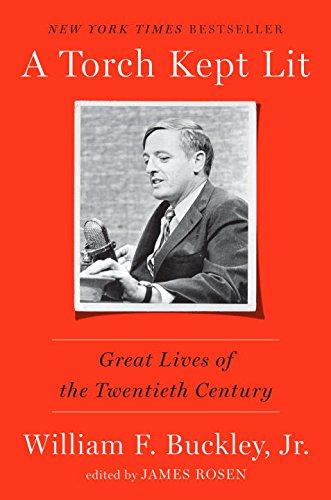
Book Links: Correspondents' Choice

Shared by Jim Geraghty:


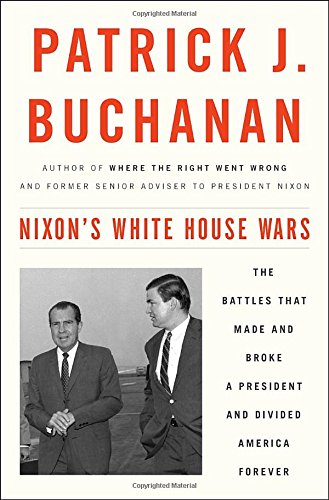
Also...y'know I never warmed up to Buchanan myself, but like him or not, he does remember the Nixon White House better than most living writers do these days! This one might be worth having for historical reference, even if you don't read any of the writer's other books.


Shared by Regnery staff. (Next week I'll try for a little more balance, maybe something from a non-politically-affiliated source.)

Book Review: Stories and Prose Poems

Title: Stories and Prose Poems


Author: Alexander Solzhenitsyn

Translator: Michael Glenny

Date: 1970 (Germany), 1971 (U.S.)

Publisher: Luchterhand Verlag (German), Farrar Straus & Giroux (U.S.)

ISBN: none

Length: 267 pages

Quote: “So, he thought, we’ve got to start all over again. Gather all nine hundred of them and explain: we haven’t got a building.”

In the Cold War era Alexander (or Aleksandr) Solzhenitsyn, combat veteran, cancer survivor, political prisoner, and eventual defector to the United States, was to the Soviet Union something like what the prophets were to ancient Israel:

(1) He believed in the stated goals of his country’s leaders.

(2) He told them what he saw that they were and were not doing toward achieving those goals.

(3) As a reward he was always controversial and was eventually banished from his native country.

When he came to the U.S. he told us what he saw here, too, and lost a lot of his fans. Careless readers, who wanted to like him just because he was too honest to fit well into a totalitarian state, had not realized that Soviet Socialism had been accepted because it appealed to the moral sense of sensitive, intelligent people. Socialism is the philosophy of the Deadly Sin of Envy. Nevertheless, people with a healthy conscience don’t want to hoard wealth while others are unable to earn livings, to bicker over dead friends’ belongings, to receive even earned benefits that are withheld from someone else who earned similar or better ones. Solzhenitsyn “converted” to the belief that more individual freedom is better than more totalitarian control; people who had really read his books wouldn’t have expected him to “convert” to any belief that “greed is good.”

I was too young to appreciate Solzhenitsyn during his lifetime. I’ve enjoyed discovering his work as an adult. Not many writers succeed in making short stories interesting to me. Solzhenitsyn does. In six long and sixteen short pieces, in this book, he illuminates the internal conflict between ideal and practice.

Not one of these stories is about sex or romance, although some of the characters are coupled. Not one is violent, although some of the characters die. All of them are about morality, although they can hardly be called moralistic. “Matryona’s House” is about a hardworking old woman and her greedy relatives. “For the Good of the Cause” is about teenagers who are bored with school generally, but enthusiastic about building their own vocational school—until the bureaucracy shuts it down. “The Easter Procession” and some of the shorter stories are about the persistence of Christianity in an atheistic state. “Akhar the Pouch” is about a cranky old park warden who earns respect from smart young travellers. “The Right Hand” is about a disabled veteran waiting to be admitted to a hospital. “An Incident at Krechetovka Station” is a war story about a spy. The short pieces are descriptions that convey a wonderful sense of topophilia, among other things.

Page 247 was the point where the author vividly reminded me of my father. “[W]e men will soon be flying to Venus…Yet, with all our atomic might, we shall never—never!—be able to make this feeble speck of a yellow duckling.” As I remembered Dad saying, sooner or later in any conversation about science, things like “Scientists may fly to the moon and back, but they can’t make a blade of grass grow,” it occurred to me that this is what fiction does for humankind. Fiction writers may or may not succeed in portraying other people the way those people really were; they can hardly help portraying people the way writers are.

The Cold War was primarily a trade war. We, humankind, can hope that there’ll always be some question whether we, the U.S. and the U.S.S.R., really could have destroyed the whole planet ten times over, or more, or fewer. Nevertheless at the time most of us took the Cold War seriously. “Can you trust the Russians?” was a serious question to anyone who thought it might be a good idea to stop building nuclear bombs, which I did, and also a cliché, a joke; I heard a good bit of it after someone noticed that a shelter cat I’d fostered for a few weeks had the look, and probably some of the same DNA, as the breed of cats called “Russian Blue”—ah, Dusty dushka, she could always be trusted to behave exactly like a normal cat who was only a little bit cleverer than most.For some of us, Solzhenitsyn’s ability to communicate that sense of wonder, reverence for life, respect for quirky old people, was a badly needed reminder that those “godless Communists” were human beings with a full range of noble and venal motives for the things they were doing.

That is widely considered to be the benefit fiction offers to humankind. So, this old book contains some of the twentieth century’s best fiction. It's not a Fair Trade Book (the author has no further use for a dollar) but it's available here on our usual terms: $5 per book, $5 per package, $1 per online payment, and as usual you can order as many books as will fit into one package for one $5 shipping charge.

Thursday, May 11, 2017

Book Review: Take One Step

Title: Take One Step


(Amazon has a paperback copy. I have a hardcover copy. Both are going into collector prices. If you don't specify which binding you want, you'll receive the one that's cheapest at the time.)

Author: Evelyn West Ayrault (1922-2006)

Date: 1963

Publisher: Doubleday

ISBN: none

Length: 310 pages

Quote: “Yes, she’s taken a step…And now, now she can walk!”

Although it’s an adult-size book, Take One Step might be a good first book about cerebral palsy for middle school students. The language is simple, and about half of the book discusses the experience of being a child with CP.

It’s more than a tiny bit repetitious, as the CP patient’s experience is. Little Evelyn learns to do something (walk, tie shoes, ride a bicycle) and feels almost “normal” at last. She is not. She has to concentrate intensely to control any part of her body. The way she walks and talks, especially if anything like a surprise or an emotional reaction breaks her concentration, always call unwanted attention and usually make people think she’s drunk. She seems to be perpetually crossing the same milestones, assessing whether she was or wasn’t jealous of her sister on a particular occasion, thinking she’s doing something ordinary people do one day and having people notice that she’s not doing it quite “normally” the next day, over and over.

This, she explains, is the way CP is. People who want to know about CP should not skip a page. Tedious? Very. Now imagine living it. As The Trouble Bush explains it, there are worse “troubles” than being an intelligent person with CP, but the condition is always going to be a bore.

And yet…many people have what might be considered mild forms of CP and don’t know it. Many people who are accepted as normal, but "such a klutz," have had brain scans that showed very mild degrees of CP-type brain damage.

(I was touch-typing at eight. “Normal” people’s two middle fingers move together; mine move independently, although my ring fingers (by themselves) are weaker and less coordinated than my other fingers. I also have double palmaris longus tendons, and can scratch my own wrists. I have both “gifted" and "trained" hands, until I try to hold two fingers exactly one millimeter apart. Then, more markedly with some fingers than with others, my fingers twitch with tiny but uncontrollable “purpose tremors.” Growing up, I marvelled that a few people I knew didn’t have “purpose tremors” and could tie knots at precise locations in fine wires, while most of us…yes, there was a minor traffic accident in which my mother bumped into the steering wheel, a few weeks before I was born…and yes, although more of the people I know have them than don't have them, "purpose tremors" are the very mildest symptom of tiny CP-like brain lesions. If you have them, the discipline of holding your thumb and finger one millimeter apart may help you understand what people with cerebral palsy go through.)

Cerebral palsy is a wide-open classification for all conditions in which damage to the cerebral tissue in the brain, before or during birth or during the first year of life, affects a person’s control of his or her voluntary muscles. The further along an infant or fetus is at the time of damage, the better the patient’s chances seem to be; if damage occurs after the first year of life, patients seem to have a chance of full recovery. However, the extent of brain injury varies dramatically, so cerebral palsy can mean anything. The whole body may be affected, or only parts may be. Some patients, like Ruth Sienkiewicz, have full voluntary control of only one eyelid; some patients’ arms are affected while their legs are not, or vice versa. Some have stiff, cramped muscles; some have floppy, twitchy muscles.Walking, speaking, eating, even showing normal facial expressions, may or may not be impossible.

Of course, brain injuries are not always confined to the cerebral tissue. Many people who have cerebral palsy also have cognitive, perceptual,and/or emotional disorders caused by their brain “lesions.” However, CP patients have a full range of I.Q. scores. Some are “gifted” and several have become writers.

It was harder in the early twentieth century, when belief in “normal” health and fear of “abnormalities” were rampant in these United States, than it might be now. It might have been even worse in previous centuries, when physical abnormalities triggered superstitious fears. At least, Ayrault was allowed to go to school, although after one bad day in college she was asked to eat in the kitchen because it was "too upsetting" for others to dine with her in the cafeteria. Despite her value as a role model for children with CP, parents thought she didn’t speak well enough to teach or counsel. Even as a middle-aged adult with a business practice in a New York flat, she relied on doormen to explain to people the difference between CP and alcoholism.

At several points, readers may feel like throwing the book across the room. Good lord, you want to shout, wasn’t it bad enough that Ayrault had to live with her disability, without having to live with so much stupidity about it?  

The answer is, unfortunately, “Not quite.” CP patients have better days and worse days. Even friends’ reactions to the patient’s symptoms can aggravate the symptoms. I admired the late writer known as Shalecka Boone, and I did manage to help her write, but most noticeably by just going back to school and leaving her free to bang on my old typewriter in peace.

Much has been accomplished since Evelyn Ayrault’s time—partly thanks to her willingness to write about how her practice as a psychologist was affected by “collegial networking” occasions where other psychologists gathered to read each other’s papers, but showed less interest in her paper than in watching the way she walked. At least people are a little more tactful now. At least schools recognize that gifted/disabled students like Ayrault are a positive contribution to human knowledge, all by themselves, and should be welcome at any school.

Yes, but…cerebral palsy will always produce that up-and-down cycle of ability, and it will always be a massive bore.

More enjoyable books have been written by people with milder forms of CP, like My Left Foot, but I think the world still needs this one. At least we all need to read it once.

I wouldn’t tell children to read Take One Step, or Karen or any other CP memoir. I would leave Take One Step on a shelf in a classroom and tell students in grades five, six, and up that it was probably too grown-up for them, because it is. It contains no explicit sex or violence but this book does convey, perhaps better than other CP memoirs do, some sense of the higher-than-average-adult level of patience a CP patient needs to have even to be a kid.

Ayrault no longer has any use for a dollar, so it's ironic that the prices of her books have actually risen. To buy Take One Step here, send $10 per book + $5 per package + $1 per online payment to the appropriate address from the bottom of the page. (Salolianigodagewi @ yahoo is not an appropriate Paypal address; it's the Message Squirrel system that directs orders to the appropriate Paypal account, for which Saloli will send you the address.) Although Take One Step is not a Fair Trade Book, if you want us to send $1.50 to a charity we can send that to www.cerebralpalsy.org . And, as always, you can add as many books to the package as I can squeeze in for the one $5 shipping charge.