Wednesday, November 15, 2023

Book Review: Bacon Bodyguards and Ballistics

Title: Bacon, Bodyguards, and Ballistics 

Author: Karen McSpade

Date: 2022

Publisher: Karen McSpade

Quote: "I couldn't help but feel a slight pang of pity toward them. Henry Hughes would rip them apart."

The speaker is Piper Sandstone, the sassy young police detective who's been sent from Chicago to the little fictional town of Savory for her own protection. The "them" are local boys, twins, who've been beaten up while failing to guard the valuable paintings Henry Hughes has displayed to the public. Hughes is a bad-tempered, rich art collector in the process of boosting the posthumous reputation of a local painter. 

Piper and her local pals, formerly a band known as the Delta Queens and briefly self-identified as the Diamonds and Dentures detective club, have just been licensed as the Queen's Bees Private Eyes. They and Sheriff Jake, on whom Piper has a crush, are called on to find out who stole the paintings and beat up the young men. Meanwhile, Piper's past is catching up with her as a little harmless publicity, letting her face be seen on television, brings members of a gang she was almost able to bust, back in Chicago, out looking for her. When one of the failed security guards is found dead, Piper has to admit that she and her friends may be in real danger...from whom? From how many different directions? Are they solving two mysteries or one?

Back in Chicago, Piper's uncle has decided she needs a bodyguard. Piper resents the whole idea, and vents her resentment in nasty remarks about the guard's being short. The Delta Queens feel sorry for the guard, Gemma, and eventually goad her and Piper into a serious fight--not to the death, just rough enough to find out which tough gal is more dangerous. 

It all ends as happily as cozy mysteries should, with the baddies all locked up, and along the way we get three or four relatively cheap, easy, redneck-chic recipes that fit in with the Southern Living atmosphere. At least they're cheap if fresh shrimp, strawberries, and pecans are plentiful. Each recipe will cause weight gain if not offset by significant exercise, and some of them are low in nutrition, but they're fun to serve in tiny portions at a party. Bacon is a theme. Recipes start with the bacon-wrapped shrimp on the cover and include bacon-enhanced chocolate chip cookies and bacon jam. 

If you actually eat the bacon, you will enjoy the recipes. If you don't, you will at least enjoy what may or may not be a happy ending to Piper's and the Queens' detective careers. 

This is a full-length detective novel but it's structured as five separate e-books, though not apparently marketed as such. Several plot elements that continued through the earlier books about Piper and the Queens are resolved in this book. Then again some others are left open. Will Gemma, who exudes drops of Italian melodrama when asked about her personal life, be paired off in a sequel? Will other gangsters come after Piper again? If Savory reverts to small-town-American form as the sort of place that doesn't see a murder in every decade, will Piper and friends be called to visit other towns when real crimes happen there, or will they continue to solve the kind of mysteries where petty property damage is done by straying pets and lost valuables turn up where someone whose memory is going left them? These questions may be answered in sequels but, for now, Piper's story seems to have reached a convenient rest area at the end of this book. 

Book Review: The Power of Destiny

Gentle Readers, I'm feeling overwhelmed. I need your help. 

It's not just that about 300 books came in during the Booktober Blitz...and most of them are worth reading, at least once, and recommending, at least to fans of their genres. So far I've uploaded only one "book" that seemed like a waste of the time it took to download, upload, and read. (It shall be nameless.) 

It's that the 250 writers of those 300 books all added my name to lists and are now sending me weekly e-mails about their other books, and their friends' books, all of which they want read and reviewed this year to determine which of all these free or cheap e-books deserve to be printed in hardcover editions and kept in libraries.

Your favorite book bloggers have only the two eyes apiece. We can read only so many of all these books. Youall need to get onto some of these lists and read and review some books, too. 

It costs only your time; you can always get off the lists. My e-mail is all too eager to reclassify all the e-mail lists as spam, but they're not. They are bacon. 

The fact that you're reading for pleasure, in English, on a computer, shows that you're part of a global elite group (whether you feel like it or not), so please be a good privileged elite group and read some new free short e-books that are available through Kindle or Book Funnel or similar. 

Last year I was trying to read books in the order they came in. That would have been fair and reasonable, and should have worked, but it didn't. E-books open in one (or sometimes more) of three apps on this laptop: Edge, Kindle, or Book Funnel; I find myself reading through what's stored in each window, in the order those books came in, and then moving to the next. In a similar way I find myself dropping batches of reviews on Goodreads, Library Thing, and Net Galley.

The largest number of Booktober books came into Book Funnel, so I was there when the Long And Short Reviews prompt came up: "Criticize your favorite book."

I have criticized a few lifelong favorites--books by Wendell Berry, Suzette Haden Elgin, Margaret Atwood, George Orwell, C.S. Lewis, Kathleen Norris, Emily Dickinson, other writers I try not to sound totally fangirly about--in other years. This is the year of the COVID-driven book launch. It seems appropriate to review my favorite book from the Book Funnel batch, so far. It's fantasy, and it's long, and I received volume three ahead of volumes one and two, but enough serious thought went into the "Force of Magic" trilogy to be worth adults' attentive reading.

Title: The Power of Destiny (volume 3 in the Force of Magic trilogy)

Author: Hunter Chadwick

Date: 2023

Publisher: Clarity & Truth Press

ISBN: 9798850890568

Quote: "The Brotherhood was no longer attacking, but held back as their eyes filled with fear."

If you like a story that dives right into the action, you will like this fantasy novel. It starts with a generic war between what will turn out to be right and wrong, but aren't easy to sort out at first--low-tech warriors hacking each other up and occasionally using magic to speed up the bloodshed. But that's not what's going on. On page one, magic has just taken out Perin, a "little girl" whose magic powers have kept her on the battlefield saving her warrior protectors. That's what's distracting the "Brotherhood" of enemies. As the story goes on, we see that, while the warriors will be brave and do their best, the war will be won by non-combatants, with non-violence, forgiveness, freedom from prejudice, and sacrificial love. Trace, the first point-of-view character, has been bravely protecting Perin but she'll soon be protecting him.

What they're fighting about turns out to be a fantasy-fiction analogy to today's transhumanism. The evil Brotherhood have forced members of an undefined Guild to swallow an Elixir of Life, which only a few of them have dared to try for themselves. The Elixir knocks everyone out at first. Many who swallow it never wake up. Others wake up with magical power. The magic user who has removed Perin from the battlefield feels called to commandeer Perin's power, along with her own, to discover the Source of this new wild magic. 

Perin is growing up, and this story is something we don't see often enough: a story about a girl actually growing up before she "falls in love." In this action/adventure story Perin will lose friends, willingly give up friends, sacrifice for friends, and--with a lot of help from her friends--basically save her fictive world.

It took a while for me to figure out that something was going on in this book beyond the generic slash-and-bash war. Because I know Hunter Chadwick to be a serious thinker and writer, I persisted, and I'm glad I did. The thought and craftsmanship that went into this off-brand fantasy are extraordinary. The big commercial publishers rarely find a story as good as this one. The dragon character is a different species from Ursula K. LeGuin's, Anne McCaffrey's, or J.R.R. Tolkien's, but can stand beside any of those. 

I'm not altogether sure about the implications of Chadwick's use of the metaphor, but his story is certainly a good read. I would like to see the perils of transhumanist technology overcome by love.

Tuesday, November 14, 2023

Tortie Tuesday: Serena, Maturing Gracefully, and Other Cats

PK: It's been a while since I've done a Cat Sanctuary Interview. Serena, do we owe the readers an endorsement?


You're about three times the size you were in that kitten picture, after all these years, but even in the kitten picture you showed a cobby British-type body shape and a queenly attitude. 

Serena: Well, of course. Look at all these sticks sprawling about in the not-a-lawn, taking up good napping space. Which stick shall we play with first?

PK: Jewelweed stalks just melt away, while goldenrod stalks try to pretend they are wood. 

Serena: They'll do! 

PK: You seem to be back to your energetic self, although this has been a trying summer for you.

Serena: First the three spring kittens, who might have lived, died when the evil wind of glyphosate vapors blew our way. Then the summer kittens...you tried to save one of them, but I knew it was no use. He was part Manx, like me and the kitten who never really lived to be my brother. You and my mother tried, but that kitten's heart never started beating in rhythm. It beat a few times and stopped. 

PK: Your summer kitten's heart would start beating properly, and it squirmed about, expelled its meconium as babies do when they start to live, even tried to nurse...but then its heart would either speed up or slow down. And then it just stopped.

Serena: I never really had a brother and yet, when Traveller came to stay with us, I knew he was the same age and color and the same sort of kitten my brother would have been. I loved him on sight. I wish he'd lived longer! 


PK: He did all the purring and cuddling for you. He even cuddled your first kittens with you. I don't usually like tomcats, but anybody would have had to love Traveller. 

Serena: The father of the kittens I've tried to keep is small, too, and black-and-white. And he has a long tail, like my mother and like Traveller. My tail's not very long, but it's long enough. I have learned that nothing good comes from having kittens with a stump-tailed tomcat. My daughters are very foolish to have anything to do with that little character Crayola ran off with...that Trumpkin.

PK: I call him that because he is orange, loud, annoying, and no matter how often he's told to go away, he keeps coming back. It seems to work for a man whose name is Trump. Maybe it will work for that tomkitten. I don't exactly like him, but someone obviously does...enough that he's not given your daughters any poor doomed Manx kittens. I do like that about him, at least.

Serena: There is that. I can't stand him myself. He looks like bad luck. Well he is bad luck--he's annoyed me to the point that I used physical punishment on my daughters! I never thought I'd stoop so low! I've always set a good example, keeping my tomcats away from the house, and that Trumpkin has the gall to bounce right up onto my porch. 

PK: Yes, and the katzenjammer about that last night cost me what time I'd planned to sleep...

Serena: I'm sorry about that, but you wouldn't like to have his odor on the porch, either. Ha! I killed that stick!

PK: You think!

Serena: I'll show it who's boss! I'll drop out of the air onto it like a hawk! 

PK: Do we have a hawk in the neighborhood?

Serena: Only passing through. It stole a mouse I was chasing. Do you like hawks?

PK: As long as they're not showing an unhealthy interest in chickens, I do. They are beautiful birds. One of our e-friends keeps them as pets.

Serena: Would you want a hawk for a pet?

PK: You're quite enough for me, Serena.

Serena: Good answer. Now I've killed that stick. 

PK: So you have. Shall we try another one?

Serena: Not just now. Let's have some water.

PK: It's not a hot day. It's not even been dry lately. Why would you want to share a bottle of Pure Life water today?

Serena: Because you pour out some for me, and some for my daughters, and then finish the bottle yourself. That's the universal way all animals say that we want to be friends. And also, it's rained only enough to wash the poisonous vapors down, not enough to get rid of them. Rainwater is still nasty.

PK: Birds are nasty, too. Aren't they? A bird that you can catch is the nastiest thing there is!

Serena: I know, but it's so much fun to catch them, because one almost never can...

PK: Did the one that made you so sick last week have green mold on it, or only glyphosate poisoning?

Serena: Both, and maybe other kinds of poisoning, and it had lice too..

PK: Well I'm glad to see you got rid of it. I was worried about you.

Serena: Yes, I felt sick and tired for a few days. I could see you thinking "getting old"! What rot! I'm as young as ever.

PK: You're five and a half years old. At that age some cats are slowing down and spending a lot of time taking naps.

Serena: Well I do like to nap in the sun, now there's only a few hours of it, and in summer I liked to nap in the shade, but there is more to life than naps. By the way, thank you for not forcing me to swallow medicine before I was ready. You know how when you're sick the last thing you want is to swallow anything?

PK: Yes, and thank you for not trying to bite or scratch me...

Serena: I like that! I was sick, not delirious. I have never intentionally hurt a human. Would, if I were driven to it, but I never have.

PK: Well, as I go back to the computer to write a Petfinder post, what kind of cats should we encourage people to adopt this week?

Serena: I don't suppose there's any chance of getting anyone to adopt Trumpkin?

PK: I'm afraid not. When people invest the money to have a tomkitten neutered, they usually think he's worth keeping. 

Serena: I can't imagine why!

PK: I don't know. Humans can be silly. Maybe they like Donald Trump. Or maybe they liked your great-uncle Elmo; Trumpkin looks very similar to Elmo, though Elmo had much nicer manners and though Trumpkin's already bigger than Elmo ever was.. Or maybe Trumpkin was the last kitten left, and someone thought he needed a home.

Serena: I wish he'd stay in it then.

PK: Well, you ought to know...even when cats do show a preference for one mate over others, it's almost never strong enough to stop them being interested in the others too. What Silver and Sommersburr had, or what your parents had, or have, is unusual.. But maybe it is time we looked at orange cats. They don't always bring bad luck. They're not always even male.

Here are some of North America's best photos of adorable, adoptable orange cats.

Zipcode 10101: Boots from Brooklyn 


Described as friendly, playful, and cuddly, this polydactyl kitten will need another kitten to play with. If by any chance you have a lonely only kitten, adopting Boots may save your sanity.  

Zipcode 20202: Jack (and Benny) from DC 

Jack already has someone to play with: his brother Benny. Both are part Siamese. Benny is the one who makes it obvious. Jack may be a little slimmer, a little more clever, a little more talkative, than the average American cat, or not. He may squeak "Me?" instead of saying "Meow." 

Zipcode 30303: Nemo (and Carmichael) from Avondale Estates

Nemo is the one with the gorgeous blotched-tabby coat. According to his web page, he's shy and tends to rely on Carmichael to explore new situations first and make sure they''re safe. 

Book Review with a Bonus Secular Sermon: Severed Roots

Title: Severed Roots 

Author: Nego Huzcotoq

Date: 2023

Publisher; Nego Huzcotoq

ISBN: 978-1-7386781-1-2 

Length: 306 pages

Quote: "And do you not know, Beatrice, that the reason we forbid nonwomen to be alone with children is precisely because of their proclivity to control and abuse them?" 

It's an ancient, deeply rooted, evidently incurable male phobia: If society ever concedes equal civil rights to women--even as a political technicality, much less in the sense that teaching girls about "safety" ceases to mean warning them against going anywhere alone--then women will do as they've been done by. In Severed Roots, it's happened. A particularly grim and unattractive Maoist feminist party has taken over the government of Canada and, apparently, most of the world. (If real feminists ever had a single agenda for how everyone should live, they gave it up by 1967, but the feminists imagined by these phobics always have suchan agenda.) An extremist party, in Canada led by a Monsieur Hardin and called the Hardinians, are agitating for a violent revolution. "Progressives" has become the name a calmer, pro-family party call themselves. Men have no civil rights and are brought up to be numb, defeated "mankeys" whose cravings for control occasionally manifest, as in our protagonist "Nick McTrick," in tolerated quirks like stage magic. Nick's sleight of hand is tolerated as a way to amuse buddies at a bar where they're allowed to drink Coca-Cola--beer having been deemed too intoxicating for the male brain. 

He has, of course, been castrated. Nearly all men are. The ruling party don't seem to rely on men for heavy labor and are trying to reduce the incidence of male births; most men aren't used as sperm donors but apparently the women feel too squeamish to abort or starve unwanted male infants. Instead men, who can barely get enough odd jobs to survive, having been educated mostly in deference toward women, are required to observe "Days of Atonement" where they make speeches about the evils of the bygone days when men lived in family groups and abused their wives and children. 

Nick Wong is a goodhearted fellow, though, at the beginning of the story, a fat slob, too discouraged by his bleak prospects to eat for health or clean his apartment. He has three friends: Angelina, who is much older and may die at any moment, whom he feels guilty about not visiting in the nursing home; Karla, who is a few years older and talks to him in an affectionately bossy patronizing way; and Beatrice Tender, a poor tenderhearted creature who confides to Nick that she wants to rear a baby of her own. Their own generation grew up in institutions with all-female teachers who taught the girls suitable subjects like science and management and taught the boys to be ashamed of the behavior of men in the past, but the next generation are being educated by "Netbots." Professional birth-givers are selected for a combination of physical health and lack of interest in the babies they produce, artificially inseminated, and paid for giving birth to up to twelve babies. Other women are supplied with birth control pills and propaganda and, if they want babies, treated for "Motherhood Syndrome" in sessions where they're encouraged to fantasize about the perfect babies they want, then handed the bodies of babies with lethal birth defects. And Beatrice feels so lonely that she's planning to be one of the protesters who regularly immolate themselves in Ottawa...Beatrice goes to neighborhood meetings where the term of rebuke other women spit at her is not "stupid" or "pathetic" or "suicidal fool," which come to my mind, but "wife." 

At this point I was ready to dismiss the book as a toxic male fantasy about women really being unable to function as anything but full-time mothers, see, because the only really lovable woman Nick knows is a depressive loser who probably wouldn't be able to have healthy babies either...but that's not where the plot is going. One of the women Nick knows does die in the course of the story. Unfortunately it's not Pathetic Beatrice. Nick meets a Progressive man who directs him to a secret community where, inside a maximum-security prison compound, a few people have managed to live underground in families, restore their fertility if possible, and relieve "Motherhood Syndrome" by living with husbands and children of their own. Nick sees for himself that all families are not always dysfunctional, as he was always taught, and immediately wants to bring Beatrice to the prison where they can be a couple. 

Or can they? Karla's ex-girlfriend, Dr. Stone, is a control freak who's not pleased with Nick's defection to the Progressives. When she finds out that Karla is Nick's sister, Angelina is their aunt, and despite Nick's brainwashing and assignment to a different kind of family name, Nick still belongs to the remnants of a jolly Italian family...she has power, though Huzcotoq seems to think separatist feminists couldn't possibly be competent enough to keep power. The Hardinians really are violent extremists and a real shooting war is a possibility...

Meh. If you enjoy fantasy-adventure-coming-of-age stories, here is a wholesome one, free of onscreen sex and violence, in which the point-of-view character affirms his loyalty and gratitude to women. Nick even goes into an Italian Catholic church, though he's not the religious type, and prays in a time of great need. The author's heart is in the right place. And in an oblique way he is telling his truth; Canada has been taken over by an extremist party, although it's only nominally feminist, and ordinary decent Canadians do have to live in fear both of extremists in power and of extremist reactionaries. 

Unfortunately his head is in that position of phobic panic. A novel about a dystopian world run by Maoist-feminist extremists would probably be better written by women; the fact that Margaret Atwood didn't choose to write one--as she could so easily have done--is instructive. A novel that really offers hope for decent men, worldwide, might be written after men had worked through their phobia of losing privilege and thought, as rationally as raging male hormones may allow, about the idea that decent men need to reclaim the power to control themselves if they want to be trusted with control of anything else. 

Am I saying that a world in which the men of the Left are still screaming that they can't say no to whatever hormonal feelings they have, that they believe they'll die if they even stop screaming about what ought to be their most private fantasies about what they'd like to do with whom, is still a world where individual men may deserve women's respect but men generally have hardly earned our pity? I suppose I am. That it needs to be said that women who feel sorry for most of the wormboys we have observed are not expressing hate, or fear, or even a lack of physical attraction toward men, is part of the problem. Men who feel a need to define their identities in terms of "sexuality" are pathetic. We say this not because we hate them, but because some of us think enough of men to cherish a hope that some of them can improve.

Women, as a group, could improve our approach to feminist issues, too. What my mother used to repeat, often enough that I suspect it was a sort of mantra, was "individuals." God makes individuals; individuals form groups. Differences among groups are easily exaggerated into false, counterproductive stereotypes. Differences among individuals are the ones worth considering when we consider social roles. Some individual women want to be mothers, some don't. Women who don't want to be mothers may have different hormone balances from women who do, but the majority of women who don't want to be mothers are not lesbians, Nor does smpathy for the idea of political lesibanism necessarily interest women in lesbian relationships; the idea of trying to have sex with a same-sex friend feels like a betrayal to more people than it feels like a consummation. Some people, like Nick, feel a great deal better about everything when they can identify with a family or at least with an ethnic group; others feel a need to identify with a place; others feel burdened by both homes and families, and brag that they can grow their own roots. Trying to build a society that guarantees everyone's happiness is doomed. Trying to build a society that backs off and lets individuals pursue happiness is the beginning of political wisdom. 

And those who think that, if the world of Severed Roots were real and they lived in it, they'd be Progressives...I'm close to agreeing with them, but I think those two insights will lead to some that are more helpful than the ones "pro-family" writers seem to be leaning on these days. When we focus on individual responsibility, there are certainly ideas being spouted by confused feminists and "sexual minority" types that we don't endorse, but we don't just wail about the "gays" or the feminists as if either of those groups had the power to control the next generation's lives. What really causes young people to be less enthusiastic about reproducing the species than the older generation were in the 1950s?

* "Something's gotta give"--The survival of the species on this planet may not be "zero-sum," but you can't go on cramming an infinitely increasing number of people into a finite amount of space. Nature has ways of dealing with overcrowded populations. Among the more benign are sterility, homosexuality, asexuality, gender-confusion, and, when those don't work in time, a decrease in the number of viable births.

* Depopulation Through Chemistry: A lot of young people have been started on physically addictive feel-good pills, without which they're likely to be depressed for years after they stop using the drugs--and those drugs work by suppressing sexuality. Then there are the chemical contaminants people ingest without knowing it, like atrazine, the lawn care chemical that's known to induce physical gender-confusion, specifically "feminization" through hyperestrogenemia, in male animals. Glyphosate is not specifically correlated with sexual or reproductive problems but it is an endocrine disruptor that can contribute to sterility or fatal birth defects. I've chosen to focus on glyphosate and know about atrazine only because its effects can be so dramatic, but several other chemical contaminants to which people are exposed today, as "pollutant" by-products or as "boons to farmers," also contribute to sterility. And anything that disrupts the hormone balance of young married people is, in fact, a factor contributing to divorce; if sex hormones were a big factor in drawing and keeping people together, changes in those hormone levels are guaranteed to make them "feel like roommates." Unless there is a strong commitment, on both sides, to stay together such a couple will divorce. (So, yes, glyphosate and other chemicals can and do cause divorce.)

* As Barbara Ehrenreich documents at length in The Hearts of Men, the 1960s' and 1970s' feminist movement was not a cause but an effect of male irresponsibility--the "playboy" philosophy. Bitter young men sometimes claim that all the girls want to marry older, richer men. Well, some do, some don't. Sometimes women who like men their own age happen to fall in love with individual men who are older--or younger. The good news is that it takes only a little self-discipline for young men to acquire the qualities young women want if they are attracted to older men. Grey and/or thinning hair, hypertension, and a strong chance of dying "old" while the wife still considers herself "young," are not positive attractions. Responsibility, competence, frugality, fortitude, willingness to commit, and even an oldfashioned sense of honor, are positive attractions. Some life experiences (adventures!) can help young men develop these qualities while they're still cute and energetic. Military service tends to be the one everybody thinks of first in Virginia, but a committed pacifist can always find an opening to fight fires instead of people. Or be the healthy caretaker of a disabled parent. Or an emergency medic. Or an inner city school teacher. 

* Taking responsibility for ourselves means we don't participate in the endless bickering about the "sexual minorities" that accomplishes nothiong but to distract people form more substantial debates, either as people who lead with their "sexual identities" or as people who hate them. (I've phased back and forth between intensely heterosexual and completely asexual, from year to year. I took responsibility for what I did with either of those "orientations" and regard that as one of the least interesting things about me.) We recognize that if it's possible to induce homosexuality in rats or gender confusion in butterflies, it's not rational to hate, fear, or punish people who show similar conditions--though those people are human and are responsible for what they do with their bodies. 

* Rigid social gender roles broke up because they didn't work for individuals. There is no need to try to bring them back. The gender roles do work for some people, without the social rigidity, and those people can enjoy them as individuals. Very few feminists, and only a minority even of "gay" activists, positively disparage plain-vanilla breadwinner-homemaker relationships. Most people think those relationships are sweet--when they happen. If "traditional" types can refrain from badgering young people who pick and choose their dates and marry late, far from bashing their "traditional" marriages the young may replicate those marriages...only at 35 rather than 25.

* A majority of young people are still heterosexual, fertile, and comfortable with their biological sexes, so why don't they want to give us more grandchildren? Y'know...one of the saddest moments of my writing career was during the editing of a review of Headspace for strangehorizons.com. Astra Ching's pre-game life was, I'd written, an ordinary yuppie life: finish degree, don't rush into marriage but use degree to get good job and feather nest, start paying off a nice house while staying close to friends. The editor corrected "ordinary" to "aspirational." And it's true. What my generation did to breeze through our twenties like Astra does not get those results when it's done today. The young often finish college burdened with debt, are likely to get the same entry-level jobs my generation did while earning our degrees, and can only afford cramped little apartments, not even full-sized flats, while banks and investors sit on the houses where they might be interested in bringing up children. So their prime breeding years pass them by and, if and when they do take the plunge into responsible parenthood, the pregnancies are more difficult and the babies may be less healthy. Nature is forcing us to slow down population growth, whether it breaks our hearts or not. We might as well accept it and look forward to correcting the overpopulation problem by having one grandchild. If you want to enjoy the company of more children than that one perfect grandchild, you can always be an aunt or uncle, at least an honorary one.

* Nevertheless there are things we as a society can do about this situation, if we really want to. If we really want our children's stellar genes to be reproduced while the best ova and spermatozoa are being produced, a way to encourage responsible parenthood between ages 25 and 35 would be to start renting or selling spacious, baby-friendly houses at prices recent college graduates can pay. Take the price a real estate appraiser gives for a house and knock a zero off the end--or two zeros, depending on how much you want the grandchildren to grow up close to you. Try forming entire neighborhoods of houses that aren't pretentious but have two or three spare bedrooms, outbuildings, and space for pets and gardens, where it's easy for people to work from home or walk to one or another of a few main employment hubs, where a car is optional and most people keep their own hens. It's called lowering property values, and it can be done with style and charm, rather than the usual method of raising prices until the residents of a neighborhood are desperate money-grubbers and nobody wants to live there any more. Standards for voluntary behavior can be maintained or raised while sale and rent prices are simply reduced. It would not make realtors, insurance agents, or local council members very happy, but it would reduce 25-year-old couples' anxiety about letting Old Mother Nature have her way. 

Monday, November 13, 2023

New Book Review: Murky Mystery

Title: Murky Mystery 

Author: Hazel Smith

Date: 2023

Publisher: Hazel Smith

Quote: "A date with Sir Maximillian Hardy Humphrey. I never thought I'd see the day."

Fair disclosure: I read an advance review copy of this forthcoming book. If you don't see it on Amazon yet, wait a day or two. It's scheduled for publication this week.

Ivy, the young lady from Twisted Wedding who felt a real calling to be a hotel maid, is going far. Already promoted to head of the hotel's housekeeping staff at the posh hotel in London, now she's going out with the owner. But their first date doesn't go well; a man charges toward them with a knife. Is he the same one who murdered one of the hotel guests? Ivy and Max have more serious business to take care of before they even start canoodling. 

I saw part of the ending coming several pages before Ivy and her staff did. Why and how he dunit are not obvious, but Ivy must be kicking herself for not guessing whodunit when he walks up and speaks to her. The grumpy guard who scolds the women for meddling with his job has no excuse.  

But this is only an episode in the multi-volume story of Ivy's adventures as a hotel maid. Ivy's fans will want to watch her clean, bond with her subordinates, and appreciate her billionaire boss's charm enough to forgive her for not solving the mystery faster. And they'll love the way one of the maids eliminates two threats to everyone's well-being with one splendid smash.

This is a fun read, has Monty in it, and ends with a tempting recipe for gluten-free macarons. Macarons are traditionally not super-sweet or gooey--relatively light on the calories, for cookies. Smith tells you how to fix that, if you want to fix it.

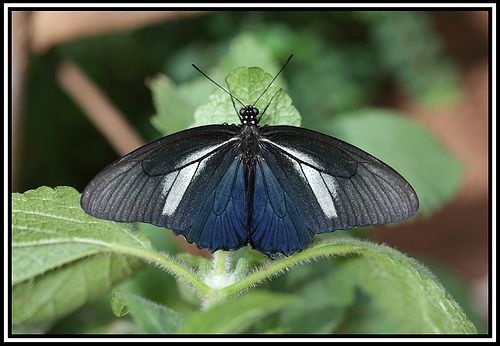
Butterfly of the Week: Crassus Swallowtail

As a word crassus means the big, thick, fat, crass, gross, or heavy one of anything, and is the species name of several different kinds of animal. It was also the name of several people in ancient Roman history and literature, apparently a popular nickname for a sturdy muscular man. In the eighteenth and nineteenth century it was traditional to name the large butterflies and moths after characters in ancient literature. Thus Battus crassus is translated as "Crassus Swallowtail," rather than "Crass Swallowtail" or "Big Swallowtail."  


Photo by Wolfwalz on Pinterest.

It is large, though, for the genus Battus; some individuals' wingspans are over four inches. Its Spanish name translates as "Swallowtail Butterfly of Long Wings." 


Marcoscampls at Naturalista.mx shows how long the forewings can be.

Sipping from colorful flowers, the butterfly probably has no idea how appealing it is to humans who collect butterfly pictures like modern naturalists. It is, of course, conscious (to the extent that butterflies are conscious of anything) of its appeal to other Crassus Swallowtails. So this one probably was trying to make a pretty picture.


Photo by Douglas U. Oliveira at Naturalista.mx.

They do some composting--many individuals are photographed at puddles or near overripe fruit--but they are primarily pollinators. One study, not linked here because the site behaved badly, found that the butterflies are able to absorb some amino acids from pollen that sticks to them, though most of the pollen they take from one flower is merely transferred to another flower. 

The Swallowtail of Long Wings is found in many South American countries, but it likes a lot of space and is not found very often anywhere. It's not considered an endangered species. There are four subspecies, identifiable by their habitat and by the number and color of stripes on the wings. Butterflies Of America has a web page showing a range of possible color patterns for each subspecies; all photos but the lepidus below are of dead museum specimens.

Battus crassus proper is native to Surinam, found in Brazil to Costa Rica, and has a wide splash of color that usually widens out and breaks off toward the outer edge of the fore wing. There may or may not be a stripe on the hind wings.

B.c. hirundo lives in Bolivia. Its lighter-colored stripes may be merely lighter gray. Its more conspicuous stripes are black across the dark drab wings above and below the white or pale gray stripe.

B.c.. lepidus lives in northeastern South America, from Costa Rica to Venezuela and Ecuador, and usually has only one narrow stripe.

B/c. paraensis lives in Brazil and tends to be drab rather than iridescent, with only one stripe on either the fore wings or hind wings but not both.

Nineteenth century painters were fascinated by the iridescence and painted these butterflies as lovely Victorian velvet work in dark blue, green, and gold. Photos do not suggest that these paintings were very lifelike, but they certainly were pretty. French Wikipedia still prefers one of those paintings to a photo of a living butterfly for their short article on this species, and Bolivia put another old painting on a stamp:


From Wikimedia Commons.

The undersides of the wings may show white stripes or resemble the underside of the Pipevine Swallowtail. Crassus is as toxic, if swallowed, as Battus philenor is, and gets its warning red spots from the same phytochemicals. It is mimicked by a few other South American butterflies, like the less toxic swallowtail Heraclides androgeus and the longwing Heliconius sara..

Here's a blogger's reaction to recognizing the rarer dark female H. androgeus:


Including photos of the mimic species here might be misleading, but here's what they look like:

Androgeus, male (much yellower) and female: https://en.wikipedia.org/wiki/Papilio_androgeus


All Crassus Swallowtails have dark, more or less iridescent wings with stripes that run straight across, almost like museum markings, when a dead specimen is spread out in a museum's display case. Stripes can be white or bright yellow, and be found on the fore wings, the hind wings, or both. It's one of the Swallowtail butterflies that do not actually have the "swallowtails" on the hind wings. Males have visible scent folds on the hind wings, and are more likely to iridesce blue or green than females are. Females often look brown. Bodies are black with various patterns of spots that may be white, yellow, or pale blue. 


Jocaleme at Naturalista.mx found this pair of drinking buddies sipping water from wet ground.

One source described the Crassus Swallowtail as "seldom collected." Google shows otherwise. About half of the web pages about this butterfly are offering dead bodies for sale. However, the butterfly has been more often collected by amateurs than by serious scientists. Nearly all the web pages about this butterfly as a living species are checklists or picture sites. Only a few scientific studies are available online.

Different subspecies of Crassus can eat as many as eight different species of vines in the genus Aristolochia. These are the South American species of the Aristolochia vines on which the Asian Batwings feed, and some people count Crassus as a Batwing. Like the Atrophaneuras, its wings can look white with black veins in some lights.. 


Photo by Danielbranch94 at Panama.naturalist.org.

The adult butterfly is believed to fly for about two weeks. 

Like a Batwing, the caterpillar is described as variably brownish black. I found no photographs of eggs or caterpillars online.

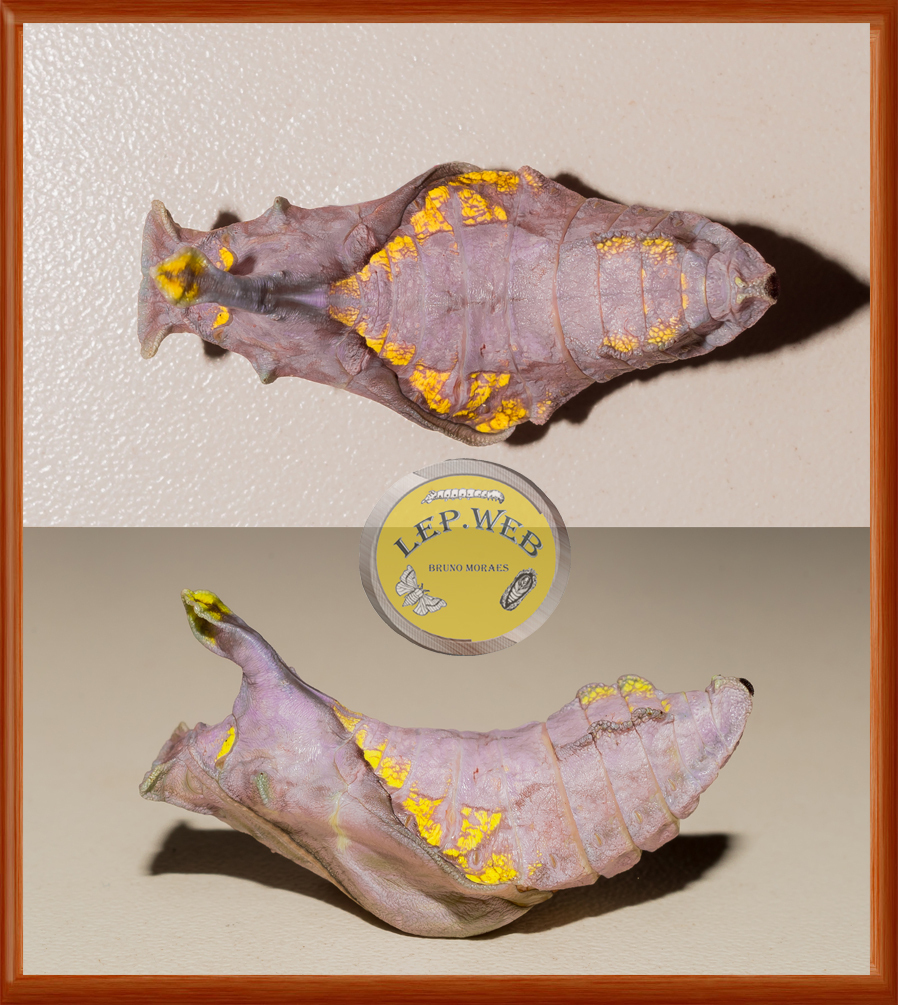
Pupas seem to be camouflaged as dead leaves, like those of the Atrophaneuras, but as a different kind of leaves. 


Lepweb, another science site, shared these photos with Naturalista.mx. 

Sunday, November 12, 2023

Book Review: Seeking Peace

Title: Seeking Peace 

Author: Johann Christoph Arnold

Date: 2013

Publisher: Plough 

ISBN: 978-0-87486-249-2

Length: 248 pages

Quote: "We live in an unpeaceful world." 

Yes, this is the Christian book I've been reading this week. The one. All the other books I've read have been frivolous genre fiction, although one forthcoming novel TBR on its publication date was written by a Christian and can be read as a metaphor for a Christian comment on recent news. Anyway, yes, immediately after reading a new book in Spanish I like, when possible, to read it in English; this is the English edition of the book I reviewed last week.

If any Gentle Readers feel cheated or disappointed, please use the comments form below, and I'll pop another Christian book review out of the can for you. 

People who read last week's review may skip...

For those who did not read last week's review: this is a book about the Bruderhof (who operate a furniture factory, and other things, to support their unique calling as a church)--as one of the "Peace Churches" that grew out of the German Anabaptist movement. Of the Peace Churches in the United States, the Amish are the best known, the Mennonites are the largest, the Brethren are still fairly active in some places, the Hutterites still have their colonies in western Canada and adjacent States, and the Bruderhof are the newest group and the one that is actually growing. An allied group, the Moravians, trace their collective origin further back and still have churches of their own in Pennsylvania. The Society of Friends, or Quakers, are a Peace Church of English origin. 

Growth has not been the goal of the other German-American Peace Churches. Survival in their own peculiar little way seems to have been the goal. The Amish and Hutterites have resisted change and assimilation so vigorously that most of them still speak German at home; they avoid secular society except for a necessary minimum of trade. As a result they are so poorly understood that other Christians sometimes express confusion about whether these outlier congregations are Christian. (They are; they just don't proselytize.) In theory a person not born and brought up in a German or Moravian Peace Church could join one, but as the groups are conservative and follow rather strict rules, and the communities are close-knit, it seems to have been hard for members of Peace Churches to imagine outsiders ever wanting to join them. Though, as Sue Bender found, they do try to be courteous and hospitable if an outsider ever did want even to sojourn among them.

But the Bruderhof formed later, starting with one congregation led by a series of exuberant, radically Christian pastors who opened their homes to needy believers, growing into a neighborhood and then into several neighborhoods of people living in "intentional communities." Their appeal was to people who were attracted to the ideals of communism, but not to violent revolution or even use of force to impose communist ideals on anyone.  These people sought peace on three levels--"the inner peace of the soul with God; the fulfillment of non-violence through peaceful relationships with others; and the establishment of a just and peaceful social order." 

So members of the Bruderhof take vows, like monastic vows; they pool their resources and live in a sort of comfortable poverty; they can be married, and live with families, but they take vows of chastity in the sense of fidelity; they promise to serve the church in whichever of its communities, around the world, the church considers them most likely to be useful. Each community supports itself by some sort of work in which every member participates so far as they are able. People with severe disabilities may be offered rooms, as rooms become available, and allowed to "pay" with such work as they are able to do. It works in a more effective, egalitarian, friendly way than state socialism ever could. It's not for most people, but it's very attractive to many people who've come to terms with the failures of socialist national economies. 

In describing the Bruderhof's pursuit of peace Johann Christoph Arnold, a grandson of founding pastor Eberhard Arnold, has much to say to people who wonder if a communal or monastic lifestyle is for them. I'm afraid he makes the Bruderhof sound like a support group for extroverts, but...God must have had some reason for allowing otherwise intelligent human beings to have to live with extroversion, and any church that gives extroverts the discipline they need to do good work is doing a very good thing. 

For those who read last week's review: What, you may ask, does the English edition have to offer that the Spanish edition lacks? Different introductions, for one thing. The introductions to the English edition, by Madeleine L'Engle and Thich Nhat Hanh, are short essays that anyone who liked and misses those authors will want to read. 

Otherwise...some people read only one language. If you read both, you might want to buy both for parallel reading. I find parallel reading an easier way to build my vocabulary than trying to learn lists of words straight from the dictionary. The vocabulary in these books happened to be about the level I needed. The new words I'm learning from these books are not specifically theological vocabulary, either. If you no longer need parallel reading, congratulations, the translation is close enough (except for the introductions, written by and to different people) that you can choose the language you prefer. 

In any case, if you already have a religious identity, this book will not try to "convert" you to leave your own community and join a Bruderhof. It may warn you off trying to do that, or encourage you to do it, or simply give you something to think and talk about with your own faith community. As Eberhard Arnold said: not everyone is called to live in an intentional community but, if not that, what else are you called to do? (Fair disclosure: the Bruderhof's magazine has printed, among others, articles by a German aristocrat who wrote about how he believed God had called him to manage ancestral land. But, although a patron, he's not a member of their church, and his story is not among the many personal testimonies in this book.)

I don't believe anyone will regret reading this book. (Though it does contain some intense moments; people found their way to the Bruderhofs through horrible situations.) Written in consultation with non-Christian authors, it manages to be thoroughly Christian while politely engaging Jewish, Muslim, and Buddhist thinkers in the discussion. Which is, if you think about it, a profoundly Humanist achievement.

Saturday, November 11, 2023

Bad Poetry: Adjectives for Autumn

This one should have gone live on Friday, and didn't, because I was distracted by fair weather and new e-books.

For narrative writing, we're often advised to cut out adjectives and use livelier verbs. For poetry, this week's Poets & Storytellers United prompt was an invitation to use all those adjectives...I remember that in many languages an adjective is just another form of a verb. This poem, however, uses a bare minimum of verbs.

We've just had record high temperatures in what some call "Indian summer," some "St Martin's little summer." Very little is known about this St Martin. Some doubt whether he really existed. He was a favorite saint in old England, though, because he was associated with those last warm sunny days of autumn. His name was adopted by other saints (who definitely did exist) and by several distinguished men who weren't even Catholic. I like "little summer" as a name for this weather pattern. The weather is far too pleasant, when it comes, to be wasted on quibbling about the meaning of the word "saint" and the most correct attitude to take toward the legend of St Martin.

1. Green and Yellow

Cooler, yes, but not much. Thinner sun 
beams slant true west, earlier each afternoon.
Relief. Could be more. Summer's job is done,
Surely? Mozzies whne; same old tune.
Walnut and poplar leaves turn yellow.
Weather's still summer, only more mellow.

2. Red

Red maple. Purple dogwood. Red, pink, white
Flybush. Pink lady's thumb. White oaks brown
But coppery. Scarlet oaks red. Black oaks bright
Orange-red. Frosty nights; daytime highs down.
Afternoon sun, west-south-west. Persimmons blue
Undertone through the orange; white oaks, too.

3. Orange

Most trees bare now. First freezing night leaves frost
In thin southwestern sun all afternoon.
Beech leaves, orange and stubborn, never lost
Till spring. Orange haze on yellow hunter's moon.
All oak leaves shade through orange to brown
Before, or after, they come down.
 
4. Drab

Warm again. Not for long. Bare, dormant trees.
Twigs down along with leaves, all fading fast.
Nuts ripe, in last thaw after the first freeze.
All's waiting for the year's next freezing blast.
Alles ist hin. All gone. Leaves to be found,
Except some oaks and beeches, on the ground.

Bad Poetry: Gorey ABC's

This was actually Thursday's post, although I was too busy in another window, reading new e-books, to post it on Thursday. An old post comes out from behind its paywall, updated...

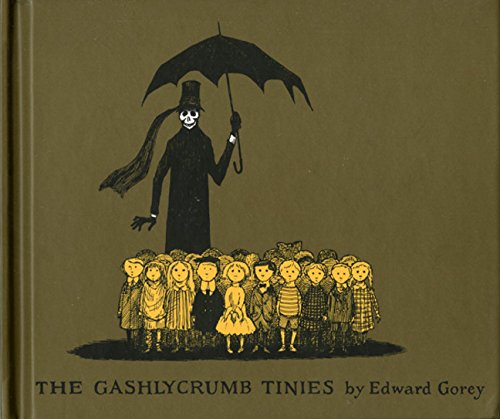
In 2017, the Washington Post celebrated a posthumous reissue of Edward Gorey's "gashly tiny" ABC rhymes, which were a parody of Victorian cautionary stories for children--the "A is for Ann who stood close to the fire, B is for Bertie bound up in barbed wire" sort of thing--by inviting people to compose ABC rhymes about contemporary "gashly" things.

https://www.washingtonpost.com/entertainment/style-invitational-gorey-bits-from-a-to-z--give-us-edgy-alphabet-rhymes/2017/05/25/5243edbc-3f6f-11e7-8c25-44d09ff5a4a8_story.html

They anticipated fewer horrible warnings to children and more snarky wisecracks about the things adult readers could do without. My snarky rhyme made me chortle, so behind a paywall it went. At least it did not include "T is for Trump" and the words "dump," "rump," or "tacky.".

Can this web site do better than that? We hope.

Anyway, since it's a Correspondents' Choice book link...


...here are some "gashly" gross-out rhymes, for the sturdy of stomach only, all "inspired" by the week's e-mail. What may make it depressing is how timely these topics still are. You have been warned! If you do choose to read these rhymes (and if you're really feeling tough, follow the links), you'll understand why, at the time of writing, I was looking forward to a week offline.

Several of the news links have been broken, but the headlines explain what the stories were about. If you really want to search, you can find newer stories on the same theme. 

A is for Animals HSUS wants to kill.
B is for Bloat Built into many a Bill.

[ https://www.avma.org/Advocacy/StateAndLocal/Pages/sr-spay-neuter-laws.aspx ]

C is for Craigslist's bad example on flagging.
D, Dinosaur ideas, un-Deadly Dragging.

https://www.linkedin.com/pulse/20141104172024-396418-top-5-rules-to-keep-your-craigslist-ad-from-getting-ghosted-or-flagged ]

E is for E-mails that ask us for money.
F is for Fools who think Flamewars are Funny.

G is for Greed and its Goonish enforcers.
H is for Hay--they begrudge it to Horses.

[ http://www.fws.gov/invasives/staffTrainingModule/methods/grazing/impacts.html ]

I is for Insects, comparatively nice.
J is for Judgment corrupted by vice.

http://ksn.com/2017/05/25/sedgwick-county-detention-deputy-arrested-on-allegations-of-driving-under-the-influence/ ]

K is for Killing in the name of religion.
L is for Lefties' 19-20 vision.

https://www.washingtonpost.com/world/gunmen-kill-23-christians-in-central-egypt/2017/05/26/3d2693dc-41fc-11e7-adba-394ee67a7582_story.html ]

M is for Microsoft Windows 10 and its "cloud."
N is for Nosy Nerds' spying allowed.

https://account.microsoft.com/unsupported-browser ]

O's for Officious Overlords who expect
People to Pay them to (they say) "Protect."

https://www.wsj.com/articles/facebook-employees-pushed-to-remove-trump-posts-as-hate-speech-1477075392 ]

Q is for Quality standards forgotten.
R is for 'Rithmetic, Common Core Rotten.

http://www.nationalreview.com/article/373840/ten-dumbest-common-core-problems-alec-torres ]

S is for Stingingworms in a fruit tree.
T is for Taxes, more apt to sting me.

[ https://priscillaking.blogspot.com/2023/05/hemileuca-annulata-subspecies-or.html and other posts in this series. Seriously, without paying for Tuskes and Collins' $400 book, this series is the most informative study of the bristle-spined, venomous Saturnid moth species you can get. You should consider funding the rest of the series.]

U's for Urbanski, U.M.C.P. stabber.
V is for Vile anti-conservative jabber.

[https://newpittsburghcourieronline.com/2017/05/25/race-and-politics-the-murder-of-richard-collins-iii/]

W is for World War III: some want to start.
X is for eXtinction to humans impart.

[Web site refuses to link to a petition to Congress to "declare war." Even for a Ghastly Post we have some standards.]

Y is for Yuppies' eYes always on "dough."
Z is for Zambia...way not to go!

[ https://www.technocracy.news/index.php/2017/05/26/feudalism-zambias-poorest-farmers-becoming-squatters-land/ ]

Friday, November 10, 2023

Book Review: Sophie and the Rich Grumpy Veterinarian

Title: Sophie and the Rich Grumpy Veterinarian 

Author: Reva Davenport

Date: 2023

Publisher: Reva Davenport

Quote: "I need a birthday present for my mother, and I need it now."

That's the first thing the arrogant young man she and her employees tag as "Mr. Cute Suit"  barks at Sophie, who has not yet opened the shop and is setting up a one-year-anniversary party for her co-workers at her cute little hippy-dippy boutique. (Sophie is new to self-employment, lacking the training one gets from being an employee. Otherwise she'd know to ignore people pounding on the door until official opening time, even if wind is blowing snow right onto the entryway, forming a layer on their coats.) 

He is, of course, grumpy because his mother is grumpy, and why wouldn't she be, already in a nursing home before she's even a grandmother. The nature of her disability and concerns about its heritability are passed over quickly. Anyway, Sophie is especially annoyed by his impatience because she likes him and wants him to like her, and Burt (Mr. Cute Suit) is especially grumpy because he feels the same way about Sophie, and you know how this kind of thing goes. It's a sweet romance. They'll have another lovers' quarrel or two and be married by the end of the book.

What's not to love? Well, the characters in this book are White but not Irish. All they ever drink is stuff that nature obviously intended us to use as cleaning fluid. Burt, Sophie, and their friends all drink alcohol for consolation (Sophie puns on "wining" and "whining"), drink alcohol until they pass our when their sleep is disturbed, drink alcohol until they're sick the next day when they think they're having fun. This is not technically classified as alcoholism but a difference between it and alcoholism does not come easily to my mind. There's no mention of a sober driver taking them home when they drink alcohol in public places, either. My experience of "If you're drinking, I'm driving" interferes with any possibility of imagining these people's parties as very much fun. I suspect they're just pouring down the alcohol to postpone being sick, and they'd do better to go home and be miserable for a few days and try to learn how people enjoy life without drinking alcohol. Burt and Sophie and their friends all seem to have so much to enjoy, it's a pity they're sloshing through it in what the author admits is a booze-muddled, brainfogged, probably nauseated condition.

Still, whatever's driving them to drink, Burt and Sophie live in a nice place and enjoy nice stuff. Readers may enjoy a virtual visit to their homes and will probably enjoy their demonstration of how people who made each other bristle, on first meeting, can become friends.

Thursday, November 9, 2023

Book Review: Negotiation Master Class

Title: Negotiation Master Class 

Author: Mark Bartrick

Date: 2023

Publisher; Mark Bartrick

ISBN: 9781916596887

Length: 72 pages

Quote: "Everyone should learn how to negotiate."

And here is a summary of what the author has learned from years of studying older books on the subject, written so tersely you could print it to a size you could fold and carry in a pocket.

There are drawbacks to this presentation of what are agreed to be the essential skills of negotiation. There's no detailed exploration of how you might go about building rapport and showing respect and all that. Those skills are learned, but this e-book doesn't even suggest a book (or a live class) that might help you learn them. 

There's also no guarantee that studying these skills and techniques, even using them in some situations, will help you apply them or even create an opportunity to apply them in other situations.(If you have good negotiation skills, or communication skills generally, a certain type of manager wanted you not to be hired and will do everything person can to get you to quit or be fired.)

However, if you think brevity is the basis of good writing, you will like this book. It's like the curriculum notes for a four-credit-hour college course. Possibly Bartrick would be available to teach that course. 

Wednesday, November 8, 2023

Book (?) Review: The Priest the Beast and the Bride

Title: The Priest the Beast and the Bride 

Author: Bowen Gillings

Date: 2023

Publisher: Bowen Gillings

 Quote: "Roderick the priest feared that if things didn't run perfectly the baron would send him and his soup-making wife to the far north."

This e-book earns full marks for effrontery. Not only is it a short story billed as a book, but the story itself is an elaborate naughty joke. 

Saving grace? Well...at least we know the priest is not Catholic, so it's not an anti-Catholic joke. The priest is not identified with any other religion that exists in our world. So, nobody's being insulted with the suggestion that their church ordains priests who've never learned to excuse themselves and go to the bathroom to relieve discomfort caused by eating cabbage soup, much less to reduce the discomfort by drinking plenty of water. 

Really...there was something amusing about a try-to-be-funny story being slipped in among the romances and thrillers during the Booktober Blitz. And if you want to watch little boys roll about, pawing and whinnying with laughter, you could do worse than read this story. Little girls will, however, say "Eww, ick" and "Grow up, boys." 

I've always been glad I started out in life as a little girl.

Tuesday, November 7, 2023

Petfinder Post: Little Black Dogs

Black dogs, unlike black cats, aren't associated with Halloween, supposed to bring either good or bad luck, or sacred in any really controversial religious practices. They are just a challenge to photograph in a way that does justice to their winsome doggy faces. Some shelter staff went to some effort to snap these winning photos. Reward them by sharing these pictures with everyone within range. Together we can picture them homes. 

There is, of course, absolutely no rule against going to the main Petfinder pages for the zipcodes I've considered and picking your own favorite photo. This web site actually encourages that. These are my selections of the best dog photos. You might pick different pictures. It's not a zero-sum game! If someone Out There can't decide between two or three adorable animals and adopts them all, all to the good!

We've looked at medium and large dogs recently, so let's focus on small ones...

Zipcode 10101:  TBA 

It's been a long day, Gentle Readers. I walked into town to vote and do errands. Spray poisoning occurred yesterday; I was still reacting and, at one point, sat down on the ground because I was feeling too faint to sit on a perfectly good guardrail beside the road. I came in, drank some water, and started looking at Petfinder pictures. The D.C. and Atlanta pages opened slowly. The New York page refused to open at all. I tried three times, over the course of three hours; no success. I'll come back to Petfinder later in the week, pick the cutest picture of a small black adoptable dog in NYC, and repost this article as "updaed" when the Petfinder page comes back.

Zipcode 20202: Snoopy by way of Springfield, actually from Texas 


They know he's cute. He doesn't look much like America's most dearly loved cartoon dog. He is said to resemble the famous cartoon Snoopy in personality, being clever, good-natured, and likely to break into a happy dance because it's supper, super-duper-supper ti-i-ime. And because he's already been agreed to be such a photogenic little mutt, 14 pounds of unbearable cuteness, he's been drafted as a fundraiser. He is actually in Texas. He can be adopted, for a reasonable fee considering his vet bills, by a person who is also in Texas. Actually bringing him to Springfield, Virginia, will cost an additional $600. Theoretically a volunteer will bring him to meet you and donate the $600 to the shelter to pay other dogs' vet bills. As if a family that matches this dog doesn't want to treat his driver to meals and a shopping spree. 

That could get pricey so here's a bonus dog photo from zipcode 20202:

Bonus: Lilly from D.C. 


The writer of her web page sounds as if person wants to keep Lilly, describing her as the best of all puppies. She is an adolescent terrier who will probably be a little bigger, not a lot, next year She's friendly with humans and animals, likes to play, but can settle down and snuggle when her human wants to sleep or watch television. This tough little terrier will probably grow old as her humans' children grow up; small dogs often live ten to fifteen years. 


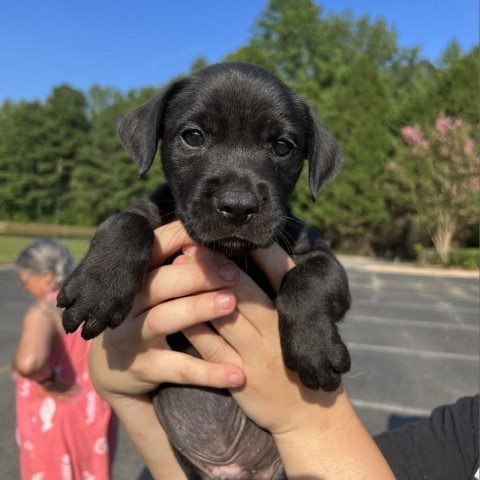
Zipcode 30303: Brogan from Tyrone 


He qualified as a small dog in August. He may be a medium-size dog by now. He's thought to be part Labrador Retriever and might eventually become large. When Barkley was a baby he probably looked like Brogan. Not much else can yet be said about him, but he's had the veterinary care recommended for a puppy of his age.

Web Log for 11.6.23

Status Update 

I found two links yesterday. You really needed one of them earlier this morning.

Health News 

Activists working on health-related issues, isn't it time we had some good news?! The count is in. COVID vax mandates yielded a record crop of State laws limiting vaccine mandates and defending freedom of choice. 

Again, we are not "anti-vaccines." We are anti-mandates. There are individuals who are at special risk from certain diseases, and individuals who are at special risk from vaccines, or from medications or other anti-disease measures--and everyone deserves to be able to trust a doctor to tell them honestly whether they're in either category, rather than trying to push the same treatment on everybody.

Anyway, good activists commend and congratulate our State legislators when the good bills succeed. This article doesn't go into details about whom you may want to commend for what, but let's just say that most Virginians have reason to commend our people in Richmond. (And some people may want to check their state legislators' records before they VOTE TODAY.)


Music 

Zitherist Wu Fei plucks an African instrument called a valiha or "tube zither." It's made from bamboo and has a much softer sound than wood zithers. 

Book Review: We Are the Crisis

Title: We Are the Crisis 

Author: Cadwell Turnbull

Date: 2023 

Publisher: Blackstone

ISBN: not yet assigned

Quote: "If it were before, they might have thought a straight, predictable life would protect them. But they know that’s not true, not anymore. Whether they decide to act or not, the world will eat them anyway."

They are three good friends who happen to be werewolves. "Monsters"--specifically vampires and shapeshifters--have become the new increasing demographic in society. Most of them were brought up human and have human ethical standards, though some of them work for the CIA. But humans have organized a group whose goal is to hunt them down and kill them.

There are lots of different characters in different situations. Some of them meet, some don't;' some of their stories seem to intersect, some don't. Some of them seem to be killed but are actually transferred to some sort of other world via portals formed by robot ants. To some extent their stories come together to form a loosely structured sort of novel.

I don't think it's a great novel, and its flaws seem to parallel what so many observers say about the real-world situation for which it's a none-too-subtle metaphor. Characters aren't developed as individuals, beyond their "monster" qualities; there's a hint that monster qualities may be influenced by ethnic traditions, which could make this book an interesting study of world folklore about monsters, but doesn't. Characters don't seem to have much fun; their stories don't make a great case for their preference to survive. Characters don't want to agree with those who assume that they're dangerous to humans, but in fact some of them are dangerous to humans. As stories, some of the individual chapters stand alone (and some are credible, dramatic monster stories), some fit together in sequences, and some just don't seem very successful either as connecting material or as stories. As a novel, We Are the Crisis contains episodes that show a potential that I don't think the whole novel fulfills.

On a more encouraging note, a novel that was written in haste, with loosely sketched characters, can be an invitation for readers to develop the characters further with games, and the urban fantasy genre lends itself well to this kind of reading. So although I would have encouraged the writer to give this novel another revision or two, some readers may like it just as it is. 

To the extent that there's a plot, it consists of finding out which monsters will survive the violent confrontation and how; this review is not telling. 

If you like Halloween-type reading with new takes on familiar monster characters, ideas for role playing and party games, plus social commentary, then We Are the Crisis is for you.