Friday, November 15, 2024

Feline Friday: Adoptable Dogs and Cats

This week, the Petfinder photo contest joins other animal blogs for FELINE FRIDAY. This post is long because it anticipates new readers. Most Petfinder posts will be short, focussed on the pets

First, a bit of breaking news...Petfinder sends out e-mails when a special animal they know somebody Out There wants to meet gets into a shelter near their correspondents. Calling all Maine Coon Cat fanciers! Here's your chance to meet two of those great shaggy sassy cats (crossbreeds, but for their young age they are big, shaggy, and sassy) at the Kingsport shelter. 
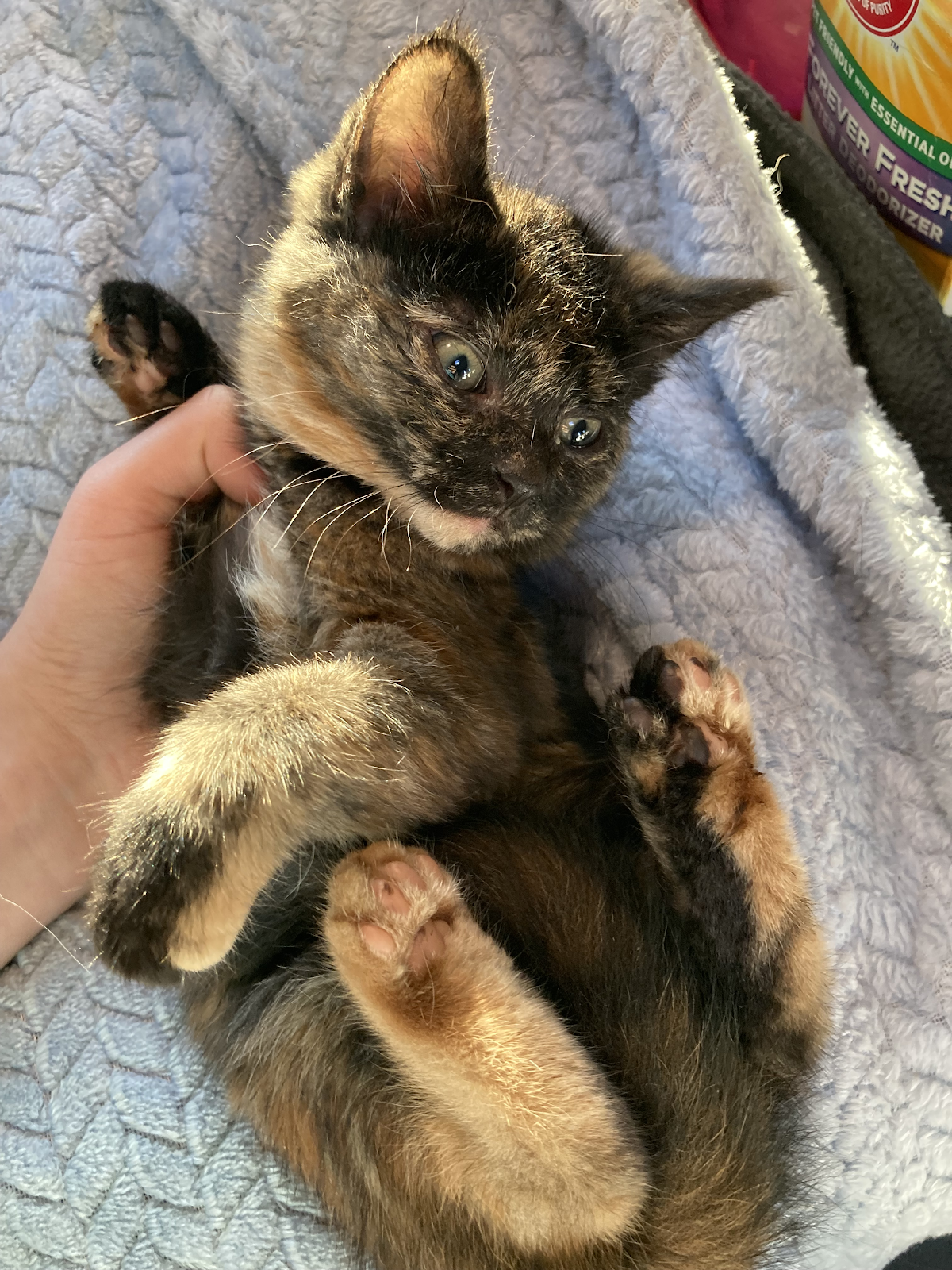

Each kitten has its own web page, though minimal information has been entered. Here's Jenny kitten's page: https://www.petfinder.com/cat/jenny-73937779/tn/kingsport/united-states-animal-rescue-tn1062/


They're only summer kittens, barely old enough to be adopted. They may become normal-sized adult cats, the kind who weigh just ten or twelve pounds under the fluff, or extra-large ones--the kind who weigh thirty pounds, and when they put up their paws for a snuggle they're already hugging you around the waist without needing to be picked up.. Both kittens are female. There is some possibility that the shelter is not demanding they be adopted together because both of them are going to be Queen Cats when they grow up.

The wild ancestors of today's domestic cats were, like Norwegian Forest Cats, extra-large, taking up to five years to reach a healthy adult size of twenty to thirty pounds. Some people think that means that extra-large cats will be healthier and more natural. Meh...some are, some aren't. Some big domestic cat bloodlines do include genetic weaknesses--mostly heart disease from what I've heard. 

There's a superstition that orange cats are unlucky. Actually it depends on which side of the English Channel your ancestors used to live on. Generally in England orange cats were thought to attract bad luck and black cats good luck, and in France it was the other way round! Could this once have had something to do with the pets kept by the leaders on each side? Is there any scientific basis for this superstition? Well, scientifically, reddish fur is more common in male cats, black fur in females; orange females and black male cats are "normal" but they're minorities. Maybe your choice of superstitions depends on whether you think tomcat odor or kittens is worse luck. However, when you adopt a shelter pet, nearly all shelters' policy will require that the likelihood of both be greatly reduced. 

In honor of Peaches, today's cat photo contest is for pale orange, or peaches-and-cream, cats. For new readers, I used to live with a cat who helped me pick three of the best cat photos on Petfinder in a different category each time. Then we expanded the search to dogs. Then Petfinder added some cookies that made the site hard to use and I stopped doing Petfinder photo contests. That could easily happen again, and meanwhile I now live with a cat who disapproves of computers and has never participated in the photo contest...but while it can, this web site tries to increase attention to the adorable, adoptable animals on Petfinder with its weekly photo contest.

It's not unusual for a photo contest winner to be adopted before someone with whom you've shared the photo makes the time to visit the shelter, or meet the foster pet. (Several organizations in the Petfinder network don't even have public shelters.) No worries. They probably have another homeless pet who may well be even more adorable in real life. 

For local dog lovers, Petfinder has no special breed alerts. Local dogs up for adoption all seem to be pit bull mixes. Even the ones that are described as some other kind of mix show a generous proportion of pit-bull-like features. Somebody Out There ought to have some love to spare for some of these pit bulls, who did not ask to be bred for sale to teenagers who wanted to look tough and then abandoned when the Navy told them to leave their dogs at home. Petfinder is actually putting some dogs from other places on the local web page just to bring in a little diversity. 

I'm glad the shelter rules demand that all these pit bulls be neutered. I miss the days when our local dog population was dominated by friendlier and, to my eyes, better-looking hounds--some beagles and bassets, mostly black-and-tans. However, in honor of the mostly innocent dogs sharing the Kingsport shelter with Jenny and Peaches, this week's dog photos will celebrate a breed that has been excessively and unjustly feared. Pit bull terriers are tough little beasts, and I see them as a homely-looking breed, but they can be good pets if treated kindly and firmly. The general category of medium-to-small dogs called terriers, French for dirt-diggers, were originally bred for an instinct to dig out and devour whole colonies of rats. They can be good watchdogs and baby-sitters too.

Photo picks are arbitrary and in no way determine which pet you, the reader, should adopt or help a petless friend to adopt. I look at photos in only one category each week. Some shelter workers, most of whom are volunteers, take better pictures than others. Your taste may differ from mine anyway, and sometimes I choose among equally adorable finalists by going with the one nearest the top of the Petfinder page as being the one closest to the zipcode specified. 

Well, yesterday was a Thursday that felt like a Monday. On Monday Net Galley e-mailed the news that Isabel Allende had written a new novel. Naturally I put my name on the list of would-be reviewers. So on Thursday Random House e-mailed that they'd picked me. I've been picked to write a blurb for a book by Isabel Allende. I SA BEL A LLEN DE! WOOT! Next on my bucket list is writing a blurb for Big Steve! ("King" is not my real-world name, and Stephen King is not a relative so far as anyone knows.) 

If you share the quirk of reading books in two languages, side by side, when possible, you already know Isabel Allende. La Casa de los Espiritus, Afrodita (Aphrodite), Zorro, Mi Pais Inventado (My Imaginary Country), more. Some time this winter there'll be a new one on the list. Check Amazon and Bookshop. Meanwhile, this web site continues to present a book a day, some likely to become classics, some fun to read, some...self-published by people who should have consulted a traditional publisher, but it's all good.

Anyway I was reading an extraordinary debut novel, and then I was kvelling and downloading, and then I was called away from the computer...you know how it goes. I did not spend much time link-hunting yesterday. The links I'd started to put in a Web Log were about animals, too, though not pets, so here they are:

Animals, Wild

By way of interference with my attempts to read and write about Hemileuca slosseri, Google got into its head that we all need to see this new photo essay. which does include a photo of H. diana. It really is a splendid photo essay, even if you don't share the author's fascination with beetles. I complained vigorously about its being shoved at me in place of something about H. slosseri when I'd put quotation marks around "hemileuca slosseri" in the search bar, but these pictures were too good not to share, The landscapes are beautiful and there's a kangaroo-rat photo you should probably hide from children, because they will want a kangaroo-rat for a pet, and the species has never adapted to domestication. The essay says nothing about H. slosseri; the author's team don't even go to a place where it lives. This is west Texas and New Mexico.


Among other things, clear close-up photos of a chickadee:


In further news, this week I cut open a tomato that didn't look, feel, or smell overripe. Underripe, if anything. And I nearly dropped it--was that a worm popping out of the cut edge?! No. Upon inspection, this tomato's seeds were sprouting inside it before the tomato even smelled ready to eat. It was one of those days when I wish I had a digital camera. 

Out here in the Point of Virginia we finally had some rain, yesterday. We needed it. The water table is way low. The ground and all the fallen leaves were dry as a tinderbox. Someone posted video of a brush fire that got out of hand in the Northern Appalachian mountains. It could easily have happened here--we are used to living in a damp climate, and it makes us careless about the fire safety precautions that are drilled into children out West. Rain reminded me of Hurricane Helene, of which the last rain the Cat Sanctuary had seen was the Edge. 

It's still impossible to forget that we got only the Edge. Even in Virginia the flash floods took out some bridges, the deliveryman reported when he brought the cats their Pure Life water. People still need bottled water, and camping and cleaning and household-repair supplies, and clean new school supplies for school-aged children, and trailers and trailer houses as available, and especially M O N E Y. Western North Carolina and eastern Tennessee are still real disaster areas. Come out and be a tourist and see what they're dealing with, if you can. The oak and beech trees on the hills still look gorgeous, the weather is still unusually mild this year, the art scene is still happening. 

The resident cats here like to share a bottle of water with me. We have a ritual where I open a bottle, pour a little water into a dish for each cat, and finish the bottle myself. If I don't do this, even in cool weather, by now the Queen Cat Serena looks at me as if to say "Was it something I said?" There are some other brands of bottled water they like, some expensive ones that claim to be from pure mountain springs, and a cheap brand that used to taste better, actually, but then the store had some trouble with a bad batch. So we now officially drink Pure Life, which is filtered tap water actually, but it's endorsed by Serena ni Burr mac Irene ni Candice ni Bisquit ni Polly ni Patchnose, the heir to seven generations of truly extraordinary cats, the first generation of which were found in an alley in Kingsport.

Fictional Kingsport was a spooky, fog-haunted place on the New England coast frequented by the sort of creepy creatures Lovecraft liked to write about. Real Kingsport is a sunny, well planned factory town built on the high ground above a confluence of rivers near the Tennessee-Virginia border; it's been called a colonial town, because there was a small settlement (more than one settler's name was King, and although they didn't found a dynasty they did suggest the most successful of several screen names I've used). There are a few historical records of human activity in Kingsport in colonial, frontier, and Civil War days but it became a real town only about a hundred years ago, when the Eastman Chemical Company and Mead Paper Mill set up factories where they could easily pollute the rivers. J.P. Stevens' cotton mill, the Kingsport Press, and a few other smaller factories moved in too. (They were attracted partly by a claim that the local labor pool was "pure Anglo-Saxon stock." Hah. Local families' pure Anglo-Saxon names were mostly translations from Irish or German. Local families with names like Williams have to look up whether their ancestor was called Williams or MacUilliam or Wilhelm. Or maybe Wilimia, because all the really old families here along "Donelson's Indian Line" had Cherokee ancestors too.) But for a good hundred years, at least, Kingsport was a Model City with everything where it logically ought to be and all within walking distance, not that most Kingsporters actually walked much. They were as car-crazy as Californians. Right up against the Virginia border was a mountainside that was nicknamed Snob Hill because the houses really were built in tiers with bigger, posher houses on every tier as you go up. People who had retired well bought those houses to grow old in, which made it a truly nice neighborhood of comfortably retired old people who looked after one another. My mother bought a house about halfway up. She wanted to "retire" from farming to a neighborhood where she could work part-time as a nurse until she needed a nurse herself, and so she did.

And then some idiot decided that what the town needed was to attract a few billionnaires, so he asked a billionnaire what to change, during the early years of this web site, and the billionnaire said, "Put in some high-rise apartments and get federal grant money for housing some welfare families from Knoxville or Chattanooga." The apartment blocks were put in at the base of Snob Hill. Around the time Mother died, Snob Hill became a scary neighborhood with addicts dying slowly, from tuberculosis and AIDS as well as sickle-cell anemia, in puddles of filth on the pavement because they've become too sick to find their way home. Gawrsh. Kingsporters don't seem to know what to do about this. They've grown up, in some cases their grandparents grew up, in a city that never had slums before. It was planned to have cheap little "starter houses" for entry-level factory laborers, but its low-income neighborhoods were always clean places. People complained about wanting more space, nicer stuff, better jobs, not about living in slums. And now they have a real slum, with homeless addicts and all. Some of them are wringing their hands and wailing "Oh, woe, we must escape to Gate City," and though they have relatives in Gate City and have always been welcome to shop and visit here, they do encounter people like me saying they ought not to want to live here. Stout hearts and true, hold fast what is yours! Many of you like the "MAGA" motto--well, make Kingsport great again. Put in better factories; give your new townsfolk, the sober ones who wanted to get out of Knoxville and make their lives better, decent jobs! That billionnaire never intended to live in Kingsport or had any loyalty to Kingsport, but you Kingsporters should have some. The world needs more fortitude.

That's a separate rant. What needs to be mentioned about Kingsport, in this blog post, is that it's a place where extraordinary cats are found--offered "free to good homes" as kittens, or allowed to stray in alleys. Listening cats. The odd jobs man in my neighborhood said recently, "Once I had a cat, a tomcat, that would do what I told him to do. Most cats aren't like that and I don't like them." Well, if you want a cat that hears and learns enough words that it can follow some simple instructions from you--you can sit or nap here, don't go there, leave my cardinals alone--Kingsport is where an unusual number of cats like that have been found. They're not a breed, in fact they're a mad mixture with different breed types, but there is a social cat community. I don't know whether Jenny or Peaches is more intelligent or social than the average cat, but I know there are confirmed cases of cats who rear kittens communally and hunt in teams being found in the Kingsport shelter.

Not that the Kingsport shelter normally wins any prizes for pet photography, because they tend to post cluttered pictures with cutesy-wutesy lettering and computer graphics instead of a good clear focus on the animal. I judge that sort of thing harshly in the photo contests. 

These photos are for sharing. Some of the Petfinder pages offer videos, also for sharing. Post them on social media. (If you're not on Bluesky yet, go to bsky.app and consider yourself invited.) 

Enough verbiage. Time for the best pale orange cat and pit bull mix dog photos in the Eastern States.

Zipcode 10101: Beanbag from New York City


Though not fat, Beanbag is a large cat--not gigantic--he weighs about twenty pounds. He was born about twelve years ago. He's an indoor cat who likes to be close to humans. In fact he's outlived a few, and changes in his humans' daily routine make him nervous. He's said to like children as long as they admire him but don't try to tickle his underside. 

Zipcode 20202: Eden and Mack from Arlington 


Eden and Mack are believed to be Maine Coon mixes like the kittens above. They were spring kittens but are the size of adult cats. They will probably grow bigger--how much bigger, you'll find out. They may be cousins but are not siblings. Like our Serena and don't-try-to-tell-her-he-wasn't-her-brother Traveller, they met at a foster home and bonded for life. They are inseparable and must be adopted together. Eden is the female--and Eden is also the orange tabby. They will not produce more kittens.

Zipcode 30303: Turtle and Yertle from Decatur


Mother (Yertle, the Tortie) and son (Turtle, the orange tabby) can be adopted separately or together. Both have been neutered. A head shot of Turtle alone was the clearest photo on the page; this photo of him with his mother is less perfect, artistically, but contains valuable information for prospective adopters. 

DOGS

To link up on Feline Fridays we have to include the cats every week. So we have to include dogs during the cats' week, too. 

Zipcode 10101: Bonnie from Texas 


Petfinder allows animals from low-traffic rural shelters to be cross-posted for adoption in cities, on the condition that the urban adopter pay for delivery. If you're actually in Texas you could skip a few steps and save some money. E-mail the shelter to find out what part of Texas she's in. Bonnie is believed to be about three years old and a sweet, friendly dog who loves to walk, run, and play ball with her human. Nobody calls anything "Bonnie" unless they believe it's both good and beautiful.

Zipcode 20202: Kya from DC 


Kya is said to be a sweet, shy, conservatve dog who takes some time adjusting to changes. Her bounce and playfulness will reappear as she gets to know you. They're begging someone, please, to adopt her before she starts thinking of a shelter as her home. She withdrew and mourned for some time after being moved to the shelter, but withdrawn and mournful are not her real personality. 

Zipcode 30303: Gretel from Atlanta 

This spring puppy, who already weighs 37 pounds, is in foster care where she gets along well with other dogs. About cats and children, they can't say. She's good at walking at heel on a leash and also likes chasing and fetching. 

Book Review: Resthaven Cottage 1

Title: Resthaven Cottage 1: Not Your Average B&B

Author: Karin Thompson

Date: 2022

ISBN: 9780-6485229-6-6

Quote: "But now, a few days before our grand opening, I was having doubts."

All B&Bs are alike yet none is the same, in fiction as in real life. This one is in Australia. What makes it special is that one of the proprietors has just become interested in cooking and wants people to eat his products so that he won't eat them all and become obese. The other would really rather be alone with her husband in their home, but also likes to feel  helpful, so before the B&B's even open she's taken in a lonely younger woman, a bereaved dog, and a lonely younger man, and by the time it opens she's starting to push them in the direction of all moving out together! 

I don't care for this dynamic myself, but you might. And the setting is a beach town in Australia.

Thursday, November 14, 2024

Book Review: The Quest for Captain Sammy's Treasure

Title: The Quest for Captain Sammy's Treasure

Author: C.L. Hart

Date: 2023

Publisher: Naughty Netherworld

Quote: "Darkness and ominous silence dominated the Jungle of Kled."

This short but complete story is another piece of fanfiction, with some places and characters taken directly from the works of H.P. Lovecraft and others from the works of other Naughty Netherworld authors. It seems more an introduction to a horror novel than a horror story; a character describes various sinister "goddesses" as her aunts, before invoking a rather pretty and nice one who helps the characters find the treasure rather easily. Here are gross-outs rather than horrors, told with that selfconscious delight in a self-parodic style of writing that adds comic relief to Lovecraftian horror fiction. One of Captain Sammy's companions is a humanoid with snakelike features, and one is an alien monster, but they're clearly not bad sorts. They are acquainted with Ketil and Yitzy. 

Most of humankind may find no use whatsoever for this story. Others take an understandable delight in it--Cthulhu fanfiction being a genre that unites lovers of wacky gross-out horror fiction of all ages and nations--and should rush right out and buy it. The printed version is in an anthology called Pirate's Gold. The e-book contains links readers should be able to use to buy or download that book.

If you're not sure whether you'd ever get into the Cthulhu Mythos, this story might be an easy introduction; the horrors aren't very horrible and the gross-outs aren't very gross. The fictional universe of this story gets much nastier than the Jungle of Kled. 

Hemileuca Peninsularis

Hemileuca peninsularis means "half-white (moth) of the peninsula," referring to Baja California; the species is sometimes called the Baja Buck Moth. It looks like Hemileuca maia but, being less numerous and widespread, it's less variable. And, being Mexican, it's not received as much attention as the Hemileucas found further north.


Photo by Sbyers.

Kirby Wolfe photographed a male, female, and juvenile specimen of peninsularis; his photos were on Wikipedia once but he's reclaimed an exclusive copyright. This web site will respect his wishes and suggest you click here:


The caterpillar has that mauve-taupe color of maia whose last few meals--before they pupate and lose their mouths, or before they meet people like the writer of this post--were raspberry leaves, but the spines on its back form rosettes and it has a brownish stripe along the sides.

If you search the Internet for this blog you're likely to find a link to an old post at this web site that affirmed my opinion that Hemileucas look best when they're collected--trapped as they approach a calling female, gassed, and pinned in a box. Extinction is forever. Maybe we humans have no right to cause other species to go completely extinct, but that does not mean we have to let them live and breed where we live. Anyway, the thought of all the stingingworms these moths presumably did not produce pleases me. 


(Don Ehlen's photo of H. peninsularis lined up in a box was removed from public domain and integrated into a collection documenting the variability of Hemileucas. People interested in these moths really should click through and see peninsularis compared with other species in the genus.)

Google shows no information about the life cycle of this moth. 


Wednesday, November 13, 2024

Book Review: The Neighbor

Title: The Neighbor

Author: London Clarke

Date: 2021

Publisher: Carfax Abbey

ISBN: 978-13939-17694

Length: 419 pages

Quote: "I'm the only one now who can protect my children while they're inside the house."

And Claire does a terrible job of it. But that's normal. This is horror fiction. Main characters make terrible mistakes. Usually they can correct their mistakes by the end of the book. First-person narrative is usually a hopeful sign...

Let's admit it: I like this book a lot more than I usually like horror fiction. I read it, I give people some indication of the level of horror they have to face if they want to buy something with just the right chill factor, but horror stories I've read twice are just about limited to Dracula, Frankenstein, Stephen King, Charles Williams, and things I forgot reading the first time. After reading this novel I did not immediately want to delete it off the Kindle; that says a lot for The Neighbor.

Maybe it's because I'm living in my own bad-neighbor story. Why has it not ended decisively by now, as real-life stories of bad neighbors usually do? Because my bad neighbor inherited the same kinds of intelligence from the same ancestors I did. Because I don't have much money to spend on the kind of technology local law enforcement want to see used and don't want to supply. I've seen some of that "Are you sure you're not just obsessed with this man?" kind of thing the characters in the novel encounter (and yes, they are obsessed with the evil man). I'm not. I'm interested in solving a real-world crime, but if I ever feel attracted to another man, it won't be one of my cousins. As long as they keep their health they are good-looking men, but to me they're relatives. It's mutual. Sometimes bad-neighbor situations really are entirely about the real estate. Maybe some part of me was craving a story about a fictional bad-neighbor situation that was about sex and sin and repentance and salvation.

I want to say this on behalf of women who are single, widowed, divorced (like Claire), estranged, temporarily separated, or just working different shifts from their husbands, and are having to deal with creepy male neighbors. There is a tendency, promoted by very bad fiction, to think that any conflict between people of different genders are "really" about sexual attraction to each other and will be resolved by indulging that attraction. Even when they feel such an attraction, sleeping around doesn't solve any problems, except to the extent that it distracts people from their original problems by creating worse ones. We all need to admit that after about grade six, nowadays when people feel free to admit and act on their attractions, conflicts between a male and a female are likely to be really about whatever they're about, on the surface: sales, promotions, top grades, scholarships...real estate...

Anyway, whether or not there is an attraction to be acted on, conflicts between a male and a female have to be resolved in the same way conflicts between people of the same sex and/or family have to be resolved. The Neighbor acknowledges this. Claire's husband has just dumped her for another woman; the bachelor who moved in next door, Steel, is attractive; the attraction is mutual. Given a pretext to speak to each other, they flop into bed. Then a stuffed toy cat Steel gave Claire's youngest child starts haunting the whole family, and her eldest child starts sleepwalking, and the computer starts showing random creepy images that seem to stir up the deepest fears of the person looking at it...and then the really scary events of the story begin. 

Gunnar thinks a drink is a drunk; for some people it is. When he leaves, Claire feels free to "enjoy the taste of wine." Gunnar seems all too ready to ascribe all the bad things that happen to his ex-wife and children to the Demon Alcohol. In the reality of the story I was hoping he'd have to face the different kind of demon Claire and the children are dealing with. He doesn't, but it's a series. There could be a sequel where he does. 

The story takes place in the Hump of Virginia, where Claire soon realizes that along with her demon "lover" she's also dealing with the Demon Development. A more distant neighbor's property is under construction, but the job never gets done because a bottomless sinkhole can't seem to be filled. Claire's Korean immigrant friend tells her that this is because there are "too many holes" in the neighborhood, not physical holes but portals to the underworld through which evil spirits are getting in. The sinkhole is the physical manifestation of the spiritual holes in everyone else's lives, not only Claire's. After talking to Steel another couple will be violently attacked, a new baby will be born dead, and other bad things will happen. Claire can only protect herself and her children.

And she's only a social worker. Claire became a social worker because she wanted to believe that her father developed a mental illness after tormenting mental patients with exorcisms of demons that didn't eist; she didn't want to believe either in demons or in God. She wants to believe she can help people by observing their unhappiness with detachment, never raising a finger, only ever handing out psychological cliches. Before the story's over Claire will be forced to confess sins and ask people for prayers and even pray, herself. 

No, that doesn't make this a Sunday book. The classic cliche of horror fiction is that religious faith, usually embodied in Catholic forms but generally understood as just faith in some sort of higher power of goodness, is always what saves the survivors. The focus of horror fiction is not on the faith but on the feeling of horror, though. The effect on readers' souls may be cathartic but is not inspirational, rhough it's an interesting psychological question why people don't report feeling inspired to pray and do good works after exposure to horror stories. Traditional morality is usually a solid motif in horror stories--Claire's horrors begin with a reckless sex act, in other stories it's a theft or an outburst of unrighteous anger or a show of disrespect toward a parent--yet somehow the emotional effect doesn't seem to be to motivate readers to be chaste or honest or patient or loyal. Unless, of course, they consciously think about it 

Anyway every one of those 419 pages is well written, reinforcing traditional morality if you consciously look for it. Claire's life starts to behave like a computer infested with Windows 10 during one of Microsoft's "update" fits, only, unlike Windows 10, the chaos has an explanation that can be brought under control. Claire has to do the kind of "emotional work" she has presumably guided patients through but hasn't done for herself, facing the trauma that motivates what has seemed like a foolish but harmless quirk: she likes to sneak around town at night pretending to be someone, anyone, other than herself. 

She does not, in the story, have to confess and repent of her sins, but Clarke is a good enough writer to suggest that she's doing that somewhere offstage where denominational bickering about the process of confession won't spoil the story for readers. Some things are best left to readers' imagination and it takes a skilled writer to activate readers' imagination, rather than spelling out every detail.

And, local readers? Local writer. 

Tuesday, November 12, 2024

Social Cat Family Like Pepitas

This post is a rerun. It went down for a while because Serena didn't like pepitas. Diego, Drudge, and Dilbert like pepitas.

Pepitas are the flat, crunchy green seeds of pumpkins. As a snack they were most popular in Mexico, and, when sold in the U.S., they're usually identified by their Mexican name. What's packaged as "pumpkin seeds" are usually still in their white outer shells, for which I personally don't care. But I do like shelled pepitas, and so do the resident cats at the Cat Sanctuary.

Pepitas have a mild, nutty flavor that I find pleasing with or without salt. The cats like them without salt.

One reason why the cats may enjoy these seeds is that cats and dogs inevitably tend to pick up intestinal parasites, and eating pepitas apparently helps the animals expel these parasites. I'm not an expert, but I have seen scrawny, wormy-looking animals gain strength and weight after they developed a taste for pepitas.

Pepitas also contain vitamins, minerals, and protein, and have a lower fat content than nuts. They can be considered a healthy snack. I hesitate to mention this because I'm turned off any food or drink by any other person trying to tell me that it's "good for me" and suspect other people feel the same way, but pepitas are nutritious for humans or animals.

When I share a pot of rice with the cats, I started mixing in a few pepitas when I didn't have chicken. (Back then I often made a cheap meal of brown rice mixed with a package of ramen noodles, which were of course flavored with meat "extracts.") I learned that some cats liked pepitas and would eat plain rice, mixed with pepitas, without any meat flavoring.

Grandma Bonnie Peters uses pepitas in some of her vegan concoctions; she buys them in bulk and often sends a package of cracked or ground pepitas to the cats. Heather, Irene, and Ivy are pepita enthusiasts.

"The web site hasn't heard from you for a while," I said to GBP. "What do you want to post? What does the web site need?"

She said, "Pumpkin seeds." There's no such thing as a vegan cat, although I have known house cats who lived with Seventh-Day Adventists who ate vegan meals in the house and did their hunting out of sight of their human friends. There are Seventh-Day Adventists who seriously try to encourage cats to eat vegan meals.

"Not the cats, the web site," I said.

She said, "Maybe the web site needs pumpkin seeds too."

Well, maybe it does.

Pepitas are not necessarily a substitute for a worm treatment by a vet, but if your cat enjoys the nutty crunch pepitas add to her (or his) dinner, indulging this taste now and then just might extend the time between those pricey (and not very pleasant) treatments.

Ingredients for a Pepita Meal for Cats and Their Humans 

1/2 to 1 cup brown rice

1/4 to 1/2 cup cracked and/or crushed and/or ground pepitas

1 to 2 cups cooked spinach or other greens

Salt, pepper, garlic powder, or other seasonings (humans only)

Method for a Pepita Meal for Cats and Their Humans 

1. Cook the rice as directed.

2. Cook the greens by heating them in the water that clings to them after washing, or use a can of precooked greens.

3. Combine rice, greens, and pepitas. Divide among humans' and cats' dishes.

4. Pass seasonings for the humans.

Variations 

Although this is a nutritious, protein-rich meal all by itself, you can add meat if you want to. Or any of those wheat-and-soy "meat analogs" Seventh-Day Adventists prefer, if you eat them.

Or sunflower seeds.

Or slivered almonds.

Or garbanzos.

Web Log for 11.11.24

Hurricane 

It's reported, without an official link, that federal officials are closing shelters in North Carolina, threatening that if families don't have a "safe place to go" by Friday they will take the children to government-run shelters. In what way could that possibly be helpful or profitable to anyone? It's a threat. Funding is not bottomless. Some money must be saved for any fresh disasters that may arise. Hurricane survivors who don't have places of their own to go to must appeal to friends this week. If you know people who have been staying in shelters, or if you have a trailer or spare room or even a time-share in Florida and feel moved to get to know them, make an offer now.

To offer a room, e-mail Airbnb.com. Their plan is to make some sort of compensation to people who lend out rentable rooms at no charge to survivors.

To arrange for official compensation for offering flats, trailers, or houses at no charge to survivors, contact FEMA through the web site sam.gov.

Property owners may not have known about FEMA's flawed, but possibly useful, offer to fund repairs to property in exchange for using it to house refugees from this or future weather disasters. This is unlikely to get your rental property ready to use by Friday and, presumably because FEMA doesn't want to be sued for things that don't work out, the program will not make spare rooms in your home rentable, no matter how many disaster survivors you take in. It has to be a rental property (they sound as if they prefer those awful apartment buildings we really need to start pulling down) and you have to agree to let survivors of verified, usually large-scale, natural emergencies stay in the place at no charge to them. Details are at sam.gov.

If you don't have a rental suite fit to post on Airbnb but are willing to share your home, as in "one person can sleep on the couch" or "large warm dry basement where a family can put sleeping bags on the floor," which may well be necessary, there's no official web site for that. E-mail people you know in North Carolina or eastern Tennessee. 

Music

Digital music fans don't even remember backmasking, the fine art of embedding words or tunes into other words or tunes so that you could play a record backward. Well, if you had the right equipment. Most record players would not cooperate. Most people didn't want to pay for devices that would play records or tapes backward, since most of them weren't backmasked and, even if they were, the backmasked content didn't usually sound like much. (This web site refuses to link to the song that had the infamous backmasked lyrics about singing because he lived with Satan. Instant parent triggers were supposed to mean instant sales. Bah humbug.) But those who had a device that could play music backward sometimes encountered secret jokes, like this one of Pink Floyd's:


And here's the video...Yes, we expected that sort of thing in movies, at the time, though I think most people missed the movie and listened to the song on a plain old one-way record or tape player. Some may want to leave the song playing in the background and quickly open a different tab. Cartoon flower porn!

Book Review: The Great Taking

Title: The Great Taking 

Author: David Rogers Webb

Date: 2023

Web site: thegreattaking.com

Quote: "[T]his book...is about the  taking of collateral, all of it."

David Rogers Webb worked in the "investment" business. He observed what went on in the money-handling business. Basically, people who handle other people's money want some of it. They want more than their original contracts with their customers allow. When they're allowed to work with governments, as in the Federal Reserve, they find ways to take their customers' money by setting up crashes and crises that devour what credulous people have "invested" with them. They will no doubt find ways to take money that's been invested in gold, in real estate, or in less blatantly unethical businesses, too. What can we do about it, having a Federal Reserve Bank? We can remind ourselves that money isn't everything.

Webb is preaching to the choir with me; I was brought up to despise the idea of money-handling being a business, to recognize all offerings of credit cards and sales pitches for "investment plans" that amount to lending money at interest as strictly things to light fires with. For that reason I don't think I even understand some of his detailed explanations of the scams and schemes Webb has observed in the money-handling business. I get the point of the stories: Some people paid other people to handle large amounts of money for them, and the money handlers stole it, or other money handlers stole it from theirs. I don't follow the details of how each heist was accomplished. 

I don't think this book is as well written as it could possibly be, and neither does Webb. He encourages readers to check for updated editions at the book's web site. But his point is clear. He's been a money handler. He wrote this book for his conscience's sake. If you trust any kind of money handler, even a bank owned by neighbors you have personally found trustworthy, you are at risk. And, really, what you can do about it is accept that the treasures of this world are, by nature, things moth and rust corrupt and thieves break in and steal.

Monday, November 11, 2024

Web Log for 11.10.24

This is Veterans Day. As a government or Hallmark Holiday it is likely to be more of an inconvenience to the veterans we know than anything else. It is our responsibility to give this day meaning for those it was intended to honor. On the eleventh day, at the eleventh hour, do something your favorite veteran wants you to do. 

Christian 

Josh Howerton posted this on a nasty site someone else visited for me: 

"
We elected Jehu (a flawed leader who defeated a greater evil) not Josiah (a righteous leader who led national revival), and that comes with risks.
"

Preach, Brother! This is no time to slack off on praying.

Election 2024 Is Over. Let Us Give Thanks


Energy 

Scams to watch out for:


Poetry 

Middle-aged people like the feeling that there's "no time to kill." All very well if we don't overdo it and succumb to karoshi. Hypertension tempts us the way making unwanted babies tempts the young.


Songs 

The classic November (as distinct from Thanksgiving!) song. Probably better known as the record to put on if you wanted the parents to excuse themselves from a teenagers' party. 


And for just twenty dollars, you could get the whole sound track to Dave Barry's Book of Bad Songs. I promise to identify each one so you can skip the ones you still hate, and listen to only the ones you used to hate hearing every single day..

Book Review: Hosea Globe and the Fantastical Peg-Legged Chu

Title: Hosea Globe and the Fantastical Peg-Legged Chu

Author: Graydon Beeks

Date: 1975

Publisher: Atheneum

ISBN: J-689-30464-1

Length: 168 pages

Illustrations:drawings by Carol Nicklaus

Quote: “I don’t believe I’ve ever seen a dog with a false leg before, especially that sort of leg, all colors like a raibow.”

That’s because Chu is not a real dog. A resident of Plymtree, “the village that all the other villages in the world wished they looked like,: has invented something dangerous enough that an interplanetary council want to remove the inventor (Hosea Globe) from the village, and the story gets sillier from there.

Even third-graders in 1975 probably could not imagine how Hosea Globe could have invented anything more dangerous than nuclear bombs, which were proliferating and giving everyone nightmares in 1975. This unanswered question interferes to some extent with my suspension of disbelief. Nevertheless, if you firmly resolve to enjoy this book as sheer whimsy, you probably can. I smiled.

Butterfly of the Week: Spotted Jay

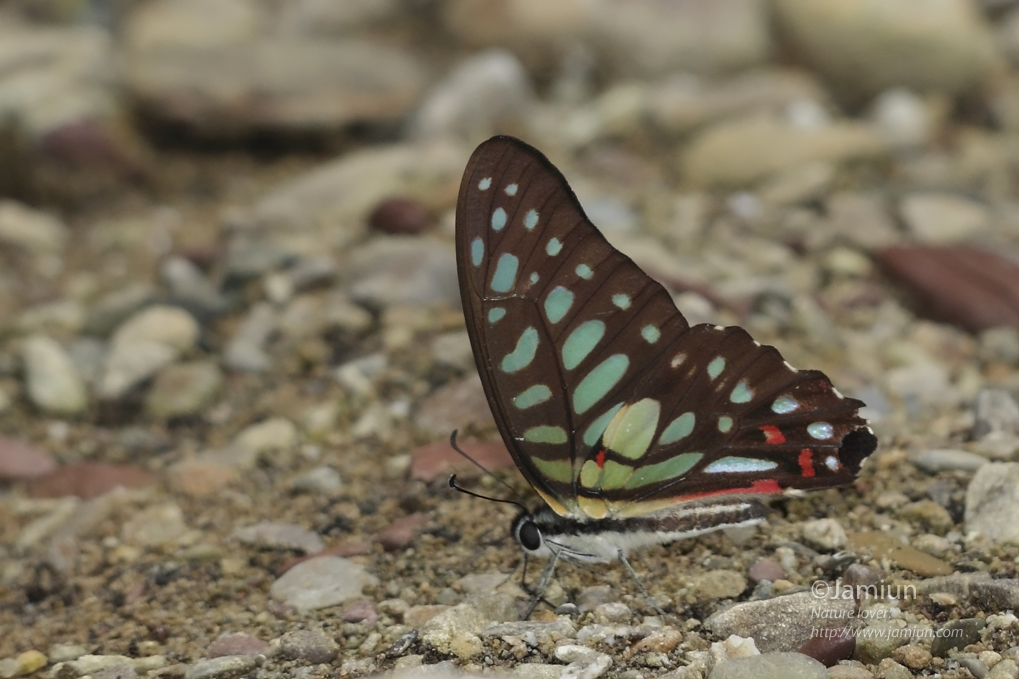
Graphium arycles is the Spotted Jay because it's in the group of Graphiums that have been nicknamed Jays and because it's spotted. The structure of its wings puts it in the Swallowtail family, although its hind wings don't have tails.


Photo by Oleg Jamiun.

Who or what was Arycles? Google has no information. It sounds like a name from Greek literature, but in the Renaissance some writers made up a few names that sounded Greek or Latin while lacking historical precedents in that language. The name does not seem to have been reused as a human's name recently either. Google unhelpfully tries to correct it to "Pericles." 


Photo by Sl_liew. The colors of butterflies' wings come from iridescent scales; they vary depending on their angle to light. Some of this individual's spots look white and some look green.

Various subspecies classifications have been proposed. Graphium arycles arycles is probably the best known, found in much of southeastern Asia and the nearby islands. In India it's rare, found only in the northeastern states, and although some argue that it's always been rare because it's one of those butterflies that need to be scarce, it is protected by law. Further south and east, presumably where its food plant is more abundant, the butterfly is less rare; how much territory the females need for each egg is not known, but males hang out in large groups. G.a. perinthus is found in the Philippines, and G.a. sphinx is found in Cambodia. The subspecies sphinx has green or yellow spots on its underwings where the others have red. Sphinx is typically bigger than the others, but this is a small species for the Swallowtail family. 


Photo from Wingscales.com. This one was classified as Graphium arycles rama. Some older writers listed rama as a species; some demoted it to a subspecies. Recent documents online don't recognize it at all.


Photo by Stijn_de_Win. As in many Swallowtail species, males spend a lot of time sipping water from shallow puddles or damp mud. Both sexes drink fresh water. Males also drink brackish water. Like many composters, they like salt enough to be positively attracted to human sweat. Females, whose colors are typically lower-contrast than males in many Swallowtail species, flit around the edges of these bachelor groups ("leks") and check out their prospective mates. So this photo looks as if it shows a courting couple...but the life cycle of this butterfly is undocumented, at least on the Internet.


Photo from Khao Sok National Park Thailand. The small one is identified as Discolampa ethion thalimar. 

Not much has been published about this species beyond photos of the adult, usually males at puddles. Photos of the caterpillar are available from a few non-sharers. They show it as a sort of minimalist Swallowtail caterpillar, pale greyish green, resembling an in-folded leaf against the living leaf it is eating, with one small eye spot at each side of the hump, tapering toward the back end. Google found no descriptions or images of the eggs or pupae of this species.

Sunday, November 10, 2024

Link for 11.8.24

It started out as a web log, but picked up only one link...

Health

People are claiming for the "carnivore diet," "meat three times a day," the same benefits people have claimed for the low-fat, vegan, complex-carbs-based McDougall Diet. 


Well, I'm biased. I've never had any of the major chronic diseases, like arthritis and diabetes, that either diet is supposed to cure, so I can't speak to that, but I can say that I feel groovy on the McDougall Diet assuming clean fruit and vegetables--which you can't take for granted these days--and lose my appetite on any diet that calls for a lot of meat, butter, and eggs. Which way of eating more natural food and less overprocessed junk appeals to an individual may be genetically predetermined.

But how can a high-fat, carb-free, high-protein diet offer any of the same benefits of a low-far, high-complex-carbs, low-protein diet? Our bodies adapt to the natural food available, to some extent, but how could radically different balances of nutrients relieve any of the same chronic conditions? 

I have a guess. You can have minor recurring symptoms like heartburn, indigestion, irregularity, and that sluggish brainfogged feeling, on any diet if you don't drink enough water and get enough exercise. You can have a major chronic condition that's caused or aggravated by reactions to chemicals in processed foods, maybe monosodium glutamate; that would be relieved by almost any planned diet of natural foods, though bacon... Or it could be the glyphosate. In the 1980s people who ate the McDougall Diet felt great, and many were in fact healed of chronic conditions. Today people who follow the printed instructions for the McDougall Diet feel terrible, and many have flare-ups of chronic conditions. And when they went on uncensored Twitter and tweeted about how much better they felt within days after going to some place that banned glyphosate spraying, or at least banned spraying on food, everything became crystal clear. 

If you feel ill when you eat plain raw fruit and vegetables, and better when you eat a lot of meat, butter, and eggs, I'd recommend assuming it's the glyphosate. Our primitive ancestors did not eat meat every day, though if they domesticated fowl they might have enjoyed an egg for breakfast every day. They might have ungratefully called vegetables starvation rations, but they would have had more vegan days than meat-feast days. That people are trying to live entirely on meat tells us something about the chemicals sprayed on crops these days, not about the benefits of a plant-based diet in et per se. If fruits, vegetables, nuts, and grains were unsprayed, these people might feel even better on a plant-based diet than they now feel on a meat-based diet. 

I wish the best to Dr. Berry (though now the idea of a science-fiction "doctorberry," a fruit with some sort of medicinal benefit, is stuck in my mind). I don't believe eating meat at every meal is sustainable for the human body, but meat and eggs contain far less glyphosate than sprayed foods so it's possible that some people need to do a cleansing "carnivore diet" before gradually reintroducing plant-derived foods to find out which ones are clean enough to be tolerated. 

God have mercy on us.

Poor Dr. (John) McDougall was too old to wrap his mind around this, but I'd like to see Craig McDougall work with it to move us all forward. Vegan diets harm people who can't buy or even grow glyphosate-free vegetables! Berry talks very frankly and specifically about the extent to which his digestion controlled his "testosterone-poisoned" emotions, and I'd like to see psychiatrists pick up on this, too.

Book Review with Reminiscence: The Walkabout Scribe

Title: The Walkabout Scribe

Author: Jill Penrod

Date: 2017

ISBN: 978-1386239673

Quote: "You said you were going to stop him from going walkabout across the country. He just did exactly that, with your blessing."

"Walkabout" is an Australian word; this novel is set in the United States. "Walkabout" traditionally meant walking through often hostile desert country; the pampered young people in this novel start out with two cars and then add more companions by plane. Errum.

Apart from that, the story takes place at a farm. Kincade, who spent his teen years being his mother's private nurse, wants to take a road trip--with lots of prayer and writing time of course--looking at a world that's as different from a hospital room as it's possible to get. The adults having this conversation about him have just planned the trip for him, giving him errands that will keep him busy visiting family friends and relatives. His second stop will be at "the farm," a real farm where various students work and hang out for parts of the summer, where he'll meet Priscilla.

The author wants us to know she spent some time creating the fictional Priscilla. (No, she had not been perusing either my blog or Priscilla Bird's.) The time paid off handsomely; Priscilla is as memorable as Jo March, and in fact has much in common with Louisa May Alcott's heroine. Priscilla is as serious, prematurely mature, a young Christian as Kincade, even a fellow introvert. The personality difference that will allow her and Kincade to have lovers' quarrels through this full-length novel are between Thinking and Feeling. Priscilla has planned her young adulthood: after earning high grades and a bachelor's degree in chemistry, she's going straight into graduate studies in chemistry. There's just one small problem. Priscilla does not actually like chemistry.

Well, join the throng, the reader may think. I certainly think that. I dated a chemist in my twenties; we ended the relationship yelling "You should get counselling!" at each other--the utterly eighties thing to say when you merely thought about half the men in Washington were more attractive than the first one who'd dared to ask you for dates toward the end of your ace phase, or some similar denouement, but no real grudges were earned or held. And I would say to The Nephews that I don't believe anyone really enjoys being a chemist these days. If you just enjoy the richness of the mineral and physical world, and want to explore it, that's great; you merely have to earn a good living doing something else. If you're going to get a full-time job to which a MS in chemistry is relevant, your choices are teaching, or working on chemical poisons for Big Ag, or working on almost equally vile chemical medications for Big Pharma. If you plan on teaching chemistry, all the good jobs teaching college students who are actually interested in the subject are taken, and enough high school kids hate chemistry that one of them will probably want to destroy you in the first year. If you plan on working in "the industry," you're going to sell your soul. 

Honestly I think the chemist I knew was happier tramping from door to door raising funds for Clean Water Action. He never liked any of his jobs or co-workers; he'd done well enough as a student to get work at a community college one year, before the students clobbered him with uniformly low evaluations, and then at a prep school, where a couple of them destroyed him with exaggerations of a teaching mistake he'd made. They were classy chicks; if they'd been less well brought up it would've been sex, which today's trashier type of girl students now use even against women. And he really had no talent for teaching, poor fellow, he only had too much of a conscience to want to work on the projects for which the corporations were hiring. Something opened at Eastman and he was one of over two hundred qualified chemists who didn't get called back after packing into Kingsport to apply. And yes, I do think that both he and I needed some counselling, though fortunately only the kind people get from their elders. We were well enough brought up not to need lawyers.

If the dismal job prospects ahead of her had been what was on the fictional Priscilla's mind, she would have been an interesting character. But possibly fear of the Evil Tetrad (Bayer, Lilly, Merck, and Pfizer) was at work in the editing process. Priscilla has nothing to say about what she's learned about the current state of the field of chemistry and why any reasonable young person would want to move out of it before it's too late. She's only lonely. She wants a boyfriend. She's not interested in any serious career because in her gawky, geeky body the hormones are finally starting to seethe. She's too well brought up to say it in too many words but she's aching for an excuse to drop out of school and have babies.

Is that a responsible decision, young women of the world? There are those--selfish people who want grandchildren right away--who will say that it is, because, by the time you're earning enough money that it's reasonable to have your baby, you might be too old. And they may be so far out of touch as to suggest that a BS in chemistry is enough education.

Realistically? I don't think. A BS in chemistry was enough education to get a person hired as "chemist" or "pharmacist" in the neighborhood drugstore, once. Or enough to get a person hired to teach general science or elementary school classes, which are less hostile than gangs of teenagers pushed to study subjects they hate. But those jobs aren't available any more. A BS in chemistry could be just enough to make people think a person couldn't possibly fit in with the rest of the crew as a stock clerk, factory hand, or grocery bagger.

Anyway, Kincade is too grief-stricken to pay much attention to the young women at the farm, but Priscilla is attracted to him and immediately shows it by becoming clumsy, selfconscious, and convinced that everything she says is the wrong thing. A person in that state of mind is likely to say a lot of wrong things. They seem more like enemies than like friends to the other young people at the farm, but when Kincade resumes his trip, Priscilla packs up her own car and takes her own road trip, a day or two behind him.

This being a wholesome Christian romance, they really have bonded through their bickering. When they finally meet, they won't want to part, and their friends will be so eager to marry the two nerds off to each other that two of them will fly out to join them so that they can travel as two carloads of males and two carloads of females. So much for prayer, meditation, and finding out what God really wants them to do with their lives. 

The danger for young people who have been seriously practicing celibacy, as responsible Christians, is that they can "fall in love with love" and rush to have babies they can't afford. Hormones really howl when people refuse to indulge their hormonal urges--the more serious and sensitive people are, the more hormonal--and, after all, while very few students have lived long enough for anyone even to guess how well they'll do their jobs, likewise, very few students have lived long enough for anything to be seriously said against them, as Partners for Life, except that they're young. 

When I consider some of my school friends...It is not possible to look at a twenty-year-old and predict what he or she will be like at forty. I knew this when I was twenty. It was why I was commitment-phobic. I already knew that some of the people who seemed most likely to succeed, at twenty, were going to have the most miserable adult lives, and some of the people who seemed like hopeless cases at twenty were going to pull themselves together and have admirable adult lives, and there was no way to predict which. 

When I was twenty, dozens of people were telling me that "Dudley Do-Right," who was in all the same church college activities I was, so we were friends, would be just right for me if he ever grew into his feet; I didn't have to listen to it, but later I learned they'd been telling him that I'd be just right for him if I ever grew into my bosom. We did become less awkward and spotty during each year at college. By age twenty-five we had even become what other adults not only recognized as being adults, but attractive adults; though when I met Dud, age seventeen, I couldn't imagine any such possibility for him or for me. Sometimes I'd look at him, and apparently sometimes he'd look at me, and think, "Well, well, he/she doesn't look bad at all any more! Who would've thought it?" Then these thoughts would answer themselves, in minutes or hours, with "But even if we've proved that there's no chance of our having had any common ancestors in the last two hundred years, we must have had more than one before that time, because HE LOOKS LIKE A RELATIVE! Urgh ick how could I even have thought about him as a prospective mate! What a disgusting idea!" People always thought an old snapshot of my father was a bad snapshot of young Dud. People who'd met his family sometimes mistook me for his sister, likewise. So although we'd practiced celibacy long enough to have moments when our hormones seemed to be screaming that they'd settle for anybody with whom a baby might be made, those hormones weren't making a very strong case. We worked well as a team and felt more attracted to other people, and other people didn't want to accept that. And I really had started to convince myself that all of those older people knew something I didn't, that all of those stronger attractions to twenty or thirty other boys were just snares and delusions, that Dudley Do-Right was my beshert even though the idea of dating each other made both of us become awkward and show each other our most repulsive aspects...when Dudley Do-Right taught his first freshman math class, and the word got out that he was going to have to marry the freshman whose gender was not obvious to the eye. It did have a girly given name, so I suppose it had looked more like a girl at birth, but girls were about as likely to think it was a cute boy as boys were to think it was a cute girl. The kind of Christians who liked to play matchmaker had almost talked me into burdening my life with a man who wanted that

It didn't end there, either. When we were in our thirties I was certified as a legitimate massage therapist; I already had street cred as having "cured" various effects of stress and tension, so I'd studied the science behind those "cures." Before the sex trafficking scandal broke, more people were advertising "erotic massage" in Washington than were advertising board-certified therapeutic massage, but every week two or three tiresome men called my voicemail line to make it clear that they thought it was all the same thing. And one week I listened to a whole voicemail message, bouche bee, hearing a familiar voice spouting the tediously familiar line. "I don't want to get involved with the kind of people who do erotic massage but I'm told some massage therapists can be very understanding about the problems in a marriage..." Most massage therapists want to throw heavy objects at men who leave that kind of messages; some of us even learn techniques that cause enough pain to get their minds out of the gutter if they've failed to identify themselves as lousy creeps and set up appointments. But yes, it was none other than Dudley Do-Right, who had married the androgynous freshman, now cheating on it. The kind of Christians who liked to play matchmaker had almost talked me into imagining that I wanted to be married to THAT. 

Having inherited that Irish temperament, I laughed. Like a loon. Like Kamala Harris. I replayed that message for my husband and pawed the air and whinnied. I never called Dud back, but if he ever reads this web page I want him to know that I, we, did listen to the message. 

In novels, all of which take place in the Neighborhood of Make Believe anyway, it's possible for Kincade and Priscilla to be sure they're in love before either of them has any idea what they're going to do for a living. When they stop bickering and admit they like each other, they can call that love, and in the fantasy world of romance novels everyone is lovable, so it will be love. In real life, there are people who've chosen to act in love, and can thus claim they've loved, one person from the age of thirteen, here and there, now and then...and then there are normal people. 

Even in fiction it seems to me that no girl who is scrupulous about paying her own way at twenty-one, as Priscilla is shown to be in this novel, is likely to be pleased with the results of depending on a man to support her children. It's pleasant to happen to fall in love with a rich person, but people who are going to produce babies should be certain of their own ability to support the said babies if the babies' other parents die and their estates are gobbled up by bankers. Kincade and Priscilla clearly have a similar kind of faith. The Walkabout Scribe is clearly written as part of a series, or saga, in which readers will see them mature and no doubt discover along with them that they have some talent for some kind of work they can do together, to build a home and provide for their baby before they have one. As it is, pairing these two late bloomers off before either has any idea what they want to do for a living seems irresponsible. They may be old enough to marry each other, legally, but as individuals they've been presented to readers as having managed to live more than twenty years as children.

I suspect Jill Penrod was baiting some of the kind of overzealous feminists who agree with today's young men that no woman should ever plan on being a full-time mother. How else could she have even a smart child like her fictional Priscilla think that she didn't want a profession so much as she "wanted a person," i.e., a baby-daddy. As long as a girl is naive enough to think she can depend on a man--never mind on his ability to choose monogamy, I'm talking about his employability or even his physical life--for twenty years after starting a baby, she's too young for two-person dates! Girls, and boys for that matter, may "want a person" more than they want a job. Many people think sex is more fun than work, though the emotional "high" of work lasts longer. But it's irresponsible to indulge in "wanting a person" with whom you can produce a baby until you are prepared to rear that baby. Wanting to switch from chemistry to medicine or engineering, or even a step-down job in a store or factory, is reasonable, but Priscilla needs to keep her mind on the choice of which

So. Final verdict? This book is well enough written that instead of rushing through it thinking "Oh, another Teen or at least very Young Romance," I found myself engaging with these characters and thinking seriously about what they ought to do with their fictive lives. That means it's well above average. I don't want readers to agree with the characters in The Walkabout Scribe or imagine that I do, but I can guarantee them that it's a well written, lively, thought-provoking Christian romance. I don't think anyone who wants a Christian romance will be sorry if they buy this one. And I find myself wanting to read the rest of the series, to see what Penrod has in mind for her characters. As regular readers know, that's very far from my usual reaction to romance novels, even good ones. This writer should go far.

Sunday Post: Happy Shall He Be

No, of course the Bible does not teach that we're supposed to kill our enemies' children. Or even applaud when their other enemies do. 

But it does say...

As explained at https://www.hillfaith.org/contradictions/contradictions-no-god-does-not-glorify-killing-babies-in-psalm-137 , in its historical context, the singer was not urging people to kill babies. The song was recognized as a Psalm and included in the Bible because the singer accurately prophesied the downfall of Babylon. 

Christians have long celebrated the idea of a "spiritual Babylon," the realm of evil, temptation, greed, violence, falling before the wrath of God.

"Babylon falls! 
Ho, ho, ho, Babylon falls!
Open up your eyes and Babylon falls!
Rise above the lies and Babylon falls!"

"All her merchants stand with wonder:
'What is this that comes to pass?'
Murmuring like a distant thunder,
Crying, 'Oh, alas, alas!'
Swell the sound, ye kings and nobles,
Priests and people, rich and poor!
Babylon is fallen, is fallen, is fallen!
Babylon is fallen to rise no more!"

These songs were not written to express schadenfreude at the destruction of a literal city, but to rejoice in a blessed hope for the destruction of corrupt systems, evil practices, even of sin itself in the Final Judgment. Imagine never being tempted to do things that make you feel guilty again! Ho, ho, ho, Babylon falls! 

Is this what we're meant to learn from Psalm 137? I think the original intention was to remind us that some unknown slave, possibly a bereaved parent, was blessed with a vision of the fall of the real, historical Babylon where person was enslaved. We can draw analogies between such historical events and our spiritual lives if we like. Such analogies may or may not be useful to anyone else. 

Kathleen Norris told how she had seen this type of Psalm work for a very young Christian, a girl annoyed by an obnoxious older boy. The Bible contains a selection of "cursing Psalms" that foretell the ultimate punishments for sin in melodramatic detail, and an older person advised the girl to join in "praying the Psalms." After reading a few vivid descriptions of what awaits the unrepentant sinner, aloud, the girl started to feel sorry for the wrongdoer: "Oh, stop! He's just a college kid!" 

That's one of the salutary effects Psalm 137 can have for us. The sinner in Psalm 137 is portrayed, atypically, probably with literal truth, as a rich woman who demands that people who work for her should seem happy. Speaking to someone who didn't feel like singing, very likely the mother of a child who died in a prison, a "barracoon" for slaves waiting to be sold, this woman said, "Sing us one of the songs of Zion." One of the consolations of being sold as a slave in a foreign country was that the slavemasters didn't understand the words in the slaves' songs, and so this nameless slave made a song just for all the victims of emotional bullying by people who are not content with good work but presume to demand control of the workers' moods. Anyone who's ever been ordered to "Smile!" has a right to pray, or chant, or sing Psalm 137 all the way through...but in the absence of a prophetic vision, how many of us actually wish any harm to the emotional bully's children? From quarrels among adults, were we not taught to spare children? Psalm 137 can remind us that our anger, though just, has certain natural limits.

C.S. Lewis offered another way to read Psalm 137 that may be even more helpful for people who aren't comfortable with the reality that our bodies are built to feel anger energy. It was not at all original with Lewis; only his words, in Reflections on the Psalms, were anything new to most of his readers. Victorian Christians, most of whom weren't interested in the history of any ancient tribes but their own, were familiar with the idea that most of the Old Testament should be read as metaphors for the spiritual life. The "little ones" of the "daughter of Babylon" did not have to be imagined as human children. They could also be imagined as the little temptations that set us up for the big ones--the temptation to go to the party where the temptation to start an addiction or an unwanted baby will be found, say. The temptation to eat heavily at night that makes it so easy to oversleep and be unfit to work the next morning. The little things that can only be called sinful in a particular context where we know very well that they were sinful choices. Show them no mercy, Lewis said. Bash the little monsters' brains out.

I don't believe it's good for either our mental health or our spiritual health to shudder away from reality, including the reality that somewhere in ancient Babylon a slavemaster who emotionally abused her slaves received a punishment that seems disproportionate...to everyone but the slave. 

I don't believe that the slave wrote that Psalm in a spirit of detachment or compassion. I believe he or she was a grieving parent. I can picture the person's face, already haggard and baggy-eyed from weeping, becoming really ugly during the performance of this song. You want "happy:? God will show you "happy"! The foolish daughter of Babylon probably clutched her pearls and observed to the other women who hung out together, even in the richest families, seeking safety in numbers, that "Those Israelites are savages! Look at those eyes!" Then she made efforts not to look at her slaves' faces, and the slaves were glad. And when she got what was coming to her, they said with feelings of great relief, "Righteous are the judgments of the Holy One." The singing and dancing waited until they were allowed to go back to their ancestral land as free men and women. But some people surely did think, during the historical collapse of Babylon, that nits make lice and one less Babylonian was a good thing, even if it was a baby a soldier killed before driving its mother into a shed full of newly enslaved Babylonians. Serve'm right. I believe that kind of thought comes from our mortal, sinful nature, along with our appetites for food, sleep, sex and suchlike, and like them it needs to be disciplined, but accepted. 

The Bible is not as "spiritual" a book as some people think they want. It was written by and for people living in bodies. It advised people who thought that ascetic practices might impress God, "It is vain for you to rise up early, to sit up late, to eat the bread of sorrow; for so God gives to His beloved sleep." If young people torture themselves they are more likely to make themselves ill than they are to make themselves patient and "spiritual." Bodies go through a stage of passion before they reach a stage of patience. No "spiritual" benefit is achieved when people in their twenties make it a goal to feel the way people in their fifties feel. The detachment from emotions our minds achieve when our blood hormone levels subside does make it easier to use whatever wisdom we have gained by living long enough to become middle-aged, but it is no more virtuous than grey hair is. What the Bible shows us is that young people need to offer their passions and energy to God, and older people need to offer their lack of those to God. That may mean suppressing what our bodies give us, or it may mean using it. 

I believe the slave who first sang Psalm 137 may have been angry enough to enjoy the thought of the slavemasters' babies being killed. Enslaved people are likely to have feelings like that. This is why we should only ever allow slavery, as Moses taught, for people who sell up to seven years of their lives to pay their debts, if we allow it at all. That lesson needed to be in the Bible, although historically people managed to ignore its being there. It needs to stay. It needs to be hammered into our minds. 

It has relevance today, when the surplus of humans relative to the technology we imagine can replace human labor is allowing some people even in English-speaking countries to think that "people have too much freedom." Generations of English-speaking people have held it to be a self-evident truth that all people are endowed by their Creator with rights to life, liberty, and the pursuit of happiness by any means that does not materially harm other people, but some of us are feeling the effects of overpopulation directly. Some of us, unfortunately including the most talented (and obsessive) technologists, have been given reasons to resent the anti-intellectual types who would rather say that someone is "weird" or "crazy" than do the research necessary to understand what the person is saying or doing. 

So we have people echoing the nineteenth century thinker who wrote to John Stuart Mill that the best thing for "the masses" would be to allow them to enjoy the pleasures of life while young and then die. We have people observing "scientifically" that people are more likely to say they're happy in countries where they can't afford choices and can expect punishment for complaining, arguing that people would be "happier" if all the choices were made for them. We have a resurgence of that loathsome arrogance that imagines that "We, the superior people, can and should decide what our inferiors 'need,' give it to them, and tell them to be happy about it. We don't have to respect their right to choose." 

Anyone who is thinking that way needs to meditate on Psalm 137. We don't know whether God will use people who think that way to oppress and abuse and enslave one another, but it would certainly serve them right if God did. It would be better if people who want to be the "planners" and the "gatekeepers" could learn some humility from this Psalm, and back away from the idea of interfering with anyone else's right to do anything that is not materially harming someone else.