Monday, November 27, 2017

Book Review: Great Baking Begins with White Lily Flour

Title: Great Baking Begins with White Lily Flour


Author: The Federal Company

Date: 1982

Publisher: Meredith

ISBN: none

Length: 93 pages plus 3-page index

Illustrations: many color photos, some drawings

Quote: “This cookbook celebrates a century of great baking with White Lily Flour.”

In the case of the company that bought out J. Allen Smith of Knoxville, “Federal” was merely a trademark—though one that seemed congruent with Smith's faith in the federal Food & Drug Administration. This is a private company that sponsored the publication of a Better Homes & Gardens-style cookbook featuring highly refined, bleached-white flour and cornmeal. While we all learned in the mid-twentieth century that the appearance of light brown or yellow bran in flour and meal mean you're getting more fiber and nutrition, in Smith's day (the 1880s) there was a legitimate concern that consumers might be getting straw and dirt.

“Cornmeal mix” was another political issue around the turn of the twentieth century. Although the first European immigrants brought wheat to the Southeastern States and did their best to provide themselves with wheat flour, most of the Southeastern States just don't have the kind of drought-ridden climate wheat needs to be a profitable crop. Rye, buckwheat, sorghum, and millet did better in a damp climate, but the native grain that was relatively easy for Southerners to produce at home, year after year, was maize—which rather quickly came to be what Americans mean by “corn.” It was delicious, and as long as people were getting more protein and B-vitamins than they really needed, the niacin-blocking effects of corn bran were not a problem.

However, by the turn of the century some cases of pellagra were found among people who ate cornbread every day and seldom if ever ate “store-bought” grains. Storekeepers seized the marketing opportunity and backed a campaign to give white flour biscuits (which are extremely simple carbs, and close to being empty calories) snob appeal, to associate pure cornbread with the malnourished, ignorant, and consequently sickly people who developed pellagra.

In Virginia, when I was growing up, even older people denied having ever actually known anyone who had pellagra; it was imagined as something people got in Alabama or Mississippi. Nevertheless, some older people bought into the idea that mixing in a little bleached white “store-bought” flour somehow made all cornmeal products “better.” Mixing in whole wheat flour with plenty of wheat bran does boost the nutritional value of cornmeal for those who can digest the wheat gluten, but mixing in white flour...well...white flour plus water equals paste, and adding a bit of that paste to cornbread makes it less crumbly, but it's still junkfood.

Traditional Southern cornbread does not have to be made with an egg, or eggs, and milk or buttermilk, but traditional Southern farms tended to be lavishly supplied with those things, and using them does add some extra niacin to offset the niacin-blocking effect of the corn bran. People who used milk and eggs in their cornbread were not usually the ones who developed pellagra. However, some of those people became the stereotypical grumpy, dyspeptic senior citizens who don't realize that they're losing the ability to digest cow's milk and that that's what's making them feel grumpy.

To neutralize the niacin-blocking effects of corn bran without purchasing wheat products (and ingesting wheat gluten), the traditional method was to “grit” corn by removing the bran. This was done by soaking dried corn in a mix of water and wood ashes until the bran slipped off, thereby producing hominy or “grits.” Fiber and flavor have to be added to hominy by mixing something else with it. This is not a problem for creative cooks. However, it's a problem for the White Lily Company; all their recipes call for the Cornmeal Mix with a generous dose of bleached-out wheat gluten mixed in.

You can of course make any of the cornmeal-based recipes in this book with pure cornmeal, adding leavening and salt, instead of using White Lily Cornmeal Mix. Some years, the White Lily Company has even packed pure cornmeal that was fit to use for that purpose, “self-rising” (having the leavening and salt mixed in) or plain; I've used it and liked it.

Here are some tips for tweaking:

1. The rule for substituting plain cornmeal for Cornmeal Mix or “Self-Rising” cornmeal is to add 1 teaspoon of either baking powder or baking soda and 1 teaspoon of salt per cup of meal. You can reduce or omit the salt, especially if making a sweet recipe, but you need the leavening. Use baking soda if something else in the recipe is acid (buttermilk, tomatoes, pineapple); otherwise use baking powder.

2. You probably also need to heat all-cornmeal dough fast to get a nice light texture; if it's a sweet dough that will scorch if baked at 400 degrees, bring the liquid ingredients to a rapid simmer or slow boil before combining them with the cornmeal.

3. It's actually possible to substitute plain cornmeal even for flour in some of these recipes. I've done it. The results will be crumbly but tasty. Some all-cornmeal recipes hold together better than others; egg, banana, apples, to some extent pumpkin or sweet potatoes, help bind cornmeal bread together, and recipes suggesting each of those options are given in this book. (Flaxseed meal also helps bind cornmeal bread together, but it's not discussed in this book.)

4. However, the finished product will be crumbly. There are ways to get all-corn tortillas, fritters, or pancakes to hold together well enough to be served intact, but you must forget about carving perfect slices with a knife. Gluten-free cornbread is easiest to eat with a spoon. It can be crumbled into milk like breakfast cereal (kids love that), or set on a plate in between juicy vegetables to soak up their juices. Sweet dessert breads made with cornmeal can soak up fruit juices.

So, believe it or not, as a gluten-free cook I've used this cookbook and liked the results...but I had to tweak every single recipe I used. All recipes in this book, as printed, contain wheat gluten and will make celiacs sick.

A final controversy seems petty when compared with the nutritional questions about cornbread...On page 10, the company tries to straddle the Mason-Dixon Line by recommending, for “Basic Corn Bread,” 2 cups of Cornmeal Mix and “1 tablespoon sugar (optional).” If you don't add the sugar, no points for guessing, your cornbread will have a nice savory salty flavor, rather like biscuits. Yes, this is the way traditional Southern cornbread is supposed to taste—the savoriness was often enhanced by using the fat from smoked and/or salted meat for that “shortening, melted,” which made a really salty cornbread if pre-salted Cornmeal Mix was used.

No, the fact that cornbread, by itself, is supposed to taste more salt than sweet, never interfered with Southerners eating all kinds of corn-based desserts...it's just that sweet puddings, cakes, muffins, etc., made with cornmeal, were not cornbread. Salty cornbread was often traditionally eaten with molasses or syrup as a dessert, sometimes topped with fruit or berries like a shortcake. In traditional recipes I've found corn muffins usually made just like cornbread, only with a tablespoon or two of sweetening added per cup of meal.

However, cornmeal works just fine in all sorts of sweet and fruity baked goods. The White Lily Company recommend marbling sweet cornmeal cake with preserves, or mixing corn muffins with pumpkin, or frying corn fritters with cores of fruit. That's a good beginning. Some other tweaks that have pleased me include:

* All-cornmeal banana bread—an unnatural blend of foods that don't grow in the same places, but the textures actually form a synergistic combination, where the well-beaten banana helps both to bind and to lighten the corn dough

* “Nebraska Banana” or pawpaw bread—not so synergistic, and usually I'd rather just eat the pawpaws, but a distinctive dessert

* Chocolate-banana breads—I've tried everything from a decadent banana-chocolate-toffee pudding, to mellower, less sugary banana-chocolate-chip pancakes

* All-cornmeal zucchini bread—not so distinctive, but a pleasant way to use up zucchini

* All-cornmeal pumpkin bread—the Pilgrims undoubtedly ate similar things

* Pecan-enriched cornbread—pecans also enrich a salty cornmeal dough, or they can be mixed with just a bit of dark brown sugar and dark corn syrup, and a good bit of egg, for a cornmeal cake with the flavor of pecan pie

* Corn-based shortcakes—the texture may surprise people, but cornmeal tastes just fine with strawberries, raspberries, blueberries, or peaches

* Corn-based apple cakes or applesauce-spice cakes—applesauce synergizes with either flour or meal, not quite as magically as banana pulp, but with good results

* Corn-based pineapple bread—another unnatural blend, but delicious

Then there are all the “spoon breads,” or puddings that barely form crusts on the bottom but are basically eaten with a spoon. Basic spoon bread contains lots of milk and egg in proportion to cornmeal, and perhaps some sweetening—or some savory ingredients, like the tomato spoon bread suggested in this book. There has never been any rule that spoon bread has to be basic.

And then, of course, there are the savory corn-based baked goods, a tradition that goes all the way back to Cherokee Bean Bread. Bean Bread is made fit to eat by cooking the dried beans (whether they've been ground to meal first, or cooked first and then mashed, which is easier) until they're done before adding the cornmeal. It's still heavy, and I don't blame the White Lily Company for not discussing it in this book—many people who try it don't like it.

Easier to like, and discussed in this book, are the cornbread-based savory treats that feature tomatoes, cheese, sage, onion, peppers, celery, all kinds of meat...again, this book provides only a small handful of suggestions. Cornbread was traditionally stuffed into meat as it roasted and/or crumbled into a dripping pan below the roasted meat, for “dressings,” often with other savory ingredients. When cooking for fewer people in more of a hurry, cooks also mixed small amounts of those savory ingredients right into their cornbread or spoon bread. If the mixture made a stiff dough that was baked, it was traditionally called a loaf or pone; if fried, it was pones or cakes. If it made a batter that baked to a soft puddinglike state, it was still just spoon bread. None of these fancy recipes was as traditional as Real Cornbread, but many of them have been documented in the Southern States for a good long time.

As I review this book, handed down from an elder-in-law, I'm somewhat surprised by the number of these all gluten-based recipes that I've tweaked into successful gluten-free recipes. And yes, in years when White Lily's plain cornmeal has been available unadulterated with bleached wheat flour, I'll gladly testify that it works wonderfully in those tweaked gluten-free recipes. So gluten-free cooks can indeed have...quite a lot of fun with this book.


Happy tweaking!

This is a collectible book; to buy it here, send $10 per book, $5 per package, plus $1 per online payment, as discussed in the "Greeting" post. Four or five more books of this size will fit into one package.

Sunday, November 26, 2017

Book Review: Ten Secrets for the Man in the Mirror

Title: Ten Secrets for the Man in the Mirror


Author: Patrick Morley

Author's web site: http://patrickmorley.com 

Date: 2000

Publisher: Zondervan

ISBN: 0-310-24097-2

Length: 194 pages

Quote: “In this book we will explore ten secrets of happiness for men who want to be happy.”

On the plus side, the ten secrets don't include the trendy false idea that “people” are happier when they're not burdened by (oh, the strain!) having choices. (Reality check: are you? Ever???) Morley's ten “secrets” do at least make sense.

On the minus side, they're not exactly secrets, nor are they likely to be startling. Morley is a Christian minister and “Secret #1” is that many people find happiness in being Christians. The word he uses to sum up that idea is “Lordship,” and the other ten non-secrets are summed up in the words Balance, Vocation, Suffering, Discipleship, Stewardship, Witnessing, Service, Humor, and Love.

It is hard to imagine an English-speaking reader to whom any main idea in this book would be new. In theory someone who'd grown up practicing some other religion, and converted to Christianity, might be unfamiliar with what Christians have traditionally told ourselves about happiness. In practice, in these United States, anyone still practicing another religion has probably been bombarded with information about what Christians believe and how we live, and may feel unjustifiably brave merely for continuing to identify with any other religion.

Christians, however, have not traditionally asked that books about the Christian life be new. Ideas that really were new to Christian readers would probably be unchristian ideas. We look for books that make the same points our grandparents probably made when we were three years old, in ways that address the adults we've become. We do not blame such books for being unoriginal; we praise them for being sound on doctrine.

Morley's book is addressed to men, though written with, of course, the expectation that a few curious women will read it. Most Protestants will probably agree that it's sound on doctrine, though not as detailed on doctrine as the books that remain in denomination-specific publishing ghettos.

And what does he have to say to men? (Did any women seriously expect him to say something like “And of course we must avoid hiring or promoting women”?) Nothing that's totally inapplicable to women or even to children:

“It is on the narrow road of self-denial that we find the broad road of success and peace.”

“[T]he more you give away, the happier you will be.”

“If the mountain was smooth, you couldn't climb it.”

“A man was standing before God...he cried out, 'Dear God! I see all this pain and suffering. why don't you send someone?' God answered, 'I did. I sent you.'”

“To be a disciple means to be 'with Christ.'”

About one thing in this book I'd like to warn readers, not to discourage Morley and not to “pick a fight,” but because the errors in books are so likely to discourage readers and, when the books are Christian, Christians' blandly supporting these books can do new Christians real harm. This error is not, Heaven knows, peculiar to Patrick Morley. It's widespread. It's easily mistaken for Christian doctrine rather than an ever-popular heresy. I've written about this error before; I feel a need to write about it whenever I endorse a book whose writer falls into it. And after reading Morley's account of the super-patronizing, heavy-handed speech he gave a secretary he apparently hired out of pity alone, after which I'd be surprised to read that the poor woman reported for work the next day, I'm sure Morley can handle a little rebuke.

I'm turned off by Morley's assertion that “Everything God has caused or allowed in your life is for your good—to draw you into a deeper love relationship with” [God]. I wonder whether the Christian belief that God can, and ultimately does, bring good out of evil, can be worse explained than that...it can be, of course, and has been. (“The pain,” maundered well-intentioned Teresa of Calcutta, “is Jesus kissing you.” Only those who are both very old (or young) and very small say things like that, even to sick patients, and survive. The patient begged, “Please tell Him to stop kissing me!”)

Let's say this to all the heretics out there who imagine that God “needs” to allow us to suffer: You are positing an awfully incompetent sort of God, a God whose teaching skills lag behind those of  the average fourteen-year-old single mother. I couldn't pray to an allegedly Supreme Being like that, myself. Your God sounds like one of those messed-up Greco-Roman Pagan deities who were always fouling up their own personal relationships and envying mortals' brief times of happiness, whom the Greeks admitted, by Plato's time, that no rational adult could possibly worship.

I can't prove, of course, that this world wasn't made by that sort of God—in some ways this world is such a mess as to support the claim that it might have been made by some sort of slow-learning troubled-teenaged God! When I pray, however, I don't address that kind of God, myself. I address a Supreme Being that has endowed each mortal creature with Consequence.

Because we have Consequence, it's possible for Tracy Smith to become permanently paraplegic, not because God wants or needs Smith to be paraplegic, but simply because Terry Jones chose to be a drunk driver. God is not obliged, or even likely, to keep that from happening merely because Smith is a Christian. There may be times when Christians are warned, “Don't drive down that street, don't dive into that water, don't eat from that dish,” and so they avoid injuries, but those times seem to be more the exception than the rule. The rule is that if the drunk driver is about to collide with someone else at full speed, and the Christian happens to be on the road, the Christian is as likely to be smashed as an unbeliever would be. Not because this experience will do the Christian, or anyone else, any particular good, but because God set the world running according to certain physical laws.

God is not better served by the Christian driver's death than by his life. Mortals are better served by having to adjust to a world where actions have predictable consequences than by living in a world where God mops up every spill, and of course, if Tracy Smith is a Christian who earnestly desires “spiritual growth,” it's as likely that Smith will achieve “spiritual growth” in a wheelchair as it is that Smith will find “spiritual growth” in an athletic career. But whatever lessons God may have to teach Tracy Smith, God could have taught Smith more efficiently if Terry Jones had stayed sober and not maimed Smith.

God is not so stupid as to imagine that people become kind by being ill. God is wise enough to help people who, recognizing that the natural tendency of illness is to make people selfish if not cruel, cultivate the virtue of kindness when they are ill. God could, however, have simply chosen to do other things that we all know are more likely to help people become kind, such as exposing those people to kind companions, if God's purpose had been to make people kind. God's purpose, we see when we think about the matter, is not to make people kind. God made (a minority of) people who want to become kind, and God helps those people when they try to become kind, but really, whether people can be described as kind, selfish, or cruel is evidently a matter of much greater concern to those people than to God.

Some part of the revulsion induced by misguided Christian warbling about how “everything God allows to happen to us is for our good” is disgust with the callousness this twisted thinking produces—the idea that if God allowed my neighbor to be wheelchair-bound, God intended that to be good for him in some sadistic way, so I don't need to hold the door when I see him rolling up to a public building behind me. Some part is also disgust with the infantile self-centered quality of this “me, me, me, it's all about me” thinking. Get it through your head, baby, most of the things that take place during your lifetime have nothing whatsoever to do with you. You are not the center of the universe!

Against the callousness of the Positive Thinking heresy, biblical Christianity sets the idea of “bearing one another's burdens.” The Gospels, measured by length, seem to be mostly about how Jesus dealt with the suffering people He met on His travels; and what Jesus did was not, not ever, to warble about how some heretical, sadistic, feebleminded God intended their suffering to do them good. What He did was help them. Naturally His healing miracles attracted the most attention; and some of those can be duplicated rather easily by any hypnotist or masseur, and some are now replaced by modern medical techniques, and some continue to defy explanation. But Jesus was not limited to “healing.” His miracles met people's felt “needs” even for fast food and luxury items. When a meeting ran overtime He didn't tell people to challenge their habit of eating at a certain time, or choose between staying with Him and going home for dinner, or even use their sense of hunger to sensitize them to the real hunger of famine victims; He took up a collection and gave them “miraculous” sandwiches. Real Christians do real things, and give real things, where Positive Thinkers flap their annoying mouths.

Do real Christians feel a need to lump all “suffering”from “demands of a young family; marriage struggles...job dissatisfaction” on through “A car strikes down a loved one; your home is burglarized” into one category, on the basis of its emotional quality, as if the emotion were the main issue? Jesus and the apostles didn't do that. They responded to each case of suffering that they met in specific, individual terms. (They were not social workers who needed a huge procrustean “policy” to carry out an anti-democratic agenda.) Some people, like Nicodemus, really did suffer mainly from theological questions, and could be helped by teaching them about the Bible. (Jesus must have loved people like that.) Some people needed healing. Some needed to be fed or materially supported. Some needed to be defended against unjust accusations. Some actually needed to be rebuked.

Jesus and the apostles, like modern Christians, met many times more people who needed practical, material help than people who needed to be told about religious beliefs. They did not redirect these people to official charitable programs, although both the Jewish community and the Roman government had those, and although the New Testament endorsed them—so far as they went. When they met people who, despite the existence of organized charity, had material needs, they met those material needs...even felt “needs” for luxuries, like wine at a party, or lunch for people who seem to have been healthy enough to skip a meal.

We read of two similar but apparently distinct incidents where Jesus “miraculously” supplied lunches for audiences of four and five thousand, starting with one small lunch that one follower was willing to share. I put “miraculously” in quotation marks, not because I doubt that Jesus could have supernaturally turned five flatbreads and two fishes into fifty thousand fish sandwiches, but because I find it hard to imagine that He needed to do that. If the one boy had brought a lunch, surely others in the crowd had brought lunch too. Very likely the “miracle” was organizing a lot of people who didn't know each other into an impromptu potluck dinner party; very likely the menu included fruit, vegetables, meat, and cheese as well as bread and fish. Not that it matters.

What we do not read in either of these incidents is that “Jesus then lifted up His voice and said, 'Endure your hunger with fortitude so that God may teach you through suffering.'” He did no such thing. There would be no Christian Church today if he'd done that. And Christians who desire real spiritual life should follow His example.

A Welfare State that systematically trains poor people to depend on the federal government to deliver and oversee everything they “need” is in some ways the precise opposite to a Christian fellowship that encourages rich and poor people to “bear one another's burdens.” If Dorcas, in the Bible, had been content to sit in her hovel and eat the food both the Jews and the Romans collected for poor old people—for which she was certainly qualified, few people in her time ever living to the age of eighty—there would have been no Bible story about her, and, probably, none about the religious movement she supported. (First century Judaism was rife with religious movements, reforms, sects, “messiahs,” all of which were chronicled but then forgotten.) Then as now, there were of course plenty of poor old people for whom all that could be done was to send them baskets of food, and the baskets were sent, and the poor old people mumbled their crumbs and died unregretted. But Dorcas, whether she was still able to walk or not, insisted on working—at least on taking in sewing and mending—and we are told that her life was miraculously prolonged for that reason...and her religious movement became the Christian Church. Biblical Christians must resist the urge to tell those suffering from unemployment, underemployment, inadequate income, or sudden disability, just to go on the dole and shut up. Biblical Christians must find ways to employ them, through which both rich and poor can be positively blessed.

Then again there are Christians whose suffering cannot be relieved by any means we know—people whose medical conditions are not (yet) curable, people who suffer from unresolvable and perhaps pathological “spiritual” conflicts—and for them it may be appropriate to seek some kind of “spiritual growth” or “spiritual benefit” from their suffering itself. Paul suffered, he said, from something he called a “thorn in the flesh.” From a contemporary description of his squinting, and from his own references to “the large letters I write with my own hand” at the ends of letters dictated to other people, some suspect that this was his deteriorating eyesight. He prayed about it, his supporters prayed about it, and after some time Paul felt called to tell his supporters that he had received the insight that his “thorn” was teaching him something about humility. It was appropriate for Paul to report this insight as a message from God. It would not, however, have been appropriate for anyone else to have shoved this idea at Paul. Christians already had the book of Job to tell us that, when anyone is tempted to redefine someone else's suffering as some sort of moral lesson or chastisement, God tells that person to repent and make sacrificial offerings that at least overcompensate for whatever material loss the one suffering may have incurred.

I really think Christians need to develop a zero-tolerance policy for Positive Thinking platitudes uttered when a Christian is in fact suffering.

“I received this e-mail from Albert Absentee: 'My wife is dying, and although we have money to buy groceries we're out of food because I can't leave her alone long enough to walk to the grocery store.'”

“Ah, but Gaaawwwd...”

Silence, fool! What Stupid Stevie Hypocrite would have said, if he'd had any sense, would have been 'Albert, please may I go to the grocery store for you now?' I propose that we as a church work on Stupid Stevie Hypocrite for the next week, until he is on his knees crying real tears, and meanwhile" [dialling], "Albert, may I go to the grocery store for you right now?”

“What exactly is your problem, Stupid Stevie? I don't see a full-body cast or a wheelchair...is something the matter with your feet?”

“Do you think the problem might be that you were discouraged from using your imagination as a child? Maybe a conscious effort to regress and read nonsense stories...”

“Are you by any chance a member of the Democratic Party, Stupid Stevie? Do you need to read aloud, repeatedly, the collected writings of Grover Cleveland?”

(And so on.)

Well...I have now written more in refutation of a quite common error, in an otherwise good Christian book, than Morley wrote within his error. Perhaps, to be fair, I ought to go on to write as many pages in praise of the acceptable majority of Morley's book as Morley wrote while writing about his legitimate Christian ideas. I suspect that your eyes are already tired, and if you're going to appreciate the original anecdotes and aphorisms Morley uses to flesh out his valid ideas, you need to turn to his book now.

It left me cold, but then I'm categorically excluded from its intended audience. Morley is a fairly successful writer. Evidently men's groups, for whom this book is really intended, find it possible to use his books. If they correct for the errors of Positive Thinking and that insufferable speech to the secretary, men's groups will find useful material here.


Another use I can imagine for this book might be for women's groups studying the Gentle Art of Verbal Self-Defense: Read page 149 aloud. (The page numbers are, for no immediately obvious reason, printed in a tiny grotesque boldface font that most adults may not even recognize as being numbers. Page 149 is just before the end-of-chapter questions for Chapter 8, “The Antidote for a Boring Success.”) If an employer had given you that speech, would you have (1) quit right then, (2) got through the day but not gone back in the morning, or (3) begun a sabotage campaign the minute that pompous jackass turned his back? If you had employed someone who's tempted to use the office as a place to vent about her or his problems at home, what would you say that might actually help the employee? Do you feel that 139 words, including two gratuitous “calls” to someone who's already there, by her given name yet, “soften” the message, or would you actually feel, as the secretary, that “I'm feeling overwhelmed by all this personal conversation and I'd rather keep all the private business out of the office” is a clearer, more honest, more respectful version? How can we communicate this kind of idea to men who don't even realize that they are verbal abusers?

Either men or women who want to buy this book here may buy it as A Fair Trade Book. (Despite feeling a need to rebuke Morley, I also want to encourage him.) The standard price of $5 per book, $5 per package, and $1 per online payment offers considerable potential for savings over what you'd pay for the at least eight, probably twelve, books of this size that will fit into one package if you bought them all separately on Amazon pages that may seem to offer lower prices, so feel free to add other books, by Morley or other authors, to the package. 

Friday, November 24, 2017

Book Review: Something to Hold

A Fair Trade Book


Title: Something to Hold

Author: Sharon Stone

Date: 2005

Publisher: Assouline

ISBN: 2-84323-754-8

Length: pages not numbered

Illustrations: black-and-white or sepia-tone photographs by Mimi Craven

Quote: “[W]orking for and traveling with...(American Foundation for AIDS Research), I have met so mnay extraordinary people...traveling with my best friend of twenty-three years, Mimi Craven...We wanted to encourage people to reckon with their feelings; not to be engulfed by them...Mimi and I would like to transfer all of our royalties to AMFAR to help continue research in the ongoing crisis of AIDS.”

For those who don't remember, Sharon Stone was the beautiful blonde star in a batch of really lame movies. Men used to want to watch these movies. Women used to hate sitting through movies whose only redeeming feature was brief images of apparently naked blonde-flesh, hate the idea that men who usually picked decent movies to share with us were subjecting us to all this badness just because they were attracted to Sharon Stone. Therefore a lot of women our age dislike Sharon Stone. I didn't like her movies any more than anyone else did, but I never blamed her for doing what young actors do, either.

The actress's and her friend's gift to their favorite charity was a book of pretty pictures of angel sculptures in memorial gardens, with captions like “even angels need new friends” and “I see you around every corner.”

I'm tempted to say “Nufsed.” Our entire demographic generation know who Sharon Stone is. You want to read her book, or you don't. We also know how AIDS is transmitted, once but no longer by medical treatments, now by the voluntary behavior of adults who've had plenty of time to learn why their voluntary behavior was stupid. You want to support AIDS research, or you...well, put other charities ahead of it on your list. Either way, whether a book of photographs of stone angels helps you process grief, or not, is not something a book review can predict. What you won't love is that there's only one picture of Sharon Stone, on the little ribbon of paper the publisher unaccountably chose to substitute for a dust jacket, in the whole book.

But in fact I do find more to say about my copy of Something to Hold, because what I bought in aid of a local charity turned out not to be merely a famous actress's fundraiser, but a unique, hand-collaged creation by an anonymous local author. (I know what you're thinking; if that author has a screen name, it's not “Priscilla King.”) After the angel pictures, which are untouched in my copy, apparently Stone wrote down some thoughts about angels that the local author found doctrinally unsound, so the local author carefully hand-wrote a Bible study about angels on bits of paper s/he glued over the original text. The last eighteen pages of my copy are the work of an evangelical Bible student. Apparently Stone was content to address the topic of angels in a bland, general, New Agey way, but the person who collaged my copy added a final section redirecting the glory to Jesus.

Well... Stone wrote, “Angels are...Ongwheonwhe in the Amerindian language: the 'Birds People.'” Which “Amerindian” language? Analogue: “Information that's presented in a way that makes it too incomplete to verify is Merde in the European language”? I can see why the former owner lost patience and started collaging. It's not that there is or has ever been any shortage of books that contain vague, incomplete, or just plain wrong information about “Amerindians.” It's that the angels in the main section of the book are very real and concrete. The words that follow this collection of angels needed to be concrete and factual too, and by covering the vague New Age wordage with a Bible study, the anonymous evangelical writer has added an upbeat climax to the angels where I suspect a vague denouement used to be.


The unique hand-collaged book is available only in real life--readers have to see it for themselves. What I can offer online is Stone's original book. This is a book that seems to generate strange reactions. Apart from the hand-collaging, there's also the way Amazon tried to redirect me, when I set up the photo link, to two other books whose author and title are irrelevant to the search string I used...Some people really don't like Sharon Stone. Some people really don't like New Agey angel literature. Some people really don't like AIDS charities. If buying it as a gift, please make sure the recipient doesn't have any of those reactions. 

To buy it here, send $10 per book (it was designed as a collection piece) plus $5 per package plus $1 per online payment, and we'll send $1.50 to AMFAR. Four copies will fit into one package, and if you order four copies we'll send $6 to AMFAR.

Thursday, November 23, 2017

Book Review: The Doctor's Walking Book

A Fair Trade Book (excellent!)


Title: The Doctor's Walking Book

Author: Fred A. Stutman

Date: 1980

Publisher: Ballantine

ISBN: 0-345-28764-9

Length: 111 pages

Illustrations: some black-and-white graphics

Quote: “We are under-exercised as a nation. We look instead of play. We ride instead of walk. Our existence deprives us of the minimum of physical activity essential for healthy living.”

President Kennedy said that. By 1964 few people seemed to want to remember that he'd ever been a controversial politician—he had—but everyone had had to admire his physical fortitude. Undoubtedly he'd be disappointed today to see that, although “physical fitness” has grown from a fad into an industry, masses of Americans are still couch potatoes. Ashamed to be seen walking three blocks to the store, many consume food as conspicuously as they do gasoline, and what conspicuous hiplines they develop.

Fred Stutman, reportedly a family doctor in Pennsylvania for 54 years and holding, tried to offer help, telling the public how walking instead of driving could help them “Add years to your life; lose weight and improve muscle tone; ease everyday tensions and stress; lower blood pressure; increase energy and physical endurance; reduce risk of heart disease.” And a few people did buy this book...but...

The reason why some simple, sensible ideas aren't more popular than they are is that they lack sex and snob appeal. How do you live on a lower income, even an impossibly low income? You just ignore all the items and ideas that are being marketed so hard as having sex and snob appeal, and do simple, sensible—boring--old­fashioned--dowdy things. Like walking instead of driving. The actual walking can be a pleasure in its own right. You still have to have a stronger than average personality to ignore the social pressure: “Why are you walking? Did your car break down?”

To The Doctor's Walking Book I suspect we need to add a campaign to add sex and snob appeal to walking, to get young people asking, “Why are you driving...all by yourself, not hauling furniture or anything? Do you have an injury? Are you...ill?”

Speaking as one of what P.J. O'Rourke conveniently identified as “the freshman class of baby-boomers,” I cordially invite the young to discover that driving to work or school is something for old people to do. Pathetic, broken-down old people whose elephant ankles puff out over the tops of their ugly pointy-toed shoes, who probably smoke, who certainly eat a lot of saturated fats, very likely from pork, and whose idea of conversation is blurting out what they believe to be their friends' secrets—as if they had friends, as if the stories they repeat about their acquaintances were secrets, or as if those things were even true. The “need” to drive three blocks instead of walking is definitely part of the syndrome that contributes to that kind of repulsive old age, so it deserves to be stereotyped with the ugliest aspects of that syndrome.
Anyway: I was not aware of The Doctor's Walking Book before 2015, but if I'd read it in 1979, even then it would have told me absolutely nothing new. In 1969 my parents were telling people:

“When we walk,the skeletal and muscular systems perform together.” (Oh, right, so they would have phrased it as “When we walk, our bones and muscles work together to build each other up.”)

“Walking can lower blood pressure, thus reducing or eliminating the need for drug therapy...Walking is one of the best ways to get rid of hostilities and reduce tension.” (They would have said, “Walking clears your head and helps you feel better.”)

“Walking increases the elasticity of the blood vessels...” and is “one of the factors that...decrease the likelihood of clot formation.” (They would have said, “Walking stirs up the circulation, keeps blood from clotting and blood vessels from hardening.”)

“Walking is the body's built-in mechanism to slow or retard the aging process.” (They might have said, “Look at poor old A who doesn't walk or have a garden. Look at B, who walks, gardens, is twenty years older than A, and looks twenty years younger. Which one do you want to grow up like?” Even that, they would have said to their contemporaries not their children...but somehow their children got the message just the same.)

“Walking is fun. You don't have to push your body until every muscle aches and you're gasping for breath...you don't have to make an appointment or book a special place to walk...you'll be relaxed by the sense of being at peace (instead of constantly at odds) with the world around you.” (That my parents might actually have said, at some time in the 1970s. They said similar things.)

You've probably heard those things too. So why are you still driving everywhere—or, if your spouse, children, or local traffic police have absolutely forbidden you to drive, waiting for someone else to drive you everywhere you go? Stutman does not address the real obstacles that keep many Americans from walking: roads with narrow shoulders (sidewalks? what's that?), hostile motorists, phony-friendly motorists who ever so sweetly ask if your car broke down, the perception that dusty shoes and sweaty shirts aren't “professional,” the tendency many people have to assume that any male pedestrian is a drunkard and any female pedestrian is a prostitute.

Rarely, one celebrity steps forward to make a public statement in favor of walking...I think what we need might be a phalanx of celebrities. Michael Moore's web site has had a “Walk with Mike” web page, that promised to share stories and pictures from people walking off their flab all across North America. What happened to that page, Mike? We remember how these celebrity statements go. President Carter did walk. He made that statement. (I loved it.) And then in order to be able to keep his guards on duty, he let it drop. Maybe Michael Moore also found out that he'd become too rich and famous to be allowed to walk.

Because, really, in many parts of the United States anyone who starts walking to work or school or the store...may not be rich, but will certainly become locally famous, as in “that weirdo who walks instead of driving everywhere.” In some neighborhoods people in search of “peace with the world,” and also “narrow waists and hollow cheekbones,” and also time to process the stress they're dealing with at work (or at home) in order to leave it outside the door when they go home (or to work), and so on, find themselves being reported to the police as suspicious characters. And baby-boomer women made a fair bit of noise about “taking back the night” in the 1990s, but...did we, really? Are we walking together at night, or are we still pressuring each other to be home before dark?

New Yorkers walk. Londoners walk. The hipper, cooler kind of Washingtonians walk. Unfortunately, in too many cities and small towns, people who want to be considered for jobs, protected by their police, maybe even covered by insurance, etc., are not allowed to walk.

With his white lab coat and “M.D.” degree on, Stutman probably didn't feel qualified to address the blatant discrimination against people who admit on job interviews that they want to be able to walk to work, or the hostility—really small-scale terrorism—with which motorists throw garbage at male pedestrians and solicit sex from female pedestrians (even if they are, I've seen this firsthand, eighty years old and dressed like the grandmothers they are, complete with white hair pinned up in a bun). And I suspect that even in 1979 the reason why people weren't walking was not that they couldn't see that walkers look and feel better, for longer, than non-walkers; it was that they didn't feel prepared to cope with the harassment and discrimination.

What does it take to make walking...chic? I wish I knew. Doctors recommending walking to prevent, relieve, or reverse various diseases have not been enough. Maybe if corporations and government offices adopt policies that give a positive preference to people who walk to work...

But that doesn't make The Doctor's Walking Book useless, by any means. In fact, in my home town, it's actually been used. Thusly: As those who made a formal vow never to support “the motorcar mania,” in the 1940s, have died out, a few well preserved women have continued conscientiously walking around my little town. In fact I've heard two of the younger ones call their daily practice “street walking.” Some say that, whenever “beautiful women” align with a cause, the cause is won. I suspect that the people I've seen and heard saying that defined “beautiful women” as “girls, ages 18 to 25,” but for any eyes that are satisfied with thick hair, thin thighs, narrow waists, and positively craggy cheekbones, those we have. The one who is now about 70 years old was the one who bought The Doctor's Walking Book, used to carry it around like a shield, and handed it down to me. From a distance, with only her figure, posture, and pace to go by, you could still think she was 30 years old. (When she really was 30 years old, she was not a blonde.)


The Doctor's Walking Book is still an excellent book for a young woman to carry around like a shield. Show it to the not necessarily so well-meaning people who say “Aren't you afraid...?” Because, if you think in actuarial terms, there are reasons to be afraid of every possible course of action. Driving, you're in constant danger of being killed or of killing someone in a crash. Staying home, you're a sitting duck for cardiovascular disease. Walking, despite the hate and harassment, you're actually raising the probability that you'll avoid several of the hazards—from mugging to broken hips—that people cite as excuses for not walking: walkers build stronger hip bones, and mature, confident women scare the livin' daylights out of rapists. Speaking of which, only a small minority of men even want to commit rape, so the ratio of rapists to women is low, but the supply of cases of brittle bones, hardened arteries, diabetes, heart disease, and mental illness is close to one (each) to a non-walker. And you can cite The Doctor's Walking Book when explaining to “friends” that you're walking to protect yourself from the things that are most likely to harm you.

If you can't trust somebody who's been a family doctor for more than fifty years, whom can you trust? Buy a copy from this web site and, although we're sure he doesn't need the money for himself, out of the $5 per book, $5 per package, $1 per online payment, we'll send $1 to Stutman or the charity of his choice. At least eight, likely ten, copies of this slim book will fit into one $5 package and if you order eight copies, for $45 (or $46), Stutman or his charity will get $8.

Wednesday, November 22, 2017

Morgan Griffith: Happy Thanksgiving

From U.S. Representative Morgan Griffith (R-VA-9):

"
Monday, November 20, 2017 –
A Song of Thanksgiving
This week, people across the Ninth District and the country will sit down to celebrate Thanksgiving, the oldest uniquely American holiday.
Thanksgiving was an established tradition well before the United States came into being. While most Americans are taught that Plymouth Colony’s harvest festival with local Native Americans in the fall of 1621 was the first Thanksgiving, as Virginians we know that the first Thanksgiving was actually celebrated at Berkeley Planation in 1619, before the founding of the Massachusetts colony at Plymouth.
In any event, two colonies 600 miles apart in the New World inhabited by colonists who came here for different reasons from the Old World chose to mark their success with a ritual of thanks to God. This is a ritual we keep down to our own day. This fact says something important about our origins as a nation.
Of course, another Virginian, George Washington, is central to the holiday’s history. As the first President of the United States under the Constitution, he issued a proclamation setting aside Thursday, November 26, 1789 as a day of Thanksgiving. The proclamation came at the recommendation of Congress, which had urged that the American people honor:
. . . a day of public thanksgiving and prayer, to be observed by acknowledging with grateful hearts the many and signal favors of Almighty God, especially by affording them an opportunity peaceably to establish a form of government for their safety and happiness.
Washington suggested the American people give thanks for the establishment of a new government under the Constitution, but also all that had led to it. Even for the trials of the Revolution, he recommended gratitude for “the signal and manifold mercies and the favorable interpositions of His providence.”
Over 200 years have passed since the Father of Our Country issued his proclamation. The United States has achieved successes Washington could never have imagined. These continued successes underline the continued need for a day of thankful reflection, a time to take stock of our blessings and offer up gratitude for them. As one of Washington’s successors, Calvin Coolidge (whose right-hand man in the White House was another Virginian, C. Bascom Slemp of Big Stone Gap), put it in a Thanksgiving proclamation of his own, “We have been a most favored people. We ought to be a most generous people. We have been a most blessed people. We ought to be a most thankful people.”
Washington finished his proclamation by recommending prayers of supplication for the future, urging Americans to ask God:
. . . to enable us all, whether in public or private stations, to perform our several and relative duties properly and punctually; to render our National Government a blessing to all the people by constantly being a Government of wise, just, and constitutional laws, discreetly and faithfully executed and obeyed; to protect and guide all sovereigns and nations (especially such as have shown kindness to us), and to bless them with good governments, peace, and concord.
Faithfulness to our values and our Constitution, justice, peace. As we gather around the table this Thanksgiving, we can pray for the same today.
So this Thanksgiving, let us find guidance from wise examples of forebears like George Washington, and let all of us of every faith give thanks for our many blessings. I personally like the words of the hymn “Let All Things Now Living,” written by Katherine Davis and set to a Welsh tune, which offer a fine expression of this sentiment:
Let all things now living a song of thanksgiving
To God our Creator triumphantly raise,
Who fashioned and made us, protected and stayed us,
Who guideth us on to the end of our days.
His banners are o'er us, his light goes before us,
A pillar of fire shining forth in the night,
‘Til shadows have vanished and darkness is banished,
As forward we travel from light into light.
If you have questions, concerns, or comments, feel free to contact my office. You can call my Abingdon office at 276-525-1405 or my Christiansburg office at 540-381-5671. To reach my office via email, please visit my website at www.morgangriffith.house.gov. Also on my website is the latest material from my office, including information on votes recently taken on the floor of the House of Representatives.

Read the full text of George Washington’s first Thanksgiving proclamation here.
"

Happy Thanksgiving, Dear Kroger's...

First a long status update: This will be my last day online over the U.S. holiday weekend, starting at 5 p.m. today and continuing until Tuesday morning. I plan to spend much of the weekend curled up with a warm computer, writing another e-book.

This one will be a cookbook; it won't be specifically vegetarian, dairy-free, or gluten-free, but it will emphasize healthier home-cooked meals and present organic, vegetarian, kosher/halal, nondairy, and gluten-free options for an energy-boosting diet. That is, I'll be writing up recipes the client has tested, and also variations GBP and I have used...I expect at least a few gluten-free "organic" foods to be contaminated enough that we'll probably get sick, this weekend, as farmers use up their supplies of blank-blank bleep-bleep glyphosate, but apart from that it'll be fun.

But my health-maintaining gluten-free diet is going into free fall this autumn. I know the most recent batches of naturally gluten-free General Mills cereal, naturally gluten-free Planters peanuts, and several other things I should be able to enjoy eating safely, are contaminated with enough glyphosate to make me sick. I'm not sure what else is; I know I'm having to buy inferior-quality, off-brand, foreign-grown nuts because good Virginia peanuts have recently been toxic to me. It's insane. I know that taking charcoal to flush out the poison also flushes out any nutrients my glyphosate-poisoned body might be absorbing from food, and I'm not confident that the charcoal will even adsorb enough of the chemical residues to stop the ongoing damage to my digestive organs, but I've been losing enough blood for long enough that I have to try something...the basic celiac sprue reaction displays surface damage to fast-healing internal tissues, but when it goes on over months the damage does get down below the surface.

I hate to hear people babble about being thankful when the news is less bad than it might have been...yes, it's something of a relief that eating nothing but off-brand nuts for a few days slowed down the loss of blood enough to show that I don't (yet) have (acute) cancer forming in this damaged tissue, but no, that's not something for which to give thanks. A total ban on glyphosate, and a strong movement away from the whole idea of poisoning nuisance species found in or near food crops, would be something for which to give thanks. Let's all pray that that happens this winter.

In theory I've been paid for the Bible study, and I'm celebrating with a hot meal in the cafe today (on Wednesdays they do a delicious, naturally gluten-free corn soup, which I expect will make me sick, but it won't be the Roberts' fault). In practice the payment has fouled up somewhere in the detestable money-handling industry, but I expect to collect the cash soon.

In actual cash, my income so far this week has been US$26. If your income for the week has been higher than that, you ought to support this web site, and here again are the links you can use to be sure of getting something in return for your financial support:

* Use the "donate" button in the Greeting post if it works for you (it should be visible at https://priscillaking.blogspot.com , always, but it won't work with some servers).

https://www.patreon.com/user?u=4923804

https://www.guru.com/freelancers/priscilla-king (This is the site processing these e-book projects.)

https://www.fiverr.com/priscillaking (Yes, I'm still there, and so is +Lyn Lomasi Rowell , and so far as I can see it's a safe, efficient site for processing payments to writers or other types of online workers...but the system has been streamlined for cell phone users in a way that I find bizarre and alarming. Apparently it now allows job proposals to get into the system as actual orders, which then have to be cancelled, at inconvenience to all concerned, before a writer even sees them...and has time to mention that, as happened when someone actually used the Fiverr link earlier this week, I don't know that I even have the device the client wanted to use. I know Grandma Bonnie Peters bought this laptop complete with a lot of gadgets I've never even seen, including the audio and visual features I always disable when working from public places, but I think the one the client wanted was invented after this laptop was built. Anyway the Fiverr system is now set up for buyers who don't want to wait even overnight to negotiate jobs, and now, as it was explained to me this week, requires sellers to set our pages to "vacation mode" when we go home for the night. I don't imagine this will last long; I hope the system can be fixed back before this change destroys Fiverr. If Fiverr works for you, please leave a message.)

https://www.iwriter.com/priscillaking 

https://www.seoclerk.com/user/PriscillaKing 


https://www.wordclerks.com/user/PriscillaKing 

* You can also mail a U.S. postal money order to Boxholder, P.O. Box 322, Gate City, Virginia, 24251-0322.


Now for the actual post...Friends of the Earth e-mailed out one of those editable form letters for everyone to add to a blitz aimed at the Kroger's supermarket chain. Since I like to stop at the Kroger store when I'm on the far side of Kingsport, and my mother considers a Kroger store to be a significant reason for wanting to live in Kingsport, I had enough to say to this store to make a blog post, so thought I might as well post it. You can read the original form letter, sign it, and/or use it to compose your own letter to Kroger's at this link; what I wrote is below the link.

https://us.e-activist.com/page/3967/action/1

"
Dear Rodney McMullen,

Happy Thanksgiving! This is not just another Friends of the Earth form letter, although Friends are prompting us to tell you...I'm thankful for bees, butterflies and other pollinators. They’re responsible for many of the Thanksgiving staples we enjoy like pumpkin pie, cranberry sauce, apples and potatoes.

I'm also thankful for...an alarmingly shrinking list of things that, as a celiac, I can still eat. With farmers spraying glyphosate (which causes pseudo-celiac reactions even in people who don't have the celiac gene!) on many foods as if it were a safe preservative like salt, sugar, or rosemary, this autumn many things that are naturally gluten-free have made me sick. I've adhered to my strict wheat-free, cheese-free diet for many years and been thankful for a graceful, largely unnoticed, midlife transition, for the ability to keep up with the younger generation on jobs and be mistaken for one of them in a bad light. But at the time of writing...I'm confident about one snack sold in the store across the street from work, not confident about much of anything I'll be eating over the holiday weekend! Can I trust Kroger to help keep me healthy by providing a reasonable selection of food I can safely eat in winter?

At Thanksgiving I expect to be particularly thankful for the chance to check in with nieces and nephews, several of whom are also celiacs, and with my mother, from whom we inherited the celiac gene. Mother is an active, healthy Kroger senior shopper and so thankful to have got the "with glasses" restriction removed from her drivers' license this year. (I remember her wanting to visit the Kroger store in Kingsport, Tennessee, every time we went there, from back in the 1970s. Now that she's retired from farm life, she lives in Kingsport and likes to drive to the Kroger store every week or two, despite living three blocks from the Wal-Mart grocery store.) Due to known sensitivity to beet sugar, Mother likes to cook with honey--which I now know is largely poisonous to us celiacs too. Will Kroger help keep her cooking Thanksgiving dinners and watching her grandchildren grow up strong and healthy, in spite of the celiac gene?

This Thanksgiving, I urge Kroger to help protect the pollinators--and your loyal shoppers!--by committing to help your farmers phase out toxic pesticides, including neonicotinoids, chlorpyrifos, dicamba, and especially glyphosate, in your company’s supply chain and encourage suppliers to employ alternative, least-toxic pest management strategies.  It’s important that Kroger take this step as quickly as possible and not wait for direction from the EPA.

The science is clear (I'm sure you've seen a barrage of full-length form letters already!) that glyphosate, chlorpyrifos, dicamba, and the neonics are harmful for people, pollinators and the planet, just as DDT, chlordane, and so many others have already turned out to be. How long do we have to keep experimenting with toxic chemicals and watching people become ill or die before we recognize a pattern? Poisoning nuisance species eventually builds up levels of residues that poison humans, while the nuisance species, which have much shorter life cycles, evolve immunity to the poisons that are making humans sick. Let's not go through this with more poisons! I urge Kroger take immediate action given the latest science and commit to phase out chemical pesticides using safer alternatives and increase offerings of bee and people-friendly organic food, giving preference to food grown by America’s farmers.

Thank you on behalf of Mother as a lifelong Kroger shopper,

Priscilla King
"

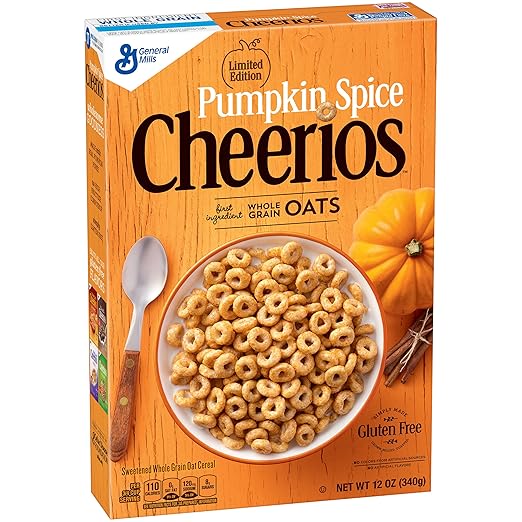
Pumpkin Spice Cheerios Limited Edition Cereal, 12 oz

(They're naturally gluten-free...and they're yummy...and did they ever make me sick. Let's all pray for help and guidance to get the toxic element of Cheerios, namely glyphosate, permanently banned from this entire planet.)

Tuesday, November 21, 2017

Book Review: Tam the Untamed

Title: Tam the Untamed


Author: Mary Elwyn Patchett

Date: 1955

Publisher: Bobbs-Merrill

ISBN: none

Length: 186 pages

Illustrations: drawings by Gerald McCann

Quote: “If anything could have made the idea of the foal more exciting to me, it was to be told that he was the son of Bobs...probably the most famous buckjumper of all.”

In the introduction Mary Elwyn Patchett explains the horse stories in this book as memories from the same years as the dog stories in her previous book Ajax, but claims that writing the stories in the order they happened meant that “the powerful personalities of” alpha dog Ajax and alpha horse Tam “seemed to be continually overshadowing”  memories of her beta dogs. I'm not entirely convinced. The books were published as fiction, and followed by at least one adventure story published in the U.S. that reads like pure, polished, fiction. Nevertheless, the narrative in Ajax and Tam the Untamed is unpolished enough that it does sound like mostly true memoirs, “improved” no doubt, but fact-based. It's possible that Patchett always intended to market the dog stories to dog lovers and the horse stories to horse lovers.

It may be significant, given the way horse and dog stories were marketed in the 1950s, that fictional Mary mentions an older brother in Ajax but never mentions this brother in Tam the Untamed, just as she never mentions Tam in Ajax. Dog stories were supposed to appeal to boys, so they had to have a boy character; horse stories were supposed to appeal to girls, so in them a girl character could share center stage with her horse alone—although in Tam the Untamed Ajax emerges as the rescuing hero and Tam, like his namesake, more of a tragic hero.

I remember discovering both these not-quite-novels, not-quite memoirs at age eight, or maybe even seven, which was about the right age to enjoy them. I knew they weren't quite as well written as other books that were either fiction or nonfiction, but at that age the fact that they weren't really coherent novels, nor were they separate short stories, nor were they credible memoirs, didn't bother me at all. If the more dramatic stories weren't likely to be true, I felt, they ought to have been. Shouldn't every child whose pet has been stolen get a chance to roar at a hard-drinking rodeo crowd, “If you move one step, my dog will tear that beast's throat out, and then I'll set him on you!”? Shouldn't every child who's been bullied at school be able to beat up two bullies at once, and be commended for it, even, in a subtle way, by teachers?

Patchett presents herself in this book as a de facto only child on a large farm “on the border river between New South Wales and Queensland.” She doesn't know, or want to know, children her own age; the brother, and any other siblings that may have been left offstage in the stories, would have been much older, so when she has to go to school for a month the teachers don't know how to deal with her—a child who's intelligent and mostly polite, having been socialized so exclusively by adults, but ignorant of “book learning” and socially backward around other children. Apparently nobody's ever thought of anything to do with this fictional Mary but give her more of what she wants—freedom, including the freedom to go camping in the bush, all alone with her two less than fully safe pets, for a week if she feels like it.

So in this story Mary spoils Tam in much the same way. From a dear little orphan foal he quickly grows into a big strong athletic horse who's never quite free to develop his potential as either a race horse, a show “buckjumper,” or the leader of a wild horse herd. In some rodeos “bucking broncos” are abused, as shown in this book, until they really go wild and want to harm riders, but according to Mary the horse Bobs was humanely trained to put on a hard-to-ride act, using one of those special moves that a minority of horses seem to do naturally; skill at these performances seems to correlate with hereditary physical traits, and Bobs seems to have passed on his “buckjumping” talents to Tam. Although he's only a mixed breed, Tam shares his color, and possibly the advantages of his conformation, with the Lipizzan dancing horses. 

Mary feels his frustration. Toward the end of the book, does she ever feel it! Rescuing Tam from a horse thief, she frustrates Tam's efforts to rescue himself, and he starts to vent his aggressions on Mary. Immediately after Mary has rounded on that rodeo crowd like Jesus driving the moneychangers out of the Temple, Ajax has to rescue Mary from Tam. And although the melodrama of Mary's reclaiming Tam has to have been exaggerated, that an overexcited animal, or even human, should immediately attack its rescuer is not unusual; that part I believe.

What the story has in the way of a plot may be that learning from the mistakes she's made with Tam reconciles Mary to turning him over to men who can work with a horse like him (maybe), going off to school, and learning to relate to other half-grown girls—but the story doesn't say this. Patchett leaves adult readers free to infer it, from the timeline of the story, and child readers free to leave Mary, Tam, and Ajax alone together, for the moment, all calmed down and friends again. In real life horse stories like Tam's don't have very happy endings, but this book stops tactfully short of whatever ending Tam's story might have had.

All I can say is that somehow, when I went back to reread Tam the Untamed for you, I realized that I'd read that plot into the story. I remembered that Tam teaches Mary her mistakes with harsh physical punishment, twice. As a child I probably wouldn't have enjoyed the book if it had ever actually said “So then my parents, brother, and favorite farm laborer convinced me that the relatively humane 'showman' who'd worked with Bobs was the one who could save Tam from a forlorn, unnatural, neurotic life, and that at least a few years of school might save me from something similar; a deal was worked out, and Tam helped to pay my tuition fees.” As an adult, I reopened the book having worked out in my mind that that was how it must have ended...but no. “[O]nce again the long,happy days began for the little girl who was part animal, and the animals who were nearly human.”

There's a lot to be said for a human character, if only a fictional one, who appreciates “that no animal should be forced into a human pattern” clearheadedly enough to understand, when one of her pets hurts her, that the animal is not “bad” but is correcting her mistake. Around the time I read Tam the Untamed I had a few firsthand experiences of horses correcting stupid human mistakes, not by real threat displays like Tam's, but just chomping a finger curled up around a food treat, or stepping on a misplaced foot...I suspect that's why I never became really horsey. Anyone with spare time can bond with horses, but actually working with them takes a talent for nonverbal communication, and also a certain tolerance for pain. I thought about this and became more appreciative of smaller, safer animals.

And after all, the way I'd misremembered Tam the Untamed isn't the only possible happy ending Tam's story could have had, although Patchett does mention on page 127 that “I knew I would be sent to boarding school.” There was also Mary O'Hara's Thunderhead, where the alpha horse who knows one human friend, but no master, gets to go feral in peace. Fictional Mary does more of the things real children dream of doing than any fictional human-child protagonist I can remember, verging on the pure fantasies of Mowgli, Tarzan, or Pippi, but obviously the real Mary Elwyn Patchett did settle down into human society; that does not necessarily mean that Tam did.

Let's just say that if ever a book communicated to a child the message that children shouldn't have their own way all the time, without actually saying it, Tam the Untamed is that book. In that peculiar way this rambly little half-breed of a book remains the most successful book I've ever read.

If this triumph of subtlety weren't enough to make Tam the Untamed worth keeping, we also meet the rest of Mary's menagerie, two more dogs, a monkey, an Australian possum, a tame snake, a kangaroo (rescued from an abusive “showman” in Ajax), a cat, a lizard, a tortoise, a duck, lambs, all of whom have become pets and can even be treated to a party together if “carefully watched,” and a “flying fox” bat she completely fails to tame. Naturally some of these animals are more interesting than others; the domestic dogs get the most attention, but what imaginative child could possibly ignore a book with a tame kangaroo in it?


This is a collectors' book; the best price we can offer is $10 per book + $5 per package + $1 per online payment, and Patchett no longer has any use for the $1 we'd sent her if it were A Fair Trade Book. However, at least three more books of this size will fit into the package beside this one, and they can be Fair Trade Books if you like. 

Monday, November 20, 2017

Book Review: All the Trouble in the World

A Fair Trade Book


Title: All the Trouble in the World

Author: P.J. O'Rourke

Date: 1994

Publisher: Atlantic Monthly Press

ISBN: 0-87113-580-9

Length: 341 pages

Quote: “Why do people spend so little time contemplating the ugliness of nature?”

In this book O'Rourke, caustic-witted car reviewer, satirist, and Gulf War reporter, set out to explore the global sites of “fashionable worries.”

The shade of his reactions is one I'd call “Bitter Green.” O'Rourke is writing as a disillusioned hippie turned Republican Party Reptile. (Not, however, too much of a reptile to receive aid and comfort from Christopher Buckley, John McCain, and half a dozen Republican organizations as well as the libertarian Cato Institute.)

In the 1990s right-wingers were as infatuated with certain pieces of ecological science that have since been debunked as left-wingers are infatuated with certain other pieces of ecological science that have been debunked today, and I've really tried to say with consistently equal patience to both of them, for a long time: You're wrong. And it's not just that I called the corrections where youall were wrong; it's that oldtimers like Wendell Berry and George Peters and J.I. Rodale called them first. O'Rourke consistently embraced the ideas that overpopulation might be fun and burning up all the gasoline was fun for him, too bad for future generations. So there are parts of All the Trouble in the World where my chuckles are at O'Rourke, not with him, and the smile on my face as I chuckle is probably the ugly kind.

But it's still laugh-out-loud funny. O'Rourke is easily among the top five laugh-out-loud-funny writers alive today. His zingers are delivered with neither real malice nor mercy to anybody on any side. He's willing to be the target of his own jokes if they have enough LOL potential. Often they do. He drinks lots of things that nature clearly intended humans to use for cleaning only. He gets sick. He narrates these experiences as if it were normal and acceptable to be sick whenever you were having “fun.” You have to wonder how much better this book would have been if O'Rourke had recognized the mild form of the Irish alcohol intolerance gene in himself and become a teetotal abstainer, but his descriptions of “hummingbirds that could actually carry a tune. Well, maybe that...was the haya huasca,” a fermented herb drink he sampled in South America, are funny anyway.

He raises questions about the emotional quality of contemporary concerns about overpopulation. His zingers on pages 58-63, where he argues that “Fretting about overpopulation is a perfectly guilt-free—indeed, sanctimonious—way for 'progressives' to be racists,” probably do apply to some of those who've fretted about overpopulation. (Note that they don't apply to this web site; we do fret about the observed effects of overpopulation—floating hostility, loss of community spirit, suppression of awareness of neighbors' survival needs, aggressive selfishness, commitment-phobia, inability to bond with friends or to mate for life, sterility and/or asexuality and/or homosexuality, chronic depression, “anger addiction,” many other forms of mental illness—among blue-eyed all-American yuppies. Often. We also think that living in slums contributes as much to the character defects of the welfare class as the welfare class contribute to the ugliness of the slums. Then again, we also trace the idea that birth control is something the neighbors should be doing through the animal kingdom; when overcrowded rats turn cannibalistic they will eventually eat their own young, but if they get a chance they'll eat other rats' young first.)

Famine? In Somalia he observed that there was a lot of food, but people were fighting over it. A load of rice identified as the gift of elementary school children—badgering their elders, hoarding their lunch money—had been commandeered and was being sold at obscene profits by public-spirit-impaired armed men. What O'Rourke saw was a far cry from the traditional Islamic norm, which also permeates the Old Testament, of rich people trying to get more of things in order to enjoy the “honor” of redistributing those things to the less wealthy. Generosity as a point of honor is an ideal valued in many cultures around the world but not, evidently, in nominally Muslim Somalia. Loyalty to other Muslims, “brotherhood,” as a point of religious observance also seems to have been broken down by some element of Somali culture. O'Rourke doesn't pretend to have even an educated guess what that element might be...at least he admits that what he did, when observing these global trouble zones, was to go to a country where he didn't speak the language, find another heavy-drinking man or group of men who spoke English, get drunk with them in the evenings, and write snarky hung-over descriptions of the landscapes and people he saw the next day. “But...[w]e had even more to drink and reasoned as hard as we could. Professor Amartya Sen says, 'There has never been a famine in any country that's been a democracy with a relatively free press'...Sylvia Nasar says, 'Modern transportation has made it easy to move relief supplies. but far more important are the incentives governments have to save their own people. It's no accident that the familiar horror stories...occurred in one-party states, dictatorships or colonies: China, British India, Stalin's Russia.'...Well, for the moment at least, Somalia certainly had a free press. The four of us were so free nobody even knew where we were.But how do you get Somalia one of those democratic systems...Sell the place to Microsoft?”

The environment? O'Rourke goes to the Amazonian rain forest to report that it's “an interesting, if sticky, place for rich people to visit. But...the employees of the ranches and timber companies and, for that matter, lots of the Yagua and Orejon wouldn't be there if they had another choice. The rain forest could then fester away in ecologically invaluable peace.” O'Rourke has always been one of your libertarian, basically-open-borders type of conservatives, not the anti-immigrant party—as am I—and hints that one way to save the rain forest might be letting more of its natives do unskilled labor in the U.S. He conveniently forgets the number of skilled workers in the U.S. who are desperate enough to do unskilled labor.

He also goes to Czechoslovakia, partly in order to provide a place in the book's outline where a preliminary witty debunking of Earth in the Balance will fit. He visits an alarmingly nasty toxic waste dump called Chabarovice, compares it with the famous traditional cleanness of Germany, and suggests that socialism contributes to the messiness of Chabarovice. This web site withholds comments.

He's on firmer ground, though, when he discusses the role of the federal government in mismanaging the United States' own ecological resources: “When resources are controlled by government instead of by an individual, the disposition of those resources is no longer guided by common—or any other kind of—sense...For example, the elk herd in Yellowstone National Park needs culling. But elk hunts cause uproar from the kind of people who think they'd like an elk for a pet. So all summer the elk eat everything in reach, destroy the Yellowstone ecological balance, and, come winter, they gruesomely starve.” 

And, “the Department of Agriculture...has been paying crop subsidies since 1927...the more you grow of something nobody wants, the more the government pays you for growing it. Thus farmers have been encouraged to heap their land with fertilizer and soak their crops in pesticide, and damn the costs, ecological or other­wise...The government has another method of keeping food prices high, through acreage-reduction programs. The Department of Agri­culture gives you cash for staying in bed and planting nothing. But, in order to get paid for not farming a piece of land, you have to prove that you used to farm it. So woods were cleared and swamps were drained anyway, to get money for leaving them alone later.” 

In short, “Government programs fail. There's no shame in this. Lots of things fail, as anyone who's over forty-five and has body parts knows. But government failures refuse to go away. When a private entity does not produce the desired results, it is (certain body parts excepted) done away with. But a public entity gets bigger.” Er, um...try sixty-five as the likely expiration date of those body parts if you say no to alcohol, as O'Rourke does not. (Grandma Bonnie Peters, who claimed between the ages of 55 and 80 to be healthier than she'd been at 35, is not typical even of teetotal abstainers—but neither is she really all that much of an outlier.) But as far as the government programs are concerned, check out a few for yourself and see how right our man P.J. was...and still is.

To study “Multiculturalism,” O'Rourke goes back to the college he attended. It's called Miami University, in Ohio. Miami, Florida, was named after a lot of dispossessed former residents of Ohio, several of whom wound up in Oklahoma. The university's sports teams were formerly nicknamed “Redskins.” O'Rourke reports that “Chief Floyd Leonard of the Miami Tribe in Oklahoma said he is not making any public comments,” as of 1993, possibly because “whether varsity squads are called Redskins or Dust Kittens, Miamis themselves would not be welcome to roam southwestern Ohio again—pitching their wigwams beside calm blue backyard swimming-pool waters, hunting and gathering midst the rich bounty of Safeway aisles...” Ironically, although the non-Miamian, “pink and well-fed” students see nothing derogatory or appropriative or whatever about the name “Miami,” they holler that “'Redskin' makes me cringe...the fact that we're here to discuss this today shows that there's something wrong with the word.” A Lakota activist living in Dayton, Ohio, “was very angry” and claimed the Lakota reservation's “as much as 92% unemployment, as much as 47% alcoholism rate” existed “because White Americans think it's good to call us 'Redskins,'” an extraordinary logical leap. The team has been renamed, of course, just because people got tired of the logic-free harangues, and the benefit to needy Hopis (or even Miamis) has been: zero. I'll stop now.

Meanwhile, “In the fall of 1992 I went to see multiculturalism in practice in former Yugoslavia. there all manner of diverse cultural groups were fully empowered—with guns.” O'Rourke's narrative of this trip is just one great gorgeous irony after another.

To discuss “Plague,” he goes to Haiti. It is unlikely that a conservative writer has ever written so fondly of this troubled nation as O'Rourke does, before, or ever will again. His narrative concludes with “All I could manage was 'Thank you.' But what I really wanted to tell the voodoo celebrants was 'I wish all of you could come to the United States and live there. You're an immense improvement on the other people who go to Florida.”

Right...if O'Rourke were reading this book to a large mixed audience the reading would now need to pause for while Cuban-Americans pelted O'Rourke with wadded-up programs. But his sympathy for his Haitian hosts is contagious. I know for a fact that, fifteen years later, when Associated Content was doing a fundraiser in aid of Haiti, my contributions to the barrage of fundraising articles were informed and inspired by memories of Chapter 8 of All the Trouble in the World. I cited more recent reportage, but O'Rourke's was the story that had stuck in my mind.

For the grand finale chapter on “Economic Justice,” O'Rourke, who famously dodged the draft during the Vietnam War by telling the recruiting doctor he'd used all kinds of illegal drugs, finally goes to Vietnam, where he reports, “never has there been such a pure, uncon­cealed, all-hogs-to-the-trough rush into capitalism among the citizens of a supposedly collectivist society.” Yet, “in the end, Vietnam was a bit depressing, too...the thrilling idea of human liberty always results in people acting so...human. Like Americans.”

In the end O'Rourke's travel book is hilarious (I've reread it every two or three years since 1994 and I still laugh out loud), picturesque, lively...and subjective, because it's one traveller's story...and historic. He saw things happening in 1993. That's not what's happening now. Then again, although some of his observations are date-stamped to the precise day, some of them are more “evergreen” than might have seemed possible in 1994.


I think this may be my favorite O'Rourke book. It's hard to say. The Bachelor Home Companion was also hilarious, and Eat the Rich has much to recommend it. Which is your favorite?

If you don't yet have a favorite, or aren't yet familiar with O'Rourke's earlier books, you can buy them here for $5 per book, $5 per package, plus $1 per online payment, from which this web site will direct $1 per book to the author or a charity of his choice.