Tuesday, July 12, 2016

Counting Down to the Twitterfest

Below is the announcement from Penny Nance and the Concerned Women for America. I personally have mixed feelings about this one. I don't read bills being voted on in the U.S. Congress, full text of which is not always even available, and can't claim to know how much good or harm they'll do. This one, according to the Concerned Women who claim to know, will do some good as I see good--nobody should be obligated to participate in any medical procedure about which they have any misgivings whatsoever--but not enough; it leaves the virulent root, the mandatory involvement of the insurance industry, free to put out additional toxic growth. The Conscience Protection Act really needs to include language that protects patients and the doctors, dentists, physical therapists, etc., of their choice, from any involvement in the insurance gambling racket whatsoever. Not only should insurance agents be unable to dictate whether a doctor or patient should consider abortion; insurance agents should be unable to find out the names of patients who believe that honesty requires us to pay cash...as do I.

I should mention that, as my partner in blogging, Grandma Bonnie Peters, finally starts to become "old" in Tennessee, I'd feel a lot better about her health and safety if Obamacare hadn't forced the doctor of her choice out of practice for several months. GBP is still able to consult a doctor she trusts, and she's still able to use Medicare or Medicaid. (Now that she's 81 and has only a Social Security pension as reliable income, she's more qualified for publicly funded benefits than probably 80% of those who use them.) She's not, however, able to use Medicare or Medicaid to pay the doctor she trusts. For the tests and treatments with which she's willing to cooperate, GBP pays cash. And her pension is about $700, and her mortgage payment is about $500. The United States can do so much better than this...

The official Twitterfest starts in fifteen minutes.

"
Last week, we alerted you to the Conscience Protection Act. Good news! Your calls and e-mails to your representatives were not in vain; the Conscience Protection Act, H.R. 4828, is scheduled for a vote on the floor of the House of Representatives this Wednesday.

We need your help again! Please call or e-mail your congressman and ask for a “YES” vote on the Conscience Protection Act, legislation that will protect pro-life healthcare providers from forced complicity in an abortion and would also provide a private right of action, enabling victims of governmental discrimination to seek redress in court.

This attack on conscience protection is not merely an empty threat from the Obama Administration; this is happening today in California, where officials have blatantly ignored longstanding bipartisan language known as the “Hyde-Weldon Amendment.” This language provides conscience protection for individuals, such as doctors and nurses, who choose to not perform abortions; while protecting pro-life pregnancy clinics from being forced to advertise abortion clinics. Additionally, it provides protection for insurance plans that do not cover abortions.

Although the Hyde-Weldon Amendment outlaws such violations, there exists no private right of action for victims to seek relief in court. Administrative enforcement by the Department of Health and Human Services (HHS) is a bureaucratic nightmare and can take years. The Conscience Protection Act provides a way for victims to receive justice through the court system, not through years of Washington bureaucracy.

The right of conscience should be guaranteed as an inalienable right, given by God, and protected by the First Amendment, but the Obama Administration has twisted it to fulfill the left’s political agenda. Discrimination against entities that do not want to provide for abortions must stop. Healthcare providers should not have to sacrifice their conscience rights and convictions under the farce of “healthcare rights.”

Representative Joseph Pitts (R-Pennsylvania) hosted a panel last week regarding the Conscience Protection Act during which two pastors from California testified in favor of the legislation. Under current California law, churches are forced to subsidize elective abortion through their healthcare plans. Pastor Chris Lewis from Foothill Church rightly stated, “Jesus said, ‘Give to Caesar what is Caesar’s,’ but neither human conscience nor human life belong to Caesar.”

Churches should not be forced to pay for abortions through their healthcare plans. There must be protection for the religious convictions of institutions and individuals. Healthcare professionals should not be forced to violate their conscience and help facilitate abortions. Instead of protecting religious liberties, the Obama Administration is protecting the abortion industry.

Concerned Women for America Legislative Action Committee (CWALAC) is pushing for support of this crucial piece of legislation, but we need your help. Please call your congressman and ask him/her to vote YES on H.R. 4828, the Conscience Rights Protection Act of 2016.

Our legislative team has included brief talking points on H.R. 4828 for your phone call or e-mail:
  • H.R. 4828 prevents government violation of conscience protection rights against health services providers that do not want to provide, perform, or refer abortions.
  • The Conscience Protection Act will protect pro-life healthcare providers from forced complicity in an abortion and would also provide a private right of action, enabling victims of governmental discrimination to seek redress in court.
  • We must support this legislation to protect the liberties that our Constitution demands and not allow a social agenda to dictate our public policy.
  • Please vote “yes” on this crucial piece of legislation that helps protect the liberties of healthcare providers and violated individuals, while providing critically needed redress for such abuses.
Thank you for your action on this, and for your support and prayers.
Yours in the fight,
Penny Nance
Penny Nance
CEO and President
Concerned Women for America
"

Can Children Learn Empathy?

(This one outgrew its position in the July 8 Link Log.)

Is it possible to teach empathy to preschoolers? This teacher thinks so. I think the teacher is a nice, kind person, whom some students may remember fondly after they do develop the hormones and neural circuits to feel empathy. I think children who've bonded with a kind, loving, empathetic mother (or other parent-figure) can learn some behavior that looks like empathy, that will feel like empathy whenever the children are able to feel empathy. I don't think children actually feel empathy before puberty. 

Because children are hard-wired to admire, imitate, and try to please parent-figures, they do learn to mimic behavior that's motivated by genuine empathy. If Mommy stops the annoying noise of one baby's whining by cuddling that baby, and if another baby is attached to Mommy and observes that behavior, then, yes, that baby will try to cuddle the other baby when it whines. If Mommy models petting and grooming animals the way the animals like to be petted and groomed, tending plants the way plants thrive on being tended, listening and talking about things other people want to talk about, then, yes, preschoolers will mimic those behaviors too. If Mommy rewards those behaviors, too, or if the other baby and/or pets and/or plants and/or friends do, then those behaviors will come to feel rewarding to those children. But...

My brother and I were considered child prodigies, such that our mother sincerely believed she was teaching us empathy before we'd reached puberty. She had certainly taught us enough empathetic-looking behavior that, to this day, I'm willing to imagine that my brother might have felt some sort of preliminary glimmer of empathy--sometimes. I can say, though, that what I felt was strictly conditioned, child-pleasing-parent pleasure all the way up to puberty. Humans are by nature predators before we're herd-joiners; children feel pleasure in beating other children at things, including physically beating them in fights, long before they feel pleasure in empathy. Thus the child who learns to mimic empathy in some ways will turn around and reveal an utter lack of empathy in other situations. We did, in fact, learn to cuddle babies and change diapers and hold warm bottles over infants' mouths. We learned to warm baby birds in our hands and talk to plants and write sweet little letters to our aunts (whom we did in fact like), like any child whose parents or teachers believe it's showing precocious empathy. We also learned to kick, shove, punch, stomp, pinch, verbally abuse, tattle, and generally deal with the other pre-pubertal monsters at school in a more efficient, and no less cold-blooded, way than Wednesday and Pugsley Addams. I learned to do many kind things more efficiently at a younger age than most children; I was still a mean, even sadistic, preadolescent troll.

I suppose nature intended children to learn both empathetic and hostile behavior, and a case can be made that you have to develop some capacity to feel empathy in order to become really cruel, too. (The terrifying thing about sociopaths is that they do clearly show a capacity for empathy when manipulating people; they just lack, or inhibit, empathy about the results of their schemes. Autistic patients, who don't develop empathy at all, may inadvertently hurt others--usually when fleeing from things their scrambled perceptions make painful to them--but they don't scheme and manipulate.) I'm all in favor of teachers who model and reward kind behavior in the classroom. I'm not in favor of proposals to add empathy, or kindness, or "values," or "touchy feely" to the elementary school or preschool curriculum...because I can say firsthand that, even when children learn kind, gentle, nurturing behaviors, trying to tell them about empathy is as much a waste of time as trying to tell them about romantic love. 

We feel things, whether as "emotions" or as "passions" or as "experiences," by way of hormones and nerves. Most of those hormones and nerves develop as we grow up. Estrogen generally seems to intensify the "feelings" associated with empathetic responses; normal male adults have enough estrogen to feel empathy, which may be why some men seem to feel that women's expressions of empathy are excessive. Children seem to start to feel empathy, within themselves, as distinct from acting out empathetic behavior they've learned, a year or two before puberty. The refined emotional cruelty of middle school "mean girls" is an early development in this process, where the "mean girl" starts to notice what hurts other kids' feelings most before she starts to care how badly she's hurt their feelings. By the time young people start to feel physically attracted to one another, most of them have learned that kindness is attractive...though a few people seem to fail to learn this at any time in life.

Unfortunately many elementary school teachers are adults whose own levels of empathy never rise very high. A chronic problem we have in these United States is that these teachers' clumsy efforts to teach things for which they're not really talented, themselves, creates "mental blocks" that prevent people from learning grammar, music, math, science, or even sports. John Holt wrote three entire books about some of the ways this happens. 


He hardly scraped the surface. And if this approach to teaching were to become the way we expected people to learn empathy, Heaven help us all. 

Mandatory education in overcrowded, industrial-model schools has made many Americans into couch potatoes who, for some reason (such as astigmatism), didn't learn anything from the formal instruction in baseball and basketball we got in elementary school, and therefore concluded that we're "just not good at sports." We as a society can live comfortably with large numbers of people who believe, correctly or not, that they "just can't" hit a home run, shoot a basket, or kick a goal. We can't live so comfortably with similar numbers of people who believe that they "just can't" learn to tell when they are causing others pain.

And if anyone does need help learning to tell when s/he is causing others pain--if that ability does not develop, on schedule, somewhere between the ages of ten and fifteen--that help is very unlikely to come from adults who don't instinctively know why trying to explain the concept of empathy to a large mixed group of randomly chosen reluctant "students" is a stupid idea. It's a stupid idea because it causes pain, that's why. All emotional feelings, along with sexual reactions and spiritual experiences, are in that category of private, personal, subjective experiences that nature did not intend us to try to share with large mixed groups, under any circumstances, but least of all when most of the people in the group don't even want to be in the group. A teacher who blunders onto those topics is causing pain. If the teacher doesn't know that, the teacher is not qualified to teach about empathy.


July 8 Link Log

These Links came in on July 8; they weren't posted due to scheduling confusion. Categories: Fun, Green, Job.

Fun 

Dan Lewis shares fun facts about Norfolk Island, a non-North-American place that celebrates Thanksgiving more or less as we do:

http://nowiknow.com/calling-dar-bizziebee/

Green 

What could be wrong with funding efforts to fight the Zika virus? This is what. Yes, poisoning mosquitoes looks like a quick fix for mosquito-borne plagues. The problem is that by poisoning mosquitoes, you poison their predators, which means more mosquitoes next month. Eventually the mosquitoes have evolved resistance to the poison, and humans (and other species valuable to humans) may be dying from overdoses of poison, which may be more painful and more deadly than the disease was. Dr. Tom Dooley was a great man who acted in good faith, but what he ultimately taught the world was that cancer is worse than lice.

http://articles.mercola.com/sites/articles/archive/2016/07/05/zika-virus-bill.aspx

And by poisoning other pests, you poison their predators. We all need to help people understand why we need to make sure we don't start any more Vicious Poison Cycles.

https://www.change.org/p/united-states-stop-neonics-save-bees?

Job 

Y'know, it's not that I'm not deeply grateful to anyone who sends me referrals to legitimate writing jobs. I get a lot of bizarrely mismatched ads, e.g. by applying for a "teleworking" job based in a city I've never even visited and thus getting what appears to be a cyberdump of the entire job ads listing from that city's newspaper, but I do appreciate e-friends' efforts. (By "legitimate," of course, I mean not only that they really pay, but that all the identity/contact information they demand online is the information that pertains to "Priscilla King," the cyberspace entity, not to humans in the real world. And no spyware. And no chat.)

This job came in via two respondents in one day's e-mail, so somebody out there thinks I might be qualified for it; I'm flattered. However, although I can claim some expertise in the area of Web writing, I'm not an expert on videos and webcasts; so far as I know I've never used a computer on which those could have been created, and rarely even had access to a computer on which they would play. If any readers are multimedia Web experts, as I think--not know-- +Gayle Crabtree and/or +Lyn Lomasi may be, this could be your dream job. DOT is about as legitimate as it gets, and on this salary you can live well in a leafy Metro-accessible suburb within a thirty-minute train ride from Washington.

"WEB CONTENT EDITOR
https://www.usajobs.gov/GetJob/ViewDetails/443781200/
Location Washington DC. Department of the Treasury. Pays $108,459.00 to $152,687.00 / per year. Deadline July 21, 2016. The incumbent will serve as an expert in the area of Web content; writing for the Web; Web formats, including videos, webcasts, and other multimedia; Web publishing tools, including content management systems; Web metrics; section 508 compliance for accessibility of Web content to people with disabilities; social media and the use of social media in reinforcing the messaging of an organization; and generally, using the Internet as an effective communications tool for internal and external audiences. "


Dog Days: General Update

(This post started out as a general introduction skimming over several things that won't get individual links in the Link Log, and grew into a separate post.

Mid-July weather is here. I spent almost ten hours draining water and minerals out of my body into the bed, and still feel tired even as I begin rehydrating at the cafe. Out in cyberspace, some people are having even worse times. Somebody's actually got up a petition about dogs in 120-degree (Fahrenheit) heat. Duh. If after all these years any of this web site's regular readers need to be told to offer shade, water, and fresh air to your dogs or cats, then I really have lived in vain.

Evidently a lot of people's minds are melting in the heat. One small stack of e-mails reminds me that Black Lives Matter. Duh...of course they do. Another small stack reminds me that Blue Lives Matter. Duh...of course they do. Maybe reminding dark-skinned youth that Blue Lives Matter, and reminding police officers that Black Lives Matter, will do some good. Right, you've all been reminded. Personally I'm more concerned with finding and ingesting enough ice to fend off heatstrokes.

No, this web site will not agree that "Black Lives Matter" is, in and of itself, a terrorist slogan. No, that wouldn't make it the first reasonable, almost universally supported slogan that's ever been exploited by terrorists. What was the first? "Abortion Stops a Beating Heart" has no chance, Gentle Readers. I've read some cogent claims for "God Wills It," as publicly uttered by Richard I of England. If you've read more ancient history than I have and want to make the case for another good thought that was co-opted by proto-terrorists, please share it.

And as for Congress...they all have my deepest sympathy as they survive one more week of this weather exacerbated by the local warming effect in Washington. Mercy, Percy. More ice and less alcohol will help. So will remembering what creates local warming--pavement, cars, air conditioning, lots of bodies exuding 98.6 or higher Fahrenheit temperatures into the air. When seeking relief, please car-pool to Clarksville or Centerville, Washington readers.


Book Review: The Silmarillion

Title: The Silmarillion


Author: J.R.R. Tolkien

Date: 1977

Publisher: Allen & Unwin

ISBN: 0-345-27255-2

Length: 458 pages, including a glossary

Quote: “[T]he Younger Children of Iluvatar…were called…Hildor, the Followers, and many other names: Apanonar, the After-born, Engwar, the Sickly, and Firimar, the Mortals…Of Men little is told in these tales.”

The Silmarillion, in the mythology of Tolkien’s Middle-Earth, is not an ordinary adventure story like The Hobbit and the Rings trilogy—although it includes adventure stories. It is the epic history of the Elves and Hobbits and other proto-humanoid races that, in Tolkien’s mythology, slowly died out as humans spread over our world.

It contains an incomplete, but usable, constructed language called Elvish, which has its own alphabet. Elvish is linguistically interesting because of its Indo-European roots and qualities; it’s definitely not either of the obscure European languages (Welsh and Finnish) it superficially resembles, and in fact it contains words with deliberately different meanings than the Welsh and Finnish words they most resemble, yet it obviously developed from the same roots as those languages. Tolkien was a scholar who worked to produce this effect. In some ways it may yet pay off, at least in the sense of “paying” for scholarly interest in the phenomenon of constructed languages. Although much money was spent in promoting and developing Klingon, which some linguists have gone so far as to claim as the official house language they’ve taught babies to speak with native fluency, and some scholarly effort also went into promoting Láadan, both Klingon and Láadan have very alien, artificial qualities that make them hard for students to learn. If you speak one or more Indo-European languages and you want to learn a conlang, Elvish is easier. I’ve personally known people who spoke Elvish.

Tolkien actually wrote snippets of prose and poetry in Elvish, and, toward the end of his life, was persuaded to let himself be recorded singing an Elvish funeral dirge (“Ay, laurië, lantar…”). An Elvish dictionary exists. The Silmarillion isn’t it, but does contain a glossary explaining the proper meanings of words and names that appear in the story.

That’s one of the first things readers notice about The Silmarillion. The other is that it’s told in the high-flown epic style proper to the kind of literature it was meant to be. That means it lacks Tolkien’s natural storytelling voice and has, instead, the pompous voice of a medieval court historian who expected his audience to get most of the story from the mere reiteration of historic names. For me, it’s possible to get into the story, but it takes a determined effort; when I look at a chunk of prose like “At that time Beren and Luthien yet dwelt in Tol Galen, the Green Isle in the River Adurant, southernmost of the streams that falling from Ered Lindon flowed down to join with Gelion; and their son Dior Eluchil had to wife Nimloth, kinswoman of Celeborn, prince of Doriath…” and realize that the history this narrator is demanding that I remember is all fiction, my natural impulse is not to read the book at all.

Nevertheless, for fans of The Hobbit, Lord of the Rings, et al., who don’t mind burdening their memory with the fictional language and history of Middle-Earth, Tolkien did provide both adventure and romance, and The Silmarillion can be read as one of those long sweeping novels that try to be epics.

The whole Tolkien oeuvre, apart of course from the more realistic stories like Roverandom that the author tossed off without much thought, presents an interesting problem in classification.

Tolkien was a devout Catholic. The history of his fictional world is not entirely incompatible with his Catholic view of the prehistory of our world. There is, in fact, not only fossil but historical evidence that distinct “races” or ethnic groups of humans have gone extinct, some as recently as the nineteenth century. What we know about those people is not much like what Tolkien imagines about Elves and Hobbits, and the more we learn about real prehistory, the less probable it seems that Elves and Hobbits could ever have existed. But they might have existed—vanishing without a trace; we can’t prove they never existed. Ancient human tales from around the world frequently postulate lost races of (a) people who were like us but longer-lived, more beautiful, wiser, and more admirable than we are—idealized ancestors, or supermen—and (b) people who are like us but smaller, humbler, perhaps poorer or otherwise inferior to us—idealized versions of defeated members of enemy tribes who had gone underground, or gnomes. Probably these two streams of old English fairy lore sprang from exaggeration and idealization, but who can say they have no basis whatsoever in prehistory?

In any case they were so far beyond the Judeo-Christian tradition that their lore must be, in order to have any credibility, alien to the Judeo-Christian tradition. Is it possible, this being the case, to claim that Middle-Earth “reflects Christian values”? Can the stories of Middle-Earth be identified as “Christian literature”?

Much as some Christians want to claim Middle-Earth as our own…I find myself on the side that says they can’t. In order to be on this side, of course, it helps to have read a good study of comparative religion, the “Wisdom” that is common to all human religions, and identified the values Middle-Earth actually reflects as fundamental human values. Humans instinctively admire courage, wisdom, loyalty, generosity, and love. (When they say they don’t, they represent a dysfunctional aberration from the common history of humankind.) Humans also instinctively worship a Great Spirit of Powerful Goodness, even when a sense of unworthiness prompts them to imagine themselves approaching the Great Spirit only through more humanlike “lesser gods,” or a sense of despair prompts them to try to fend off misfortune by propitiating evil spirits instead. Tolkien’s Elves and Hobbits worship a Great Spirit in a way almost all humans, not only Christians, will recognize. Middle-Earth is thus compatible with Christianity, but not specifically Christian. On Tolkien’s own account, whatever Elvish influence survived among the Younger Children of the All-Father would have developed through European Pagan thought before it developed into Christian thought.

So, do you want to invest enough time and energy in Middle-Earth to read The Silmarillion? Very likely you don’t. If you just like adventure stories, there are simpler ones. If, however, you’re fascinated by the whole process of inventing an imaginary setting for a fantasy adventure story, and want to study the process at the same time that you enjoy the product, The Silmarillion is probably the world’s foremost example of something few writers have been rash enough to try to do—to explain previously written fantasy adventure stories through another fantasy adventure story. And it’s a whale, Gentle Readers. Very few writers would even try to sustain that medieval-chronicle tone for almost 400 pages. Tolkien not only sustains it, but does it well—by the end of the book you have formed a mental picture of the Green Isle in the River Adurant, and similar places, and the Elvish monarchs and heroes who dwelt therein. If you really want to take the trouble to read this book, you will get all the rewards this kind of book can offer you.

Me, personally…most of the time I’d rather curl up with a good biography or travel book about the real world, or else a frothy little children’s story that demands no mental effort whatsoever. And then again, sometimes when I want to write conceptual fiction, Middle-Earth is my inspiration. 


What I physically own is the first paperback edition of The Silmarillion. Copies in good condition (the back cover has detached from mine) have gone into collector prices on Amazon:


Since my copy is not in good condition, I'm offering it only in real life, for less than the online price of the newer edition. What you can buy by sending $5 per book + $5 per package to either address at the very bottom of the screen will be the new and commonplace edition of The Silmarillion. You can add paperback copies of The Hobbit and Lord of the Rings to the package; I think all five paperbacks will fit.

Monday, July 11, 2016

Book Review: Daphne's Book

A Fair Trade Book


Title: Daphne’s Book

Author: Mary Downing Hahn

Date: 1983

Publisher: Houghton Mifflin / Avon

ISBN: 0-380-72355-7

Length: 166 pages

Quote: “Have you found Sir Benjamin in real life? Well, then, I don’t think Princess Heatherfern should find him in the story.”

Apart from having a name like “Daphne,” good for an endless series of cheap shots in middle school, Daphne is different from the other kids in her class.Daphne has skipped over the boys-and-clothes-and-popularity obsession; Jessica, the narrator, hasn’t reached it yet. Jessica’s best friend, Tracy, is drawn to the class mean girls, Michelle and Sherry, as the three of them reach that stage of adolescence. Jessica’s English teacher has ordered Jessica to work with Daphne on a writing project. Jessica thinks this is going to cost her Tracy’s friendship and bring her a lot of snide remarks from Michelle and Sherry…but that’s only the tip of the iceberg; this first novel meant a lot to Mary Downing Hahn, who put a lot of life experience into it.

The assignment is to write a picture book for younger children. Daphne’s assets—the extra maturity she’s gained from life and loss and having a younger child to test her story on—immediately reveal themselves. Jessica has the idea of writing about collectible dressed-up toy mice, which were a feature attraction at Lowens’ toy store in Bethesda at the time; the mice came with all sorts of doll-sized furniture and lived in pre-Barbie, one-inch-to-one-foot dollhouses. One of Jessica’s mice has been lost, possibly destroyed by her cat, so for the story they draw pictures of the other mice searching for him in the Adelphi Mills Park. (Yes, although identifying details have been airbrushed and Lowens’ went out of business, it was possible for a long time to organize a tour of suburban Maryland around Daphne’s Book.) Jessica thinks the missing mouse should be found at the end of the story. Daphne persuades her that it’s a stronger story if he’s not.

It turns out that Daphne knows the importance of recognizing that someone is lost forever because her parents are dead, and her increasingly senile grandmother, with whom she and her mouthy little sister Hope live, refuses to accept that the girls’ father isn’t coming back to fix their shabby house and eke out the grandmother’s inadequate pension money.

Deep down, Hahn knew how this story would end if Jessica’s family were really good neighbors, rather than merely nice: Jessica’s family would adopt Daphne’s family. They all like each other; they’d be less affluent, but not destitute, if they shared their resources; the grandmother might not have to go into a nursing home before her time, and the girls could stay in the same school at least until they get to know the cousins who might have more to offer them. Good neighbors are willing to adapt to the short-term discomfort that sort of thing entails. Merely nice neighbors, however, are not, and although Jessica might be a good neighbor at heart, her mother, older brother, and prospective stepfather are determined to bring her up to be a merely nice neighbor like them.

Daphne and Hope and their grandmother go into separate “homes” as wards of the state. There’s a lot of blather about how this is the way things “have to” be. Deep down, you know that Hahn knew it wasn’t, really. No one-size-fails-to-fit-all program managed by social workers can ever be an adequate substitute for what individual neighbors can and should do for one another.

However, for the sake of readers who are still on Jessica’s level of maturity rather than Daphne’s, the story gets a halfway happy ending.


I wrote a review of this book long ago, on Associated Content; the review has been lost in cyberspace and and I've sold the copy I owned then. I now physically own another copy--the second edition with the picture shown above. A newer edition is available from Mary Downing Hahn's web site, and although I won't get a commission if you buy the new paperback here, Mary Downing Hahn will get a better commission. Buy an old book from me (either address at the very bottom of the screen) for $5 per book + $5 per package for shipping, and Hahn or a charity or her choice will get $1 per book sold. Buy a shiny new book directly from Houghton Mifflin for $6.99 + current minimum postal rate for shipping, and Hahn will probably get more than 69 cents, so that may actually be a better way to show respect for her work. 

Friday, July 8, 2016

Even Gate City Gets Clueless Tourists

Earlier this morning, I was walking down Kane Street, within sight of the Friday Market. A car stopped. A lady leaned across a child to offer me a lift.

"I'm only going to the market up there," I said.

"Oh, we can take you," she said.

I hadn't set up a display, due to the off-and-on rain, but an old friend from Duffield who seldom comes to Gate City had set up a nice one, so I didn't mind steering some traffic her way; I let the obviously harmless woman share her car for one block.

And she said, "Oh, a flea market! I didn't know they had a flea market here!" And I thought, Mercy, Maud, it's a tourist, a real live clueless tourist!

Gate City's principal visitor attraction is the Friday Market. I didn't know whether the weather would permit much activity in it this morning; actually, for those who took the chance and came out, it was humid but cool, pleasant open-air-market weather. Missing were the Sock Lady, the Regular Tool Man, the China Junk Crew, the Collector Knives Man, the Jeans Man, the Hardware Guy, and the Tennessee Vegetable Retailers. Those present included the Rip-Off Tool Man, the Electrical Gadget Man, the Pie Fryer, the DVD Guy, some of the occasional vendors with the kind of garage sale mix the term "flea market" implies, my friend from Duffield with her craft patterns, and at least two farmers with fresh local veg.

When the sun is shining there's a lot more of it, but...who would have imagined that anybody would not know what's been our big attraction since at least 1980? Yes.

We also have live music, nature parks, children's parks, live sports events, auctions, and Town Festivals. Places to eat include McDonalds, Hardee's, Long John Silver's, Pizza Hut, Molcajetes, the Hob Nob, and of course the Family Bakery & Cafe where I'm typing this. (More people came in for lunch today than were in the place all day yesterday.) A very charming, upscale place to stay is the Estilville Bed & Breakfast.

I feel like adding, at this point, "And sometimes, like at this particular moment, we have natural light from that thing up in the sky, which we call the sun. And other times, like earlier this morning, a lot of water falls out of the sky, which we call rain..."

Some things about Washington you always miss, when you go back home. Some things about Washington you don't miss. And in some cases that's because you've not actually left them behind. Some things, like clueless tourists, are found everywhere.

Book Review: Karen's Big Joke

A Fair Trade Book


Title: Karen’s Big Joke (Baby-Sitters Little Sister #27)

Author: Ann M. Martin


Date: 1992

Publisher: Apple / Scholastic

ISBN: 0-590-44829-3

Length: 102 pages

Illustrations: black-and-white drawings by Susan Tang

Quote: “There is a fake ice cube with a fly in it. If you put it in someone’s drink, he will think a fly got in the ice cube tray! He will say, ‘Ew, ew!’”

Once again Karen, the poor little rich girl with two pairs of divorced-and-remarried parents, shows that there’s no such thing as enough attention to appease her insecurity. She’s already fascinated by mail-order “joke” toys when, enrolled in gymnastics class, she tries to commandeer other children as “friends”:

“‘Hey, Polly,’ I whispered.

‘Yeah?’ Polly did not look at me. Miss Donovan was showing us how to do a handstand. Polly was watching closely.

‘At my school we are going to play April Fools’ tricks on Friday,’ I told Polly. ‘…I thought of a way cool trick to play on—’

Polly raised her hand. ‘Miss Donovan…Can you please show us the handstand again? I need to see something.’

Well. What nerve.”

If Karen can’t force people to pay attention to her rather than to what they’re all supposed to be doing, she goes into a sulk. And next, since her family don’t confine her to her room until she can act like a potential human being, she thinks of a nasty prank to play on her family. Judging them to be “piggy,” she enters them in a “beautiful homes” contest. (Karen’s Daddy is a millionnaire; they live in a mansion.) And then…her family turn the joke back on her.

No worries, though. In the world of the Baby-Sitters Club, even spiteful pranks always work out in very nice, family-friendly ways. A book written for older readers would use a lot less words to tell the jokes that constitute this story, but they are funny jokes. You'll chuckle.

All Baby-Sitters Club books are Fair Trade Books. Buy them here, $5 per book + $5 per package, and we'll send Ann Martin or a charity of her choice $1 per book. Payment may be sent to either address at the very bottom of the screen--scroll past the blog feed. (Then scroll back up, if I've not been online enough to post a Link Log and you want to see what I've missed.)

Thursday, July 7, 2016

July 7 Link Log

Categories: Book, Christian, Disaster, Green, What Next?

Book 

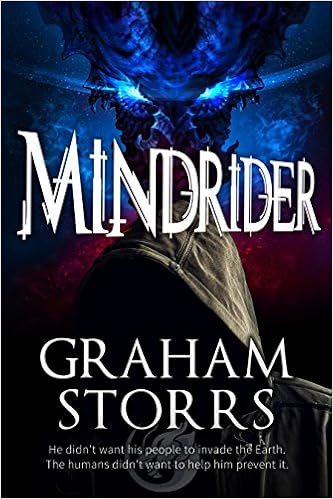
Graham Storrs' new book is available...if you count Kindle, which I don't, but I appreciate the traffic this site gets from his site anyway.


http://grahamstorrs.cantalibre.com/

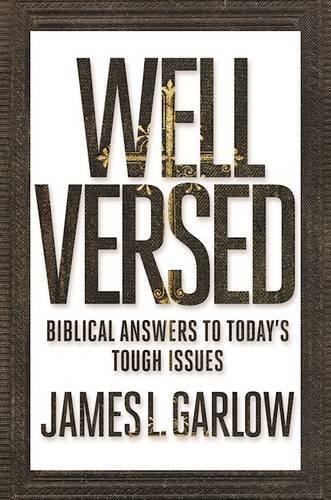
"What does the Bible have to say about transgender bathrooms?" a correspondent asks rhetorically. Bathrooms hadn't been invented; the Bible does tell travellers to carry something they can use for digging in order to bury bodywastes beside the trail. Nevertheless, here's this year's latest Bible-for-today book:


(Would the McDougalls send out cookies? Anyway, here's a link to the book they recommend this summer--why not a picture with this one too? Not on Amazon yet; go there as soon as the temporary link expires.)

Whole Food Plant Based

Christian 

Sermon for the week:

https://blogjob.com/inpraiseofjesus/?p=283

Disaster 

More fires, these in California:

http://www.reuters.com/article/us-usa-wildfires-idUSKCN0ZI0YY

Homicides aren't full-scale disasters, but the Tweets are flying...as if people think expressing empathy for the loss of these guys will prevent disaster reactions. Many people who read this web site don't get many opportunities to agree with our President. Here's one. (It's on Facebook, but, surprisingly, it opened right up for me.)

https://www.facebook.com/potus/posts/507884336068078

Green 

It's possible that this web site also uses cookies. Oh well. They're selling a vinegar-based "weed spray." I'm in favor of it, but it's important to mention a big difference between the way we use vinegar-based weedkillers and the way ignorant people use deadly poisons that kill birds. Notice that the vinegar-based Weed Kleen comes in a squirt bottle, not a spray atomizer. It is for squirting...directly onto the cut root of a weed, or onto a weed itself if for some reason you don't want to dig or pull it out of the ground. It works because it's acid. You don't want that much acid diffused through your soil. You use Weed Kleen, or salt and vinegar shaken in a bottle, or salad dressing ditto, very sparingly and specifically on weeds only.

http://www.ecosaveearth.com/

From the same Twits, here are tips on getting rid of wasps...if you really want to. Why would you want to get rid of paper wasps? They're not cuddly pets, they're not very bright, and they don't live very long, but as each generation gets to know "their" resident humans and other larger animals, they actually become protective friends. (One year one queen wasp, for whatever reason, didn't build a nest, but just perched near my bed, day and night, watching for mosquitoes. Nothing bit me. Nothing stung me. I missed her when she died, quite "old," after almost seven weeks.) Oh. Right. Allergies. Well...this web site is sorry for people who have severe allergies.

http://www.mnn.com/your-home/at-home/blogs/how-to-get-rid-of-wasps-naturally

For those who like "Golden Rice," in theory...and I have to admit I've wondered what it tastes like and whether it'd make me sick! The good news here is that cautious people in the Philippines are truly winning, not just knee-jerking against something new. They've "managed to slash the incidence of Vitamin A deficiency using non-GMO methods." Hurrah!

http://www.ecowatch.com/greenpeace-to-nobel-laureates-its-not-our-fault-golden-rice-has-failed-1896697050.html

(Btw, I miss updates from Steve Milloy, Publius Huldah, and Liz Curtis Higgs, which had been coming in the e-mail rather than the blog feed or Google +; re-adding them is another thing I'll do when I have lots of free online time. However...Wordpress...see below.)

What Next? 

Here's the comment I posted in reply to an e-friend's blog post at https://blogjob.com/saintpblogging/prompt-for-the-day-darkness/ :

"My blogging buddy, who is still Highly Sensory Perceptive and easily awakened by light and sound at 80, loves her house because it has a windowless basement room that can be made dark as a cave at night! She jokes about being an Old Bat, but she seriously likes that dark!"

Wordpress claims that this comment contains an Inappropriate Word. I tested; "bat," "cave," "loves," "likes," and "buddy" aren't it. Would anyone like to guess which of those words was inappropriate?

All I can say is, please shun Wordpress, Gentle Readers.

And for the ultimate idiocy...It's Thursday, though Friday's coming, and as I wrap up the week-between-Friday-Markets with four dollars and a bit of change (which means I do at least eat), some IDJIT just e-mailed me a plea to send money to Donald Trump. At least the idjit was alert enough to block replies, so let's say it here. Anybody who even thinks about asking a penniless widow for money to send to any billionnaire, even an honest one, needs medical help now.

Tim Kaine on Fixing the Arlington Memorial Bridge

From U.S. Senator Tim Kaine...in honor of Google's not-exactly-news announcement that they embed cookies on Blogspot blogs, and would like bloggers to post this non-news, I should warn you that several U.S. Senators and Congressmen use cookies. May even contribute cookies to this web site. I think their cookies are harmless, designed just to make sure that readers who e-mail Members of Congress are from the correct State...but somebody might not have known. Anyway, about the bridge:

"
I’m very pleased to announce that the Department of Transportation (DOT) has awarded a $90 million grant for repairs to Arlington Memorial Bridge. Two weeks ago, I saw first-hand the kind of shape this iconic landmark and major transportation link was in. Simply put, it is falling apart.
This federal funding is a much needed boost for Northern Virginia commuters and our nation’s infrastructure. I will continue to work diligently with my colleagues in Virginia and D.C. to ensure more resources are allocated to the bridge so that the reconstruction can start as quickly as possible with minimum disruption to the commuters and tourists who rely on the bridge every day.
Learn more about what this announcement will mean for Memorial Bridge here.
Sincerely,
" [nice signature graphic: Tim Kaine]

Cookies (Legal Notice)

Google wants everyone to know that they add cookies to this web site. So does Amazon. I don't know about Zazzle, but I have suspicions. I personally would never add a cookie to any web site, but you may want to clean the crumbs off your computer after visiting this site, anyway.

Here, to sweeten the bad news (if it is news), is another Amazon link. (More cookies...)

One Extrovert Can Ruin Your Whole Day

One wretched extrovert can curdle your whole...dang...day.


It has not been an especially pleasant week since I was last online, Gentle Readers, but nobody in this part of the world expects pleasant weather in July. To our south, the hurricane season begins. We get rain. We get ninety-degree heat, ninety-percent humidity that rots things (including living human skin) before our eyes, a continual wish that a real storm would clear the air, and rolling series of storms that don't clear the air. We get the cool breezes everyone wants for approximately five minutes before the storm hits, followed by hot, steamy air as soon as the rain stops. The storms very seldom qualify as hurricanes--merely edges--but they still cause us to spend most of July looking forward to the first real cool front, which normally arrives around the middle of August.

Fireworks displays were attempted in different parts of town on the nights of July 3, 4, and 5. All three of those fireworks displays attracted serious competition from Abusive Mother Nature.

So it's not been a pleasant week, but, having spent most of the days in an air-conditioned building writing book and product reviews, I hadn't been complaining. Plenty of people have suffered more from the heat; plenty of other years I've been one of them.

This morning I finally scraped up enough money to buy a couple of overpriced drinks and go online from the cafe, so I trudged into town, early, through the pouring rain. I have a cheap, ugly umbrella, which is trying to fall apart, and also leaks; its one redeeming feature is visibility--that school-bus-yellow color is impossible to overlook, much as people probably want to. Various people who claim to be my friends and relatives, when it's not a question of sharing their car with someone whose shoes are already full of filthy water, showed that they had noticed the ugly umbrella by swerving over the double yellow line to drive past me. I quietly considered, once again, which prospective heirs to name in my will in order to inflict maximum pain on any of these selfish slobs who may outlive me. I wasn't planning to wail about that this morning either.

Then I quietly walked into the cafe. Last week a breakfast crowd was there at this time of day; in this weather only one worker was there, so of course, as I quietly washed my hands and counted out money, I heard this person inflicting extrovert manners on me. I quietly withheld eye contact, which, in my relatively oldfashioned and thus civilized part of the world, is usually enough to give extroverts the message that they need to go and drain the vital energy from someone else. No such luck. "You have to communicate with me if you want to come in here!" Hmm...how much does that, also, have to do with the lack of a breakfast crowd? I certainly don't want to make the mistake of being the first person to walk into the cafe again!

I seriously believe we should all work harder at training extroverts to respond to cues like people's withholding eye contact. "Can't you see that that person doesn't want to talk to you, you stupid chattermonkey? Go to your room! You're not allowed to talk to anybody all day! You're a disgrace to the family! You're not allowed to go to school! When people refuse to look at you, that means you have to SHUT UP! Don't let anybody see you until you've got that through your thick skull!"

"Oh, but caaan't people compromise a little and force themselves to smile and chat, even if it's early in the morning, even if it's the fourth nasty, wet, hot day in a row?" No. We can, and many of us do, but we should stop. Extroverts can force themselves to calm down and be quiet. (Especially if it's early in the morning, and especially if it's the fourth nasty, wet, hot day in a row.) There are enough sources of unhappiness in this world without adding overindulged extroverts to the list. We need to shift our perception; it's the person who demands that other people cheer him or her up, not the one who goes about his or her business in silence, who is adding misery to the world and should be made to feel "mean."

Of course, one reason why I say this is that I've learned over the years that people who demand my attention are going to hate me anyway. There's no such thing as a compromise with an extrovert who has not been trained to shut right up when people politely ignore his or her chatter. They have nothing to do with their brains except hate and harass people, and that's what they will do. Trying to appease them with just one smile or greeting or whatever is feeding the monster. People "like" other people when we believe that those people are "like" us, and since all of us nice, kind, public-spirited, quiet, conscientious people are profoundly different from extroverts, there's no way they're ever going to "like" any of us.

If they say "Oh, I like Tracy, who's also a quiet person, because Tracy is nicer than you," we need to understand that (a) this is never actually true--they don't actually respect or appreciate Tracy, whether they have succeeded in bullying Tracy into chattering with them or not, and whether they enjoy borrowing Tracy's stuff or not--and (b) it's probably mere verbal abuse in any case.

So I'd rather continue to be nice, kind, public-spirited, quiet, and conscientious, and one of the nice, kind, public-spirited, quiet, conscientious things I do is let pushy people go ahead and hate me from the beginning, that being their nature.

Nevertheless...much as I do, in fact, enjoy writing snarky, funny posts about the experience...one rotten extrovert can curdle your whole day.

And the Bible doesn't say that people who "love greetings in markets" and "bless their friends with a loud voice, early in the morning" can't be saved, but it does affirm that these behaviors are and should be discouraged. Christians need to do more to encourage nice, quiet behavior and discourage pushy manners, Gentle Readers.

College Students Should Show Intelligence

Here's another petition this web site won't be supporting, although the basic idea seems to make sense...
"
Every year, billions of dollars in taxpayer money goes to subsidize one of the most profitable industries in human history: the oil industry. In 2014 alone, oil companies received more than $4 billion from US taxpayers, despite raking in hundreds of billions of dollars in profits. Meanwhile, we have a student debt crisis in our country. Millions of Americans face mountains of debt to get the education needed to make a good living.
It’s time to shift our priorities. We should be making college more affordable, not lining the pockets of the oil industry.
Imagine if we spent that $4 billion funding higher education for students, ensuring they are not saddled with ridiculous amounts of debt just as they are starting to build a future.
The American Dream is built on helping the next generation do better than the last. We are failing on that promise when youth are saddled with more than a trillion dollars in student debt. Society benefits more from affordable higher education than from oil companies’ profit margins. Join me in telling Congress to end the subsidies for the oil industry and instead invest in making higher education affordable.
It's time to move from big oil to big ideas! Let’s make sure our Representatives hear our voices and invest in our future!
Please sign and share. #4billion4us  
"
The trouble with this one is that college students are supposed to be showing the world how intelligent and talented they are. One way they can do that is by not getting into debt. If it costs too much to be a full-time student, you get a job and take one or two classes each term, as you can afford without going into debt, until you either give up or earn a degree. 
If the school administration is bothered by the number of students taking just one or two classes each term, it's up to them to do something about that...like trimming the fat from the school administration budget, so that students can afford to take more classes and graduate faster. Most schools don't rely nearly enough on student labor, for either the schools' or the students' benefit.
So, although I'll agree that student debt is a problem, I don't agree that the way to solve that problem is just to throw money at it. No signature for this petition, thank you.

Book Review: I Am Spartacus

A Fair Trade Book (awesome!)


Title: I Am Spartacus

Author: Kirk Douglas

Author's web site: http://www.kirkdouglas.com/

Date: 2012

Publisher: Open Road

Publisher’s web site: www.openroadmedia.com

ISBN: 978-1-4532-5480-6

Length: 207 pages

Illustrations: black-and-white photos

Quote: “I am not a political activist. When I produced Spartacus in 1959, I was trying to make the best movie I could make, not a political statement.”

For those who’ve not seen the classic movie, the original Spartacus was the leader of a slave uprising. “I am Spartacus” was what his followers said when questioned by the authorities about his whereabouts. Basically it meant "Go ahead and torture me or kill me; I'm not telling."

In 1950, Howard Fast wrote a novel about Spartacus. Fast had some ties to the old Communist Party. It had been a legitimate political party in the United States, with candidates on the ballots in some elections, before the Cold War. Some Communist Party activities were treasonous during the Cold War; some involved violence; many were unethical. Not all members of the party were directly involved in those activities. Several were, however, subpoenaed and asked to testify against their fellow believers. Some, like Fast, went to jail. 

Dalton Trumbo, the screenwriter who adapted the novel Spartacus for a Hollywood movie, also went to jail for refusing to testify against friends. As Trumbo put it, “Eleven years later, I doubt that there are five members of the Communist Party in all of Hollywood. Most blacklistees have been out of the party for years. Some of them have become conservatives, some have become democrats" [sic; he meant Democrats], "and some have maintained a generally socialist point of view. But…they cannot in conscience admit the right of any legislative committee to judge their loyalty.”

Kirk Douglas, then a fairly young actor who wanted to produce a movie, and some other very talented actors he knew, proceeded to make the movie Spartacus. In the 1950s Douglas, “Larry” (later Sir Laurence) Olivier, Charles Laughton, Tony Curtis, and Peter Ustinov were a respectable cast of young actors, not yet legendary. Trumbo’s name was on an official blacklist; in order to use his script the five rising stars had to credit the script to “Sam Jackson,” Trumbo’s pseudonym.

According to Kirk Douglas, even moderate right-wingers made it onto blacklists in the 1950s. Douglas, Olivier, and friends were apolitical. Douglas’ circle of friends included John Wayne; they received and accepted social invitations from Richard Nixon. The original Spartacus was hardly a Communist, nor could the movie cast him as one. Still, a film about a rebel against the established customs of his society, based on a novel written by a Communist and adapted by a “Comsymp” (sympathizer), was considered a somewhat daring move for young, apolitical men to make…especially since they didn’t make it very hard for potential sponsors, much less law enforcement, to identify “Sam Jackson” with Trumbo in real life.

Other decisions were problematic at the time for Douglas, strengthening his identification with the protagonist of his movie. An ex-girlfriend wanted the closest thing Spartacus had to a leading female role, but was too drug-damaged to play even that. Stanley Kubrick was a young, unknown director whom the older actors in the movie saw “more as a beatnik than a boss.” The five future superstars’, and Kubrick’s, and other “[e]gos clashed like swords.” When Trumbo was smuggled into the audience (“in the backseat of [Douglas’] car, covered by a blanket”) to view a “rough cut” of the movie, he didn’t even like it. In his mind, at least, Kirk Douglas was taking a lot of risks for the sake of what would only later be recognized as a good movie.

Reminiscing at ninety-five, Douglas mentions a few things that would, at the time, have been unmentionable, including an alleged direct quote from Vivien Leigh showing the depths of…well…adult readers should remember that the 1940s and 1950s were also a time when doctors tried to cure hypochondria, as well as minor symptoms of many real diseases, by handing out “tranquilizers” the way too many doctors prescribe antidepressants today, and the direct result of all those “happy pills” was a massive population of hopeless, twitching survivors of schizophrenic-like brain damage. Several gifted young people wrote off their careers that way. The actresses the world remembers as Laura and as Scarlett O’Hara were apparently two of them. Douglas spares us any close-ups of his old flame Gene Tierney’s brain damage, but gives us one of Vivien Leigh and Laurence Olivier that may spoil fans’ image of that couple. Though short, it’s bad enough to get this memoir “Rated R.”

Apart from that one detour into the squick zone, this memoir is shorter and more specific than Climbing the Mountain, perhaps equally valuable. One thing both books accomplish is to convince us that, unlike so many people who become famous for something other than writing, Douglas wrote his own memoirs. If he hadn’t been so busy acting and directing, he could have been a successful writer.


Kirk Douglas was born in 1916 but, according to Wikipedia, he's still alive, so this book (and Climbing the Mountain, and his other books) can still be purchased as Fair Trade Books. Buy any of them here, by sending typically $5 per copy + $5 per package to either address at the very bottom of the screen, and we'll send $1 per book to a charity of Douglas' choice. (We are fairly sure that his staff have more to do than cash money orders for $1.) 

Wednesday, July 6, 2016

Book Review: The Wednesday Wizard

A Fair Trade Book


Title: The Wednesday Wizard

Author: Sherryl Jordan

Date: 1991

Publisher: Scholastic

ISBN: 0-590-46759-X

Length: 149 pages

Quote: “Beware of Spy Wednesday! Beware of the large town! And, Weasel, most of all, beware of the dragon!”

Denzil, whom the village wisewoman calls Weasel, is about to travel through time (and possibly between universes) from a world something like a medieval English village to a world something like a modern city. “The dragon” in her vision will later be identified with a train. Denzil is a wizard’s foster son and apprentice, and has some real magical power, but not, of course, enough to keep him out of comical misadventures in a twentieth-century-type environment.

The use of this book is, so far as I can see, strictly entertainment. It’s not real history; it has little to tell us about our real world today either. It’s merely funny. Denzil, who can change himself into any other animal in a moment and avoids trouble by turning into a flea, was bored (possibly a bit hyperactive) in his own world and might almost be happier in the twentieth century watching science fiction movies.

The Wednesday Wizard is recommended to all readers who want a short, easy book to chortle over. The main characters are children but some of the comedic appeal seems especially meant for adults; the vocabulary is accessible to determined third grade readers, but the more history you’ve read, the funnier the story is. So, if you’re looking for a good clean laugh, with this book it hardly matters whether you’re nine or ninety. It’s hard to suspend disbelief—this is one long shaggy-dog story—but some readers think the comedy is worth that effort.


According to Bing, Sherryl Jordan is still alive and writing in New Zealand, so The Wednesday Wizard is a Fair Trade Book. That means that if you send $5 per copy + $5 per package to either address at the very bottom of the screen, below the blog feed widget, we'll send $1 per book to Jordan or the charity of her choice.  

Tuesday, July 5, 2016

Book Review: Karen's Grandmothers

A Fair Trade Book


Title: Karen’s Grandmothers (Baby-Sitters Little Sister #10)

Author: Ann M. Martin


Date: 1990

Publisher: Apple / Scholastic

ISBN: 0-590-43651-1

Length: 102 pages

Illustrations: black-and-white drawings by Susan Tang

Quote: “Some of them don’t have any visitors at all. They are very lonely. Who would like to adopt a grandparent?”

Poor little Karen Brewer, the stepsister of Baby-Sitters Club founder and president Kristy Thomas, has grandparents. Since both of her divorced parents have remarried, she has four “grandmothers” already. (She doesn’t even count grandfathers.) She also has one brother, three stepbrothers, her stepsister Kristy, an adoptive sister, and more pets than any reader with an active life of her or his own is likely to count. “But…having four grandmas…is gigundo special. And if I could have a fifth, that would be even better. I do not know anybody else with five grandmas.”

Did I mention that Karen’s father is a millionnaire? That doesn’t even register as special with Karen. She knows other people whose parents are millionnaires, and although she doesn’t know how to express the thought, having a blended family of four parents and six siblings is not necessarily a good kind of “special.” Also, Kristy is smart, cute, athletic, a leader, and a go-getter, and Karen is the one with the thick glasses. In this spin-off series about Karen, the poor little rich girl is always getting into trouble by trying to be even more “special” than her author has already made her.

Somehow I’ve always suspected that Ann Martin actually knew somebody like Karen. Maybe that’s because Karen reminds me of the poor little rich child of divorce, who didn’t have thick glasses but did have tooth braces, at my school. She might be your very worst friend, if you were her age, and a nightmare if you were her teacher, but you do have to feel sorry for her.

Anyway, in this episode, once again Karen’s craving for special attention gets her into trouble…but in a very nice way that’s easy for her to get out of. How much time does it take for a seven-year-old to relate to five adoring grandmothers? Exactly. But why hasn’t Karen’s school friend, who doesn’t have any grandmother, failed to “adopt” one? Is it possible that Karen’s new adoptive grandmother would be more congenial with someone who really needs an adoptive grandmother? No points for guessing.

Karen Brewer is easier to take in the books than she would be in real life, and in this early episode she hasn’t even unlearned how to write contractions, so Karen's Grandmothers is a nice, wholesome, short fun read.

Martin is still alive, active in cyberspace, and writing a new series for the new generation of kids, so all BSC books are Fair Trade Books. That means that when you send $5 per book + $5 per package to either address at the very bottom of the screen, we send $1 per book to Ann Martin or a charity of her choice. If you buy ten Baby-Sitter's Little Sister stories, you'd send $55 and Martin or her charity would get $10. 

Monday, July 4, 2016

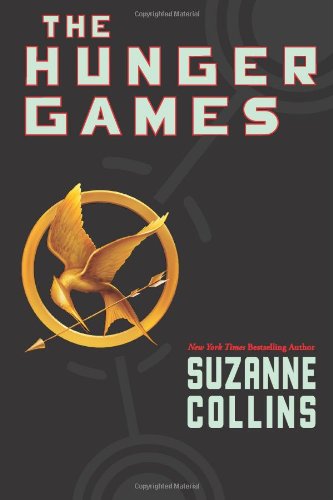
Book Review: The Hunger Games

Happy Independence Day! Here's a grim science fiction novel to remind everybody of what the United States is meant not to be...

A Fair Trade Book


Title: The Hunger Games

Author: Suzanne Collins

Date: 2008

Publisher: Scholastic

ISBN: 978-0-439-02348-1

Length: 374 pages

Quote: “[T]he competitors must fight to the death. The last tribute left standing wins.”

That sort of thing was entertainment in ancient Rome. It’s also entertainment in Panem, the horrible dystopian society that has arisen from the wreckage of the United States. In the ultimate reality TV show, twenty-four teenagers won’t be just voting one another off the island. A girl called Katniss (who already has a boyfriend) and a boy called Peeta decide to protest the hunger-and-murder “games” by protecting each other while the other competitors kill each other off. The games are rigged with lots of built-in dangers, apart from the competing “players,” so you know Katniss and Peeta will be hurt if not dead by the time the competition are gone…

Actually, by now, you know they’ll survive, because the story is a trilogy. They'll survive so that the sadistic dictators of their country can think of other horrible things to do to them.

Collins’ writing talent is enough to keep people reading these books despite their sustained unpleasantness. I read this first volume after Mockingjay had been printed, knowing how the story had to end in The Hunger Games, and I will admit it was a page-turner.

Some teachers have actually put the Hunger Games series on high school reading lists, claiming that it’s a good introduction to the study of ancient history. I suspect that reading ancient history would be a better introduction to any study of dystopian science fiction students care to make. However, The Hunger Games has redeeming social value: If Americans continue to disown responsibility for our society, putting our trust in an ever bigger and more dysfunctional government, we can expect to slide down into tyranny just as ancient Rome did, and we might well end up being “entertained” by regular slaughters of slaves. 

And it has local appeal. In Katniss’ world, bioengineering has altered the landscape and the concept of sovereign States has been forgotten, but the “district” Katniss and Peeta are representing as “tributes” in the Hunger Games just happens to be the Appalachian Mountain region. Somehow, there are still workable seams of coal, and people still hunt and forage for good-quality food. They’re hillbillies; their individualism is what allows them to protest, and survive, the Games.


If you've not read it yet, read The Hunger Games now so you won't be left out. To buy it here, send $5 per book + $5 per package to either address at the very bottom of the screen, down below the blog feed widget, and we'll send $1 to Suzanne Collins or the charity of her choice. 

Sunday, July 3, 2016

Book Review: The Beast the Dragon and the Woman

Title: The Beast the Dragon and the Woman 


Author: Joe Crews

Date: 1967

Publisher: Amazing Facts

ISBN: none

Length: 42 pages

Quote: "The most fearful warning of punishment found anywhere in the Bible...points clearly to a time when God's mercy will be withheld."

That's how this jolly little tract begins...it's as close as Seventh-Day Adventist preachers, of whom Crews was one, got to old-style hellfire preaching. Without much introduction, Crews plunges into his exposition of "the sin which provokes God's strange act of fiery punishment...allegiance to the beast power." The Beast, the Dragon, and the Woman are all symbols of the powers of darkness in the book of Revelation.

It bears mention that actually the book of Revelation uses two very different women as symbols. In many schools of prophetic interpretation, "woman" is thought to represent a religious group. In Revelation, a good woman, "clothed with the sun...and upon her head a crown of twelve stars" and carrying an infant son, is persecuted by an evil woman, dressed in scarlet and riding on a dragon that "stood before the woman...to devour her child." Crews, like many scholars who take these prophecies seriously, understands these ladies to represent true believers (Christians and Messianic Jews) and antichrist powers (Herod, the Sanhedrin except for Joseph and Nicodemus, Pagan Rome, the corrupt Popes, et al.) respectively.

If you're familiar with this school of thought, what Crews has wrought here is a good clear concise summary of the Seventh-Day Adventist interpretation of Revelation, and although some printings came out clearer than others (the one I physically own has just barely legible pages that slipped in the press) this book deserves the collectors' prices that have been placed on vintage editions. (An apparently better quality copy that has the same cover as the book I physically own has a much higher price than the one shown above, which has a slightly different cover--mine was printed with amber instead of red ink.)

If you're not familiar with "inerrantist" studies of Revelation, you might be excused for sputtering that this book makes no sense to you. Crews was aware of the trendier school of "Bible scholarship" that begins with the assumption that nothing in books like Revelation could possibly be true, but he didn't bother to address readers who took that kind of ideas seriously.

In theory I get a small commission if you choose to buy the copy photographed for that Amazon link above from the seller who photographed it. If you want to support this web site, you can buy a copy from me for $10 per book + $5 per package. It's a small book, and you could fit anywhere from two to twelve other books into the package, so this price may work out to be quite competitive. In real life, the copy I physically own will be considerably cheaper.

Friday, July 1, 2016

Book Review: Karen's Sleigh Ride

A Fair Trade Book


Title: Karen’s Sleigh Ride (Baby-Sitters’ Little Sister #92)

Author: Ann M. Martin


Date: 1997

Publisher: Apple / Scholastic

ISBN: 0-590-06590-4

Length: 108 pages

Illustrations: black and white drawings by Susan Tang

Quote: “My idea is that we have a wintery sort of Christmas party, for the Stones, to raise money…we could have sleigh rides—in a one-horse open sleigh!”

The Stones’ barn has burned down, and Karen, the seven-year-old stepsister of Baby-Sitters Club President Kristy Thomas, has not yet learned how to write contraction words but has thought of the coolest idea to raise money to restore the barn. Karen’s father happens to be a millionnaire. It wouldn’t be appropriate for him to hand his neighbor money. Letting the kids throw a party to raise the money is apparently considered better etiquette in Stoneybrook, Connecticut.

Why does Karen have this brainstorm before Kristy does? Oh well, maybe Karen cares more… What about the Stones themselves? What about Karen’s various parents and step-parents? Regular readers know how I feel about children’s stories where it somehow seems to take a child to think of something that would, in real life, be stunningly obvious to the adults. Ann Martin didn’t do this in the Baby-Sitters Club series, but here she is doing it to younger readers. Tsk. 

I’ll let it go, however, because Karen is not an especially bright little child-of-divorce and it’s just possible that all those older people would have carefully backed away from claiming what started out as the Stones’ idea, dropping a trail of hints just so poor little Karen can have the experience of thinking of a good idea before Kristy does, because BSC readers already know that Kristy has all the brains and looks in that family. The way Karen tells the story, it sounds as if nobody else thought of the idea first, but regular readers already know that Karen is just a tiny bit insecure and inclined to tell stories in ways that enhance her fragile self-esteem…


Anyway, here, dumbed down to a reading level at which children presumably know about possessive forms but not about contractions, is a very nice story about some very nice kids who throw a very nice fundraising party. It contains helpful hints for primary school children who would like to throw fundraising parties themselves. (Parents, beware.) It’s a short but cheerful read.

I dressed a doll to match Karen's outfit on the cover of this book, put it on display, and wrote this review, but was not able to post it, on June 16. The original doll-and-book package was sold on June 20. To commission a different doll outfit inspired by the cover of this book, send $20. 

To buy just the book, as an ordinary Fair Trade Book, send $5 per copy + $5 per package to either address at the very bottom of the screen, and we'll send $1 per copy to Ann Martin or a charity of her choice. Ten or twelve Baby-Sitter's Little Sister books would fit into a package, for a total of $55 or $65, from which we'd send $10 or $12 to Martin or her charity.